
Flies
Order Diptera
The Flies (Order Diptera) includes 6,350 species across 141 families and 1,800 genera in our directory.
About Flies
Diptera includes over 150,000 described species of flies, mosquitoes, and midges. Mosquitoes are the deadliest animal on Earth (CDC). Malaria alone causes ~249 million cases and over 608,000 deaths annually, mostly children under 5 (WHO). Vector-borne diseases account for over 17% of all infectious diseases, causing 700,000+ deaths per year.
Economic Impact
In the U.S., vector-borne disease cases tripled between 2004-2016, with over 640,000 cases reported in that period (CDC). Tickborne diseases doubled from 22,000 to 48,000 annual reports. Globally, mosquito-borne diseases cost billions in healthcare and lost productivity.
Ecological Role
Despite their disease impact, flies are critical decomposers and pollinators. Hoverflies alone pollinate hundreds of crop and wildflower species. Flies are also the primary food source for many birds, bats, and fish. Forensic entomology relies heavily on fly species for crime scene analysis.
Families in Diptera (141)
Species in Diptera (6,350)
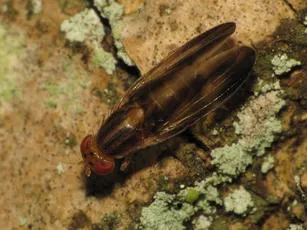
Peplomyza litura
Peplomyza litura
Length 5 mm. A handsome little fly of an overall orangey brown appearance, but with striped thorax, banded eyes and large dark shaded areas on the wings. Unless identified by a recognised expert, a photo is required and the specimen should be examine
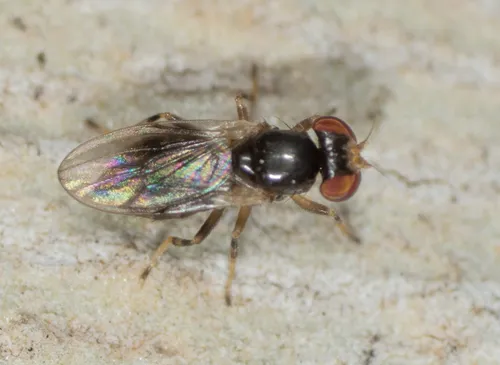
Periscelis occidentalis
Periscelis occidentalis
Identification: Distinguished from the other North American species by the dark spot on the wing. The head is broader than flinti and narrower than wheeleri .
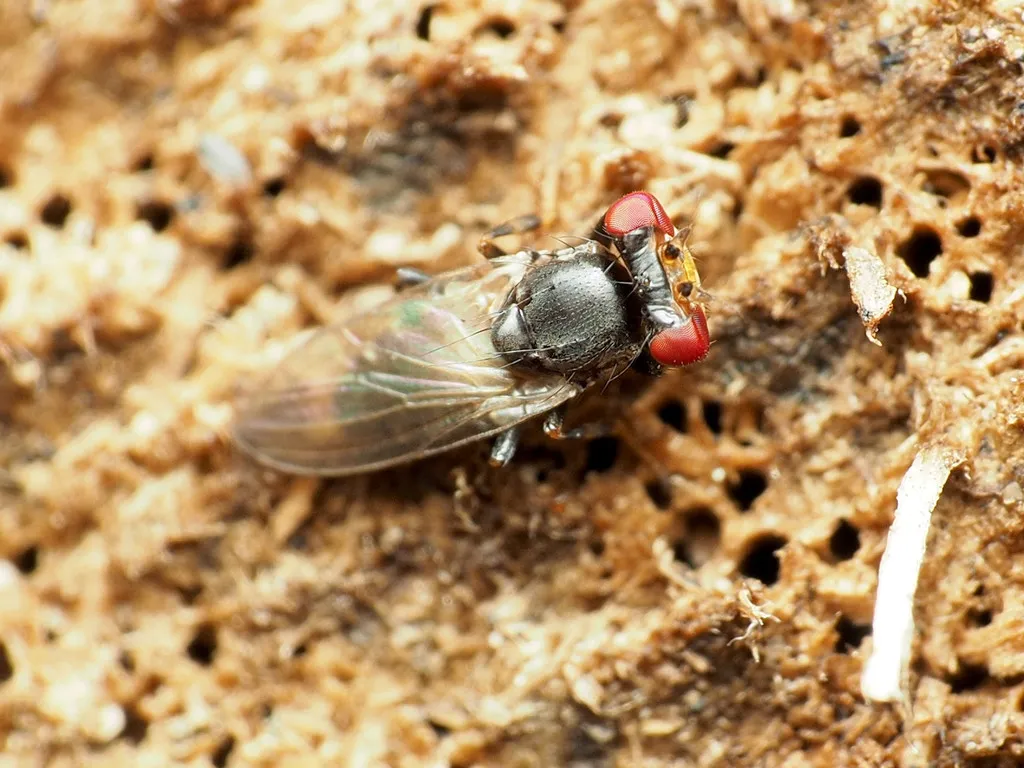
Periscelis wheeleri
Periscelis wheeleri
Identification: From Sturtevant 1954: mesonotum rather shining black; antennal bases about as far from each other as each is from eye; posterior crossvein represented by stumps at each end
Periscepsia laevigata
Periscepsia laevigata
Identification: Distinguished from other Wagneria and Periscepsia by several strong bristles on R1; other species have the vein bare or with one or two hairs. Parasitoid of Noctuinae (armyworm, cutworm, etc.).
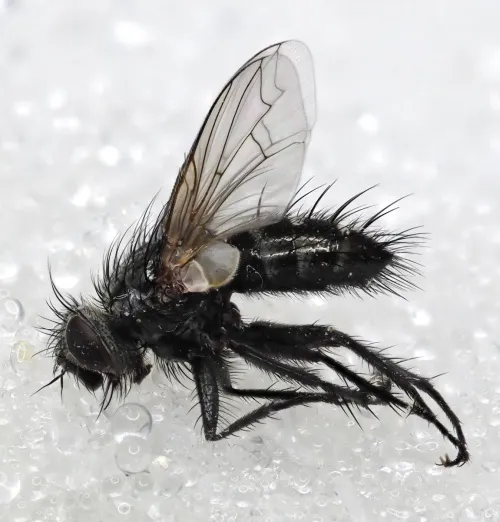
Periscepsia spathulata
Periscepsia spathulata
Flies in this tachinid fly genus are difficult to identify and most will need to be checked to the relevant keys. Unless identified by a recognised expert, a photo is required, and the specimen should be examined with a microscope. In the comments bo
Phaenobezzia opaca
Phaenobezzia opaca
Identification: Distinguished from P. sabroskyi by smaller size and lighter wing color. Distinguished from P. fulvithorax by more narrowly separated eyes
Phaenopsectra flavipes
Phaenopsectra flavipes
Identification: Distinguished from other Chironomini by combination of haired wings, base of tergite 8 broad in male (triangular in Pentapedilum ), fore tarsus of male without beard (bearded in Sergentia ), abdomen uniformly dark (white spots in some
Phaenopsectra profusa
Phaenopsectra profusa
Identification: This is the western counterpart to the eastern Phaenopsectra obediens . It is slightly darker and the fork of Cu slightly nearer wing base.
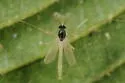
Phaenopsectra punctipes
Phaenopsectra punctipes
Identification: Within genus: Thorax shining black with single row of dorsocentrals. Male abdomen pale green; female abdomen usually darker. Halteres and legs whitish.
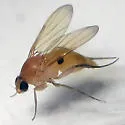
Phalacrotophora epeirae
Phalacrotophora epeirae
Phalacrotophora epeirae is the only(?) parasite of Mimetus egg sacs (page 269). American Arachnology
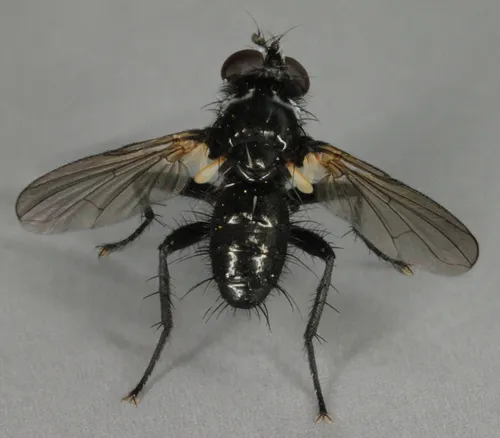
Phania funesta
Phania funesta
Length 3.5 to 5 mm. Glossy black with pale 'shoulders' (dusted humeri and notopleuri). Very bristly. Phania thoracica is the only other species in the genus and is a rare species found in the south. It has a more reddish abdomen, is larger (4.5-7mm)
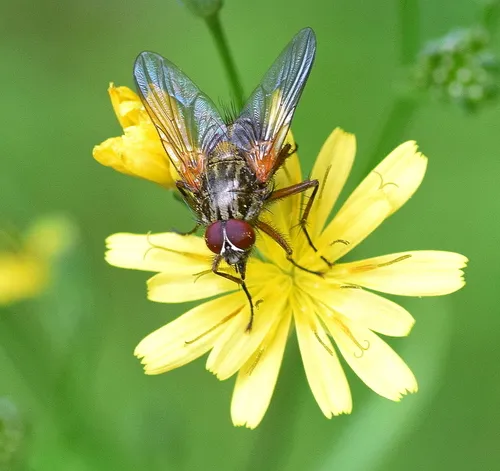
Phaonia angelicae
Phaonia angelicae
Length 7.5 to 10 mm. The male fly is beige-brown in thorax and abdomen, the female's abdomen is somewhat darker than the male's. Meadows, gardens etc where they visit various flowers for nectar. The larvae are found in decaying leaf litter. Fairly fr
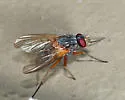
Phaonia bysia
Phaonia bysia
Identification: Scutellum yellow (at least in part), abdomen entirely black, presutural acrostichal bristles absent, humeri at least partly yellowish, 1st supra-alar bristle (pra) short
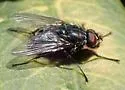
Phaonia caerulescens
Phaonia caerulescens
Identification: "The robust species P. caerulescens has legs entirely black and the hypopleura usually with hairs on upper border. Adults may readily be recognized by the dark brown margins to the calyptrae ".
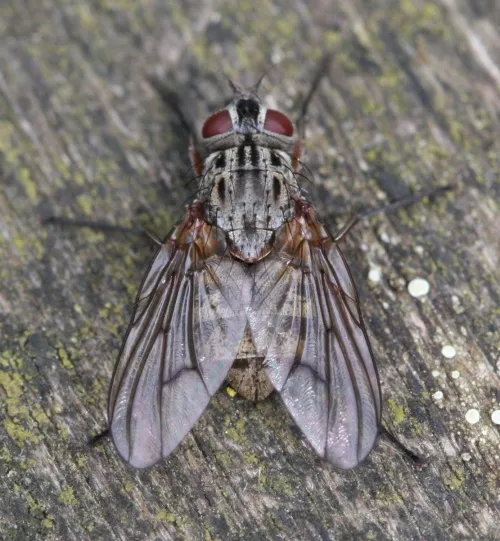
Phaonia errans
Phaonia errans
A buff/grey fly with a slightly chequered appearance. There are other very similar species in this genus which means that a detailed image or examination of an actual specimen is generally needed to identify the exact species. Often sunning on tree t
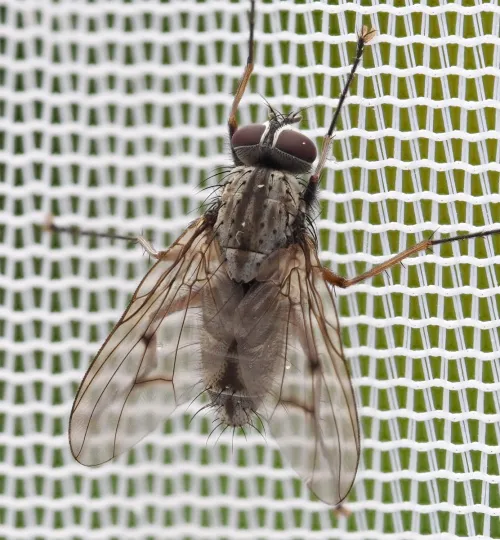
Phaonia fuscata
Phaonia fuscata
One of several very similar species so great care is needed with identification. Unless identified by a recognised expert, a photo is required and the specimen should be examined with a microscope. In the comments box, state the key or ID method used
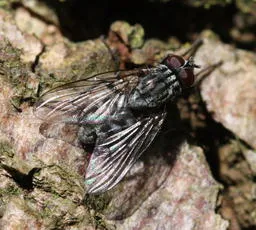
Phaonia gobertii
Phaonia gobertii
A greyish fly with a slightly chequered appearance. No additional images available for this species.
Phaonia houghii
Phaonia houghii
Identification: Common, widespread. Large dark fly with yellowish scutellum and often humeri as well; legs yellow. Antennae yellowish except apically on the last segment. Arista with long hairs. Prealar bristle long. Node of Rs with a few hairs
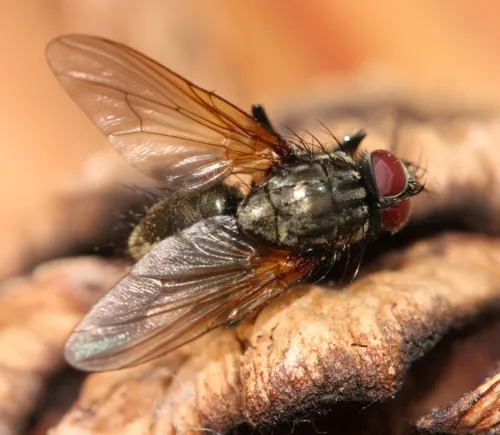
Phaonia incana
Phaonia incana
This dark brown/grey bodied fly is very similar to other related species and detailed examination is needed to arrive at the species. Unless identified by a recognised expert, a photo is required and the specimen should be examined with a microscope.
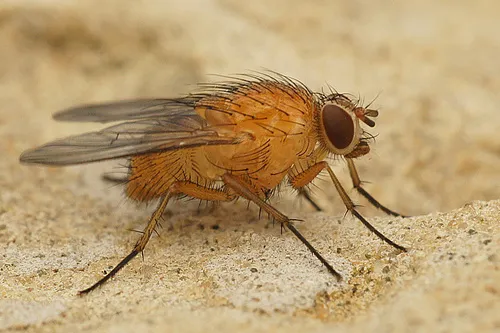
Phaonia pallida
Phaonia pallida
Length about 7 mm. An orange fly with a very hairy thorax. Thricops diaphanus is a very similar orange muscid. Females can be separated by the frontal vitta (area between eyes) which is orange in P. pallida but dark in T. diaphanus . Males will gener
Phaonia palpata
Phaonia palpata
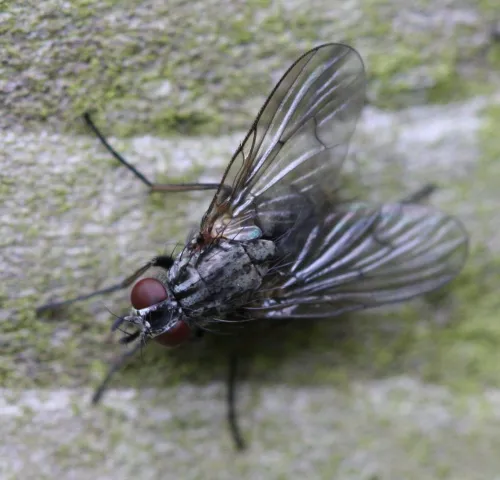
Length 6 to 8 mm. Generally dark grey with darker marks on the abdomen, four dark stripes on the thorax and further black marks on the scutellum. It has 3 pairs of dorso-central bristles behind the thoracic suture line and unusually large, flattened
Phaonia rufiventris
Phaonia rufiventris
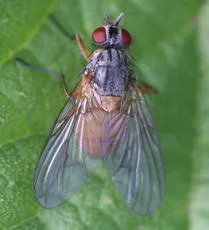
This species has a grey thorax and an orange abdomen, the scutellum is usually entirely orange (but not always), and the fore tibia without posterior setae. Separated from Phaonia subventa by the presence of only one presutural acrostichal bristle an
Phaonia signata
Phaonia signata
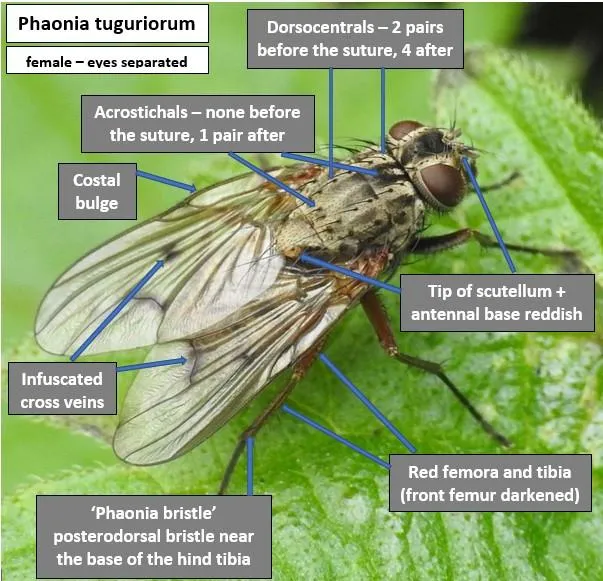
c7mm. This is a very common fly, appearing early in the year when it appears in warm days from February and also in late Autumn when it it usually seen sunning on fences and walls. It has a dull brown abdomen with darker transverse blotches, red femo
Phaonia subventa
Phaonia subventa
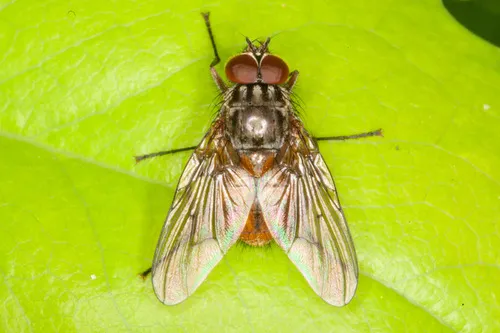
Length 6 to 8 mm. This is one of several similar species with an orange body, stripy thorax, which is grey above and orange below. The bulge on the outer wing is characteristic of the Phaonia genus. Phaonia rufiventris is another very common orange f
Phaonia trimaculata
Phaonia trimaculata
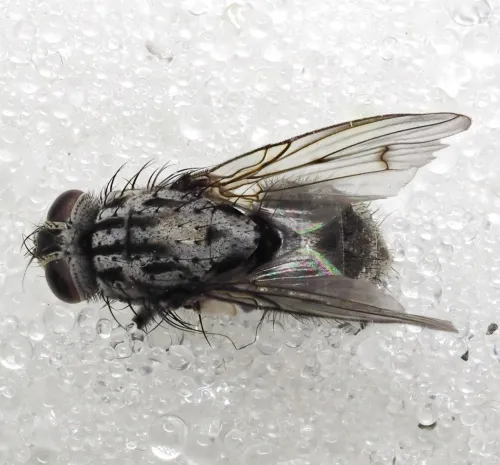
Around 10mm, this is a fairly distinctive and well marked species though still requires a specimen to be examined in detail for identification to be sure. Unless identified by a recognised expert, a photo is required and the specimen should be examin
Phaonia valida
Phaonia valida
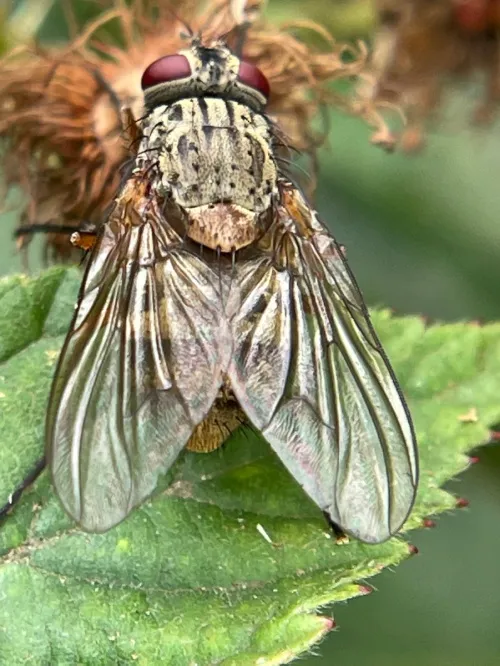
9.5-11mm. A large and mainly brown muscid with the legs and the tip of the scutellum red. The lower orbital hairs (behind the head) are typically reddish and it has a pale base to the antennae. Can be seen April to November basking on tree trunks, et
Phasia aldrichii
Phasia aldrichii
In southern California, P. aldrichii attacks Nysius raphanus (Lygaeidae) in the spring; its second generation parasitises Geocoris spp. (Geocoridae) (Clancy & Pierce 1966 fide )
Phasia aurulans
Phasia aurulans
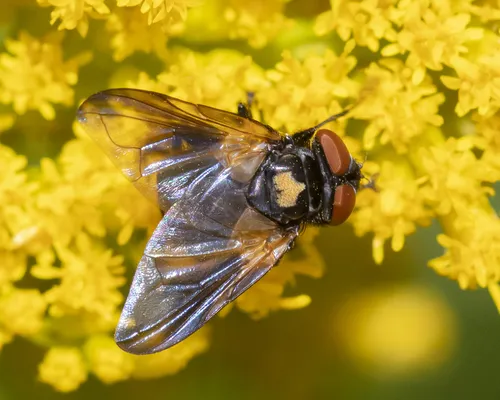
Identification: In males, a large golden-pruinose spot (roughly pentagonal in shape with tapered apex) is located on the post-sutural portion of the scutum (dorsum of thorax), as seen below: This thoracic spot is uniquely diagnostic of the male of P.
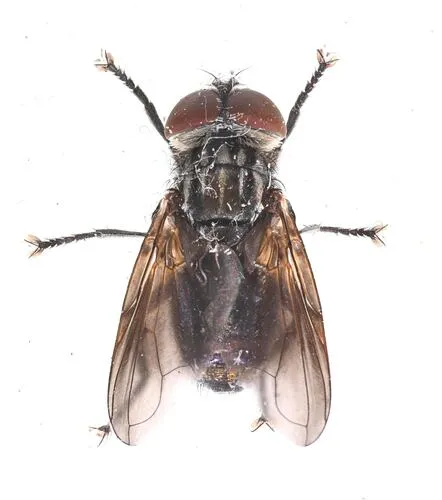
Phasia chilensis
Phasia chilensis
Identification: Lower frons with a few hairs outside of frontal bristles; two katepisternal bristles; face not projecting at bottom (no "chin"); thorax with distinct stripes; abdomen black with a variable amount of yellowish pruinosity on last two se
Phasia fenestrata
Phasia fenestrata
Identification: The presence of yellow tibiae uniquely distinguishes this taxon among the 14 nearctic species treated in Sun & Marshall , though the tibiae may also be brown (and the fore-tibiae black). All other nearctic species of Phasia have tibia
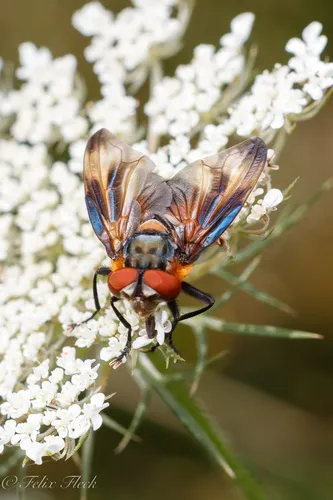
Phasia hemiptera
Phasia hemiptera
One of a small group of distinctive Tachinid flies. This species is strongly sexually dimorphic the female has noticeable orange hair patches on the sides of the thorax, and the abdomen shows some subdued orange marking. The males are even more colou
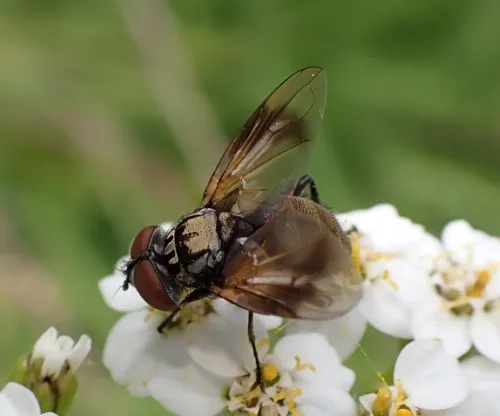
Phasia obesa
Phasia obesa
Length 4-6mm. Abdomen with light grey markings viewed from above/behind. Unless identified by a recognised expert, a photo is required and the specimen should be examined with a microscope. In the comments box, state the key or ID method used and des
Phasia robertsonii
Phasia robertsonii
Identification: Many hairs outside the frontal bristles, extending to or nearly to eye. Mesonotum nearly shining, without stripes. Abdomen shining purplish black or with yellowish or greyish pruinosity.
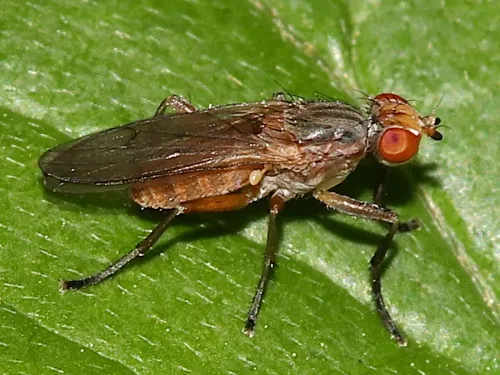
Pherbellia dubia
Pherbellia dubia
A medium-large, rather slim and long-legged Pherbellia with a greyish mesonotum and the apical two-thirds of the 3rd antennal segment black (a character not seen in any other British Pherbellia but present in the buff-bodied Renocera pallida ). Unles
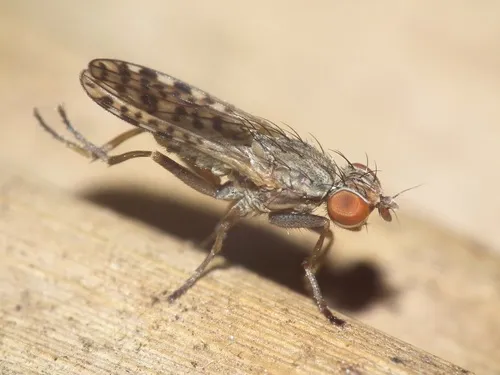
Pherbellia schoenherri
Pherbellia schoenherri
A distinctive species whose prominently spotted wings separate it from others within the genus. The thorax and abdomen are grey-brown. The mid-frontal strip (section of the frons containing the ocelli) can reach to the front edge of the frons. Wing l
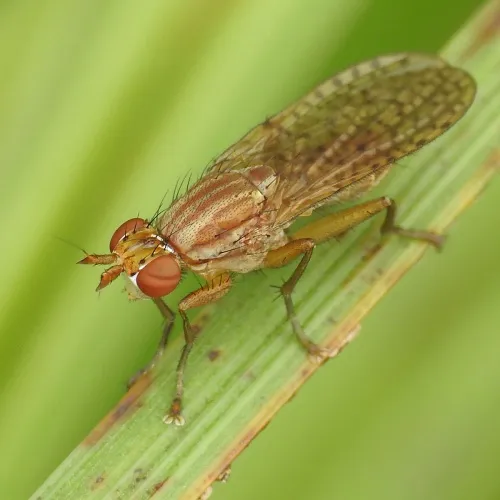
Pherbina coryleti
Pherbina coryleti
Body length 6.8-9.3mm, wing length 5.8-8.0mm The thorax has brownish stripes on a yellowish-grey ground. The wings are yellowish-grey marked with a brown net-like pattern. Along the margins of water bodies including coastal marshes. Larvae are believ
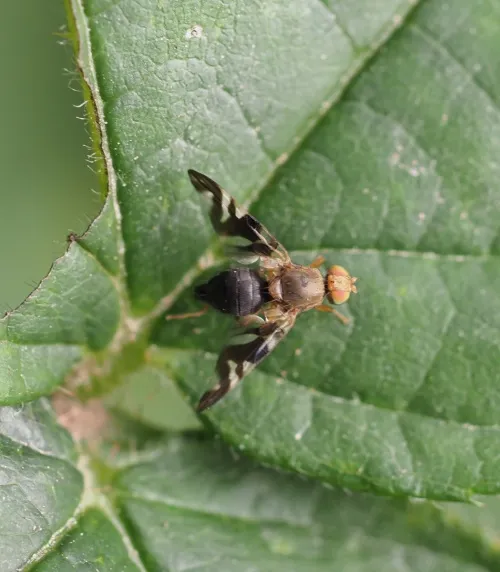
Philophylla caesio
Philophylla caesio
A small Tephritid fly with heavily patterned wings. Usually in areas where nettles are present. The larvae mine the leaf stalks of nettles. Found in Wales and in England as far north as Yorkshire.
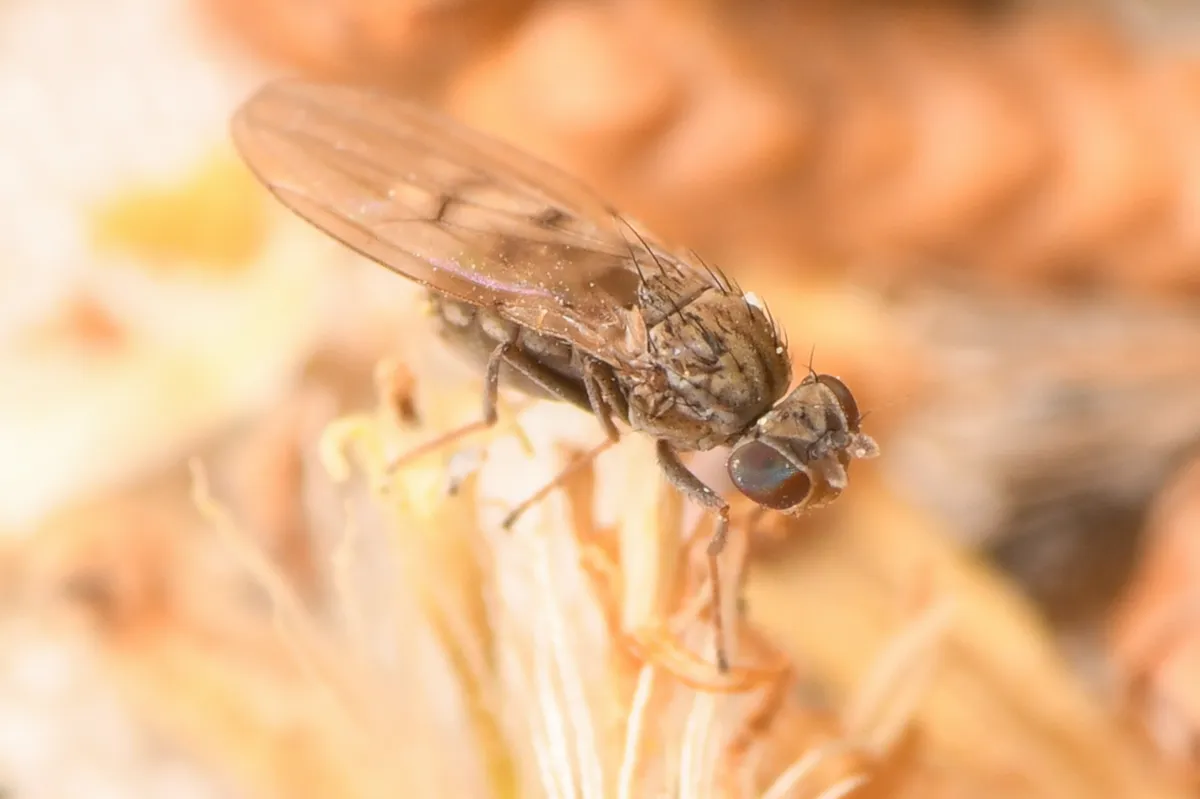
Philygria debilis
Philygria debilis
Identification: A brownish species with no wing spots except over crossveins.
Phrosinella fulvicornis
Phrosinella fulvicornis
"The adults occur on barren, sandy ditch bottoms, over sand dunes, on sand bars, barren places in open pastures, on stone-strewn country roads and on the upper marine beach. In such places they are frequently associated with several species of Senota
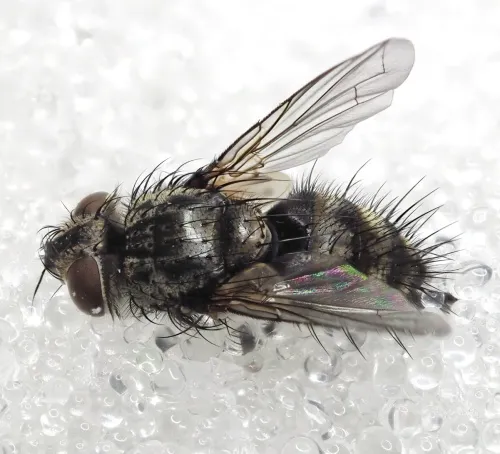
Phryxe nemea
Phryxe nemea
c8mm. A common tachinid fly but without any obvious features. The abdomen is grey with black cross bands and the thorax has several black stripes. The scutellum usually has a pale red/brown tint towards the tip. A key character of the Phryxe genus is
Phyllolabis hurdi
Phyllolabis hurdi
Identification: "This is an unusually distinct species, differing from all others in the Nearctic fauna by the wing pattern and hypopygial structure. The only other regional species with patterned wings is Phyllolabis myriostica Alexander which has a
Phyllomya pictipennis
Phyllomya pictipennis
Phyllomya pictipennis was described from Guerrero, Mexico. Specimens from Arizona have a slightly different wing pattern and may be an undescribed species.
Phyllomydas scitulus
Phyllomydas scitulus
Identification: Male has relative length of antennal club much longer than any other of our mydid taxa, nearly twice as long as the preceding segments combined. The club is flared at base (much wider than preceding segment), and gradually tapering wi
Physiphora alceae
Physiphora alceae
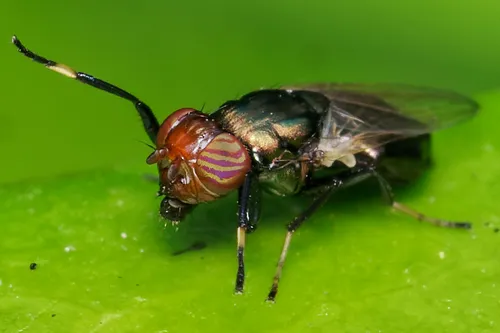
One of two clear-winged Ulidiids in Britain (the other is Ulidia erythrophthalma ). Physiphora alceae usually has a metallic-green thorax, concave face profile and pale fore tarsi. The eyes can appear green and purple-banded in live specimens. Ulidia
Physocephala burgessi
Physocephala burgessi
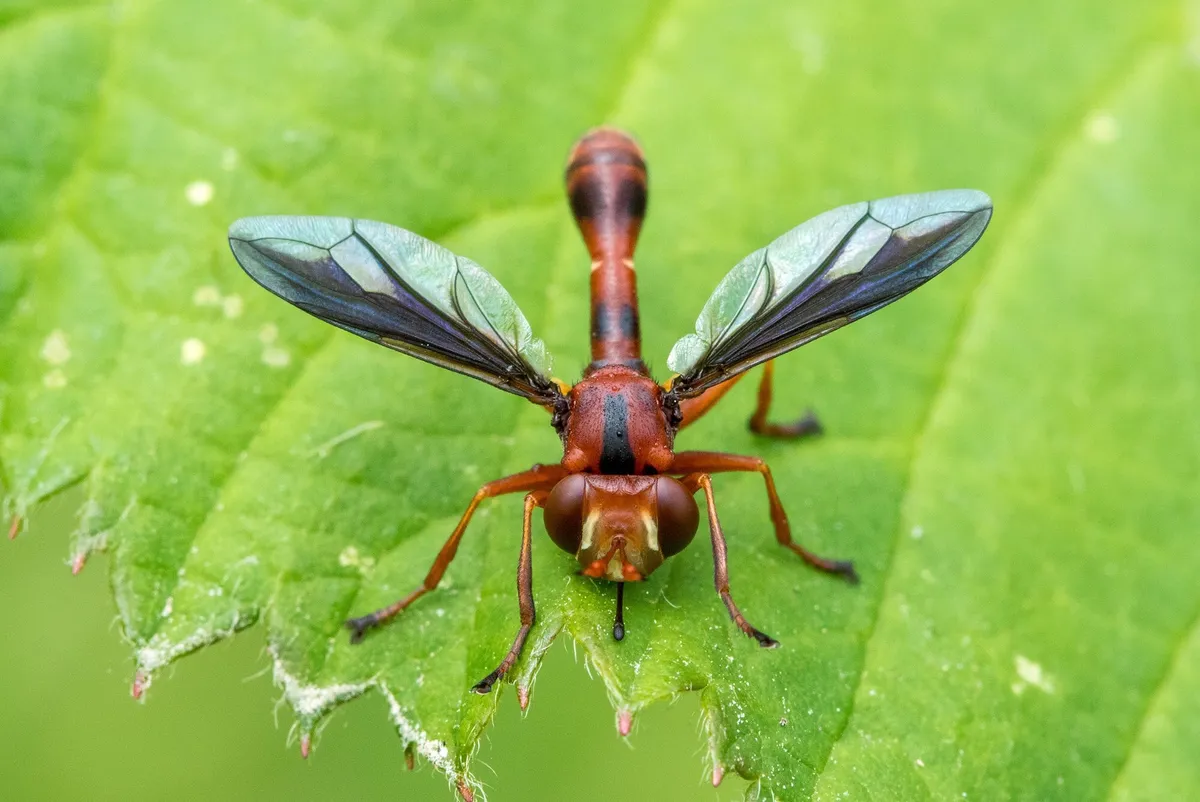
Identification: Our only (almost) entirely red species. Flies in western half of U.S. and Canada. Head: Entire face and frons yellowish, including facial grooves. Cheeks reddish. Top of head (vertex) reddish-yellow. There is a light reddish-brown (ra
Physocephala floridana
Physocephala floridana
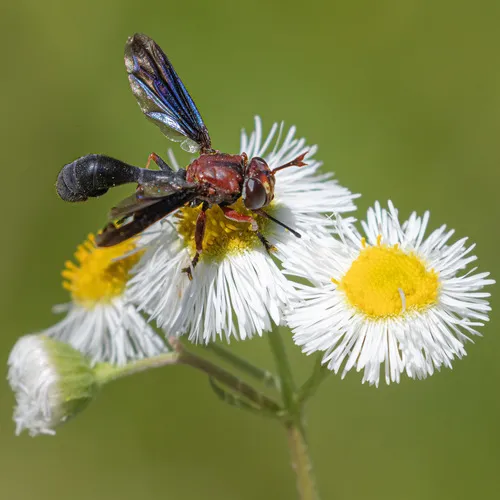
Identification: The detailed original species description of P. floridana appears on pg. 214 of Camras (1957), and keys including this species appear at the end of the references by Camras (1957,1996). It is closest in form to P. tibialis but has a d
Physocephala marginata
Physocephala marginata
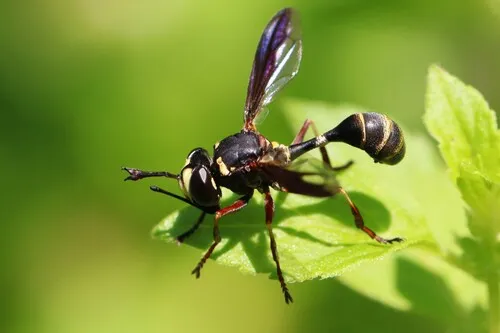
Identification: Some salient characters of typical P. marginata are: Wings: Discal cell (mostly) hyaline. The sliver-thin costal cell (along leading edge of wing) often equally as dark as adjacent marginal cells. Thorax: Black overall, dorsum with t
Physocephala rufipes
Physocephala rufipes
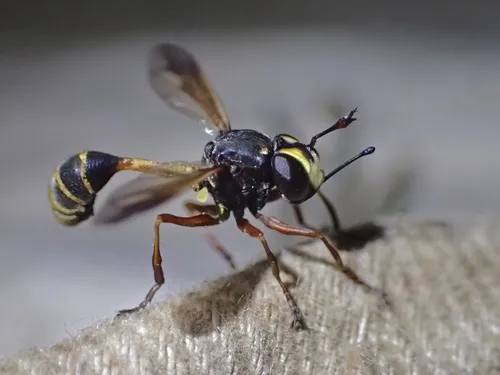
Length 7 to 15 mm. A strangely shaped fly with a 'waisted' appearance. The head and thorax area are quite broad, and the end of the abdomen has a bulbous ending. The adults are nectar feeders, regularly visiting flowers. Larvae parasitise bumblebees.
Physocephala sagittaria
Physocephala sagittaria
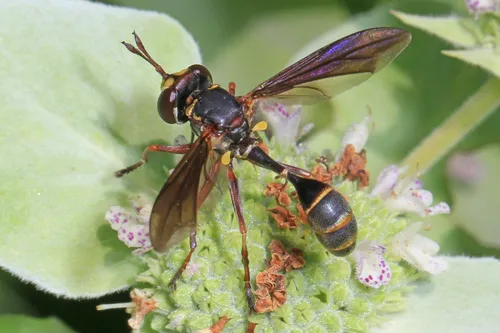
Identification: P. sagittaria is a variable species (see "Remarks" section below) with overall body color grading from dark brownish-black, to deep reddish with black dorsal markings. In each case, the first four or more abdominal segments have thin
Physocephala texana
Physocephala texana
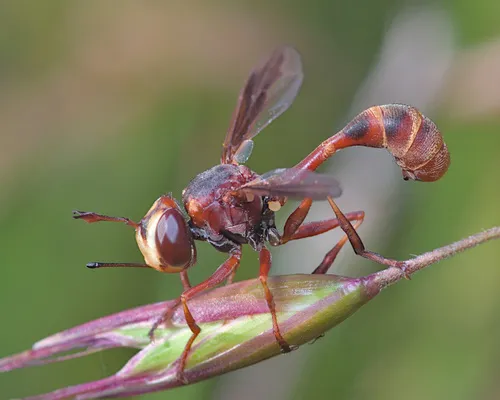
An extremely variable species, as evidenced by the large number of earlier names that have been synonymized. Perhaps the most commonly encountered form corresponds to Williston's affinis and Van Duzee's humeralis . [Note: Original descriptions of eac
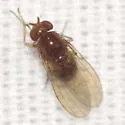
Physoclypeus coquilletti
Physoclypeus coquilletti
Identification: A yellow species with convex face, minute ocellars, two pairs of dorsocentral bristles, and medial black spots on tergites 2-5.
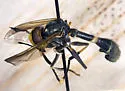
Physoconops analis
Physoconops analis
Identification: Frons entirely black, shiny. 3rd antennal segment shorter than 2nd. 1st posterior and basal radial cells hyaline. Camras(1955) referred to this species using Williston's 1892 name P. angustifrons , but later he noted in Camras(1957) t
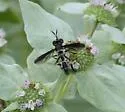
Physoconops brachyrhynchus
Physoconops brachyrhynchus
Identification: Head: The frons is medially dark and grades laterally into a paler hue (i.e. whitish or yellowish). The cheeks are uniformly pale (whitish or yellowish). The 3rd antennal segment is longer than the 2nd. The proboscis is relatively
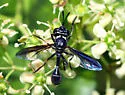
Physoconops bulbirostris
Physoconops bulbirostris
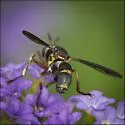
Identification: Head: Frons entirely black; cheeks brown-to-black (at least in posterior portion); face, including facial grooves, whitish; proboscis fairly long (reaching end of 2nd antennal segment). Thorax: Black; two fairly large white, rectangul
Physoconops excisus
Physoconops excisus
A 1892 description of Conops excisus (= Physoconops excisus) by Williston appears here . Camras (1955) comments that, along with P. townsendi (as well as other species outside our area), C. excisus is characterized by a very distinct uninterrupted p
Physoconops fronto
Physoconops fronto
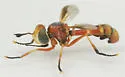
Identification: As a member of the nominate subgenus Physoconops (Physoconops) this species has 3rd antennal segment about 2/3 the length of the 2nd antennal segment, and a small triangular indentation at the middle of the hind margin of the eye (whi
Physoconops gracilis
Physoconops gracilis
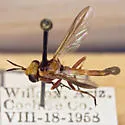
From Camras : "This species replaces brachyrhynchus in the western United States, and differs typically in being predominantly reddish with pleural stripe golden, front entirely yellow [but "sometimes darkened in the center", see below], and absence
Physoconops nigrimanus
Physoconops nigrimanus
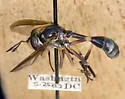
Identification: This is the only Physoconops species in our area having a sharply-defined dark "T"-pattern on the frons. (Note: Nearly all species of the closely related genus Physocephala have such a "T"-pattern on the frons...but they can be separa
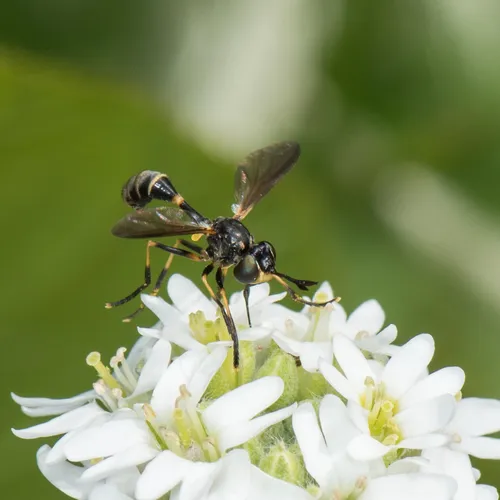
Physoconops obscuripennis
Physoconops obscuripennis
Identification: For many identification details, see discussions in comment threads accompanying posts below: ...also, compare with paratype here from The Field Museum in Chicago.
Physoconops sylvosus
Physoconops sylvosus
Identification: The simplest character distinguishing P. sylvosus is the transverse hyaline interruption of the darkly-infuscated anterior band of the wing located just proximal to the wing's apex (though the interruption may sometimes be vaguely-res
Physoconops townsendi
Physoconops townsendi
Identification: Very distinct uninterrupted post-vertical pollinose stripe connecting the post-orbitals (i.e. along upper half of hind edge of head). Very large theca in the female. Thorax and abdomen mostly rufous. For (many) more details, see Towns
Physoconops weemsi
Physoconops weemsi
Closely related to P. brachyrynchus and P. floridanus . See Camras for detailed species description and discussion.
Phytoliriomyza clara
Phytoliriomyza clara
Phytoliriomyza pulchella Spencer, described from adults caught in New York, probably has the same host plant, having genitalia intermediate between those of P. clara and the European P. pteridii Spencer, another bracken leafminer .
Phytoliriomyza melampyga
Phytoliriomyza melampyga
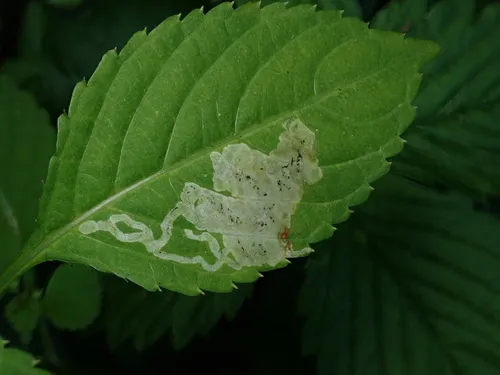
The larvae of the fly Phytoliriomyza melampyga mine the leaves of Impatiens species (Balsams). The early narrow, linear mine later becomes a large irregular whitish blotch with conspicuous frass. See the National Agromyzidae Recording Scheme webpage
Phytomyptera convecta
Phytomyptera convecta
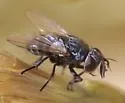
Identification: One of two species of Phytomyptera with brached antennae in males. The other species, P. vitinervis , is missing the tip of vein M.
Phytomyptera johnsoni
Phytomyptera johnsoni
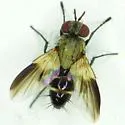
Identification: Note the large bristle above the node of Rs, the obtuse bend of vein M, wing pattern, and broad fore tarsi of female. Each of these characters occurs in other Tachinidae; they are useful in combination. The most similar species, Phy
Phytomyptera melissopodis
Phytomyptera melissopodis
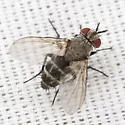
Identification: Distinguished from other eastern Phytomyptera with similar color pattern by presence of three small bristles near the tip of vein R1 and male antenna triangular (not split into two forks).
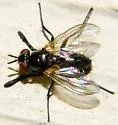
Phytomyptera nigra
Phytomyptera nigra
Identification: Female tarsi greatly enlarged (similar to Phytomyptera tarsalis ), body shining black.
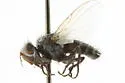
Phytomyptera ruficornis
Phytomyptera ruficornis
Identification: The combination of red antennae and missing tip of vein M is unusual in the family, but not unique. Male has forked antenna, the origin of the genus name Schizotachina .
Phytomyza aconiti
Phytomyza aconiti
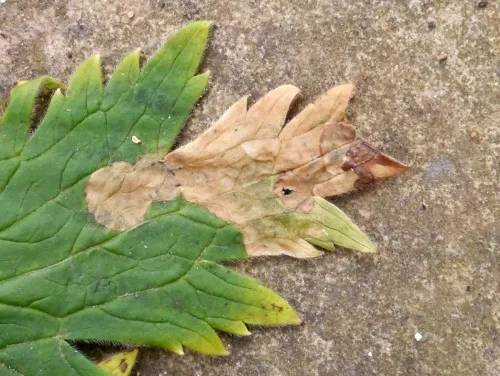
The larvae of the fly Phytomyza aconiti mine the leaves of Aconitum (Monkshood) and Delphinium species. The mine is a large blotch on the upper leaf surface, usually near to the leaf tip. Several larvae often feed communally within the mine. See the
Phytomyza agromyzina
Phytomyza agromyzina
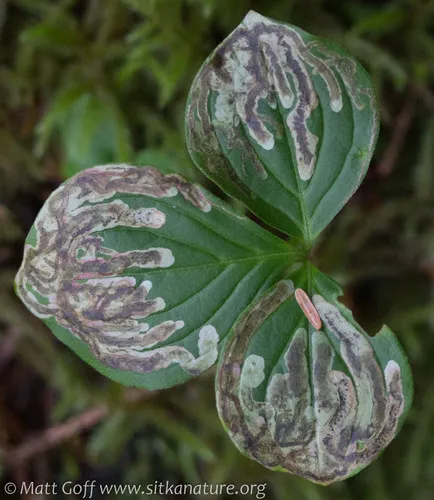
This fly's larvae mine the leaves of Dogwood. The long mines are found on the upper surface of the leaf. Frass in the mine is usually a broad dark-brown to blackish central band. See the National Agromyzidae Recording Scheme webpage for this species
Phytomyza artemisivora
Phytomyza artemisivora
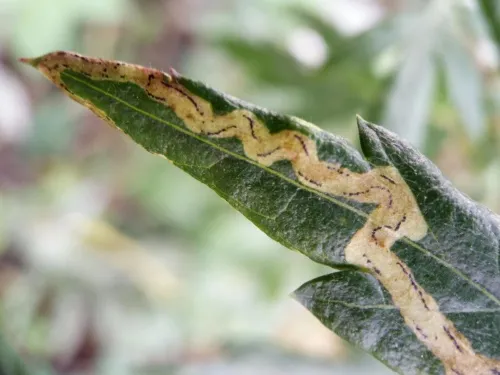
The larvae of the fly Phytomyza artemisivora mine the leaves of Mugwort and other plants in the genus Artemisia, and also Chrysanthemum species. They form mines with a long corridor, often partly following the leaf veins or margin. The frass consists
Phytomyza astrantiae
Phytomyza astrantiae
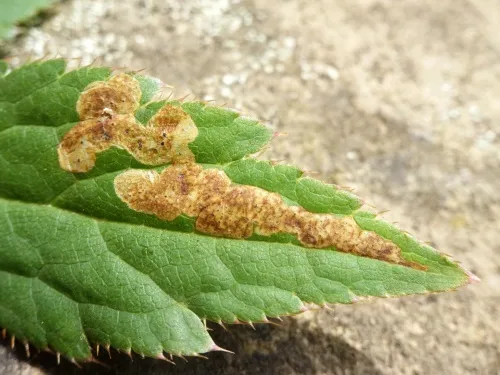
The larvae of the fly Phytomyza astrantiae mine the leaves of Masterwort ( Astrantia major ). The mine is a gallery/blotch, brown in colour with a pale yellow margin. See the National Agromyzidae Recording Scheme webpage for this species for further
Phytomyza bipunctata
Phytomyza bipunctata
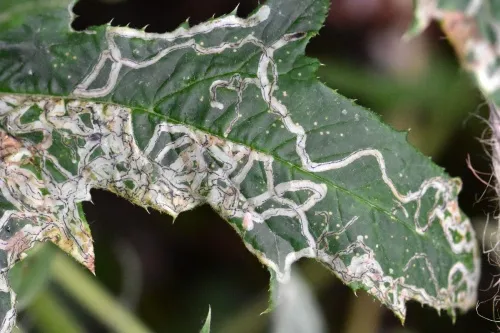
The larvae of the fly Phytomyza bipunctata mine the leaves of Echinops species (Globe Thistles). The long, white mines have frass in long strips on alternate sides of the gallery. See the National Agromyzidae Recording Scheme webpage for this species
Phytomyza chaerophylli
Phytomyza chaerophylli
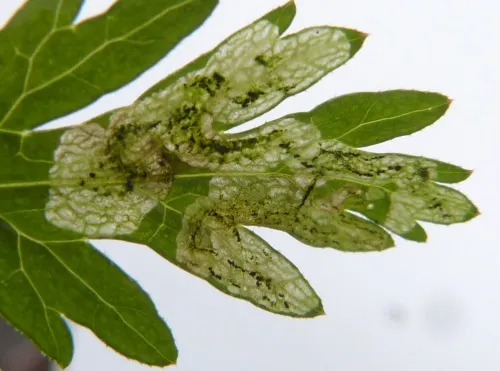
The larvae of the fly Phytomyza chaerophylli mine the leaves of umbelliferous plants such as Cow Parsley. The mines often follow the margin of the leaf at first, but then expands into a blotch that covers a large area of the leaf. The mine is pale an
Phytomyza cirsii
Phytomyza cirsii
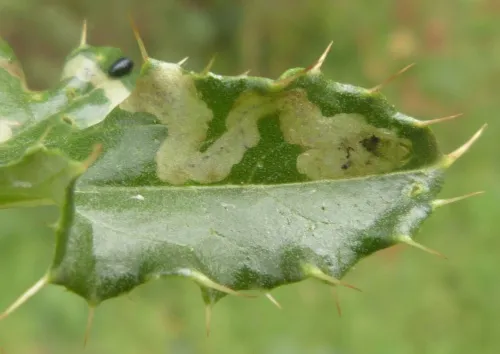
The larva of the Agromyzid fly Phytomyza cirsii mine the leaves of various thistles ( Cirsium ) including Creeping Thistle and Spear Thistle, creating a long whitish upper surface mine. The frass grains are small and usually occur close together. Pup
Phytomyza confusa
Phytomyza confusa
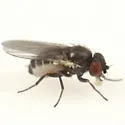
In addition to the host plant uncertainty, it is unclear whether the larva pupates inside or outside the leaf.
Phytomyza conyzae
Phytomyza conyzae
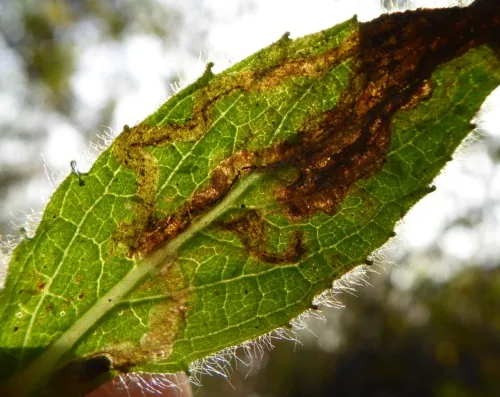
The larva of the fly Phytomyza conyzae mines the leaves of various Fleabanes, including Common Fleabane. The mine can be either an upper or lower surface corridor, often located by the midrib. Frass often appears in in pearl strings. The mine initial
Phytomyza crassiseta
Phytomyza crassiseta
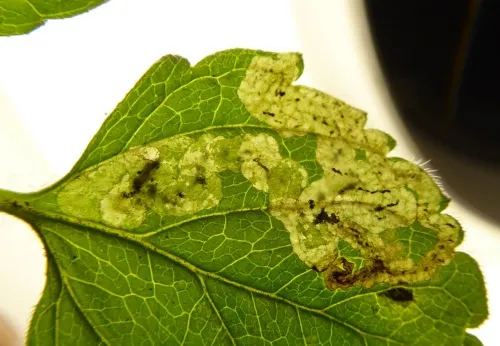
The larva mines the leaves of Veronica and Hebe species such as Germander Speedwell , Wood Speedwell and Heath Speedwell, producing a narrow mine which follows the leaf margin, then turns and forms a secondary blotch. It can form blotch mines away fr
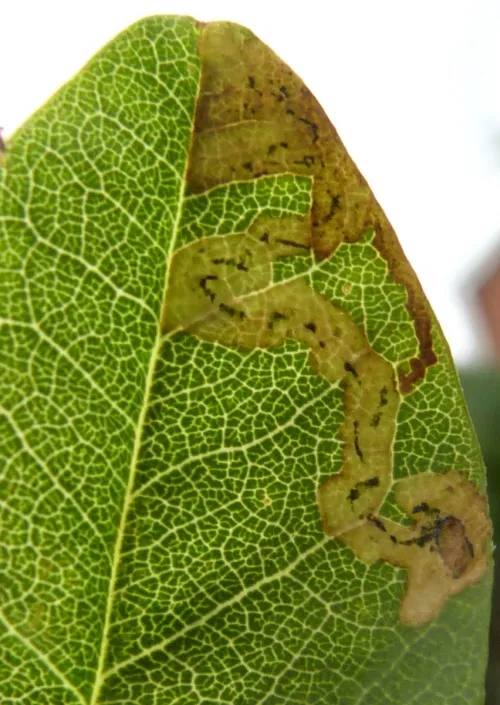
Phytomyza cytisi
Phytomyza cytisi
The larvae of the fly Phytomyza cytisi mine the leaves of Laburnum. The mine is linear with primary feeding lines often distinct. Frass is usually in black thread-like strips. See the National Agromyzidae Recording Scheme website for further details
Phytomyza ditmani
Phytomyza ditmani
Larvae mine Ilex decidua , I. serrata , and I. verticillata . Mines on new leaves of I. decidua in spring are linear, otherwise blotch. This is the only Phytomyza known to mine I. decidua .
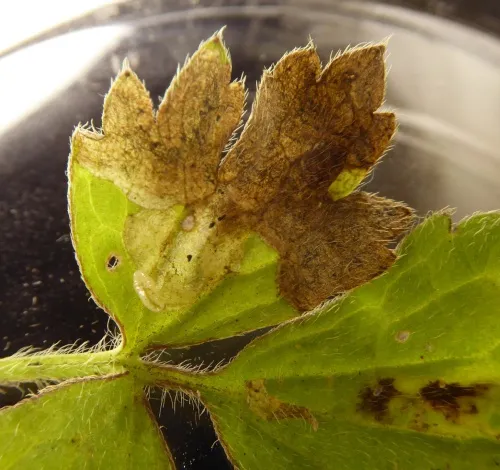
Phytomyza fallaciosa
Phytomyza fallaciosa
The larvae of the fly Phytomyza fallaciosa mine the leaves of various members of the Buttercup family ( Ranunculus ). A brown blotch is eventually formed, without green patches. Primary and secondary feeding lines are generally clear. Pupation occurs
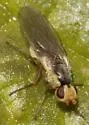
Phytomyza flavicornis
Phytomyza flavicornis
Identification: Distinguished from other Phytomyza by the combination of yellow antennae, yellow behind eyes, thorax black on top (not merely gray) and yellow on sides, scutellum black, and crossvein dm-cu absent. Stem miner in Urtica , "larva feedin
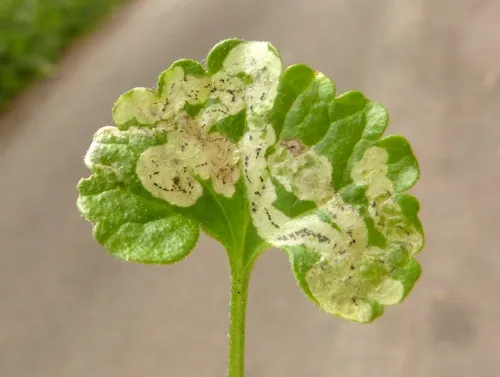
Phytomyza glechomae
Phytomyza glechomae
The larva of the Agromyzid fly Phytomyza glechomae mines the leaves of Ground-ivy ( Glechoma hederacea ). The leaf-mine starts with a corridor section, which widens, sometimes into a blotch, and then another corridor is made. See the National Agromyz
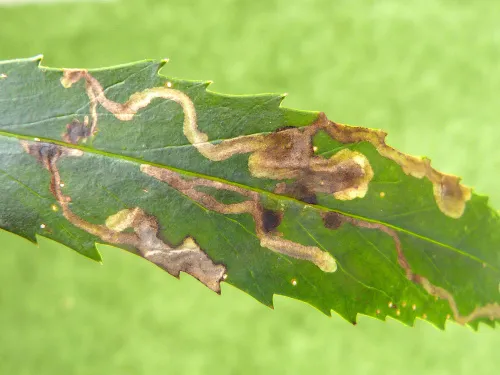
Phytomyza hellebori
Phytomyza hellebori
The larvae of the fly Phytomyza hellebori mine the leaves of Clematis and Helleborus species, and particularly those of Stinking Hellebore ( Helleborus foetidus ). The leafmines can be either linear, or blotch-like. Pupation may occur internally or e
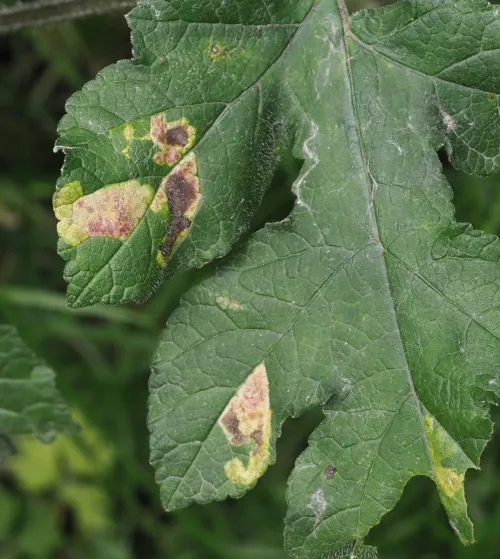
Phytomyza heracleana
Phytomyza heracleana
The larva of the Agromyzid fly Phytomyza heracleana mines the leaves of Hogweed and form a blotch mine between two veins. The mine often has a sieve-like appearance (where the larva has fed through the upper parenchyma). See the National Agromyzidae
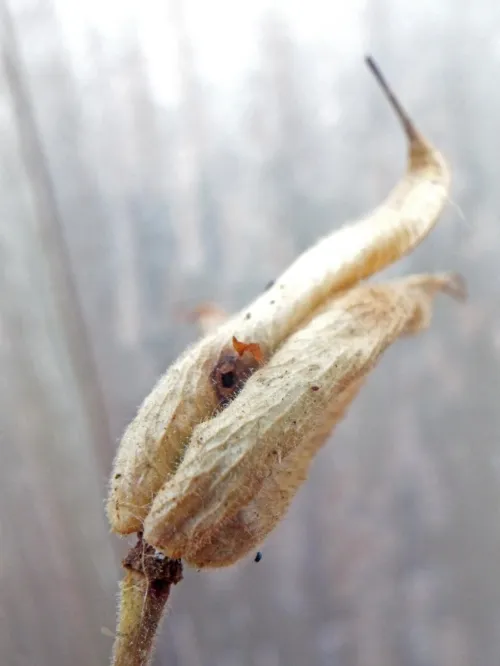
Phytomyza krygeri
Phytomyza krygeri
The larva of Phytomyza krygeri feeds in the seed capsules of Aquilegia vulgaris (Columbine). Pupation occurs in the seed head, with one puparium occurring in each seed capsule. The affected seed capsules discolour and become brown (as shown below). T
Phytomyza lappae
Phytomyza lappae
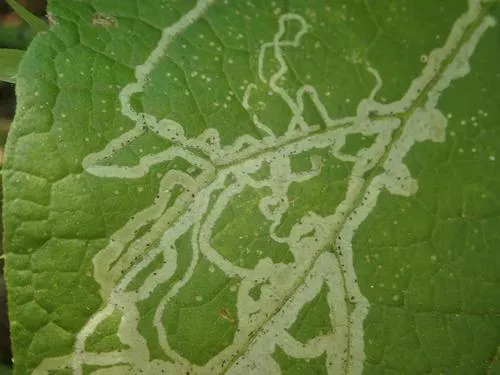
The larvae of this species mine the leaves of Burdock ( Arctium ) species. The leafmine is a long, narrow, linear mine which often follows a vein and can appear angular because of this. Many larvae may occur on a single leaf. See the National Agromyz
Phytomyza leucanthemi
Phytomyza leucanthemi
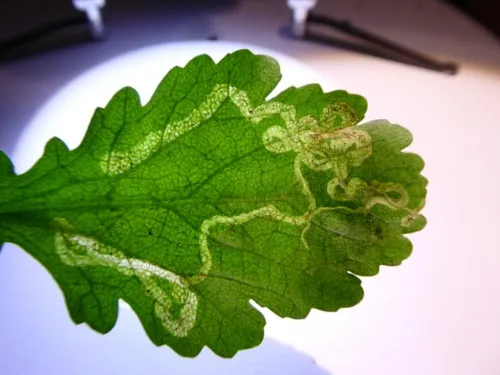
The larvae of the fly Phytomyza leucanthemi mine the leaves of Chrysanthemum and Leucanthemum (Oxeye Daisy group) creating an irregular, linear mine with frass in widely spaced grains. Mostly found on the lower basal leaves. See the National Agromyzi
Phytomyza minuscula
Phytomyza minuscula
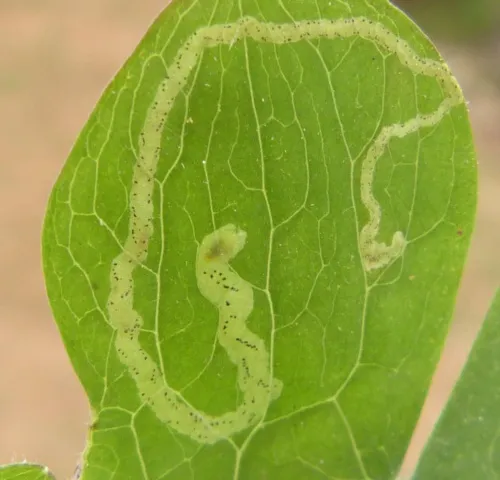
This is a small grey/black fly whose larvae mine the leaves of several plants, but especially Aquilegias, forming a white, linear corridor which may then form a secondary blotch. There are often several mines per leaf. See the National Agromyzidae Re
Phytomyza ovalis
Phytomyza ovalis
Larvae form irregular linear blotch mines in leaves of Hackelia , Mertensia , and Hackelia (Boraginaceae).
Phytomyza palmeri
Phytomyza palmeri
Identification: This species is named for Michael W. Palmer , who collected the type series.
Phytomyza paraciliata
Phytomyza paraciliata
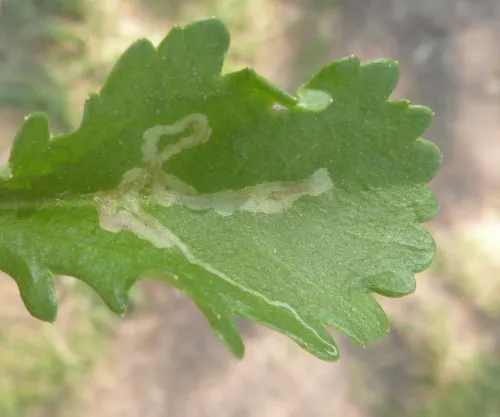
The larvae of the Agromyzid fly Phytomyza paraciliata mine the leaves of Leucanthemum species such as Oxeye Daisy and Shasta Daisy. The mine is initially long and linear, but then doubles back. Initially the mine appears on the underside of the leaf
Phytomyza persicae
Phytomyza persicae
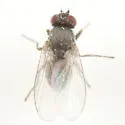
"Larva forming long, whitish linear mine, with frass in conspicuous black pellets, pupation in leaf"
Phytomyza petoei
Phytomyza petoei
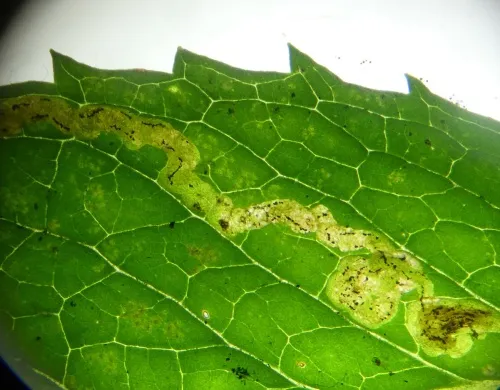
The larvae of the fly Phytomyza petoei mine the leaves of Clinopodium, Melissa (Balm) and Mentha (Mints). The mine usually starts with a dark spot, then becomes an irregular linear mine, often then forming a secondary blotch. See the National Agromyz
Phytomyza pimpinellae
Phytomyza pimpinellae
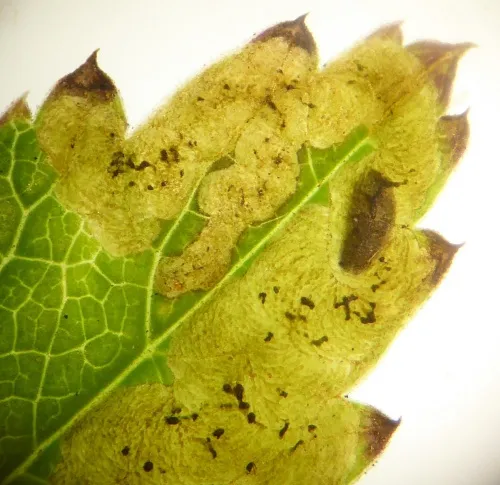
The larvae of the Agromyzid fly Phytomyza pimpinellae mine the leaves of Greater Burnet-saxifrage and Burnet-saxifrage producing a broad, relatively short, upper surface mine with conspicuous feeding lines of frass. See the National Agromyzidae Recor
Phytomyza plantaginis
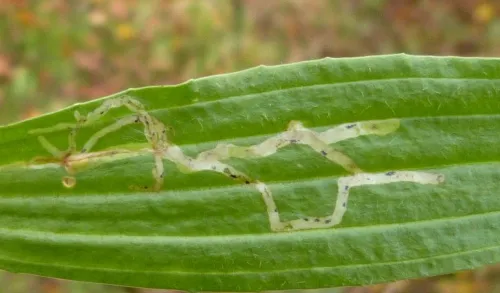
Phytomyza plantaginis
The larva of the fly Phytomyza plantaginis mines the leaves of various Plantain species including Ribwort Plantain producing a long, linear, whitish narrow mine; normally in the leaf, but sometimes in the stem. The pupa is formed at the end of the mi
Phytomyza plumiseta
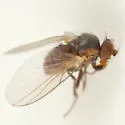
Phytomyza plumiseta
The larval mine is a large white blotch, normally in the center of the leaf, with the frass in a conspicuous black patch near the center of the mine.
Phytomyza ranunculi
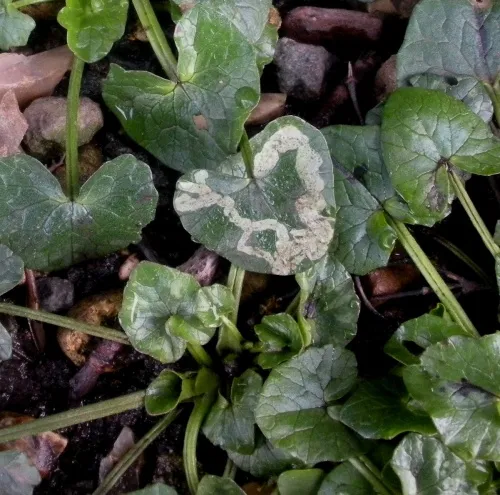
Phytomyza ranunculi
A leaf mining fly whose larvae mine the leaves of various members of the Buttercup family. In this species the grains of frass are closely adjoining or grouped. Identification is more difficult when the mine is in the stem. See the National Agromyzid
Phytomyza ranunculivora
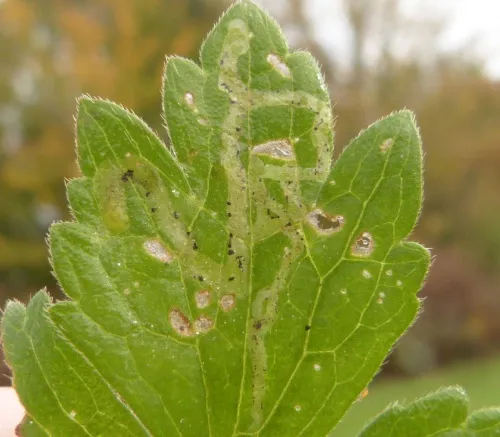
Phytomyza ranunculivora
A leaf mining fly whose larvae mine the leaves of various members of the Buttercup family of plants. In this species the mine is linear, whitish, with frass in widely spaced grains. See the National Agromyzidae Recording Scheme webpage for this speci