
Family Muscidae
Muscidae is a family in the order Diptera. Browse 125 named species recorded in this family, or open an individual profile for its available identification and natural-history information.
Species in Muscidae (125)
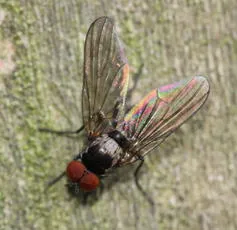
Azelia nebulosa
Azelia nebulosa
A small muscid with rounded spots on the abdomen, a pale patch on the hind thorax and a black scutellum. It has a distinct pre-apical bristle on the mid tibia but is lacking another bristle in the middle of the tibia. There are 7 UK Azelia species an
Bithoracochaeta leucoprocta
Bithoracochaeta leucoprocta
Identification: Antennae with first flagellomere pointed. Scutum with 2 pairs of postsutural dorsocentral setae. Sometimes an additional ventral katepisternal seta to the usual 3 can be made out.
Brontaea humilis
Brontaea humilis
Identification: Males wholly dark, while females have a pattern of grey dusting.
Coenosia modesta
Coenosia modesta
Similar to C. semivitta, which it differs from in the form of the mesonotum and length of the costal vein.
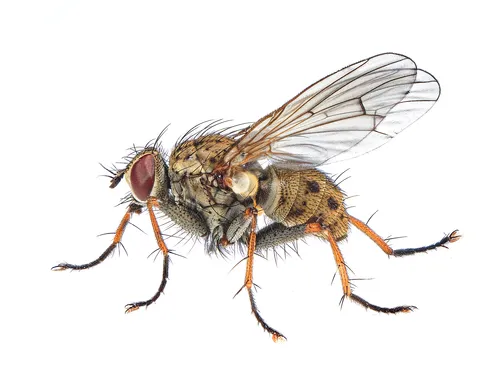
Coenosia tigrina
Coenosia tigrina
All flies in this genus are predators - hunting other insects on the wing. 6 - 7 mm, buff-grey with dark spots on the abdomen and several rows of spots on the thorax. Normally with red tibia and tips of the femora. Distinguished from other Coenosia b
Drymeia flavinervis
Drymeia flavinervis
Identification: Mostly shining black (male) to entirely shining black (female), with many bristles on hind tibia, black halteres, and yellow wings.
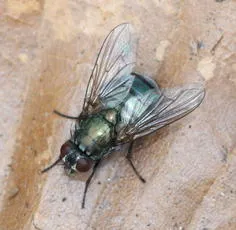
Eudasyphora cyanella
Eudasyphora cyanella
This shiny green fly gradually become bronze as it ages. As with all muscidae flies, the fourth wing vein (M) bends gently (not sharply) forwards. It has hairy eyes and a white 'collar' on the front of the thorax. Superficially this looks like the 'g
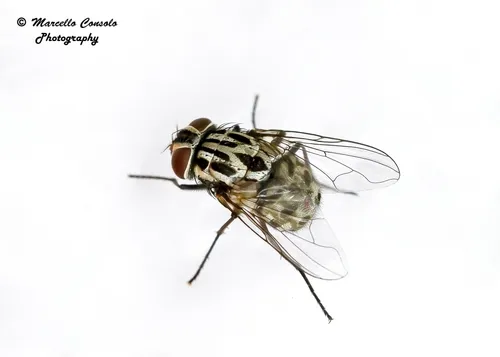
Graphomya maculata
Graphomya maculata
The males have an orangey-brown patterned abdomen but females have a grey/black pattern. Both have distinctive stripes on the thorax. Meadows, hedgerows and roadside verges nectaring on various flowers, especially umbellifers. The larvae are predator
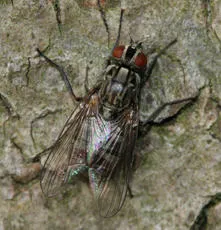
Haematobosca stimulans
Haematobosca stimulans
Around cattle on which they feed, and in farm buildings such as milking parlours etc. April to October peaking in May and August. This fly is associated with cattle where it can be a nuisance by biting the animals to feed on their blood.
Hebecnema nigra
Hebecnema nigra
Identification: Per Pont (1984), when using Huckett's 1965 key, his H. vespertina should be H. nigra and his H. affinis should be H. vespertina
Helina annosa
Helina annosa
Identification: Among Nearctic Helina, identified by fine hairs on the underside of the scutellum that are restricted to the basal half and by fine hairs on the hypopleuron that are restricted to the anteroventral border of the spiracle.
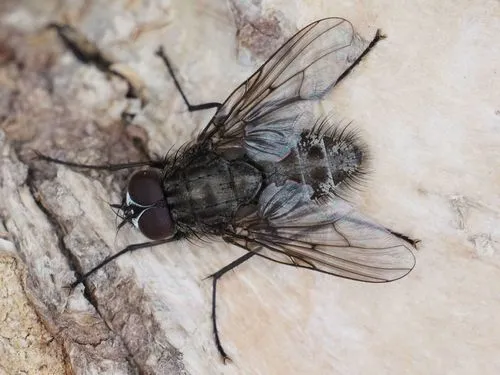
Helina evecta
Helina evecta
This is a common muscid fly with a pale brown or blue abdomen with dark spots. It has infuscated cross-veins on its wings. It requires microscopic examination to be certain of identification. One identifying feature is the presence of long, dark hair
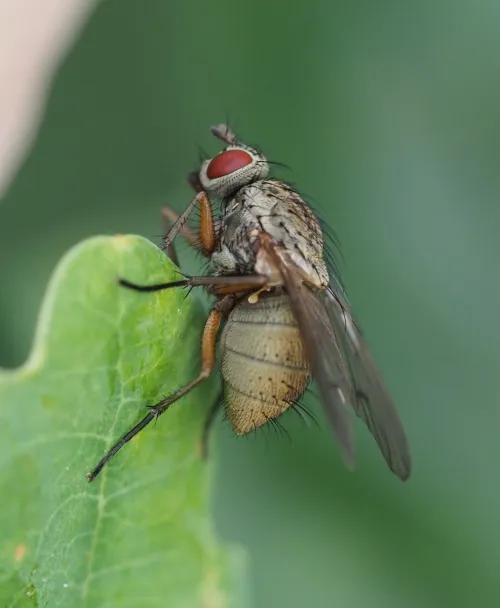
Helina impuncta
Helina impuncta
6.7-8.2mm. Grey/brown with fine stripes on the thorax and no patterning on the abdomen. It has red femora and tibia, with yellow-tinted wings and darkened cross-veins. It breeds on cow dung so most commonly encountered around cow pasture. Males most
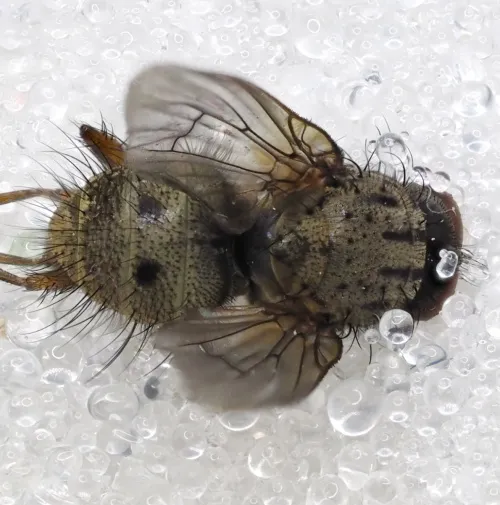
Helina lasiophthalma
Helina lasiophthalma
5.25 to 7.5 mm. Grey head, thorax and abdomen with paired brown spots on the abdominal tergites. Red legs with black tarsi, though the front femur may be darkened. The cross-veins are darkened and it has 2+1 sternopleural bristles. Several other Heli
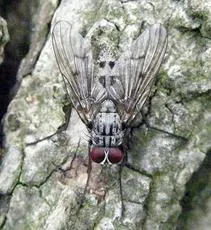
Helina pertusa
Helina pertusa
Size 6 to 8.5 mm. A rather long grey looking fly with black patches on its abdomen and with black tarsi. It is a characteristic species of dead wood habitats and most often seen on the trunks of trees. The larvae are found in rot holes and under bark
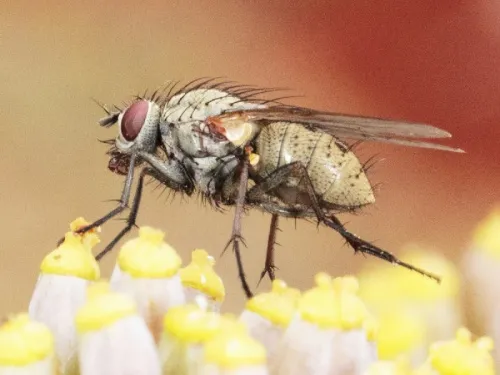
Helina reversio
Helina reversio
Length 5 to 7 mm. Usually beige or greyish in appearance, but very variable. It has dark femora but with reddish apices, reddish tibia and paired spots on the abdomen. Various habitats including hedgerows, flower meadows and woodland. Adults feed on
Helina rufitibia
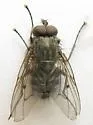
Helina rufitibia
Identification: Body black and pruinose, with dark markings on thorax and abdomen. Legs black except for tips of femora and most of tibiae. Hind femora with strong, nearly complete anteroventral row of bristles. Hind tibia with 2 anterodorsal and
Helina sexmaculata
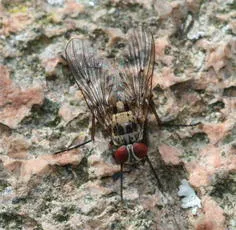
Helina sexmaculata
Most Helina species are very difficult to identify from a photograph alone, though this species is perhaps the exception to the rule. It is a brown/grey colour with brown spots on both the thorax and on the abdomen. It has a distinctive pair of brown
Helina troene
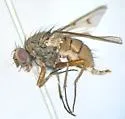
Helina troene
Identification: Females of troene and procedens may be difficult to separate. Snyder's (1949) key separates them by the number of AD bristles on the hind tibia (one in procedens, two in troene). I have seen specimens with a single AD on one leg and
Black Dump Fly
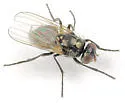
Hydrotaea aenescens
Identification: Generally shiny black. Only Hydrotaea with yellow-orange palps. Male fore femur unmodified.
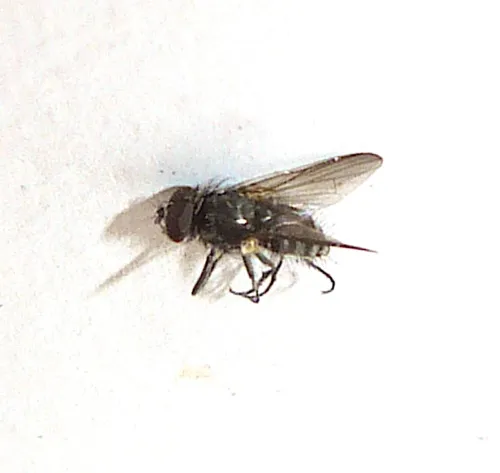
Hydrotaea armipes
Hydrotaea armipes
There are other very similar species and detailed examination is necessary. There are other very similar species and detailed examination is necessary. Mostly recorded between April and September. Widespread and fairly frequent in Britain. No additio
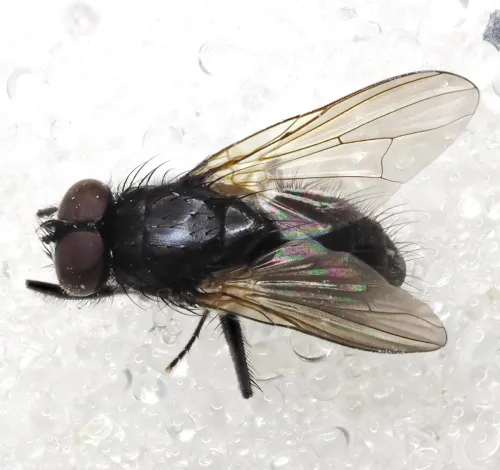
Hydrotaea cyrtoneurina
Hydrotaea cyrtoneurina
Like other Hydrotaea species, this is predominently black or dark brown. Males have an indented front femor which is typical of the genus. Uncommon but widespread in England and Wales, few records in Scotland.
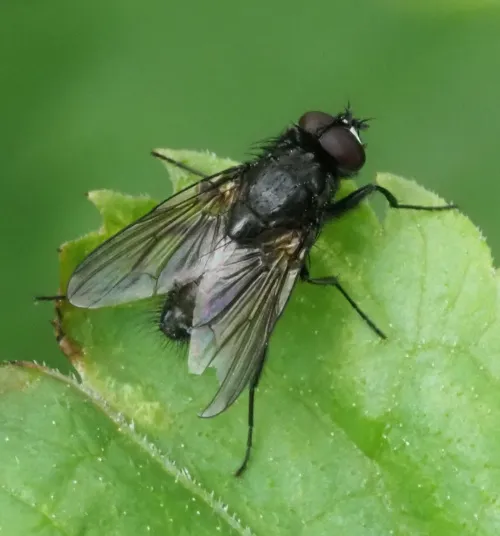
Hydrotaea dentipes
Hydrotaea dentipes
6·5 to 7·75 mm. Like most flies in the Hydrotaea genus it is dark and shiny. Males have the front femur notched and toothed. The thorax, seen from behind, has conspicuous whitish dusting, at least in front of the suture, in line with the acrostichal
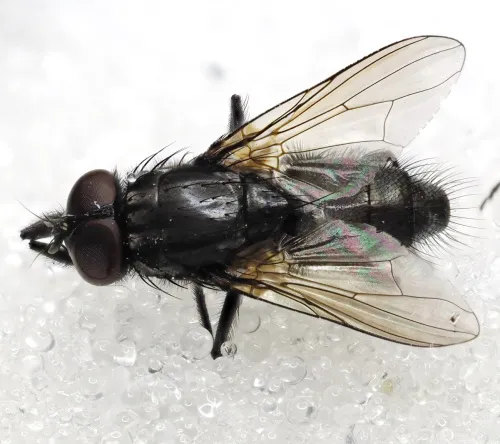
Hydrotaea similis
Hydrotaea similis
One of the larger Hydrotaea species at up to 10mm in length. Generally black with some pale grey dusting on the abdomen and pale stripes at the top of the thorax. Males have ornamentation on the underside of the front femora including a short, sharp
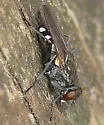
Lispe sociabilis
Lispe sociabilis
Identification: Male distinguished from other members of the tentaculata group by lack of long spine at the end of the fore basitarsus. Female distinguished by dark legs, details of bristles on hind legs, and range.
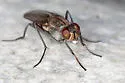
Lispe tentaculata
Lispe tentaculata
Identification: Male long spine at end of fore basitarsus longer than basitarsus and about half as long as second segment. Female often with pale legs (usually black in related species).
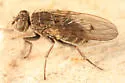
Lispocephala alma
Lispocephala alma
Identification: Distinguished from related species by combination of spots over crossveins, spots on edge of scutellum, and third segment of antennae without red on inside.
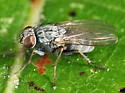
Lispocephala erythrocera
Lispocephala erythrocera
Identification: In Central Europe the keys diagnose it as (in Gregor et al., 2016): mid and hind femora predominantly black, postpedicel reddish yellow at base, crossveins not infuscated, mid tibiae without a submedian anterodorsal bristle, all tibia
Noon Fly
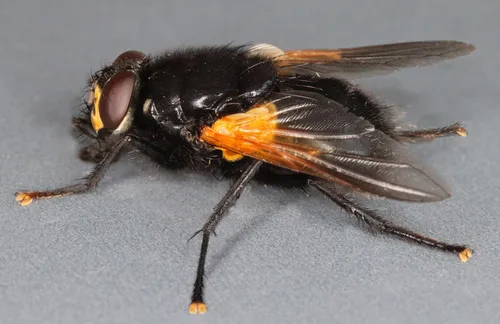
Mesembrina meridiana
This large fly is easily identified by the jet black colour adorned with orange-gold on the base of its wings, on its feet and on its face. Well wooded and well vegetated areas, where it likes to sun-bathe on plant leaves, fences, trees and even on t
Morellia aenescens
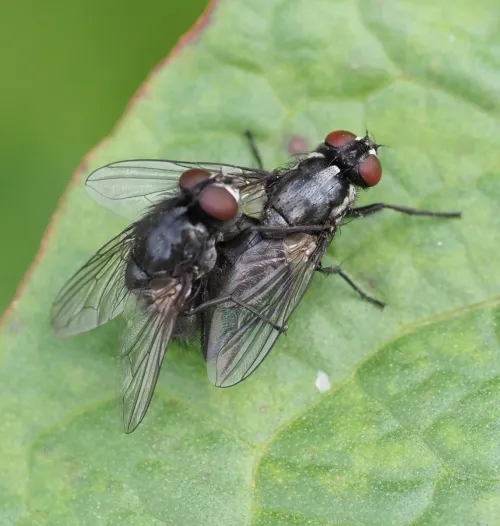
Morellia aenescens
A relatively small muscid (5-7.5mm), largely black but with a pale central stripe on the thorax. See ID Guidance below. There are three UK Morellia species that all look very similar. M. simplex has bristles on the edge of the prosternum (lacking in
Morellia hortorum
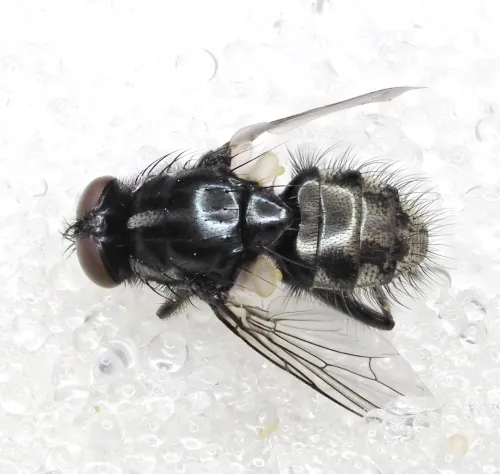
Morellia hortorum
Length 7.5 to 9 mm. Prosternum with strongly convex sides (narrowing at the base) and lacking any bristles on the edges. Hind tibia with a prominent row of anteroventral bristles. Middle and hind tibiae more or less straight. Male with dense hairs on
Morellia podagrica
Morellia podagrica
Identification: Male with mid tibia slightly swollen near base, with short spines.
Morellia simplex
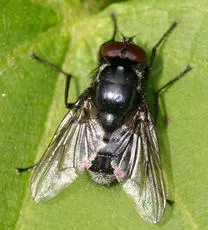
Morellia simplex
Around 9-10mm, a dark grey/black fly with a bold but short white stripe at the front of the thorax. The dark grey abdomen typically has a pale tip. The Morellia genus can be recognised by this generally dark colour, with vein m gently curving towards
Face Fly
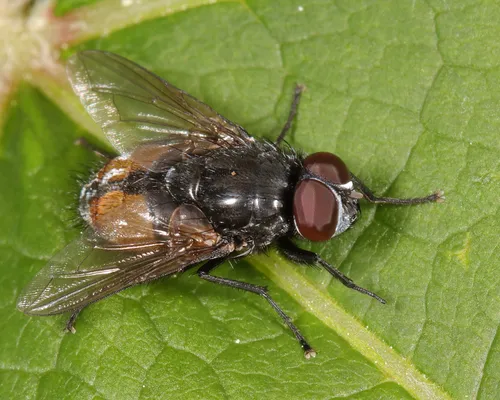
Musca autumnalis
Averaging about 7 - 8 mm long with 4 dark stripes on the thorax. The male has an orange and black patterned abdomen whereas in the female this is a grey pattern. This species gets its common name from its habit of landing on the faces of cattle where
House-fly
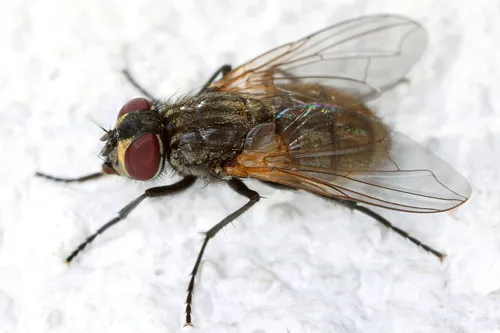
Musca domestica
Length 6 to 7 mm. With varying amounts of orange on the basal segments of the abdomen and four black stripes on the thorax. The legs are all black and the eyes are bare. As with other Musca species, the arista has feather-like long hairs. Similar to
Muscina levida
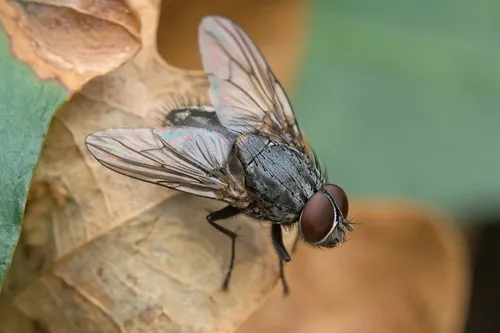
Muscina levida
The Muscina genus is characterised by a striped thorax, a red tip to the scutellum and the discal vein turning up so that the first posterior cell is narrowed towards the wing apex. There are four UK species. Muscina levida is 6-8.5mm, has black legs
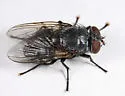
Muscina pascuorum
Muscina pascuorum
Identification: Tibiae all black, third antennal segment partly reddish at base, lower calypter broad.
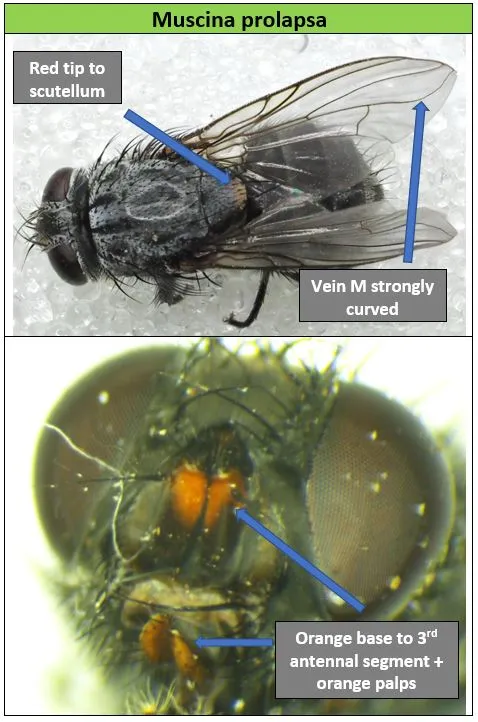
Muscina prolapsa
Muscina prolapsa
Length 7 or 8 mm, bluish grey with black stripes on the thorax. Muscina flies have a reddish tip to the scutellum and the discal vein curves upwards so that the first posterior cell narrows towards the wing apex. M. levida can be distinguished from p
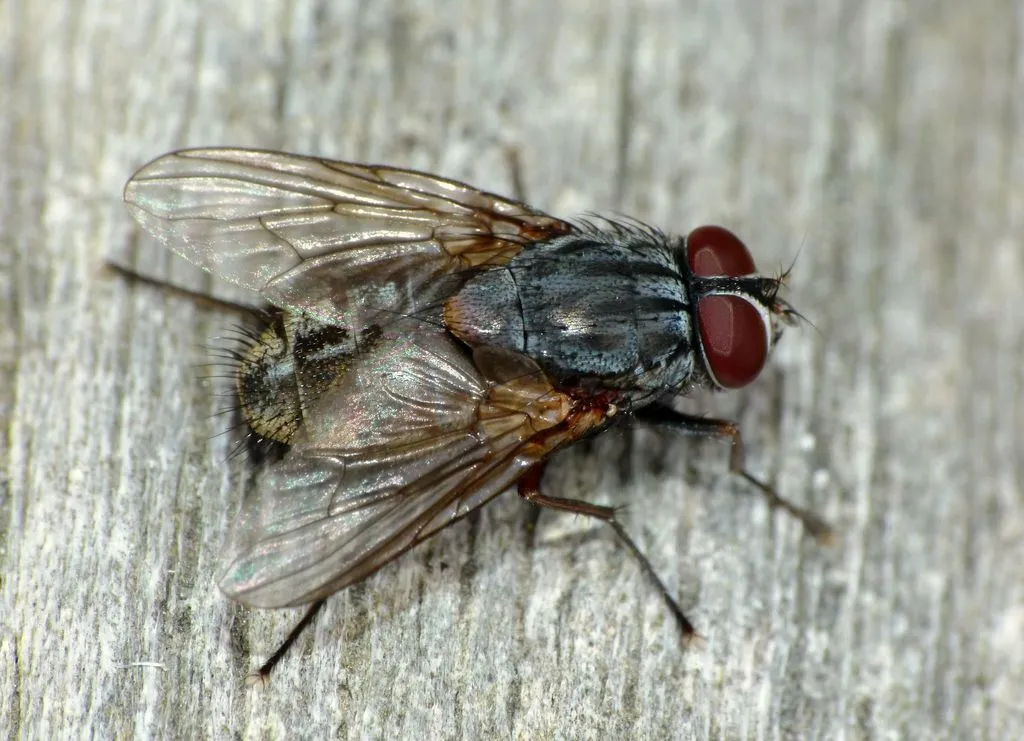
Muscina stabulans
Muscina stabulans
Identification: Tibiae yellow, second segment of antennae mostly dark. "Adults are known to frequent buildings for animal and human habitation in search of food, shelter, and for oviposition. The flies are commonly found in the presence of tainted fo
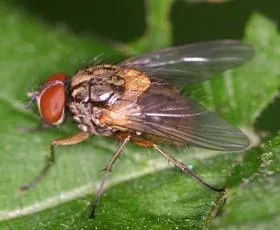
Mydaea corni
Mydaea corni
Various habitats including well wooded areas. Larvae associated with Lactarius and Russula fungi. Widespread but not well recorded in Britain. No additional images available for this species.
Mydaea urbana
Mydaea urbana
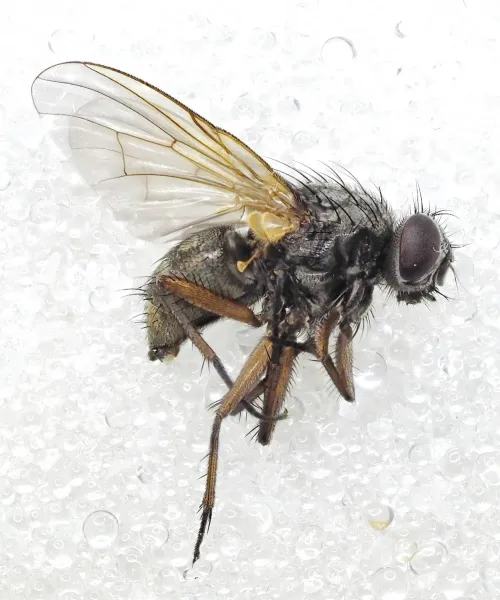
Mydaea is a genus characterised by seta on both the dorsal and ventral wings at the radio-cubital node. Very similar to a number of other related species – detailed examination may be needed to identify to species level. Various habitats, especially
Neodexiopsis major
Neodexiopsis major
Identification: Male : The second antennal joint almost entirely dark brown and the apex of third joint slightly browned ● palpi brownish basally ● abdomen without distinct paired dorsal spots and lacks large glossy areas on each side of the third an
Neomyia cornicina
Neomyia cornicina
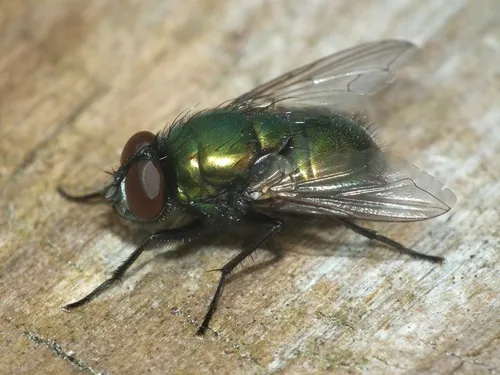
There are several lookalike Greenbottle species that occur in different fly families and to the inexpert eye can look confusingly similar. This species has metallic green jowls. The body coloration tends to bronze with age. The two Neomyia species ar
Neomyia viridescens
Neomyia viridescens
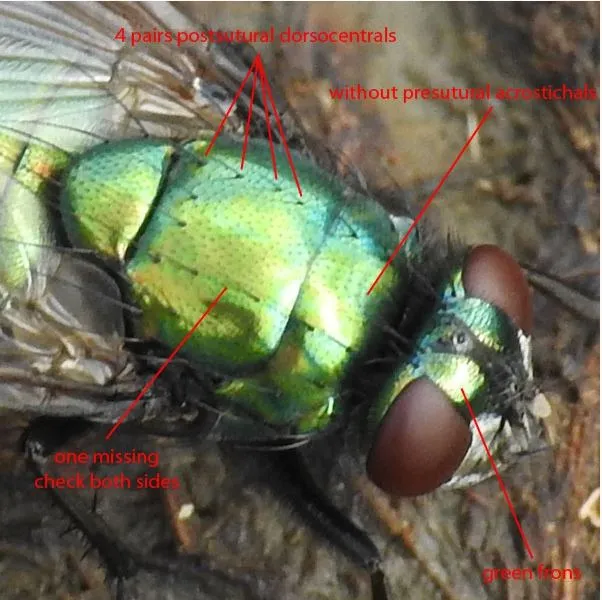
These flies usually have a metallic green tegument (skin surface) when young, but they turn bronze with age as this becomes worn. There are many green flies of several different families and microscopic examination is usually needed to identify most
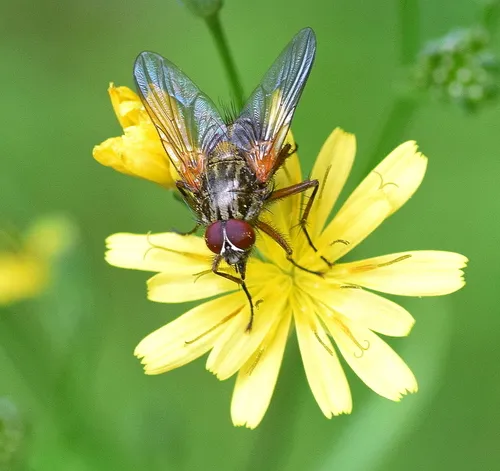
Phaonia angelicae
Phaonia angelicae
Length 7.5 to 10 mm. The male fly is beige-brown in thorax and abdomen, the female's abdomen is somewhat darker than the male's. Meadows, gardens etc where they visit various flowers for nectar. The larvae are found in decaying leaf litter. Fairly fr
Phaonia bysia
Phaonia bysia
Identification: Scutellum yellow (at least in part), abdomen entirely black, presutural acrostichal bristles absent, humeri at least partly yellowish, 1st supra-alar bristle (pra) short
Phaonia caerulescens
Phaonia caerulescens
Identification: "The robust species P. caerulescens has legs entirely black and the hypopleura usually with hairs on upper border. Adults may readily be recognized by the dark brown margins to the calyptrae ".
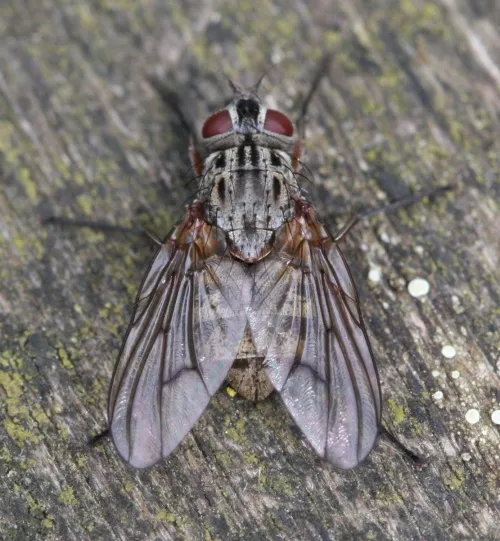
Phaonia errans
Phaonia errans
A buff/grey fly with a slightly chequered appearance. There are other very similar species in this genus which means that a detailed image or examination of an actual specimen is generally needed to identify the exact species. Often sunning on tree t
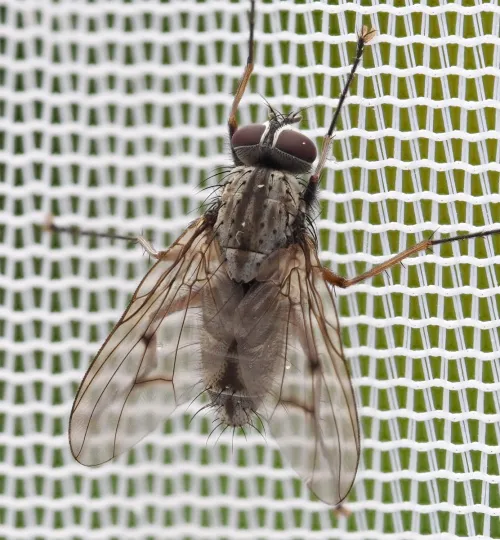
Phaonia fuscata
Phaonia fuscata
One of several very similar species so great care is needed with identification. Unless identified by a recognised expert, a photo is required and the specimen should be examined with a microscope. In the comments box, state the key or ID method used
Phaonia gobertii
Phaonia gobertii
A greyish fly with a slightly chequered appearance. No additional images available for this species.
Phaonia houghii
Phaonia houghii
Identification: Common, widespread. Large dark fly with yellowish scutellum and often humeri as well; legs yellow. Antennae yellowish except apically on the last segment. Arista with long hairs. Prealar bristle long. Node of Rs with a few hairs
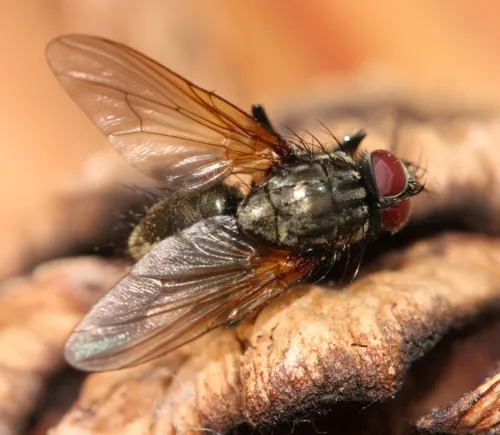
Phaonia incana
Phaonia incana
This dark brown/grey bodied fly is very similar to other related species and detailed examination is needed to arrive at the species. Unless identified by a recognised expert, a photo is required and the specimen should be examined with a microscope.
Phaonia pallida
Phaonia pallida
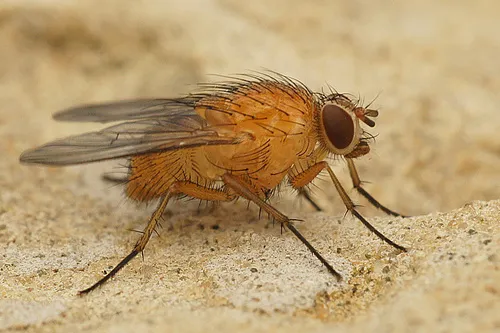
Length about 7 mm. An orange fly with a very hairy thorax. Thricops diaphanus is a very similar orange muscid. Females can be separated by the frontal vitta (area between eyes) which is orange in P. pallida but dark in T. diaphanus . Males will gener
Phaonia palpata
Phaonia palpata
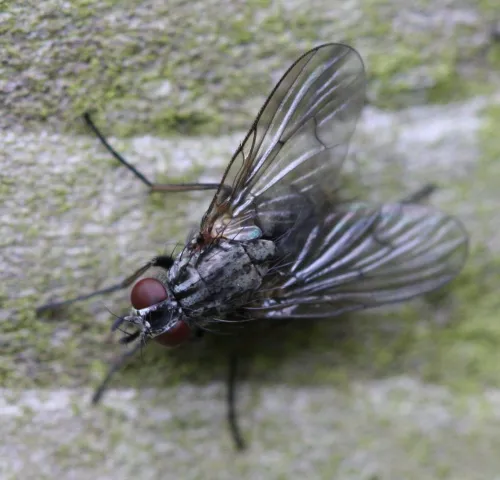
Length 6 to 8 mm. Generally dark grey with darker marks on the abdomen, four dark stripes on the thorax and further black marks on the scutellum. It has 3 pairs of dorso-central bristles behind the thoracic suture line and unusually large, flattened
Phaonia rufiventris
Phaonia rufiventris
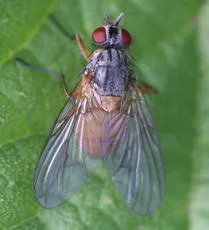
This species has a grey thorax and an orange abdomen, the scutellum is usually entirely orange (but not always), and the fore tibia without posterior setae. Separated from Phaonia subventa by the presence of only one presutural acrostichal bristle an
Phaonia signata
Phaonia signata
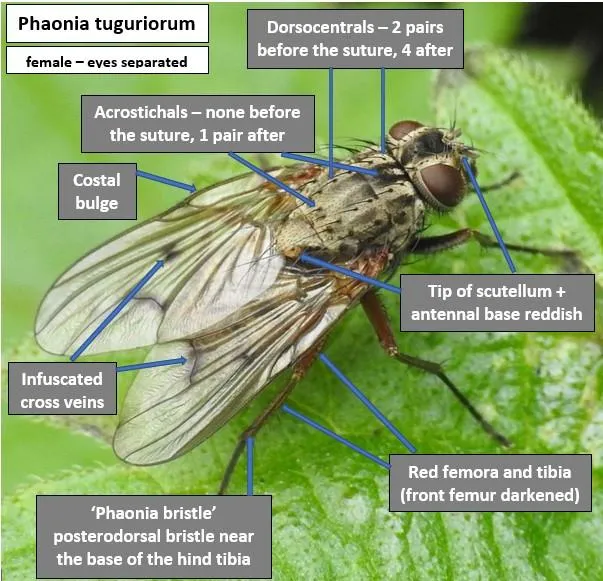
c7mm. This is a very common fly, appearing early in the year when it appears in warm days from February and also in late Autumn when it it usually seen sunning on fences and walls. It has a dull brown abdomen with darker transverse blotches, red femo
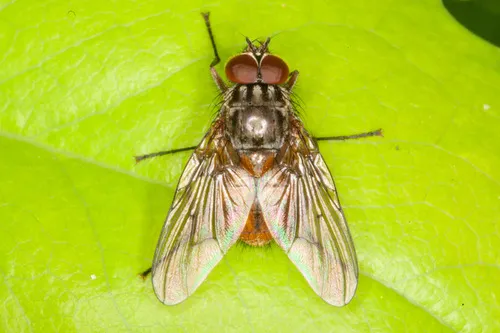
Phaonia subventa
Phaonia subventa
Length 6 to 8 mm. This is one of several similar species with an orange body, stripy thorax, which is grey above and orange below. The bulge on the outer wing is characteristic of the Phaonia genus. Phaonia rufiventris is another very common orange f
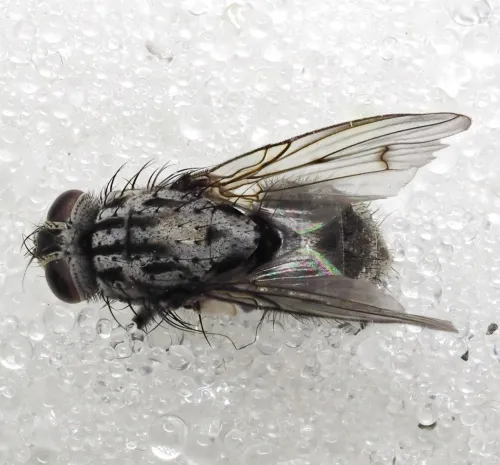
Phaonia trimaculata
Phaonia trimaculata
Around 10mm, this is a fairly distinctive and well marked species though still requires a specimen to be examined in detail for identification to be sure. Unless identified by a recognised expert, a photo is required and the specimen should be examin
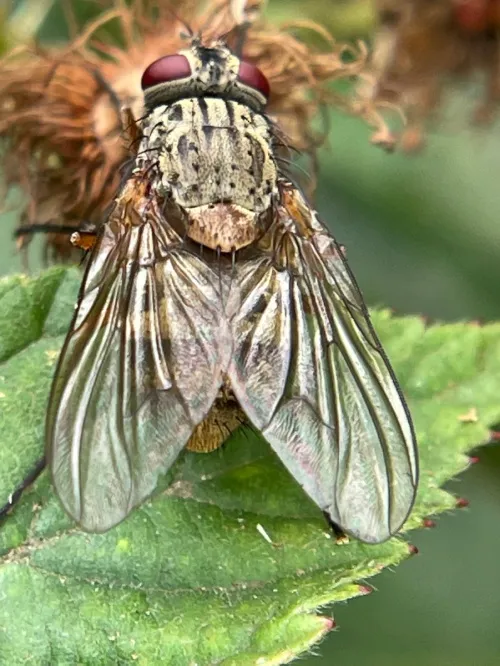
Phaonia valida
Phaonia valida
9.5-11mm. A large and mainly brown muscid with the legs and the tip of the scutellum red. The lower orbital hairs (behind the head) are typically reddish and it has a pale base to the antennae. Can be seen April to November basking on tree trunks, et
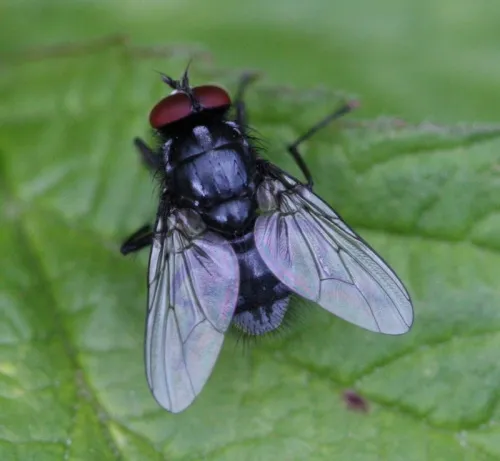
Polietes domitor
Polietes domitor
6-8mm. The abdomen has bright metallic blue and pale patches. The thorax has a pale median band behind the head. Morellia simplex is similar but the genus Polietes can be distinguished by vein M being straight not bent. Unless identified by a recogni
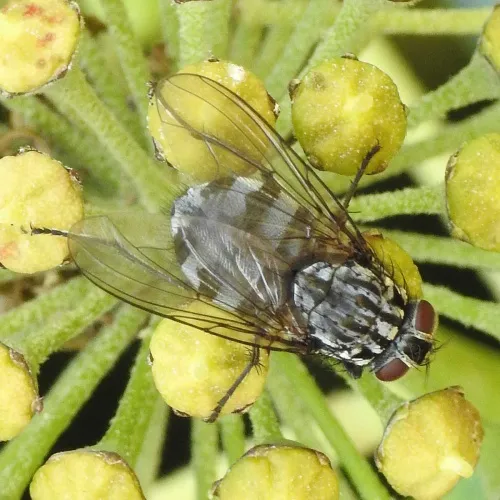
Polietes lardarius
Polietes lardarius
Length about 10 mm. This is a large muscid, superficially looking like a sarcophagid flesh-fly. It has a blue-grey chequered abdomen and jagged stripes on the thorax. The scutellum also usually has stripes or blotches. It has silvery dusting on the f
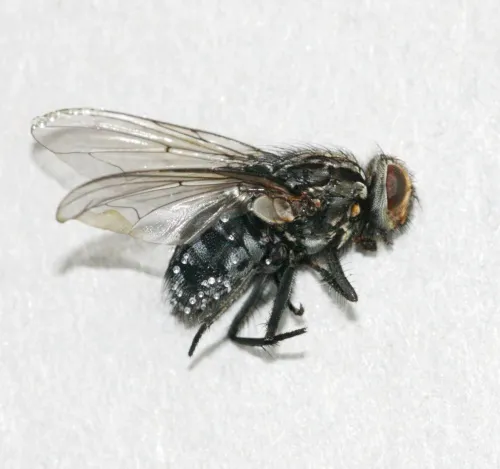
Polietes meridionalis
Polietes meridionalis
Length about 10 mm. A greyish fly with a chequered appearance and striped thorax. The front spiracle is yellow and the parafacial and anterior gena is yellow/gold. Polietes lardarius is very similar but this species has a grey/white front spiracle an
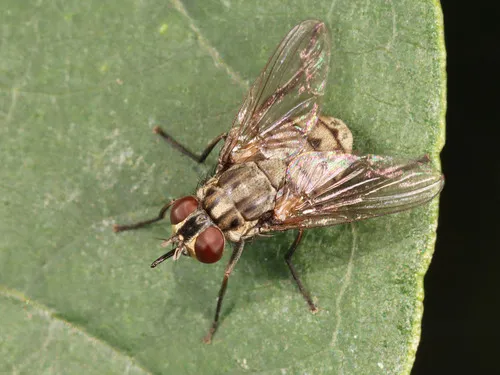
Stable Fly
Stomoxys calcitrans
6-8mm with an overall brown appearance and a pale short creamy central stripe on the thorax behind the head. It has a characteristic proboscis which protrudes forward from its head. As the name suggests, this fly is found near to horses and other agr
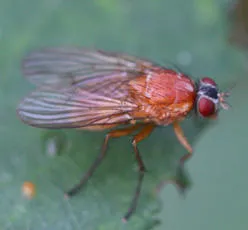
Thricops diaphanus
Thricops diaphanus
This fly is unusual in being almost completely orangey-yellow. Phaonia pallida is a very similar orange muscid. Females can be separated by the frontal vitta (area between eyes) which is orange in P. pallida but dark in T. diaphanus . Males will gene
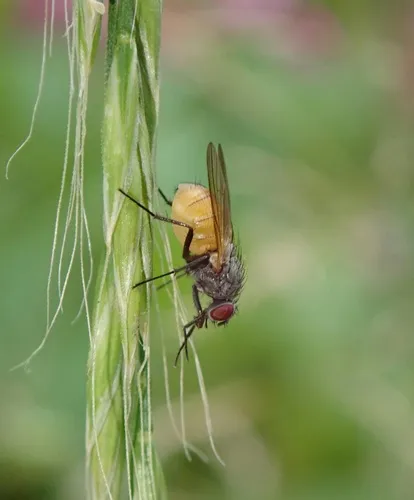
Thricops semicinereus
Thricops semicinereus
This is a hairy fly with an orangey abdomen that is black at the tip. Scattered records from England and Wales. No additional images available for this species.
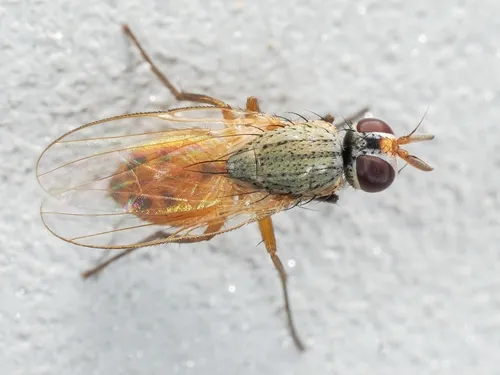
Bermudagrass Stem Maggot
Atherigona reversura
Azelia cilipes
Azelia cilipes
Brontaea delecta
Brontaea delecta
Coenosia agromyzina
Coenosia agromyzina
Coenosia atrata
Coenosia atrata
Coenosia furtiva
Coenosia furtiva
Tiger Fly
Coenosia humilis
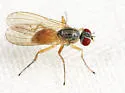
Coenosia intacta
Coenosia intacta
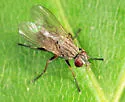
Coenosia lata
Coenosia lata
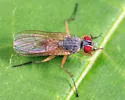
Coenosia nigritarsis
Coenosia nigritarsis
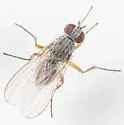
Coenosia nivea
Coenosia nivea
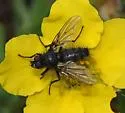
Drymeia spinitarsis
Drymeia spinitarsis
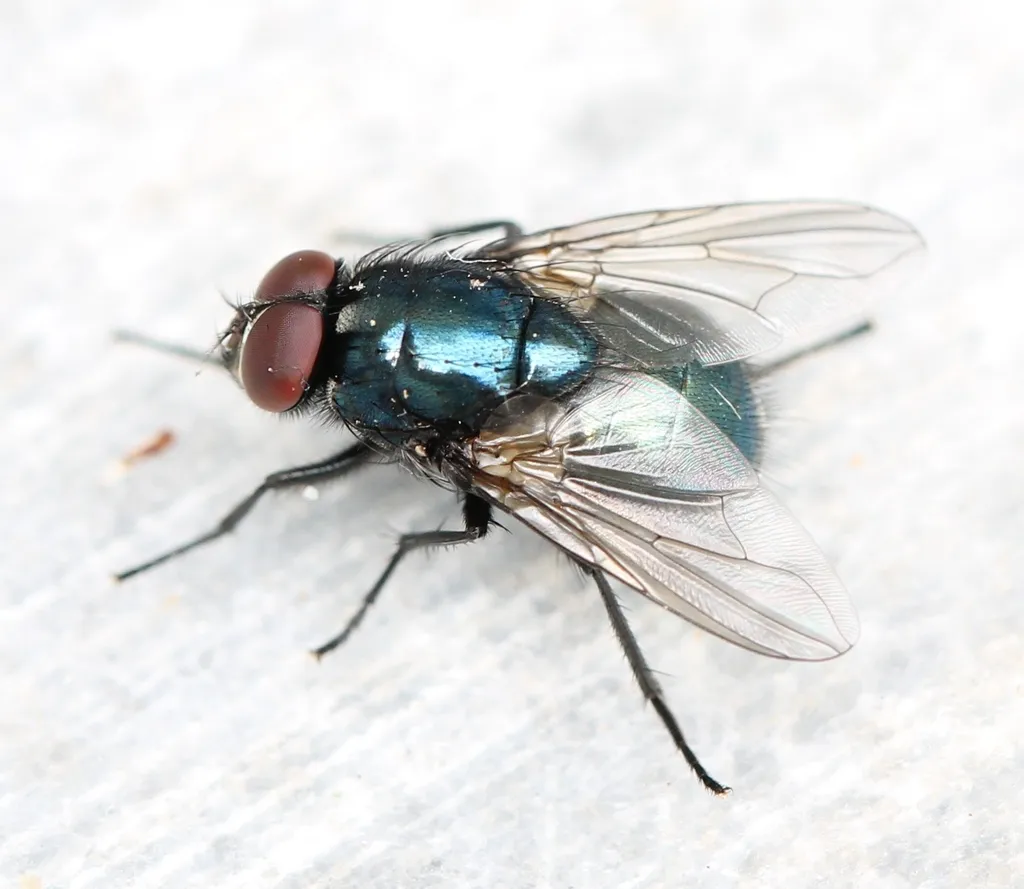
Eudasyphora cyanicolor
Eudasyphora cyanicolor
Graphomya minuta
Graphomya minuta
Horn Fly
Haematobia irritans
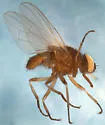
Moose Fly
Haematobosca alcis
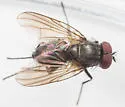
Hebecnema umbratica
Hebecnema umbratica
Hebecnema vespertina
Hebecnema vespertina
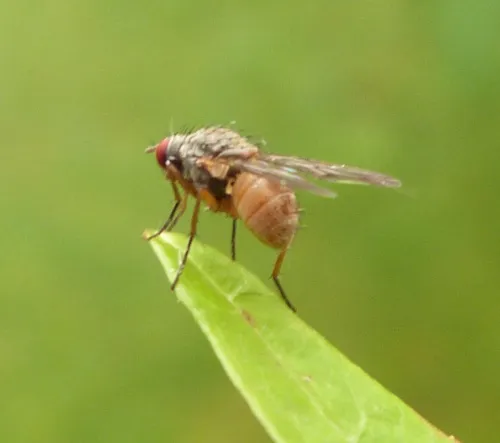
Helina abdominalis
Helina abdominalis
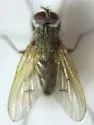
Helina abiens
Helina abiens
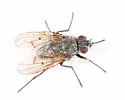
Helina pectinata
Helina pectinata
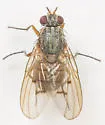
Helina procedens
Helina procedens
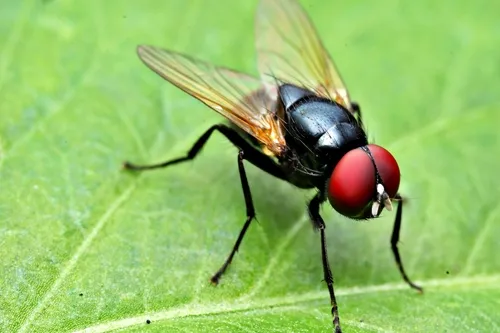
Hydrotaea chalcogaster
Hydrotaea chalcogaster
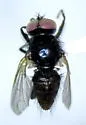
Hydrotaea floccosa
Hydrotaea floccosa
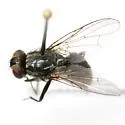
Hydrotaea houghi
Hydrotaea houghi
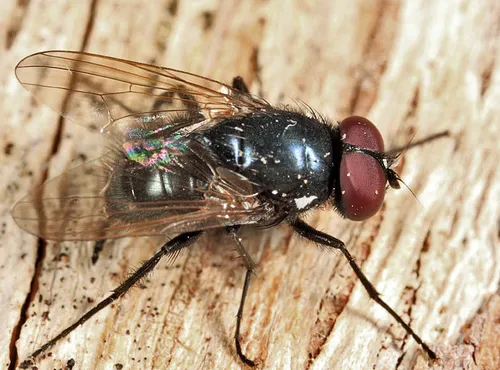
Hydrotaea ignava
Hydrotaea ignava
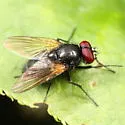
Hydrotaea militaris
Hydrotaea militaris
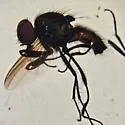
Hydrotaea scambus
Hydrotaea scambus
Hydrotaea succedens
Hydrotaea succedens
Limnophora narona
Limnophora narona
Limnophora obsignata
Limnophora obsignata
Lispe albitarsis
Lispe albitarsis
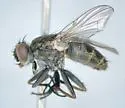
Lispe nasoni
Lispe nasoni
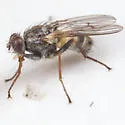
Lispocephala tinctinervis
Lispocephala tinctinervis
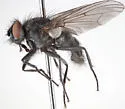
Lispoides aequifrons
Lispoides aequifrons