
Family Leaf Miner Flies (Agromyzidae)
Agromyzidae is a family in the order Diptera. Browse 320 named species recorded in this family, or open an individual profile for its available identification and natural-history information.
Species in Agromyzidae (320)
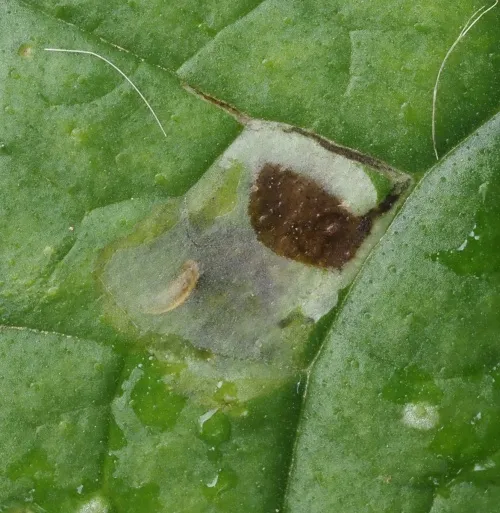
Agromyza abiens/myosotidis/lithospermi agg.
Agromyza abiens/myosotidis/lithospermi agg.
The larvae of Agromyza abiens , Agromyza myosotidis and Agromyza lithospermi produce identical mines on the leaves of several larval food plants in the Boraginaeceae family, such as Borage, Comfrey and Green Alkanet. Many other host plants are known,
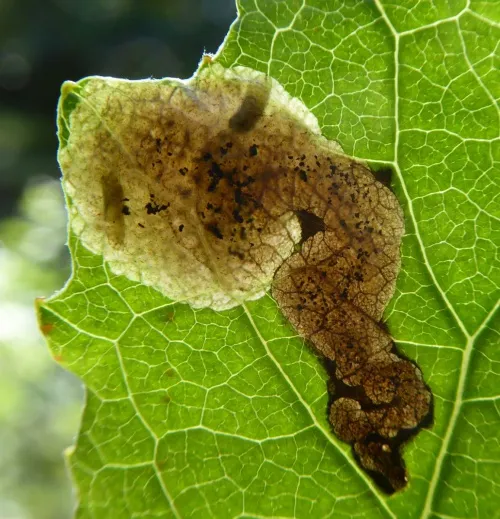
Agromyza albitarsis
Agromyza albitarsis
The larvae of the fly Agromyza albitarsis mine the leaves of Aspen, hybrid Black Poplar, other poplars and willows, forming a large greenish blotch mine which turns brown. See the National Agromyzidae Recording Scheme website for further details of t
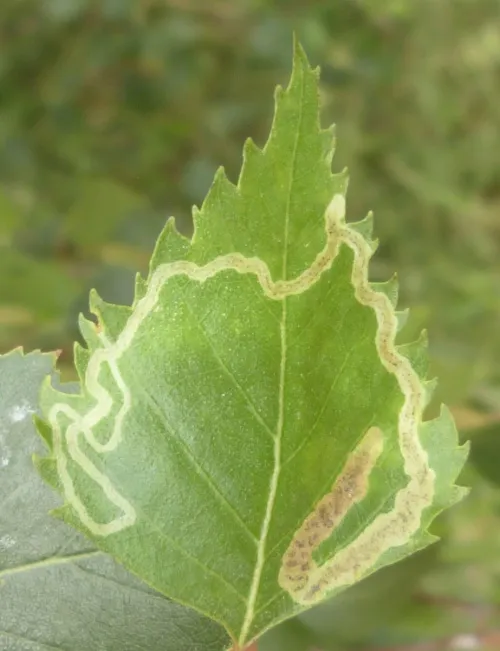
Agromyza alnibetulae
Agromyza alnibetulae
The larva produce a leaf mine in the leaves of Birch. The mine is an unusually long, upper-surface corridor that widens only little and winds freely through the leaf. Frass in two neat rows. See the National Agromyzidae Recording Scheme website for f
Agromyza alnivora-maybe
Agromyza alnivora-maybe
Agromyza alnivora Spencer, 1969 is the only agromyzid in the world known to mine in alder leaves. It is only known to occur in the Palearctic, but similar mines in North America may be the work of the same species.
Agromyza anthracina
Agromyza anthracina
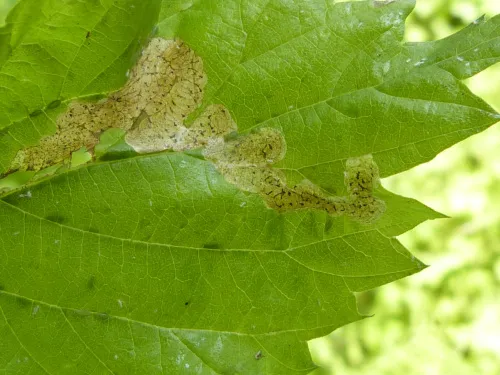
The larvae mine the leaves of Common Nettle and other related host plants. The mine usually starts away from the leaf edge and has a coiled intestine like start; it has frass in long threads in the broader part of the mine. See the National Agromyzid
Agromyza demeijerei
Agromyza demeijerei
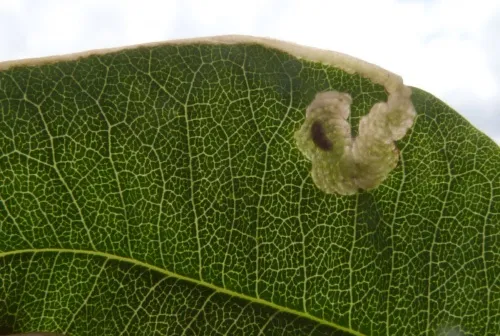
The larvae mine leaves, usually of Laburnum . The mine is an upper surface gallery along one margin towards the tip of the leaf, enlarging into a blotch on the other margin. Frass pale green when fresh, brownish later. The primary and secondary feedi
Agromyza dipsaci
Agromyza dipsaci
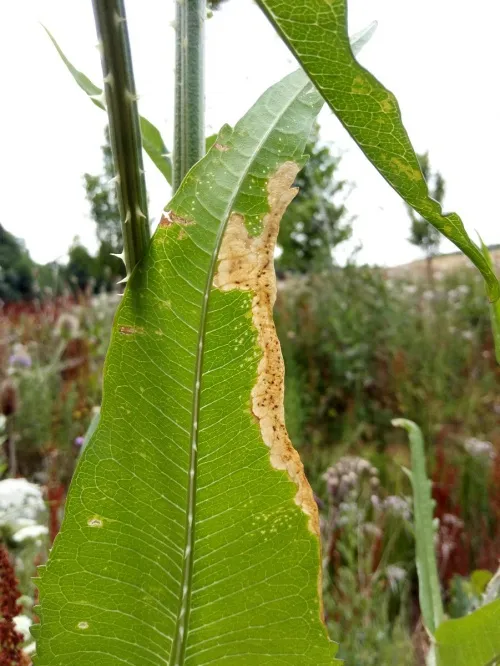
The larvae mine the leaves of Teasel . It produces a long mine, which rapidly broadens, at the leaf edge. The mine turns brown. See the National Agromyzidae Recording Scheme website for further details of larva and adult insect. ref.: Warrington, B.P
Agromyza flaviceps
Agromyza flaviceps
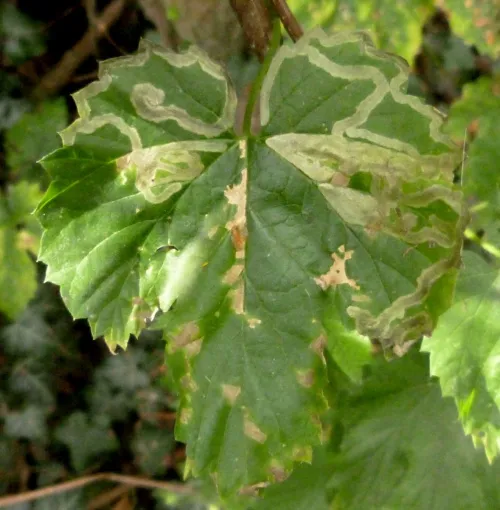
The larvae mine the leaves of Hop ( Humulus lupulus ) creating a long upper surface gallery widening towards the end and with greenish, diffused frass. See the National Agromyzidae Recording Scheme website for further details Agromyza igniceps has si
Alfalfa Blotch Leafminer
Agromyza frontella
Larva forms a characteristic linear-blotch mine in Medicago , and less frequently in Melilotus and Trifolium . Introduced species, relatively recently. The parasite Dacnusa dryas has been introduced in NE US as a biocontrol
Agromyza idaeiana
Agromyza idaeiana
Larvae form linear blotch mines. The only recorded host in America is Potentilla gracilis , but in Europe is is known to feed on many genera of Rosoideae .
Agromyza johannae
Agromyza johannae
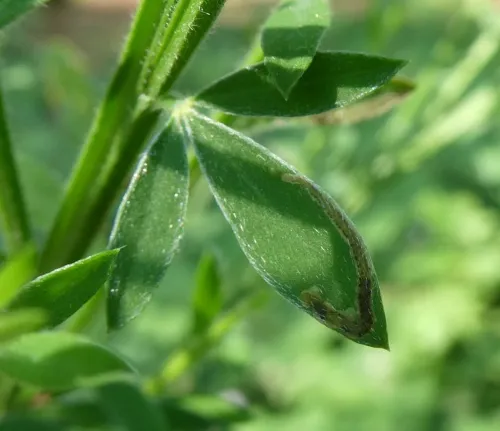
The larvae mine the leaves of Broom and related plants. The mine is hook-like, usually along the leaf-margin and running towards the leaf apex, then turning and widening into a blotch over the mid-rib. See the National Agromyzidae Recording Scheme we
Agromyza nana
Agromyza nana
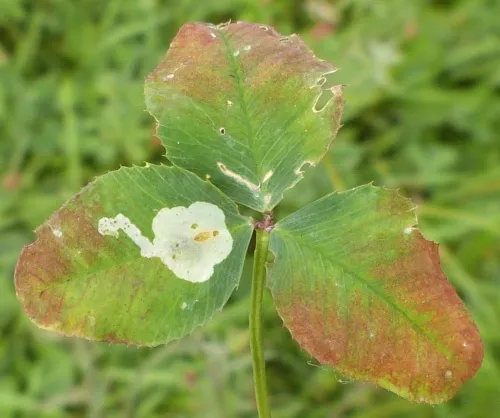
The larvae mine the leaves of various clovers and other species in the Leguminosae family. The mines have a short, broad gallery leading to a conspicuous, roundish white blotch in the centre of the leaf. The blotch is on the upper surface with some d
Agromyza nigrescens
Agromyza nigrescens
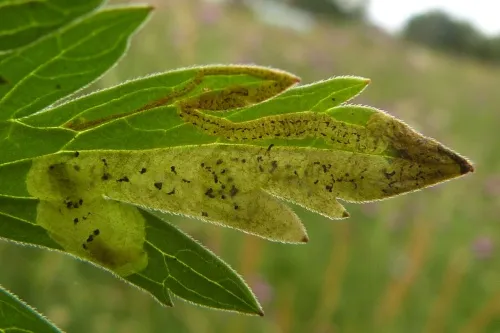
The larva mines the leave of Geranium and Erodium species. The start of the mine is corridor-like and usually follows the leaf margin, before widening considerably into a secondary blotch, with irregular sides. Primary and secondary feeding lines are
Agromyza pseudoreptans/reptans agg.
Agromyza pseudoreptans/reptans agg.
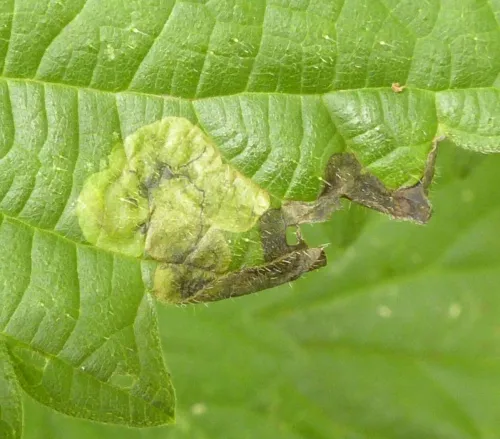
The larvae of these two species produce identical mines on nettles and other related host plants. The mine is a long blotch mine, usually adjacent to the edge of the leaf, which turns black. The mines cannot be reliably separated to species level and
Agromyza sulfuriceps
Agromyza sulfuriceps
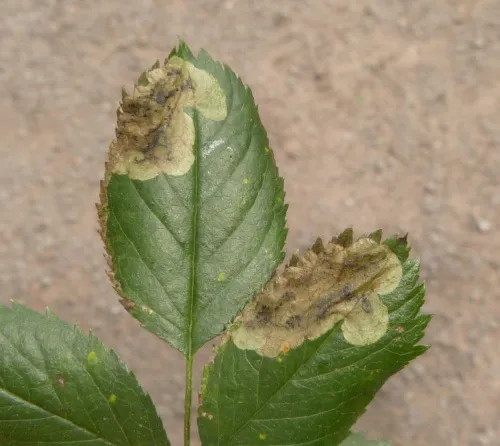
The larvae mine the leaves of various species in the Rosaceae family including Roses, Meadowsweet, Strawberry, Silverweed, Cinquefoil, Raspberry and Burnets. The mine starts as a long corridor, its initial part often along the leaf margin or a thick
Agromyza varicornis
Agromyza varicornis
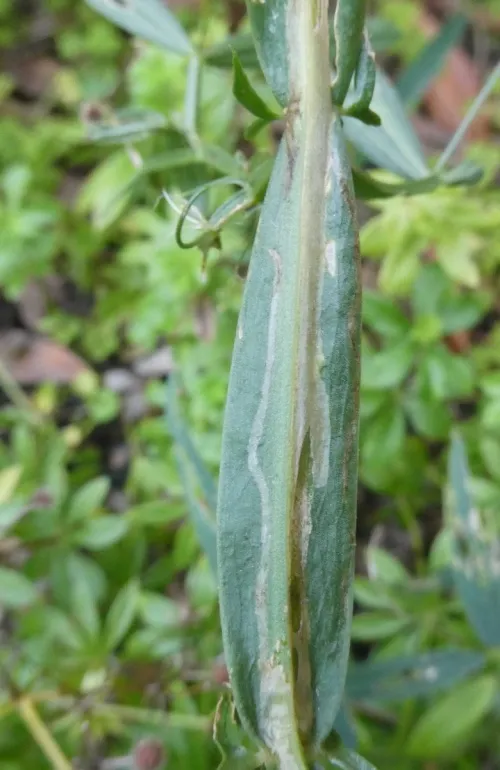
The larva mines the winged stems and leaves of Everlasting Peas ( Lathyrus latifolius and Lathyrus sylvestris ). The long white mine is in the wing of the stem, but often starts in leaf (though not always). See the National Agromyzidae Recording Sche
Agromyza varifrons
Agromyza varifrons
Larvae mine leaves of hackberry ( Celtis ). This is the only agromyzid listed in with this host. The mine is described as "an irregular linear blotch, most frequently following the leaf margin. One empty leaf mine found at Hot Springs, Ark. . . can s
Agromyza vicifoliae
Agromyza vicifoliae
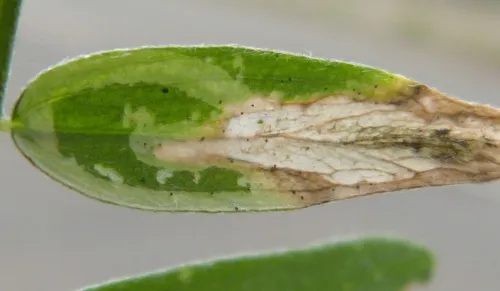
The larvae mine the leaves of various vetch species forming a blotch, preceded by a gallery along the leaf margin. The blotch is over the midrib of the leaflet. Frass occurs very sparingly in the gallery, and in the blotch as a few large lumps. See t
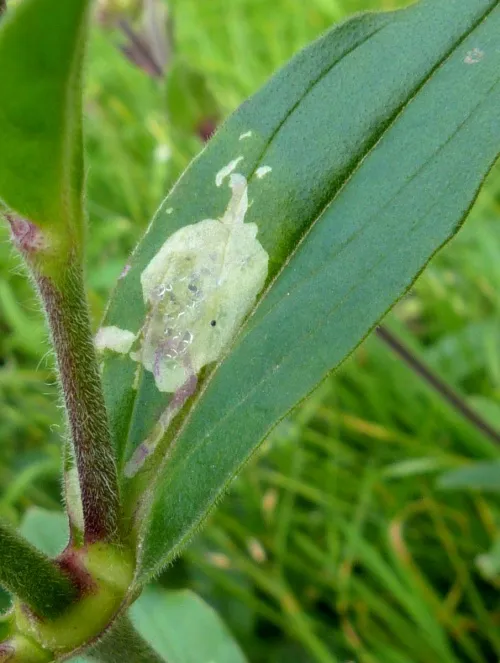
Amauromyza flavifrons
Amauromyza flavifrons
The leaf-mine formed by this species is found on the leaves of various plants including Campion. A short linear mine is formed, then a white blotch mine, the linear section sometimes is not visible under the blotch that is formed later. The blotch ha
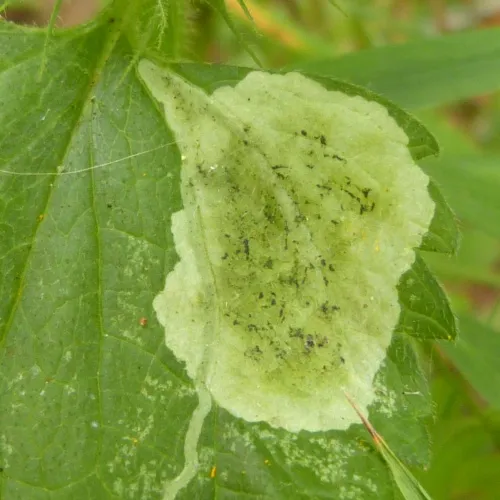
Amauromyza (Cephalomyza) labiatarum
Amauromyza labiatarum
The fly Amauromyza labiatarum has larvae which mine the leaves of various plants including Dead-nettles and Woundworts producing a mine with a narrow gallery leading to a largish blotch on the upper surface. Frass is green and indistinct in the galle
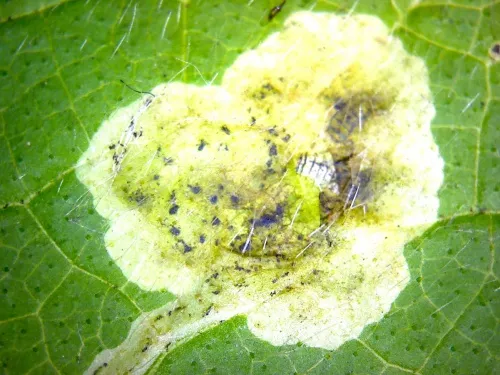
Amauromyza morionella
Amauromyza morionella
The larva of the fly Amauromyza morionella mines the leaves of various Stachys and Lamium species. The frass is conspicuous in the mine and the mine is initially linear, then develops into a white blotch, often enveloping the early mine. See the Nati
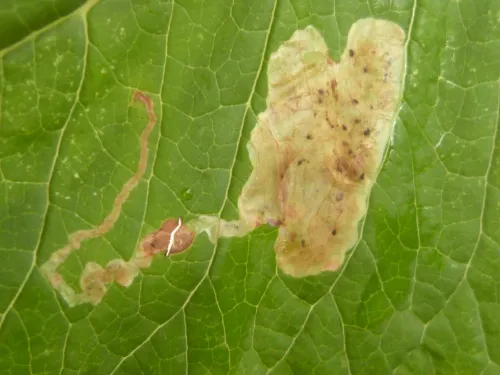
Amauromyza (Cephalomyza) verbasci
Amauromyza verbasci
The larva of the fly Amauromyza verbasci causes a blotch mine on the upper surfaces of the leaves of Mullein, Common Figwort and Butterfly Bush . The mine is pale initially but turns brown later. Frass in sizeable dispersed grains. See the National A
Aulagromyza fulvicornis
Aulagromyza fulvicornis
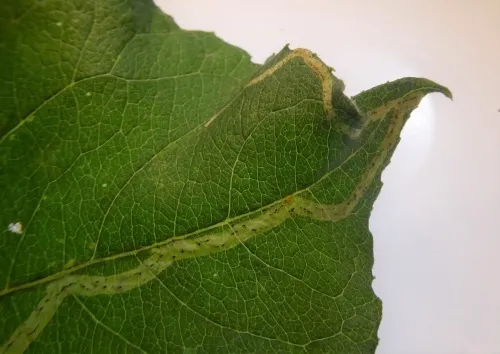
The larvae mine the leaves of sallows ( Salix ). The mine is a corridor which hardly widens from beginning to end. The frass is in thread fragments in two broken lines. See the National Agromyzidae Recording Scheme website for further details of pupa
Aulagromyza heringii
Aulagromyza heringii
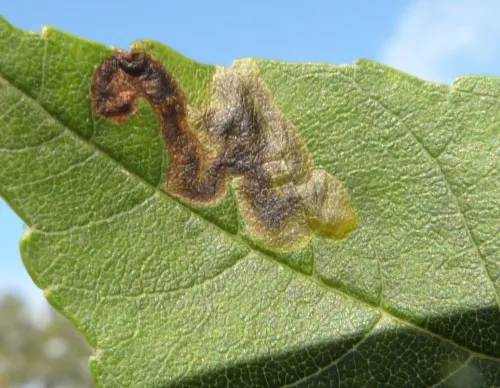
The larva mines the leaves of Ash producing an upper surface, long corridor or irregular blotch mine, beginning with a small yellowish-brown pustule. See the National Agromyzidae Recording Scheme webpage for this species for further details of pupari
Aulagromyza luteoscutellata
Aulagromyza luteoscutellata
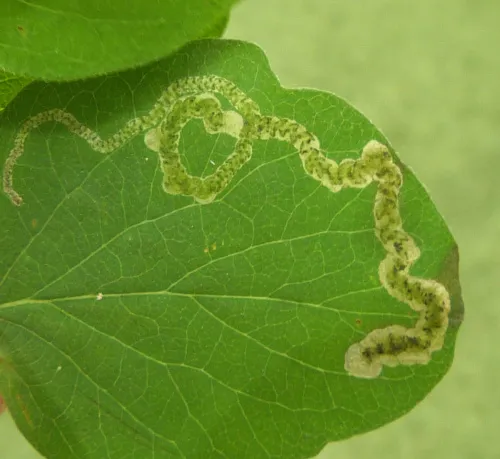
The larvae mine the leaves of Lonicera species ( Honeysuckle) , Symphoricarpos ( Snowberry ) and Leycesteria formosa . The mine is linear, with frass in a broad green band with scattered dark granules. See the National Agromyzidae Recording Scheme we
Aulagromyza populi
Aulagromyza populi
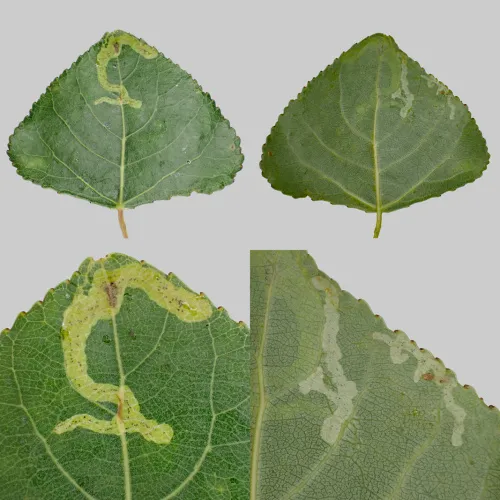
The larvae of the fly Aulagromyza populi produce winding leaf mines in the leaves of various Poplar species. The mines are recorded more often than the adult flies. Status in Britain is difficult to determine as the species is poorly recorded.
Aulagromyza populicola
Aulagromyza populicola
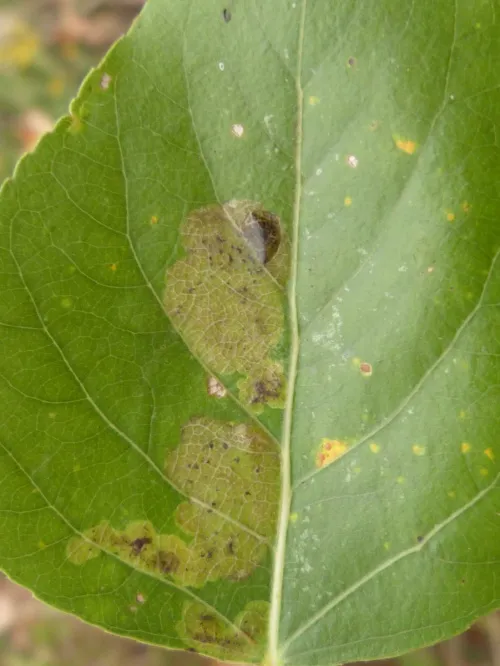
The larva forms an elongated blotch mine on the leaves of some Poplar species including Lombardy Poplar. The pupation is outside the mine, and the puparium often sticks out of the semi-circular exit slit in the mine. See the National Agromyzidae Reco
Aulagromyza tremulae
Aulagromyza tremulae
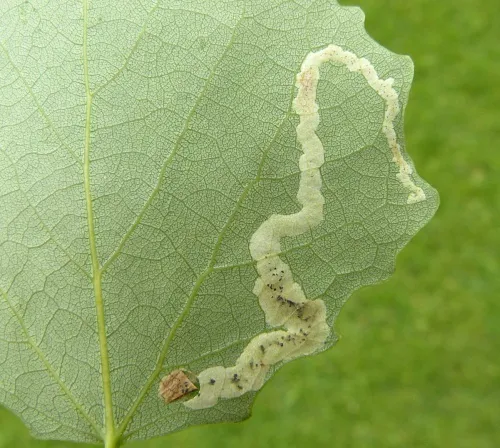
The larvae of the fly Aulagromyza tremulae mine the leaves of Aspen (and possibly Black Poplar). The mine is a long winding gallery on the underside of the leaf . See the National Agromyzidae Recording Scheme webpage for this species for further deta
Aulagromyza tridentata
Aulagromyza tridentata
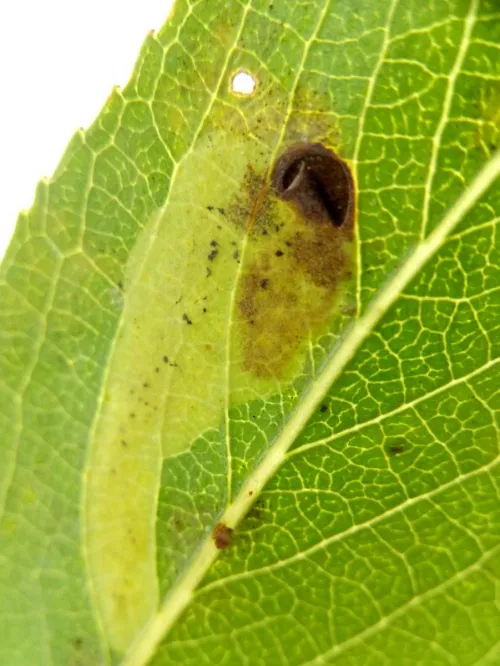
The larva mine the leaves of willows such as Crack-willow and Osier producing an elongated yellowish blotch mine. See the National Agromyzidae Recording Scheme webpage for this species for further details of puparium and adult insect . ref.: Warringt
Calycomyza artemisiae
Calycomyza artemisiae
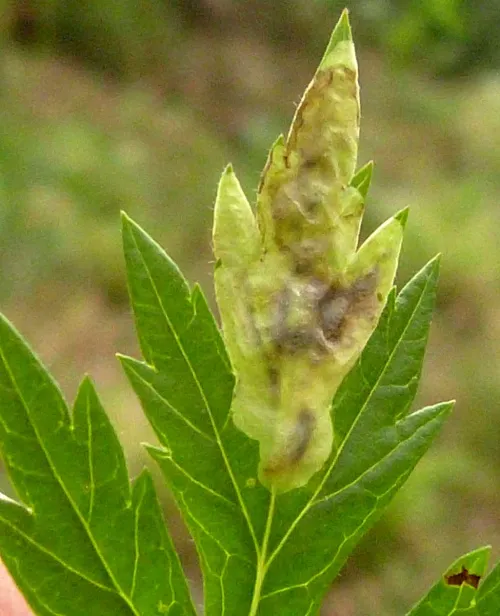
The larvae of the fly Calycomyza artemisiae mine the leaves of Mugwort and some related plant species. The mine is an opaque, pale upper-surface blotch. See the National Agromyzidae Recording Scheme webpage for this species for further details of pup
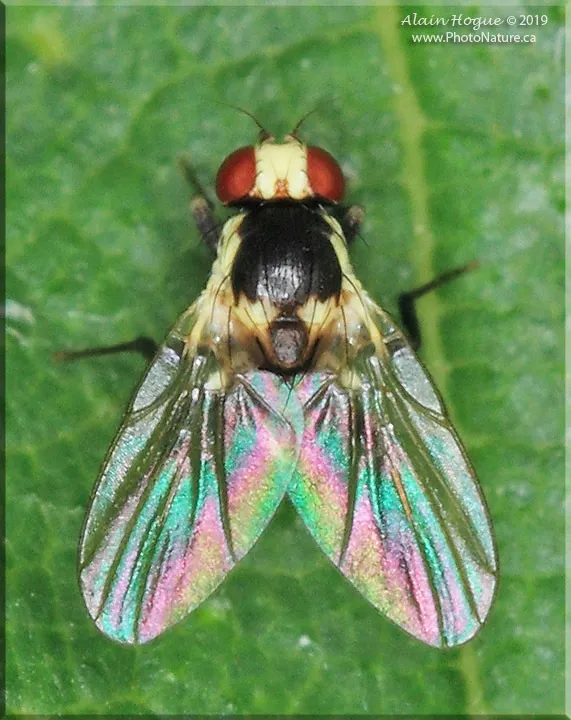
Calycomyza flavinotum
Calycomyza flavinotum
In leaves of Ageratina, Arctium, and Eupatorium , larvae form whitish blotch mines, with several larvae in the same leaf. The mines frequently merge and give the appearance of a single very large mine.
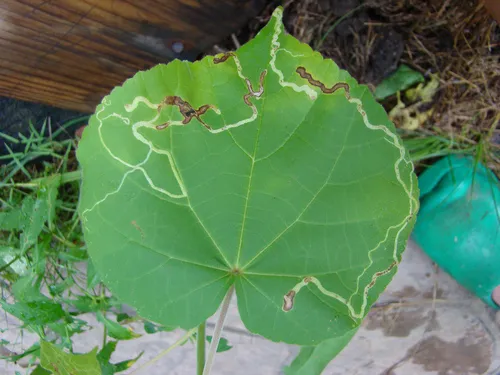
Calycomyza malvae
Calycomyza malvae
Larvae mine leaves of Malveae (mallows) and some legumes, starting on the bottom side and moving to the top.
Cerodontha bicolorata
Cerodontha bicolorata
Identification: Tergites 1-3, but not 4, contrasting yellow, first flagellomere of male not enlarged, last two sections of vein Cu approximately equal.
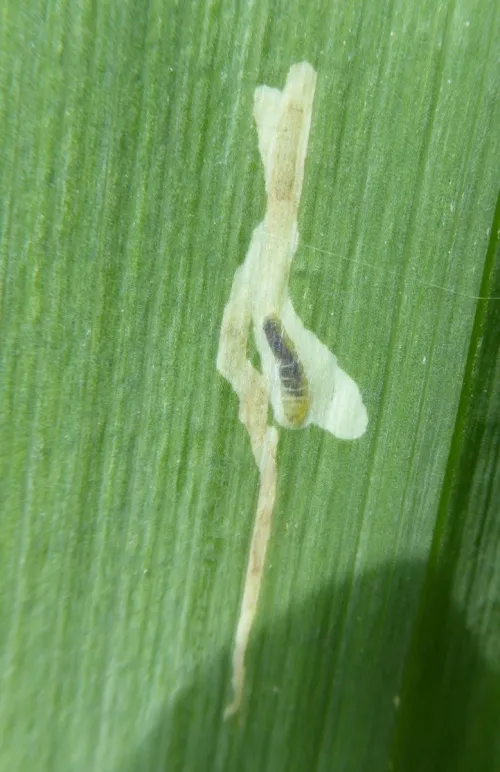
Cerodontha (Dizygomyza) iraeos
Cerodontha iraeos
The larvae mine the leaves of Yellow Iris ( I ris pseudacorus ) and other related plants. The mine takes the form of a short, white, irregular corridor, parallel to the leaf blade. See the National Agromyzidae Recording Scheme webpage for this specie
Cerodontha (Dizygomyza) iridis
Cerodontha iridis
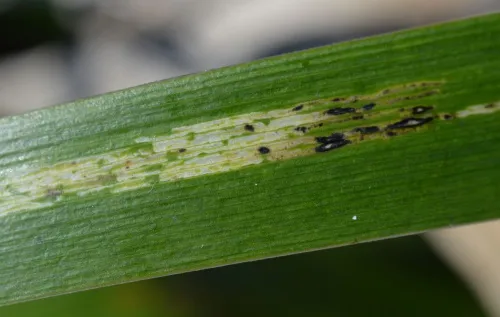
The larva form a blotch mine on the leaves on Stinking Iris ( I ris foetidissima ). The affected area may be large as several mines may coalesce. The mine has a mottled greenish appearance. See the National Agromyzidae Recording Scheme webpage for th
Cerodontha (Poemyza) phragmitidis
Cerodontha phragmitidis
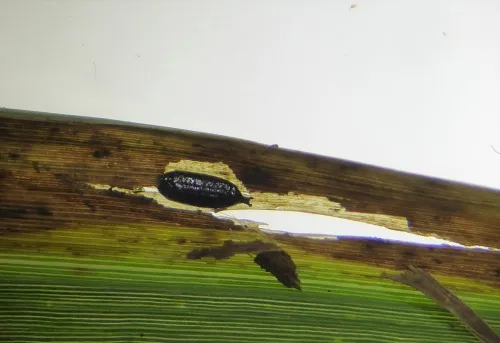
The larvae mine the leaves of Common Reed ( Phragmites australis ). The mine takes the form of a large linear blotch in the leaf and the larva usually pupates in the leaf. The puparium is a metallic black, with an elongated posterior section. See the
Chromatomyia aprilina
Chromatomyia aprilina
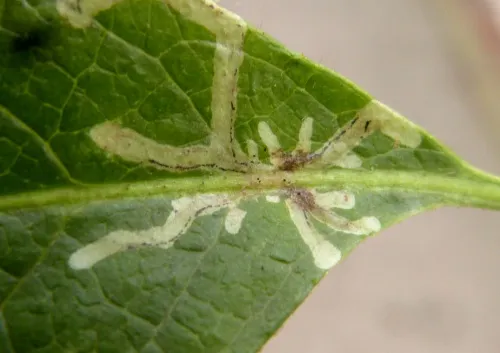
The larvae of Chromatomyia aprilina mine the leaves of Honeysuckle, forming a long corridors which radiate from the midrib on the upper leaf surface. In winter the mine may not be associated with the midrib. Frass occurs in long strips along the edge
Chromatomyia centaurii
Chromatomyia centaurii
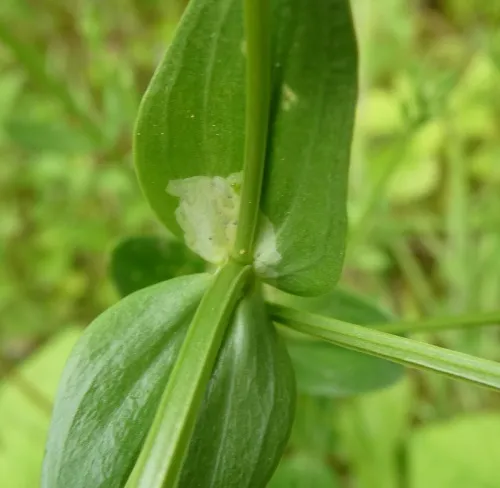
The larva of the Chromatomyia centaurii mine the upper surface leaves of Common Centaury. The mine starts as a gallery, but this is then commonly engulfed by the blotch that then follows. This mine is typically in a basal leaf, near to the ground, bu
Chromatomyia horticola
Chromatomyia horticola
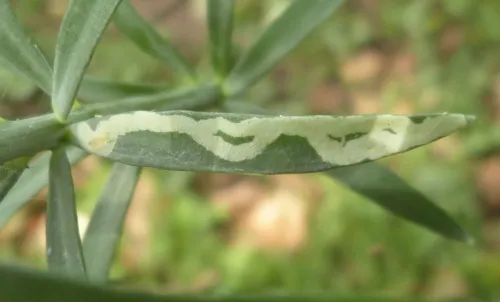
The larvae of the fly Chromatomyia horticola mine the leaves of various plants, including Purple Toadflax, creating an upper-surface (sometimes lowersurface also) corridor. Frass appears in isolated grains. Pupation takes place within the mine, usual
Chromatomyia horticola/syngenesiae agg.
Chromatomyia horticola/syngenesiae agg.
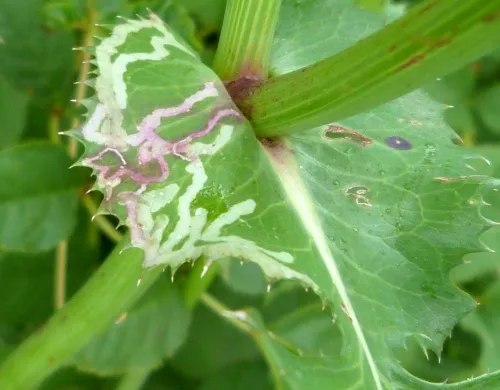
Chromatomyia syngenesiae and Chromatomyia horticola are leaf mining flies which form mines on a large number of plant species, these mines are indistinguishable from each other on certain hosts. They are treated as an aggregate, previously called Chr
Chromatomyia lonicerae
Chromatomyia lonicerae
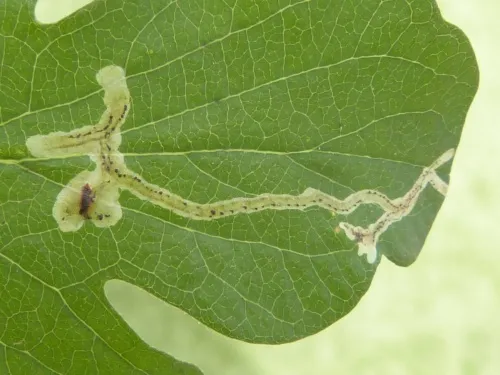
The larvae of the fly Chromatomyia lonicerae mine the leaves of Honeysuckle and Snowberry. The leafmine starts with an irregular star-like blotch with a later linear corridor. Frass is usually visible in pearl-strings. Pupation is internal with the p
Chromatomyia periclymeni
Chromatomyia periclymeni
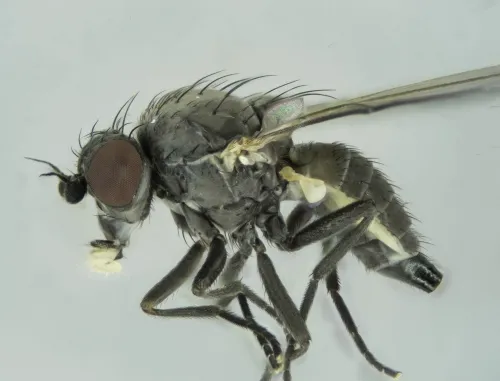
The larvae of the fly Chromatomyia periclymeni mine the leaves of various members of the Honeysuckle family, including Honeysuckle, Himalayan Honeysuckle and Snowberry. It is an upper surface mine and usually blotchy and not associated with the midri
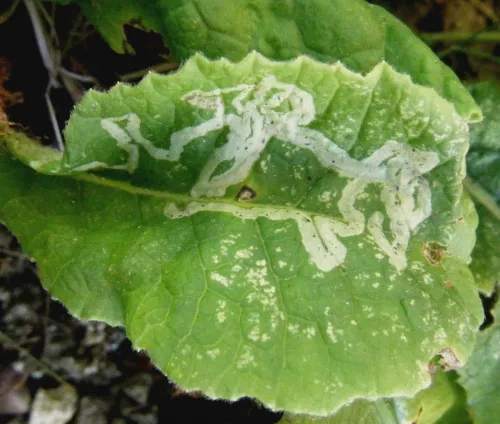
Chromatomyia primulae
Chromatomyia primulae
Chromatomyia primulae is a species of fly whose larvae mine the leaves of Primrose and Cowslip. The leafmine is white and in long, narrow corridors. Frass usually appears as large, well-spaced grains. See the National Agromyzidae Recording Scheme web
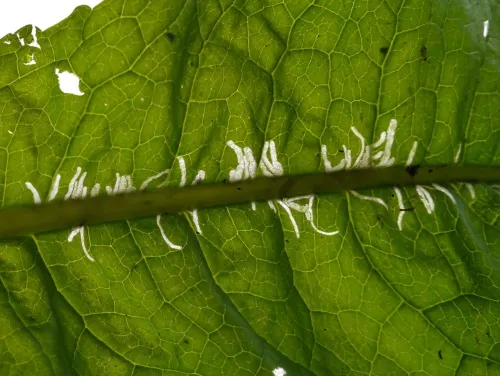
Chromatomyia ramosa
Chromatomyia ramosa
The larvae of the fly Chromatomyia ramosa mine the leaves of Teasel and Scabious species. They feed along the midrib but make short, narrow corridors into the leaf. See the National Agromyzidae Recording Scheme webpage for this species for further de
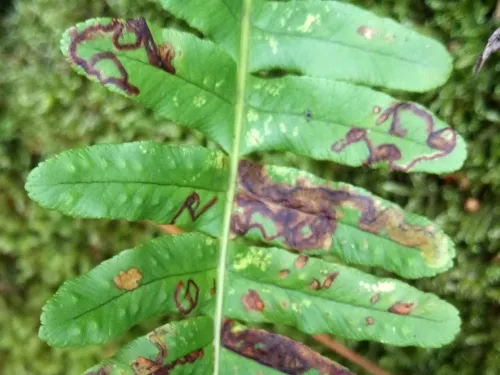
Chromatomyia scolopendri
Chromatomyia scolopendri
The larvae of the fly Chromatomyia scolopendri mine the leaves of the ferns: Hart's-tongue, Wall-rue and Polypody. They form long, narrow mines (up to 10cms) which often follow a vein. The mines are normally greenish and upper surface. Pupation is us
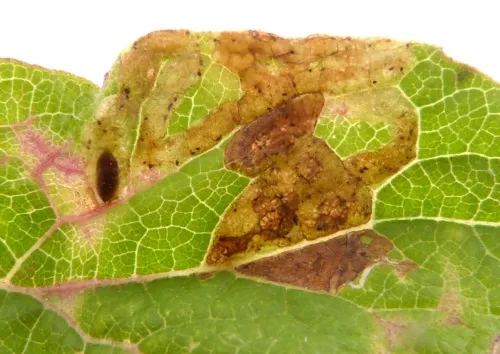
Chromatomyia syngenesiae
Chromatomyia syngenesiae
The larvae mine the leaves of various plants creating an upper-surface (sometimes lower surface also) corridor. Frass appears in isolated grains. Pupation takes place within the mine, usually in a lower-surface, puparial chamber. The larvae of Chroma
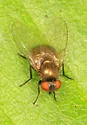
Oak Shothole Leafminer
Japanagromyza viridula
Larvae make linear-blotch mines in oak leaves. When females feed on opening leaves by piercing with their ovipositors and then drinking the juices, the punctures widen as the leaf expands and the full-grown leaf is riddled with holes.
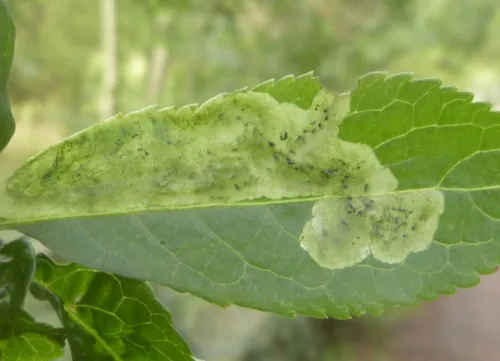
Liriomyza amoena
Liriomyza amoena
The larvae of the fly Liriomyza amoena mine the leaves of Elder, creating a large blotch mine with conspicuous frass. See the National Agromyzidae Recording Scheme webpage for this species for further details of puparium and adult insect. ref.: Warri
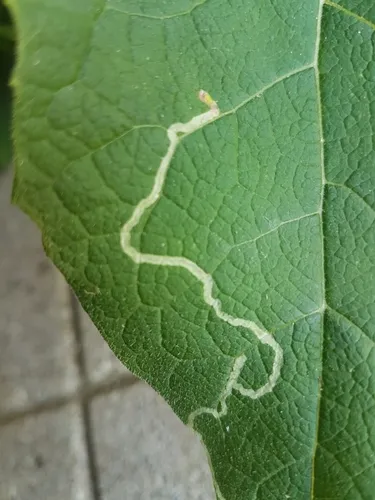
Liriomyza arctii
Liriomyza arctii
Larvae of Liriomyza arctii form narrow, white, linear mines in leaves of burdock ( Arctium minus ), exiting before pupating . Two polyphagous Liriomyza species, L. trifolii and L. huidobrensis , have also been reported from Arctium , but are unlikely
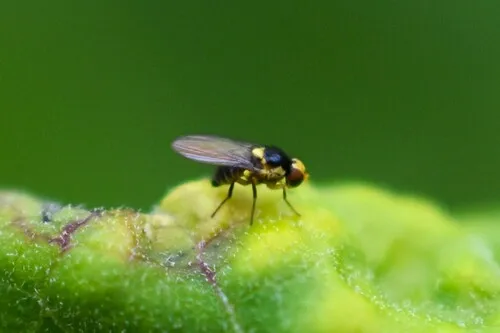
Milkweed Leaf-Miner Fly
Liriomyza asclepiadis
Identification: larvae: puparium pale, yellowish, posterior spiracles each with ellipse of about 10 bulbs : adult: Flickr parasitized by this Eulophidae
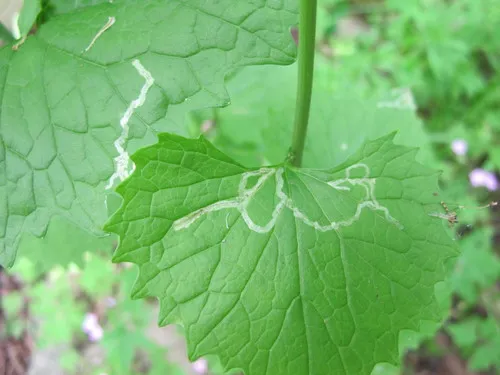
Serpentine leaf miner
Liriomyza brassicae
Considered invasive in this country. (Capinera, John L. North American Vegetable Pests. The Pattern of Invasion. American Entomologist. Spring 2002)
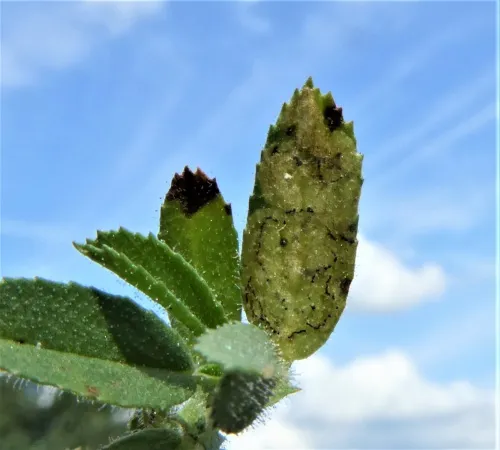
Liriomyza cicerina
Liriomyza cicerina
The fly mines the leaves of Restharrow ( Ononis ), creating a winding mine with the frass in short threads. See the National Agromyzidae Recording Scheme webpage for this species for further details of puparium and adult insect. Liriomyza bryoniae re
Liriomyza galiivora
Liriomyza galiivora
Larvae form linear mines in in Galium boreale and triflorum (and probably other species). The species name means "eater of Galium ." According to Spencer and Steyskal this species is externally indistinguishable from G. vockerothi . It is also found
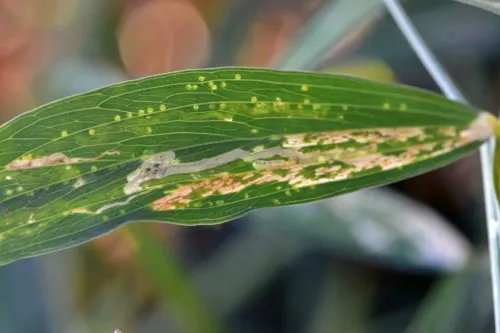
Liriomyza pisivora
Liriomyza pisivora
The larvae of the fly Liriomyza pisivora mine the leaves species in the pea family, including Garden Pea, Broad-leaved Everlasting-pea and Tufted Vetch. They create a long linear mine which starts on the lower surface of the leaf but then penetrates
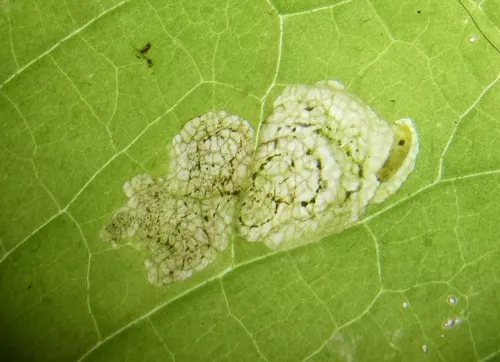
Liriomyza puella
Liriomyza puella
The larva of the Agromyzid fly Liriomyza puella mines the leaves of Nipplewort. The mine starts as a corridor which then expands into a blotch which is dark with white borders. The blotch mine is initially circular, or slightly elongated, but becomes
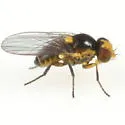
Vegetable Leaf Miner
Liriomyza sativae
Identification: Adults principally yellow and black. Highly polyphagous. Considered a pest of some cultivated plants. Considered invasive in this country. (Capinera, John L. North American Vegetable Pests. The Pattern of Invasion. American Entomologi
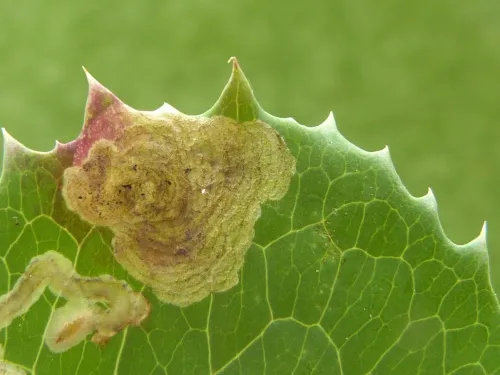
Liriomyza sonchi
Liriomyza sonchi
The larvae of the fly Liriomyza sonchi form large upper surface blotch mines on the leaves of sow-thistle species. Secondary feeding corridors are often present. Scattered frass can be seen in the mine. Several larvae may feed together in the mine. S
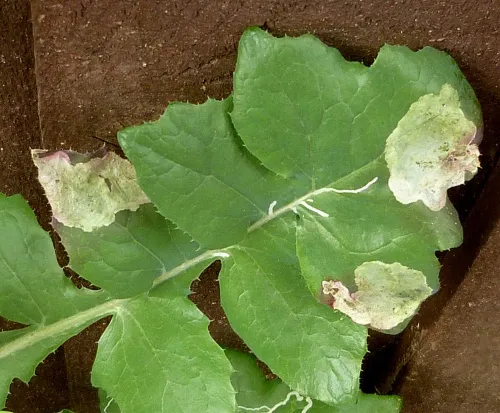
Liriomyza taraxaci
Liriomyza taraxaci
The larvae of the fly Liriomyza taraxaci mine the leaves of Dandelion, Sow-thistle species and Autumn Hawkbit. They form small, irregular, elongated blotch mines with little frass inside. See the National Agromyzidae Recording Scheme webpage for this
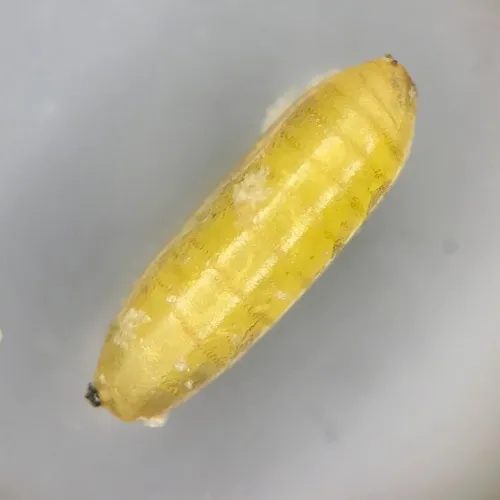
Melanagromyza angeliciphaga
Melanagromyza angeliciphaga
Melanagromyza angeliciphaga is an internal stem borer. It is very difficult to identify from the adult fly but can be identified by examination of the pale yellow puparium within the stem of the host plant. See the National Agromyzidae Recording Sche
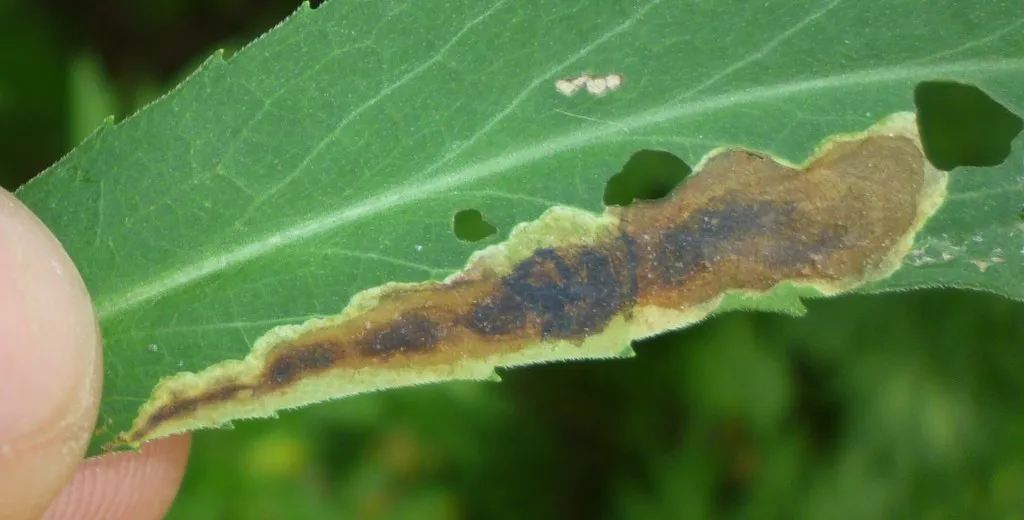
Nemorimyza posticata
Nemorimyza posticata
Larvae form "large blotch mine with conspicuous feeding lines" on several genera of Asteraceae and also feed on Teucrium canadense in family Lamiaceae.
Mines resembling Ophiomyia asterovora
Ophiomyia asterovora-like
Spencer (1969) described Ophiomyia maura from material reared from Symphyotrichum cordifolium in Ontario. Unlike other Ophiomyia mines on asters, the mine of this species alternates between the upper and lower leaf surface.
Ophiomyia congregata
Ophiomyia congregata
Prenanthes is evidently not the only host, since it does not occur in the southwestern US .
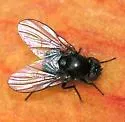
Daylily Leafminer
Ophiomyia kwansonis
Non native, from Japan. First detected in Florida on 17 March 2011 "The first possible evidence of this insect in the U.S. is an image posted at Bugguide.net , taken 4 July 2006 in Kennebunk, Maine by V.J. Hickey. It was described as a 3 mm fly, alwa
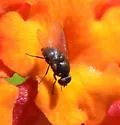
Lantana-Leafminer
Ophiomyia lantanae
Larvae in Lantana spp. "Larva feeding in seed heads, either in pulp of immature berries or lower in peduncle, where pupation takes place."
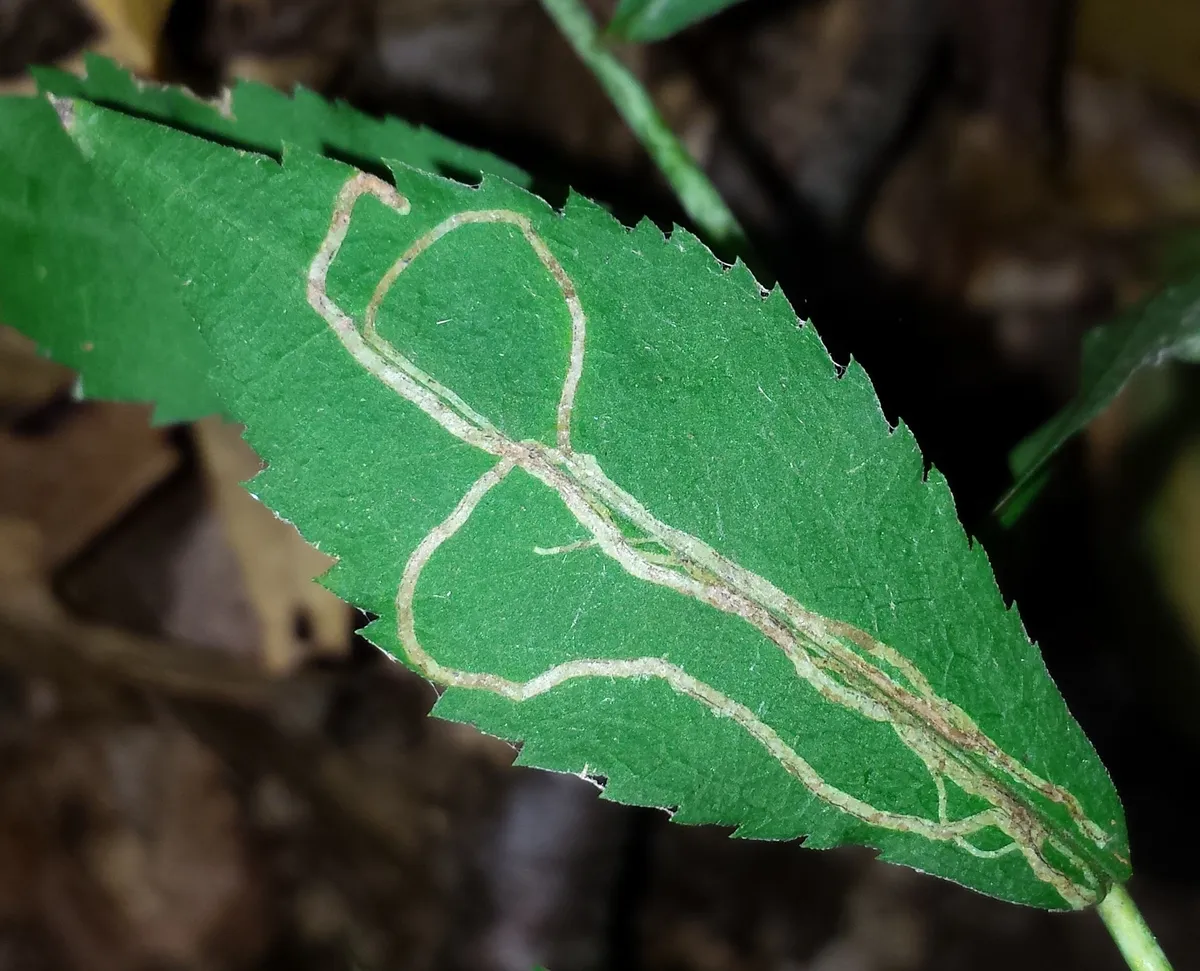
Ophiomyia maura
Ophiomyia maura
Larvae form long, linear mines in various species of Astereae, especially goldenrods. Mines in Symphyotrichum formerly attributed to this species are made by Ophiomya parda .
Phytoliriomyza clara
Phytoliriomyza clara
Phytoliriomyza pulchella Spencer, described from adults caught in New York, probably has the same host plant, having genitalia intermediate between those of P. clara and the European P. pteridii Spencer, another bracken leafminer .
Phytoliriomyza melampyga
Phytoliriomyza melampyga
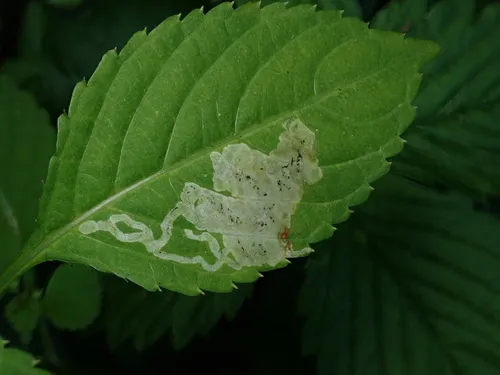
The larvae of the fly Phytoliriomyza melampyga mine the leaves of Impatiens species (Balsams). The early narrow, linear mine later becomes a large irregular whitish blotch with conspicuous frass. See the National Agromyzidae Recording Scheme webpage
Phytomyza aconiti
Phytomyza aconiti
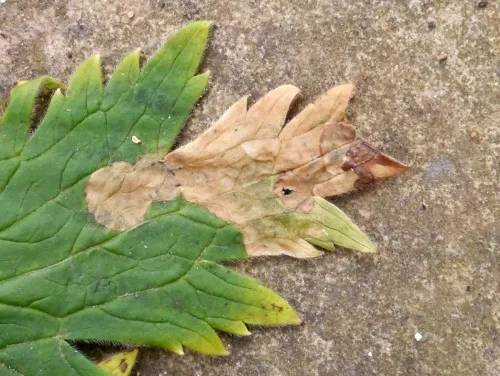
The larvae of the fly Phytomyza aconiti mine the leaves of Aconitum (Monkshood) and Delphinium species. The mine is a large blotch on the upper leaf surface, usually near to the leaf tip. Several larvae often feed communally within the mine. See the
Phytomyza agromyzina
Phytomyza agromyzina
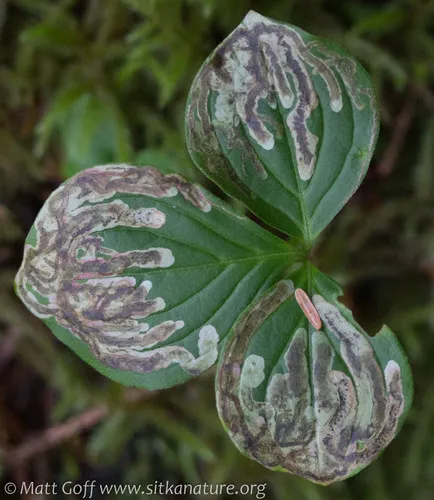
This fly's larvae mine the leaves of Dogwood. The long mines are found on the upper surface of the leaf. Frass in the mine is usually a broad dark-brown to blackish central band. See the National Agromyzidae Recording Scheme webpage for this species
Columbine Leaf Miner
Phytomyza aquilegiae
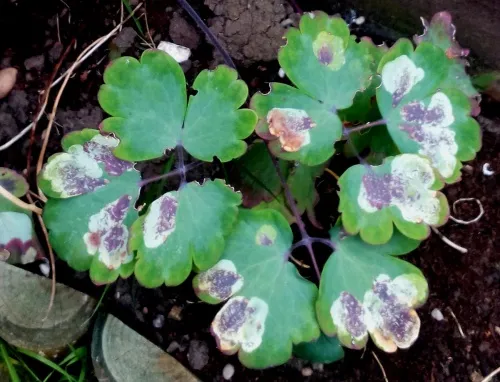
Phytomyza aquilegiae is a fly whose larvae mine the leaves of Columbine ( Aquilegia vulgaris ) and some related species. The mine is a large blotch on the upper surface of the leaf, sometimes occupied by several larvae. Frass is scattered throughout
Phytomyza artemisivora
Phytomyza artemisivora
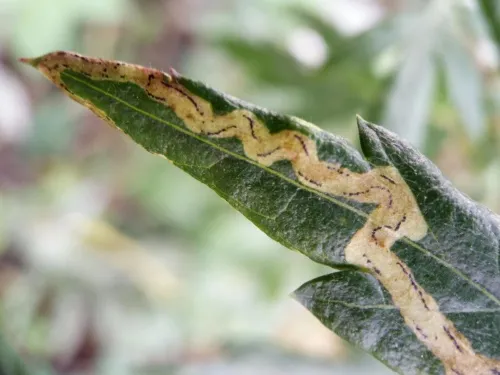
The larvae of the fly Phytomyza artemisivora mine the leaves of Mugwort and other plants in the genus Artemisia, and also Chrysanthemum species. They form mines with a long corridor, often partly following the leaf veins or margin. The frass consists
Phytomyza astrantiae
Phytomyza astrantiae
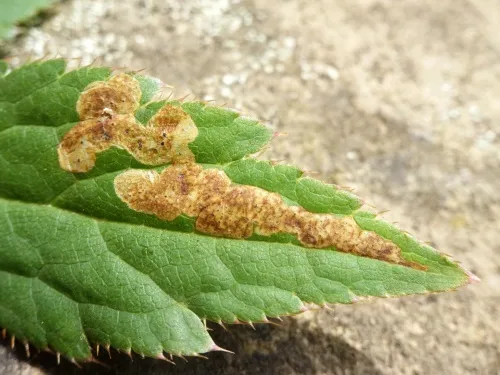
The larvae of the fly Phytomyza astrantiae mine the leaves of Masterwort ( Astrantia major ). The mine is a gallery/blotch, brown in colour with a pale yellow margin. See the National Agromyzidae Recording Scheme webpage for this species for further
Phytomyza bipunctata
Phytomyza bipunctata
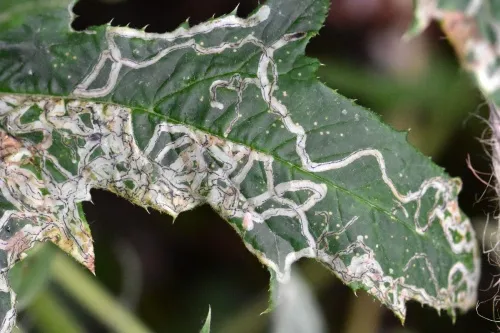
The larvae of the fly Phytomyza bipunctata mine the leaves of Echinops species (Globe Thistles). The long, white mines have frass in long strips on alternate sides of the gallery. See the National Agromyzidae Recording Scheme webpage for this species
Phytomyza chaerophylli
Phytomyza chaerophylli
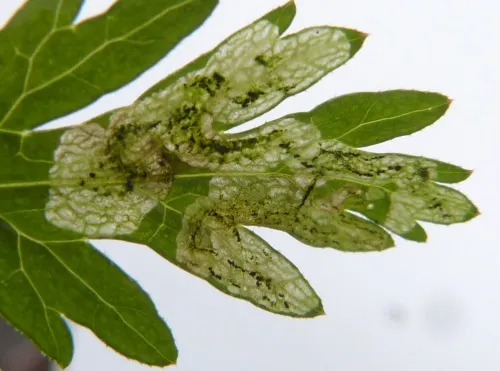
The larvae of the fly Phytomyza chaerophylli mine the leaves of umbelliferous plants such as Cow Parsley. The mines often follow the margin of the leaf at first, but then expands into a blotch that covers a large area of the leaf. The mine is pale an
Phytomyza cirsii
Phytomyza cirsii
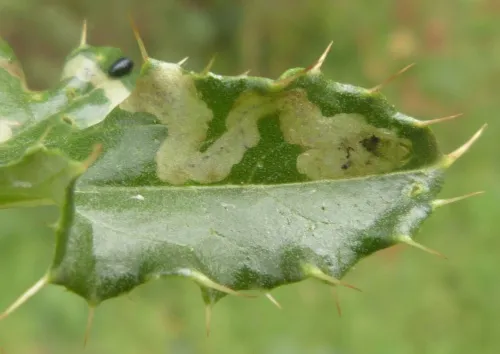
The larva of the Agromyzid fly Phytomyza cirsii mine the leaves of various thistles ( Cirsium ) including Creeping Thistle and Spear Thistle, creating a long whitish upper surface mine. The frass grains are small and usually occur close together. Pup
Phytomyza confusa
Phytomyza confusa
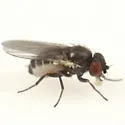
In addition to the host plant uncertainty, it is unclear whether the larva pupates inside or outside the leaf.
Phytomyza conyzae
Phytomyza conyzae
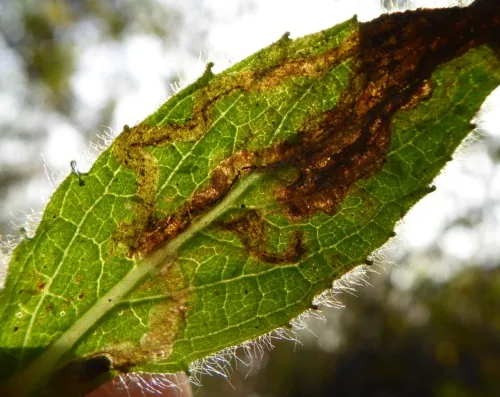
The larva of the fly Phytomyza conyzae mines the leaves of various Fleabanes, including Common Fleabane. The mine can be either an upper or lower surface corridor, often located by the midrib. Frass often appears in in pearl strings. The mine initial
Phytomyza crassiseta
Phytomyza crassiseta
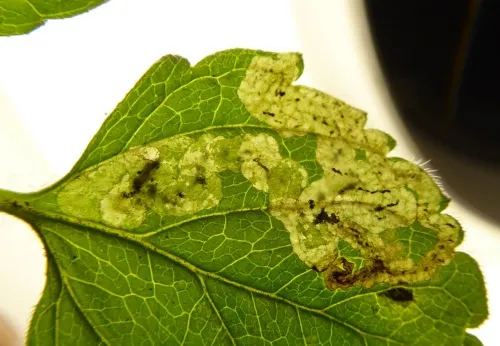
The larva mines the leaves of Veronica and Hebe species such as Germander Speedwell , Wood Speedwell and Heath Speedwell, producing a narrow mine which follows the leaf margin, then turns and forms a secondary blotch. It can form blotch mines away fr
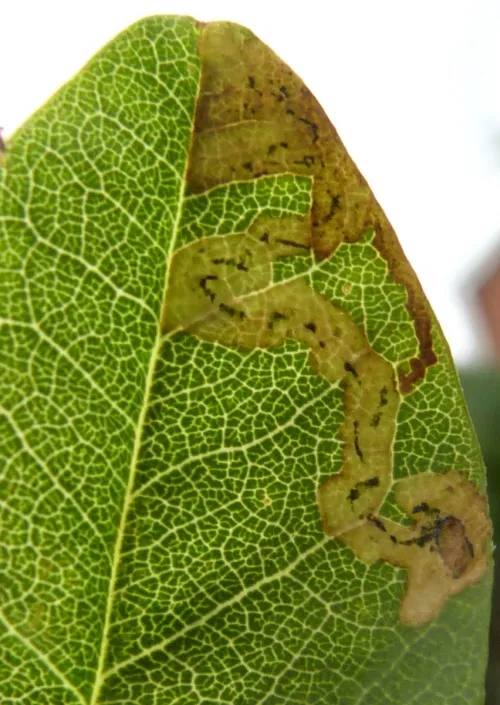
Phytomyza cytisi
Phytomyza cytisi
The larvae of the fly Phytomyza cytisi mine the leaves of Laburnum. The mine is linear with primary feeding lines often distinct. Frass is usually in black thread-like strips. See the National Agromyzidae Recording Scheme website for further details
Phytomyza ditmani
Phytomyza ditmani
Larvae mine Ilex decidua , I. serrata , and I. verticillata . Mines on new leaves of I. decidua in spring are linear, otherwise blotch. This is the only Phytomyza known to mine I. decidua .
Phytomyza flavicornis
Phytomyza flavicornis
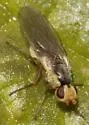
Identification: Distinguished from other Phytomyza by the combination of yellow antennae, yellow behind eyes, thorax black on top (not merely gray) and yellow on sides, scutellum black, and crossvein dm-cu absent. Stem miner in Urtica , "larva feedin
Phytomyza glechomae
Phytomyza glechomae
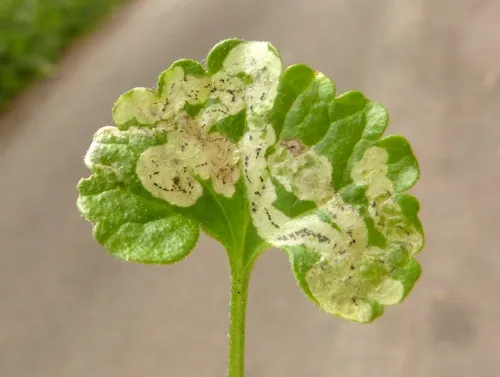
The larva of the Agromyzid fly Phytomyza glechomae mines the leaves of Ground-ivy ( Glechoma hederacea ). The leaf-mine starts with a corridor section, which widens, sometimes into a blotch, and then another corridor is made. See the National Agromyz
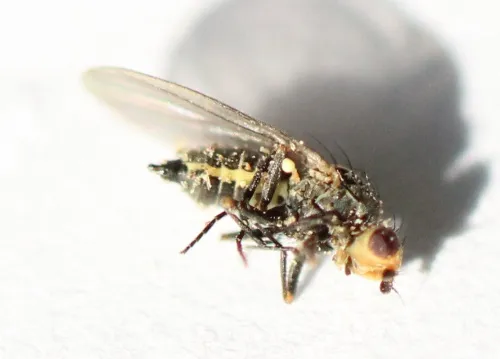
Allium Leaf Miner
Phytomyza gymnostoma
The greyish brown flies are 3mm long and show a pale yellow band on the lower abdomen. Larvae attack Allium species, feeding just below the surface, often with several larvae on each plant. The plant becomes often becomes weak and softens due to the
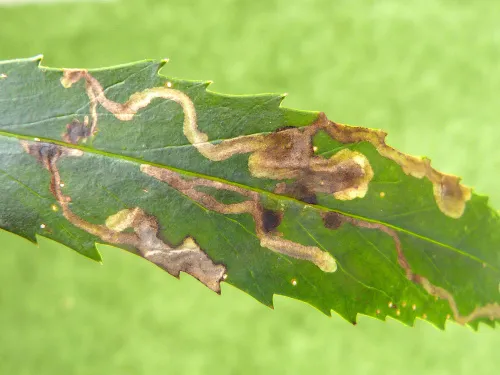
Phytomyza hellebori
Phytomyza hellebori
The larvae of the fly Phytomyza hellebori mine the leaves of Clematis and Helleborus species, and particularly those of Stinking Hellebore ( Helleborus foetidus ). The leafmines can be either linear, or blotch-like. Pupation may occur internally or e
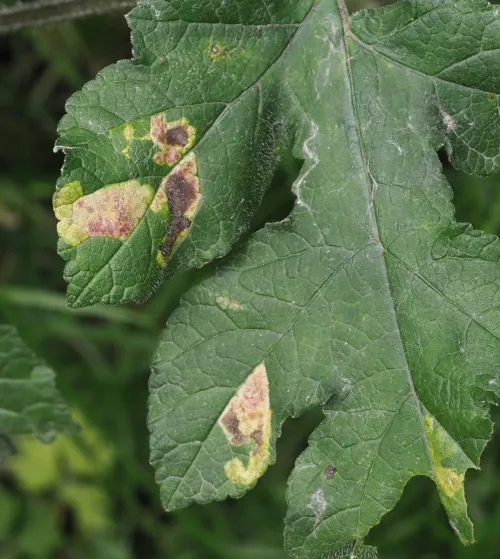
Phytomyza heracleana
Phytomyza heracleana
The larva of the Agromyzid fly Phytomyza heracleana mines the leaves of Hogweed and form a blotch mine between two veins. The mine often has a sieve-like appearance (where the larva has fed through the upper parenchyma). See the National Agromyzidae
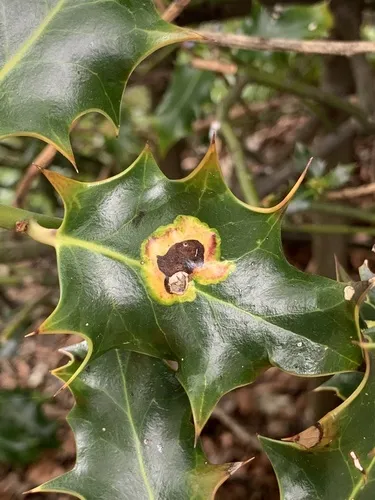
Holly Leaf Miner
Phytomyza ilicis
The larvae of the Agromyzid fly Phytomyza ilicis mine the leaves of Holly. See the National Agromyzidae Recording Scheme webpage for this species for further details of puparium and adult insect. ref.: Warrington, B.P. (2023). Phytomyza ilicis . Acce
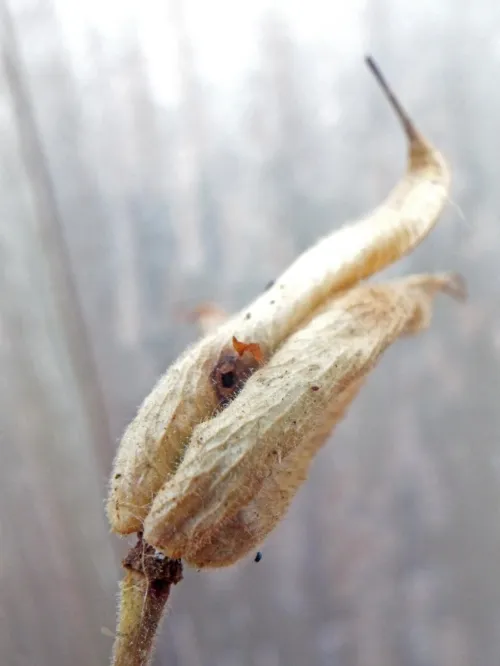
Phytomyza krygeri
Phytomyza krygeri
The larva of Phytomyza krygeri feeds in the seed capsules of Aquilegia vulgaris (Columbine). Pupation occurs in the seed head, with one puparium occurring in each seed capsule. The affected seed capsules discolour and become brown (as shown below). T
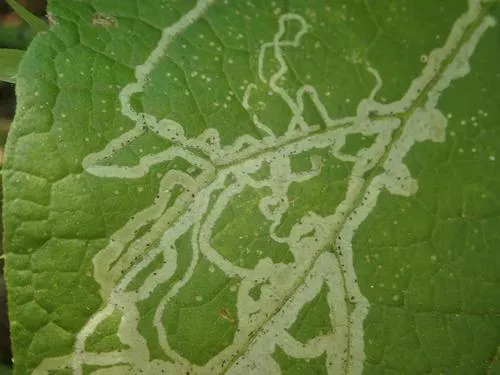
Phytomyza lappae
Phytomyza lappae
The larvae of this species mine the leaves of Burdock ( Arctium ) species. The leafmine is a long, narrow, linear mine which often follows a vein and can appear angular because of this. Many larvae may occur on a single leaf. See the National Agromyz
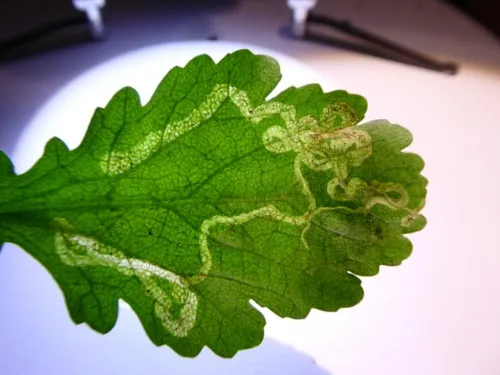
Phytomyza leucanthemi
Phytomyza leucanthemi
The larvae of the fly Phytomyza leucanthemi mine the leaves of Chrysanthemum and Leucanthemum (Oxeye Daisy group) creating an irregular, linear mine with frass in widely spaced grains. Mostly found on the lower basal leaves. See the National Agromyzi
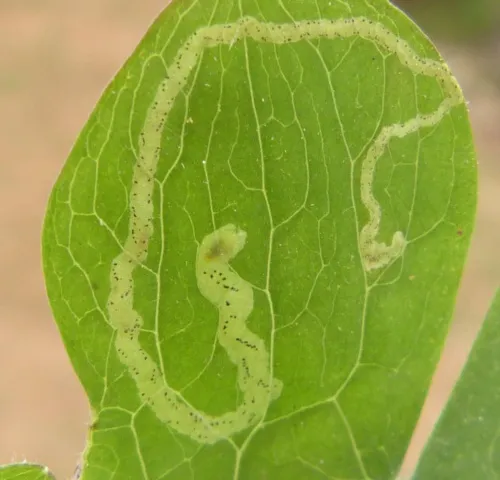
Phytomyza minuscula
Phytomyza minuscula
This is a small grey/black fly whose larvae mine the leaves of several plants, but especially Aquilegias, forming a white, linear corridor which may then form a secondary blotch. There are often several mines per leaf. See the National Agromyzidae Re
Phytomyza ovalis
Phytomyza ovalis
Larvae form irregular linear blotch mines in leaves of Hackelia , Mertensia , and Hackelia (Boraginaceae).
Phytomyza palmeri
Phytomyza palmeri
Identification: This species is named for Michael W. Palmer , who collected the type series.
Phytomyza paraciliata
Phytomyza paraciliata
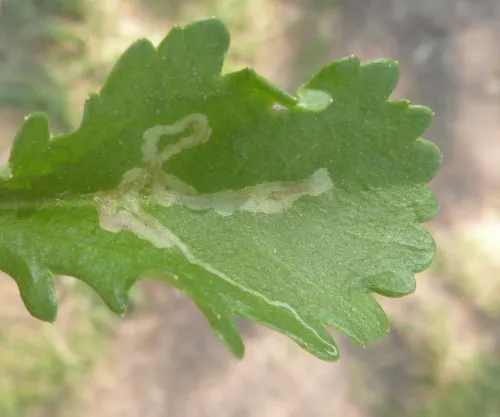
The larvae of the Agromyzid fly Phytomyza paraciliata mine the leaves of Leucanthemum species such as Oxeye Daisy and Shasta Daisy. The mine is initially long and linear, but then doubles back. Initially the mine appears on the underside of the leaf
Phytomyza persicae
Phytomyza persicae
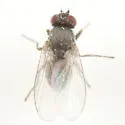
"Larva forming long, whitish linear mine, with frass in conspicuous black pellets, pupation in leaf"
Phytomyza petoei
Phytomyza petoei
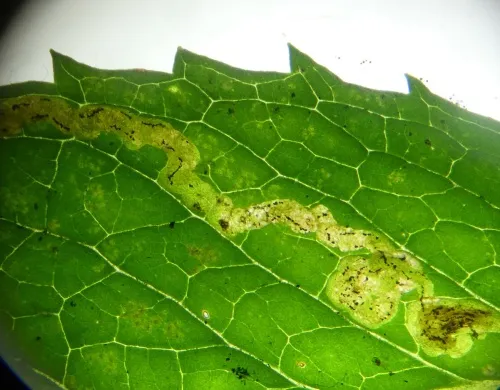
The larvae of the fly Phytomyza petoei mine the leaves of Clinopodium, Melissa (Balm) and Mentha (Mints). The mine usually starts with a dark spot, then becomes an irregular linear mine, often then forming a secondary blotch. See the National Agromyz
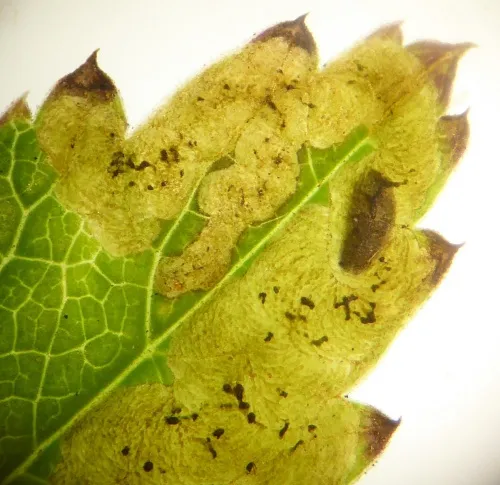
Phytomyza pimpinellae
Phytomyza pimpinellae
The larvae of the Agromyzid fly Phytomyza pimpinellae mine the leaves of Greater Burnet-saxifrage and Burnet-saxifrage producing a broad, relatively short, upper surface mine with conspicuous feeding lines of frass. See the National Agromyzidae Recor
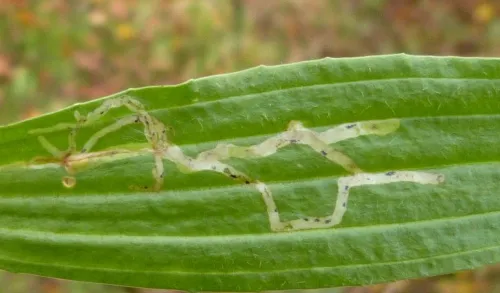
Phytomyza plantaginis
Phytomyza plantaginis
The larva of the fly Phytomyza plantaginis mines the leaves of various Plantain species including Ribwort Plantain producing a long, linear, whitish narrow mine; normally in the leaf, but sometimes in the stem. The pupa is formed at the end of the mi
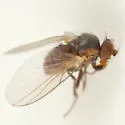
Phytomyza plumiseta
Phytomyza plumiseta
The larval mine is a large white blotch, normally in the center of the leaf, with the frass in a conspicuous black patch near the center of the mine.
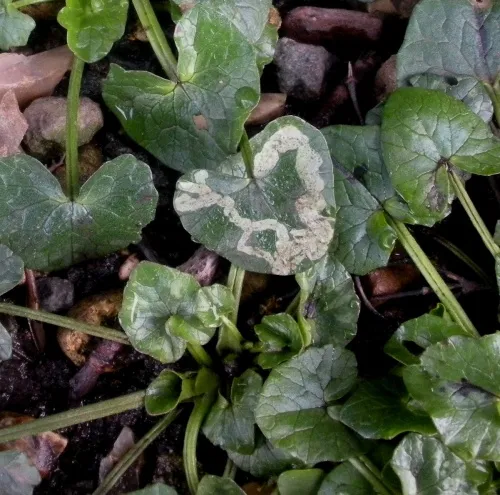
Phytomyza ranunculi
Phytomyza ranunculi
A leaf mining fly whose larvae mine the leaves of various members of the Buttercup family. In this species the grains of frass are closely adjoining or grouped. Identification is more difficult when the mine is in the stem. See the National Agromyzid
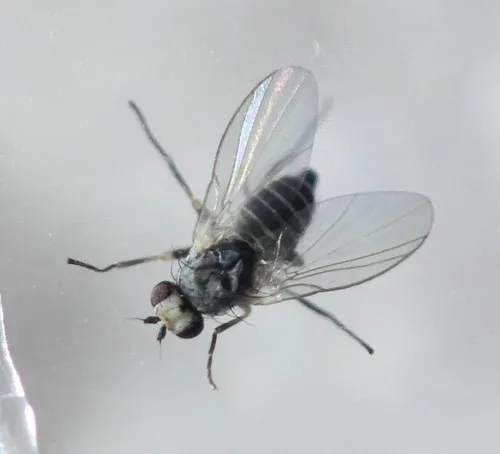
Chrysanthemum Leafminer
Phytomyza syngenesiae
Larvae feed primarily on plants in the aster family, apparently exclusively so in California. Common on sowthistle ( Sonchus ). Larvae form conspicuous white linear mines and pupate in the leaf.