
Flies
Order Diptera
The Flies (Order Diptera) includes 6,350 species across 141 families and 1,800 genera in our directory.
About Flies
Diptera includes over 150,000 described species of flies, mosquitoes, and midges. Mosquitoes are the deadliest animal on Earth (CDC). Malaria alone causes ~249 million cases and over 608,000 deaths annually, mostly children under 5 (WHO). Vector-borne diseases account for over 17% of all infectious diseases, causing 700,000+ deaths per year.
Economic Impact
In the U.S., vector-borne disease cases tripled between 2004-2016, with over 640,000 cases reported in that period (CDC). Tickborne diseases doubled from 22,000 to 48,000 annual reports. Globally, mosquito-borne diseases cost billions in healthcare and lost productivity.
Ecological Role
Despite their disease impact, flies are critical decomposers and pollinators. Hoverflies alone pollinate hundreds of crop and wildflower species. Flies are also the primary food source for many birds, bats, and fish. Forensic entomology relies heavily on fly species for crime scene analysis.
Families in Diptera (141)
Species in Diptera (6,350)
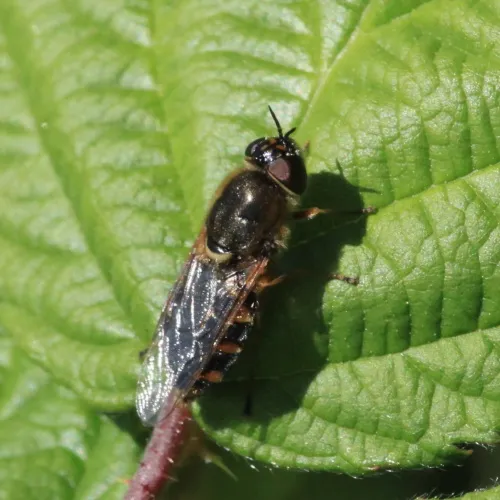
Odontomyia ornata
Odontomyia ornata
A large (up to 15mm) bee or wasp-mimicking fly. The tergites (the plates on its upper abdomen) are primarily black but feature striking orange or bright yellow markings along the lateral margins. An indicator of healthy, high-quality wetland ecosyste
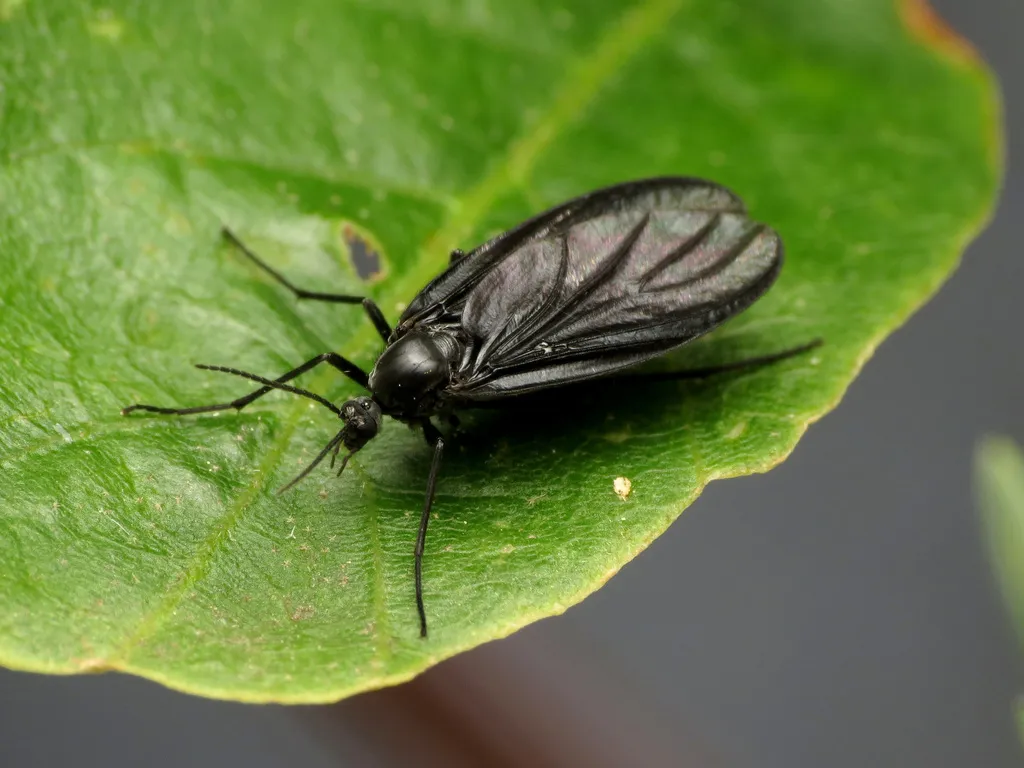
Odontosciara nigra
Odontosciara nigra
A large, dark species. The female has a variable amount of red on the abdomen. The light and dark color forms originally had different names.
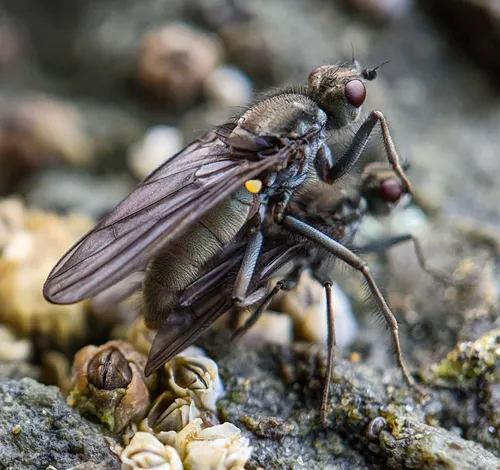
Oedoparena glauca
Oedoparena glauca
Identification: Triangular scutellum, pale markings on the scutum, brown frons.
Ogcodes dispar
Ogcodes dispar
Identification: Widely distributed in eastern North America, though uncommonly encountered. Males are typically bright yellow-orange all over, the female is darker (especially the abdomen). In O. rufoabdominalis both sexes should have a black thorax
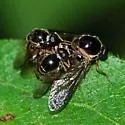
Ogcodes incultus
Ogcodes incultus
Identification: Overall habitus black (or black-brown): including head, mesonotum, scutellum, and ground color on dorsum of abdomen. The wings are distinctly darkened (especially in the area between the costa and the radial vein), vein M1 is present
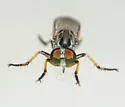
Ommatius ouachitensis
Ommatius ouachitensis
Identification: The genus character of the branched antennae for this group is usually visible. Can be common in summer in the right habitat. Fearless of approach. Often perches with the characteristic upright stance at the top tips of downed tree br
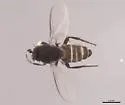
Opalimosina mirabilis
Opalimosina mirabilis
Identification: Long, spur originating near the middle of the underside of the hind tibia (not apical as in some Sphaerocerinae).
Ophiomyia congregata
Ophiomyia congregata
Prenanthes is evidently not the only host, since it does not occur in the southwestern US .
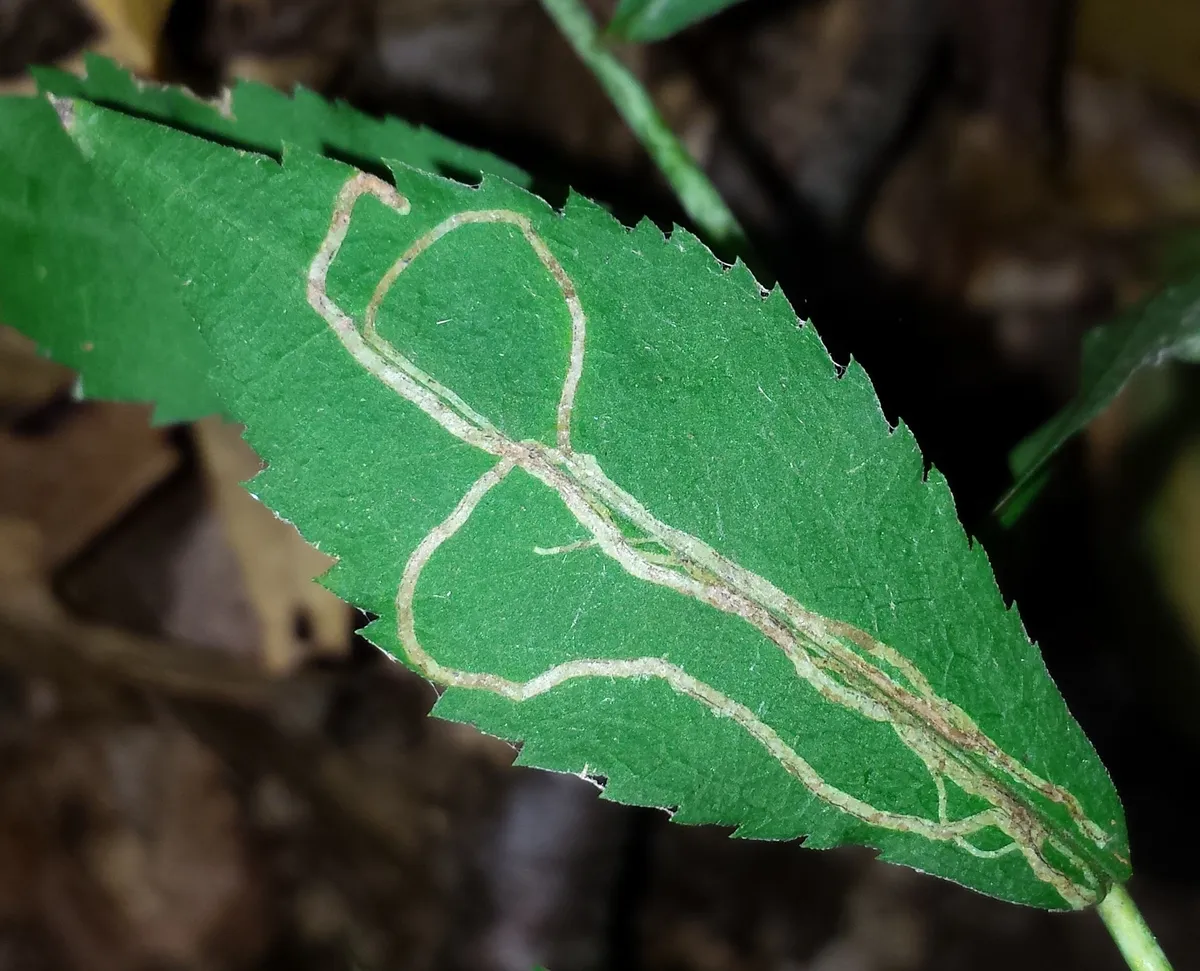
Ophiomyia maura
Ophiomyia maura
Larvae form long, linear mines in various species of Astereae, especially goldenrods. Mines in Symphyotrichum formerly attributed to this species are made by Ophiomya parda .
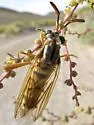
Opomydas limbatus
Opomydas limbatus
Williston's original 1886 description can be read here . Kondratieff & Fitzgerald state: "There are 2 color morphs of O. limbatus , an orange and a dark brown or black morph. The orange morph comprises =53% and the darker morph 47% of specimens exami
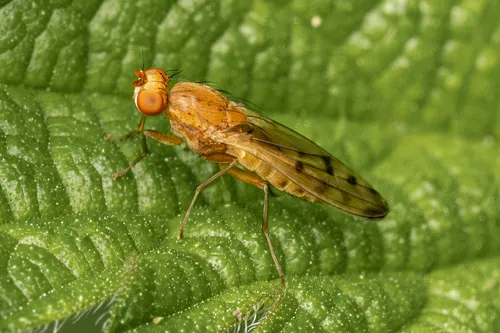
Opomyza florum
Opomyza florum
5 to 5.5 mm. Orange species with a brown abdomen and with four dark wing markings. Meadows, fields of cereal crops and water margins. Flies hatch in June and July, and will be found in grassland and well wooded areas until late August, then they star
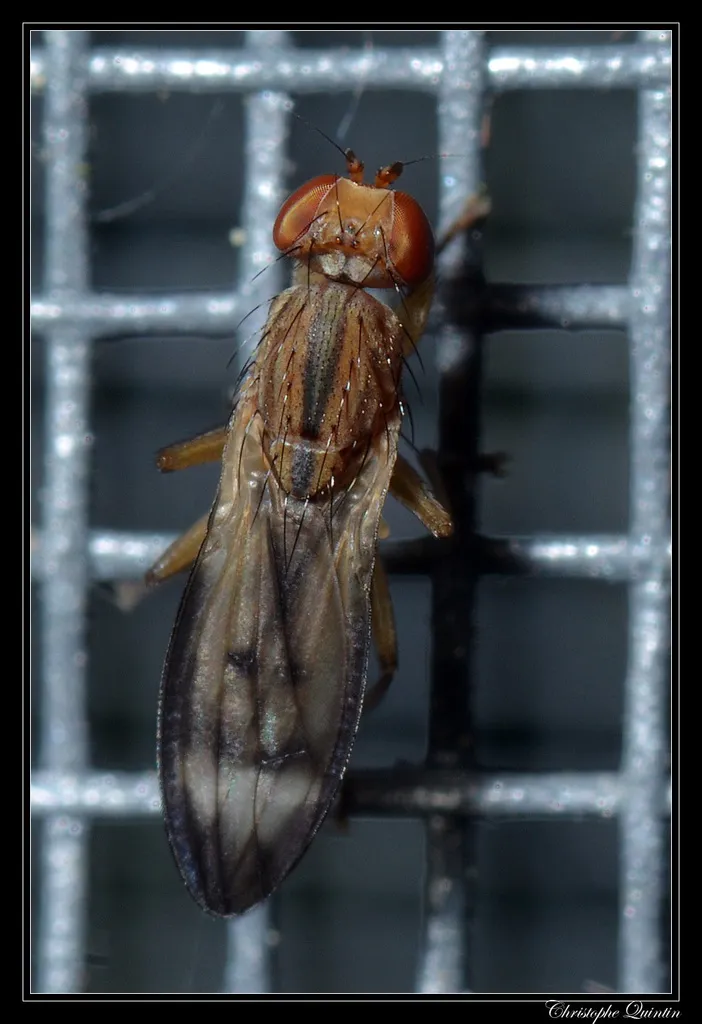
Opomyza germinationis
Opomyza germinationis
Identification: Abdomen with dark median stripe which expands on posterior part of each tergite, occasionally abdomen entirely dark; male, apex of cercus with sparse, fine setae. Non-native, introduced from Europe in the 20th century. Its range is in
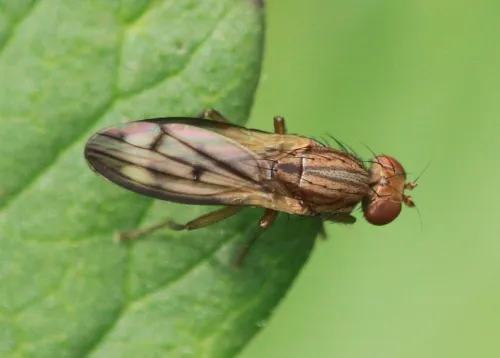
Opomyza germinationis agg.
Opomyza germinationis agg.
Although Opomyza germinationis is a common and widespread fly, it is hard to distinguish from Opomyza petrei so the two are often recorded as an aggregate - as represented on this page. Both species are largely dull orange though the abdomen is grey
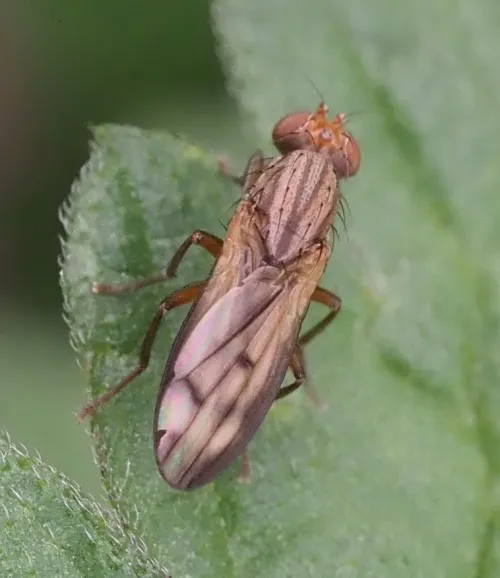
Opomyza germinationis sensu stricto
Opomyza germinationis sensu stricto
A small orange-grey fly with dark spotted wings. Although this species usually has more extensive darkening on the front margin of the wings it is very similar to other members of the group and detailed examination is needed to determine to species l
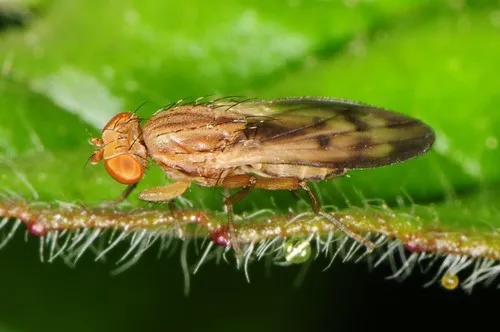
Opomyza petrei
Opomyza petrei
This small (c3mm) dull orange fly has dark-spotted wings, a grey abdomen and a thin triangle mark in the centre of the thorax. See ID checklist for more details. Provide details of how the specimen was identified and the key features observed (ideall
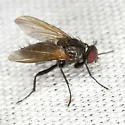
Opsodexia grisea
Opsodexia grisea
Identification: Dark abdomen, third antenna segment partly orange, strong apical posterodorsal bristle on hind tibia, black legs, median marginal bristles on tergite 3. Biology is unknown. Related species eat snails.
Opsotheresia bigelowi
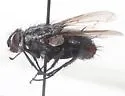
Opsotheresia bigelowi
Identification: "A robust species like the genotype, O. obesa , but differs as follows: third antennal segment wholly black; apical segment of proboscis longer, almost equal the height of head; second abdominal segment [=abdominal tergite 3 of curren
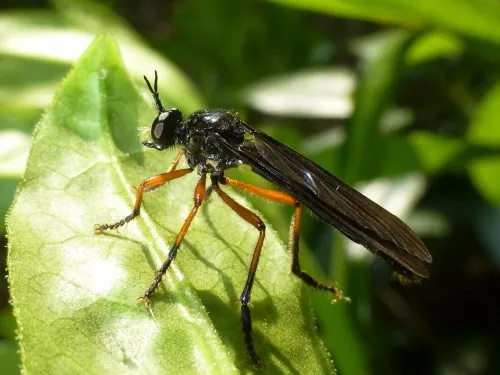
Orange-legged Robberfly
Dioctria oelandica
Britain's largest Dioctria with long dark wings that have colourful reflections in some lights. All three pairs of legs are largely orange. The adults prey on insects such as sawflies and ichneumons. The larvae are presumed to develop in woodland soi
Orbellia barbata
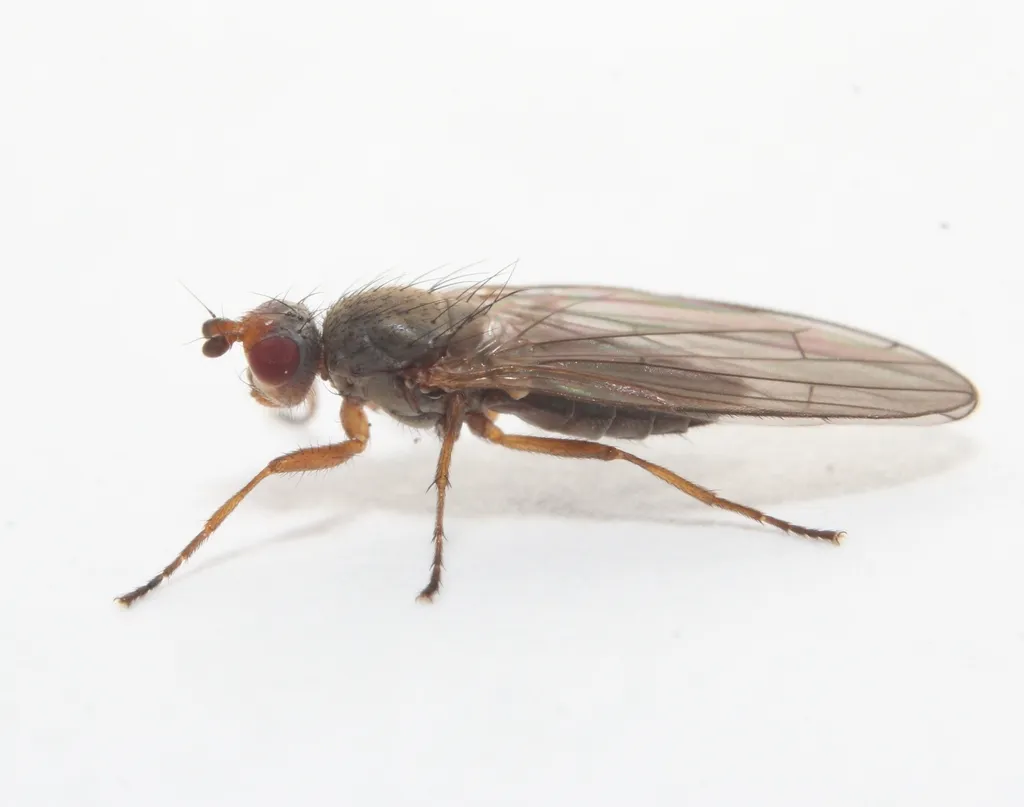
Orbellia barbata
Identification: Legs mostly and palpi entirely yellow; male with yellow beard; male fore basitarsus not longer than second tarsomere.
Oreoleptis torrenticola
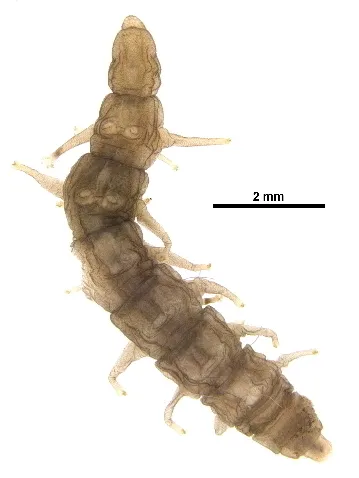
Oreoleptis torrenticola
Adults reared from larvae found in torrential streams/rivers and from pupae taken on riverbanks. Adults never collected in the field.
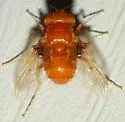
Ormia brevicornis
Ormia brevicornis
Sabrosky (1953) divided this species into a northern subspecies O. brevicornis nuttingi (host Neoconocephalus spp.) and a southern subspecies O. brevicornis brevicornis (host unknown).
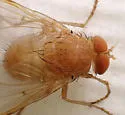
Ormia lineifrons
Ormia lineifrons
Identification: Ocelli present. Males exhibit costal callosity on the leading edge of the wing just past the middle. O. lineifrons is one of the Tachinidae species that has evolved traits including hearing to allow for parasitism of singing insects.
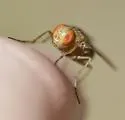
Ormia ochracea
Ormia ochracea
Identification: The most common species without ocelli, with contrasting black "epaulet" at wing base, and without parafacial hairs. Female hosts are also parasitized, at least on Gryllus firmus and G. rubens. Infection rates were also the same. It's
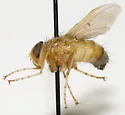
Ormia reinhardi
Ormia reinhardi
Identification: First abdominal segment (fused tergite 1+2) with strong median marginal bristles.
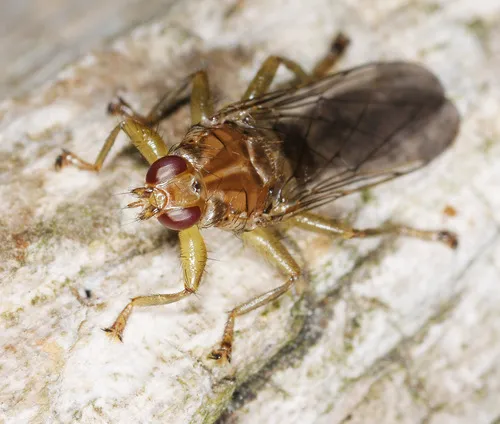
Ornithomya avicularia
Ornithomya avicularia
Ornithomya avicularia is a dark hairy parasitic fly of about 6 mm. It may appear brown or dark greeny brown in colour. The body colour varies depending on whether the fly has just taken a meal of blood. Sometimes these flies can be very short winged
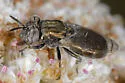
Orthonevra bellula
Orthonevra bellula
Identification: Relatively large and distinctive. The hairy face which is almost shaggy, elongate second antennal segments, simple eye markings, and distinctive male genitalia will separate this species from all others in the group (Sedman 1964). Lar
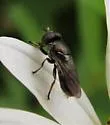
Orthonevra feei
Orthonevra feei
Identification: One of two species of Orthonevra without eye markings. " Orthonevra robusta also lacks eye markings but has entirely black legs and postpedicel shorter than scape plus pedicel combined." (Skevington et al. 2019)
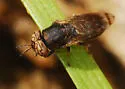
Orthonevra flukei
Orthonevra flukei
Identification: Distinguished from other Southwestern members of the species group by the combination of face with scales (not bare or with long hairs); eye with two eye stripes, usually with sharp angles above midline (vs. three stripes or with gent
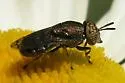
Orthonevra nitida
Orthonevra nitida
Identification: The eye markings are unique in the East.
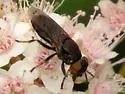
Orthonevra pictipennis
Orthonevra pictipennis
Identification: Distinguished from other members of the pictipennis group by the combination of dark bands along crossveins (sometimes narrow) and fore tibiae black medially.
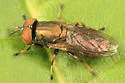
Orthonevra pulchella
Orthonevra pulchella
Identification: Distinguished from other North American members of the pictipennis group by the combination of wings without distinct bands along crossveins and tibiae black medially.
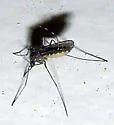
Orthopodomyia signifera
Orthopodomyia signifera
Identification: Florida Medical Entomology Laboratory ( 3 ) Adult: Integument dark brown, proboscis dark scaled with row of white scales along dorsolateral edge. Ocular margin delineated with narrow line of white scales. Narrow submedian lines of whi
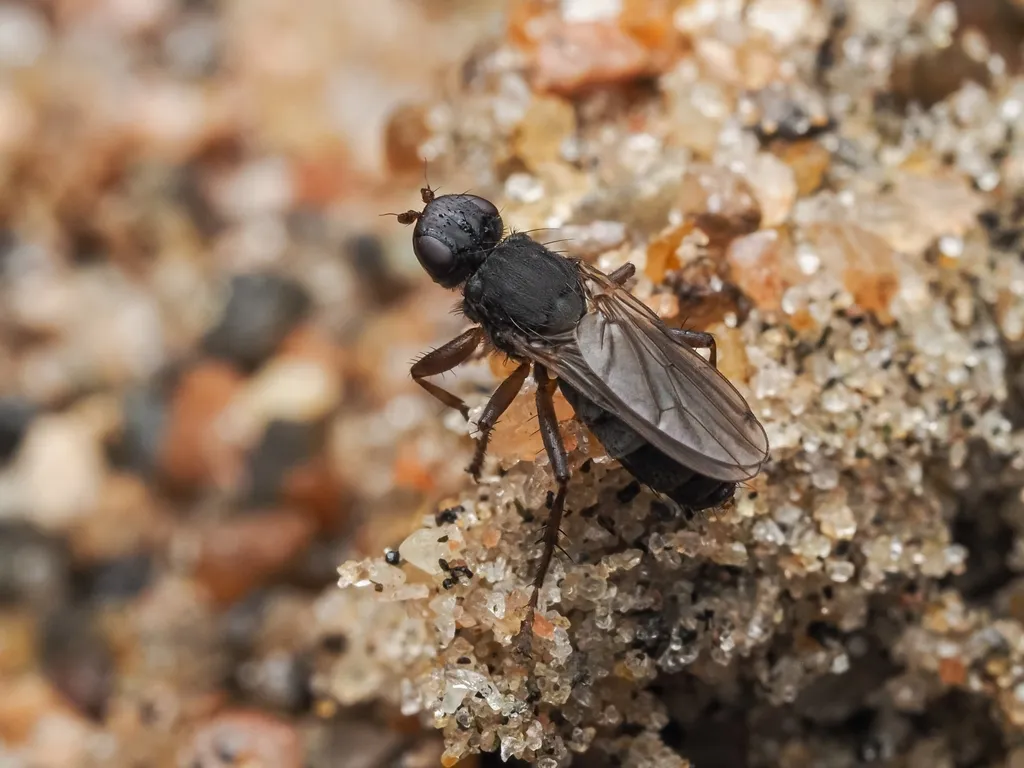
Orygma luctuosum
Orygma luctuosum
Identification: Large bristly appearance; small eye; 2 frontal and 1 orbital setae, all strong; well-developed palpus; 3 stout dorsocentrals; or densely haired anepimeron, anepisternum and katepisternum.
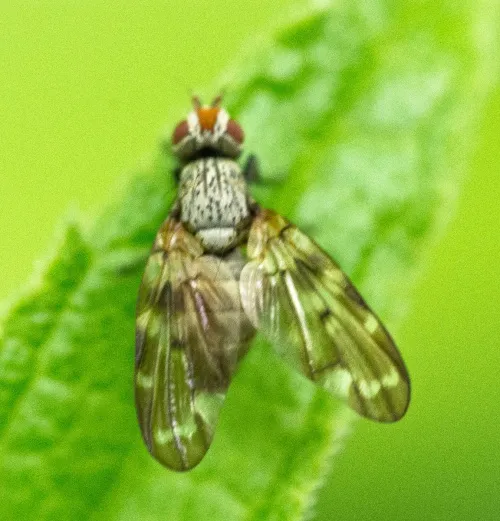
Otites guttatus
Otites guttatus
A fly with brown mottled wings, a pale brown abdomen and greyer thorax. Unless identified by a recognised expert, a photo is required. If the photo doesn't show the key ID features then in the comments box describe the size and identifying characters
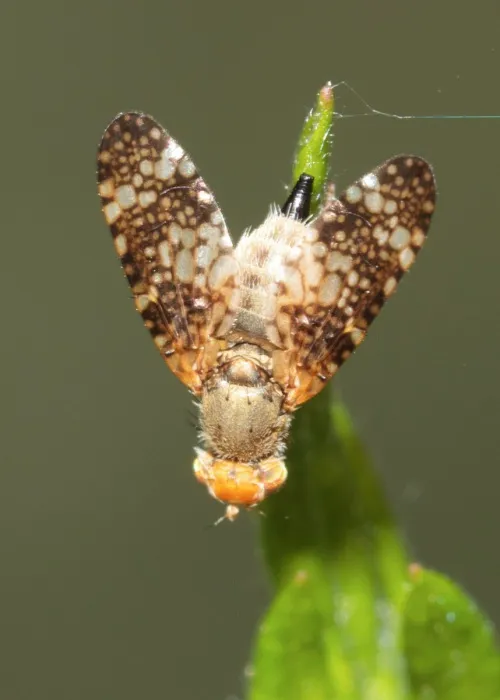
Oxyna parietina
Oxyna parietina
A Tephritid fly with heavily patterned wings. There are several similar members in this family and care is needed with identification. Various habitats, but often where Mugwort is present. The larvae bore into the stems of Mugwort. Widespread in Engl
Ozodiceromyia livdahli
Ozodiceromyia livdahli
Identification: See comments under images, such as: Quoting from Gaimari and Irwin (2000), p. 563: "The small, easily recognized mexicana-group is characterized by an elongated antennal scape and first flagellomere, as well as the slightly elongated,
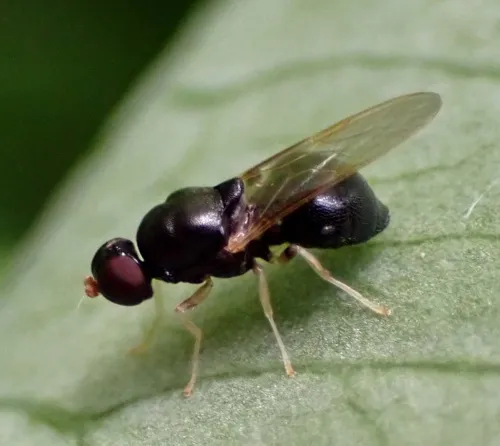
Pachygaster leachii
Pachygaster leachii
A soldier fly with a small, black, rounded abdomen, clear wings, femora mainly yellow and bases of the antennae are orange. Unless identified by a recognised expert, a photo is required. If the photo doesn't show the key ID features then in the comme
Pale Pismo Sandpirate
Lasiopogon littoris
Identification: "This species is distinguished by its small size, even for a Lasiopogon (about 5-7mm); its all-white hairs and bristles; and the extensive silvery-gray tomentum over almost all the body. The fourth antennal segment (second flagellomer
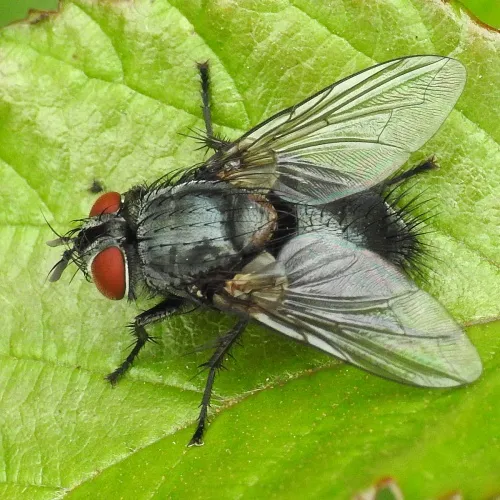
Pales pavida
Pales pavida
Length about 10 mm. A very bristly blue black tachinid fly with hairy eyes, strong facial-ridge bristles that are downward-pointing, paler tibiae and a blueish cast to the body colour. Two flight periods - late May/early June and early July to late S
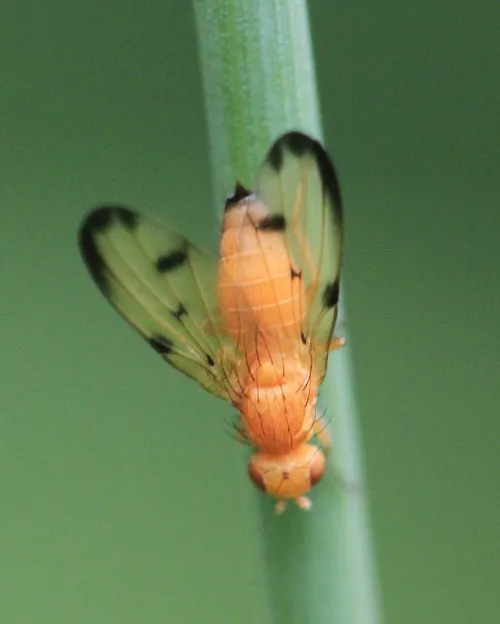
Palloptera quinquemaculata
Palloptera quinquemaculata
A small orange bodied fly with distinctively patterned wings, although several members of this family are superficially quite similar. Widespread and frequent in England and Wales, more coastal in Scotland.
Palloptera saltuum
Palloptera saltuum
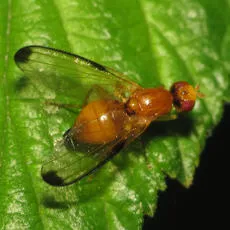
Length 3 to 5 mm. A small but very distinctive fly. It is orange in colour, with a dark shade along the outer edge of the wing. Unless identified by a recognised expert, a photo is required. If the photo doesn't show the key ID features then in the c
Palloptera scutellata
Palloptera scutellata
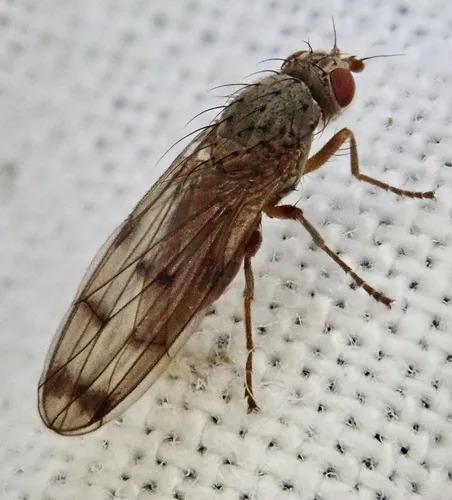
This species has a greyish head and thorax, a red-brown abdomen and orangey legs. There are several dark shades on the wings. The females have an elongate, piercing-type ovipositor. Unless identified by a recognised expert, a photo is required. If th
Palloptera setosa
Palloptera setosa
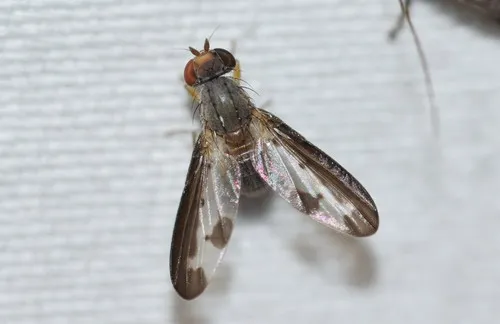
Identification: Costal border thickly infuscated, thorax and abdomen gray pruinose
Palloptera umbellatarum
Palloptera umbellatarum
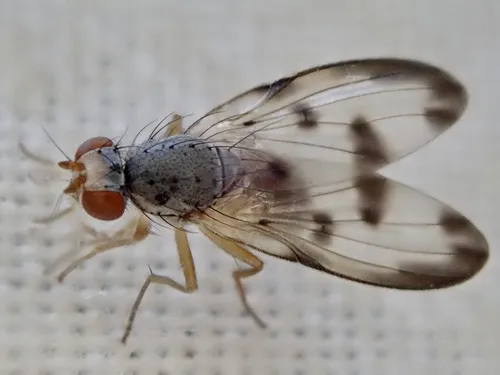
Length about 3 mm. This fly has a heavily spotted wing pattern, a grey thorax and abdomen and orangey legs. Palloptera/Toxoneura modesta. Great care is needed to separate these two species. Various habitats including meadows and hedgerows.
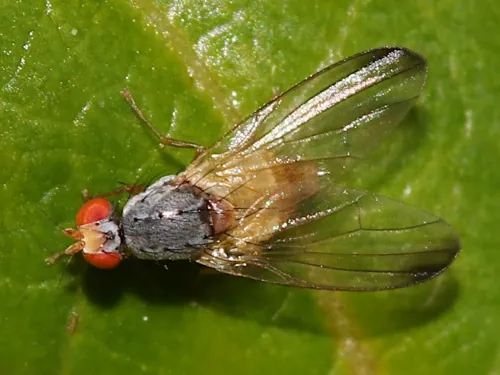
Palloptera ustulata agg.
Palloptera ustulata agg.
Palloptera ustulata cannot be distinguished from Palloptera anderssoni without very detailed examination by an expert, and for this reason we have treated it as an aggregate. It is a small fly of about 4.5 mm. It has an orange abdomen and slight shad
Palpada vinetorum
Palpada vinetorum
Identification: A robust syrphid, (typical of genus Palpada ), yellowish-brown with gray bands on thorax. Legs reddish or yellowish, femora darker. Hind tibiae thick, arc-shaped. Wings slightly darkened. See comments to this image:
Pantarbes earinus
Pantarbes earinus
Identification: Abdominal dorsum entirely white pilose; antennae proximate, not widely separated (their bases not further apart than length of 1st antennal segment). Female: eyes separated by a bit more than 3 x width of ocellar tubercle; brown tranv
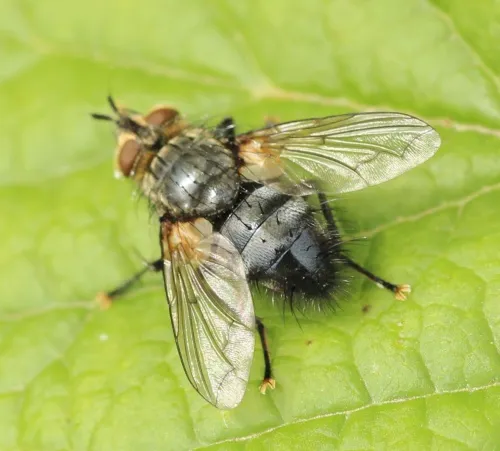
Panzeria anthophila
Panzeria anthophila
A large black species with very hairy eyes and an undusted, shiny 5th tergite on the abdomen. Attach good images showing the dorsal surface and ideally a face profile. Found in various habitats including meadows and woodland. Widespread and fairly fr
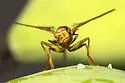
Papaya Fruit Fly
Toxotrypana curvicauda
Introduced into Florida in 1905, probably from the West Indies on papaya shipments[Cite:185010]
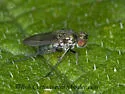
Paraclius pumilio
Paraclius pumilio
Identification: The only species in the Eastern US with black femora
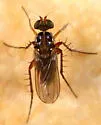
Paraclius quadrinotatus
Paraclius quadrinotatus
Identification: Mesoscutum with distinct black spots above wing base, completely separated, and with white spots and an additional black spot at the ends of the transverse suture.
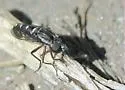
Paracosmus edwardsii
Paracosmus edwardsii
Identification: See key on Paracosmus info page. Read Loew's 1872 original description here .
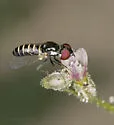
Paracosmus insolens
Paracosmus insolens
Coquillett's original 1891 description of the male is here . The female was described (and the male redescribed) in Hall(1957) .
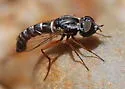
Paracosmus morrisoni
Paracosmus morrisoni
Identification: Abdominal tergites black with whitish posterior bands more or less uniform in width; halteres whitish to yellowish
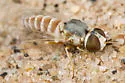
Paracosmus rubicundus
Paracosmus rubicundus
Identification: P. rubicundus is unique in the genus Paracosmus as the only species having abdominal tergites principally reddish-brown (with white posterior bands)...in all other species the tergites are principally blackish (with whitish posterior
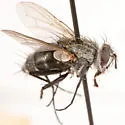
Paradidyma affinis
Paradidyma affinis
Identification: Long bristles on parafacial (near facial ridge, but outside it) with remainder of parafacial bare, cell r5 open, crossvein m-cu in normal position (not retracted toward wing base), female with modified fore tarsi typical of Minthoini,
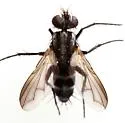
Paradidyma bicincta
Paradidyma bicincta
Identification: Row of parafacial bristles very weak on upper half, legs black except for red trochanters, thorax with distinct stripes, cell r5 closed.
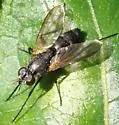
Paradidyma conica
Paradidyma conica
Identification: The only Paradidyma with red femora.
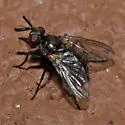
Paradidyma melania
Paradidyma melania
Several names were proposed for this species, which is sexually dimorphic and resembles Wagneria and Periscepsia . Reinhard (1955) pointed out an easily visible difference: vein R4+5 ends near the wingtip, rather than far in front of the wingtip in
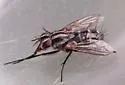
Paradidyma singularis
Paradidyma singularis
Identification: can be distinguished from other species of Paradidyma by the combination of black legs, a well-developed row of parafacial setae extending from lowest pair of frontal seta to near the vibrissae, moderately wide parafacials, R4+5 meeti
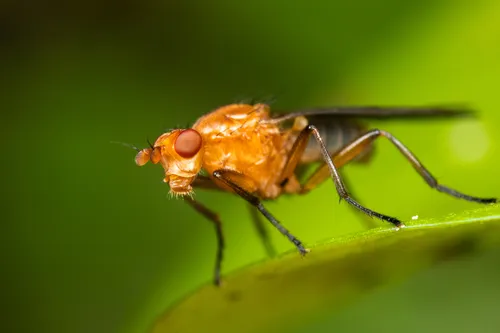
Paradryomyza setosa
Paradryomyza setosa
Identification: The only species in the west without prescutellar acrostichal bristles. Wing without markings. R1 setose only on apical ½ to ⅔.
Paragus angustifrons
Paragus angustifrons
Identification: Examination of male genitalia necessary to ID to species
Paragus haemorrhous
Paragus haemorrhous
Identification: Scutellum entirely black (no apical reddish spot) and hairs on eye not forming banded pattern. possibly a complex of species
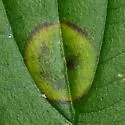
Parallelodiplosis subtruncata
Parallelodiplosis subtruncata
This is apparently the species responsible for ~4-mm wide blister galls in dogwood ( Cornus ) leaves. Lasioptera corni was reported once from these galls and is not known from any other host; it may be an inquiline or may have been a contaminant in t
Paramyia nitens
Paramyia nitens
Identification: Distinctive for the genus (with only one species in N-America) are the shortened costa (ends at vein R4+5), long palpi, long R2+3. The ocellar triangle is shining as in many chloropids. However, most chloropids have the costa long (re
Paramyia pseudonitens
Paramyia pseudonitens
Identification: Distinguished from most other Paramyia by the contrasting color of the two segments of the proboscis, dark before the joint and pale after.
Paraphrosylus direptor
Paraphrosylus direptor
Identification: The only species of the genus with a prominent black spot on the wings. Other species may have faint clouding.
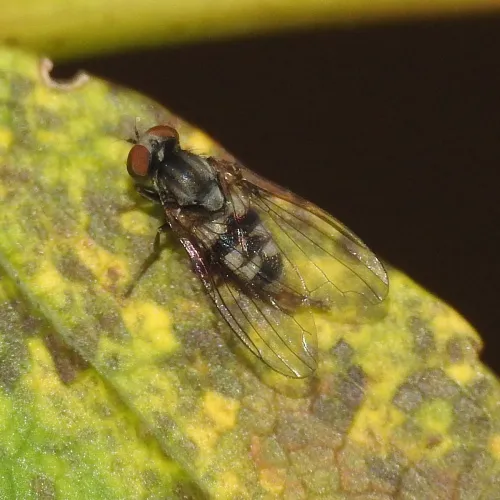
Paraplatypeza bicincta
Paraplatypeza bicincta
Female: Grey-dusted head and thorax, three blackish stripes on thorax with middle one widest, abdomen black with light grey spots largest on tergites 3-4, tergites 2 and 5 completely black. Male: Completely dull black. Pale yellow pterostigma contras
Parasyrphus genualis
Parasyrphus genualis
Identification: "Markings on tergite 2 are more linear and closer at middle than other Parasyrphus species. Hind femur and hind tibia much too extensively darkened for female Syrphus and posterior edge of markings on tergites 3 and 4 too emarginate f
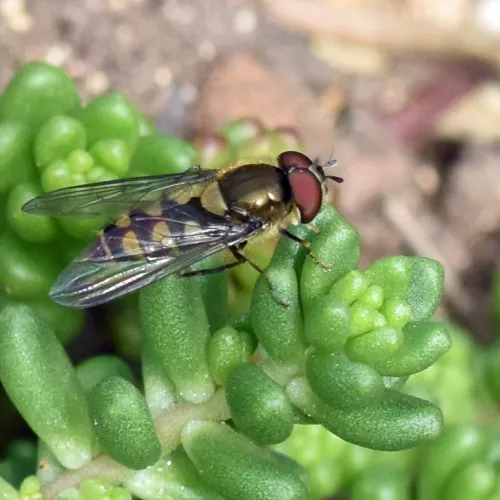
Parasyrphus punctulatus
Parasyrphus punctulatus
Length 6 to 8 mm, wing length 5.5 to 7.75 mm. This is a rather small hoverfly and is unusual amongst parasyrphus because the abdominal markings are spots rather than bars. Visits willows in spring and is often found in wooded areas including conifero
Parasyrphus relictus
Parasyrphus relictus
Males similar to P. genualis but differ in details of frons and facial color and wing microtrichosity.
Paratendipes albimanus
Paratendipes albimanus
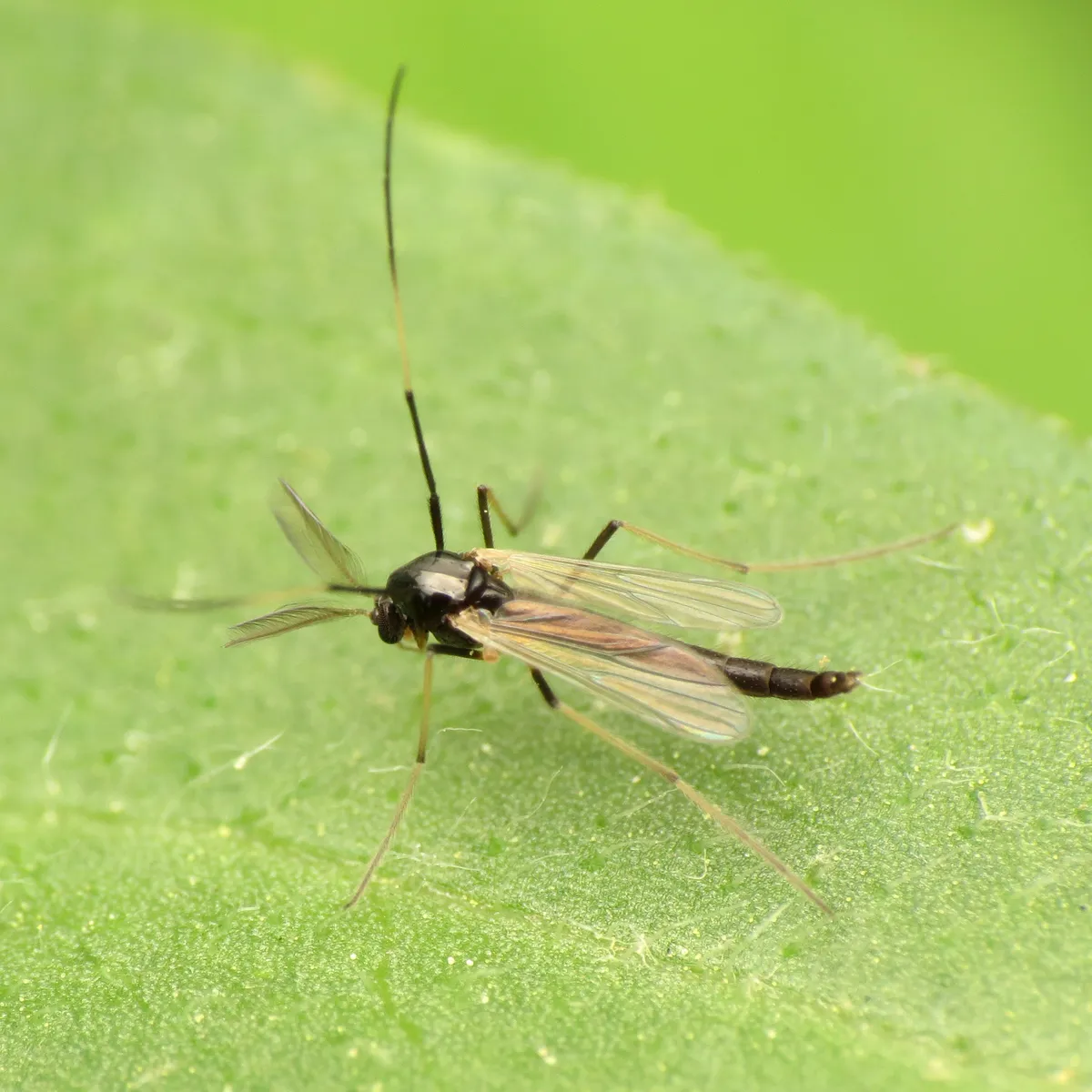
Identification: Male: Glossy black thorax with blackish brown abdomen. Fore legs blackish brown except: basal 0.35 of femora lighter brown; basitarsus white with darkened apex. Mid and hind legs lighter brown except apical 0.65 of femora, apex of tib
Parathalassius abela
Parathalassius abela
Identification: "This relatively large species is characterized by 3–4 notopleural bristles, dark legs, relatively long vein CuA+CuP, males with golden-yellow pruinosity on the face and clypeus, and longer lower male ommatrichia. Parathalassius abela
Parathalassius infuscatus
Parathalassius infuscatus
Identification: "This small distinctive species is characterized by broadly infuscate wings in both the male and female with the base of M2 usually appearing indistinct, uniformly short male ommatrichia, 2 notopleural bristles, and male hypopygium wi
Parathalassius uniformus
Parathalassius uniformus
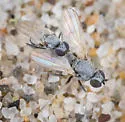
Identification: "This relatively small species is characterized by a subtriangular antennal postpedicel, uniformly short male ommatrichia, 2 notopleural bristles, hyaline wing, relatively dark legs, male hypopygium compact, and female sternite 8 with
Paratinia recurva
Paratinia recurva
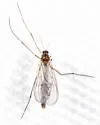
Paratinia recurva (Paratinia recurva) is a species in the family Mycetophilidae, commonly known as fungus gnats, belonging to the order Diptera (Flies). It is classified within the subfamily Gnoristinae, superfamily Sciaroidea. This species belongs t
Paravilla separata
Paravilla separata
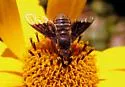
Identification: The only north-eastern species in the genus. The black-banded abdomen distinguishes it from Chrysanthrax cypris. [Comment by Joel Kits here ].
Parepalpus flavidus
Parepalpus flavidus
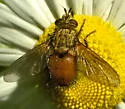
Identification: Distinguished from other Tachinini by the combination of palps absent, abdomen orange with one pair of discal and marginal bristles on tergites 3 and 4, and parafacial and eyes bare.
Parhelophilus flavifacies
Parhelophilus flavifacies
Identification: hind tibia almost entirely black, unlike in any other eastern Parhelophilus . --Jeff Skevington
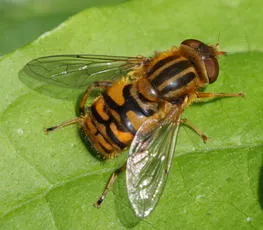
Parhelophilus frutetorum
Parhelophilus frutetorum
There are three very similar Parhelophilus species, all are compact and brightly coloured hoverflies, well covered in yellow hairs. Separation of the species needs careful and close examination. Particularly alongside ponds and ditches. The larvae ha
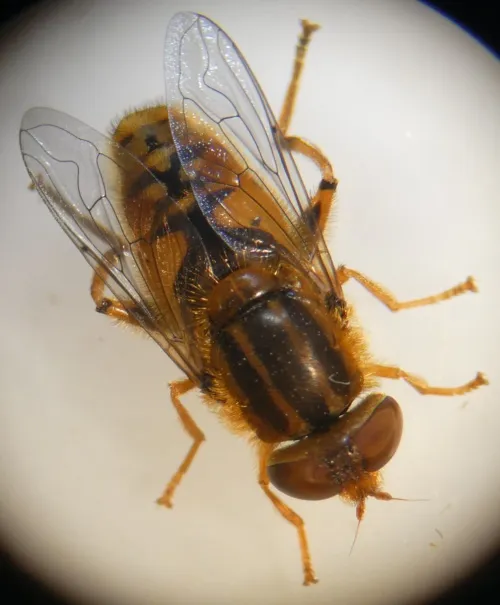
Parhelophilus versicolor
Parhelophilus versicolor
Like a smaller, hairier and often more orange looking version of Helophilus . The various species of this genus are difficult to separate in the field, or even from photographs. Where the subject of an image has not received genitalia examination, wh
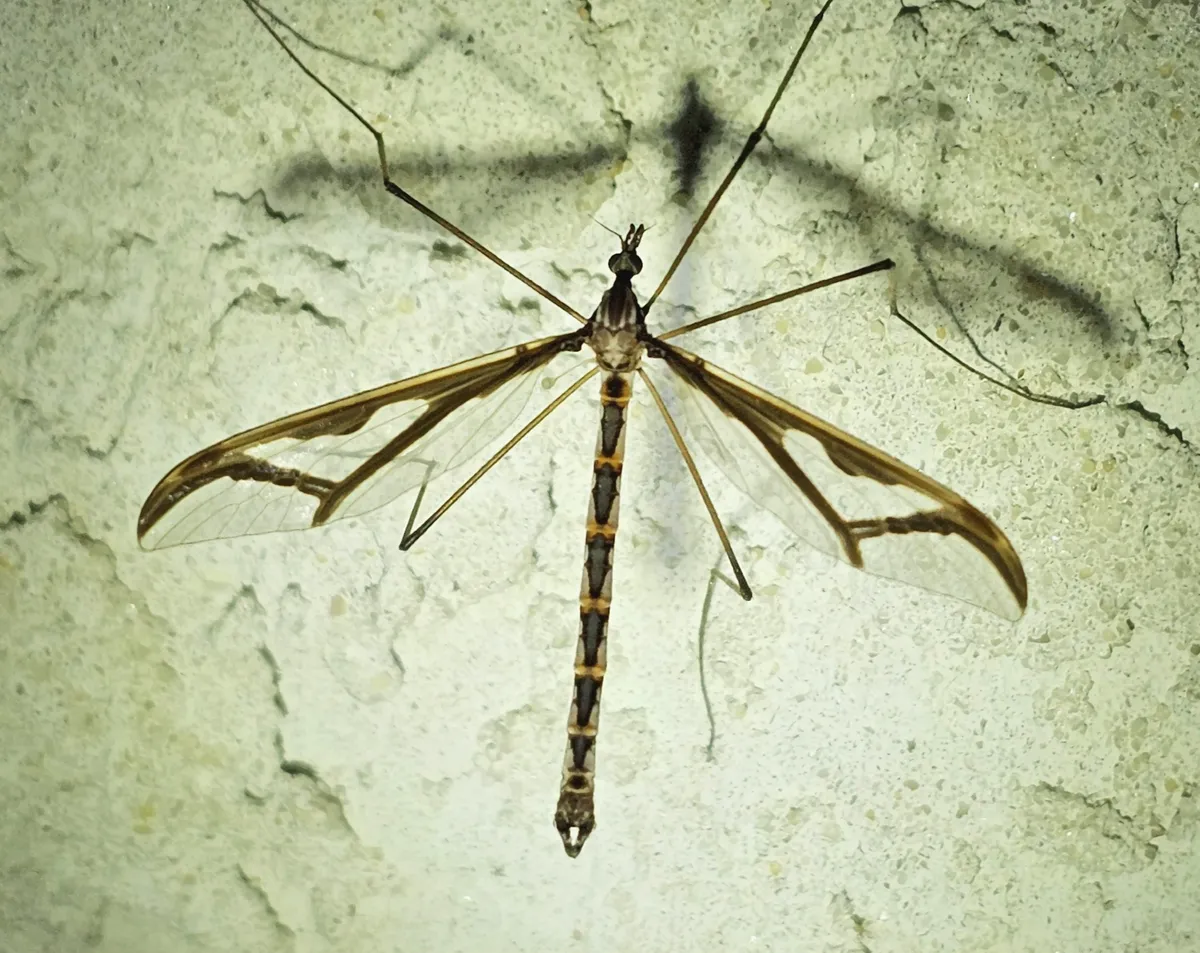
Pedicia goldsworthyi
Pedicia goldsworthyi
Identification: Similar to Pedicia albivitta . The mesoventral lobes of male gonocoxite are larger and the ninth tergite has small patches of golden hairs.
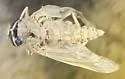
Pegasomyia abaurea
Pegasomyia abaurea
Identification: Males of P. abaurea have light cuticle and blue eyes in life, unlike the dark cuticle and green eyes found in P. ruficornis.
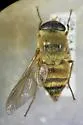
Pegasomyia ruficornis
Pegasomyia ruficornis
Identification: Males have black body (beneath pale hair) and yellow antennae. Females are very similar to abaureus with a slightly longer scape. Middlekauff and Lane warn, "females of ruficornis cannot be separated with certainty from those of abaur
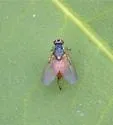
Pegomya (Phoraea) winthemi
Pegomya winthemi
Identification: Females of the species group to which P. winthemi belongs have enlarged fifth segments of mid and hind tarsi.
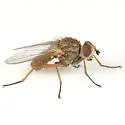
Pegomya betae
Pegomya betae
pest of beet Considered invasive in this country. (Capinera, John L. North American Vegetable Pests. The Pattern of Invasion. American Entomologist. Spring 2002)
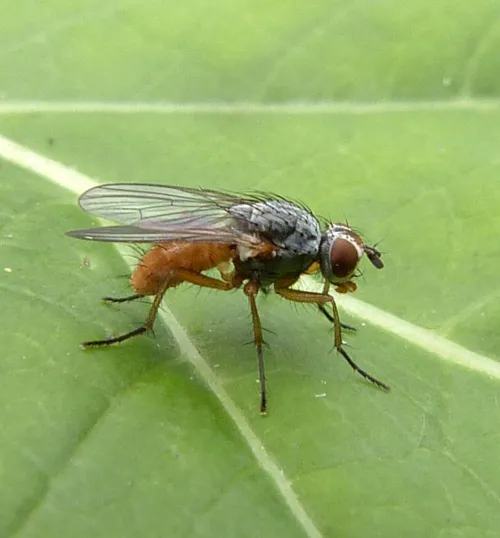
Pegomya bicolor
Pegomya bicolor
Length 6 to 8 mm. Both male and female have an orange abdomen and a grey or blackish thorax. The legs are mainly orange. Detailed examination is required to identify to species level. Hedgerows and flower meadows where adults take nectar and pollen.
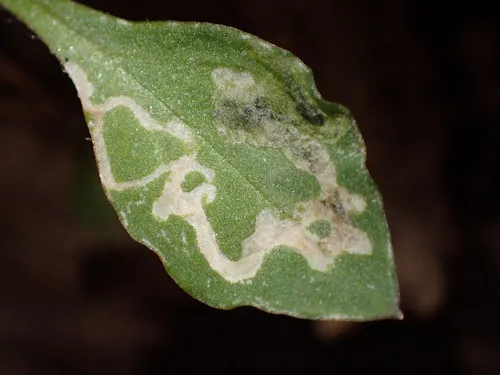
Pegomya flavifrons
Pegomya flavifrons
The larvae of the fly Pegomya flavifrons mine the leaves of various plants such as Chickweeds, Stichworts, Campions and Mouse-ears. The mine takes the form of a gallery then a blotch, larger and deeper than the mine of Amauromyza flavifrons. In large
Pegomya geniculata
Pegomya geniculata
Griffiths (1984) says "often the most numerous Pegomya in caught samples in Canada."
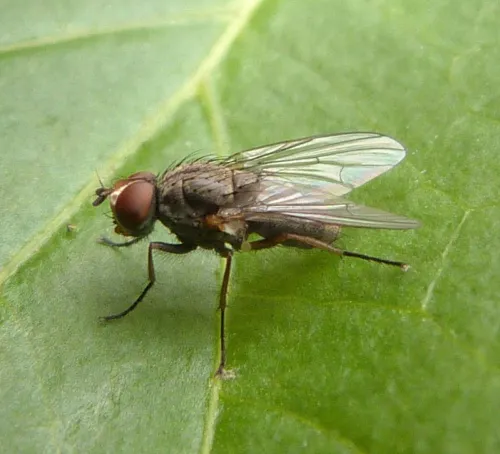
Pegomya hyoscyami
Pegomya hyoscyami
A grey bodied fly about 6 millimetres long. Adult: Unless identified by a recognised expert, a photo is required and the specimen should be examined with a microscope. In the comments box, state the key or ID method used and describe the size and ide
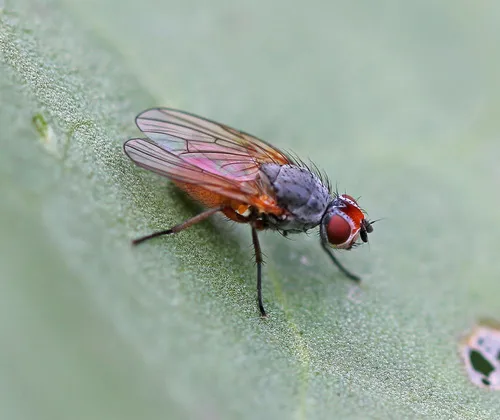
Pegomya solennis
Pegomya solennis
Pegomya solennis is a small blackish fly whose larvae mine the leaves of various members of the Dock family causing large blotch mines. The adults must be bred to identify the species as several Pegomya species mine Dock.(reference British Leafminers
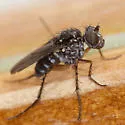
Pelastoneurus longicauda
Pelastoneurus longicauda
Identification: White spot on thorax, bend in M relatively abrupt, dark spots on middle and hind tibiae at insertion of bristles, face of male wide.
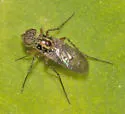
Pelastoneurus umbripictus
Pelastoneurus umbripictus
Identification: Thoracic pattern should be unique, as well as the spots on the wings.
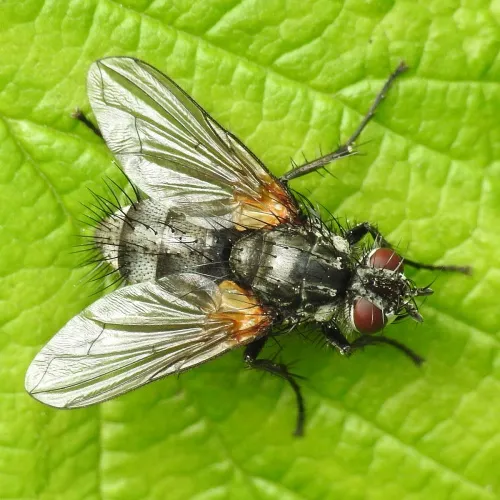
Pelatachina tibialis
Pelatachina tibialis
Length 7-9mm. Long reclinate bristles in the parafrontal area distinguish this species from most other Tachinids but are not diagnostic on their own. Good quality photographs showing the distinguishing features are required. Larvae chiefly parasitise
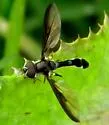
Pelecinobaccha costata
Pelecinobaccha costata
Identification: Wing with leading edge darkened and with cell dm always clear; face yellow with median black line; abdomen constricted basally, swollen/widened apically with pointed tip, ground color black w/ blue-to-silvery markings, and three equal
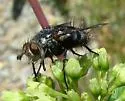
Peleteria anaxias
Peleteria anaxias
Identification: Mostly shining bluish black with contrasting red fifth (last visible) abdominal segment.
Peleteria incontesta
Peleteria incontesta
Identification: First two segments of antennae bright red, abdomen red with black median stripe, without discals or pollen on intermediate segments, with pale spots on tergite 5.
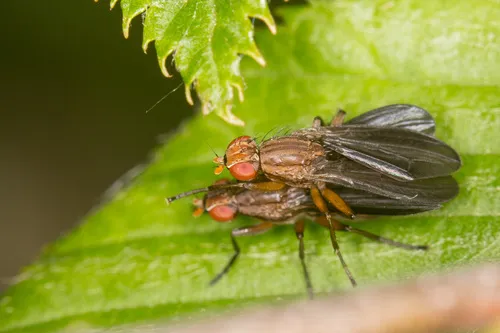
Pelidnoptera fuscipennis
Pelidnoptera fuscipennis
This fly has a red/brown thorax with darker tram lines along its length, reddish eyes and very dark wings. Woodland and well wooded areas, often in damp areas. Local but widespread in England and Wales, less well recorded in Scotland. No additional i
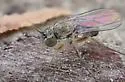
Peloropeodes cornutus
Peloropeodes cornutus
Identification: Males are distinguished from other North American Peloropeodes by the very long antennae with first two segments black. P. magnicornis from Nebraska has the first two segments yellow.
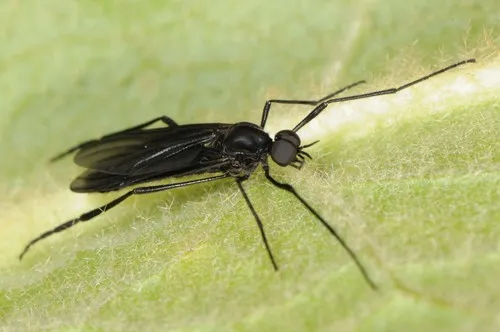
Penthetria heteroptera
Penthetria heteroptera
Identification: The forked R vein with nearly parallel forks distinguishes this species from other northeastern March Flies (comment by John Carr)