
Flies
Order Diptera
The Flies (Order Diptera) includes 6,350 species across 141 families and 1,800 genera in our directory.
About Flies
Diptera includes over 150,000 described species of flies, mosquitoes, and midges. Mosquitoes are the deadliest animal on Earth (CDC). Malaria alone causes ~249 million cases and over 608,000 deaths annually, mostly children under 5 (WHO). Vector-borne diseases account for over 17% of all infectious diseases, causing 700,000+ deaths per year.
Economic Impact
In the U.S., vector-borne disease cases tripled between 2004-2016, with over 640,000 cases reported in that period (CDC). Tickborne diseases doubled from 22,000 to 48,000 annual reports. Globally, mosquito-borne diseases cost billions in healthcare and lost productivity.
Ecological Role
Despite their disease impact, flies are critical decomposers and pollinators. Hoverflies alone pollinate hundreds of crop and wildflower species. Flies are also the primary food source for many birds, bats, and fish. Forensic entomology relies heavily on fly species for crime scene analysis.
Families in Diptera (141)
Species in Diptera (6,350)
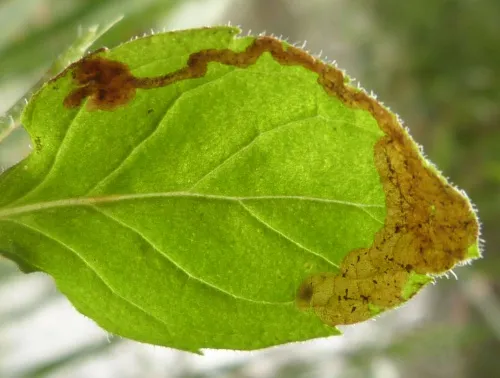
Phytomyza tetrasticha
Phytomyza tetrasticha
The larvae of the fly Phytomyza tetrasticha mine the leaves of mint, especially Water Mint. The mine starts with a small spiral and then develops into a greenish blotch (frequently on the leaf margin), which turns brown as it ages. The pupa is yellow
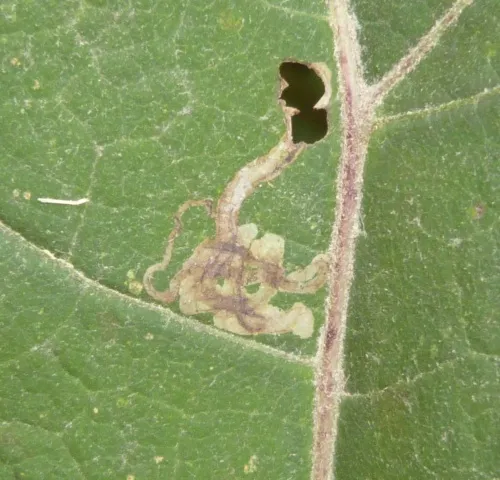
Phytomyza tussilaginis
Phytomyza tussilaginis
The larva of the fly Phytomyza tussilaginis mines the leaves of Butterbur, Colt’s-foot and Winter Heliotrope, producing a long narrow mine, widening at the end and often forming a secondary blotch. See the National Agromyzidae Recording Scheme webpag
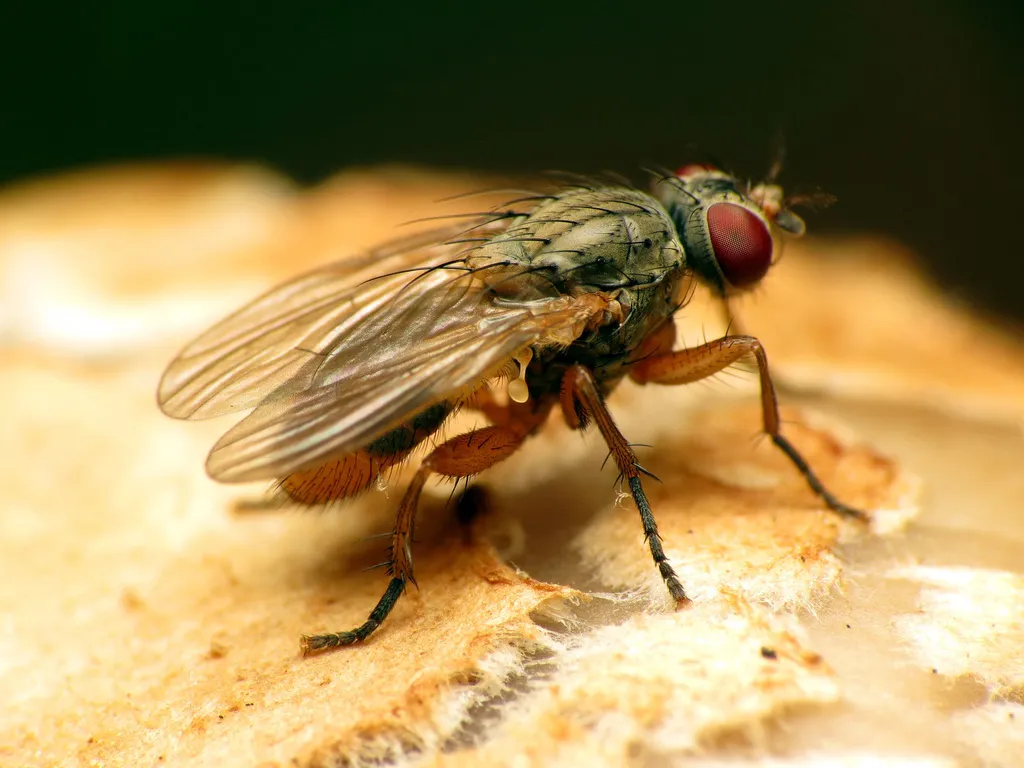
Piezura graminicola
Piezura graminicola
Identification: Arista plumose; male dichoptic; abdomen yellow with dark lateral markings; thorax gray with faint stripes; three katepisternal bristles; legs yellow but tarsi black; costal spine strong.
Pinewoods Laphria
Laphria virginica
Identification: Easy to confuse with L. flavicollis . The main gestalt things to look for are the hairiness of the black abdomen, very fuzzy in virginica but somewhat glossy in flavicollis . The golden hair on the top of the thorax looks more swept b
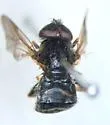
Pipiza femoralis
Pipiza femoralis
Identification: Separated from other species of Pipiza by the single pair of yellow spots on the second abdominal segment (sometimes very weak), apex of hind femora thickened bearing small spinules, and the apical two tarsi being black.
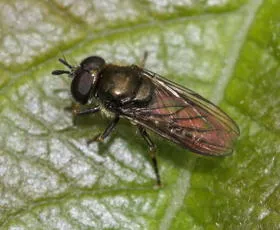
Pipizella viduata
Pipizella viduata
A small, compact species (8 to 10 mm) with an all-black abdomen. The third segment of the antenna is about 1.5 times as long as wide in the male and about twice as long as wide in the female. It has a row of hairs on the anterior surface of the rear
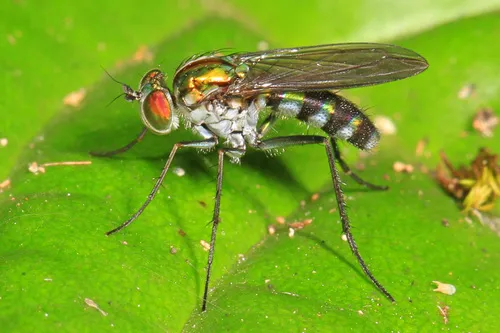
Plagioneurus univittatus
Plagioneurus univittatus
Identification: Thorax metallic green with a strong black stripe in the center. Abdomen black with white pruinose posterior bands. Wings hyaline with vein M converging with R4+5.
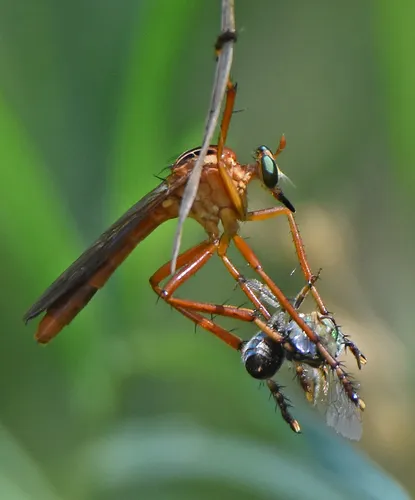
Plain-tailed Hanging Thief
Diogmites neoternatus
Identification: medium-sized brownish species with long legs; abdomen strongly constricted between segments II & III; mesonotum with three velvety black stripes that contrast with the light background of the disc
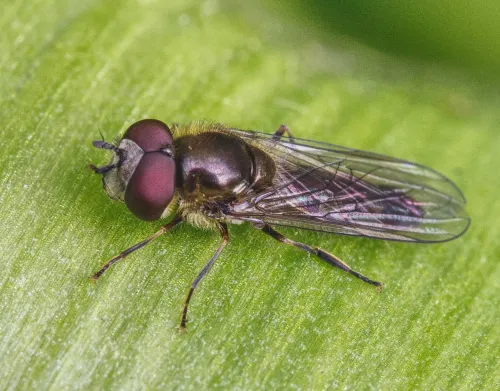
Platycheirus ambiguus
Platycheirus ambiguus
Males have the front legs entirely unmodified except for a curled bristle behind the tip of the front femora. In females tergites 3 & 4 have complete silvery bands across the basal half. Strongly associated with Blackthorn. The larvae are aphidophago
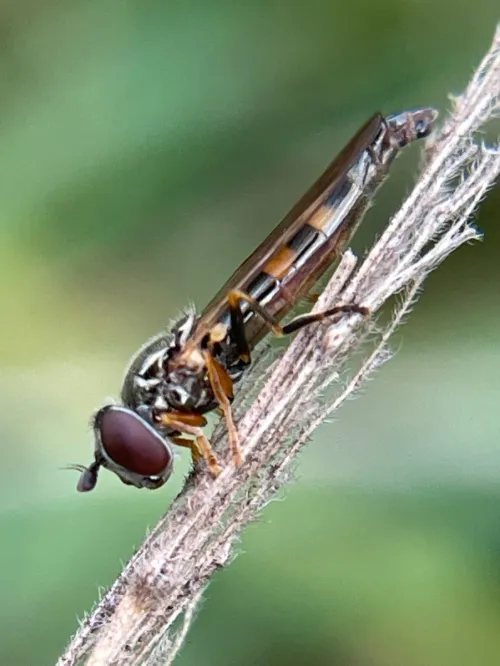
Platycheirus angustatus
Platycheirus angustatus
Our most narrowly-built Platycheirus with males that could be overlooked as Melanostoma mellinum in the field until the broadened front legs are seen. It belongs within the clypeatus group with front legs modified in much the same way as other member
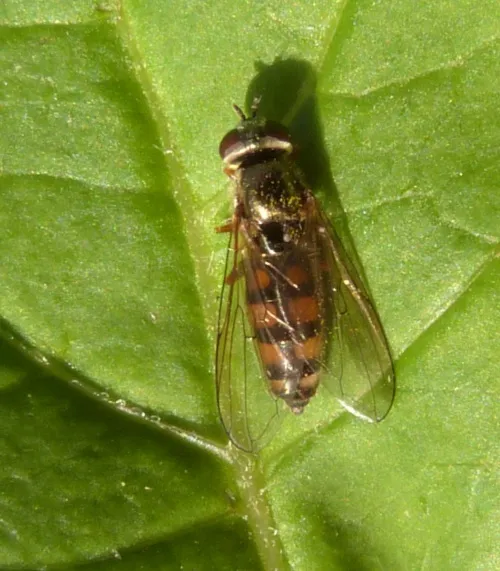
Platycheirus clypeatus
Platycheirus clypeatus
Wing length 5 to 7.5 mm. P. clypeatus is rather broader bodied than other similar species, but careful examination is necessary to ensure correct identification. Various habitats, including both dry grassland and wet meadows, or even woodland rides.
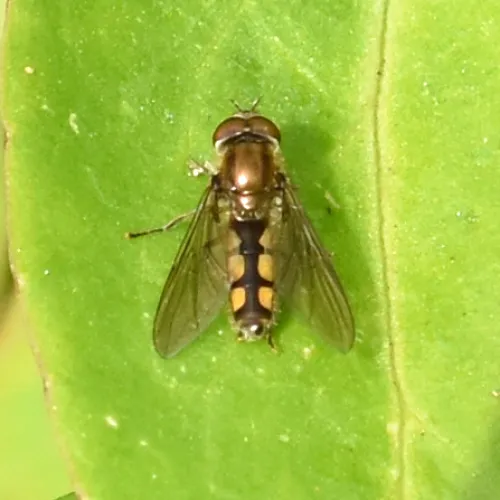
Platycheirus manicatus
Platycheirus manicatus
This species has a less shiny thorax than other Platycheirus species and with large, rounded yellow spots on the abdomen. There are several similar hoverflies with yellow spots so care is needed to note their shape and size. Dry open grassland, and e
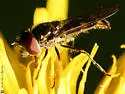
Platycheirus obscurus
Platycheirus obscurus
one of the most commonly encountered spp. of our fauna
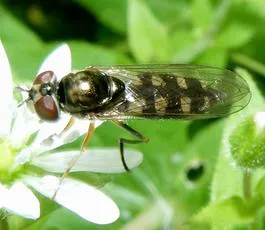
Platycheirus peltatus
Platycheirus peltatus
In size Platycheirus peltatus is amongst the largest of this sub-genus, and has the typical very shiny brassy looking thorax. April to November peaking in June and August. Widespread and fairly frequent in Britain but possibly declining throughout it
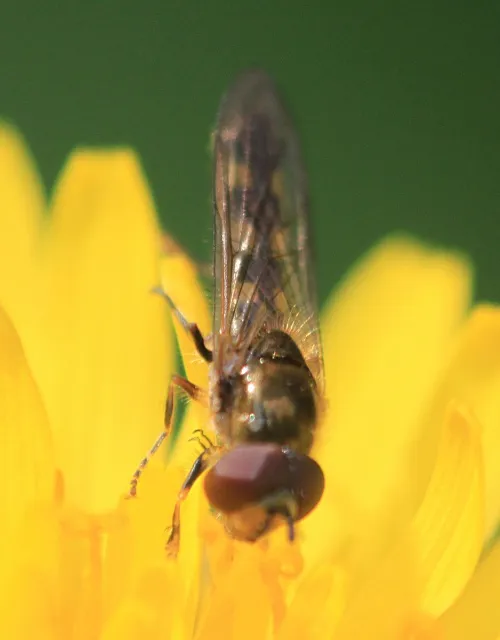
Platycheirus scutatus
Platycheirus scutatus
Although shown as a species, it is now thought that scutatus is a species complex. Voucher specimens are usually collected when precise identification is required. Sensu lato means 'in the broadest sense' and is a term used to describe a species grou
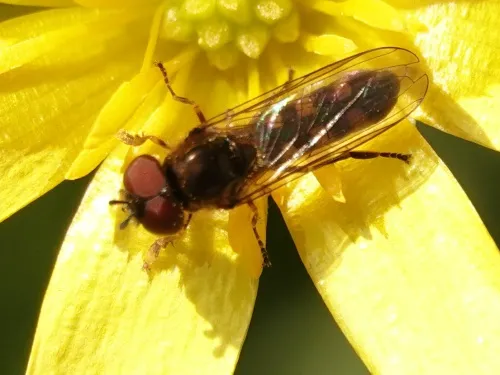
Platycheirus splendidus
Platycheirus splendidus
Very similar to P. scutatus and only described as a separate species in 1998, by Graham Rotheray. Males can be easily distinguished from those of scutatus by the deep black frons (pale grey-dusted in scutatus). The spots on the tergites, especially t
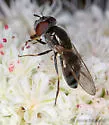
Platycheirus stegnus
Platycheirus stegnus
Identification: Images of adult (fig. 23) & larvae (fig. 24)
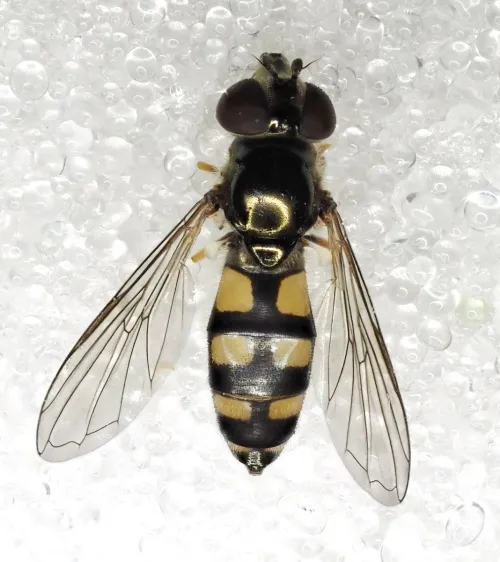
Platycheirus tarsalis
Platycheirus tarsalis
Platycheirus tarsalis is one of a pair of yellow-spotted Platycheirus species with a strongly protruding mouth and the front legs of the male with only tarsal segments 1 and 2 enlarged and the fore tibiae unmodified. Compared with Platycheirus manica
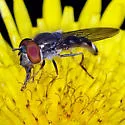
Platycheirus trichopus
Platycheirus trichopus
Includes western specimens previously identified as Platycheirus obscurus .
Platypalpus apicalis
Platypalpus apicalis
Identification: Translation of Loew's description: "79. Plalypalpus apicalis nov. sp. §. Dark, shiny, thorax lateral margins and pleura very obsoletely white-pollinose, feet yellow, femurs anterior and posterior marked with oblong black spots above t
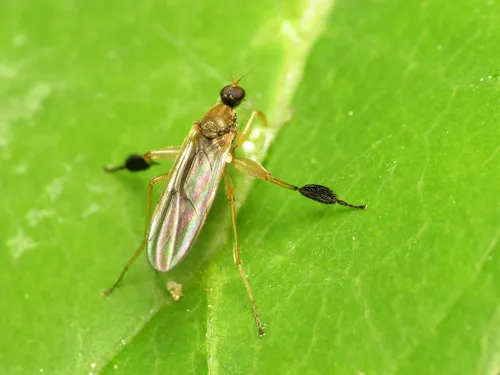
Platypalpus discifer
Platypalpus discifer
Identification: The modified male mid legs are distinctive.
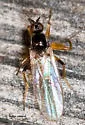
Platypalpus flammifer
Platypalpus flammifer
Identification: Thorax shining black; legs yellow to brown with tips of hind femora dark; arista white, shorter than long, black third segment of antennae.
Platypalpus harpiger
Platypalpus harpiger
Identification: Original description: Platypalpus harpiger , sp. nov. [Female] -- Length 5 mm. Body black, head and thorax closely gray pollinose, legs including coxae entirely yellow, the tip of the long tibial spur alone black; base of abdominal se
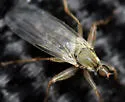
Platypalpus holosericus
Platypalpus holosericus
Identification: Body black, with dense pollen covering head and thorax and forming triangles on sides of abdomen; legs yellow, spur of tibia longer than diameter of tibia; posterior crossvein (M-Cu) oblique and behind anterior (R-M); R4+5 and M conve
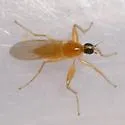
Platypalpus melleus
Platypalpus melleus
Identification: One of a few almost entirely yellow species. Original description: Platypalpus melleus , nov. sp. - Female. Length 2 mm. Yellow, the ocellar spot, outer half of the third antennal joint with the arista, the eyes, flexor setulae
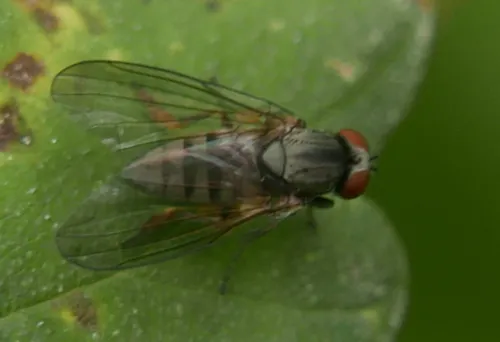
Platypeza consobrina
Platypeza consobrina
Female: Grey-dusted head and thorax, abdomen black with bands of grey dusting narrowest in the middle. Male: Dull black, tibiae yellow at base, tergite 6 grey-dusted. Female: Other Platypeza species. P. consobrina has extensive dusting on tergite 1 l
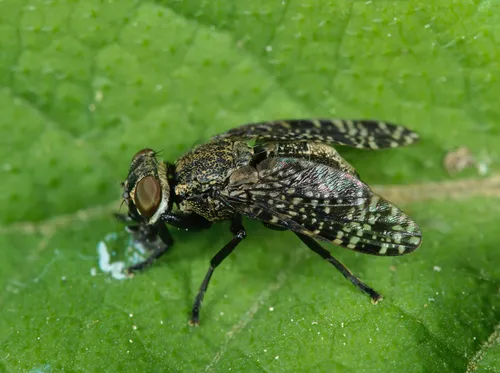
Platystoma seminationis
Platystoma seminationis
Length 5 to 7 mm. It has a dark mottled body and reddish-brown eyes. The translucent wings are greyish brown and marked with white. This fly belongs to the family called Platystomatidae which means 'big mouths'. Unless identified by a recognised expe
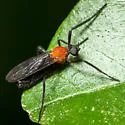
Plecia americana
Plecia americana
Identification: P. americana is red laterally and ventrally on the thorax
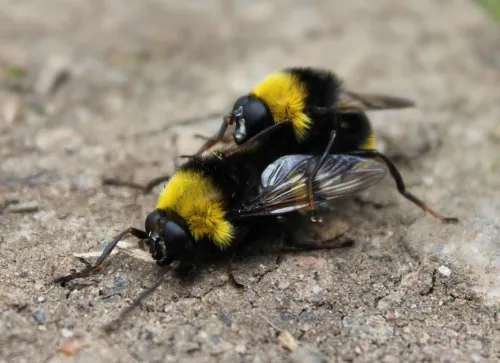
Pocota personata
Pocota personata
Arguably the finest bumblebee mimic in the European hoverfly fauna. Its small head size in relation to its body, and the strikingly lemon bands make it readily identifiable. Pocota is associated with very old trees in woodland and semi-natural parkla
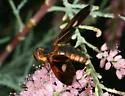
Poecilanthrax effrenus
Poecilanthrax effrenus
Identification: Description from Painter and Hall (1960):
Poecilobothrus nobilitatus
Poecilobothrus nobilitatus
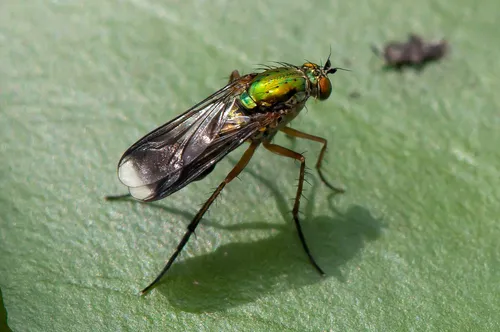
This is an attractive fly with a metallic green thorax. The male has conspicuous white wing tips and is easy to identify, the female lacks these white wing tips and looks very similar to many others in the genus. The acrostichal bristles on the thora
Poecilognathus badius
Poecilognathus badius
Identification: Wing with spots, face with black markings, halter knob yellow or orange without black marks, maxillary palpus dark. Male with yellow hind femur.
Poecilognathus fuscomarginatus
Poecilognathus fuscomarginatus
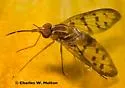
Identification: Marginal wing spots blending into continuous band.
Poecilosomella angulata
Poecilosomella angulata
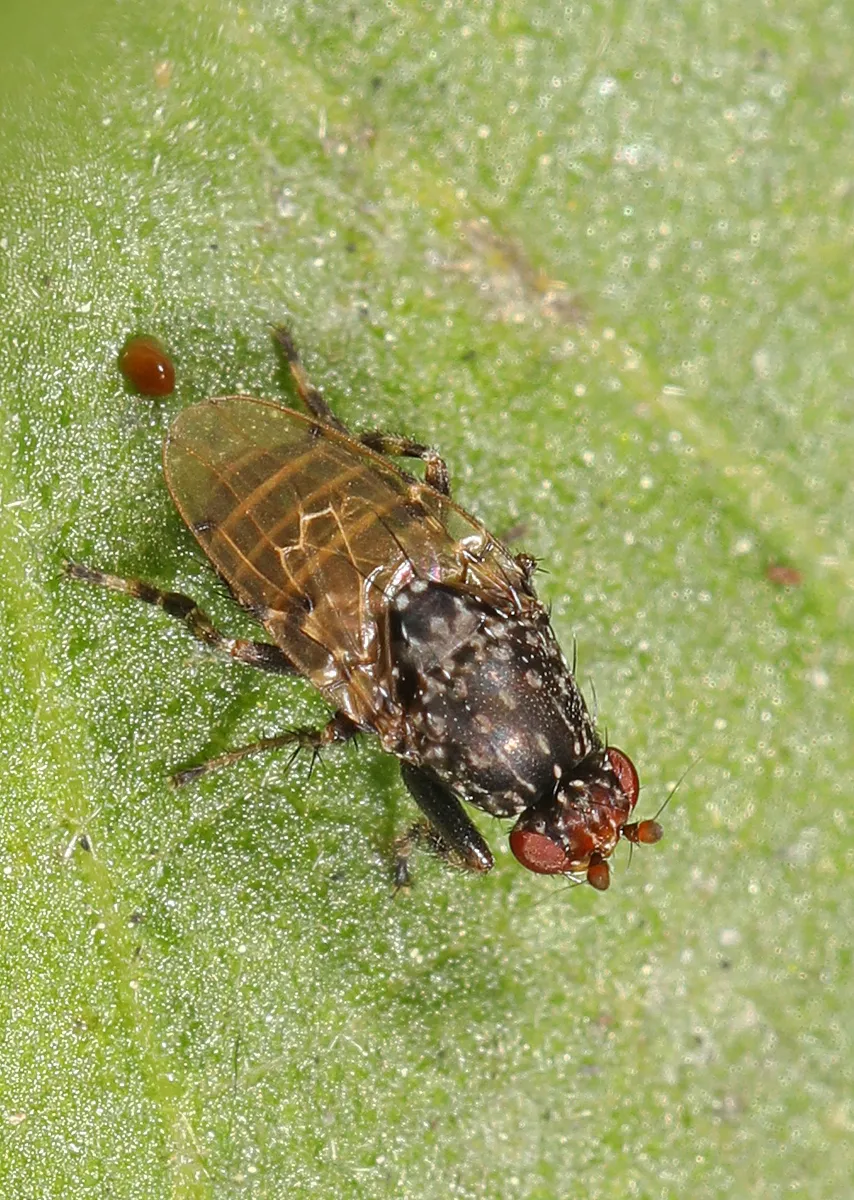
Marshall and Buck write: "The only Central American species of this primarily tropical Old World/Australasian genus, P. angulata (Thomson), was probably introduced from the Afrotropical Region. It now occurs in many Central and South American countri
Polietes domitor
Polietes domitor
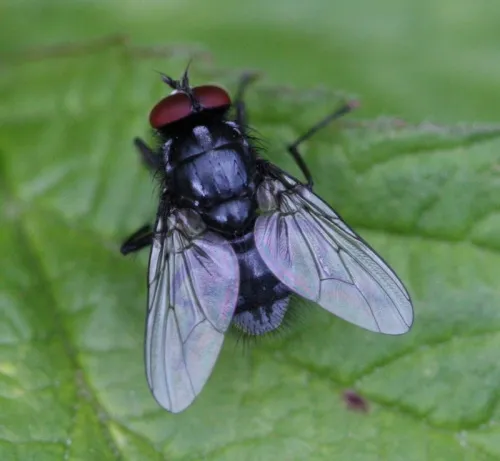
6-8mm. The abdomen has bright metallic blue and pale patches. The thorax has a pale median band behind the head. Morellia simplex is similar but the genus Polietes can be distinguished by vein M being straight not bent. Unless identified by a recogni
Polietes lardarius
Polietes lardarius
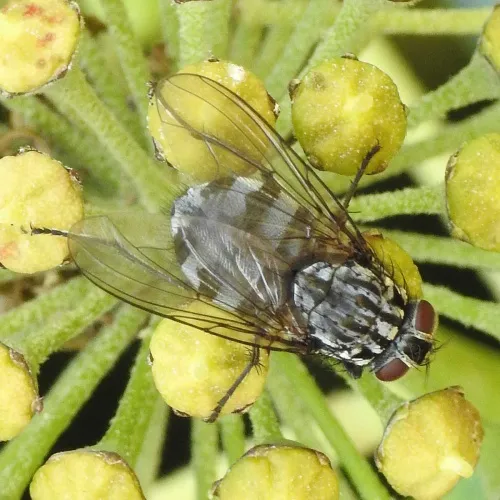
Length about 10 mm. This is a large muscid, superficially looking like a sarcophagid flesh-fly. It has a blue-grey chequered abdomen and jagged stripes on the thorax. The scutellum also usually has stripes or blotches. It has silvery dusting on the f
Polietes meridionalis
Polietes meridionalis
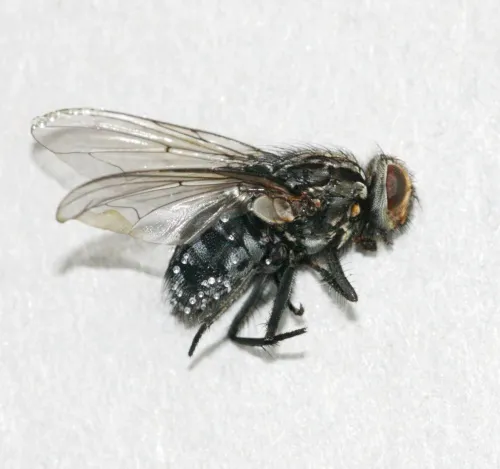
Length about 10 mm. A greyish fly with a chequered appearance and striped thorax. The front spiracle is yellow and the parafacial and anterior gena is yellow/gold. Polietes lardarius is very similar but this species has a grey/white front spiracle an
Pollenia amentaria
Pollenia amentaria
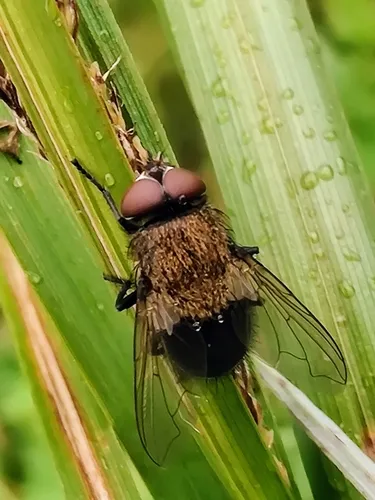
The clusterfly Pollenia amentaria can be recognised because the black tergites lack obvious dusting. Fresh specimens of Pollenia amentaria with lots of golden hairs on the thorax are very striking. Males have a broad build and eyes that are only narr
Polybiomyia bellardii
Polybiomyia bellardii
Identification: Thorax: Pleura (= lateral faces of the thorax) with no yellow markings ...mostly black but often tinged reddish in some areas. Dorsum of thorax black except for symmetrically-paired yellow spots on humeri (= anterior corners) and noto
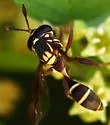
Polybiomyia macquarti
Polybiomyia macquarti
The trapezoidal shape of the yellow prescutellar markings are a significant diagnostic for this species. Shannon described them as "A large trapezoidal spot, or a pair of parallel spots", and he mentioned that in his two male specimens the "spots wer
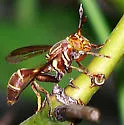
Polybiomyia schnablei
Polybiomyia schnablei
Identification: This species is distinguished among species in our area by the small, yellow, obliquely-angled, "prescutellar spots" (i.e. angled-inward, just in front of the scutellum on the thorax); the yellow supra-alar stripes (cf. here ); and ot
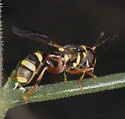
Polybiomyia townsendi
Polybiomyia townsendi
The original 1895 description by Snow is here . A 1924 description by Curran appears here . Shannon's 1925 revision of Cerioidini, though quite old, has a key for nearctic taxa in Polybiomyia . [Update: There is now a newer key to Polybiomyia coverin
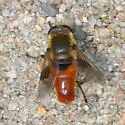
Polydontomyia curvipes
Polydontomyia curvipes
Identification: easily recognized by long spur on the metatibia. Tropidia spp. look similar but are more slender and have spots instead of a pure red abdomen. the only representative of the subgen. Polydontomyia Williston 1896 in our area Displays st
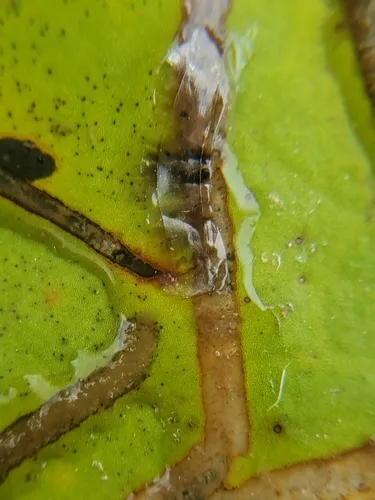
Polypedilum braseniae
Polypedilum braseniae
Identification: The notch between male abdominal segments 7 and 8 is unique to this genus and part of tribe Tanytarsini. The combination of a distinct, angled R-M crossvein and a notch indicate Polypedilum . (taken from a comment by John F. Carr)
Polypedilum fallax
Polypedilum fallax
Polypedilum fallax is distinguished from close relatives by color pattern, but it it possible that there are more or fewer species than color patterns suggest.
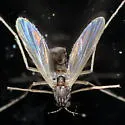
Polypedilum trigonus
Polypedilum trigonus
Identification: Generally brown with white legs and halteres. Male has white patches on the side of some abdominal segments, approximately triangular with point forward. Genital features may be necessary to confirm ID. Most of the males here have
Polypedilum tritum
Polypedilum tritum
Identification: Within genus, identified by hairy wings and single row of dorsocentral setae.
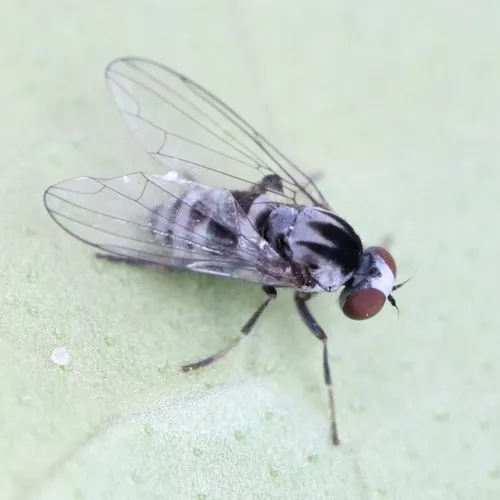
Polyporivora ornata
Polyporivora ornata
Recognizable as a member of Polyporivora by the broad build and extensive silvery markings on both abdomen and thorax. It is separated from Polyporivora picta by its grey scutellum (black in P. picta ). Widespread and fairly frequent in England. No a
Polyporivora picta
Polyporivora picta
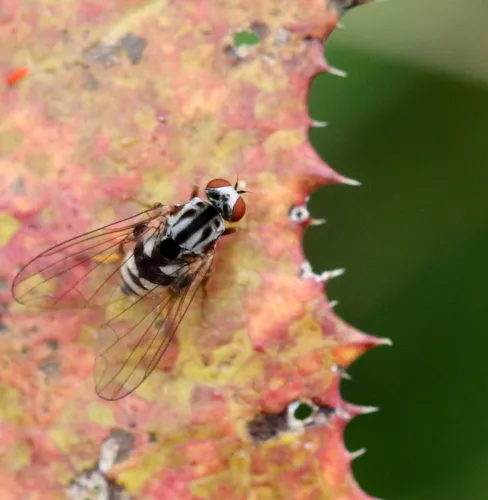
This species has a grey and black patterned abdomen. It is separated from Polyporivora ornata by its black scutellum (grey in P. ornata ). Members of the Platypezidae are associated with wooded areas. Adults may be found performing rapid erratic move
Polystepha globosa
Polystepha globosa
This is the only spherical gall found on oaks that is not caused by a cynipid wasp. Goldfinches have been observed opening the galls to feed on the larvae (see blog post here ).
Portevinia maculata
Portevinia maculata
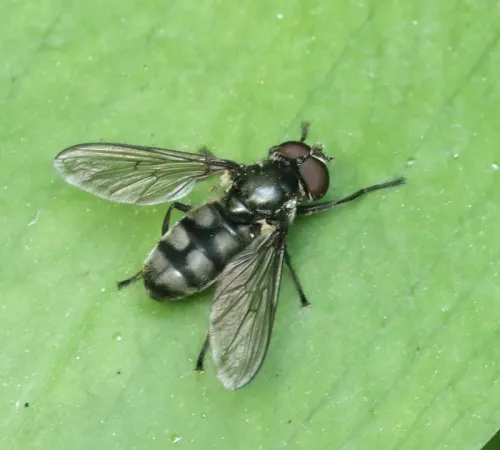
A medium-sized black hoverfly related to Cheilosia with large grey dust-spots on tergites 2 and 3 of the males. Often present at good stands of Ramsons in woods but sometimes absent for reasons that are unclear. It can also use Ramsons in more open l
Prairie Coneflower Gall Midge
Asphondylia ratibidae
"In summer the galls are in the flower heads. Infested flowers are swollen at their bases, and the florets do not open. From August to October, galls are found in enlarged stem ends or leaf buds. Adults emerging in October must lay eggs on living pla
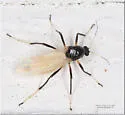
Probezzia albiventris
Probezzia albiventris
Identification: Thorax, halteres, most of femora, and tibiae black. Wing, abdomen, and tarsomeres 1-3 white.
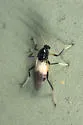
Probezzia infuscata
Probezzia infuscata
Identification: Distinguished from other North American Probezzia by the combination of wing with base white and distal two thirds dark, halter knob dark, tibiae and distal part of femora dark.
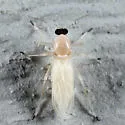
Probezzia pallida
Probezzia pallida
Identification: Female is the palest North American Probezzia . See key linked from genus page.
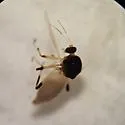
Probezzia seminigra
Probezzia seminigra
Identification: Keyed out in Wirth's 1994 key by having a fully pale wing with whitish veins, scutum entirely dark, abdomen and halteres entirely pale, hind tibia with a broad sub-basal dark region and a narrowly dark apex, fore femur only dark on ex
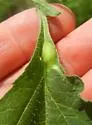
Procecidochares gibba
Procecidochares gibba
Identification: Supernumary crossvein between C and R2+3 after the tip of R1. Larvae form stem galls in Ambrosia .
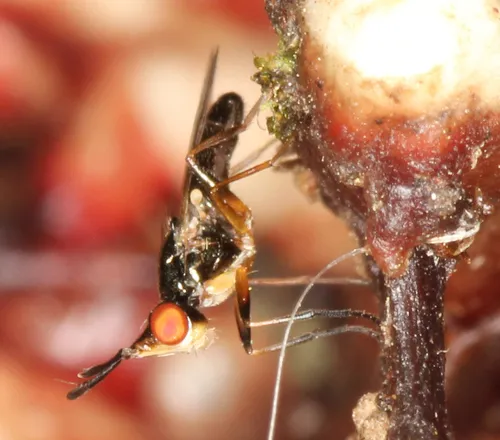
Prochyliza xanthostoma
Prochyliza xanthostoma
Identification: Pedicel as long as first flagellomere (female) or much longer (male). Frons black.
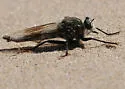
Proctacanthus coquillettii
Proctacanthus coquillettii
A "sand dune-loving fly limited to the southern part of the Colorado River drainage." (Comment by Eric Fisher.)
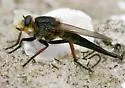
Proctacanthus fulviventris
Proctacanthus fulviventris
Identification: Upcurved proboscis, mostly or entirely black femora, black thorax, black and red abdomen, mystax yellow to orange.
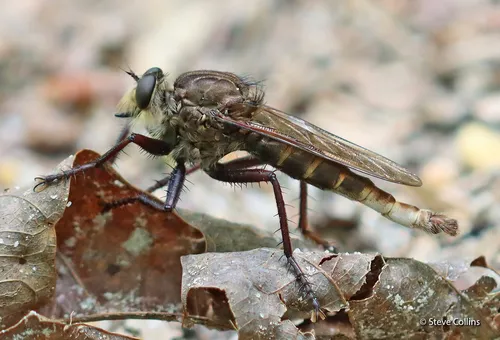
Proctacanthus nigriventris
Proctacanthus nigriventris
Identification: Description from Hine : Body very dark, nearly black; wings uniformly rather pale brown. Mystax very pale yellowish, often with black bristles intermixed, beard gray, occipito-orbital bristles black. Thorax dark, brown pollinose, meso
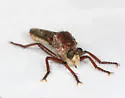
Proctacanthus rufus
Proctacanthus rufus
Identification: Females elongate with bristle-tipped ovipositor
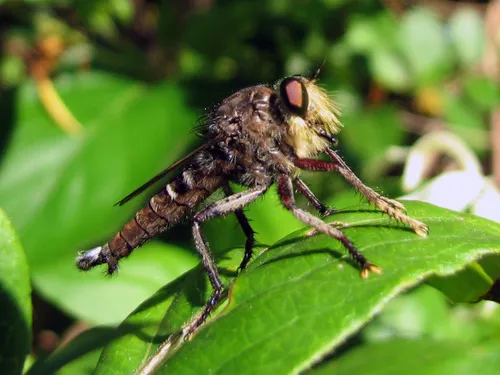
Promachus bastardii
Promachus bastardii
Identification: Similar to P. fitchii . Males have distinctive white tip on abdomen and white bands on thorax
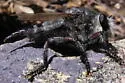
Promachus giganteus
Promachus giganteus
Identification: One of the largest North American robber flies; quite common in NM and w. TX throughout June and sometimes as late as August. Sufficient rainfall is required to support a large population. Their prey includes large grasshoppers, cicad
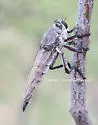
Promachus nigrialbus
Promachus nigrialbus
Identification: how to separate this species from P. giganteus : click
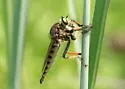
Promachus vertebratus
Promachus vertebratus
Identification: Green eyes, sometimes with some red.
Prosena siberita 0
Prosena siberita
Identification: Distinguished from Dexiini other than Mochlosoma by the long, straight (or at least not upcurved) proboscis
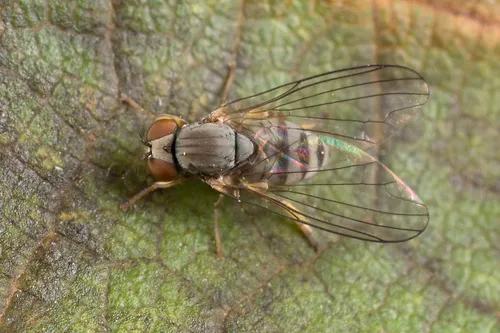
Protoclythia modesta
Protoclythia modesta
Female: Grey-dusted head and thorax, legs yellowish. Abdomen with broad bands of grey dusting, narrowest in the middle. Underside of abdomen yellowish. Male: Dull black with yellowish sides to tergites 1-4. Legs partly yellowish. Female: Platypeza sp
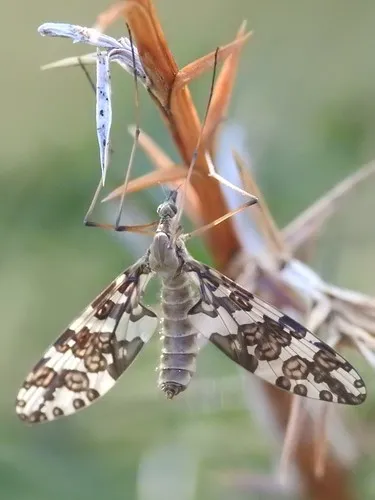
Protoplasa fitchii
Protoplasa fitchii
Identification: heavily pigmented wings have distinctive pattern rare: fewer than 100 adult specimens in museum collections
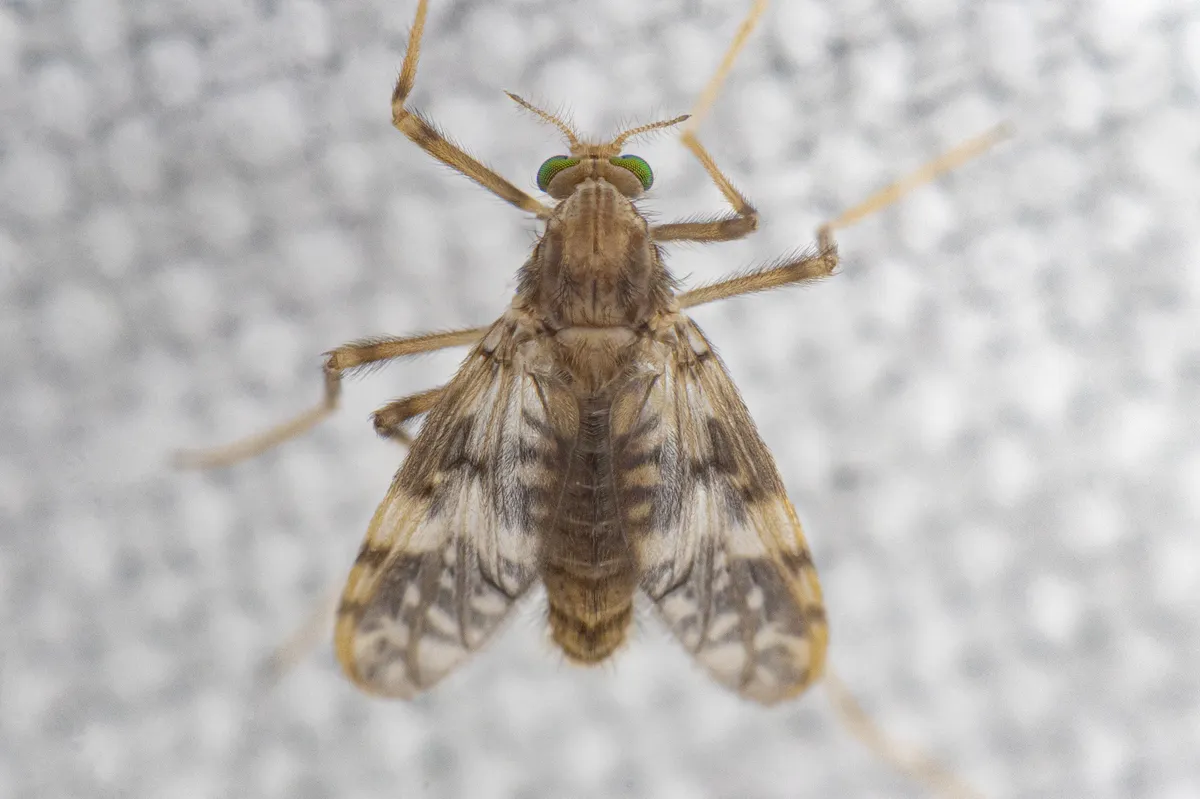
Psectrotanypus dyari
Psectrotanypus dyari
Identification: The details of the wing markings are fairly distinctive, though there are many other Tanypodinae with banded and spotted wings. The yellow color of normal adults may be greenish in freshly emerged individuals. Probably the most commo
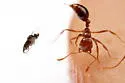
Pseudacteon curvatus
Pseudacteon curvatus
Identification: The only Pseudacteon in our area with a long curved ovipositor that parasitizes Solenopsis invicta : Introduced from South America to control the invasive South American fire ant Solenopsis invicta. One of six species of Pseudacteon i
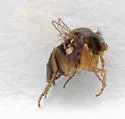
Pseudacteon tricuspis
Pseudacteon tricuspis
Introduced from South America starting in 1997 to control the invasive South American fire ant Solenopsis invicta . It doesn't seem to have a significant impact, though. released along with P. curvatus (Porter et.al., Florida Entomologist 84(4), Dec
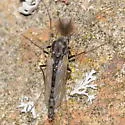
Pseudochironomus richardsoni
Pseudochironomus richardsoni
Pseudochironomus richardsoni is the most widespread species of the genus, but not common. It may turn out to be a species complex. Placement of photos here should be considered tentative, pending revision of the genus. The review by Sæther (1977)
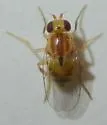
Pseudogaurax signatus
Pseudogaurax signatus
Identification: Scutum with reddish stripes, scutellum with black stripe.
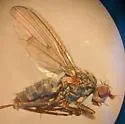
Pseudoleria pectinata
Pseudoleria pectinata
Identification: While most Pseudoleria females are difficult or impossible to identify, females of P. pectinata (but not males) have a distinctive dense patch of short bristles on each side of the 3rd abdominal segment. Males are most reliably identi
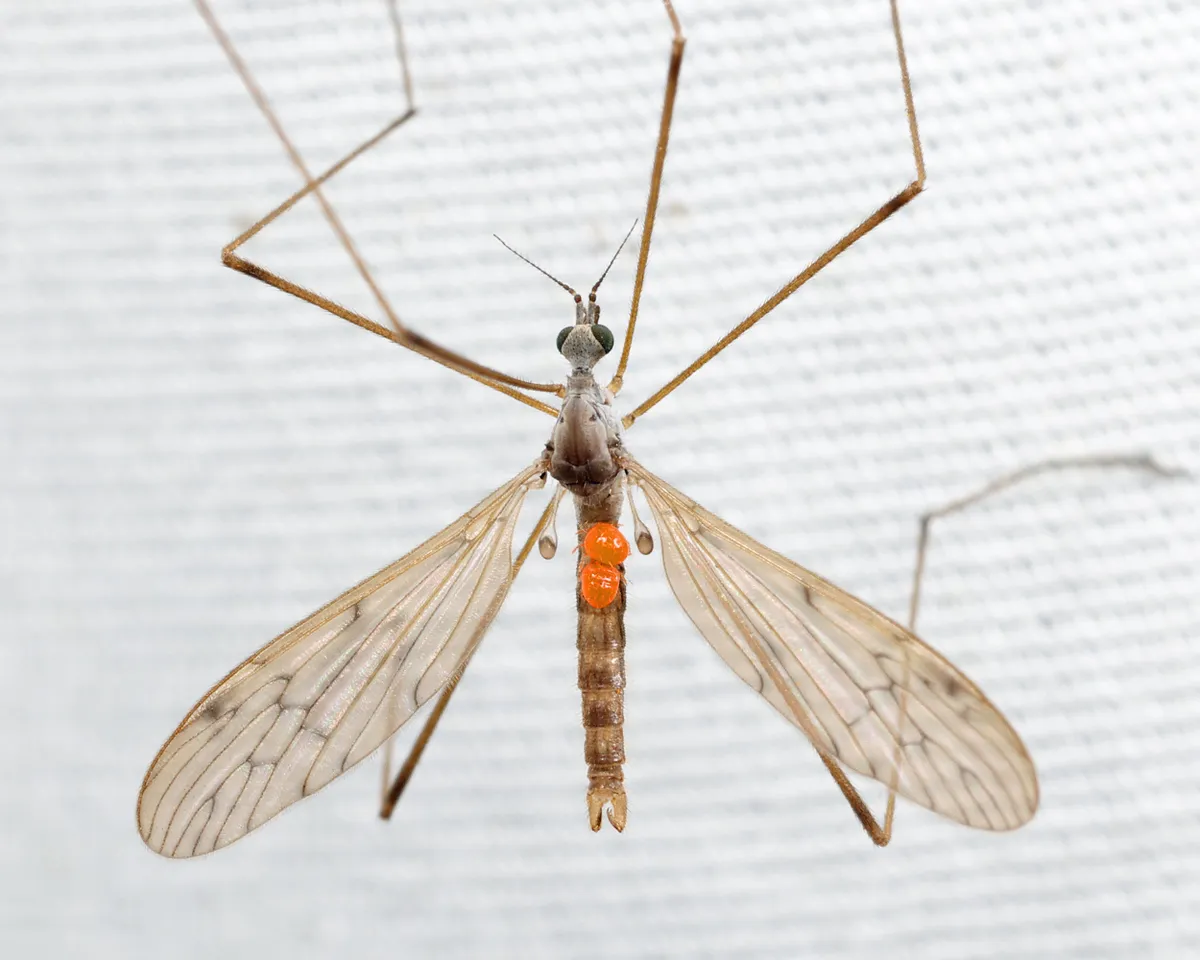
Pseudolimnophila luteipennis
Pseudolimnophila luteipennis
Identification: Body gray, paler laterally, wing yellowish with brown markings on crossveins and forks of veins. Cell m1 present (vein M1+2 forked).
Pseudolimnophila noveboracensis
Pseudolimnophila noveboracensis
Identification: Orange unmarked Pseudolimnophila without Cell M1.
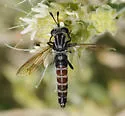
Pseudonomoneura californica
Pseudonomoneura californica
Identification: Antennal "club" (terminal segment) and legs entirely black.
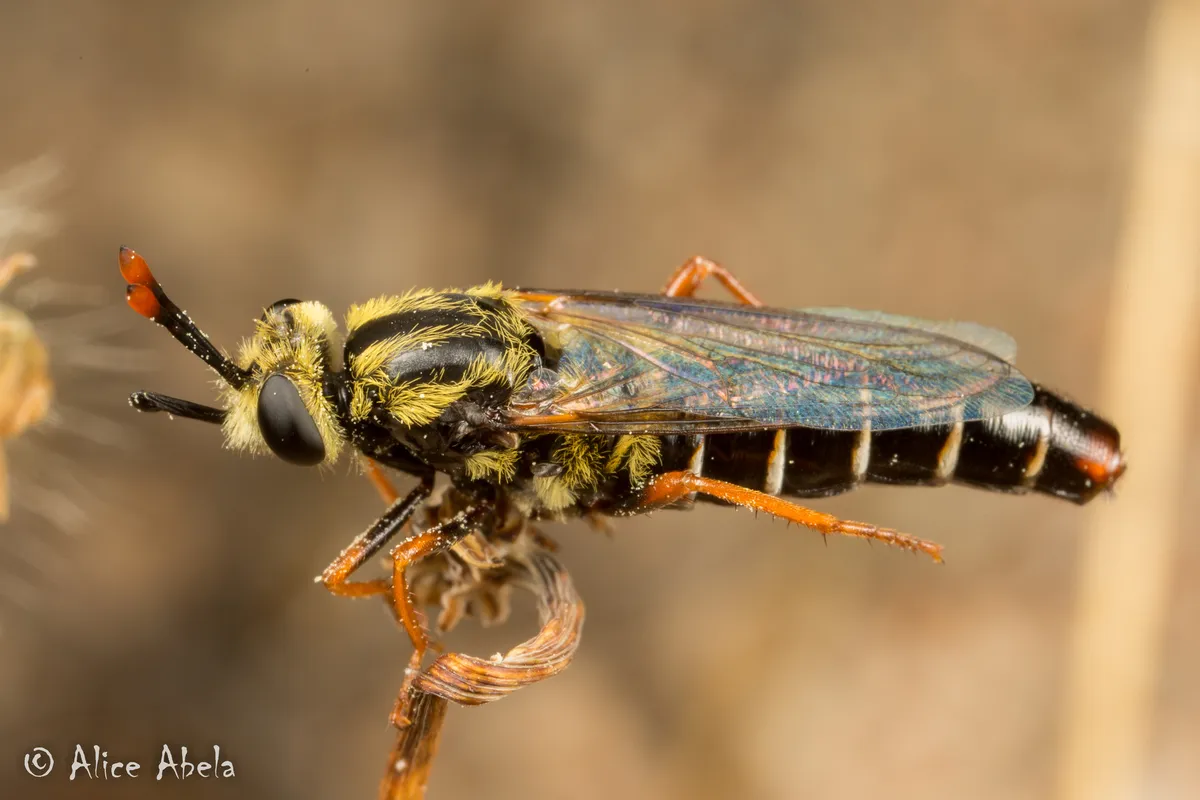
Pseudonomoneura hirta
Pseudonomoneura hirta
Identification: A variable species usually distinguished from other Southwestern Pseudonomoneura by the combination of long proboscis (extending about to the club of the antenna), abdomen with some black (not all red) and with yellow hair, and legs m
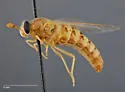
Pseudonomoneura nelsoni
Pseudonomoneura nelsoni
Identification: Females are distinctively "globose" (i.e. thorax and abdomen appearing somewhat more inflated than in most female Pseudonomoneura ); and are typically yellowish, with brown markings on thorax and abdomen. Males are smaller and narrowe
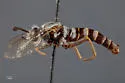
Pseudonomoneura tinkhami
Pseudonomoneura tinkhami
Identification: Proboscis visible but short, about half the length of antennae or less...shorter than in P. californica, P. hirta and P. micheneri . (Proboscis in P. nelsoni is vestigial and virtually invisible.)
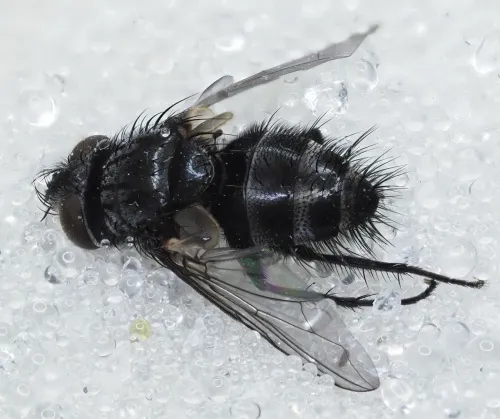
Pseudoperichaeta nigrolineata
Pseudoperichaeta nigrolineata
Body length about 6 mm. Pseudoperichaeta nigrolineata bears a strong resemblance to Phryxe sp.in particular, but differs, among other things, in that the brushes above the vibrissae reach halfway up the face edge and that on the middle rail bone ther
Pseudorthocladius macrostomus
Pseudorthocladius macrostomus
Identification: Note long proboscis. Male / Female I cannot find any biographical information on the author of this species, Annelle R. Soponis. She has a publication record mostly in the late 1970's through the 80's, with one as late as 1992: Soponi
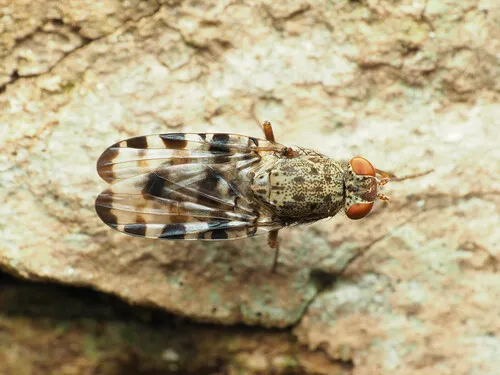
Pseudotephritis approximata
Pseudotephritis approximata
Identification: Original description (Banks, 1914): Similar to P. vau Say, but larger and marks on the wings different. Head and thorax marked as in P. vau , the same large brown spots, but on thorax the minute brown marks are rather more numerous. O
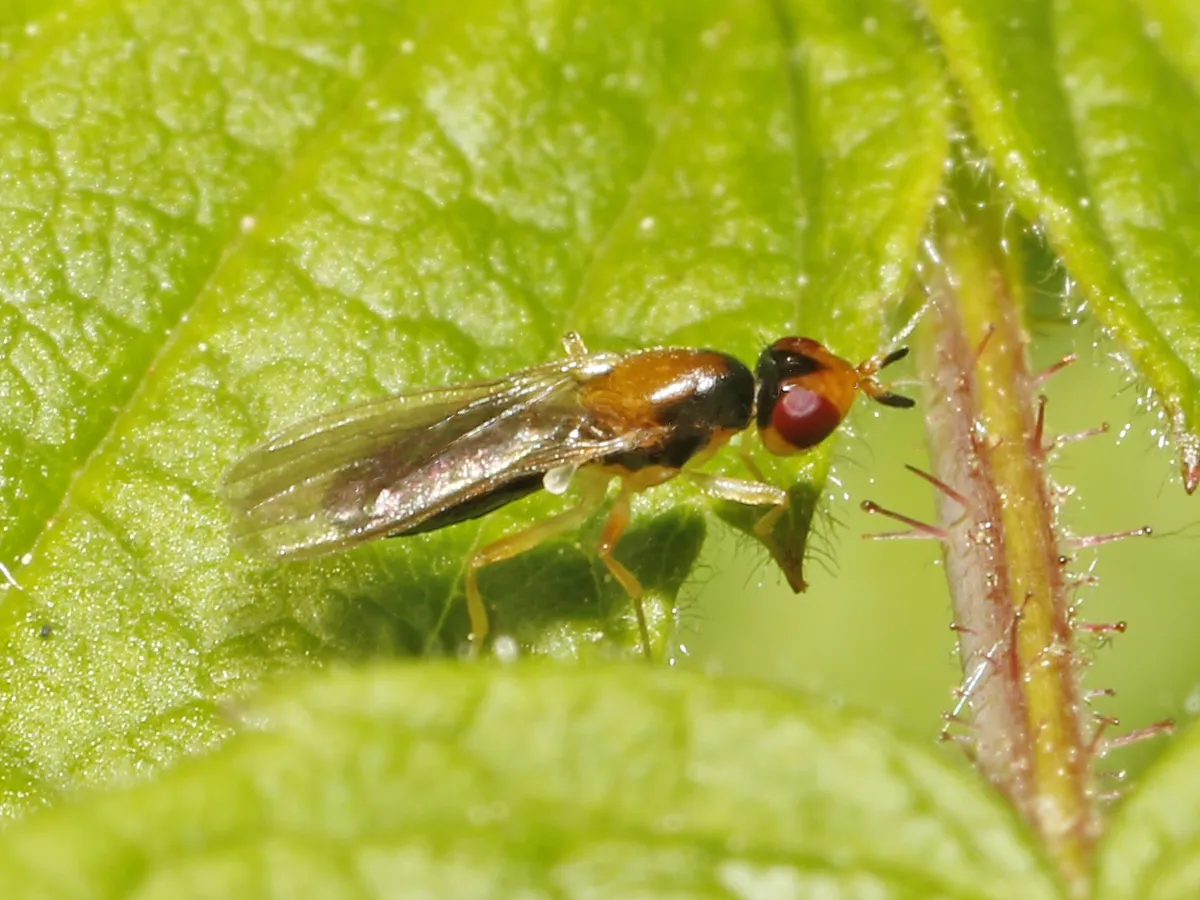
Psila collaris
Psila collaris
Identification: The similar P. perpolita flies in the fall
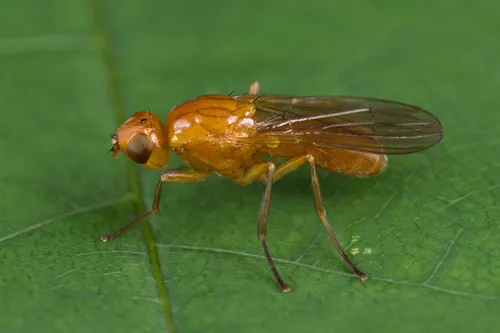
Psila fimetaria
Psila fimetaria
Length up to 8 mm or more. Members of this family are often called 'Rust Flies' or 'Carrot Flies'. Many of them are bright orange. Psila merdaria is very similar. Careful examination is necessary to arrive at a safe id. There are two species which ar
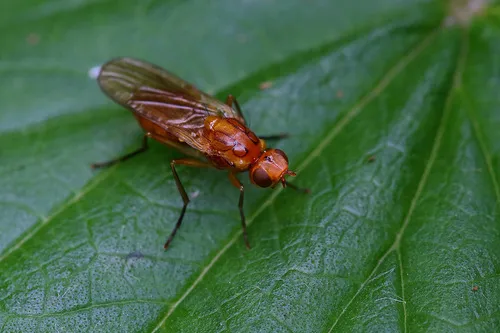
Psila merdaria
Psila merdaria
Length up to 8 mm or more. Members of this family are often called 'Rust Flies' or 'Carrot Flies'. Many of them are bright orange. Psila fimetaria is very similar and careful examination is necessary to arrive at a safe id. There are two species whic
Psila microcera
Psila microcera
Identification: Our only completely yellow Psila species.
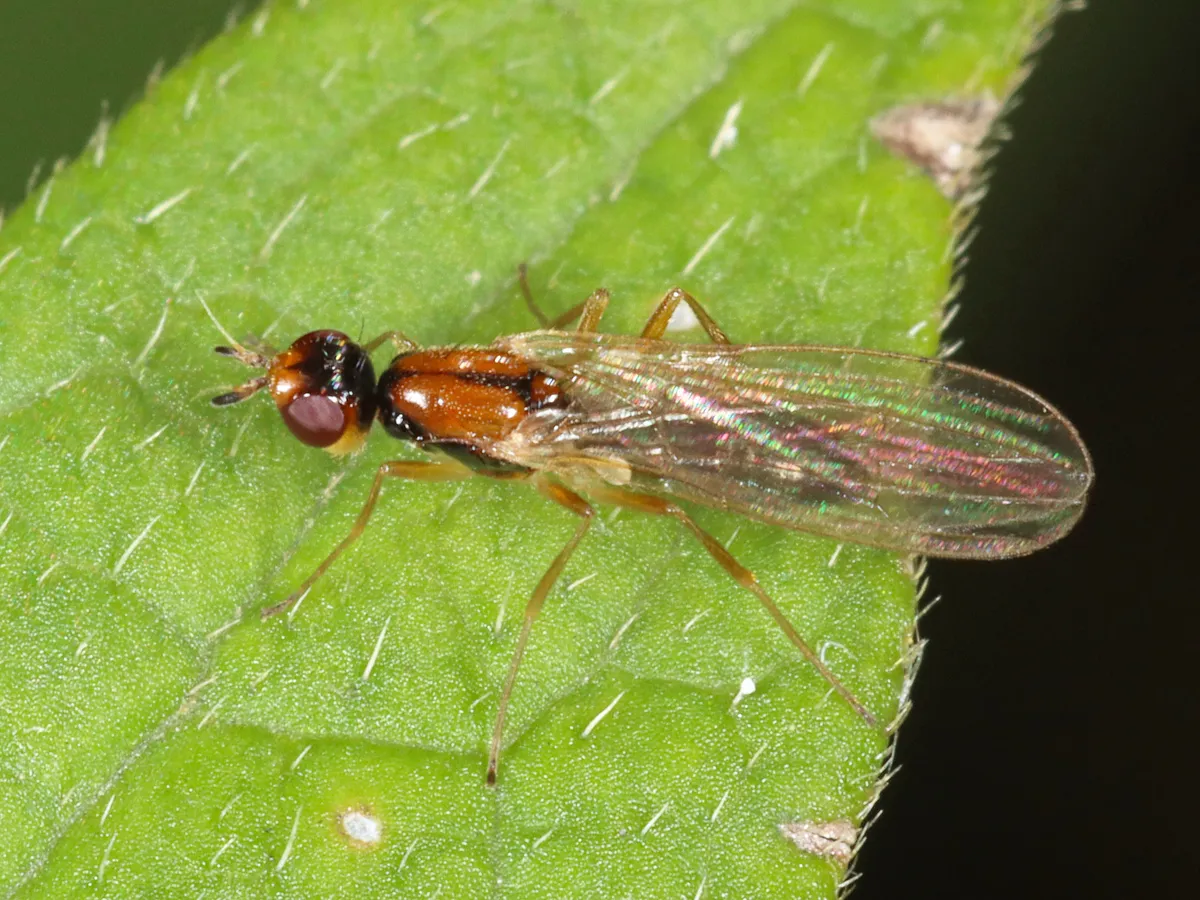
Psila perpolita
Psila perpolita
Identification: The similar P. collaris flies in the spring.
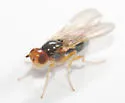
Psila sternalis
Psila sternalis
Identification: Third antennal segment black. Thorax black except for yellow katepisternum.
Psilopa aeneonigra
Psilopa aeneonigra
Identification: Black wing base like Cressonomyia , but white haltere knob. "A rare species occurring in the Atlantic and Gulf States." (Cresson, 1942)
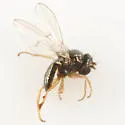
Psilopa leucostoma
Psilopa leucostoma
Identification: Distinguished from other North American Psilopa by the black body with pale halteres and legs. The male has a white face, the source of the species name which means "white mouth." Larvae mine leaves of Chenopodiaceae or Amaranthaceae
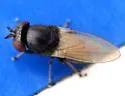
Psilopa loewi
Psilopa loewi
Identification: Black, halteres white, wings tinted yellow with very small black area at base, antennae yellowish with flagellomere partly dark, tarsi white with strongly contrasting dark fifth tarsomere.
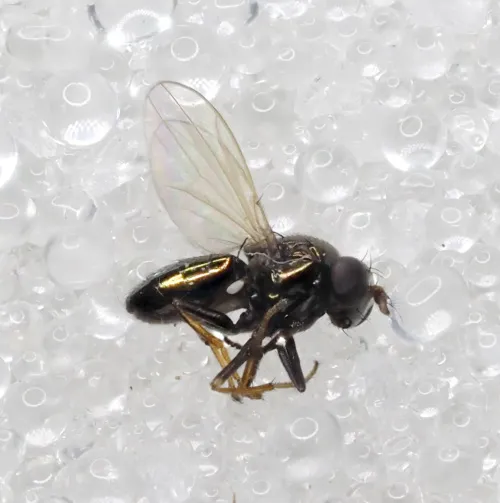
Psilopa nitidula
Psilopa nitidula
3mm. Glossy black/bronze. Front tibia and tarsi all black. Hind tibia and tarsi, plus mid tarsi, yellow. Halteres white. Overwinters amongst evergreen vegetation. Reasonably common and widespread in England with few records from Scotland. No addition
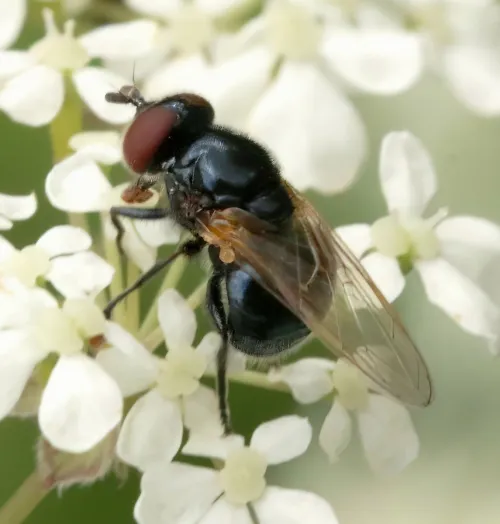
Psilota anthracina
Psilota anthracina
In ancient broadleaved woodland and parkland. https://www.flickr.com/photos/63075200@N07/sets/72157629238038404/ No additional images available for this species.
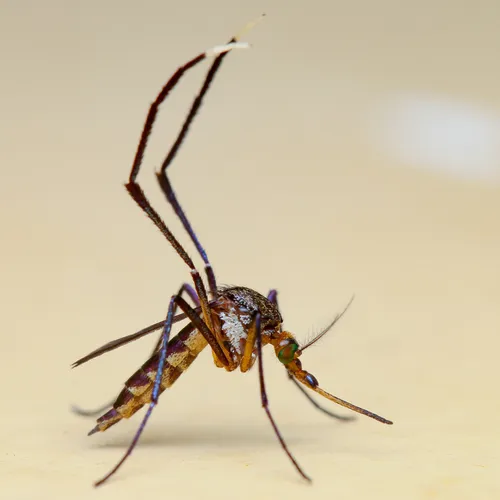
Psorophora ferox
Psorophora ferox
Identification: Larvae: Head rounded anteriorly, long antennae. Head hairs 5 and 6 long and usually double. Adult Female: The legs have purple irridescent scales and tarsal segments 4 and 5 are entirely pale scaled.
Psorophora horrida
Psorophora horrida
Identification: Pale 4th and 5th tarsal segments, scutum with a black median band and pale bordering scales with pale spots on kneecaps.
Psorophora howardii
Psorophora howardii
Identification: Adult female: Wings entirely dark scaled, femora without subapical pale bands, apices of hindfemora and tibiae with long erect scales, tibiae otherwise with recumbent yellow and purple scales, tarsi primarily dark-scaled with purplish
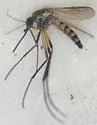
Psorophora mathesoni
Psorophora mathesoni
Identification: Scutum with broad median stripe of darker scales, with pale scales laterally; patterning of hind tarsi distinctive in se.US
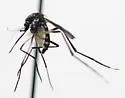
Psorophora varipes
Psorophora varipes
Identification: 4th tarsal segment pale but 5th tarsal segment dark. Scutum with dark median band and light scales on the sides. Also has pale kneecaps like horrida .