
Family Horse and Deer Flies (Tabanidae)
Tabanidae is a family in the order Diptera. Browse 260 named species recorded in this family, or open an individual profile for its available identification and natural-history information.
Guides
Species in Tabanidae (260)
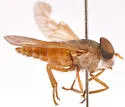
Anacimas limbellatus
Anacimas limbellatus
Identification: Wing veins margined with brown, median callus of female broad and convex (Stone, 1938). Female being preyed upon:
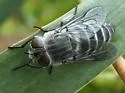
Apatolestes actites
Apatolestes actites
Identification: "A large, grayish black, shaggy, white-haired Apatolestes not likely to be confused with other Apatolestes ." (Middlekauff and Lane 1980) Females have reduced mandibles.
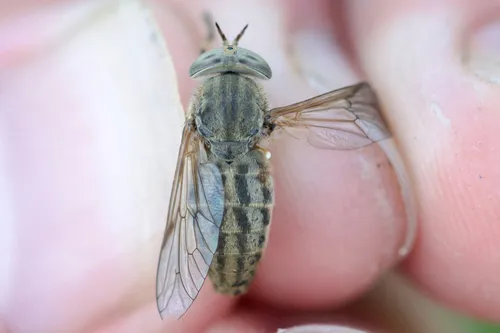
Atylotus calcar
Atylotus calcar
Identification: Female: frons with glossy calli present; body not almost completely white; abdomen not broadly orange laterally; pale hairs of body white to creamy white; abdomen with large median and sublateral white-haired patches on each tergite;
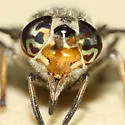
Chrysops aestuans
Chrysops aestuans
Identification: Markings on thorax grayish yellow instead of bright yellow. Apical wing spot reduced to a narrow crescent along the wing margin. Useful key for Canadian Chrysops
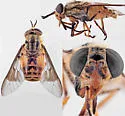
Chrysops bishoppi
Chrysops bishoppi
"In Oregon, C. bishoppi is a persistent biter that attacks livestock anywhere on the body but seldom attacks man." ( 3 )
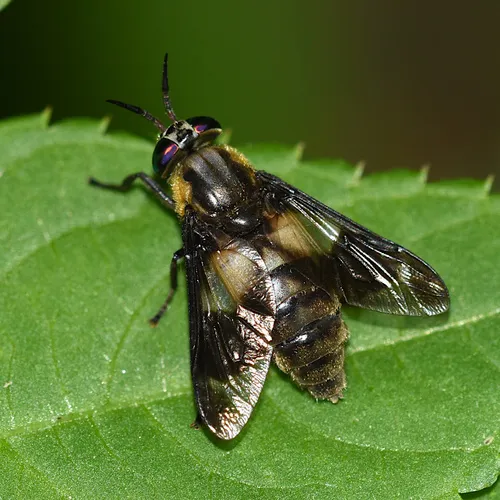
Splayed Deerfly
Chrysops caecutiens
Length 8.5 to 10 mm. The females have a characteristic splayed v-shaped marking on tergite 2. Males have the abdomen almost entirely black, though tergite 2 is narrowly orange at its sides; the male mid tibiae are normally entirely black. It can occu
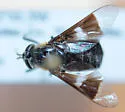
Chrysops carbonarius
Chrysops carbonarius
Identification: Female: A black deer fly. Abdomen black but perhaps with an indefinite pattern of grayish pruinose areas. Area of wing beyond the crossband hyaline. Crossband relatively straight and reaching hind margin of wing. Wing cell cua1 with d
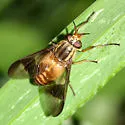
Chrysops celatus
Chrysops celatus
Identification: Among similar species, thorax greenish-gray with fuscous stripes; outer margin of dark wing crossband usually sinuous
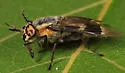
Chrysops cincticornis
Chrysops cincticornis
Identification: Black species with bright orange hair on sides of thorax. With known pathogenic transmission of California encephalitis virus. This disease does affect humans.
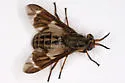
Chrysops clavicornis
Chrysops clavicornis
Identification: Within its range, distinguished by base of antennae swollen (probably the source of the species name), apical spot extending into cell r5, and basal callus not entirely black.
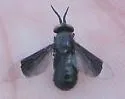
Chrysops divisus
Chrysops divisus
Identification: The wing pattern, basal 2/3 infuscated (black) with the distal 1/3 hyaline (clear) and black body are diagnostic. serious pest of man in FL
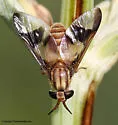
Chrysops flavidus
Chrysops flavidus
described as pestiferous to humans, generally attacking the head and neck; considered one of the worst "stock pests" in the genus With known pathogenic transmission of Equine infectious anemia virus, a disease of only equid mammals.
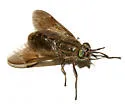
Chrysops fuliginosus
Chrysops fuliginosus
Specimens collected away from the coast with patches of orange on the abdomen belong to an undescribed species. See Thomas et al. (2024).
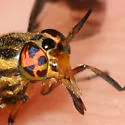
Chrysops geminatus
Chrysops geminatus
Identification: " Chrysops geminatus is one of the smallest species of the genus and is also distinctive by the apical spot of the wing being moderately widened apically and almost separated from the crossband and usually by an inverted V-shaped blac
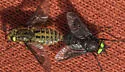
Chrysops hirsuticallus
Chrysops hirsuticallus
Identification: Female: "Peculiar greenish-gray central California species with very reduced eye pattern in life; face and fron unusually hairy including sides of laterally attenuated frontal callosity; wing pattern unusual with strong halo along out
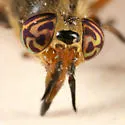
Chrysops indus
Chrysops indus
Identification: Orange face, apical spot filling half of cell r4, unstriped abdomen, and dark scutellum
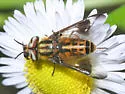
Chrysops lateralis
Chrysops lateralis
Identification: Both basal cells mostly hyaline; apical spot expanded, nearly separated from crossband by hyaline triangle; abdomen with median yellow stripe; face without pruinose stripe. "Often abundant and pestiferous."
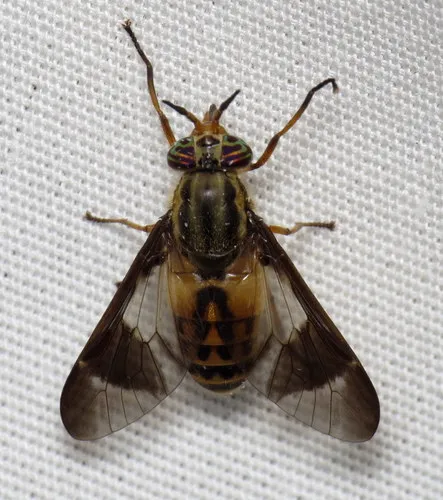
Chrysops montanus
Chrysops montanus
Identification: Female abdominal pattern and size and shape of wing apical spot subject to considerable variation; possibility of a couple of sibling species (AWT). With known pathogenic transmission of Vesicular stomatitis virus, a pathogen of anima
Chrysops noctifer
Chrysops noctifer
Identification: "the only western [Canadian] deer fly having a dilute apical spot isolated from the wing crossband. Some specimens of the eastern species C. sordidus resemble C. noctifer but have a more dilute and restricted apical spot and the pigme
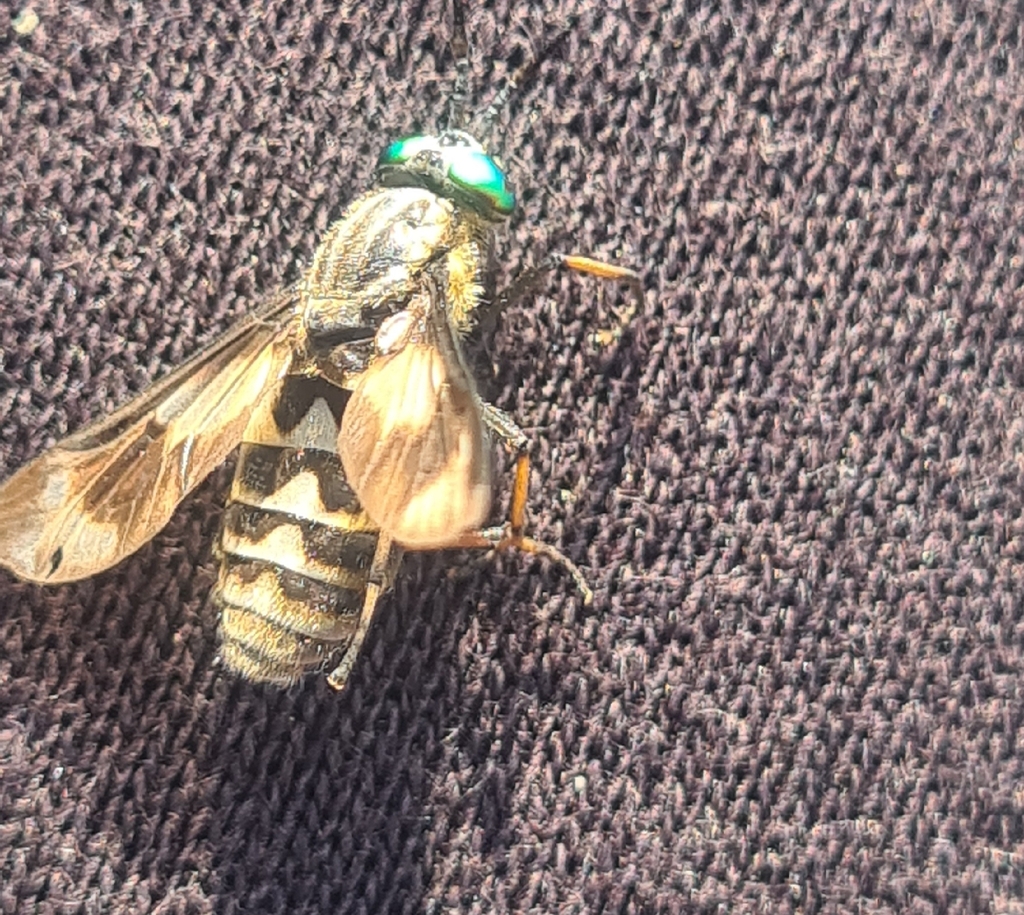
Twin-lobed Deerfly
Chrysops relictus
(c) Tatiana Strus, some rights reserved (CC BY)Length 8 to 10.5 mm. A stoutly-built insect. The patterning may vary slightly but there are always black lobes on the second abdominal segment. There are other similar species and care needs to be taken with identification. It's preferred habitat is
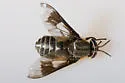
Chrysops sordidus
Chrysops sordidus
"This is a northern species reaching its southern limit in northern Maine, northern Vermont, New Hampshire, the Adirondacks and Tug Hill Plateau in New York. It rarely is abundant enough to be considered a pest. This species is sometimes very abundan
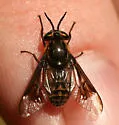
Chrysops surdus
Chrysops surdus
Identification: Distinguished from furcatus and proclivis by a smaller apical spot on wing. See Teskey for other characters.
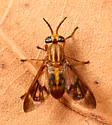
Chrysops variegatus
Chrysops variegatus
Identification: A yellowish species. Discal cell with clear spot, apical band large with hyaline triangle approaching costa, basal cells mostly clear, thorax with three darker stripes, abdomen with pair of black stripes anteriorly, antennae long and
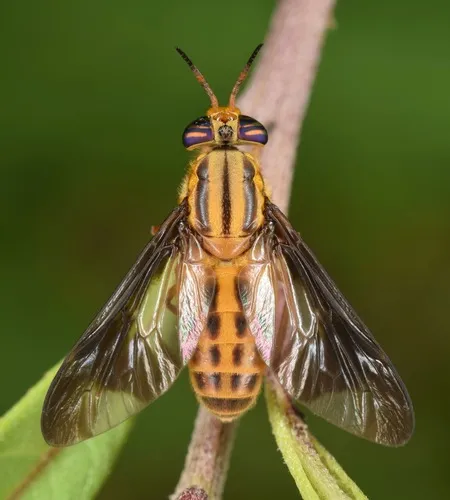
Chrysops vittatus
Chrysops vittatus
Identification: Yellow abdomen with 4 brownish stripes; a nearly fully infuscated cell Br, yellow scutellum, yellow frontal callus, and an infuscated cell CuA1 can be diagnostic. All these except for the abdominal pattern are also shared by C. florid
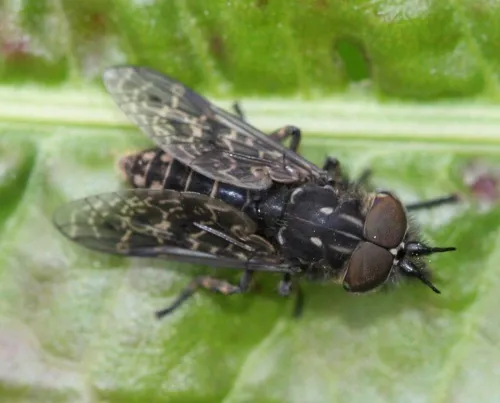
Black-horned Cleg
Haematopota crassicornis
The Haematopota genus is distinctive due to the mottled wings. H. crassicornis has a greyish abdomen and all-black antennae. H. pluvialis is the other common species in this genus and very similar though tends to have a brown rather than grey appeara
Haematopota rara
Haematopota rara
Identification: The dark halter knob, darker wing pattern, and range (northeastern USA and extreme southeastern Canada) distinguish this species from americana . The rare champlaini is also paler, but might overlap in range.
Hamatabanus carolinensis
Hamatabanus carolinensis
Identification: Basal portion of third antennal segment with a prominent, forward projecting tooth reaching nearly to base of annulate portion. Eyes pilose. Brownish species. Stump vein on R4 absent. Eyes in life green with a narrow, diagonal purple
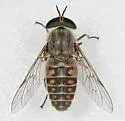
Hamatabanus exilipalpis
Hamatabanus exilipalpis
Identification: Dr. John Burger commented on this species (20 April 2007): Moved from Tabanus with some hesitation based on 1 - dorsal tooth of basal flagellomere (of antenna) is pronounced and has a slightly forward projection, although quite short.
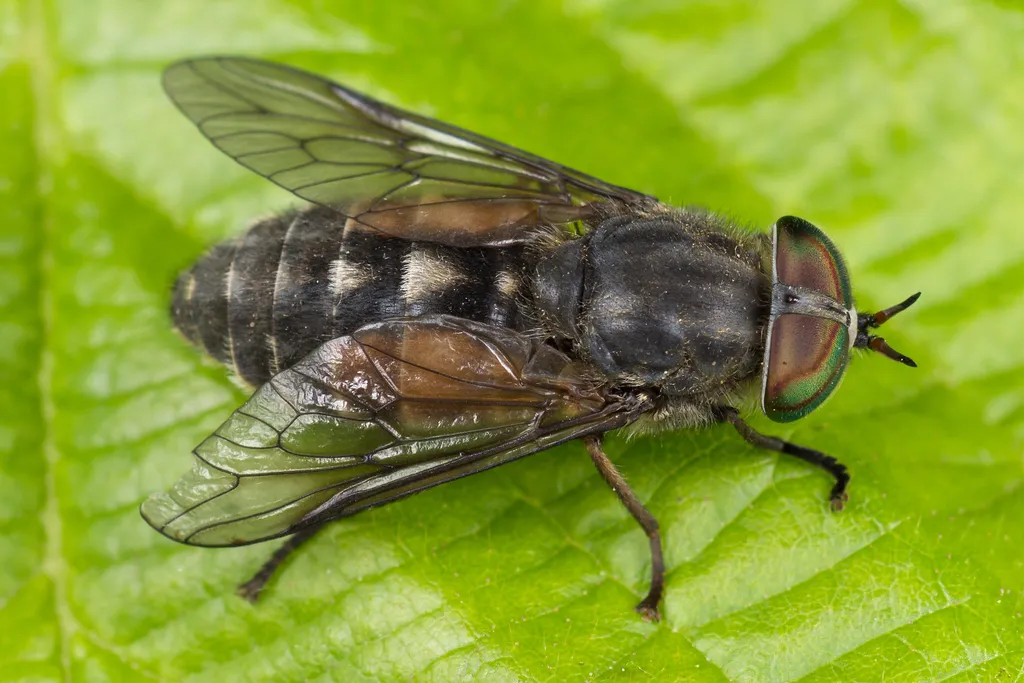
Hairy-Legged Horsefly
Hybomitra bimaculata
A medium-large, highly variable horsefly with a body length of 13 to 16.5 mm. Both males and females possess long hair fringes on the anterior and posterior surfaces of the mid tibiae with males also having a posteroventral fringe along the length of
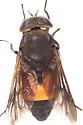
Hybomitra cincta
Hybomitra cincta
Identification: For both sexes: Subcallus denuded and shiny. Palpus black. Frontoclypeus and thoracic pleuron with black hairs. Wing distinctly pigmented. Females have first three segments of abdomen orange, rest of abdomen black (sharply delimited),
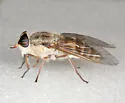
Hybomitra difficilis
Hybomitra difficilis
Identification: Eyes apparently bare; subcallus denuded & shining Drees et al. regard it as common, and a serious pest; Pechuman et al. consider it generally uncommon, but sometimes locally abundant.
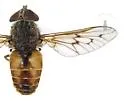
Hybomitra lasiophthalma
Hybomitra lasiophthalma
Identification: Female: subcallus denuded, shining; face below eyes not denuded or shining; wing crossveins spotted with brown; abdomen broadly orange brown laterally with median black area constricted on third segment.
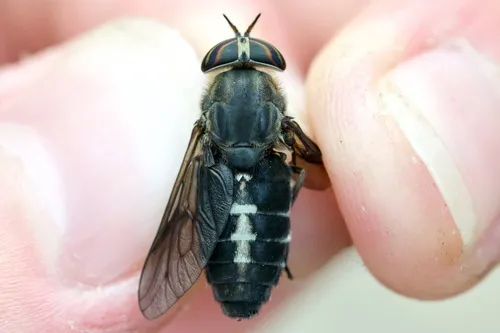
Hybomitra sodalis
Hybomitra sodalis
Identification: Black abdomen with white triangles in middle only, "distinctive and unmistakable"
Hybomitra trispila
Hybomitra trispila
With known pathogenic transmission of Vesicular stomatitis virus, a pathogen of animals that can also infect humans.
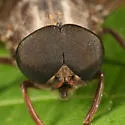
Merycomyia whitneyi
Merycomyia whitneyi
Identification: abdomen with large white patches laterally on at least tergites 4 and 5
Pegasomyia abaurea
Pegasomyia abaurea
Identification: Males of P. abaurea have light cuticle and blue eyes in life, unlike the dark cuticle and green eyes found in P. ruficornis.
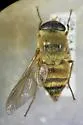
Pegasomyia ruficornis
Pegasomyia ruficornis
Identification: Males have black body (beneath pale hair) and yellow antennae. Females are very similar to abaureus with a slightly longer scape. Middlekauff and Lane warn, "females of ruficornis cannot be separated with certainty from those of abaur
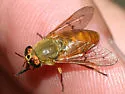
Silvius gigantulus
Silvius gigantulus
Identification: Orange body, wings without spots or bands (but slightly darker along some veins), eyes with spots.
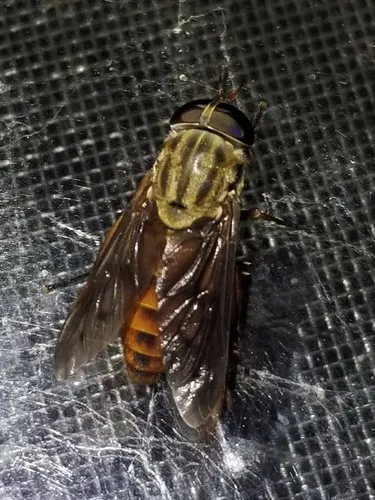
Tabanus abdominalis
Tabanus abdominalis
Specimens of T. abdominalis have proved difficult to identify due mainly to the variation between individuals and the similarity to other variable species, particularly T. limbatinevris and T. sulcifrons but including T. gladiator and T. nefarius . O
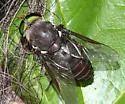
Tabanus americanus
Tabanus americanus
With known pathogenic transmission of Hog cholera virus, a disease that is only pathogenic to pigs and relatives and Anaplasma marginale , a bacteria that affects cattle.
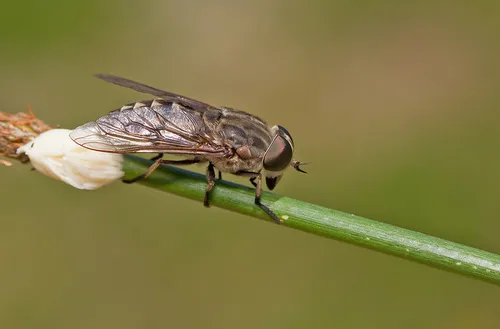
Large Marsh Horsefly
Tabanus autumnalis
Wing length is 13 to 16 mm and 16 to 22 mm in body length. A fairly large horse-fly. The dark abdomen has a central row of pale triangles and a dark and broad central stripe on the underside. The eyes lack stripes. Tabanus bromius is similar but smal
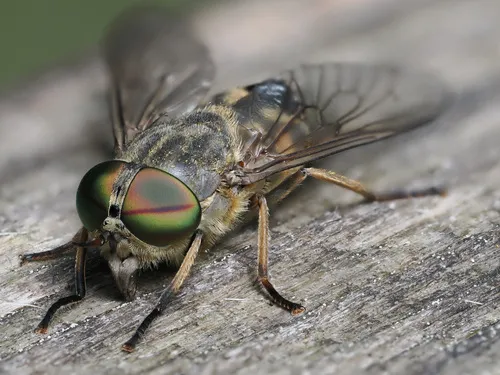
Band-Eyed Brown Horsefly
Tabanus bromius
This species has a body length of a body length of 13 to15 mm. A number of similar, rarer species exist. It is easier to identify live females which have a single strongly-formed coloured eye band (lost in pinned specimens). The abdomen is usually pa
Tabanus calens
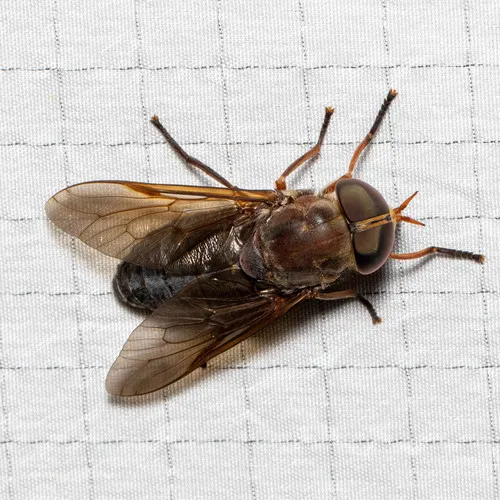
Tabanus calens
Identification: Abdomen uniformly dark or with small white patches, eyes uniformly dark, thorax faintly striped, antenna bright orange, wings uniformly brownish
Tabanus catenatus
Tabanus catenatus
Identification: eyes uniformly dark, dull, bare; antennae dark; wings translucent, blackish along heavy raised veins; thorax gray with reddish tint above, light gray and hairy below; abdomen very dark reddish with middorsal line of small but distinct
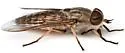
Tabanus erythraeus
Tabanus erythraeus
Identification: Female: abdomen with both distinct median and dorsolateral pale markings or triangles, eyes not densely pilose and abdomen not distinctly pallid dorsally, abdomen with no impression of a stripe formed by median abdominal triangles, wi
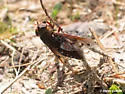
Tabanus fuscopunctatus
Tabanus fuscopunctatus
Identification: Head: Frons parallel sided, about 3x as high as width at base; large triangular shiny patch at vertex; median callus shiny, relatively long; basal callus shiny brown, higher than wide and not touching eyes. Antennae: uniformly orange
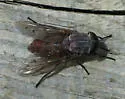
Tabanus gladiator
Tabanus gladiator
Identification: Head: frons very narrow, about 6 times as high as width at base, parallel sided or slightly widened above. Antennae: dark reddish brown, basal portion of 3rd segment with prominent dorsal angle and deep incision. Palps: very long,dark
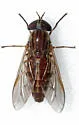
Tabanus gracilis
Tabanus gracilis
Identification: Females can be recognized by the brown color, abdominal pattern, wing veins faintly margined with brown, and the shape of the calli on the face. Females: eyes bare; abdomen with median and sublateral pale spots or triangles; abdomen w
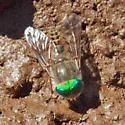
Tabanus laticornis
Tabanus laticornis
In Burger's 1995 Catalog he lists Tabanus laticornis from Arizona and Hybomitra laticornis from Arizona. In a 1974 paper on Arizona tabanids he includes Hybomitra laticornis and in a 1975 paper on Arizona tabanids he does NOT include a Tabanus latico
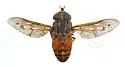
Tabanus limbatinevris
Tabanus limbatinevris
Identification: For females see annotated photos: Since its description by Fabricius in 1805, specimens of T abdominalis have proved difficult to identify due mainly to the variation between individuals and the similarity to other variable species pa
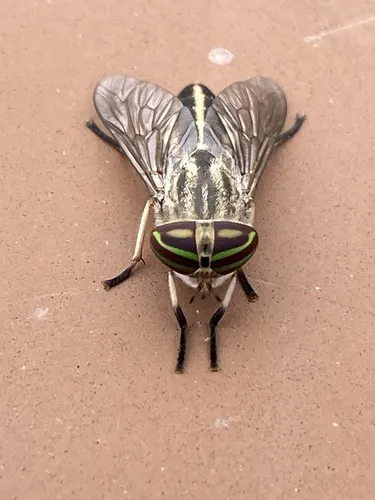
Striped Horse Fly
Tabanus lineola
Identification: Females: pale median stripe on abdomen bordered by dark submedian stripes; eyes with 3 green bands; scutellum concolorous with thorax Males: body pattern similar to females; eyes bare (no hairs) with large upper facets sharply differe
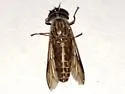
Tabanus longiusculus
Tabanus longiusculus
Identification: Females: abdomen dorsally with both median and sublateral pale spots or triangles, with a median row of triangles not forming a parallel-sided stripe; mesonotum not covered with golden-yellow hair and without longitudinal stripes; fro
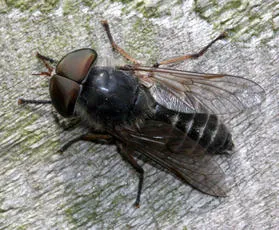
Tabanus maculicornis
Tabanus maculicornis
Length: 12 mm. A rather small, dark species with very narrow alula (flap at base of the wing) and orange antennae. The female has a pattern of grey triangles on the abdomen. Both sexes have one eye band. Like most tabanids , it prefers woodland or wo
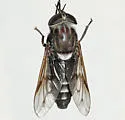
Tabanus mixis
Tabanus mixis
Identification: Burger 1995 (Catolog of Tabanidae (Diptera) of North America north of Mexico" lists Tabanus mixis and Tabanus molestus as distinct species; Zettel Nalen 2015, Florida concurs. T. mixis has been considered a subspecies of T. molestus (
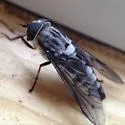
Tabanus moderator
Tabanus moderator
Identification: Abdomen only with median row of pale triangles, fork of vein R4+5 with infuscation, abdomen with contrasting pale median spots or triangles, median spot on tergite 2 distinctly smaller than those on tergites 3 and 4, scutellum with di
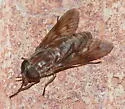
Tabanus molestus
Tabanus molestus
Identification: Burger 1995 (Catolog of Tabanidae (Diptera) of North America north of Mexico" lists Tabanus mixis and Tabanus molestus as distinct species; Zettel Nalen 2015, Florida concurs. T. mixis has been considered a subspecies of T. molestus
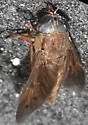
Tabanus nefarius
Tabanus nefarius
A rarely collected species. Until the 2024 Florida record, known from only Texas, Louisiana, Mississippi and Alabama.
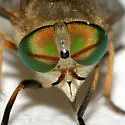
Greenhead
Tabanus nigrovittatus
Identification: "Brilliant green eyes with a single purple stripe and a restriction to Atlantic salt-marshes makes this species readily identifiable." common on East Coast salt marshes, "The bane of bathers" With known pathogenic transmission of Anap
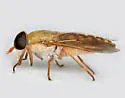
Tabanus pallidescens
Tabanus pallidescens
With known pathogenic transmission of Anaplasma marginale , a bacteria that affects cattle.
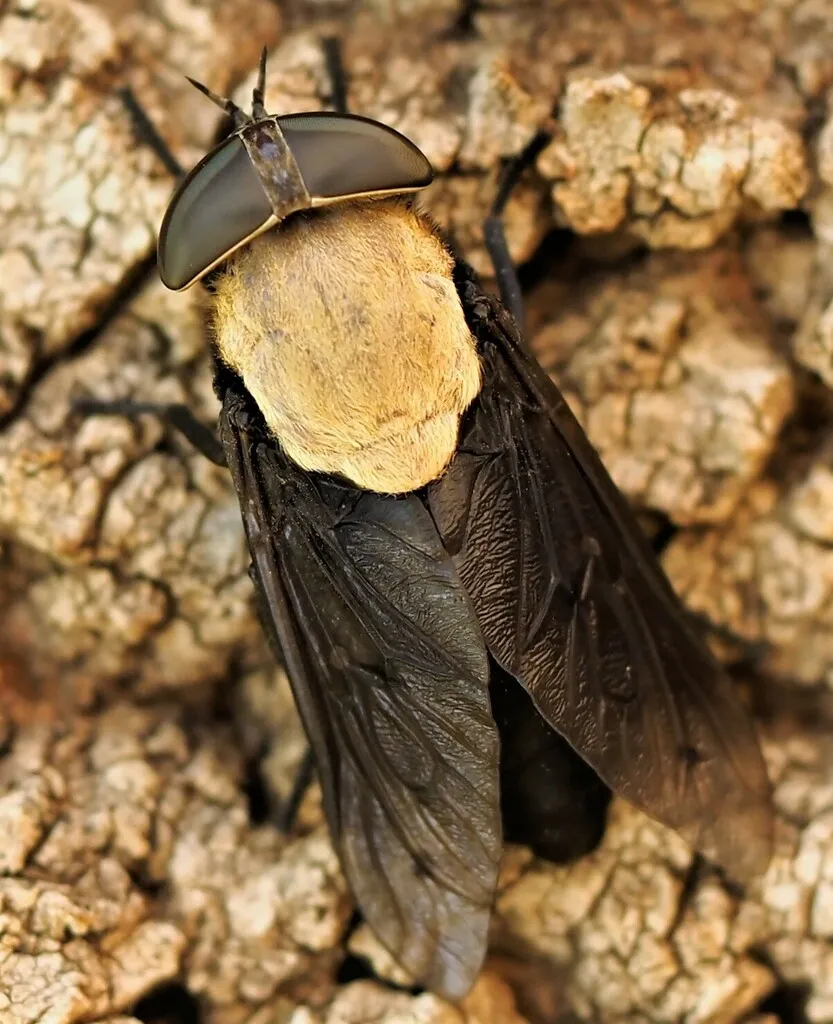
Western Horse Fly
Tabanus punctifer
Identification: Female: mesonotum covered with creamy hair over a dark reddish background: remainder of thorax dark brown, with concolorous hair: wings brown, paler posteriorly, the cross-veins and furcation distinctly margined with brown; legs black
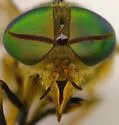
Tabanus quinquevittatus
Tabanus quinquevittatus
With known pathogenic transmission of Hog cholera virus, a disease that is only pathogenic to pigs and relatives; Trypanosoma evansi ; and Trypanosoma theileri .
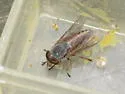
Tabanus sagax
Tabanus sagax
Identification: Females are distinguished from Tabanus sackeni by "the more prominent median pale abdominal stripe, slightly widened posteriorly in each segment, and the wider frons." Possibly crepuscular.
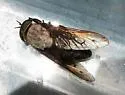
Tabanus stygius
Tabanus stygius
Identification: When fresh the FEMALES are essentially black with contrasting white hairs on the thorax: However, these white hairs wear and rub off with age and the thorax looks a dirty gray. MALES "can scarcely be distinguished from that of nigresc
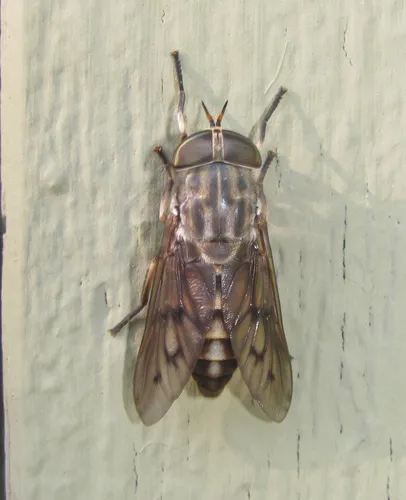
Tabanus sulcifrons
Tabanus sulcifrons
Identification: Tabanus sulcifrons Macquart 1855 Since its description by Fabricius in 1805, specimens of T abdominalis have proved difficult to identify due mainly to the variation between individuals and the similarity to other variable species par
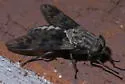
Tabanus venustus
Tabanus venustus
Identification: Very distinctive wing pattern. With known pathogenic transmission of Anaplasma marginale , a bacteria that affects cattle.
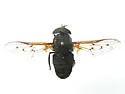
Agkistrocerus finitimus
Agkistrocerus finitimus
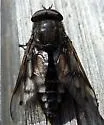
Agkistrocerus megerlei
Agkistrocerus megerlei
Apatolestes aitkeni
Apatolestes aitkeni
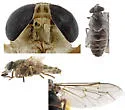
Apatolestes albipilosus
Apatolestes albipilosus
Apatolestes ater
Apatolestes ater
Apatolestes colei
Apatolestes colei
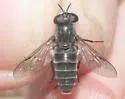
Apatolestes comastes
Apatolestes comastes
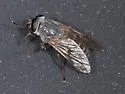
Apatolestes hinei
Apatolestes hinei
Apatolestes oritensis
Apatolestes oritensis
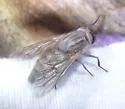
Apatolestes parkeri
Apatolestes parkeri
Apatolestes philipi
Apatolestes philipi
Apatolestes rossi
Apatolestes rossi
Apatolestes rugosus
Apatolestes rugosus
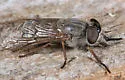
Apatolestes willistoni
Apatolestes willistoni
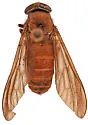
Asaphomyia floridensis
Asaphomyia floridensis
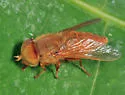
Atylotus bicolor
Atylotus bicolor
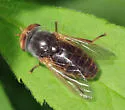
Atylotus duplex
Atylotus duplex
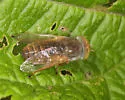
Atylotus hyalicosta
Atylotus hyalicosta
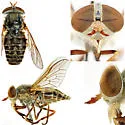
Atylotus insuetus
Atylotus insuetus
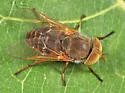
Atylotus palus
Atylotus palus
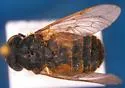
Atylotus tingaureus
Atylotus tingaureus
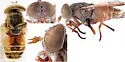
Atylotus utahensis
Atylotus utahensis
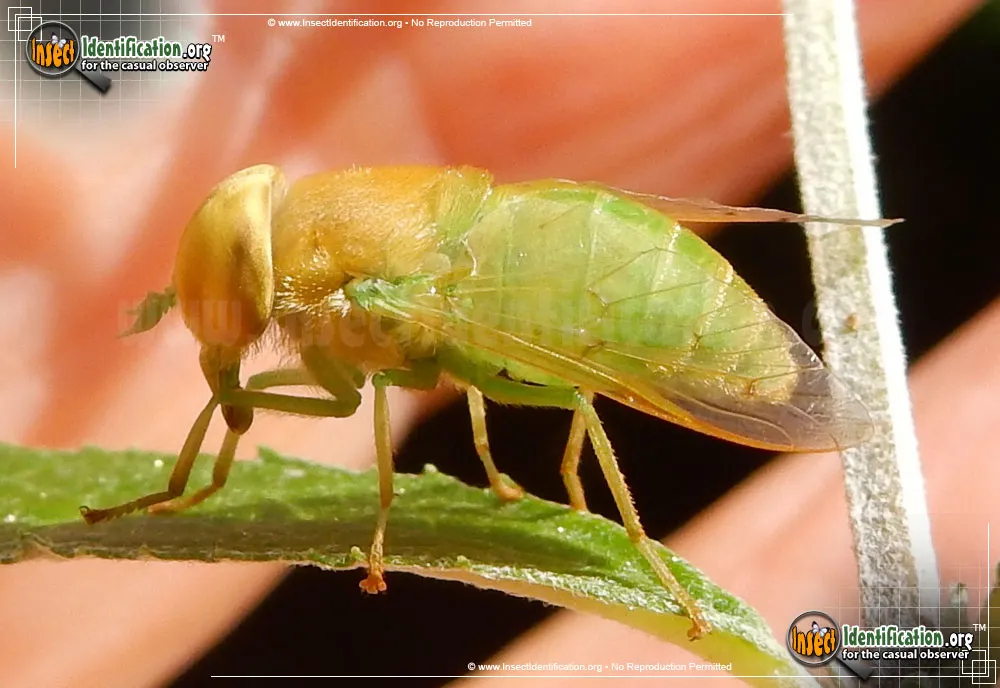
Green Horse Fly
Chlorotabanus crepuscularis
Chrysops abatus
Chrysops abatus
Chrysops aberrans
Chrysops aberrans
Chrysops amazon
Chrysops amazon
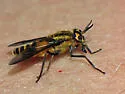
Chrysops asbestos
Chrysops asbestos
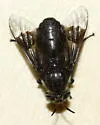
Chrysops ater
Chrysops ater
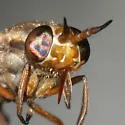
Chrysops atlanticus
Chrysops atlanticus
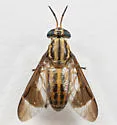
Chrysops beameri
Chrysops beameri
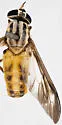
Chrysops bistellatus
Chrysops bistellatus
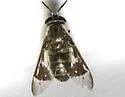
Chrysops brimleyi
Chrysops brimleyi
Chrysops brunneus
Chrysops brunneus
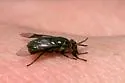
Chrysops calvus
Chrysops calvus
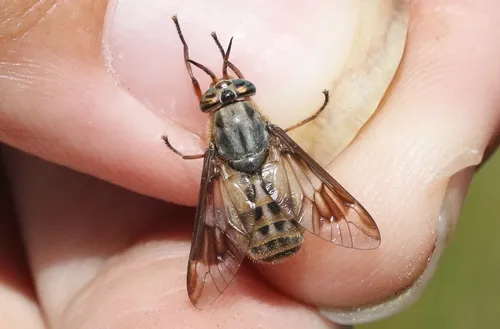
Chrysops coloradensis
Chrysops coloradensis