
Family Bee Flies (Bombyliidae)
Bombyliidae is a family in the order Diptera. Browse 294 named species recorded in this family, or open an individual profile for its available identification and natural-history information.
Species in Bombyliidae (294)
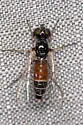
Amphicosmus elegans
Amphicosmus elegans
Identification: One of two species of Amphicosmus without wing markings.
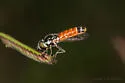
Amphicosmus vanduzeei
Amphicosmus vanduzeei
Identification: original description Two species of Amphicosmus lack wing markings. The male of A. elegans has pollinose stripes (lacking in A. vanduzeei ). The female of A. elegans has humeral callus and tergite 5 black (paler in A. vanduzeei ).
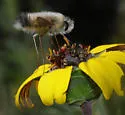
Anastoechus hessei
Anastoechus hessei
Identification: Distinguished from barbatus and melanohalteralis by the dense black hair on the last abdominal segments. (Painter, 1962) The other species may have sparse dark spines. The illustration in Eaton shows leucothrix also without the dark f
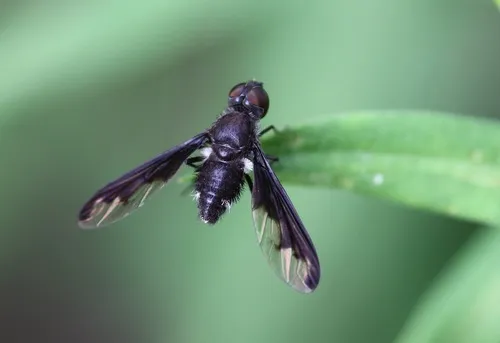
Anthrax argyropygus
Anthrax argyropygus
Identification: A small dark Anthrax , with narrow wings. Kits et al. note in their key:
Anthrax cintalpa
Anthrax cintalpa
Identification: Very similar to A. irroratus , but cintalpa has a saucer-shaped, rather than a lenticular, second antennal segment; click on photo below for enlargement: For more information please see notes on the oedipus group page.
Anthrax irroratus
Anthrax irroratus
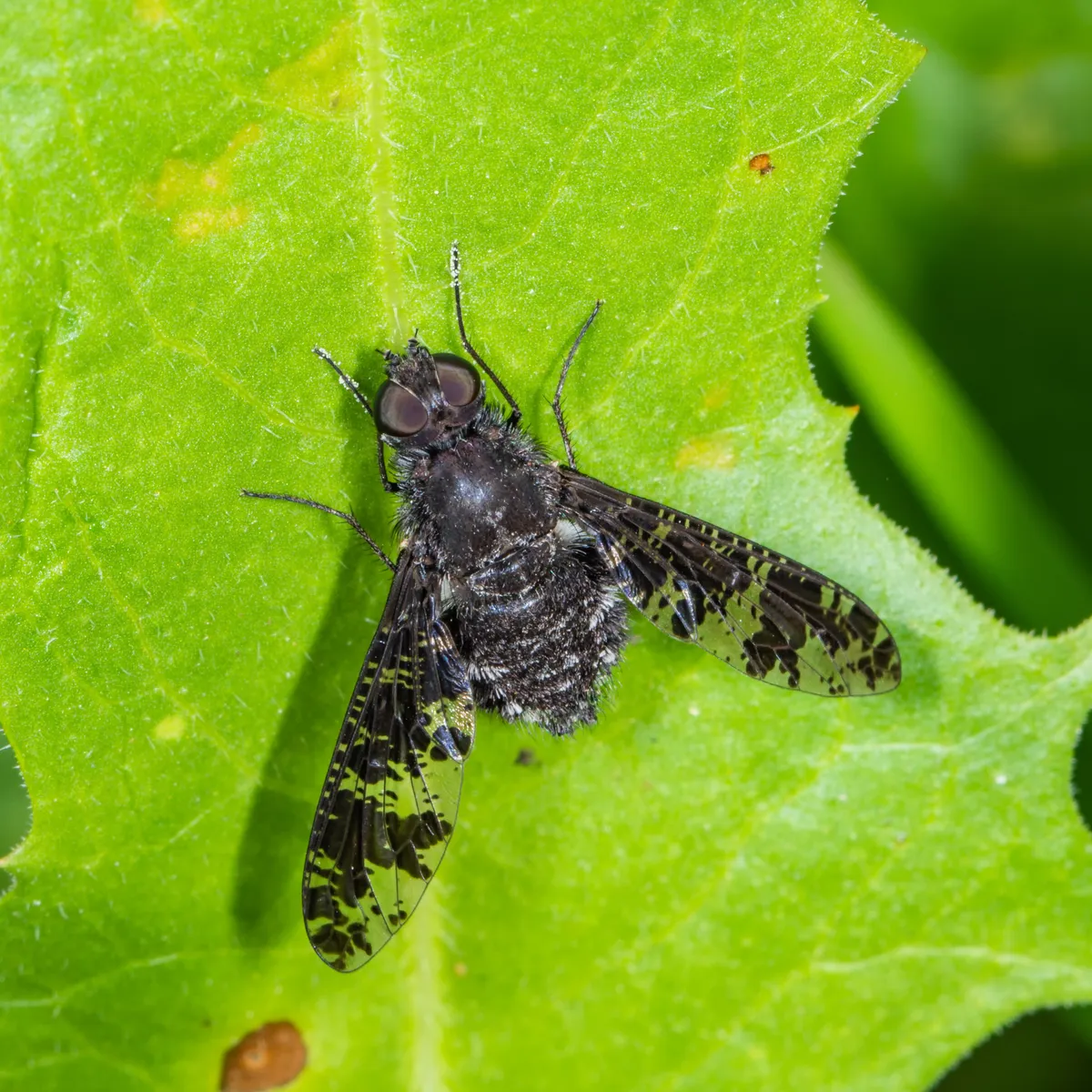
Identification: Head: Brown. Eyes large, sometimes with white along inner eye margins. Antenna: Brown, very short, palpi-like placed low on face. Thorax: Black, often bald with fringe of long brown hair surrounding thorax. Some whitish scales around
Anthrax striatipennis
Anthrax striatipennis
Identification: Can be separated from irroratus , aside from its limited distribution, by the dense pattern of transverse striae on the wing (Marston 1970) A. striatipennis A. irroratus
Bombylius anthophilus
Bombylius anthophilus
Identification: extensive white coloration on underside of body and top of thorax; western distribution size and other features similar to B. major page creation based on Neal Evenhuis' comments on this image from British Columbia - specifically, "Th
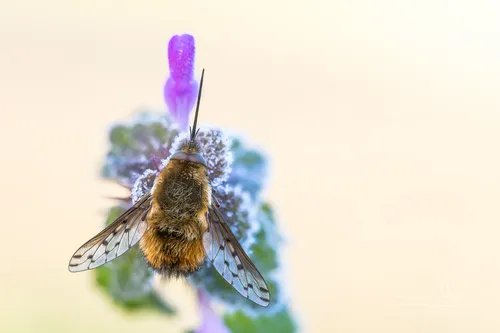
Dotted Bee-fly
Bombylius discolor
Size up to 20mm with a hairy body resembling a bumblebee. The body is typically brown with a distinctive black tip to the abdomen (c.f. Bombylius major ). The wings are long and narrow, often held outstretched at rest, with a faint dark front edge an
Bombylius (Zephyrectes) incanus
Bombylius incanus
Identification: This one is easily recognizable by the clear wings and hairy white abdomen with black bands and white face.
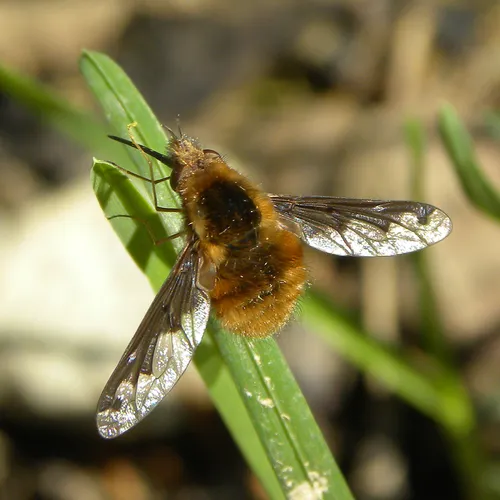
Dark-edged Bee-fly
Bombylius major
Size up to 25mm with a hairy body resembling a bumblebee. The body is typically brown and relatively uniform in colour (c.f. Bombylius discolor ). The wings are long and narrow, often held outstretched at rest, with a black front edge. If you can obs
Bombylius mexicanus
Bombylius mexicanus
Identification: A large bee-fly that flies in late spring to summer, similar to Bombylius major , which typically flies earlier in the spring. Pile ("hair") mostly yellow, with just a few black hairs on the edges of abdominal segments. Note white sp
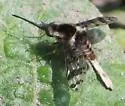
Bombylius pulchellus
Bombylius pulchellus
Identification: dark brown with white hairs along anterior and lateral margins of thorax, plus posterior corners of thorax behind wings; proboscis long and slender; wings clear except for groups of blackish spots coalesced to form bands or large blot
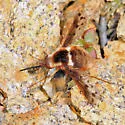
Bombylius pygmaeus
Bombylius pygmaeus
Identification: Thorax dark brown, outlined in yellowish-white; spots on wings distinctly separate (not coalesced into bands or blotches, as in the similar B. pulchellus ).
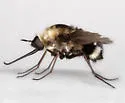
Bombylius varius
Bombylius varius
Identification: A large Bombylius --note white patches on abdomen. This pattern appears to be distinctive within its range.
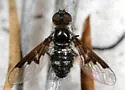
Chrysanthrax lepidotoides
Chrysanthrax lepidotoides
There are very few records of this species, either here or on iNaturalist --as of 28 August 2022, just the same four records from NC and FL.
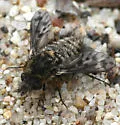
Conophorus collini
Conophorus collini
Identification: has shiny, sulcate scutellum, and is smaller than the closely related to C. fenestratus (both species have patterned wings and elongated antennomere II
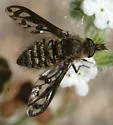
Conophorus fenestratus
Conophorus fenestratus
Identification: Closely related to Conophorus collini , but generally larger, and has a non-sulcate scutellum (convex, without median groove or gap). Males have fine teeth on the costal edge of their wings , which are lacking on females.
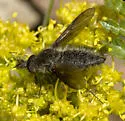
Conophorus melanoceratus
Conophorus melanoceratus
Identification: The following characters for C. melanoceratus are gleaned from the keys and descriptions in Priddy and Hall & Evenhuis: Metapleura bare (on area just ventral to squamae and anterior to base of halter); first antennal segment usually l
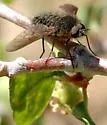
Conophorus obesulus
Conophorus obesulus
Identification: adult male all dark: thorax dark brown to blackish, hairy laterally, smoother dorsally; abdomen black with mix of dark and pale hairs, sparse enough to allow ground color to show through; wings dark brown to blackish and translucent,
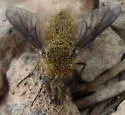
Conophorus sackenii
Conophorus sackenii
Identification: Tuft of metapleural hair; rather long first antennal segment (half the length of antenna or longer); halter knob usually black, opaque (rather than shiny) scutellum. Note: there's considerable variation in the amount and extent of bla

Huron Shore Bee Fly
Dipalta banksi
Identification: brown body, black spots on dorsal midline of abdomen, wings with black patches and spots
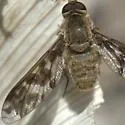
Dipalta serpentina
Dipalta serpentina
Identification: wing venation distinctive: R2+3 contorted into an S-shape and connected by a cross-vein to R4 ―see diagram
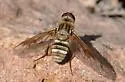
Exoprosopa agassizii
Exoprosopa agassizii
Identification: Prone to wing venation asymmetry; see Andy Calderwood's comment on photo 75567:
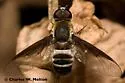
Exoprosopa albifrons
Exoprosopa albifrons
Identification: "Note the dense mat of reflective scales on the front." -- Andy Calderwood on photo 304527
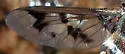
Exoprosopa butleri
Exoprosopa butleri
The R5 cell is closed and stalked, not open to the wing margin. Only a half dozen or so other US species have this feature. The white post-collar strip is the key. (Andy Calderwood)
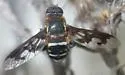
Exoprosopa doris
Exoprosopa doris
Identification: Elmer & Johnson state (at bottom of pg. 70 ) that males have both the 6th & 7th tergites with white tomentum; while females have tomentum of 6th tergite tan and 7th tergite white. A detailed description of E. doris appears on the firs
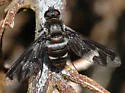
Exoprosopa jonesi
Exoprosopa jonesi
Identification: Brown color stops short of filling out the marginal cell (R1) vs filling the cell in E. dorcadion (info provided by A. Calderwood)
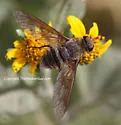
Exoprosopa pueblensis
Exoprosopa pueblensis
In AZ, it has a faint banding to the wing, whereas in central Mexico (thus the name 'pueblensis'), the bands are dark chocolate brown. It is common in Madera Canyon (Andy Calderwood).
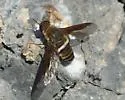
Exoprosopa rostrifera
Exoprosopa rostrifera
Identification: It has by far the longest bill of any US Exoprosopa . The white belt on a uniformly brown-patterned abdomen is characteristic, too. (Comment by Andy Calderwood) Author of the species Jaennicke, 1867
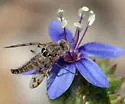
Geminaria canalis
Geminaria canalis
Identification: Wing with 9―14 more or less isolated brown spots
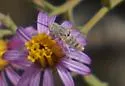
Geminaria pellucida
Geminaria pellucida
Identification: Wing hyaline or with faint coloring around r-m and posterior crossveins. (Key to Nearctic Species of Geminaria , by Hall & Evenhuis, see reference below).
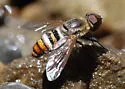
Hemipenthes inops
Hemipenthes inops
Identification: Distinct from congeners by: 1) largely hyaline wing with faint pigmentation; and 2) shape of the CuA1, which forms a cross with a continuous m-cu/m-m such that dm and CuA1 never actually touch (Fig. 12) H. inops & H. lepidota are the
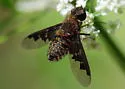
Hemipenthes morioides
Hemipenthes morioides
Identification: Head: Round; dark brown to black. Male and female identical, eyes of female only slightly wider, barely discernable. Antenna: Black, very short. Thorax: Dark brown to black with rust hairs across shoulders; sometimes thorax is bald. T
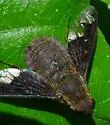
Hemipenthes scylla
Hemipenthes scylla
Identification: Distinguished from H. sinuosa by apical half of discal cell clear (apical quarter in sinuosa ) and apical spot in cell r1 separated from remaining dark area. See comment by Joel Kits:
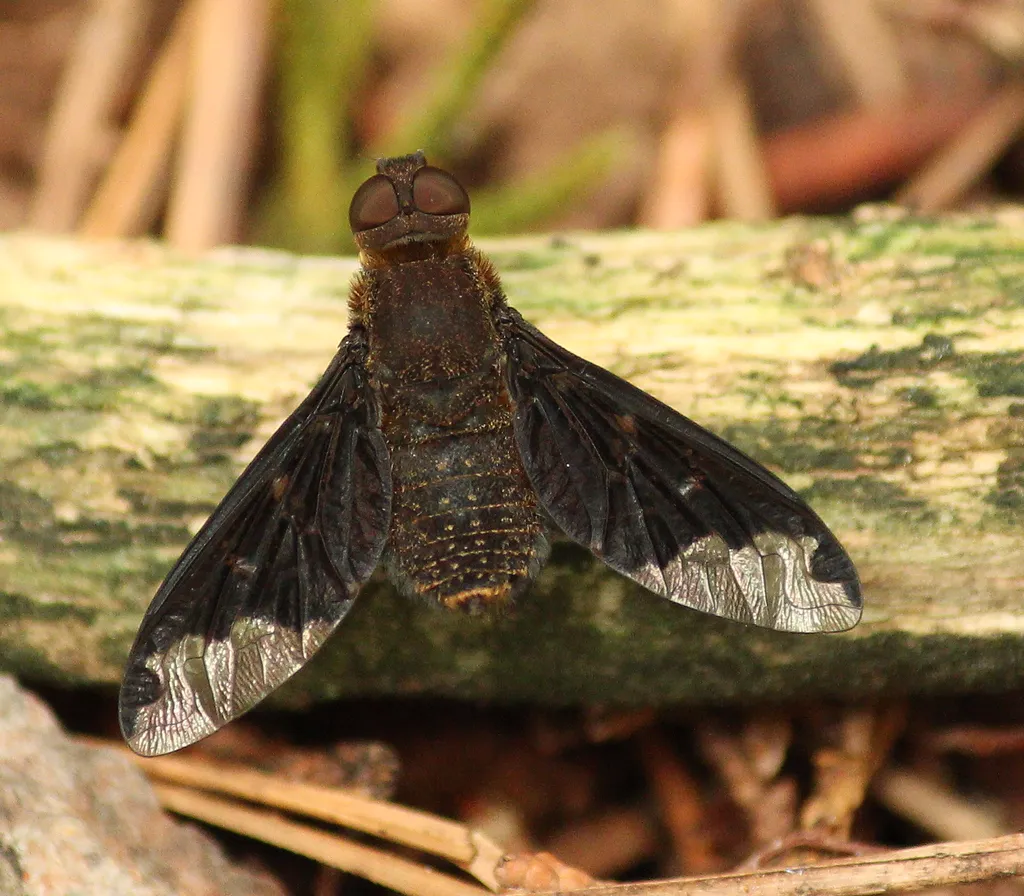
Sinuous Bee Fly
Hemipenthes sinuosa
Identification: Main ID: Black area of wing has irregular sinuous (wavy) border with a small rounded blob near the apex. There is no cross vein connecting R2+3 and R4. Abdomen, thorax, and head black or very dark with no banding or other obvious mar
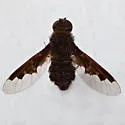
Hemipenthes webberi
Hemipenthes webberi
Identification: Head: Round, black with a few yellowish flecks. Females and males identical, except for space between the eyes at top of head. Antenna: Black, very short. Thorax: Black hair with some yellowish flecks; a few white hairs at side edges
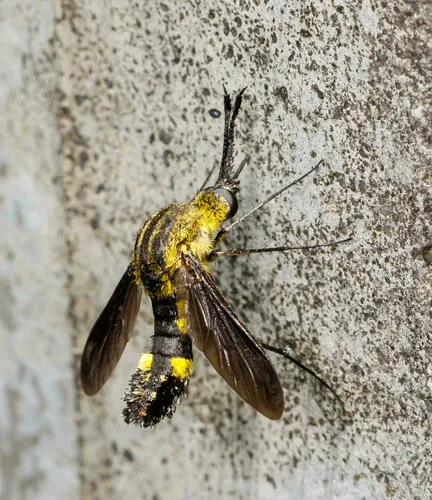
Scaly Bee Fly
Lepidophora lepidocera
Identification: Hunch-backed shape is shared with L. lutea . In L. lepidocera , the pale scales are white or pale yellow, and usually no pale scales are evident on the fourth abdominal segment. Also note fringe at end of abdomen. May be a mimic of Ro
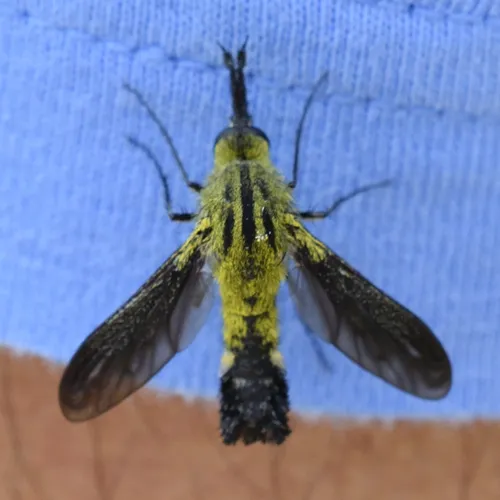
Lepidophora lutea
Lepidophora lutea
Identification: the pale scales are mostly yellow, and there are abundant yellow scales on the sides of the fourth abdominal segment
Lordotus planus
Lordotus planus
Identification: Seven small wing spots, mostly on the cross veins.
Lordotus pulchrissimus
Lordotus pulchrissimus
Identification: Outwardly very similar to the closely related L. zona , i.e. in vestiture and antennal proportions. However, both sexes of pulchrissimus have black coxae (Hall, 1954; Hall & Evenhuis, 1982); coxae in zona are yellow. Genitalia also
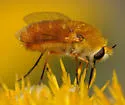
Lordotus zona
Lordotus zona
Identification: Very similar to the closely related L. pulchrissimus , but coxae in both sexes are yellow, as opposed to black in pulchrissimus . Genitalia also differ (see details in Hall & Evenhuis, 1982) Sexually dimorphous, with males' vestiture
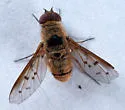
Neodiplocampta mira
Neodiplocampta mira
Identification: N. mirella is similar, but lacks the extensive erect black hairs on frons/face
Neodiplocampta mirella
Neodiplocampta mirella
Identification: Key to species of Neodiplocampta appears on pg. 323 of Hull & Martin (1974) , with the description of N. mirella at bottom of pg. 337 . Figures for N. mirella in Hull & Martin (1974) are as follows: wing venation Fig. 2 ; head Fig. 20
Pantarbes earinus
Pantarbes earinus
Identification: Abdominal dorsum entirely white pilose; antennae proximate, not widely separated (their bases not further apart than length of 1st antennal segment). Female: eyes separated by a bit more than 3 x width of ocellar tubercle; brown tranv
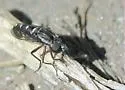
Paracosmus edwardsii
Paracosmus edwardsii
Identification: See key on Paracosmus info page. Read Loew's 1872 original description here .
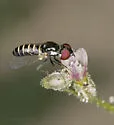
Paracosmus insolens
Paracosmus insolens
Coquillett's original 1891 description of the male is here . The female was described (and the male redescribed) in Hall(1957) .
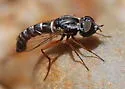
Paracosmus morrisoni
Paracosmus morrisoni
Identification: Abdominal tergites black with whitish posterior bands more or less uniform in width; halteres whitish to yellowish
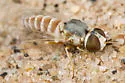
Paracosmus rubicundus
Paracosmus rubicundus
Identification: P. rubicundus is unique in the genus Paracosmus as the only species having abdominal tergites principally reddish-brown (with white posterior bands)...in all other species the tergites are principally blackish (with whitish posterior
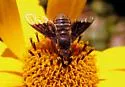
Paravilla separata
Paravilla separata
Identification: The only north-eastern species in the genus. The black-banded abdomen distinguishes it from Chrysanthrax cypris. [Comment by Joel Kits here ].
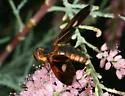
Poecilanthrax effrenus
Poecilanthrax effrenus
Identification: Description from Painter and Hall (1960):
Poecilognathus badius
Poecilognathus badius
Identification: Wing with spots, face with black markings, halter knob yellow or orange without black marks, maxillary palpus dark. Male with yellow hind femur.
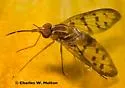
Poecilognathus fuscomarginatus
Poecilognathus fuscomarginatus
Identification: Marginal wing spots blending into continuous band.
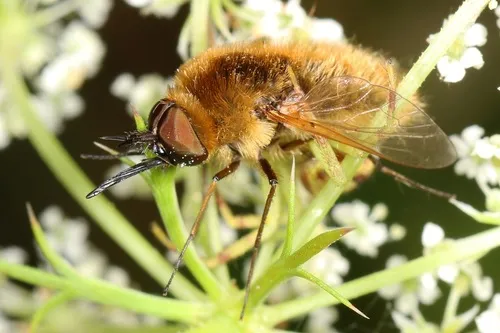
Sparnopolius confusus
Sparnopolius confusus
Identification: Yellowish, slightly hump-backed, with short pile on broad, flat abdomen. Wings clear. Proboscis long, but not greatly extended as in some other genera, protruding only somewhat more than antennae. Antennae with third segment tapered.
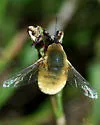
Systoechus solitus
Systoechus solitus
Identification: "This is a southeastern species that can be distinguished from the widespread S. vulgaris by the dark, rather than yellow, spines on the hind leg" -- Joel Kits Face with black hairs or scales and yellow pollen.
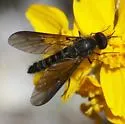
Thevenetimyia accedens
Thevenetimyia accedens
Closely resembles T. luctifera . T. accedens can be distinguished from T. luctifera by the black to brown hair on the squama, especially in males, and by the subhyaline anal and axillary cells. (Hall, 1969)
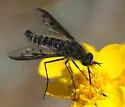
Thevenetimyia affinis
Thevenetimyia affinis
Identification: T. sodalis is similar in wing pattern and in having 2 submarginals, but has denticulate costa (smooth in affinis ) T. affinis wing Superficially similar T. tridentata has 3 submarginal cells
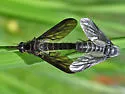
Thevenetimyia celer
Thevenetimyia celer
Identification: Wings infuscated, the middle of almost all cells subhyaline
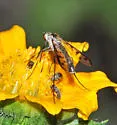
Thevenetimyia culiciformis
Thevenetimyia culiciformis
Some plant records for adults: Baccharis glutinosa , Hymenothrix
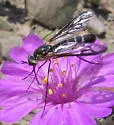
Thevenetimyia maculipennis
Thevenetimyia maculipennis
Identification: With the exception of the costal and marginal cells, the wing markings in this species are confined to the apical part of wing.
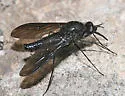
Thevenetimyia muricata
Thevenetimyia muricata
Identification: Both sexes entirely black, large. Wings infuscated with brown, middle of cells subhyaline. Costa strongly denticulate. Abdomen shining black, black pilose, tomentum wanting. Male is very similar to T. notata male (the latter has white
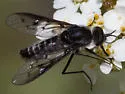
Thevenetimyia sodalis
Thevenetimyia sodalis
Identification: Closely related to T. affinis but differs in the entirely white pilose thorax and narrow, elongate 3rd antennal segment of the female. Male sodalis have a denticulate costa which is smooth in affinis .
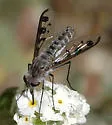
Thevenemyia (Arthroneura) tridentata
Thevenetimyia tridentata
Identification: 3 submarginal cells (unique character; also differentiates this sp. from superficially similar T. affinis and T. sodalis )
Tmemophlebia coquilletti
Tmemophlebia coquilletti
Identification: face white; top of head pale yellowish; eyes large, brownish-orange; proboscis black, about 2x longer than head, with uniform downward curve; antennae short, spike-like, distal half black, proximal half whitish; top of thorax dome-sha
Toxophora amphitea
Toxophora amphitea
Identification: ♀ Osten Saken gave a description of T. amphitea in his 1877 "Western Diptera" .
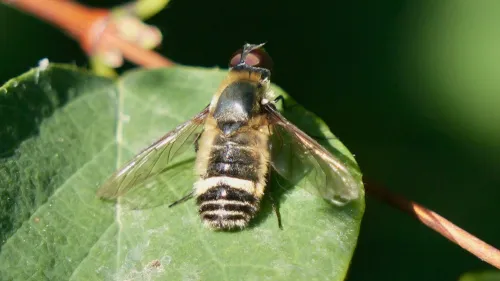
Villa cingulata
Villa cingulata
Distinct pale bands across the abdomen, but the leading edge of the wing only is narrowly brownish (the subcostal cell) without any darkening extending to cross vein r-m as in V. venusta . Males are easily identified by the conspicuous silvery-white
Tawny-tailed Bee Fly
Villa fulviana
Identification: variable in size in color but lacks transverse bands on abdomen; tawny hairs near tip of abdomen is apparently the basis of the species epithet; lack of black hairs on sides of abdomen distinguishes this species from all other northea
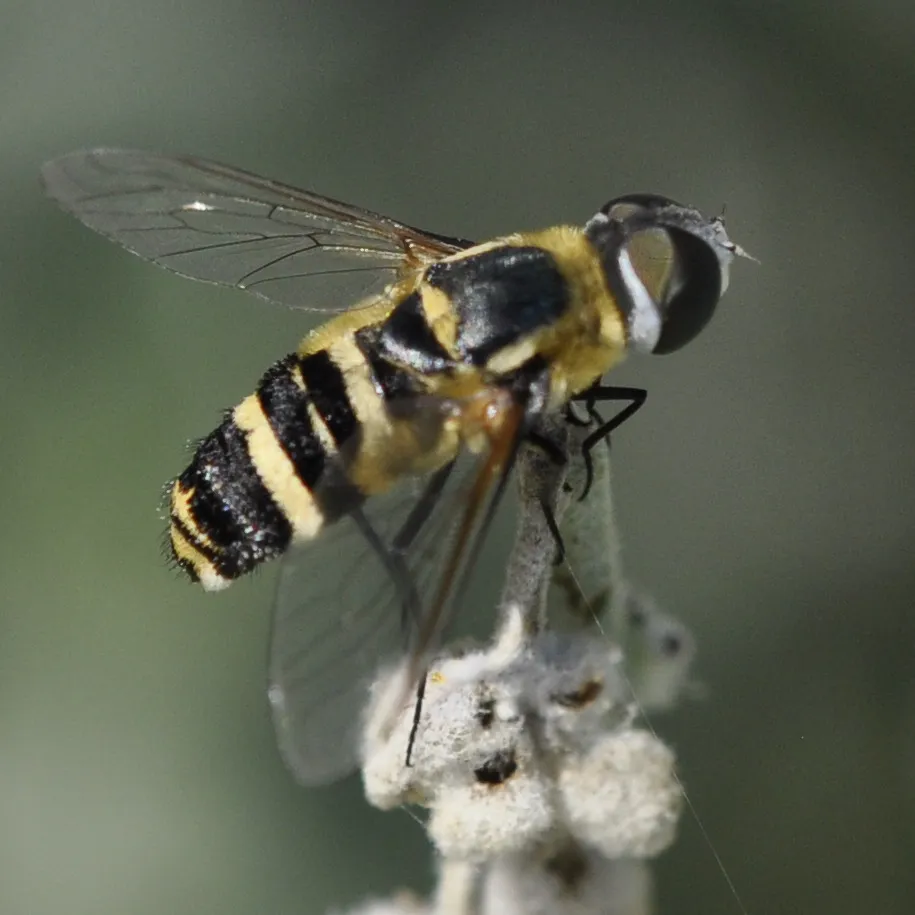
Villa lateralis
Villa lateralis
Identification: hyaline-winged. It occurs in two forms. The smaller one is more common in the spring. For a complete description see: Discover Life This variable species has in the Eastern United States two well marked variations which cause consider
Xenox xylocopae
Xenox xylocopae
Identification: Unlike X. tigrinus , this species is without the extensive white areas on the sides of the first tergite of the abdomen.
Aldrichia auripuncta
Aldrichia auripuncta
Aldrichia ehrmanii
Aldrichia ehrmanii
Amphicosmus arizonicus
Amphicosmus arizonicus
Anastoechus barbatus
Anastoechus barbatus
Anthrax albofasciatus
Anthrax albofasciatus
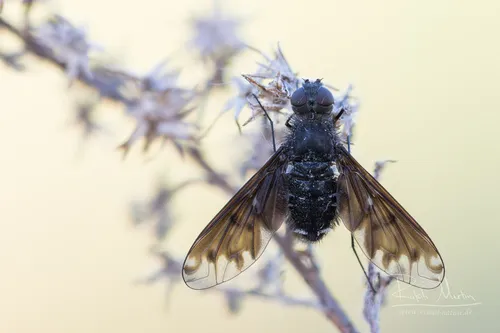
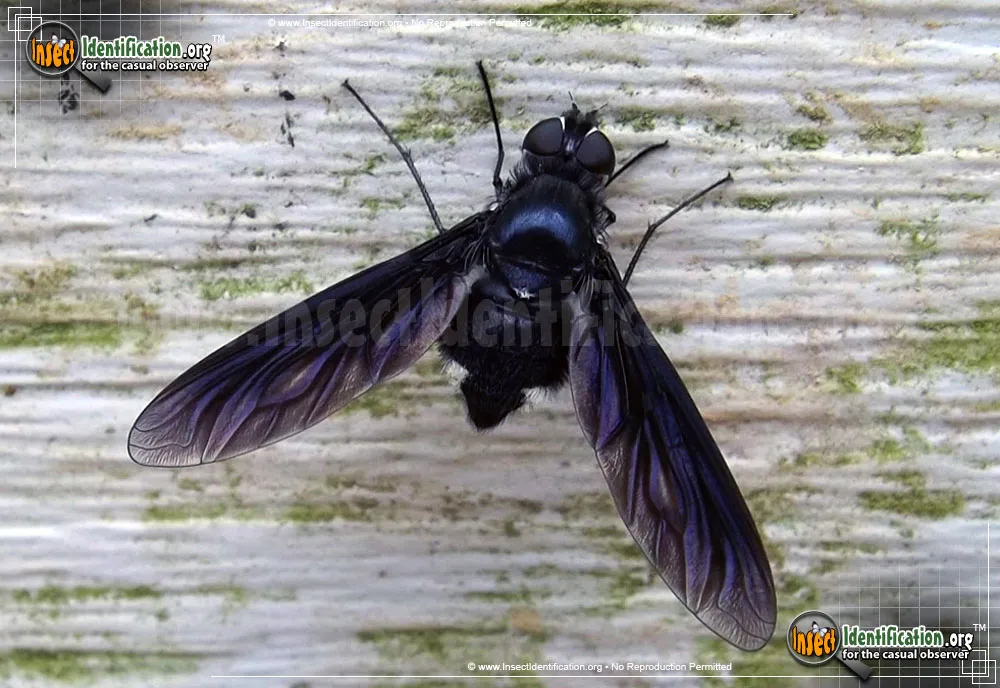
Anthracite Bee-Fly
Anthrax anthrax
Anthrax artemesia
Anthrax artemesia
Bee Fly -Anthrax sp.
Anthrax aterrimus
Anthrax atriplex
Anthrax atriplex
Anthrax cascadensis
Anthrax cascadensis
Anthrax daphne
Anthrax daphne
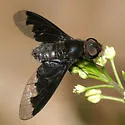
Anthrax georgicus
Anthrax georgicus
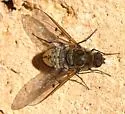
Anthrax larrea
Anthrax larrea
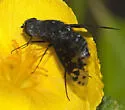
Anthrax nigriventris
Anthrax nigriventris
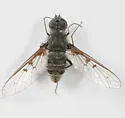
Anthrax pauper
Anthrax pauper
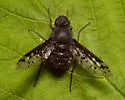
Anthrax pluto
Anthrax pluto
Anthrax varicolor
Anthrax varicolor
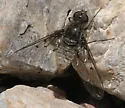
Anthrax vierecki
Anthrax vierecki
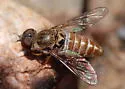
Aphoebantus borealis
Aphoebantus borealis
Aphoebantus conurus
Aphoebantus conurus
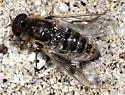
Aphoebantus desertus
Aphoebantus desertus
Aphoebantus fumosus
Aphoebantus fumosus
Aphoebantus interruptus
Aphoebantus interruptus
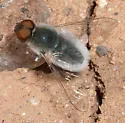
Aphoebantus mus
Aphoebantus mus
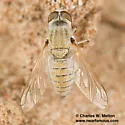
Aphoebantus rattus
Aphoebantus rattus
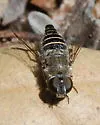
Aphoebantus scalaris
Aphoebantus scalaris
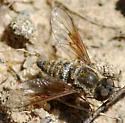
Aphoebantus transitus
Aphoebantus transitus
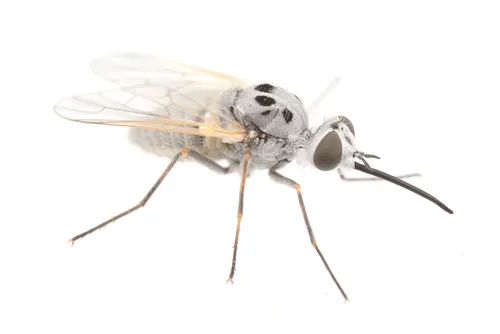
Apolysis quinquenotata
Apolysis quinquenotata
Apolysis sigma
Apolysis sigma
Astrophanes adonis
Astrophanes adonis
Bombylius albicapillus
Bombylius albicapillus