
Family Thick-headed Flies (Conopidae)
Conopidae is a family in the order Diptera. Browse 47 named species recorded in this family, or open an individual profile for its available identification and natural-history information.
Species in Conopidae (47)
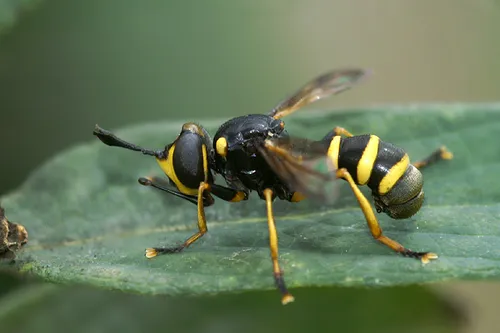
Conops flavipes
Conops flavipes
Length 9 to 11 mm. Proboscis length 4.5 mm. A wasp mimic with a black abdomen that has narrow bands of yellow. Hind femora of this species have a prominent dark band around the middle. Larvae are internal parasites of bumblebees.
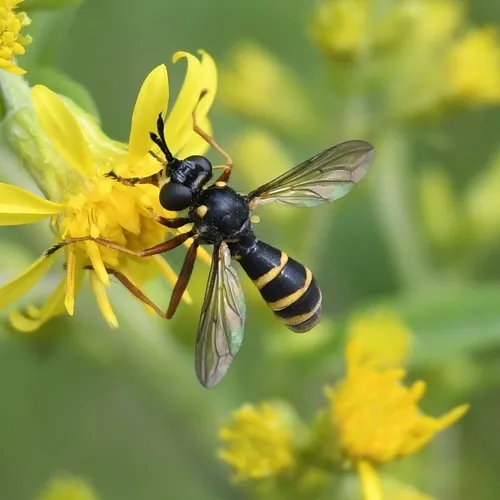
Conops quadrifasciatus
Conops quadrifasciatus
A long proboscis and a long pointed anal cell near the hind edge of the wing are features that characterise this family. Hind femora of this species are yellowish brown, and the female has a small yellowish pouch under the 5th abdominal segment. On u
Dalmannia blaisdelli
Dalmannia blaisdelli
Identification: From the key on pg 45 of Camras & Hurd : "Scutellum and humeri partly yellow; size at least 6mm; thoracic pile relatively short (shorter than arista..."distinctly" so according to Bohart ); pile on dorsum of thorax predominantly black
Dalmannia pacifica
Dalmannia pacifica
Identification: In discussing D. pacifica , Bohart (1938) states... "This species is characterized by the hind and middle metatarsi of the female, which are greatly elongated, and each bears along more than the half of its inner surface an elongate p
Dalmannia vitiosa
Dalmannia vitiosa
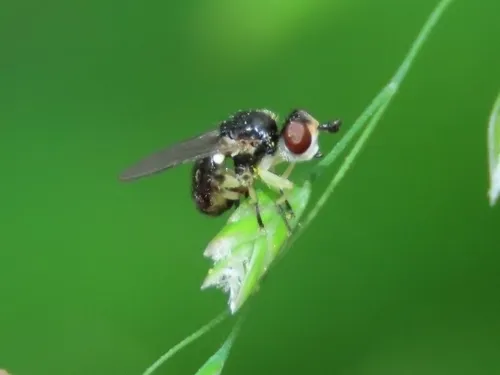
Identification: This is the only Dalmannia species with both humeri and scutellum pure black (all others have some yellow in those parts). Also, D. vitosa is unique among nearctic Dalmannia in that cross-vein "bm-cu" (see bottom of this page ) is ent
Leopoldius signatus
Leopoldius signatus
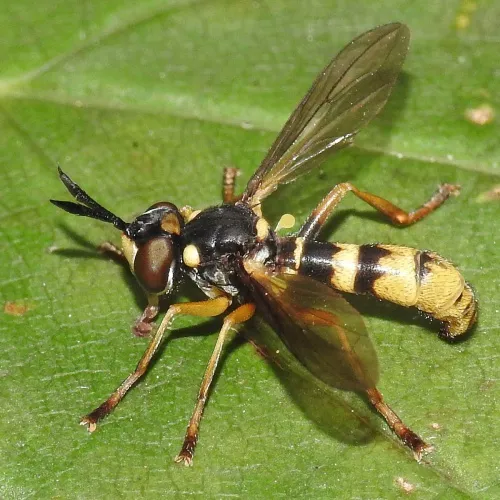
Whilst superficially resembling Conops species, Leopoldius species can be immediately recognised by their soft proboscis, nothing like the long sclerotised mouthparts found in Conops . There are only two predominantly yellow British species. Males of
Myopa buccata
Myopa buccata
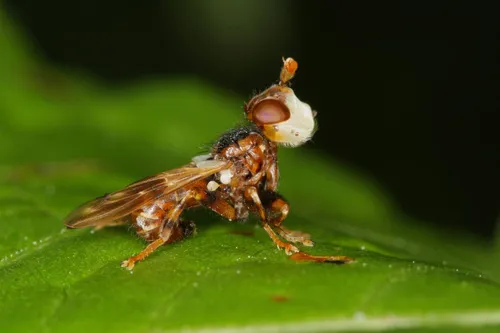
Our most striking Myopa with a number of unique characteristics. The inner cross vein r-m is whitish without the dark spot found in other spring-flying 'bearded' Myopa species; the side of the head behind the eyes (the occiput) has 1 to 4 brown spots
Myopa rubida
Myopa rubida
Identification: see Wings unmarked, 1st posterior cell almost always open at costal margin. Abdomen shiny, ground color reddish, almost no pollinose markings; hairs black, short, sparse. Antennomere 2 usually distinctly longer than the third. A membe
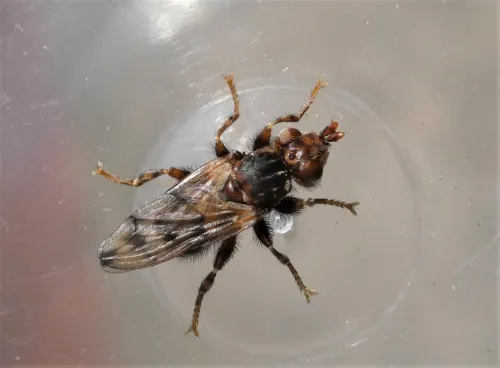
Myopa tessellatipennis
Myopa tessellatipennis
Length 7 to10 mm. Palps brown (contrasting with the pale mouth-edge). Proboscis with the third section shorter than the second section and with the last section shorter than the front tarsus. Unless identified by a recognised expert, a photo is requi
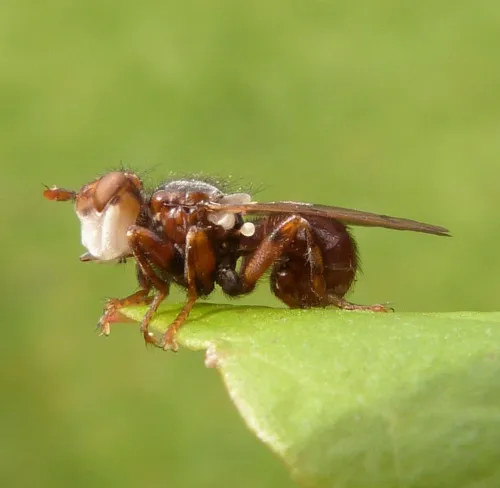
Myopa testacea
Myopa testacea
This is the most common of the Myopa species in Britain. The thorax of this species is black, not red in front of the scutellum. Often seen on the catkins and flowers that attract solitary spring breeding bees which they are thought to parasitize. My
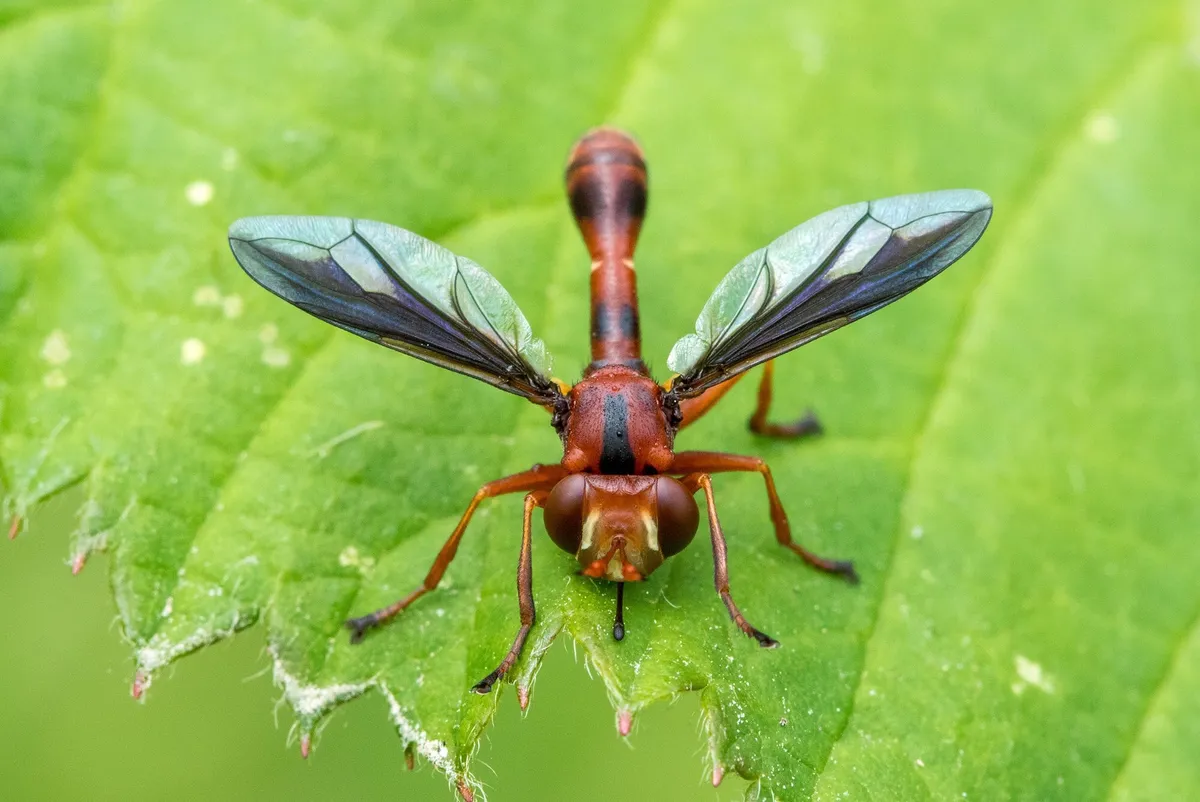
Physocephala burgessi
Physocephala burgessi
Identification: Our only (almost) entirely red species. Flies in western half of U.S. and Canada. Head: Entire face and frons yellowish, including facial grooves. Cheeks reddish. Top of head (vertex) reddish-yellow. There is a light reddish-brown (ra
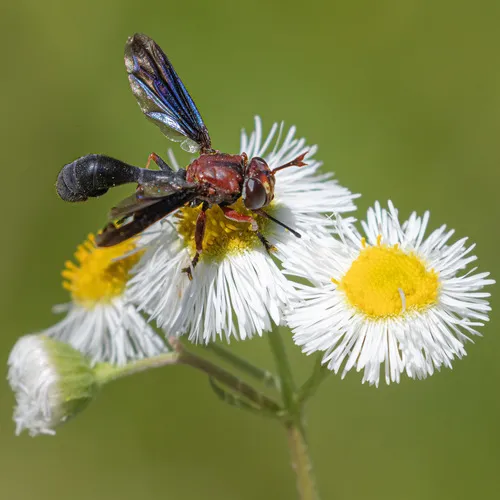
Physocephala floridana
Physocephala floridana
Identification: The detailed original species description of P. floridana appears on pg. 214 of Camras (1957), and keys including this species appear at the end of the references by Camras (1957,1996). It is closest in form to P. tibialis but has a d
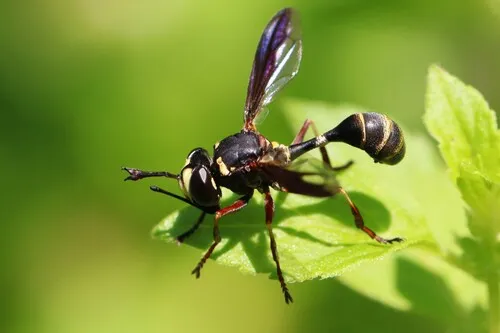
Physocephala marginata
Physocephala marginata
Identification: Some salient characters of typical P. marginata are: Wings: Discal cell (mostly) hyaline. The sliver-thin costal cell (along leading edge of wing) often equally as dark as adjacent marginal cells. Thorax: Black overall, dorsum with t
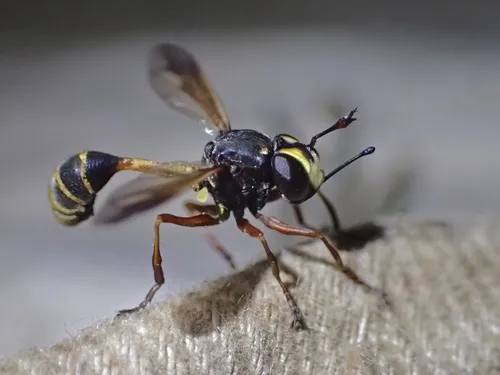
Physocephala rufipes
Physocephala rufipes
Length 7 to 15 mm. A strangely shaped fly with a 'waisted' appearance. The head and thorax area are quite broad, and the end of the abdomen has a bulbous ending. The adults are nectar feeders, regularly visiting flowers. Larvae parasitise bumblebees.
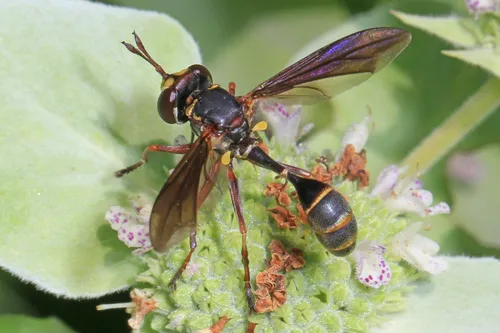
Physocephala sagittaria
Physocephala sagittaria
Identification: P. sagittaria is a variable species (see "Remarks" section below) with overall body color grading from dark brownish-black, to deep reddish with black dorsal markings. In each case, the first four or more abdominal segments have thin
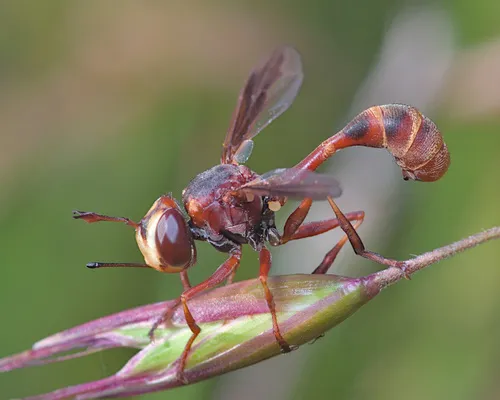
Physocephala texana
Physocephala texana
An extremely variable species, as evidenced by the large number of earlier names that have been synonymized. Perhaps the most commonly encountered form corresponds to Williston's affinis and Van Duzee's humeralis . [Note: Original descriptions of eac
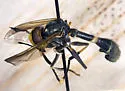
Physoconops analis
Physoconops analis
Identification: Frons entirely black, shiny. 3rd antennal segment shorter than 2nd. 1st posterior and basal radial cells hyaline. Camras(1955) referred to this species using Williston's 1892 name P. angustifrons , but later he noted in Camras(1957) t
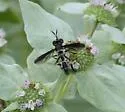
Physoconops brachyrhynchus
Physoconops brachyrhynchus
Identification: Head: The frons is medially dark and grades laterally into a paler hue (i.e. whitish or yellowish). The cheeks are uniformly pale (whitish or yellowish). The 3rd antennal segment is longer than the 2nd. The proboscis is relatively
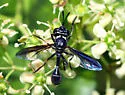
Physoconops bulbirostris
Physoconops bulbirostris
Identification: Head: Frons entirely black; cheeks brown-to-black (at least in posterior portion); face, including facial grooves, whitish; proboscis fairly long (reaching end of 2nd antennal segment). Thorax: Black; two fairly large white, rectangul
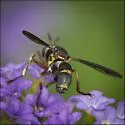
Physoconops excisus
Physoconops excisus
A 1892 description of Conops excisus (= Physoconops excisus) by Williston appears here . Camras (1955) comments that, along with P. townsendi (as well as other species outside our area), C. excisus is characterized by a very distinct uninterrupted p
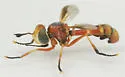
Physoconops fronto
Physoconops fronto
Identification: As a member of the nominate subgenus Physoconops (Physoconops) this species has 3rd antennal segment about 2/3 the length of the 2nd antennal segment, and a small triangular indentation at the middle of the hind margin of the eye (whi
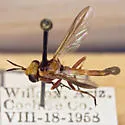
Physoconops gracilis
Physoconops gracilis
From Camras : "This species replaces brachyrhynchus in the western United States, and differs typically in being predominantly reddish with pleural stripe golden, front entirely yellow [but "sometimes darkened in the center", see below], and absence
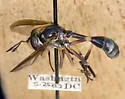
Physoconops nigrimanus
Physoconops nigrimanus
Identification: This is the only Physoconops species in our area having a sharply-defined dark "T"-pattern on the frons. (Note: Nearly all species of the closely related genus Physocephala have such a "T"-pattern on the frons...but they can be separa
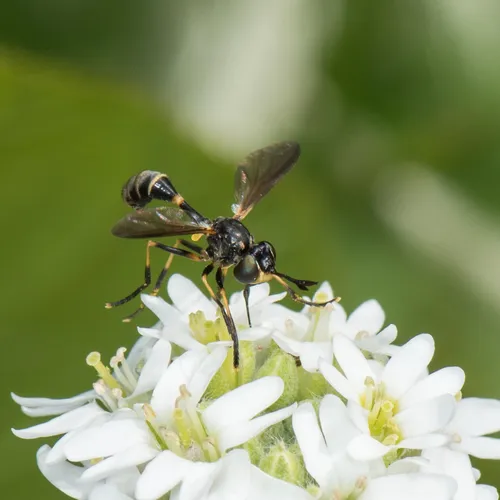
Physoconops obscuripennis
Physoconops obscuripennis
Identification: For many identification details, see discussions in comment threads accompanying posts below: ...also, compare with paratype here from The Field Museum in Chicago.
Physoconops sylvosus
Physoconops sylvosus
Identification: The simplest character distinguishing P. sylvosus is the transverse hyaline interruption of the darkly-infuscated anterior band of the wing located just proximal to the wing's apex (though the interruption may sometimes be vaguely-res
Physoconops townsendi
Physoconops townsendi
Identification: Very distinct uninterrupted post-vertical pollinose stripe connecting the post-orbitals (i.e. along upper half of hind edge of head). Very large theca in the female. Thorax and abdomen mostly rufous. For (many) more details, see Towns
Physoconops weemsi
Physoconops weemsi
Closely related to P. brachyrynchus and P. floridanus . See Camras for detailed species description and discussion.
Sicus ferrugineus
Sicus ferrugineus
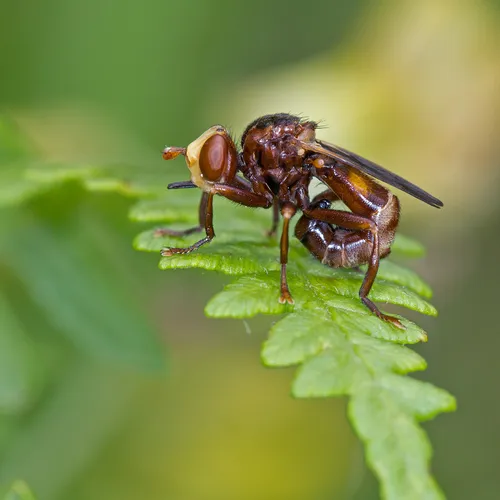
Length 8 to 13 mm. The body is reddish-brown to yellow-brown. The conspicuous head is large and bright yellow with large reddish eyes. When in resting position the abdomen is usually folded forward. Feeds on nectar or pollen of various flowering plan
Thecophora atra
Thecophora atra
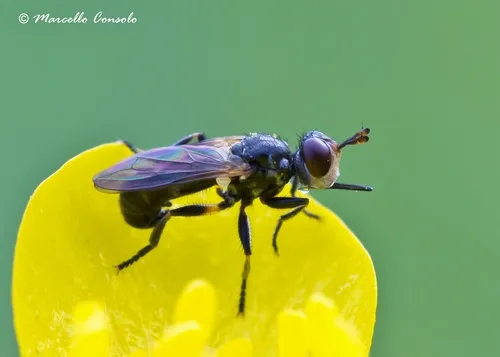
Thorax and abdomen of this very small conopid is mainly greyish-black. The head is quite large, the snout is elongated with narrow white cheeks, the large eyes are reddish, the second segment of antennae is much longer than the third and femur 1 and
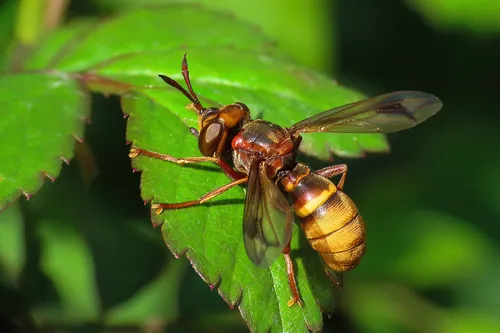
Hornet-mimic Thick-headed Fly
Conops vesicularis
Dalmannia nigriceps
Dalmannia nigriceps
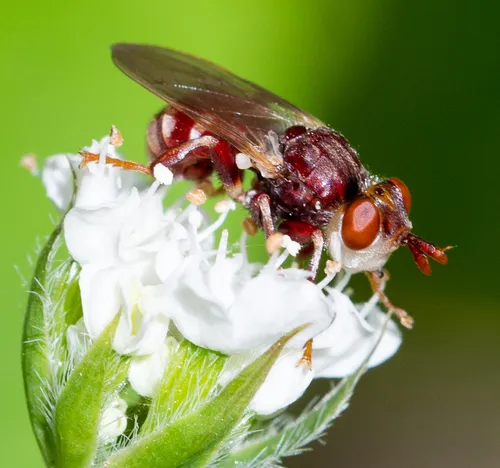
Myopa clausa
Myopa clausa
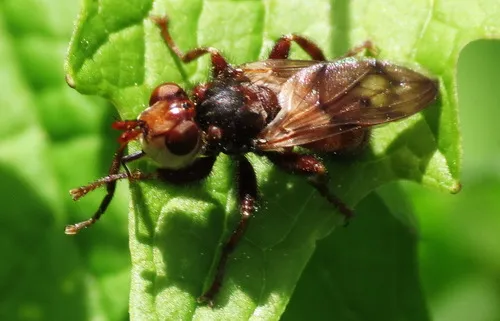
Myopa vicaria
Myopa vicaria
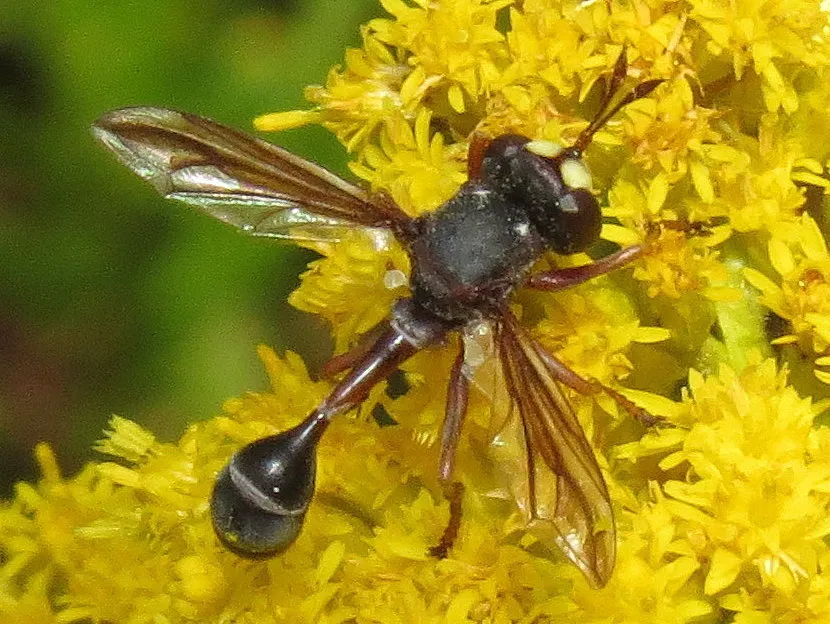
Physocephala furcillata
Physocephala furcillata
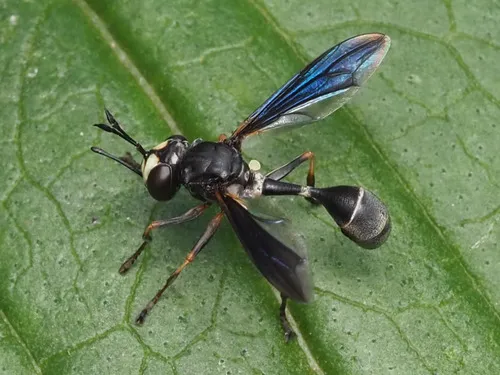
Thick-headed Fly
Physocephala tibialis
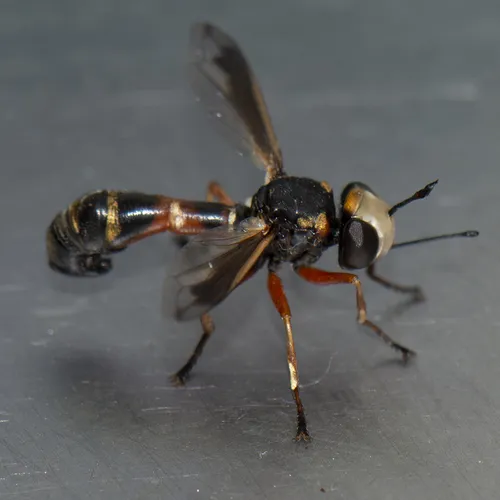
Physocephala vittata
Physocephala vittata
Physoconops discalis
Physoconops discalis
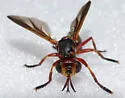
Physoconops floridanus
Physoconops floridanus
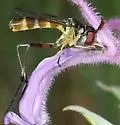
Stylogaster beresfordi
Stylogaster beresfordi
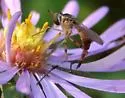
Stylogaster biannulata
Stylogaster biannulata
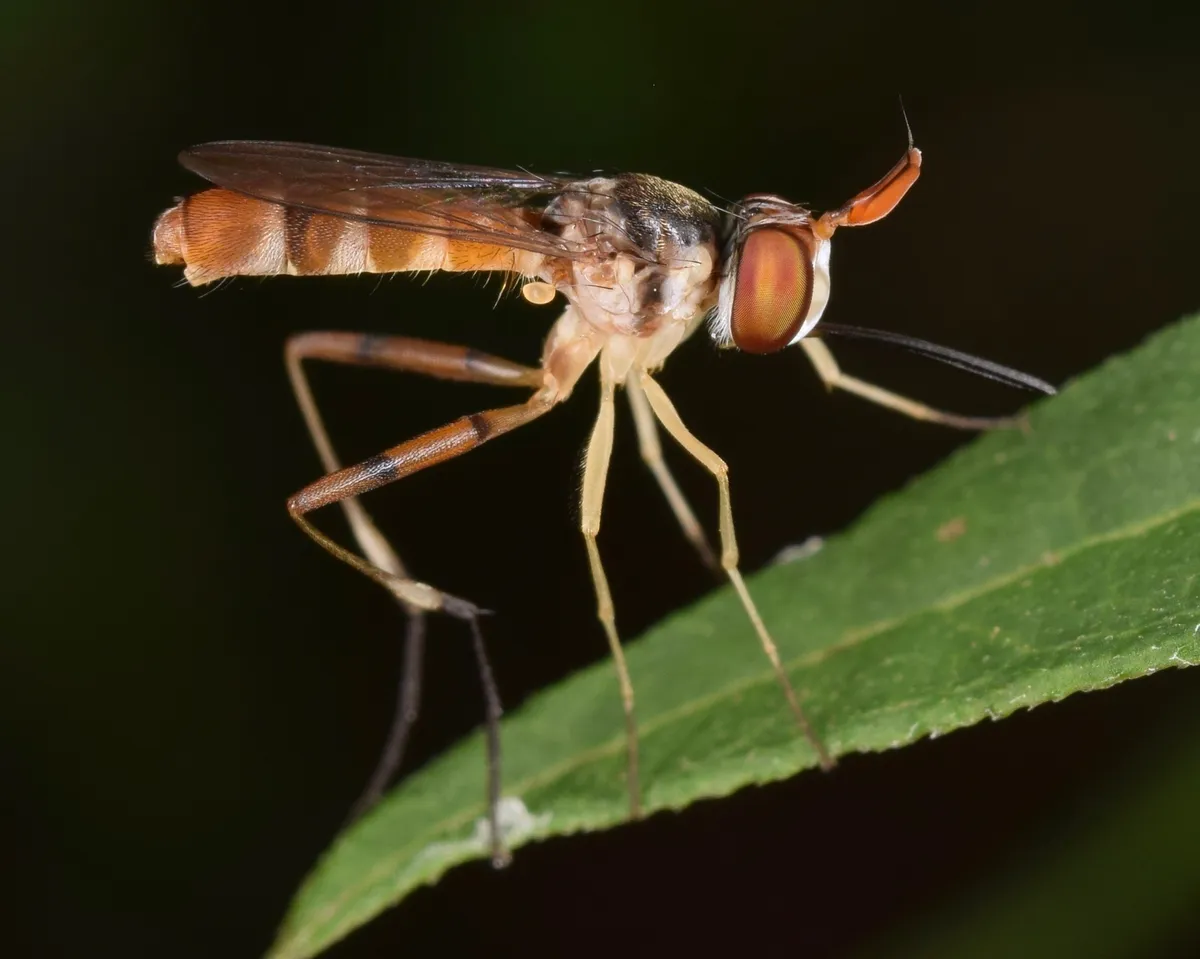
Stylogaster neglecta
Stylogaster neglecta

Thecophora propinqua
Thecophora propinqua
Zodion americanum
Zodion americanum
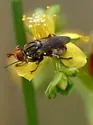
Zodion fulvifrons
Zodion fulvifrons
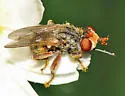
Zodion intermedium
Zodion intermedium
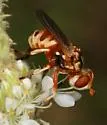
Zodion obliquefasciatum
Zodion obliquefasciatum
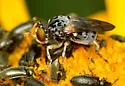
Zodion pictulum
Zodion pictulum