
Family Longlegged Flies (Dolichopodidae)
Dolichopodidae is a family in the order Diptera. Browse 266 named species recorded in this family, or open an individual profile for its available identification and natural-history information.
Species in Dolichopodidae (266)
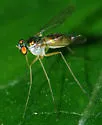
Amblypsilopus bicolor
Amblypsilopus bicolor
Identification: One of the most yellow member of the genus, with extensive yellow on first four segments of abdomen, especially sides. Coxae yellow, including on mid leg where many relatives have an extensive dark spot.
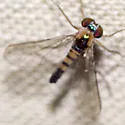
Amblypsilopus dorsalis
Amblypsilopus dorsalis
Identification: Base of antenna yellow. Usual shining color of Sciapodinae obscured by yellowish dusting. Thorax with central metallic stripe.
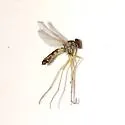
Amblypsilopus psittacinus
Amblypsilopus psittacinus
Identification: Wing of male with long hairs on front edge; front edge nearly straight until angular bend before tip of R2+3 (bend less abrupt or after R2+3 in related species). Females are practically unidentifiable unless associated with males.
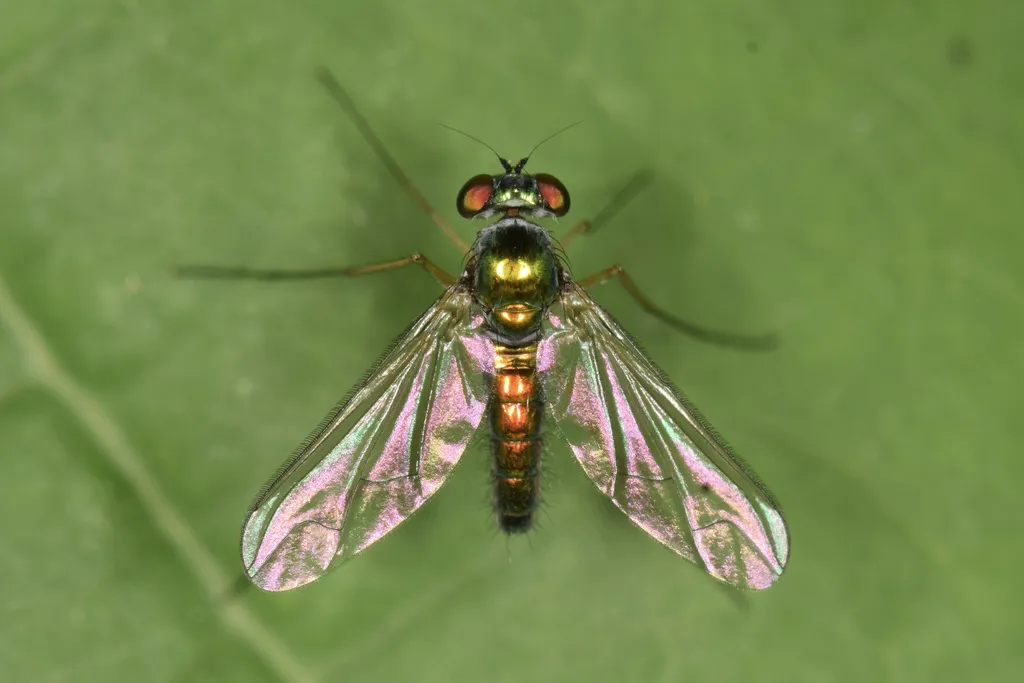
Amblypsilopus scintillans
Amblypsilopus scintillans
Identification: Body shining, legs long and mostly yellow. Distinguished from other Sciapus and Amblypsilopus by the combination of completely dark antennae, coxae 2 and 3 of male black (yellow or weakly darkened in female), costa of wing of normal
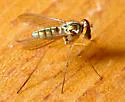
Amblypsilopus variegatus
Amblypsilopus variegatus
Identification: Distinguished from other North American Amblypsilopus by combination of
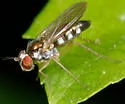
Argyra calcitrans
Argyra calcitrans
Identification: Legs yellow, base of male abdomen yellow, male hind basitarsus thickened with black bristles.
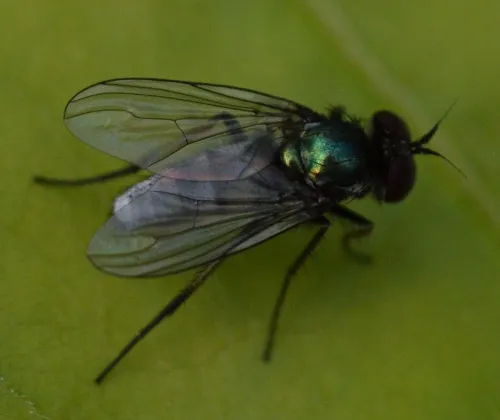
Argyra diaphana
Argyra diaphana
Males have some white on the abdomen and yellow spots on the side of the abdomen. Argyra diaphana can be distinguished from other Argyra species by the fact that the scutellum is hairy and the thorax is not silvery. The frons and face are blackish. U
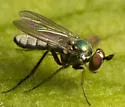
Argyra nigriventris
Argyra nigriventris
Identification: Abdomen without yellow. Fore and mid femora black with yellow tips. Fore and mid tibiae yellow. Hind leg entirely black with long bristles below basitarsus.
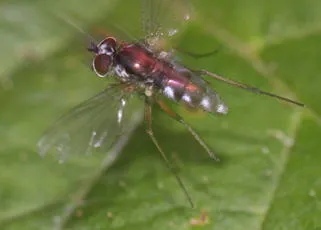
Argyra perplexa
Argyra perplexa
There are a number of similar species in this genus and identification to species level requires detailed examination. Our image is placed in a red box to denote that whilst it is likely to be this species, the image can only be claimed to be represe
Asyndetus latus
Asyndetus latus
Identification: Male with white face as broad as frons, palps black with strong bristles, and tibiae yellow except for darker tip.
Campsicnemus oregonensis
Campsicnemus oregonensis
Identification: Apparently keys to C. thersites in Harmston & Knowlton (1942), but most notably, it has a dark spot on the vein M1+2 that the other species lacks. Original description: https://www.biodiversitylibrary.org/page/26388950#page/396/mode/1
Chrysotimus delicatus
Chrysotimus delicatus
Identification: Thorax and abdomen green except the second and third segments of the female abdomen. Palps yellow.
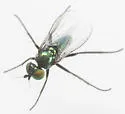
Chrysotus affinis
Chrysotus affinis
Identification: Halteres pale; third segment of male antenna short, pointed; arista nearly apical and not in a notch; legs almost entirely dark; face of male narrowed below.
Chrysotus arkansensis
Chrysotus arkansensis
Identification: Fore femur yellow, halter black, mid and hind femur black except at tips.
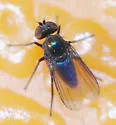
Chrysotus bellus
Chrysotus bellus
Identification: Violet abdomen, black legs, pale halteres
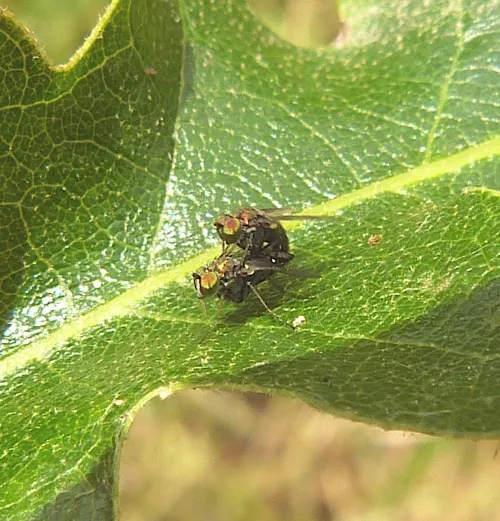
Chrysotus blepharosceles
Chrysotus blepharosceles
2.5 to 3mm. This species is sexually dimorphic. Chrysotus blepharosceles is very similar to other members of the Dolichopodidae and detailed examination is necessary. It may only be possible to identify males with confidence. Detailed examination of
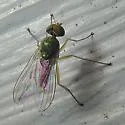
Chrysotus mundus
Chrysotus mundus
Identification: Eyes of male joined broadly on top of head. Legs mostly yellow. Male with enlarged pulvilli on fore and mid legs.
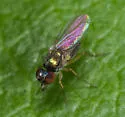
Chrysotus neopicticornis
Chrysotus neopicticornis
Identification: Like C. picticornis except the hind femur lacks a black spot at tip and has fewer than 4 preapical anteroventral bristles.
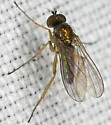
Chrysotus pallipes
Chrysotus pallipes
Identification: Legs yellow, except tips of tarsi and most of mid and hind coxae, front somewhat shining green, male face narrowed below, third segment of antenna small without apical notch.
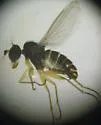
Chrysotus picticornis
Chrysotus picticornis
Identification: Pale legs, base of antenna yellow, hind femur with brown tip and four or more black bristles below (possibly only in male).
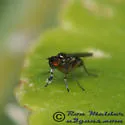
Chrysotus simulans
Chrysotus simulans
Identification: Femora pale, fore tarsi of male ornamented, fore tibia with black ring.
Chrysotus tarsalis
Chrysotus tarsalis
Published records of Chrysotus tarsalis are from the Southeast. BugGuide photos extend the range to the Northeast (or show a related undescribed specices).
Condylostylus calcaratus
Condylostylus calcaratus
Identification: Distinguished from related species by the mid basitarsus with only straight hairs (not curved), and long bristle at tip of mid tibia.
Condylostylus coloradensis
Condylostylus coloradensis
Identification: Similar to other black-legged Condylostylus with marked wings, but without distinctive bristles on the male fore basitarsus.
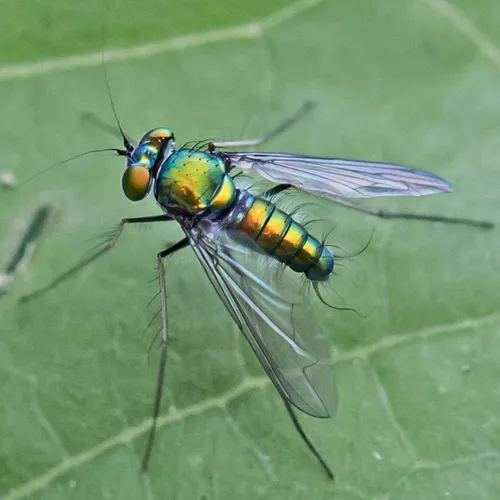
Condylostylus comatus
Condylostylus comatus
Identification: There is one other similar Eastern species of Condylostylus . Females are indistinguishable. Males of C. comatus differ by having a row of hairs on the mid metatarsus and pale genital appendages. C. crinitus has an all-dark hypopygi
Condylostylus connectans
Condylostylus connectans
Identification: Like caudatus except the last hind tarsomere of the male is widened and there is only one pair of long tail hairs instead of two rows of long hairs.
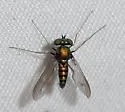
Condylostylus crinitus
Condylostylus crinitus
Identification: There is one other similar Eastern species of Condylostylus . Females are indistinguishable. Males of C. comatus differ by having a row of hairs on the mid metatarsus and pale genital appendages. C. crinitus has an all-dark hypopygi
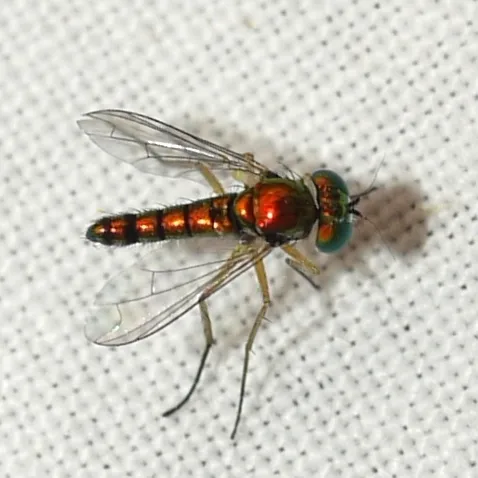
Condylostylus flavipes
Condylostylus flavipes
Identification: Legs mostly yellow and without bristles, mid basitarsus lacking bristles unlike other members of the group, distal segment of hind tarsus enlarged, distal segment of fore and mid tarsi black, abdomen lacking long hairs at the tip. Ver
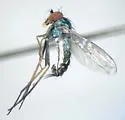
Condylostylus graenicheri
Condylostylus graenicheri
Identification: Distinguished from other North American members of the Condylostylus caudatus group (in the broad sense used here) by long hairs at tip of abdomen and enlarged segments 4 and 5 of hind tarsi. According to Curran 1934, "The Diptera of
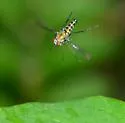
Condylostylus leonardi
Condylostylus leonardi
Identification: Characters shared with C. quadricolor but unlike all other species: Unlike C. quadricolor :
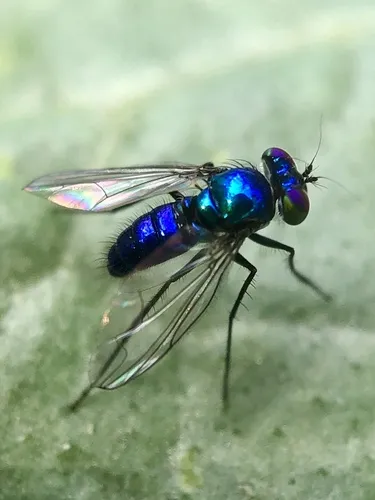
Condylostylus mundus
Condylostylus mundus
Identification: Wings unmarked, legs dark. Males: Females: Females are very similar to the unidentified species A, but can be distinguished by the leg color and chaetotaxy.
Condylostylus nigrofemoratus
Condylostylus nigrofemoratus
Identification: Distinguished from other members of the Condylostylus caudatus group by the combination: dense row of curved bristles on mid basitarsus; tarsi not otherwise modified (hind tarsi not swolled, mid tarsi not elongated); tail hairs not es
Condylostylus quadricolor
Condylostylus quadricolor
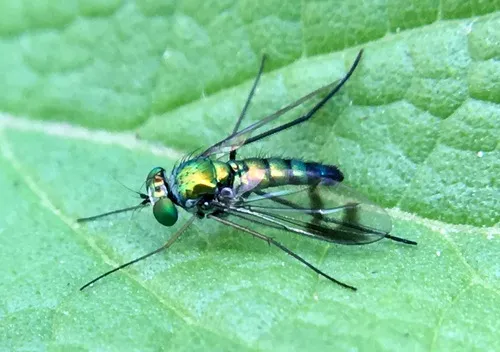
Identification: Characters shared with C. leonardi but unlike all other species: Unlike C. leonardi :
Condylostylus scaber
Condylostylus scaber
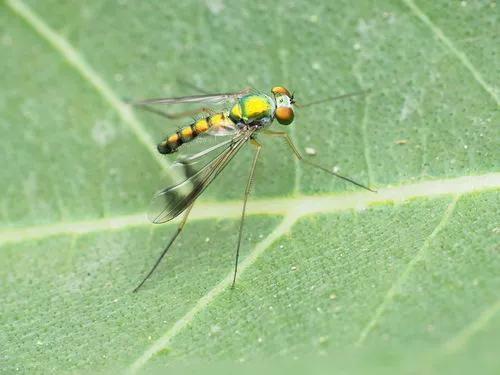
Identification: See species group page for identification information.
Condylostylus sipho
Condylostylus sipho
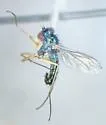
Identification: See species group page for identification information.
Condylostylus tonsus
Condylostylus tonsus
Identification: Wings similar to caudatus group (unmarked and with rounded M1), face bare, tarsi unornamented, fore basitarsus less than three times as long as second segment, femora and tibiae yellow except tip of hind femur may be darkened. Most si
Condylostylus villosus
Condylostylus villosus
Identification: Distinguished from C. crinitus by long, wrinkled hairs near tip of abdomen. Distinguished from C. comatus by lack of row of long setae on mid basitarsus and two long hairs rather than three on mid tibia.
Condylostylus viridicoxa
Condylostylus viridicoxa
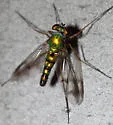
Identification: See species group page for identification information.
Dactylomyia lateralis
Dactylomyia lateralis
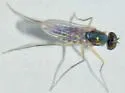
Identification: The only species of Neurigoninae north of Mexico where veins R4+5 and M end very close together, before the tip of the wing. Thorax metallic green (unlike Neurigona , but like Viridigona ).
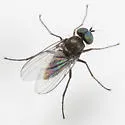
Diaphorus nigricans
Diaphorus nigricans
Identification: Black species, including legs and halteres, eyes of male contiguous on top of head.
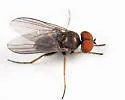
Diaphorus pseudopacus
Diaphorus pseudopacus
This widepsread species (absent from arctic and Pacific states) was only named in 1964 because it had formerly been confused with the even more widespread Diaphorus nigricans . The name means "false opacus" because it had previously been called opac
Dolichopus absonus
Dolichopus absonus
Identification: Similar to Dolichopus cuprinus , except in male secondary sexual characters: Female is not distinguishable from species related to cuprinus , except longipennis has wing slightly narrowed at base.
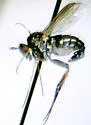
Dolichopus adultus
Dolichopus adultus
Identification: In Group B of Van Duzee (1921): Femora, postocular cilia, and squamal cilia dark. Male antennae long with arista beyond middle of third segment.
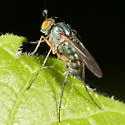
Dolichopus brevimanus
Dolichopus brevimanus
Identification: Distinguished from Dolichopus albicoxa by the plain fore tarsi of the male.
Dolichopus brevipennis
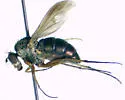
Dolichopus brevipennis
Identification: One of a small number of species with postocular cilia dark, femora pale, and antennae entirely black.
Dolichopus comatus
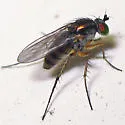
Dolichopus comatus
Identification: Middle tibia of male with very long bristles; middle basitarsus of male with row of long bristles of decreasing length.
Dolichopus consanguineus
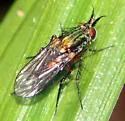
Dolichopus consanguineus
Identification: Orbital cilia black, large, with a conspicuous patch of orange hairs. Antennae long, hairy, black with a large yellow projection below.
Dolichopus crenatus
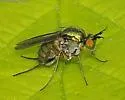
Dolichopus crenatus
Identification: Distinguished from other species with lamellicornis -like antennae by the pale setae of the calypters and the thick arista of the male.
Dolichopus cuprinus
Dolichopus cuprinus
Identification: Males distinguishable from other species with similarly ornamented fore tarsi by the long, yellow hairs under the hind femur (shorter or missing in most other species) and the costa not strongly swollen at the tip of R1.
Dolichopus discifer
Dolichopus discifer
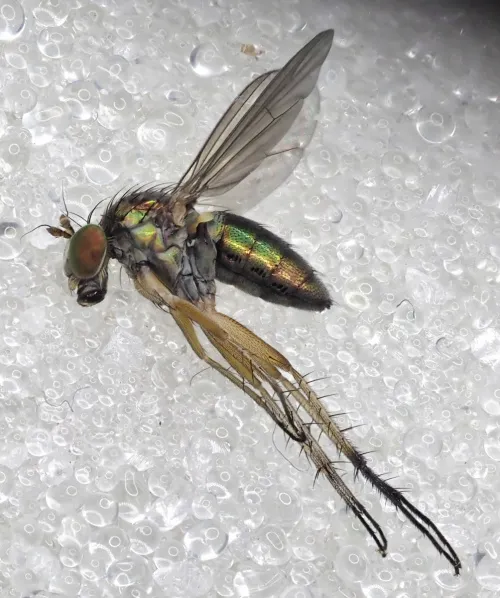
5-6.5mm. Typical of the genus with a green, metallic body and long legs. It is a predator of aphids, springtails and similar small invertebrates. Males have enlarged front tarsi used in courtship to woo a female. Identification requires close examina
Dolichopus festivus
Dolichopus festivus
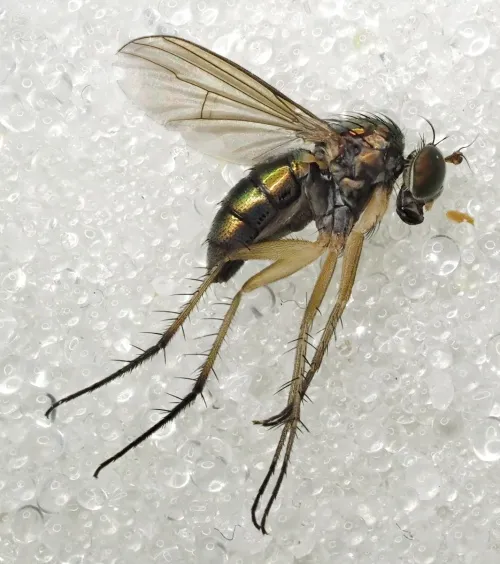
5-7mm. A typical Dolichopus species with a metallic green body. See ID Guidance: for detail. Unless identified by a recognised expert, a photo is required, and the specimen should be examined with a microscope. In the comments box, state the key or I
Dolichopus footei
Dolichopus footei
Identification: "The wholly black coloration of body and legs together with the black hypopygial lamellae and small jet-black spot at apex of wing will readily distinguish this species from all of the known members of the genus Dolichopus ." (Harmsto
Dolichopus gratus
Dolichopus gratus
Identification: One of a few Eastern species with femora, postocular hairs, and hairs of squama all black. Hind tibia black with upper edge yellow at base. Costa of male strongly swollen at tip of R1.
Dolichopus griseipennis
Dolichopus griseipennis
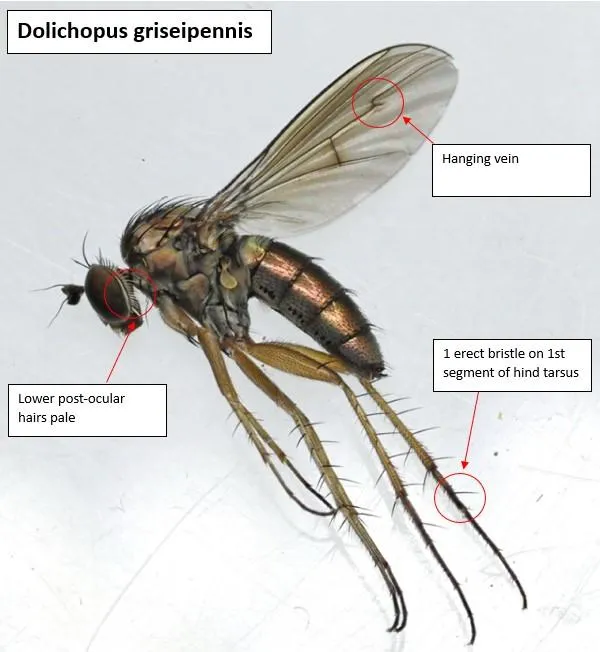
D. griseipennis can be identified by viewing the following combination of features: the lower post-ocular hairs (on the outer rim of the eye) are pale, though dark near the top of the eye; there is a fringe of setae on the inside of the hind femur an
Dolichopus lamellicornis
Dolichopus lamellicornis
Identification: Distinguished from most similar species by the tufts of yellow hair on the second tergite. Dolichopus arizonicus has similar hairs and is distinguished by longer antennae and dark hairs on the calypters.
Dolichopus longimanus
Dolichopus longimanus
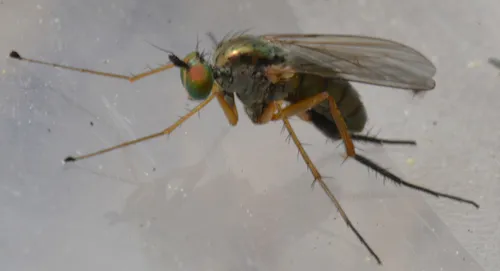
" Dolichopus longimanus Loew is a species with much elongated front tarsi, the last joint being black and enlarged. I observed the courtship on the trunks of trees at Simpson Park, Big Stone City, South Dakota, in 1896, and although I have no notes I
Dolichopus longipennis
Dolichopus longipennis
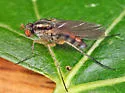
Identification: Base of male wing modified. See Van Duzee et al. 1921 page 289 and figure 213
Dolichopus mannerheimi
Dolichopus mannerheimi
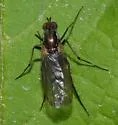
Identification: Black femora, male with dark spot near wingtip, white band on mid tibia, and white spot near tip of mid basitarsus. "The only species known from North America which is at all similar to this one is annulipes Zetterstedt ( stehammari o
Dolichopus pachycnemus
Dolichopus pachycnemus
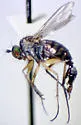
Identification: Postocular cilia black. Fore and mid femora and tibiae yellow, hind with black tips. Male with last segments of fore tarsus black and slightly widened.
Dolichopus pantomimus
Dolichopus pantomimus
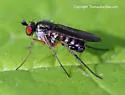
Identification: Antennae black, third segment long. Hind legs black from tip of tibia. Mid legs black from tip of first segment of tarsi. Fore legs darkened near tips, but without sharply defined black region and without ornaments. Hind femora wi
Dolichopus plumipes
Dolichopus plumipes
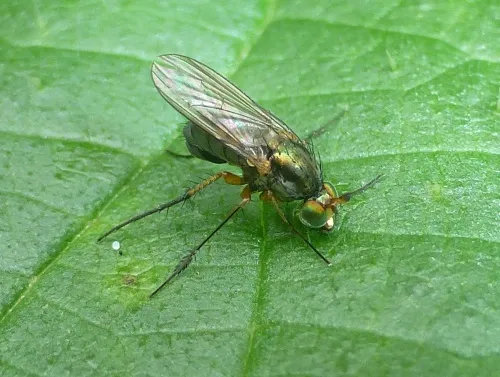
This is a small dolichopid fly with a metallic green thorax. Males have strangely adorned legs, with which they impress the females. Dolichopus plumipes is very similar to Dolichopus wahlbergi and detailed examination is necessary to distinguish betw
Dolichopus popularis
Dolichopus popularis
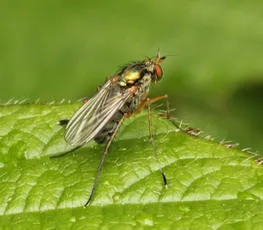
This species is typical of the genus where males have very large genitalia tucked under the abdomen and it typically rests with its front end raised - like a begging dog. Most species in the genus also have a brassy gold sheen. D. popularis has a who
Dolichopus ramifer
Dolichopus ramifer
Identification: M with long stump vein at curve. Antennae long, black. Hind legs black from tip of tibiae. Thorax and front dark, shining. Mid tibia with one long bristle below; mid basitarsus without strong bristle above. Mid femora often with
Dolichopus remipes
Dolichopus remipes
Identification: Male with long hairs on last three segments of hind tarsi.
Dolichopus stenhammari
Dolichopus stenhammari
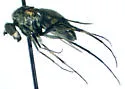
Identification: Usually with a white band on the mid tibia. This is the type species of Melanodolichopus , a group of dark-colored Dolichopus .
Dolichopus superbus
Dolichopus superbus
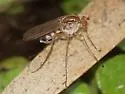
Identification: The combination of the fore legs, male genitalia, and general color are distinctive. See Van Duzee 1921, figs. 211-211b .
Dolichopus tenuipes
Dolichopus tenuipes
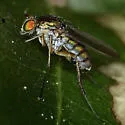
Dolichopus tenuipes "has the fore tarsi in the male exceedingly elongated, and slender, with the last joint in the shape of a comparatively large, oval black disk... I observed in September the maneuvers of the male in courting the female. He would p
Dolichopus trivialis
Dolichopus trivialis
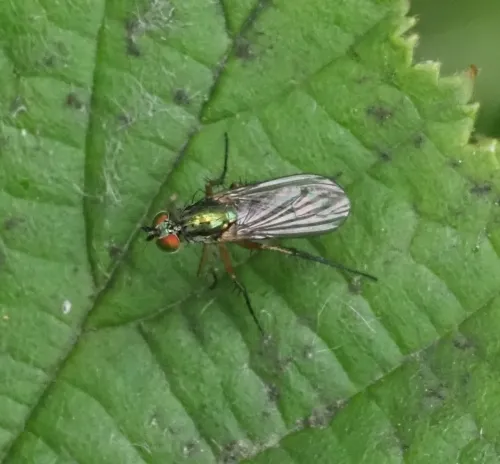
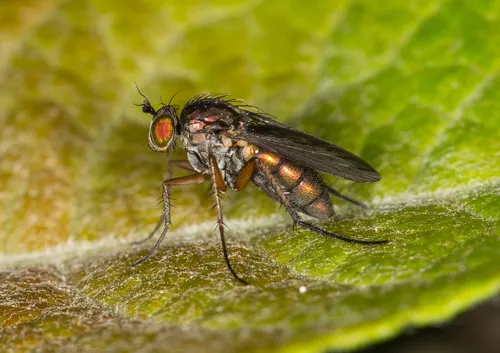
4-5 mm. Metallic green abdomen and thorax, yellow legs with dark tarsi. Pale hair fringe under hind femora. Single apical bristle on the front tarsus (basal segment). Grassland, gardens and post industrial sites. Feeds on midges and other small ins
Dolichopus ungulatus
Dolichopus ungulatus
A typical and very common Dolichopid with a metallic green abdomen. See the ID checklist below for the key characteristics. Damp habitats, wet grassland, woodland edge, scrub and hedgerows.
Dolichopus versutus
Dolichopus versutus
Identification: The male is distinguished from related species by the combination of
Dolichopus vigilans
Dolichopus vigilans
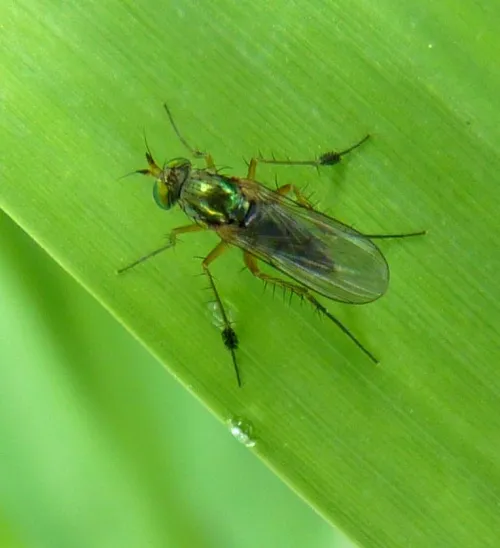
Identification: Last three segments of male fore tarsus swollen into a black triangle contrasting with yellow first and second segments. Similar to ornaments of several other species, but different in detail.
Dolichopus wahlbergi
Dolichopus wahlbergi
4.5-5.5mm. Metallic green. Legs all yellow. Males have the basal segment of the mid tarsus modified into black pennate extensions, looking like a thick feather. Dolichopus plumipes is similar but has a dark anterodorsal streak down the mid tibia. Gra
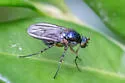
Ethiromyia violacea
Ethiromyia violacea
Identification: Distinguished from similar North American species by the spots on mid and hind legs where major bristles insert.
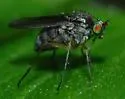
Gymnopternus exilis
Gymnopternus exilis
Identification: Antennae long, femora yellow except usually with a prominent dark spot at the tip of the hind femur. If the spot is absent, distinguishable from subulatus by the shorter antenna with more basal arista and from opacus by male genitali
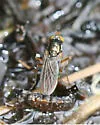
Gymnopternus nigribarbus
Gymnopternus nigribarbus
Identification: The male has a long arista with a large, swollen tip of the kind often found in Tachytrechus .
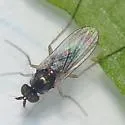
Gymnopternus opacus
Gymnopternus opacus
Identification: Legs entirely pale, except some dark on coxae; antennae large, dark with some reddish marks. See Robinson and Loew for additional details.
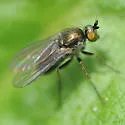
Gymnopternus scotias
Gymnopternus scotias
Identification: Dark femora; dark, shining green thorax; antennae black, male with third segment longer than wide, slightly pointed, with long hairs.
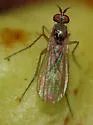
Gymnopternus subulatus
Gymnopternus subulatus
Identification: Long, pointed third segment of antenna ("subulate") with arista nearly apical. Femora yellow.
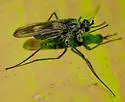
Hydatostega plumbea
Hydatostega plumbea
Identification: The white and black wing markings are distinctive according to Justin Runyon, who is an expert on the family.
Hypocharassus pruinosus
Hypocharassus pruinosus
Identification: The shape of the antenna is distinctive:
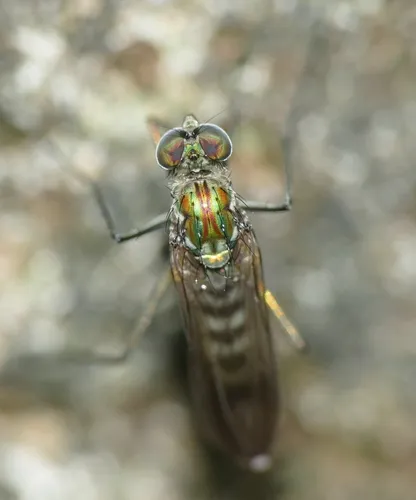
Liancalus virens
Liancalus virens
Length 7 or 8 mm. This colourful species is the largest of the dolichopodid or long legged flies in north western Europe. It lives amongst the mosses, liverworts and algae growing under bridges and beside waterfalls and fast running water. Scattered
Medetera aberrans
Medetera aberrans
Identification: A relatively shining, green species with yellow legs. Lateral scutellar bristles half as long as apical. Male with modified fore tarsus.
Neurigona aldrichii
Neurigona aldrichii
Identification: Male with modified second fore tarsomere.
Neurigona carbonifer
Neurigona carbonifer
Identification: Male fore tarsus with enlarged black tip. See Van Duzee 1913:32 (below) for full description.
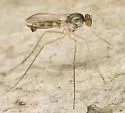
Neurigona deformis
Neurigona deformis
Identification: Males have deformed wings and tarsomeres 2-4 of the fore legs with a hairy fringe.
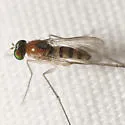
Neurigona dimidiata
Neurigona dimidiata
Identification: Flat spot on thorax black, usually with black line extending forward. Hairs and bristles on fore and mid coxae whitish yellow. Hypopygium black.
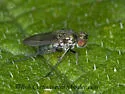
Paraclius pumilio
Paraclius pumilio
Identification: The only species in the Eastern US with black femora
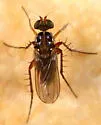
Paraclius quadrinotatus
Paraclius quadrinotatus
Identification: Mesoscutum with distinct black spots above wing base, completely separated, and with white spots and an additional black spot at the ends of the transverse suture.
Paraphrosylus direptor
Paraphrosylus direptor
Identification: The only species of the genus with a prominent black spot on the wings. Other species may have faint clouding.
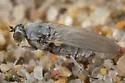
Parathalassius abela
Parathalassius abela
Identification: "This relatively large species is characterized by 3–4 notopleural bristles, dark legs, relatively long vein CuA+CuP, males with golden-yellow pruinosity on the face and clypeus, and longer lower male ommatrichia. Parathalassius abela
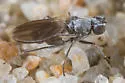
Parathalassius infuscatus
Parathalassius infuscatus
Identification: "This small distinctive species is characterized by broadly infuscate wings in both the male and female with the base of M2 usually appearing indistinct, uniformly short male ommatrichia, 2 notopleural bristles, and male hypopygium wi
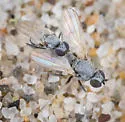
Parathalassius uniformus
Parathalassius uniformus
Identification: "This relatively small species is characterized by a subtriangular antennal postpedicel, uniformly short male ommatrichia, 2 notopleural bristles, hyaline wing, relatively dark legs, male hypopygium compact, and female sternite 8 with
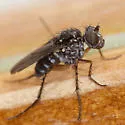
Pelastoneurus longicauda
Pelastoneurus longicauda
Identification: White spot on thorax, bend in M relatively abrupt, dark spots on middle and hind tibiae at insertion of bristles, face of male wide.
Pelastoneurus umbripictus
Pelastoneurus umbripictus
Identification: Thoracic pattern should be unique, as well as the spots on the wings.
Peloropeodes cornutus
Peloropeodes cornutus
Identification: Males are distinguished from other North American Peloropeodes by the very long antennae with first two segments black. P. magnicornis from Nebraska has the first two segments yellow.
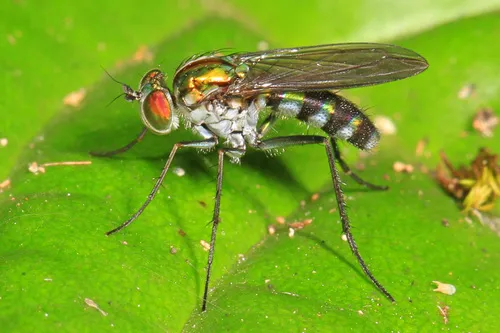
Plagioneurus univittatus
Plagioneurus univittatus
Identification: Thorax metallic green with a strong black stripe in the center. Abdomen black with white pruinose posterior bands. Wings hyaline with vein M converging with R4+5.
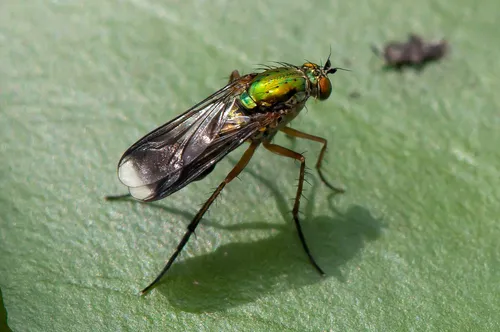
Poecilobothrus nobilitatus
Poecilobothrus nobilitatus
This is an attractive fly with a metallic green thorax. The male has conspicuous white wing tips and is easy to identify, the female lacks these white wing tips and looks very similar to many others in the genus. The acrostichal bristles on the thora
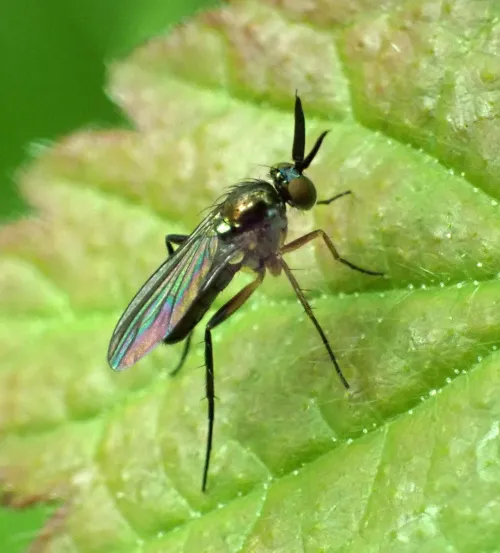
Rhaphium appendiculatum
Rhaphium appendiculatum
One of many Rhaphium species with enlarged 3rd antennal segment. In R. appendiculatum , the arista is very short - no longer than one eighth the length of the third segment. The genital lamella is long and ribbon-like. Rhaphium caliginosum has a long
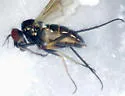
Rhaphium browni
Rhaphium browni
Identification: Fore and mid tibiae pale, hind black. Femora black except female hind femora pale basally. Antennae long in both sexes. Female arista less than half as long as first flagellomere. Male arista and fore tarsi apically expanded.
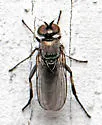
Rhaphium fascipes
Rhaphium fascipes
Identification: Mid and hind femora black, face black, tibiae yellow except tip of hind tibia thickened and black.