
Family Hover Flies (Syrphidae)
Syrphidae is a family in the order Diptera. Browse 520 named species recorded in this family, or open an individual profile for its available identification and natural-history information.
Species in Syrphidae (520)
Allograpta exotica
Allograpta exotica
Identification: Very similar to obliqua , but the katepimeron is black and the face has often a dark brown to black medial stripe, while in obliqua the katepisternum is yellow and the face is yellow or with a light brown stripe. A. obliqua is more co
Anasimyia bilinearis
Anasimyia bilinearis
Identification: Abdomen: Male black with white triangle at each side of segment 1, tip expanding at base of segment 2. Some faint greyish marks on other segments, or not. Female same as male on 1 and 2. Segments 3 and 4 have broken stripes not reachi
Anasimyia chrysostoma
Anasimyia chrysostoma
Identification: Thorax: Both male and female have 4 wide grey to yellowish-white stripes. Scutellum black, lower margin yellowish to reddish. Abdomen: Female has thick, greyish-white curved and broken stripes on each segment, lower margin of segments
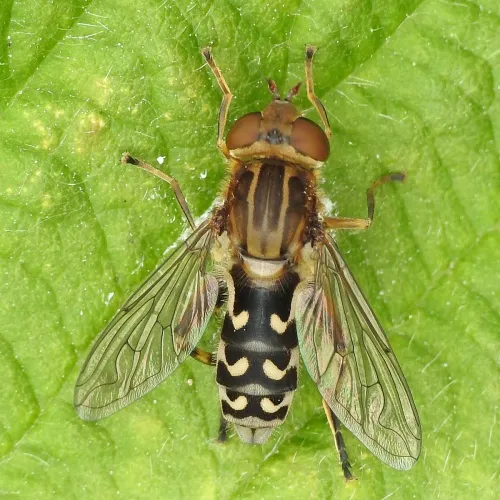
Anasimyia contracta
Anasimyia contracta
Wing length 5 to 7.5 mm. This species has a slightly 'wasp waisted' abdomen. Segment T2 is narrower than it is long and it has greyish 'hockey stick' shaped markings. A. transfuga has similar markings but with segment T2 parallel sided and wider then
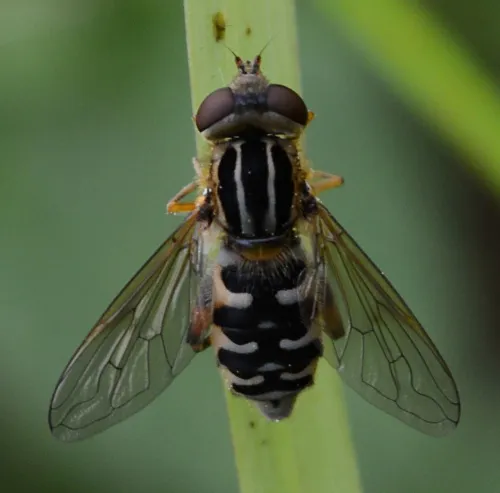
Anasimyia lineata
Anasimyia lineata
This species is distinguished from all other Eristalini by its long snout which tapers to a point. Both sexes are rather dark, but the male tends to have triangular orange markings on the tergites, especially on tergite 2, whilst the female markings
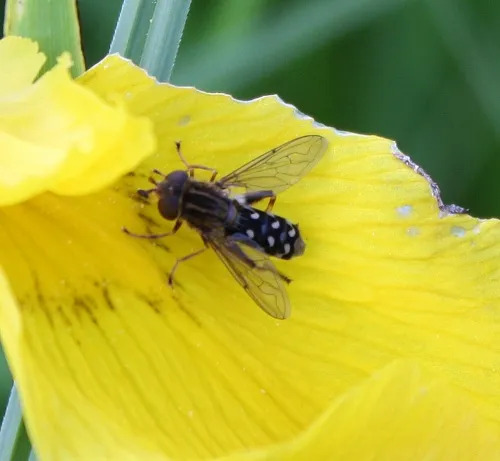
Anasimyia transfuga
Anasimyia transfuga
Wing length about 7 mm. This dark hoverfly has steeply inclined hooked markings, like a tick. It resembles other members of the family and expert help may be required to confirm identification. Widespread but local and quite infrequent in Britain.
Blera pictipes
Blera pictipes
Identification: Note the yellow on the sides of the thorax behind the suture that continues as a scutellar margin, which distinguishes from B. humeralis .
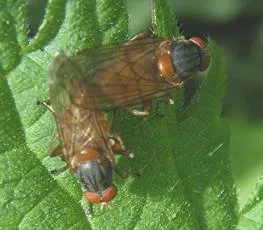
Brachyopa scutellaris
Brachyopa scutellaris
All four British Brachyopa species have an orange/brown abdomen and grey thorax (note that the thorax has no bristly hairs as some flies do). Brachyopa scutellaris and Brachyopa pilosa can be separated from the other two Brachyopa species as the scut
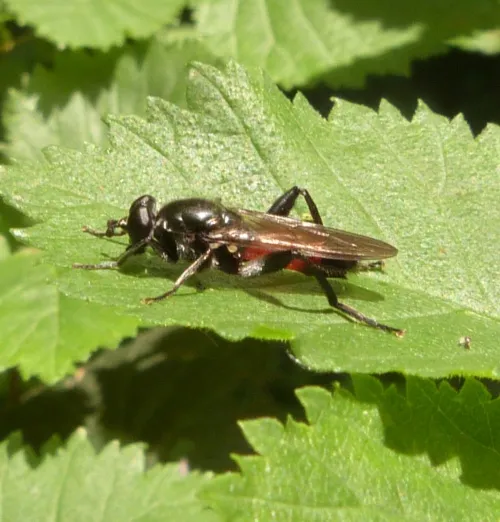
Brachypalpoides lentus
Brachypalpoides lentus
A very attractive hoverfly with a deep crimson band occupying most of the abdomen Xylota segnis is superficially similar but is somewhat smaller with a less striking orange band on the abdomen and partially pale legs. Favouring old woodland and is qu
Brachypalpus femorata
Brachypalpus femorata
Identification: Note yellowish pile on the thorax combined with black pile on the pleurae; yellowish pile rather than reddish as in B. alopex . Males always shortly holoptic. Likely a complex of several species.
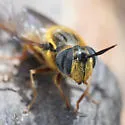
Callicera erratica
Callicera erratica
Identification: pile color variable; extreme color forms used to be treated as distinct taxa ( auripila , johnsoni )
Ceriana tridens
Ceriana tridens
Identification: Some resources for aid in ID of C. tridens :
Chalcosyrphus chalybeus
Chalcosyrphus chalybeus
Identification: Small syrphid, steely blue, probably a mimic of various steely-blue wasps.
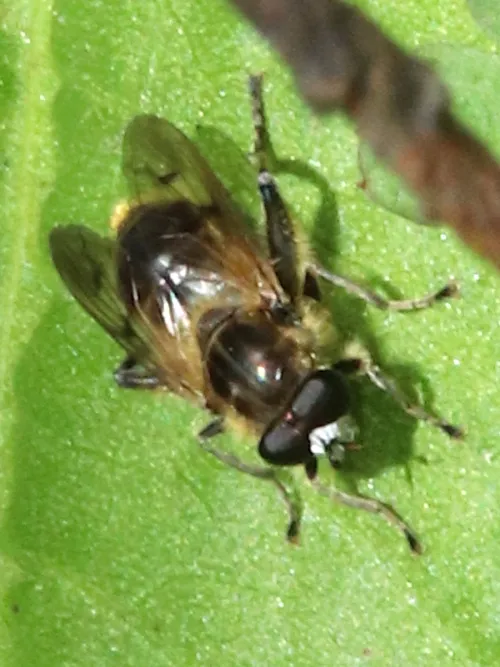
Chalcosyrphus eunotus
Chalcosyrphus eunotus
A medium-sized, brownish hoverfly superficially resembling Brachypalpus laphriformis , but the thorax is dull with faint stripes and the abdomen is broader with pairs of narrowly separated squarish grey patches on tergite 2 (male) and tergites 2 and
Chalcosyrphus inarmatus
Chalcosyrphus inarmatus
Identification: Black fly with yellow hair and shiny face. Can be mistaken for Brachypalpus oarus , but note hind tibiae broadly orange at the base and at least two basal tarsomeres orange on hind legs. In front view, Brachypalpus has a triangular he
Chalcosyrphus piger
Chalcosyrphus piger
Identification: Medium-sized; metafemora enlarged. Dark thorax, wings. Abdomen bright red. Tarsi usually (or always?) dark. Note short appressed (not erect) hairs on thorax . This, and related members of the genus with a similar pattern are likely mi
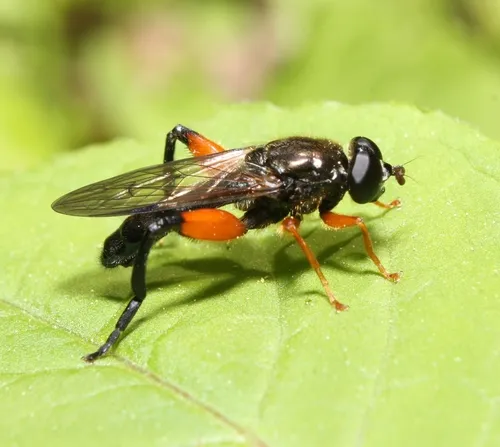
Chalcosyrphus plesia
Chalcosyrphus plesia
Identification: Head: Shiny black. Face projecting outward at antenna base. Antenna: Base black, last segment large, rounded, brownish. Thorax: Dull brownish-black, flattened at end as in all Chalcosyrphus. Wings: Slightly tinted brownish. Wings exte
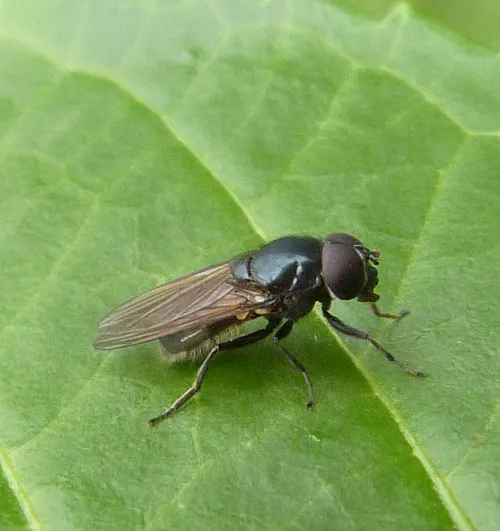
Cheilosia albitarsis sensu stricto
Cheilosia albitarsis sensu stricto
Cheilosia albitarsis and Cheilosia ranunculi are very similar and can often only be safely determined by detailed examination. Any specimen that has not been subjected to detailed examination should be submitted as Cheilosia albitarsis/ranunculi agg.
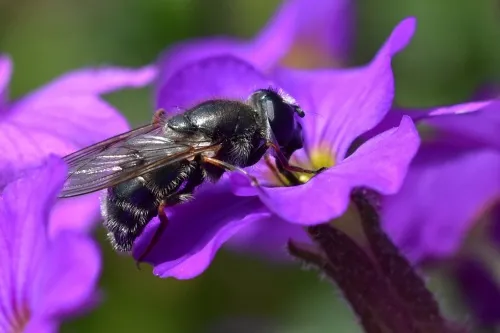
Cheilosia caerulescens
Cheilosia caerulescens
It is a bare-eyed, bluish-grey Cheilosia with pale knees and distinct smudges over the two cross veins of the wings. The lower face is rather strongly protruding, the third antennal segment is brownish-red and the antennal pits are fused. Unless iden
Cheilosia capillata
Cheilosia capillata
Identification: Per Bill Dean, "Eyes bare; face bare; no scutellar bristles; pile on frons pale; tibiae mostly orange; hairs on thoracic dorsum pale yellow and more white on pleurae; wing veins very orange at base."
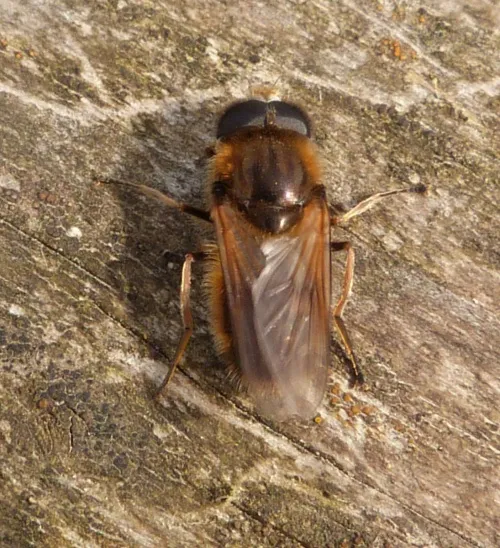
Cheilosia grossa
Cheilosia grossa
A dark bodied hoverfly with red brown hairs. C. grossa is very similar to C. albipila but on close examination C. grossa will be found to have black antennae. Areas where thistles are common, damp meadows woodland rides etc. March to May – peaking la
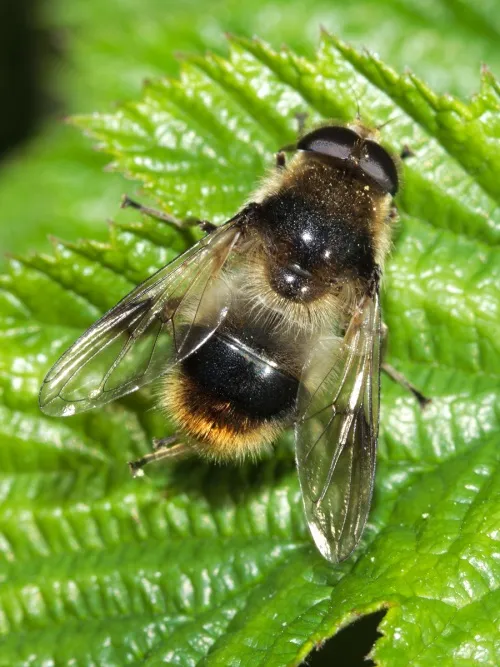
Cheilosia illustrata
Cheilosia illustrata
A furry bumblebee mimic with a dark wing cloud. Body is usually pale haired with a black band across the centre of the thorax, and another across tergite 3. It is typically seen settled with its wings closed tightly over its back. Hedgerows and woodl
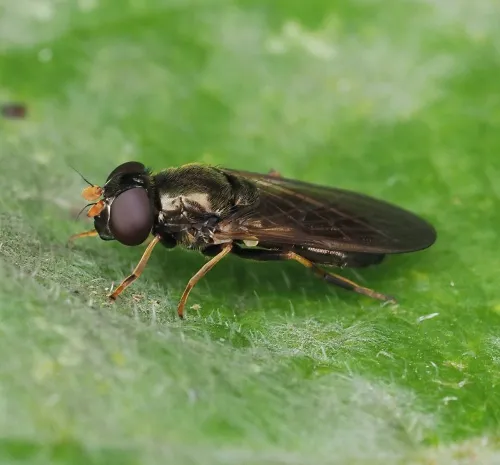
Cheilosia pagana
Cheilosia pagana
One of the smallest Cheilosia . The female has an exceptionally large, orange coloured, third antennal segment. The males often have strong reflective grey triangles on the sides of the abdomen. They have bare arista and the female has an entirely bl
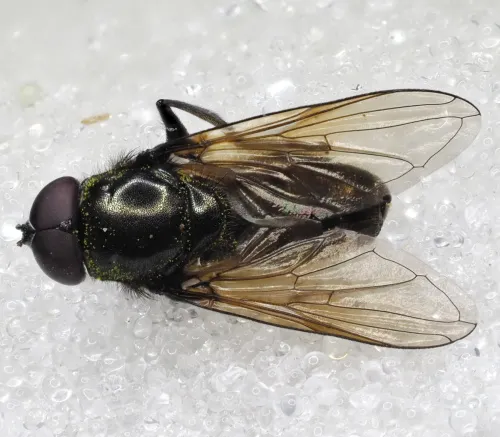
Cheilosia ranunculi
Cheilosia ranunculi
A robust all black, shiny hoverfly and only separated from C. albitarsus recently. Males have yellow front tarsi. Females cannot be separated but males can distinguished by the shape of the apical segments of the front tarsi which in C. ranunculi tap
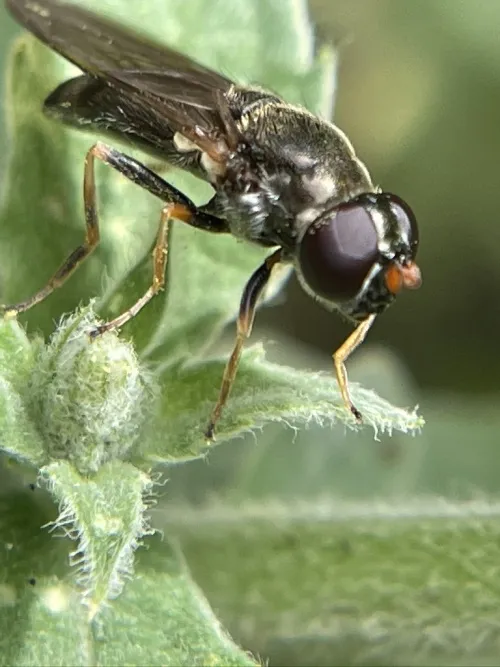
Cheilosia soror
Cheilosia soror
One of our three fungus-feeding Cheilosia (characterised by bare eyes, long wings, partially pale legs and fused antennal pits), and readily separable from the other two by the orange-red 3rd antennal segment. Confusion is more likely with the smalle
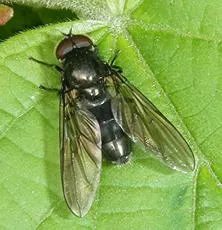
Cheilosia variabilis
Cheilosia variabilis
This species has an elongate, rather parallel sided grey abdomen and black thorax. It is relatively large, and has dark wings. It lives in wooded areas, and lush woodland edges. April to September, peaking in May and early June Breeds on Figwort, whe
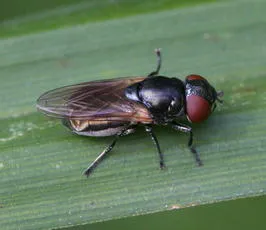
Chrysogaster cemiteriorum
Chrysogaster cemiteriorum
The upper abdomen is black with a paler greyish band beneath on the flank. It is broad bodied and this can help distinguish it from some similar species. Lush meadows and fens, usually near to scrub or wood margins. May to September, peaking in July
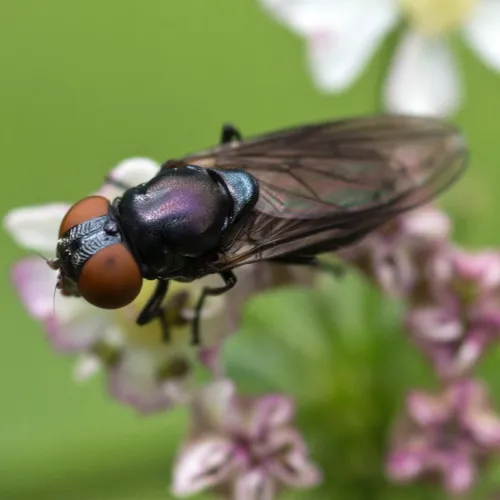
Chrysogaster solstitialis
Chrysogaster solstitialis
This species has particularly dark wings. Though the abdomen is black and unmarked, the thorax of the female has a purple sheen and the scutellum often has a blue-grey dusting. From late May to October, peaking in July and August. The larvae live in
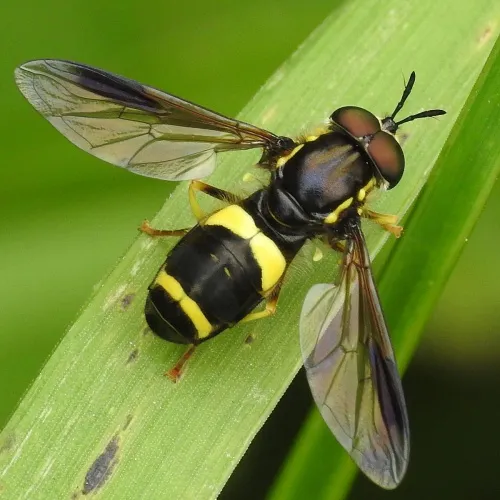
Chrysotoxum bicinctum
Chrysotoxum bicinctum
This is a very distinctive species with its two yellow bands, the chocolate wing patches and the long, forward pointing antennae. It is found in grassy habitats, usually sheltered near to shrubs and trees. It flies from May to September but peaks fro
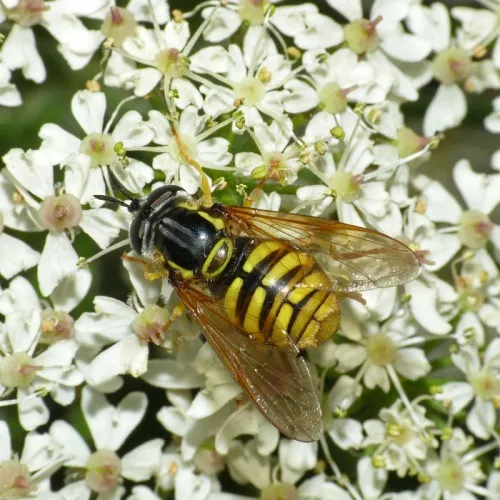
Chrysotoxum cautum
Chrysotoxum cautum
Wing length 10 to 13mm. The abdominal pattern has very straight black bars which are interrupted well short of the edge. In both sexes the first antennal segment is shorter than the second and females have long dense hairs on the thoracic dorsum (as
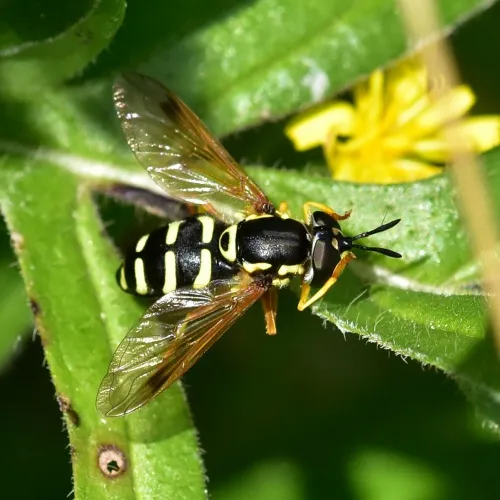
Chrysotoxum festivum
Chrysotoxum festivum
A very boldly marked, medium-sized hoverfly. It is always worth checking this species for the dark form of the much rarer C.elegans or the even rarer C. vernale. There is also a very rare species of southern heathland, C. vernale, which resembles a s
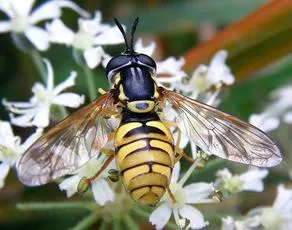
Chrysotoxum verralli
Chrysotoxum verralli
This hoverfly is a wasp mimic, and very wasp-like in appearance. The genus is easy to recognise because it has long antennae that project forward. There are several other similar Chrysotoxum species which require careful examination of the black bar
Hairy-horned Bromeliad Fly
Copestylum caudatum
Identification: the dense silvery hairs on tergite 4 are distinctive --comment by Joel Kits and/or Jeff Skevington
Mexican Cactus Fly
Copestylum mexicanum
Identification: Alula entirely covered with microtrichae.
Purple Bromeliad Fly
Copestylum violaceum
Identification: Alula at least without microtrichae on the apical 1/3. Original description .
Striped Bromeliad Fly
Copestylum vittatum
Identification: Distinctive among relatives in North America--note yellow face with black median stripe, striped abdomen, and two yellow spots on scutum .
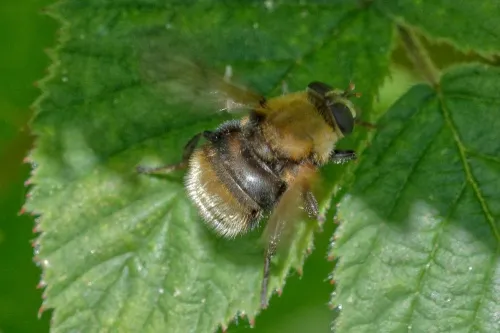
Criorhina berberina
Criorhina berberina
Two very different colour forms exist - the 'type' form with a white tail and broad yellow collar (a superb mimic of the Tree Bumblebee, Bombus hypnorum) and the all-buff form 'oxycanthae' (a mimic of carder bumblebees like B. pascuorum). The latter
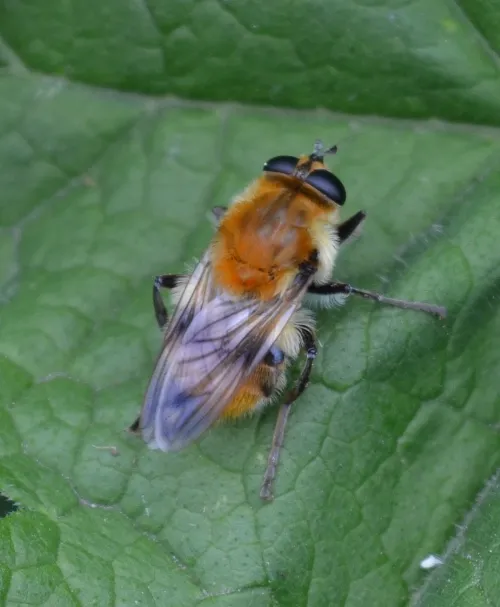
Criorhina floccosa
Criorhina floccosa
A large Criorhina with a long orange pile on the thorax but a rather broad, flattened abdomen with only inconspicuous pilosity and a buff-dusted apex (especially obvious when viewed from behind). This species has tufts of pale hair at the sides of th
Criorhina verbosa
Criorhina verbosa
Identification: Reddish tibiae with black band in their middle area; hind tibiae with an odd spur-like projection
Criorhina villosa
Criorhina villosa
Very poorly known. If you see this fly keep EXACT locality information so we know where to look in the future. 95% of records are around 100 years old.
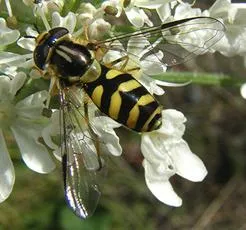
Dasysyrphus albostriatus
Dasysyrphus albostriatus
The downward facing yellow bars help to identify this species, sometimes fused into inverted 'V's. Two grey stripes on the thorax are also a distinguishing feature. Often found on warm spring days in April and May, though can be found until November.
Dasysyrphus occidualis
Dasysyrphus occidualis
Identification: Maculae on tergites not reaching edge of abdomen, maculae deeply incised to divided.
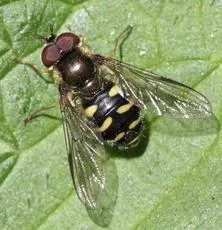
Dasysyrphus venustus
Dasysyrphus venustus
The yellow bars reach the margins of the abdomen with inflated inner ends, so appearing to curve upwards. It flies from April to September, peaking May and early June, and is most commonly seen in spring. This species is widespread in most of Britain
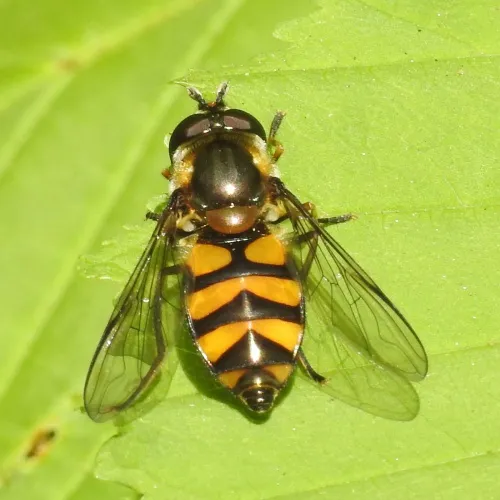
Didea fasciata
Didea fasciata
Wing length 8.25 to 11 mm. The markings of English specimens of this species are usually orange. The presence of a yellow club on the halteres will readily distinguish fasciata from other Didea species. The scutellum has black spots at the front corn
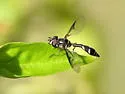
Dioprosopa clavata
Dioprosopa clavata
Identification: Similar to Baccha and Ocyptamus , but scutellum with yellow bands (vs. all black); more here ( 6 )
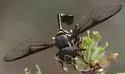
Eosalpingogaster cochenillivora
Eosalpingogaster cochenillivora
Identification: Legs dark ( vs reddish in E. nepenthe )
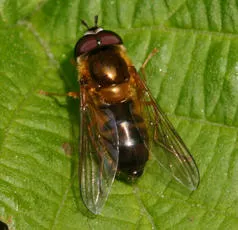
Epistrophe eligans
Epistrophe eligans
This species can be quite variable in the extent of the yellow striping on its abdomen, some specimens, particularly males, being nearly all black; however the overall pattern is usually similar. Hot, sunny woodland edges and hedgerows, favouring Bla
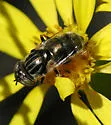
Eristalinus (Lathyrophthalmus) aeneus
Eristalinus aeneus
Identification: Eyes with numerous small dark spots that tend to coalesce towards the top of eye the only representative of the subgen. Lathyrophthalmus Mik 1897 in our area ( 3 )
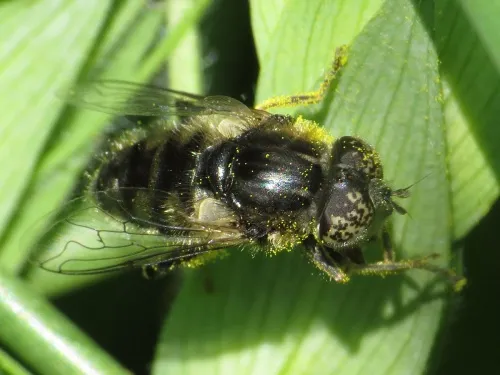
Eristalinus sepulchralis
Eristalinus sepulchralis
The abdomen is shiny black or bronze at the sides and it usually has pale thoracic stripes. Usually seen around ponds and in marshes where there is a large amount of decaying vegetation, or where cattle trampling and dung has resulted in enrichment.
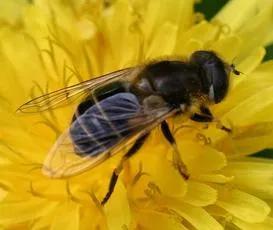
Eristalis abusiva
Eristalis abusiva
This species is very similar to E. arbustorum , sharing the variation in colour and pattern on the abdomen. It can be distinguished by a close look at the arista (the very thin projection from its antennae), which is virtually hairless. Also the mid
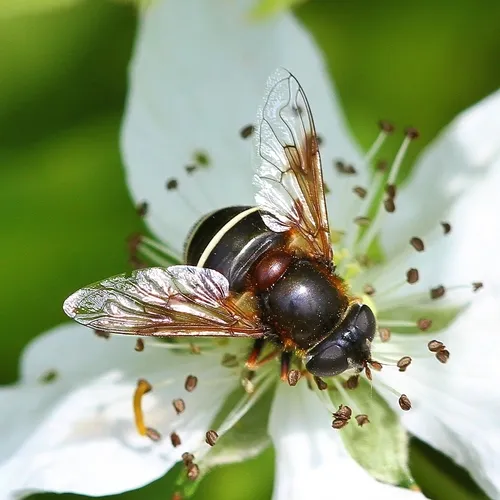
Eristalis cryptarum
Eristalis cryptarum
Identification: Shiny black. Scutellum reddish-brown. Wings have dark, wide streak on outer (costal) edge to about mid-wing. 2nd abdominal segment with orange-brown triangular marks at side edges. Other segments have narrow white line on lower margin
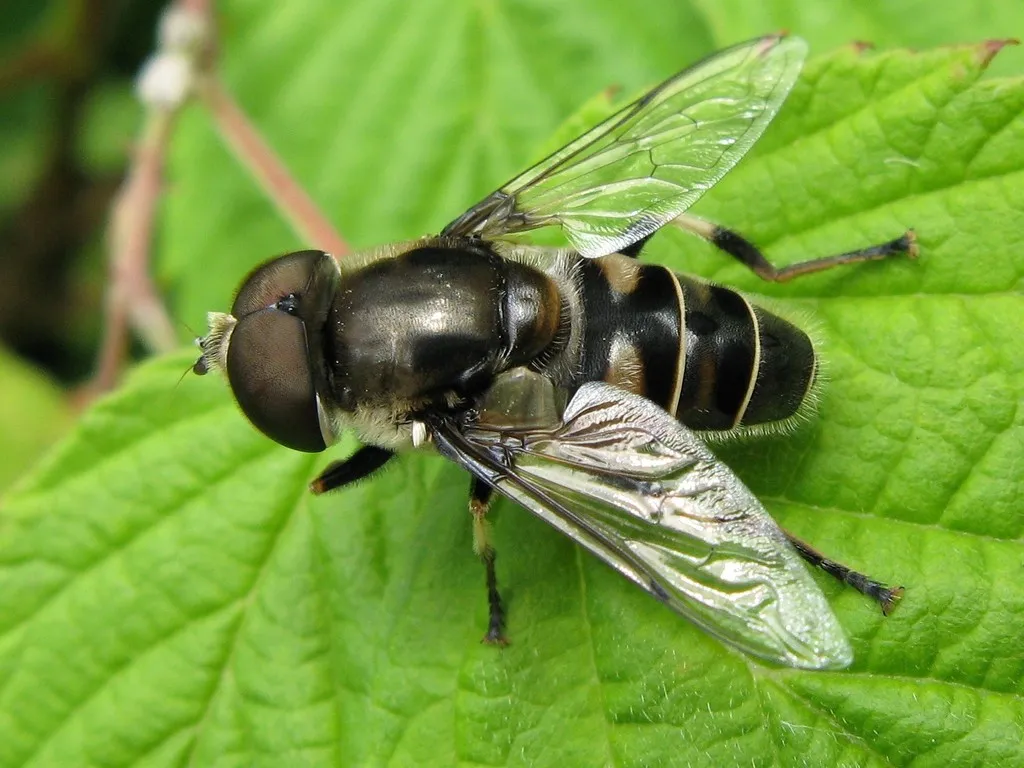
Eristalis dimidiata
Eristalis dimidiata
Identification: Wings clear (or slightly darkened), antennae, thorax, facial stripes and cheeks black. Thorax has dense, short, whitish hairs. Abdomen dark with whitish abdominal rings and often with an incomplete yellow band on tergum 2 and/or 3. Ba
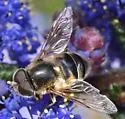
Eristalis hirta
Eristalis hirta
Identification: "In Eristalis interrupta the pterostigma doesn`t reach the tip of the sub-costa, the hind metatarsus is inflated ( not in this specimen ), the face is more produced and the black facial stripe more developed in Eristalis interrupta."
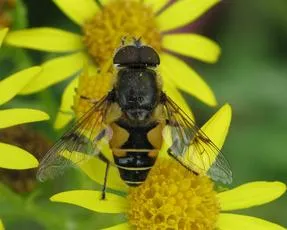
Eristalis horticola
Eristalis horticola
Wing length 8.5 to 11.5 mm. A particularly bright species. It has a shorter and broader abdomen than E. pertinax or E. tenax and has a darkened area across the wing. Well vegetated areas with plenty of bushes or trees. Widespread but never common and
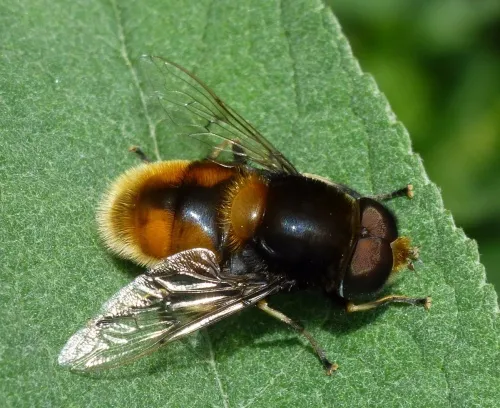
Eristalis intricaria
Eristalis intricaria
This large hoverfly is unlike the other UK Eristalis species in being a furry bumble bee mimic. The males are dark with a reddish-brown tail whilst the female has a white tail and is somewhat larger. This species always has a yellow scutellum. Merodo
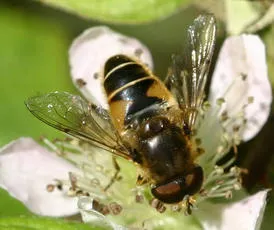
Eristalis nemorum
Eristalis nemorum
A small drone-fly and quite similar to E. arbustorum (the dwarf drone-fly). The small but crisp dark patch on the front edge of the wings (called a stigma) helps to identify this species. It also has a clean and relatively thin black stripe down its
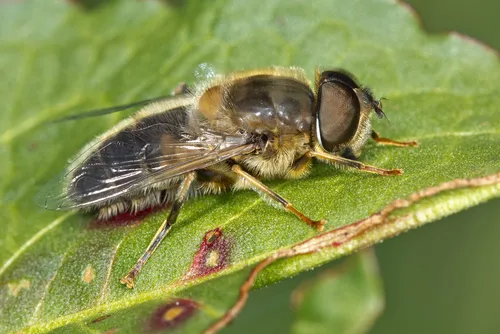
Tapered Drone Fly
Eristalis pertinax
Whilst similar to E. tenax , this species has a more tapering abdomen in the male and it also has pale front legs. The pair of orange markings on tergite 2 of the abdomen are nearly always present, but tend to be brighter in summer specimens. Found b
Eristalis saxorum
Eristalis saxorum
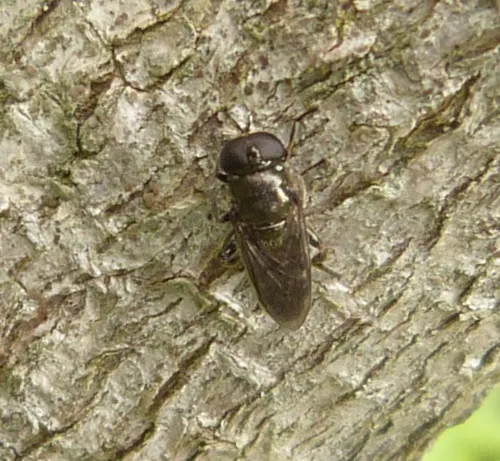
Identification: Body variably metallic blue. Pterostigma is a diffuse light brown . Williston ( Synopsis of the North American Syrphidae , 1886) notes: Resembles dimidiatum, but is at once distinguishable by the third segment of the abdomen having an
Eumerus funeralis
Eumerus funeralis
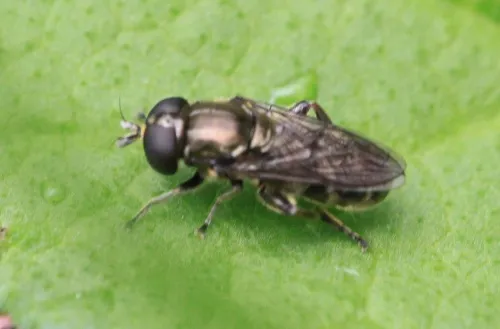
A fairly small hoverfly with a black shiny appearance in the field, but with whitish markings when examined in detail. There are other very similar species and detailed examination is needed. Unless identified by a recognised expert, a photo is requi
Eumerus strigatus
Eumerus strigatus
There are other very similar species and detailed examination is needed. This species closely resembles the Lesser Bulb-fly Eumerus funeralis which is more strongly associated with gardens. Males can be separated by examining the underside of the hin
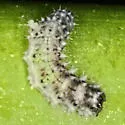
American Hover Fly
Eupeodes americanus
Identification: It can be grossly differentiated from Syrphus rectus by a dark stripe down the front of the face. The egg is ~0.96x0.26 mm, with broken longitudinal ridges. The larva is blackish with orange markings, looks somewhat spiky. The puparia
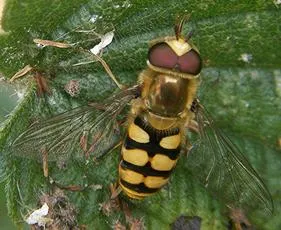
Eupeodes bucculatus
Eupeodes bucculatus
This scarce species is very similar in appearance to other members of the Eupeodes genus, and we must thank Steve Falk who identified the insects in two Sapcote photographs as Eupeodes bucculatus . It is a species where expert confirmation of identif
Eupeodes flukei
Eupeodes flukei
Identification: Similar to E. snowi and E. montivagus , except that tergite 4 is not reddish (unlike in E. snowi ) and tergite spots more curved at the front edge (unlike E. montivagus ).
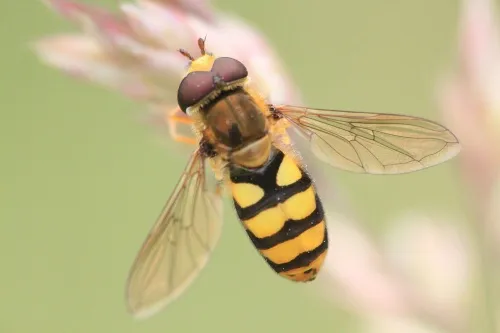
Eupeodes latifasciatus
Eupeodes latifasciatus
A fairly small hoverfly with a wing length of 6.5 to 8.5 mm. The marks on tergites 3 and 4 are usually fused into bands in this species. There is some variation, and males differ from females. The yellow marks on tergites 3 and 4 often fail to reach
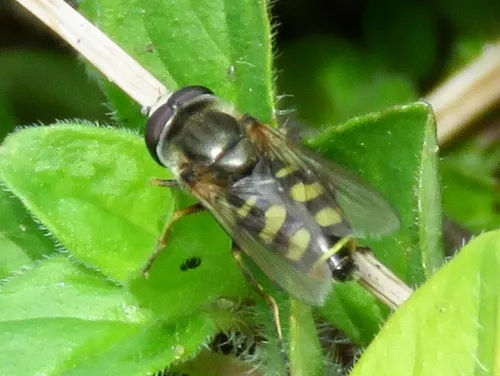
Eupeodes lundbecki
Eupeodes lundbecki
This hoverfly is similar to a number of other species and detailed examination is required. Preferably a specimen should be retained. Detailed examination is required and photographs should be included. Preferably a specimen should be retained. No ad
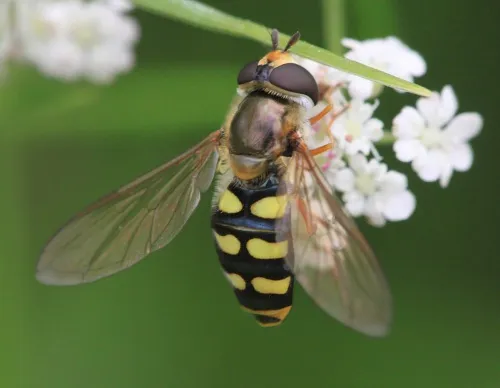
Eupeodes luniger
Eupeodes luniger
The species can be variable in terms of both size and colour with a wing length usually between 6.5 and 10 mm. It has broad yellow lunate markings on tergites 3 and 4 which don't reach the outer edge. Open habitats: patches of flowers in arable field
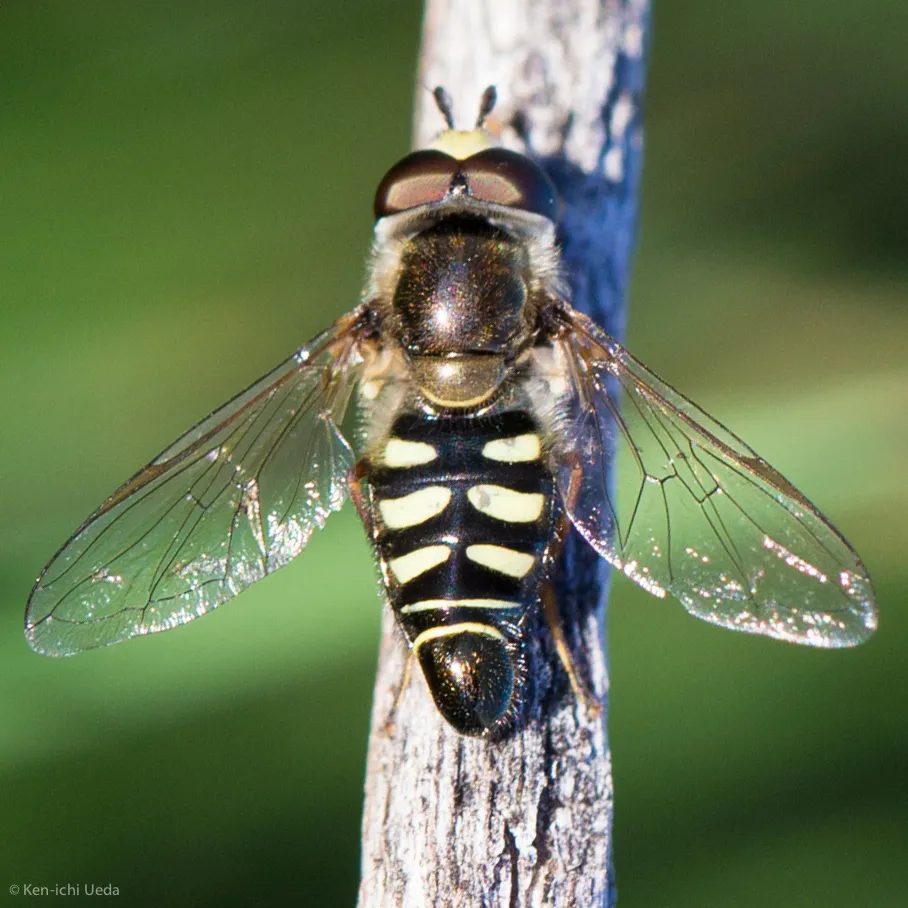
Bird Hover Fly
Eupeodes volucris
Identification: Projecting cylindrical abdomen of male rather distinctive. E. volucris females have the Scaeva like markings on the abdomen, which are always separated, strongly curved and more white, while other Eupeodes species have them yellow. E.
Eurimyia stipata
Eurimyia stipata
Lejops species have the eyes separated on both sexes. The main sexual dimorphism is in the color and shape of the abdomen. The females are more blue gray and have an oval shaped abdomen, while the males have a more slender abdomen and are more orange
Ferdinandea buccata
Ferdinandea buccata
Identification: black terminal bands on the first few abdominal terga ( F. croesus has no black terminal borders and is supposed to have arista all black)
Helophilus hybridus
Helophilus hybridus
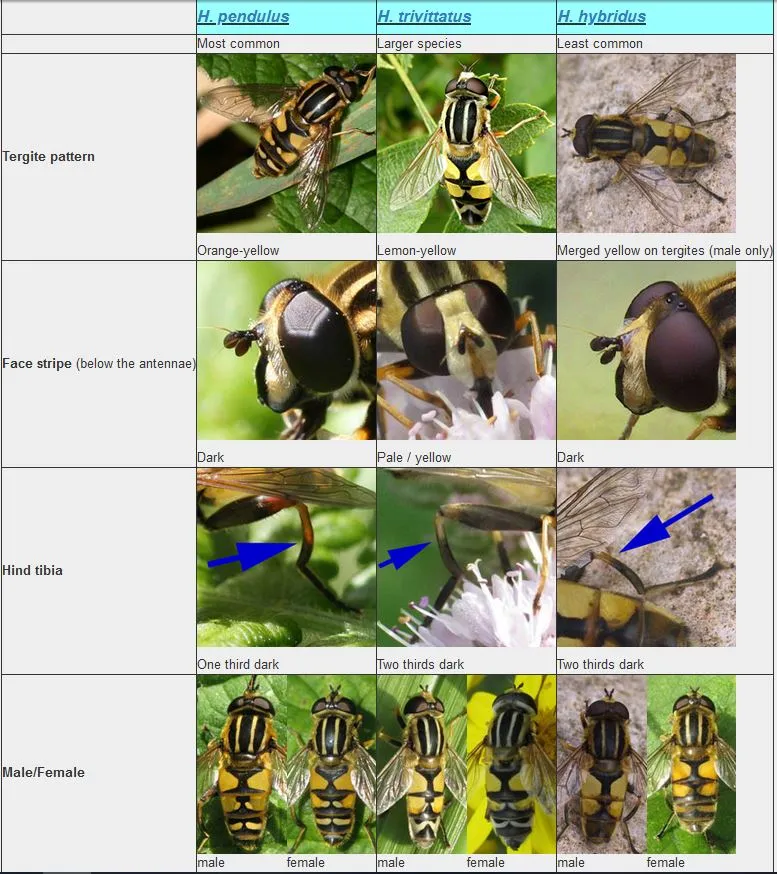
Wing length 8.5 to 11.25 mm. In size and general appearance this species is similar to H. pendulus . The male is usually distinctive in having continuously broad yellow sides to tergites 2 and 3, whereas there is a dividing black bar near the posteri
Helophilus intentus
Helophilus intentus
Identification: Black facial stripe. Hind femora are reddish on the apical fifth and hind tibia are yellow on the basal half and reddish on the apical half. Spots on the third abdominal tergite are pointed, helping to distinguish from H. obscurus .
Helophilus neoaffinis
Helophilus neoaffinis
Identification: Black facial stripe. Spots on T2 large; spots on T3 intermediate, occupying anterior 2/3 of tergite, with whitish inner ends. Differs from the very similar H. groenlandicus by the broad inner ends of the spots on T2. Oddly, despite no
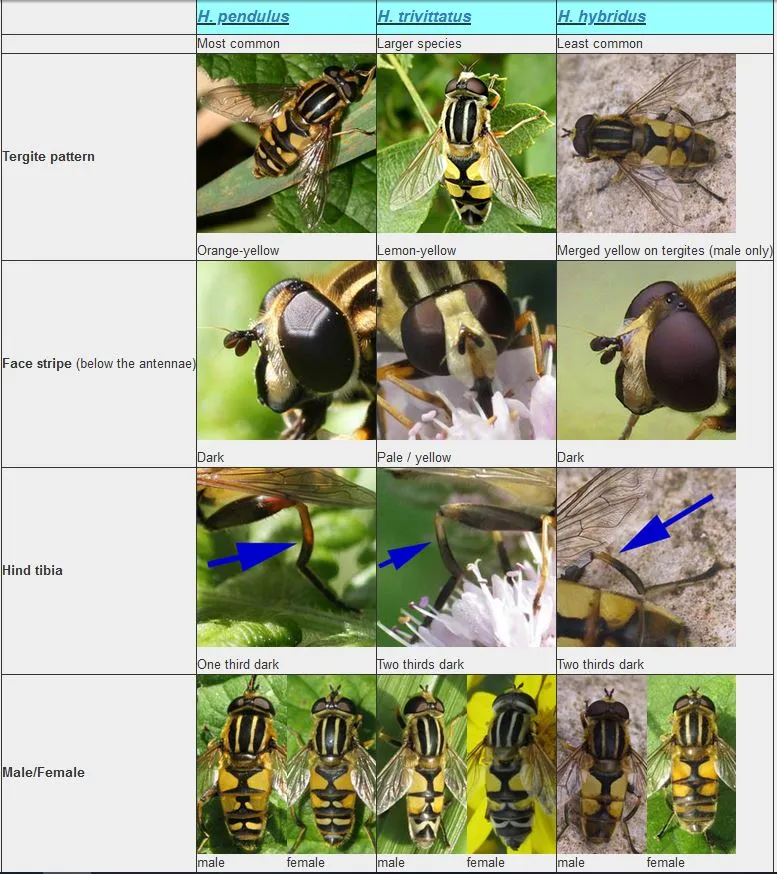
Helophilus trivittatus
Helophilus trivittatus
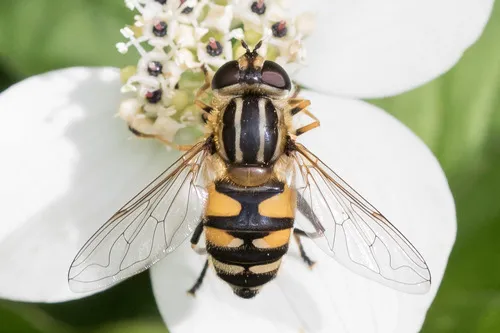
This species is slightly larger and longer in build than other members of the genus, and the yellow side patches on the abdomen are more pronounced often giving a more lemony appearance. A particularly good identification feature is the fact that the
Hypocritanus fascipennis
Hypocritanus fascipennis
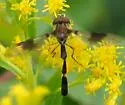
Identification: dark medial band on wing; basal and distal portions of wing clear
Lejogaster metallina
Lejogaster metallina
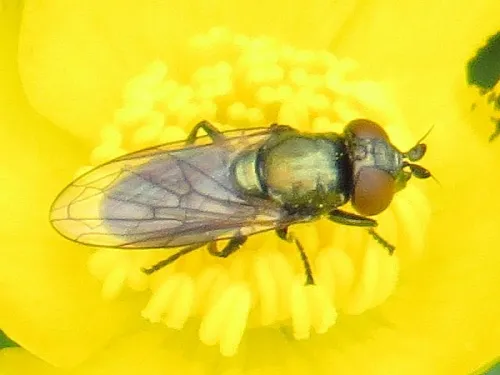
A small metallic green hoverfly with comparatively large antennae. Found in all types of open wetland habitats including wet meadows, marshes, fens and flushes (including mildly acidic conditions), especially where Juncus is abundant. Adults are freq
Leucozona glaucia
Leucozona glaucia
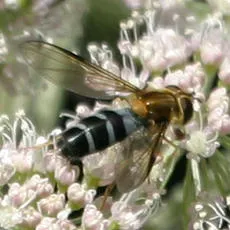
Winglength 8 to 11.25 mm. The black stigma, yellow scutellum, large quadrate spots on tergite 2 and narrow bands on tergites 3 and 4 serve to readily distinguish this species. The markings on the abdomen are normally yellow, but specimens with grey d
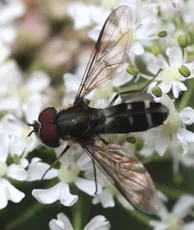
Leucozona laternaria
Leucozona laternaria
The scutellum of this species is black with just the tip yellow and the front and mid legs are extensively black on the tibiae and tarsi. Lowland habitats with lush vegetation, especially woodland edges where umbellifers are present. The larvae feed
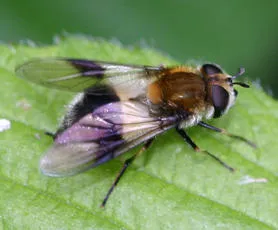
Leucozona lucorum
Leucozona lucorum
A striking hoverfly with a white band across the upper abdomen and black wing patches that align with the black abdominal band. In the male, the white band on tergite 2 can often be darker. Both sexes have an obvious yellow-orange scutellum that imme
Leucozona xylotoides
Leucozona xylotoides
Identification: Separated from Leucozona (Leucozona) by lack of dark markings on the wing and abdominal bands rather than solid segments and from L. (Ischyrosyrphus) velutina by the much larger pale spots on tergite 2 and geographic distribution.
Mallota albipilis
Mallota albipilis
Identification: Eyes bare; thorax and scutellum pale yellow pilose; abdomen entirely pale pilose; wing obfuscation restricted to the area around the veins; cell c almost completely bare. Molecular data and morphological differences support splitting
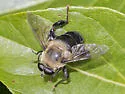
Mallota bautias
Mallota bautias
Identification: abdomen black pilose beyond first segment; eyes bare (not pilose as in M. posticata ); Western specimens (i.e. Texas, Kansas, Nebraska, Colorado) usually have T4 yellow pilose. Males show hilltopping behavior: they congregate in open
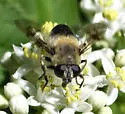
Mallota diversipennis
Mallota diversipennis
Identification: Eyes bare; thorax and scutellum pale yellow/reddish pilose; abdomen mostly pale pilose, but black pilose medially; wing obfuscation restricted to the area around the veins. Cell c almost completely bare.
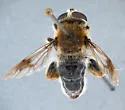
Mallota illinoensis
Mallota illinoensis
Identification: Eyes bare; thorax and scutellum pale yellow/reddish pilose; abdomen completely pale pilose; wing obfuscation extensive, not just restricted to the area around the veins. Cell c almost completely bare. Barcode and genitalia differ from
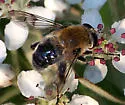
Mallota mississipensis
Mallota mississipensis
Identification: Eyes bare; thorax and scutellum yellow/reddish pilose; abdomen pale pilose, but black pilose medially; wing obfuscation restricted to the area around the veins. Cell c microtrichose basally and distally.
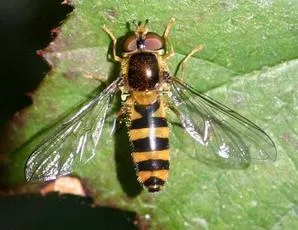
Melangyna cincta
Melangyna cincta
The only narrow-bodied hoverfly with parallel yellow bands on tergites 3 and 4, which also has triangular spots on tergite 2. It can be found from April until November but with numbers peaking in May. Larvae have been found in association with the ap
Melangyna coei
Melangyna coei
Identification: Densely haired eyes (vs. M. lasiophthalma though there is some overlap here). Spots on tergite 2 subquadrate. Scutellum not black on posterior border. Wing nearly entirely trichose (vs. M. umbellatarum ).
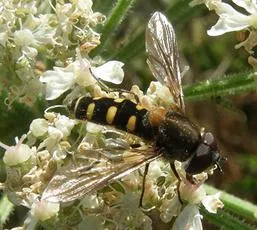
Melangyna labiatarum
Melangyna labiatarum
There is much debate as to the validity of taxonomic distinctions between the two species M. labiatarum and M. compositarum . The range of each species is more clearly defined. Melangyna labiatarum records come mainly from England and are denser in t
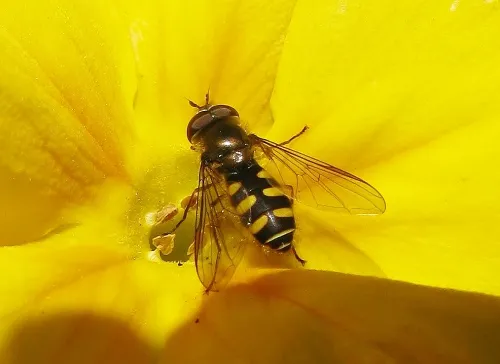
Melangyna lasiophthalma
Melangyna lasiophthalma
Similar to several other Melangyna species but can be identified by careful examination. Deciduous woodland and other well wooded areas. Fond of sunbathing on tree trunks. Frequent on Willow catkins and Wild Cherry blossom in spring. Widespread and f
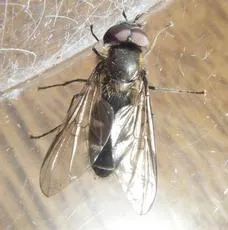
Melangyna quadrimaculata
Melangyna quadrimaculata
The males are unusual in having only four spots on the abdomen (hence the scientific name), this together with long pale hairs on both the thorasic dorsum and pale yellow scutellum are identifying features. The eyes are also very hairy. Females are d
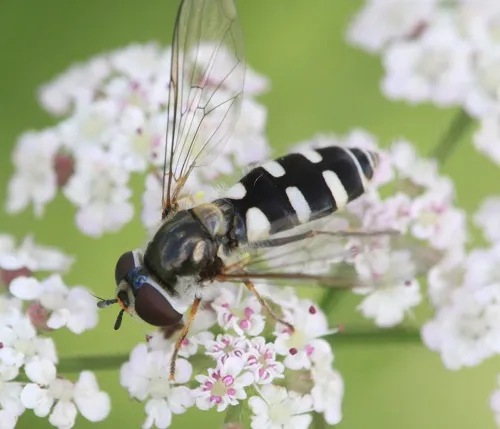
Melangyna umbellatarum
Melangyna umbellatarum
A small, narrowly built hoverfly with pairs of creamy-white spots. Usually seen around umbellifers such as Hogweed. It is found from April to November, peaking in August. It breeds on umbellifers where its larvae predate aphids. It is a widespread sp
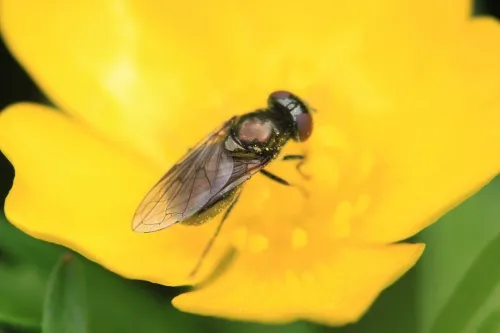
Melanogaster hirtella
Melanogaster hirtella
Wing length 5 to 6 mm. Fairly small and blackish in colour including the antennae. The wings are clear or only slightly shaded. The females often have a shining abdomen. Rich marshes and watersides with emergent vegetation. May to mid August peaking
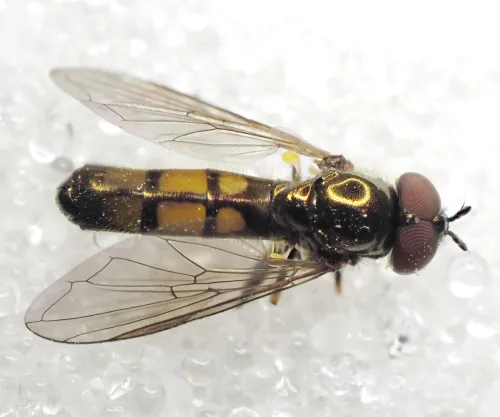
Melanostoma mellinum
Melanostoma mellinum
Identification: Note abdominal markings on tergites 2-4: quadrate (male), triangular (female) . likely an unresolved species complex
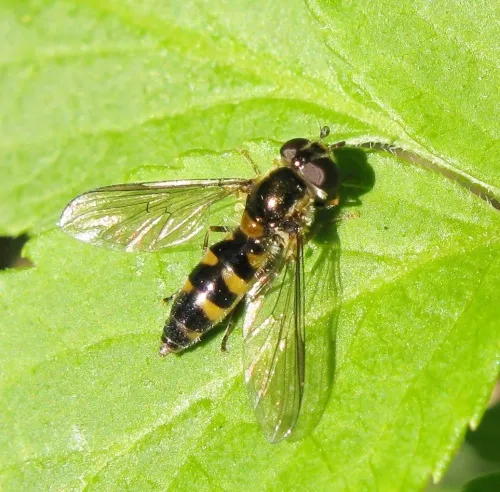
Meligramma trianguliferum
Meligramma trianguliferum
As the name suggest, the markings on the abdomen are rather triangular. It is a narrow-bodied species with a yellowish scutellum. The species has a preference for quite well wooded areas and hedgerows, and a liking for spring flowering shrubs such as
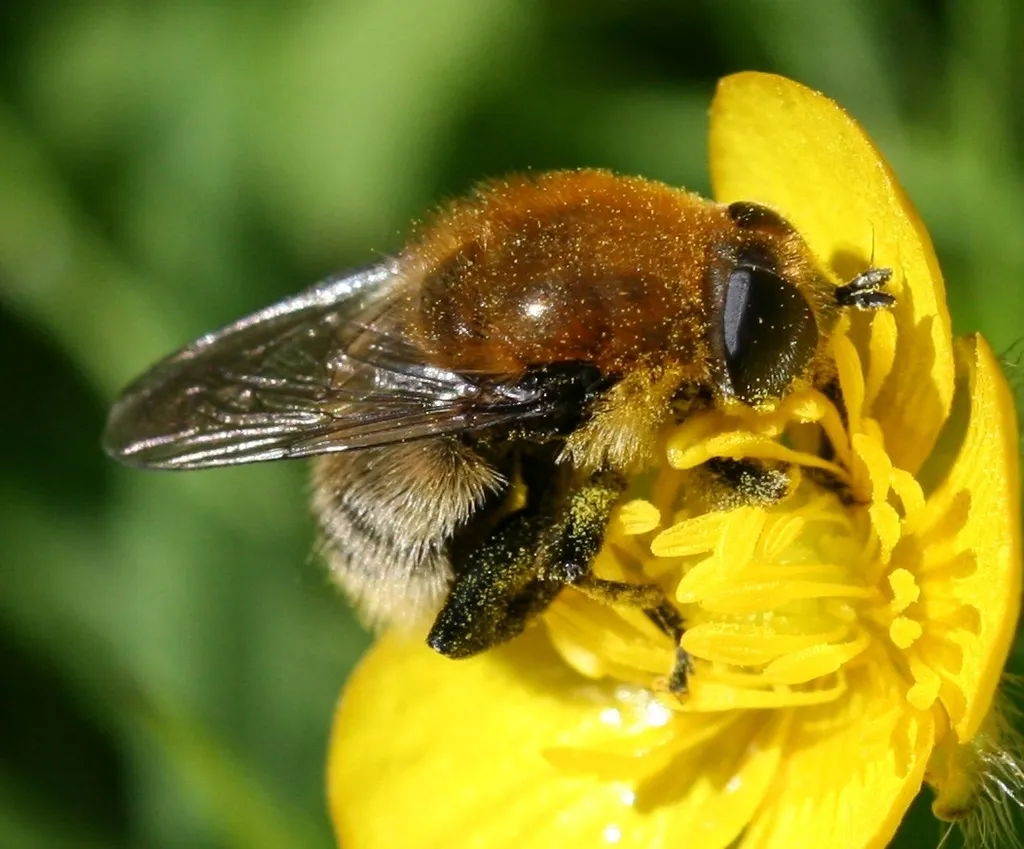
Narcissus Bulb Fly
Merodon equestris
Identification: Color variable • sock-like vein pattern locally important pest of daffodils ; accidentally introduced in the US, probably with bulbs
Meromacrus acutus
Meromacrus acutus
Identification: Boldly marked Batesian mimic of wasps. Yellow markings are composed of dense yellow pile. Note black stripe on face and orange pile on dorsal side of metatarsus . Clearly a Batesian mimic of Hymenoptera, perhaps specifically a mimic o
Microdon aurulentus
Microdon aurulentus
Identification: The most modern description can be found in Curran, 1924 .
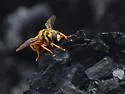
Milesia scutellata
Milesia scutellata
Identification: Most notably, the scutellum is wholly yellow, with only a small black band at its base, unlike Milesia virginiensis and M. bella . Thorax markings also differ: Hull writes "Thorax black, marked with yellow, similarly to virginiensis ,
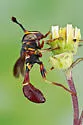
Monoceromyia floridensis
Monoceromyia floridensis
At present, this is the only species of Monoceromyia known to occur in the coverage area of BugGuide (i.e. North America north of Mexico).
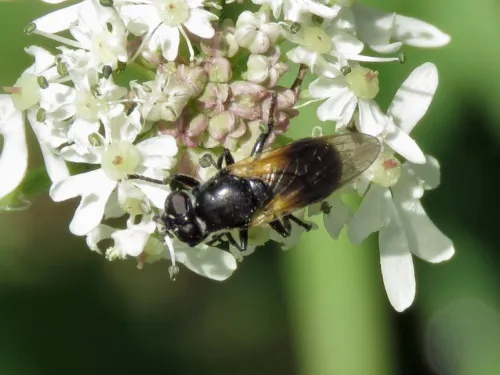
Myolepta dubia
Myolepta dubia
A medium-sized, black and orange hoverfly with yellow wing-bases. Unless identified by a recognised expert, a photo is required. If the photo doesn't show the key ID features then in the comments box describe the size and identifying characters you h
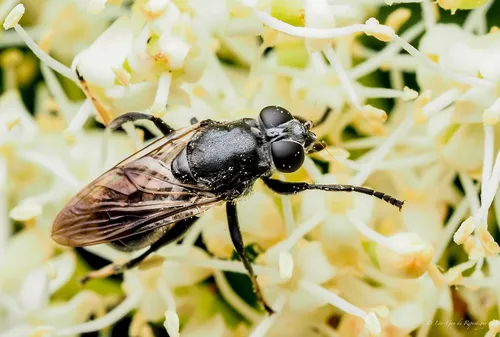
Myolepta nigra
Myolepta nigra
Identification: Thorax: Shiny black, base has some yellowish-white pile. Underside with yellowish hairs. Abdomen: Shiny black, bare. Underside has yellowish pile Types: Holotype as Myiolepta nigra female by Loew, 1872. Type Locality: Pennsylvania. In