
Family Parasitic Flies (Tachinidae)
Tachinidae is a family in the order Diptera. Browse 350 named species recorded in this family, or open an individual profile for its available identification and natural-history information.
Species in Tachinidae (350)
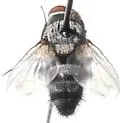
Acantholespesia comstocki
Acantholespesia comstocki
Identification: Distinguished from the two other species of Acantholespesia by color pattern, abdomen with basal three quarters of segments 3, 4, and 5 gray with apical quarter contrasting black. (This is not an unusual color pattern for Tachinidae,
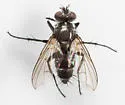
Admontia degeerioides
Admontia degeerioides
Identification: In most of the United States and Canada distinguished from other Admontia by the nearly entirely shining black abdomen, black antenna, and incurved lateral scutellar bristles. Distinguished from similar Southwestern and Mexican speci
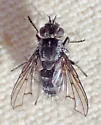
Admontia ducalis
Admontia ducalis
This identification is tentative. The species matches the description of the Mexican species Admontia ducalis and no other species is known to have dark clouds around the crossveins.
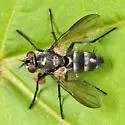
Admontia nasoni
Admontia nasoni
Identification: Arista mostly orange, first flagellomere gray, wing brown except at base and hind margin, lateral scutellar bristles parallel to and about as long as subapical. (In order from base, the scutellar bristles are basal, lateral, suapical
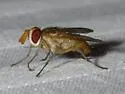
Anisia flaveola
Anisia flaveola
Identification: Other species of the genus are darker. The male is additionally distinguished by the lack of proclinate orbital bristles (as usual in the family, but not the genus). Some members of tribe Leskiini are superficially similar, but they h
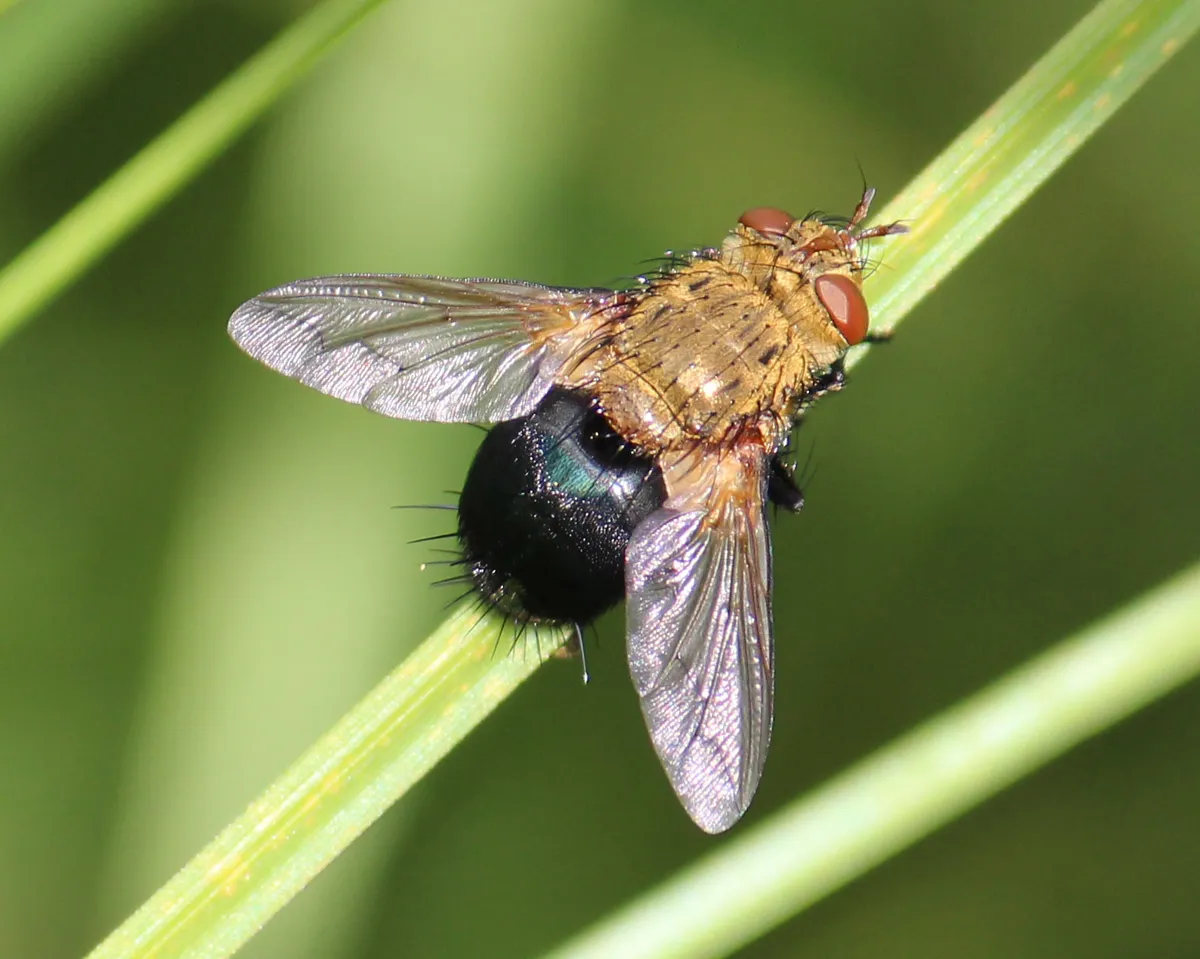
Archytas apicifer
Archytas apicifer
Identification: Males can be separated from related species by the shape of sternite 5. Both sexes are less yellow on average than the other common species, californiae , but this is probably not reliable.

Archytas californiae
Archytas californiae
Identification: Males can be separated from related species by the shape of sternite 5, the notch being narrow and parallel sided.
marmoratus species group
Archytas marmoratus
Ravlin and Stehr considered this mostly tropical group to be represented by only one species in the United States.
Archytas metallicus
Archytas metallicus
Identification: In most of its range (except for the Florida Keys), distinguished by the dark brown calypters. Otherwise, slightly shining and with dark hairs on the side of the face. The abdomen varies from mostly red with a narrow black line to n
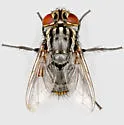
Atacta brasiliensis
Atacta brasiliensis
Identification: Distinguished from other Atacta by abdomen with yellow to orange tip (gray to yellowish gray in other species) and fewer bristles. Known to parasitize Noctuoidea and Sphingidae.
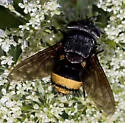
Belvosia bifasciata
Belvosia bifasciata
Identification: Facial ridge setose at least halfway up. Hind tibia described as not being ciliate compared to some other species.
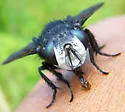
Belvosia borealis
Belvosia borealis
Identification: Black wings and calypters, white cheeks, more than one pair of median margins on T1+2 and T3. Other species in the United States and Canada have at most a single pair of median marginals on these tergites (since B. pollinosa was synon
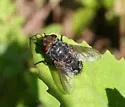
Belvosia unifasciata
Belvosia unifasciata
Identification: 3 postsutural acrostichals spaced for 3
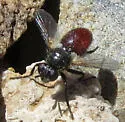
Besseria brevipennis
Besseria brevipennis
Identification: The other North American species have black marks on the abdomen ( anthophila ) or abdomen entirely black ( atra ).
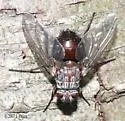
Billaea rutilans
Billaea rutilans
Identification: Abdomen broadly ovate. Tergite 3 (second abdominal segment) probably consistently without distinct median marginal setae.
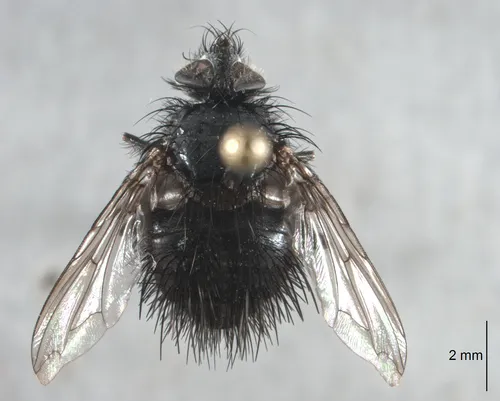
Bombyliomyia soror
Bombyliomyia soror
Identification: From Curran's description of female Tachinalia hispida : "Robust, the abdomen broader than the thorax and not much longer than wide. Eyes with long hair; parafacials haired; front rather narrow, with two pairs of orbitals; ocellars lo
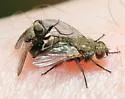
Campylocheta semiothisae
Campylocheta semiothisae
Identification: Antennae blackish in ground color. Tibiae yellowish, contrasting with black femora. Tegula orangish, basically concolorous with basicosta. Frons gray to silvery gray.
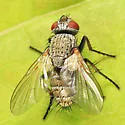
Campylocheta teliosis
Campylocheta teliosis
Identification: Antennae red, contrasting sharply with dark body and dark base of arista.
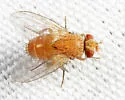
Ceromya flava
Ceromya flava
Identification: R1 setulose over its length, CuA1 setulose, body completely yellow, male with large flagellomere, female unknown. Rare, known from 4 male specimens
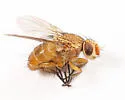
Ceromya palloris
Ceromya palloris
Identification: R1 setulose only distally, CuA1 bare. Body entirely yellow. (Ceromya flava has similar coloration, but has CuA1 setulose and R1 setulose along its length).
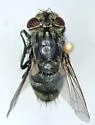
Chaetogaedia analis
Chaetogaedia analis
Identification: Parafrontals shining black; abdomen with discals on tergites 3 and 4.
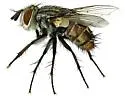
Chaetogaedia monticola
Chaetogaedia monticola
Identification: Cell r5 open; parafrontals densely white pollinose; no parafacial bristles especially strong, the strongest closer to facial ridge than eye; abdomen with some yellow.
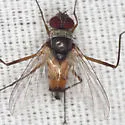
Cholomyia inaequipes
Cholomyia inaequipes
Identification: Quoting and/or paraphrasing from key : Body is sexually dimorphic as well--male has tapered yellowish abodmen: Female has more typical abdomen:
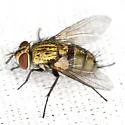
Chrysoexorista ochracea
Chrysoexorista ochracea
Type localities: Costa Rica (Rio Sucio) and Mexico (Amula, Xucumanatlan and Omilteme in Guerrero, Atoyac in Veracruz, and Teapa in Tabasco).
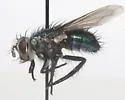
Chrysotachina longipennis
Chrysotachina longipennis
Identification: The wing is longer than C. alcedo . The parafacial and fronto-orbital plates are yellowish instead of white. Other characters considered by O'Hara to be more reliable are unlikely to be visible in photos.
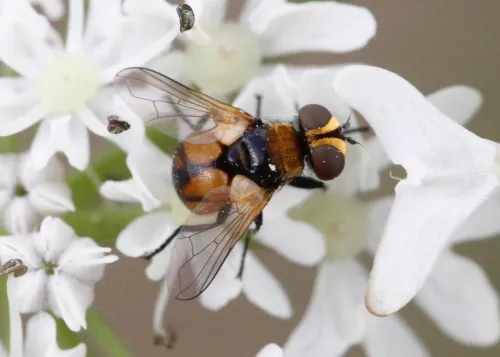
Cistogaster globosa
Cistogaster globosa
A small fly (about 5 mm). The female abdomen is mainly black, but the males, although variable, have much more orange in their markings. Unless identified by a recognised expert, a photo is required. If the photo doesn't show the key ID features then
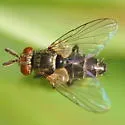
Clausicella floridensis
Clausicella floridensis
Identification: Typical specimens have 3 postsutural dorsocentrals evenly spaced with none notably weak, no median marginals on T3, proboscis shorter than head, and a black abdomen with narrow basal white bands.
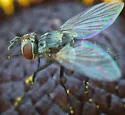
Clausicella geniculata
Clausicella geniculata
Four postsutural dorsocentrals but first two very weak; abdomen with weak median marginals on T4 (not forming complete row as in most species), abdomen without sharply defined even bands of white on base, proboscis distinctly longer than head and usu
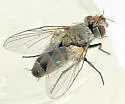
Clausicella opaca
Clausicella opaca
Identification: Distinguished from other Clausicella by the combination of long, nearly straight proboscis, abdomen without distinct paler bands, 3 postsutural dorsocentrals, and row of bristles along hind margin of tergite 4.
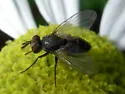
Clausicella setigera
Clausicella setigera
Identification: Distinguished from other species of Clausicella by the relatively long last section of vein Cu, distance from m-cu to wing margin being about half length of previous section of Cu. The abdomen is black with narrow basal white bands,
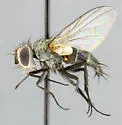
Clausicella turmalis
Clausicella turmalis
Identification: Rigid part of proboscis longer than head height, three postsutural dorsocentrals, parafrontals dull white (as normal in genus), abdomen with contrasting pale bands (as normal in genus).
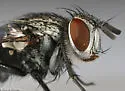
Compsilura concinnata
Compsilura concinnata
Identification: Four deep black stripes on the thorax and lots of bristles. Introduced from Europe to combat the spongy moth ( Lymantria dispar ) around 1906. Since then it has spread to attack many native species, including some threatened ones. ( E
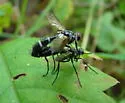
Cordyligaster septentrionalis
Cordyligaster septentrionalis
Identification: Apparently, fairly distinctive, as the only member of its genus. Note the elongated abdomen and the bold silver stripes.
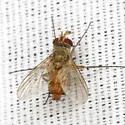
Crocinosoma cornuale
Crocinosoma cornuale
Identification: A yellow species (including most of antenna) except much of the thorax is gray. Differs from Leskia by its larger antennae with curved top edge and base near top of head and more concave face. Vein R1 is bare as is R4+5 except for a
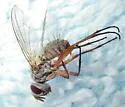
Cryptomeigenia demylus
Cryptomeigenia demylus
Identification: The form of the ovipositor is distinctive. Also, there are only two presutural acrostichal bristles; most species of the genus have three.
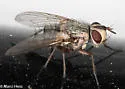
Cryptomeigenia illinoiensis
Cryptomeigenia illinoiensis
Identification: Pleura and scutellum yellowish (black in other species).
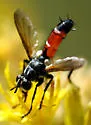
Cylindromyia intermedia
Cylindromyia intermedia
On average the reddest North American Cylindromyia . Color-based ID should be confirmed by other characters; C. nana is also very red.
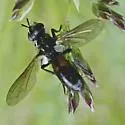
Cylindromyia interrupta
Cylindromyia interrupta
Identification: The only eastern species of Cylindromyia with discal bristles on intermediate tergites. The western C. compressa usually has discals and can be distinguished by a second, small pair of bristles near tip of scutellum. (Both of these
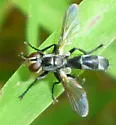
Cylindromyia propusilla
Cylindromyia propusilla
Identification: The only northern species with abdomen mostly black, with curved white bands but no trace of red. Its range overlaps in the south with atra , which also lacks red markings.
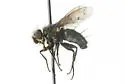
Cyrtophleba horrida
Cyrtophleba horrida
Identification: Differs from the other North American species by having crossvein m-cu more perpendicular to wing axis.
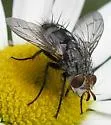
Deopalpus hirsutus
Deopalpus hirsutus
Identification: Ocellar bristles reduced or absent, last visible segment of abdomen contrasting red, parafrontal stripes yellowish for entire length (covered with thin, gray pollen), antenna red at base and blackened at tip.
Deopalpus parksi
Deopalpus parksi
Identification: Ocellar bristles present, pleura with black and white hairs (vs. all black in most species), male frons with two strong rows of bristles, last segment of antenna longer than previous. Other unusual characters are the single strong pa
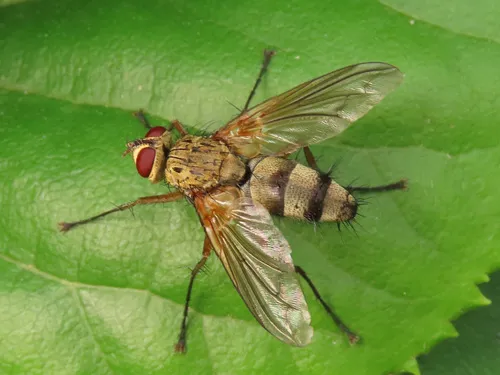
Dexiosoma caninum
Dexiosoma caninum
This is a tachinid fly - a parisitoid which lays its eggs on other species. It is a long-legged, bristly fly. The abdomen appears banded and varies from greyish to buff and brown. It is often seen in woods in Britain sitting on Bracken. The larvae of
Dinera grisescens
Dinera grisescens
In Europe, a parasitoid of Harpalus (Carabidae) flying from May to October. In America, there is a possible record from Phyllophaga (Scarabeidae). DNA barcoding suggests the American species is distinct from the European species.
Distichona kansensis
Distichona kansensis
Identification: Strong pre-alar, reclinate ocellars, bare eyes, bare parafacial, cell r5 closed in wing margin or with short petiole, legs black or with tibiae faintly reddish.
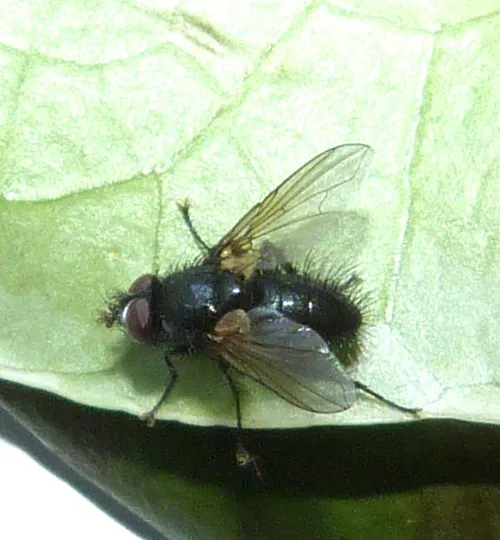
Dufouria chalybeata
Dufouria chalybeata
Body length about 6 mm. A rather small, very bristly, and often slightly shiny black Tachinid. This species cannot be identified from photographs - detailed examination necessary. The larvae of Dufouria chalybeata are parasitoids of tortoise beetles
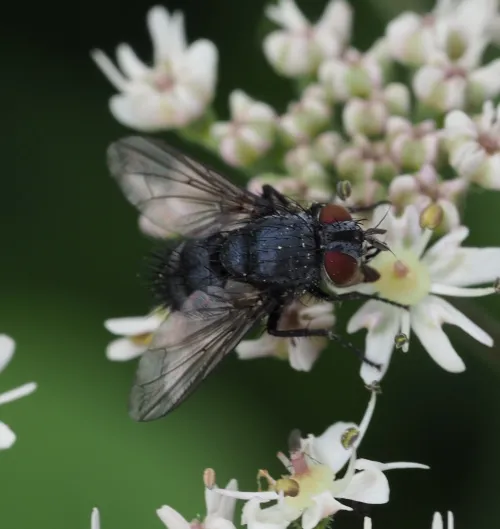
Epicampocera succincta
Epicampocera succincta
A very bristly, black Tachinid fly with black palps and four katepisternal bristles. Unless identified by a recognised expert, a photo is required and the specimen should be examined with a microscope. In the comments box, state the key or ID method
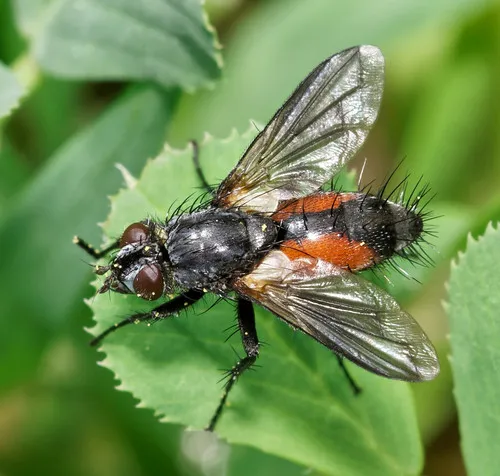
Eriothrix rufomaculata
Eriothrix rufomaculata
This is a very common bristly black fly, with prominent orange patches on the sides of its abdomen. It has a silvery face and a mouth that projects forward. Aphria longirostris also has red abdominal patches but can be separated by its long rigid pro
Euchaetogyne roederi
Euchaetogyne roederi
Identification: Female abdomen entirely dark brown.
Eulasiona comstocki
Eulasiona comstocki
Identification: Antennae blackish. R-vein with a single bristle basally. Abdominal tergites broadly pollinose basally (Curran 1927).
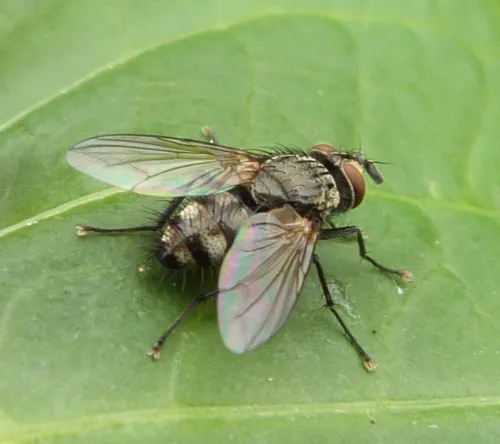
Eumea linearicornis
Eumea linearicornis
Length about 8 mm. This is a fly with a well marked black and buff/grey abdomen. It also has the usual hairy body of the Tachinidae family. May be seen on flowers, trees and shrubs. Larvae are parasites of various micromoth larvae. Fairly frequent in
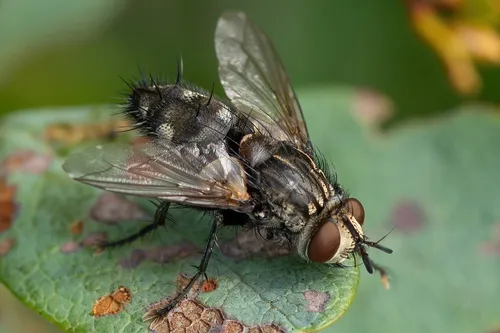
Exorista larvarum
Exorista larvarum
A European species introduced into New England and now widespread in Canada as well. The key to central European Tachinidae lists habitat, habits, and hosts: "Open countryside, thin deciduous woodland, orchards, Pine forest. Mid May to End September,
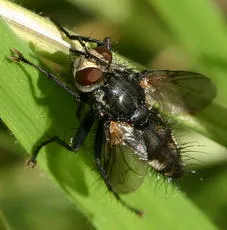
Exorista rustica
Exorista rustica
This tachinid fly has the characteristic hairy abdomen, and a wide, black, central dorsal line. They are often seen sunning themselves or scurrying around on foliage, hunting for their hosts. The adult flies from late June to late September. It is pa
Freraea montana
Freraea montana
Identification: Once identified as Tachinidae, it is very distinctive with the gradually convergent R4+5 and M veins, nearly bare body, and dark, shining color with dark wings. It was previously placed in subfamily Phasiinae with other bare species,
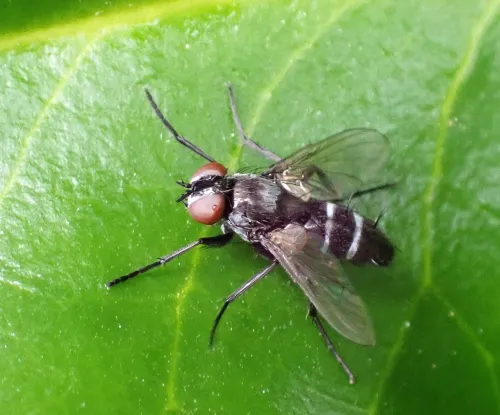
Gastrolepta anthracina
Gastrolepta anthracina
Body length 6 to 8.5 mm. Overall appearance is of a very smart, slim, black and white fly. The thorax is black with two white 'shoulder' stripes and the abdomen is black with white, or greyish-white bands at the start of each tergite. In this species
Genea texensis
Genea texensis
Identification: Palps long, proboscis not long, arista nearly bare, abdomen with small black spots. Male with broad frons, proclinate orbital bristles, and short claws on fore legs. DNA barcoding suggests Genea texensis is a species complex.
Gnadochaeta nigrifrons
Gnadochaeta nigrifrons
Identification: See notes on images, such as this one: Eyes usually thickly pubescent in the male, median marginal setae present on the first visible abdominal segment in males, also present in the second visible abdominal segment in both sexes. Prof
Gonia brevipulvilli
Gonia brevipulvilli
Identification: First flagellomere dark beneath the dull colored bloom
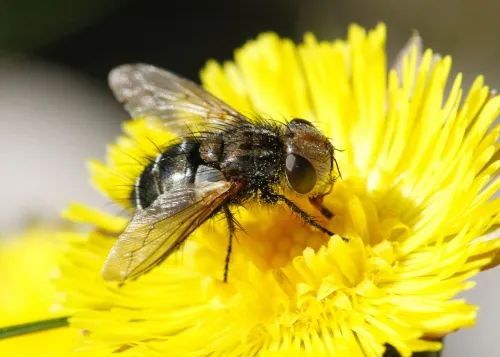
Gonia picea
Gonia picea
A large (10mm), dumpy tachinid fly and typically hairy. The dark abdomen has pale stripes across each segment. Larva parasitise lepidoptera caterpillars particularly those of the Antler Moth.
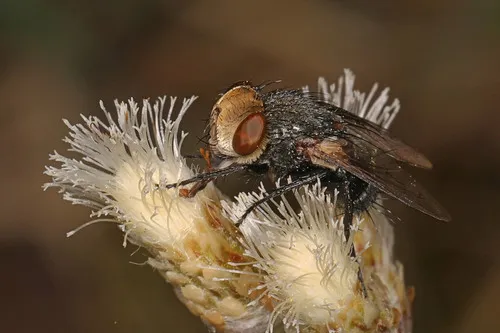
Gonia sagax
Gonia sagax
Identification: The antennae are noticeably yellowish in color. Species with dark antennae such as G. frontosa can be confused as having pale antennae due to the white brownish dusting. Sharing with G. frontosa a short proboscis and more hair-like an
Gonia senilis
Gonia senilis
Gonia senilis and sagax are very similar, both having bright yellow antennae. Senilis is a summer species and has some orange on the arista. Sagax is a spring species with a dark arista.
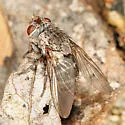
Goniocera io
Goniocera io
Identification: Distinguished from other North American Siphononi by the row of anterodorsal bristles on mid tibia (one or sometimes none in other genera). Also the scutellum is nearly bare dorsally (with many setulae in most Siphonini), femora are
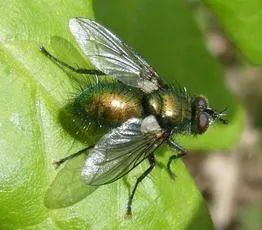
Gymnocheta viridis
Gymnocheta viridis
Length 6 to 12 mm. Gymnocheta viridis is a metallic green tachinid fly, its brassy abdomen and thorax are covered by stiff bristly hairs. Gymnocheta viridis is very similar to Chrysosomopsis aurata but this species flies in the summer so can be large
Gymnoclytia dubia
Gymnoclytia dubia
Identification: The combination of cell r5 long petiolate and antennae long and completely black will distinguish this from the other species north of Mexico.
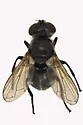
Gymnoclytia immaculata
Gymnoclytia immaculata
The female is occasionally entirely black, especially in the north, more often with some red on the abdomen. The male abdomen is orange or orange with a dark median line.
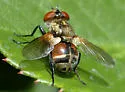
Gymnoclytia occidentalis
Gymnoclytia occidentalis
Identification: Like Gymnoclytia occidua , but yellower. Keep in mind that males are generally yellower than females in this genus, so compare like sexes.
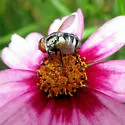
Gymnoclytia occidua
Gymnoclytia occidua
In the last revision of this group Brooks (1946) recognized two eastern species with dark females and red males and M ending near tip of R4+5, minuta and occidua . There may be additional species based on photos on boldsystems.org.
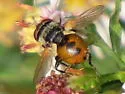
Gymnosoma par
Gymnosoma par
This is a variable species. Pale individuals can be similar to fuliginosum and dark individuals to canadense .
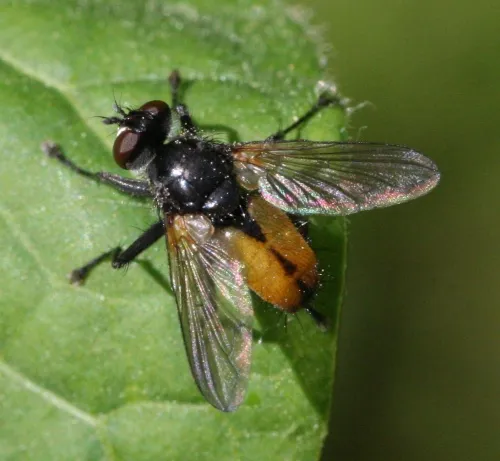
Hemyda vittata
Hemyda vittata
This fly has a black thorax and a pale orange abdomen which has a black central band that is usually broken. The larvae in common with all tachinids are parasitoids of other invertebrates, in this case true bugs of the family pentatomidae. A rather u
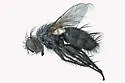
Hypovoria discalis
Hypovoria discalis
Identification: Voriini with discals, large pteroplerual, vein R1 haired, and last two sections of Cu similar in length.
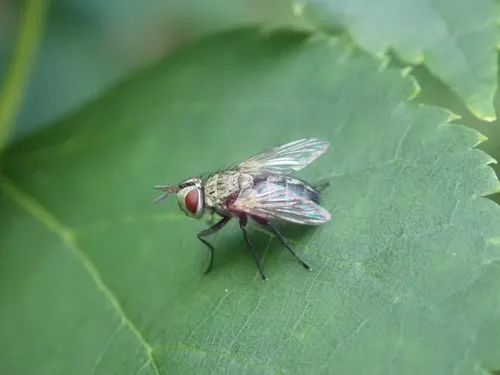
Winsome Fly
Istocheta aldrichi
Introduced from Japan in 1922 to combat the Japanese Beetle
Juriniopsis aurifrons
Juriniopsis aurifrons
Identification: Distinguished from adusta by the broader frons of the male and narrow (normal) fore tarsi of the female. Distinguished from floridensis by the mostly dull whitish frons.
Juriniopsis floridensis
Juriniopsis floridensis
Identification: Distinguished from other North American species by the dark, slightly shining frons (parafrontals dull white or yellow in other species), dark bases of palpi (entirely reddish yellow in other species), and almost entirely dark antenna
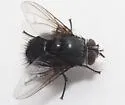
Leschenaultia bicolor
Leschenaultia bicolor
Identification: Males are distinguished from other Leschenaultia by lacking median marginal bristles on tergites 1+2 and 3. Females do have median marginals on tergite 3. Gudin and Carneiro (2020) (doi: 10.4039/tce.2020.46 ) write " Leschenaultia bi
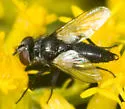
Leucostoma aterrimum
Leucostoma aterrimum
Identification: Female has unusually long abdomen for genus (segments longer than wide).
Leucostoma perrarum
Leucostoma perrarum
Identification: Male with only narrow bands of pollen on last abdominal segments, last segment short and broadly truncate.
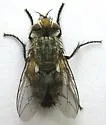
Linnaemya comta
Linnaemya comta
Western specimens tend to be redder than eastern. This supposedly holarctic species may consist of more than one species in North America Tachinidae of Gila National Forest
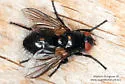
Loewia foeda
Loewia foeda
Native to Europe, first found in North America on Long Island in 1958. Parasitoid of Lithobius centipedes; one of the very few Tachinidae not to parasitize insects.
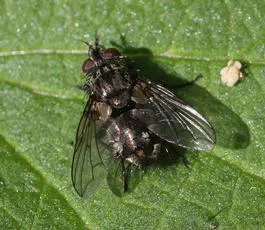
Lypha dubia
Lypha dubia
Relatively small (4-7mm), this fly has an overall brassy look with a chequered abdomen. The front of the thorax usually has short white stripes. Woodland - often seen on tree trunks and foliage. One generation per year. The larvae parasitise Winter M
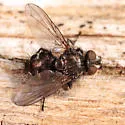
Lypha setifacies
Lypha setifacies
Identification: Male genitalia needed to place to species; usually smaller than other Nearctic Lypha species (except L. parva ); male vertex width 0.20-0.28 of head width; eye height of 0.71-0.78 head height; flagellomere 1 length of 0.36-0.47 head h
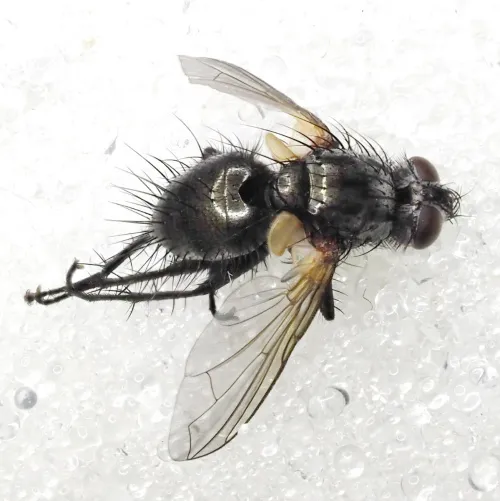
Macquartia tenebricosa
Macquartia tenebricosa
6-9mm. Dark green/bronze abdomen and thorax, with a pale collar on the thorax behind the head. Larvae of Macquartia tenebricosa are endoparasities of Chrysolina beetles. Unless identified by a recognised expert, a photo is required and the specimen s
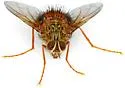
Macromya crocata
Macromya crocata
The species ranges from extreme southern USA to Brazil, where it was recorded parasitizing Mazaeras conferta (Arctiidae) and Megalopyge lanata (Megalopygidae).
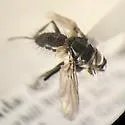
Medina barbata
Medina barbata
Only member of the genus found outside of Eastern North America.
Megapariopsis opaca 0
Megapariopsis opaca
The only host record is the sugarcane beetle. Recorded range of the parasite is about the same as the host: southeast USA northwest to Nebraska.
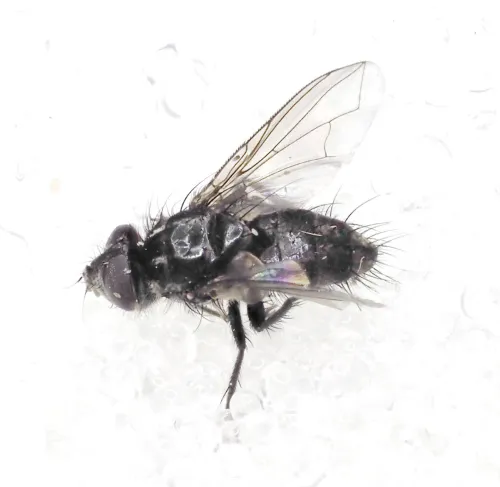
Meigenia mutabilis
Meigenia mutabilis
3-8.5 mm. A grey dusted tachinid with different looking males and females (males are darker). There are two forms where the smaller form (3-5mm) is generally darker. Males have a pair of narrow white stripes on the thorax which are aligned with the d
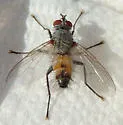
Microchaetina teleta
Microchaetina teleta
Identification: Males are yellower than other Microchaetina .
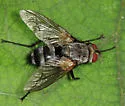
Microphthalma disjuncta
Microphthalma disjuncta
Identification: Distinguished from other North American species by the contrasting white bands on the abdomen.
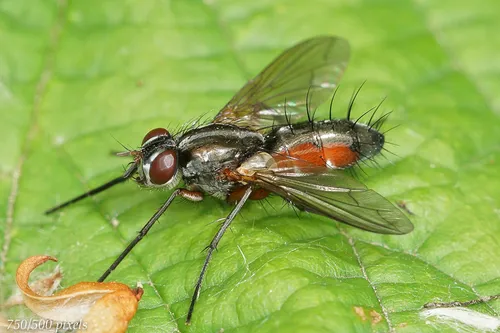
Mintho rufiventris
Mintho rufiventris
Length 8 to 11 mm. This is a relatively small and slender tachnid fly. It is a dark, bristly species with red markings on the sides of its abdomen. It has two broad longitudinal black bars on the thorax and the abdomen laterally compressed (higher th
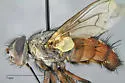
Mochlosoma opipare
Mochlosoma opipare
Identification: The only species north of Mexico with a mostly red abdomen. The scutum is paler around the edges.
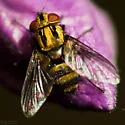
Myothyriopsis picta
Myothyriopsis picta
Identification: Named for the marked wing, unusual in Tachinidae
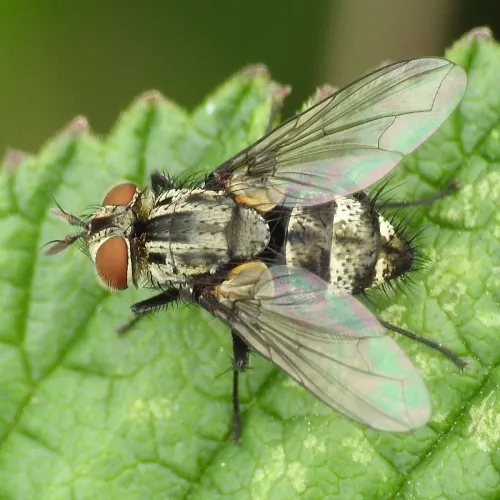
Nemorilla floralis
Nemorilla floralis
5-8mm. Boldly patterned in greys (like a small Sarcophaga). Hairy eyes and a bare arista. The thorax has a broad, dark medial stripe - widening away from the head and four pairs of post-sutural dorsocentrals. The parafacialia are more or less bare un
Nimioglossa planicosta
Nimioglossa planicosta
Identification: Distinguished from other Nimioglossa and Microchaetina by the missing costal spine and narrowly separated male eyes.
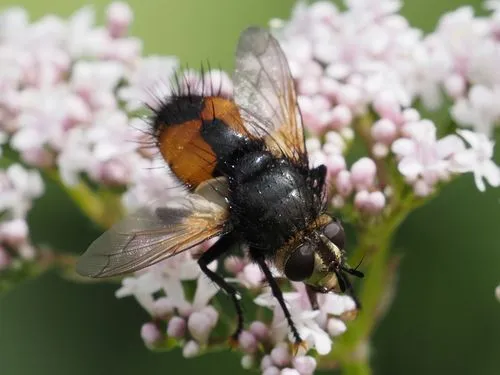
Nowickia ferox
Nowickia ferox
11-15mm, about the size of a large bluebottle. It has yellow-orange side patches to the abdomen and a black zig-zag central band. Like all Tachinids it has numerous bristly hairs on the abdomen. The maggot stage of the fly develops inside the Dark Ar
Opsotheresia bigelowi
Opsotheresia bigelowi
Identification: "A robust species like the genotype, O. obesa , but differs as follows: third antennal segment wholly black; apical segment of proboscis longer, almost equal the height of head; second abdominal segment [=abdominal tergite 3 of curren
Ormia brevicornis
Ormia brevicornis
Sabrosky (1953) divided this species into a northern subspecies O. brevicornis nuttingi (host Neoconocephalus spp.) and a southern subspecies O. brevicornis brevicornis (host unknown).
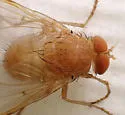
Ormia lineifrons
Ormia lineifrons
Identification: Ocelli present. Males exhibit costal callosity on the leading edge of the wing just past the middle. O. lineifrons is one of the Tachinidae species that has evolved traits including hearing to allow for parasitism of singing insects.
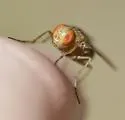
Ormia ochracea
Ormia ochracea
Identification: The most common species without ocelli, with contrasting black "epaulet" at wing base, and without parafacial hairs. Female hosts are also parasitized, at least on Gryllus firmus and G. rubens. Infection rates were also the same. It's
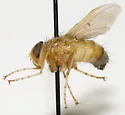
Ormia reinhardi
Ormia reinhardi
Identification: First abdominal segment (fused tergite 1+2) with strong median marginal bristles.
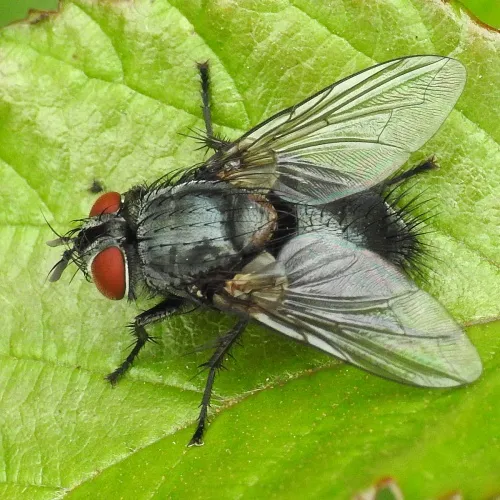
Pales pavida
Pales pavida
Length about 10 mm. A very bristly blue black tachinid fly with hairy eyes, strong facial-ridge bristles that are downward-pointing, paler tibiae and a blueish cast to the body colour. Two flight periods - late May/early June and early July to late S
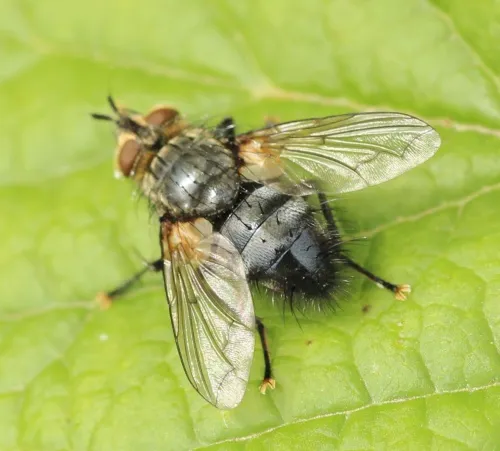
Panzeria anthophila
Panzeria anthophila
A large black species with very hairy eyes and an undusted, shiny 5th tergite on the abdomen. Attach good images showing the dorsal surface and ideally a face profile. Found in various habitats including meadows and woodland. Widespread and fairly fr