
Physocephala texana
This record describes Physocephala texana (species). Recorded family: Conopidae. Recorded order: Diptera.
Identification and Appearance
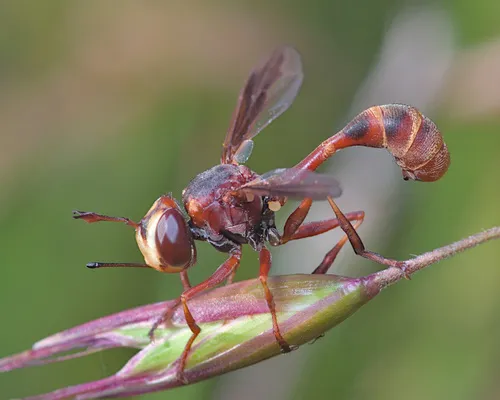
An extremely variable species, as evidenced by the large number of earlier names that have been synonymized. Perhaps the most commonly encountered form corresponds to Williston's affinis and Van Duzee's humeralis . [Note: Original descriptions of each synonym can be read via links under Synonyms and other taxonomic changes near the top of this page.] Cole mentions that Bohart raised over 100 specimens from a single bembecine wasp nest and discovered enough variation to include all five of Van Duzee's synonymized forms. Bohart gave a detailed discussion of this (2+ pages) where he used Van Duzee's name P. affinis to refer to what is now called P. texana . Camras & Hurd state that the color of the head varies from a very dark T on the front and entirely dark reddish cheeks, to complete absence of any dark pattern on the front and face.
Wikipedia reference for Physocephala texana: http://en.wikipedia.org/wiki/Physocephala_texana.
Classification
Habitat and Range
Geographic Range
British Columbia to Quebec, and south to Mexico [Note: The range map on pg. 24 of Camras & Hurd indicates a range for P. texana which includes a huge continuous swath of North America from coast to coast, including Canada & Mexico, but excluding the area consisting of southeast Texas, southern Arkansas, and the entire states of Louisiana, Mississippi, Alabama, Georgia, and Florida (i.e. the Gulf states of the southeast US). However, it seems P. texana is principally a western species...currently the easternmost data point on BugGuide is a single post from Illinois.]
Diet and Behavior
Diet: Recorded larval hosts: Anthidium emarginatum , Bembix comata , Bembix occidentalis , and Nomia melanderi [Freeman(1966)]
Life History
As with other conopines, adult females of P. texana pounce on adult hymenoptera hosts, pry open their abdominal tergites (using a coordinated action of their theca and hook-like terminalia) to insert an egg in the host. For more details, see discussion under " Life Cycle " on the Physocephala info page .
About Flies: the wider group
Order-level background for Diptera, the group containing Physocephala texana. Species-specific details appear above.
Group overview
Diptera includes over 150,000 described species of flies, mosquitoes, and midges. Mosquitoes are the deadliest animal on Earth (CDC). Malaria alone causes ~249 million cases and over 608,000 deaths annually, mostly children under 5 (WHO). Vector-borne diseases account for over 17% of all infectious diseases, causing 700,000+ deaths per year.
Ecological role of the group
Despite their disease impact, flies are critical decomposers and pollinators. Hoverflies alone pollinate hundreds of crop and wildflower species. Flies are also the primary food source for many birds, bats, and fish. Forensic entomology relies heavily on fly species for crime scene analysis.
Economic and practical significance of the group
In the U.S., vector-borne disease cases tripled between 2004-2016, with over 640,000 cases reported in that period (CDC). Tickborne diseases doubled from 22,000 to 48,000 annual reports. Globally, mosquito-borne diseases cost billions in healthcare and lost productivity.
Recorded sources for this group: WHO, CDC, PNAS. Imported estimates may describe particular regions or reporting periods.
Photos of Physocephala texana (3)
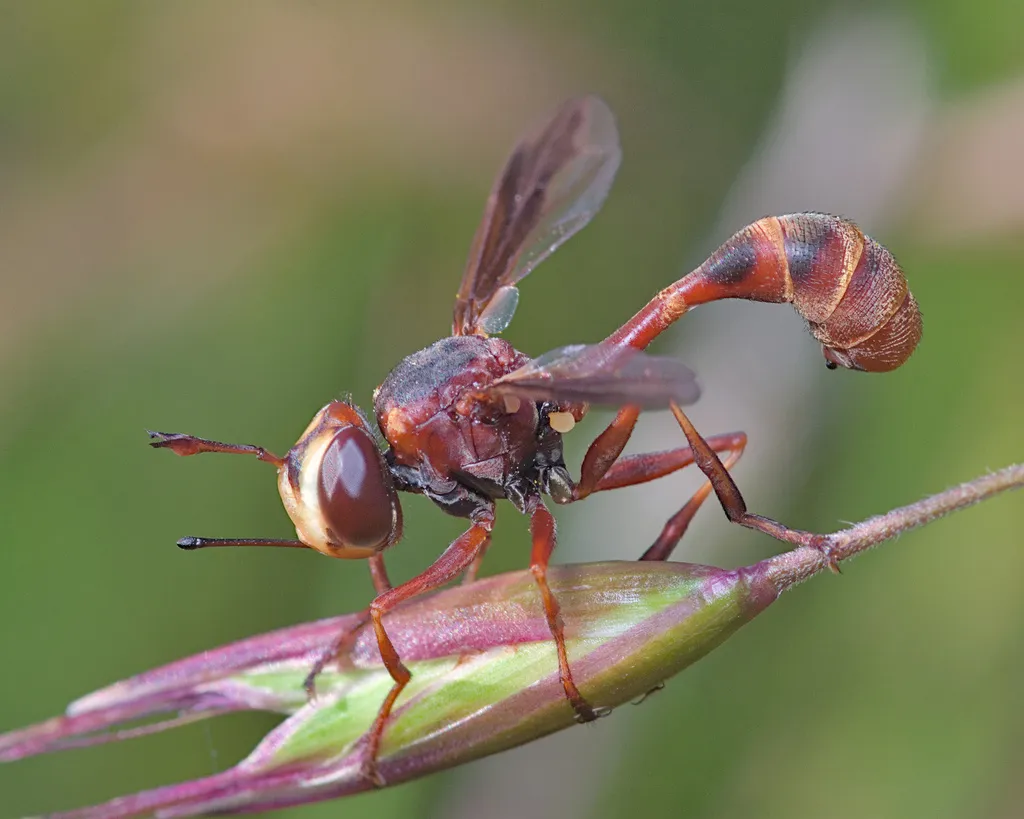
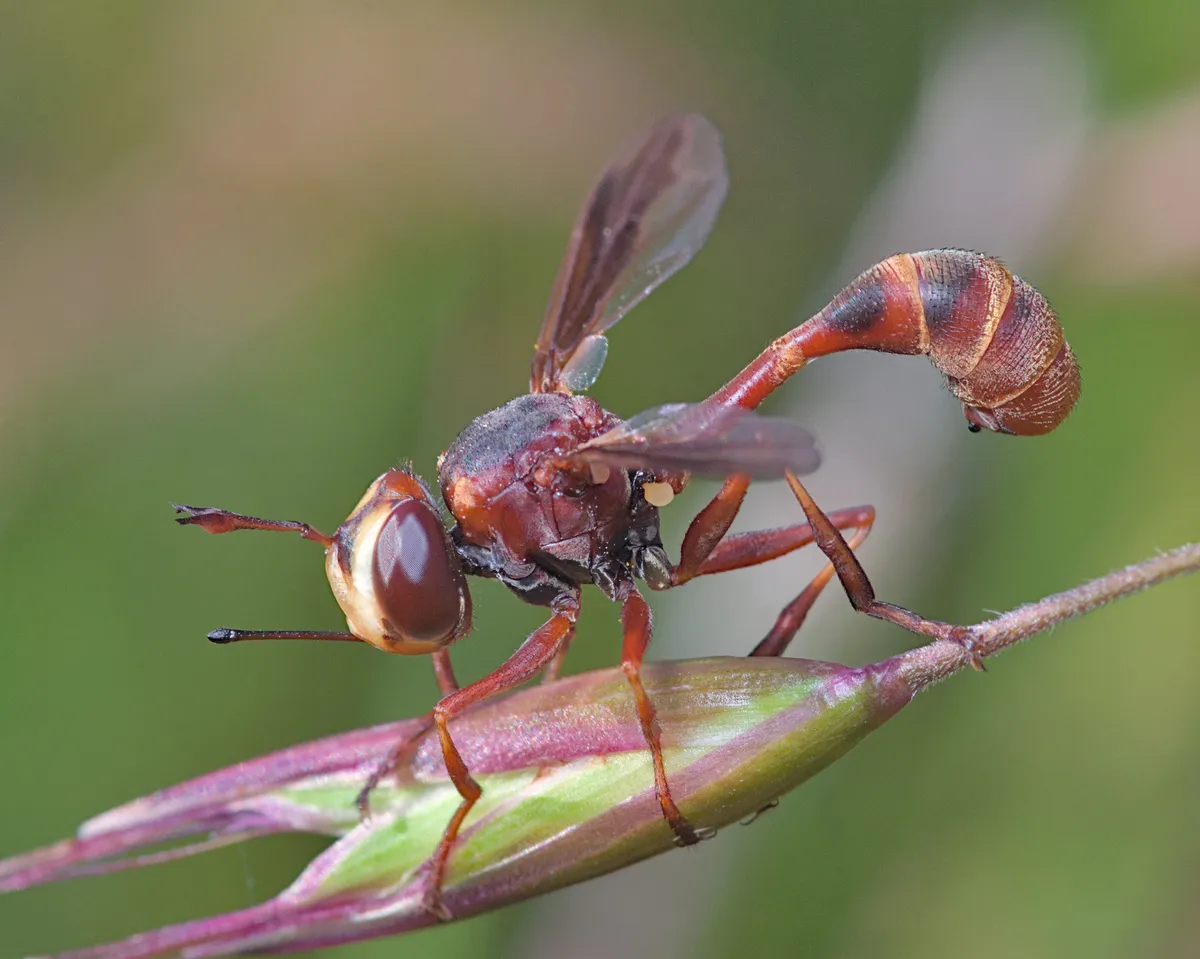
Photo credits: Contributed by Hartmut Wisch; Additional contributions by Robin McLeod , Aaron Schusteff
Frequently Asked Questions About Physocephala texana
What is Physocephala texana?
Physocephala texana is a species in the family Conopidae, within the order Diptera.
Where is Physocephala texana found?
Range: British Columbia to Quebec, and south to Mexico [Note: The range map on pg. 24 of Camras & Hurd indicates a range for P. texana which includes a huge continuous swath of North America from coast to coast, including Canada & Mexico, but excluding the area consisting of southeast Texas, southern Arkansas, and the entire states of Louisiana, Mississippi, Alabama, Georgia, and Florida (i.e. the Gulf states of the southeast US). However, it seems P. texana is principally a western species...currently the easternmost data point on BugGuide is a single post from Illinois.]
What does Physocephala texana eat?
The diet of the Physocephala texana includes Recorded larval hosts: Anthidium emarginatum , Bembix comata , Bembix occidentalis , and Nomia melanderi [Freeman(1966)].
What is the life cycle of a Physocephala texana?
As with other conopines, adult females of P. texana pounce on adult hymenoptera hosts, pry open their abdominal tergites (using a coordinated action of their theca and hook-like terminalia) to insert an egg in the host. For more details, see discussion under Life Cycle on the Physocephala info page .