
Family Blow Flies (Calliphoridae)
Calliphoridae is a family in the order Diptera. Browse 47 named species recorded in this family, or open an individual profile for its available identification and natural-history information.
Species in Calliphoridae (47)
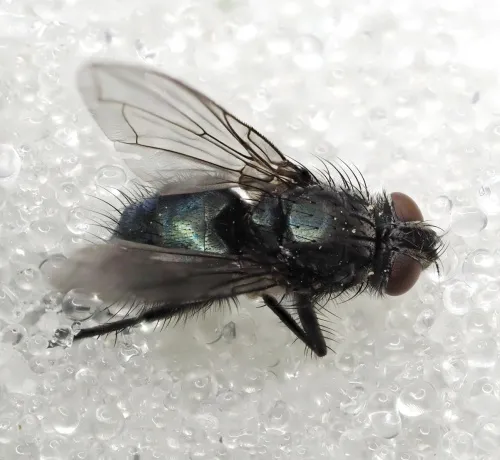
Bellardia bayeri
Bellardia bayeri
5 to 8 mm. Abdomen metallic green or blue. Thorax black with a dark V behind the head. The lower calypter is hairy. There is a brown spot on the upper parafacial which doesn’t disappear when viewed from different angles. Detailed examination may be n
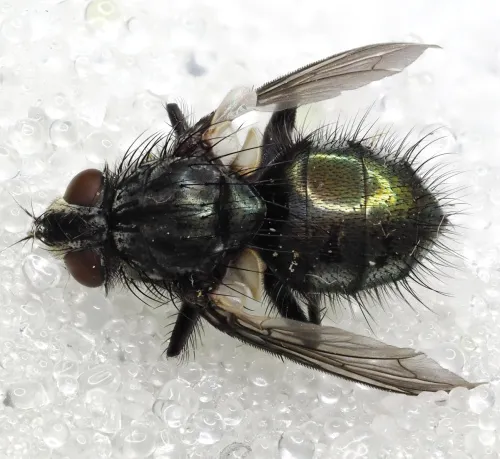
Bellardia vulgaris
Bellardia vulgaris
5-11mm. A typical blowfly with a stocky stature. The abdomen is green and metallic, the thorax is grey. Bellardia as a genus have parafacialia with long hairs, the bend of vein M1 is obtuse and the abdomen is brown, black or green but rarely blue. Mi
Calliphora alaskensis
Calliphora alaskensis
Identification: Closely related to C. aldrichia, C. montana, C. loewi . Rare in collections, but locally abundant in some areas (Vancouver, southwestern Alberta, ~3,000m in northcentral Colorado) .
Calliphora latifrons
Calliphora latifrons
Identification: The male has a broad frons, about 1/4 head width, with two strong pairs of ocellar setae (one pair in males of other species of Calliphora ).
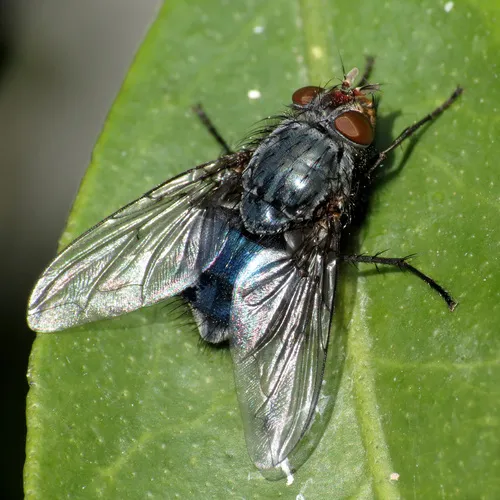
Calliphora vicina
Calliphora vicina
In Britain this is the most common bluebottle and it is often associated with humans. It is 10-14 mm. The head and thorax are dull grey and the abdomen is bright metallic blue with black markings. Its body and legs are covered with black bristle-like
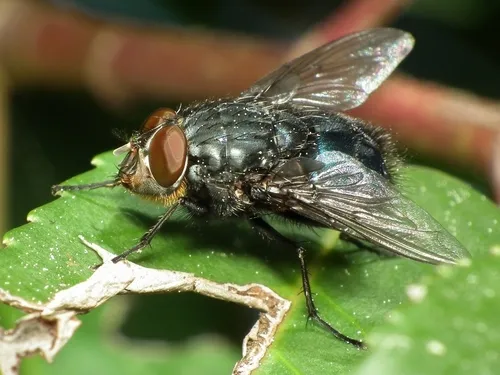
Calliphora vomitoria
Calliphora vomitoria
This large 'bluebottle' fly has a characteristic shiny blue abdomen and a dark thorax. The orange hairs on the gena and post gena, looking like a ginger beard, help to distinguish this species. Although common and widespread, this species is not usua
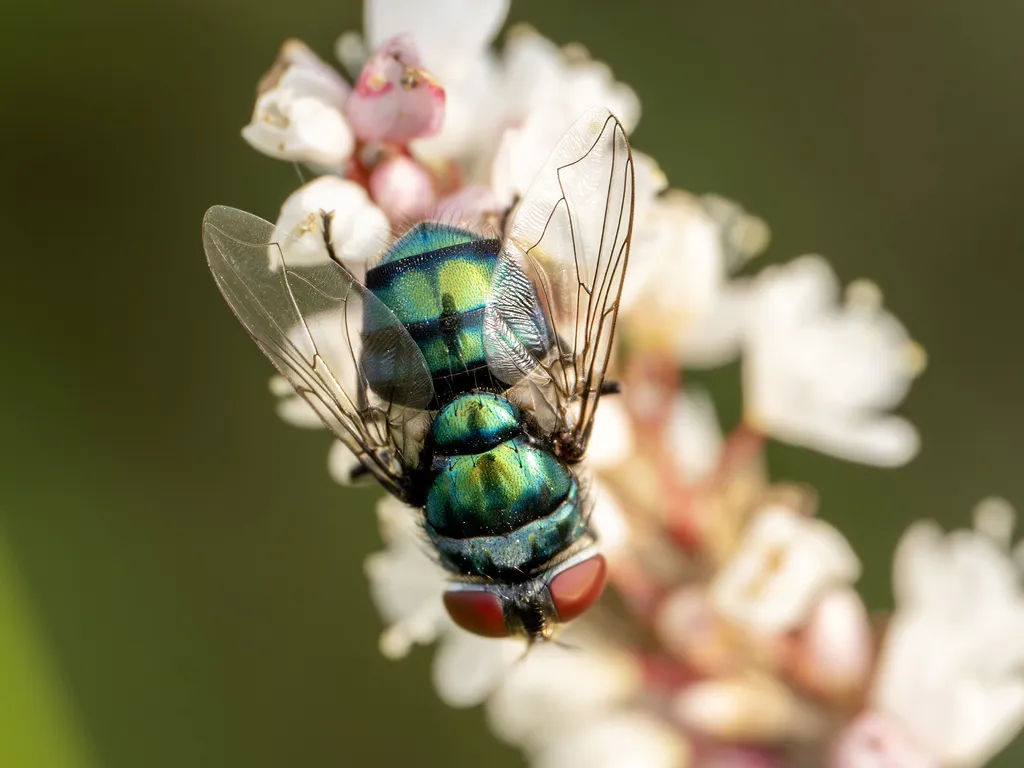
Hairy Maggot Blow Fly
Chrysomya rufifacies
Identification: The fleshy tubercles on these larvae are unique among maggots found on carrion in the US. The only species they might be confused with is Chrysomya albiceps which has not yet been recorded as far north as the US. For adults, the prese
New World Screwworm
Cochliomyia hominivorax
Identification: distinguished from the more common macellaria by "parafrontal with black hair anteriorly outside the row of frontal bristles; basicosta of male normally black; female usually without proclinate fronto-orbitals." sterile male fly relea
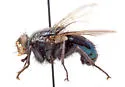
Cyanus elongata
Cyanus elongata
Identification: Differs from Calliphora in having both calypters white, an orange basicosta, and an elongate abdomen (longer than thorax) rare in collections
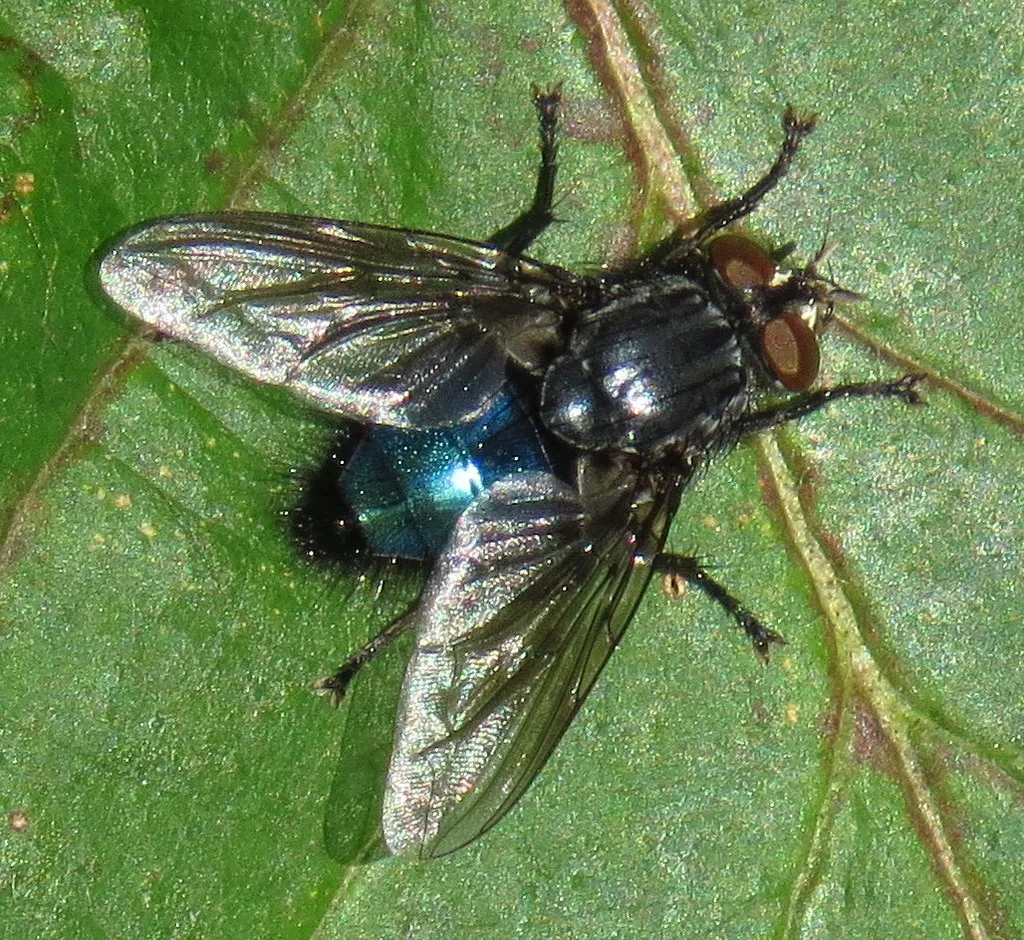
Shiny Blue Bottle Fly
Cynomya cadaverina
Identification: Lacks a presutural intra-alar bristle (character state also present in the western Calliphora grahami ) Thorax with a dark median stripe. Face reddish brown. known to cause myiasis in older wounds
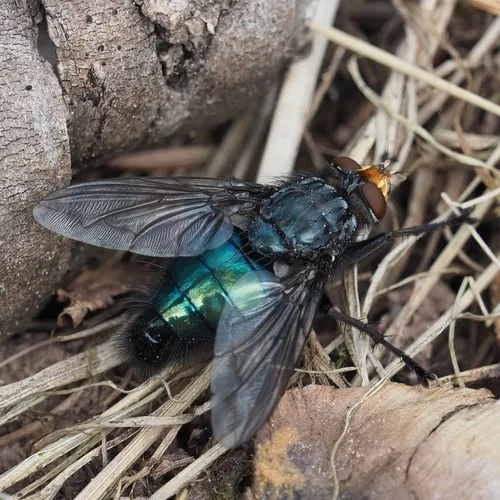
Cynomya mortuorum
Cynomya mortuorum
Body length of 8 to 15 mm. It is a deep blue-green shining metallic fly with a yellowish face and jowls which help to identify it. Lives on woodland edges, meadows, and other places with flowers. It lays its eggs on carrion, which provides food for t
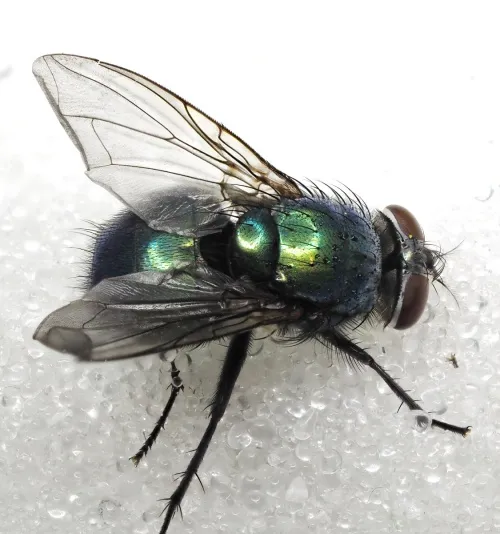
Streakless Greenbottle
Lucilia ampullacea
5-11mm. Metallic green can have a bluish colouration, depending on the light. It is very similar to other Lucilia species and microscopic examination is necessary to identify the species. See ID guidance below. Unless identified by a recognised exper
Lucilia bufonivora
Lucilia bufonivora
Identification: Very similar to L. silvarum and L. elongata . Previously unreported in North America, this species was absent from calliphorid keys, leading to reports of Anuran myiasis from the previously mentioned species. This species is included
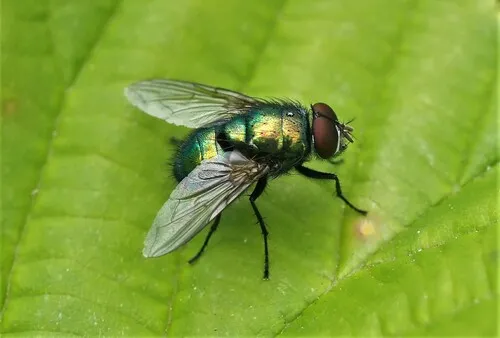
Lucilia caesar
Lucilia caesar
This blow fly is bright iridescent green though like all the 'greenbottles' is becomes more bronze with age. It is very similar to other Lucilia species but has just two pairs of acrostichal bristles behind the suture line on the thorax and a dark ba
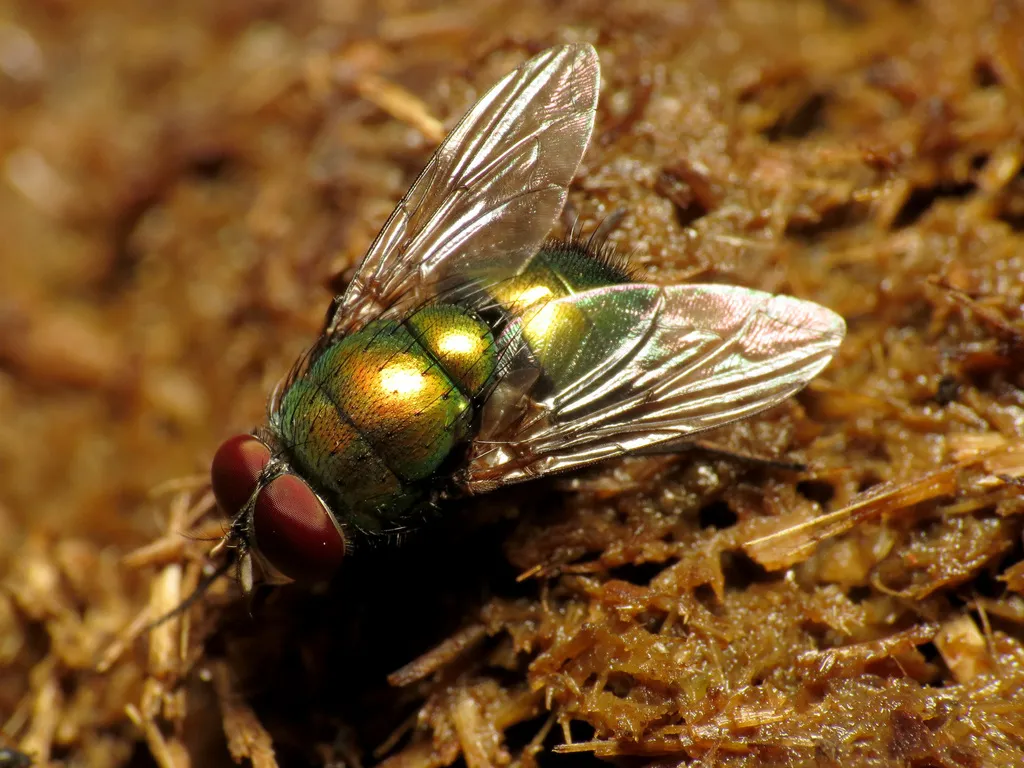
Blue-green Bottle Fly
Lucilia coeruleiviridis
Identification: Two pairs of postsutural archostichal bristles, palpi orange, males have very narrow frons, basicosta yellow/orange, subcostal sclerite without stout bristles
Lucilia eximia
Lucilia eximia
Identification: Two postsutural acrostichals, male frons very narrow (broader in cluvia ), basicosta brown (paler in coeruleiviridis ). "This is one of only 2 species with yellow palps and a dark basicosta. This species has pale, weak setae below and
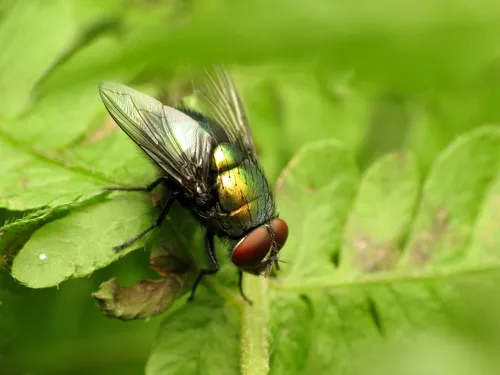
Lucilia illustris
Lucilia illustris
Identification: has black setae on the subcostal sclerite on ventral surface of wing (requires ~50x magnification); all other NA Lucilia spp. have only fine pubescence in that area
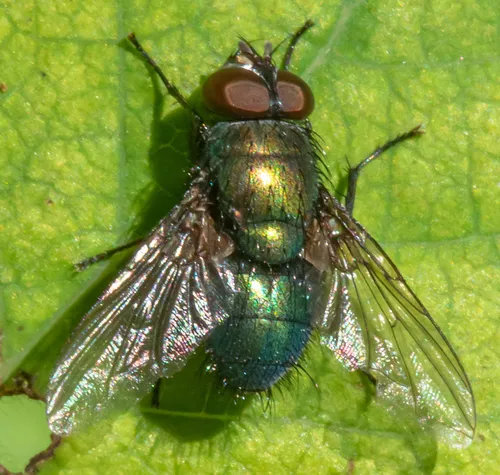
Marsh Greenbottle
Lucilia silvarum
Wing length 4.5-8.5mm. Tergites 1+2 are blackish from all angles. Tergite 4 with very long marginals, tergite 3 with median marginals nearly as long (in male) or half as long (in female) as the length of tergite 4. Unless identified by a recognised e
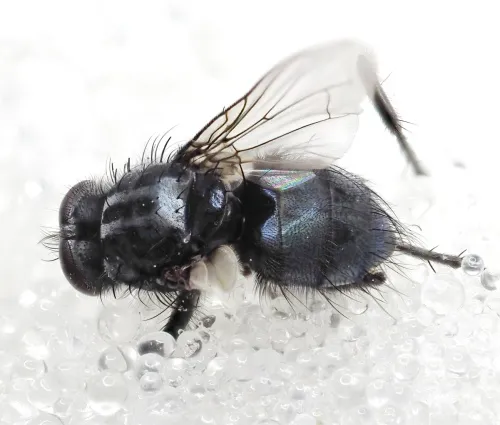
Melinda viridicyanea
Melinda viridicyanea
5-9mm. Abdomen metallic blue, thorax black. Long bristles makes it resemble a tachinid. The front of the thorax has three dark stripes. Palps are black. Unless identified by a recognised expert, a photo is required and the specimen should be examined
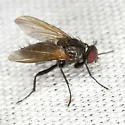
Opsodexia grisea
Opsodexia grisea
Identification: Dark abdomen, third antenna segment partly orange, strong apical posterodorsal bristle on hind tibia, black legs, median marginal bristles on tergite 3. Biology is unknown. Related species eat snails.
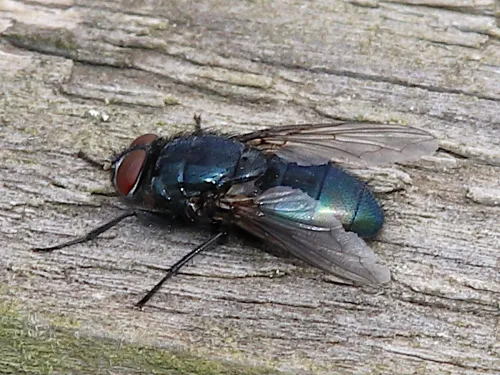
Bird Blowfly
Protocalliphora azurea
Length 7-12mm. A dark metallic blue blowfly. It is distinguished from Protophormia terraenovae by the presence of long presutural acrostichals and dusting on the thorax. Good quality dorsal and lateral photographs showing the distinguishing features
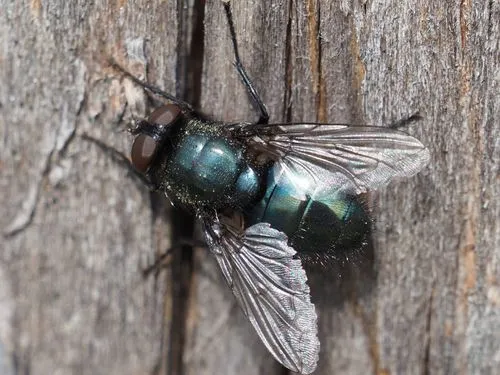
Blackbottle
Protophormia terraenovae
This is a fairly large, dark blue blowfly. It will often fold its wings tightly over the abdomen at rest which can lead to confusion with the similar Protocalliphora azurea . However P. terraenovae can be separated by its much darker colour and the a
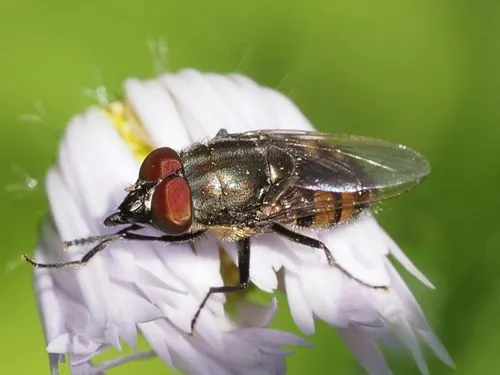
Locust Blowfly
Stomorhina lunata
A distinctive mid-sized blowfly which is sometimes mistaken for a hoverfly or Muscid. It has a three dark stripes on the thorax and a strongly protruding lower face. Tergites 3 and 4 (apparent 2 and 3) have orange patches on the side in males, or gre
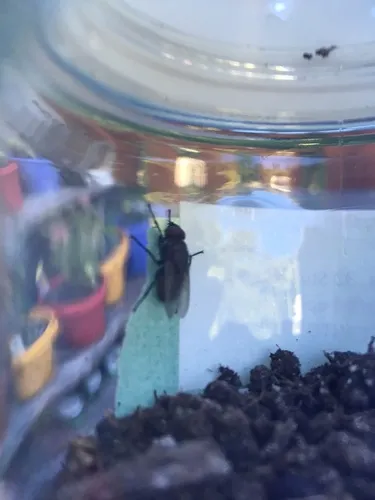
Trypocalliphora braueri
Trypocalliphora braueri
Identification: Superficial similarities to Phormia regina , but anterior thoracic spiracle tends to be more dull orange rather than the bright orange in P. regina . The anterior thoracic spiracle color can be misleading depending on specimen age or
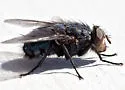
Calliphora coloradensis
Calliphora coloradensis
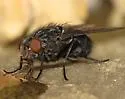
Calliphora livida
Calliphora livida
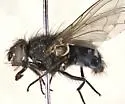
Calliphora loewi
Calliphora loewi
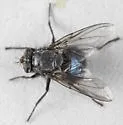
Calliphora stelviana
Calliphora stelviana
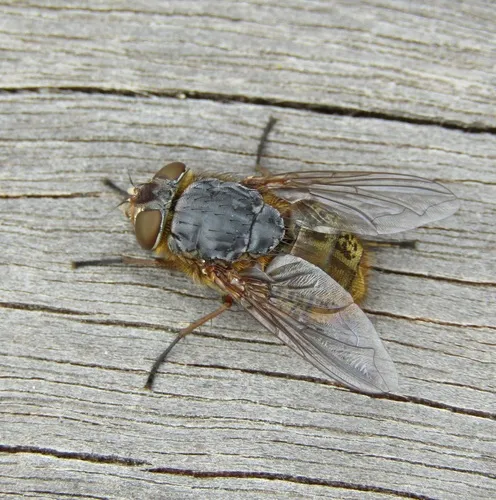
Brown Blowfly
Calliphora stygia
Calliphora terraenovae
Calliphora terraenovae
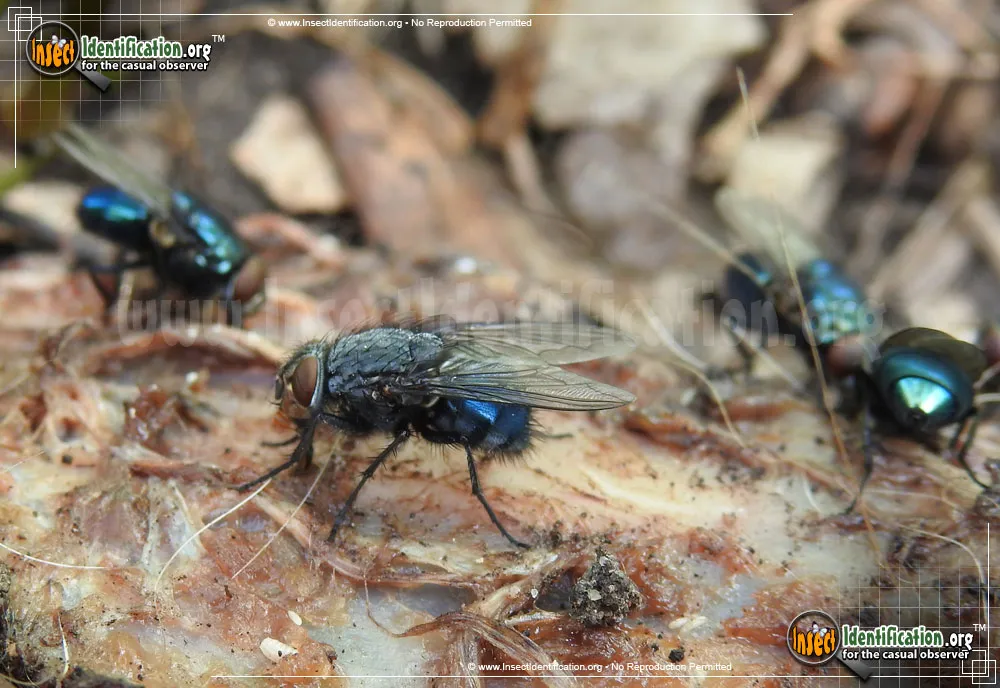
Blue Blow Fly
Calliphora vincina
Chloroprocta idioidea
Chloroprocta idioidea
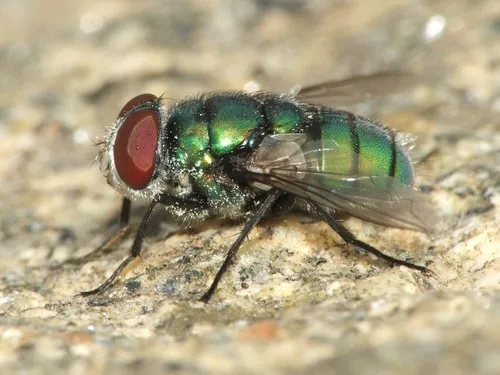
Banded Blowfly
Chrysomya albiceps
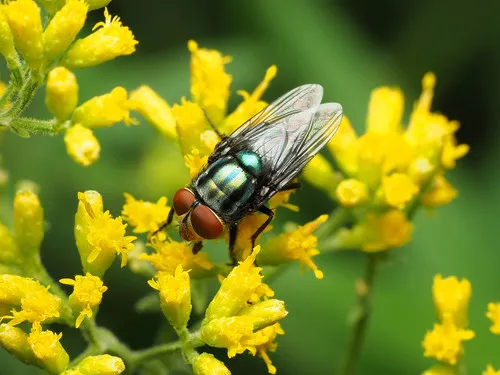
Secondary Screwworm
Cochliomyia macellaria
Compsomyiops callipes
Compsomyiops callipes
Lucilia cluvia
Lucilia cluvia
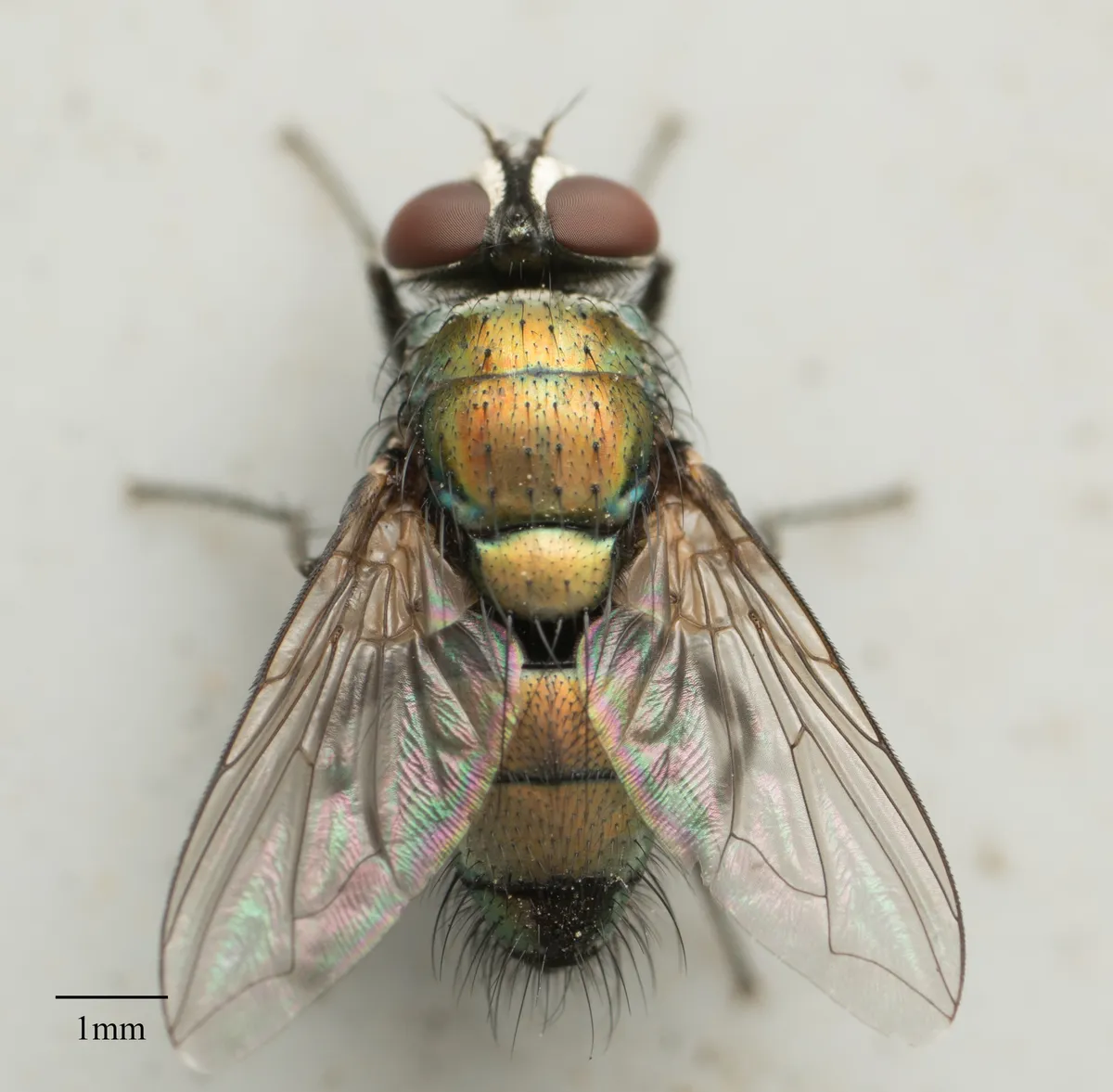
Bronze Bottle Fly
Lucilia cuprina
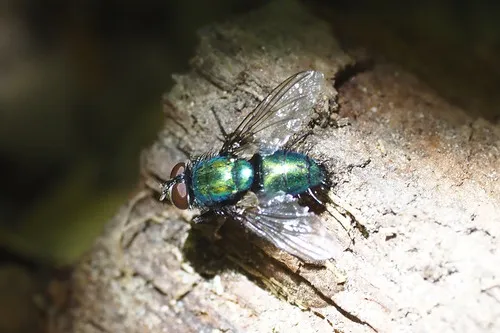
Lucilia elongata
Lucilia elongata
Lucilia mexicana
Lucilia mexicana
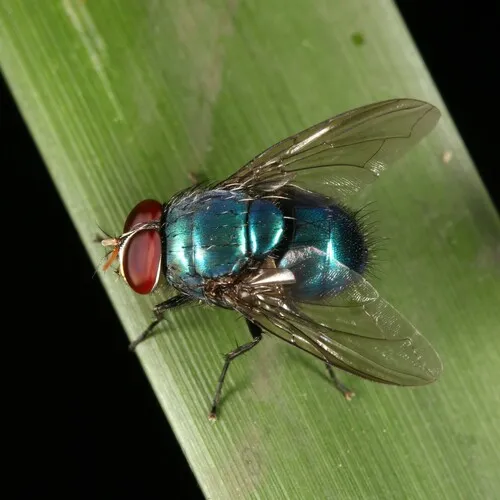
Lucilia porphyrina
Lucilia porphyrina
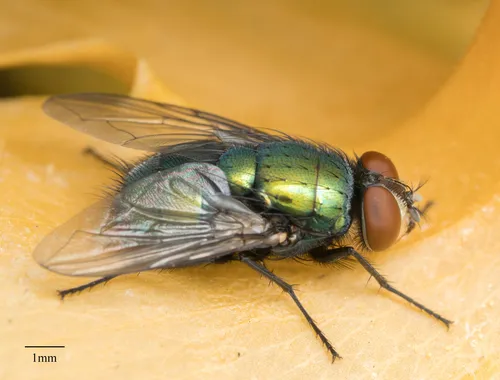
Common Green Bottle Fly
Lucilia sericata
Lucilia thatuna
Lucilia thatuna
Opsodexia bicolor
Opsodexia bicolor
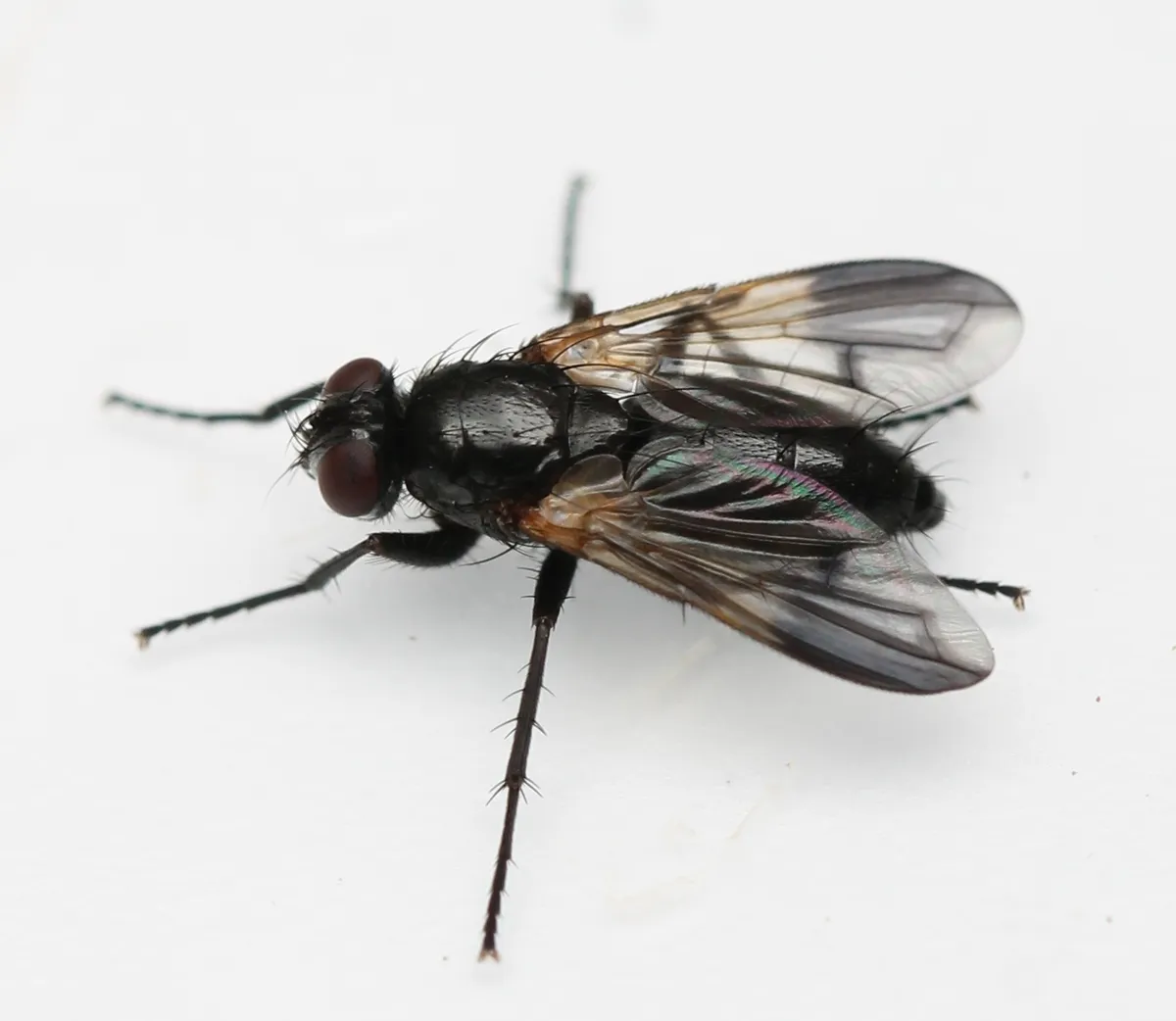
Paykullia maculata
Paykullia maculata
Protocalliphora bennetti
Protocalliphora bennetti
Protocalliphora rugosa
Protocalliphora rugosa
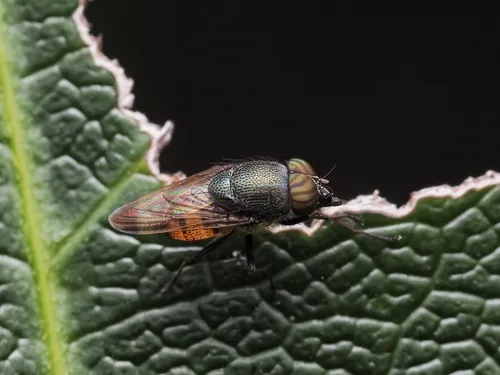
Stomorhina obsoleta
Stomorhina obsoleta