
Family Dance Flies (Empididae)
Empididae is a family in the order Diptera. Browse 59 named species recorded in this family, or open an individual profile for its available identification and natural-history information.
Species in Empididae (59)
Clinocera binotata
Clinocera binotata
Identification: Crossvein between R2+3 and R4; fore femur with stout basal setae below; knees orange
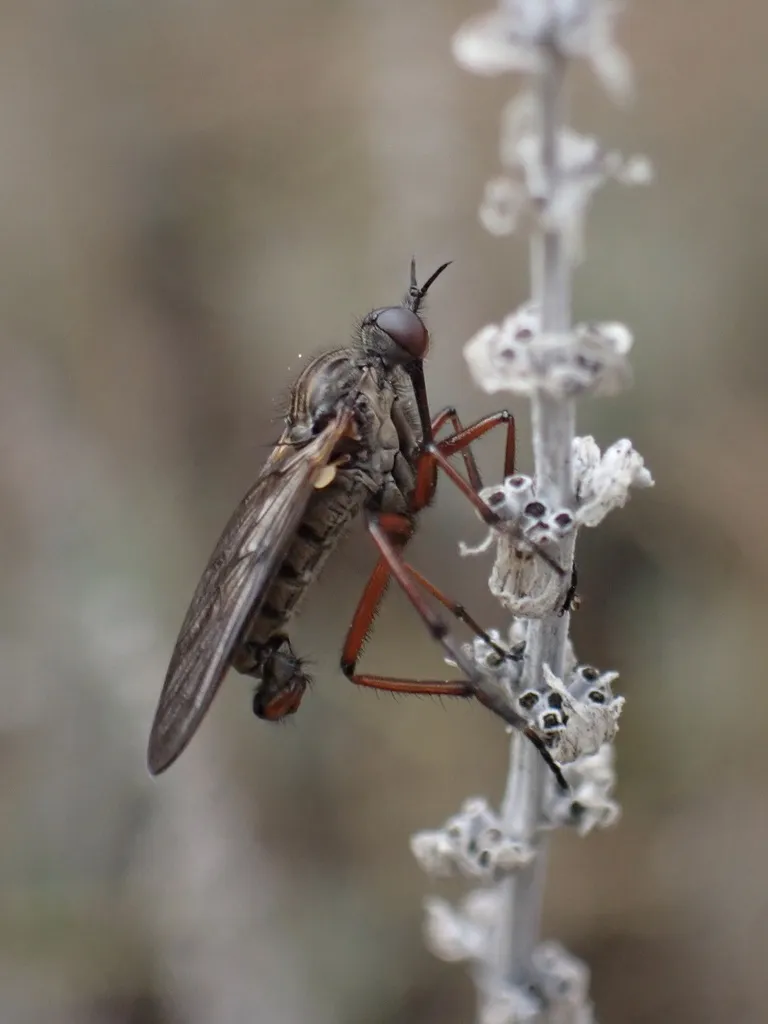
Empis barbatoides
Empis barbatoides
Identification: A large (~9 mm) species with brown wings and no acrostichal bristles.
Empis caeligena
Empis caeligena
Identification: Distinguished from Empis spectabilis by the slender hind femur. Distinguished from an undescribed Anacrostichus by the dark color. Other species of Anacrostichus are found in northern USA and Canada.
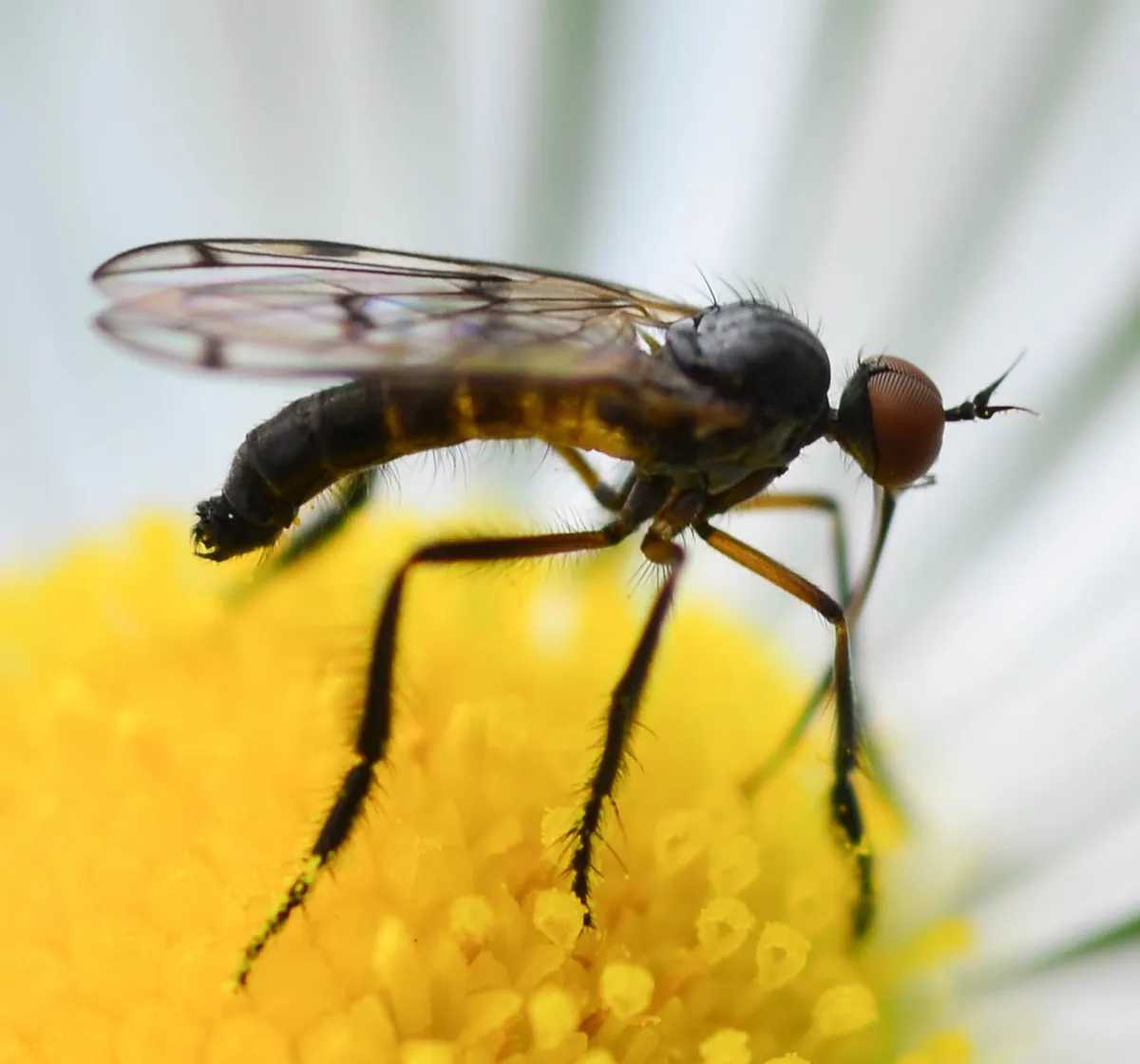
Empis clausa
Empis clausa
Identification: "feathery legs, long proboscis, spots on wing = Empis (Coptophlebia) clausa" -- Isaac Winkler
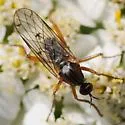
Empis deceptiva
Empis deceptiva
Identification: Differs from Empis tridentata by the more widely separated eyes of the male and lack of a stub vein at the bend in vein R4.
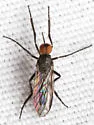
Empis distans
Empis distans
Identification: Males have the first tarsal segments of front and middle legs longer than their respective tibia.
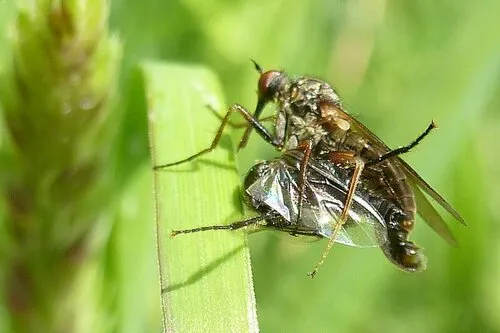
Empis femorata
Empis femorata
This is a small, greyish Dance Fly. The female is quite chubby looking. Widespread but not particularly common in England and Wales, fewer records from Scotland.
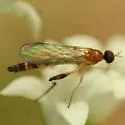
Empis leptogastra
Empis leptogastra
Identification: Yellow-orange, head black, one black stripe on thorax, thin abdomen. There may be similar undescribed species.
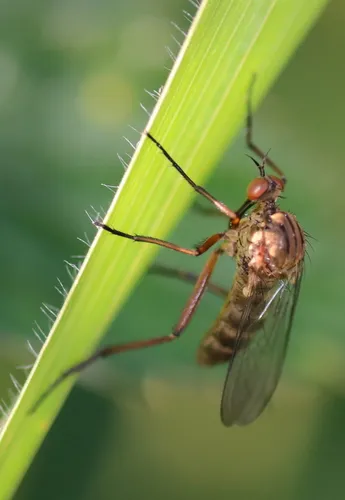
Empis livida
Empis livida
Length about 9 mm. The brown thorax has three dark stripes. The legs are red/orange. Usually found around hedgerows where they nectar on various species as well as taking other insects. The larvae are also carnivorous and live in damp soil and leaf l
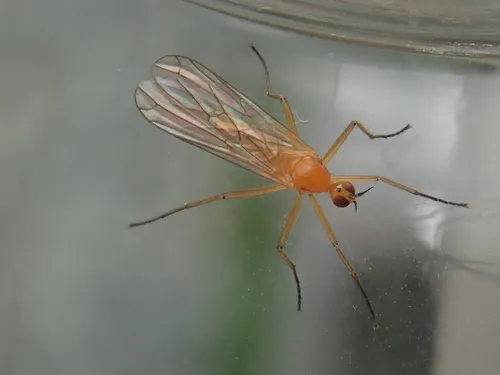
Empis lutea
Empis lutea
c7mm. Bright yellow and without any dark stripes on the thorax. The first antennal segment is much longer than the second. The thorax is glossy - without any dusting to make it dull. The round head is all yellow without any dark markings. Empis conco
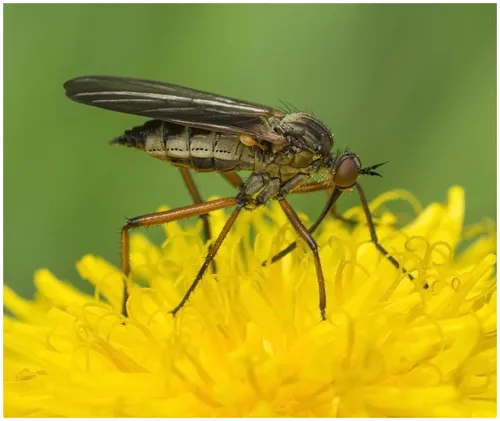
Empis opaca
Empis opaca
Length: Male 6 to 9.5 mm, Female 6.8 to 10 mm. This group of flies, sometimes called Dance flies, are predators of other insects, often tackling large prey, using their long, dagger-like snout. This species is distinguished from the very similar Empi
Empis poeciloptera
Empis poeciloptera
Identification: A yellow species with a crossvein between R2+3 and R4. The tips of the legs and antennae are darkened and there are dark clouds around the crossveins.
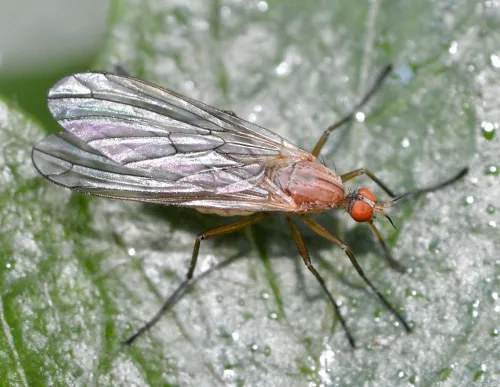
Empis scutellata
Empis scutellata
A small (6 or 7 mm) orange bodied dagger fly. Unless identified by a recognised expert, a photo is required and the specimen should be examined with a microscope. In the comments box, state the key or ID method used and describe the size and identify
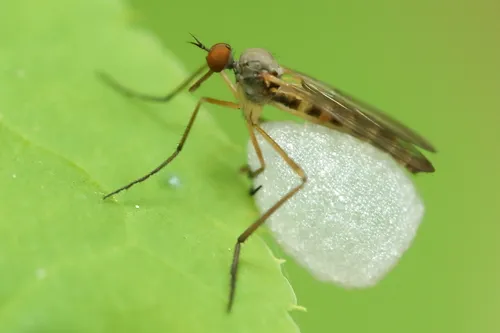
Empis snoddyi
Empis snoddyi
Identification: The only balloon fly in the southern Appalachian mountains. "The mating behavior was reported by Sadowski et al. (1999). Males form swarms of 5-15 individuals beginning at dawn, and interact vigorously within the swarm, chasing each o
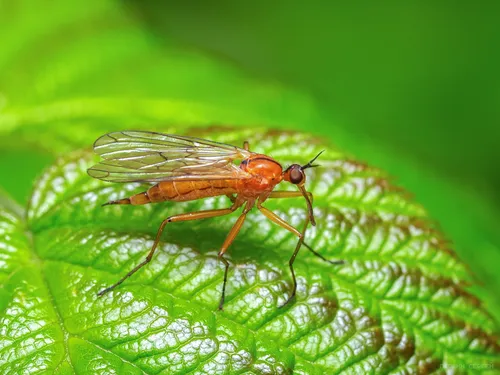
Empis stercorea
Empis stercorea
This species is easily recognised by its pale brown body colour and the black stripe running along the length of its back. The black stripe continues into the orange head and thorax. Empis aemula is rarer but very similar. In this species the fore ti
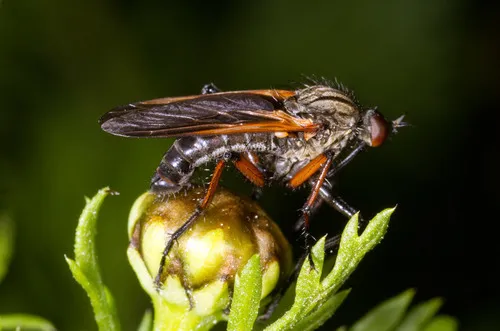
Empis tessellata
Empis tessellata
9-12mm. This is the largest of the genus. It is a bristly fly with brown-tinged wings. It has black femora but the tibia and tarsi may be red/brown. Empis opaca is another large Empis species but this has red femora. It frequents hedges, woodland edg
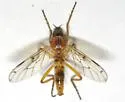
Empis tridentata
Empis tridentata
Identification: Trident-shaped gray mark, points forward, on yellowish thorax.
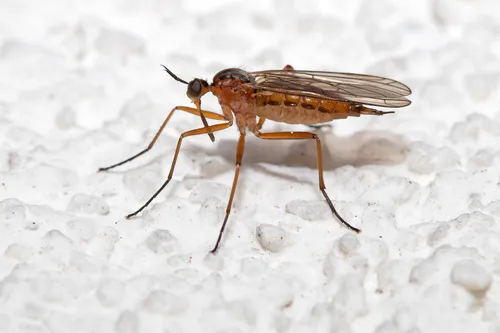
Empis trigramma
Empis trigramma
Empis trigramma is a species of dance or dagger fly. The thorax has three broad dark stripes and yellowish sides. The abdomen is golden yellow and often shiny, with a dark central stripe. The wing has no shaded area and vein R4+5 is forked. The fly's
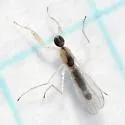
Hemerodromia superstitiosa
Hemerodromia superstitiosa
Identification: One of two species of Hemerodromia with legs yellow except for last two tarsomeres on mid and hind legs. Female has broad dark stripe on thorax. Male may have thin stripes. A similar species from southern Texas and Mexico is distin
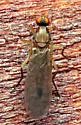
Hilara lutea
Hilara lutea
Identification: A yellow species with a bright yellow third antennal segment.
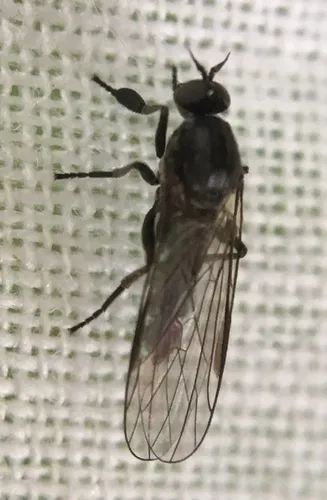
Balloon Fly
Hilara maura
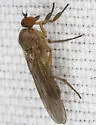
3-4.5mm. Dark grey with few bristles on the thorax and legs. Males have distinctly dilated front tarsi which lack the long hairs seen in some other species. The thorax has three indistinct dark stripes which appear as one broad black stripe when view
Hilara seriata
Hilara seriata
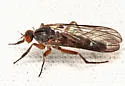
Males come in two forms, one with greatly enlarged front basitarsi and dense hairs on mid legs, the other with normal front basitarsi and weak hairs on mid legs.
Hilara umbrosa
Hilara umbrosa
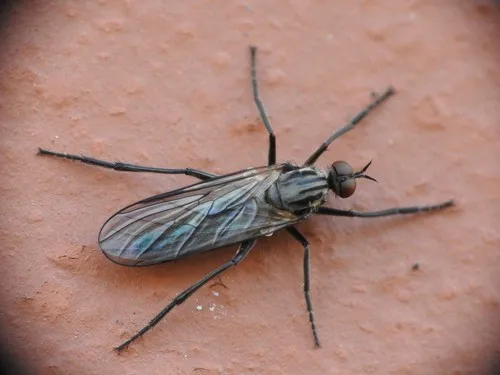
Identification: Over 5 mm, thorax gray, legs yellow, all femora with spines underneath distally.
Rhamphomyia crassirostris
Rhamphomyia crassirostris
Length 5.5 to 6.5mm. This species has a fairly typical Empid form but the legs are not very strongly bristled. The female discal cell is a useful id aid, being enormously enlarged but still closed with the lower crossvein closing the cell near to and
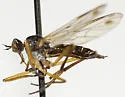
Rhamphomyia gracilis
Rhamphomyia gracilis
Identification: "A very characteristic species, skinny, yellow legs, females with a little spot near the wing apex." -- Isaac Winkler
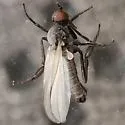
Rhamphomyia leucoptera
Rhamphomyia leucoptera
Identification: Male black with white wings and halteres and swollen hind basitarsi.
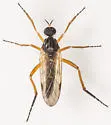
Rhamphomyia luteiventris
Rhamphomyia luteiventris
Identification: Loew's description (translated from Latin using Google translate): "Head dark gray, eyes contiguous. Antennae slender, black, with the first two short black-hairy joints, the second except the brown base, with a slightly short termina
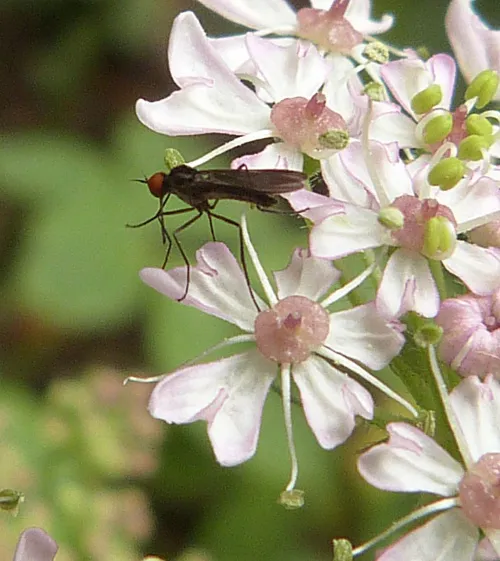
Rhamphomyia nigripennis
Rhamphomyia nigripennis
This small, dark coloured Dagger Fly (also known as Dance Flies) is very similar to other members of the genus and detailed examination is needed to identify to species level. Detailed examination is needed to identify to species level. Often seen vi
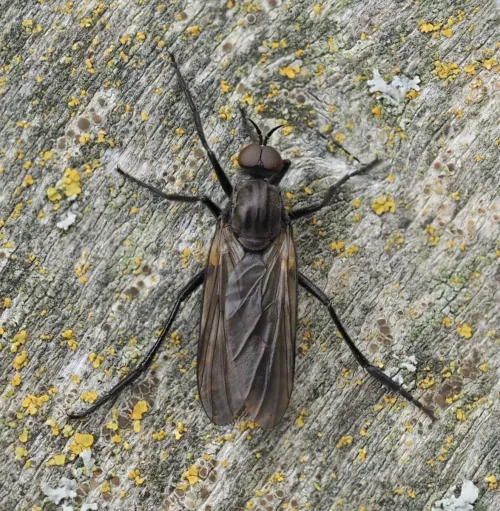
Rhamphomyia subcinerascens
Rhamphomyia subcinerascens
An early Spring species. Identification is difficult but the identifying features are a dark cloud on the anal lobe of the female wings, whilst the males have long tarsal hairs. It differs from R. sulcatella in that the front and hind tibia are disti
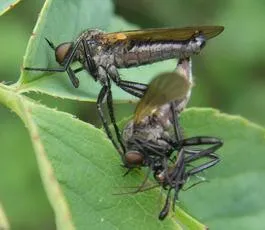
Rhamphomyia sulcata
Rhamphomyia sulcata
This is quite a large dance fly with a grey and pinkish appearance. Males provide females with a nutritious prey item as a nuptial gift No additional images available for this species.
Rhamphomyia testacea
Rhamphomyia testacea
Identification: The female is red with legs almost entirely fringed with black hairs.
Roederiodes distinctus
Roederiodes distinctus
Identification: Unique feature: Base of M2 forming distinct crossvein at apex of cell dm, longer than r-m crossvein
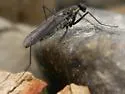
Trichoclinocera dolicheretma
Trichoclinocera dolicheretma
Identification: Differs in head structure from congeners, and lacks pulvilli.
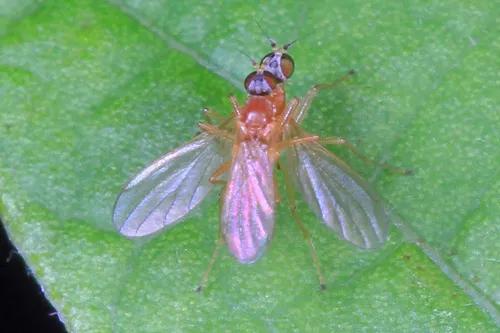
Chelipoda americana
Chelipoda americana
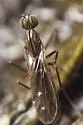
Clinocera lineata
Clinocera lineata
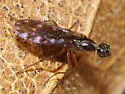
Dolichocephala argus
Dolichocephala argus
Empis bigoti
Empis bigoti
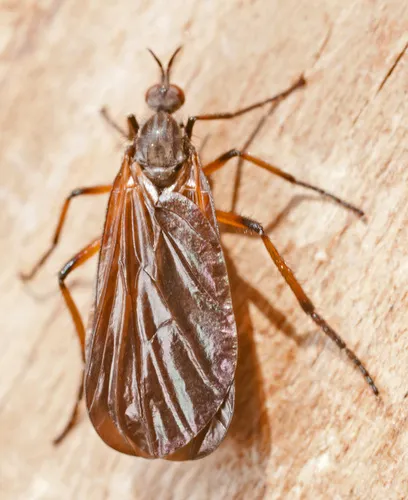
Empis borealis
Empis borealis
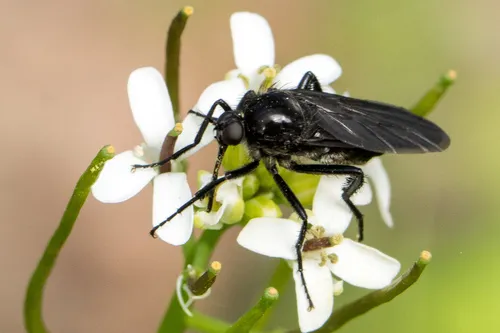
Empis ciliata
Empis ciliata
Empis deterra
Empis deterra
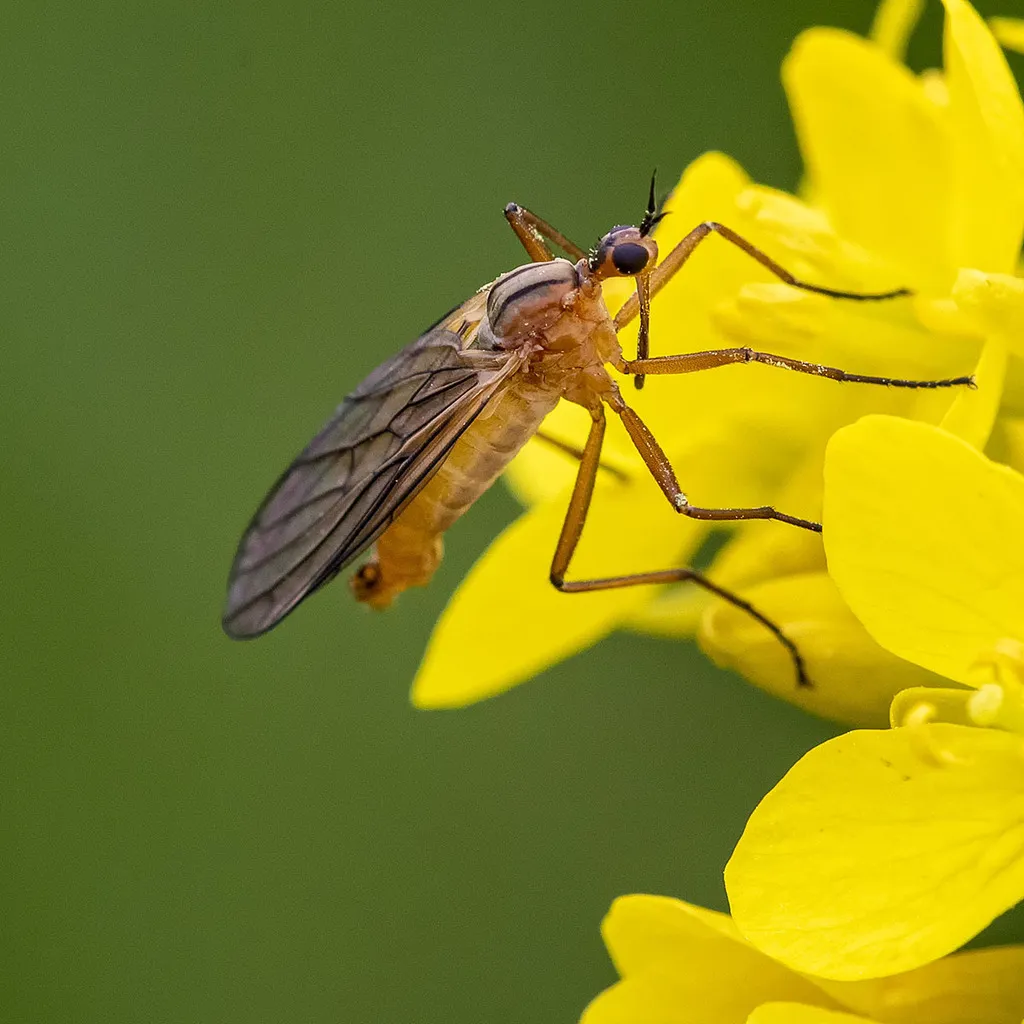
Empis digramma
Empis digramma
Empis geneatis
Empis geneatis
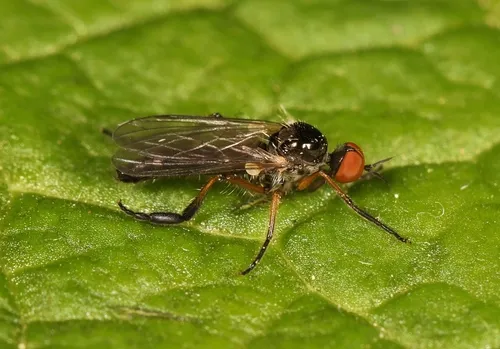
Empis nigritarsis
Empis nigritarsis
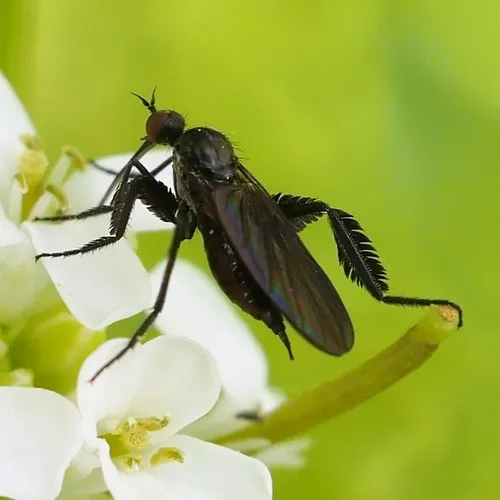
Empis pennipes
Empis pennipes
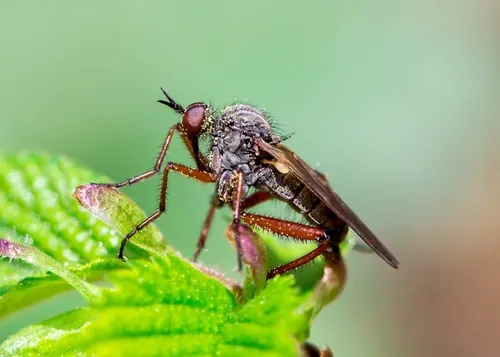
Empis spectabilis
Empis spectabilis
Empis virgata
Empis virgata
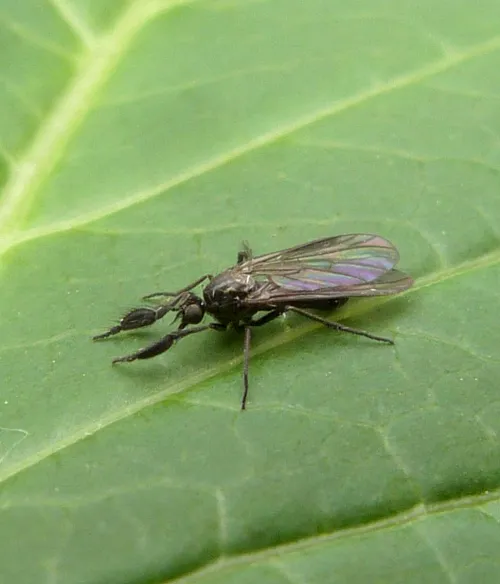
Hilara curtisi
Hilara curtisi
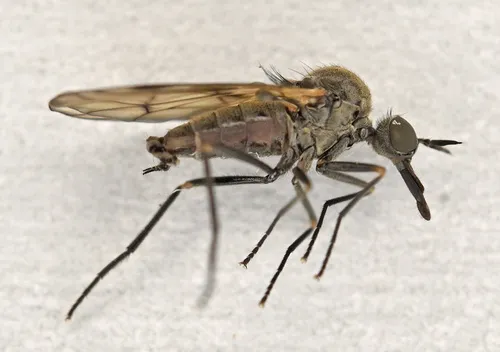
Iteaphila macquarti
Iteaphila macquarti
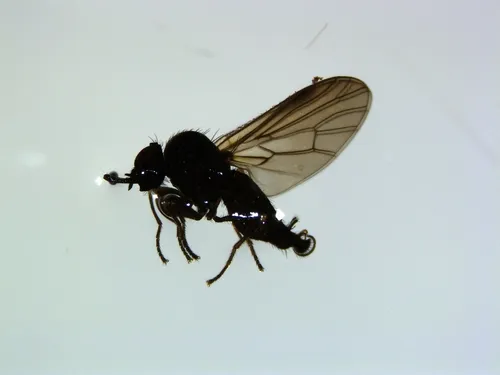
Iteaphila nitidula
Iteaphila nitidula
Rhamphomyia basalis
Rhamphomyia basalis
Rhamphomyia brevis
Rhamphomyia brevis
Rhamphomyia gilvipes
Rhamphomyia gilvipes
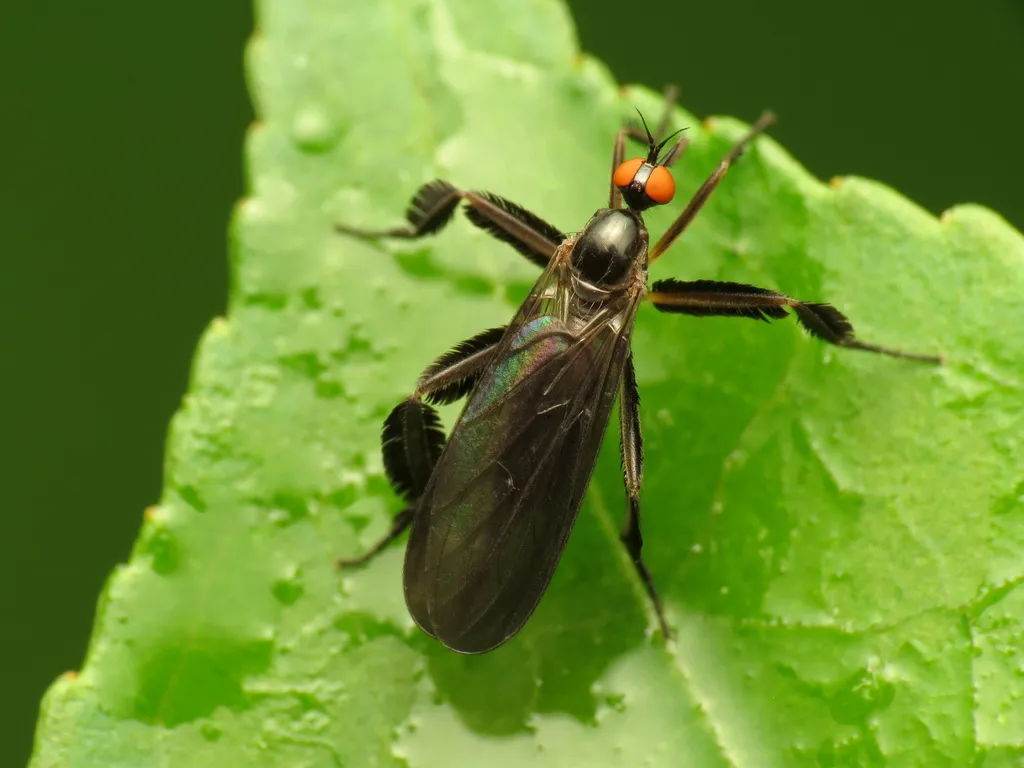
Long-tailed Dance Fly
Rhamphomyia longicauda
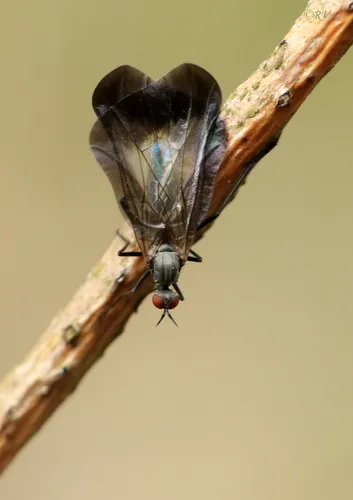
Rhamphomyia marginata
Rhamphomyia marginata
Rhamphomyia nana
Rhamphomyia nana
Rhamphomyia nasoni
Rhamphomyia nasoni
Rhamphomyia priapulus
Rhamphomyia priapulus
Rhamphomyia sudigeronis
Rhamphomyia sudigeronis
Rhamphomyia vittata
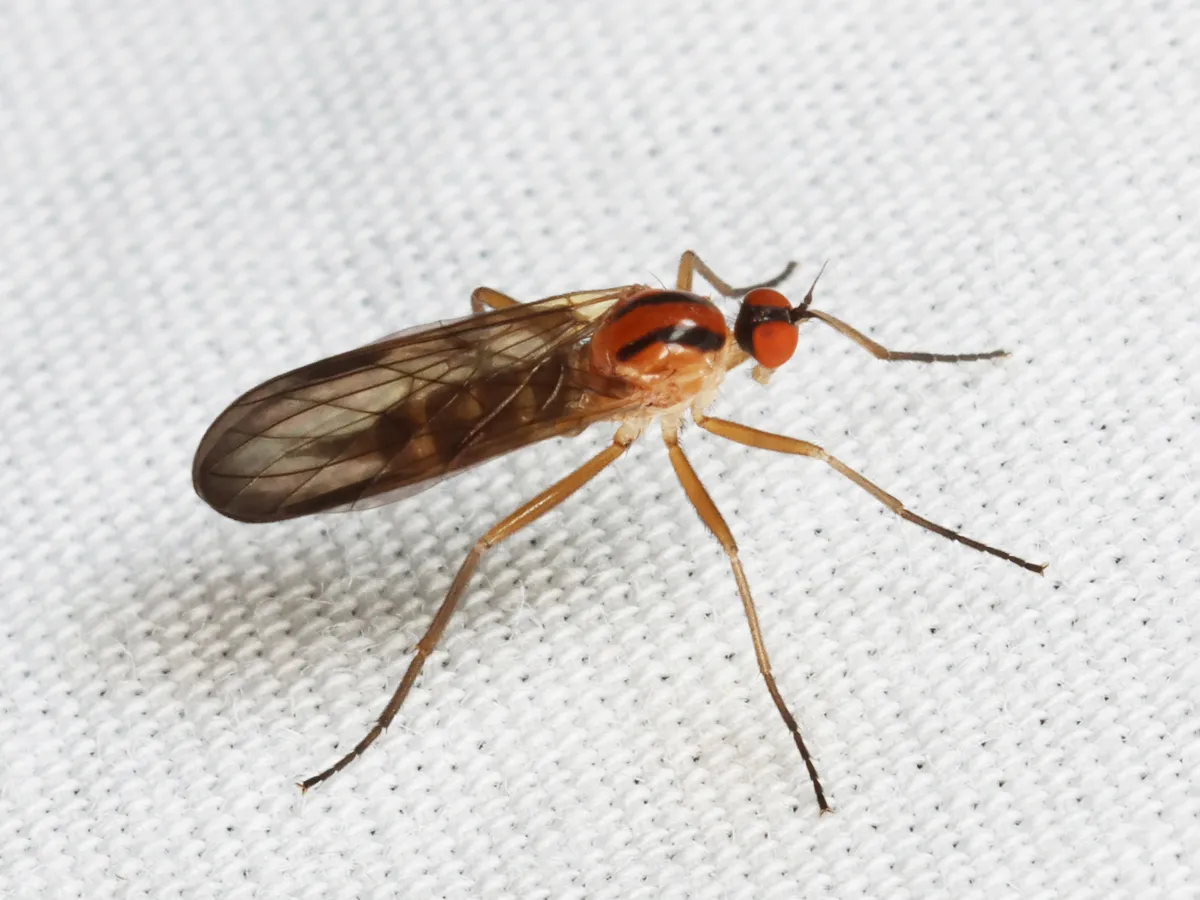
Rhamphomyia vittata