
Family Robber Flies (Asilidae)
Asilidae is a family in the order Diptera. Browse 502 named species recorded in this family, or open an individual profile for its available identification and natural-history information.
Guides
Species in Asilidae (502)
Northern Chiselmouth
Andrenosoma fulvicaudum
Identification: Head: Covered with white hair. Mustache (mystax) black, stout bristles. Some black bristles around antenna base. Antenna: Black, short with 3 joints. Thorax: Varied black and gray. Down center two wide black stripes. Thorax sides (ple
Fiery Chiselmouth
Andrenosoma igneum
Identification: Similar to A. fulvicaudum except the postpedicel (first flagellomere) is red and the male genitalia are different.
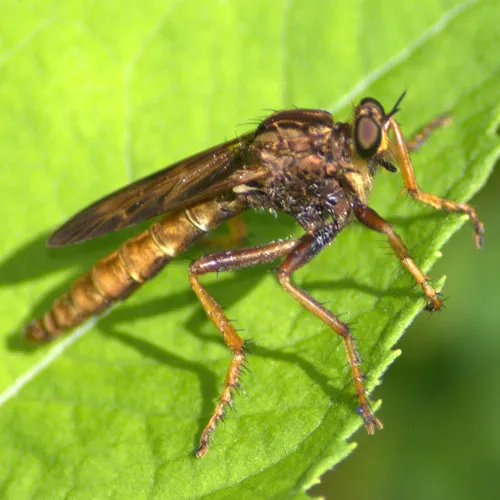
Asilus sericeus
Asilus sericeus
Identification: Head: Covered with golden pile, including behind the eyes. Row of brownish bristles across back of head. Mustache (mystax) has a thin layer of very long brownish-yellow bristles. Antenna: Base segments more brownish-yellow. Segment 3
Ringed Micropanther
Atomosia glabrata
Identification: Face/mystax with white hairs; ocellar tubercle with two long white setae and several shorter ones; antennae about 0.6 times head width; antennae mostly dark; scutellum with two long thin white lateral setae; front & mid femora black d
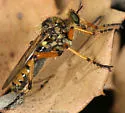
Halloween Goldenrobber
Callinicus pictitarsis
one of several spp. of this genus in Calif. Sort of a generalized vespid wasp mimic. --Eric Fisher, 16.vi.2007
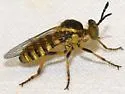
Golden Tiger Fly
Ceraturgus aurulentus
Identification: distinctive species, readily recognized by its small size, rich golden pollen, bicolored femora and tibiae, and short, thin, parallel-sided proboscis Rare species: fewer than two dozen specimens collected in the past 200 years. BugGui
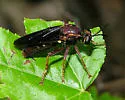
Red-backed Tiger Fly
Ceraturgus elizabethae
Identification: Very dark, with elongate antennae, perhaps a mimic of Tachytes
White-faced Micropanther
Cerotainia albipilosa
Identification: Area between eyes (frons) and top of head (vertex) very wide. Upper face and top of head has silvery-white pile. Eyes greenish. Types: Holotype as Cerotainia albipilosa male by Curran, 1930. Type Locality: North Carolina. In American
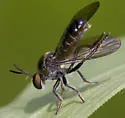
Yellow-faced Micropanther
Cerotainia macrocera
Identification: Area between eyes (frons) and top of head (vertex) very wide and covered with brown-yellow hairs. Eyes brown.
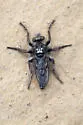
San Rafael Bandit
Cyrtopogon longimanus
Identification: Per Eric Fisher: "This sp. is actually a close relative of C. marginalis , of the eastern U.S. & Can. They both share a puffed-up, shiny black scutellum, which lines-up with a series of shiny-black spots along the sides of the thorax;
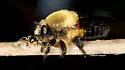
Bumblerobber
Dasylechia atrox
Identification: From couplet 2 of Key to the Genera of the Laphriini in , p. 118: Antennae with a distinct terminal style; palpi enlarged, head thickly set with long hairs, genitalia very small, large robust hairy species, bumble bee - like in appear
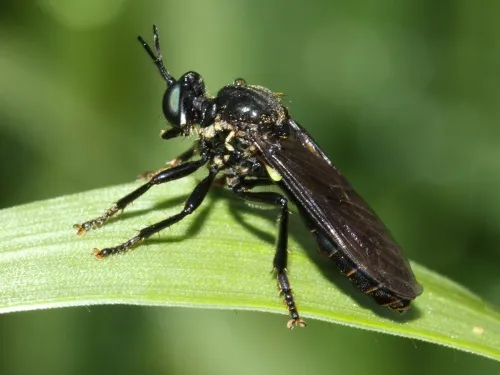
Violet Black-legged Robber Fly
Dioctria atricapilla
Length: 10-12mm. This is an all blue-black robberfly with bright yellow halteres. It is the only Doctria species with all black legs. Males have prussian blue eyes. The wings are darkened towards the base, particularly in the male. The female has a g
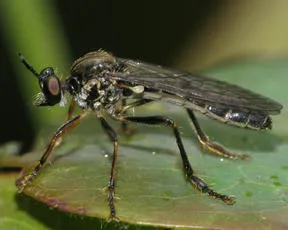
Dioctria baumhaueri
Dioctria baumhaueri
Length 8 to 13 mm. This is a mainly black robber fly, but the front two pairs of legs are orange with a dark stripe along the upper surface. It also has a pale stripe on the side of the thorax. Unless identified by a recognised expert, a photo is req
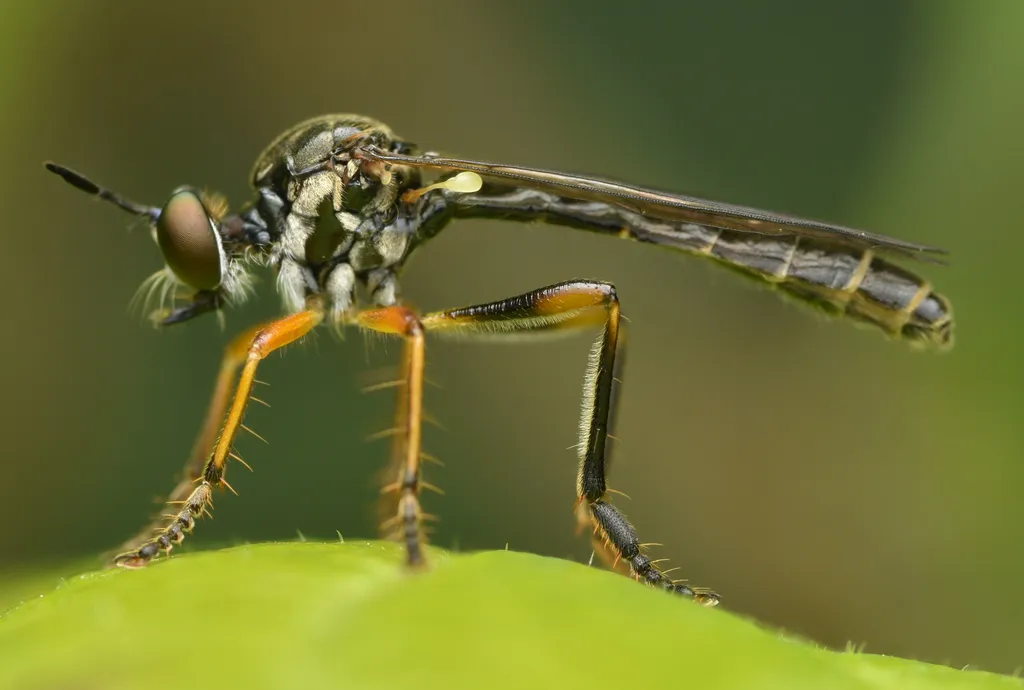
European Longhorn Robber
Dioctria hyalipennis
Identification: delicate build; long slender abdomen is narrower at the base than at the tip; halteres yellow; legs less hairy/spiny than most robber flies, fore and mid legs yellowish with dark streaks on top side, hind legs dark. Abdomen black, shi
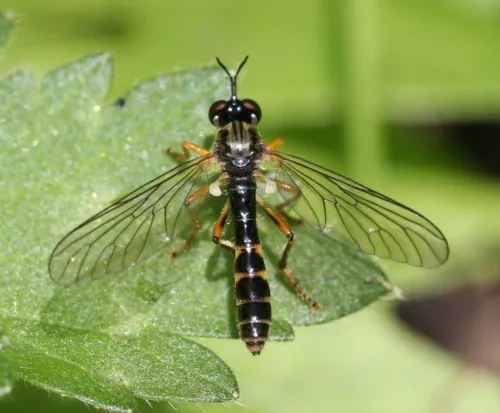
Small Yellow-legged Robber Fly
Dioctria linearis
Length: 8-11mm. The abdomen of this species is mainly black but with orange side patches, and often orange bands, on the tergites. The front and mid legs are entirely yellow with the back legs being yellow and black. Unless identified by a recognised
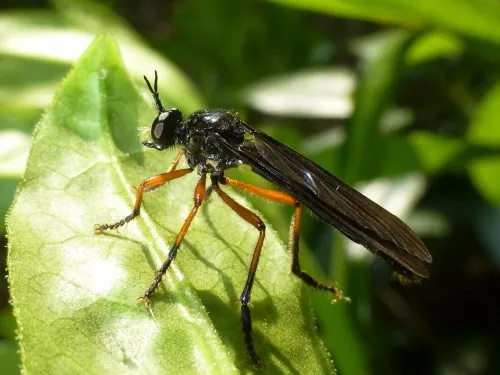
Orange-legged Robberfly
Dioctria oelandica
Britain's largest Dioctria with long dark wings that have colourful reflections in some lights. All three pairs of legs are largely orange. The adults prey on insects such as sawflies and ichneumons. The larvae are presumed to develop in woodland soi
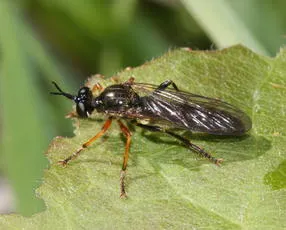
Common Red-legged Robberfly
Dioctria rufipes
Size approx 15 mm. The front 2 pairs of legs are usually completely orange-red and the hind legs almost wholly black, though variants do occur (see image below). All Dioctria species have shiny patches on the side of thorax which in good light show a
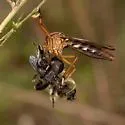
Silver-spotted Hanging Thief
Diogmites discolor
Identification: Silver spotting, dark abdominal base
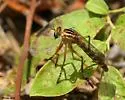
Little Hanging Thief
Diogmites misellus
Identification: Smallest Diogmites . Central stripe on top of thorax shades to red towards front
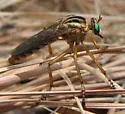
Missouri Hanging Thief
Diogmites missouriensis
Identification: pale reddish golden species; proboscis reddish brown, abdomen yellow without distinct blackish markings
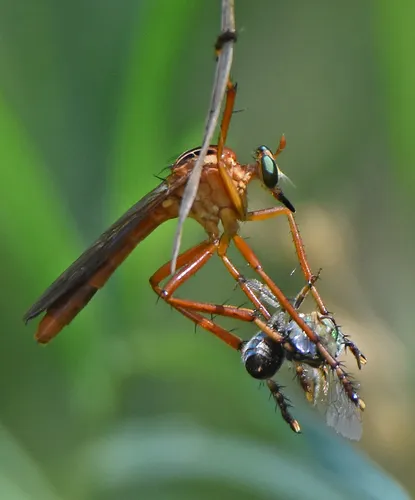
Plain-tailed Hanging Thief
Diogmites neoternatus
Identification: medium-sized brownish species with long legs; abdomen strongly constricted between segments II & III; mesonotum with three velvety black stripes that contrast with the light background of the disc
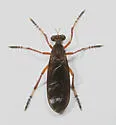
Black Hanging Thief
Diogmites platypterus
Identification: The dark Diogmites in the south. Looks amazingly like a black species of paper wasp when flying low and slow in vegetation. The shining dark scutellum or thoracic shield is almost characteristic, along with the nearly all-dark abdomen
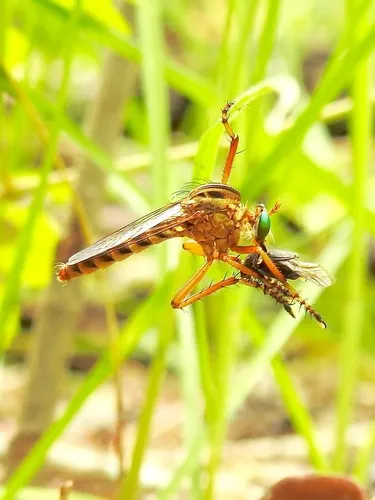
Black-banded Hanging Thief
Diogmites properans
Identification: medium-sized species with three black mesonotal stripes (vs brownish in D. salutans ) and black dorsal bands on abdomen
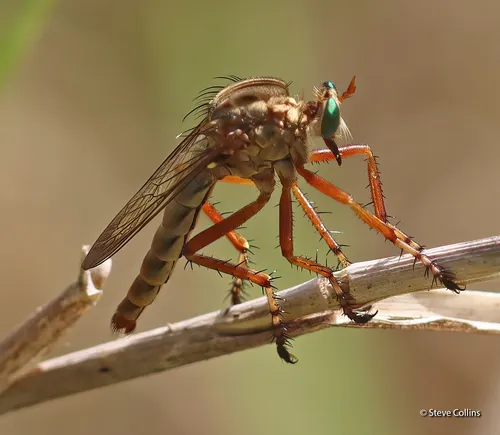
Brown-banded Hanging Thief
Diogmites salutans
Identification: medium-sized, brownish red; mesonotum with three dark brown stripes (the median one divided for its entire length)
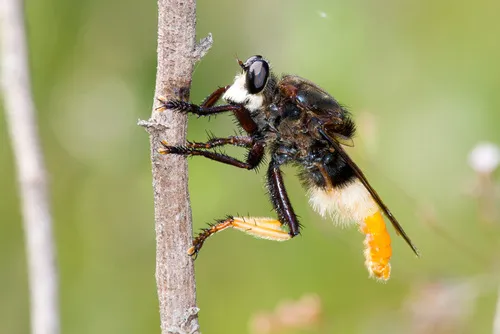
Northern Flare Fly
Eccritosia zamon
Identification: Appearance distinctive--see images. Quoting original description (Townsend, 1895): A stout species with large thorax. Head blackish, front with black hair; face more yellowish, with long pale yellow beard, extending on the cheeks. Fir
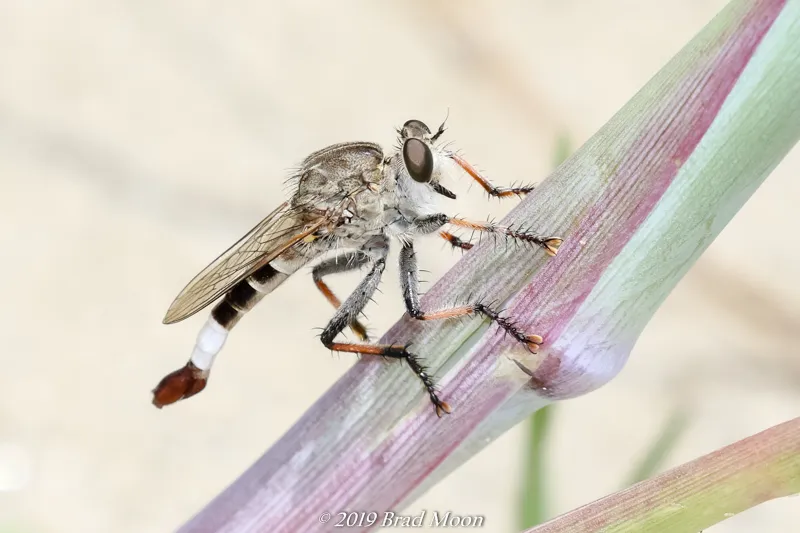
Sand Hammertail
Efferia albibarbis
Identification: mystax (moustache) white; female has relatively short and conical ovipositor, compared to E. aestuans The north shore of Lake Erie is the only region where it occurs in eastern Canada. -- Rob Cannings
Southeastern Hammertail
Efferia apicalis
Identification: A petite Efferia/Nerax of the southeastern coastal plain. Note the following (Herschel Raney-- Key to Efferia of Eastern United States , comments here ):
Golden Club-legged Hammertail
Efferia armata
Identification: Modified hind tibia of male is distinctive.
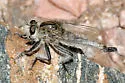
Sagebrush Hammertail
Efferia benedicti
Identification: "The very short bristles on the front half of the top of the thorax, the gray body and the male's silver-white abdomen with white-parted hairs is diagnostic in the northern part of its range (BC and Washington), where no other Efferia
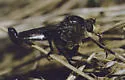
Yellow-bearded Hammertail
Efferia pogonias
Identification: Body and wings dark, mystax (beard) yellowish Females oviposit in soil.
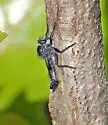
Scrub Hammertail
Efferia slossonae
Identification: From account at Robber Flies of Florida : Quoting original description (Hine, 1919): Male. Total length 14 millimeters. Mystax prominent, mostly white, but with a number of black bristles in the upper part, palpi with black pile, bear
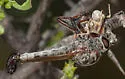
Arizona Club-legged Hammertail
Efferia tagax
Identification: Males are distinguished from other species of the albibarbis group by large size (over 25 mm), enlarged hind tibia, and mystax with mixed black and white hairs.
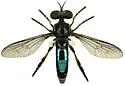
Sapphire-tailed Twigsitter
Holopogon sapphirus
"It perches on twig tips of leguminous plants, just like many other Holopogon ." (comment by Eric Fisher)
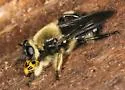
Autumn Laphria
Laphria affinis
Identification: Fall flight time and the two front yellow legs are pretty diagnostic. Please note that correct spelling of specific epithet is affinis . (BC)
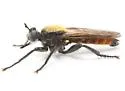
Radiant Laphria
Laphria aktis
Identification: Nearly identical to Laphria sericea . Clear view of male terminal appendages necessary for identification from photographs. Females not separable from photos. Difficult to impossible to distinguish from L. sericea from photographs. Ph
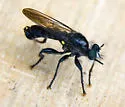
Common Black Laphria
Laphria canis
Identification: L. canis is difficult (sometimes impossible) to distinguish from several similar species from photos. Please place photos that are not conclusively identified under the canis complex page. Antennae help distinguish from the plumper At
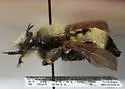
Champlain Laphria
Laphria champlainii
Identification: According to Walton's original 1910 description (at BHL, here , figures of plate IX here ), champlainii has dense yellow pile on the first through the fourth abdominal tergites (fifth on male), with 'anvil-shaped' black patches on the
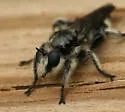
Ashy Laphria
Laphria cinerea
Identification: The legs of this species are covered in dense whitish pile, while the scutum is sparsely-haired, and often looks bare from some angles. This species shows pale pile on abdominal segments 5-6, and black scutellar bristles. Laphria cine
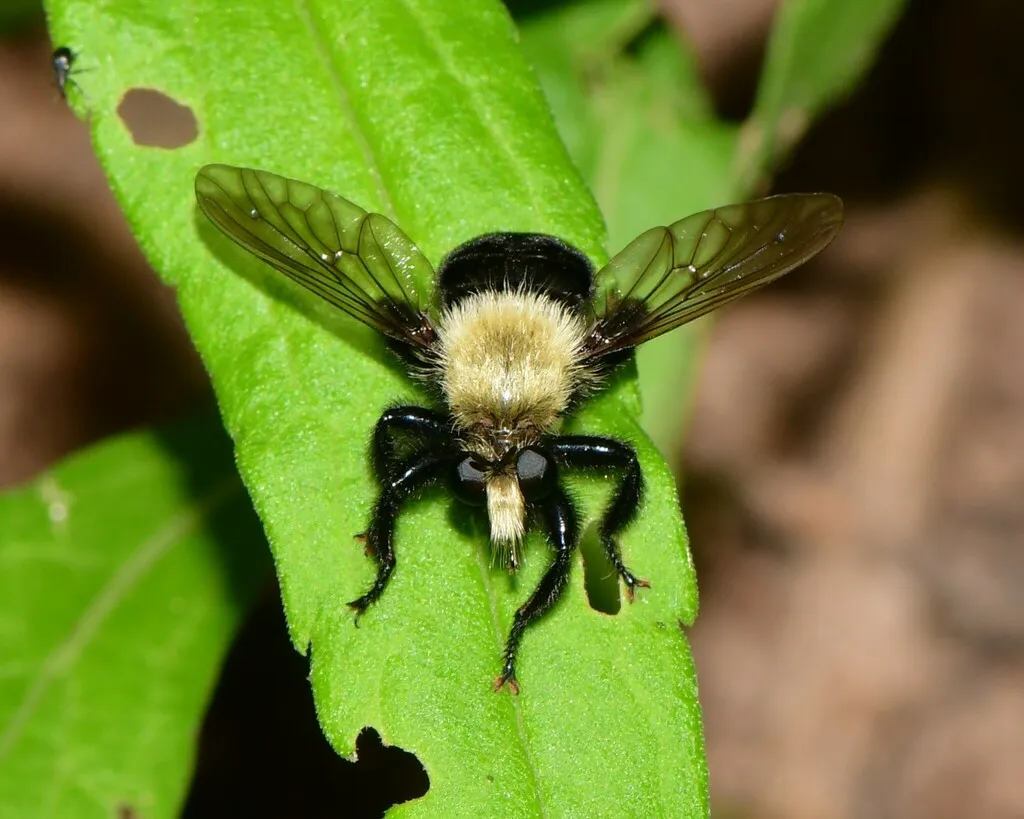
Black-tailed Laphria
Laphria flavicollis
Identification: L. flavicollis and L. virginica are easy to confuse. The main gestalt things to look for are the hairiness of the black abdomen: very fuzzy in virginica , somewhat glossy in flavicollis . The golden hair on the top of the thorax looks
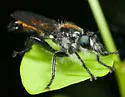
Arrowhead Laphria
Laphria index
Identification: Difficult to impossible to distinguish from L. ithypyga from photographs. Photos that are not conclusively identified should be placed here . Original description here
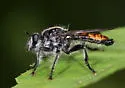
Southern Arrowhead Laphria
Laphria ithypyga
Identification: Difficult to impossible to distinguish from L. index from photos. Diagnostic features discussed here . Photos that are not conclusively identified should go here Original description here
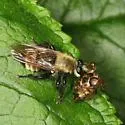
Boreal Laphria
Laphria posticata
Identification: Two forms, which may be good species . Nominate posticata shows black scutellar bristles, and yellow hairs on lateral portions of third abdominal tergite, and all of the fourth and fifth tergites. The form scutellaris has yellowish sc
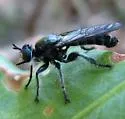
Dagger Laphria
Laphria sicula
Identification: Difficult to impossible to distinguish from several other species from photographs. Photos that are not conclusively identified from genitalia should be placed here .
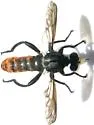
Silver-backed Laphria
Laphria trux
Identification: Large silver patch of hairs typically in front of the scutellum.
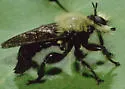
Pinewoods Laphria
Laphria virginica
Identification: Easy to confuse with L. flavicollis . The main gestalt things to look for are the hairiness of the black abdomen, very fuzzy in virginica but somewhat glossy in flavicollis . The golden hair on the top of the thorax looks more swept b
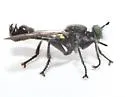
Winnemana Laphria
Laphria winnemana
Identification: Nearly impossible to distinguish from several other similar species from photographs. Photos that are not conclusively identified should be placed in the Laphria canis complex here .
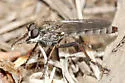
Apache Sandpirate
Lasiopogon apache
Identification: According to Rob Cannings, "The dark reddish tibiae/tarsi and genitalia, the gray-gold thorax and abdomen and the locality help determine the species. The only other Arizona Lasiopogon is an undescribed species from the central mounta
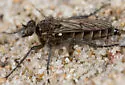
Dark Pismo Sandpirate
Lasiopogon bitumineus
Identification: According to Tristan McKnight, "They're distinguishable in the field by the long thoracic bristles and dark brown color (as opposed to the other local species L. littoris, which is silvery-grey)."
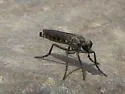
Ashy Sandpirate
Lasiopogon cinereus
Identification: Slender, strongly gray species with medial thoracic stripe (per Rob Cannings).
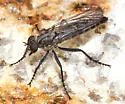
Glade Sandpirate
Lasiopogon currani
Identification: Many have reddish tarsi, tibiae and genitalia and the third antennal segment is often reddish, too. The giveaway here (if you can see it) is that the top surface of the halter is completely black. This is the only Lasiopogon in the re
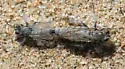
Pale Pismo Sandpirate
Lasiopogon littoris
Identification: "This species is distinguished by its small size, even for a Lasiopogon (about 5-7mm); its all-white hairs and bristles; and the extensive silvery-gray tomentum over almost all the body. The fourth antennal segment (second flagellomer
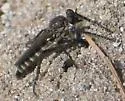
Great Lakes Sandpirate
Lasiopogon tetragrammus
Identification: four apparent scutal stripes, half light/half dark tergite tomentum, and bluntish ovipositor shape ( comment by Tristan McKnight)
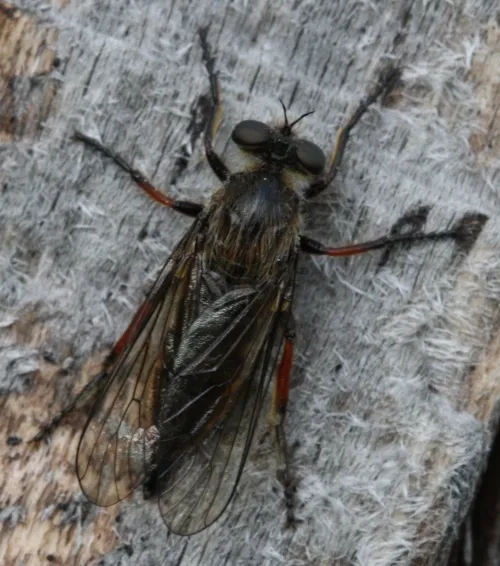
Slender-footed Robberfly
Leptarthrus brevirostris
Length: 7-10mm. This is a dark fly with black legs except for orange on the tibiae - but this colour doesn't extend to the apex. It has black legs with red bands on the mid and hind tibia. The female's ovipositor is dorsolaterally flattened. The genu
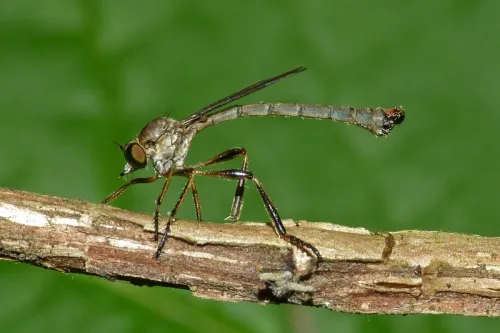
Striped Slender Robberfly
Leptogaster cylindrica
Feet without pads. Hind femur is yellowish. Third antennal segment ends in bristle. Resembles a crane fly in flight. Leptogaster guttiventris is similar but has reddish hind femur. Unless identified by a recognised expert, a photo is required. If the
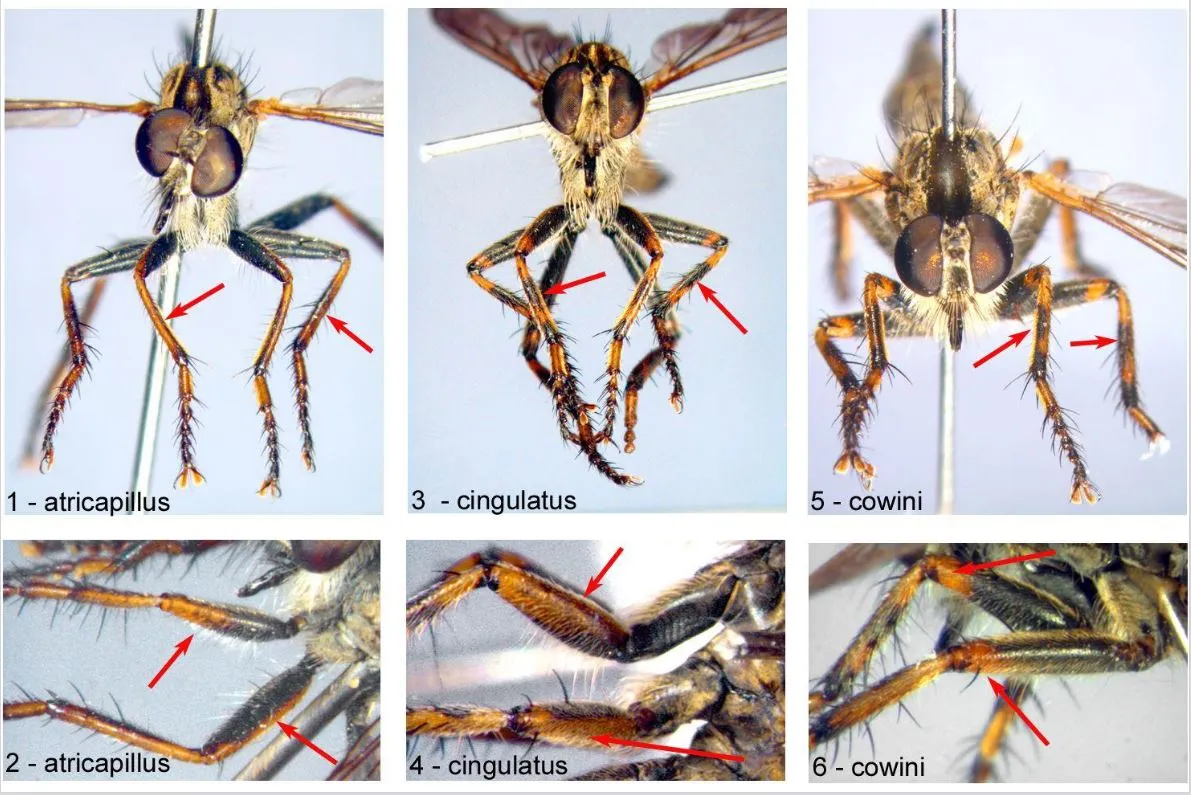
Kite-tailed Robberfly
Machimus atricapillus
Generally larger and greyer than M. cingulatus with a more strongly marked abdomen. There are also differences in details of the antennae and genitalia. The front tibia are largely red and lack the black bands seen in other Machimus species. Males of
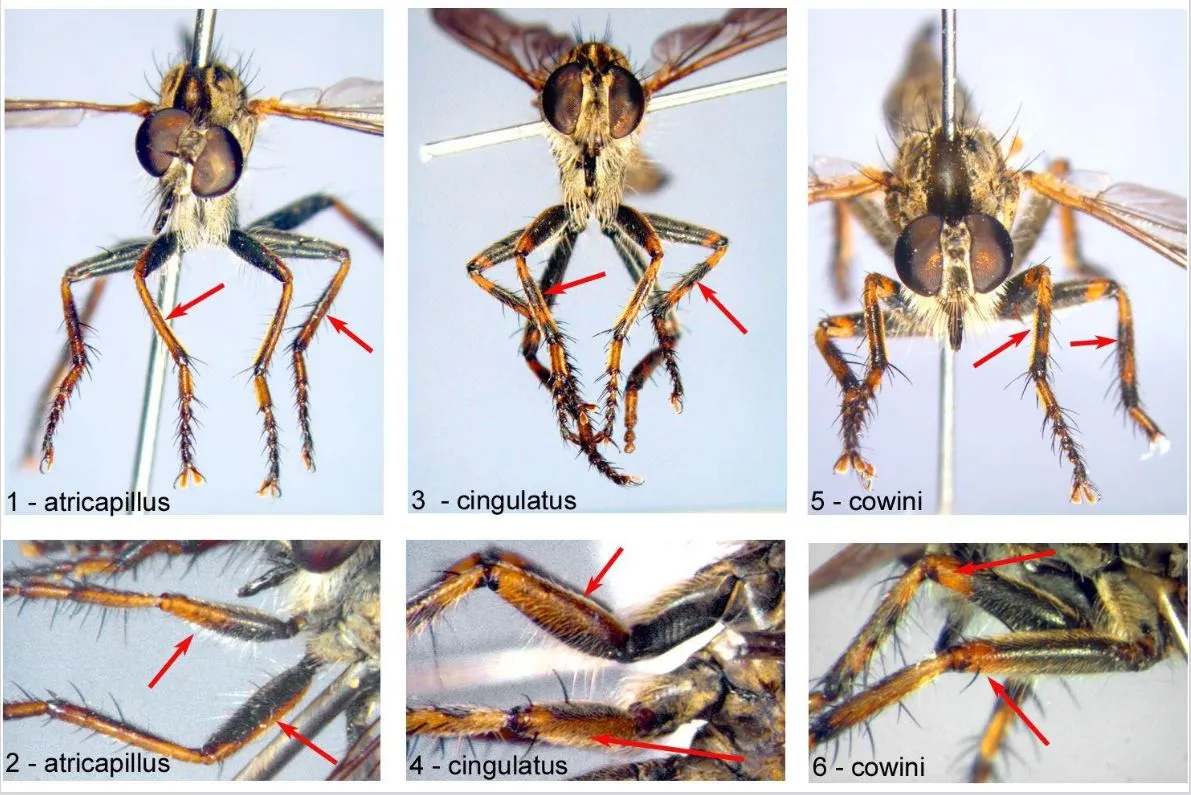
Brown Heath Robberfly
Machimus cingulatus
Size 10 to 15mm. A smallish robberfly with black and red legs. The femora are black on the anterior surface and orange of the posterior surface, with an orange ring near the tip. The top of the thorax has a thick black central line. Machimus atricapi
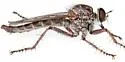
Machimus griseus
Machimus griseus
Identification: Per Eric Fisher, the only Machimus in the U. S. with spotted wings.
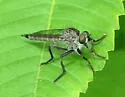
Machimus maneei
Machimus maneei
Identification: Excerpts from Robber Flies of the Southeast: " Machimus maneei occurs in sandy pinewoods throughout the eastern U.S. and Canada though populations appear to be spotty...Compared to other Machimus , this species is relatively easy to i
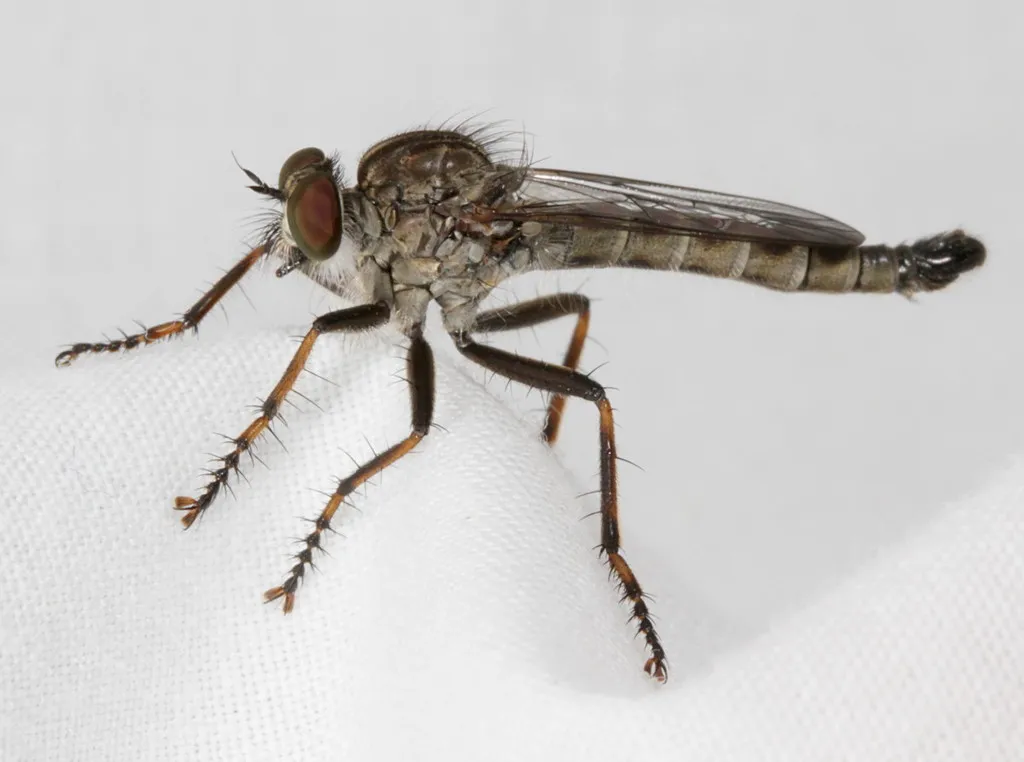
Machimus sadyates
Machimus sadyates
Identification: "Distinctive in the Northeast by having a combination of the all-black femur, tibia with black anterior but pale posterior, and shiny black last (non-ovipositor) tergite." (Comment by Tristan McKnight)
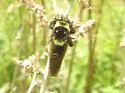
Southern Bee Killer
Mallophora orcina
Identification: Similar to M. bomboides but smaller (than (16-24 mm vs 24-27 mm) and has first 4 tergites yellow-haired (in bomboides , tergites 1-3 yellow/white, but 4th is black). [ comment by Eric Fisher]
Megaphorus minutus
Megaphorus minutus
Identification: See discussion on images. Differentiation from related species may be difficult from photos. The costa ends at the tip of the wing, femora are black basally, dorsum of abdominal segments 3 or 4-7 are covered in short black pile, the h
Nannocyrtopogon irvinei
Nannocyrtopogon irvinei
Identification: "The male face has large bumps and a wavy ridge along the edge, which are covered with a velvety tomentum " ‒ Eric Fisher
Nannocyrtopogon vanduzeei
Nannocyrtopogon vanduzeei
Identification: "Males ... are distinctive because most of the abdomen is covered with gray, which leaves only narrow black stripes & spots; most Nannocyrtopogon have much blacker abdomens." [ comment by Eric Fisher]
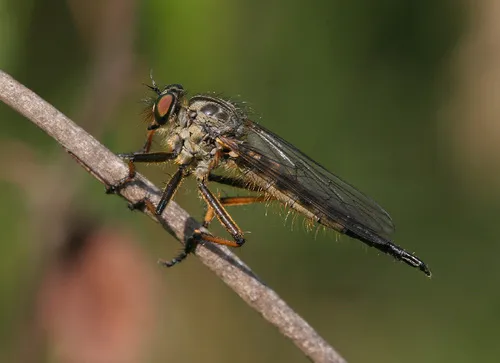
Common Awl Robberfly
Neoitamus cyanurus
12 to17mm. The Awl Robberflies are named for the distinctive long ovipositor of the female. The last segments of the abdomen are glossy black - part of the genitalia. Femora are black and the tibiae are bright orange with black tips. Males are easier
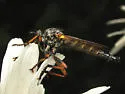
Nevadasilus auriannulatus
Nevadasilus auriannulatus
Identification: Per Eric Fisher, "The striking red and black legs and the stout, black bristles of the legs, head and thorax are characteristic for this species."
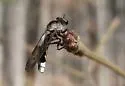
Nicocles pictus
Nicocles pictus
Original publication (Loew, 1866; in Latin!) gives size as: Long. corp. 5 1/3 lin., long. al. 5 1/4 lin. Long. corp. = length of body, long. al. = length wing. The unit is some version of the "line", see https://en.wikipedia.org/wiki/Line_(unit) , pe
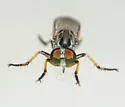
Ommatius ouachitensis
Ommatius ouachitensis
Identification: The genus character of the branched antennae for this group is usually visible. Can be common in summer in the right habitat. Fearless of approach. Often perches with the characteristic upright stance at the top tips of downed tree br
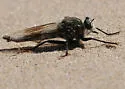
Proctacanthus coquillettii
Proctacanthus coquillettii
A "sand dune-loving fly limited to the southern part of the Colorado River drainage." (Comment by Eric Fisher.)
Proctacanthus fulviventris
Proctacanthus fulviventris
Identification: Upcurved proboscis, mostly or entirely black femora, black thorax, black and red abdomen, mystax yellow to orange.
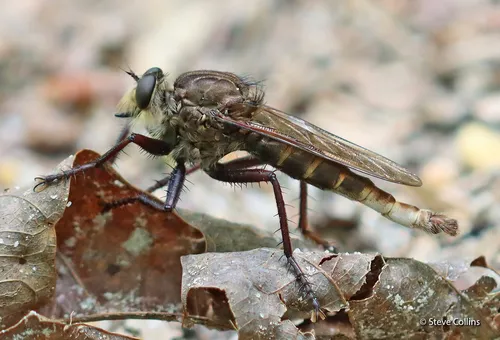
Proctacanthus nigriventris
Proctacanthus nigriventris
Identification: Description from Hine : Body very dark, nearly black; wings uniformly rather pale brown. Mystax very pale yellowish, often with black bristles intermixed, beard gray, occipito-orbital bristles black. Thorax dark, brown pollinose, meso
Proctacanthus rufus
Proctacanthus rufus
Identification: Females elongate with bristle-tipped ovipositor
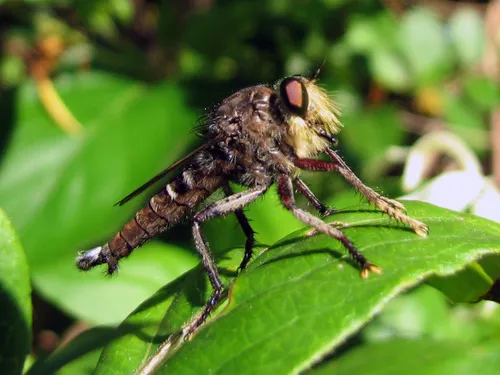
Promachus bastardii
Promachus bastardii
Identification: Similar to P. fitchii . Males have distinctive white tip on abdomen and white bands on thorax
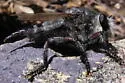
Promachus giganteus
Promachus giganteus
Identification: One of the largest North American robber flies; quite common in NM and w. TX throughout June and sometimes as late as August. Sufficient rainfall is required to support a large population. Their prey includes large grasshoppers, cicad
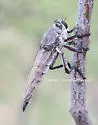
Promachus nigrialbus
Promachus nigrialbus
Identification: how to separate this species from P. giganteus : click
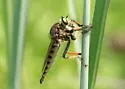
Promachus vertebratus
Promachus vertebratus
Identification: Green eyes, sometimes with some red.
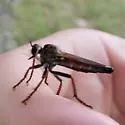
Scleropogon floridensis
Scleropogon floridensis
Identification: Posterior cell 1/cell R5 of wings open at margin; wings brownish; posterior cell 4/cell CuA1 closed and shortly petiolate or at most narrowly open; fore femora ventrally with 6-8 bristles; mesonotum blackish, humeri reddish; femora bl
Sintoria emeralda
Sintoria emeralda
Identification: Wings light brown, abdomen bluish green.
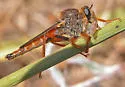
Stenopogon californiae
Stenopogon californiae
Identification: Extremely variable; male genitalia critical for ID
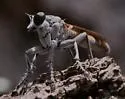
Three-banded Robber Fly
Stichopogon trifasciatus
Identification: body slender and relatively hairless; thorax and legs light bluish-gray; abdomen with 3 bands of alternating light and dark color (a distinguishing feature among congeners)
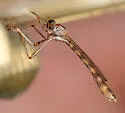
Tipulogaster glabrata
Tipulogaster glabrata
Identification: the shellacked look of the thoracic dorsum distinctive among thin Leptogaster ( Herschel Raney )
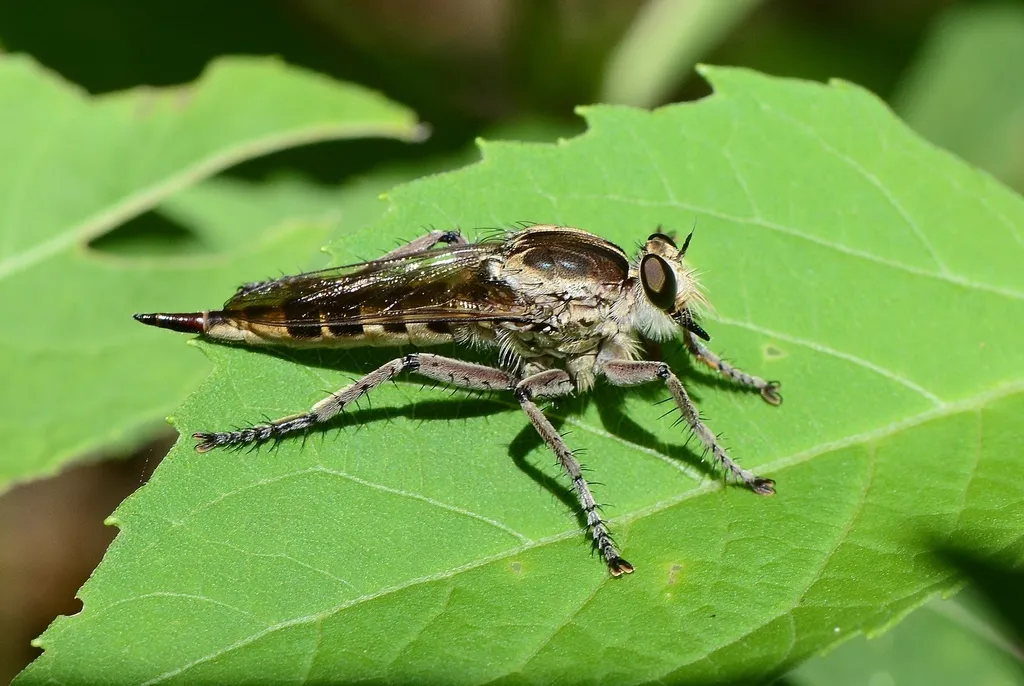
Triorla interrupta
Triorla interrupta
Identification: Large, gray, abdominal pattern of dark dashes on segments is distinctive, at least in e. US. Ovipositor long, somewhat rounded at tip, not pointed.
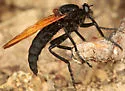
Wyliea mydas
Wyliea mydas
This species was originally described (in German) as Asilus mydas by Brauer in 1885. Figures 1 and 1a showing habitus and wing venation appear at the end of the paper here . In 1975 C. H. Martin gave his description of the new genus Wyliea and made t
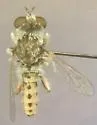
Northwestern Prospector
Ablautus coquilletti
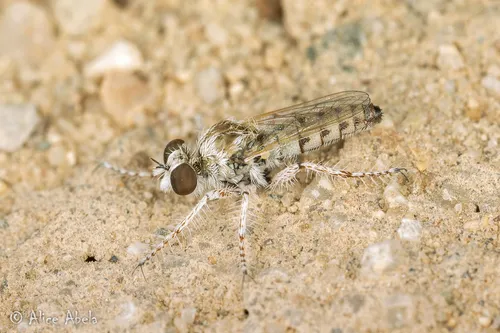
Yellow-legged Prospector
Ablautus flavipes
Arizona Prospector
Ablautus mimus
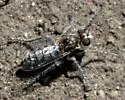
Texas Prospector
Ablautus rufotibialis
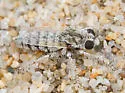
Black-footed Prospector
Ablautus schlingeri
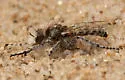
Spot-winged Prospector
Ablautus vanduzeei
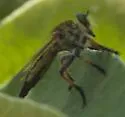
Green-eyed Lion Fly
Amblyonychus trapezoidalis
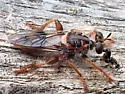
Mexico Chiselmouth
Andrenosoma corallium
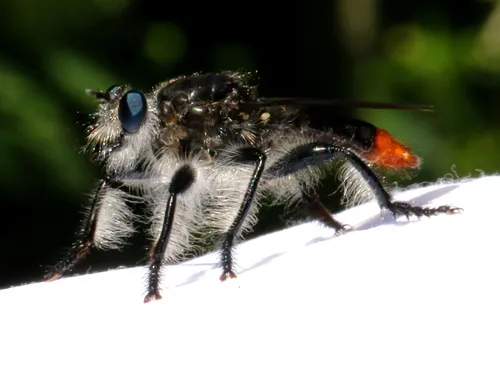
Mangrove Chiselmouth
Andrenosoma cruentum
Golden-horned Chiselmouth
Andrenosoma hesperium
Texas Chiselmouth
Andrenosoma xanthocnemum
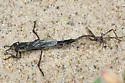
Hairy-footed Pixie
Apachekolos scapularis
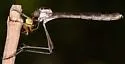
Thin-legged Pixie
Apachekolos tenuipes
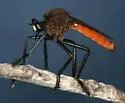
Northern Brigand
Archilestris magnificus
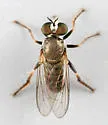
Arkansas Micropanther
Atomosia arkansensis
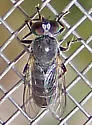
Blackbeard Micropanther
Atomosia melanopogon
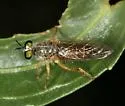
Yellow-horned Micropanther
Atomosia mucida
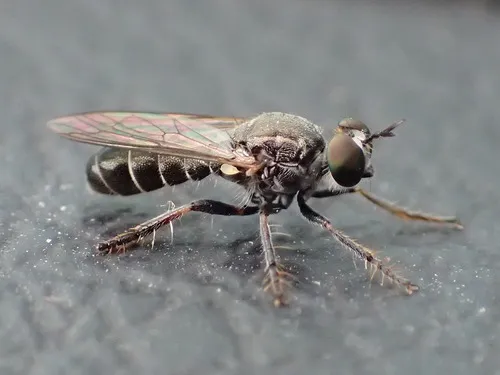
Robber Fly -Atomosia sp.
Atomosia puella