
Family Root-Maggot Flies (Anthomyiidae)
Anthomyiidae is a family in the order Diptera. Browse 75 named species recorded in this family, or open an individual profile for its available identification and natural-history information.
Species in Anthomyiidae (75)
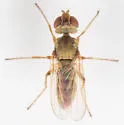
Acridomyia canadensis
Acridomyia canadensis
Identification: Muscoid fly without palps or vibrissae; thoracic bristles short.
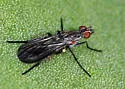
Anthomyia obscuripennis
Anthomyia obscuripennis
Identification: Male with wing strongly narrowed at base and darkened at apex. Male with broad frons, as in female. Related to the European Anthomyia monilis .
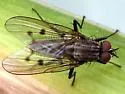
Anthomyia ochripes
Anthomyia ochripes
Identification: In California, the only Anthomyia with a pair of spots on crossvein dm-cu. Related species in California have a continuous dark band along the vein. A. confusa has a similar pair of spots, more dark markings near the base of the wing
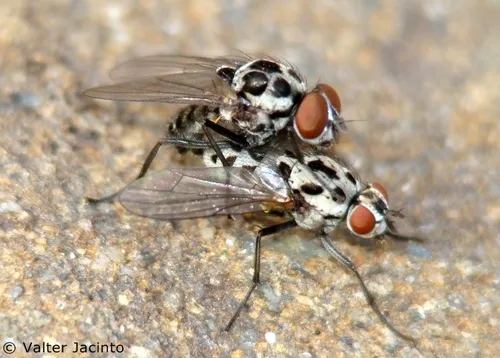
Anthomyia pluvialis
Anthomyia pluvialis
This genus is the Dalmatian of the fly world, with a striking chequered appearance. The background is usually grey but can be brown with distinct black spots. Anthomyia pluvialis is very similar to A. imbrida and A. procellaris . Male pluvialis can b
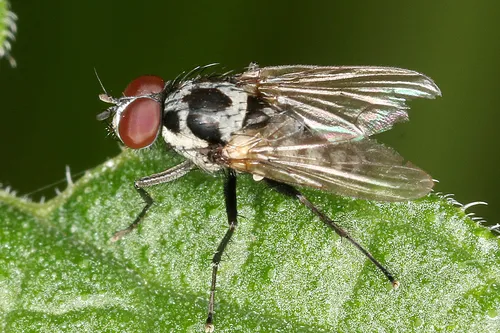
Anthomyia procellaris
Anthomyia procellaris
This small handsome fly has a thorax neatly marked with black spots on a grey background. There are other similar species and certain identification requires detailed examination, if we cannot be certain that an image is Anthomyia procellaris but it
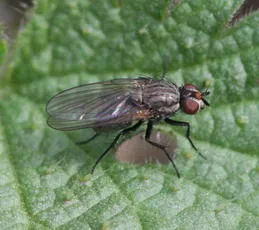
Botanophila fugax
Botanophila fugax
This anthomyiidae fly has a grey striped thorax and black legs. It has characteristically long hairs arising from the thorax. This species has a red ID rating and unless identified by a known expert you must provide a satisfactory explanation of how
Botanophila latifrontalis
Botanophila latifrontalis
Identification: Proepisternum bare, palpi not expanded, face not narrowed, anepimeron bare, male frons width similar to female, 3 pairs of presutural acrostichal setae developed, tergites 3-5 with discal rows of setae, tibiae yellowish, hypopygium sl
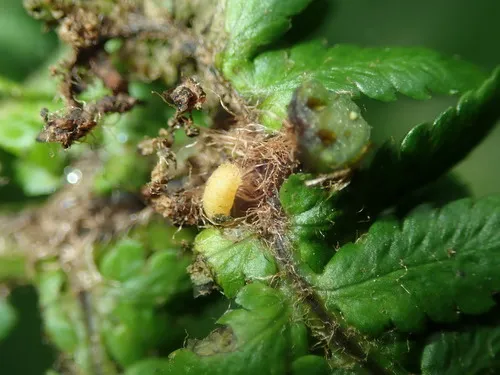
Chirosia betuleti
Chirosia betuleti
Chirosia betuleti is a small grey fly resembling a small house fly. Its larvae cause galls to form on ferns, and in particular on Male-fern, Lady-fern and Buckler-ferns. Eggs are laid in the tip of the fronds, and the resulting larvae tunnel into the
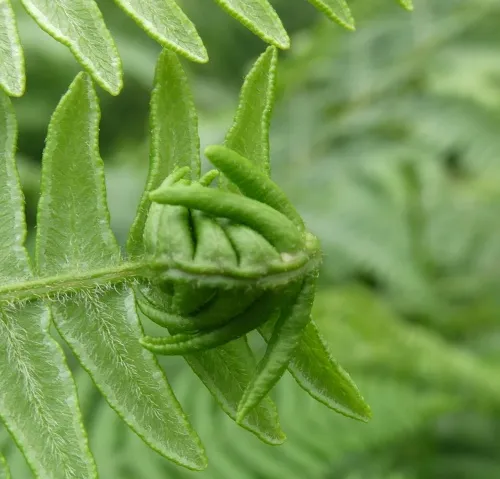
Chirosia grossicauda
Chirosia grossicauda
The larva of the fly Chirosia grossicauda causes galls to form on Bracken fronds. The tip of the pinnule (involving a few pinnules) rolls downwards and may discolour, inside a white maggot mines along the main vein. Widespread and fairly frequent in
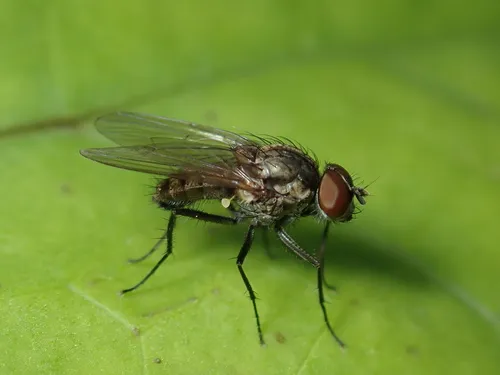
Delia platura
Delia platura
This small greyish fly is the most commonly recorded of the Anthomyiidae and generally abundant everywhere. It is around 8mm with a dark median line at the front of the scutum (top of the thorax). As with many flies it is under-recorded as it can onl
Delia pluvialis
Delia pluvialis
Identification: Male with lower corner of third tergite greatly enlarged (visibly so in lateral view), fifth sternite with very long hairs.
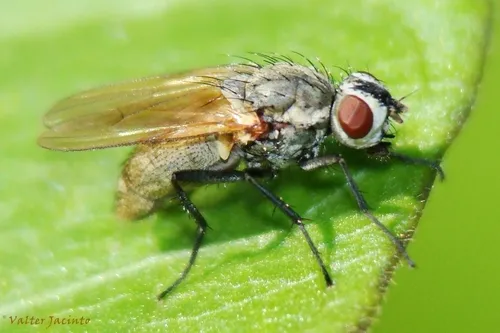
Delia radicum
Delia radicum
The adult flies are approximately 6.5 mm long and are grey-brown in colour with a darker stripe along the back of the abdomen. This species has a red ID rating and unless identified by a known expert you must provide a satisfactory explanation of how
Egle ciliata
Egle ciliata
Identification: One of two species with four postsutural dorsocentral bristles.
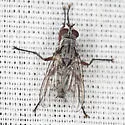
Eustalomyia vittipes
Eustalomyia vittipes
Identification: The only species of Eustalomyia with partly yellow legs. Photos on diptera.info: 1 , 2 . "This fly has twice been reared from material collected from the interior of rotten logs in the winter season at Harrisburg, Pa. The insect was
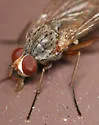
Eutrichota affinis
Eutrichota affinis
Identification: In the Northeast, distinguished from related species by the scutellum with yellow tip continuing as a yellow stripe underneath , neither entirely black nor entirely yellow below. Scutellum dorsally may be yellow at the tip, abdomen fi
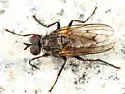
Eutrichota cylindrica
Eutrichota cylindrica
The most common of a group of six Nearctic species with "extreme proliferation of fine thoracic setulae" (Griffiths, 1984) and swollen female fore tarsi.
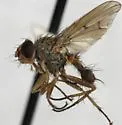
Eutrichota geomyis
Eutrichota geomyis
The long spines on the wing are probably an adaptation to help maneuver in dark pocket gopher burrows.
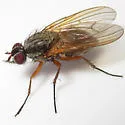
Eutrichota lipsia
Eutrichota lipsia
Identification: Antennal articles 1-2 opaque yellow, thorax finely dusted and shining, mid femora without distal anteroventral setae.
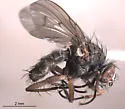
Eutrichota nigrifemur
Eutrichota nigrifemur
Identification: Antennal scape and pedicel infuscated, thorax densely gray-dusted, notopleura not clothed with setulae except for the large 2 setae, prealar long, mid femora without a distal av, fore tibia with or without an apical pd, wings with var
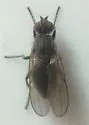
Fucellia tergina
Fucellia tergina
Identification: Separated from F. maritima by the narrower genae (allegedly 0.5-0.65 times eye height compared to 0.6-0.7 times) and the absence of setulae between the presutural two rows and pairs of acrostichal setae. In males, the ventral femoral
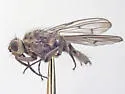
Fucellia thinobia
Fucellia thinobia
Identification: Presutural acrostichals with setulae in between, prealar absent. Scutellum dorsally largely setulose. Wings subinfuscated.
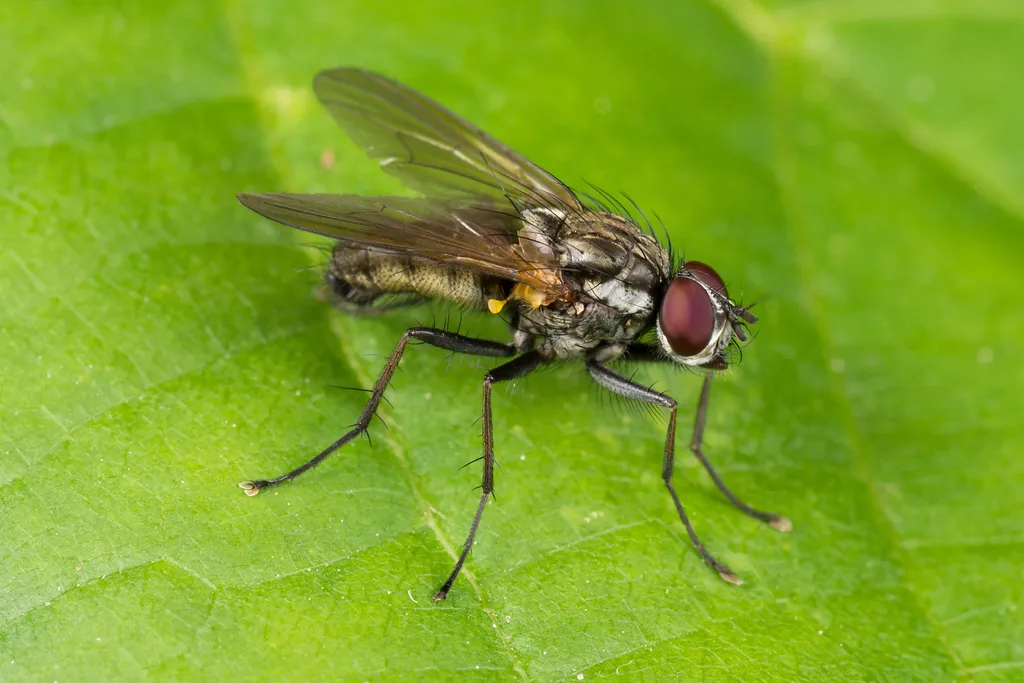
Hydrophoria lancifer
Hydrophoria lancifer
It is a member of the Anthomyiidae family, which are closely related to the Muscidae but the 6th long vein reaches to the wing margin. It is a hairy beige-brown fly, varying in length from 4 to 11 mm. This species has a red ID rating and unless ident
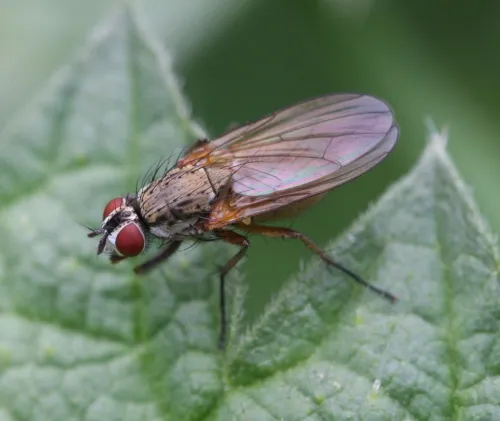
Hydrophoria linogrisea
Hydrophoria linogrisea
Similar to the more common Hydrophoria lancifer , but its legs are reddish yellow. This species has a red ID rating and unless identified by a known expert you must provide a satisfactory explanation of how it was identified for the record to be acce
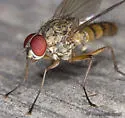
Hylemya alcathoe
Hylemya alcathoe
Identification: " H. alcathoe is notable in the genus due to its long pectinate aristal hairs, yellow palpi, normally yellow legs and partly reddish abdomen. The female abdomen may occasionally be wholly gray." In addition, the female may have humeri
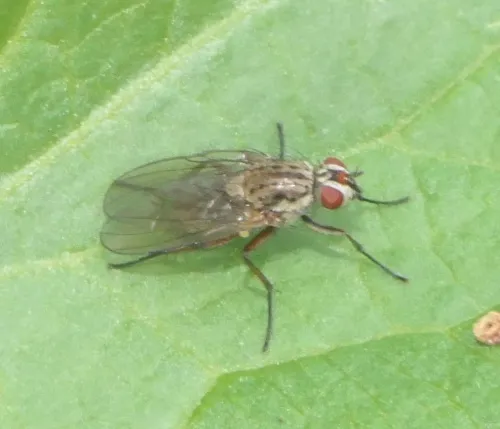
Hylemya vagans
Hylemya vagans
9mm - large for an anthomyiid. H. vagans has a yellow hind tibia (other leg parts may also be yellow but this is variable) and a very plumose arista, though with the hairs not very numerous. The lower squamae is small and narrow - largely hidden behi
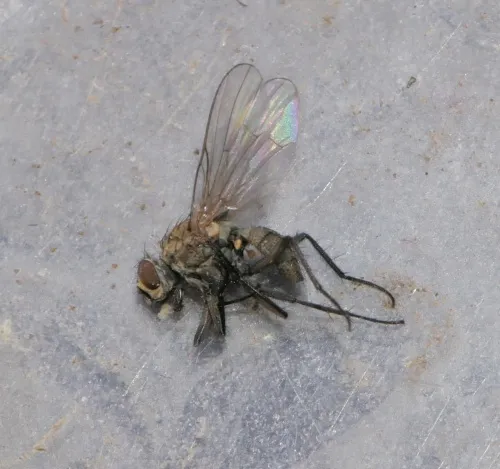
Hylemya variata
Hylemya variata
As with other flies in the Anthomyiidae family, this genus are thin bodied. Most are grey/brown and lack obvious identification features. Hylemya species have long plumose arista, with the rays not very numerous (similar to Hydrophoria), but with sma
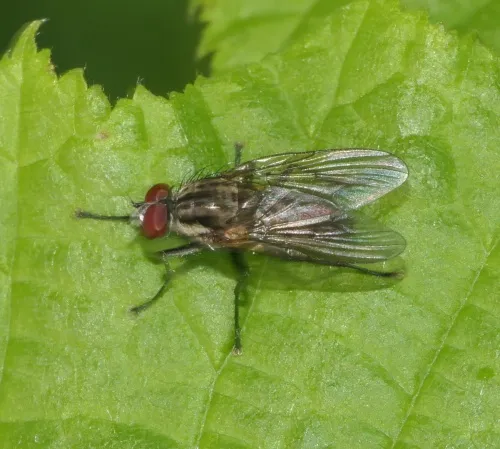
Hylemyza partita
Hylemyza partita
Hylemyza partita has a brown thorax with dark lateral stripes. It has plumose arista with hairs longer than the width of the antennae diameter. This species has a red ID rating and unless identified by a known expert you must carry out detailed exami
Leucophora apivora
Leucophora apivora
Identification: Distinguished from other common species of Leucophora by the combination of legs red (including femora), both female and male with widely separated eyes, and flight time in June.
Leucophora johnsoni
Leucophora johnsoni
Identification: In the eastern United States, the combination of legs partly yellow, a ventral bristle on mid tibia, and female eyes slightly closer together than normal but still separated by about 2/3 their width) will identify this species.
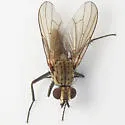
Leucophora marylandica
Leucophora marylandica
Kleptoparasites of Colletes . Related to the Palaearctic species Leucophora grisella ( http://www.diptera.info/photogallery.php?photo_id=1957 )
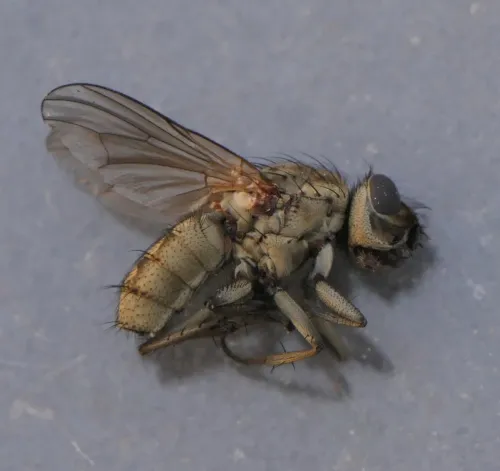
Leucophora obtusa
Leucophora obtusa
One of several almost identical species so great care is needed with identification. If detailed examination has not taken place it should be recorded as Leucophora sp. The genus has a characteristically wide parafacial and gena (the area in front of
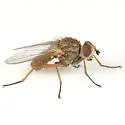
Pegomya betae
Pegomya betae
pest of beet Considered invasive in this country. (Capinera, John L. North American Vegetable Pests. The Pattern of Invasion. American Entomologist. Spring 2002)
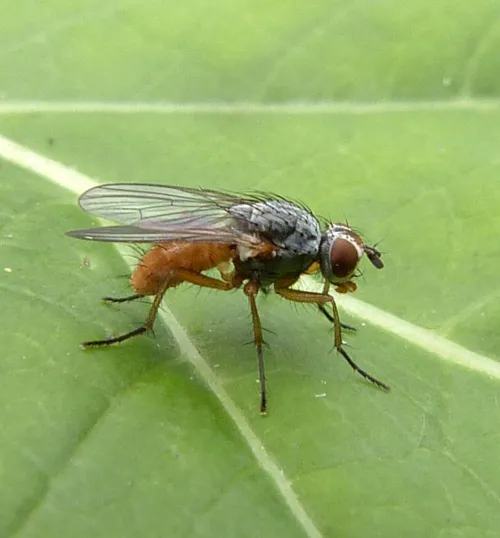
Pegomya bicolor
Pegomya bicolor
Length 6 to 8 mm. Both male and female have an orange abdomen and a grey or blackish thorax. The legs are mainly orange. Detailed examination is required to identify to species level. Hedgerows and flower meadows where adults take nectar and pollen.
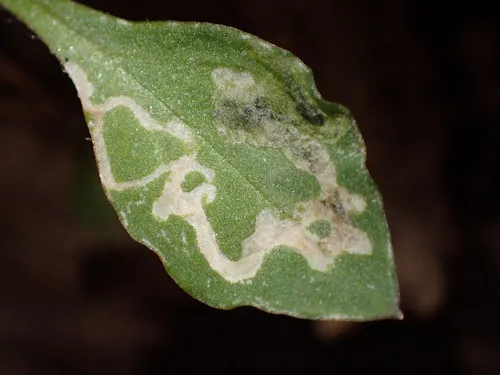
Pegomya flavifrons
Pegomya flavifrons
The larvae of the fly Pegomya flavifrons mine the leaves of various plants such as Chickweeds, Stichworts, Campions and Mouse-ears. The mine takes the form of a gallery then a blotch, larger and deeper than the mine of Amauromyza flavifrons. In large
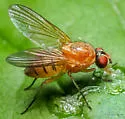
Pegomya geniculata
Pegomya geniculata
Griffiths (1984) says "often the most numerous Pegomya in caught samples in Canada."
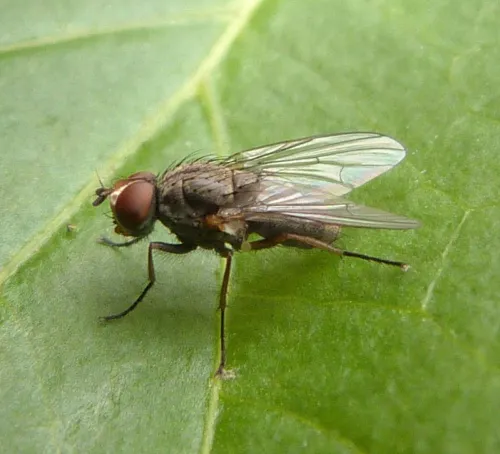
Pegomya hyoscyami
Pegomya hyoscyami
A grey bodied fly about 6 millimetres long. Adult: Unless identified by a recognised expert, a photo is required and the specimen should be examined with a microscope. In the comments box, state the key or ID method used and describe the size and ide
Pegomya (Phoraea) winthemi
Pegomya winthemi
Identification: Females of the species group to which P. winthemi belongs have enlarged fifth segments of mid and hind tarsi.
Alliopsis angustitarsis
Alliopsis angustitarsis
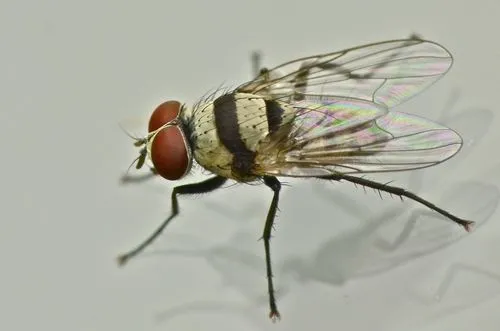
Root-Maggot Fly -A. illocata
Anthomyia illocata
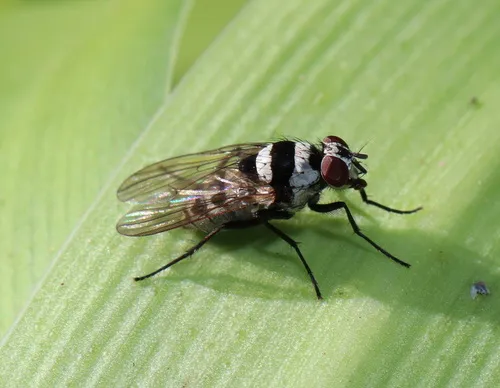
Anthomyia medialis
Anthomyia medialis
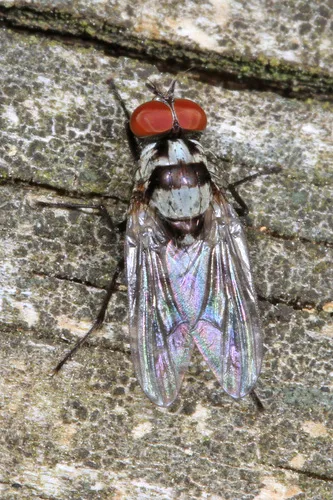
Root-Maggot Fly -A. oculifera
Anthomyia oculifera
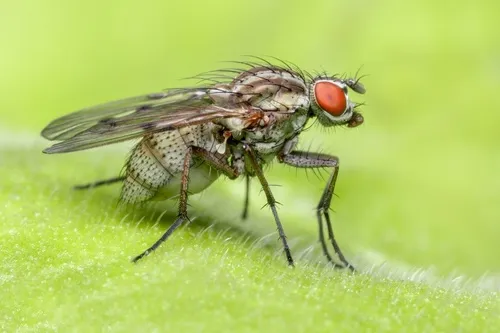
Anthomyia punctipennis
Anthomyia punctipennis
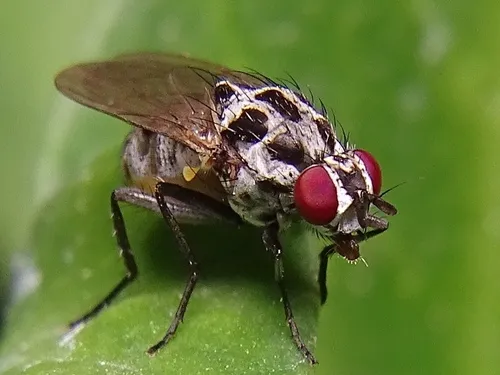
Anthomyia quinquemaculata
Anthomyia quinquemaculata
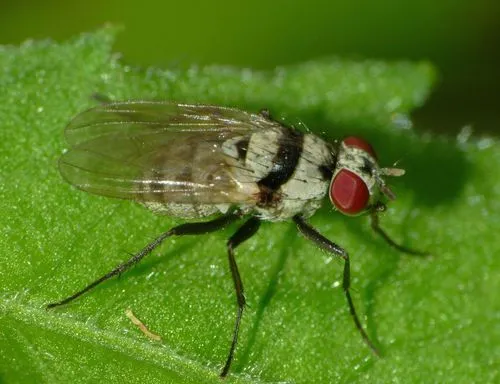
Anthomyia silvestris
Anthomyia silvestris
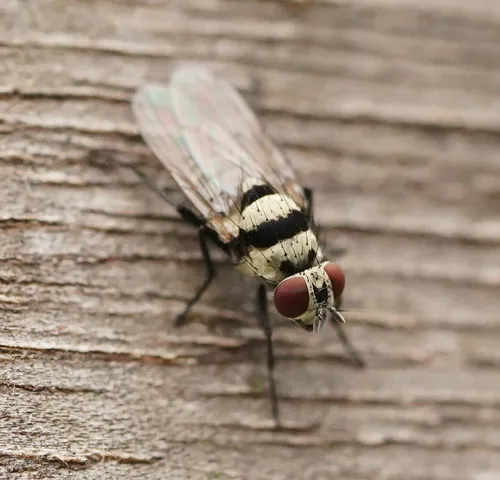
Anthomyia vicarians
Anthomyia vicarians
Calythea micropteryx
Calythea micropteryx
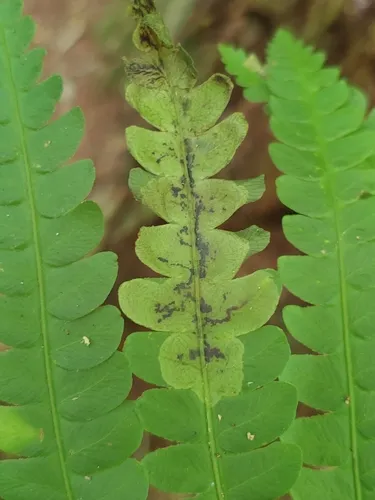
Chirosia filicis
Chirosia filicis
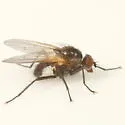
Chirosia flavipennis
Chirosia flavipennis
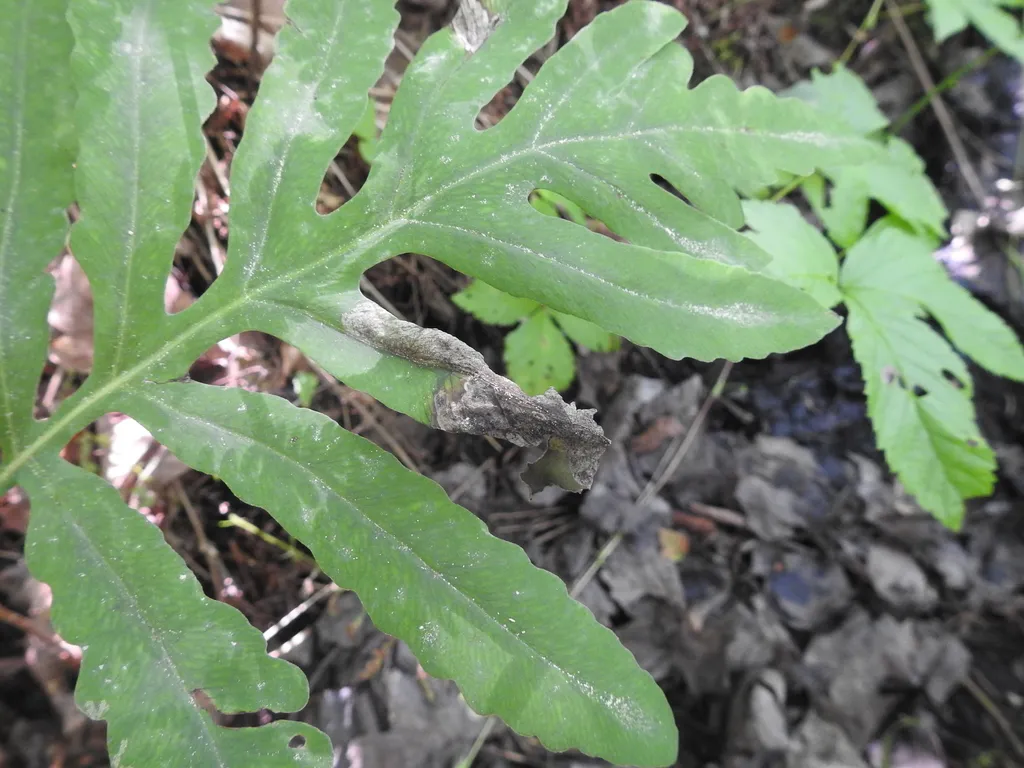
Chirosia gleniensis
Chirosia gleniensis
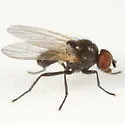
Chirosia pusillans
Chirosia pusillans
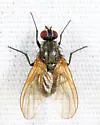
Chirosia spinosissima
Chirosia spinosissima
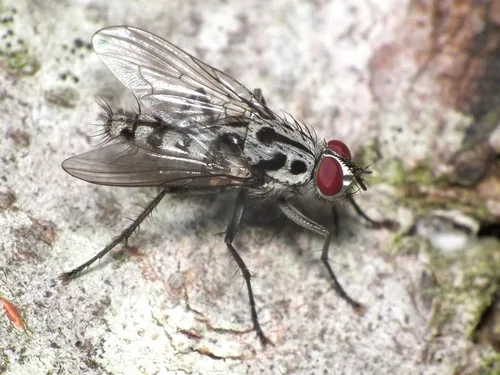
Eustalomyia hilaris
Eustalomyia hilaris
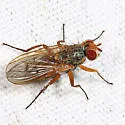
Eutrichota finitima
Eutrichota finitima
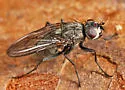
Eutrichota fuscipes
Eutrichota fuscipes
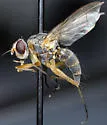
Eutrichota gopheri
Eutrichota gopheri
Eutrichota impolita
Eutrichota impolita
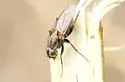
Eutrichota incompleta
Eutrichota incompleta
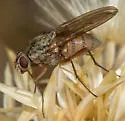
Eutrichota lividiventris
Eutrichota lividiventris
Eutrichota spinosissima
Eutrichota spinosissima
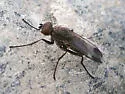
Fucellia apicalis
Fucellia apicalis
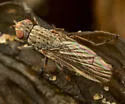
Fucellia assimilis
Fucellia assimilis
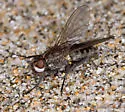
Fucellia costalis
Fucellia costalis
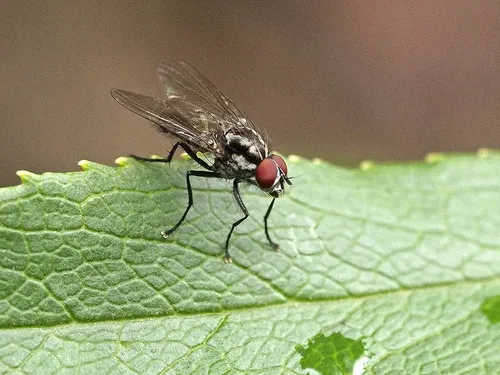
Hylemya latevittata
Hylemya latevittata
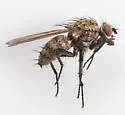
Hylemya urbica
Hylemya urbica
Lasiomma sedulum
Lasiomma sedulum
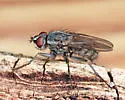
Leucophora unilineata
Leucophora unilineata
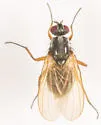
Parapegomyia socculata
Parapegomyia socculata
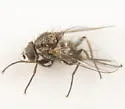
Pegomya atlanis
Pegomya atlanis
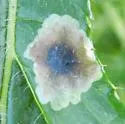
Pegomya carduorum
Pegomya carduorum
Pegomya depressiventris
Pegomya depressiventris
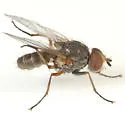
Pegomya exilis
Pegomya exilis
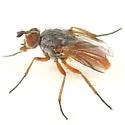
Pegomya pseudobicolor
Pegomya pseudobicolor
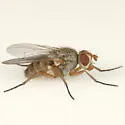
Pegomya rufescens
Pegomya rufescens
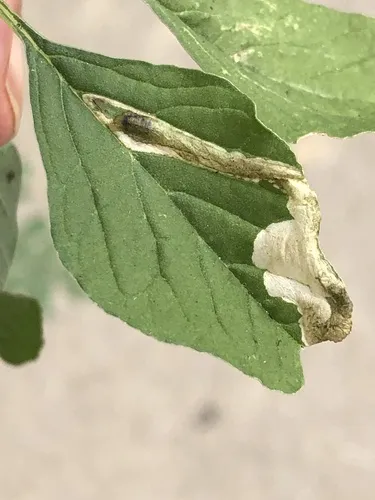
Pegomya wygodzinskyi
Pegomya wygodzinskyi
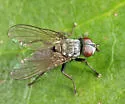
Phorbia sinuata
Phorbia sinuata