
Butterflies and Moths
Order Lepidoptera
The Butterflies and Moths (Order Lepidoptera) includes 11,813 species across 112 families and 2,787 genera in our directory.
About Butterflies and Moths
Lepidoptera includes approximately 180,000 described species of butterflies and moths. Moths outnumber butterflies roughly 10:1. The monarch butterfly's eastern population has declined by more than 80% since the mid-1990s, and the western population by over 95% since the 1980s. The IUCN lists the migratory monarch as Vulnerable.
Economic Impact
Lepidoptera are critical pollinators. In Europe, grassland butterfly species have declined by almost 50% since the early 1990s. In the UK, three-quarters of butterflies are in decline. In the U.S., five butterfly species have gone extinct since 1950, with 29 listed as endangered.
Ecological Role
Butterflies and moths are essential indicators of ecosystem health. As caterpillars, they are a primary food source for birds - a single nest of blue tit chicks requires ~10,000 caterpillars. Adult moths pollinate many night-blooming plants.
Families in Lepidoptera (112)
Species in Lepidoptera (11,813)
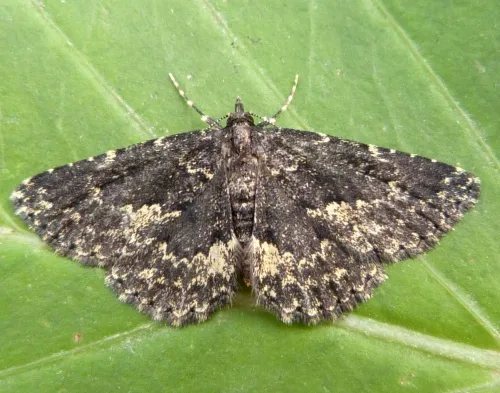
Waved Black
Parascotia fuliginaria
Wingspan 18 to 28 mm. This rather pretty species has a resting posture and appearance more typical of the family Geometridae than Noctuidae. It occupies woodland, damp areas and suburban habitats. The larvae feed mainly on a variety of fungi and rott
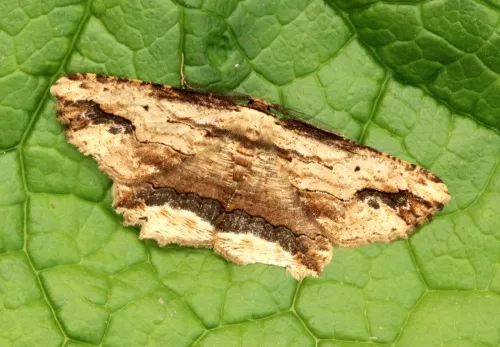
Waved Umber
Menophra abruptaria
Wingspan 36-42 mm. A distinctive species that is not likely to be confused with anything else. Broad-leaved woodland, scrub, hedgerows, parks and gardens. Flies in a single generation from April into June. The larvae feed on Garden Privet and Lilac.
Wavy Chestnut Y - Hodges#8912
Autographa mappa
Identification: Adults - forewing chestnut brown with numerous wavy bands and lines of darker brown and black in very distinctive pattern; scattered silver gold metallic scales in lower parts of AM and PM lines, as well as along basal line and outlin
Wavy Lined Mallow Moth - Hodges#9168
Bagisara repanda
Identification: Adult: forewing shows darkening at the reniform spot and also some dark shading of the three lines; outer margin slightly angulate (not smoothly rounded); male foretibia and forefemur with large dense black-tipped scale tufts
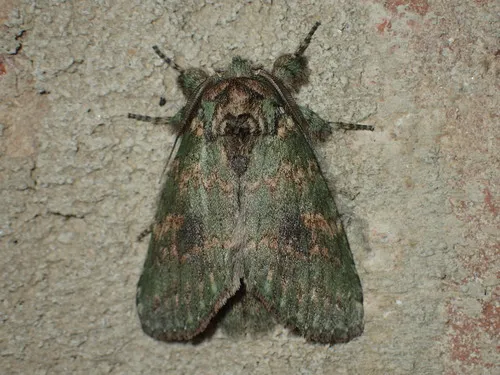
Wavy-lined Heterocampa Moth
Cecrita biundata
Cecrita biundata, the wavy-lined heterocampa, is a species of moth in the family Notodontidae (the prominents). It was first described by Francis Walker in 1855 and it is found in North America.
Wavy-lined Zanclognatha - Hodges#8353
Zanclognatha jacchusalis
Identification: Adult: forewing grayish-brown to yellowish-brown; antemedial (AM) and postmedial (PM) lines wavy or jagged, usually noticeable; subterminal (ST) line thin and pale, bordered proximally by darker shading along its length; hindwing a mi
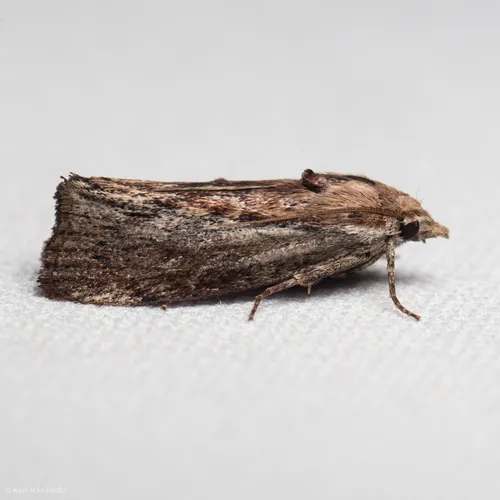
Wax Moth
Galleria mellonella
Wingspan 29 to 40 mm. The males of this species have a distinctively concave outer edge to the forewing; the females are generally plainer in appearance with a less concave edge. Flying between June and October, the adults can be attracted to light.
Waxed Sallow Moth - Hodges#9948
Chaetaglaea cerata
Identification: Pale grayish tan FW has whitish veins. Gently curved AM & PM are edged pale yellow. Slightly darker orbicular and reniform spots have pale outlines. Reniform spot has tiny black dot in inner half.
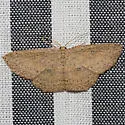
Waxmyrtle Wave Moth - Hodges#7137
Cyclophora myrtaria
Identification: Specimen identified by DNA analysis: See discussion of identification issues in Remarks under this image:
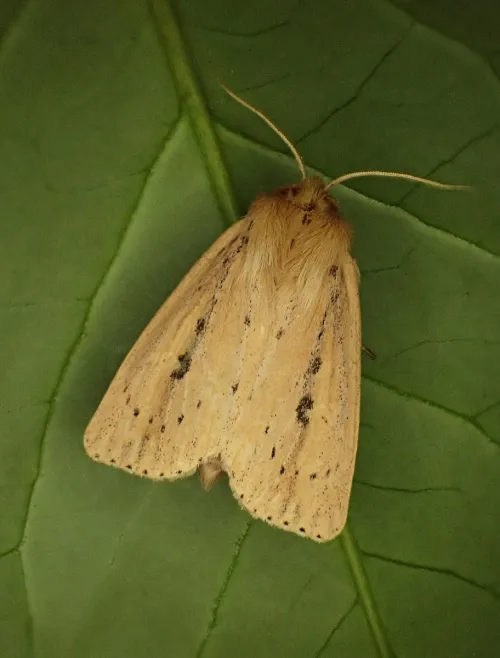
Webb's Wainscot
Globia sparganii
Wingspan 32 to 40 mm. This species is orange-brown to cream in colour and distinguished by the broad, blunt forewing, rounded at the tip. The amount of dark streaking also varies usually, crossing an outer row of black dots. There is also a row of sm
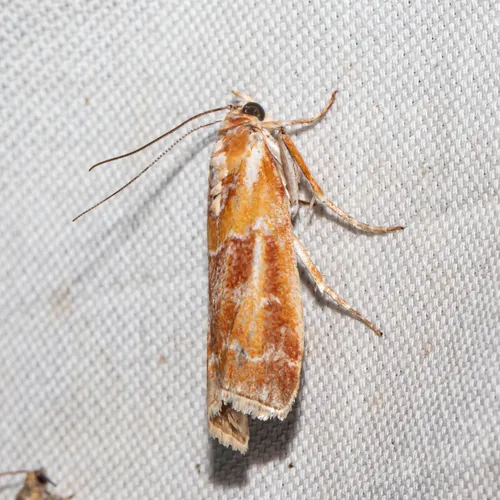
Webbing Coneworm Moth - Hodges#5847
Dioryctria disclusa
Identification: The Heinrich revised description of Dioryctria disclusa is available in PDF or online in the print references. - Adult: forewing yellowish-orange inside AM line, darker orange beyond AM line; AM and PM lines white, jagged; median line
Welsh Wave - Hodges#7425
Venusia cambrica
Identification: Adult: forewing white with several lines and dark brown bands crossing wing; terminal line composed of several black triangular spots at ends of veins (a distinguishing feature); median line black, irregular, but lacking prominent not
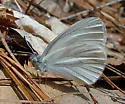
West Virginia White - Hodges#4196
Pieris virginiensis
Identification: Wings are translucent, whitish, with no yellowish tint underneath. Underside of hindwings with blurry brown or pale gray scaling along veins. The introduction of the non-native garlic mustard Alliaria petiolata endangers this butterfl
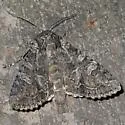
Western Apamea - Hodges#9346
Apamea occidens
Identification: Adult: forewing gray with well-defined lines and large pale discal spots, broad gray subterminal band (sometimes tinted with pink), and no dentate subterminal line; AM line white, double, lobed; black anal dash, and short black basal
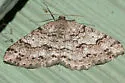
Western Carpet - Hodges#6618
Melanolophia imitata
Identification: Adult: forewing light to medium brown with dark brown speckling; PM line scalloped, prominent; median and AM lines usually fainter; ST line composed of several black spots; discal spot small, round, black hindwing similar but slightly
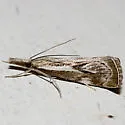
Western Catoptria - Hodges#5409
Catoptria oregonicus
Identification: Adult: forewing white with patchy brown scaling; central white streak runs from base to median line; median line dark, deeply zigzagged; PM line white, diffuse, blotchy; subterminal line thin, dark, curved, edged distally with white;
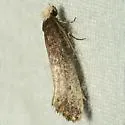
Western Clothes Moth - Hodges#0403
Tinea occidentella
BOLD:AAF7603 [CA (San Diego)] BOLD:ABX2540 [CA (Monterey Bay]
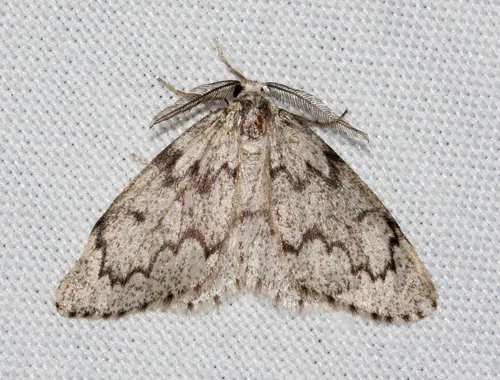
Western False Hemlock Looper - Hodges#6910
Nepytia freemani
Western False Hemlock Looper - Hodges#6910 (Nepytia freemani) is a species in the family Geometridae, commonly known as geometrid moths, belonging to the order Lepidoptera (Butterflies and Moths). It is classified within the subfamily Ennominae, trib
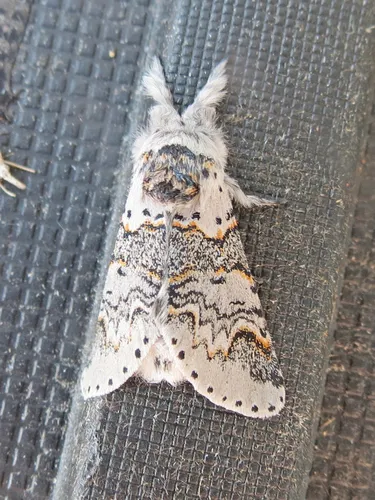
Western Furcula - Hodges#7939
Furcula occidentalis
Identification: Adult: forewing pale grayish with dark gray to charcoal median band and dark gray to charcoal patch along costa near apex; PM line triple, fine, continuous across wing presenting 3 distinct 'teeth' in the two most distal PM lines; AM
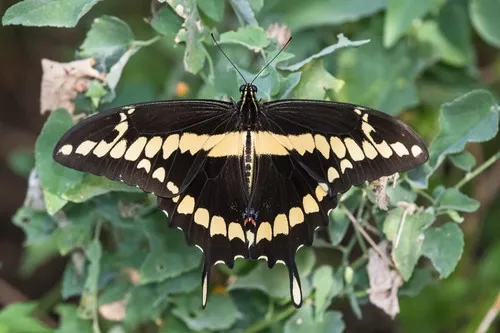
Western Giant Swallowtail
Heraclides rumiko
Papilio rumiko is a species of swallowtail butterfly. It is found from the south-western United States, through Mexico, El Salvador, Honduras, Costa Rica to Panama. The northernmost record is north-eastern Colorado.
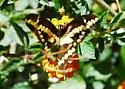
Western Giant Swallowtail - Hodges#4170.1
Papilio rumiko
Identification: Side-by-side Photo Comparison and Discussion It is debated as to whether this is truly a distinct species or a regional variant of P. cresphontes . There is evidence that the two may intergrade, but more study is needed on the subject
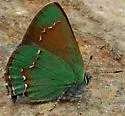
Western Green Hairstreak - Hodges#4305
Callophrys affinis
Identification: There's a wide variation in appearance, geographically and even in local populations. The color varies from solid green to half green, half brown, and some have white spots.
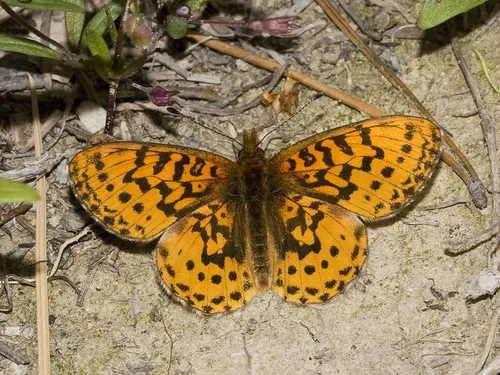
Western Meadow Fritillary - Hodges#4469
Boloria epithore
Identification: Most similar to Boloria kriemhild, frigga, bellona , and improba. B. improba is generally more northern and found higher in mountains, usually in moist tundra, is smaller, darker above, and duller below. B. frigga usually has bolder
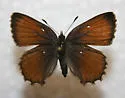
Western Pine Elfin - Hodges#4329
Callophrys eryphon
Identification: Very similar to Eastern Pine Elfin, but Westerns Pine Elfins are not found in most of the Eastern United States, While Eastern Pine Elfins do not occur further west of the eastern Pine forests (western limits in Minnesota, Oklahoma, T
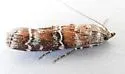
Western Pine Moth - Hodges#5854
Dioryctria cambiicola
Identification: Genitalia: There are many websites with information about the pest status of this species group.
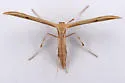
Western Plume Moth - Hodges#6161
Oidaematophorus occidentalis
Powell, J. A. & P. A. Opler, Moths of Western North America, Pl. 12.32m; p.
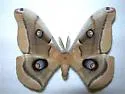
Western Polyphemus Moth - Hodges#7757.1
Antheraea oculea
Identification: Larva very similar to A. polyphemus . Adults are also similar to A. polyphemus , but darker and with more markings around the eye spots. "Upperside of wings is tan, sometimes with a yellowish or reddish tint. Forewing margin is the sa
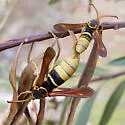
Western Poplar Clearwing - Hodges#2526
Paranthrene robiniae
Identification: Adult - colored almost exactly like a paper wasp. Mostly yellow, first three abdominal segments black. Head is black, with yellow facial scales. FW orange brown with darker veins; HW clear with a deep yellow discal mark, fringed with
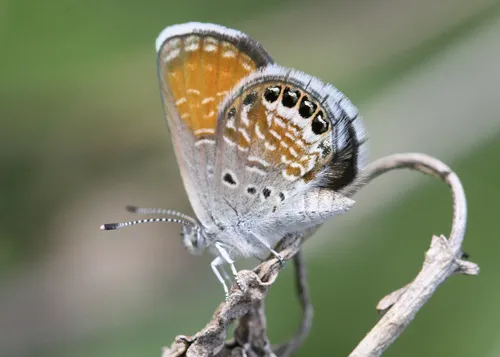
Western Pygmy-Blue
Brephidium exilis
The western pygmy blue (Brephidium exilis or Brephidium exile) is one of the smallest butterflies in the world and the smallest in North America. It has reached Hawaii, as well as the Persian Gulf, including eastern Saudi Arabia, Bahrain and the Unit
Western Rectilinea Slug Moth
Apoda latomia
Identification: Less well-marked and paler brown than A. rectilinea . See Bob Patterson's comment here : UPDATE 2022 BOLD currently retains both species pages for this taxon, which are now considered synonymous: [cite: ---> Epstein & Adams (2009: 163
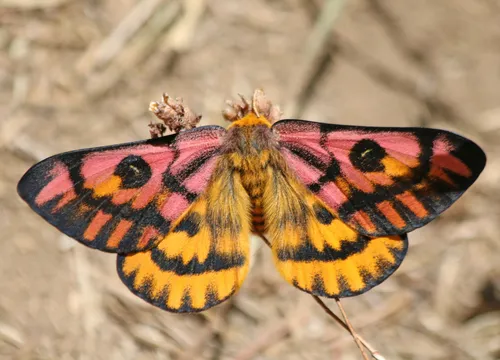
Western Sheep Moth
Hemileuca eglanterina
The sheep moth, or common sheep moth (Hemileuca eglanterina), is a member of the family Saturniidae of silk moths and is native to western North America. In California, its range is west of the Sierran crest and the mountains of Southern California,
Western Sooty Hairstreak - Hodges#4277
Satyrium fuliginosum
Identification: Tailless, dorsal drab gray, underwing grayish to brown, with the FW usually having a line of dark dots circled in white, and the HW can have some whitish dots. Distinction from S. semiluna as a distinct species from S. fuliginosa is d
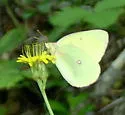
Western Sulphur - Hodges#4212
Colias occidentalis
Identification: Very close to Christina and Alexandra Sulphurs. Characters much the same as for Christina Sulphur, but upper side usually bright yellow, at most flushed orange. Found further southwest, but overlapping in Rockies in US.
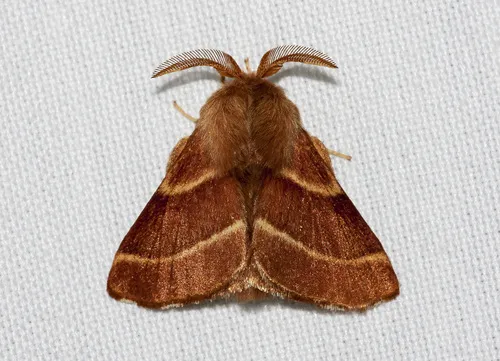
Western Tent Caterpillar Moth
Malacosoma californica
Malacosoma californicum, the western tent caterpillar, is a moth of the family Lasiocampidae. It is a tent caterpillar. It is found in the western part of the Nearctic ecozone.
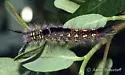
Western Tussock Moth - Hodges#8309
Orgyia vetusta
Identification: Specimen identified by DNA analysis:
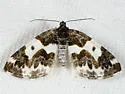
Western White-Ribboned Carpet - Hodges#7308
Mesoleuca gratulata
Identification: forewing with broad white medial band and broad black curving postmedial band; prominent black discal spot; basal area black Genitalia:
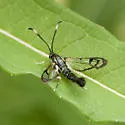
Western Willow Borer - Hodges#2570
Synanthedon albicornis
Identification: Larva - body white with brown head, light brown cervical shield with curved lines. Males respond well to Z-ODDA pheromone baits.
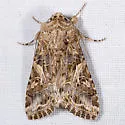
Western Yellow-striped Armyworm Moth - Hodges#9667
Spodoptera praefica
Identification: Adult: forewing variably grayish-brown to yellowish-brown with pale scaling along veins; oblique yellowish shade line extends across orbicular spot toward PM line; basal, AM, PM, and ST lines irregular, pale yellow or white; hindwing
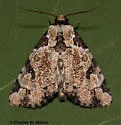
Whaleback Moth - Hodges#9716
Stibaera thyatiroides
Identification: Adult: forewing ground color white with brown dappling in median area, and yellowish-brown shading beyond PM line; orbicular spot brown, round; reniform spot blackish, U-shaped; blackish patches along costa in basal, median, and subte
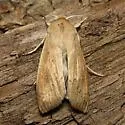
Wheat Armyworm - Hodges#10438.1
Mythimna sequax
Identification: The original description is available online. Hindwing is white with contrasting dark veins and dark shading along the outer margin.
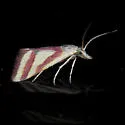
Whip-marked Snout Moth - Hodges#4795
Microtheoris vibicalis
Identification: Adult: forewing white or cream-colored with broad maroon AM and PM lines; AM line oblique, almost parallel to costa; PM line parallel to outer margin; fringe and strip along inner margin maroon; hindwing gray with long fringe of hairl
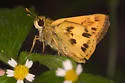
Whirlabout - Hodges#4045
Polites vibex
Identification: Adult: dorsal - male bright yellowish-orange on both wings; forewing with large black stigma and dark patch near tip. Female dark brown with unmarked hindwing and several pale orange or yellow spots on forewing. Adult: ventral - male

White Admiral
Limenitis camilla
Rare. Restricted to a few woodland sites in East of county, but possibly expanding its range
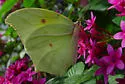
White Angled-Sulphur - Hodges#4226
Anteos clorinde
Identification: White with irregular yellow spot in the middle of the margin of the front wing.
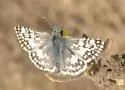
White Checkered-Skipper - Hodges#3967
Burnsius albezens
Identification: Adult: usually paler than Common Checkered-Skipper, and male often has complete black checks in wing fringes (rather than partial, as in P. communis ) - but read See Also section below. Upperside of male bluish-gray; female black. Bot
White Cutworm Moth - Hodges#10715
Euxoa scandens
Considered a pest of many vegetable crops as are many of the cutworm species.
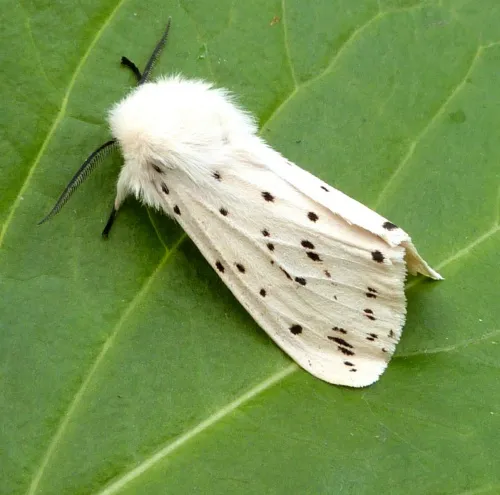
White Ermine
Spilosoma lubricipeda
Wingspan 34-48 mm. There is considerable variation in the degree of black speckling and, in certain parts of Scotland, there are forms with a buffish ground colour. Gardens, hedgerows, grassland, heathland, moorland and woodland. It generally flies f
White Eulithis - Hodges#7206
Eulithis explanata
Identification: Adult: forewing white with dark gray basal, median, and terminal shading, heaviest just below apex; shading in median area may be broken into upper and lower patches by variably wide white band crossing median area; AM and PM lines ob
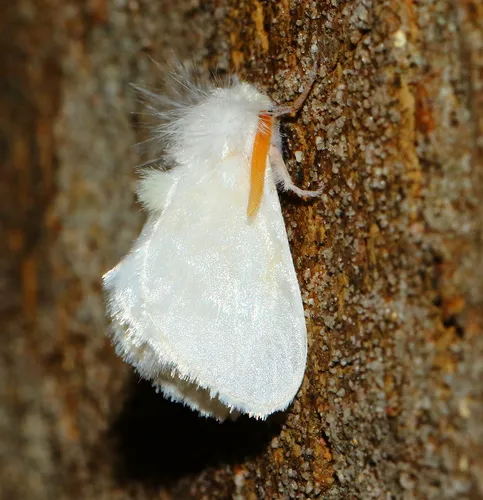
White Flannel Moth
Norape cretata
Norape ovina, the white flannel moth, is a moth of the Megalopygidae family. In the United States, it is found from Washington, D.C. south to Florida, west to Montana and Texas. Its range extends further south through Mexico, Guatemala and Panama to
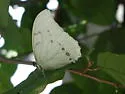
White Morpho - Hodges#4569.5
Morpho polyphemus
Several subspecies and/or forms "Morpho luna Group" Morpho polyphemus ssp. luna (syn. M. luna) Morpho polyphemus ssp. luna (var. niveina) Morpho polyphemus ssp. luna (var. albina) East coast: Yucatan of Mexico, south into Guatemala, Belize and Hondur
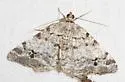
White Pine Angle - Hodges#6347
Macaria pinistrobata
Identification: Adults ( 3 ) Similar to Macaria signaria but the ground color is more whitish with a black and white appearance. Space between medial and postmedial bands is usually the palest. Transverse lines are weaker as they approach the inner m
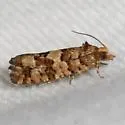
White Pine Cone Borer - Hodges#3074
Eucopina tocullionana
Identification: Heinrich original description is in PDF. Adult: forewing dark reddish-brown with large distinct orangish-yellow patches that often merge to create an irregular light-and-dark banding effect; hindwing brownish-gray with pale fringe; to
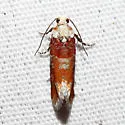
White Pine Shoot-borer - Hodges#3066
Eucopina gloriola
Identification: Heinrich (1931) original description as Eucosma gloriola is online in the print references. Considered a serious pest beacuse the larvae damage the shoots of conifers.
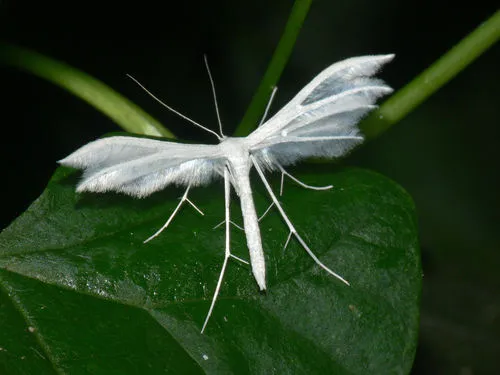
White Plume
Pterophorus pentadactyla
Wingspan 26-34 mm. Probably the most distinctive of the 'Plume' moths and one of the largest. Its wings are deeply divided into several 'fingers', each of which is finely feathered, or plumed. Inhabiting dry grassland, waste ground and gardens. The a
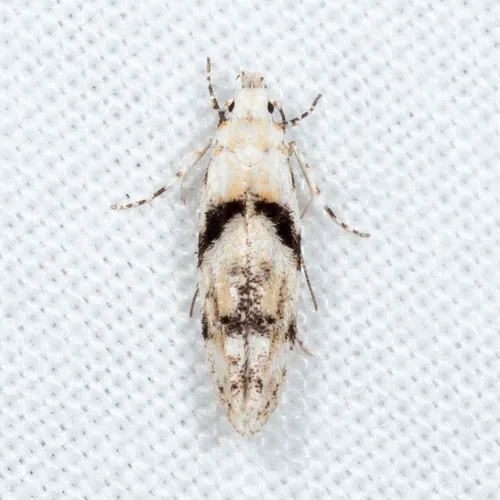
White Stripe-backed Moth
Arogalea cristifasciella
Arogalea cristifasciella, the stripe-backed moth, is a moth of the family Gelechiidae. It is found in North America, where it has been recorded from Alabama, Arkansas, Connecticut, Florida, Georgia, Illinois, Indiana, Kansas, Kentucky, Louisiana, Mai
White Y Mark - Hodges#8921
Autographa v-alba
Identification: Forewings are iridescent pale violet grey and dark slate grey. The stigma is a small, silvery white v shape.
White-aproned Pococera Moth - Hodges#5596
Pococera scortealis
Identification: Specimen identified by DNA analysis:
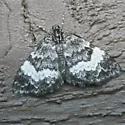
White-banded Carpet - Hodges#7313
Spargania luctuata
Identification: Adult - sexually dimorphic. Larva - pale green or brown with dark cross-shaped markings.
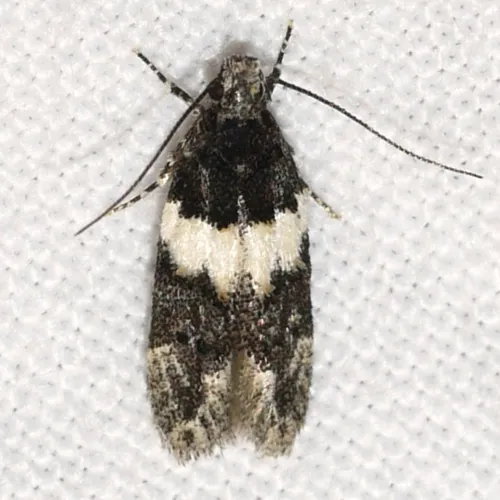
White-banded Pubitelphusa Moth
Pubitelphusa latifasciella
Pubitelphusa latifasciella, the white-banded telphusa moth, is a moth of the family Gelechiidae. It is found in North America, where it has been recorded from Alabama, Arkansas, Florida, Georgia, Illinois, Indiana, Kansas, Kentucky, Louisiana, Maryla
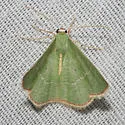
White-barred Emerald Moth - Hodges#7045
Nemoria bifilata
Identification: Original description as Anisodes bifilata Walker 1585 . Description as Racheospila abdominaria (Barnes & McDunnough) 218 . Eastern specimens often have a wide white dorsal stripe. Instead of the spotted form found in Texas, Oklahoma.
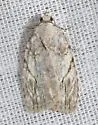
White-blotched Balsa - Hodges#9664
Balsa labecula
Identification: Specimen identified by DNA analysis: Genitalia: ♀ ♂
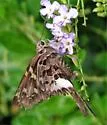
White-crescent Longtail - Hodges#3883
Codatractus alcaeus
First confirmed U.S. record: Boca Chica, Cameron Co., Texas - 1968 (Heitzman, 1970) [Single prior specimen from "Davis Mountains", no further data]
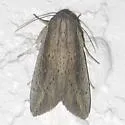
White-dotted Wainscot - Hodges#10453.1
Leucania subpunctata
Identification: Adult: forewing dark brownish-gray in male (lighter brown in female), with a diffuse dark line runs from the wing base to the white discal dot; slightly paler strip extends along length of costa but wing shows little overall contrast;
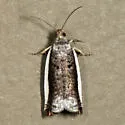
White-edged Ancylis Moth - Hodges#3387
Ancylis albacostana
White-edged Ancylis Moth - Hodges#3387 (Ancylis albacostana) is a species in the family Tortricidae, commonly known as tortricid moths, belonging to the order Lepidoptera (Butterflies and Moths). It is classified within the subfamily Olethreutinae, t
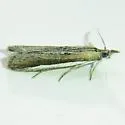
White-edged Pima Moth - Hodges#5747
Pima albiplagiatella
Identification: The original Packard description as Myelois albiplagiatella , and the Heinrich revised description of Pima albiplagiatella are both available online in the print references.
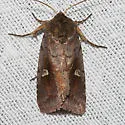
White-eyed Borer Moth - Hodges#9522
Iodopepla u-album
Identification: Adult: forewing purplish-gray with dark shading beyond subterminal line and in patch surrounding reniform spot, composed of U-shaped white marking with dark filling; AM line black, wavy or irregular; PM line similar but less distinct;
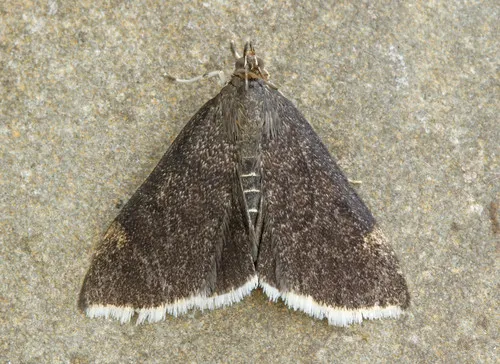
White-fringed Pyrausta Moth - Hodges#5073
Pyrausta niveicilialis
Identification: See print references below. According to John Glaser this species is rare in collections. Type locality: USA, New York
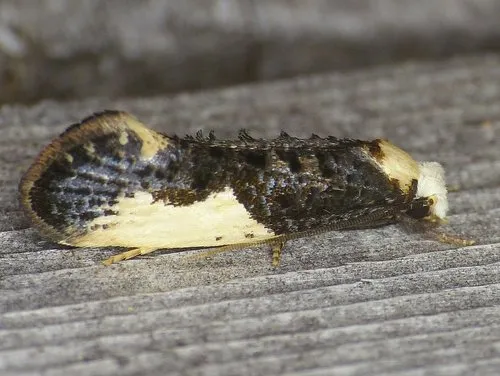
White-headed Monopis - Hodges#0418
Monopis monachella
Identification: Head: Head white. Palpi long, folded; dark. Antenna: Dark brown. Thorax: White. Wings: Wider, dark brown; slightly gray-scaled. Large white patch on costa has diagonal edge; extends from mid wing to near tip. Diagonal edge of patch en
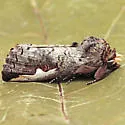
White-headed Prominent - Hodges#7951
Symmerista albifrons
Identification: Creamy mark on forewing is distinctive, apparently. Listed as common. comparison of 8th sternite - scales brushed off. comparison of genitalia dissection - in albifrons, apex of the large bilobed process greatly exceeds the apex of th
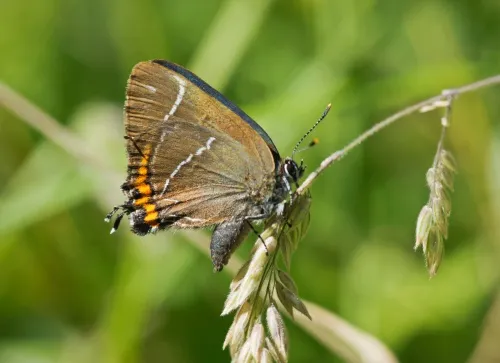
White-letter Hairstreak
Satyrium w-album
This butterfly gets its name from the letter "W" that is formed from a series of white lines found on the underside of the hindwings. Elm is the sole foodplant especially Wych Elm. This species suffered as a result of Dutch Elm disease in the 1970s a
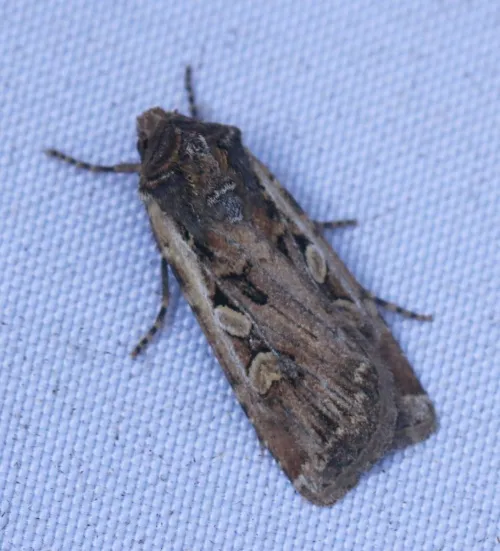
White-line Dart
Euxoa tritici
Good photographs required. It is advisable to retain the specimen until identification is confirmed as this species is quite scarce in our area. A species of heathland, moorland and sandy areas. Flight period is July and August sometimes into Septemb
White-lined Hypena - Hodges#8445
Hypena abalienalis
Identification: Lacy pattern with doubled postmedian line on dark background is distinctive.
White-lined Royal Moth - Hodges#7714
Syssphinx albolineata
Identification: the younger caterpillars have the longer filaments: uncommon in the US (MPG & BG data), rare even in Mexico (Godman & Salvin, 1886)
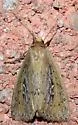
White-mantled Wainscot
Archanara neurica
From 2019 to 2024, approximately 30,000 Archanara neurica and Lenisa geminipuncta were released as biocontrol agents against Phragmites in 50 sites across southern Ontario, from Essex County in the southwest, to North Bay in the north, and east to Ot
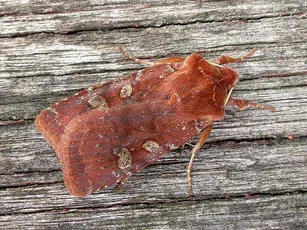
White-marked
Cerastis leucographa
Wingspan 34 to 38 mm. The wing has a bright oval and a distinct kidney mark, both creamy white in colour. Occurs in scattered well wooded localities. Sometimes visits Willow flowers. One of the early spring species, flying in March and April, it can
White-patched Salebriaria - Hodges#5775.3
Salebriaria squamopalpiella
Identification: Adult : Grayish brown FW has a large whitish patch covering much of outer half of FW, liberally peppered with black scales. White extends toward inner margin in AM and PM areas.
White-patched Skipper - Hodges#3942
Chiomara georgina
Identification: Each hindwing is brown with a large white patch in the center. The leading edge of the forewing is slightly bent or sickle-shaped. Males have a distinct white patch in the forewing, females' forewings are more mottled. Underside of hi
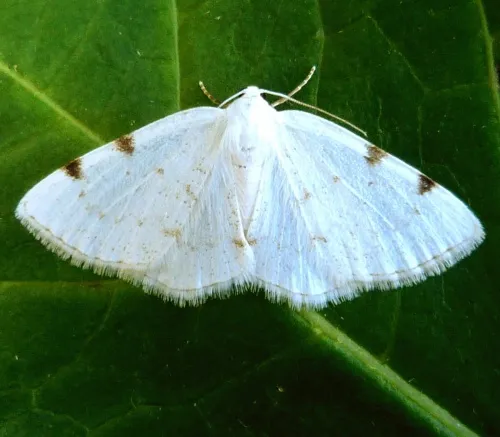
White-pinion Spotted
Lomographa bimaculata
Wingspan 22 to 26 mm. Unmistakable white moth with two dark spots on the leading edge of each forewing. There is one generation, flying in May and June, when it can be attracted to light. The larvae feed on Hawthorn and Blackthorn. Distributed fairly
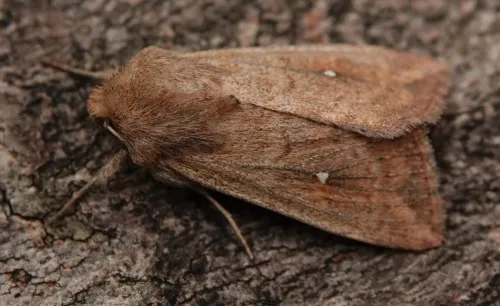
White-point
Mythimna albipuncta
Wingspan 30 to 35 mm. A rather round, pure white mark on forewing diagnostic. In Europe the larvae are known to feed on various grasses. A former migrant to the British Isles, but has colonized in the last two decades. Once a very rare migrant to VC5
White-roped Glaphyria - Hodges#4870
Glaphyria sesquistrialis
Identification: Adult: forewing yellowish with wavy white AM and PM lines bordered on both sides by dark gray; hindwing whitish or light gray with yellowish shading beyond jagged PM line. Specimen identified by DNA analysis (BOLD).
White-shawled Isocorypha - Hodges#0299
Isocorypha mediostriatella
Identification: Head: Straw colored, long haired (scaled), with a slight reddish-brown tint on face. Palpi long, folded, bristled; yellowish on top, dark on underside. Antenna: Pale yellowish, thick, as long as wing. Thorax: Brown with purplish refle
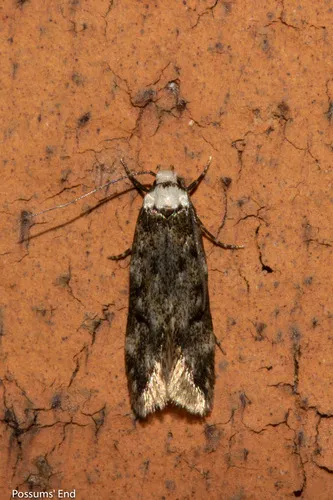
White-shouldered House-moth
Endrosis sarcitrella
Wingspan 15-21 mm. Distinctive because of its white 'shoulders'. Being continuously-brooded, it can be found at any time of year indoors. The larvae live on dried plant and animal debris. The species has been accidentally introduced into many parts o
White-spotted Cankerworm Moth - Hodges#6663
Paleacrita merriccata
Within this species the forewings vary from having obsolescent to prominent cross lines, and with some specimens possessing a broad dark band distad of the t. p. line. Examples from the south tend to be larger, darker, and to have more suffused macul
White-spotted Hedya - Hodges#2863
Hedya chionosema
Identification: Adult - forewing medium brownish-gray to bronzy, crossed by three dark brown partial bands; large white semicircular patch along distal half of costa but not reaching apex; raised tuft of dark scales protrudes from top of thorax near
White-spotted Leafroller - Hodges#3624
Argyrotaenia alisellana
Identification: Adult: forewing whitish with large irregular dark brown patch in median area; strands of brown project outward from patch to wing edges, leaving intervening whitish areas along costa and outer margin; hindwing white.
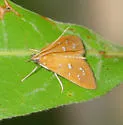
White-spotted Orange Moth - Hodges#5253
Diastictis argyralis
Identification: Forewing ground color varies from orange-yellow to dark fuscous, with darker specimens in summer; minute or obsolescent silvery spots as follows: round AM spot below cell and sometimes minute spot in cell above it; round or subquadrat
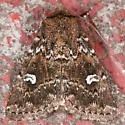
White-spotted Properigea - Hodges#9588
Properigea albimacula
Identification: Adult: forewing dark grayish-brown except for conspicuous white patch in lower half of reniform spot; AM and PM lines toothed, black with pale edging; ST line jagged, indistinct; hindwing gray, paler toward base
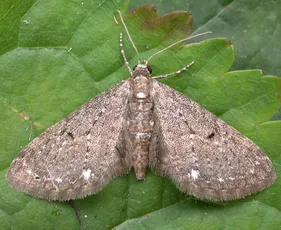
White-spotted Pug
Eupithecia tripunctaria
Wingspan 17-21 mm. Identified by the distinct white spots on the base of the wings. It occupies damp areas and well wooded areas. It has two generations, with adults on the wing in May and June and then in July and August. The larvae are yellowish gr
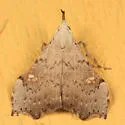
White-spotted Redectis - Hodges#8401
Redectis vitrea
Identification: Adult: forewing pale brownish-gray with deeply-lobed outer margin; reniform spot represented by cluster of three small white ovals - a diagnostic feature; hindwing pale gray with black-dashed terminal line and slightly irregular outer
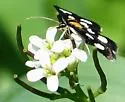
White-spotted Sable - Hodges#4958
Anania funebris
Identification: Adult: forewing black with two large white spots and one tiny one; hindwing black with two large white spots; no tuft of orange hair-like scales on legs Almost always referred to by its scientific name, which is surprising because the
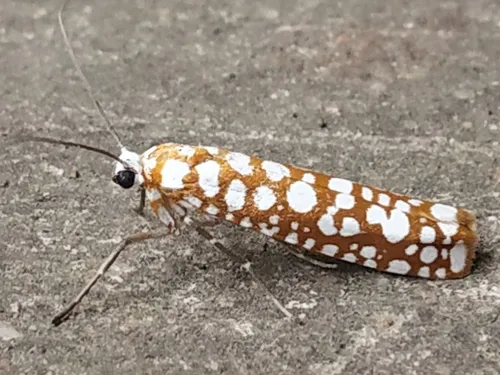
White-spotted Tube Moth
Atteva fabriciella
The Ailanthus webworm moth, (Atteva fabriciella), is a moth of the family Attevidae. It is found in China, India and Sri Lanka. It is considered as one of deadliest plant pest on Ailanthus species.
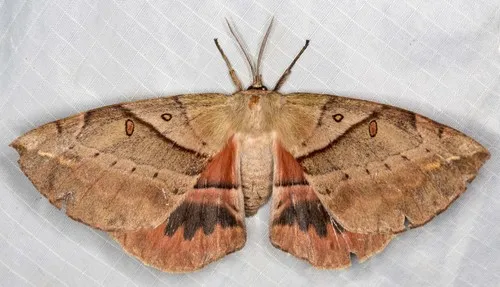
White-stemmed Acacia Moth
Chelepteryx chalepteryx
Chelepteryx chalepteryx, also known as White Stemmed Wattle Moth or White-Stemmed Acacia Moth, is a moth of the Anthelidae family. It is found in Australia.
White-streaked Calosaturnia Moth - Hodges#7753
Calosaturnia albofasciata
males generally fly between 2pm and 4pm while females fly in early evening ( 3 )
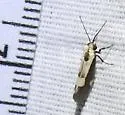
White-streaked Lichen Moth - Hodges#8073
Cisthene conjuncta
Identification: Similar in size and general pattern to a few other Cisthene species (e.g. packardii ) but pale areas of FWs whitish. Head and thorax whitish, base of collar slightly pink; FWs dark gray with a squarish white spot on costa just beyond
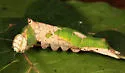
White-streaked Prominent - Hodges#8017
Ianassa lignicolor
Identification: Mature caterpillar blotched and mottled in green white and brown. "Dorsum of A1 drawn into forward-projecting horn. Head with characteristic mottling." (Wagner) Early instars are gregarious, yellow in color. Like other related promine
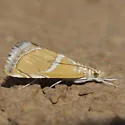
White-trimmed Abegesta - Hodges#4867
Abegesta remellalis
Identification: Adult - forewing yellowish-orange to brown; median line white, fairly straight, ragged-edged, jogs basally at costa; subterminal line white, wavy, angles sharply before reaching costa, and curves away from terminal line as it nears th
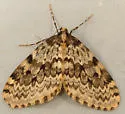
Whitelined Looper - Hodges#7435
Malacodea pulchraria
Identification: Adult: forewing light brown with white-edged dark brown lines; subterminal line with three prominent pointed teeth near costa and short horizontal dash at costa; a total of five distinct lines cross the wing (as opposed to eight lines
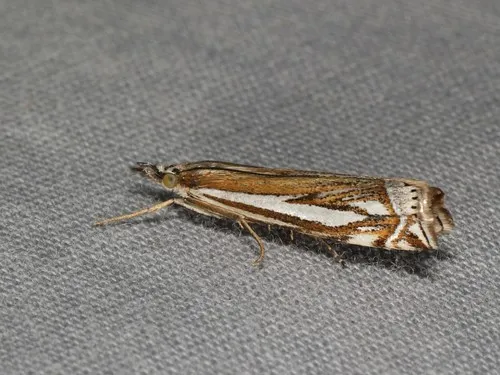
Whitmer's Sod Webworm Moth - Hodges#5345
Crambus whitmerellus
Identification: Adult: forewing yellowish-brown with two white patches in subterminal area, brown V-shaped subterminal line, and black terminal line broken into 4 black dots in lower half; narrow white strip along costa for almost half its length; si
Wide-stripe Grass-veneer - Hodges#5344
Crambus unistriatellus
Identification: Forewings light brown with a broad silver-white discal stripe which is almost parallel-sided and extends from the base to the outer margin; submarginal row of minute black dots. The hindwings are white.
Wide-striped Leafroller - Hodges#3675
Aphelia alleniana
Identification: Adult - The color of the head, thorax, and forewings is sometimes not reddish to golden yellow, as in the original description, but somewhat olive or grayish. The cross lines and the remaining pattern of the forewings are often also s