
Family Swift Moths (Hepialidae)
Hepialidae is a family in the order Lepidoptera. Browse 33 named species recorded in this family, or open an individual profile for its available identification and natural-history information.
Species in Hepialidae (33)
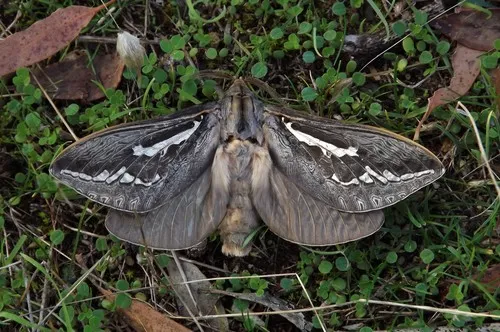
Bardi Moth
Abantiades atripalpis
Abantiades atripalpis, also known as bardee (bardy, bardi) grub, rain moth or waikerie, and previously known as Trictena atripalpis, is a moth of the family Hepialidae. It is found in the whole southern half of Australia.
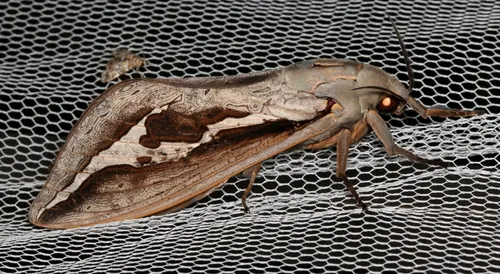
Labyrinthine Ghost Moth
Abantiades labyrinthicus
Abantiades labyrinthicus is a moth of the family Hepialidae. It is endemic to Australia, where it is found in the Australian Capital Territory, New South Wales, Queensland, Tasmania and Victoria.
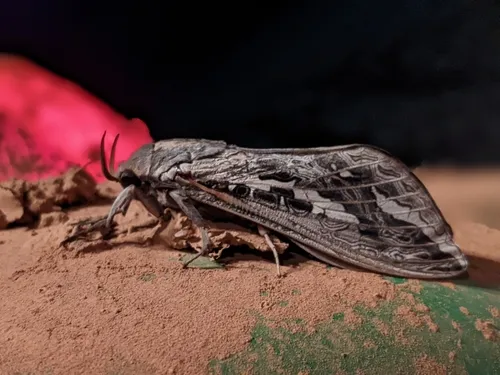
Red-gum Ghost Moth
Abantiades marcidus
Abantiades marcidus is a moth of the family Hepialidae. It is endemic to Australia, where it is found in New South Wales, Queensland, South Australia and Victoria. The larvae are a favoured bait for fishing.
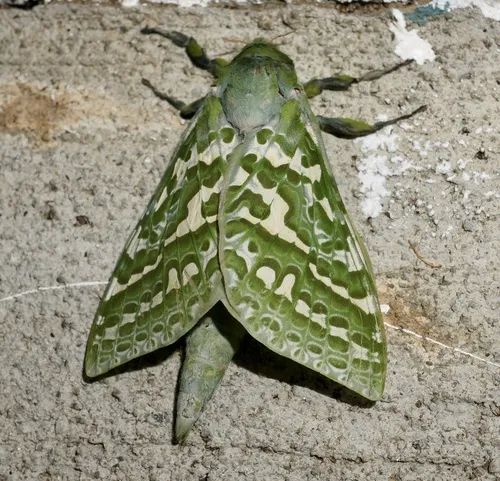
Pūriri moth
Aenetus virescens
The puriri moth (Aenetus virescens) is a moth of the family Hepialidae, endemic to the North Island of New Zealand. It is New Zealand's largest moth, with a wingspan of up to 150 mm. It is also called the ghost moth or pepetuna.
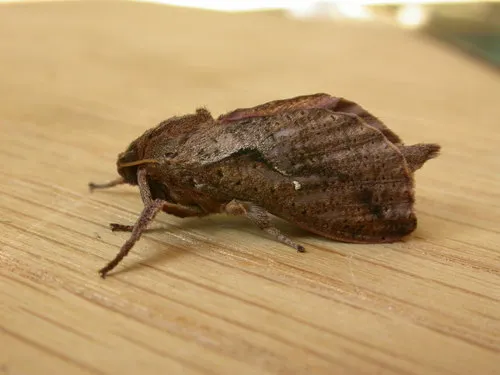
Elhamma australasiae
Elhamma australasiae
Elhamma australasiae is a moth of the Hepialidae family. It is found along the eastern seaboard of Australia and New Guinea.
Gazoryctra lembertii - Hodges#0032
Gazoryctra lembertii
Gazoryctra lembertii - Hodges#0032 (Gazoryctra lembertii) is a species in the family Hepialidae, commonly known as ghost moths, belonging to the order Lepidoptera (Butterflies and Moths). It is classified within the superfamily Hepialoidea. This spec
Gazoryctra roseicaput - Hodges#0025
Gazoryctra roseicaput
Identification: The original description as Hepialus roseicaput Neumoegen and Dyar, is available online in the print references below. Hindwings are a blackish gray.
Gazoryctra sciophanes - Hodges#0023.1
Gazoryctra sciophanes
Identification: "Rounded forewing variably sooty black to dark brown with diffuse gray, dark brown, or black mottling and streaking. It typically shows an elongated white bar or patch with irregular, jagged edges running obliquely across the lower ha
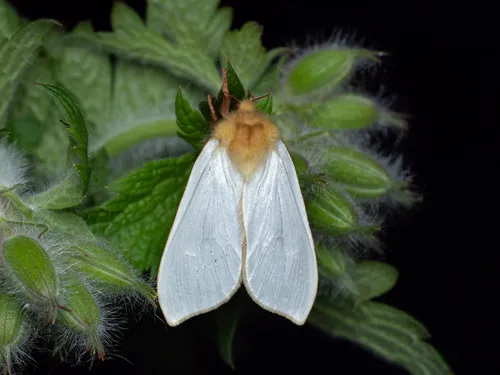
Ghost Moth
Hepialus humuli
Wingspan around 50 mm. The English name 'Ghost' comes from the white males, which can sometimes be seen at dusk, 'hovering' over grassy areas. The females are quite different, being yellow, marked with orange. The larvae feed underground on the roots
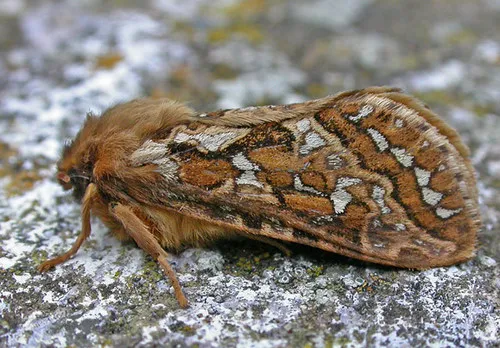
Map-winged swift
Korscheltellus fusconebulosa
A good photograph is generally required to support your record. Often associated with moorland and areas where Bracken is plentiful. The larvae live underground and feed on the roots of Bracken. This species is generally distributed across Britain, b
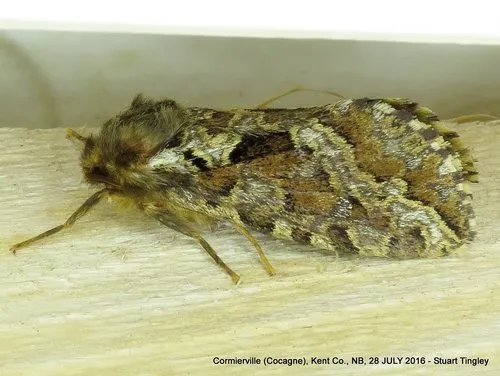
Conifer Swift Moth
Korscheltellus gracilis
The conifer swift moth (Korscheltellus gracilis) is a swift moth considered a forest pest in eastern and central North America, from Canada south to North Carolina. Larvae feed primarily on roots of evergreen trees, and are weakly polyphagous, able t
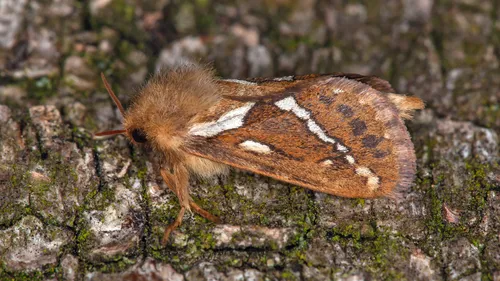
Common Swift
Korscheltellus lupulina
Wingspan 25-40 mm. A variable species, ranging in colour fron gingery brown to pale grey, and with white markings of varying boldness. Various grassland, gardens and roadside verges. Feeding on the roots of grasses and small plants, the larvae live u
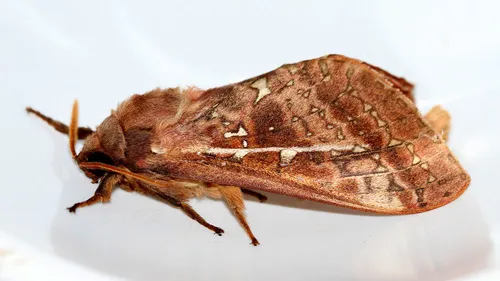
Southern Oxycanus
Oxycanus australis
Oxycanus australis is a moth of the family Hepialidae. It is found in South Australia, Tasmania and Victoria.
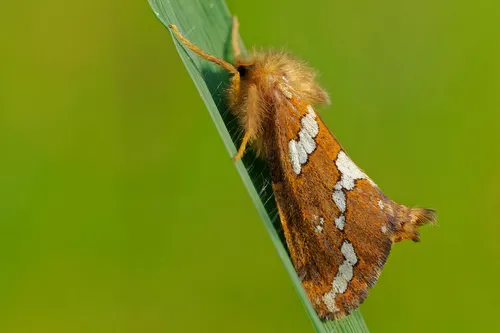
Gold Swift
Phymatopus hecta
The gold swift (Phymatopus hecta) is a species of moth belonging to the family Hepialidae. Until recently it was placed in the genus Hepialus. It is a widespread species of Europe, its distribution following that of its foodplant, bracken.
Gold-spotted Ghost Moth - Hodges#0022
Sthenopis pretiosus
Identification: forewing yellowish-brown with 3 small gold spots in subterminal area, a larger single spot in the medial area, and 3 more small gold spots forming an antemedial (AM) line near the base; PM line represented by an indistinct whitish, pi
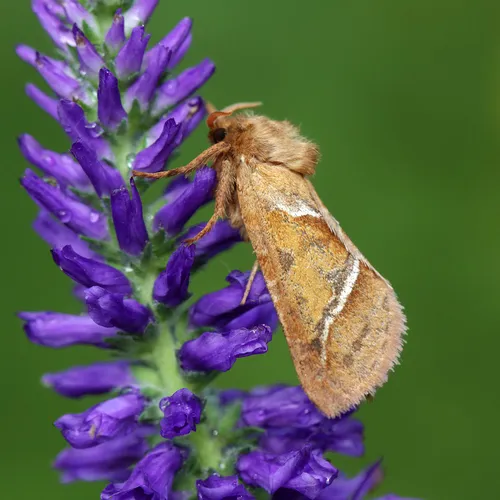
Orange Swift
Triodia sylvina
Wingspan 32-48 mm. The moth exhibits marked sexual dimorphism, the males being smaller and more brightly coloured than the females. This species inhabits gardens, woodland and rough grassland, roadside verges, moorland and other wild places. Flying l
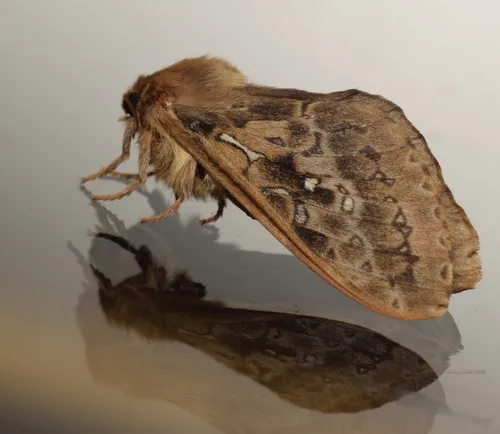
Pasture Porina
Wiseana cervinata
Wiseana cervinata, known commonly as the porina moth, is a species of moth belonging to the family Hepialidae. It was described by Walker in 1865, and is endemic to New Zealand.
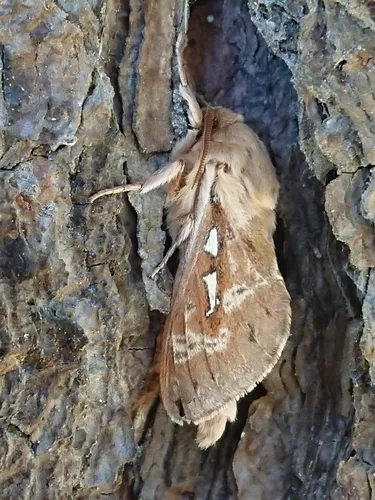
Summer Porina
Wiseana copularis
Wiseana copularis is a species of moth belonging to the family Hepialidae. It was described by Edward Meyrick in 1912, and is endemic to New Zealand.
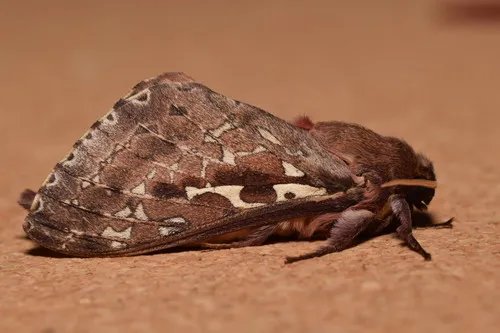
Sand Porina
Wiseana signata
Wiseana signata is a species of moth belonging to the family Hepialidae. It was described by Walker in 1856, and is endemic to New Zealand.
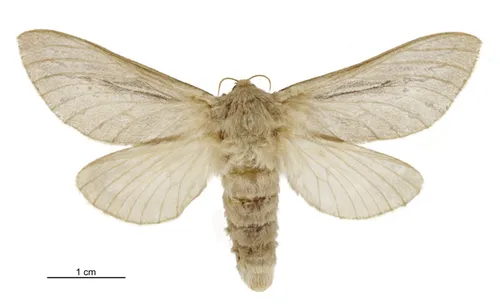
Bog Porina
Wiseana umbraculata
Wiseana umbraculatus, also known as the bog porina, is a species of moth belonging to the family Hepialidae. It was described by Achille Guenée in 1868 from specimens collected by Richard William Fereday. This species is endemic to New Zealand. It wa
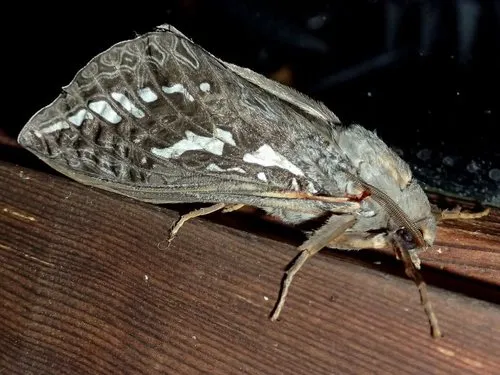
Rain Moth
Abantiades argentata
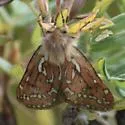
Gazoryctra confusus - Hodges#0024
Gazoryctra confusus
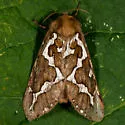
Gazoryctra hyperboreus - Hodges#0023
Gazoryctra hyperboreus
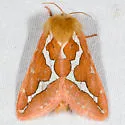
Gazoryctra mathewi - Hodges#0028
Gazoryctra mathewi

Ghost Moth
Gazoryctra novigannus
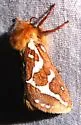
Gazoryctra pulcher - Hodges#0026
Gazoryctra pulcher
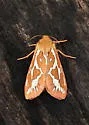
Wielgus' Ghost Moth - Hodges#0029.1
Gazoryctra wielgusi
Phymatopus behrensii - Hodges#0033
Phymatopus behrensii
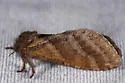
Lupine Ghost Moth - Hodges#0035
Phymatopus californicus
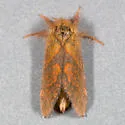
Phymatopus hectoides - Hodges#0036
Phymatopus hectoides
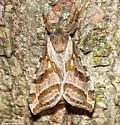
Silver-spotted Ghost Moth - Hodges#0018
Sthenopis argenteomaculatus
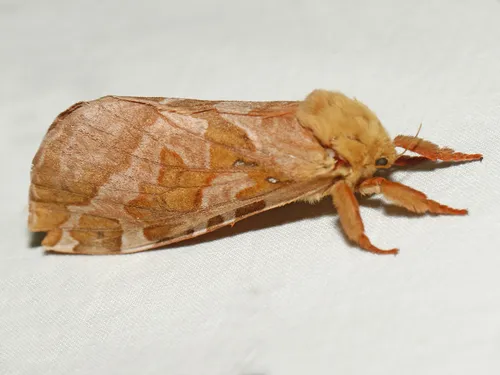
Four-spotted Ghost Moth
Sthenopis purpurascens
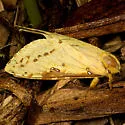
Willow Ghost Moth - Hodges#0021
Sthenopis thule