
Butterflies and Moths
Order Lepidoptera
The Butterflies and Moths (Order Lepidoptera) includes 11,813 species across 112 families and 2,787 genera in our directory.
About Butterflies and Moths
Lepidoptera includes approximately 180,000 described species of butterflies and moths. Moths outnumber butterflies roughly 10:1. The monarch butterfly's eastern population has declined by more than 80% since the mid-1990s, and the western population by over 95% since the 1980s. The IUCN lists the migratory monarch as Vulnerable.
Economic Impact
Lepidoptera are critical pollinators. In Europe, grassland butterfly species have declined by almost 50% since the early 1990s. In the UK, three-quarters of butterflies are in decline. In the U.S., five butterfly species have gone extinct since 1950, with 29 listed as endangered.
Ecological Role
Butterflies and moths are essential indicators of ecosystem health. As caterpillars, they are a primary food source for birds - a single nest of blue tit chicks requires ~10,000 caterpillars. Adult moths pollinate many night-blooming plants.
Families in Lepidoptera (112)
Species in Lepidoptera (11,813)
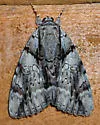
Widow Underwing - Hodges#8792
Catocala vidua
Identification: Adult: forewing pale gray with black arc beginning mid-costa and running just above reniform spot to apex; upper AM and PM lines with heavy black shading; straight black streak runs parallel to inner margin from base to outer margin (
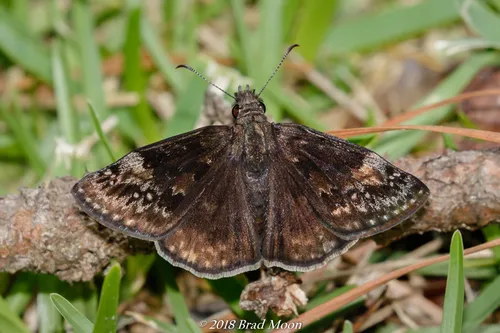
Wild Indigo Duskywing
Erynnis baptisiae
Erynnis baptisiae, the wild indigo duskywing, is a butterfly of the family Hesperiidae. It is found in North America from southern New England and southern Ontario west to central Nebraska, south to Georgia, the Gulf Coast, and south-central Texas.
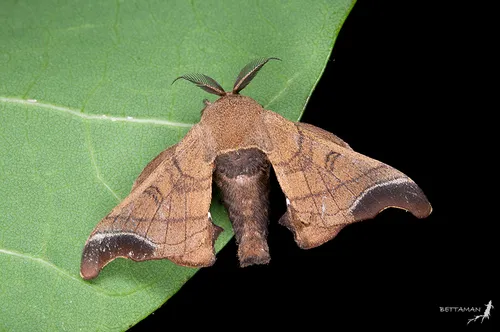
Wild Silkmoth
Bombyx mandarina
Bombyx mandarina, the wild silkmoth, is an insect from the moth family Bombycidae. It is the closest relative of Bombyx mori the domesticated silkmoth or "silkworm" (properly, this refers to the caterpillars only). Unlike the domesticated relative wh
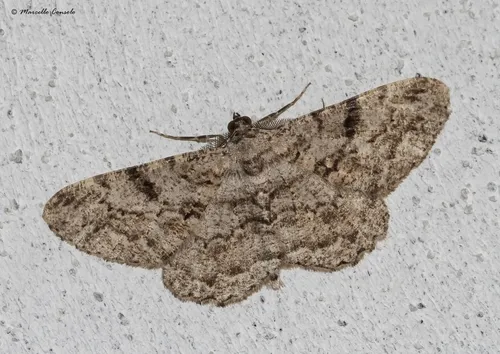
Willow Beauty
Peribatodes rhomboidaria
Wingspan 30-38 mm. Typical forms are brownish with darker streaks and markings, but there is also a greyish form, perfumaria , as well as an almost black melanic variant. Quite similar to Mottled Beauty. Guidance on separating these two species can b
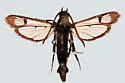
Willow Borer - Hodges#2572
Synanthedon proxima
Identification: Adult - apical third to half of antennae white, and basal portion black; body all black except broken yellow collar at back of head, and yellow dorsolateral stripes on thorax; legs black with white rings at joints. Larva - white with
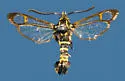
Willow Clearwing - Hodges#2569
Synanthedon sigmoidea
Identification: Larva - body white, brown head and thoracic shield. Woodpeckers prey on the larvae.
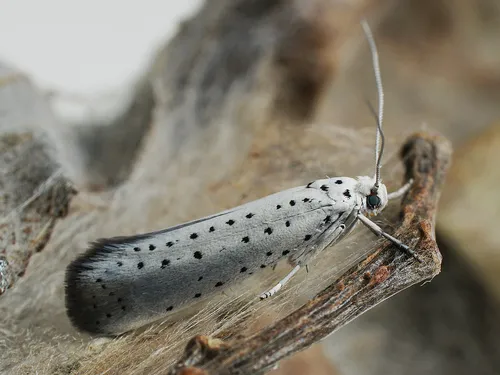
Willow Ermine
Yponomeuta rorrella
This is one of four Ermine moth species, namely Orchard Ermine (Yponomeuta padella), Apple Ermine (Yponomeuta malinellus), Spindle Ermine (Yponomeuta cagnagella) and Willow Ermine ( Yponomeuta rorrella ) which should now be recorded as Yponomeuta agg
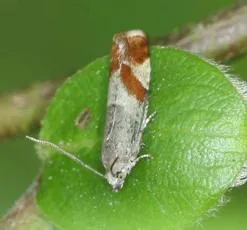
Willow Tortrix
Epinotia cruciana
Wingspan 12-15 mm. The scientific name cruciana refers to the pale forewing markings which, when the moth is at rest, meet to form the shape of a cross when seen from above. Flying from June to early August, the adults can be disturbed from the folia
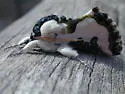
Wilson's Wood-nymph Moth - Hodges#9298
Xerociris wilsonii
Identification: In Eudryas species if the hindwing was partially visible as in these photos it would appear to be yellow with a red border. X. wilsonii has a rather distinctive marking along the inner margin that also differs from all species of Eudr
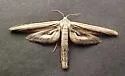
Window-winged Moth - Hodges#6085
Meskea dyspteraria
Identification: Southeast United States at least from South Carolina to Florida and west to Texas. (*incomplete range likely) adults have interesting and distinctive resting position
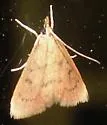
Wine-tinted Oenobotys - Hodges#4940
Oenobotys vinotinctalis
Identification: Adult: forewing color varies from brownish-red to yellowish-red to pinkish-red with black AM and PM lines and two black discal spots, the inner one smaller and fainter than the outer one; median area may or may not be slightly darker
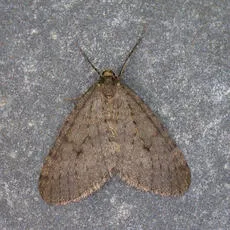
Winter Moth
Operophtera brumata
Wingspan 22-28 mm. The males are drab light to dark brown with a darker central forewing band (although this is sometimes indistinct) and a brownish hindwing. The females are virtually wingless. Often seen near car headlights, especially if close to
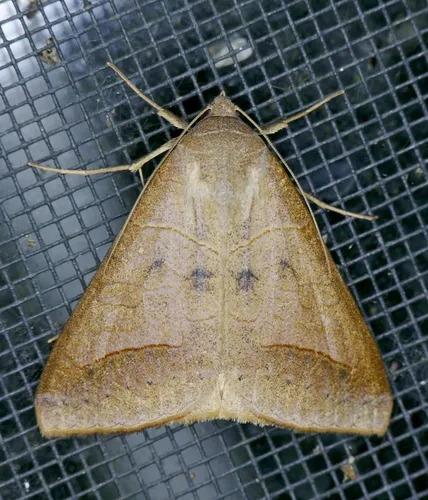
Withered Mocis - Hodges#8744
Mocis marcida
Identification: Adult: forewing usually purplish-brown (sometimes yellowish-brown or pale gray) with darker shading in subterminal area, and usually paler shading in terminal area; lines thin, distinct at close range but showing little contrast again
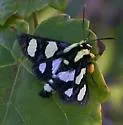
Wittfeld's Forester Moth - Hodges#9316
Alypia wittfeldii
Identification: Similar to A. octomaculata, Eight-spotted Forester, but spots are narrower and more elliptical.
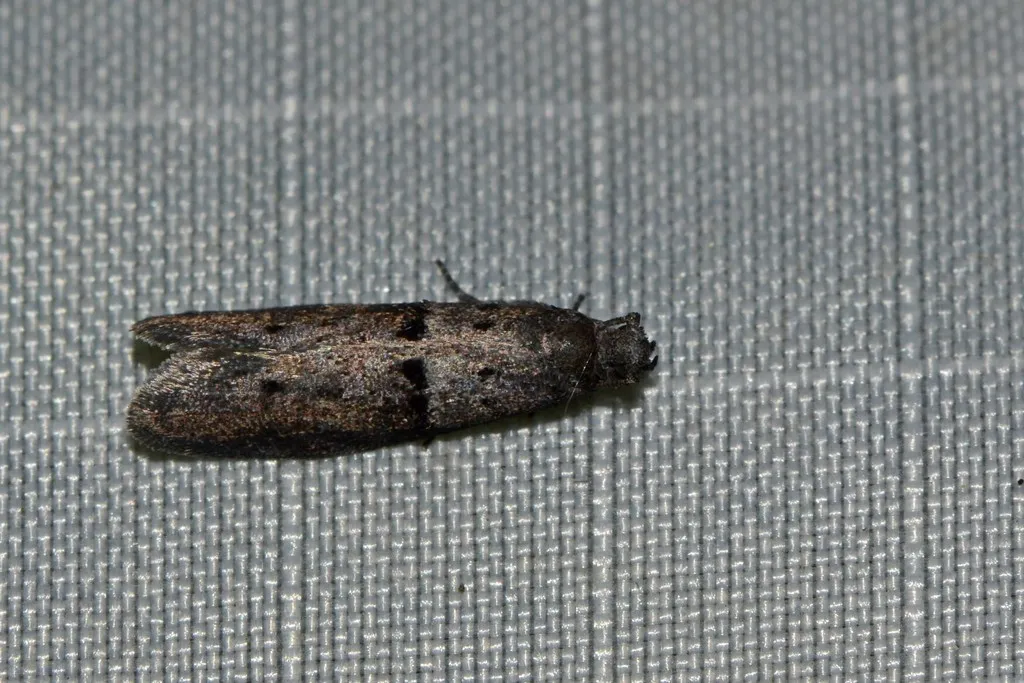
Wockia asperipunctella - Hodges#2415.1
Wockia asperipunctella
Identification: Adult : FW grey with groups of raised scales at ⅓ from the base and additional black dots scattered on the wing. HW grey, in male with a yellowish hairpencil in the base below the folded anterior margin. Although it lacks striking pat
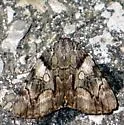
Wonderful Underwing - Hodges#8863
Catocala mira
Identification: Adult - basal area of forewing not dark/blackish (as it is in C. blandula and crataegi ); subterminal area shaded with brown; subreniform spot conspicuous and usually pale brown; pale whitish area runs obliquely from costa to subrenif
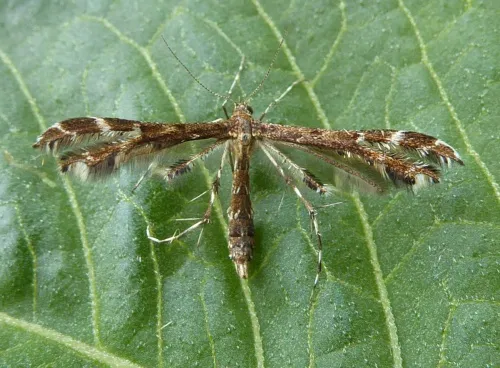
Wood Sage Plume
Capperia britanniodactylus
It likes dry, south-facing and sloping stony habitats, where Wood Sage is present. The moths fly in June and July, and are only generally seen from dusk onwards, hiding by day amongst the foodplants. The larvae feed on Wood Sage. In spring, it bites
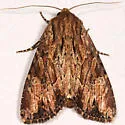
Wood-colored Apamea - Hodges#9333
Apamea lignicolora
Identification: Adult: forewing yellowish with reddish-brown shading; AM and PM lines obscure; PM line bends sharply; ST line forms a "W" at its middle, dividing black terminal shading into two large patches hindwing grayish-brown [description by Cha
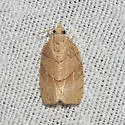
Woodgrain Leafroller - Hodges#3593
Pandemis lamprosana
Identification: A chunky moth with broad-based almost rectangular wings; forewing has 3 medium-to-dark brown areas: a large basal patch crossing the wing, a broad oblique band running from mid-costa to inner margin near anal angle, and a small patch
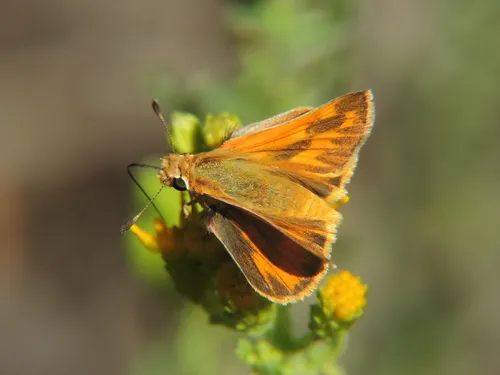
Woodland Skipper
Ochlodes sylvanoides
Ochlodes sylvanoides, the woodland skipper, is a butterfly of the family Hesperiidae. It is found in North America from British Columbia south to southern California, east to Montana, Colorado and Arizona.
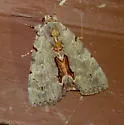
Woody Underwing - Hodges#8864
Catocala grynea
Identification: Adult - FW greenish gray, brownish along inner margin below black median dash. Fine broken black lines. HW yellow/orange and black lines. Sometimes the black border has a narrow break near the anal angle.
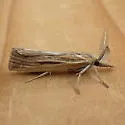
Woolly Grass-veneer Moth - Hodges#5439
Thaumatopsis pexellus
Identification: Yellowish gray forewing with a narrow whitish line from wing base to just beyond the reniform. The white line is bordered by a thicker dark brown line. Brown oblique line to near apex. Terminal line is 3-5 dark dots. Male antennae are
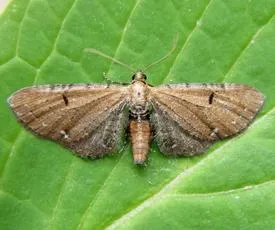
Wormwood Pug
Eupithecia absinthiata
If you are recording the caterpillar, please note the host-plant. Inhabiting open waste ground, gardens and woodland fringes. The adults fly in June and July and are often attracted to light. The larval foodplants are a range of low-growing plants, i
Wright's Hulstina - Hodges#6547
Hulstina wrightiaria
Wright's Hulstina - Hodges#6547 (Hulstina wrightiaria) is a species in the family Geometridae, commonly known as geometrid moths, belonging to the order Lepidoptera (Butterflies and Moths). It is classified within the subfamily Ennominae, tribe Boarm
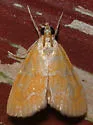
Xanthophysa Moth - Hodges#4879
Xanthophysa psychicalis
Identification: "Expands 14 mm. Antennae, thorax and abdomen light ochreous ; front white ; between the antenna, and at summit of thorax, and on fore wings rich yellow ; fore wings crossed by two white lines, the basal straight, the outer bent outwar
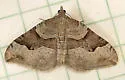
Xanthorhoe alticolata - Hodges#7385
Xanthorhoe alticolata
Identification: Specimens identified by DNA analysis:
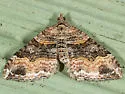
Xanthorhoe defensaria - Hodges#7386
Xanthorhoe defensaria
Identification: Specimens identified by DNA analysis (BOLD).
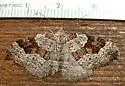
Xanthorhoe fossaria - Hodges#7380
Xanthorhoe fossaria
Identification: Specimens identified by DNA analysis:
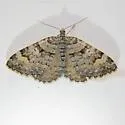
Xanthorhoe macdunnoughi - Hodges#7372
Xanthorhoe macdunnoughi
Identification: Dissection or DNA analysis often needed to distinguish.
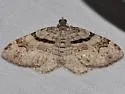
Xanthorhoe packardata - Hodges#7369
Xanthorhoe packardata
Identification: Adult : A flimsy moth with a small body and broad wings. FW light grey, slightly mottled. Basal area is red brown, with prominent black AM. Median area, between AM and PM, is rust-red, with a small red-brown and black patch on the cos
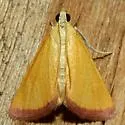
Xanthostege plana - Hodges#4990
Xanthostege plana
Identification: Forewing dark yellow with contrasting pinkish-red fringe and no other markings. Hindwings are translucent. Body is pale yellow as is the ventral side of all wings.
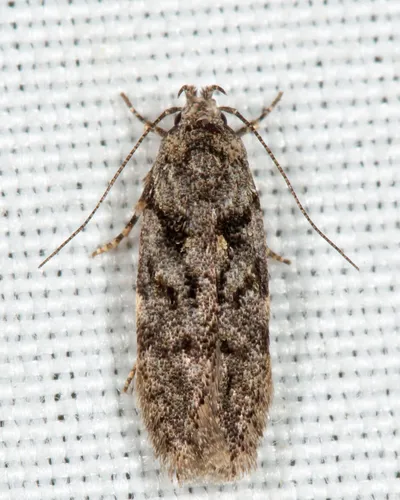
Xenolechia ontariensis - Hodges#1878
Xenolechia ontariensis
Identification: Identification from photos is difficult for this group. Specimen identified by DNA analysis (BOLD) Genitalia: ♀ ♂
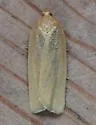
Xenotemna pallorana - Hodges#3693
Xenotemna pallorana
Identification: Adult: forewing relatively broad with outwardly-bowed costa and rounded apex, light yellow with no markings but slightly darker yellow at base; top of thorax darker yellow than forewing; hindwing pale grayish-yellow with white fringe.
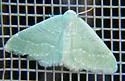
Xerochlora viridipallens - Hodges#7078
Xerochlora viridipallens
Identification: Description can be found in MONA Fascicle 18-1 at link in citations below.
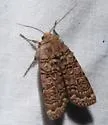
Xestia bolteri - Hodges#10941
Xestia bolteri
Identification: Smith original description is available in online in the print references.
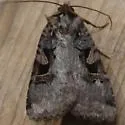
Xestia conchis - Hodges#10946
Xestia conchis
Identification: The Grote (1879) and Hampson (1903) descriptions are available in the print references. Determined by Hugh McGuinness
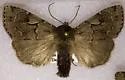
Xestia fabulosa - Hodges#10958
Xestia fabulosa
Identification: Specimen determined by DNA analysis (BOLD).
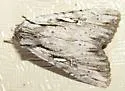
Xestia finatimis - Hodges#10972.1
Xestia finatimis
Identification: Xestia finatimis looks like a pale gray washed out form of Xestia infimatis . Forewing gray or brownish gray, usually with longitudinal brown streak distal to reniform spot; AM line dark gray and deeply zigzagged but inconspicuous due
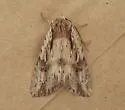
Xestia infimatis - Hodges#10972
Xestia infimatis
Identification: The most heavily streaked and brownest of vernilis species group; forewing varies from pale buff with dark brown streaking to gray with extensive blackish-gray streaking; hindwing varies from dirty white to dark smoky brown with darke
Xestia laxa - Hodges#10963.1
Xestia laxa
Identification: Specimen determined by DNA analysis (BOLD).
Xestia lupa - Hodges#10963
Xestia lupa
Identification: Specimen determined by DNA analysis (BOLD).
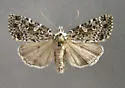
Xestia mixta - Hodges#10959.1
Xestia mixta
Identification: Forewings are grey-black crossed with white sawtooth shaped basal, antemedian and postmedian lines. Reniform and orbicular spots are white, but filled or mostly filled with the darker scales of the ground color so they appear as white
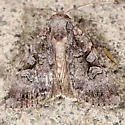
Xestia mustelina - Hodges#10971
Xestia mustelina
Identification: The forewing is pale pinkish gray to gray with large discal spots outlined in black. Hindwings are pale smoky brown. ,
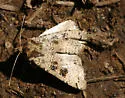
Xestia plebeia - Hodges#11011
Xestia plebeia
Identification: Adult: forewing light grayish-brown with dark gray reniform, orbicular, and claviform spots forming a tight dark cluster -- a prominent feature; AM and PM lines double, broken or indistinct; subterminal line has small dark patch at co
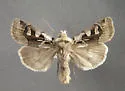
Xestia scropulana - Hodges#10938
Xestia scropulana
Identification: Morrison (1874) original description as Agrotis scropulana is available in the print references.
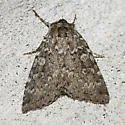
Xestia speciosa - Hodges#10959
Xestia speciosa
Identification: Description: ( 6 ) Determined by Lars Crabo .
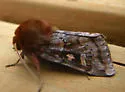
Xestia tecta - Hodges#10936
Xestia tecta
Identification: Adult : FW ground color is rich red-brown, strikingly patterned with light gray and ochre scales, producing lighter areas that appear to be multicolored ● The median area appears darker and redder than the rest of the wing ● Transve
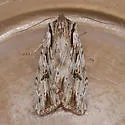
Xestia verniloides - Hodges#10973.1
Xestia verniloides
Identification: Xestia verniloides Lafontaine is described in MONA Fascicle 27.3. Determined by Lars Crabo.
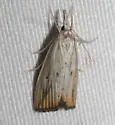
Xubida dentilineatella - Hodges#5504
Xubida dentilineatella
Identification: see Klots, 1970 ( 4 ) and Barnes & McDunnough, 1913 in Print References Specimen identified by DNA analysis (BOLD). ( 5 )
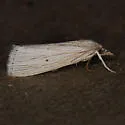
Xubida panalope - Hodges#5500
Xubida panalope
Identification: "As Dyar pointed out the dark intervenous line running from the end of the discal cell to the outer margin is usually lighter than the intervenous lines in the other cells, giving the impression of a pale ray running out from the cell
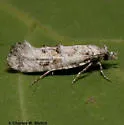
Xylesthia albicans - Hodges#0316
Xylesthia albicans
Identification: Specimen identified by DNA analysis (BOLD).
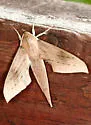
Xylophanes libya - Hodges#7891
Xylophanes libya
This species is tentatively identified as Xylophanes libya, but may be any number of similar Xylophanes species that are difficult to separate from photos alone. Regardless of the true identity, this species is not known to be a resident of the U.S.,
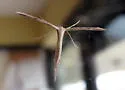
Yarrow Leaf Plume Moth - Hodges#6166
Oidaematophorus mathewianus
Identification: Male reddish-brown; female almost entirely white. Both vary greatly. Wings: Female white with a few faint dark scales; sometimes a small dark mark on inner margin which may reach base of cleft or split in wings. Outer (costal) margin
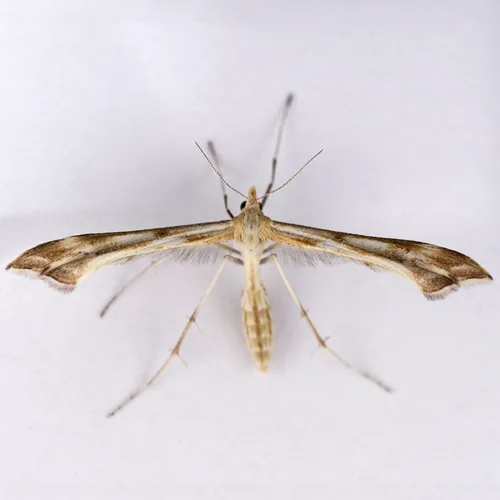
Yarrow Plume
Gillmeria pallidactyla
This species occurs in dry or sandy waste ground and similar habitats. Flying in June and July, the adults hide amongst low foliage during the day and become active from dusk onwards, when they will come to light. Yarrow (Achillea) is the main foodpl
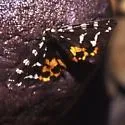
Yarrow's Tiger - Hodges#8165.2
Arctia yarrowii
Adults are diurnal, and are swift fliers. Not known to come to light. a
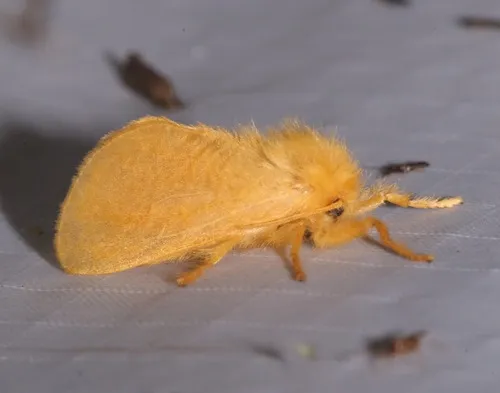
Yellow Flannel Moth
Megalopyge pyxidifera
Megalopyge pixidifera is a moth of the Megalopygidae family. It was described by James Edward Smith and John Abbot in 1797. It was described from the southern United States.
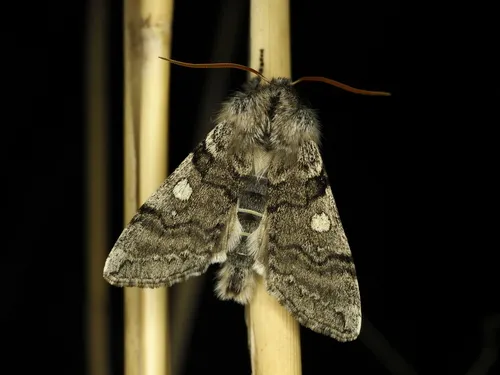
Yellow Horned
Achlya flavicornis
Wingspan 35 to 40 mm. The English and scientific names of this moth are derived from the yellowish colour of the antennae. The adult is greyish, with a finely speckled appearance, and has darker cross-lines and a distinct whitish spot. A good photogr
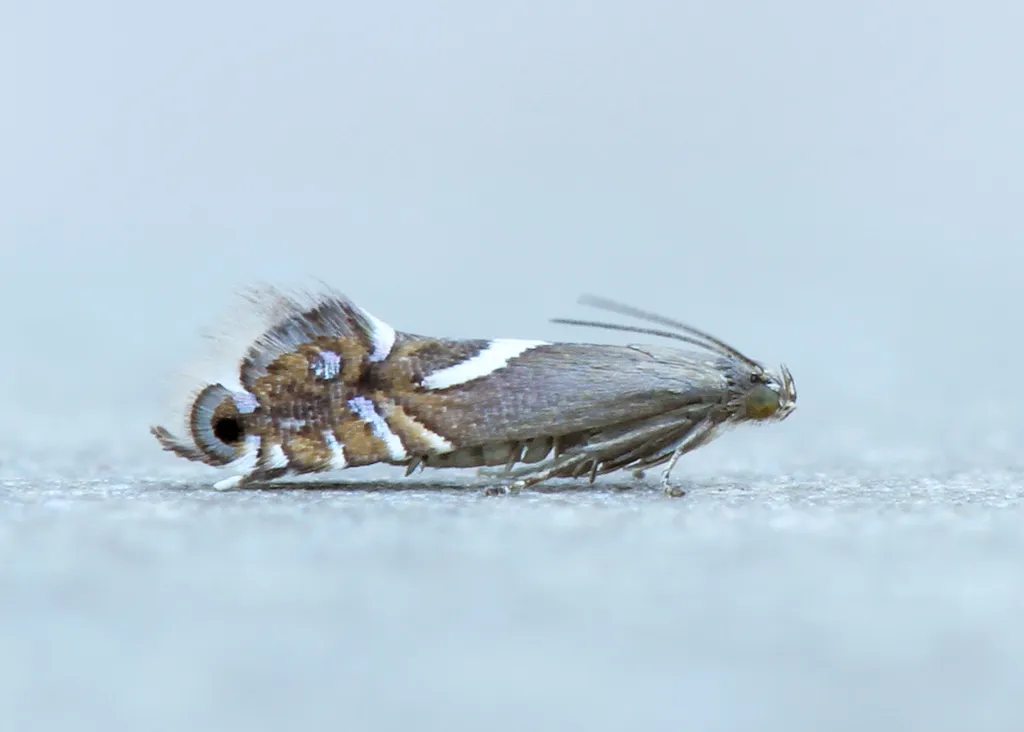
Yellow Nutsedge Moth - Hodges#2346
Diploschizia impigritella
Identification: Adult: a tiny moth - forewing black to dark reddish-brown with five white crescents along costal margin, and large crescent at mid-point of inner margin; hindwing dark gray with long hair-like fringe scales; lacks vein M3 Genitalia:
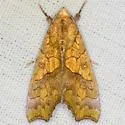
Yellow Scallop Moth - Hodges#8545
Anomis erosa
Dalton State College cautions that A. erosa cannot be positively distinguished from A. flava without dissecting the genitalia.
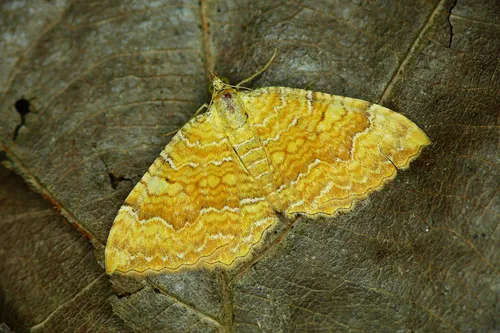
Yellow Shell
Camptogramma bilineata
Wingspan 20-25 mm. A very variable species with examples ranging from bright yellow through to dark brown and also variable in size. Four different subspecies occur, with the smaller and darker ones frequenting rocky places in northern Scotland and I
Yellow Stoneroot Borer Moth - Hodges#9477
Papaipema astuta
Identification: Reniform/orbicular spots typically yellow, PM line straight This species and P. duplicatus both use stoneroot as a host. P. astuta is more common than duplicatus in New Jersey, as well as in the Midwest.
Yellow Sunflower Moth - Hodges#9785
Stiria rugifrons
" Stiria rugifrons and intermixta are extremely close morphologically and superficially. Stiria intermixta may be just the southwestern US Mexican race of rugifrons . The ranges of variability in both the male and female genitalia overlap and cannot
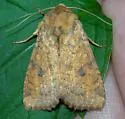
Yellow Three-Spot - Hodges#9373
Apamea helva
Identification: Adult: forewing dull orangish-yellow with broken gray lines and three gray patches: at costa above reniform spot, in lower half of reniform spot, and near apex; subterminal line broken near costa (a distinctive feature); hindwing gray
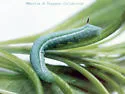
Yellow-Banded Day Sphinx - Hodges#7877
Proserpinus flavofasciata
Identification: The upperside of the forewing is medium to dark brown with a faint to distinct white median band. The upperside of the hindwing is dark brown with a wide orange median band which may not reach the inner margin. The moth mimics a bumbl
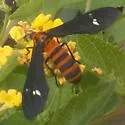
Yellow-banded Wasp Moth - Hodges#8282
Syntomeida ipomoeae
Identification: Adult: forewing elongate/spatula-shaped, black with 2-4 small white discal spots; hindwing much smaller, black with white basal patch; abdomen with alternating yellowish-orange and black bands Larva: body orangish with six short black
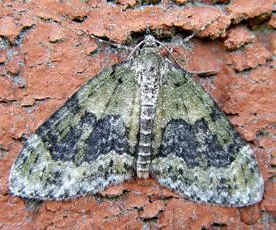
Yellow-barred Brindle
Acasis viretata
Wingspan 25-29 mm. The English name of this species refers to the colour form normally found in the wild. When freshly emerged however this species usually has a greenish colour, which does fade rapidly. Occupying woodland, suburban habitats and scru
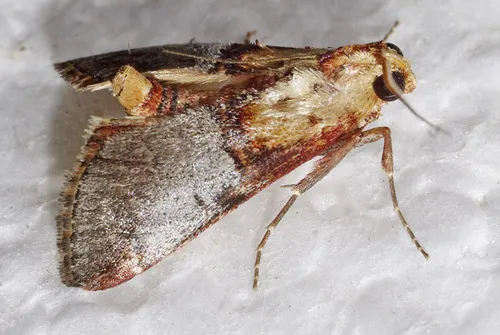
Yellow-based Cacozelia - Hodges#5580
Cacozelia basiochrealis
Identification: Adult: forewing has yellowish basal area with brown accents, bluish-gray median area, and brownish shading beyond PM line; small pale patch just outside PM line at costa; black discal spot shaped like short rod in median area; hindwin
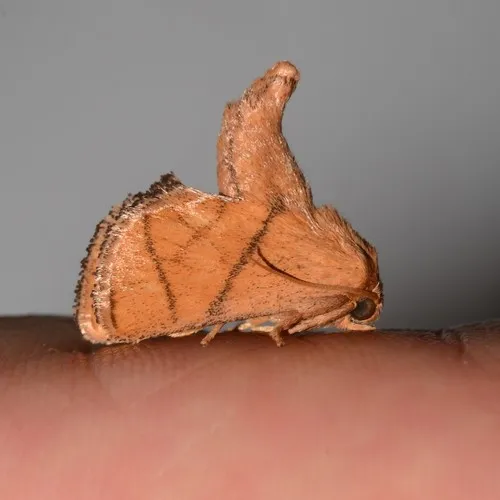
Yellow-collared Slug Moth
Apoda y-inversa
Apoda y-inversum, the inverted Y slug moth or yellow-collared slug moth, is a moth of the family Limacodidae. It is found in North America from Quebec and Ontario, south to Florida, west to Oklahoma and Mississippi.
Yellow-dusted Cream - Hodges#6677
Cabera erythemaria
Identification: See Rindge (1956) in Print References below. Specimen identified by DNA analysis:
Yellow-edged Pygarctia - Hodges#8255
Pygarctia abdominalis
Identification: Forewing is slate grey with pale yellow along the costa to almost the apex and also along inner margin. The thorax has two orange-yellow strips. Abdomen is orange-yellow above with a row of black dots along the length.
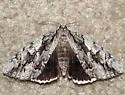
Yellow-gray Underwing and Hulst's Underwing
Catocala retecta-luctuosa
Identification: FW pale gray, some with yellowish brown shading. Distinct pattern with 2 black dashes near the base, with others below apex, and on PM line. Black HW with a white checkered fringe. *Description applies to luctuosa as well, and the two
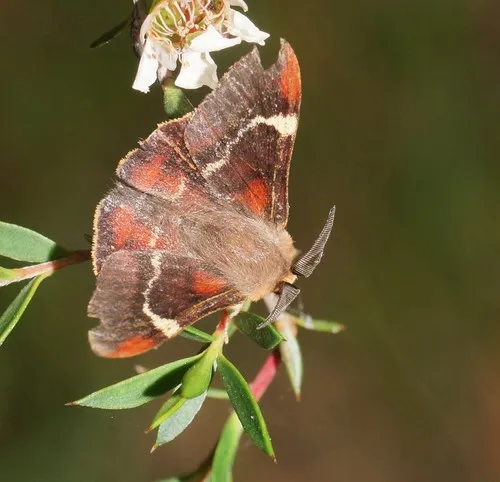
Yellow-headed Anthelid
Nataxa flavescens
The Yellow-headed Anthelid (Nataxa flavescens) is a species of moth of the family Anthelidae. It is found in Australasia.
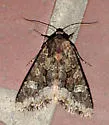
Yellow-headed Cutworm - Hodges#9348
Apamea amputatrix
Identification: Forewing mostly deep red with pale gray subterminal band; reniform spot has two distinctive small white dots at inside corner. A dark gray form also occurs.
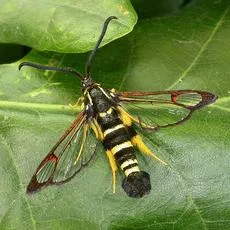
Yellow-legged Clearwing
Synanthedon vespiformis
Wingspan 18 to 20 mm. Another wasp-mimic getting its name from its noticeable yellow legs. A good photograph is generally required to support your record. When adding a record please state whether a pheromone lure was used. To be seen in areas where
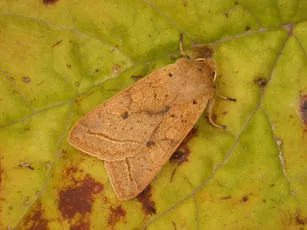
Yellow-line Quaker
Leptologia macilenta
Wingspan 32-36 mm. A reddish or yellowish buff species with an orangey yellow 'V' pattern at the wing tips. Frequenting woodland and bushy localities in the south of its range and moorland in the far north. It flies from September to November and fee
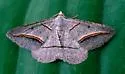
Yellow-lined Angle - Hodges#6397
Digrammia mellistrigata
Identification: forewing light to medium gray or brownish-gray with sparse speckling and conspicuous dark yellow AM and PM lines; PM line curves gently from inner margin toward apex, then bends sharply forward near costa before touching costa; AM lin
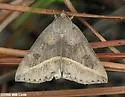
Yellow-lined Chocolate - Hodges#8759
Argyrostrotis flavistriaria
Information on identification and hostplant of this species was given to the author (P. Coin) by Steve Hall, North Carolina Natural Heritage Program, on 5/1/2004. Dr. Hall is an expert on the moth fauna of North Carolina.
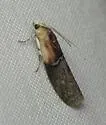
Yellow-shouldered Leafroller - Hodges#5799
Sciota basilaris
Identification: Adult : FW blue-gray with red and ochre basal area. AM whitish, jagged and shaded black distally
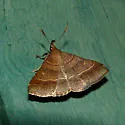
Yellow-spotted Renia - Hodges#8384.1
Renia flavipunctalis
Identification: Refer to the guide on the info page for the genus.
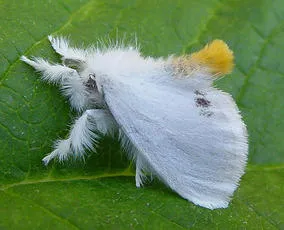
Yellow-tail
Euproctis similis
Wingspan 28-35 mm. The female is larger than the male and has a large tuft of yellow hairs at the tip of her abdomen, which is used to cover the newly-laid eggs. Occupies a number of habitats such as woodland, scrub and gardens. The caterpillars, in
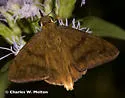
Yellow-tipped Flasher - Hodges#3901
Telegonus anaphus
Identification: Large skipper, dark brown with faint darker bands, with a wide yellow edge on the trailing half of the hindwing (above and below). First U.S. record reported by Freeman (1945).
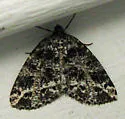
Yellow-veined Geometer Moth - Hodges#6430
Orthofidonia flavivenata
Identification: The unique feature of this species is the yellow wing veins, … Tony Thomas, 30 April, 2008
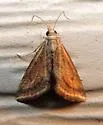
Yellow-veined Moth - Hodges#4796
Microtheoris ophionalis
Identification: Powell & Opler (2009) states "The wing colors vary from dark ochreous brown or rust brown with well-defined subterminal line, to pale tan with brown subterminal lines, and spring moths are darker than summer individual." ( 3 ) Adults
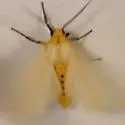
Yellow-winged Pareuchaetes - Hodges#8227
Pareuchaetes insulata
Identification: Forewing color is clay yellow with no other markings. Although it is native to Mexico and the U.S. Gulf Coast and a popular nectar plant in the southern U.S., Chromolaena odorata has become a noxious weed on Pacific Islands, Australia
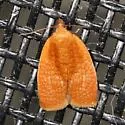
Yellowheaded Fireworm Moth - Hodges#3545
Acleris minuta
Yellowheaded Fireworm Moth - Hodges#3545 (Acleris minuta) is a species in the family Tortricidae, commonly known as tortricid moths, belonging to the order Lepidoptera (Butterflies and Moths). It is classified within the subfamily Tortricinae, tribe
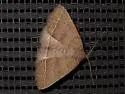
Yellowish Zanclognatha - Hodges#8352
Zanclognatha marcidilinea
Identification: Adult: forewing medium yellowish-brown; antemedial (AM) and postmedial (PM) lines wavy, jagged, often faint; subterminal (ST) line pale yellow, straight, thick, contrasting sharply against ground color of wing; hindwing a mix of light
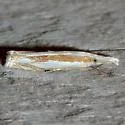
Young's Grass-veneer - Hodges#5349
Crambus youngellus
Identification: Adult: forewing mostly silvery white with broad yellowish-orange streak running from subterminal line to base, and continuing onto shoulders and head to eye; ST line V-shaped, yellowish-orange, broad at inner margin, tapering to thin
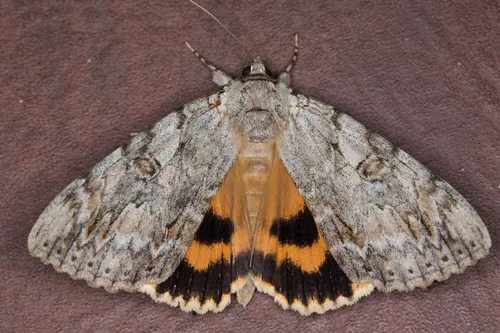
Youthful Underwing - Hodges#8797
Catocala subnata
Identification: Adult - forewing grayish with well-defined AM and PM lines, having significant brown scaling in post-median area bordering distal edge of PM line and sometimes in AM area; reniform spot large and reddish-brown; subreniform spot round
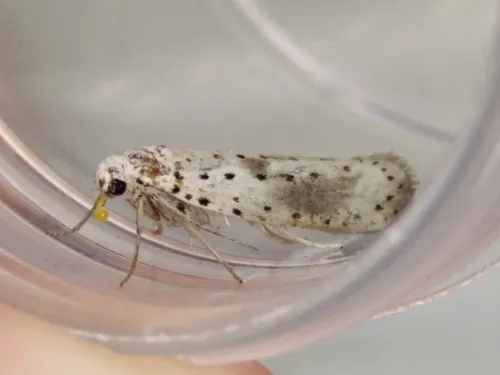
Yponomeuta irrorella
Yponomeuta irrorella
Wingspan about 22 mm. Quite similar to other members of the Ermine family but identifiable, with care, by the patch of greyish suffusion in the centre of the forewing. Because this species is scarce in our region, a photo is required and the specimen
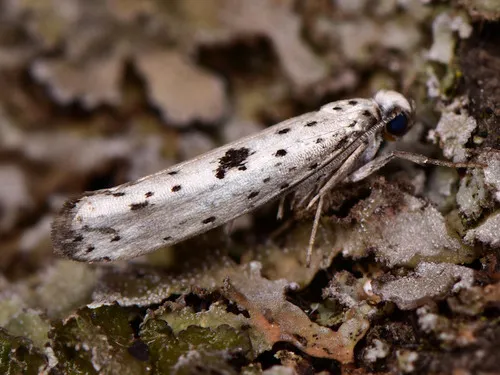
Yponomeuta plumbella
Yponomeuta plumbella
Wingspan 16 to 20 mm. One of the more easily recognisable Yponomeuta species, with a distinct black spot centrally on the forewing and blackish patch at the wingtip. Varied habitats, especially in areas where Spindle is present. There are two generat
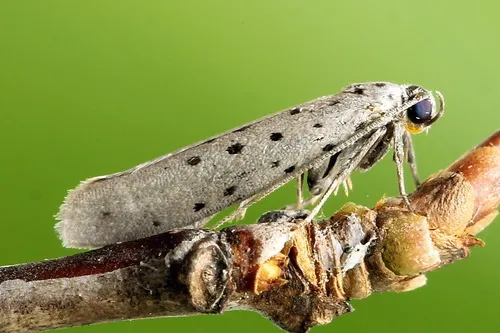
Yponomeuta sedella
Yponomeuta sedella
Wingspan about 16 mm. One of the smallest, but most easily distinguishable of the Yponomeutids, the forewings of this species are a smooth grey, with black spots absent from the apical third, although there is usually one spot centrally amongst the c
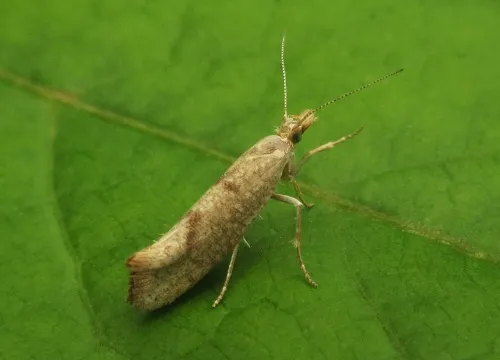
Ypsolopha alpella
Ypsolopha alpella
It closely resembles Ypsolopha sylvella, but with generally paler ground colour and less obvious fasciae. Care has to be taken with identification. Unless identified by a recognised expert, a photo is required. If the photo doesn't show the key ID fe
Ypsolopha angelicella - Hodges#2368
Ypsolopha angelicella
Identification: Adult : Antennae white with sharp black annulations. Palpi, head and thorax white; shoulders yellowish. FW white with striking fawn-brown maculations, sharply defined and edged with slightly darker brown scales. Cilia white with brown
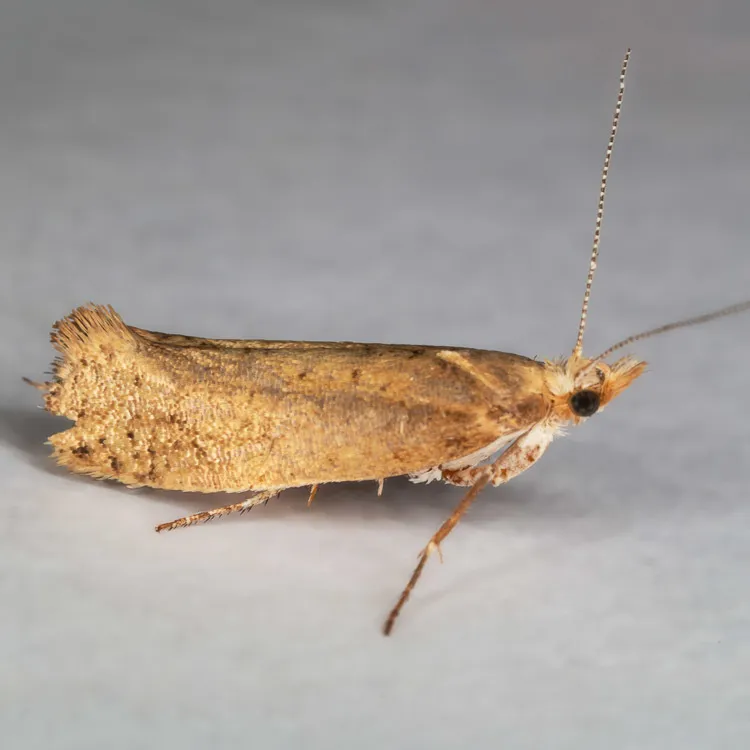
Ypsolopha cervella - Hodges#2372
Ypsolopha cervella
Identification: Adult - see original description in Print References.
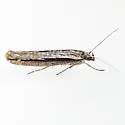
Ypsolopha flavistrigella - Hodges#2381
Ypsolopha flavistrigella
Identification: Original description is online as Cerostoma flavistrigella in print references.
Ypsolopha frustella - Hodges#2382
Ypsolopha frustella
DO NOT ADD IMAGES - Ypsolopha frustella (Walsingham, 1881) is a synonym of Ypsolopha canariella (Walsingham, 1881) .
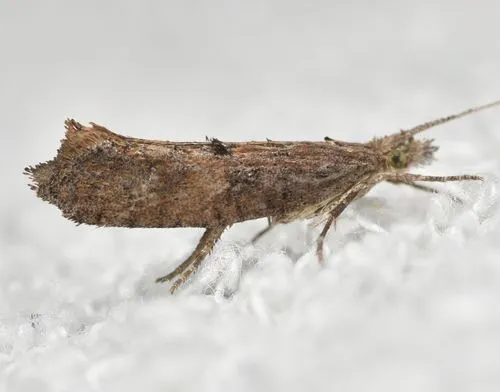
Ypsolopha horridella
Ypsolopha horridella
Wingspan 16 to 21 mm. Although this is perhaps the least attractive of the Ypsolopha species, the Latin horridella is actually derived from horridus, meaning shaggy and referring to the raised scale-tufts or crests on the dorsal part of the wings. Th
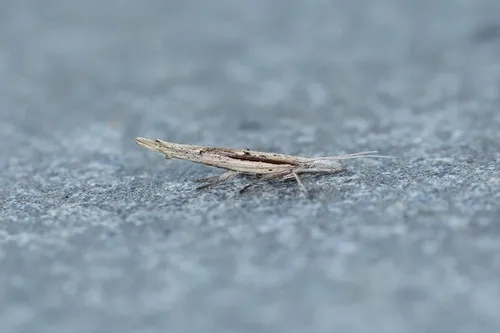
Ypsolopha mucronella
Ypsolopha mucronella
Wingspan 26 to 33 mm. The adult moth has a particularly distinctive attenuated resting posture. It is found mainly in woodlands on chalky soils. It can be found in flight during August to April. Adult overwinters in dense cover. The larval foodplant
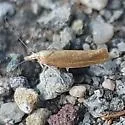
Ypsolopha nella - Hodges#2388
Ypsolopha nella
Identification: Detailed description by Busck can be found at link in citations below.
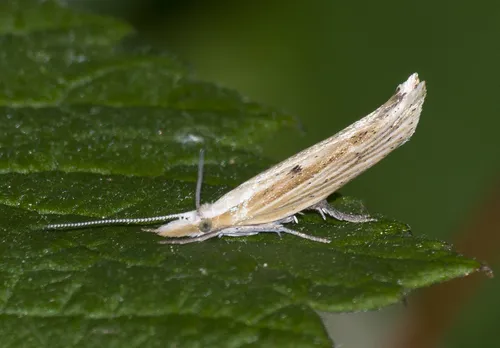
Ypsolopha nemorella
Ypsolopha nemorella
Wingspan 21 to 24 mm. One of the larger species of the genus Ypsolopha , a distinct dark spot on the creamy forewing is the most obvious feature. Distributed locally across most of Britain, except some parts of Scotland. In the Butterfly Conservation