
Family Twirler Moths (Gelechiidae)
Gelechiidae is a family in the order Lepidoptera. Browse 529 named species recorded in this family, or open an individual profile for its available identification and natural-history information.
Species in Gelechiidae (529)
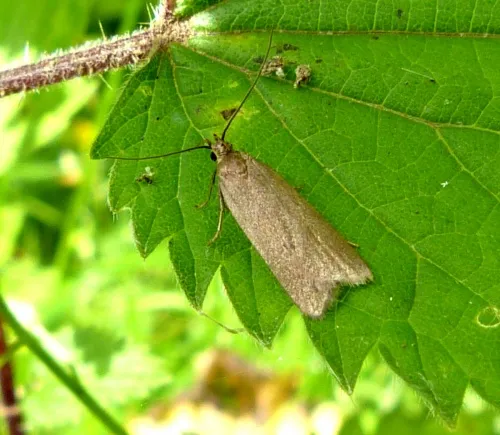
Acompsia cinerella
Acompsia cinerella
Wingspan 16 to19 mm. An unmarked brownish moth with long upwardly-curved labial palps. A variety of habitats, usually areas with rich vegetation or plenty of trees and bushes. Flying in June and July, it can be attracted to light. The larva is unknow
Agnippe laudatella - Hodges#1769
Agnippe laudatella
Identification: Specimen determined by DNA analysis (BOLD). ( 3 ) Genitalia:
Agnippe prunifoliella - Hodges#1771
Agnippe prunifoliella
Identification: Prunifoliella is Latin meaning "plum leaf", where Chambers found the caterpillars feeding. The larvae are known to be parisitized by the Ichneumon wasp Orgilus gelechiae ( 278 ).
Anacampsis agrimoniella - Hodges#2230
Anacampsis agrimoniella
Identification: Adult - forewing slender with pointed tip, basal half medium gray, apical half dark gray to blackish; thick white band crosses wing about two-thirds from base (inner margin of band straight-edged, outer margin broadens at costa). Larv
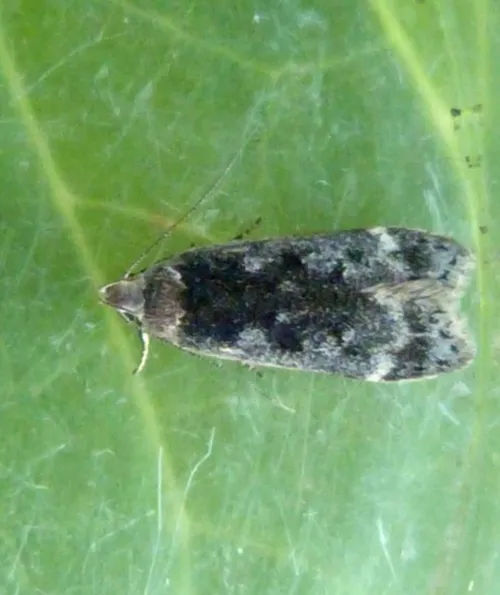
Anacampsis blattariella
Anacampsis blattariella
Wingspan 16 to 19mm. Very similar to the closely related A. populella and examination of the genitalia may be needed to be certain in differentiating between these two species. They rest on large birch trunks during the day. Adults fly at night from
Anacampsis consonella - Hodges#2233.1
Anacampsis consonella
Identification: The adult is externally very similar to A. rhoifructella but can be differentiated from it on basis of phenology, appearance of mature larva, and genital morphology of both genders. Genitalia:
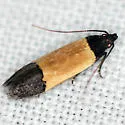
Coverdale's Anacampsis - Hodges#2234
Anacampsis coverdalella
Identification: Adult - forewing light brownish-orange or yellow except for apical one-third and small area at base which are blackish; hindwing gray; head and anterior part of thorax blackish.
Anacampsis fullonella - Hodges#2236
Anacampsis fullonella
Anacampsis fullonella is a moth of the Gelechiidae family. It was described by Zeller in 1873. It is found in North America, where it has been recorded from Arkansas, Florida, Illinois, Kentucky, Louisiana, Mississippi, New Mexico, Oklahoma and Texas
Anacampsis levipedella - Hodges#2241
Anacampsis levipedella
Identification: There is an undescribed species closely resembing levipedella A. levipedella A. nr. levipedella Watch Victor Engel video of "dancing" behavior of Anacampsis levipedella . Kawahara, Nishida & Rubinoff, 2011 ( JoLS 65 ) postulate that d
Anacampsis lupinella - Hodges#2242
Anacampsis lupinella
Identification: Larva - Caterpillar dull green; head testaceous with a black spot on each side near eyes, cervical shield of the same color, partly edged below with black; tubercles black; in a slight web between leaves of lupine.
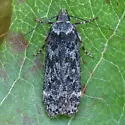
Pale-headed Aspen Leafroller Moth - Hodges#2243
Anacampsis niveopulvella
Identification: Chambers (1875) original description as Gelechia niveopulvella available in the print refernces .
Anacampsis nonstrigella - Hodges#2244
Anacampsis nonstrigella
Identification: Adult - basal two-thirds of fore wings dark olive, apical part deep blackish brown, with a few golden-brown scales just before apex.
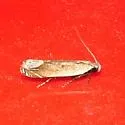
Anacampsis paltodoriella - Hodges#2245
Anacampsis paltodoriella
Identification: See original description in print reference below.
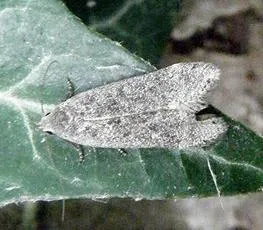
Anacampsis populella
Anacampsis populella
A very plain grey species. It is difficult to tell from A. blattariella but that has a different foodplant. Areas containing Willows, Poplars, Aspen etc. It flies in July and August and can sometimes be found at rest on leaves and trunks of the foodp
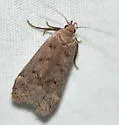
Anacampsis rhoifructella - Hodges#2248
Anacampsis rhoifructella
Identification: The adult is externally very similar to A. consonella but can be differentiated on basis of phenology, appearance of the mature larva, and genital morphology in both genders.
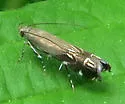
Anacampsis undescribed-nr-levipedella
Anacampsis undescribed-nr-levipedella
This page is for an apparently undescribed species of Anacampsis near levipedella . In my (ASH) opinion, the balance of the evidence based on the description would suggest that the species described by Clemens is that seen on the page for levipedella
Anacampsis wikeri - Hodges# 2251.1
Anacampsis wikeri
The larva of a tortricid, Hystrichophora taleana , occupies the same feeding mode on leadplant at the same time as A. wikeri ; the tortricid larva is somewhat heavier, and has more prominent setal pinacula, than A. wikeri .
Anarsia innoxiella
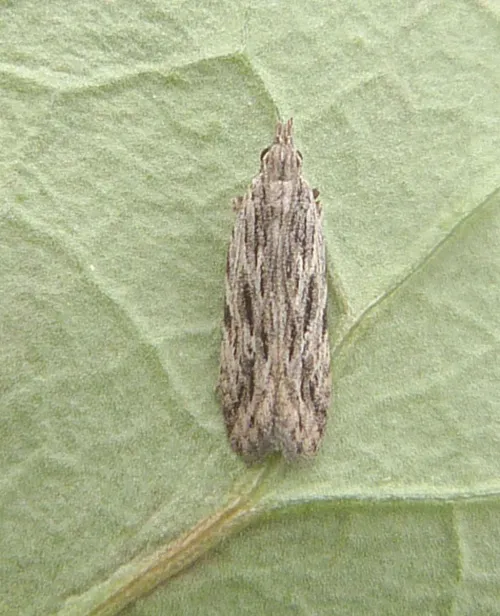
Anarsia innoxiella
Wingspan 11 to 14 mm. The long black streak in the centre of the forewing is said to be diagnostic of innoxiella , supported by the more contrasting pattern overall. Anarsia lineatella is similar but has a less-contrasting, duller pattern and the cen
Peach Twig Borer - Hodges#2257
Anarsia lineatella
Identification: Adult steel gray; larva reddish brown Probably introduced in the 1880s. A pest of fruit trees, especially peach.
Anarsia spartiella
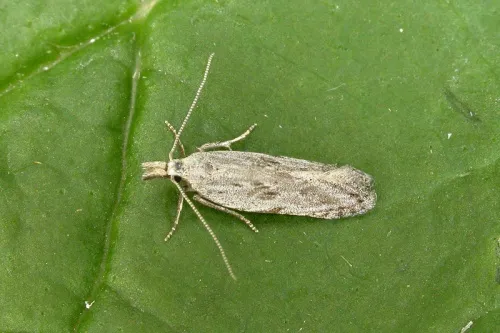
Anarsia spartiella
Wingspan 12 to 15 mm. The wings may be relatively plain, or have darker and paler mottling. The long, upwardly curved, labial palps of the female protrude from a large tuft of scales, but the shorter palps of the male are concealed in the tuft. In Ma
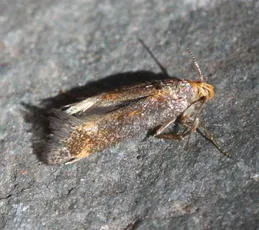
Apodia bifractella
Apodia bifractella
Wingspan 9-12 mm. Mainly brown with a broad orange stripe across the rear of its wings and an orange head. As is typical of the Gelechiidae, it rests with its palps turned back over its head. Secretive but is sometimes found in late afternoon on flow
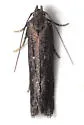
Aproaerema adversa - Hodges#2218
Aproaerema adversa
Identification: Braun (1930) original description is available online from link in print references.
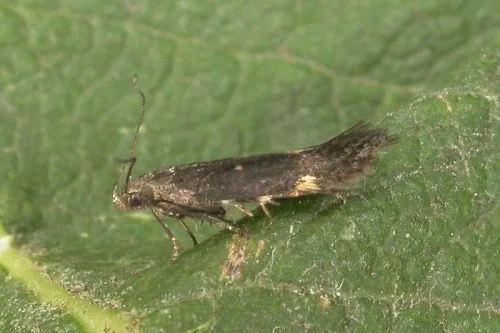
Aproaerema anthyllidella
Aproaerema anthyllidella
Wingspan about 11mm. The intensity and extent of the creamy markings on the forewing can be variable, and they are sometimes absent altogether. This species mainly inhabits dunes, dry grassland and rough pasture where kidney vetch occurs. There are t
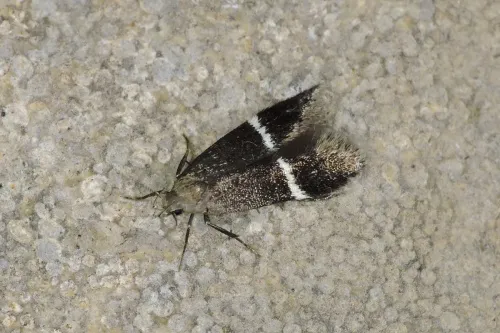
Aproaerema cinctella
Aproaerema cinctella
Wingspan about 13 mm. Very similar to Syncopacma larseniella , from which it can only be reliably distinguished by dissection of the genitalia. Areas that are rich in Birds'-foot-trefoil. Flying in late June and July, the adult moths can be attracted
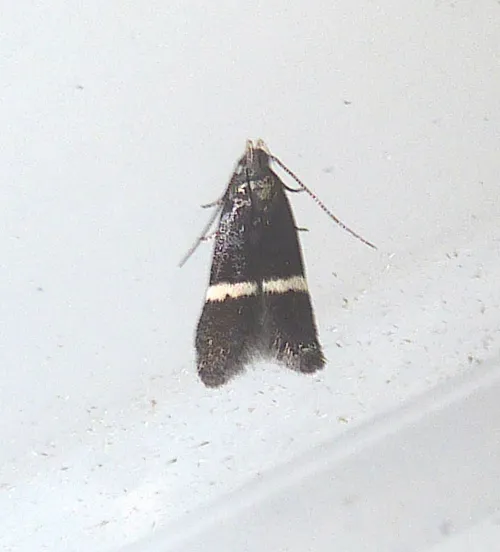
Aproaerema larseniella
Aproaerema larseniella
The genus contains several species which are virtually impossible to distinguish except by genitalia dissection, and Aproaerema larseniella is one of these. Easily confused with Aproaerema cinctella among others. Determination by genitalia examinatio
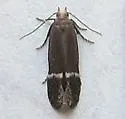
Aproaerema nigrella - Hodges#2221
Aproaerema nigrella
Identification: The original description as Gelechia nigrella Chambers, is available online in the print references below. Some of the specimens examined lack the white transverse band.
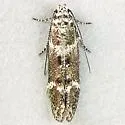
Argyrolacia bifida - Hodges#1779
Argyrolacia bifida
Identification: Specimen determined by DNA analysis (BOLD). ( 3 )
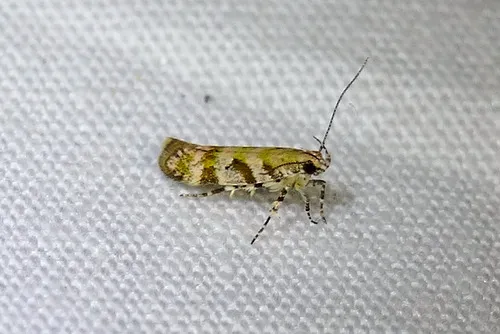
Aristotelia adceanotha - Hodges#1726
Aristotelia adceanotha
Aristotelia adceanotha - Hodges#1726 (Aristotelia adceanotha) is a species in the family Gelechiidae, commonly known as twirler moths, belonging to the order Lepidoptera (Butterflies and Moths). It is classified within the subfamily Anomologinae, sup
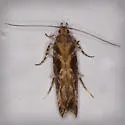
Aristotelia adenostomae - Hodges#1727
Aristotelia adenostomae
Identification: Adult - dark gray to black, dorsal half tinged with dark reddish.
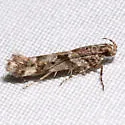
Aristotelia amelanchierella - Hodges#1728
Aristotelia amelanchierella
Identification: Adult : Head brown, pinkish on the face. FW ground color whitish, densely dusted with fuscous. Apical fourth and below the fold, suffused with pink. Markings nearly as in roseosuffusella , with a dark brown oblique acute triangle from
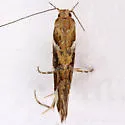
Aristotelia argentifera - Hodges#1730
Aristotelia argentifera
Identification: Original description is online in PDF.
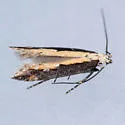
Aristotelia corallina complex - Hodges#1733.1
Aristotelia corallina
Identification: Larva - anterior body ringed in black and white, posterior striped in black and white (Janzen, 1967). These were very common spring visitors (Mar-May) at my lights in Tucson. [Randy Hardy]
Aristotelia elegantella - Hodges#1736
Aristotelia elegantella
Adults come to lights, but typically only one at a time. ( 4 )
Aristotelia ericinella
Aristotelia ericinella
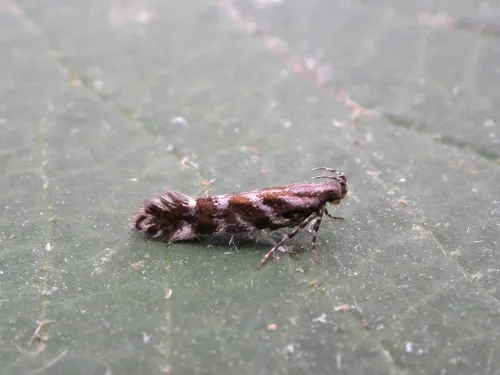
Flying in July and August, the adults are on the wing from the afternoon onwards but can be quite elusive. The larva feeds in June and July on heather (Calluna) forming a silken tube among the leaves. Occurring throughout much of England and Wales in
Aristotelia eumeris - Hodges#1737
Aristotelia eumeris
Identification: See illustration of type specimen in Clarke (1969).
Aristotelia fungivorella - Hodges#1738
Aristotelia fungivorella
Identification: Adult: forewing light to medium brown with dark patches in basal, AM, and PM areas along the costa, and a fourth dark patch at the apex; the bottom of the AM patch has an S-shaped edge that continues across to the bottom of the PM pat
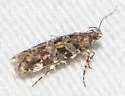
Aristotelia pudibundella - Hodges#1756
Aristotelia pudibundella
Identification: Specimen identified by DNA analysis (BOLD). ( 4 )
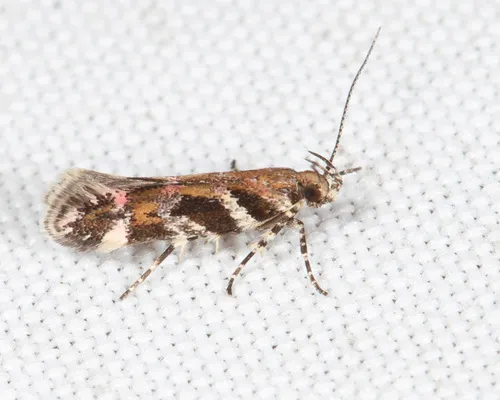
Pink-washed Aristotelia Moth
Aristotelia roseosuffusella
The pink-washed aristotelia, clover aristotelia moth or garden webworm (Aristotelia roseosuffusella) is a moth in the Gelechiidae family. It is found in North America, including Alabama, Georgia, Illinois, Kentucky, Maryland, Massachusetts, Michigan,
Aristotelia rubidella - Hodges#1762
Aristotelia rubidella
Identification: "The interstices between the black markings in the costal half of the FW need to be contrastingly white (or whitish) for it to be roseosuffusella ." Terry Harrison
Aroga camptogramma - Hodges#2185
Aroga camptogramma
Identification: Mostly blackish with a longitudinal dorsal white stripe from head to 3/4 length of forewings, turning sharply and crossing obliquely to the costal margin. Similar to Aroga unifasciella of the western U.S. but barely half the size. (
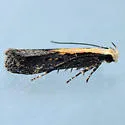
Aroga paraplutella - Hodges#2193
Aroga paraplutella
Identification: The original description as Gelechia paraplutella Busck, is available online at the link in the print references below.
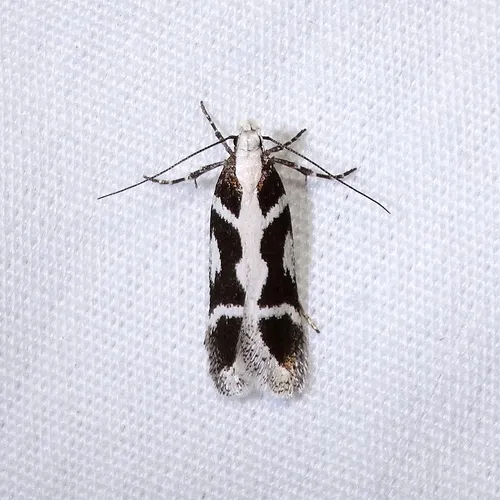
Aroga paulella - Hodges#2194
Aroga paulella
Identification: Adult : FW are shining dark blackish brown with white markings. The entire dorsal edge is white, reaching up the fold except right at the base and slightly crossing the fold with an upward projection at the apical third of the wing. B
Red-striped Fireworm Moth - Hodges#2198
Aroga trialbamaculella
Identification: Specimen identified by DNA analysis (BOLD). ( 3 )
Aroga websteri - Hodges#2201
Aroga websteri
Identification: Specimen determined by DNA analysis (BOLD). The larvae are a major defoliator of Great Basin Sagebrush ( Artemisia tridentata ), which covers vast areas of the intermountain west between the Rocky Mountains and the Cascade/Sierra Neva
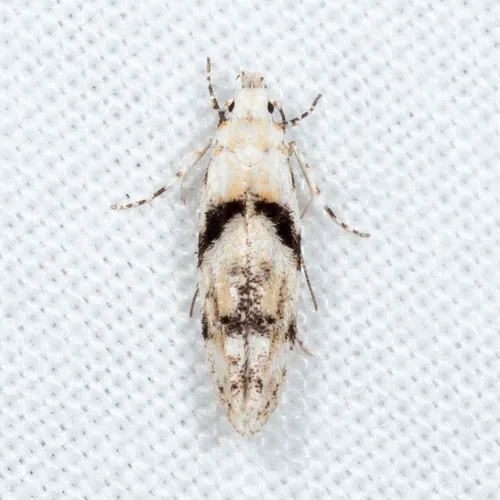
White Stripe-backed Moth
Arogalea cristifasciella
Arogalea cristifasciella, the stripe-backed moth, is a moth of the family Gelechiidae. It is found in North America, where it has been recorded from Alabama, Arkansas, Connecticut, Florida, Georgia, Illinois, Indiana, Kansas, Kentucky, Louisiana, Mai
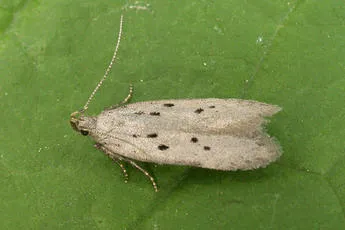
Athrips mouffetella
Athrips mouffetella
Wingspan about 15mm. A small, but distinctively marked moth. The adult flies at night during July to September, and is attracted to light. The larvae feed mainly on honeysuckle during May and June, spinning together terminal shoots. Found throughout
Battaristis concinnusella - Hodges#2225
Battaristis concinnusella
Identification: V shaped subterminal line with black dot at the apex. (This mark shared with Battaristis nigratomella .) Genitalia: ♂
Battaristis cyclella - Hodges#2226
Battaristis cyclella
Identification: The original description is available online in PDF.
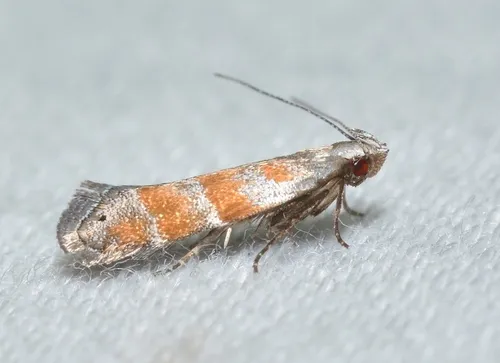
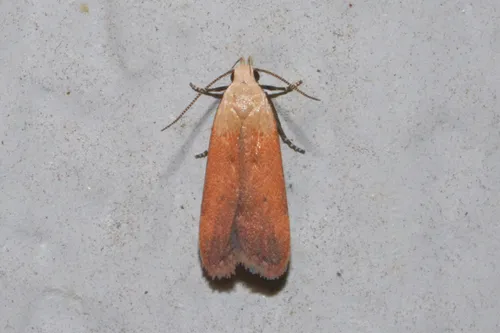
Orange Stripe-backed Moth
Battaristis vittella
Battaristis vittella, the stripe-backed moth, is a species of moth in the Gelechiidae family. It is found in North America, where it has been recorded from the eastern United States and southern Canada.
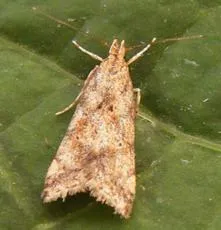
Brachmia blandella
Brachmia blandella
Wingspan 11 mm. A very tiny drab brown moth, with a slightly 'tent like' posture. This species occupies habitats where its food plant, Gorse, occurs. Adults are on the wing in July and early August when they can be disturbed from large old Gorse bush
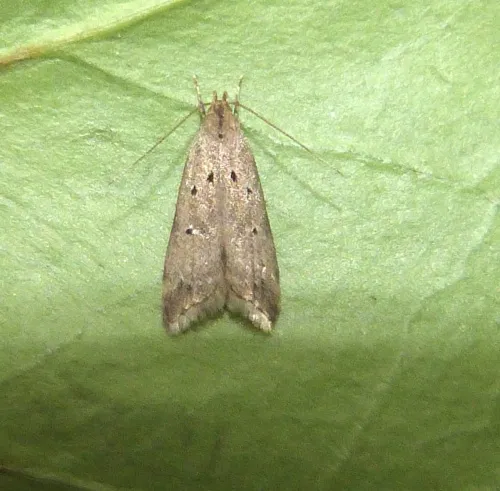
Brachmia inornatella
Brachmia inornatella
Please provide a photograph and retain specimen determination by genitalia examination (gen. det.) may be required. Fens, marshes and on river-banks, especially in areas where Common Reed is present. There is a single generation, flying in June and J
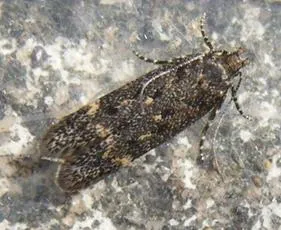
Bryotropha affinis
Bryotropha affinis
Wingspan 11-12 mm. This moth has a variable paler band, sometimes broken, across the forewing about three quarters of the way toward the tip. The moths are on the wing in June and July. The larvae feed on mosses, often on walls during the early part
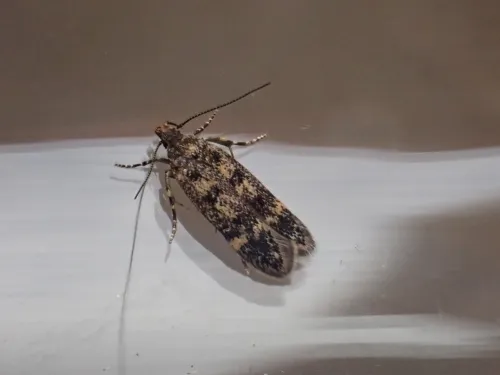
Bryotropha basaltinella
Bryotropha basaltinella
Adult moths are on the wing between late May and August. The larvae feed on mosses during the spring. Having a somewhat disjunct distribution in Britain, this moth occurs in many of the southern English counties, and then is rather scattered northwar
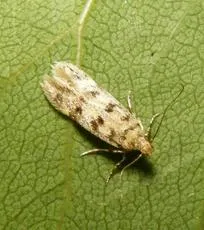
Bryotropha domestica
Bryotropha domestica
Wingspan 12 to 13 mm. The pale buff wings are marked with dark brown blotches. The adult moths fly in a single generation from mid-May to late August, and are readily attracted to light. The larvae feed on mosses growing on walls, in a silken gallery
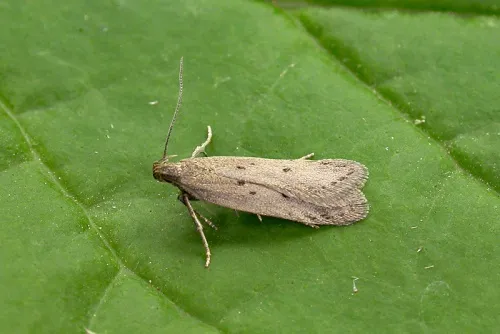
Bryotropha politella
Bryotropha politella
Wingspan 12 to 16 mm. The adult males are brownish-grey with several darker spots, and females are similar, though paler. Both sexes often show a sheen to the forewings. There are similar species, and care must be taken with identification; dissectio
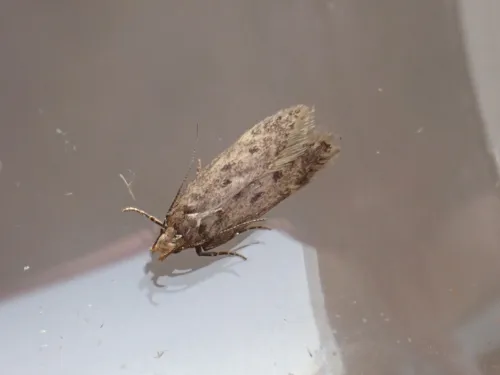
Bryotropha senectella
Bryotropha senectella
The wingspan is 9 to 13 mm. One of several rather similar Bryotropha species. Unless identified by a recognised expert, a photo is required. The specimen should be retained as determination by genitalia examination (gen. det.) may be required to conf
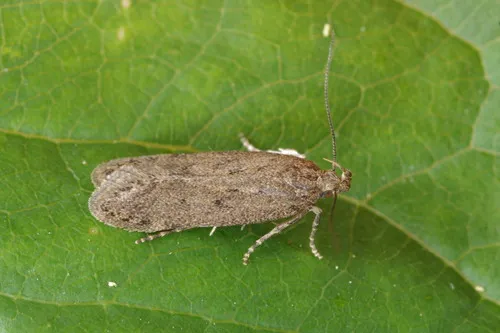
Bryotropha terrella
Bryotropha terrella
Wingspan 14-16 mm. The relatively nondescript adults have two indistinct darker dots on the forewing. Often encountered wherever long grass grows and easily flushed in the daytime. The larvae feed at the base of grasses, on the stems. Common and wide
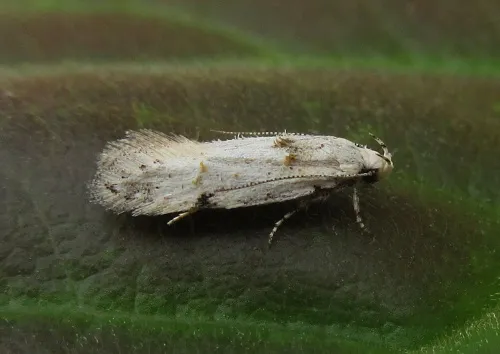
Carpatolechia alburnella
Carpatolechia alburnella
Wingspan about13 mm. A pale silvery species effectively camouflaged against birch - its larval host. In the Scottish Highlands area the population has a rather darker colouration. The adults of this species may be found resting in crevices on the tru
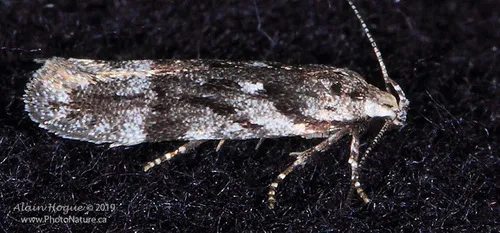
Carpatolechia belangerella - Hodges#1869
Carpatolechia belangerella
Includes as a synonym Carpatolechia proximella of authors (not Hübner, 1796)
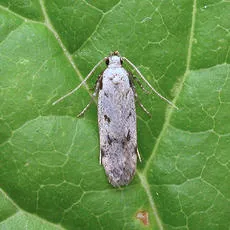
Carpatolechia decorella
Carpatolechia decorella
Wingspan about 14mm. Although quite variable in intensity of markings and depth of ground colour, this species generally shows a distinctive black bar at the base of the forewing leading edge, a good identification pointer. In areas where the larval
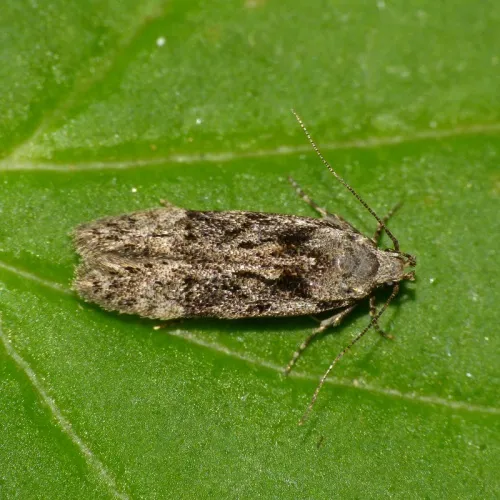
Carpatolechia fugitivella
Carpatolechia fugitivella
The adult moths are on the wing in June and July. They can be found during the day by searching tree trunks but are more often encountered at light. The larva feeds in a spinning on a leaf of Elm from which it is easily beaten. Pupa undescribed. Foun
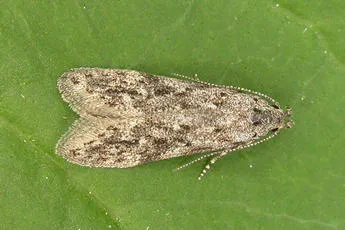
Carpatolechia notatella
Carpatolechia notatella
Wingspan about 14mm. There are a number of rather similar species, and care must be taken in the identification. Occupying woods, heaths and fenland especially damper areas where willow is present. Moths are on the wing in May and June when they can
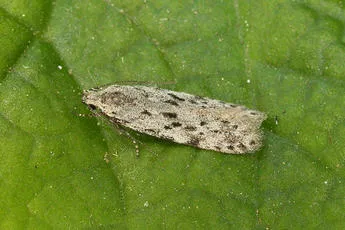
Carpatolechia proximella
Carpatolechia proximella
Wingspan 13 to17 mm. The species is variable in appearance, depending on the amount of brownish scale on the forewing. This moth is found on the wing during May and June. It is widespread and commonly found throughout Britain. In the Butterfly Conser
Chionodes abdominella - Hodges#2054
Chionodes abdominella
Identification: Detailed description available in MONA Fascicle 7.6 at link in citations below.
Chionodes abella - Hodges#2055
Chionodes abella
Identification: Description can be found in MONA Fascicle 7-6 at link in citations below. In June, larvae feed in the newly developing foliage of Abies concolor and Pseudotsuga menziesii .
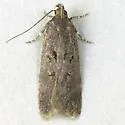
Chionodes abitus - Hodges#2061.2
Chionodes abitus
"Three specimens from Ottawa, Ontario area are excluded from the type series because they are highly disjunct from other populations... The pattern of dark spots on the forewing is reduced but present." This statement seems to imply that the Northeas
Chionodes arenella - Hodges#2060
Chionodes arenella
Identification: From Forbes's description: "Clay color…. Fore wing with darker grayish shading between the veins, leaving the veins contrastingly pale."
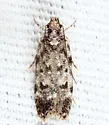
Chionodes bicostomaculella - Hodges#2064
Chionodes bicostomaculella
Identification: In the East, this species can be separated from other members of the C. formosella complex by the lack of yellow scaling. This species has a slate-gray appearance, with no yellow or orange. Note that according to Hodges' fascicle, gen
Chionodes chrysopyla - Hodges#2068
Chionodes chrysopyla
Identification: Description can be found in MONA Fascicle 7-6 at the link in citations below.
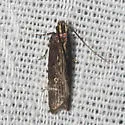
Eyeringed Chionodes Moth - Hodges#2072
Chionodes discoocellella
Identification: Adult : FW brown, tinged with roseate or purple, and faintly streaked with ocherous within the inner margin, and with a yellowish-white spot containing a black central dot at the end of the disc, a small black spot on the fold, and on
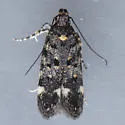
Chionodes emptor - Hodges#2072.3
Chionodes emptor
Identification: Adult : Usually the scales on the head are tipped with dark gray/black and the transition is relatively abrupt. Males of have sex scales on the dorsolateral surface of HW.
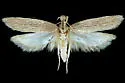
Chionodes figurella - Hodges#2073
Chionodes figurella
Identification: Specimen determined by DNA analysis (BOLD).
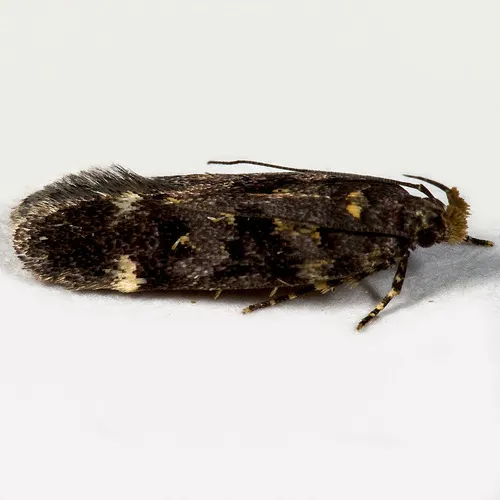
Chionodes formosella - Hodges#2077
Chionodes formosella
Identification: Chionodes formosella and Chionodes fuscomaculella can be distinguished from Chionodes bicostomaculella by the presence of yellow scaling ( Chionodes bicostomaculella is entirely grayscale). Chionodes formosella and Chionodes fuscomacu
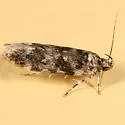
Chionodes fuscomaculella - Hodges#2079
Chionodes fuscomaculella
Identification: Chionodes formosella and Chionodes fuscomaculella can be distinguished from Chionodes bicostomaculella by the presence of yellow scaling ( Chionodes bicostomaculella is entirely grayscale). Chionodes formosella and Chionodes fuscomacu
Chionodes gilvomaculella - Hodges#2080
Chionodes gilvomaculella
Identification: The forewings are dark brownish, with an indistinct yellowish spot on the costa near the base of the wing and one of the same color on the middle of the costa, extended indistinctly or diffusely to the fold, where there is a blackish-
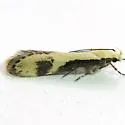
Chionodes kincaidella - Hodges#2086
Chionodes kincaidella
Identification: A highly variable species . See original description in the print references below. "The wide distribution and variation in FW color, from dark chocolate brown to rust and pattern especially in the extent of the ochreous, to nearly ob
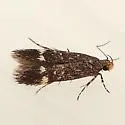
Chionodes lactans - Hodges#2095.6
Chionodes lactans
Identification: Dark-gray/gray-brown forewings with pair of whitish spots at 3/4 wing length, one on anterior margin and one on posterior margin; is some specimens the spots fuse to form fascia bar. More detailed description found in MONA Fascicle 7.
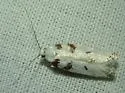
Chionodes lictor - Hodges#2094.4
Chionodes lictor
Identification: "One of the few externally distinct species of Chionodes : the forewings are nearly shining white with black/dark-gray marks extending posteriorly from the costa just beyond base, at 1/3 length, at 2/3 length, and on the outer margin"
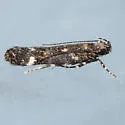
Chionodes lophosella - Hodges#2089
Chionodes lophosella
Chionodes lophosella - Hodges#2089 (Chionodes lophosella) is a species in the family Gelechiidae, commonly known as twirler moths, belonging to the order Lepidoptera (Butterflies and Moths). It is classified within the subfamily Gelechiinae, tribe Ge
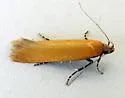
Chionodes luror - Hodges#2112.2
Chionodes luror
Identification: The only Chionodes with a clear yellow forewing.
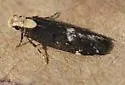
Chionodes mariona - Hodges#2092
Chionodes mariona
Identification: Adult - forewings glossy black with two conspicuous cream-colored spots; one, a short triangular dash on outer third of costa; the other, an irregular spot of about the same size on dorsum just beyond middle. Larva - long; slender bo
Chionodes meddix - Hodges#2095.5
Chionodes meddix
Identification: Dark-gray/gray-brown forewings whitish spots at 3/4 wing length, typically only single spots on each wing near the costal margin. More detailed description found in MONA Fascicle 7.
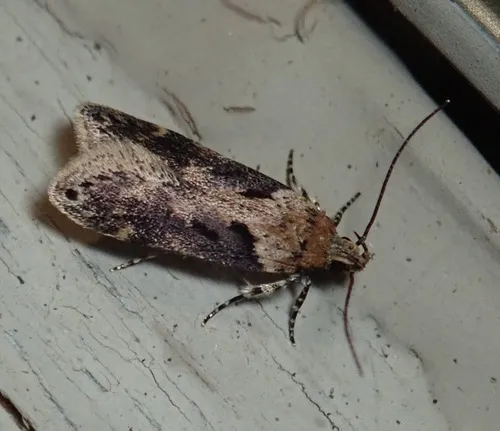
Black-smudged Chionodes Moth
Chionodes mediofuscella
Chionodes mediofuscella, the black-smudged chionodes moth, is a moth of the Gelechiidae family. It is found in North America, where it has been recorded from Nova Scotia to Florida and from British Columbia to Colorado, Arizona and northern Californi
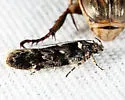
Chionodes near-bicostomaculella - Hodges#2064.1
Chionodes near-bicostomaculella
Identification: This undescribed species of the Northeast looks like a contrastingly black-and-white variation of Chionodes bicostomaculella . Images can be see on iNaturalist
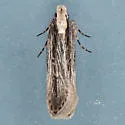
Chionodes notandella - Hodges#2098
Chionodes notandella
Identification: Busck description "Second joint of labial palpi with large divided brush, which become gradually shorter towards apex; white strongly mottled with black and brown scales; terminal joint white with black apex. Face light fuscous, iride
Chionodes occlusa - Hodges#2101
Chionodes occlusa
Some females in the lugubrella -group have slightly more narrow wings than do males. Sattler (1991: 268) notes ". . . some Chionodes species ... , slight sexual differences in wing shape are observed, with the females having distally narrower fore wi
Chionodes oecus - Hodges#2086.2
Chionodes oecus
Identification: Detailed description available from MONA Fascicle 7-6 linked in citations below.
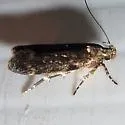
Chionodes pereyra - Hodges#2104
Chionodes pereyra
Identification: The original description is available online in the print references below. Specimen determined by DNA analysis (BOLD) Genitalia:
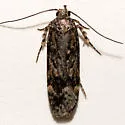
Chionodes petalumensis - Hodges#2107
Chionodes petalumensis
Identification: Detailed description can be found in MONA Fascicle 7-6 which can be accessed at the link below under citations. Genitalia:
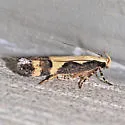
Chionodes pinguicula - Hodges#2109
Chionodes pinguicula
Identification: Detailed description can be found in MONA Fascicle 7-6 at the link in citations below.
Chionodes plutor - Hodges#2109.2
Chionodes plutor
Identification: Detailed description available in MONA Fascicle 7-6 at link in citations below.
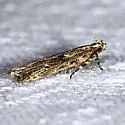
Chionodes rabula - Hodges#2111.1
Chionodes rabula
Identification: " Chionodes rabula can be recognized by the combination of small size and vaguely striate forewing color pattern, particularly the faint, oblique gray fascia at 1/3 the wing length immediately preceded by a pale-yellow area" .
Chionodes rector - Hodges#2118.1
Chionodes rector
Identification: Description can be found in MONA Fascicle 7-6 at link in citations below.
Chionodes repertor - Hodges#2086.3
Chionodes repertor
Identification: Detailed description in MONA Fascicle 7-6 found at link in citations below.
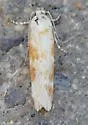
Chionodes retiniella - Hodges#2112
Chionodes retiniella
Identification: "Differs from all other gelechiine species in North America by having pale rust orange FW crossed by four evenly-spaced white bands, a convergence in pattern to conifer-feeding Tortricidae" .
Chionodes salicella - Hodges#2114
Chionodes salicella
Identification: Description can be found in MONA Fascicle 7-6 at link in citations below.
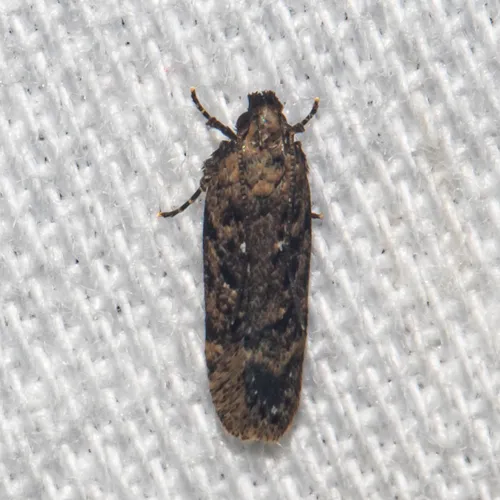
Chionodes thoraceochrella - Hodges#2119
Chionodes thoraceochrella
Chionodes thoraceochrella is a moth in the family Gelechiidae. It is found in North America, where it has been recorded from Nova Scotia and southern Quebec to Georgia, North Dakota, Mississippi, Texas and Washington, east to California, Utah and Ari
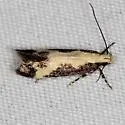
Chionodes thyotes - Hodges#2071.2
Chionodes thyotes
Identification: The color pattern of the forewing (plate 2, figure 1) of thyotes is distinctive within the sistrella -complex: the posterior margin is pale yellow from the base to 3/5 the length, then extended obliquely to the anterior margin at 4/5
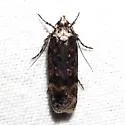
Chionodes trichostola - Hodges#2120
Chionodes trichostola
Identification: See Meyrick Hodge places this species in the trichostola complex with C. parens and C. sevir .
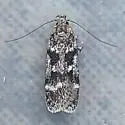
Chionodes trophella - Hodges#2121
Chionodes trophella
Identification: Description can be found in MONA Fascicle 7-6 at link in citations below.