
Family Underwing, Tiger, Tussock, and Allied Moths (Erebidae)
Erebidae is a family in the order Lepidoptera. Browse 932 named species recorded in this family, or open an individual profile for its available identification and natural-history information.
Species in Erebidae (932)
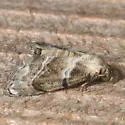
Abablemma bilineata - Hodges#8438
Abablemma bilineata
Identification: Barnes & McDunnough (1916) original description as Phobolosia bilineata is available in the print references.
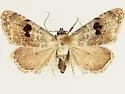
Abablemma duomaculata - Hodges#8438.1
Abablemma duomaculata
Identification: Wagner PDF linked below has description and photo of larva, adult. ,
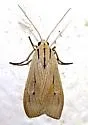
Agaraea semivitrea - Hodges#8256.2
Agaraea semivitrea
Identification: Adult: forewing semitransparent, pale gray with dark veins; diffuse black spot near center of wing; hindwing smaller, paler, and without black spot; abdomen bright yellow/orange with black dorsal spots; top of thorax pale gray/whitish
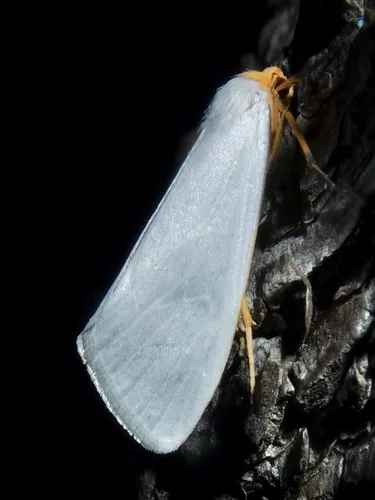
Agylla septentrionalis - Hodges#8054
Agylla septentrionalis
Identification: Antennae and head bright orange, thorax white, abdomen gray dorsally and ventrally orange. Legs orange, tarsi and half of tibia on first two pairs are gray. Forewings are slivery white dorsally with the costal edge blackish at base. U
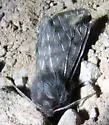
Alexicles aspersa - Hodges#8143
Alexicles aspersa
Endangered and Threatened Wildlife and Plants; Partial 90-Day Finding on a Petition To List 475 Species in the Southwestern United States as Threatened or Endangered With Critical Habitat. federalregister.gov . PDF
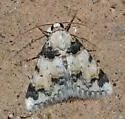
Allerastria albiciliatus - Hodges#9020
Allerastria albiciliatus
Identification: Notes distinguishing Allerastria albiciliatus from female Forsebia cinis by Jan Metlevski . some of the common forms:
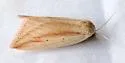
Feeble Grass Moth - Hodges#9818
Amolita fessa
Identification: Forewing whitish to pale brown and sprinkled with brown specks; the reniform and orbicular spots are each represented by a small black dot; a dark brown line runs from the wing base past the dots, then curves gently outward until reac
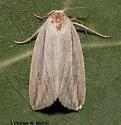
Amolita fratercula - Hodges#9822
Amolita fratercula
Identification: The original description of Amolita fratercula Barnes & McDunnough is available online. (link in the print references below). - Determined by Noel McFarland.
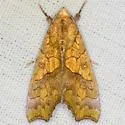
Yellow Scallop Moth - Hodges#8545
Anomis erosa
Dalton State College cautions that A. erosa cannot be positively distinguished from A. flava without dissecting the genitalia.
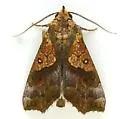
Tropical Anomis Moth - Hodges#8546
Anomis flava
Identification: ♂ Det: Ed Knudson 2018 Dalton State College cautions that A. erosa cannot be positively distinguished from A. flava without dissecting the genitalia.
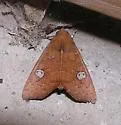
Anomis luridula - Hodges#8549
Anomis luridula
"Thesaurus of Agricultural Organisms: Pests, Weeds, and Diseases" suggests that A. texana and A. luridula are synonyms (and gives the common name "small cotton leafworm"). But MPG lists the two species separately. Very little background information i
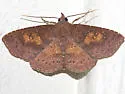
Antiblemma filaria - Hodges#8578
Antiblemma filaria
Identification: Determined by Don Lafontaine (Canadian National Collection)
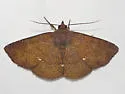
Antiblemma rufinans - Hodges#8577
Antiblemma rufinans
Antiblemma rufinans - Hodges#8577 (Antiblemma rufinans) is a species in the family Erebidae, belonging to the order Lepidoptera (Butterflies and Moths). It is classified within the subfamily Eulepidotinae, superfamily Noctuoidea. This species belongs
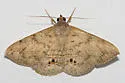
Velvetbean Caterpillar Moth - Hodges#8574
Anticarsia gemmatalis
Identification: Adult : Color highly variable . Wings heavily mottled or mostly unmarked with weak stripe and prominent spots. PM continues across HW, terminating at the apex of FW. Larva : The larvae are extremely variable in coloration and marking
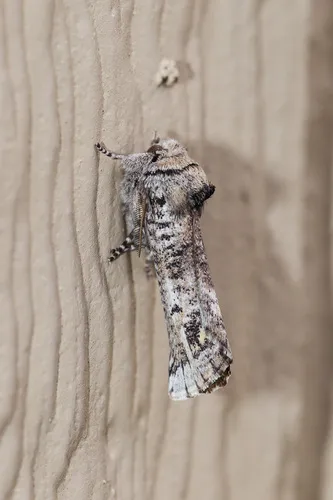
Aon Moth - Hodges#8954
Aon noctuiformis
Identification: Adult: head and thorax dark gray tinged with rufous; thin transverse black line behind collar, rear edge of thorax raised, tufted, often blackish. Forewing mottled: black striations and speckling in basal half and in subterminal area
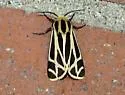
Carlotta's Tiger Moth - Hodges#8171.1
Apantesis carlotta
Identification: Rfw 16.3 mm, dfw costal margin black from base to end of discal cell, hws of male pale orange yellow, hw of female pale orange yellow or pink, always with broken black border. Ptagiae in males are unmarked yellowish, in females ptagia
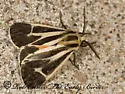
Apantesis carlotta-nais-phalerata-vittata
Apantesis carlotta-nais-phalerata-vittata
This page is for unidentifiable photos of Apantesis carlotta/phalerata/nais/vittata. These used to be the only species in the genus "Apantesis", and they present numerous ID challenges, but now that the former Grammia species are included in Apantesi
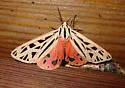
Doris Tiger Moth - Hodges#8198
Apantesis doris
Identification: Transverse bands greatly reduced or absent (no transverse white markings in the forewing discal cell). Broad, white costal band. The specimen illustrated is a rare variant where the white markings of the forewing and thorax have a pin
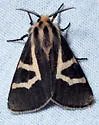
Apantesis f-pallida - Hodges#8189
Apantesis f-pallida
Identification: Very similar to Grammia figurata , and replacing it in the Southwest, west of the Great Plains. Probably not separable except by location (???)
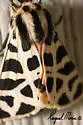
Apantesis incorrupta - Hodges#8180
Apantesis incorrupta
Has a long history of confusion with G. nevadensis , and mostly it has been reported and recorded under that name. A common species in the Southwest, often comming in large numbers to lights. They seem to be the most active between midnight and sunr
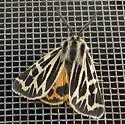
Apantesis obliterata - Hodges#8174
Apantesis obliterata
Identification: Similar to several other Apantesis species with black and white forewings and orange and black hindwings, however it can usually be distinguished by white scaling along the cubital vein distal to the W-shaped ST white line.
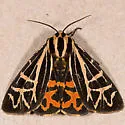
Apantesis ornata - Hodges#8177
Apantesis ornata
Identification: Adult : FW appear black, typically with a net-like pattern of extensive yellowish or rosy off-white transverse lines and thinner pale veins. HW color is variable from yellow-orange, orange, to orange-red, rarely entirely black. HW is
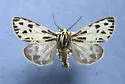
Labrador Tiger Moth - Hodges#8172
Apantesis quenseli
Identification: Detailed description at Pacific Northwest Moths ( 3 ) Males have bipectinate antennae and smokey gray hindwing. Females have simple antennae and pale orange or pale white hindwings. - The later description by Hampson as Apantesis quen
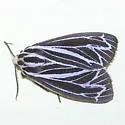
Apantesis speciosa - Hodges#8175.1
Apantesis speciosa
Identification: It is like a smaller, subarctic/day-flying version of virguncula (which does not occur north of Alberta)… Chris Schmidt, 29 October, 2013
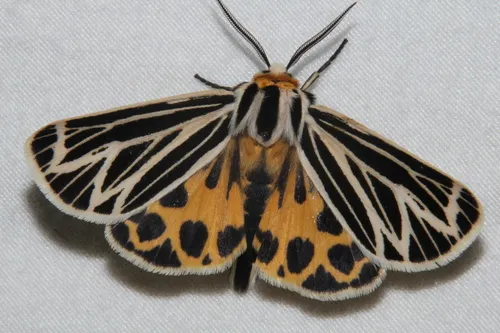
Little Virgin Tiger Moth - Hodges#8175
Apantesis virguncula
Identification: forewing black with thick and thin yellowish to cream-colored lines; only 1 transverse line on forewing, which extends as a zigzag from costa near apex hindwing yellow with extensive black shading in both sexes look for yellow line on
Apeplopoda mecrida - Hodges#8274.1
Apeplopoda mecrida
Identification: Adult description adapted from Druce (1889). The forewings and hindwings are sooty black. The head, tigulae, and base of the thorax are black. The thorax and abdomen are scarlet red. Antennae and legs are black.
Apocrisias thaumasta - Hodges#8219
Apocrisias thaumasta
Identification: Apocrisias thaumasta Franclemont, original description is available in PDF and online in the print references below. Franclemont also describes the larva.
St. Lawrence Tiger Moth - Hodges#8162
Arctia parthenos
Identification: Adult: forewing brown with white or pale yellowish spots and bars (but not continuous lines); hindwing bright yellow with black PM band joined at one or more places to large black basal patch
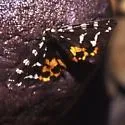
Yarrow's Tiger - Hodges#8165.2
Arctia yarrowii
Adults are diurnal, and are swift fliers. Not known to come to light. a
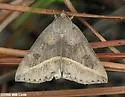
Yellow-lined Chocolate - Hodges#8759
Argyrostrotis flavistriaria
Information on identification and hostplant of this species was given to the author (P. Coin) by Steve Hall, North Carolina Natural Heritage Program, on 5/1/2004. Dr. Hall is an expert on the moth fauna of North Carolina.
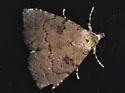
Watson's Arugisa - Hodges#8510
Arugisa latiorella
Identification: Adult : FW darker, brownish color ● labial palps are more slender, projecting forward almost horizontally ● PM line is more continuous, with less noticeable black dots along its length ● less dark shading inside subterminal line than
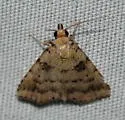
Common Arugisa - Hodges#8509
Arugisa lutea
Identification: Adult : FW light brownish-yellow with irregular, dark brown/gray traverse lines ● labial palps are thick, projecting upward at a steep angle ● dark blotch over middle of AM line ● reniform and orbicular spots represented by black dot
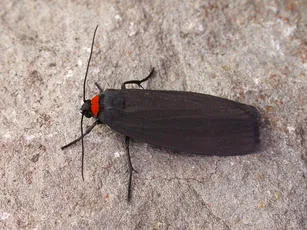
Red-necked Footman
Atolmis rubricollis
Wingspan 25 to 35 mm. A dark species but notable for its distinctive red neck. The single generation flies in June and July, when it can sometimes be found flying in the daytime. It is also nocturnal, coming to light Feeding on lichens and algae grow
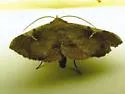
Azeta repugnalis - Hodges#8575
Azeta repugnalis
Azeta repugnalis - Hodges#8575 (Azeta repugnalis) is a species in the family Erebidae, belonging to the order Lepidoptera (Butterflies and Moths). It is classified within the subfamily Eulepidotinae, superfamily Noctuoidea. This species belongs to th
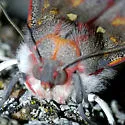
Grote's Bertholdia - Hodges#8258
Bertholdia trigona
Identification: Adult: forewing long, pointed, brown with large pale yellow translucent patch along costa near apex, and 2-3 yellowish spots along inner margin near base; several black dots within translucent patch; shape of patch is approximately re
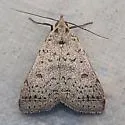
Bleptina biformata - Hodges#8370.2
Bleptina biformata
Identification: Description can be found in Troubridge at link in citations below.
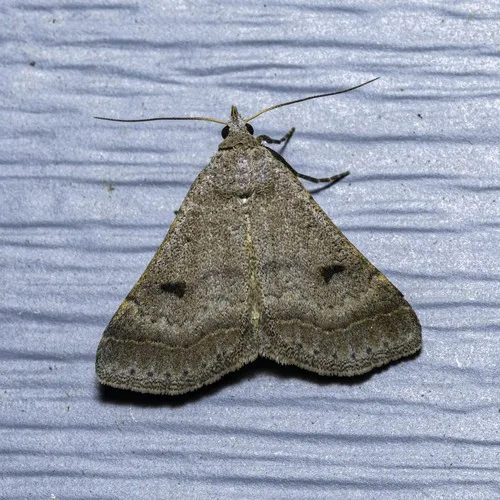
Bent-winged Owlet - Hodges#8370
Bleptina caradrinalis
Identification: Adult - forewing dark grey-brown or purple-brown; male has rather narrow, pointed forewings, with costa decidedly concave in center (not as much so in female); antemedian and postmedian lines jagged and indistinct; median line diffuse
Bleptina flaviguttalis - Hodges#8373
Bleptina flaviguttalis
Identification: Specimen identified by DNA analysis (BOLD). ( 3 )
Bleptina inferior - Hodges#8371
Bleptina inferior
Identification: The original description of Bleptina inferior Grote, is available in PDF or view online. Photo determined by Jim Vargo.
Boryzops purissima - Hodges#8643
Boryzops purissima
Boryzops purissima - Hodges#8643 (Boryzops purissima) is a species in the family Erebidae, belonging to the order Lepidoptera (Butterflies and Moths). It is classified within the subfamily Erebinae, tribe Melipotini, superfamily Noctuoidea. This spec
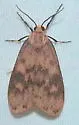
Bruceia pulverina - Hodges#8094
Bruceia pulverina
Identification: The original description of Bruceia pulverina Neumoegen, and a revised description by Hampson (1900), are both available online at the links in the print references below.
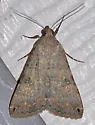
Bulia deducta - Hodges#8614
Bulia deducta
Identification: Pogue & Laughlin state that Bulia deducta and similaris are indistinguishable and can only be separated by genitalia and by geographic distribution in areas where their ranges do not overlap. Powell & Opler described the larva having
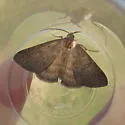
Vetch Looper Moth - Hodges#8733
Caenurgia chloropha
Identification: Adult: forewing light to medium brown, paler toward base, and sometimes with reddish tinge distally; wing crossed by four indistinct lines, slightly darker than ground color; AM line arc-shaped, slightly concave (a distinctive feature
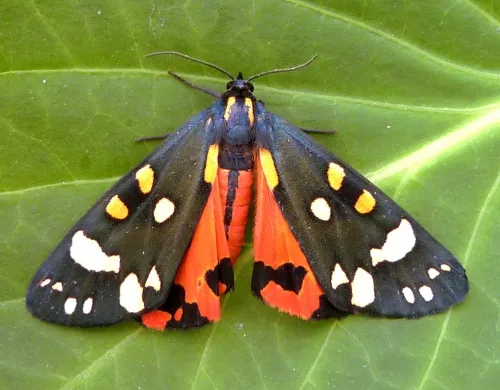
Scarlet Tiger
Callimorpha dominula
Wingspan 45-55 mm. The rather variable adults of this species usually have a metallic green sheen on the blackish areas of the forewing. It is one of the few tiger moths with developed mouthparts, allowing it to feed on nectar. Occupies damp areas su
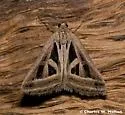
Callistege diagonalis - Hodges#8741
Callistege diagonalis
Identification: Side-by-side key to distinguishing the three species @ Moths of Southeastern Arizona . Specimen identified by DNA analysis (BOLD)
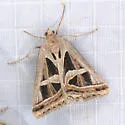
Callistege intercalaris - Hodges#8740
Callistege intercalaris
Identification: Adult: forewing with distinctive pattern of light brown lines and dark brown to blackish patches; medial line broad, continuous, lower portion curving down toward anal angle; hindwing light brown with gray shading, pale PM and subterm
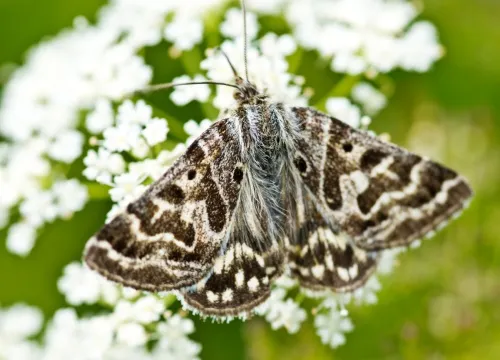
Mother Shipton
Callistege mi
Wingspan 25-30 mm. The common name refers to the forewing markings, which appear to show an old lady or witch's head. Downland, in rough grassland and waste places where Clovers and Trefoils, Medick or Lucerne occur. A day-flying moth, preferring sun
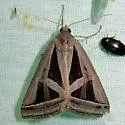
Callistege triangula - Hodges#8742
Callistege triangula
Identification: Side-by-side key to distinguishing the three species @ Moths of Southeastern Arizona .
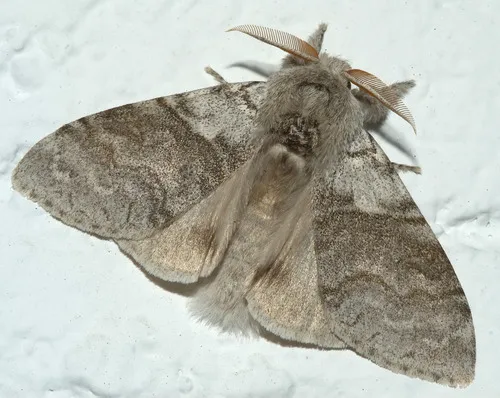
Pale Tussock
Calliteara pudibunda
Wingspan 40-60 mm. Both the adults and larvae are quite hairy. Gardens, hedgerows, parks, woodland and scrub. The moths fly in May and June and are attracted to light. The larva is similar to that of the Dark Tussock ( Dicallomera fascelina ), but is
Alabama Underwing - Hodges#8869
Catocala alabamae
Identification: Adult - forewing of nominate subspecies has thick black AM line and dark shading in subterminal area near inner margin; subspecies titania is plainer looking, with less distinct AM line, and faint or absent shading in subterminal area
Girlfriend Underwing - Hodges#8878
Catocala amica
Identification: Member of the Catocala amica complex in which species lack a black medial hindwing band; see Gall & Schweitzer (2026) for full description. ( 8 ) Caution : In Gall & Schweitzer (2026) figure 2, the specimen labeled A is a lineella and
Girlfriend & Little Lined Underwing
Catocala amica-lineella
Identification: Adult : FW of typical form dark gray to blackish with heavy black lines; pale gray or whitish band across AM area, and small pale patches along PM line; subreniform spot pale and boldy outlined in black; light grayish-brown patch in u
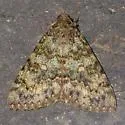
Andromache Underwing - Hodges#8836
Catocala andromache
Identification: Adult - forewing gray with greenish tint in fresh specimens; subreniform spot pale, conspicuous; AM line, double, black, composed of 3 scallops; subterminal line faint or broken near middle; pale yellowish shading may be present along
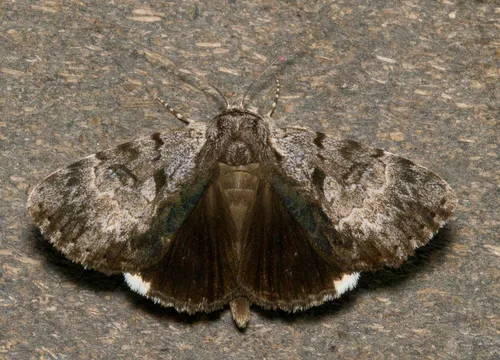
Gloomy Underwing - Hodges#8849
Catocala andromedae
Identification: Adult - forewing light gray with dark inner margin; very dark "flying saucer" shape joining subreniform spot to midpoint of AM line; PM line with short blunt "teeth" outwardly edged with white; ST line outwardly edged with white. Unde
Angus' Underwing - Hodges#8783
Catocala angusi
Identification: Two forms. Form "lucetta" has wide black band from the basal area to the outer margin broken by the reniform spot.
Sweetfern Underwing - Hodges#8775
Catocala antinympha
Identification: Adult - FW shiny, mostly bluish black with black lines and some brown shading, especially behinf pm line. Sometimes has a whitish subreniform spot. HW yellow/orange and black bands, mostly black at the outer fringe.
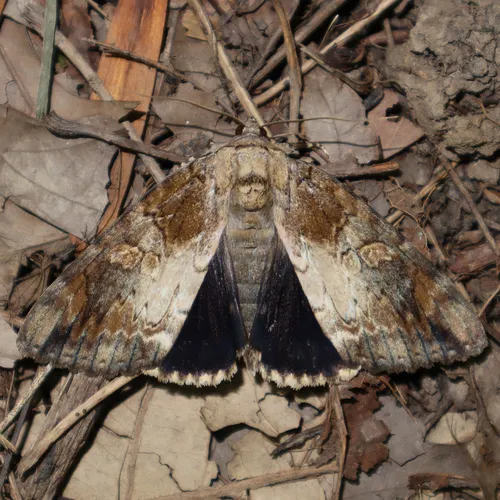
Catocala atocala - Hodges#8787.1
Catocala atocala
Formerly treated as a form of Strecker's Catocala agrippina . Strecker illustrated the form in the original description ( fig.3 ) of that species.
Bay Underwing - Hodges#8777
Catocala badia
Identification: Adult - forewing dark brown inside AM line and in PM area; light brown beyond nearly-straight ST line and in band outside AM line; PM line black, wavy, usually inconspicuous. Hindwing orange with two black bands of similar width. The
Catocala benjamini - Hodges#8837.1
Catocala benjamini
Identification: Specimen determined by DNA analysis (BOLD). ( 3 )
Charming Underwing - Hodges#8867
Catocala blandula
Identification: Adult - AM and PM lines meet near inner margin. Brown basal shade, and black border of HW usually not broken. It appears there may not be any current diagnostic criteria for reliably and consistently separating blandula/mira/crataegi
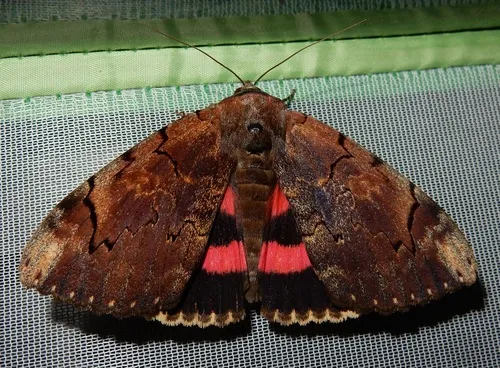
Carissima Underwing - Hodges#8832.1
Catocala carissima
Identification: Adult: forewing dark brown, often with greenish or bluish cast; AM and PM lines black, sharp, heavy near costa; conspicuous pale whitish patch at apex, and pale shading inside PM line, sometimes extending throughout median area and al
Connubial Underwing - Hodges#8877
Catocala connubialis
Identification: Has several named variants or "forms" whose colors vary considerably; see image links in Internet References section below.
Hawthorn Underwing - Hodges#8858
Catocala crataegi
Identification: Adult - forewing with dark blackish shading in basal area continuing along inner margin to anal angle; postmedial (PM) line bordered distally by broad reddish-brown band - this band is pale and its distal margin is diffuse and indisti
Epione Underwing - Hodges#8773
Catocala epione
Identification: Hindwings sooty black with sharp white fringes. On forewings, the outer (reniform) spot is smudged and inconspicuous, the inner (subreniform) spot elongated and teardrop-shaped with the sharp end pointed posteriorly. Fairly active; re
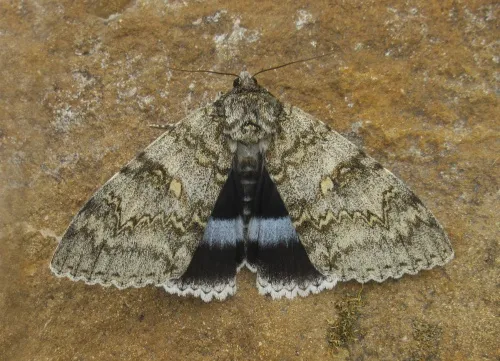
Clifden Nonpareil
Catocala fraxini
Wingspan 75 to 95 mm. A very large species, superficially similar to some other Erebinae species, but the blue underwing colouration is unmistakable. Unless identified by a recognised expert, a photo is required. A former rare immigrant species, with
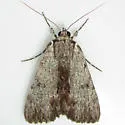
Graceful Underwing - Hodges#8847
Catocala gracilis
Identification: Adult - FW mottled and heavilly shaded along inner margin. Usually has a basal dash. HW inner black band on yellow forms an incomplete loop.
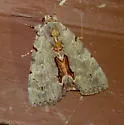
Woody Underwing - Hodges#8864
Catocala grynea
Identification: Adult - FW greenish gray, brownish along inner margin below black median dash. Fine broken black lines. HW yellow/orange and black lines. Sometimes the black border has a narrow break near the anal angle.
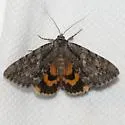
Habilis Underwing - Hodges#8778
Catocala habilis
Identification: Grote (1872) original description. "Smaller and slighter than C. palaeogama , of the same general habit, with paler more evenly colored primaries. Fore wings pale grey with a greenish tint. All the lines black, narrow, often indistinc
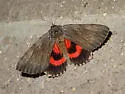
Herodias Underwing - Hodges#8850
Catocala herodias
Identification: Adult - forewing is grey and brown, generally lacking any trace of medial lines. Instead forewing veins are somewhat darkened in the median areas with white streaks from the post medial line to the outer fringe, running parallel to th
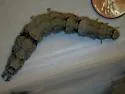
Catocala ilia or umbrosa
Catocala ilia-umbrosa
Identification: Since often specimens of ilia and umbrosa cannot be distinguished by photo alone, this page serves as a (temporary?) home for those for which the best identification that can be made, is " ilia or umbrosa ." If this page is objectiona
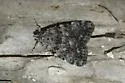
Jair Underwing - Hodges#8879
Catocala jair
Identification: Member of the Catocala amica complex in which species lack a black medial hindwing band; see Gall & Schweitzer (2026) for full description. ( 4 ) Caution : In Gall & Schweitzer (2026) figure 2, the specimen labeled A is a lineella and
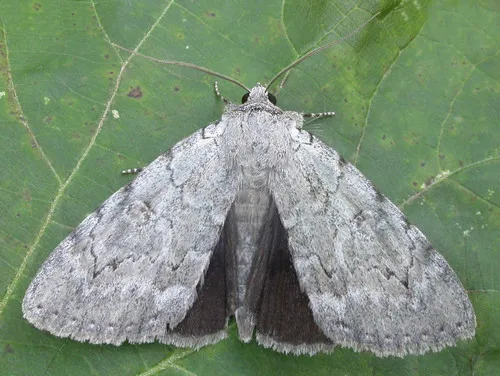
Judith's Underwing Moth - Hodges#8781
Catocala judith
Identification: Grote (1867) described the forewing greenish gray with fine black transverse lines. Hindwing is black with black fringe. Determined by James Adams (Dalton State University)
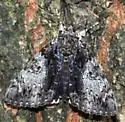
Tearful Underwing - Hodges#8794
Catocala lacrymosa
Identification: Pattern variable, but note white crescents on inner margin of forewing. Hindwing is black with white fringe, but black near anal angle. ( 8 )
Catocala lineella - Hodges#8879
Catocala lineella
Identification: Member of the Catocala amica complex in which species lack a black medial hindwing band; see Gall & Schweitzer for full description. Caution : In Gall & Schweitzer figure 2, the specimen labeled A is a lineella and not a pinicola (err
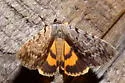
Louise's Underwing - Hodges#8848
Catocala louiseae
Identification: "There is a distinct white "smile" (in spread specimens) between the reniform and subreniform spots. There is also a narrow but distinct white line immediately following the black postmedial line. The hindwing is a deep yellow orange
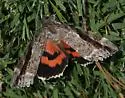
Marbled Underwing - Hodges#8804
Catocala marmorata
Identification: The original Edwards (1864) description is available online in the print references below. Forewing has a dark arc extending from the costa through the reniform spot to the outer margin ending just below the apex. Rare to uncommon thr
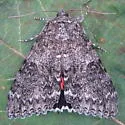
Meske's Underwing - Hodges#8822
Catocala meskei
Identification: Adult - forewing gray and evenly patterned (has a dirty or dust-covered appearance), with few contrasts or strong markings compared to similar species; PM line often single (at least in leading half of wing) with no white border on di
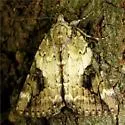
Little Nymph Underwing - Hodges#8876
Catocala micronympha
Identification: Adult - variable forewing with distinctive PM line.
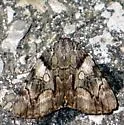
Wonderful Underwing - Hodges#8863
Catocala mira
Identification: Adult - basal area of forewing not dark/blackish (as it is in C. blandula and crataegi ); subterminal area shaded with brown; subreniform spot conspicuous and usually pale brown; pale whitish area runs obliquely from costa to subrenif
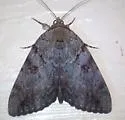
The Little Wife Underwing - Hodges#8774
Catocala muliercula
Identification: Forewing reddish-brown, hindwing banded black and yellowish-orange. Most lines on wings black ( 6 ) .
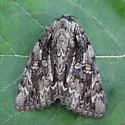
The Bride - Hodges#8798
Catocala neogama
Identification: Adult - forewing grayish with well-defined AM and PM lines, having significant brown scaling in post-median area bordering distal edge of PM line and sometimes in AM area; reniform spot large and reddish-brown; subreniform spot round
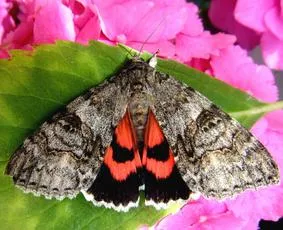
Red Underwing
Catocala nupta
Wingspan 65-75 mm. Unmistakable large moth, but check the colour of the underwing carefully as other, scarcer species such as Light Crimson Underwing and Dark Crimson Underwing can be easily missed. Adult a photograph showing the colour of the underw
Married Underwing - Hodges#8842
Catocala nuptialis
Identification: Adult - forewing brownish-gray with conspicuous black reniform spot shaped like a drop or comma; AM line does not widen toward middle of wing; PM line saw-toothed, indistinct; hindwing yellow to orange with thick black bands and pale
Catocala obscura or residua
Catocala obscura-residua
This is the page for specimens that are either Catocala obscura or Catocala residua , but which cannot be determined due to the hind-wing fringe not being visible in the photo.
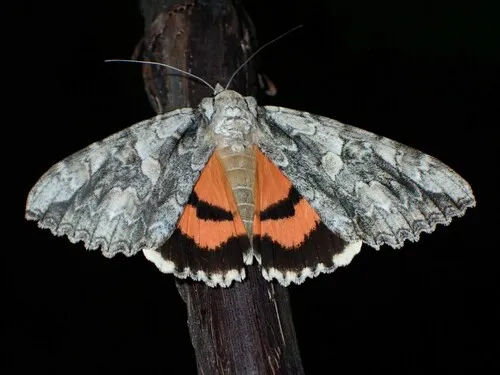
Mother Underwing - Hodges#8806
Catocala parta
Identification: Adult - forewing mottled light gray and darker gray or brown with whitish patches; black basal, anal, and subapical dashes usually noticeable, sometimes indistinct; subreniform spot and area basal to reniform spot form a connected whi
Catocala pinicola - Hodges#8879.1
Catocala pinicola
Identification: Member of the Catocala amica complex in which species lack a black medial hindwing band; see Gall & Schweitzer for full description. Caution : In Gall & Schweitzer figure 2, the specimen labeled A is a lineella and not a pinicola (err
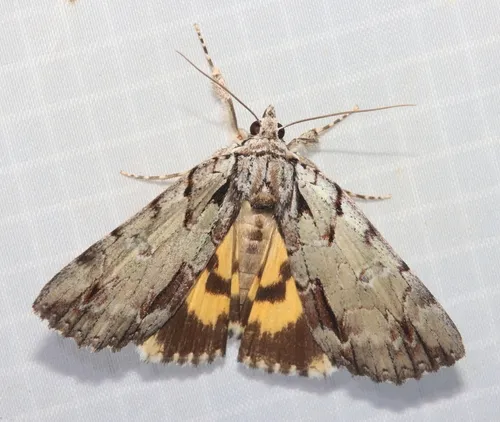
Praeclara Underwing - Hodges#8865
Catocala praeclara
Identification: A medium-size moth with dull greenish or purple grey forewings. The antemedial line is black and distinct, the other cross-lines less so, mainly indicated by dark marks at the costa. The basal dash is indistinct or absent. A short dar
Precious Underwing - Hodges#8858.1
Catocala pretiosa
Identification: Adults - lighter median and basal area than the similar Catocala crataegi and Catocala mira Larvae - figured in Rare, Declining, and Poorly Known Butterflies and Moths of Forests and Woodlands in the Eastern United States fig. 260, 26
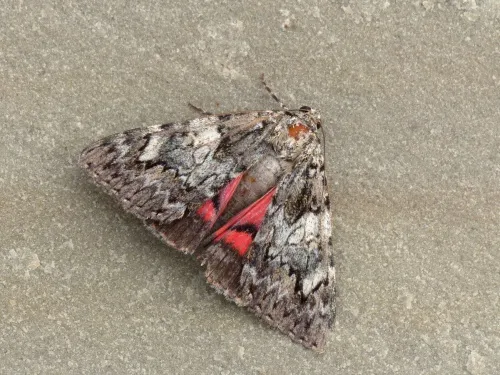
Light Crimson Underwing
Catocala promissa
Wingspan 60 to 65 mm. Similar to the more common Red Underwing and should be checked with care (especially the underwing). In view of the rarity of this species any possible records should be reported to the VC55 Recorder for Moths and the specimen s
Yellow-gray Underwing and Hulst's Underwing
Catocala retecta-luctuosa
Identification: FW pale gray, some with yellowish brown shading. Distinct pattern with 2 black dashes near the base, with others below apex, and on PM line. Black HW with a white checkered fringe. *Description applies to luctuosa as well, and the two
Robinson's Underwing - Hodges#8780
Catocala robinsonii
Identification: Large underwing, forewings very pale, hindwings dark, flies in fall. Two forms, see print references.
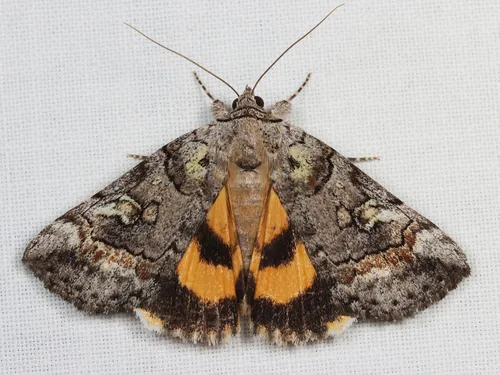
Similar Underwing - Hodges#8873
Catocala similis
Identification: Adult - pale triangular patch from the PM along the costa, pointed at the apex and the light-colored, tear-shaped reniform spot distinguish this species. ( 12 )
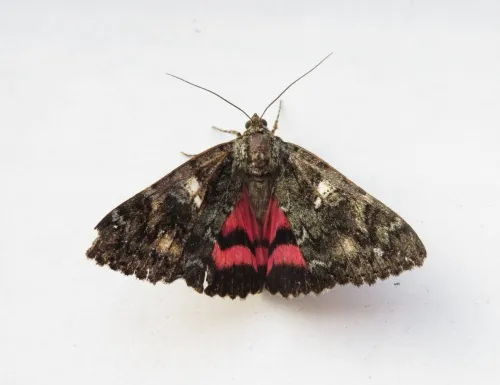
Dark Crimson Underwing
Catocala sponsa
Wingspan 60 to 70 mm. Similar to the more common Red Underwing and should be checked with care (especially the underwing). In view of the rarity of this species any possible records should be reported to the VC55 Recorder for Moths and the specimen s
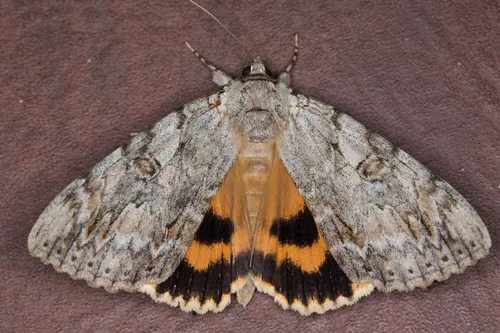
Youthful Underwing - Hodges#8797
Catocala subnata
Identification: Adult - forewing grayish with well-defined AM and PM lines, having significant brown scaling in post-median area bordering distal edge of PM line and sometimes in AM area; reniform spot large and reddish-brown; subreniform spot round
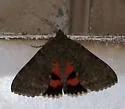
Catocala texanae - Hodges#8830
Catocala texanae
Identification: Hindwing inner black band is thin and comes to a point before reaching the inner margin. Fringe of hindwing is white, except a area of reddish-orange at the apex.
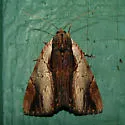
Ultronia Underwing - Hodges#8857
Catocala ultronia
Identification: Adult: forewing pattern predominantly longitudinal (running from base to outer margin), rather than transverse (running from costa to inner margin) as in many other Catocala species; typically has dark brown to black strip along inner
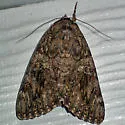
Catocala umbrosa - Hodges#8801.1
Catocala umbrosa
Identification: Adult - exhibits very little variability. Forewings of nearly all Louisiana specimens are somewhat drab woody-like gray, grayish-brown or brown in appearance. (Brou, 2003)
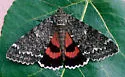
Once-married Underwing - Hodges#8805
Catocala unijuga
Identification: Adult: forewing mottled pale to dark gray and white; black PM and white ST lines zigzag; orangish-red band on hindwing only slightly irregular; fringe mostly white [description by Charles Covell). Larva: dark gray with very irregular
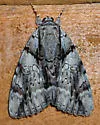
Widow Underwing - Hodges#8792
Catocala vidua
Identification: Adult: forewing pale gray with black arc beginning mid-costa and running just above reniform spot to apex; upper AM and PM lines with heavy black shading; straight black streak runs parallel to inner margin from base to outer margin (
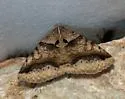
Celiptera valina - Hodges#8748
Celiptera valina
Identification: The Hampson (1913) revised description of Celiptera valina is available online in the print references below.