
Family Leaf Blotch Miner Moths (Gracillariidae)
Gracillariidae is a family in the order Lepidoptera. Browse 281 named species recorded in this family, or open an individual profile for its available identification and natural-history information.
Species in Gracillariidae (281)
Acrocercops astericola - Hodges#0692
Acrocercops astericola
Identification: None of the reared specimens uploaded to BugGuide have the basal half of the dorsal margin entirely white/pale, as is the case with Leucospilapteryx venustella . For comparison, here is L. venustella : Another, undescribed moth has si
Acrocercops brongniardella
Acrocercops brongniardella
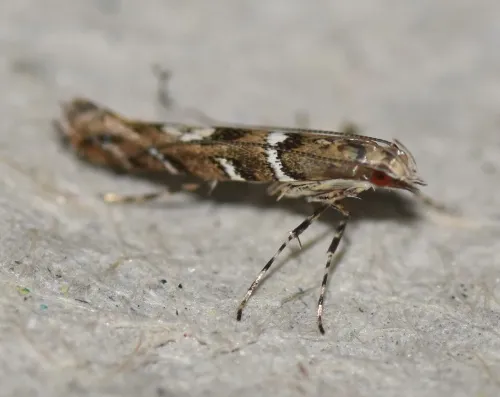
Wingspan 8 to10mm. The larvae of this species mine the leaves of Oak species. They characteristically make twisting initial mines in the upper epidermis, which then join to form a large blotch, with a silvery appearance. In open woodland and other ar
Aspilapteryx tringipennella
Aspilapteryx tringipennella
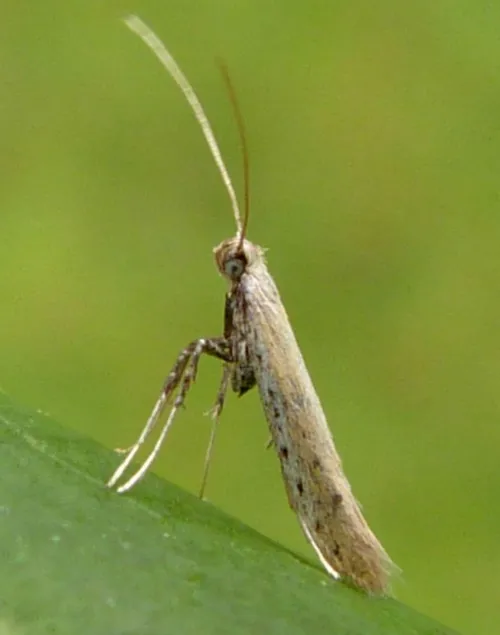
Wingspan 10-13 mm. A close relative of the genus Caloptilia , this species rests in a similar manner, with the forepart of the body raised on the front legs. The overall appearance is that the moth looks brown above fading to white below and there ar
Caloptilia acerifoliella - Hodges#0584
Caloptilia acerifoliella
Identification: Original description is online as Gracilaria acerifoliella Chambers. Several populations in Oregon and California may prove to be a new species.
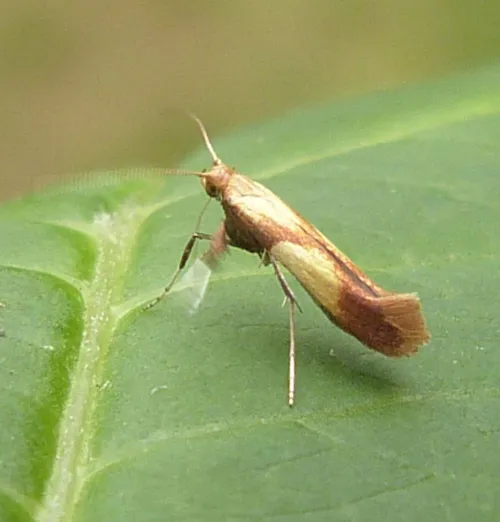
Caloptilia alchimiella
Caloptilia alchimiella
Wingspan 10 to13 mm. The adults are difficult to distinguish from the recently separated Caloptilia robustella, To be certain of identification, dissection of genitalia is necessary. Where dissection has not taken place, records should be submitted a
Caloptilia alnicolella - Hodges#0586
Caloptilia alnicolella
Identification: Specimen determined by DNA analysis (BOLD). Genitalia:
Caloptilia anthobaphes - Hodges#0589
Caloptilia anthobaphes
Identification: "Head purple-bronzy, face whitish. Palpi whitish, terminal joint with dark fuscous subapical band. Thorax bronzy-purple, a brassy-yellow postmedian blotch. Forewings narrow, costa gently arched, apex pointed, termen extremely oblique;
Azalea Leaf Miner
Caloptilia azaleella
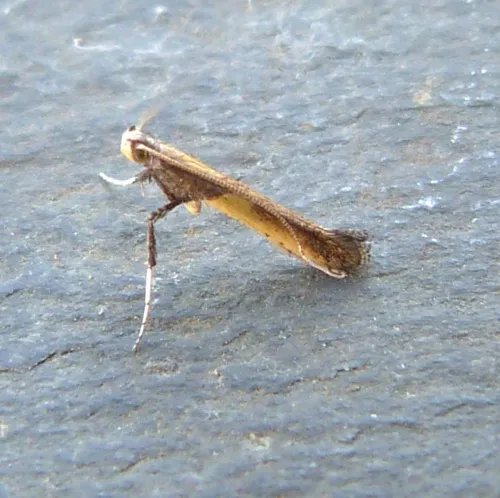
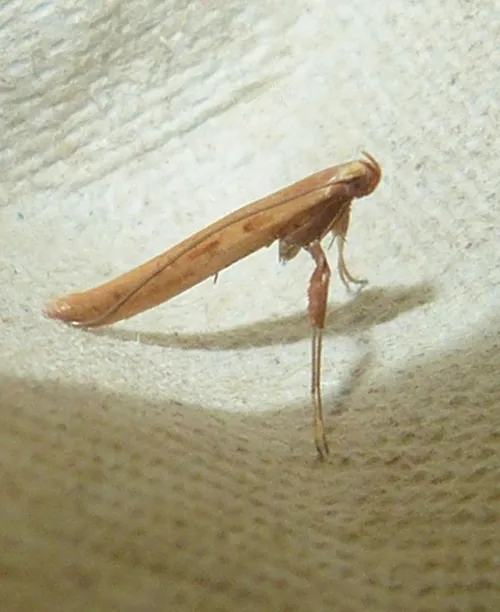
Wingspan 10 to11 mm. Another distinctive member of this family with largely dark brown forewings broken only by a yellow band along the costal margin. Leafmine occurs on Rhododendron species http://www.leafmines.co.uk/html/Lepidoptera/C.azaleella2.ht
Caloptilia betulicola
Caloptilia betulicola
Wingspan 14 to 16 mm. Very similar to Caloptilia elongella , both species being quite variable. Areas with plenty of Birch – the larval foodplant. There are two generations, flying in June and July, and then in September and October. The second brood

Maple Caloptilia Moth
Caloptilia bimaculatella
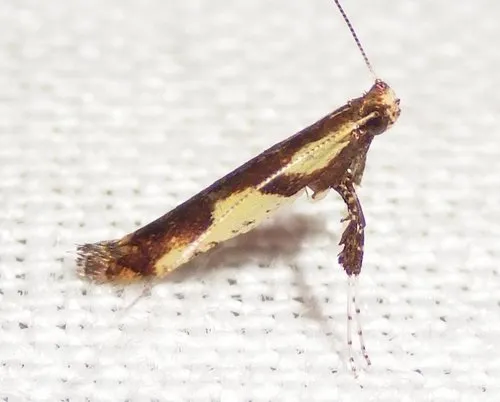
Caloptilia bimaculatella is a moth of the Gracillariidae family. It is known from Canada (Ontario and Québec) the United States (including Florida, Kentucky, Maine, Michigan, Missouri, New York, Vermont, Connecticut and West Virginia).
Walnut Caloptilia Moth
Caloptilia blandella
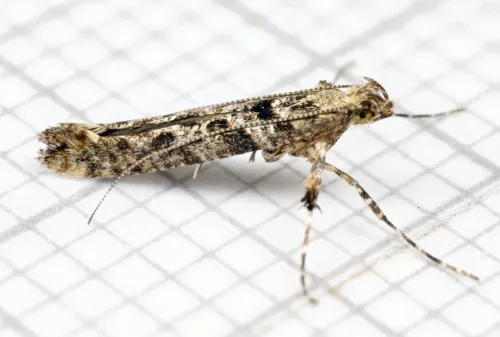
Caloptilia blandella is a moth of the Gracillariidae family. It is known from Canada (Québec) the United States (including Pennsylvania, Virginia, Maine, Maryland, Texas and Kentucky).
Caloptilia cuculipennella
Caloptilia cuculipennella
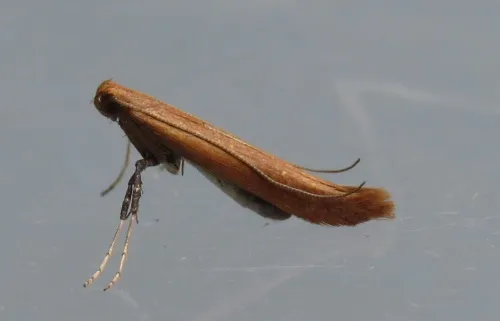
Wingspan c.12 mm. The posterior tibiae are smooth above. Forewings are whitish, with numerous ochreous or brown strigulae finely irrorated with black ; an oblique fascia near base hardly reaching costa, a second before middle hardly reaching dorsum,
Caloptilia elongella
Caloptilia elongella
Wingspan14 to16mm. A long bodied chestnut brown moth. Like other Caloptilia species, it rests with a distinctive posture, the front part of the body raised high on the forelegs. The larva mines the leaves of Alder, initially in an inconspicuous upper
Caloptilia falconipennella
Caloptilia falconipennella
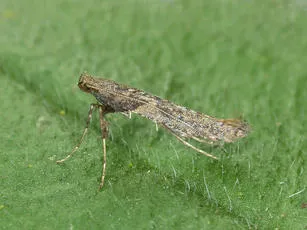
Wingspan about 13mm. The larva mines alder, starting with a short inconsipuous gallery, then a small lower surface tentiform blotch that over-runs the gallery and causes the leaf to contract slightly and the epidermis to turn brown. The larva then le
Caloptilia glutinella - Hodges#0607
Caloptilia glutinella
Identification: Ely (1915) description "Face yellow; head and thorax reddish bronze; labial and maxillary palpi straw color, the labial palpi shaded with dark brown just before apex, darker outwardly. Antennae brown annulate with yellowish at the joi
Caloptilia honoratella
Caloptilia honoratella
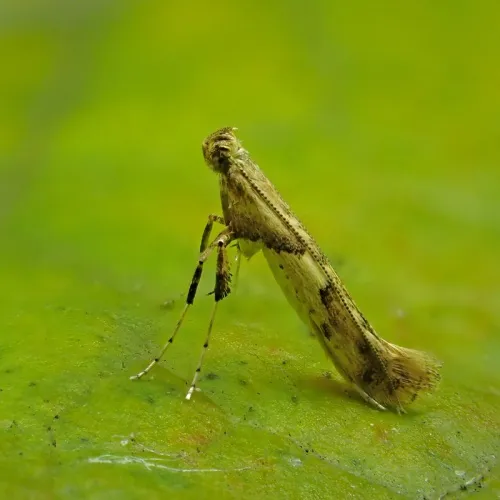
Caloptilia honoratella is a small moth. It's general colouration is a deep cream colour with brown ‘inverted V’ and other markings. The larva feeds on Sycamore producing a silvery upper surface leafmine. Very similar to some other Caloptilia species,
Caloptilia hypericella - Hodges#0608
Caloptilia hypericella
Identification: Braun (1918) description of the adult and immature stages in the print references . Genitalia:
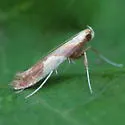
Caloptilia packardella - Hodges#0620
Caloptilia packardella
Identification: Chambers (1872) original description as Gracilaria packardella is online. 27 . Genitalia: ♀ ♂
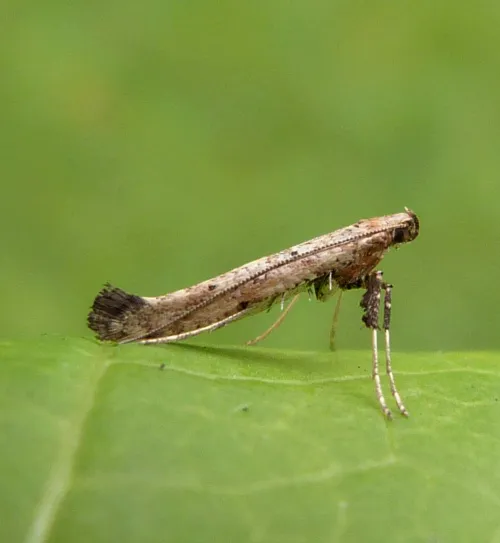
Caloptilia populetorum
Caloptilia populetorum
Wingspan 11 to14 mm. The adults resemble several other Caloptilia species and are best identified by the dark spots on the forewing leading edge and darker cilia. A species of moorland and heath especially where Birch is present. The flight period is
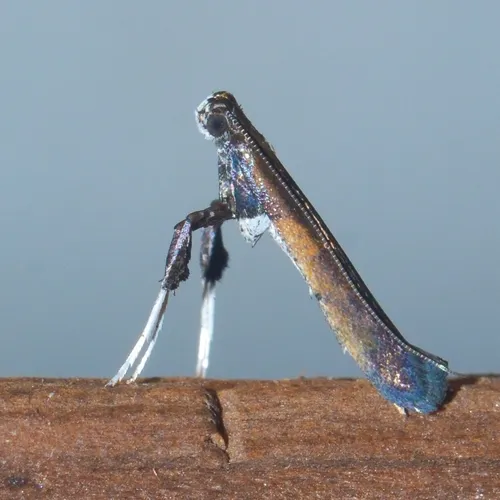
Sumac Leaf Blotch Miner Moth
Caloptilia rhoifoliella
The sumac leafblotch miner (Caloptilia rhoifoliella) is a moth of the Gracillariidae family. It is known from Bermuda, Canada (including Manitoba, Québec and Ontario) the United States (including Mississippi, New York, Kentucky, California, Florida,
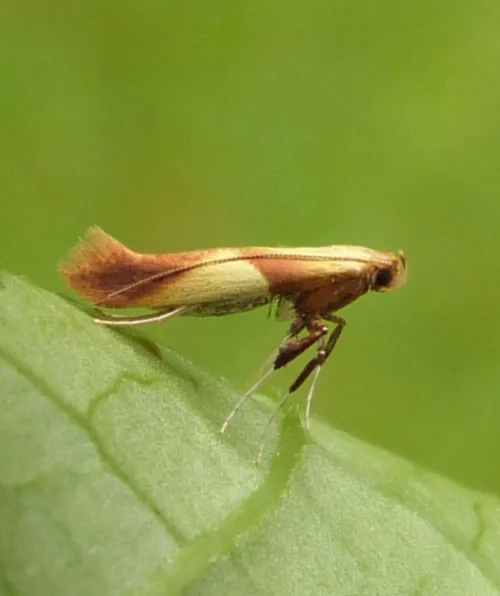
Caloptilia robustella
Caloptilia robustella
Wingspan 10 to13 mm. Very similar to the related Caloptilia alchimiella, differing in several subtle ways including the yellow blotch on the forewing, which is shorter and less clearly defined in this species. However, to be certain of identification
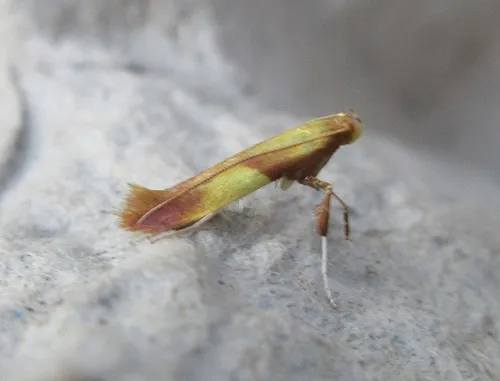
Caloptilia robustella
Caloptilia robustella - alchimiella agg.
Wingspan 10 to13 mm. Caloptilia alchimiella was recently separated from Caloptilia robustella and the two species are very similar (see recording advice). The mines of the two species are very similar. Initially this is a short gallery leading to a b
Caloptilia rufipennella
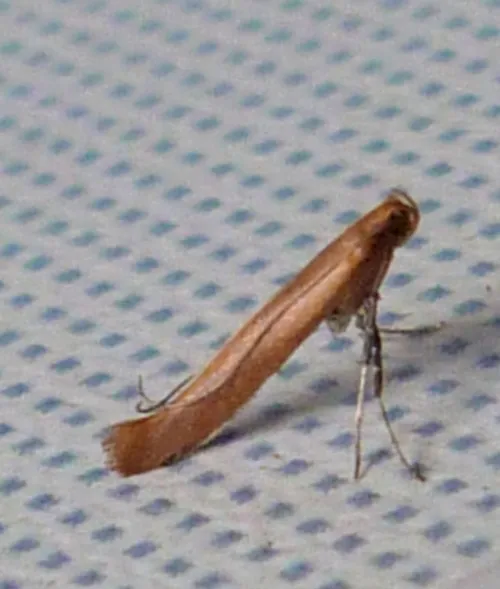
Caloptilia rufipennella
Wingspan 11 to 12 mm. One of several similar species, which can usually be identified by its smaller size and whitish band on the chocolate-brown forelegs. Wherever Acer species are present, notably Field Maple, Sycamore or Norway Maple. The moths em
Caloptilia semifascia
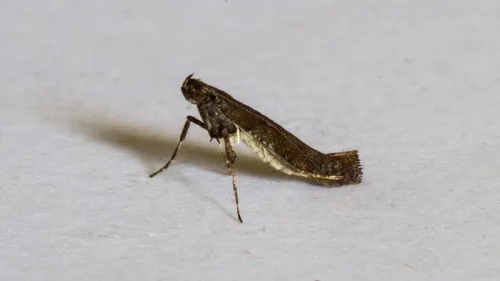
Caloptilia semifascia
Caloptilia semifascia is a small moth with a wingspan of 10 to 12 mm. The angled light streak starting at the leading edge of the forewing is characteristic, but it can be obscured on darker specimens. The larva mines the leaves of Sycamore. The earl
Caloptilia stigmatella
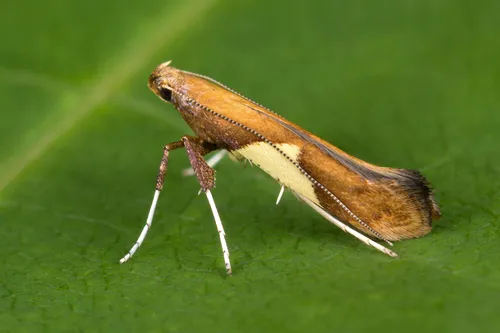
Caloptilia stigmatella
Wingspan 12 to 14 mm. A small but distinctive species, resting in the characteristic erect posture typical of the genus Caloptilia . The forelegs are thickly scaled at the base, appearing 'feathered'. The body is chestnut brown with a noticeable whit
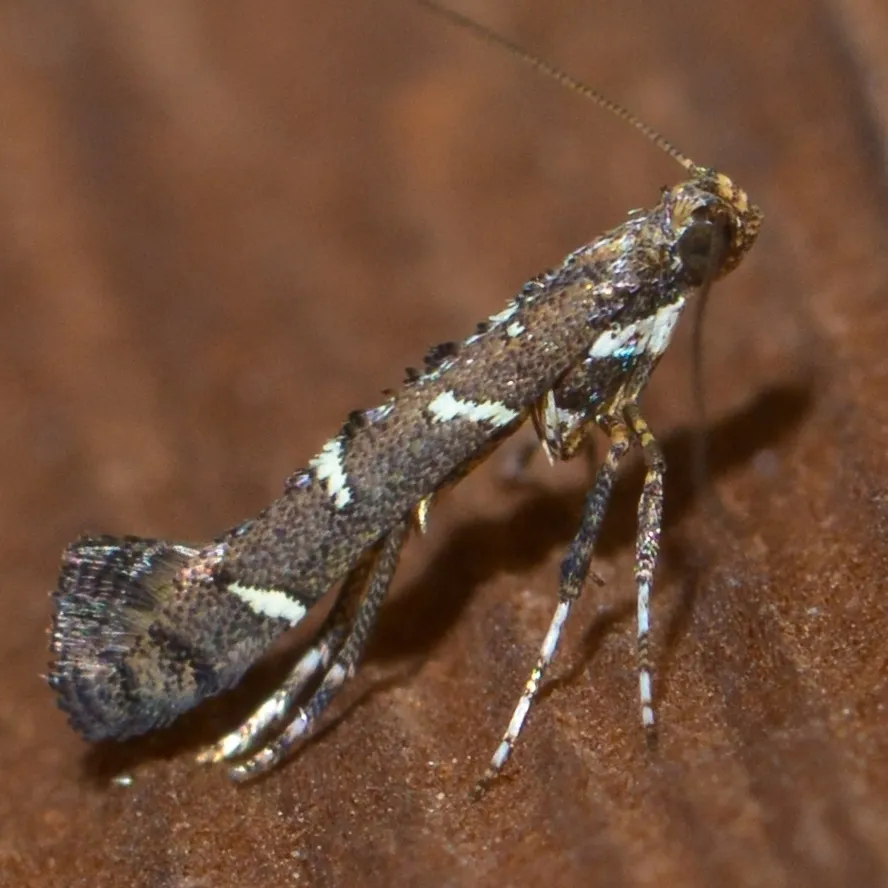
Caloptilia triadicae - Hodges#0644.1
Caloptilia triadicae
Much confusion over the species in recent years as to placement. Acrocercops was considered. Introduced from China; mines and then rolls leaves of the invasive Chinese tallow tree. See forum topic for more information. Also see Terry Harrison's com
Caloptilia umbratella - Hodges#0642
Caloptilia umbratella
Identification: genitalia T. Harrison says these are either Caloptilia umbratella or the Ribes feeder; he has confirmed via dissection that the two are different species. He adds: "I would suggest establishing a page for Caloptilia umbratella , beca
undescribed Ribes feeder
Caloptilia undescribed-ribes
Identification: This moth resembles the maple-feeding C. umbratella , but the two are clearly distinguishable on male genital morphology.
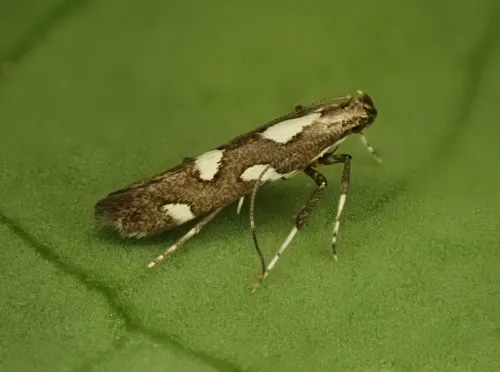
Calybites phasianipennella
Calybites phasianipennella
Wingspan 10 to 11 mm. Two forms occur, the typical one with a large dorsal streak and reduced paler markings elsewhere, and f. quadruplella with four large creamy or whitish markings. There are also intermediates. The larva mines the leaves of variou
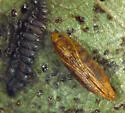
Gregarious Oak Leafminer - Hodges#0815
Cameraria cincinnatiella
Identification: The original description as Lithocolletis cincinnatiella Chambers is available in the print references. Similar in appearance to Cameraria hamadryadella . ( 5 )
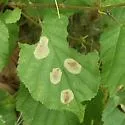
Cameraria corylisella - Hodges#0817
Cameraria corylisella
Lavae form nearly circular, brownish-yellow blotch mines on the upper sides of leaves in the birch family: hazelnut ( Corylus ), musclewood ( Carpinus ), and hophornbeam ( Ostrya ).
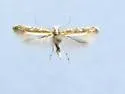
Cameraria diabloensis - Hodges#0817.1
Cameraria diabloensis
Identification: Adult: Antennae are equal to forewing length Dorsal of head is white Antemedial and postmedial white bars edged with black along the costal margin. Narrow white line extends from tornus to costa near the apex with a black patch toward
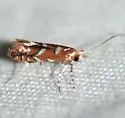
Cameraria fletcherella - Hodges#0820
Cameraria fletcherella
Identification: The original description as Lithocolletis fletcherella Braun, is available in PDF or view online in the print references below. Difficult group that often requires dissection to determine. Determined (T) Terry Harrison
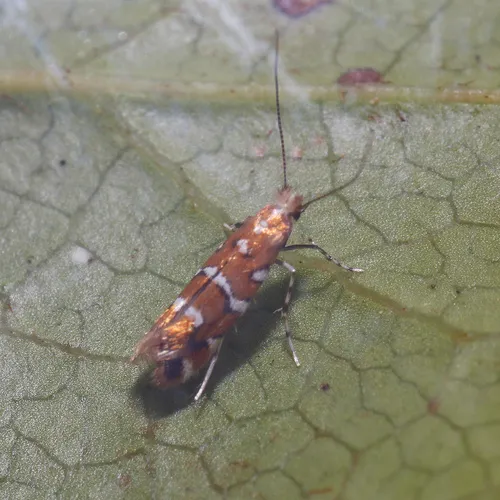
gaultheria leafminer moth
Cameraria gaultheriella
Cameraria gaultheriella is a moth of the Gracillariidae family. It is known from British Columbia, Canada, and California, Oregon and Maine in the United States. It is an adventive species in the Netherlands and the United Kingdom, but is not establi
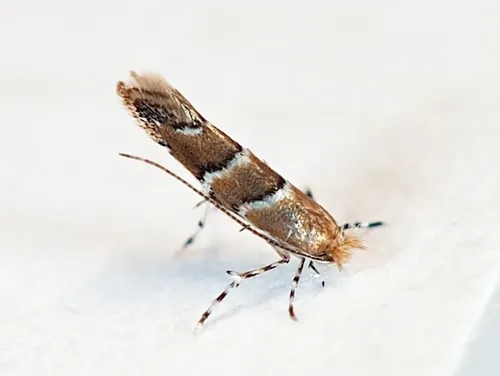
Poison Ivy Leaf-miner Moth
Cameraria guttifinitella
Cameraria guttifinitella is a moth of the Gracillariidae family. It is known from Canada (Manitoba, Québec) and the United States (including Texas, California, Kentucky, Maine, Maryland, Michigan, New York, Vermont, Connecticut and Illinois).
Solitary Oak Leafminer - Hodges#0823
Cameraria hamadryadella
Identification: Larva - early instars are flat and tapered to the rear. Later instars are cylindrical and orange-brown. See photo at Moth Photographers Group. ,
Cameraria hamameliella - Hodges#0824
Cameraria hamameliella
Identification: Young larvae are tiny, flat, and taper toward the read. Full grown larvae are cylindrical and about 5mm long Larvae develop in blotch mines in leaves of witch hazel ( Hamamelis ).
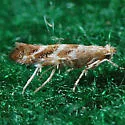
Cameraria macrocarpae - Hodges#0827
Cameraria macrocarpae
Identification: Freeman (1970) description is online in the print references .
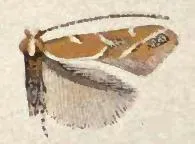
Cameraria mediodorsella - Hodges#0829
Cameraria mediodorsella
Identification: Forewing: Orange-brown ground color with the basal area of the inner margin edged in white. Antemedial white bar along costa. Postmedial white spot along costa. Broken white line extending from tornus to near apex at the costa. A patc
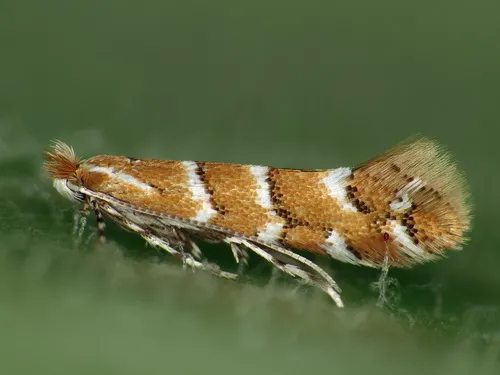
Horse-chestnut Leaf-miner
Cameraria ohridella
Wingspan around 8 mm. The adult moths resemble other Gracillariidae , although are quite distinctively dark reddish-brown with a noticeable white frons. The larva mines the leaves of Horse-chestnut and occasionally Sycamore and other species. It appe
Cameraria picturatella - Hodges#0833
Cameraria picturatella
Larva forms a brownish blotch mine on the upper side of bayberry ( Morella [Myrica] pensylvanica and M. caroliniensis ) leaves.
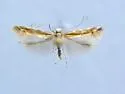
Cameraria serpentinensis - Hodges#0836.3
Cameraria serpentinensis
Identification: Adult: Similar to Cameraria mediodorsella except less heavily marked. Forewing: Inner margin has white edge along the entire length. Antemedial and postmedial white bars along costa and these are edged outwardly in black. Postmedial w
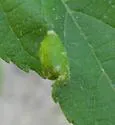
Cremastobombycia ambrosiaeella - Hodges#0720
Cremastobombycia ambrosiaeella
Larvae form underside tentiform mines in the leaves of various members of the aster family ( Ambrosia, Helianthus, Heterotera, Ridania, Verbesina ).
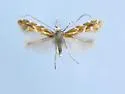
Cremastobombycia grindeliella - Hodges#0721
Cremastobombycia grindeliella
Identification: The original description as Lithocolletis grindeliella Walsingham, is available online at the link in the print references below
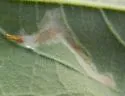
Cremastobombycia ignota - Hodges#0722
Cremastobombycia ignota
Identification: Revised description by Braun as Lithocolletis ignota Frey & Boll, is in PDF.
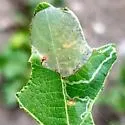
Cryptolectica undescribed-nr-insulariella
Cryptolectica undescribed-nr-insulariella
Another potentially undescribed species observed on iNaturalist feeds on Quercus arizonica/grisea/turbinella.
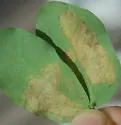
Eucosmophora pithecellobiae - Hodges#0696.2
Eucosmophora pithecellobiae
The larva is a sap-feeder in the first two instars, producing a translucent, serpentine mine. The third, tissue-feeding instar produces a blotch, which often obliterates the linear portion of the mine.
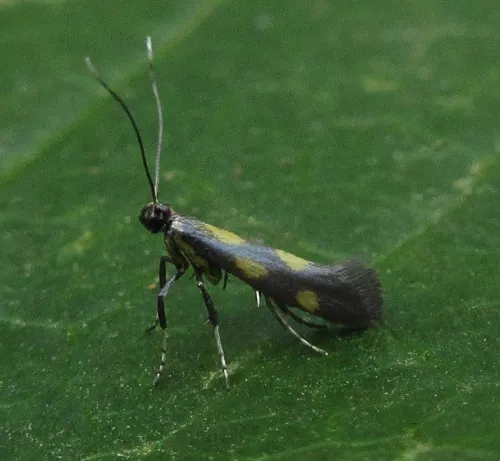
Euspilapteryx auroguttella
Euspilapteryx auroguttella
Wingspan 9 to 10 mm. The attractive adult has orange or yellow markings against a metallic grey ground colour, and white tips to the dark antennae. The larva mines the leaves of Hypericum species, often St John's Wort, initially in a lower surface ga
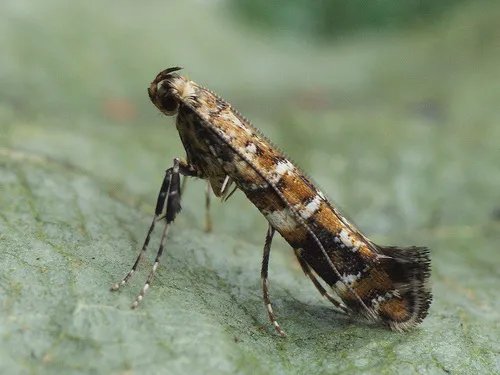
Gracillaria syringella
Gracillaria syringella
Wingspan 10-13 mm. This is another distinctive Caloptilia. Although quite variable, this is the best marked of the group. The larva mines the leaves of Lilac, Ash, Privet and Jasmine, often gregariously, in a large blotch mine. The adults fly in May
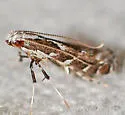
Leucospilapteryx venustella - Hodges#0698
Leucospilapteryx venustella
Identification: The dorsal margin is white/pale in the basal half, as seen in this reared individual: This feature is not present in any of the reared specimens of Acrocercops astericola uploaded to BugGuide. An undescribed species in an undescribed
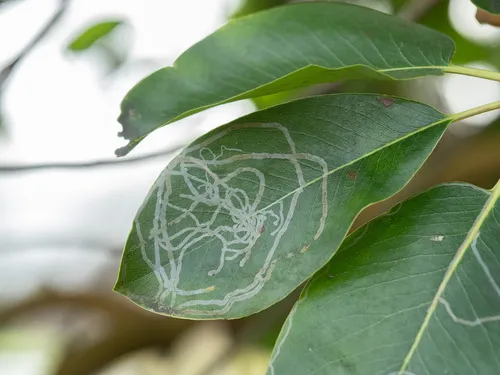
Madrone Skin Miner
Marmara arbutiella
Marmara arbutiella is a moth of the Gracillariidae family. It is known from Canada and the United States (Oregon, Washington and California).
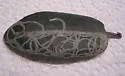
Marmara on-arctostaphylos
Marmara on-arctostaphylos
Although mines on manzanita have been attributed to Marmara arbutiella , according to David Wagner the manzanita feeder is a different species, consistently smaller than M. arbutiella .
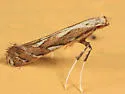
New-genus-on-dichanthelium new-species
New-genus-on-dichanthelium new-species
Identification: White dorsal margin + the legs have the tarsi entirely white. (unmarked) I have tentatively placed this species in Acrocercopinae based on its similarity to Acrocercops astericola and Leucospilapteryx venustella .
Parectopa bumeliella - Hodges#0650
Parectopa bumeliella
Identification: Coloration and markings are very subdued, compared with those of most other species that are placed in Parectopa .
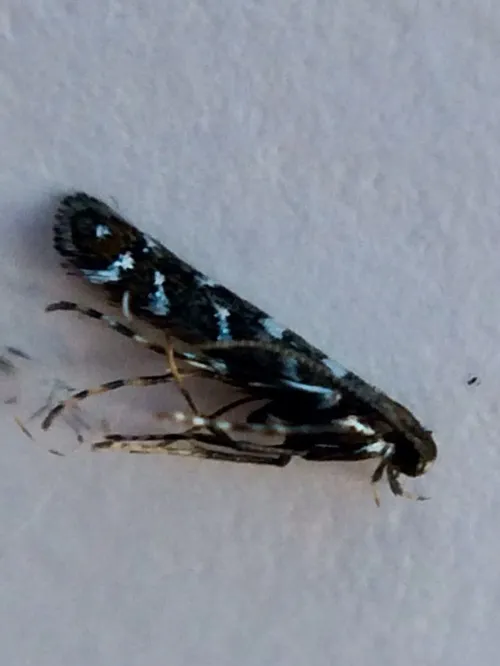
Parectopa ononidis
Parectopa ononidis
Wingspan about 8 mm. The adult moths are quite distinctive, though rarely encountered. Unless identified by a recognised expert, a photo is required. As this is a rare species in our area it would be useful to hold on to the specimen until identifica
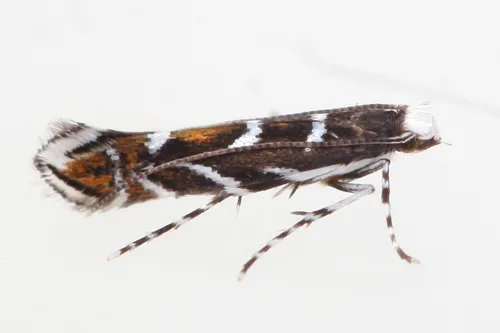
Locust Digitate Leafminer Moth
Parectopa robiniella
The locust digitate leafminer (Parectopa robiniella) is a moth of the Gracillariidae family. It is native to North America, but was accidentally introduced to Italy, where it was first found in 1970. It has now been recorded from Italy, France, Germa
Parornix anglicella
Parornix anglicella
Wingspan 9 to11 mm. Like other members of the genus, this species is very difficult to identify as an adult, and genitalia examination is recommended to be certain. Leafmine occurs on Hawthorn (also on Wild Service Tree) Various habitats, but particu
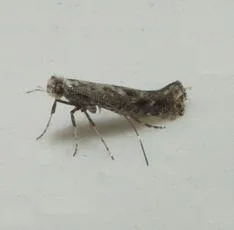
Parornix betulae
Parornix betulae
Wingspan 9 to10 mm. It cannot be separated from other Parornix species without dissection. The larva mines the leaves of Birch, initially creating a narrow inconspicuous gallery leading to small tentiform mine with a brown lower epidermis; later feed
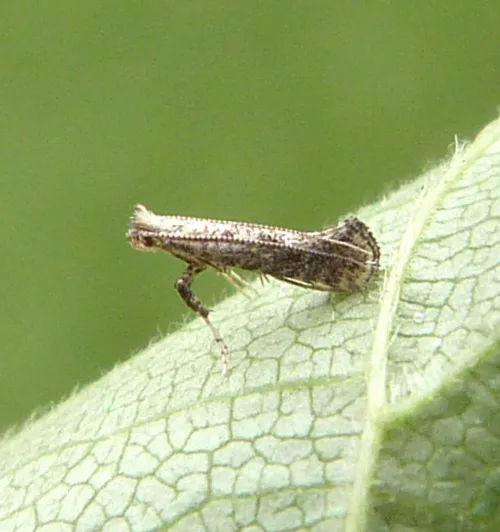
Parornix devoniella
Parornix devoniella
Wingspan 9 to 10 mm. All the Parornix species have a distinctive resting posture with the front part of the body raised on the forelegs, and a slightly upcurved rear. The larva mines the leaves of Hazel, initially creating a squarish or triangular te
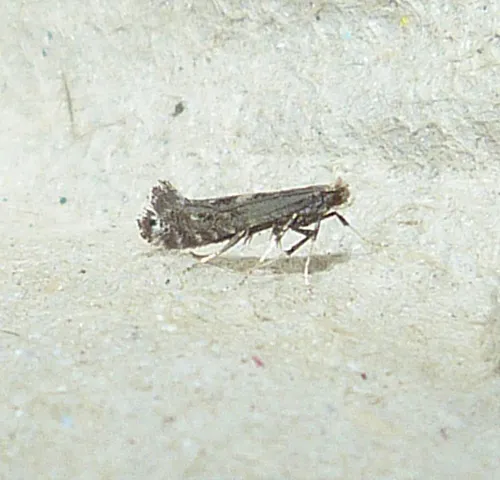
Parornix finitimella
Parornix finitimella
Wingspan around 10 mm. Like other Parornix species, the adults of P. finitimella are difficult to identify and are best determined by the structure of the genitalia. The larval foodplant, Blackthorn is shared with the similar Parornix torquillella an
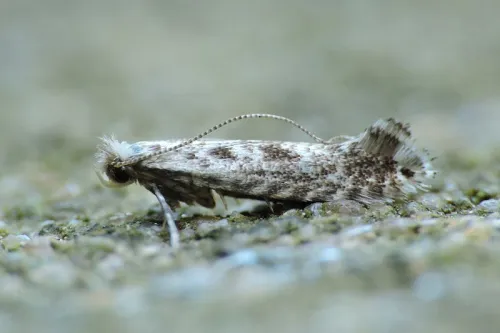
Parornix scoticella
Parornix scoticella
Wingspan around 10mm. They resemble other species of Parornix, but do show distinctive white palps and frons. Parornix larvae have 4 distinctive black dots on the prothoracic plate (behind the head) Frequenting gardens and woodland in the south, and
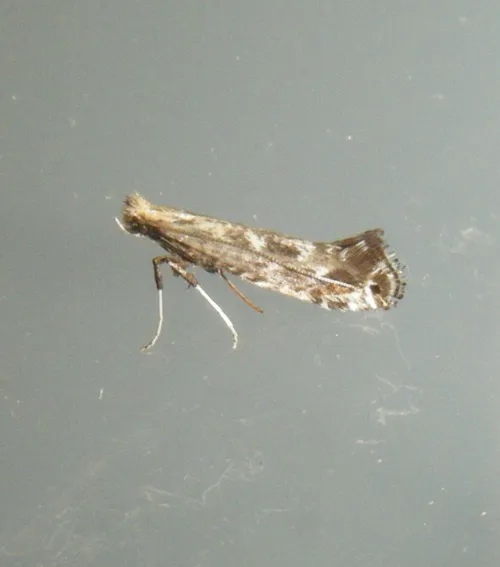
Parornix torquillella
Parornix torquillella
Wingspan 9 to 10 mm. The adults are difficult to separate from some Parornix species, especially Parornix finitimella , and genitalia examination is usually necessary to identify them. The two mines are identical, but the larvae are quite different;
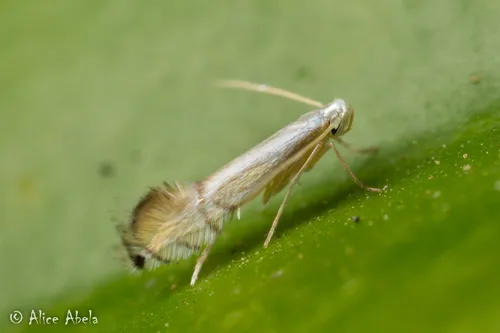
Phyllocnistis citrella
Phyllocnistis citrella
Wingspan about 4 or 5 mm. The larva mines the leaves (and occasionally the fruit) of Citrus species. Leafmine: Please provide a photograph of the mine and state the host plant species. This adventive species is occasionally found on imported citrus p

Phyllocnistis insignis - Hodges#0846
Phyllocnistis insignis
Phyllocnistis insignis is a moth of the Gracillariidae family, found throughout the United States (including Maine, Illinois, Ohio, Maryland, Michigan, Kentucky, Missouri, Texas, Georgia, Florida and California).
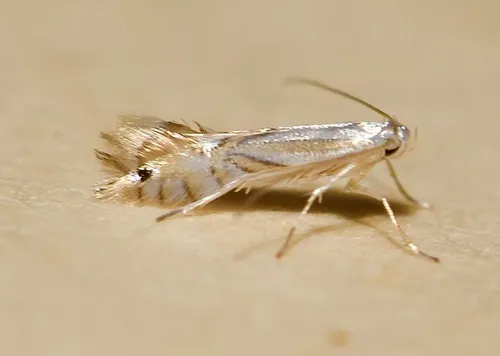
Tulip Tree Leaf Miner
Phyllocnistis liriodendronella
Phyllocnistis liriodendronella is a moth of the Gracillariidae family, known from the United States (New York, New Jersey, Maryland, Pennsylvania, Kentucky). The hostplants for the species include Liriodendron tulipifera, Magnolia glauca, Magnolia gr
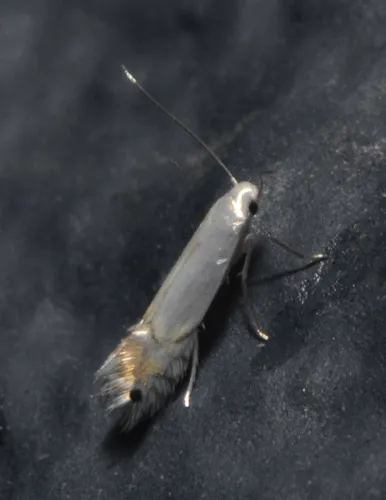
Aspen Serpentine Leafminer Moth
Phyllocnistis populiella
The common aspen leaf miner or aspen serpentine leafminer (Phyllocnistis populiella) is a moth of the Gracillariidae family. It is found in northern North America, including Alberta, Massachusetts, Ontario and Alaska.
Phyllocnistis unipunctella
Phyllocnistis unipunctella
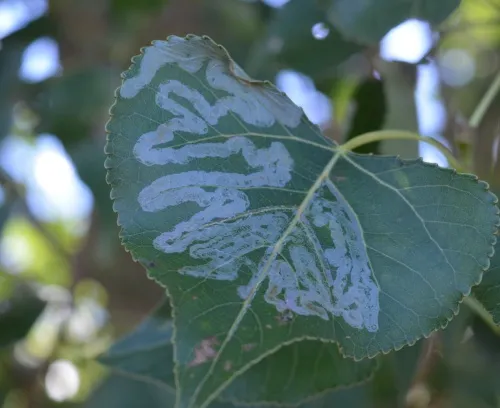
Wingspan 7 to 8 mm. A tiny whitish moth with some yellowish suffusion and a distinct black spot near the wing apex. The larva mines the leaves of Lombardy Poplar, hybrid Black Poplar and other poplars, producing a winding, thin, silvery, translucent
Phyllocnistis vitegenella - Hodges#0853
Phyllocnistis vitegenella
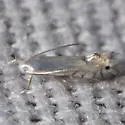
Identification: See comment by C. Eiseman here . It has become a pest of cultivated grapes, Vitis vinifera . It has been accidentally introduced from this country to other countries that grow grapes.
Phyllocnistis vitifoliella - Hodges#0854
Phyllocnistis vitifoliella
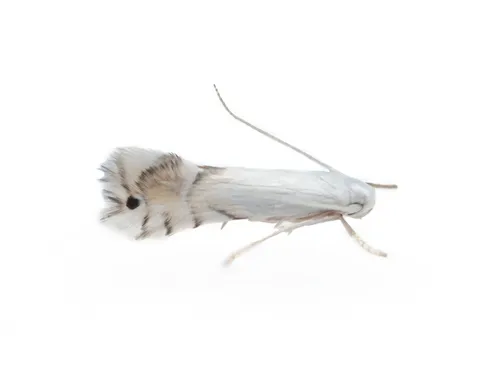
Phyllocnistis vitifoliella is a moth of the Gracillariidae family, known from Québec and the United States (where it has been recorded from Wisconsin, California, Florida, Georgia, Maryland, Michigan, New York, Texas, Vermont, Kentucky and Illinois).
Phyllocnistis xenia
Phyllocnistis xenia
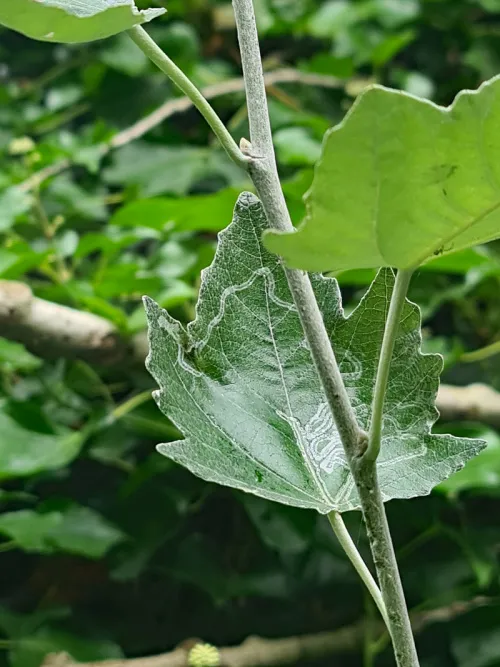
The larva mines the leaves of certain Poplar species - (usually White Poplar ( Populus alba ) or Grey Poplar ( Populus canescens ). The larva forms a winding, thin silvery translucent gallery resembling a 'snail trail' on the upper surface of the lea
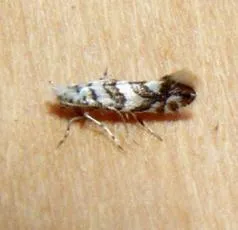
Phyllonorycter acerifoliella
Phyllonorycter acerifoliella
Wingspan about 8 mm. One of three similar Acer-feeding species Phyllonorycter acerifoliella larva mines the leaves of Field Maple. The mine is tentiform and nearly always at the leaf edge or leaf tip, folding the leaf over. Occasionally it can be fou
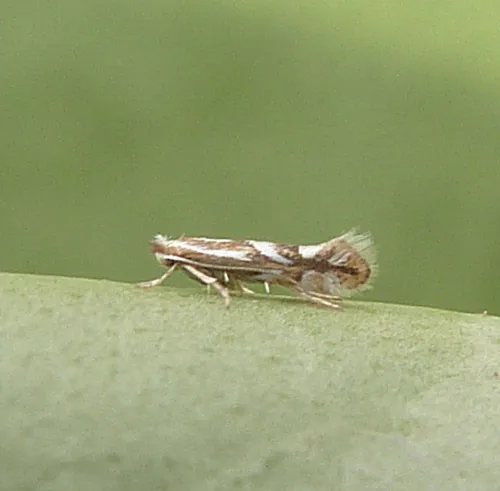
Phyllonorycter blancardella
Phyllonorycter blancardella
Wingspan 6 to 9 mm. A fairly variable species, with the white streaks sometimes joining together to form more complete markings, and often with a dusky sprinkling of blackish scales on the orange ground colour. Adult gen det required Leafmine larva f
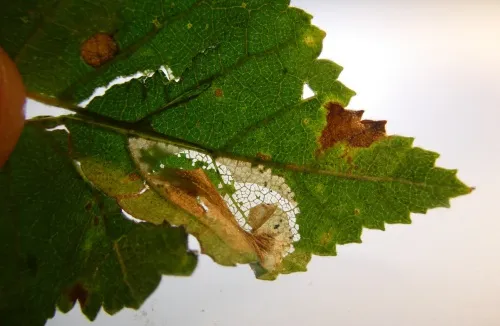
Phyllonorycter cavella
Phyllonorycter cavella
Wingspan about 8 mm. The moth is very similar to a number of other Phyllonorycter species and gen det may be required to identify adults to species level. The larva produces a large blister-mine on Birch (see Life History below). The larva is bright
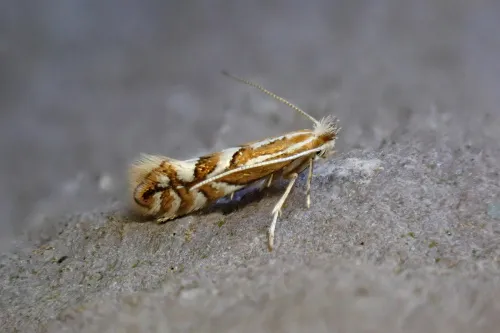
Phyllonorycter cerasicolella
Phyllonorycter cerasicolella
Wingspan 7 to 8 mm. Best recorded from the leafmine. The larva mines the leaves of Wild Cherry and Dwarf Cherry In areas where the larval foodplants occur. In common with a number of other Phyllonorycter species, the species is bivoltine, with adults
Phyllonorycter comparella
Phyllonorycter comparella
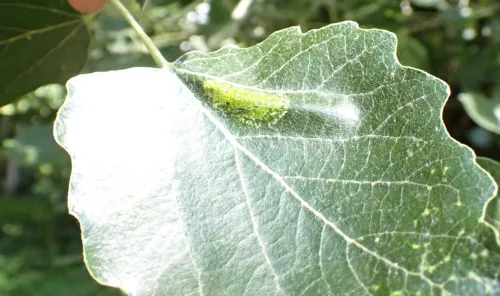
Wingspan about 8 mm. The adults have quite extensive whitish ground colour, marked with greyish-brown. The larva makes a mine on the underside of leaves of Grey Poplar ( Populus canescens ), White Poplar ( P. alba ) and occasionally hybrid Black Popl
Nut Leaf Blister Moth
Phyllonorycter coryli
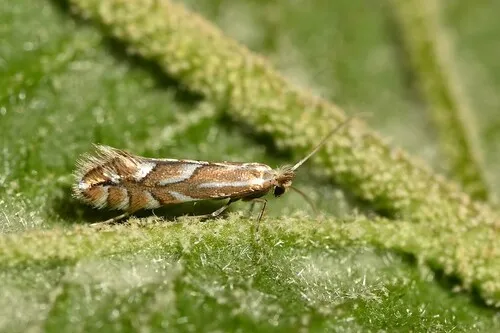
Wingspan 7 to 9 mm. This is yet another very small, brown and white Phyllonorycter. The details of the patterning require very careful examination to determine the species and expert confirmation should be sought. The larva mines the leaves of Hazel,
Phyllonorycter corylifoliella
Phyllonorycter corylifoliella
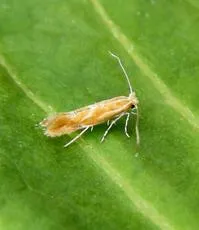
Wingspan 8 to 9 mm. The orangey coloured adult is weakly marked in comparison to some of its congeners. The larva mines the leaves of Hawthorn (and also on Apple, Cherry and others), creating an upper-surface mine, usually over the midrib or vein; th
Phyllonorycter deserticola - Hodges#0748.1
Phyllonorycter deserticola
Identification: Davis & Deschka description of the adults, including the genitalia, and the immature stages is available in PDF. Genitalia dissection is usually needed to confirm species in this family. Davis & Deschka listed the following wasps that
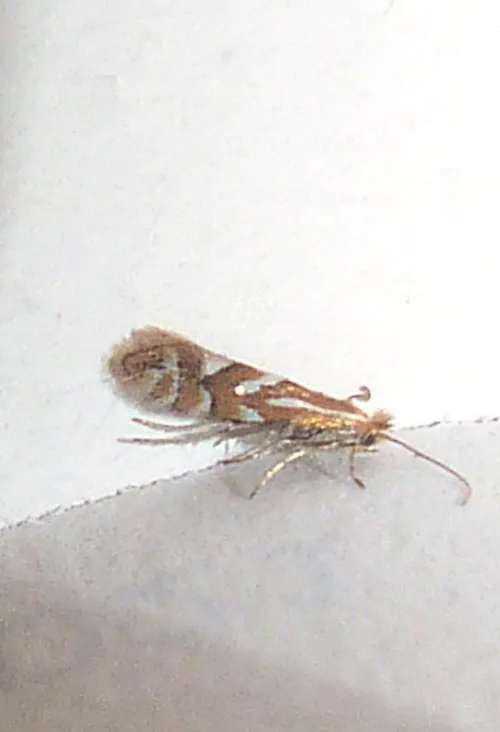
Phyllonorycter dubitella
Phyllonorycter dubitella
Wingspan about 8 mm. It mines sallow leaves, creating tentiform mines. Phyllonorycter hilarella and P salicicolella . The mines and larva cannot be distinguished. Adult: Dissection is required to confirm records to full species. Leafmine: Please rear
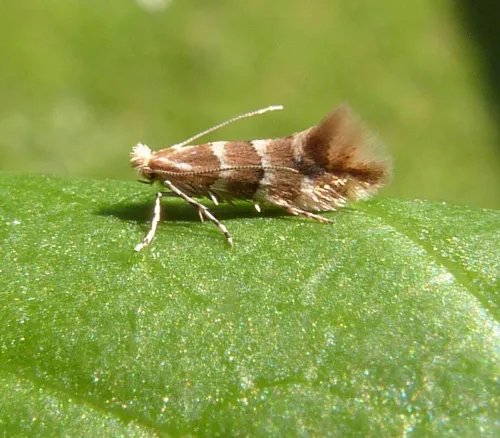
Phyllonorycter emberizaepenella
Phyllonorycter emberizaepenella
Wingspan 9 to 10 mm. This is one of several similar looking species but can be identified with care. The larva mines the leaves of Honeysuckle, Snowberry and Himalayan Honeysuckle ( Leycesteria formosa ) causing a large tentiform mine. The pupa is in
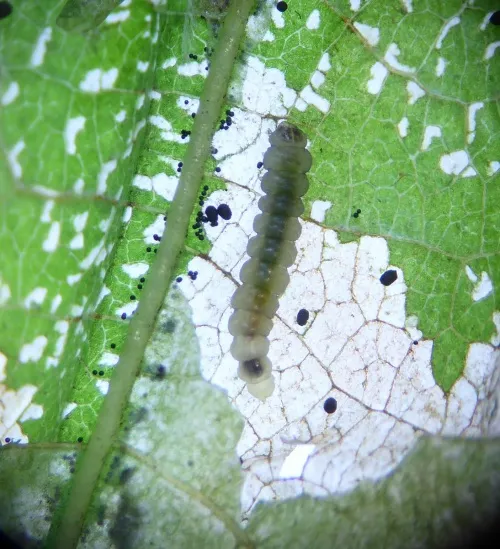
Phyllonorycter froelichiella
Phyllonorycter froelichiella
Wingspan 9 to 10 mm. One of the larger species of Phyllonorycter, with a rather attractive 'striped' appearance, each stripe gradually fading from whitish through chestnut to black. The larva mines the leaves of Alder, creating a large under-surface
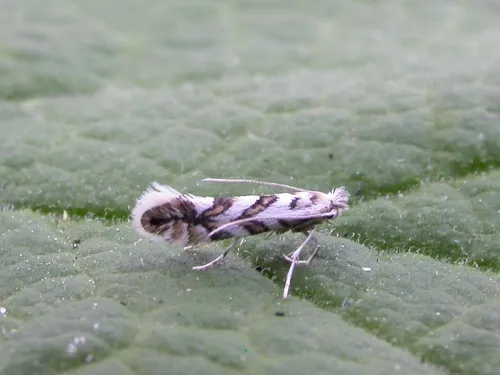
Phyllonorycter geniculella
Phyllonorycter geniculella
Phyllonorycter geniculella is a small moth with a wingspan of 8 mm. It is a beautiful but tiny species, having a white base colour with rufous, darker-edged chevrons, the first of which often 'extrudes' into the next. The larva mines the leaves of Sy
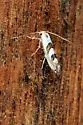
Phyllonorycter hagenii - Hodges#0755
Phyllonorycter hagenii
Identification: Braun revised description is available online from link in the print references. Determined by Terry Harrison.
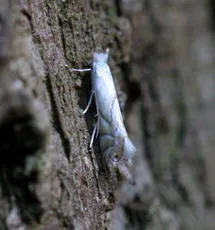
Phyllonorycter harrisella
Phyllonorycter harrisella
Wingspan 7-9 mm. A leaf-mining species which tends to show narrower and less distinct chevrons on the forewing than many of its close relatives. Some forms have a very greyish appearance with indistinct markings. The leaf mines on oak can be searched
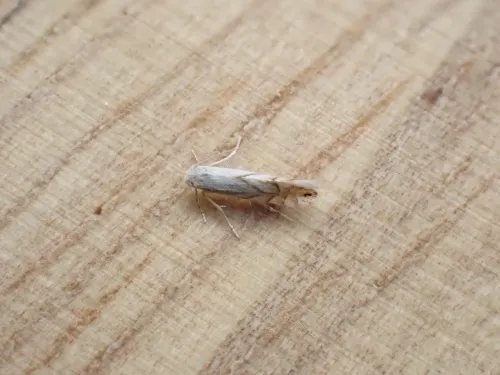
Phyllonorycter heegeriella
Phyllonorycter heegeriella
Wingspan approximately 7mm. One of several oak-feeding Phyllonorycter species showing a white forewing base colour, the narrow greyish basal streak is a useful identification aid. The leaf mines on oak can be searched for from late autumn through win
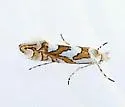
Phyllonorycter insignis - Hodges#0758
Phyllonorycter insignis
Identification: See type specimen at the Global Taxonomic Database of Gracillariidae (Lepidoptera) website.
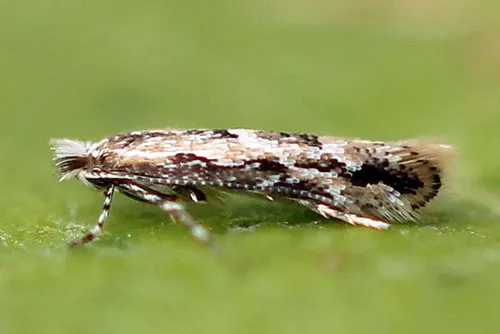
Lime Leafminer
Phyllonorycter issikii
The lime leaf miner (Phyllonorycter issikii) is a moth of the family Gracillariidae. It is native to Japan, Korea and eastern Russia, but was probably introduced to eastern Europe around 1970. It is now widespread in the Czech Republic and Slovakia a
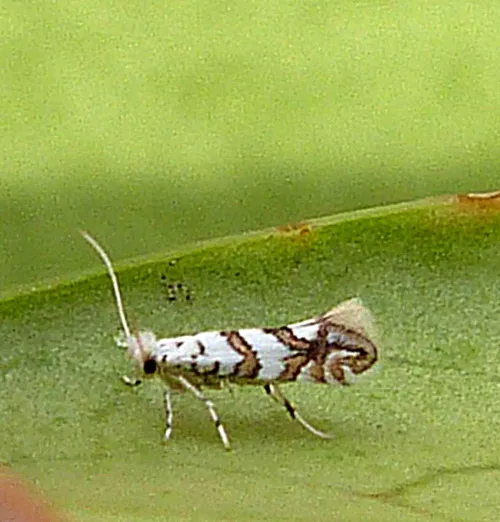
Phyllonorycter joannisi
Phyllonorycter joannisi
Wingspan 7 to 8 mm. In common with other Acer-feeding Phyllonorycters, this species is mostly white with yellowish or brownish markings edged black. The larva mines the leaves of Norway Maple, creating a large tentiform mine. In areas where the larva
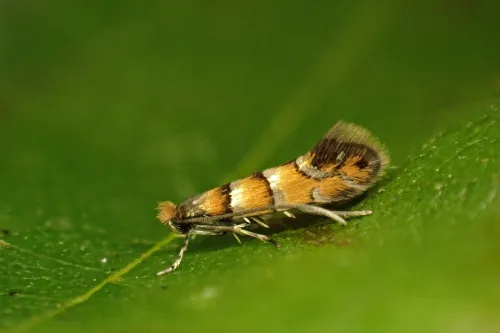
Phyllonorycter klemannella
Phyllonorycter klemannella
Wingspan 7 to 9 mm. The larva mines the leaves of Alder, creating a tentiform mine between two veins on the underside, with a winkled surface withut sharp folds. The larva is white or yellow, and the pupa is in a cocoon with frass heaped to one side.
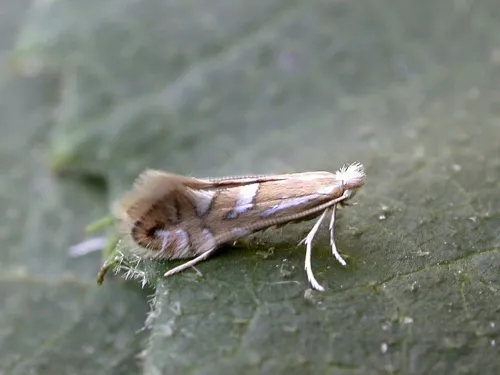
Phyllonorycter lantanella
Phyllonorycter lantanella
Wingspan about 9 mm. A well marked brown and white species similar to several other members of this family. The larva mines the leaves of Wayfaring-tree and occasionally on Guelder-rose or Viburnum tinus , causing tentiform mines. In areas where the
Phyllonorycter lautella
Phyllonorycter lautella
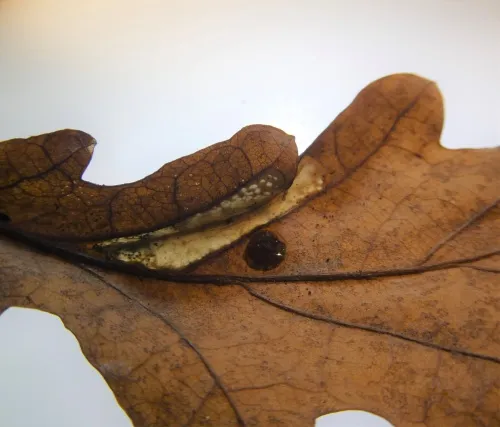
Wingspan 6 to 7 mm. Adults are similar to a number of and great care is needed with identification. The larvae mine the leaves of Oak. The mine is greater than 20 mm long, lower epidermis with one strong crease often dividing in Y-shape at end near l
Firethorn Leaf Miner
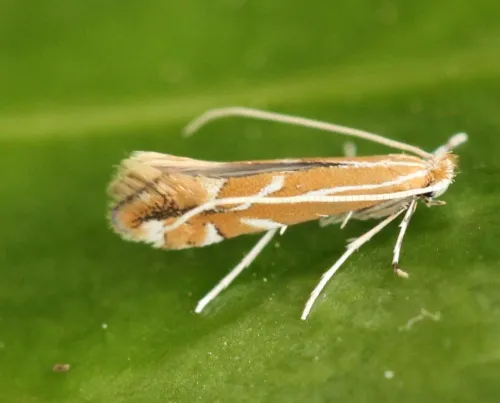
Phyllonorycter leucographella
Wingspan 7 to 9 mm. Resemble other Phyllonorycter species, with a buff ground colour and whitish chevrons. Often easier to find the leaf mine which can be on Firethorn ( Pyracantha ) plus a number of other plant species including Hawthorn, Apple, Lon
Phyllonorycter maestingella
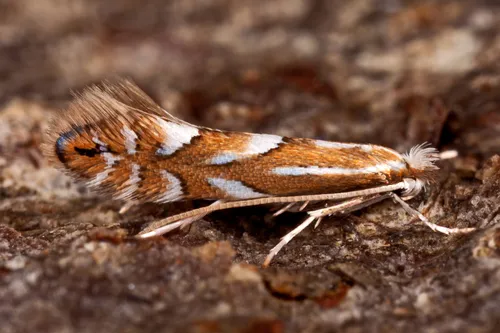
Phyllonorycter maestingella
Wingspan 7 to 9 mm. A clear indication that some of the smaller moths are the most beautiful; this tiny moth has an intricate pattern of orange-brown, white and black. The larva mines the leaves of Beech. It has two broods, flying late April to June,
Phyllonorycter messaniella
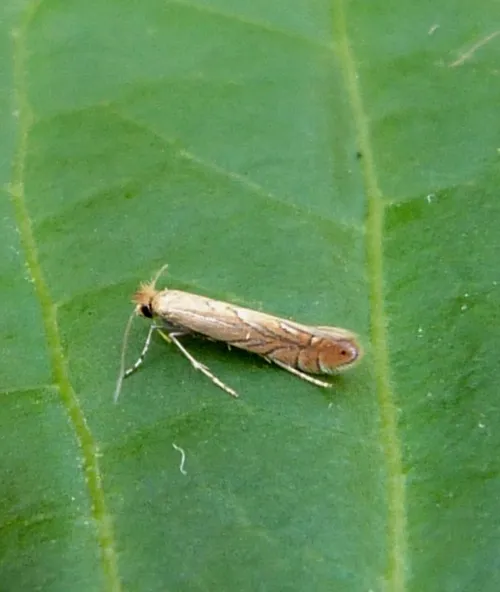
Phyllonorycter messaniella
Wingspan 7 to 9 mm. The leaf mines caused by the larvae are usually found on the underside and have a typical 'tented' appearance with a crease line across the surface. The frass is characteristically arranged in a U-shape around the cocoon. The larv
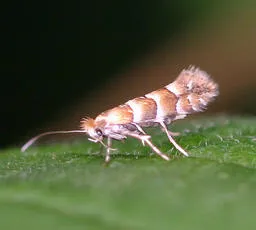
Phyllonorycter nicellii
Phyllonorycter nicellii
Wingspan 7- 8 mm. This can be a difficult group to distinguish. The larva feeds on Hazel, causing a lower surface tentifrom mine; the upper surface is usually netted brown, with a green patch on top. The larva is pale yellow/greyish (due to a speckli
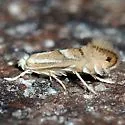
Phyllonorycter olivaeformis - Hodges#0778
Phyllonorycter olivaeformis
The larva forms an underside tentiform mine in a hickory ( Carya ) leaf. When mature, it pupates within the mine in an excrement-covered cocoon.
Phyllonorycter ostryaefoliella - Hodges#0781
Phyllonorycter ostryaefoliella
Larvae form underside tentiform mines in leaves of hophornbeam ( Ostrya virginiana ). See microleps.org for photos of the mines.
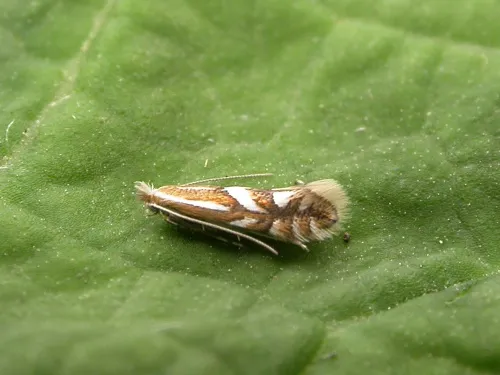
Phyllonorycter oxyacanthae
Phyllonorycter oxyacanthae
Wingspan 6 to 8 mm. Some more northern examples have rather more blackish suffusion in the wing. Best identified from the similar P. sorbi and P. mespilella by recording as a leafmine and noting the larval foodplant - usually Hawthorn (and occasional
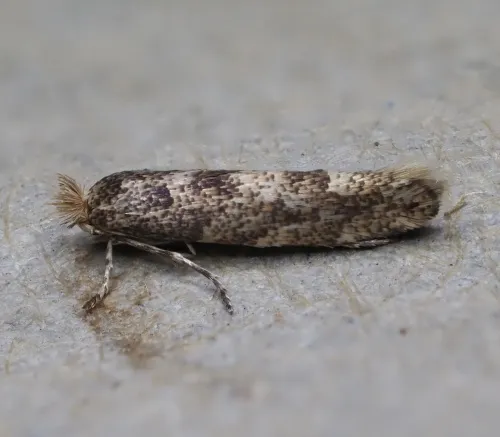
Phyllonorycter pastorella
Phyllonorycter pastorella
Wingspan is 8 to 9.5 mm. The larva mines the leaves of long-leaved (smooth-leaved) willows such as Crack-willow, White Willow and Weeping Willow. The mines are large and have a single sharp crease on the undeside. The pupal cremaster has two very sma
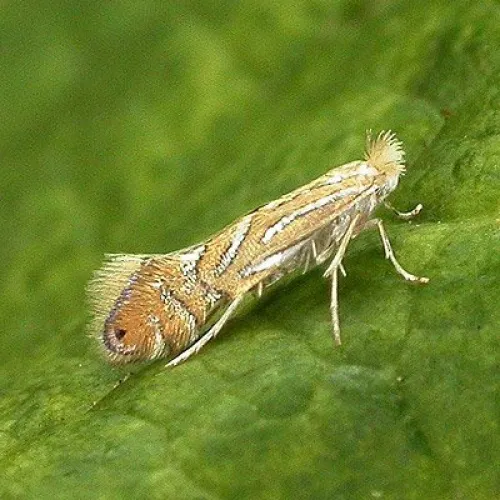
Phyllonorycter platani
Phyllonorycter platani
Wingspan 8 to 10 mm. Similar to some other members of its family and care is needed with identification. The larvae mine Plane tree leaves, causing a large tentiform mine on the leaf undersurface. Leafmine occurs on London Plane (and sometimes on Ori