
Family Pygmy Eye-capped Moths (Nepticulidae)
Nepticulidae is a family in the order Lepidoptera. Browse 119 named species recorded in this family, or open an individual profile for its available identification and natural-history information.
Species in Nepticulidae (119)
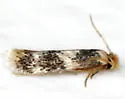
Acalyptris thoracealbella - Hodges#0112
Acalyptris thoracealbella
Identification: Adult - head dark ochreous, antenna scape (eye caps) shiny white, antennae pale gray-brown, collar dark ochreous, thorax whitish, abdomen pale yellow-brown reflecting metallic gray, legs pale yellow-brown with metallic gray scaling. F
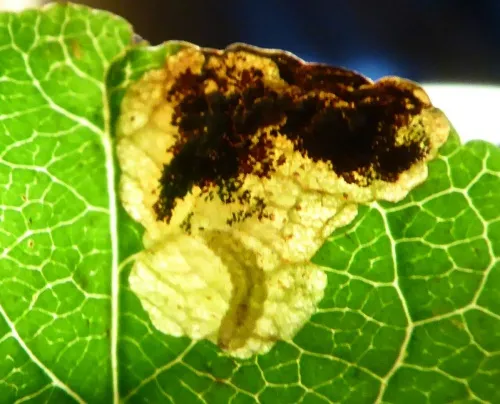
Bohemannia pulverosella
Bohemannia pulverosella
Wingspan 6 to 7 mm. Adults are dull brownish with a speckled appearance, especially noticeable near the wingtips. They have a yellowish head and whitish eyecaps. The larvae create a distinctive blotch mine in the leaves of Apple. The larva cuts an ex
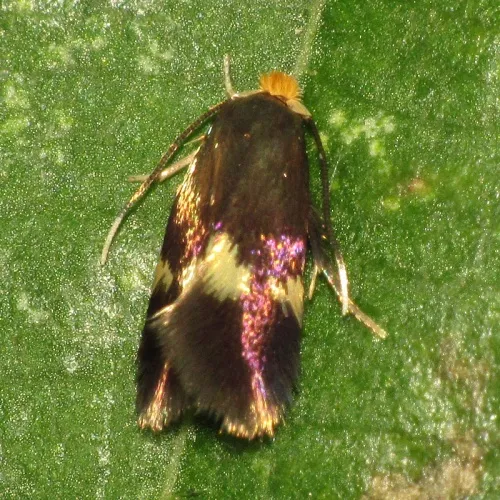
Bohemannia quadrimaculella
Bohemannia quadrimaculella
Wingspan c. 8mm. It has four yellowish spots on the forewings, giving it a fairly distinctive appearance. The adult moth is usually encountered by beating alder (Alnus) trees, and although little is known about its lifecycle, it is presumed to feed o
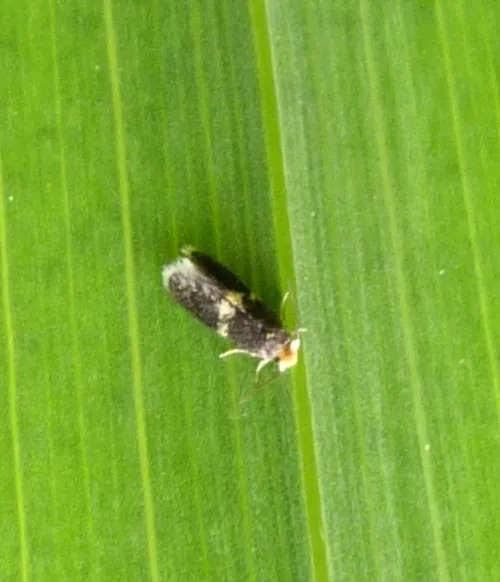
Ectoedemia albifasciella
Ectoedemia albifasciella
Wingspan 5 to 6 mm. The adults have coarsely scaled dark brownish wings with a broken creamy fascia, usually as two blotches. The larval foodplant is oak, and the mine begins with a narrow gallery following the midrib or a vein, and then becoming a r
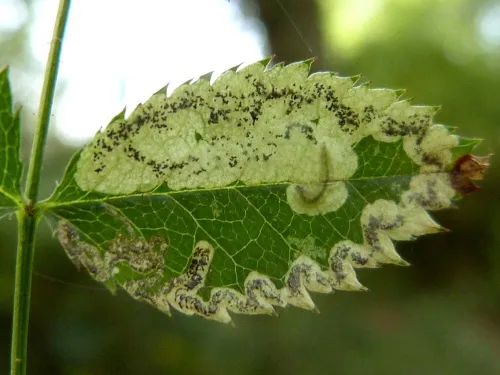
Ectoedemia angulifasciella
Ectoedemia angulifasciella
Wingspan 5 to 6 mm. The larva mines the leaves of Rose (and sometimes on Salad Burnet). Gardens, parks and other areas where the larval foodplants occur. The adults fly during July and the mines can be found from September to November. The larva crea
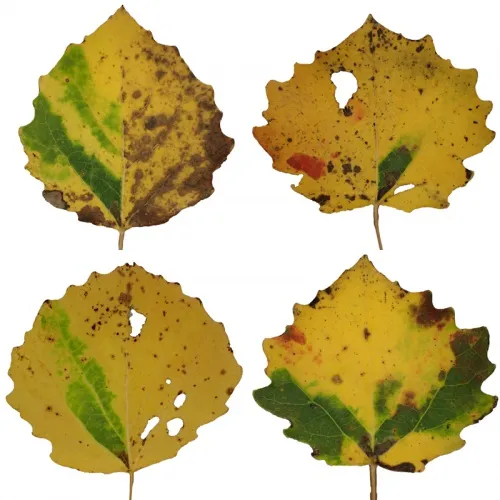
Ectoedemia argyropeza
Ectoedemia argyropeza
A small moth with a wingspan of about 7 mm. It lacks discrete white spots but does show a suggestion of mid-costal and dorsal white spots; frontal tuft pale ferruginous, collar concolorous; eyecaps white. The larva mines the leaves of Aspen, first ga
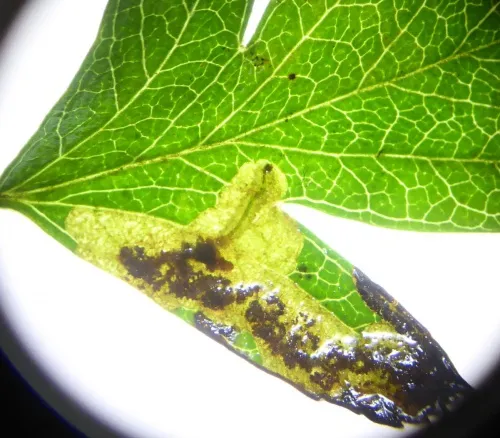
Ectoedemia atricollis
Ectoedemia atricollis
The larvae mine the leaves of Hawthorn, Apple and other Rosaceae species. It has a distinctive black head, usually visible in the mine without being dissected out. Initially, the larvae form galleries along the edge of the leaf, leading to a large bl
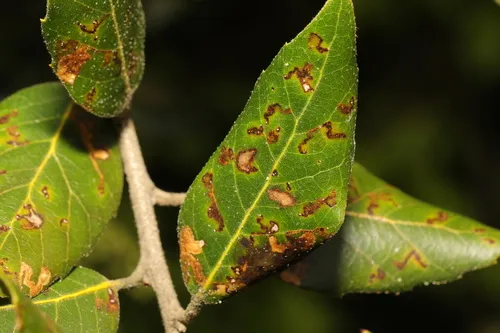
Ectoedemia heringella
Ectoedemia heringella
The larvae feed on Holm Oak ( Quercus ilex ) and related species, creating a contorted gallery mine filled with dark frass. The first part is very narrow, but it widens abruptly in the later part. Usually there are several larvae mining a single leaf
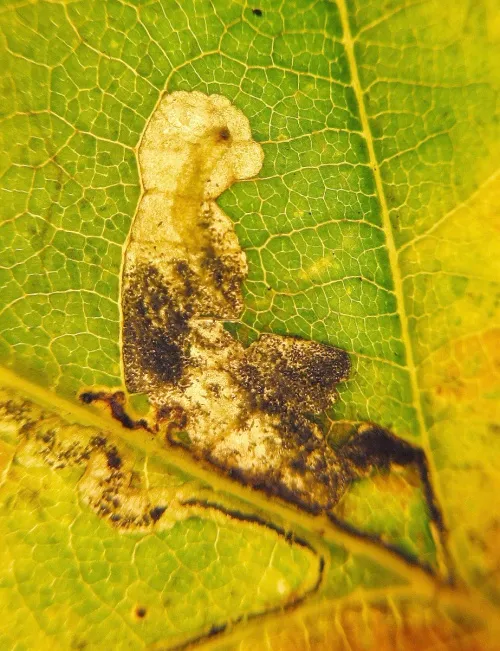
Ectoedemia heringi
Ectoedemia heringi
Wingspan about 6 mm. Similar in habits and appearance to Ectoedemia subbimaculella , but the adults have a tendency to have more pale around the base of the wing, and whiter spots The larva creates a mine in a leaf of Oak, usually close to the midrib
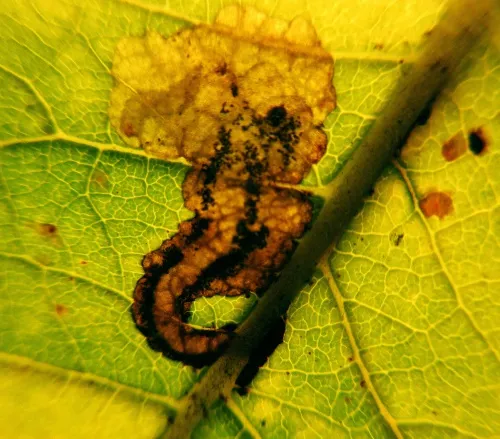
Ectoedemia intimella
Ectoedemia intimella
Wingspan about 6 mm. The adult is mostly blackish with a slight purple sheen and an obvious white or creamy blotch. The head is orange or yellowish. The larvae mine the leaves of sallow ( Salix ), especially S. caprea and S cinerea , initially gallin
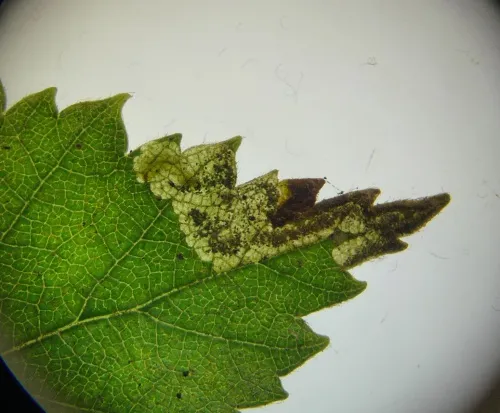
Ectoedemia minimella
Ectoedemia minimella
Wingspan 5 to 6 mm. The adult moths are very similar to Ectoedemia occultella, being blackish with whitish fascia and eyecaps. Adults may require identification by gen det. Leafmine records need to be supported by images including one of the mine bac
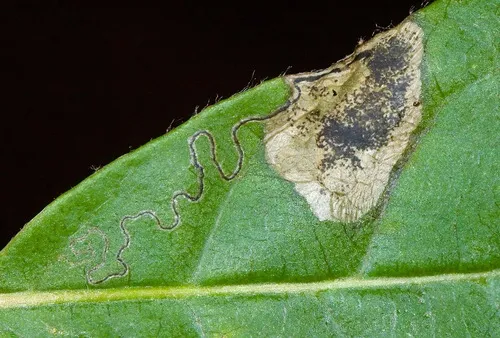
Ectoedemia nyssaefoliella - Hodges#0050
Ectoedemia nyssaefoliella
Ectoedemia nyssaefoliella is a moth of the Nepticulidae family. It is found in Kentucky, Ohio and North Carolina in the United States.
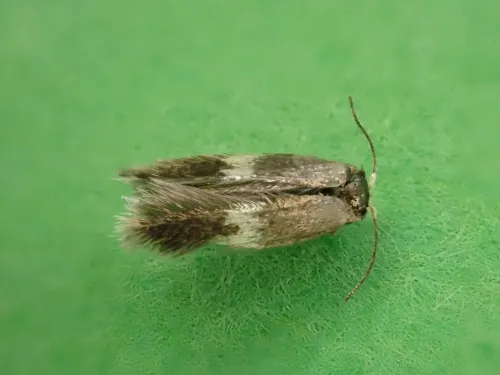
Ectoedemia occultella
Ectoedemia occultella
Wingspan 5 to 7 mm. The adults are quite large for a Nepticulid, and have blackish forewings with a hint of violet, and contrasting whitish fascia and eye-caps. The males have black heads, those of the female orange or yellow. The larva mines the lea
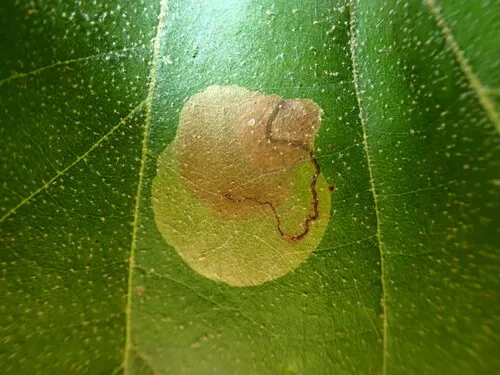
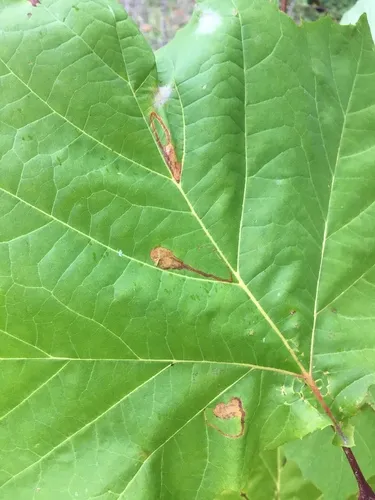
Sycamore Leaf Blotch Miner
Ectoedemia platanella
Ectoedemia platanella, the sycamore leaf blotch miner, is a moth of the family Nepticulidae. It is found in the eastern parts of the United States.
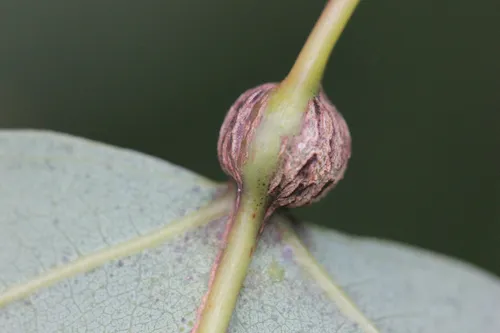
Aspen Petiole Gall Moth
Ectoedemia populella
The poplar petiole gall moth (Ectoedemia populella) is a moth of the family Nepticulidae. It is found in North America, including Massachusetts, New Hampshire and Ohio.
Ectoedemia similella - Hodges#0045
Ectoedemia similella
Identification: Determined by Erik J. van Nieukerken (DNA analysis).
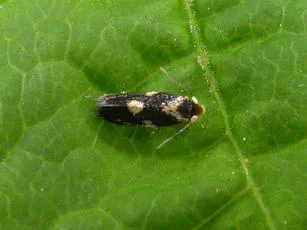
Ectoedemia subbimaculella
Ectoedemia subbimaculella
Wingspan 5 to 6 mm. The adults are similar to E. heringi but otherwise quite distinctive, with two creamy spots and a creamy basal patch on a violet-tinged blackish forewing. The larvae mine Oak leaves, initially in a gallery following a vein, then c
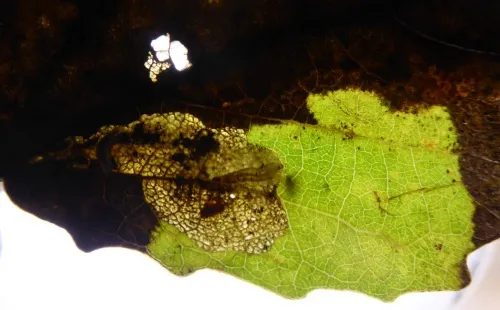
Ectoedemia turbidella
Ectoedemia turbidella
Wingspan about 6 or 7 mm. The adult moths are greyish in ground colour with creamy white forewing patches with an orange or yellowish head tuft and whitish eyecaps, but the species cannot be reliably identified as adults by external characteristics a
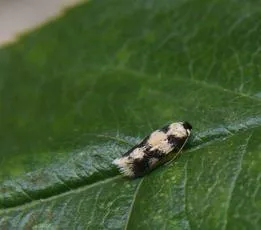
Etainia decentella
Etainia decentella
Wingspan 5 to 8 mm. This well-marked moth is one of the few of this group recognisable by forewing markings alone. Leafmine occurs in the keys of Sycamore and certain other Acer species. https://bladmineerders.nl/parasites/animalia/arthropoda/insecta
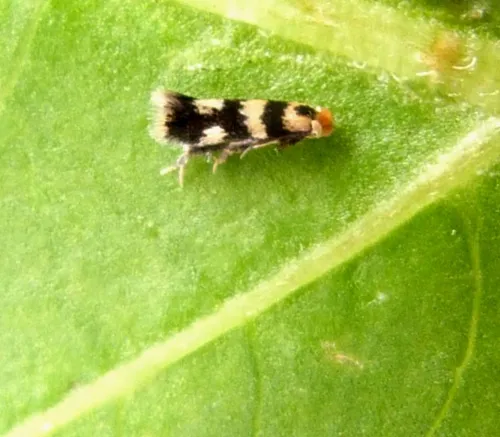
Etainia louisella
Etainia louisella
Wingspan approx 7 mm. The species has a black ground colour with creamy yellow markings and a reddish head. Adults need to be identified by genitalia examination. The larva mines the 'keys' of Field Maple. Ectoedemia sericopeza is very similar but ha
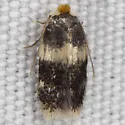
Etainia ochrefasciella - Hodges#0037
Etainia ochrefasciella
Identification: Adult - see Braun's description ( 201 ).
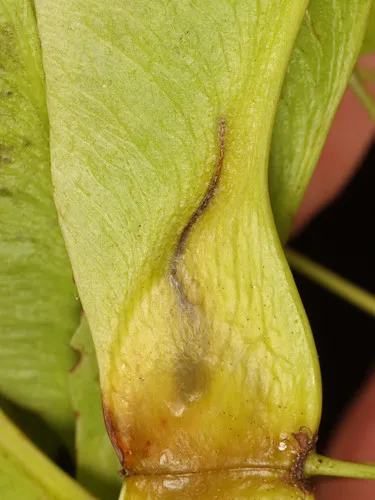
Etainia sericopeza
Etainia sericopeza
Wingspan 6 to 8 mm. The adult moths, though tiny, are relatively strongly patterned for a Nepticulid. The larva mines the seeds, or samara, of Norway Maple, forming a short gallery from the wing into the seed itself. Good quality photographs required
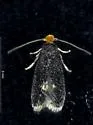
Hypericum Pygmy - Hodges#0060.2
Fomoria septembrella
Identification: Genitalia: ♀ ♂ Introduced with its host plant, Saint John's-wort.
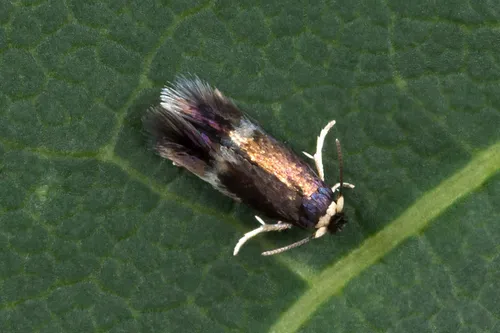
Stigmella aceris
Stigmella aceris
Wingspan 3.7 to 4.7mm. The larva mines the leaves of Field Maple and Norway Maple, making a gallery almost filled with coiled greenish frass; later on the frass darkens. Found in woodland, gardens, hedgerows and parkland in areas where Field Maple is
Stigmella altella - Hodges#0101
Stigmella altella
Identification: Adult and larval mine - see Braun in Print References. Larva - yellow with a row of dark brown dashes along the mid-ventral line. The larva makes a contorted linear mine on the underside of an oak leaf.
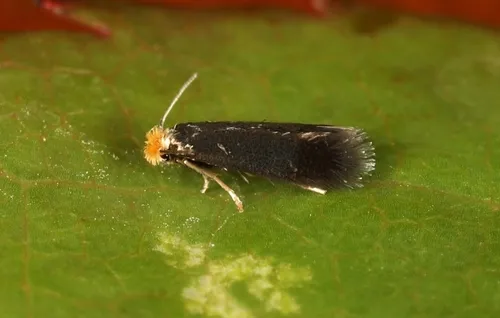
Rose Leaf Miner
Stigmella anomalella
Wingspan 5 to 6 mm. The adult moths have plain bronzy wings, tinged greenish on the inner two-thirds, and slightly reddish towards the tip. The leaves of wild and cultivated roses are mined. The mine is a long, sinuous gallery which often crosses bac
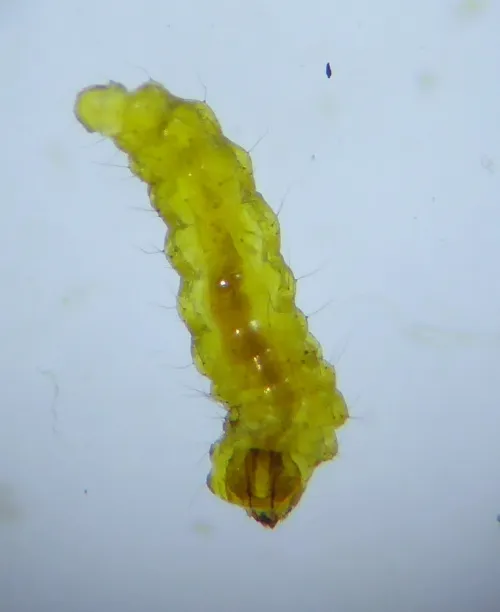
Stigmella atricapitella
Stigmella atricapitella
Wingspan 4.5 to 6 mm. Stigmella atricapitella has a black head and dark brownish wings with a bronzy sheen. The larva mine the leaves of various oaks in two generations. The first generation produce a short gallery with frass in thick line. The secon
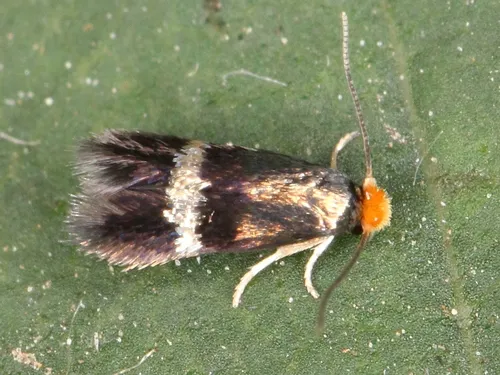
Stigmella aurella
Stigmella aurella
Wingspan 6-7 mm. Adults may only be identified via dissection or if reared from a leaf mine [when orange head colouration separates from black head of S. splendidissimella ]. The leaf mines are common on Bramble and other herbaceous species in the Ro
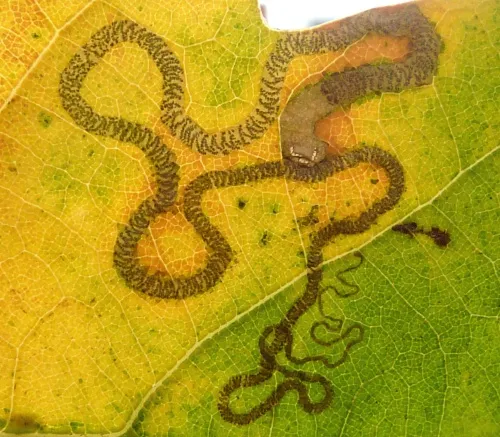
Stigmella basiguttella
Stigmella basiguttella
The larvae of Stigmella basiguttella produce leaf mines on Oak. This is a long sinuous gallery, widening gradually and filled with green frass, which becomes brown later in the year. The adult moth has a dark head, bronzy brown forewing with green ti
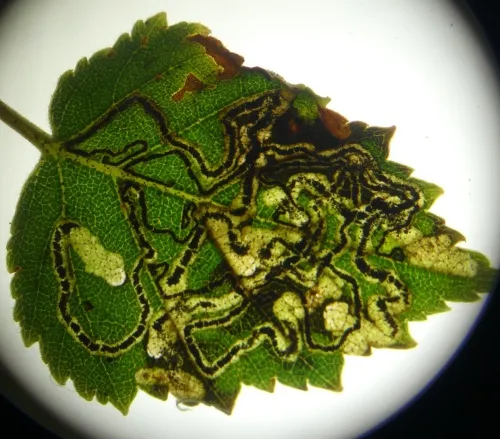
Stigmella betulicola
Stigmella betulicola
Wingspan about 5 mm. The larva creates a contorted gallery mine in leaves of Birch (Betula), leaving a central irregular line of frass. The mine resembles that of S. luteella, but is far less contorted at the beginning. The larva shows a line of dark
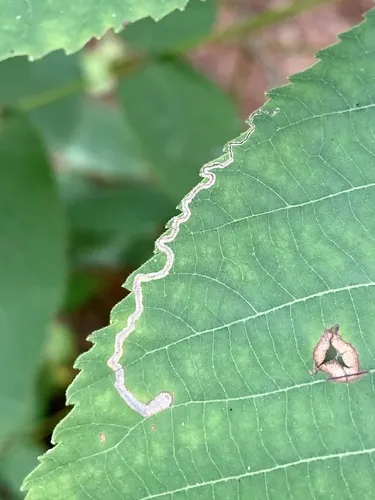
Stigmella caryaefoliella - Hodges#0093.1
Stigmella caryaefoliella
Stigmella caryaefoliella is a species of pygmy eye-capped ,oth in the family Nepticulidae found in North America....
Stigmella castaneaefoliella - Hodges#0090
Stigmella castaneaefoliella
Identification: Larva bright green, cocoon ochraceous
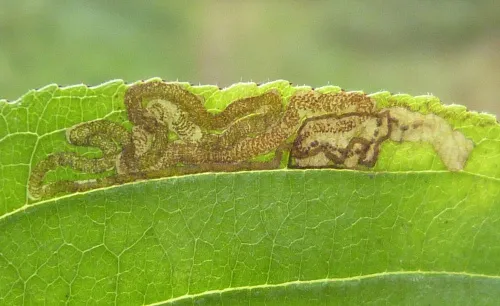
Stigmella catharticella
Stigmella catharticella
The combination of ferruginous-orange head, white collar and eyecaps, and white tornal spot, is distinctive, but the species is much more frequently recorded in the larval stage due to possible confurion of adult with other Stigmella species. The lar
Stigmella confusella
Stigmella confusella
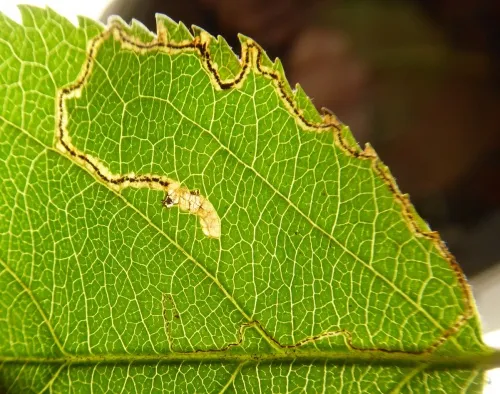
Wingspan 5 to 6 mm. The larva mines the leaves of Birch. The leafmine is similar in appearance to that of S. lapponica , but has a black central line of frass throughout, unlike that species. The adult moths are similar to several other species in th
Stigmella continuella
Stigmella continuella
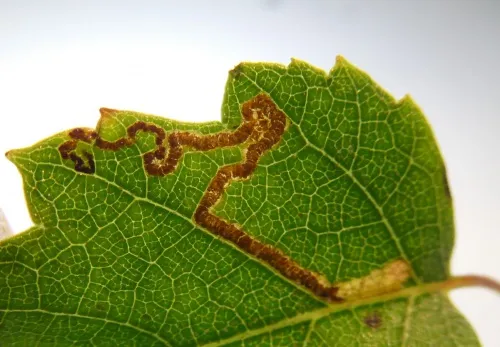
The adult moth has dark wings with a silvery fascia, orange head and white eyecaps. The larva mines the leaves of Birch, creating a gallery with a contorted start, filled with coiled frass.. Stigmella sakhalinella also makes a gallery with coiled fra
Stigmella corylifoliella - Hodges#0092
Stigmella corylifoliella
An unusually polyphagous nepticulid, recorded as mining leaves of various Betulaceae, Ericaceae, Myricaceae, Rhamnaceae, and Rosaceae.
Stigmella crataegella
Stigmella crataegella
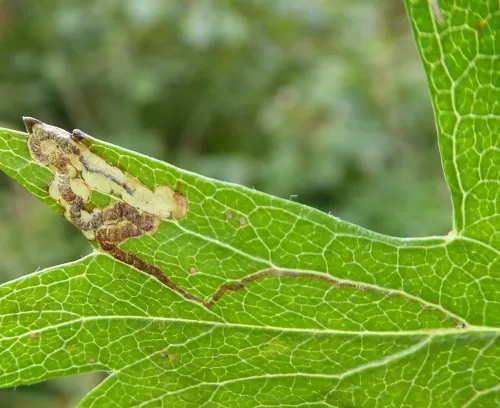
Wingspan 4 to 5 mm. The adults are narrow-winged with bronzy forewings which have a broad silvery fascia, and are purplish-tinged outside this. The mine Hawthorn leaves, creating a gallery which begins narrowly with black linear frass. The mine then
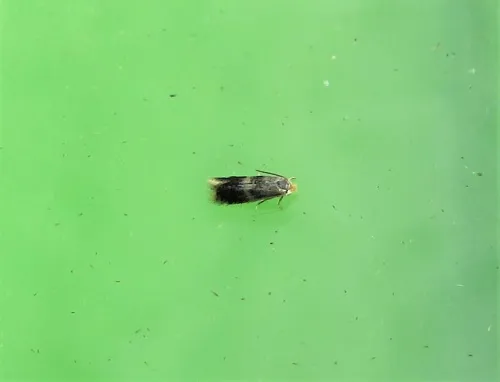
Stigmella floslactella
Stigmella floslactella
Wingspan about 6 mm. The larva mines the leaves of Hazel and possibly Hornbeam. Stigmella floslactella are generally wider, less angular and contain more scattered frass than those of S. microtheriella . The egg is underside, in a leaf-axil, and the
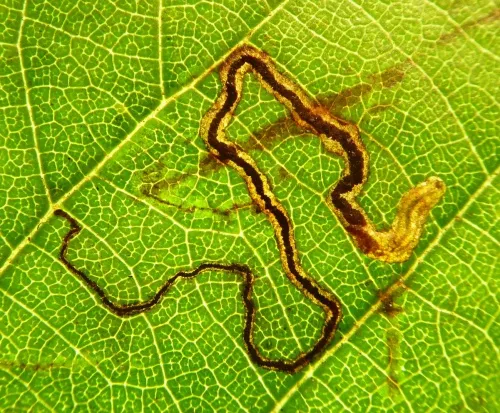
Stigmella glutinosae
Stigmella glutinosae
Adult wingspan is 4.4 to 5.2 mm - Similar to many other Stigmella , forewing brown/bronze with pale yellowy-white narrow fascia. The larvae of this moth mine the leaves of Alder, producing a gallery with frass partly dispersed, but sometimes in a thi
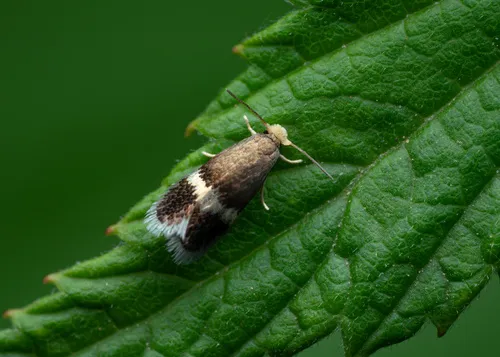
Stigmella hemargyrella
Stigmella hemargyrella
The adults are small and dark, with a pale patch centrally on the forewing, and with a wingspan of only around 6 mm. The larva mines the leaves of \beech. Flying in two generations, April and May, and later in July and August. Like many of its congen
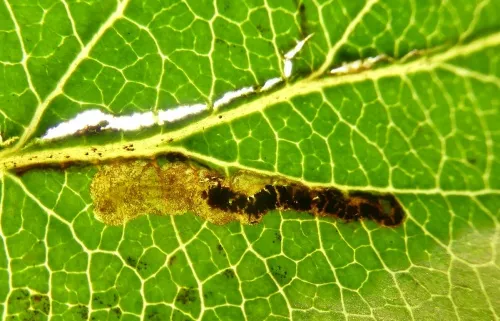
Stigmella incognitella
Stigmella incognitella
Many Stigmella species are almost impossible to identify as adults, but are easier to record from the leafmines created by their larvae. The larvae of Stigmella incognitella mine the leaves of Apple. The mines are found between veins. The initial gal
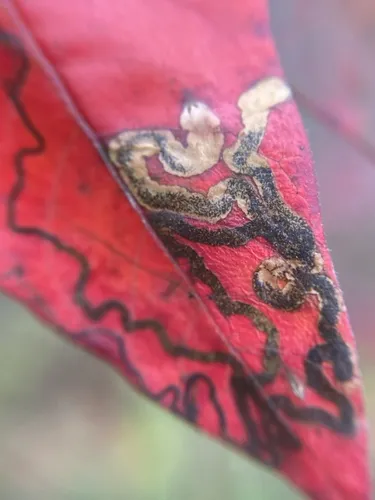
Stigmella intermedia - Hodges#0072
Stigmella intermedia
Stigmella intermedia is a moth of the family Nepticulidae. It is found in North America in Ohio, Arkansas, Kentucky and Ontario.
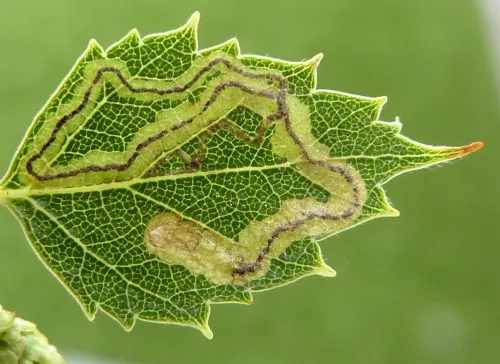
Stigmella lapponica
Stigmella lapponica
Wingspan 5 to 7 mm. The adults are coarsely-scaled and dull greyish-brown with an indistinct creamy fascia. The larva mine the leaves of Birch. The mine is long, filled with green frass to ¼, and then linear. The larva is a greenish white, head brown
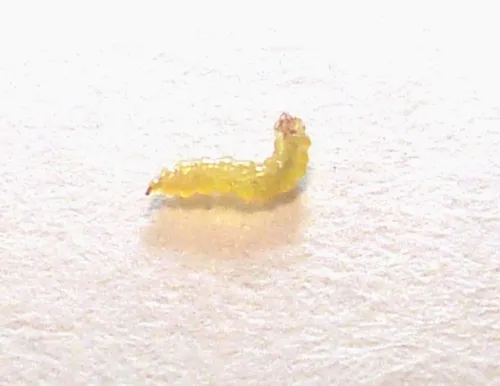
Stigmella lemniscella
Stigmella lemniscella
Wingspan 5 to 6 mm. The adult moths have a silvery fascia and a bronzy tinge to the inner part of the wing. The larva mines the leaves of Elm with the exit slit on upper surface. Areas where the larval foodplant occurs. There are two generations, wit
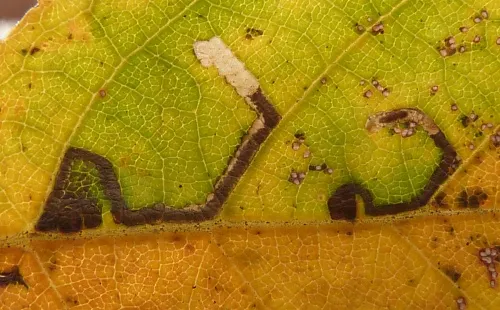
Stigmella luteella
Stigmella luteella
Wingspan 4 to 5 mm. The adult moth is narrow-winged with a purplish-bronzy sheen. There is a whitish fascia which narrows towards the costa, outside which the purple colour is darker. The larva mines the leaves of Birch; the gallery has a contorted s
Stigmella macrocarpae - Hodges#0088
Stigmella macrocarpae
Identification: This species has been confused with Stigmella nigriverticella in the past. According to Erik van Nieukerken, S. macrocarpae has a wider pale fascia in the middle of the wing; for example: For comparison, this specimen has been confir
Stigmella magdalenae
Stigmella magdalenae
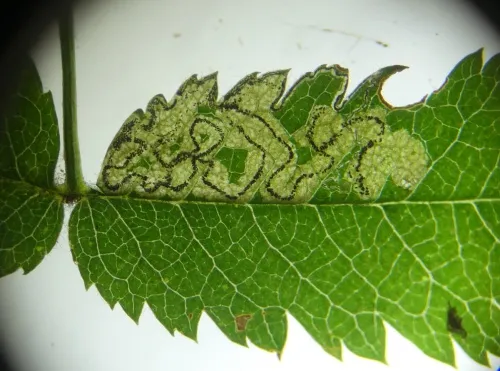
Adult Stigmella are very difficult to identify and this species is best recorded as a leafmine on Rowan The mine is a long narrow gallery, often contorted, with a thin central line of linear frass. The mine can be very similar to those of Stigmella n
Apple Pigmy
Stigmella malella
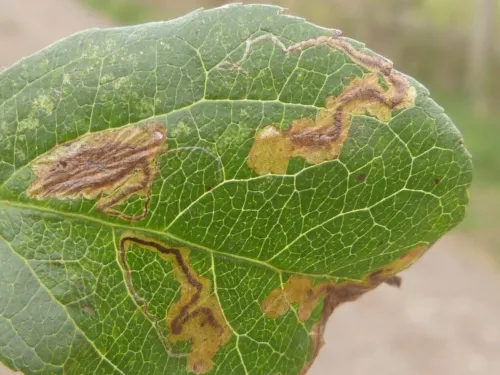
The adult has a purple-brown forewing with shining white fascia beyond the middle but identification of adults is very difficult and this species is best recorded from the larval mine. The larvae mine the leaves of Apple species producing a sinuous g
Stigmella microtheriella
Stigmella microtheriella
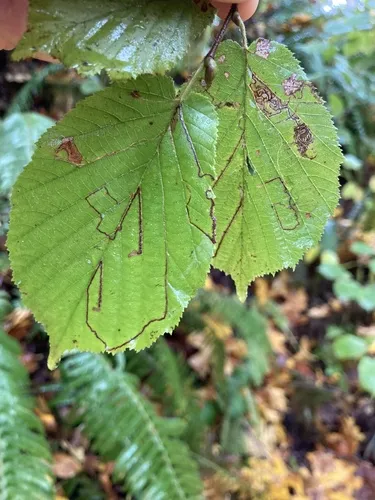
Wingspan 3 to 4 mm. The adults have purplish-bronzy wings with a silvery fascia, and darker purple outside the fascia. They closely resemble several other family members. The larva mines the leaves of Hazel and Hornbeam, creating a very long narrow m
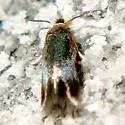
Stigmella multispicata - Hodges#0086.1
Stigmella multispicata
Identification: The only Stigmella in North America with black frontal tuft, white collar, and single fascia on forewing.
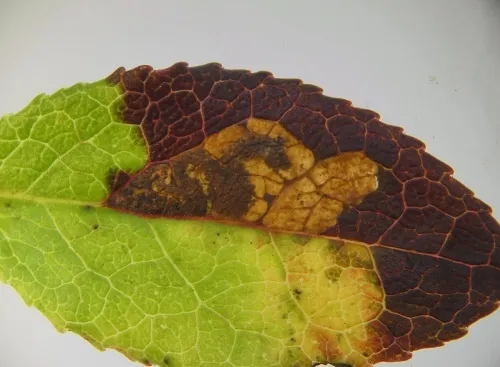
Stigmella myrtillella
Stigmella myrtillella
Adult Stigmella are very difficult to identify and this species is best recorded as a leafmine on Bilberry (see under Life History). Adult: It may not be possible to identify adult Stigmella even by dissection unless reared from the leafmine. Leafmin
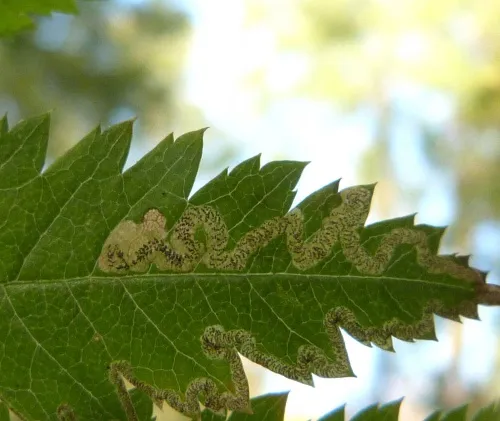
Stigmella nylandriella
Stigmella nylandriella
Wingspan 4 to 5 mm. The adult moth has plain dark brown wings with a bronzy sheen and a yellowish or orange head. Woodland and areas where Rowan is present. There is one generation with adults in May and June, and the larvae feeding from July to Augu
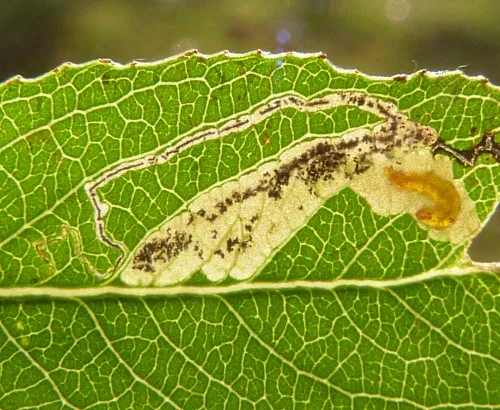
Stigmella obliquella
Stigmella obliquella
Wingspan 4 to 5 mm. The larva mines the leaves of various smooth leaved willows - e.g. Crack Willow and Weeping Willow. causing an angular gallery mine Photogrpah mine with backlight, and note host species (or group - e.g. 'a Wiilow') The adult moths
Stigmella oxyacanthella
Stigmella oxyacanthella
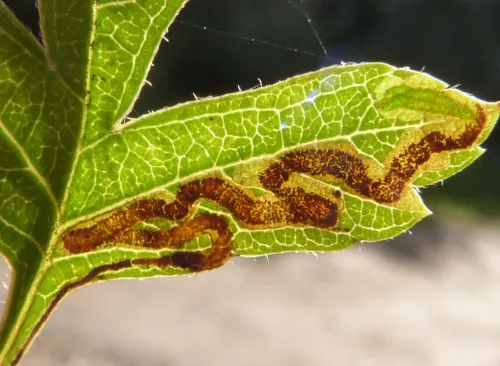
Wingspan 5 to 6 mm. The adults have plain dark forewings with a hint of purple, and an orange head. The leafmine occurs commonly on Hawthorn, and also on Apple, Rowan and Pear and some other species of Rosaceae. It has coiled frass and the larva is b
Stigmella paradoxa
Stigmella paradoxa
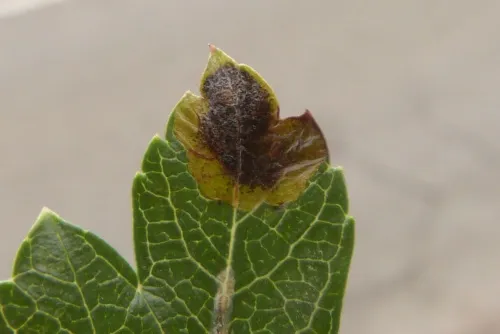
Many Stigmella species are almost impossible to identify as adults, but are easier to record from the leafmines created by their larvae. The larvae of Stigmella paradoxa mine the leaves of Hawthorn. A blotch mine is formed on the on leaf-lobe with ce
Stigmella perpygmaeella
Stigmella perpygmaeella
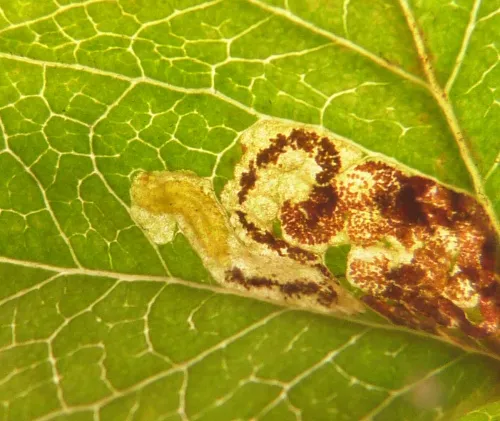
Wingspan about 5 mm. Adult moths are unicolourous, the forewings being greyish to dark brown, with a slight bronzy or purplish sheen. The head is yellow or orange and the eyecaps creamy-white, however the species is usually recorded from the leafmine
Stigmella plagicolella
Stigmella plagicolella
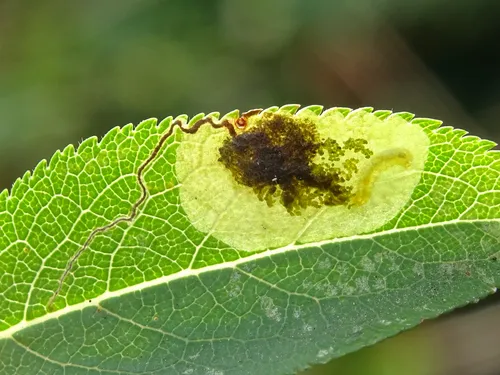
Wingspan 4 to 5 mm. They have dark forewings with bronzy and purple sheens and a neat whitish fascia. Areas where that Blackthorn, the larval foodplant is found. The adults are on the wing from May to June and again in August. The larvae feed on Prun
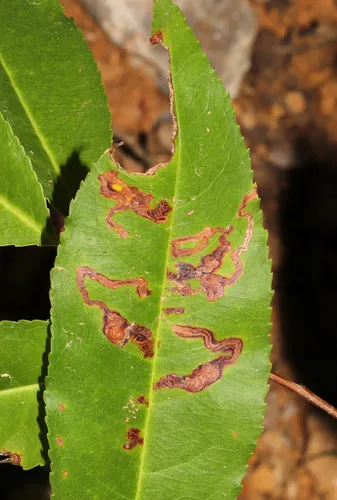
Stigmella prunifoliella - Hodges#0070
Stigmella prunifoliella
Stigmella prunifoliella is a moth of the family Nepticulidae. It is found in North America in Pennsylvania, Ohio, New York, Kentucky and Ontario.
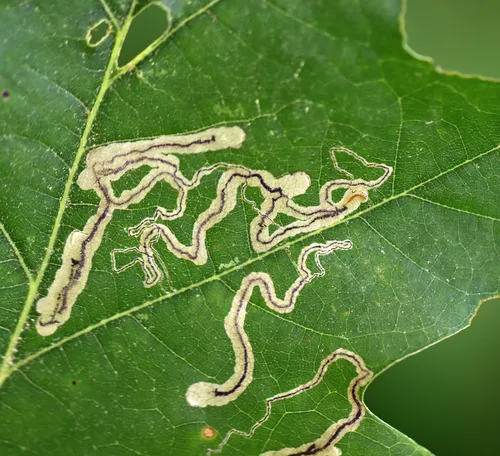
Stigmella quercipulchella - Hodges#0099
Stigmella quercipulchella
Stigmella quercipulchella is a moth of the Nepticulidae family. It is found in North America in Kentucky, Ohio, Pennsylvania, Illinois and Ontario.
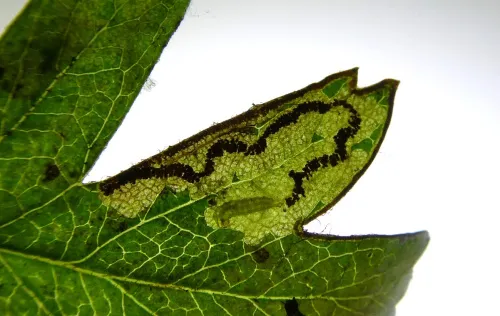
Stigmella regiella
Stigmella regiella
Many Stigmella species are almost impossible to identify as adults, but are easier to record from the leafmines created by their larvae. The larvae of Stigmella regiella mine the leaves of Hawthorn. The initial gallery is narrow and is filled with re
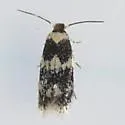
Stigmella rhamnicola - Hodges#0074
Stigmella rhamnicola
Identification: Per Erik van Nieukerken on the image posted here "This is Stigmella rhamnicola, easily recognised by the differently coloured fasciae and white thorax. The collar consists of lamellar scales, which shows it is a Stigmella."
Stigmella roborella
Stigmella roborella
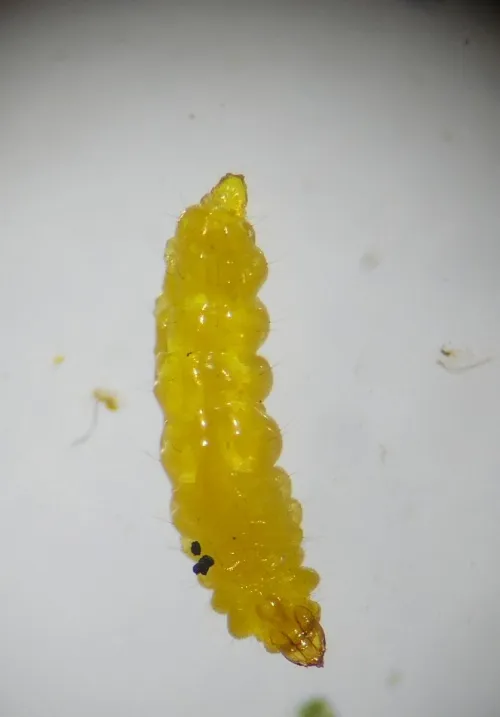
Wingspan around 6 mm. Best recorded from the larval mines which are found on the leaves of Oak - these have a central ine of frass and the larva has a pale brown head without dark sclerites. The adult moths are plain greyish to brown with a bronzy sh
Stigmella rosaefoliella - Hodges#0078
Stigmella rosaefoliella
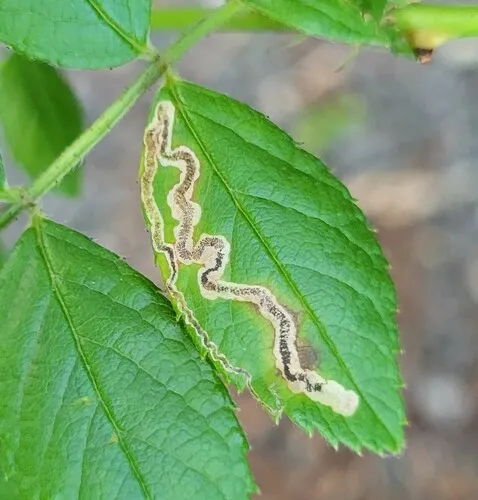
Stigmella rosaefoliella is a moth of the Nepticulidae family. It is found in North America in Ohio, Pennsylvania, Arkansas, New York, Michigan, Missouri and Ontario.
Stigmella ruficapitella
Stigmella ruficapitella
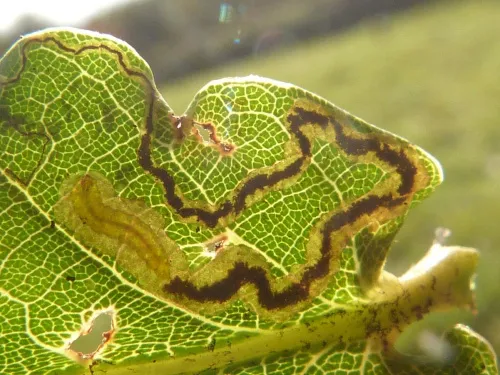
Wingspan 4.5 to 6 mm. The adult moths are similar to several other species in the group, having uniform dark brownish wings with a bronzy sheen and it may not be possible to identify adult to species even by gen det. This species is best recorded fro
Stigmella sakhalinella
Stigmella sakhalinella
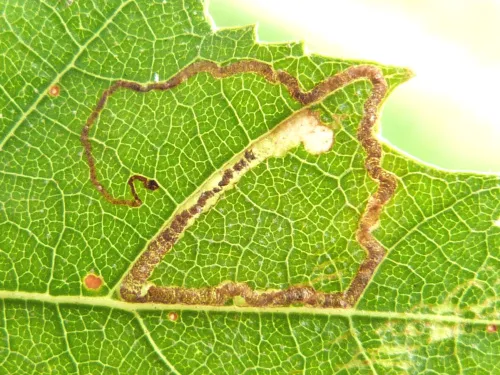
Wingspan 4 to 4.6 mm. The adult moths are similar to several other species in the group, and it may not be possible to identify adult to species level even by gen det. The larvae mine various Birch species. The gallery is almost filled with coiled fr
Stigmella salicis
Stigmella salicis
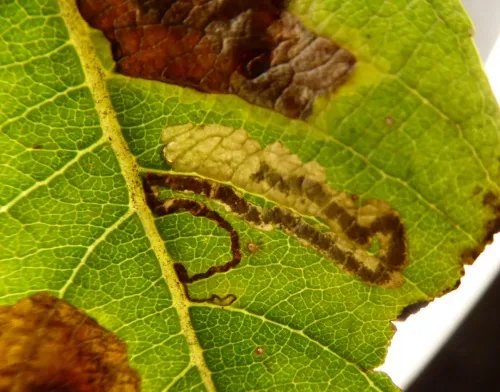
Wingspan 4 to 6 mm. The adults have dark forewings with a purplish sheen and an irregular yellowish fascia. The cilia are noticeably pale and the head is orange. The larva mines the leaves of coarse leaved willows such as Goat Willow and Grey Willow.
Stigmella samiatella
Stigmella samiatella
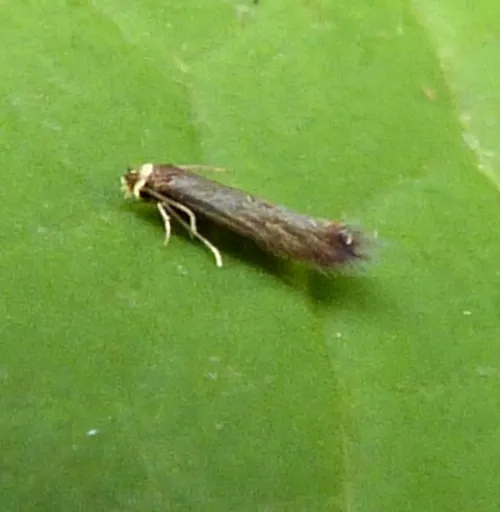
Wingspan 5 to 7 mm. This tiny purple-bronze moth is a member of the unicolorous ruficapitella group of Nepticulidae. The larva creates a quite long and contorted gallery mine in oak ( Quercus ) or sweet chestnut ( Castanea sativa) . The gallery is lo
Stigmella slingerlandella - Hodges#0079
Stigmella slingerlandella
Identification: "Head and frontal tuft orange, antenna eye-caps and side tufts white; antenna whitish gray; thorax bronzy black; abdomen light gray; legs yellowish white, posterior tarsi finely ringed with black. Forewings bronzy black with a shining
Stigmella sorbi
Stigmella sorbi
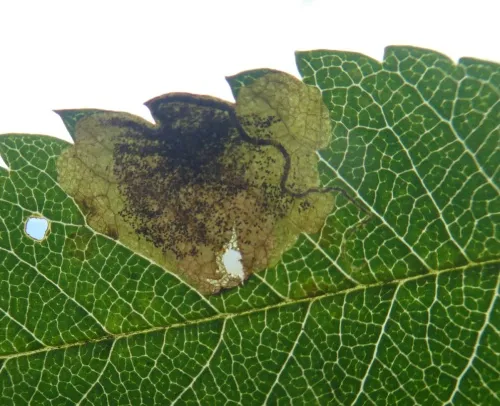
Adult Stigmella are very difficult to identify and this species is best recorded as a leafmine on Rowan, or bred through, the adults are relatively large and often paler than many other Nepticulidae, with pale brownish wings and a broad, poorly defin
Stigmella splendidissimella
Stigmella splendidissimella
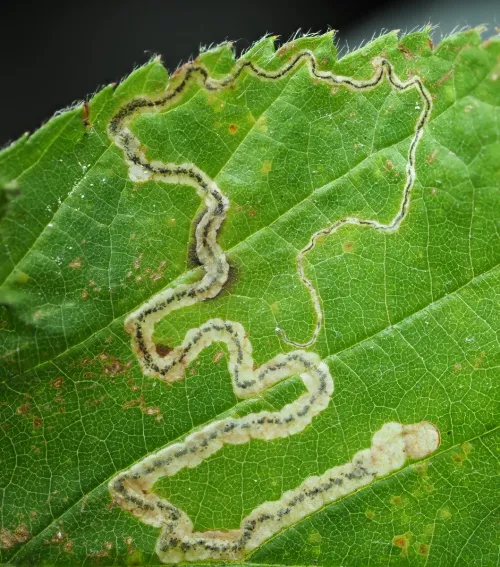
Wingspan 4.5 to 6 mm. Adults may only be identified via dissection or if reared from a leaf mine [when black head colouration separates from orange head of S. aurella]. Leafmine occurs on a number of plants including Bramble, Wild Strawberry, Agrimon
Stigmella suberivora
Stigmella suberivora
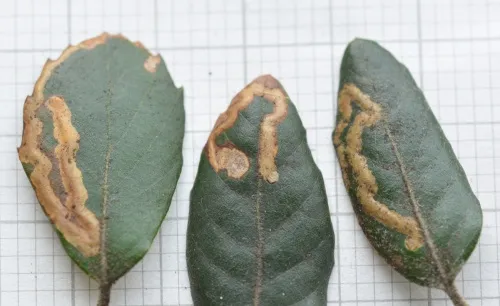
Wingspan about 6 mm. The adults are dark grey/blackish with a faint purplish tinge and a yellow head. Leaf mine on Holm Oak and related evergreen oaks have a wide gallery, usually along leaf-edge before turning towards midrib. There is a broad band o
Stigmella tiliae
Stigmella tiliae
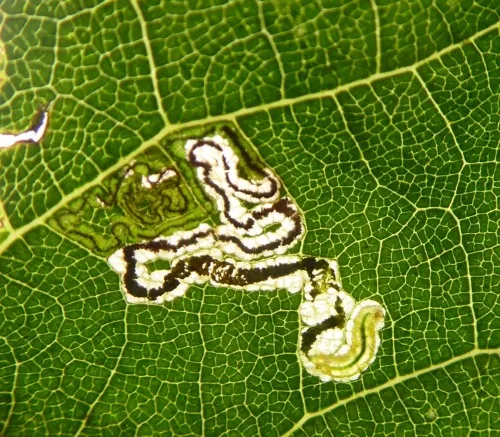
Wingspan 4.5 to 6 mm. Similar to many other Stigmella, having plain dark bronzy brown fore-wings, a white collar and eye-caps. The larva mines the leaves of Lime. The adult flies from May to August in two generations. The larvae mine the leaves of Li
Stigmella tityrella
Stigmella tityrella
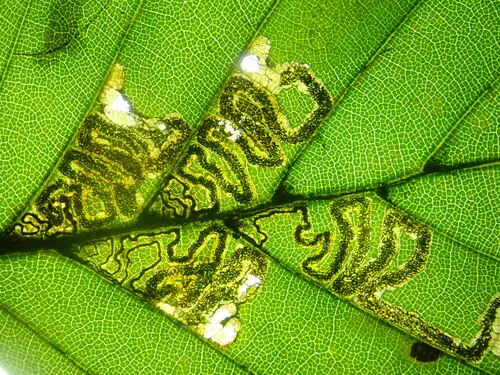
Wingspan 5 to 6 mm. Another of the very similar Nepticulidae, which are best identified by the nature of the larval feeding pattern, usually creating diagnostically-shaped mines in leaves. This species feeds on beech (Fagus sylvatica), creating an S-
Stigmella trimaculella
Stigmella trimaculella
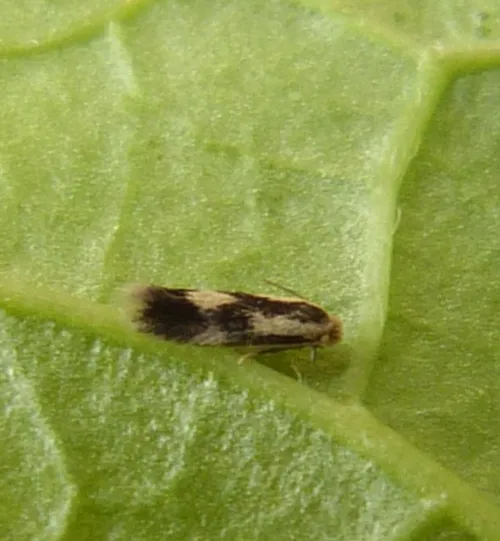
A tiny moth with a wingspan of 5 to 6 mm. The adults are rather attractive, with brownish grey forewings each with three creamy patches. The larva mine the leaves of Lombardy Poplar, Black Poplar and Hybrid Black-poplar. The mines are quite variable
Stigmella ulmivora
Stigmella ulmivora
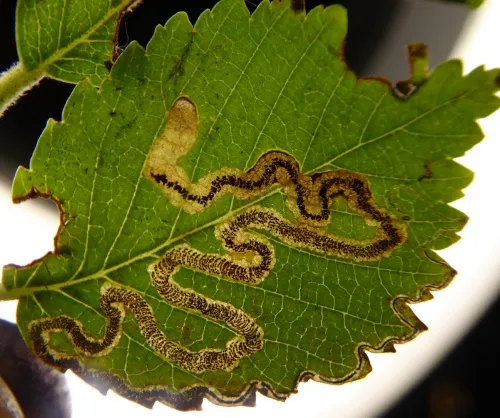
Wingspan about 5 mm. Black head and bright coppery red forewing glossed with purple. Silver fascia. The larva mines the leaves of Elm; the frass is linear in early part of mine, coiled later. The larva is green. Exit hole is underside. Adult Leafmine
undescribed hickory-mining species
Stigmella undescribed-species-on-carya
This species is represented in the Barcode of Life Database (BOLD) as "Stigmella carya_usa." The specimens in the database are from Connecticut and Mississippi; an iNaturalist observation from New York here .
Stigmella undescribed-species-on-lyonothamnus
Stigmella undescribed-species-on-lyonothamnus
Larvae mine in leaves of Lyonothamnus floribundus , a plant endemic to the Channel Islands of California
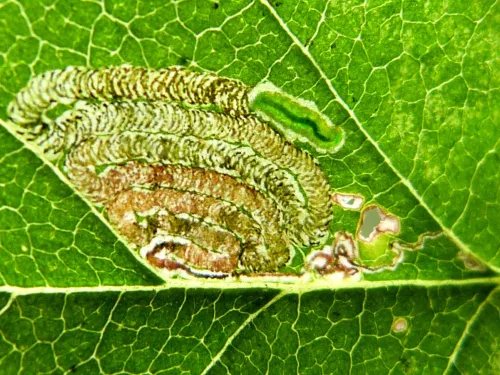
Stigmella viscerella
Stigmella viscerella
Wingspan 5 to 6 mm. Plain looking bronzy olive forewing, darker towards the apex. The larva mines the leaves of Elm. Stigmella lemniscella mines on Elm can occasionally start with a tight coil, but not with intestine-like loops; they can be mistaken
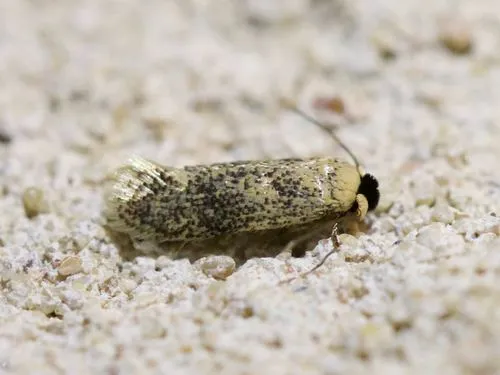
American Chestnut Moth
Zimmermannia bosquella
Zimmermannia bosquella is a moth of the family Nepticulidae. It is found in Virginia, Ohio, and Kentucky in the United States. It is now classified as conspecific with the American chestnut moth, which was formerly considered as extinct.
Zimmermannia grandisella - Hodges#0109
Zimmermannia grandisella
Identification: · Internet References Representative Images Show images of: caterpillars · adults · both Classification Kingdom Animalia (Animals) Phylum Arthropoda (Arthropods) Subphylum Hexapoda (Hexapods) Class Insecta (In
Acalyptris lotella - Hodges#0114.1
Acalyptris lotella
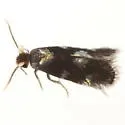
Ectoedemia clemensella - Hodges#0044
Ectoedemia clemensella
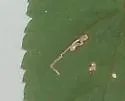
Ectoedemia quadrinotata - Hodges#0051
Ectoedemia quadrinotata
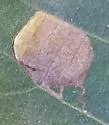
Ectoedemia rubifoliella - Hodges#0048
Ectoedemia rubifoliella
Ectoedemia trinotata - Hodges#0041
Ectoedemia trinotata
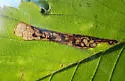
Ectoedemia ulmella - Hodges#0049
Ectoedemia ulmella
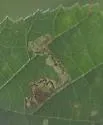
Ectoedemia virgulae - Hodges#0046
Ectoedemia virgulae
Enteucha basidactyla - Hodges#0117
Enteucha basidactyla
Enteucha gilvafascia - Hodges#0118
Enteucha gilvafascia
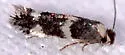
Etainia thoraceleuca
Etainia thoraceleuca
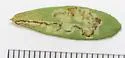
Fomoria hypericella - Hodges#0061
Fomoria hypericella
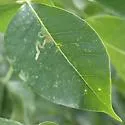
Fomoria pteliaeella - Hodges#0060
Fomoria pteliaeella
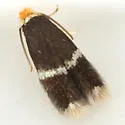
Stigmella apicialbella - Hodges#0081
Stigmella apicialbella
Stigmella braunella - Hodges#0104
Stigmella braunella
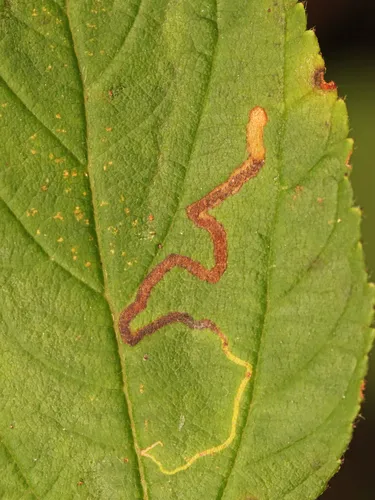
Stigmella ceanothi - Hodges#0071
Stigmella ceanothi
Stigmella centifoliella
Stigmella centifoliella
Stigmella diffasciae - Hodges#0075
Stigmella diffasciae
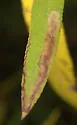
Stigmella fuscotibiella - Hodges#0082
Stigmella fuscotibiella
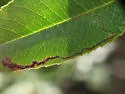
Stigmella heteromelis - Hodges#0076.2
Stigmella heteromelis
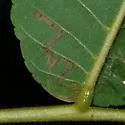
Stigmella juglandifoliella - Hodges#0095
Stigmella juglandifoliella