
Western Meadow Fritillary - Hodges#4469
Boloria epithore
This record describes Boloria epithore (species). Recorded family: Nymphalidae. Recorded order: Lepidoptera.
Identification and Appearance
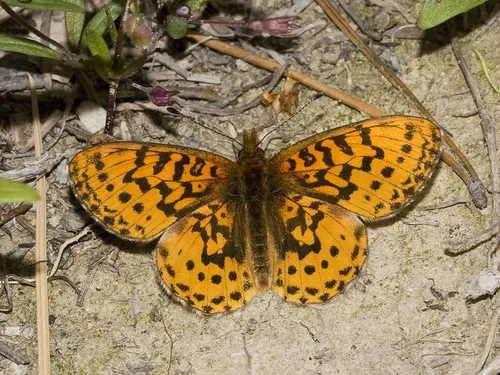
Most similar to Boloria kriemhild, frigga, bellona , and improba. B. improba is generally more northern and found higher in mountains, usually in moist tundra, is smaller, darker above, and duller below. B. frigga usually has bolder and more dark coloring above, is often duller and more grayish or bluish below, and has the elongate whitish spot near the base and upper edge of the under hind wing much longer and usually more contrasting. It favors bogs with lots of brush around (particularly Willows). B. bellona favors more open areas and has the front wing shaped differently. All of these species differ from most Boloria in having the submarginal dark spots above pointing outward in the middle, or roughly oval in shape (not pointing inward). Boloria chariclea has submarginal row of chevron-shaped dark spots pointing inward toward base of wing. In similar-looking B. epithore they point outward. Boloria kriemhild replaces B. epithore to the southeast in the Rockies. It is very similar, and perhaps just a subspecies. It differs in the pale yellowish band across the under hind wing being usually clear, contrasting, and not obscured by darker brownish scaling. Its habits are the same.
Classification
- Kingdom
- Animalia
- Phylum
- Arthropoda
- Class
- Insecta
- Order
- Lepidoptera (Butterflies and Moths)
- Superfamily
- Papilionoidea
- Family
- Nymphalidae (Brush-footed Butterflies)
- Subfamily
- Heliconiinae
- Tribe
- Argynnini
- Genus
- Boloria (Lesser Fritillaries)
Imported taxonomy record. Source availability varies; see the source references and editorial policy below.
Habitat and Range
Habitat
Mostly in mountains. Favors moist meadowy areas, usually openings in woodlands and forest.
Geographic Range
Western Montana and Albert to Pacific Coast and south in near coast to southern California.
Seasonal Activity
Mostly June to August.
Diet and Behavior
Diet: Larval hosts are Viola species. Adults are avid flower visitors.
Life History
Overwinter as young larvae.
About Butterflies and Moths: the wider group
Order-level background for Lepidoptera, the group containing Boloria epithore. Species-specific details appear above.
Group overview
Lepidoptera includes approximately 180,000 described species of butterflies and moths. Moths outnumber butterflies roughly 10:1. The monarch butterfly's eastern population has declined by more than 80% since the mid-1990s, and the western population by over 95% since the 1980s. The IUCN lists the migratory monarch as Vulnerable.
Ecological role of the group
Butterflies and moths are essential indicators of ecosystem health. As caterpillars, they are a primary food source for birds - a single nest of blue tit chicks requires ~10,000 caterpillars. Adult moths pollinate many night-blooming plants.
Economic and practical significance of the group
Lepidoptera are critical pollinators. In Europe, grassland butterfly species have declined by almost 50% since the early 1990s. In the UK, three-quarters of butterflies are in decline. In the U.S., five butterfly species have gone extinct since 1950, with 29 listed as endangered.
Recorded sources for this group: IUCN Red List, Xerces Society, USFWS, PNAS, WWF. Imported estimates may describe particular regions or reporting periods.
Photos of Western Meadow Fritillary - Hodges#4469 (2)
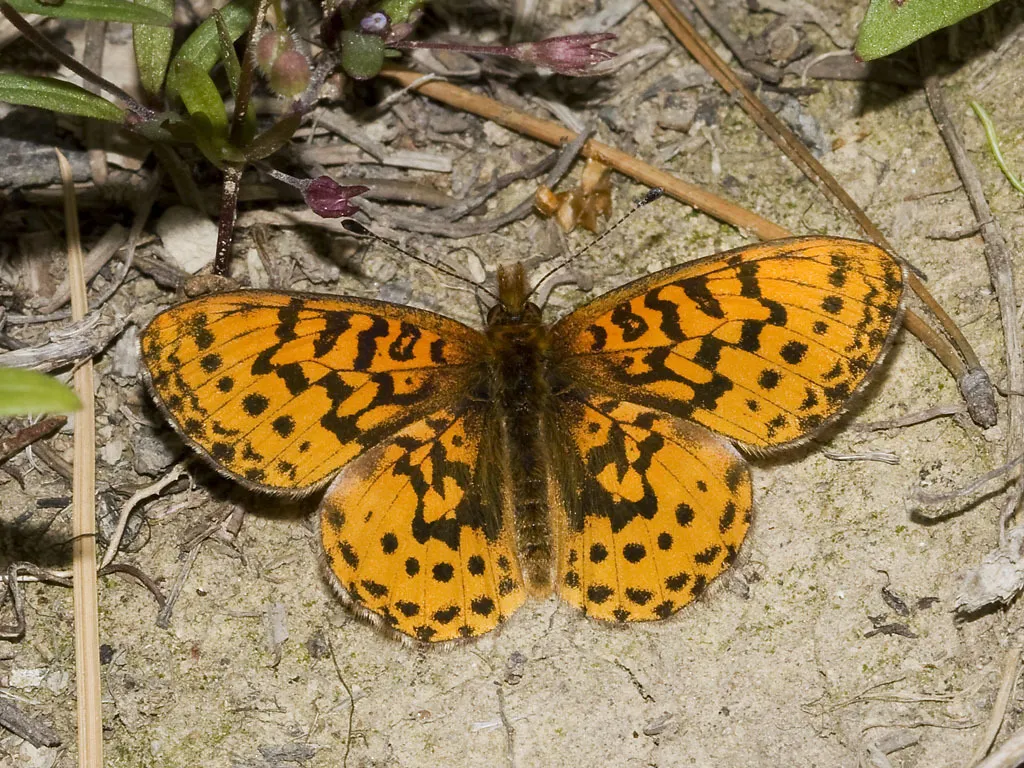
Photo credits: Contributed by tom murray; Additional contributions by Steve Nanz , David Ferguson
Frequently Asked Questions About Western Meadow Fritillary - Hodges#4469
What is Western Meadow Fritillary - Hodges#4469?
Western Meadow Fritillary - Hodges#4469 (Boloria epithore) is a species in the family Nymphalidae, within the order Lepidoptera.
How do you identify Western Meadow Fritillary - Hodges#4469?
Most similar to Boloria kriemhild, frigga, bellona , and improba. B. improba is generally more northern and found higher in mountains, usually in moist tundra, is smaller, darker above, and duller below. B. frigga usually has bolder and more dark coloring above, is often duller and more grayish or bluish below, and has the elongate whitish spot near the base and upper edge of the under hind wing much longer and usually more contrasting. It favors bogs with lots of brush around (particularly Willows). B. bellona favors more open areas and has the front wing shaped differently. All of these species differ from most Boloria in having the submarginal dark spots above pointing outward in the middle, or roughly oval in shape (not pointing inward). Boloria chariclea has submarginal row of chevron-shaped dark spots pointing inward toward base of wing. In similar-looking B. epithore they point outward. Boloria kriemhild replaces B. epithore to the southeast in the Rockies. It is very similar, and perhaps just a subspecies. It differs in the pale yellowish band across the under hind wing being usually clear, contrasting, and not obscured by darker brownish scaling. Its habits are the same.
Where is Western Meadow Fritillary - Hodges#4469 found?
| Feature | Details |
|---|---|
| Habitat | Mostly in mountains. Favors moist meadowy areas, usually openings in woodlands and forest. |
| Range | Western Montana and Albert to Pacific Coast and south in near coast to southern California. |
What does Western Meadow Fritillary - Hodges#4469 eat?
The diet of the Western Meadow Fritillary - Hodges#4469 includes Larval hosts are Viola species. Adults are avid flower visitors..
When is Western Meadow Fritillary - Hodges#4469 active?
Western Meadow Fritillary - Hodges#4469: seasonal activity - Mostly June to August..
What is the life cycle of a Western Meadow Fritillary - Hodges#4469?
Overwinter as young larvae.