
Family Concealer Moths (Oecophoridae)
Oecophoridae is a family in the order Lepidoptera. Browse 47 named species recorded in this family, or open an individual profile for its available identification and natural-history information.
Species in Oecophoridae (47)
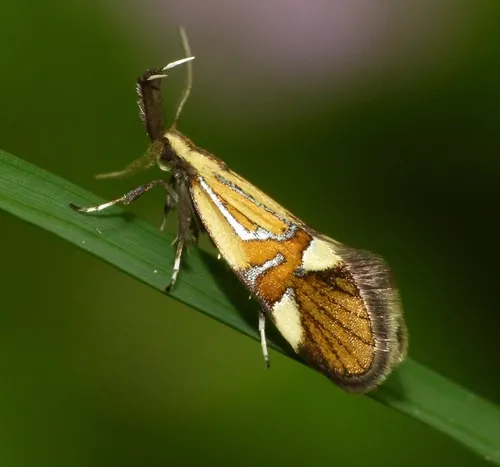
Alabonia geoffrella
Alabonia geoffrella
Wingspan 17-21 mm. A spectacular day-flying species, with its combination of rufous, white and metallic blue markings and remarkably large labial palps. Please provide photograph to support records as this moth is uncommon in our area. It occurs reas
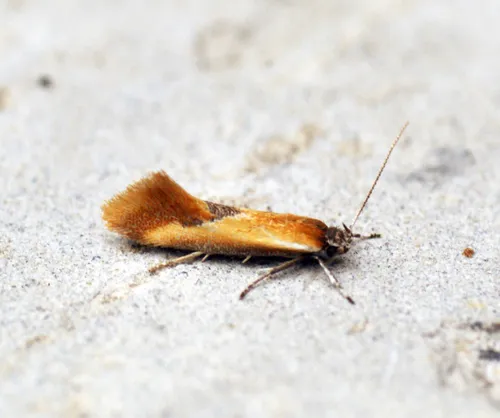
Batia lunaris
Batia lunaris
Wingspan 7-10 mm. This moth is tiny but colourful. It is very similar to B. lambdella in appearance although the latter is generally larger. Generally occurs in woodland habitats and other well wooded areas. The moth flies in July and August. It is m
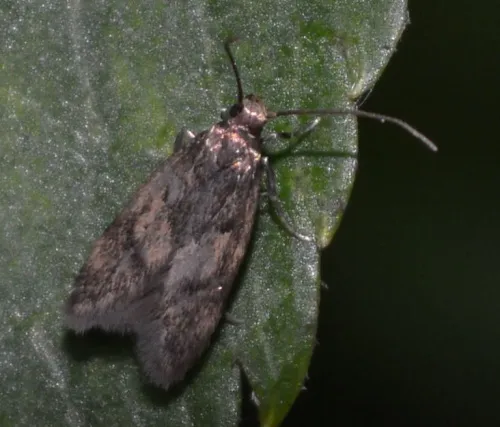
Borkhausenia fuscescens
Borkhausenia fuscescens
Wingspan 7 to 12 mm. A small, stubby-looking moth with a pale transverse band against a slightly darker brownish ground colour. A darker spot is visible beyond the band and a dark suffusion before it. The larvae feed on a wide range of dried plant ma
Borkhausenia nefrax - Hodges#1061
Borkhausenia nefrax
Identification: Adult - long hairs on the antennal flagellum. Genitalia: Possibly an introduced species with a long, complicated history. First identified in California in 1952 as Borkhausenia near minutella (Linnaeus) and later identified as B. fusc
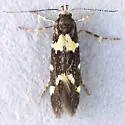
Brymblia quadrimaculella - Hodges#1055
Brymblia quadrimaculella
Identification: Head: Yellowish-white, long haired (scaled). Palpi long, folded; dark brown, tip white. Antenna: About ½ length of wing. Brown with white rings. Segment 1 white. Thorax: Dark brown. Wings: Dark brown with 4 whitish to yellowish spots
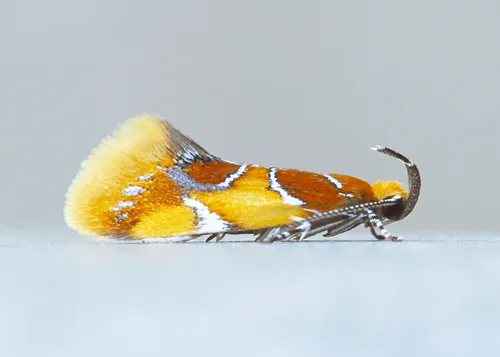
Orange-headed Callima Moth
Callima argenticinctella
Epicallima argenticinctella, the Orange-headed Epicallima Moth, is a moth of the Oecophoridae family. It is found in North America, where it has been recorded from Nova Scotia to South Carolina, west to Kansas and Texas. The habitat consists of decid
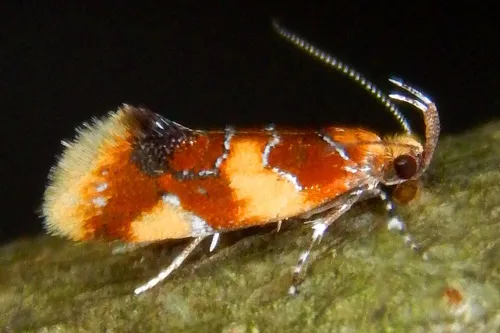
Callima nathrax - Hodges#1047
Callima nathrax
Identification: "second segment of labial palpus mainly yellow orange to red orange" There is only one DNA barcoded specimen of Callima from Florida. It's in BIN BOLD:AAI5335 with no other specimens and was collected at the Archbold Biological Statio
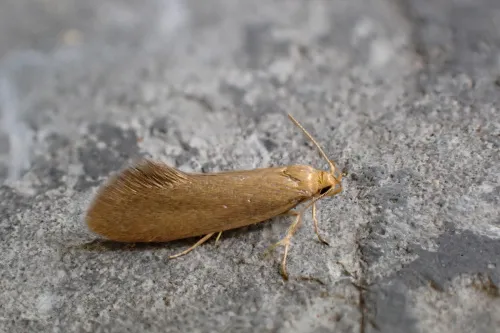
Crassa tinctella
Crassa tinctella
The wingspan is 12 to 15 mm. The adult moths are rather plain, resembling Crassa unitella , but the latter has a brighter yellow tone to the head and thorax area. Unless identified by a recognised expert, a photo is required and the identification sh
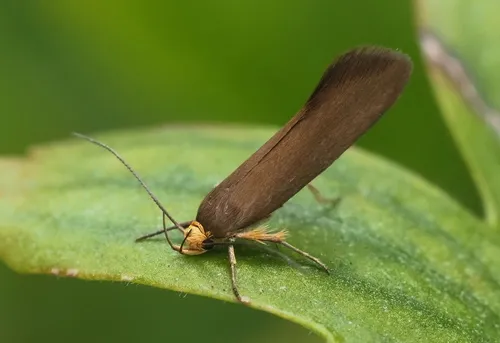
Crassa unitella
Crassa unitella
Golden-brown, with contrasting orange head and palps. Larvae- (from late September to May), feed on fungus on and under dead bark. This species is locally common in Southern England, and occurs more scarcely as far North as Lancashire and Yorkshire.
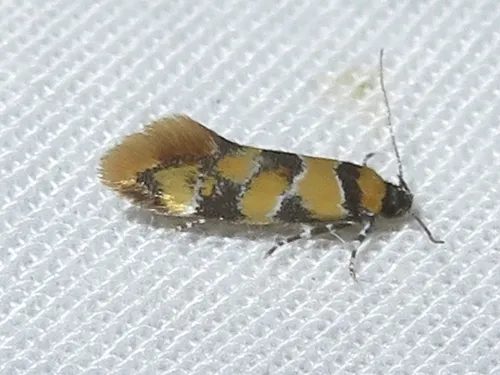
Reticulated Decantha Moth - Hodges#1042
Decantha boreasella
Identification: Head: Dark brown, face smooth; two tufts on top of head. Palpi reddish-brown, curved up over head, underside scaled, last segment brown and white. Antenna: Brown with white rings. Thorax: Golden yellow, slightly scaled. Sides brown, c
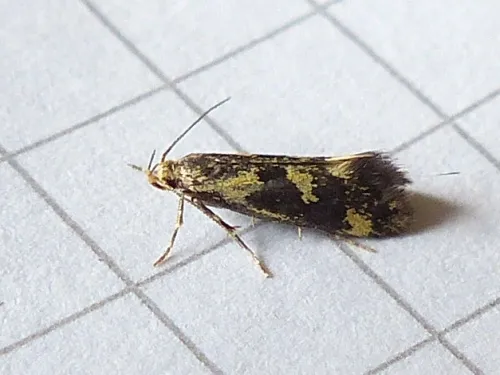
Denisia similella
Denisia similella
Wingspan: 12 to 16 mm. It has a dark maroon-brown forewing sometimes almost black, and being darker in the female, thinly scattered with yellowish scales and with four, variably shaped, yellow blotches. Moths are on the wing from June to early August
Eido trimaculella - Hodges#1068
Eido trimaculella
Identification: Head: Grayish-brown, a few rough scales, but face smooth. Palpi thick, curved up over head; gray with a wide black stripe. Some white on 2nd segment, with a large tuft on last segment. Antenna: Slender, about 2/3 as long as wing: Gra
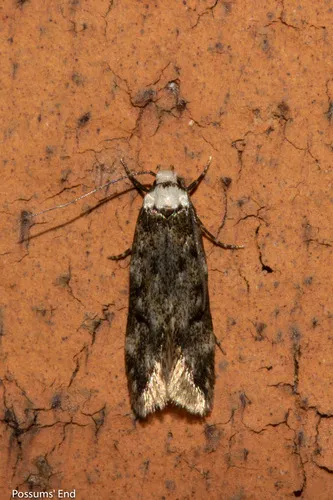
White-shouldered House-moth
Endrosis sarcitrella
Wingspan 15-21 mm. Distinctive because of its white 'shoulders'. Being continuously-brooded, it can be found at any time of year indoors. The larvae live on dried plant and animal debris. The species has been accidentally introduced into many parts o
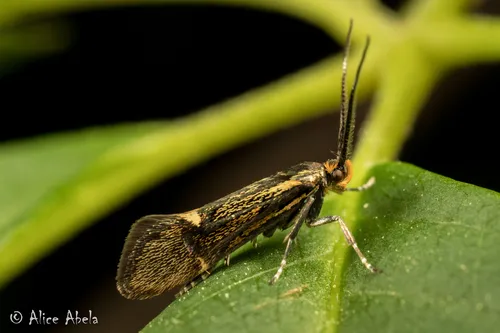
Esperia sulphurella
Esperia sulphurella
Wingspan 12-16 mm. A tiny, chocolate-brown moth, marked with lemon-yellow. It rests with its antennae held forward. The antennae are marked with white about two-thirds along their length. It flies during the day in May and June. Fairly frequent throu
Fabiola quinqueferella - Hodges#1054
Fabiola quinqueferella
Identification: Distinctive forewing has basal yellow streak, alternating radiating bands of chestnut/orange and white in middle, speckled outer 1/3, and a series of 4 black spots along the outer margin. Images of several living individuals can be vi
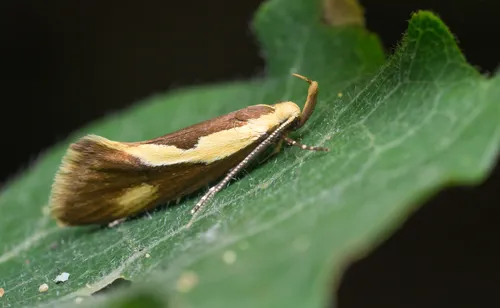
Harpella forficella
Harpella forficella
This is a very distinctively marked brown and cream moth. It has been recorded in Britain in July and August. Adults fly in the afternoon and early evening and again at dawn, and can also be attracted to light. This species is widely distributed on t
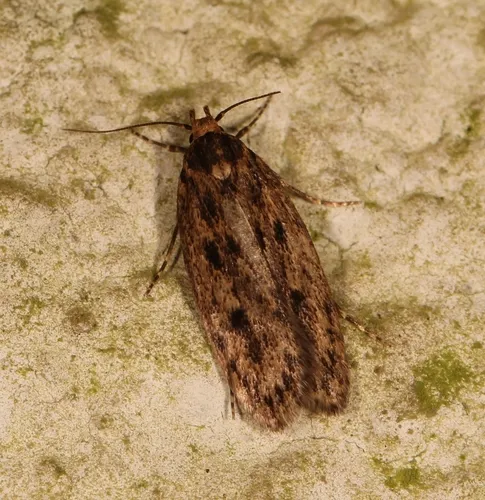
Brown House-moth
Hofmannophila pseudospretella
Wingspan 15-26 mm. The general appearance is fairly constant but the species does show a large size variation. A common inhabitant inside houses and is often found on indoor walls as it begins to go dark. It can be found on the wing at any time of th
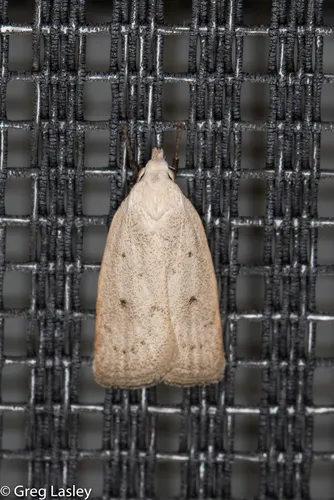
Chalky Inga - Hodges#1035
Inga cretacea
Fossil records of this species have been dated from the Upper Cretaceous period. (p. 223)
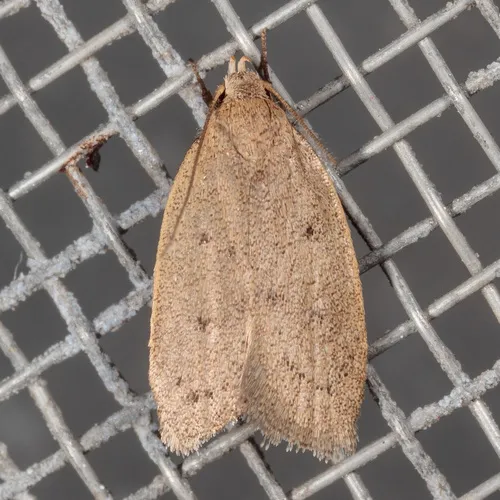
Inga obscuromaculella - Hodges#1037
Inga obscuromaculella
Identification: This species has long been confused with Exaeretia sordidella here and on MPG. However, I. obscuromaculella differs significantly in pattern from E. sordidella based on the images on the BOLD taxon pages for each species. None of the
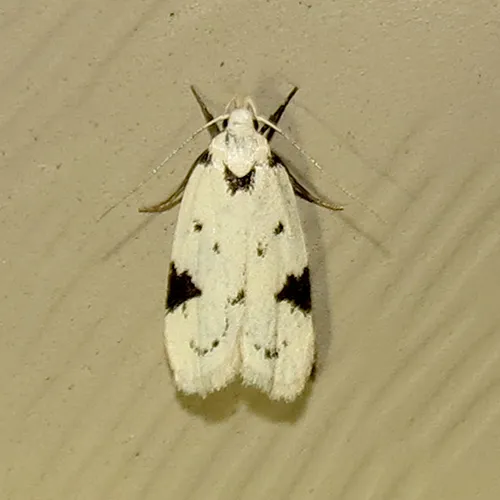
Black-marked Inga Moth
Inga sparsiciliella
The black-marked inga moth (Inga sparsiciliella) is a species of moth of the Oecophoridae family. It has been recorded from Costa Rica, Mexico, Arkansas, Oklahoma, Missouri, Texas, South Carolina, Alabama, Florida, Georgia, North Carolina and Virgini
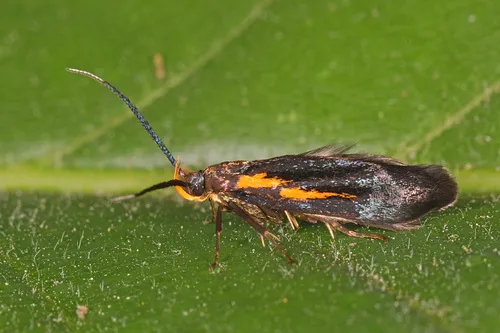
Newman's Mathildana Moth
Mathildana newmanella
Mathildana newmanella, or Newman's mathildana moth, is a species of concealer moth in the family Oecophoridae.
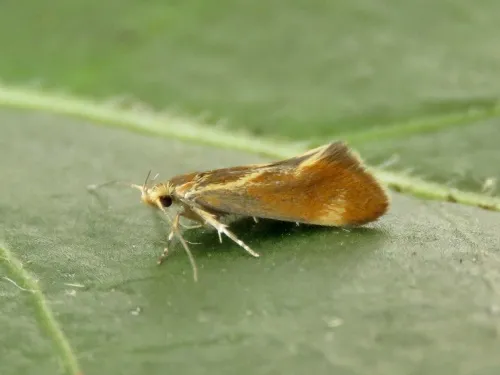
Metalampra italica
Metalampra italica
Wingspan about 12 to 14 mm. The adults are quite distinctive with a golden brown ground colour and paler markings. Metalampra cinnamomea which has so far not been recorded locally is similar, but has a darker ground colour in the forewing. Good suppo
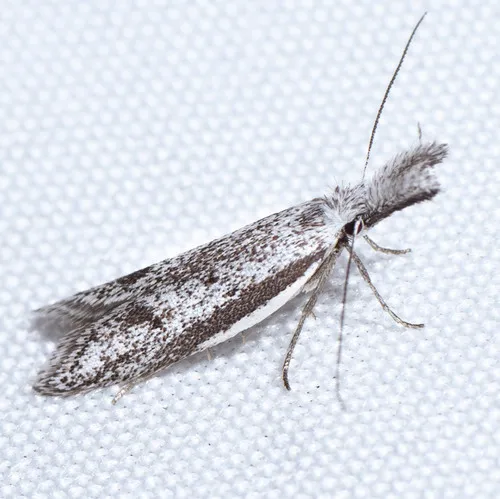
Pleurota albastrigulella - Hodges#1074
Pleurota albastrigulella
Identification: Kearfott original description as Dorata albastrigulella is available online in the print references.
The Skunk - Hodges#1058
Polix coloradella
Identification: Adult - forewing black with white strip beginning on top of head and continuing along inner margin, bending 45 degrees near anal angle and extending almost half-way to apex. Head: Pale yellow to yellowish-white. Antenna: Grayish-brown
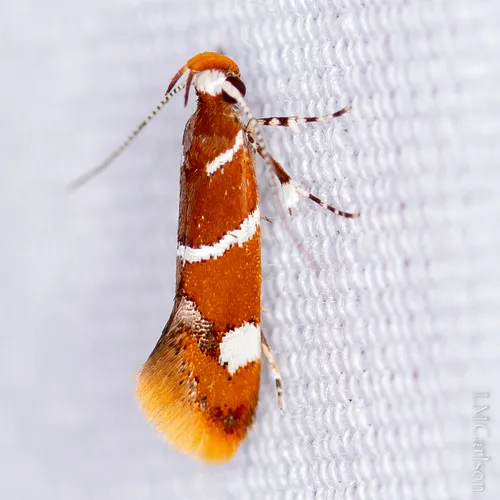
Suzuki's Promalactis Moth
Promalactis suzukiella
Suzuki's promolactis moth (Promalactis suzukiella) is a moth of the Oecophoridae family. It is native to Korea, Japan and Taiwan, but is an introduced species in the United States, where it has been recorded from Maryland, Virginia, New Jersey, New Y
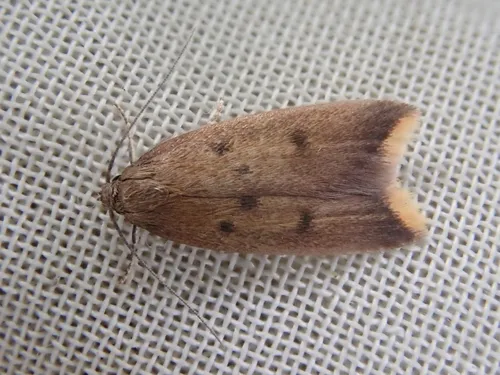
Tachystola acroxantha
Tachystola acroxantha
Wingspan 13 to 15 mm. The pinkish orange termen make this a fairly easy species to identify. The colourful adults can occur between May and September, when they are attracted to light. The larvae feed on withered leaves and leaf-litter. An adventive
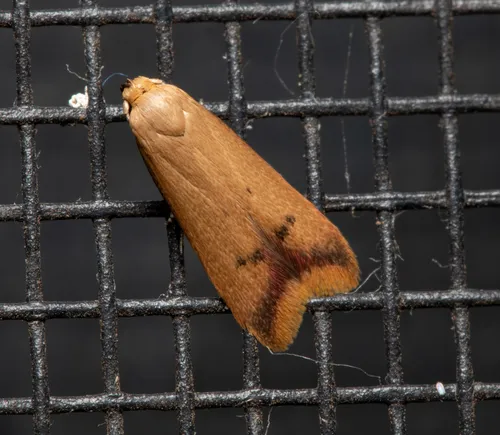
cf. Tachystola hemisema - Hodges#1069.5
Tachystola hemisema
Tachystola hemisema is a moth of the family Oecophoridae. It is native to Australia, but is an invasive species in New Zealand and the United States, probably imported with Australian plants.
Borkhausenia cf. minutella - Hodges#1061.2
Borkhausenia cf-minutella
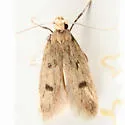
Carolana ascriptella - Hodges#1062
Carolana ascriptella
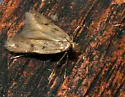
Carolana golmeia - Hodges#1063
Carolana golmeia
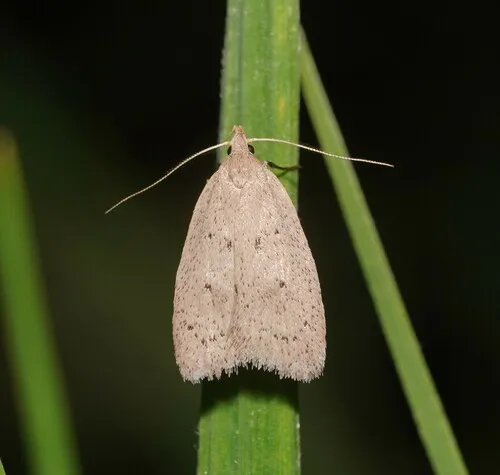
Chezala privatella
Chezala privatella
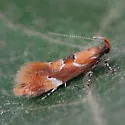
Beautiful Epicallima Moth - Hodges#1048
Dafa formosella
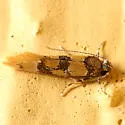
Decantha stecia - Hodges#1043
Decantha stecia
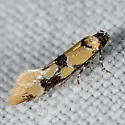
Decantha stonda - Hodges#1045
Decantha stonda
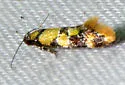
Decantha tistra - Hodges#1044
Decantha tistra
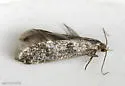
Denisia haydenella - Hodges#1056
Denisia haydenella
Denisia yukonella - Hodges#1056.1
Denisia yukonella
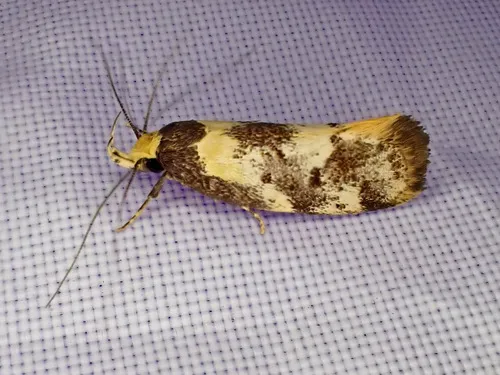
Eulechria marmorata
Eulechria marmorata
Edith's Fabiola Moth - Hodges#1053
Fabiola edithella
Fabiola lucidella - Hodges#1052
Fabiola lucidella
Shaler's Fabiola Moth - Hodges#1050
Fabiola shaleriella
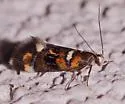
Fabiola tecta - Hodges#1051
Fabiola tecta
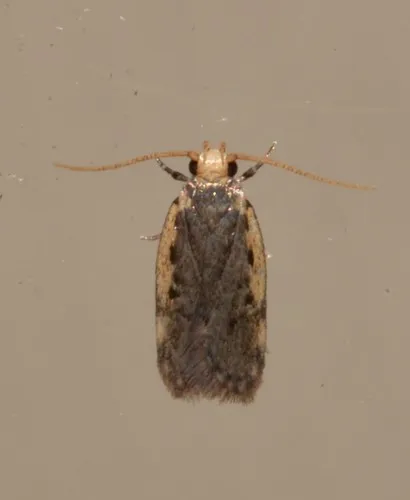
Hoplostega ochroma
Hoplostega ochroma
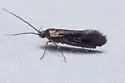
Mathildana flipria - Hodges#1060
Mathildana flipria
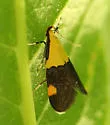
Oecophora bractella - Hodges#1069.1
Oecophora bractella
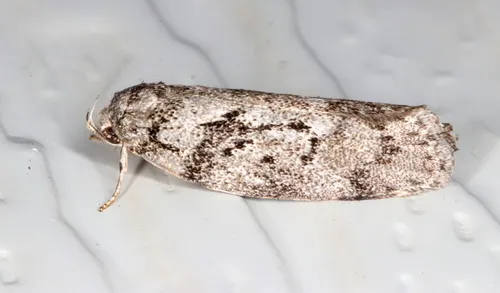
Philobota philostaura
Philobota philostaura
Ymeldia janae - Hodges#2216
Ymeldia janae