
Family Gossamer-winged Butterflies (Lycaenidae)
Lycaenidae is a family in the order Lepidoptera. Browse 165 named species recorded in this family, or open an individual profile for its available identification and natural-history information.
Species in Lycaenidae (165)
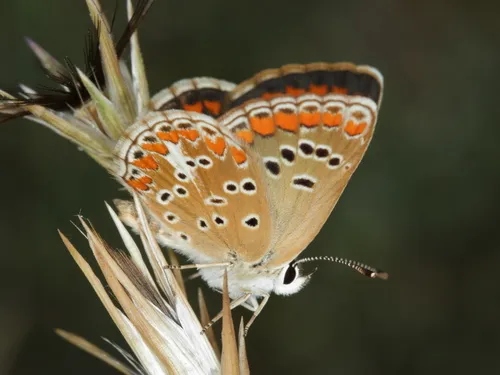
Brown Argus
Aricia agestis
Unlike most other 'blues', the Brown Argus has no blue scales on its upper side, both sexes being primarily brown in colour as its common name suggests, although the butterfly does exhibit a blue sheen when at certain angles to the light. On the unde
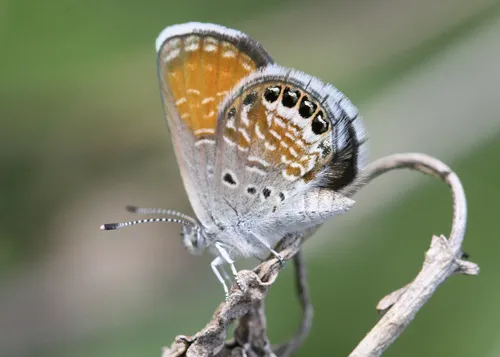
Western Pygmy-Blue
Brephidium exilis
The western pygmy blue (Brephidium exilis or Brephidium exile) is one of the smallest butterflies in the world and the smallest in North America. It has reached Hawaii, as well as the Persian Gulf, including eastern Saudi Arabia, Bahrain and the Unit
Western Green Hairstreak - Hodges#4305
Callophrys affinis
Identification: There's a wide variation in appearance, geographically and even in local populations. The color varies from solid green to half green, half brown, and some have white spots.
Brown Elfin - Hodges#4322
Callophrys augustinus
Identification: Adult: Has no tails. Upperside of male grayish-brown; female more reddish-brown. Underside of forewing chestnut brown with dark irregular postmedian line. Underside of hindwing sharply divided between dark brown basal half and light c
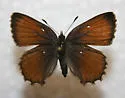
Western Pine Elfin - Hodges#4329
Callophrys eryphon
Identification: Very similar to Eastern Pine Elfin, but Westerns Pine Elfins are not found in most of the Eastern United States, While Eastern Pine Elfins do not occur further west of the eastern Pine forests (western limits in Minnesota, Oklahoma, T
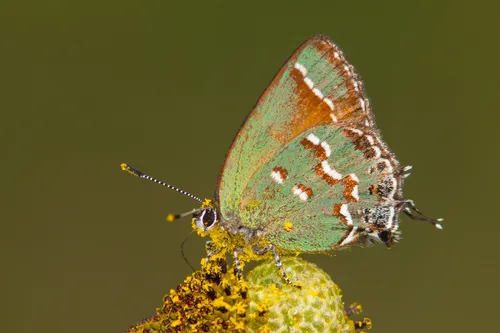
Juniper Hairstreak - Hodges#4318
Callophrys gryneus
Identification: Det. M. A. Quinn, 2010 Shows regional variation, with those east from the Great Plains usually largely green below, and with distinct markings in the discal area of the lower hind wing. West from the Great Plains the white discal mark
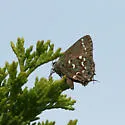
Hessel's Hairstreak - Hodges#4319
Callophrys hesseli
Identification: Very similar to Juniper Hairstreak - Callophrys (Mitoura) gryneus . Distinguished by close association with a different larval host plant and by coloration. In this species the white markings on the underside are often more striking w
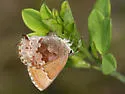
Frosted Elfin - Hodges#4325
Callophrys irus
Three subspecies, arsace in southeast, irus in northeast, and hadros a dark form within AR,LA,OK,TX.
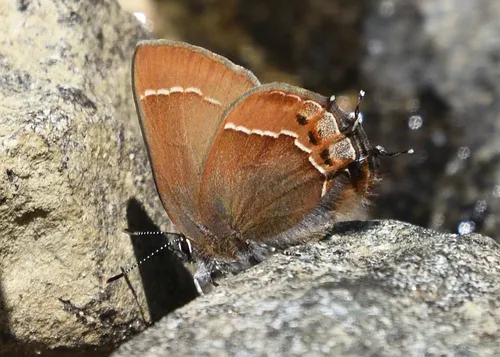
Johnson's Hairstreak - Hodges#4311
Callophrys johnsoni
Identification: Adult can be distinguished from similar Thicket Hairstreak (C. spinetorum) based on the following characteristics: 1) Dorsal side is orange-brown instead of blue 2) Submarginal black spots on ventral hindwing extends only halfway arou
Bog Elfin - Hodges#4327
Callophrys lanoraieensis
Identification: Adult: the smallest elfin, looks like Pine Elfin, but underside pattern is less clear, and trailing edge of hindwing can be frosted Larva: tiny, body green with wide white stripe along side extremely rare and/or local, and hard to fin
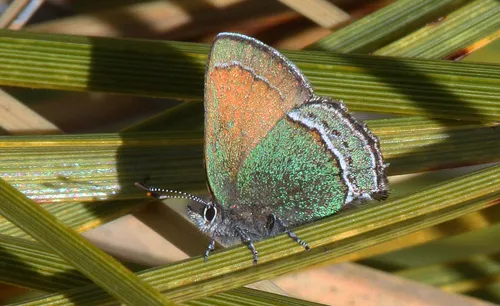
Sandia Hairstreak - Hodges#4321
Callophrys mcfarlandi
Identification: Green below with no tails, rounded wing margins, a bold postedian stripe across all wings - white edged rich brown, wing margins below edged black and white, hind wing with a row of black submarginal spots between white marginal and p
Eastern Pine Elfin - Hodges#4328
Callophrys niphon
Identification: Distinctive bold pattern on underside of wings
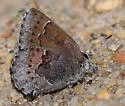
Hoary Elfin - Hodges#4324
Callophrys polios
Identification: Adult: upperside of wings orangish-brown in the east, grayer in the west; underside of hindwing with wide terminal band of pale gray frosting; underside of forewing with narrow terminal band of frosting; hindwing underside lacks dark
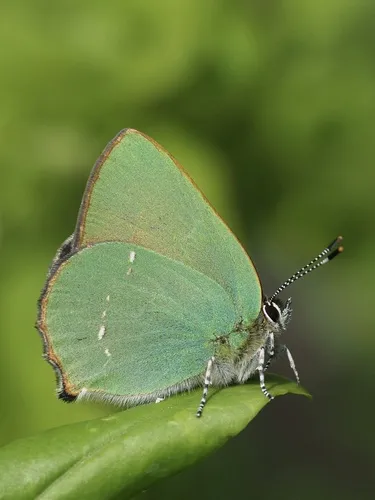
Green Hairstreak
Callophrys rubi
An unmistakeable small, bright metallic green butterfly. Always settles with wings closed, showing green, and resembling the bright green spring foliage, providing excellent camouflage. Male and female are similar in appearance. Grassland habitats ne
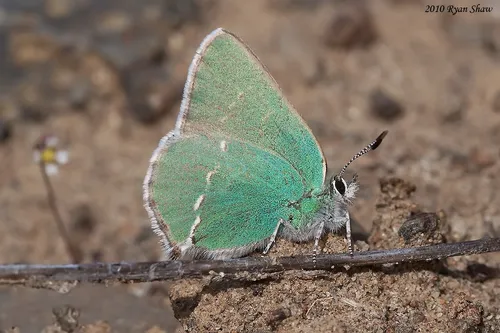
Sheridan's Hairstreak - Hodges#4307
Callophrys sheridanii
Identification: The small size, lack of a tail, and green underside are distinctive within its range to the "Bramble Hairstreak" complex ( C. affinis, dumetorum, perplexa, sheridanii , etc.). In the south there are other small green hairstreaks, but
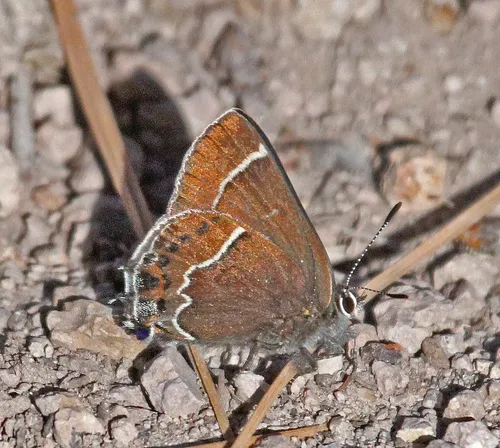
Thicket Hairstreak - Hodges#4310
Callophrys spinetorum
Identification: Adult: upperside distinctive steel-blue with wide dark margins; underside reddish-brown with prominent black-edged white line in middle of both wings; the line forms a W shape above the hindwing tail Larva: green with olive-colored st
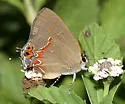
Dusky-blue Groundstreak - Hodges#4300
Calycopis isobeon
Identification: Very similar to Red-banded Hairstreak, but red lines on underwings are thinner.
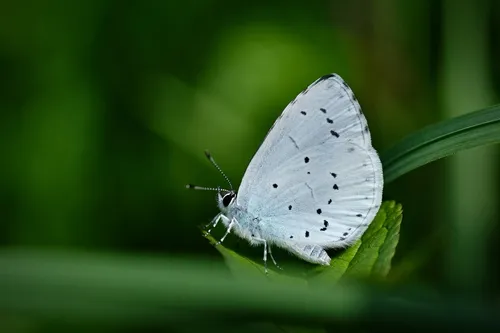
Holly Blue
Celastrina argiolus
The adults are most easy to identify when at rest, since their pale undersides are distinctive among the blues found in the British Isles, with the possible exception of the Small Blue, which is much scarcer (and, as its name implies, much smaller).
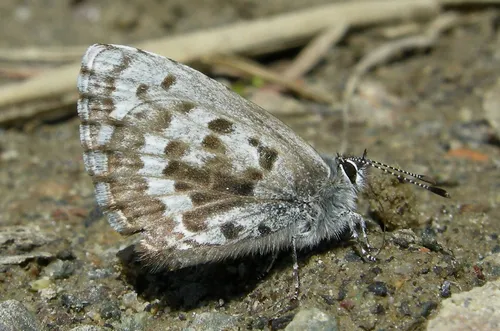
Asher's Blue - Hodges#4363.8
Celastrina asheri
"A new western azure species, Celastrina asheri, is described from the northwestern United States and southwestern Canada. A lectotype is designated for Lycaena pseudargiolus var. nigrescens Fletcher, 1903 to secure the identity of that name. C. ashe
Hops Azure - Hodges#4363.3
Celastrina humulus
The taxon is based largely on larval host plant difference.
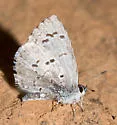
Spring Azure - Hodges#4363
Celastrina ladon
See updates by Schmidt & Layberry 2016 and Pavulaan 2014 .
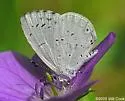
Appalachian Azure - Hodges#4363.4
Celastrina neglectamajor
Identification: Best identified by finding adult ovipositing or larvae feeding on flower buds of hostplant.
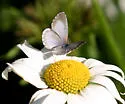
Cherry Gall Azure - Hodges#4363.6
Celastrina serotina
Identification: One of the Azure species that has pale wing surfaces on the underside. Perhaps best separated by its size, distribution, and time of flight. 2 images to date (22 Jan 06) in the Guide: #16426 ventral male, #34126 dorsal female Pavulaan
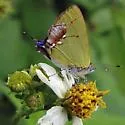
Amethyst Hairstreak - Hodges#4271
Chlorostrymon maesites
Identification: Brilliant Purplish blue above; ventrally brown; hind wing below has an apical patch extending three-fourths the distance to the front margin of the wing; females are dark brown above with base of front wing and most of hind wing dark
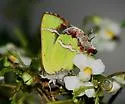
Silver-Banded Hairstreak - Hodges#4273
Chlorostrymon simaethis
Identification: Underwing is green (ranging from bright lime-green to dull greenish-brown) with straight white postmedian band. Wide maroon/brown trailing edge of HW. Dorsal, male is dark purple, female gray.
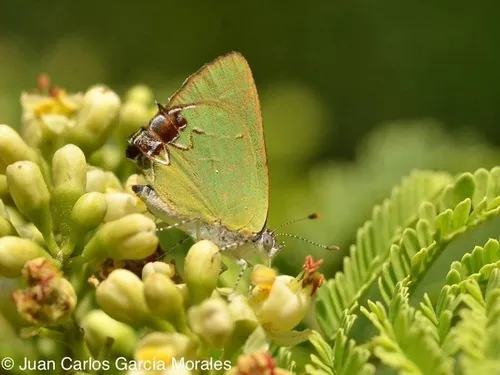
Telea Hairstreak - Hodges#4272
Chlorostrymon telea
Identification: Tiny size, smaller than even typically small Lycaenids such as Ministrymon clytie and Strymon istapa. Brilliant lime-green underwing color. Conspicuous brown spot on the hindwing near the "hairs". Type Locality: "Amazon" First US reco
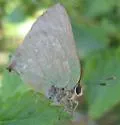
Tropical Greenstreak - Hodges#4309.1
Cyanophrys herodotus
Identification: Has a green frons (forehead) and tails. Clench's Greenstreak has a brown frons; Goodson's is tailless. First U.S. record: Bentsen-RGV State Park, 1972 the most common Greenstreak in s. TX.
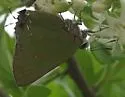
Clench's Greenstreak - Hodges#4308
Cyanophrys miserabilis
Identification: The only greenstreak in the US with a brown frons (forehead).
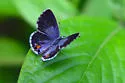
Nickerbean Blue - Hodges#4358.1
Cyclargus ammon
Identification: Dorsal, male blue with thin black border, and 2 black spots on trailing edge of HW, one capped with orange. Female blue with thick black border, 2 large black spots, one capped with orange. Similar to Miami Blue , but has 3 post-basal
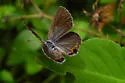
Miami Blue - Hodges#4358
Cyclargus thomasi
Identification: Dorsal, males are light blue with a thin black border, and usually with 2 plain black spots on the trailing HW edge. Females are blue, with a thick black border, and a black spot that's orange capped on the trailing HW edge. Ventral,
Fulvous Hairstreak - Hodges#4352
Electrostrymon angelia
Identification: Hindwing with 2 tails. Upperside red-orange with black borders. Underside of hindwing gray-brown with large eyespot near lower tip of wing; postmedian line is white edged with black.
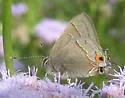
Ruddy Hairstreak - Hodges#4351
Electrostrymon hugon
Identification: Underwings nearly identical to Dusky Blue Groundstreak, but upperwings golden-orange to rusty brown. Pelham lists Electrostrymon sangala as a synonym of E. hugon with a note under hugon , "Identity of this taxon was established by Fay
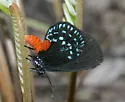
Atala - Hodges#4268
Eumaeus atala
Identification: Distinctive color and pattern, likely aposematic . considered by FL to be a "Species of Greatest Conservation Need" (SGCN)
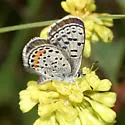
Ancilla Blue - Hodges#4367.4
Euphilotes ancilla
Identification: Adult: male upperside deep blue with wide black borders in United States (lilac blue with narrow black borders in Canada); hindwing orange band usually absent; female brown with variably expressed marginal orange crescent on hindwing;
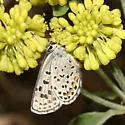
Central Blue - Hodges#4366.2
Euphilotes centralis
Identification: Distinguished by where found. Separated in recent literature as a distinct species. A debatable arrangement that may not stand the test of time.
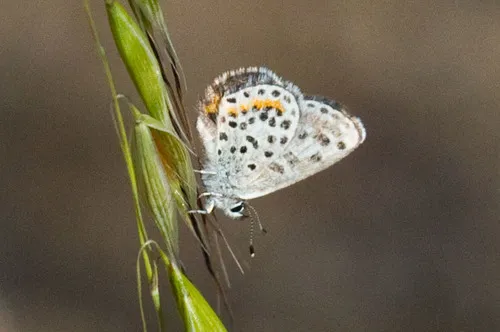
Mojave Dotted Blue - Hodges#4367.1
Euphilotes mojave
Identification: Distinguishable from Plebejus acmon / lubpinus by the lack of metalic scaling in the marginal black spots on the ventral hind wing, and by the fringes interrupbed by dark color at the ends of many of the veins. Distinguished from Eup
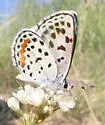
Rita's Blue - Hodges#4369
Euphilotes rita
Identification: Upperside of male bright lilac-blue with dark medium-wide borders; corner of hindwing has a small orange patch and small marginal spots. Upperside of female brown with broad orange marginal band. Underside of both sexes off-white
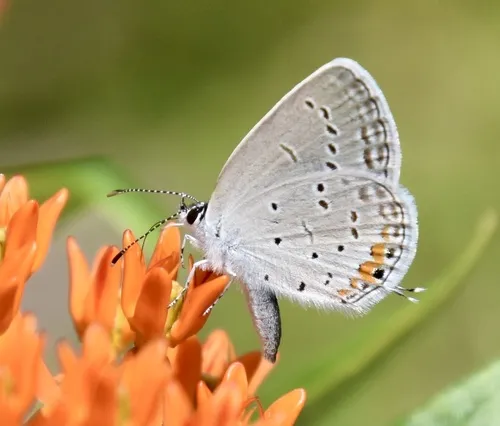
Eastern Tailed-Blue
Everes comyntas
The eastern tailed-blue or eastern tailed blue (Cupido comyntas), also known as Everes comyntas, is a common butterfly of eastern North America. It is a medium-sized butterfly that is distinguished from other blues in its range by the small thin tail
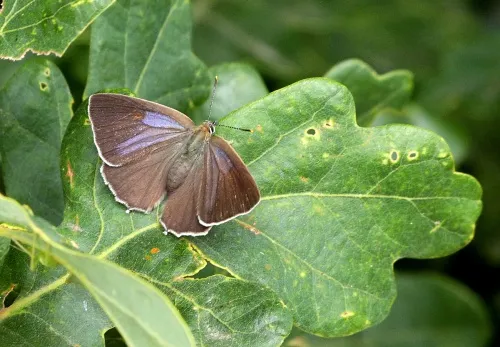
Purple Hairstreak
Favonius quercus
The Purple Hairstreak is our commonest Hairstreak but is not often noticed. Males have a purple upper wings whereas females have just a purple patch. The underwings are similar in both sexes, being lilac-brown crossed by a white 'hair-streak' and wit
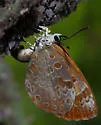
Harvester - Hodges#4249
Feniseca tarquinius
Identification: Distinctive small orange, black, and white-patterned Lycaennid. Underside, with the white circlets, is unique. (This helps it blend in with aphid colonies it visits?) Do not rub wings together like other members of this family. Flight
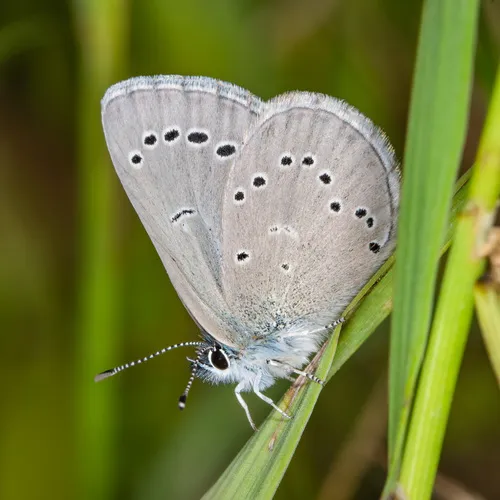
Silvery Blue
Glaucopsyche lygdamus
Glaucopsyche lygdamus, the silvery blue, is a small butterfly native to North America. Its upperside is a light blue in males and a dull grayish blue in females. The underside is gray with a single row of round spots of differing sizes depending upon
Colorado Hairstreak - Hodges#4266
Hypaurotis crysalus
Identification: Underwing is light gray and it's the only western hairstreak with a white basal stripe on the HW. Dorsal, bright purple and black with orange spots near the tail.
Confused Groundstreak - Hodges#4531.5
Kisutam syllis
Identification: First U.S. record, Mike A. Rickard First U.S. Record: along Bentsen-Palm Drive in Mission, Hidalgo Co., Texas - 2008 (Rickard, 2010)
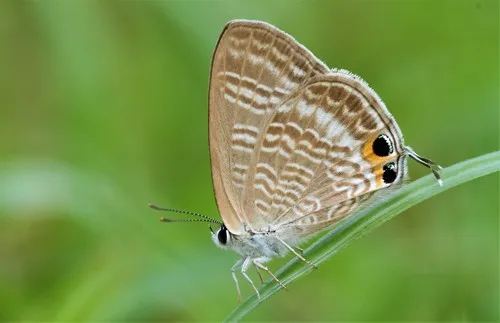
Pea Blue
Lampides boeticus
Lampides boeticus, the pea blue, or long-tailed blue, is a small butterfly that belongs to the lycaenids or gossamer-winged family.
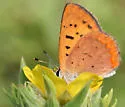
Dorcas Copper - Hodges#4261
Lycaena dorcas
Identification: Distinguished from the similar Purplish Copper ( L. helloides ) by the reduced orange band on the edge of the hindwing upperside (vs. extensive orange band in Purplish Copper), the brownish-orange underside of the wings (vs. grayish-y
Edith's Copper - Hodges#4254
Lycaena editha
Sometimes considered to be a subspecies of Lycaena xanthoides , which it replaces to the east. It is a smaller, but similar and more strongly patterned insect. Lycaena dione is again larger, with smaller spots below, and replaces this species to the
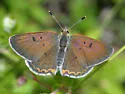
Bog Copper - Hodges#4260
Lycaena epixanthe
Identification: Resembles Dorcas and Purplish Coppers, but smaller and has paler yellowish to whitish (not orange) under side. The upper side appears "plainer", especially in males, which show fewer and mostly much smaller dark spots, while females
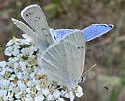
Blue Copper - Hodges#4259
Lycaena heteronea
Identification: Nearly identical to the Ruddy Copper Lycaena rubida , and pretty similar on the underside; however, males of the Blue Copper are blue instead of orange above, and females are grayish instead of brown and orange. So, confusion with ot
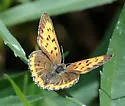
Bronze Copper - Hodges#4256
Lycaena hyllus
Identification: One of the easiest Coppers to recognize. Size is large for a Copper. Underside of all wings is scattered with prominent small rounded black spots. Front wings below are light orange, paler toward the margins; hind wings below are p
Mariposa Copper - Hodges#4264
Lycaena mariposa
Identification: Similar above to Bog, Lilac-bordered, Purplish, and Dorcas Coppers, but the margins (finges) are checkered. On the hind wing below the dark spot pattern is much stronger on a pale whitish, grayish, or brownish background; many of the
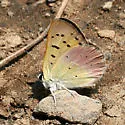
Lilac-bordered Copper - Hodges#4263
Lycaena nivalis
Identification: Similar to Dorcas, Bog, & Purplish Coppers ( Lycaena dorcas, helloides, & episanthe ). Difficult to distinguish just looking at upper side, but lower side of hind wing is distinctly yellowish toward base and pinkish or purplish on th
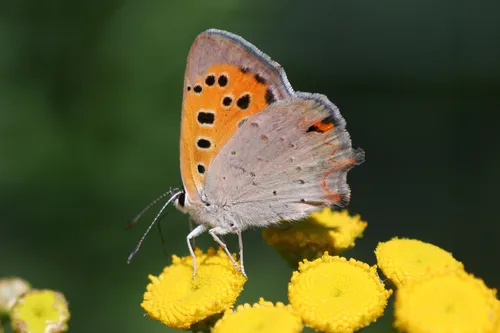
Small Copper
Lycaena phlaeas
The Small Copper is a small, fast flying butterfly that, once settled, is unmistakable with its bright copper-coloured forewings. This butterfly favours open land where nectar sources and food plant are found. Such habitats include grassland, wastela
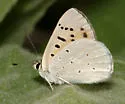
Ruddy Copper - Hodges#4257
Lycaena rubida
Identification: Perhaps the brightest orange species of Copper. Males are almost solid orange above, with a metallic sheen that may look purplish or red at certain angles. The females have a more "average" brownish pattern above with varying amount
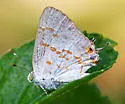
Clytie Ministreak - Hodges#4290
Ministrymon clytie
Identification: Underwing is light gray with reddish/orange markings.
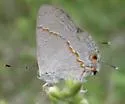
Vicroy's Ministreak - Hodges#4293.1
Ministrymon janevicroy
Identification: Most easily distinguished from Gray Ministreak - M. azia by its olive green eyes vs. azia 's black or dark brown eyes. But note that Leda Ministreak - Ministrymon leda also has green eyes, a variegated “pebbly-textured” appearance on
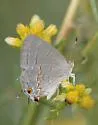
Leda Ministreak - Hodges#4291
Ministrymon leda
Identification: Dull grayish to brownish below, with dark lines usually (not always) edged in orange; with postmedian line continuous but disjointed at veins and "W"-shaped near tails on hind wing; there is a dark dash at the end of the discal cell o
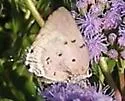
Aquamarine Hairstreak - Hodges#4294
Oenomaus ortygnus
Identification: Upperside iridescent greenish-blue with black borders in males; pale blue in females. Underside gray with an aquamarine band along the trailing edge of the hindwing. Hindwing has 3 or 4 black spots. First US records: Two individuals w
Panthiades bathildis - Hodges#4293.7
Panthiades bathildis
First US record: Zebra-striped Hairstreak , Panthiades bathildis , first seen by Jaime Villarreal at the National Butterfly Center , Mission, Hidalgo CO., Texas on 12/15/12.
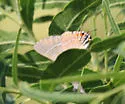
Soapberry Hairstreak - Hodges#4274
Phaeostrymon alcestis
Identification: Predominantly gray in color (females are brownish above), with tails. Very similar (in appearance and behavior) to some Satyrium species, but on underside white bar at end of discal cell is distinct on all four wings (often dark edge
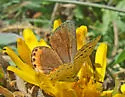
Acmon Blue - Hodges#4380
Plebejus acmon
Identification: Male distinguished from the similar Lupine Blue (called Plebejus lupini by Nearctica.com but Icaricia lupini by CBIF) by the paler blue upperside of wings, and the absence of a dark discal spot on the upperside of the hindwings.
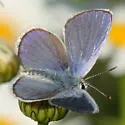
Anna's Blue - Hodges#4374.1
Plebejus anna
Identification: Distinguishable from Northern Blue - Plebejus idas only by more westerly distribution. From other blues by (usually) some marginal orange on ventral hind and front wings. No obvious dark spot on middle of upper front wings. Undersi
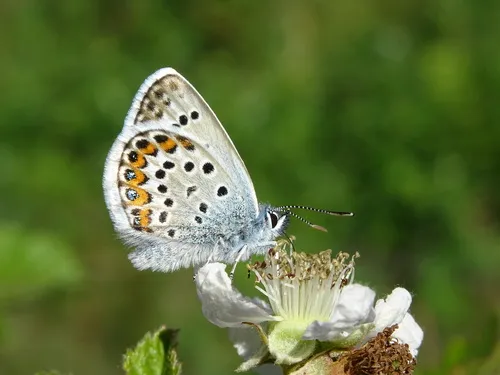
Silver-studded Blue
Plebejus argus
The silver-studded blue (Plebejus argus) is a butterfly in the family Lycaenidae. It has bright blue wings rimmed in black with white edges and silver spots on its hindwings, lending it its name. P. argus can be found across Europe and east across th
Northern Blue - Hodges#4374
Plebejus idas
Identification: Distinguishable from Anna Blue - Plebejus anna only by more easterly distribution. From other blues by (usually) some marginal orange on ventral hind and front wings. No obvious dark spot on middle of upper front wings of males. In
Melissa Blue - Hodges#4375
Plebejus melissa
Identification: Adult: above, female brown with blue tinge; male blue with narrow dark border. Red-orange submarginal row is continuous. In the eastern subspecies samuelis (Karner Blue) this row is divided into separate spots. Below, continuous black
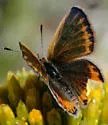
Veined Blue - Hodges#4382
Plebejus neurona
Same coloration on top in both sexes. This species is considered threatened throughout its range (G3 global ranking)
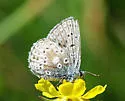
Sierra Blue - Hodges#4384.1
Plebejus podarce
Identification: This is a Sierran representative of Plebejus glandon and distinction of the two is difficult if not impossible from photographs alone. P. podarce tends to have more white on the underside. Species distinction seems dubious, but it is
Shasta Blue - Hodges#4379
Plebejus shasta
includes the federally endangered Mount Charleston blue butterfly ( Icaricia shasta charlestonensis )
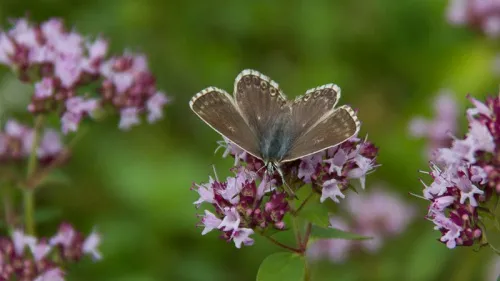
Chalk Hill Blue
Polyommatus coridon
The sexes are strongly dimorphic; the males being a pale sky blue, and the females being a chocolate brown. Chalk and limestone grassland. This species lives in discrete colonies where its foodplant, Horseshoe Vetch, is found in abundance. It is also
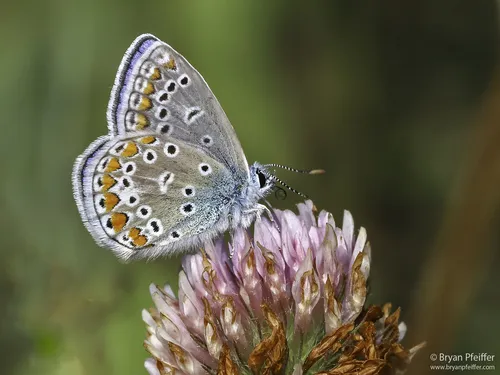
Common Blue
Polyommatus icarus
This is a small, delicate looking butterfly. The male has bright blue upper sides and the female is primarily brown, with a highly variable amount of blue. This species is found in a wide variety of habitats, including unimproved grassland such as ro
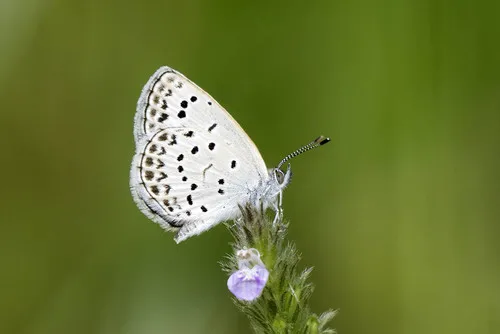
Pale Grass Blue
Pseudozizeeria maha
Pseudozizeeria maha, the pale grass blue, is a small butterfly found in Asia that belongs to the lycaenids or blues family.
Gold-bordered Hairstreak - Hodges#4297
Rekoa palegon
Identification: Underwings are pale gray-brown with streaks of darker brown, sometimes reddish, and a wide golden-orange band along the edge. Upperwings are bright blue in males, pale blue-gray to brown in females.
Smudged Hairstreak - Hodges#4617.1
Rekoa stagira
Melinaea lilis (Doubleday, 1847), reported from Hidalgo County, TX 12/20/2008, 2008 Season Summary, News Lepid. Soc., 51(S1):78, is not recognized universally as part of the North American fauna north of Mexico. The Hildalgo Co. record may be part of
Acadian Hairstreak - Hodges#4278
Satyrium acadicum
Generally considered to be uncommon, but can be quite abundant in some regions and in some years, always in close association with Willows. Adults rarely wonder far from their larval host Willows.
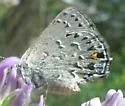
Behr's Hairstreak - Hodges#4276
Satyrium behrii
Identification: A tailless gray hairstreak, with black submarginal and postmedian spots edged in white. Only a touch of orange above the large black spot on lower trailing edge of HW.
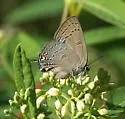
Edwards' Hairstreak - Hodges#4281
Satyrium edwardsii
Identification: Adult: dark brown above, sometimes with an orange spot above the tail. The underside is pale brown. It is best distinguished from most similar hairstreaks by the row of white-rimmed rounded spots on the undersides (in some specimens,
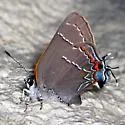
Oak Hairstreak - Hodges#4331
Satyrium favonius
Identification: Adult: upperside dark brown with dim orange spot near outer margin of forewing, and brighter orange spot near outer margin of hindwing between tails; underside light grayish-brown with jagged black and white line forming a W shape nea
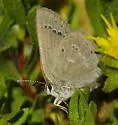
Western Sooty Hairstreak - Hodges#4277
Satyrium fuliginosum
Identification: Tailless, dorsal drab gray, underwing grayish to brown, with the FW usually having a line of dark dots circled in white, and the HW can have some whitish dots. Distinction from S. semiluna as a distinct species from S. fuliginosa is d
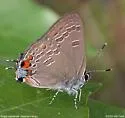
King's Hairstreak - Hodges#4284
Satyrium kingi
There does not seem to be much information available about H.L. King. He appears to have been an amateur lepidopterist, but I have been unable to find any biographical information. The original species description is clear that King lived in Sarasota
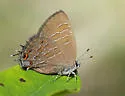
Striped Hairstreak - Hodges#4285
Satyrium liparops
Identification: Two tails, one short, one long. Underwing brown to gray, with many white lines. Blue patch topped in orange, with several other smaller orange spotsalong trailing edge of the wing.
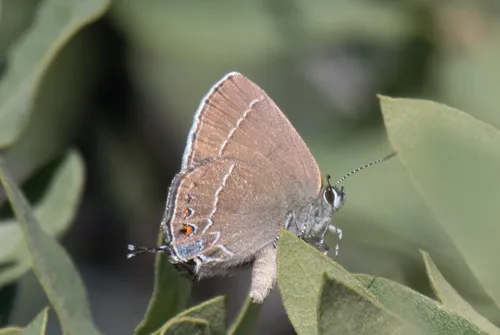
Poling's Hairstreak - Hodges#4333
Satyrium polingi
Identification: Hindwing fringe is dark. Hindwing blue spot without orange cap or capped narrowly with orange. Strong "W" on hindwing post median band or described as black-edged white W near inner margin. Two tails on each hindwing. Dorsal side is d
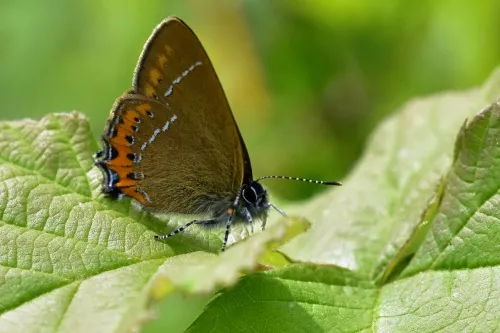
Black Hairstreak
Satyrium pruni
The underwings are brown with a tinge of gold and the borders are orange, with a row of black spots, a white streak down each wing and small tails. The upperwings are only ever visible in flight (the butterfly always settles with its wings closed) an
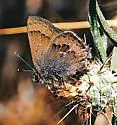
Hedgerow Hairstreak - Hodges#4288
Satyrium saepium
Identification: Underwing brown with dark postmedian band, often with pale cell end bars, blue patch near tail, and no orange.
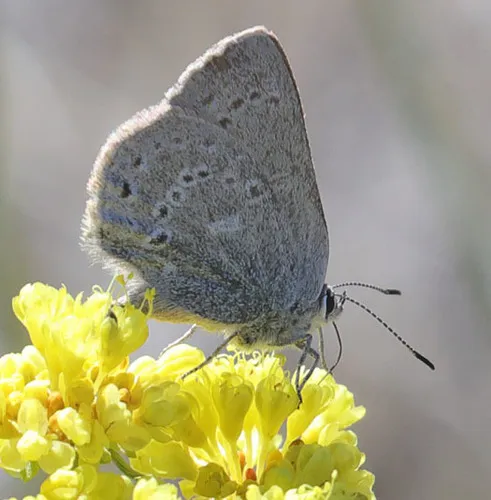
Sagebrush Sooty Hairstreak - Hodges#4277.1
Satyrium semiluna
Identification: Tailless, dorsal drab gray, underwing grayish to brown, with the FW usually having a line of dark dots circled in white, and the HW can have some whitish dots. Distinction from S. fuliginosum as a distinct species is debated, and need
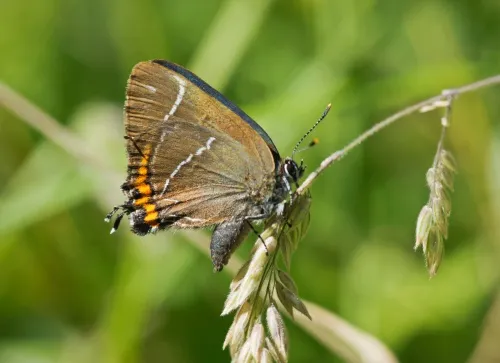
White-letter Hairstreak
Satyrium w-album
This butterfly gets its name from the letter "W" that is formed from a series of white lines found on the underside of the hindwings. Elm is the sole foodplant especially Wych Elm. This species suffered as a result of Dutch Elm disease in the 1970s a
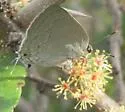
Pearly-gray Hairstreak - Hodges#4293.5
Strephonota tephraeus
Identification: Underside pale gray with less conspicuous bands than most similar hairstreaks. Upperside iridescent blue with a conspicuous brown spot in the center of the male's forewing. First U.S. Record: Penitas, Hidalgo Co., Texas - 1972
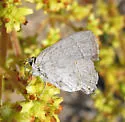
Avalon Hairstreak - Hodges#4337
Strymon avalona
Closely similar to the Gray Hairstreak ( Strymon melinus ), but usually with the ground color of the wings below lighter beyond the median dark line than is the rest of the wings (giving a two-tone effect); usually with the black and orange eye spot
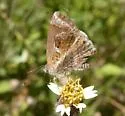
Lantana Scrub-Hairstreak - Hodges#4348
Strymon bazochii
Identification: Tailless, gray eyes, top of HW forms a sharp angle, brown with some dark brown and white markings.
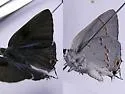
Big Bend Scrub-Hairstreak - Hodges#4292.2
Strymon solitario
Type Locality: TEXAS: Brewster Co., Big Bend National Park, ca. 2 miles west of Boquillas Canyon. Per Grishin & Durden (2012), the holotype locality is "a limestone hill immediately to the north of the paved park road leading to Boquillas Canyon, ca.
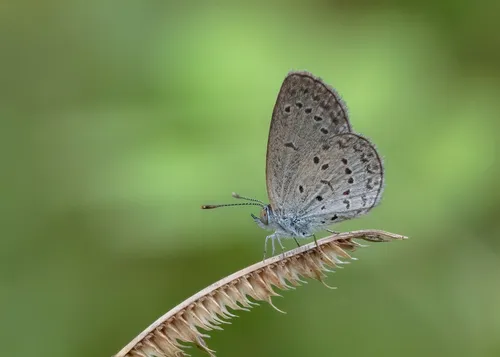
Lesser Grass Blue
Zizina otis
Zizina otis, the lesser grass blue, is a species of blue (Lycaenidae) butterfly found in south Asia. The lesser grass blue is often misidentified as Zizina labradus, the common grass blue.
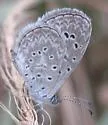
Cyna Blue - Hodges#4355
Zizula cyna
Identification: When alive the eyes of Zizula are gray. They are black in our other Blues (except for Brephidium ), as well as in most other Lycaenidae. Holds antennae with ends curved down (most Blues hold them approximately straight or even slight
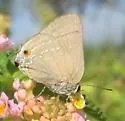
Strophius Hairstreak - Hodges#4329.1
Allosmaitia strophius
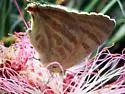
Creamy Stripe-streak - Hodges#4330
Arawacus jada
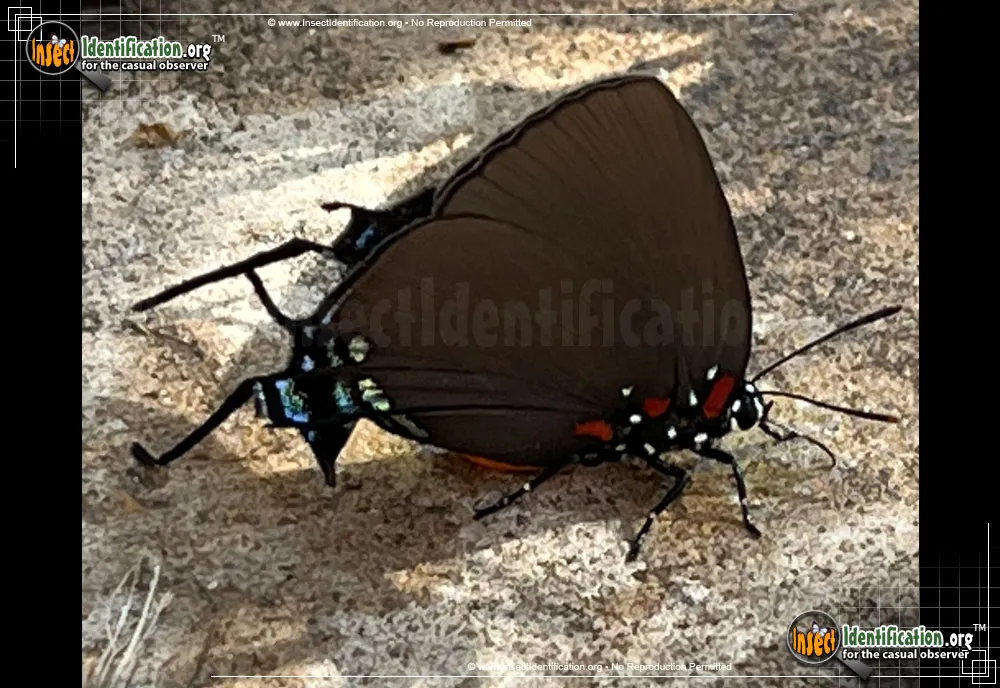
Great Purple Hairstreak
Atlides halesus
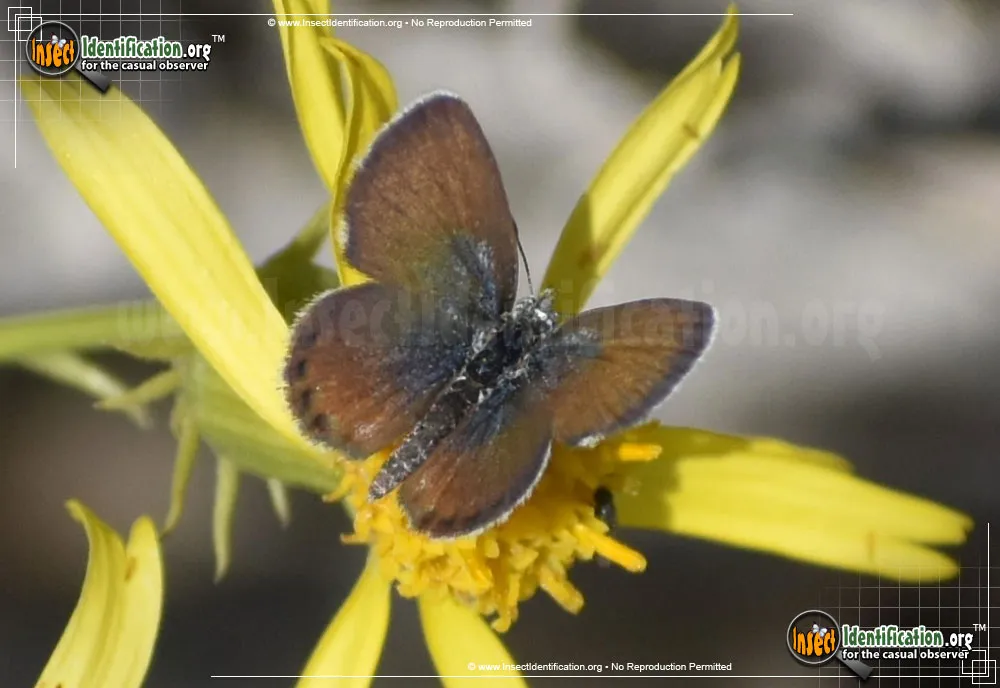
Western Pygmy-Blue Butterfly
Brephidium exile
Eastern Pygmy-Blue - Hodges#4354
Brephidium pseudofea
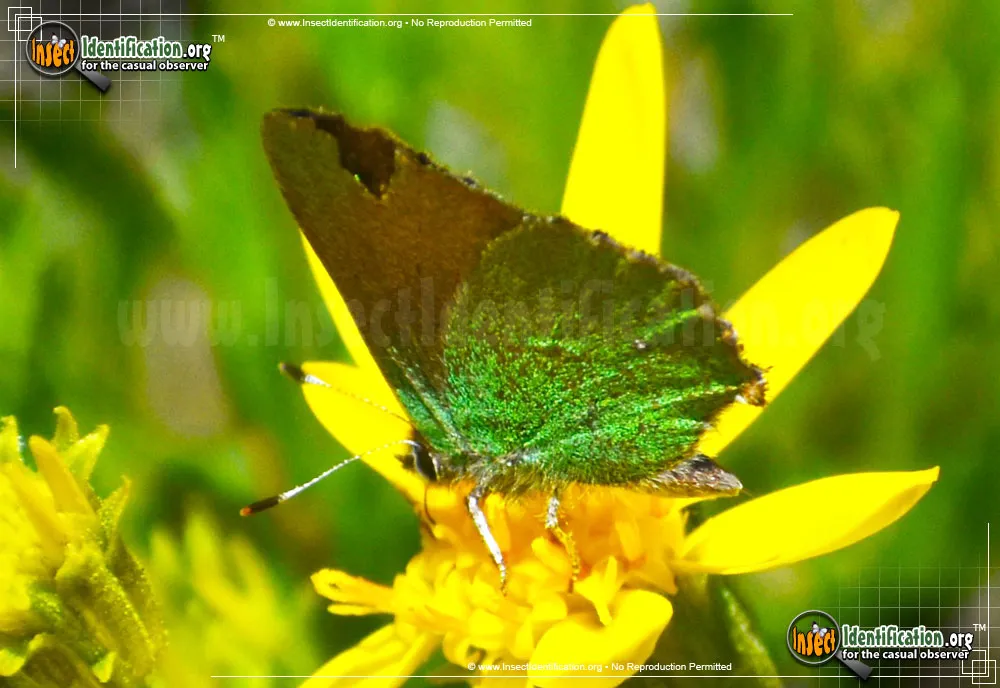
Lotus Hairstreak Butterfly
Callophrys dumetorum
Desert Elfin - Hodges#4323
Callophrys fotis
Henry's Elfin Butterfly
Callophrys henrici
Moss's Elfin - Hodges#4323.1
Callophrys mossii
Xami Hairstreak - Hodges#4320
Callophrys xami