
Family Casebearing Moths (Coleophoridae)
Coleophoridae is a family in the order Lepidoptera. Browse 96 named species recorded in this family, or open an individual profile for its available identification and natural-history information.
Species in Coleophoridae (96)
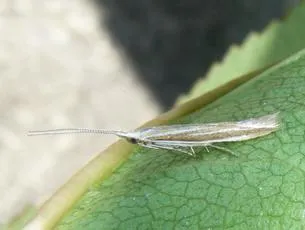
Coleophora albicosta
Coleophora albicosta
Wingspan about 14 mm. The scientific name of this species is derived from the whitish streak along the costa, or forewing edge. Flying by day, but also sometimes coming to light at night, the adults are on the wing from May to July. The larva feeds o
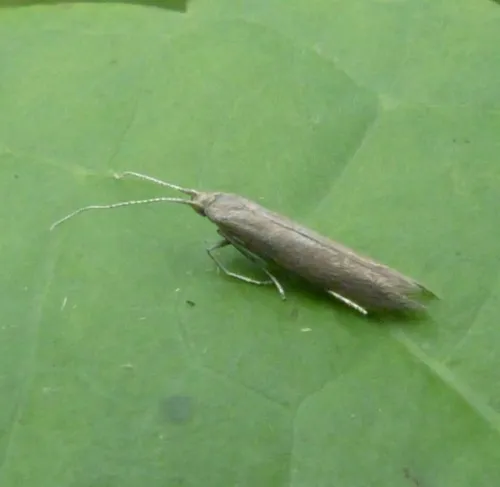
Coleophora albitarsella
Coleophora albitarsella
Wingspan 10 to 13 mm. This grey winged moth resembles several others in the genus Coleophora, but the white tarsus on each leg (hind two pairs only on female) is conspicuous on live specimens. More reliable identification depends on examination of th
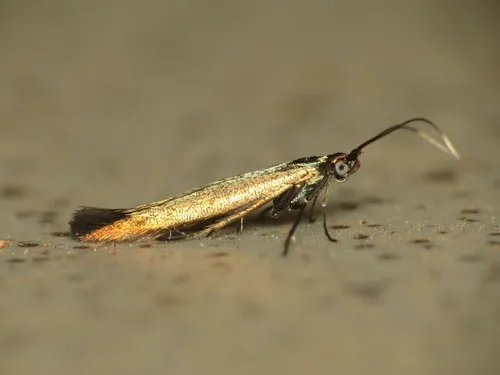
Clover Case-bearer
Coleophora alcyonipennella
Wingspan around 12 mm. The species bears a close resemblance to other members of the genus. In sunlight he wings have a purple-red metallic sheen and the antennae whiten slightly towards the tips. It frequents rough grassy habitats where the main foo
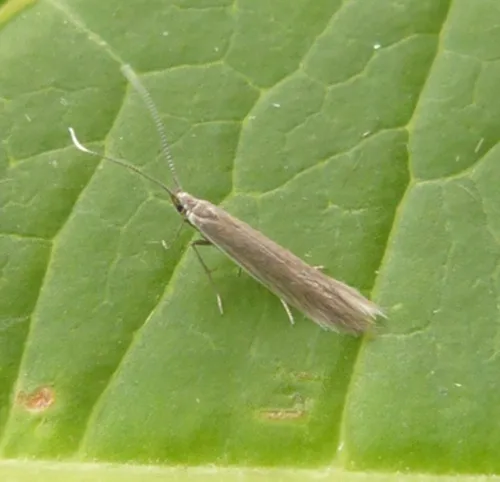
Coleophora alticolella
Coleophora alticolella
Wingspan 10 to 12 mm. The adults resemble several other Coleophora species, dissection required to confirm ID. The larva feeds on Juncus rush species including Soft-rush, Hard Rush and Compact Rush. Occurring wherever Juncus rush species grow and see
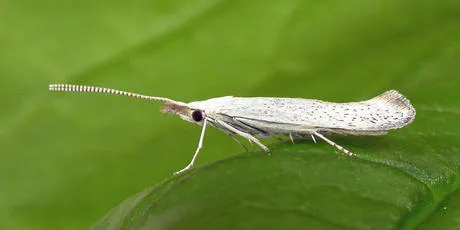
Pistol Case-bearer
Coleophora anatipennella
Wingspan 12 to 16 mm. This 'Pistol Case-bearers' are so named from the resemblance of their larval cases to an old flintlock pistol in shape. The adult moth is whitish with a few brownish speckles. Larval stage: photograph the case and feeding patter
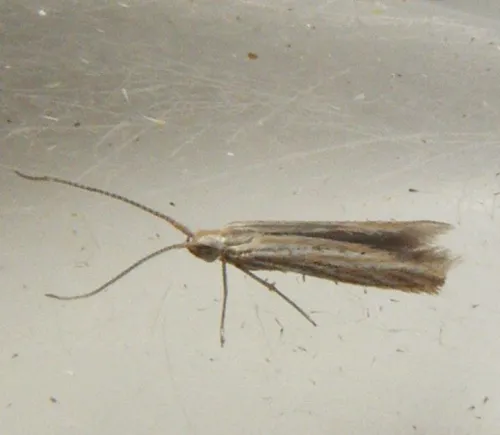
Coleophora argentula
Coleophora argentula
Wingspan 9.5 to 13 mm. This moth is similar to some other Coleophora species and gen det is necessary for identification. The larva feeds in the flowers of Yarrow or Sneezewort. Photograph the cased larva on the flower head; note host species in comm
Coleophora asterophagella - Hodges#1266
Coleophora asterophagella
Identification: Specimen identified by DNA analysis (BOLD). ( 4 )
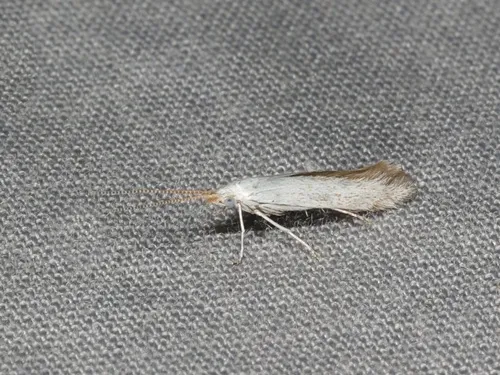
American Pistol Casebearer Moth
Coleophora atromarginata
The American pistol casebearer moth (Coleophora atromarginata) is a moth of the Coleophoridae family. It is found in North America, including Ohio, Maryland, Massachusetts and New Brunswick.
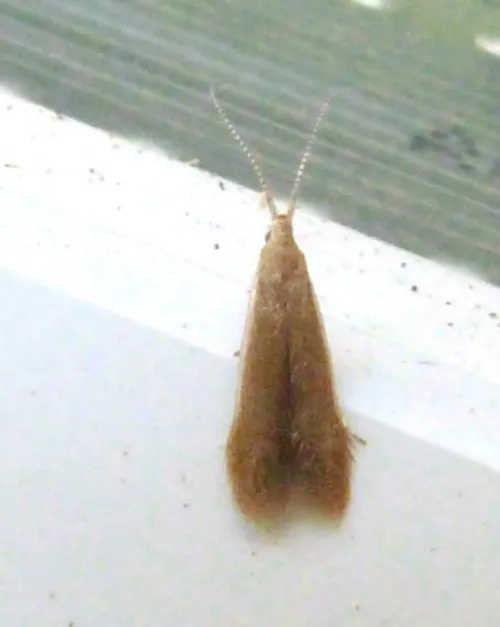
Coleophora badiipennella
Coleophora badiipennella
Wingspan 9 to 11 mm. One of the plain reddish brown Coleophora species. The larva mines Elm leaves, starting with a narrow gallery running from the mid-rib along a side vein. This ends in a roughly oval/rounded rectangular excision (c.6mm long) out o
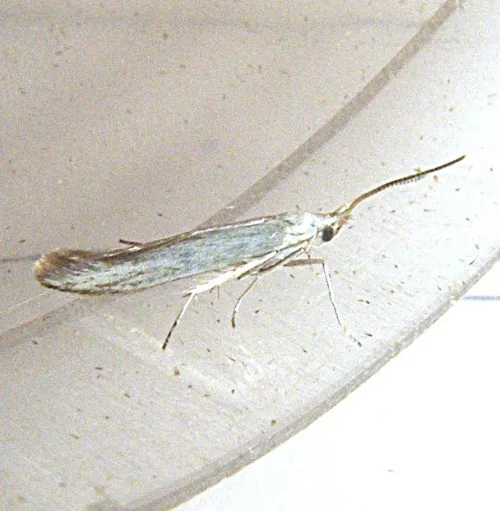
Coleophora betulella
Coleophora betulella
Wingspan 10 to 15 mm. This species has a relatively plain whitish form as well as a yellowish-streaked form. Occupies heathy habitats where the foodplant grows. Feeding on Birch (Betula) leaves, the larvae of this species create a distinctive 'pistol
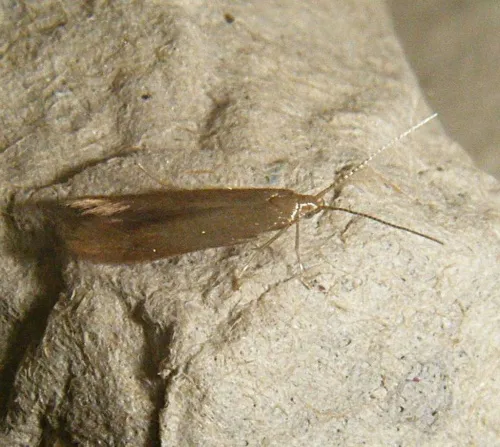
Coleophora binderella
Coleophora binderella
Wingspan 8 to 12 mm. As with most Coleophora species gen det is required for species id. Wooded areas where the foodplants occur. The eggs of this species are laid on the underside of leaves of Alder, Hazel, Birch or Hornbeam. The larva creates its c
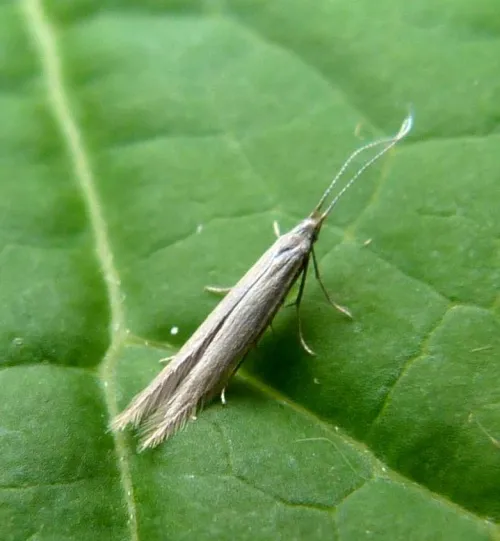
Coleophora caespititiella
Coleophora caespititiella
Wingspan 8 to10 mm. The adults resemble several other Coleophora species, and are most reliably identified by dissection of the genitalia. It flies mid May to June at dusk and night. At the larval stage it can be distinguished from other Juncus feede
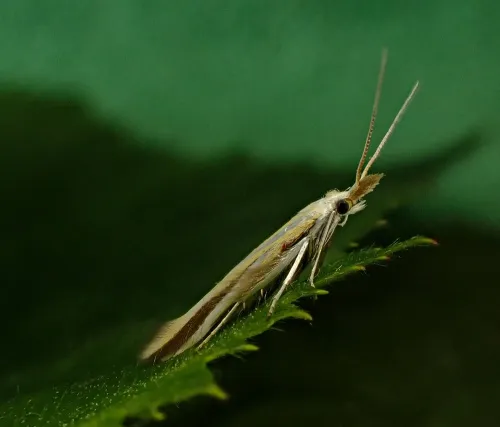
Coleophora conspicuella
Coleophora conspicuella
Wingspan 13 to 17.5 mm. The adults are yellowish-brown with distinctive white streaks. There are many similar Coleophora species and gen det is necessary to identify them to species. The larva feeds on the leaves of Knapweed species. Adults should be
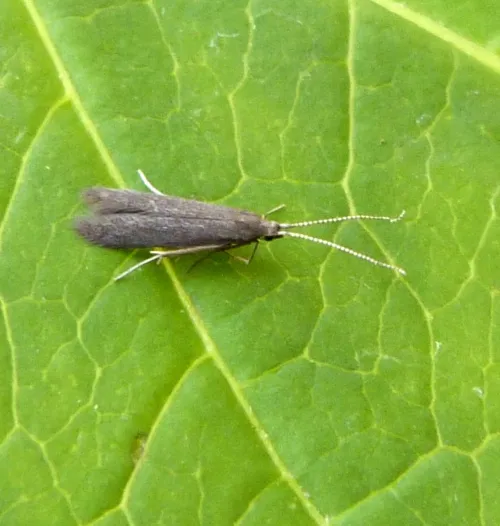
Coleophora coracipennella
Coleophora coracipennella
Wingspan 8.5 to11.5 mm. This is a dark, fuscous species. Dissection is needed to confirm the identity of this moth as it may be confused with other Coleophora species. Areas where the larval foodplants occur. Adults emerge in a single generation from
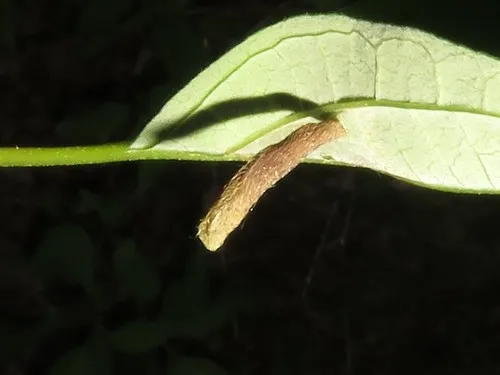
Coleophora cornella - Hodges#1297
Coleophora cornella
Coleophora cornella is a moth of the Coleophoridae family. It is found in the United States, including New York and California.
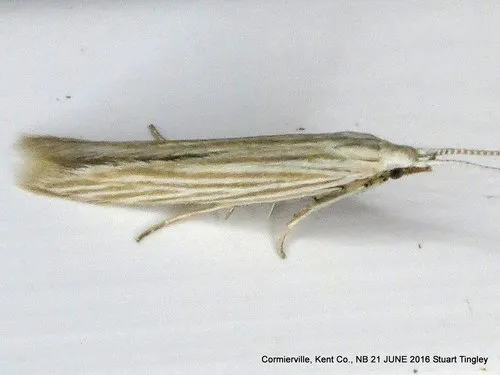
Streaked Coleophora Moth
Coleophora cratipennella
The streaked coleophora moth (Coleophora cratipennella) is a moth of the Coleophoridae family. It is found in the United States, including Kentucky, Pennsylvania, California, Maine and Oklahoma.
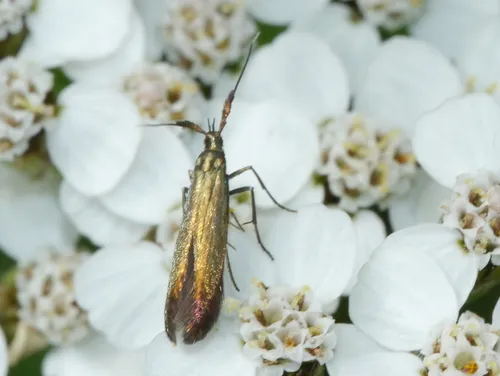
Coleophora deauratella
Coleophora deauratella
Wingspan around 11mm. One of several British species of Coleophora with bronzy metallic forewings and gen det is recommended for id purposes. Grassy areas where Red Clover is present. The adults fly during June and July and can be attracted to light.
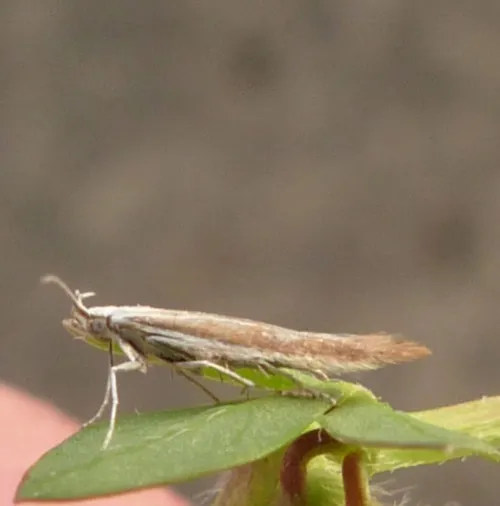
Coleophora discordella
Coleophora discordella
Wingspan 11 to 13 mm. The adult is a buff or brown colour with a white costal streak and some other smaller white streaks. Places where bird's-foot-trefoil species are plentiful. The larva feeds on bird's-foot-trefoil (Lotus spp.), building a pistol-
Coleophora fagicorticella - Hodges#1380
Coleophora fagicorticella
Identification: The original description as Coleophora fagico s ticella Chamber, is available online in the print references below. Specimen identified by DNA analysis (BOLD). ( 3 ) Genitalia:
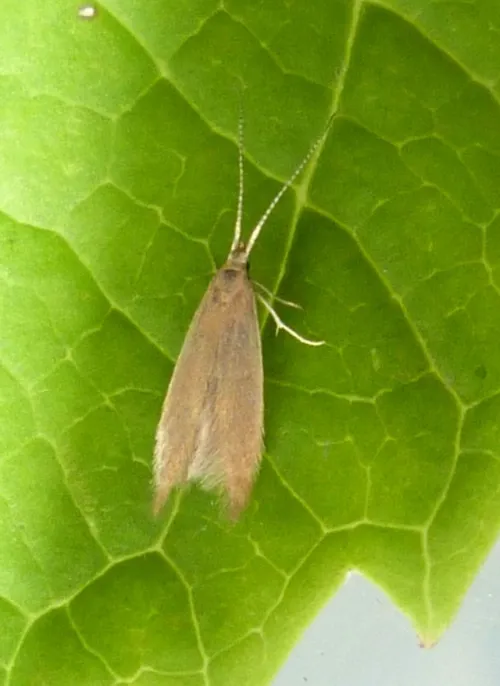
Coleophora flavipennella
Coleophora flavipennella
Wingspan 11 to 13 mm. Another brown, rather nondescript species, which is most easily identified as an adult by reference to the genitalic structure as it is quite similar to some other Coleophora species. The cased larva feed on oak. The young overw
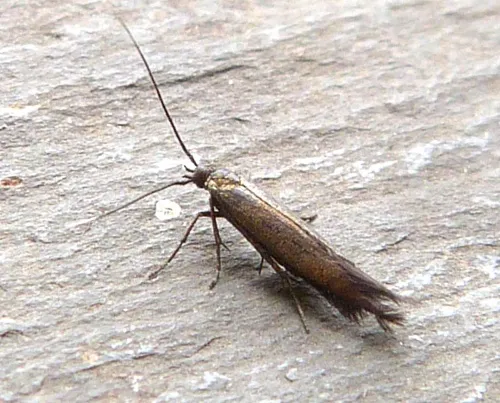
Coleophora frischella
Coleophora frischella
Wingspan 11.5 to 14.5 mm. In certain lights this species shows the same brassy metallic look as other family members. Almost identical to Coleophora alcyonipennella . These two species are not separable with certainty using external features so ident
Coleophora glaucella - Hodges#1305
Coleophora glaucella
Identification: The original description of Coleophora glaucella Walsingham, is available online in the print references below.
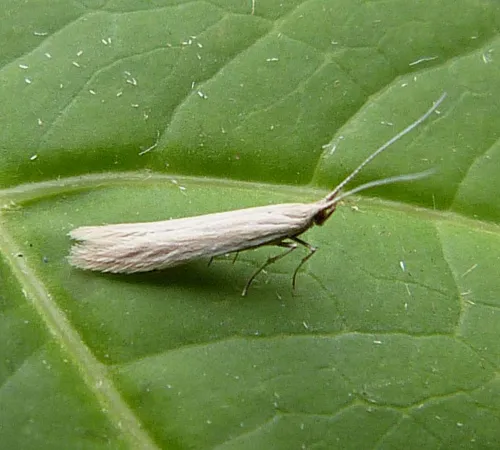
Coleophora glaucicolella
Coleophora glaucicolella
Wingspan 10 to 12 mm. The adults resemble several other Coleophora species, dissection required to confirm ID. To be found close to areas with Juncus species of rush. It is often abundant on salt marshes. Flight period June to August at sunrise, dusk
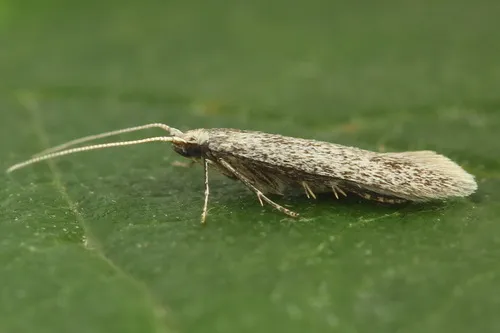
black-stigma case-bearer
Coleophora hemerobiella
The fruit tree case moth (Coleophora hemerobiella) is a moth of the Coleophoridae family. It is found in western Europe, except Ireland and the Iberian Peninsula.
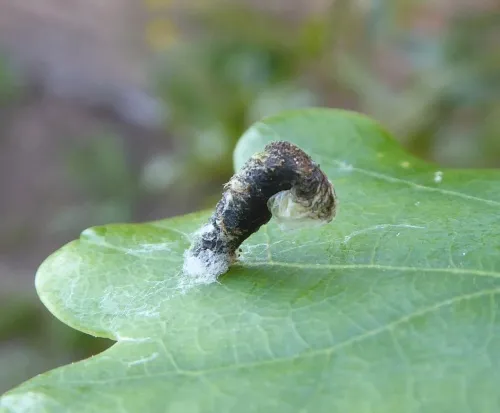
Coleophora ibipennella
Coleophora ibipennella
Wingspan about 12 mm. The adults have white forewings and are similar to a number of other species, with only subtle differences in size and patterning in the forewing cilia to help distinguish them. The larvae of this species, which feed on Oak, cre
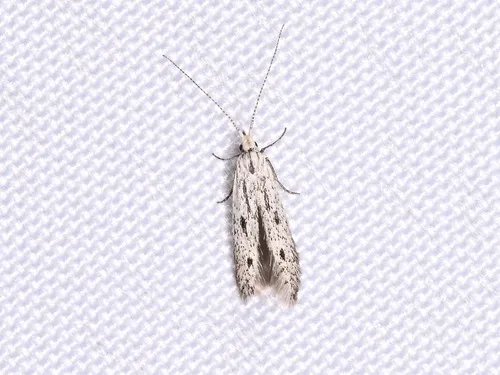
Coleophora irroratella - Hodges#1309
Coleophora irroratella
Identification: Walsingham original description: "Palpi greyish fuscous, whitish on their inner sides, not tufted. Antennae with a slight tuft beneath the basal joint (which with the head is dirty whitish), the stem distinctly annulated with brown an
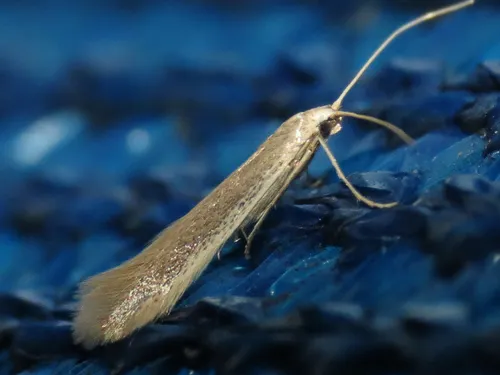
Russian Thistle Casebearer
Coleophora klimeschiella
The Russian thistle casebearer (Coleophora klimeschiella) is a moth of the Coleophoridae family. It is native to Asia Minor and central Asia, but has been introduced to California, Texas and Hawaii.
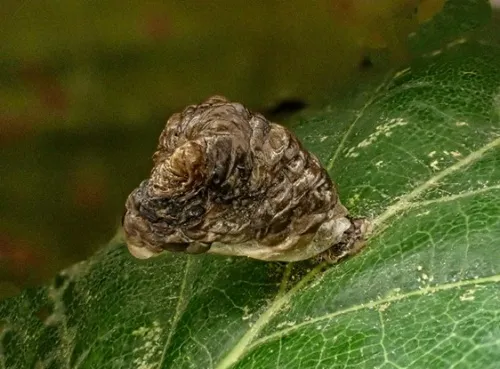
Coleophora kuehnella
Coleophora kuehnella
Wingspan between 14 and 17 mm. Adult moths are white with some indistinct darker markings towards the wing tip. The larva mines the leaves of Oak. Adult: Unless identified by a recognised expert, a photo is required, and the specimen should be examin
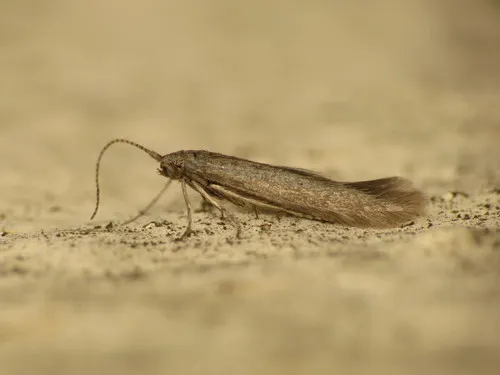
Larch Case-bearer
Coleophora laricella
Wingspan 8 to10 mm. This is quite a dark species. Photograph the cased larva on host; note host species in comments The adults fly in June and July and are attracted to light. The larvae feed on the needles of European Larch. When occurring in large
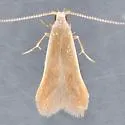
Pecan Cigar Casebearer - Hodges#1291
Coleophora laticornella
Identification: Genitalia: ♀ ♂ Larvae construct spatulate leaf cases. Jean-François Landry, a noted expert on Coleophora, says it is impossible to identify adults of this species without dissection or DNA barcoding.
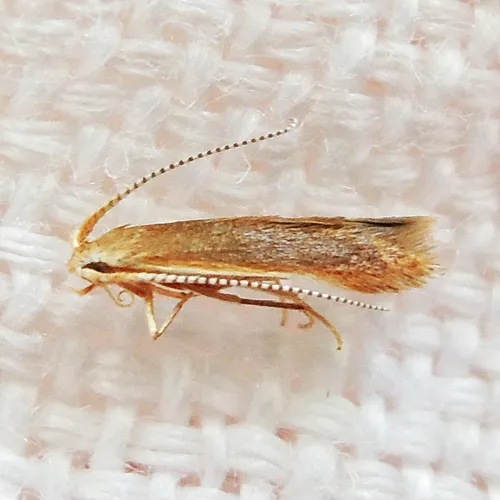
dark elm case-bearer
Coleophora limosipennella
Coleophora limosipennella is a moth of the Coleophoridae family described by Philogène Auguste Joseph Duponchel in 1843. It is found in Europe from Fennoscandia to the Pyrenees, Italy and the Balkan Peninsula and from Great Britain to the Baltic Stat
Coleophora lineapulvella - Hodges#1349
Coleophora lineapulvella
Identification: Adult : Basal half of antennae thickened with scales ● palpi tuffed ● FW white, faintly tinged with ochreous yellow ● dorsal margin and apex of the primaries more distinctly yellowish ● two rather indistinct ochreous yellow lines begi
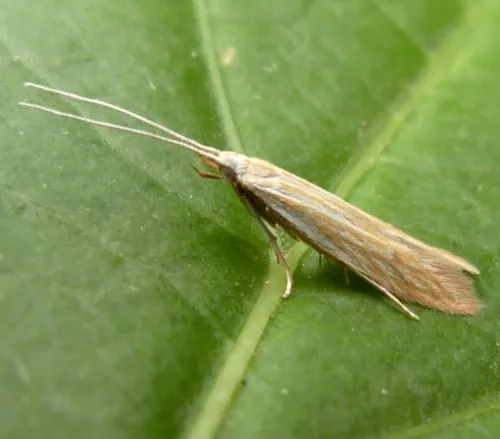
Coleophora lineolea
Coleophora lineolea
Wingspan 11 to 14.5 mm. The adult moth has yellowish ochre veins. Around its preferred food plants, black horehound and hedge woundwort but it is occasionally found on other Labiates. The adult flight period is from late June to August, sometimes com
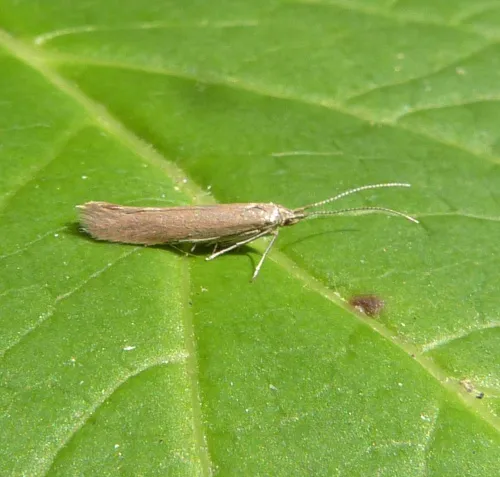
Coleophora lusciniaepennella
Coleophora lusciniaepennella
Wingspan 10 to 13.5mm. The adult moth is rather long and thin in shape and brown in colour. The larvae feed on Sallows (and on Bog Myrtle in other areas of the British Isles). The larva forms a composite case of three leaf fragments sealed together i
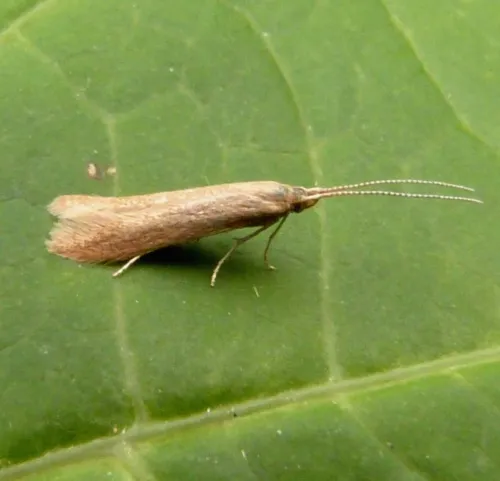
Coleophora lutipennella
Coleophora lutipennella
Wingspan 10 to12mm. This species is reddish brown in colour. Coleophora flavipennellla also feeds on oak; the larval cases are very similar Most common near to well wooded areas containing oak, but may be encountered almost anywhere. The adult moths
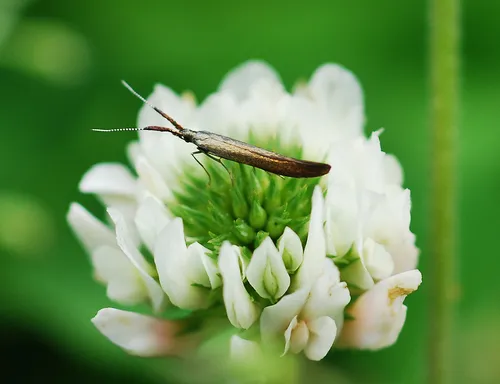
Coleophora mayrella
Coleophora mayrella
Wingspan 10-12 mm. The adults have a bronzy or greenish metallic sheen and the whitish antennae are thickened near the base. It frequents grassy areas and waste ground June and July is the main flight period. Adults fly during the day as well as afte
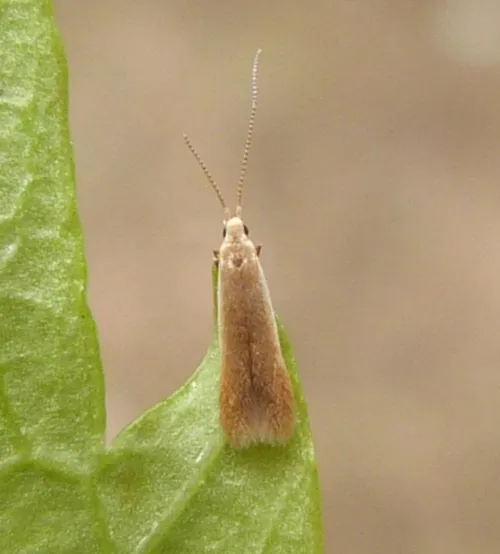
Coleophora milvipennis
Coleophora milvipennis
Wingspan 11 to13mm. The adult moths have buff to ochreous forewings with a whitish streak along the costa. Similar to a number of other Coleophora species, and gen det is necessary for an accurate id. The larves makes a flattened case, often with ser
Coleophora nigrostriata - Hodges#1355
Coleophora nigrostriata
Identification: The original description of Coleophora nigrostriata Walsingham, is available online in the print references below.
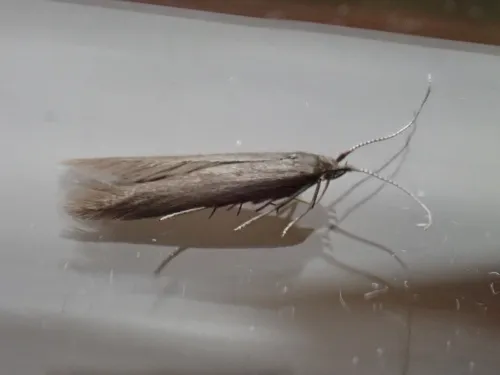
Coleophora orbitella
Coleophora orbitella
Wingspan 10.5 to 14mm. Adults resemble other Coleophora species, so genitalia identification is required. A number of other Coleophora species are similar. Adult: Determination by genitalia examination (gen. det.) required. Cased larva - good quality
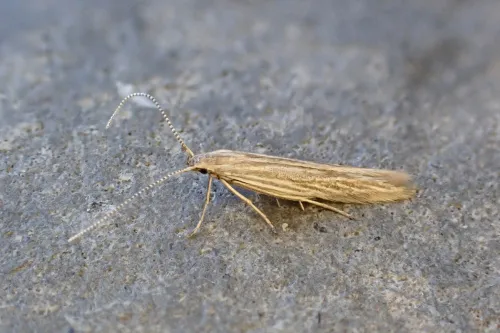
Coleophora otidipennella
Coleophora otidipennella
Wingspan about 12mm. A small Coleophorid, having a greyish appearance streaked with whitish-cream. Adults recorded to light or netted by day will need to be confirmed via dissection. The larva feeds on the seeds of Wood-rush (Luzula) species, forming
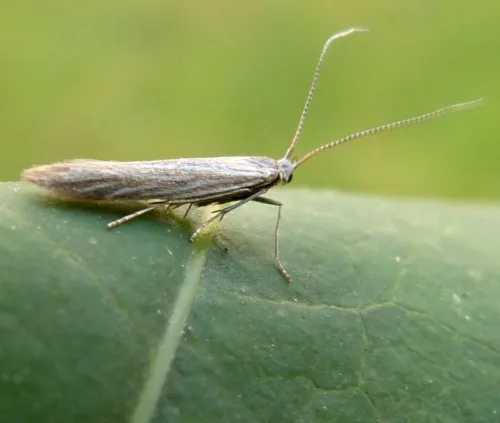
Coleophora peribenanderi
Coleophora peribenanderi
Wingspan 12.5 to 15 mm. The cased larva feeds on the leaves of Thistle species thistle (Carduus or Cirsium). In areas where the larval foodplants are plentiful. The larva of this moth forms a case, approximately 11-12 mm long, beneath a thistle (Card
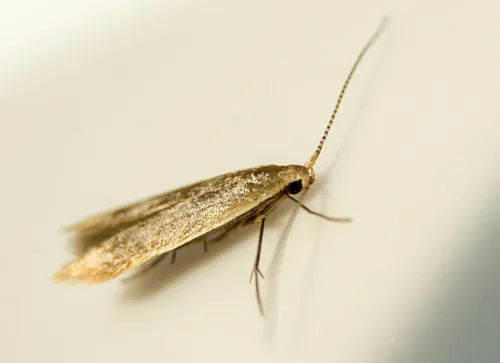
cherry casebearer
Coleophora pruniella
The cherry casebearer moth (Coleophora pruniella) is a moth of the Coleophoridae family. It is found in North America, including New York, Oklahoma, Utah, Ontario and British Columbia.
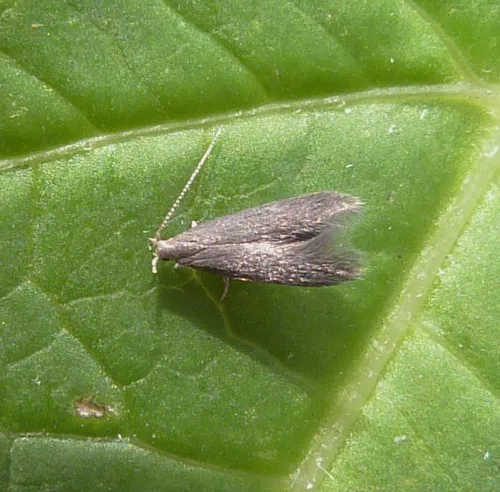
Coleophora prunifoliae
Coleophora prunifoliae
Wingspan 10 to 12 mm. A mid grey coloured moth which is externally very similar to a number of other Coleophorids and is only safely identified by dissection. Areas where the larval foodplants occur. The larval foodplants are blackthorn, apple and dw
Coleophora quadruplex - Hodges#1350
Coleophora quadruplex
Identification: Genitalia: Larvae construct trivalved tubular silk cases.
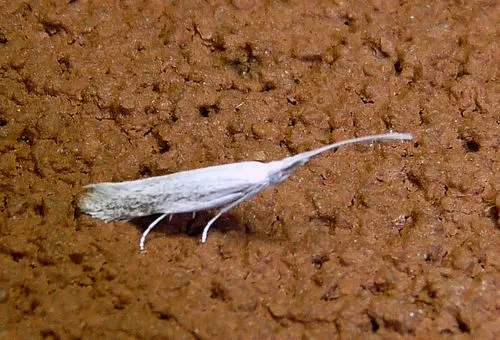
Coleophora querciella - Hodges#1261
Coleophora querciella
Coleophora querciella is a moth of the Coleophoridae family. It is found in North America, including Oklahoma, Pennsylvania and Canada.
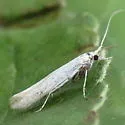
Coleophora sacramenta - Hodges#1255
Coleophora sacramenta
Coleophora sacramenta - Hodges#1255 (Coleophora sacramenta) is a species in the family Coleophoridae, commonly known as casebearer moths, belonging to the order Lepidoptera (Butterflies and Moths). It is classified within the subfamily Coleophorinae,
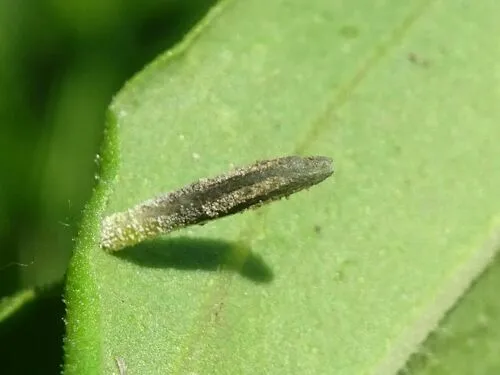
Coleophora saponariella
Coleophora saponariella
Coleophora saponariella is a moth of the family Coleophoridae. It is found from Sweden to Portugal and Italy and from France to Poland and Romania.
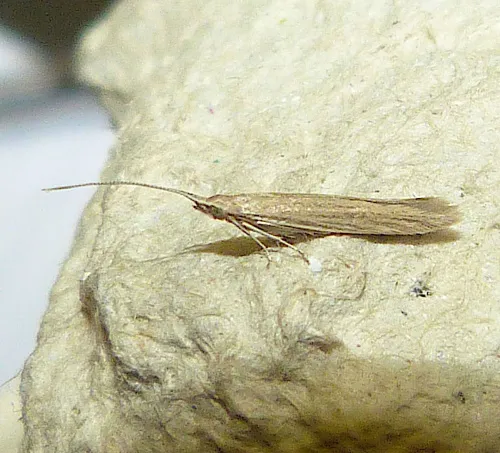
Coleophora saxicolella
Coleophora saxicolella
Most likely to be seen in areas where the larval foodplants occur. The eggs of this species are laid on the florets of goosefoot (Chenopodium) and orache (Atriplex). The larva makes a silken case, 6-7mm long when fully formed. Pupation occurs in the
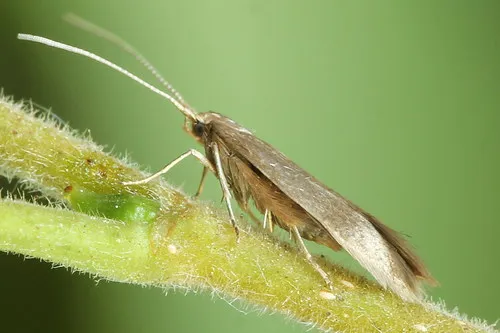
Coleophora serratella
Coleophora serratella
Wingspan 11-14 mm. This is probably the commonest species of British Coleophorids and is found throughout the British Isles wherever its food plants grow. The adult, which appears in June, resembles several other grey-brown Coleophora species. The in

Apple & Plum Case-bearer
Coleophora spinella
Wingspan 10 to 12 mm. One of the grey Coleophoras. This species can only be definitely separated as an adult by reference to the genitalia, from the very similar C. coracipennella and C. prunifoliae. In areas where the larval food plants occur. The l
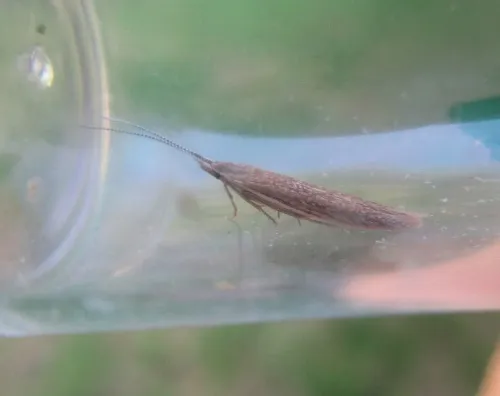
Coleophora sternipennella
Coleophora sternipennella
Wingspan about 13 mm. One of many similar Coleophora species that require dissection to identify to species level. Please provide a photograph. Determination by genitalia examination (gen. det.) required to confirm records to full species. Waste and
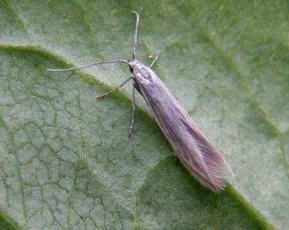
Coleophora striatipennella
Coleophora striatipennella
Wingspan about12 mm. They resemble other striated Coleophora species, so genitalia identification is recommended. Wingspan about12 mm. They resemble other striated Coleophora species, so genitalia identification is recommended. The adults are on the
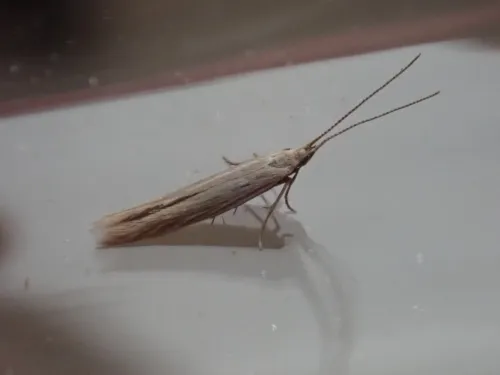
Coleophora taeniipennella
Coleophora taeniipennella
This moth is found in damp habitats and is associated with various Juncus species, most commonly Jointed Rush and Sharp-flowered Rush. The adult moths fly in a single generation in June and July. The larvae feed on the seeds of Juncus species and cre
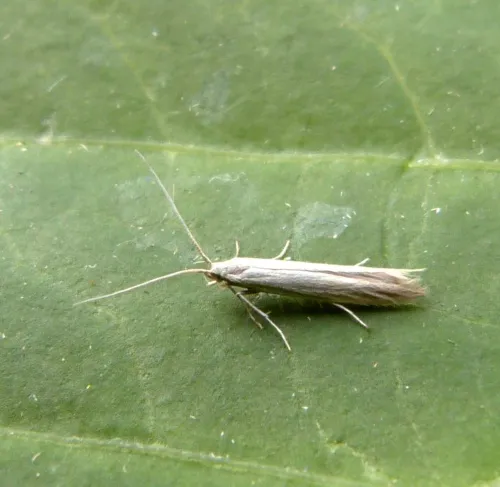
Coleophora tamesis
Coleophora tamesis
Wingspan 11 to 14 mm. As with most Coleophora species gen det is required for species id. Damp places where Jointed Rush is present. The eggs of this species are laid on the florets of Jointed Rush. The larva forms a case from silk and the remains of
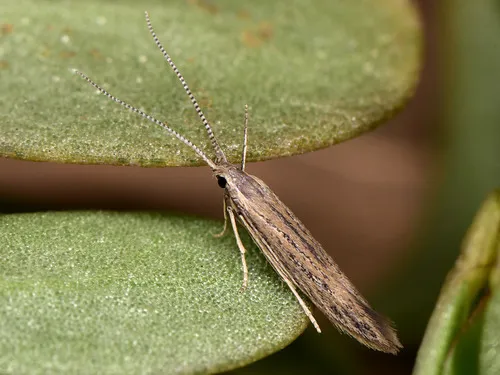
Coleophora texanella - Hodges#1336
Coleophora texanella
Coleophora texanella is a moth of the Coleophoridae family. It is found in the United States, where it has been recorded from Florida to California, north to New York, Michigan and Ohio, west to Kansas and also in Mexico (Baja California Sur). It has
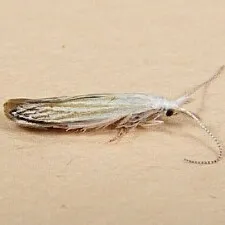
Coleophora tiliaefoliella - Hodges#1256
Coleophora tiliaefoliella
Coleophora tiliaefoliella is a moth of the Coleophoridae family. It is found in North America, including Oklahoma, Pennsylvania and Ontario.
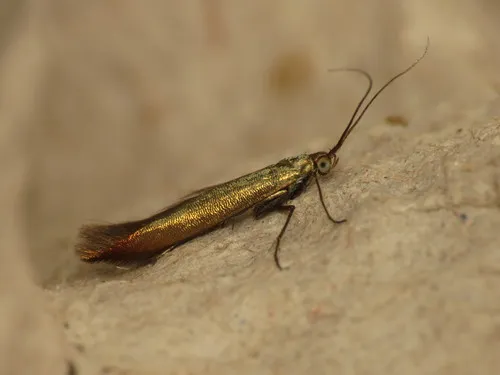
Large Clover Case-bearer
Coleophora trifolii
Wingspan 15 to 20 mm. One of the larger of the Coleophoridae, this species has a metallic green sheen to the forewings. It occurs in areas of open waste ground and grassland. On the wing in June and July. The adults fly in the daytime, but are also a
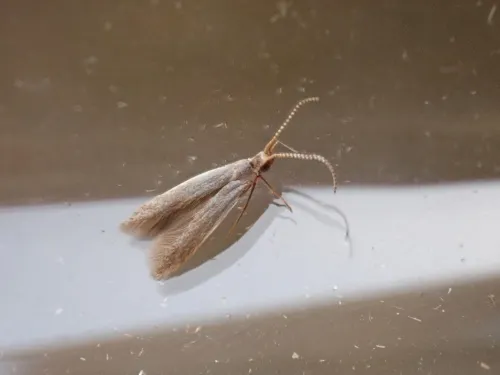
Coleophora trigeminella
Coleophora trigeminella
Size 8 to 20 mm. The adult moths have red-brown or ochreous forewings with a creamy costal streak. Adult: Unless identified by a recognised expert, a photo is required and the specimen should be confirmed by gen det. Larval Case: It recording the lar
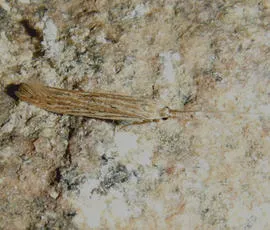
Coleophora versurella
Coleophora versurella
Wingspan 11 to15 mm. The adults are similar to several other species and are best identified by reference to the genitalia. This moth inhabits a variety of open habitats. It is on the wing from June to September and is mainly nocturnal. The larval fo
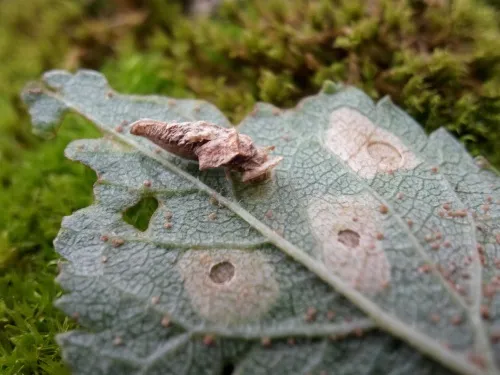
Coleophora violacea
Coleophora violacea
Wingspan 9 to11 mm. The adult resembles several other brownish Coleophora species, and examination of the genitalia is necessary. The larva feeds on a wide range of trees, shrubs and herbs. The larval cases are about 6 mm long. The dorsal surface of
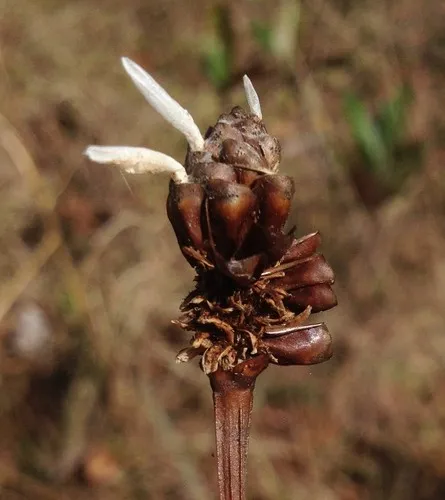
Coleophora xyridella - Hodges#1396.1
Coleophora xyridella
Coleophora xyridella is a moth of the Coleophoridae family. It is found in the United States, including Louisiana, Mississippi, Florida, South Carolina and Georgia.
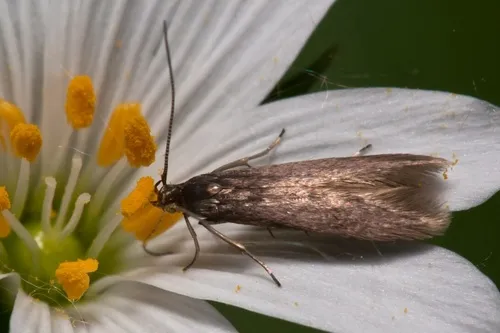
stitchwort case-bearer
Metriotes lutarea
Metriotes lutarea is a moth of the family Coleophoridae. It is found in most of Europe (except the Iberian Peninsula and most of the Balkan Peninsula) and Turkey.
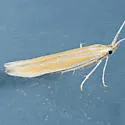
Coleophora acamtopappi - Hodges#1328
Coleophora acamtopappi
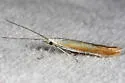
Coleophora accordella - Hodges#1289
Coleophora accordella
Coleophora atriplicivora - Hodges#1326
Coleophora atriplicivora
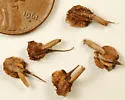
Coleophora benestrigatella - Hodges#1366
Coleophora benestrigatella
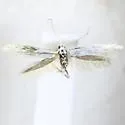
Coleophora bernoulliella - Hodges#1255.1
Coleophora bernoulliella
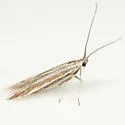
Coleophora bistrigella - Hodges#1315
Coleophora bistrigella
Coleophora borea - Hodges#1361
Coleophora borea
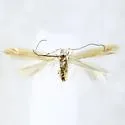
Coleophora comptoniella - Hodges#1300
Coleophora comptoniella
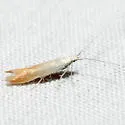
Coleophora cornivorella - Hodges#1277
Coleophora cornivorella
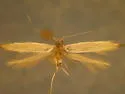
Coleophora cretaticostella - Hodges#1283
Coleophora cretaticostella
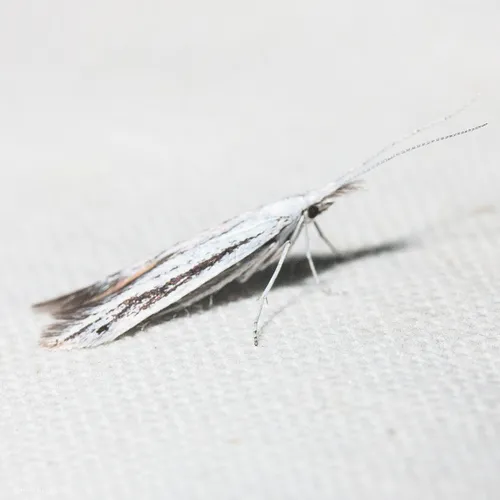
Coleophora discostriata - Hodges#1259
Coleophora discostriata
Coleophora duplicis - Hodges#1337
Coleophora duplicis
Coleophora elaeagnisella - Hodges#1260
Coleophora elaeagnisella
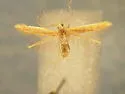
Coleophora juglandella - Hodges#1293
Coleophora juglandella
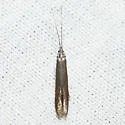
Coleophora kalmiella - Hodges#1273
Coleophora kalmiella
Coleophora kearfottella - Hodges#1290
Coleophora kearfottella
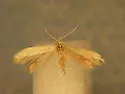
Coleophora latronella - Hodges#1376
Coleophora latronella
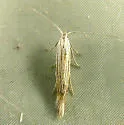
Coleophora laurentella
Coleophora laurentella
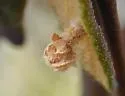
Coleophora ledi - Hodges#1286
Coleophora ledi
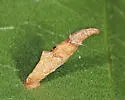
Chestnut Casebearer Moth - Hodges#1272
Coleophora leucochrysella
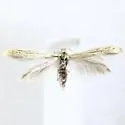
Coleophora littorella - Hodges#1347
Coleophora littorella
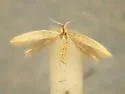
Coleophora mcdunnoughiella - Hodges#1321
Coleophora mcdunnoughiella
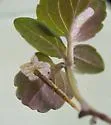
Coleophora monardae - Hodges#1319
Coleophora monardae
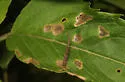
Coleophora monardella - Hodges#1268
Coleophora monardella
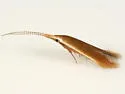
Coleophora ostryae - Hodges#1295
Coleophora ostryae
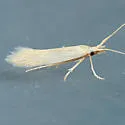
Russian Thistle Stem Miner Moth - Hodges#1398.8
Coleophora parthenica
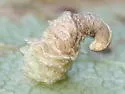
Coleophora persimplexella - Hodges#1287
Coleophora persimplexella
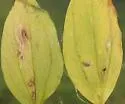
Coleophora polemoniella - Hodges#1306
Coleophora polemoniella
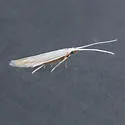
Coleophora quadrilineella - Hodges#1358
Coleophora quadrilineella
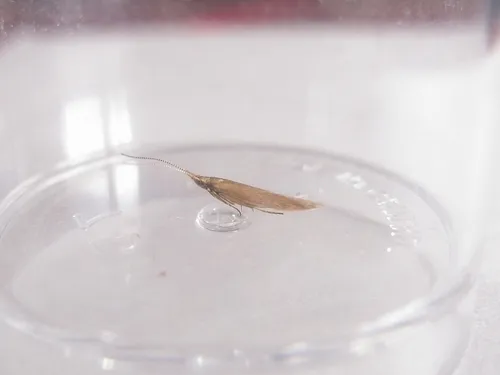
Coleophora rosacella - Hodges#1316
Coleophora rosacella
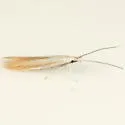
Coleophora rupestrella - Hodges#1285
Coleophora rupestrella
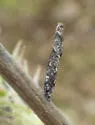
Coleophora salicivorella - Hodges#1275
Coleophora salicivorella
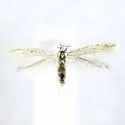
Coleophora sexdentatella - Hodges#1374
Coleophora sexdentatella
Coleophora vernoniaeella - Hodges#1269
Coleophora vernoniaeella