
Butterflies and Moths
Order Lepidoptera
The Butterflies and Moths (Order Lepidoptera) includes 11,813 species across 112 families and 2,787 genera in our directory.
About Butterflies and Moths
Lepidoptera includes approximately 180,000 described species of butterflies and moths. Moths outnumber butterflies roughly 10:1. The monarch butterfly's eastern population has declined by more than 80% since the mid-1990s, and the western population by over 95% since the 1980s. The IUCN lists the migratory monarch as Vulnerable.
Economic Impact
Lepidoptera are critical pollinators. In Europe, grassland butterfly species have declined by almost 50% since the early 1990s. In the UK, three-quarters of butterflies are in decline. In the U.S., five butterfly species have gone extinct since 1950, with 29 listed as endangered.
Ecological Role
Butterflies and moths are essential indicators of ecosystem health. As caterpillars, they are a primary food source for birds - a single nest of blue tit chicks requires ~10,000 caterpillars. Adult moths pollinate many night-blooming plants.
Families in Lepidoptera (112)
Species in Lepidoptera (11,813)
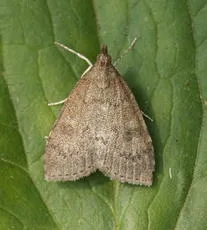
Udea prunalis
Udea prunalis
Wingspan 20-24 mm. Quite a dark species overall but characterised by the distinctive whitish underbody and legs. Various habitats but it is particularly associated with Blackthorn. This nocturnal species flies in June and July. The larvae feed on a w
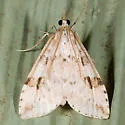
Udea washingtonalis - Hodges#5081
Udea washingtonalis
Identification: Adult: forewing white with dark brown band extending from middle of costa half-way to inner margin; AM and PM lines broken and/or indistinct; black spots along outer margin and distal half of costa; pale yellowish shading in median ar
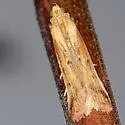
Ufa rubedinella - Hodges#5895
Ufa rubedinella
Identification: Adult: sexually dimorphic - male forewing brownish-red beyond PM line and along costa but pale yellowish elsewhere; female forewing reddish-brown except for pale strip along costa; both sexes with one or two dark discal dots in median
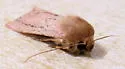
Ufeus faunus - Hodges#11053
Ufeus faunus
Identification: Lafontaine & Walsh revised description in PDF. Crumb described larva.
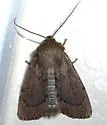
Ufeus hulstii - Hodges#11052.1
Ufeus hulstii
Identification: "Forewing markings limited to light and dark gray antemedial and postmedial lines. The forewing color is even with a gloss when fresh. The antemedial and postmedial lines are similar, dark gray adjacent to the median area and light gr
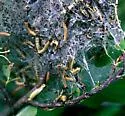
Ugly-nest Caterpillar Moth - Hodges#3661
Archips cerasivorana
Identification: Adult - bright to pale ocherous orange crossed by broken, transverse lines of shining, dark rose rust prominent only on the costa. Hindwing ocherous yellow. Larva - body brownish or greenish-yellow; head shiny dark brown; lacks an ana
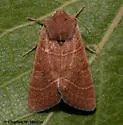
Ulolonche consopita - Hodges#10568
Ulolonche consopita
Identification: Specimen identified by DNA analysis (BOLD). ( 3 )
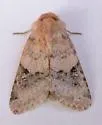
Ulolonche dilecta - Hodges#10572
Ulolonche dilecta
Identification: The original description as Perigea dilecta Edwards, and the Hampson (1888) description as Hyssia dilecta are available in the print references below.
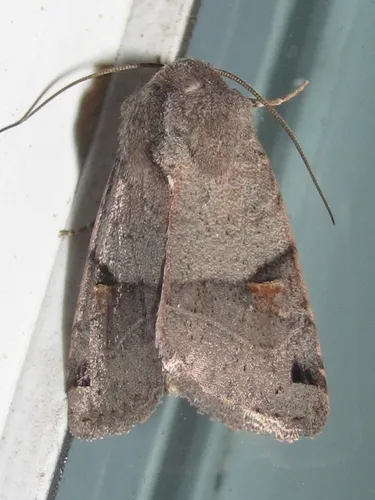
Ulolonche disticha - Hodges#10573
Ulolonche disticha
Identification: The original description as Caradrina disticha Morrison, and the Hampson 1905 description as Hyssia disticha are in the print references below. Adult: forewing light grayish-brown on basal half, medium grayish-brown on distal half, s
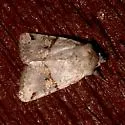
Ulolonche fasciata - Hodges#10570
Ulolonche fasciata
Identification: Detailed original description by Smith can be found at the link in citations below. From Smith, forewings gray with fuscous powdering of basal and ST area; median space with bluish tint; terminal space darker; yellowish reniform frame
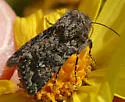
Ulolonche niveiguttata - Hodges#10575
Ulolonche niveiguttata
Identification: The original description as Mamestra niveiguttata Grote, is in the print references below. The Smith revised description as Ulolonche niveiguttata is in PDF. Specimen identified by DNA analysis (BOLD).
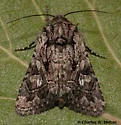
Ulolonche orbiculata - Hodges#10574
Ulolonche orbiculata
Identification: Adult - forewing brownish-gray with irregular dark gray subterminal area and oblong white patch or streak beside reniform spot; black marks along costa, and dark chevron-shaped markings near middle of wing; hindwing dark gray, paler t
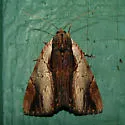
Ultronia Underwing - Hodges#8857
Catocala ultronia
Identification: Adult: forewing pattern predominantly longitudinal (running from base to outer margin), rather than transverse (running from costa to inner margin) as in many other Catocala species; typically has dark brown to black strip along inner
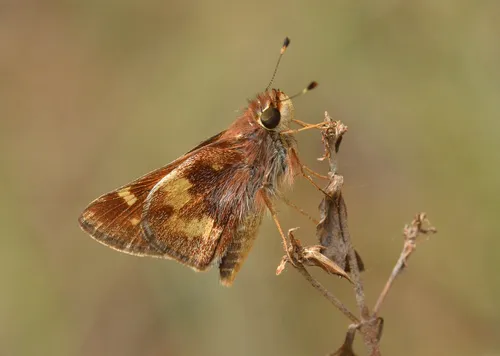
Umber Skipper
Lon melane
Poanes melane, the umber skipper, is a butterfly of the family Hesperiidae. It is found in California (west of the Sierra Nevada divide), southern Arizona, Baja California, the highlands of Mexico and Central America. The habitat consists of desert f
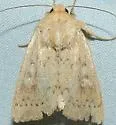
Unarmed Wainscot - Hodges#10459
Leucania inermis
Identification: Adult : FW grayish. Reniform present as a vague, pale spot with a distinct dark discal dot. Orbicular absent. PM and AM lines present, although irregular and not prominent. HW heavily suffused with gray-brown. Male prothoracic tibia w
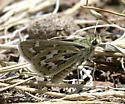
Uncas Skipper - Hodges#4018
Hesperia uncas
Identification: Underwing has bold series of connected white markings, and usually has white veining.
Uncinus obductella
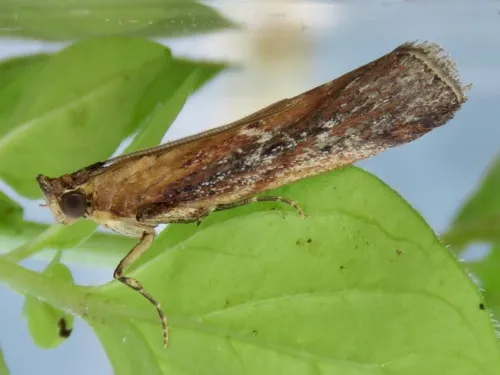
Uncinus obductella
Wingspan 23 to 26 mm. An attractive reddish brown species. In view of the rarity of this moth in our area, please provide a photograph and retain the specimen in case it is required by the County Recorder. It inhabits grassland and chalk quarries whe
Uncommon Oak Moth - Hodges#8591.1
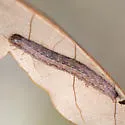
Phoberia ingenua
Identification: Looks virtually identical to Phoberia atomaris. The male antenna has long setae which are longer than the width of the antennal shaft. The setae on the antenna of male Phoberia atomaris are shorter than the width of the of the antenna
Undescribed Crocanthemum leafminer
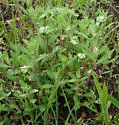
Mompha undescribed-species-on-crocanthemum
Identification: The adult is similar to that of M. capella , but the ground color of the leaf-mining species is markedly brighter orange. The two are also separable on genital morphology. M. capella also feeds on Crocanthemum , but it specializes in
Undescribed Hypsopygia - Hodges#5533.85
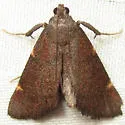
Hypsopygia new-species
Identification: Much darker than H. olinalis and lacking the yellow fringe, with the yellow markings on the forewings reduced.
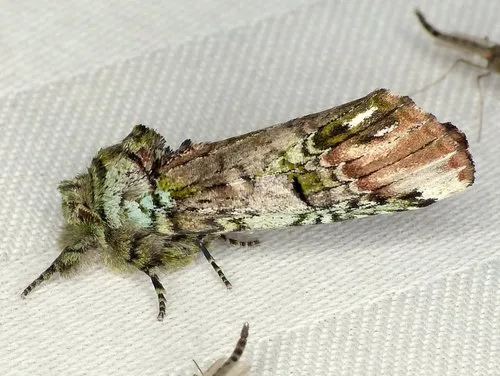
Unicorn Prominent
Coelodasys unicornis
Coelodasys unicornis, the unicorn caterpillar moth, unicorn prominent or variegated prominent, is a species of moth in the family Notodontidae. It was first described by James Edward Smith in 1797 and is found in North America south of the Arctic.
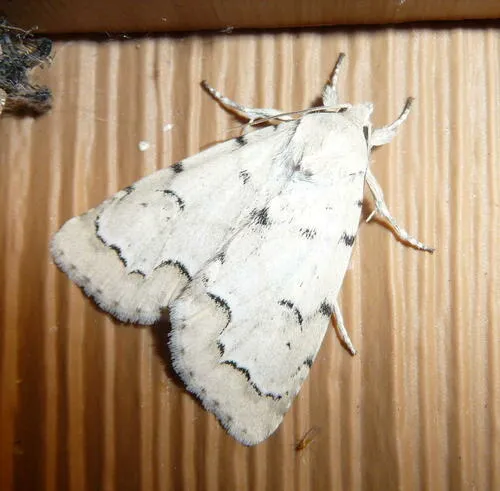
Unmarked Dagger - Hodges#9207
Acronicta innotata
Identification: Adult: forewing creamy white to pale gray; bulge of postmedial (PM) line indented to form two small bulges; PM line bordered distally by slightly darker grayish shading, and proximally by a white band (sometimes indistinct); no basal
Unsated Sallow - Hodges#9943
Metaxaglaea inulta
Identification: Brown FW often has violet sheen when fresh. Purplish AM & PM curve gently inward near costa. Hollow orbicular and reniform spots converge and sometimes touch. ST is edged warm brown. HW dark grayish-brown with pale brown fringe.
Untomia albistrigella - Hodges#2223
Untomia albistrigella
Identification: Specimen determined by DNA analysis (BOLD). ( 3 )
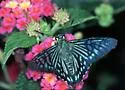
Urania Skipper - Hodges#3867
Phocides urania
Type spmn coll'ed by Captain John Pope while conducting the Texas-Mexico Boundary Survey in the early 1850's. Pope's specimen is in the Carnegie Museum of Natural History. No U.S. records have been reported since them.
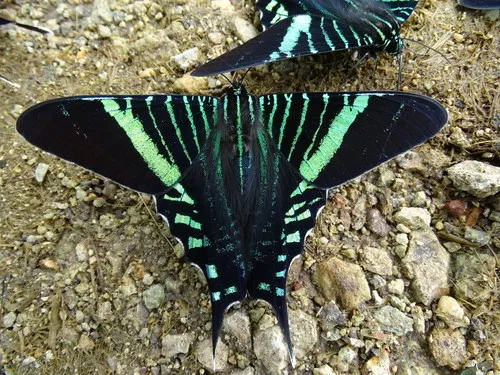
Urania Swallowtail Moth
Urania fulgens
Urania fulgens, the urania swallowtail moth, is a day-flying moth of the Uraniidae family. It is found from Veracruz, Mexico, through Central America to northwestern South America (west of the Andes and south to Ecuador). It is highly migratory and h
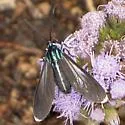
Uranophora leucotelus - Hodges#8271.7
Uranophora leucotelus
Identification: First United States (Texas) record! Determined by Ed Knudson (Texas Lepidoptera Survey) Charles Bordelon (Texas Lepidoptera Survey) Photographed by Rick Nirschl on January 6, 2013 in Mission, Hidalgo County, Texas, USA at the National
Urbanus doryssus - Hodges#3894
Urbanus doryssus
Identification: Tails short and broad. Uppersides of tails and most of the hindwing outer margins white; remainder of wing surfaces dark brown.
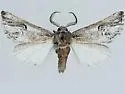
Ursia furtiva - Hodges#8003
Ursia furtiva
Identification: Blanchard orignal description in PDF. U.S. Fish and Wildlife Service 12-Month Finding on a Petition To List the Tamaulipan Agapema, Sphingicampa blanchardi (No Common Name), and Ursia furtiva (No Common Name) as Endangered or Threaten
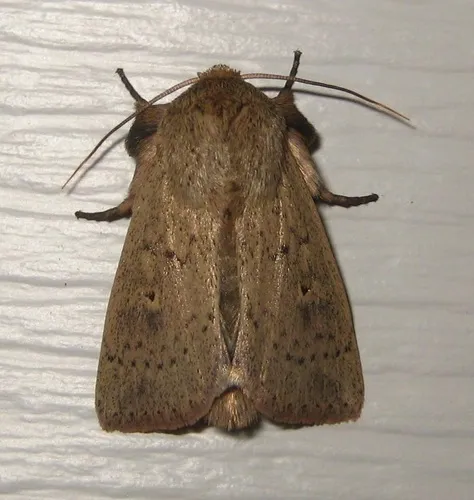
Ursula Wainscot - Hodges#10461
Leucania ursula
Identification: forewing lacks streaking seen in several other Leucania species Distinguished from L. inermis and L. pseudargyria by: 1. coarser/darker speckling on forewing 2. more distinct reniform spot, with gray area above and below it 3. more vi
Ursus Giant Skipper - Hodges#4151
Megathymus ursus
Type Locality: "Pinal County, Arizona"; defined as "Santa Catalina Mountains, west of Redington, Pima Co., Arizona" by Freeman (1969).
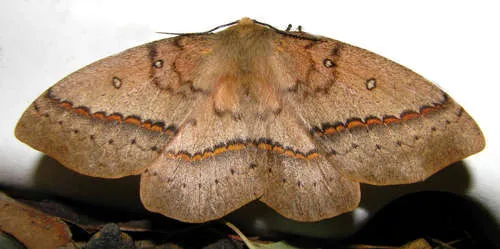
Urticating Anthelid
Anthela nicothoe
The Urticating Anthelid (Anthela nicothoe) is a species of moth of the family Anthelidae. It is found in Australia, including Tasmania.
Usingeriessa brunnildalis - Hodges#4768
Usingeriessa brunnildalis
Identification: Original description online: ( Elophila brunnildalis ) This species is very similar to Usingeriessa onyxalis , differing mainly by the indistinct apical patch on the FW, not contrasting much with the dusky terminal band; the HW is gen
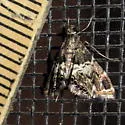
Usingeriessa onyxalis - Hodges#4767
Usingeriessa onyxalis
Identification: General coloration dark brown and the maculation is crisp and contrasting compared to U. brunnildalis . Forewings with wide dark basal area, followed by a narrow dark AM line. The median area is lighter, but heavily dusted with dark s
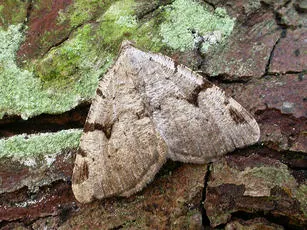
V-Moth
Macaria wauaria
It favours gardens, allotments and other cultivated areas where fruit bushes are grown. The adults, which come to light, are on the wing in July and August. The caterpillars feed on a number of Ribes species, including red and black currant and goose
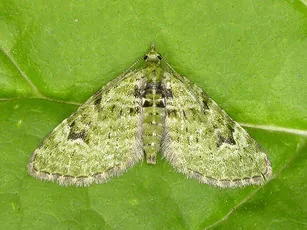
V-Pug
Chloroclystis v-ata
Wingspan 14-19 mm. The green ground-colour, small size, V-shaped mark and more triangular resting posture all serve to make this species quite easy to identify. There are two generations in the south, flying in May and June, then again in August, but
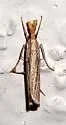
Vagabond Crambus - Hodges#5403
Agriphila vulgivagellus
Identification: Adult: head with long hairy "snout"; forewing dull yellowish with brown speckling between veins, giving streaked appearance to wing; no AM, PM, or ST lines; terminal line composed of seven black dots; fringe gold or bronze but may loo
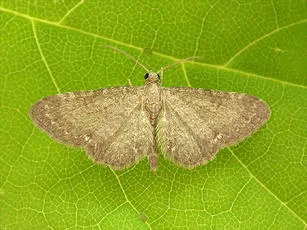
Valerian Pug
Eupithecia valerianata
Wingspan 16 to 20 mm. A relatively uniform and weakly-marked species. It generally occurs in damper habitats, such as fenland and broads. The larvae live in the seedheads of Common Valerian, feeding on the developing seeds and flowers. This moth is d
Valeriana Skipper - Hodges#3915
Codatractus valeriana
Identification: Forewing: Hindwing: Primarily a Mexican species, it is rare and local in the U.S. Adults are active both during the day and at twilight (semi-crepuscular). BugGuide post by Philip Kline, August 8, 2009.
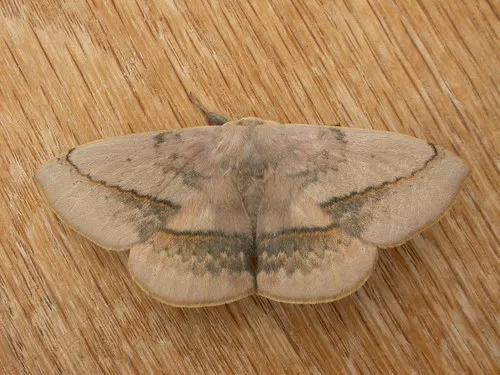
Variable Anthelid
Anthela varia
Anthela varia, the variable anthelid, is a species of moth of the Anthelidae family. It is found in the coastal areas of southern Western Australia, Southern Queensland, New South Wales, and Victoria.
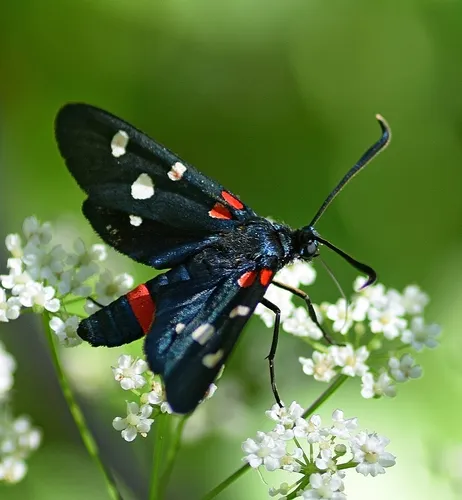
Variable Burnet
Zygaena ephialtes
Zygaena ephialtes is day flying species of burnet moth found in Europe. It is typically found in xeric habitats, and populations have recently decreased. It also exhibits Müllerian mimicry with other species, like Amata phegea.
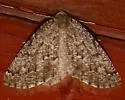
Variable Girdle - Hodges#7005
Enypia venata
Identification: A mid-sized, grey geometrid with heavy grey speckling and a dark broad median band, with a heavily scalloped border. Hindwing paler, with a faint PM line. Discal spot black, not white as in Caripeta species. Very similar to Nepytia sp
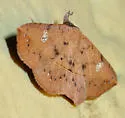
Variable Metallata Moth - Hodges#8573
Metallata absumens
Identification: Adult - highly variable, some specimens with black reniform spot; dark brown head and anterior border of thorax; both sexes have filiform antennae (Becker & Miller, 2002).
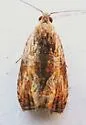
Variable Nigranum - Hodges#2800
Olethreutes nigranum
Identification: Adult - highly variable. Kearfott curated specimens as four separate species that Heinrich combined based on genitalia. Genitalia:
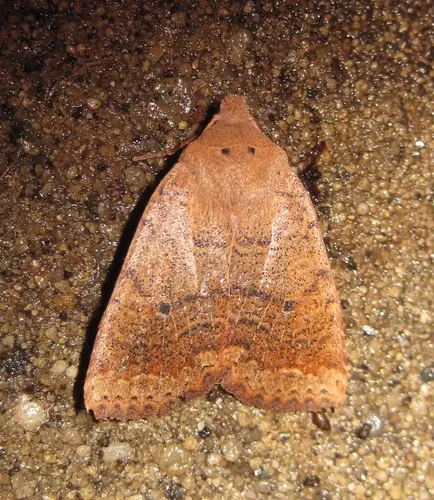
Variable Sallow - Hodges#9941
Sericaglaea signata
Identification: Adult: forewing color varies widely: light to dark brown, sometimes reddish-brown with purplish gloss in fresh specimens; some have heavy black shading inside irregular subterminal line, with conspicuously paler area outside ST line;
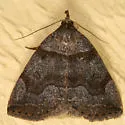
Variable Zanclognatha - Hodges#8345
Zanclognatha laevigata
Identification: Adult: Original Description - see Grote, 1872, in Print References Larvae: See "Preliminary key to Zanclognatha larvae" ( 3 )
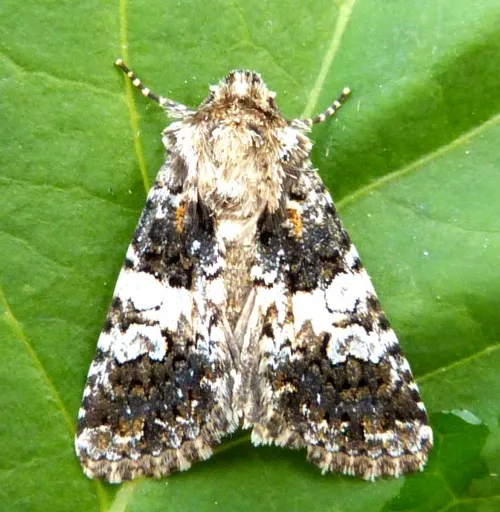
Varied Coronet
Hadena compta
Wingspan 25-30 mm. Bold black and white forewing with cross band complete and meeting trailing edge about halfway along (not diagonal as in Marbled Coronet). The main flight period is from June to July, when the species comes to light. The main foodp
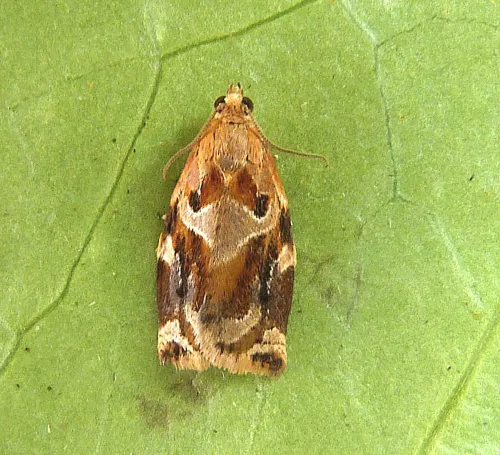
Variegated Golden Tortrix
Archips xylosteana
The adults fly from just before dusk into the night and are on the wing during July and August. It uses a range of deciduous trees and shrubs for its foodplants. It can be found over much of Britain. In the Butterfly Conservation's Microlepidoptera R
Varneria atrifasciella - Hodges#6030
Varneria atrifasciella
Identification: Description can be found in MONA Fascicle 15-3 at link in citations below.
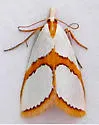
Vaxi nr-auratellus - Hodges#5465.17
Vaxi nr-auratellus
Vaxi nr. auratellus (Clemens, 1860) is a an undescribed species "in the opinion of the late A. B. Kolts".
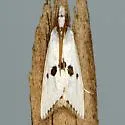
Vaxi tripsacas - Hodges#5467
Vaxi tripsacas
Identification: Dyar original description as Crambus tripsacas is available online in the print references. Summary: White forewing has three bold dark spots in the median area. Thorax has two dark yellow longitudinal stripes.
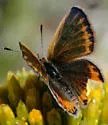
Veined Blue - Hodges#4382
Plebejus neurona
Same coloration on top in both sexes. This species is considered threatened throughout its range (G3 global ranking)
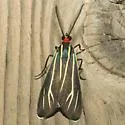
Veined Ctenucha - Hodges#8260
Ctenucha venosa
Sometimes abundant at lights but often found during the day.
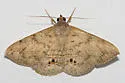
Velvetbean Caterpillar Moth - Hodges#8574
Anticarsia gemmatalis
Identification: Adult : Color highly variable . Wings heavily mottled or mostly unmarked with weak stripe and prominent spots. PM continues across HW, terminating at the apex of FW. Larva : The larvae are extremely variable in coloration and marking
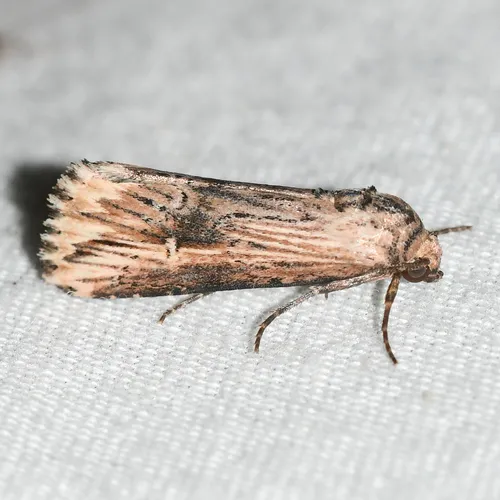
Verbena Moth - Hodges#9661
Crambodes talidiformis
Verbena Moth - Hodges#9661 (Crambodes talidiformis) is a species in the family Noctuidae, commonly known as owlet moths, belonging to the order Lepidoptera (Butterflies and Moths). It is classified within the subfamily Condicinae, tribe Leuconyctini,
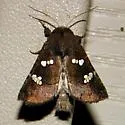
Vernonia Borer - Hodges#9507
Papaipema limpida
Identification: Adult: FW dark brownish-gray with a line of 3 white spots in AM area and a cluster of white spots representing the reniform spot (in each case, the central spot is usually pale yellowish); PM line fairly smooth, gently curving near co
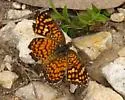
Vesta Crescent - Hodges#4479.1
Phyciodes graphica
Identification: Bright orange with dark lines dividing the wings up into numerous bars and cells. Lacks contrasting bands above or below wings. Some hindwings cells contain dark spots, but there are no such spots on the forewing.
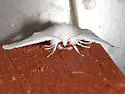
Vestal Tiger Moth - Hodges#8135
Spilosoma vestalis
Identification: Original description online: (125) Wings pure white, usually with several scattered tiny black dots; inner surface of front leg femur with pink or reddish hairs; head and thorax white, hairy.
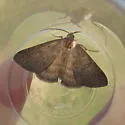
Vetch Looper Moth - Hodges#8733
Caenurgia chloropha
Identification: Adult: forewing light to medium brown, paler toward base, and sometimes with reddish tinge distally; wing crossed by four indistinct lines, slightly darker than ground color; AM line arc-shaped, slightly concave (a distinctive feature
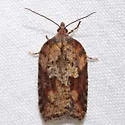
Viburnum Acleris - Hodges#3527
Acleris viburnana
Identification: Moderately rough-scaled anterior margin of the forewing and enlarged costal blotch, which extends to near the apex. Genitalia: It twists a leaf to form a pocket and feeds inside.
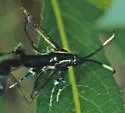
Viburnum Clearwing - Hodges#2556
Synanthedon viburni
Identification: Larva - body pinkish white to dark pink with reddish brown head.
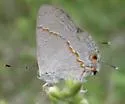
Vicroy's Ministreak - Hodges#4293.1
Ministrymon janevicroy
Identification: Most easily distinguished from Gray Ministreak - M. azia by its olive green eyes vs. azia 's black or dark brown eyes. But note that Leda Ministreak - Ministrymon leda also has green eyes, a variegated “pebbly-textured” appearance on
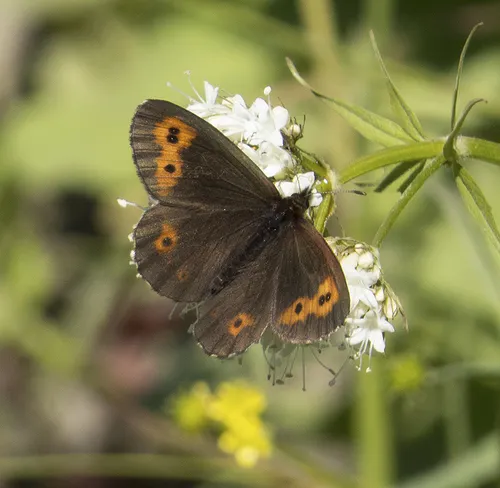
Vidler's Alpine - Hodges#4591
Erebia vidleri
Identification: Adult: chocolate-brown base; DFW with broad, light orange band with ragged outlines, band tapering down toward trailing edge; two eye-spots near the tip, plus one farther down. VFW same as above but with yellow band. DHW with narrower
Vigorous Cissusa Moth - Hodges#8596
Cissusa valens
Identification: Larva - see Crumb in Print References. Adult - see Edwards in Print References.
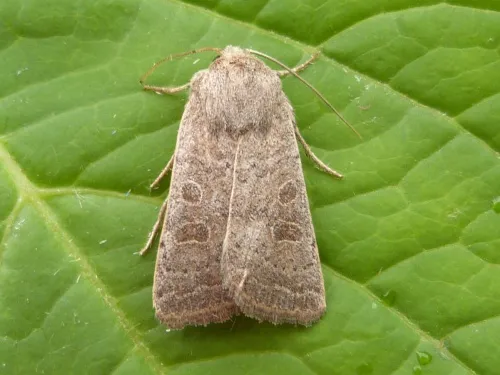
Vine's Rustic
Hoplodrina ambigua
Wingspan 32-34 mm. One of the rather similar Hoplodrina group, this species is generally paler than blanda or alsines and tends to show larger and rounder stigmata. Grassland, heathland, woodland rides and gardens There are two generations with moths
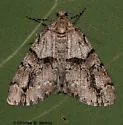
Vinemina opacaria - Hodges#6635
Vinemina opacaria
Vinemina opacaria - Hodges#6635 (Vinemina opacaria) is a species in the family Geometridae, commonly known as geometrid moths, belonging to the order Lepidoptera (Butterflies and Moths). It is classified within the subfamily Ennominae, tribe Melanolo
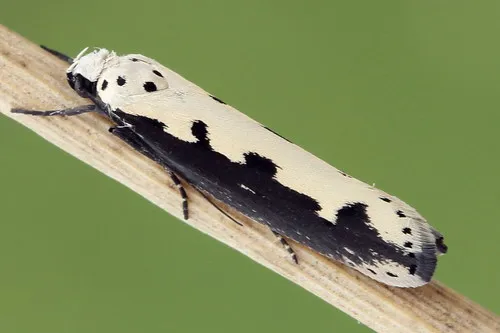
Viper's Bugloss Moth
Ethmia bipunctella
Ethmia bipunctella is a diurnal moth from the family Depressariidae. It can be found in Central and Southern Europe, North Africa, Asia and the northeastern part of North America. E. iranella was formerly included here as a subspecies.
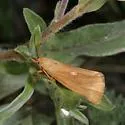
Virbia fragilis - Hodges#8125
Virbia fragilis
Identification: The identification of the western species in this complex, V. aurantiaca (Huebner), V. fragilis (Strecker), and V. ferruginosa (Walker) is not clearcut, and the taxonomy is in need of revision.
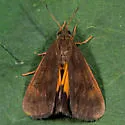
Virbia lamae - Hodges#8120
Virbia lamae
Identification: For a full description see Zaspel et al.
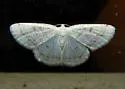
Virgin Moth - Hodges#6270
Protitame virginalis
Identification: Specimen identified by DNA analysis: Genitalia:
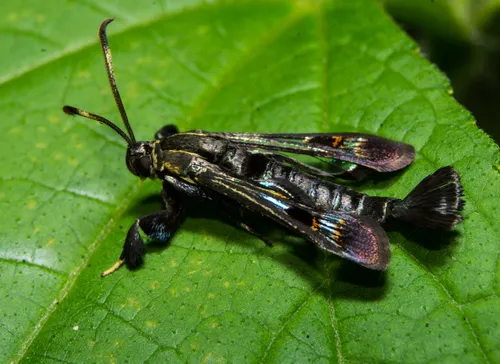
Virginia Creeper Clearwing
Albuna fraxini
Albuna fraxini, the Virginia creeper clearwing, is a moth of the Sesiidae family. It is known from the northern United States and southern Canada.
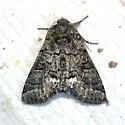
Viridemas galena - Hodges#10023
Viridemas galena
Identification: Wagner, et al (2008, p. 50, figs. 37 a-b) illustrates the genitalia for tribe placement.
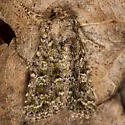
Viridiseptis marina - Hodges#9403
Viridiseptis marina
Identification: See updated description in Mustelin & Crabo Specimen identified by DNA analysis (BOLD) :
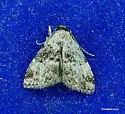
Visitation Moth - Hodges#8426
Dyspyralis illocata
Identification: forewing mottled grayish-brown with broad dark grayish band crossing wing in median area (edges of band irregular); dark oblique patch along costa near apex; terminal line composed of several dark semi-ellipses; fringe checkered pale
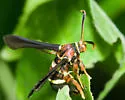
Vitacea admirandus - Hodges#2528
Vitacea admirandus
Identification: Adult - resembles Polistes paper wasps. This species was practically unknown before synthetic pheromones, only three specimens in major collections for the first 100 years. It is now known throughout Texas, and is exquisitely sensitiv
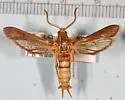
Vitacea cupressi - Hodges#2529
Vitacea cupressi
Identification: Engelhardt revised description is in PDF. ♂ ♀
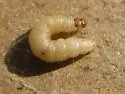
Vitula serratilineella - Hodges#6007.1
Vitula serratilineella
Identification: Specimens identified by DNA analysis: Considered by some authors to be a western race or form of Vitula edmandsii . A known pest of mason bees (and also of dried fruit)
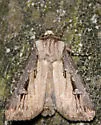
Voluble Dart - Hodges#10659
Agrotis volubilis
Identification: Adult: forewing medium brown to gray with well-defined markings; upper half of wing often darker than lower half; black dash extending from base of wing through claviform spot is distinguishing feature; orbicular spot oval, not elonga
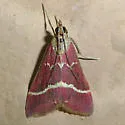
Volupial Pyrausta Moth - Hodges#5029
Pyrausta volupialis
Identification: Specimens identified by DNA analysis:
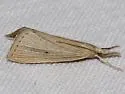
Wainscot Grass-veneer - Hodges#5492
Eoreuma densellus
Identification: Adult - Wings: Yellowish-white with white veins and brown speckles between the veins. A large dark dot about mid wing at end of discal cell. Wing tip has series of small dark dots. Fringe yellowish-white. Hind wing white. see key Geni
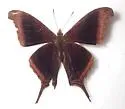
Waiter Daggerwing - Hodges#4548
Marpesia zerynthia
Brock & Kaufman, "rare stray to south Texas" Bordelon & Knudson, "very rare stray to TX, not reported from the valley, so far." Neck, "rare stray to Rio Grande Valley, Far West [Texas]" Scott, "rare stray to w and s Tex. (July, Oct.) Howe, "El Paso,
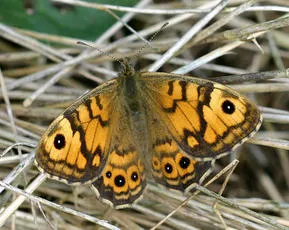
Wall
Lasiommata megera
This golden brown butterfly is criss-crossed with dark lines. The male has obvious sex brands on the forewings. The Wall gets its name from the characteristic behaviour of resting with wings two-thirds open on any bare surface, including bare ground
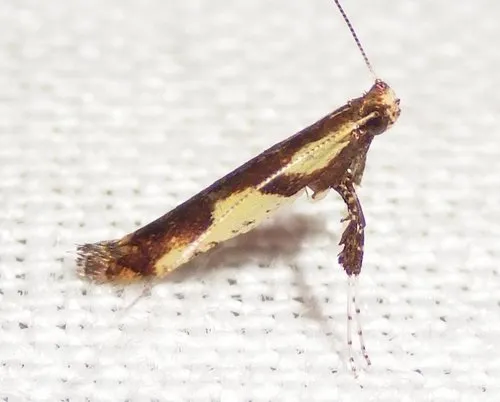
Walnut Caloptilia Moth
Caloptilia blandella
Caloptilia blandella is a moth of the Gracillariidae family. It is known from Canada (Québec) the United States (including Pennsylvania, Virginia, Maine, Maryland, Texas and Kentucky).
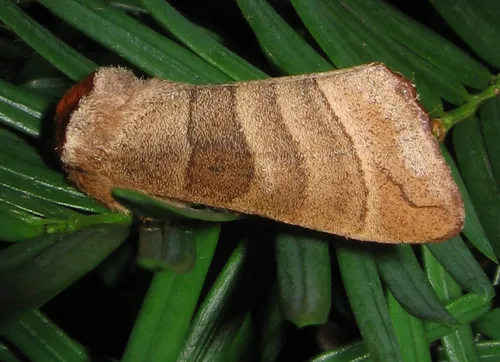
Walnut Caterpillar Moth
Datana integerrima
Datana integerrima, the walnut caterpillar moth, is a moth of the family Notodontidae. It is found in eastern North America, from Ontario, through most of the Eastern States west to Minnesota and south to northern Mexico.
Walnut Spanworm Moth - Hodges#6661
Phigalia plumogeraria
Identification: Adult: female wingless, cannot fly; male antennae bipectinate; forewing gray with fine speckling and three inconspicuous dark gray lines; hindwing light brownish-gray with faint discal spot and two indistinct lines Larva: gray twig mi
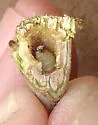
Walshia amorphella - Hodges#1616
Walshia amorphella
Identification: Genitalia: ♀ ♂ The caterpillar develops in an oval stem gall in lead plant ( Amorpha ), 1.5 inches long and 0.5 inch in diameter.
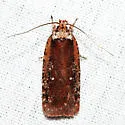
Walsingham's Agonopterix Moth - Hodges#0869
Agonopterix walsinghamella
Identification: Revised description by Clarke, 1942. Confusion with Agonopterix lythrella on BugGuide has occurred for several years. The two species have several notable differences though: -Agonopterix walsinghamella has mostly gray scaling with so
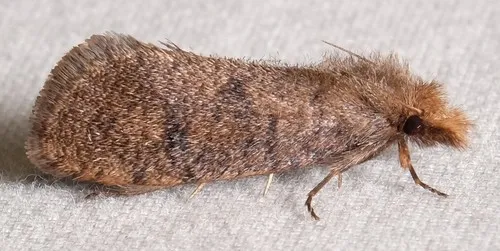
Walsingham's Grass Tubeworm Moth
Acrolophus propinqua
Acrolophus propinqua (Walsingham's grass tubeworm moth) is a moth of the family Acrolophidae. It is found in North America, including Alabama, Florida, Georgia, Illinois, Louisiana, Maryland, Mississippi, North Carolina, New York, Ohio, South Carolin
Walsingham's Plume Moth - Hodges#6153
Singularia walsinghami
Identification: Back to Singularia See Encyclopedia of Life for an image and Biodiversity Heritage Library for the original description as Alucita walsinghami .
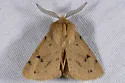
Wandering Tiger - Hodges#8138
Spilosoma vagans
Identification: forewing and hindwings are extremely variable males are often attracted to lights; females are dinural and seldom seen at lights
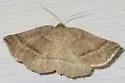
Warner's Metarranthis - Hodges#6821
Metarranthis warneri
Identification: Adult: forewing brownish-gray with dark AM and PM lines and scattered dark speckling; PM line almost straight, bordered proximally by dark brown shading; prominent black apical dash; hindwing similar but with no AM line and fainter PM
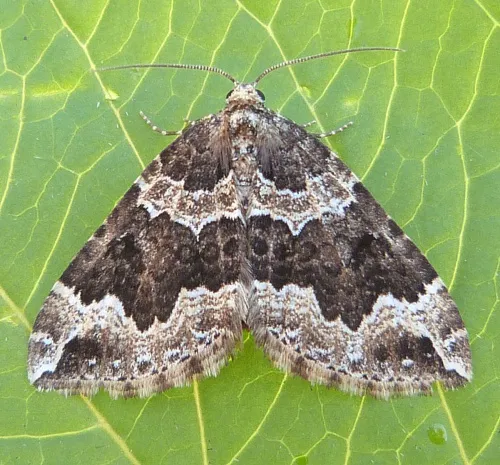
Water Carpet
Lampropteryx suffumata
Wingspan 25 to 32 mm. Quite a handsome brown marked species. A number of variations or aberrations occur. It can be found in woodland, grassy areas, chalk downland and scrubland. A spring flying species, the adults of this moth are on the wing in Apr
Water Hyacinth Moth - Hodges#5149
Niphograpta albiguttalis
Identification: Adult: forewing golden yellow speckled with gray, and with gray and blackish shading beyond PM line and in strip along costa; PM line sharply and deeply indented near inner margin, and with conspicuous white spots along its length; di
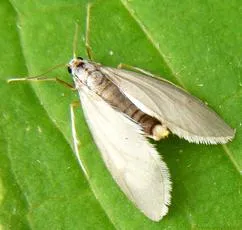
Water Veneer
Acentria ephemerella
Wingspan 11-13 mm. A small and unassuming species. There are two forms of the female - one wingless, which lives under the water and one winged. The fully-winged males have very plain pale grey-green wings. Various, sometimes near to water but also s
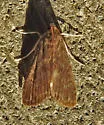
Waterlily Borer - Hodges#4751
Elophila gyralis
Identification: Adult: sexually dimorphic - female usually unmarked orangish-yellow to dark brown; male forewing orangish-brown to dark grayish-brown; lines of male black with white edging; AM and PM lines connected at upper and lower third to form l
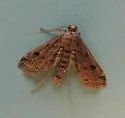
Watermilfoil Leafcutter - Hodges#4764
Parapoynx allionealis
The caterpillars live in portable cases made of many pieces of plant material.
Watkins’ Plume Moth - Hodges#6127.4
Paraplatyptilia watkinsi
Identification: See the identification key for Platyptiliini . See the species accounts in Gielis for Paraplatyptilia watkinsi and Barnes & Lindsey for Paraplatyptilia auriga as Platyptilia auriga .
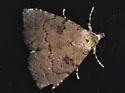
Watson's Arugisa - Hodges#8510
Arugisa latiorella
Identification: Adult : FW darker, brownish color ● labial palps are more slender, projecting forward almost horizontally ● PM line is more continuous, with less noticeable black dots along its length ● less dark shading inside subterminal line than
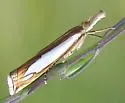
Watson's Grass-veneer - Hodges#5366
Crambus watsonellus
Identification: Adult: forewing ground color light golden brown, with a satiny luster, paler dorsally. Silvery white discal stripe very broad, separated from costa along its basal half by only a narrow, dark brown line, then diverging. A dorsal tooth
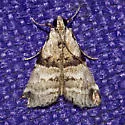
Watson's Tallula Moth - Hodges#5592
Tallula watsoni
Identification: Habitus Drawing T. watsoni is found in extreme coastal Georgia, much of Florida and the southern tip of Texas. The am. line is typically fairly straight whereas in atrifascialis it is angled outwardly below the cell giving the am. ban