
Family Sphinx Moths (Sphingidae)
Sphingidae is a family in the order Lepidoptera. Browse 132 named species recorded in this family, or open an individual profile for its available identification and natural-history information.
Guides
Species in Sphingidae (132)
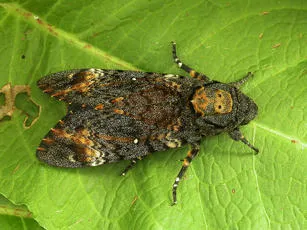
Death's-head Hawk-moth
Acherontia atropos
Wingspan 80 to 120 mm. The largest moth to appear in Britain, sporting a wingspan of up to 12 or 13cm, this is a striking species, though it is not native. Its English name is derived from the pattern resembling a skull on the back of its head. Good
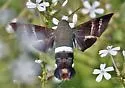
Fadus Sphinx - Hodges#7850
Aellopos fadus
Identification: Brown body with a wide white band across the abdomen. Exhibits two forewing spot bands and the post median spot band transverses wing from trailing to leading edge and has parallel double white spots. Lacks dark spot at end of forewin
Tantalus Sphinx - Hodges#7847
Aellopos tantalus
The larval stages aren't well documented, with the first detailed information published in 1980 (see Internet references)
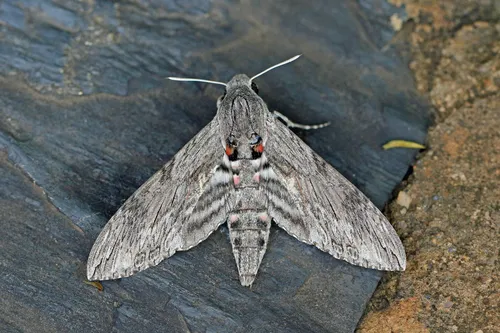
Convolvulus Hawk-moth
Agrius convolvuli
Wingspan 80-120 mm. A large species, with a wingspan of over 10cm. It has largely grey wings, with a pinkish banded body. A good photograph is generally required to support your record. It turns up in light traps and feeding at garden flowers, especi
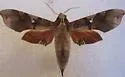
Callionima falcifera - Hodges#7845
Callionima falcifera
Identification: It seems that a reliable characteristic is examining the apical area of the forewing. In Callionima falcifera, it seems that the area directly between the apical line and outer margin is the same color as the ground color of the wing,
Parce Sphinx - Hodges#7844
Callionima parce
Identification: Adult: forewing orangish-brown with paler patches along costa, along inner margin, and at apex; median area with large silvery discal spot having an irregular outline; hindwing reddish-orange with blackish patch at outer margin near a
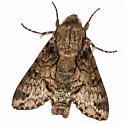
Spurious Sphinx Moth - Hodges#7868
Cautethia spuria
Identification: Hindwing is dark yellow-orange in the basal half and black on the outer half. Cautethia spuria is commonly parasitized by Belvosia sp. (Tachinidae).
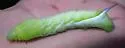
Azalea Sphinx - Hodges#7886
Darapsa choerilus
Identification: Adult: forewing variably reddish-brown to orange with purplish shading; postmedian line straight or almost so; small discal spot and pale shading in median area; pale wavy-margined semicircular patch along outer margin; hindwing unifo
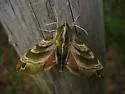
Hydrangea Sphinx - Hodges#7884
Darapsa versicolor
Identification: Forewing greenish brown, curved white patches. See Internet refernces.
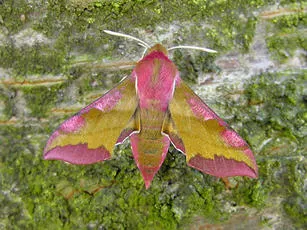
Small Elephant Hawk-moth
Deilephila porcellus
Wingspan 40 to 45 mm. Slightly smaller but even more brightly-coloured than its cousin the Elephant Hawk-moth ( D. elpenor ). It prefers chalky districts and dry grassy localities but is found in a range of habitats. The larvae, which are similar to
Pawpaw Sphinx - Hodges#7784
Dolba hyloeus
Identification: Looks like a miniature Rustic Sphinx --dark brown to black with white dusting. Rustic Sphinx has orange spots on sides of abdomen, Pawpaw has white spots. These spots are visible only when the wings are spread. Forewing patterns are v
Hartweg's Sphinx - Hodges#7785
Dolbogene hartwegii
Identification: The upperside of the forewing is brown with dark brown and white markings with a light round spot near the end of the cell. The upperside of the hindwing has a dark spot at the lower outer margin, and the forewing has a small dark pat
Alope Sphinx - Hodges#7832
Erinnyis alope
Identification: The caterpillar is brown on the upper side, and pale green on the lower side, the colors being separated by the dark brown interrupted lateral band on either side of the body. On the third segment from the head there is a dark spot re
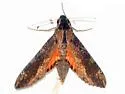
Cramer's Sphinx Moth - Hodges#7836
Erinnyis crameri
Identification: Key points are the lack of black bands on the dorsal of the gray abdomen, and the underside does not have black spots. The hindwing is dull orange with a narrow black border along the entire outer margin.
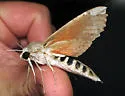
Ello Sphinx - Hodges#7834
Erinnyis ello
Identification: Sexually dimorphic. ♂ ♀ Larva: Horn reduced to a low point, arising from an elevated angular hump. In the last instar, the horn is reduced to a nub. Eyespot over the third thoracic segment is hidden in the resting caterpillar. Ornatel
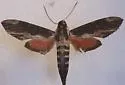
Lassaux's Sphinx - Hodges#7833
Erinnyis lassauxii
Identification: Adult: forewing dark brown with gray streaks along inner margin, and gray patch at apex; hindwing dark brown with varying amounts of dark orange basally; abdomen with conspicuous black and white transverse bands Larva: mature caterpil
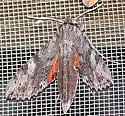
Obscure Sphinx - Hodges#7837
Erinnyis obscura
Identification: This small species can always be distinguished from E. ello , which it resembles in having dark longitudinal shade through the fore wings (males only), by its much smaller size, and by the absence of the white and black lateral stripe
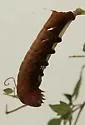
Intermediate Sphinx Moth - Hodges#7860
Eumorpha intermedia
Identification: Brou revised description is available in PDF. Eumorpha intermedia is the smallest of the three species in North America. The subterminal line is scalloped compared to just slightly waved in Eumorpha pandorus .
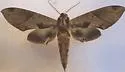
Satellite Sphinx - Hodges#7858
Eumorpha satellitia
Identification: Adult: forewing light brown with blackish rectangular patch midway along inner margin, and dark triangular patches near apex, midway along costa, and at anal angle; hindwing mostly dark with diffuse yellowish shading at base, and smal
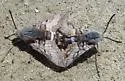
Phaeton Primrose Sphinx - Hodges#7880
Euproserpinus phaeton
Identification: The revised 1868 "redescription" of this species by Grote & Robinson is here (and their original 1865 description is here ). Caterpillar ref image: Mating pair ref image: Adults are diurnal .
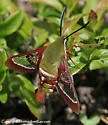
Slender Clearwing - Hodges#7854
Hemaris gracilis
diurnal, does not come to lights. Only found in small numbers even in the proper habitat
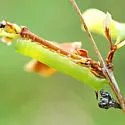
Hemaris thetis - Hodges#7855.1
Hemaris thetis
Identification: As of 2009, all Hemaris diffinis (Hodges # 7855) at BugGuide from west of the Continental Divide should be moved to this newly elevated species. In some places just east of the Divide (Colorado, Alberta) overlap of ranges is known and
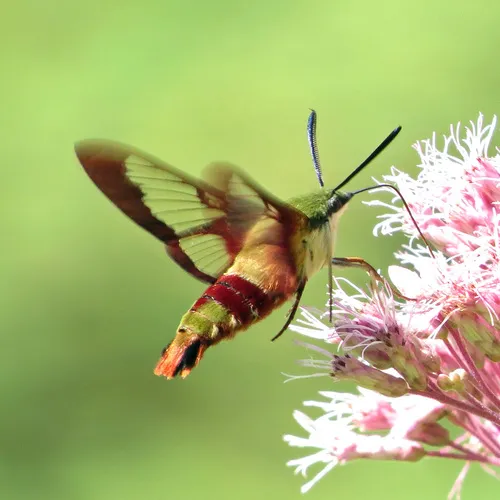
Hummingbird Clearwing
Hemaris thysbe
Hemaris thysbe, commonly known as the hummingbird clearwing, is a moth of the Sphingidae (hawkmoth) family. Coloration varies between individuals, but typically the moth is olive green and burgundy on its back, and white or yellow and burgundy on the
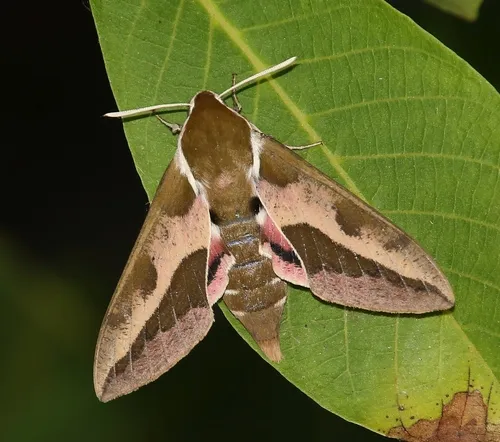
Leafy Spurge Hawkmoth
Hyles euphorbiae
Hyles euphorbiae (spurge hawk-moth) is a European moth of the family Sphingidae. This hawk moth is used as an agent of biological pest control against the noxious weed known as leafy spurge (Euphorbia esula), but usually only in conjunction with othe
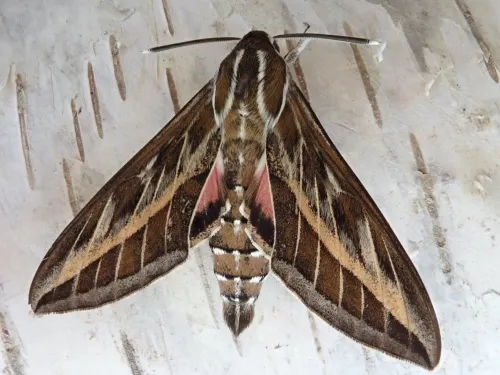
Striped Hawk-moth
Hyles livornica
Wingspan 60 to 80 mm. A large and very distinctive species with brown wings striped with white. Good photographs and/or the specimen required. Most records are of adults attracted to light. This immigrant species generally arrives between May and Oct
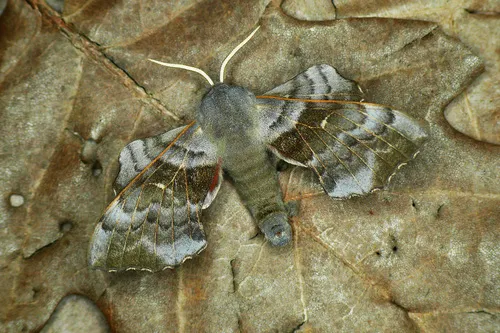
Poplar Hawk-moth
Laothoe populi
Wingspan 65-90 mm. Probably the commonest of our hawk-moths, it has a strange attitude when at rest, with the hindwings held forward of the forewings and the abdomen curved upwards at the rear. If disturbed it can flash the hindwings, which have a co
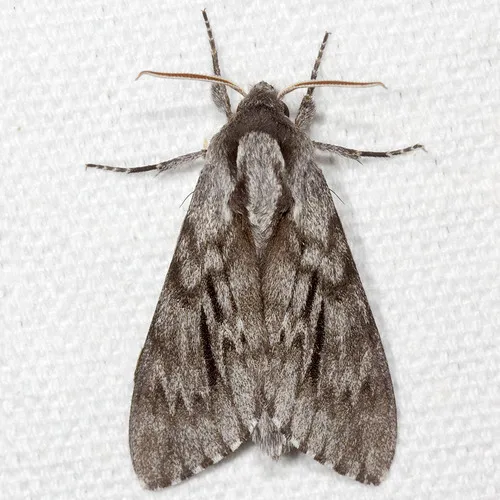
Northern Pine Sphinx - Hodges#7817
Lapara bombycoides
Identification: Adult: forewing gray with heavy black curved AM and zigzag PM lines bordered proximally by pale shading, and distally by dark shading; two or three black dashes in median area, and usually some brownish shading along inner margin near
Gulf Pine Sphinx - Hodges#7817.1
Lapara phaeobrachycerous
Identification: This recently-described species is similar in appearance to other members of its genus--see Brou for description. It should be looked for along the Gulf Coast. Det. V. A. Brou Jr., 2013 considered by Louisiana to be a "Species of Grea
Sage Sphinx - Hodges#7797
Lintneria eremitoides
Identification: Lighter gray compared to other Lintneria spp., wider hindwing bands, thinner black dash on apices of forewings. Overall smaller than other sympatric Lintneria sp. Det. Maury J. Heiman, 2013 Texas Parks & Wildlife considers this to be
Hermit Sphinx - Hodges#7796
Lintneria eremitus
Identification: FW grayish/brown with black dashes and lines. Reniform spot white, sometimes doubled. HW black with two broad white bands, inner band enclosing a black triangle at base of wing . Note the golden hair on the thorax. a the species of er
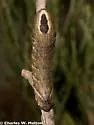
Istar Sphinx - Hodges#7799
Lintneria istar
Identification: Adult: forewing gray with brown tint and blackish band running from base to middle of outer margin; hindwing black with two white bands.
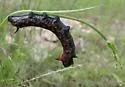
Lintneria separatus - Hodges#7798
Lintneria separatus
Identification: FW upperside with prominent; transverse wavy lines; lacking the pale area with dark distal band that runs from the base to outer margin behind the apex in Lintneria istar .
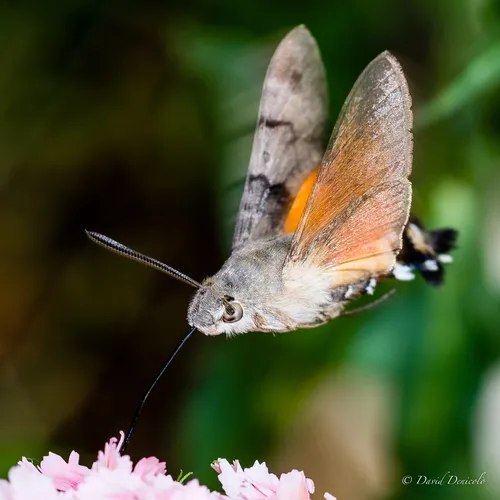
Humming-bird Hawk-moth
Macroglossum stellatarum
Wingspan 40-50 mm. It flies in the sunshine and hovers in front of flowers, sipping the nectar with its long proboscis, very much like the Hummingbird which gives it its name. Gardens, parks and other areas where its food plants occur. June to August
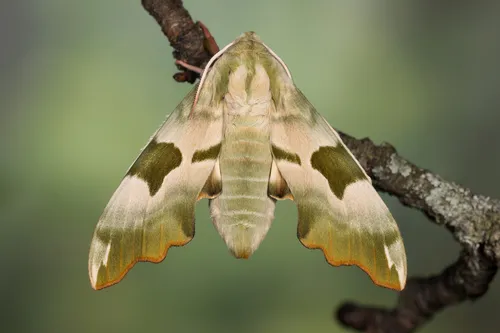
Lime Hawk-moth
Mimas tiliae
Wingspan 55-70 mm. It has a distinctive scalloped-edged forewing, subtly coloured in pinkish and green. The central dark band is quite variable in size and extent. Occupying woodland and suburban habitats. It flies in May and June, and often comes to
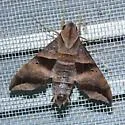
Half-blind Sphinx - Hodges#7846
Perigonia lusca
Identification: Rather similar to Enyo lugubris . Note smooth edge to forewing margin. In North America, restricted to South Florida.
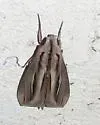
Caicus Sphinx - Hodges#7840
Phryxus caicus
Identification: Brown forewing with a tan band along the inner margin and a thin tan streak in the middle of the wing. The hindwing is red-orange with short black bands along the veins at the outer margin. The abdomen has distinct black and tan bands
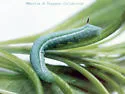
Yellow-Banded Day Sphinx - Hodges#7877
Proserpinus flavofasciata
Identification: The upperside of the forewing is medium to dark brown with a faint to distinct white median band. The upperside of the hindwing is dark brown with a wide orange median band which may not reach the inner margin. The moth mimics a bumbl
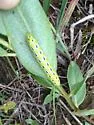
Proud Sphinx - Hodges#7874
Proserpinus gaurae
Identification: Adults of Proserpinus gaurae similar to Proserpinus juanita , though guarae is more reddish than the more green juanita . Also, the hindwing of guarae has subtle to no dark shading on the submarginal edge, while in juanita the same ar
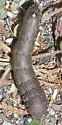
Terloo Sphinx - Hodges#7879
Proserpinus terlooii
Identification: Adult - uniform olive green with a darker median band. Hindwing is red with an olive green border. Adults are not strongly attracted to lights. They are most often found at flowers in early evening or at night. Use a flashlight at nig
Proserpinus vega - Hodges#7878
Proserpinus vega
Identification: Dark green basal patch at base of forewings distinguishes this species from similar sympatric species Proserpinus terlooii. Not commonly reported.
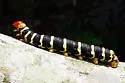
Tetrio Sphinx - Hodges#7830
Pseudosphinx tetrio
Identification: The larva of this hawkmoth has a long thread-like anal horn. It is very strikingly colored, the body being purplish black, girdled with yellow rings between the segments, and the head and anal claspers being bright red, of the color o
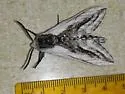
Elsa's Sphinx - Hodges#7792
Sagenosoma elsa
Identification: The forewing has a distinctive wide white band along the costa from the base to the apex.
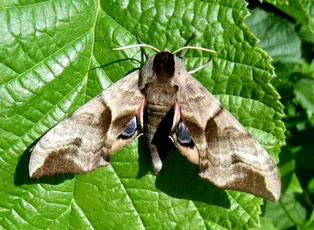
Eyed Hawk-moth
Smerinthus ocellata
Wingspan 70-80 mm. This species has a sombre, camouflaged appearance at rest, but if provoked, flashes the hind wings, which are decorated with intense blue and black 'eyes' on a pinkish background. The green caterpillars resemble those of the Poplar
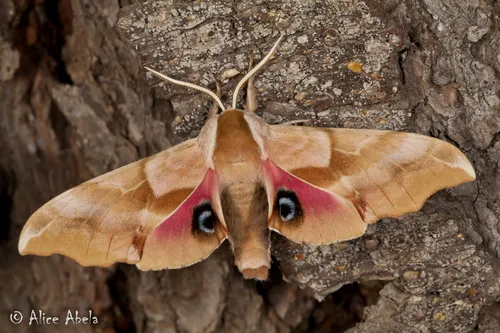
Smerinthus ophthalmica - Hodges#7822.1
Smerinthus ophthalmica
Identification: Adult : Very similar to Smerinthus cerisyi , except males of S. ophthalmica have narrower antennal pectinations, smoother FW outer margin, more sharply angled AM, smoother PM, less contrasting paler veins, and a less conspicuous ST.
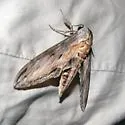
Franck's Sphinx - Hodges#7808
Sphinx franckii
Identification: Forewing is gray along the costal half, yellowish brown on the rest of the wing; with black dashes and a black line along the outer margin. Hindwing is black with a narrow brown median band and base. Uncommon and northern populations
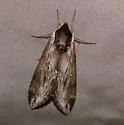
Apple Sphinx - Hodges#7810
Sphinx gordius
Identification: Color and markings are highly variable. Fringes on forewing are mostly black with some white, those on the hindwing are mostly white with a few black patches. Forewing ranges from brown with black borders through brownish gray with pa
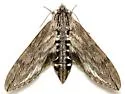
Incense Cedar Sphinx - Hodges#7804
Sphinx libocedrus
Identification: Forewings and most of body nondescript gray, cryptic. Hindwings darker gray with a narrow pale tranverse band. Abdomen has black sides with a row of five bold white spots, concealed beneath the wings when at rest. G3 - threatened due
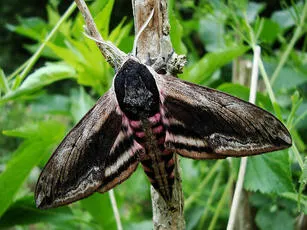
Privet Hawk-moth
Sphinx ligustri
Wingspan 90 to120 mm. Our largest resident hawk-moth, which has distinctive pink and black barring on the body. The similarly-striped hindwings are often concealed. It frequents woodland and suburban habitats. Flies in June and July, with a single ge
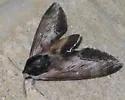
Clemens' Sphinx - Hodges#7811
Sphinx luscitiosa
Identification: Adult: forewing mostly yellowish-gray in male; pale gray with slight yellow tint in female; black shading beyond PM line widens toward inner margin in both sexes; hindwing deep yellow in male, pale yellow in female; outer border black
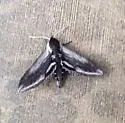
Elegant Sphinx - Hodges#7805
Sphinx perelegans
Identification: The larva has a shield on the first thoracic segment, which is of the same color as the body and which forms a tight-fitting hood over the vertex of the head. This hides a pair of glossy black spots on top of the head, which are revea
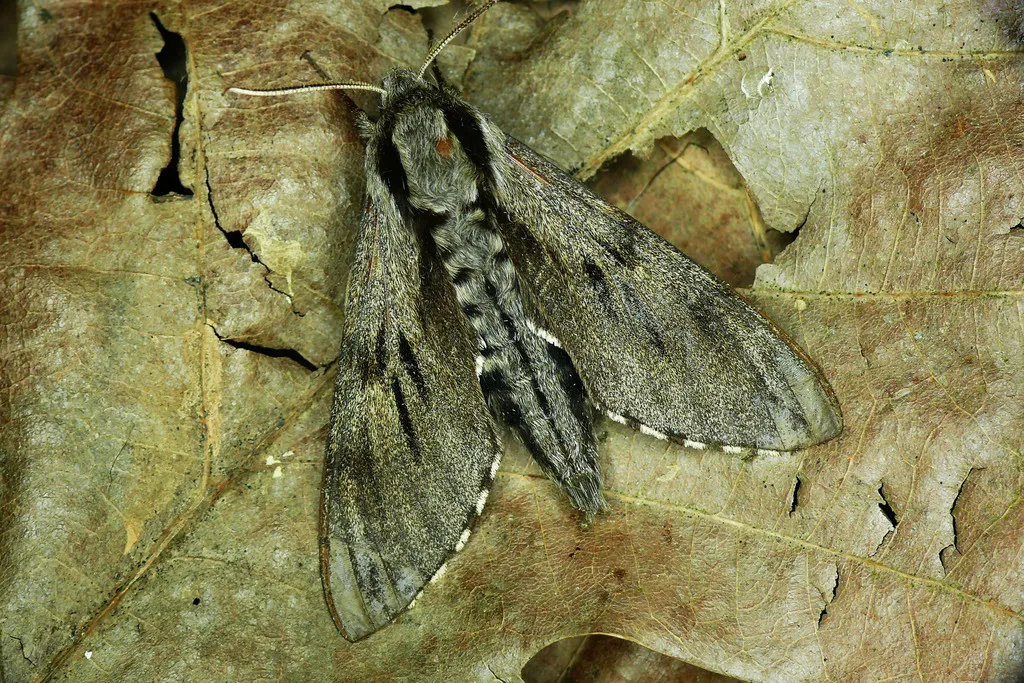
Pine Hawk-moth
Sphinx pinastri
Wingspan 65-80 mm. A fairly nondescript member of the hawk-moths, the greyish brown wings usually have three or four dark streaks in the centre. It inhabits coniferous woodland and areas where Scots Pine is present. It flies in a single generation fr
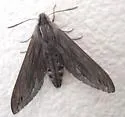
Sphinx sequoiae - Hodges#7814
Sphinx sequoiae
Identification: Description at Pacific Northwest Moths
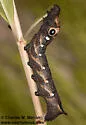
Falcon Sphinx - Hodges#7889
Xylophanes falco
Identification: Adult: forewing slender, pointed, with slightly hooked tip and falcate inner margin; upper half orangish-brown, bordered below by dark brown or blackish longitudinal band from base to apex; 3 or 4 dark lines run parallel to outer marg
Xylophanes libya - Hodges#7891
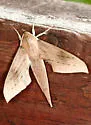
Xylophanes libya
This species is tentatively identified as Xylophanes libya, but may be any number of similar Xylophanes species that are difficult to separate from photos alone. Regardless of the true identity, this species is not known to be a resident of the U.S.,
Clavipes Sphinx - Hodges#7848
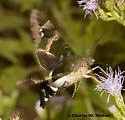
Aellopos clavipes
Titan Sphinx - Hodges#7849
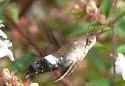
Aellopos titan
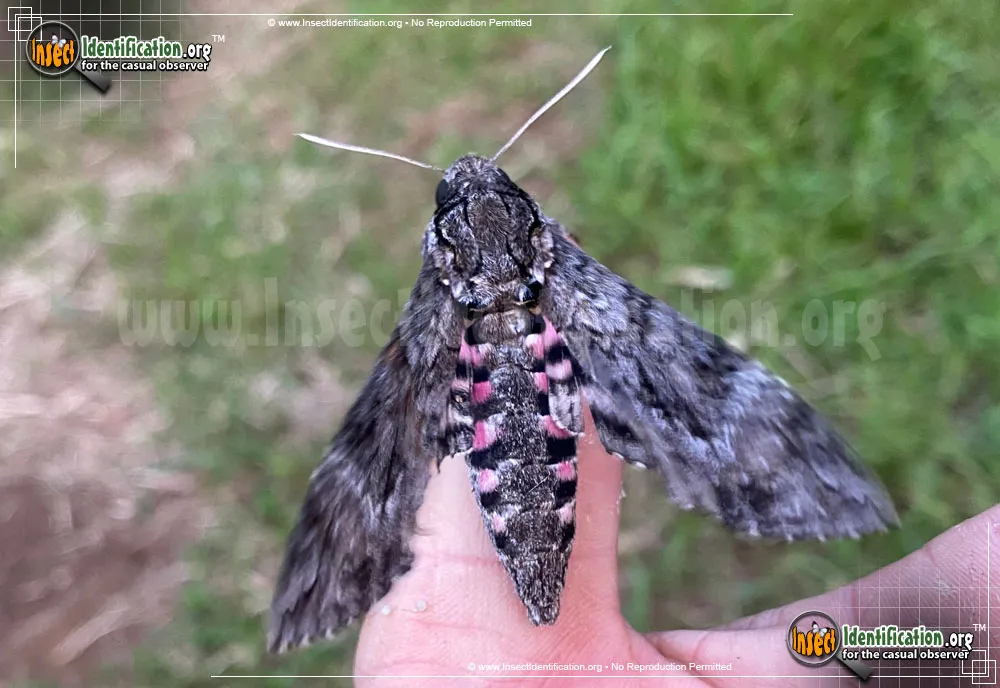
Pink-spotted Hawkmoth
Agrius cingulata
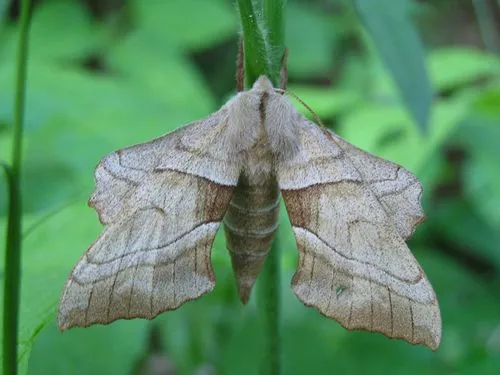
Walnut Sphinx Moth
Amorpha juglandis
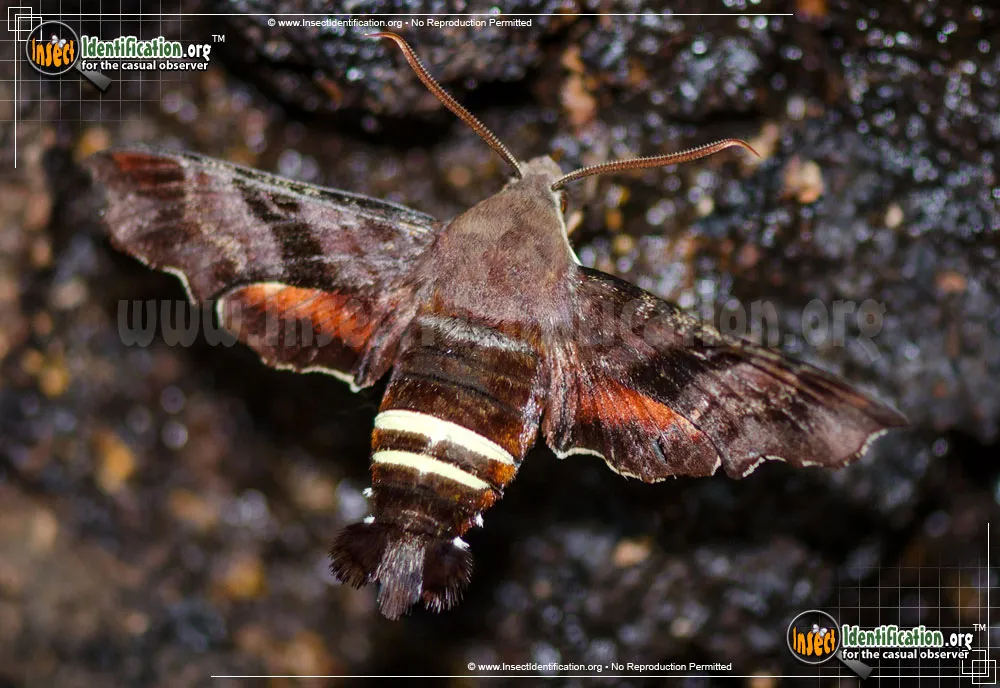
Nessus Sphinx Moth
Amphion floridensis
Grote's sphinx - Hodges#7867
Cautethia grotei
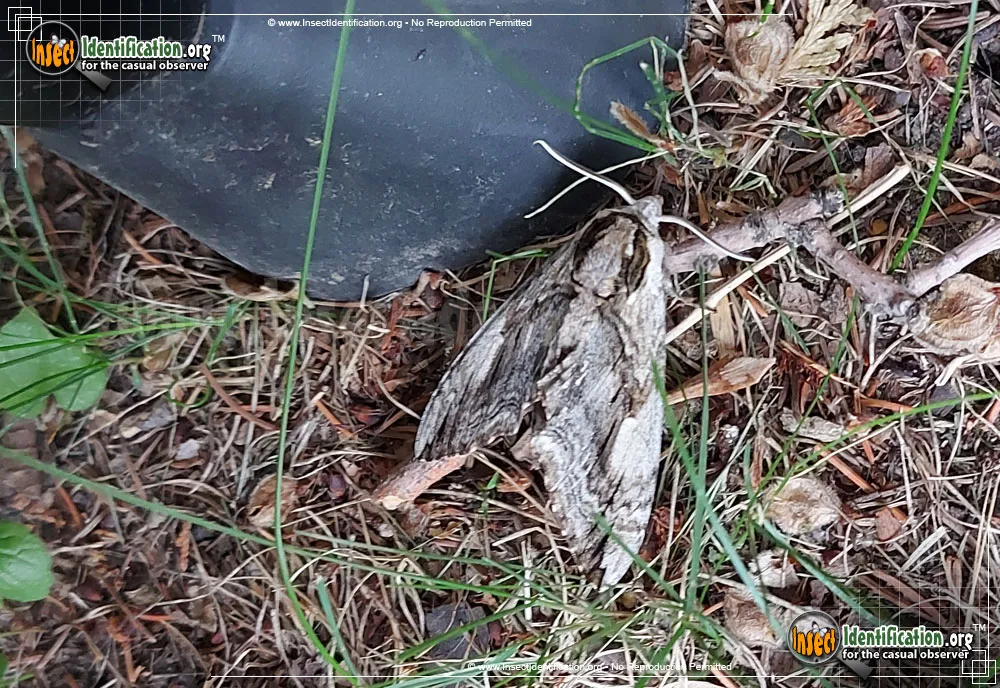
Elm Sphinx
Ceratomia amyntor
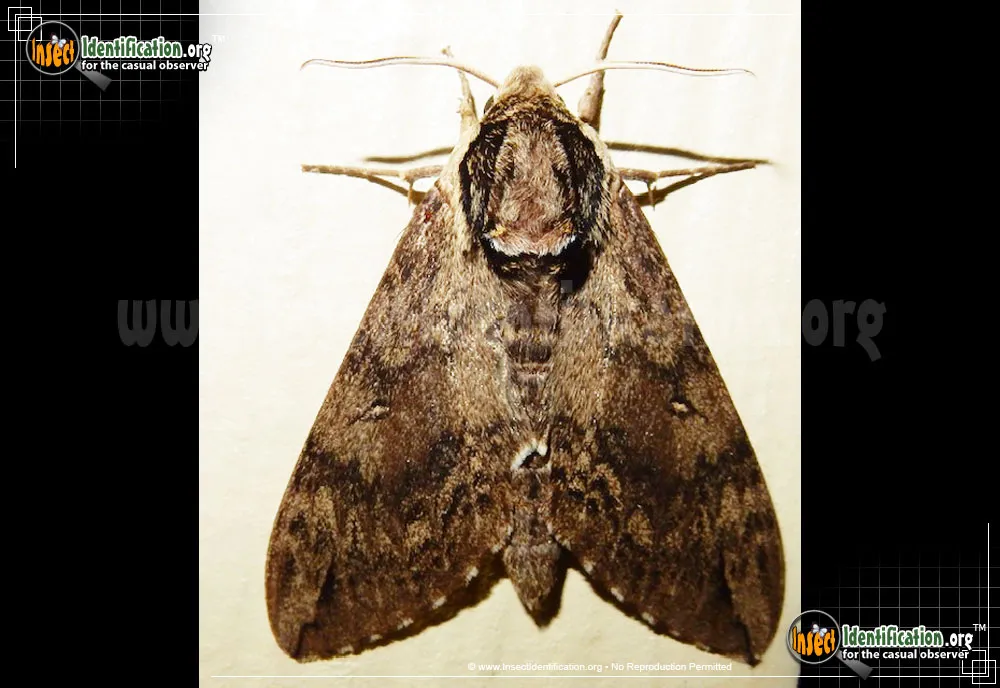
Catalpa Sphinx
Ceratomia catalpae
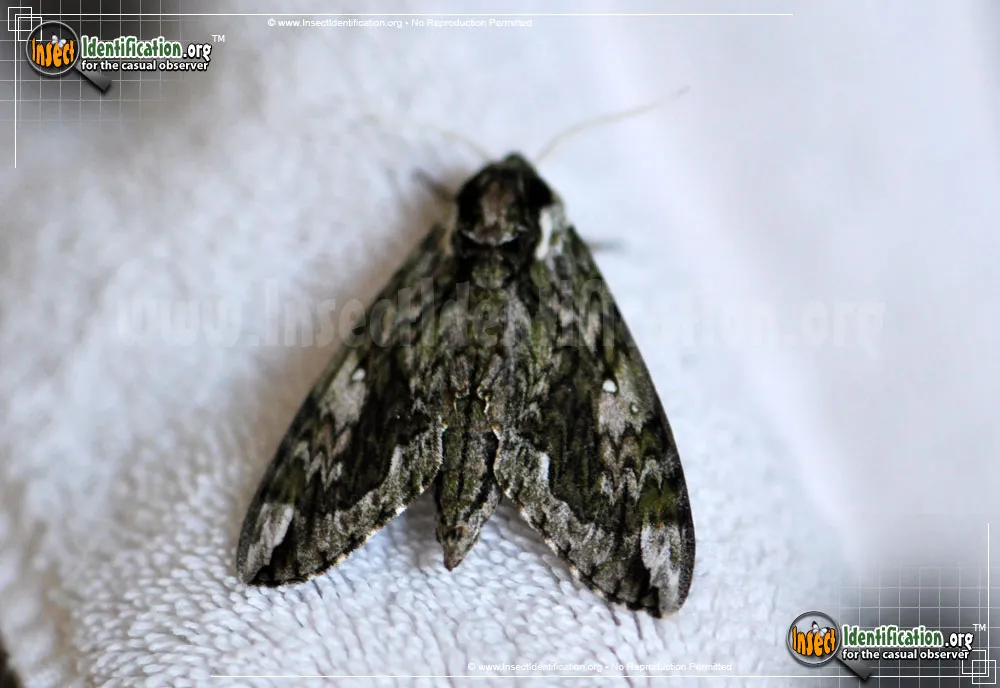
Hagen's Sphinx Moth
Ceratomia hageni
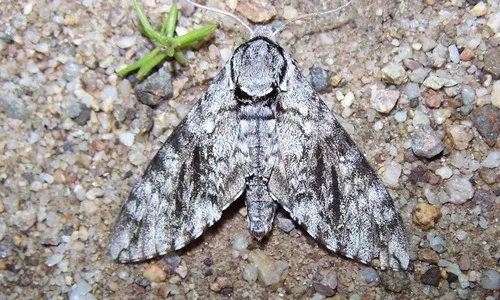
Sonoran Sphinx - Hodges#7788
Ceratomia sonorensis
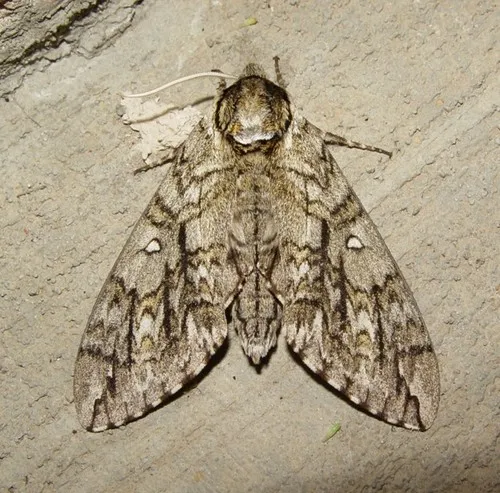
Waved Sphinx Moth
Ceratomia undulosa
Giant Sphinx - Hodges#7772
Cocytius antaeus
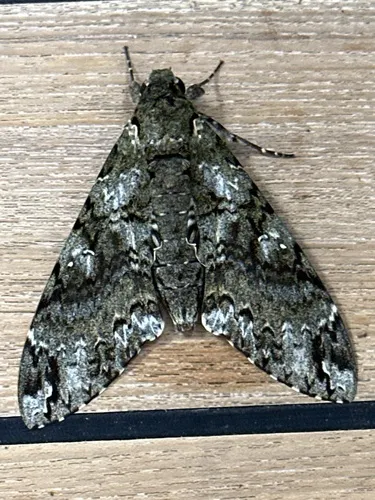
Duponchel's Sphinx - Hodges#7773
Cocytius duponchel
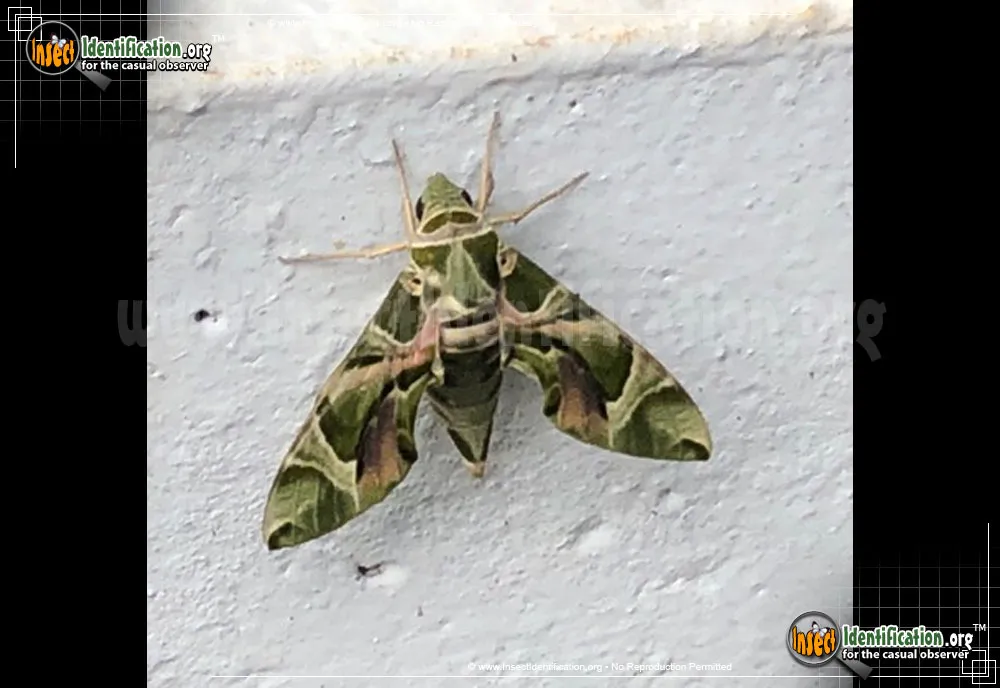
Oleander Hawk Moth
Daphnis nerii
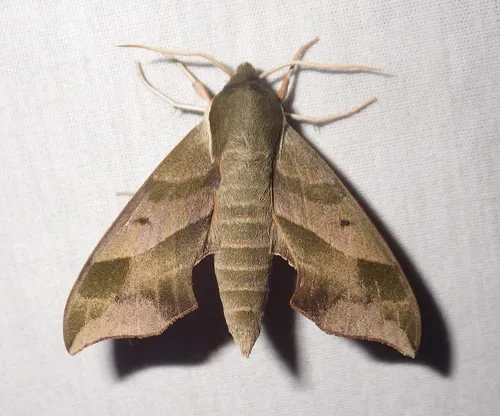
Virginia Creeper Sphinx
Darapsa myron
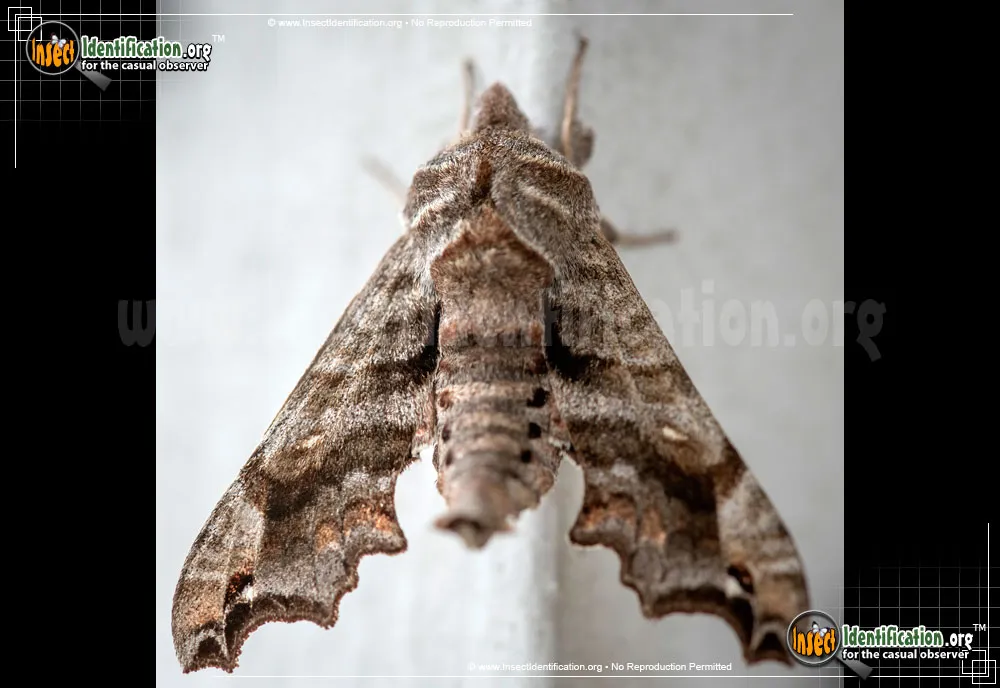
Lettered Sphinx
Deidamia inscriptum
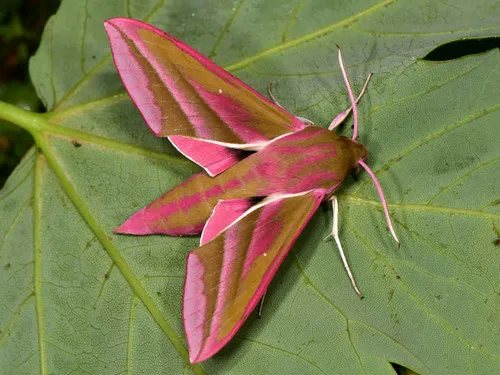
Elephant Hawk Moth
Deilephila elpenor
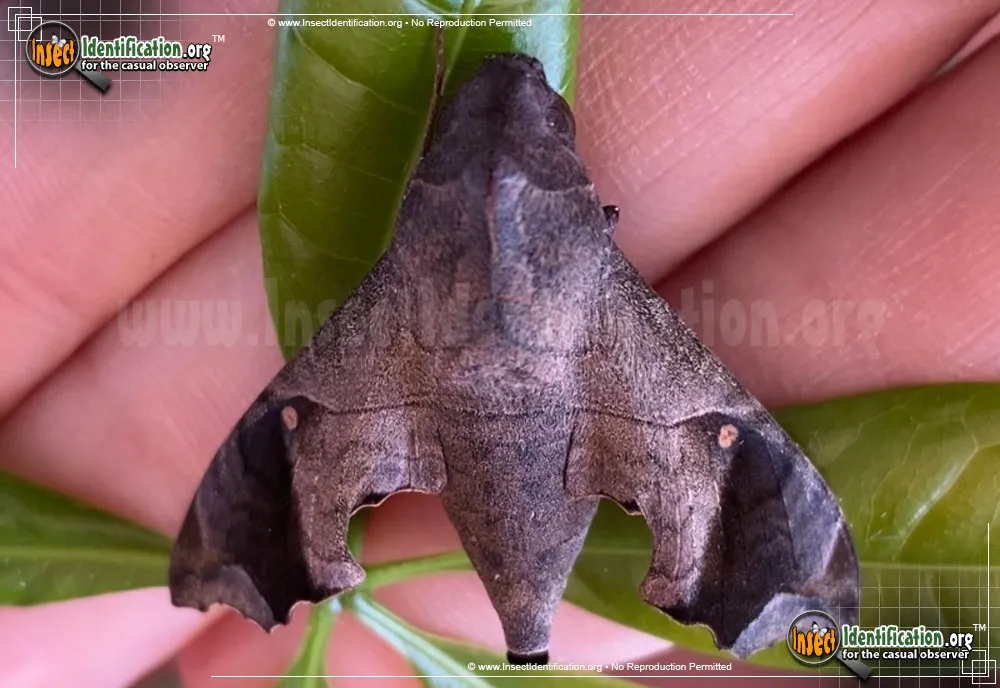
Mournful Sphinx Moth
Enyo lugubris
Enyo ocypete - Hodges#7852
Enyo ocypete
Oleander sphinx moth - Hodges#7835
Erinnyis oenotrus
Erinnyis yucatana - Hodges#7839.1
Erinnyis yucatana
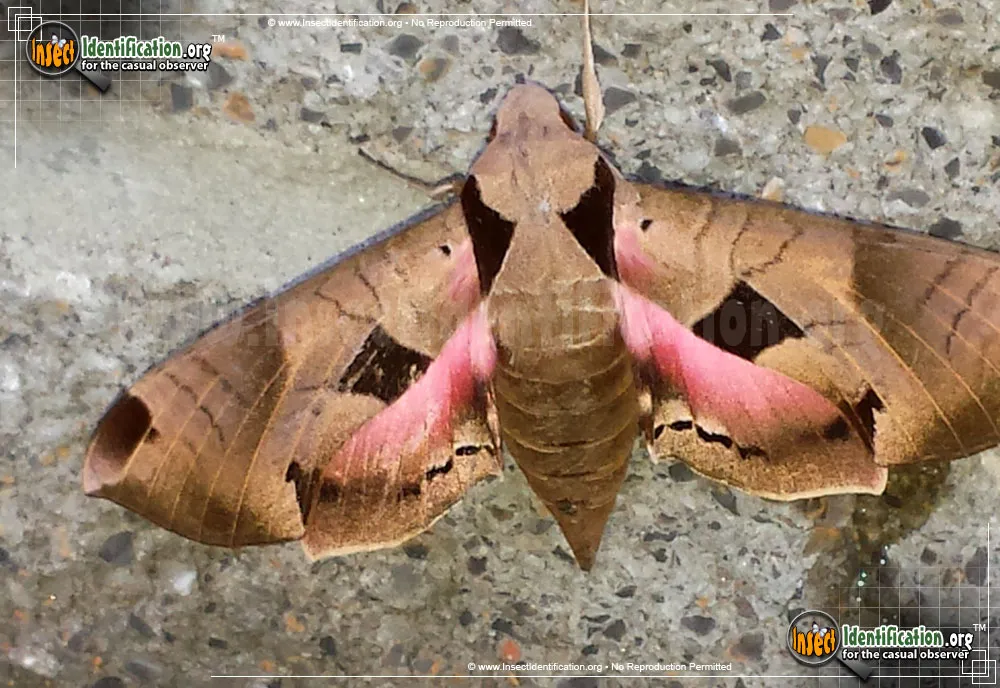
Achemon Sphinx Moth
Eumorpha achemon
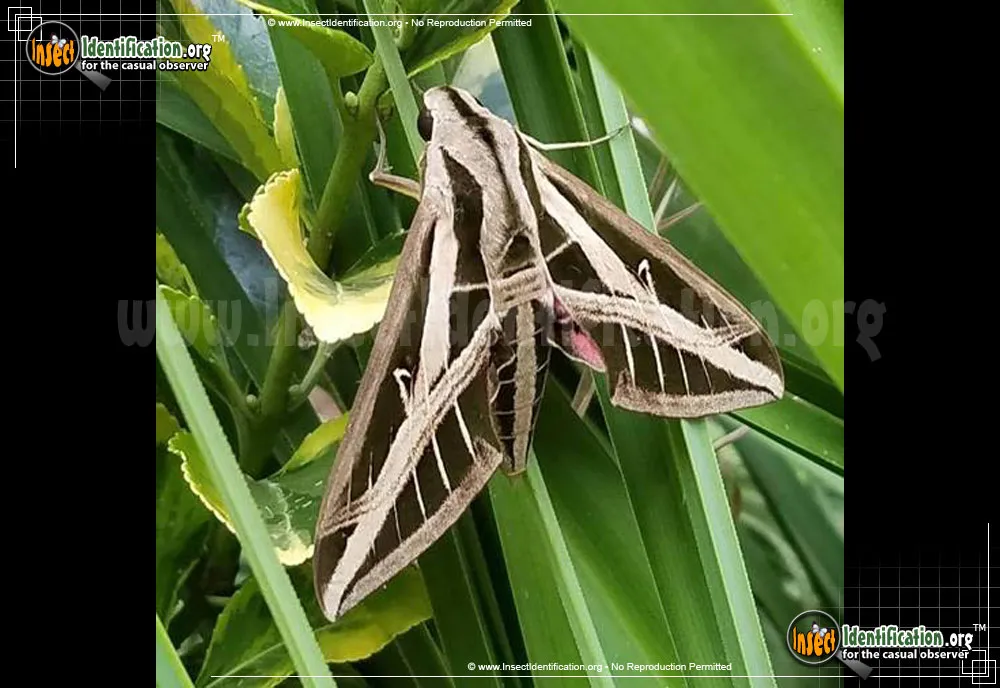
Banded Sphinx
Eumorpha fasciatus
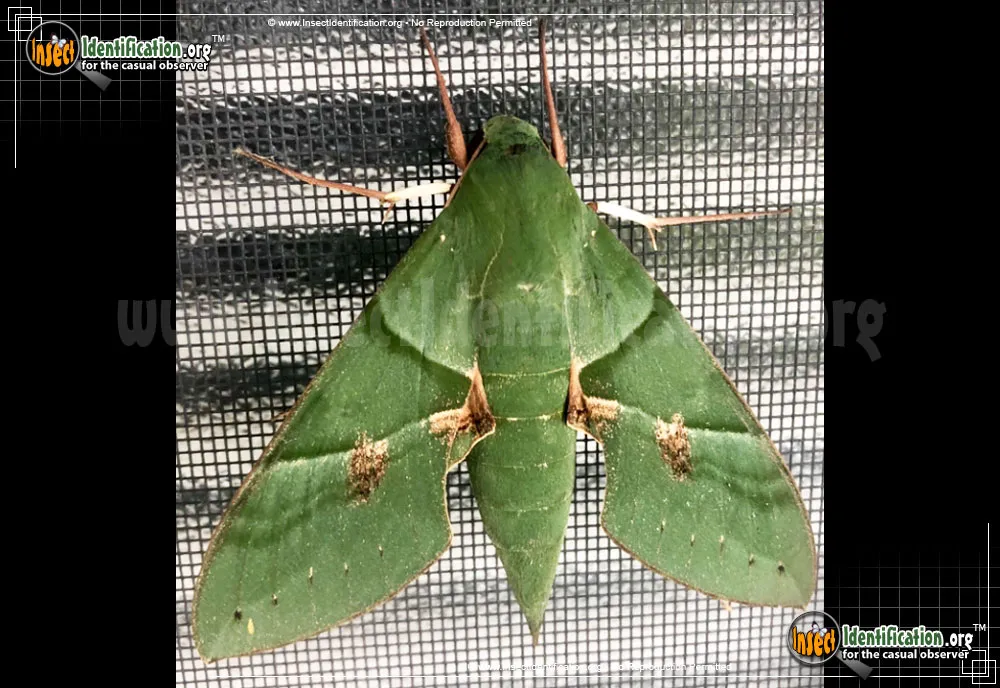
Gaudy Sphinx Moth
Eumorpha labruscae
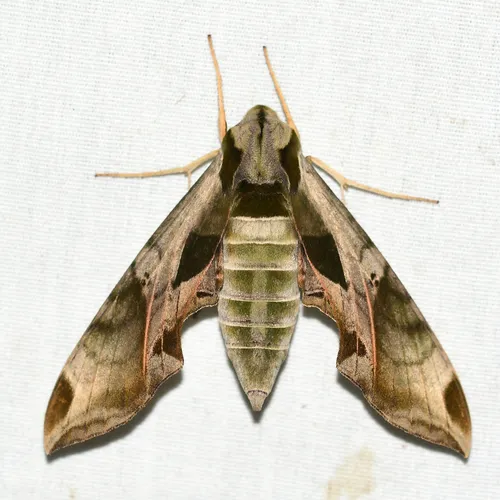
Pandorus Sphinx Moth
Eumorpha pandorus
Typhon Sphinx - Hodges#7863
Eumorpha typhon
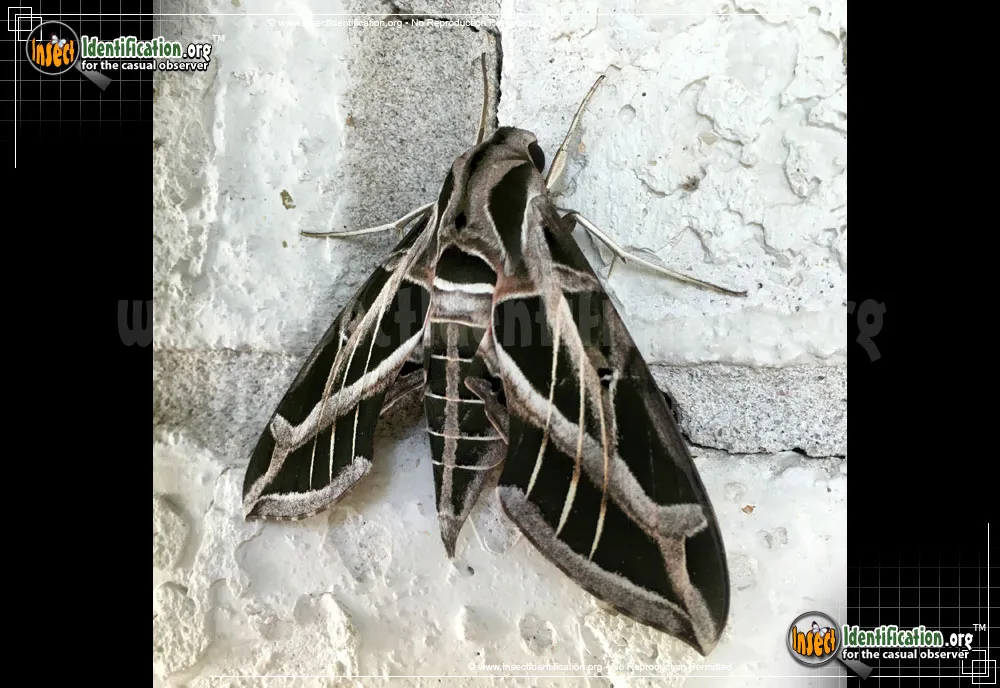
Vine Sphinx Moth
Eumorpha vitis
Euterpe Sphinx - Hodges#7881
Euproserpinus euterpe
Sagra Sphinx Moth - Hodges#7846.1
Eupyrrhoglossum sagra
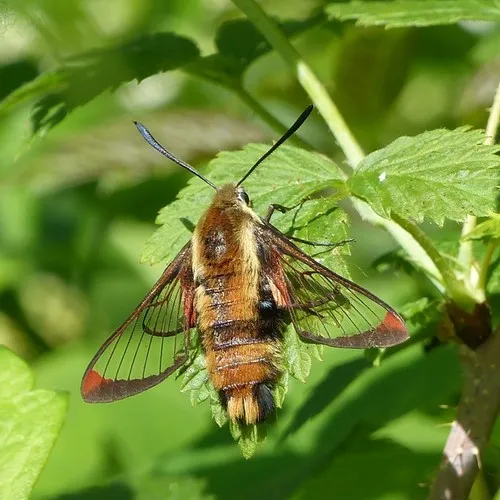
Hemaris aethra - Hodges#7855.2
Hemaris aethra
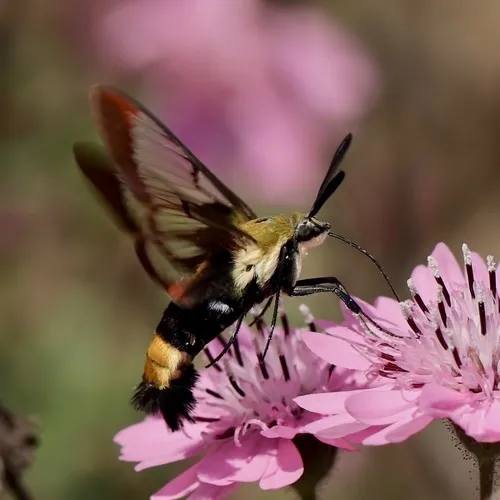
Snowberry Clearwing Moth
Hemaris diffinis
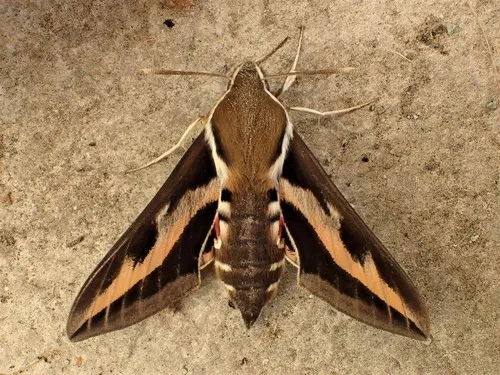
Galium Sphinx Moth
Hyles gallii
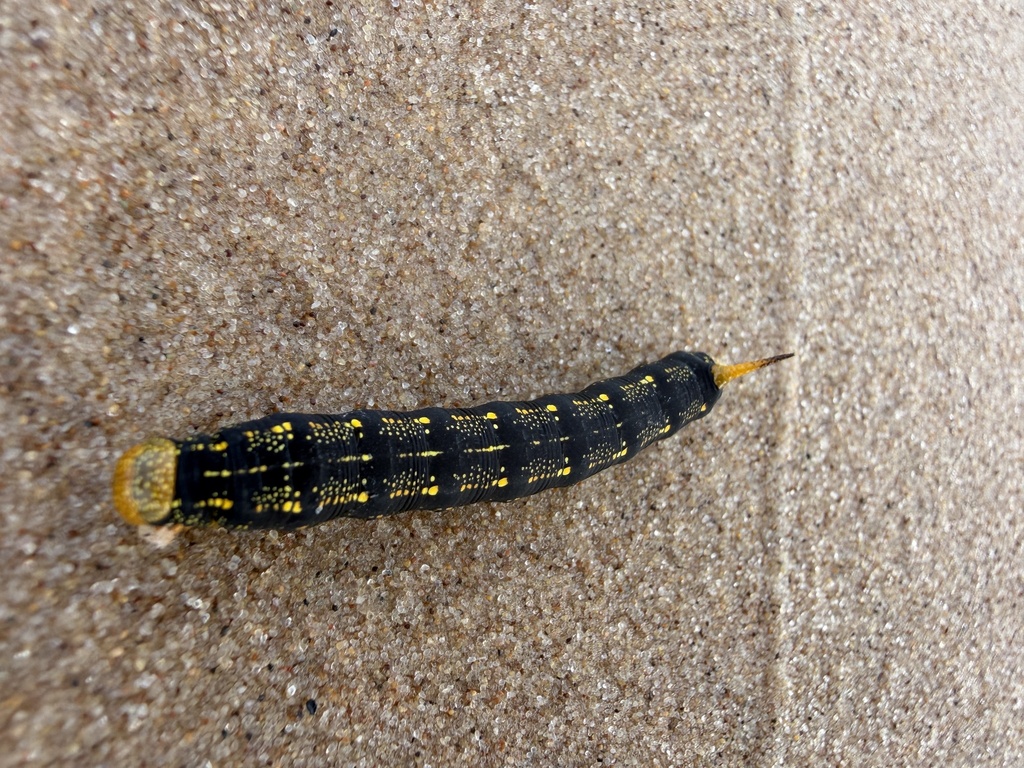
White-lined Sphinx Moth
Hyles lineata
no rights reservedIsognathus rimosa - Hodges#7831
Isognathus rimosa
Bald Cypress Sphinx - Hodges#7791
Isoparce cupressi
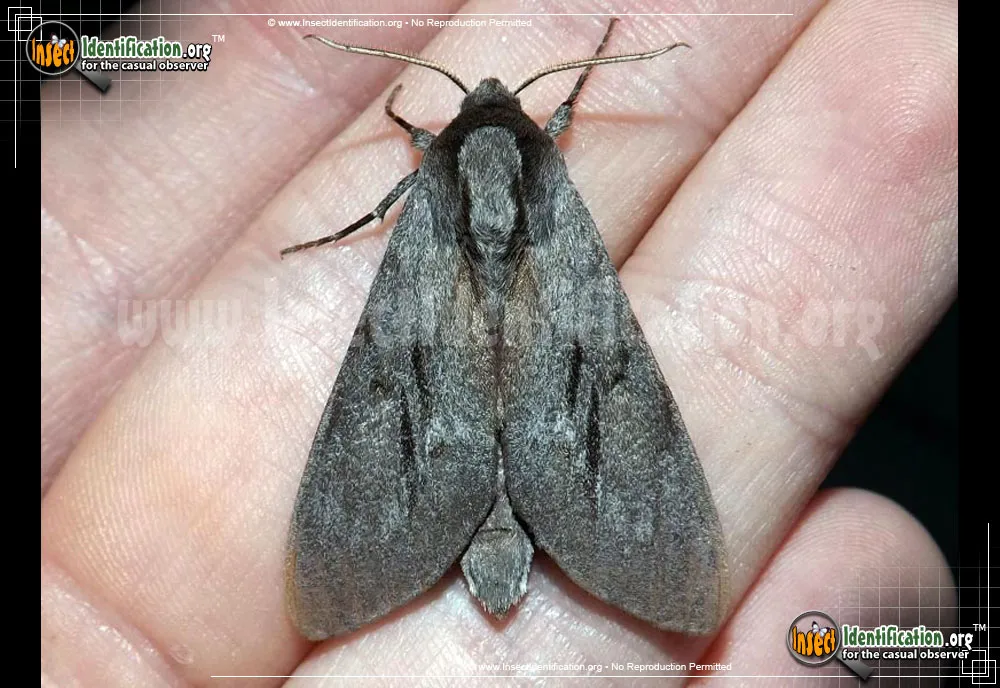
Southern Pine Sphinx
Lapara coniferarum
Madoryx pseudothyreus - Hodges#7843
Madoryx pseudothyreus
Cuban Sphinx Moth - Hodges#7780
Manduca brontes
Manduca florestan - Hodges#7782
Manduca florestan
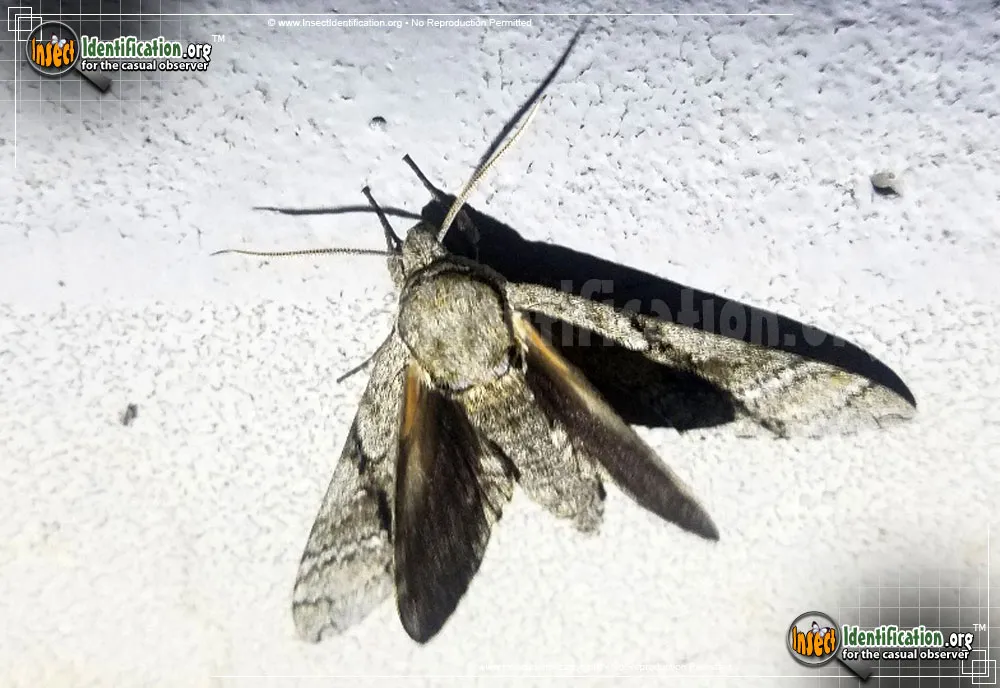
Ash Sphinx
Manduca jasminearum
Manduca lanuginosa - Hodges#7779.1
Manduca lanuginosa
Muscosa Sphinx - Hodges#7781
Manduca muscosa
Occult Sphinx - Hodges#7777
Manduca occulta
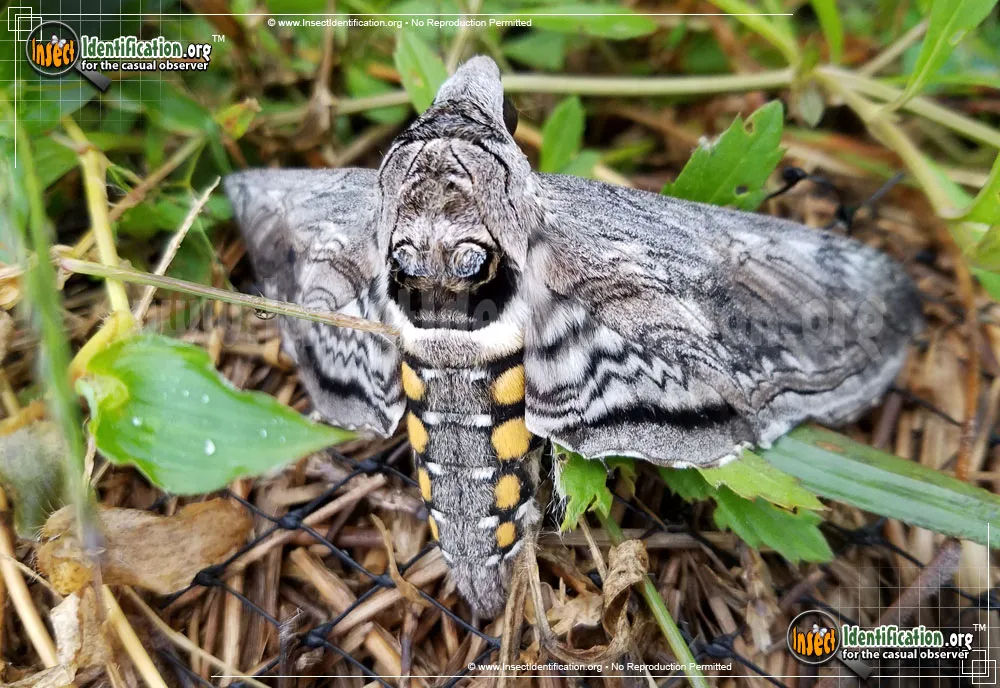
Five-spotted Hawk Moth
Manduca quinquemaculatus
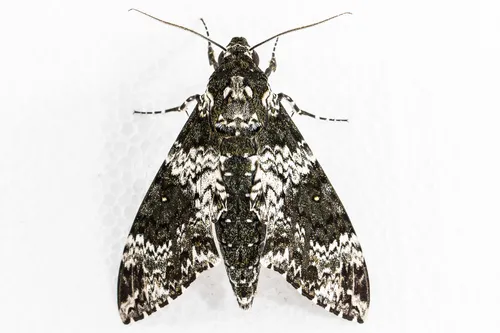
Rustic Sphinx Moth
Manduca rustica
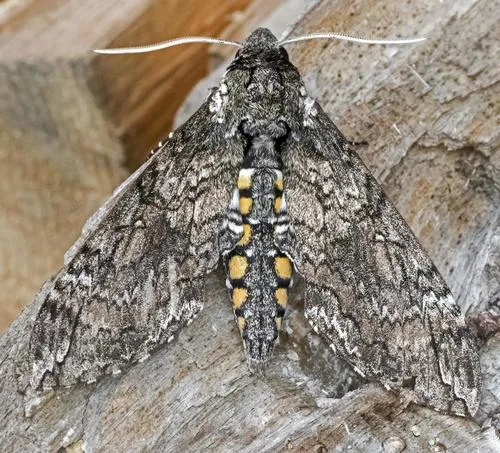
Tobacco Hornworm Moth
Manduca sexta