
White-shawled Isocorypha - Hodges#0299
Isocorypha mediostriatella
This record describes Isocorypha mediostriatella (species). Recorded family: Tineidae. Recorded order: Lepidoptera.
Identification and Appearance
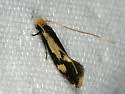
| Feature | Details |
|---|---|
| Head | Straw colored, long haired (scaled), with a slight reddish-brown tint on face. Palpi long, folded, bristled; yellowish on top, dark on underside. Antenna: Pale yellowish, thick, as long as wing. |
| Thorax | Brown with purplish reflections. Underside grayish, speckled. Wings: Dark purplish-brown. Wide gold stripe from base down center of wing. Two gold spots at each side at tip of center stripe. Fringe in sections of gold, then brown. Hind wings reddish-purple with dark fringe. |
| Legs | Brown. Hind shins (tibiae) hairy. Underside of legs grayish, speckled. |
| Abdomen | Brownish-gray. Underside grayish, speckled. Genitalia: Types: Syntype as Tinea auristrigella male by Chambers 1873. # 14943 Locality: Kentucky. In Museum of Comparative Zoology, Cambridge, Mass. Holotype as Lecitocera flavistrigella by Walsingham, 1882. Locality: In Museum of Natural History, Philadelphia, Drexel University, Penn. Syntype as Isocorypha mediostriatella by Dietz, 1905. Locality: Atlantic States. In Museum of Comparative Zoology, Cambridge, Mass. In poor condition and glued to a paper point. No other syntypes are known. |
Classification
- Kingdom
- Animalia
- Phylum
- Arthropoda
- Class
- Insecta
- Order
- Lepidoptera (Butterflies and Moths)
- Superfamily
- Tineoidea
- Family
- Tineidae (Clothes Moths)
- Subfamily
- Tineinae
- Genus
- Isocorypha
Imported taxonomy record. Source availability varies; see the source references and editorial policy below.
Habitat and Range
Habitat
Damp woods.
Geographic Range
Eastern half of U.S., Texas and Oklahoma; Ontario
Seasonal Activity
June to September
Diet and Behavior
Diet: Debris, fungus, rotting animal and vegetation.
About Butterflies and Moths: the wider group
Order-level background for Lepidoptera, the group containing Isocorypha mediostriatella. Species-specific details appear above.
Group overview
Lepidoptera includes approximately 180,000 described species of butterflies and moths. Moths outnumber butterflies roughly 10:1. The monarch butterfly's eastern population has declined by more than 80% since the mid-1990s, and the western population by over 95% since the 1980s. The IUCN lists the migratory monarch as Vulnerable.
Ecological role of the group
Butterflies and moths are essential indicators of ecosystem health. As caterpillars, they are a primary food source for birds - a single nest of blue tit chicks requires ~10,000 caterpillars. Adult moths pollinate many night-blooming plants.
Economic and practical significance of the group
Lepidoptera are critical pollinators. In Europe, grassland butterfly species have declined by almost 50% since the early 1990s. In the UK, three-quarters of butterflies are in decline. In the U.S., five butterfly species have gone extinct since 1950, with 29 listed as endangered.
Recorded sources for this group: IUCN Red List, Xerces Society, USFWS, PNAS, WWF. Imported estimates may describe particular regions or reporting periods.
Photos of White-shawled Isocorypha - Hodges#0299 (5)
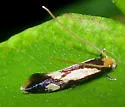
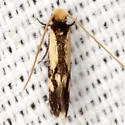
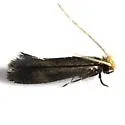
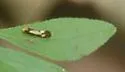
Photo credits: Contributed by john and jane balaban; Additional contributions by Tony-2 , Robert Lord Zimlich , Fyn Kynd , lee_penner , Blocky , Robert H. Biagi
Frequently Asked Questions About White-shawled Isocorypha - Hodges#0299
What is White-shawled Isocorypha - Hodges#0299?
White-shawled Isocorypha - Hodges#0299 (Isocorypha mediostriatella) is a species in the family Tineidae, within the order Lepidoptera.
How big is White-shawled Isocorypha - Hodges#0299?
WS 8 to 9 mm.
How do you identify White-shawled Isocorypha - Hodges#0299?
| Feature | Details |
|---|---|
| Head | Straw colored, long haired (scaled), with a slight reddish-brown tint on face. Palpi long, folded, bristled; yellowish on top, dark on underside. Antenna: Pale yellowish, thick, as long as wing. |
| Thorax | Brown with purplish reflections. Underside grayish, speckled. Wings: Dark purplish-brown. Wide gold stripe from base down center of wing. Two gold spots at each side at tip of center stripe. Fringe in sections of gold, then brown. Hind wings reddish-purple with dark fringe. |
| Legs | Brown. Hind shins (tibiae) hairy. Underside of legs grayish, speckled. |
| Abdomen | Brownish-gray. Underside grayish, speckled. Genitalia: |
Where is White-shawled Isocorypha - Hodges#0299 found?
| Feature | Details |
|---|---|
| Habitat | Damp woods. |
| Range | Eastern half of U.S., Texas and Oklahoma; Ontario |
What does White-shawled Isocorypha - Hodges#0299 eat?
The diet of the White-shawled Isocorypha - Hodges#0299 includes Debris, fungus, rotting animal and vegetation..
When is White-shawled Isocorypha - Hodges#0299 active?
White-shawled Isocorypha - Hodges#0299: seasonal activity - June to September.