
Family Fungus Moths, Clothes Moths, & Allies (Tineidae)
Tineidae is a family in the order Lepidoptera. Browse 169 named species recorded in this family, or open an individual profile for its available identification and natural-history information.
Species in Tineidae (169)
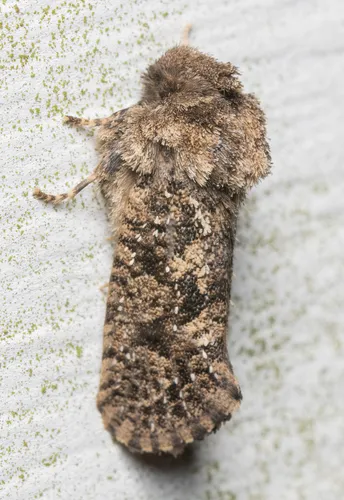
Arcane Grass Tubeworm Moth
Acrolophus arcanella
The Grass Tubeworm Moth (Acrolophus arcanella) is a moth of the Acrolophidae family. It is found in eastern North America.
Acrolophus bicornutus - Hodges#0343
Acrolophus bicornutus
Identification: Specimen identified by DNA analysis (BOLD). More information very soon!!
Acrolophus cockerelli - Hodges#0345
Acrolophus cockerelli
Identification: "[The] moths are in the cockerelli species group and may be that species. To be certain I would need to see a slide of the male genitalia." - Don Davis at the USNM, commenting on the following photo.
Cresson's Grass-tubeworm Moth - Hodges#0347
Acrolophus cressoni
Identification: The original description as Eulepiste cressoni Walsingham, 1882 and the Hasbrouck 1964 revised description as Acrolophus cressoni (Walsingham) are available online in the print references below or PDF. Specimen identified by DNA analy
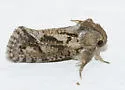
Acrolophus filicicornis - Hodges#0352
Acrolophus filicicornis
Identification: The original description as Felderia filicicornis Walsingham, is available in PDF or view online. Adult: Labial palpi recurved reaching the length of thorax. Hindwing is brown with light purple tinge. Specimen identified by DNA analys
Acrolophus forbesi - Hodges#0353
Acrolophus forbesi
Identification: Similar to Acrolophus piger, but evidently less common. Eyes are not setose like A. piger, but this is only visible under magnification and is usually not apparent in live photos.
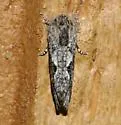
Acrolophus griseus - Hodges#0355
Acrolophus griseus
Identification: Walsingham original description as Hypoclopus griseus is available in PDF. Specimen identified by DNA analysis (BOLD).
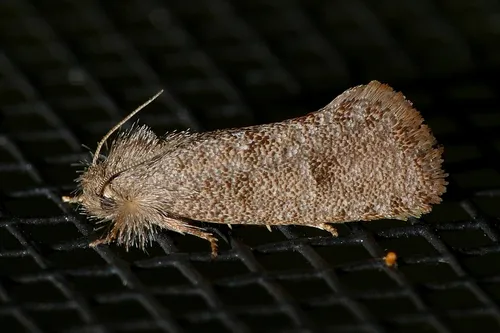
Heppner's Grass Tubeworm Moth
Acrolophus heppneri
Acrolophus heppneri is a moth of the Acrolophidae family. It was described by Davis in 1990. It is found in North America, including Alabama, Florida, Mississippi and Texas.
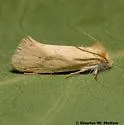
Acrolophus laticapitana - Hodges#0359
Acrolophus laticapitana
Identification: Adult - small, slender, somewhat like tortricids. Pale yellow to tan or whitish gray. ,
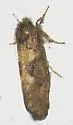
Late Tubeworm Moth - Hodges#0367
Acrolophus mora
Identification: Most easily distinguished from others in the genus by its late flight season (September-October), long after other Acrolophus in its range have peaked. It is mostly a Northeastern/Appalachian species, flying along with other late-seas
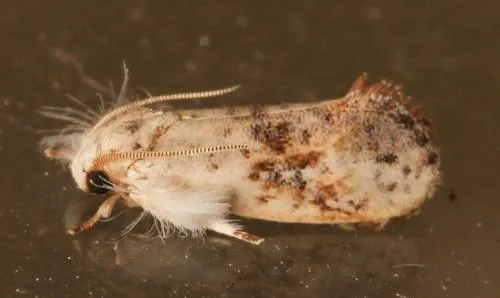
Frilly Grass Tubeworm Moth
Acrolophus mycetophagus
The Frilly Grass Tubeworm Moth (Acrolophus mycetophagus) is a moth of the Acrolophidae family. It was described by Davis in 1990. It is found in North America, including Alabama, Florida, Georgia, Louisiana, Mississippi, North Carolina, South Carolin
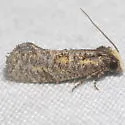
Acrolophus near-simulatus - Hodges#0381.1
Acrolophus near-simulatus
Identification: Numerous photos posted on iNaturalist and BugGuide show what appears to be a paler washed-out entity similar to A. simulatus. These may prove to be a regional variation of A. simulatus, or a distinct, presumably undescribed, species.
Acrolophus occidens - Hodges#0367.2
Acrolophus occidens
Identification: Specimen determined by DNA analysis (BOLD).
Panama Grass Tubeworm Moth
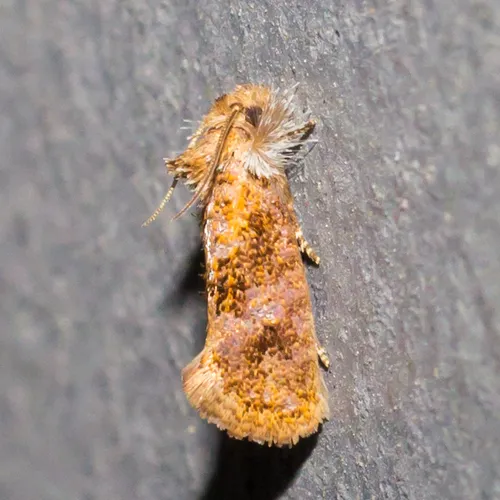
Acrolophus panamae
Acrolophus panamae, the Panama grass tubeworm moth, is a moth of the Acrolophidae family. It was described by August Busck in 1914. It is found in North America, including Alabama, Delaware, Florida, Georgia, Maryland, Mississippi, New Jersey, North
Piger Grass Tubeworm Moth
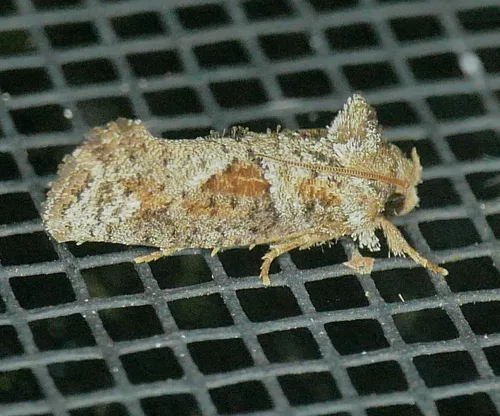
Acrolophus piger
Acrolophus piger, the piger grass tubeworm moth, is a moth of the Acrolophidae family. It was described by Harrison Gray Dyar Jr. in 1900. It is found in North America, including Alabama, Florida, Mississippi, North Carolina, South Carolina and Texas
Eastern Grass Tubeworm Moth
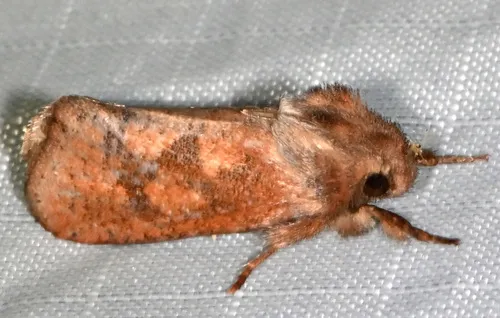
Acrolophus plumifrontella
The Eastern Grass-tubeworm Moth (Acrolophus plumifrontella) is a moth of the Acrolophidae family. It is found in North America, including Alabama, Arizona, Arkansas, Florida, Georgia, Illinois, Indiana, Iowa, Kansas, Kentucky, Louisiana, Maryland, Mi
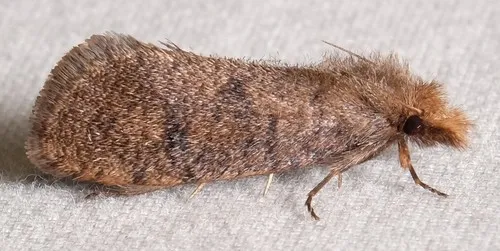
Walsingham's Grass Tubeworm Moth
Acrolophus propinqua
Acrolophus propinqua (Walsingham's grass tubeworm moth) is a moth of the family Acrolophidae. It is found in North America, including Alabama, Florida, Georgia, Illinois, Louisiana, Maryland, Mississippi, North Carolina, New York, Ohio, South Carolin
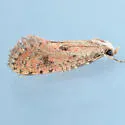
Acrolophus pyramellus - Hodges#0377
Acrolophus pyramellus
Identification: The original description as Eulepiste pyramellus Barnes & McDunnough, and the revised description by Hasbrouck are in the print references below. Photo determined by Peter Jump.
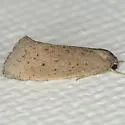
Acrolophus spilotus - Hodges#0382.1
Acrolophus spilotus
Identification: The speckled forewing pattern usually distinguishes this species from all other Acrolophus . The speckling may not be visible in extremely dark or worn specimens ).
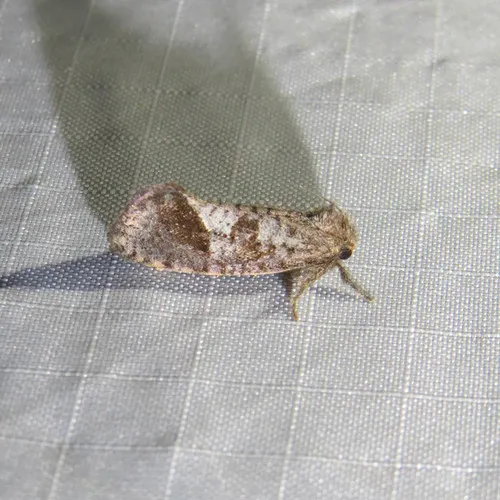
Texas Grass Tubeworm Moth
Acrolophus texanella
The Grass Tubeworm or Texas Grass Tubeworm Moth (Acrolophus texanella) is a moth of the Acrolophidae family. It is found from Maryland to Florida and to Texas.
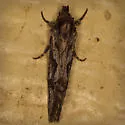
Acrolophus variabilis - Hodges#0385
Acrolophus variabilis
Identification: Adult. Variable color and pattern. Brown hindwing with lavender fringe. ♂ antennae are serrate. Notes from Moth Photographers Group ] "Peter Jump reports that you can't separate Acrolophus variabilis [0385] from A. macrophallus [0363]
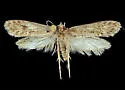
Amydria californica - Hodges#0329.1
Amydria californica
Identification: Specimen identified by DNA analysis: Genitalia:
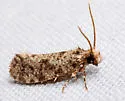
Amydria dyarella - Hodges#0333
Amydria dyarella
Identification: Genitalia: This is likely a species complex containing at least one undescribed species. All placements to this species should be considered tentative at best until further taxonomic investigation.
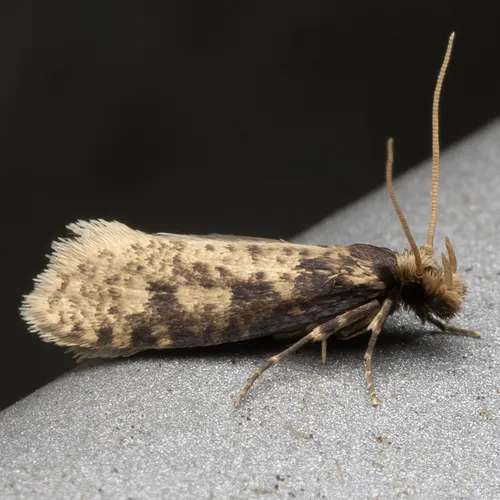
Brown-blotched Amydria Moth
Amydria effrenatella
Amydria effrentella is a moth of the family Acrolophidae. It is found in North America, including Alabama, Arizona, Arkansas, California, Georgia, Illinois, Indiana, Kentucky, Maryland, Massachusetts, Minnesota, Mississippi, Nevada, New Brunswick, Ne
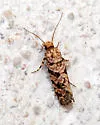
Amydria obliquella - Hodges#0336
Amydria obliquella
Identification: The original description of Amydria obliquella Dietz, is available in PDF or view online in the print references below.
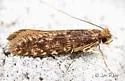
Cephimallota obscurostrigella - Hodges#0324
Cephimallota obscurostrigella
Cephimallota obscurostrigella - Hodges#0324 (Cephimallota obscurostrigella) is a species in the family Tineidae, commonly known as clothes moths, belonging to the order Lepidoptera (Butterflies and Moths). It is classified within the subfamily Myrmec
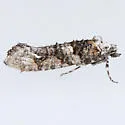
Dyotopasta yumaella - Hodges#0322
Dyotopasta yumaella
Commonly found in association with Melitara (pricklypear borer) larvae. ( 4 )
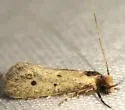
Eccritothrix guenterella - Hodges#0422
Eccritothrix guenterella
Identification: Summary of Chambers description. Forewings straw color and dusted with brownish gray scales. The head is a shade deeper yellow. There are two small brownish gray spots in the middle of the forewing, the one nearest the costal margin i
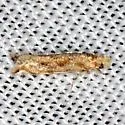
Caribbean Scavenger Moth - Hodges#0304
Erechthias minuscula
Identification: Adult: FW ground color is mostly cream or pale straw-colored. The forewings, which are strongly upturned at the tips, are variably and extensively marked with pale to dark brown scales. Larve: See Zimmerman, E.C., 1978 in Print Refere
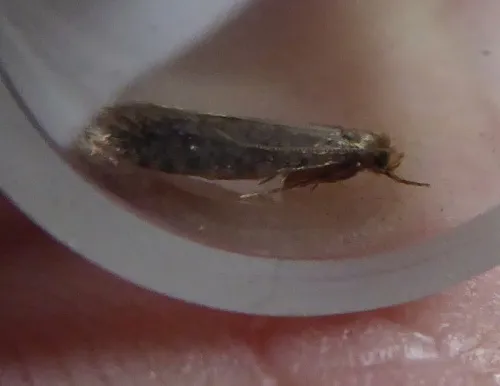
Haplotinea insectella
Haplotinea insectella
Wingspan about 12 mm. A rather drab looking species. The forewings are of a pale ochre mottled with dark fuscous.R Determination by genitalia examination (gen. det.) required. Warehouses, granaries, mills and farm buildings. Larva feeds on dried good
Homosetia bifasciella - Hodges#0287
Homosetia bifasciella
Identification: Head: Face front white, top of head dark brown, long haired (scaled). Palpi folded, yellowish-white, with long brown scales on underside. Antenna: Grayish-yellow, ringed (annulated) with brown. Segment 1 entirely dark brown. Thorax: D
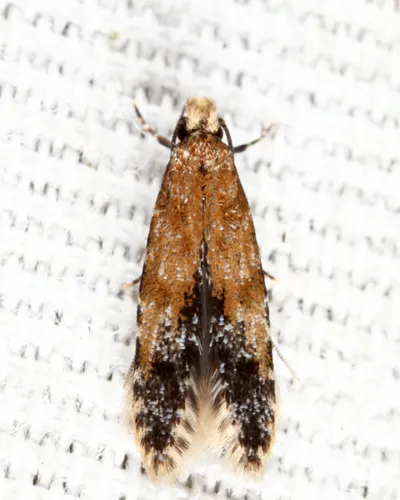
Homosetia costisignella - Hodges#0289
Homosetia costisignella
Homosetia costisignella - Hodges#0289 (Homosetia costisignella) is a species in the family Tineidae, commonly known as clothes moths, belonging to the order Lepidoptera (Butterflies and Moths). It is classified within the subfamily Tineinae, superfam
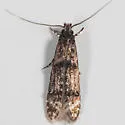
Homosetia fasciella - Hodges#0291
Homosetia fasciella
Identification: Determined by Terry Harrison. Genitalia: ♀ ♂
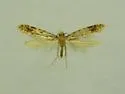
Homosetia marginimaculella - Hodges#0293
Homosetia marginimaculella
Identification: Chambers original description as Tinea marginimaculella is available online in the print references. Common at lights in coastal California.
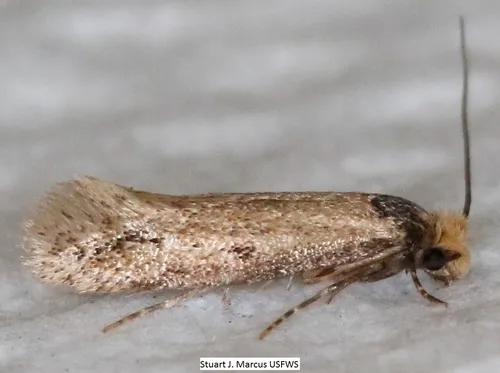
Curved-lined Homostinea Moth
Homostinea curviliniella
Homostinea curviliniella is a moth of the family Tineidae. It is found in Cuba and North America, where it has been recorded from most of the eastern half of the United States and Arizona.
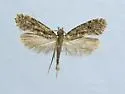
Hypoplesia dietziella - Hodges#0321
Hypoplesia dietziella
Identification: The original description is available online in the print references below.
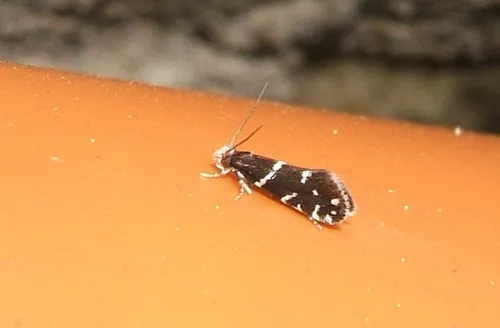
Infurcitinea argentimaculella
Infurcitinea argentimaculella
Unless identified by a recognised expert, a photo is required and the specimen should be examined with a microscope. In the comments box, state the key or ID method used and describe the size and identifying characters. Around lichen covered shady ro
White-shawled Isocorypha - Hodges#0299
Isocorypha mediostriatella
Identification: Head: Straw colored, long haired (scaled), with a slight reddish-brown tint on face. Palpi long, folded, bristled; yellowish on top, dark on underside. Antenna: Pale yellowish, thick, as long as wing. Thorax: Brown with purplish refle
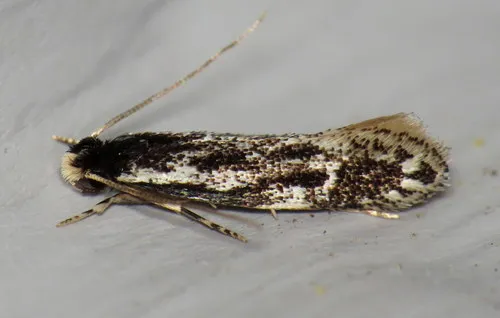
Leucomele miriamella - Hodges#0282
Leucomele miriamella
Identification: Head: Top of head rough haired (scaled), face yellowish-white. Palpi long, folded, mostly dark. Antenna: Dark, simple, thick; over half as long as wing. Thorax: Dark purplish-brown. Underside silvery-gray. Wings: Dark brown with patch
Two-spotted Mea - Hodges#0305
Mea bipunctella
Identification: Adult - see Dietz' original description in Print References.
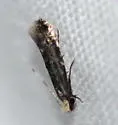
Mea undescribed-two
Mea undescribed-two
Previously unplaced to subfamily on BugGuide as a species of “ Enigmatic Tineidae ”. Since identified to genus by James Hayden, who says: “The wing venation and male and female genitalia pretty clearly place it in Mea Busck.”
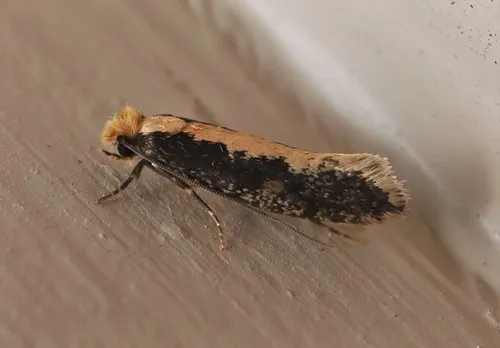
Monopis crocicapitella
Monopis crocicapitella
Wingspan 10 to 16 mm. This species can be confused with its close relative, Monopis obviella, and indeed was only separated as a species in the late 19th century. Compared to that species, it is generally less distinctly-marked, with the dorsal strea
Skunkback Monopis - Hodges#0416
Monopis dorsistrigella
Identification: Head: White to very pale yellow, long haired (scaled). Palpi yellowish, folded, underside dark brown. Brown around eyes. Antenna: Brown, smooth, thick; 2/3 as long as wing. Thorax: Sides (patagia) dark brown, center white to very pale
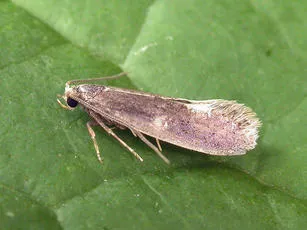
Monopis imella
Monopis imella
Wingspan about 12 mm. This relatively nondescript species generally shows a yellowish tuft of scales on the head and a narrow pale buff line along the edge of the costa. There can be a pale spot on the forewing but often the forewing looks entirely p
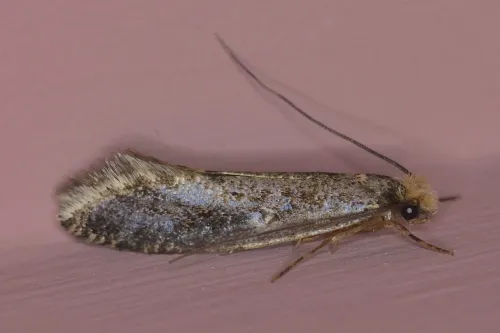
Skin Moth
Monopis laevigella
Wingspan 13 to 20 mm. A rather drab looking brown or blackish moth with mottled patterning on the wings. Various habitats and sometimes found near bird's nests. The adults can be found on the wing from dusk onwards from May through to September, and
Monopis marginistrigella - Hodges#0417
Monopis marginistrigella
Identification: Adult: forewing dark gray to blackish, speckled with white or pale yellow, especially in diffuse patches mid-way along costa and along inner margin near anal angle; top of head yellow; top of thorax completely dark; hindwing uniformly
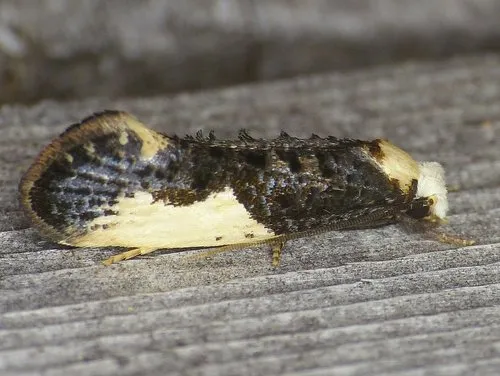
White-headed Monopis - Hodges#0418
Monopis monachella
Identification: Head: Head white. Palpi long, folded; dark. Antenna: Dark brown. Thorax: White. Wings: Wider, dark brown; slightly gray-scaled. Large white patch on costa has diagonal edge; extends from mid wing to near tip. Diagonal edge of patch en
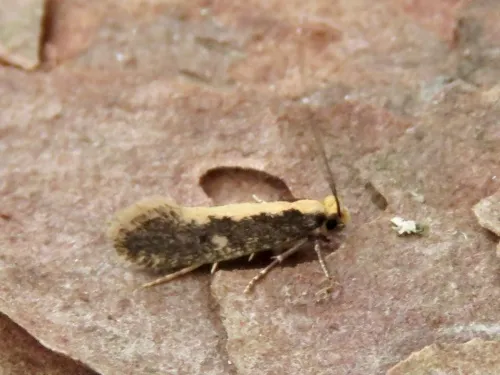
Monopis obviella
Monopis obviella
Various habitats, sometimes found indoors. The adult moths can be found on the wing between May and October, when they will occasionally come to light. There are most likely two generations. The larvae are scavengers, feeding on animal and plant refu
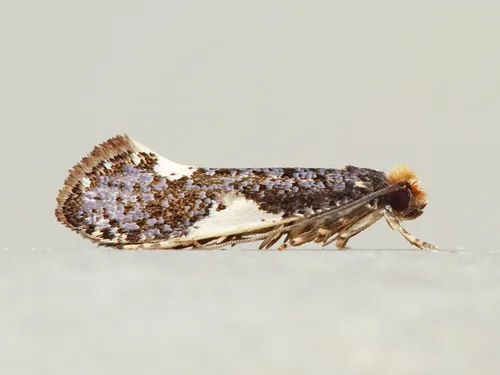
Orange-headed Monopis - Hodges#0421
Monopis spilotella
Identification: Head: Head pale orange-yellow, long haired (scaled). Palpi pale yellowish, long, folded; underside dark brown. Antenna: 1st half dark, rest lighter. Thorax: Dark brown with a pale spot at tip. Wings: Blue-black. Smaller white triangul
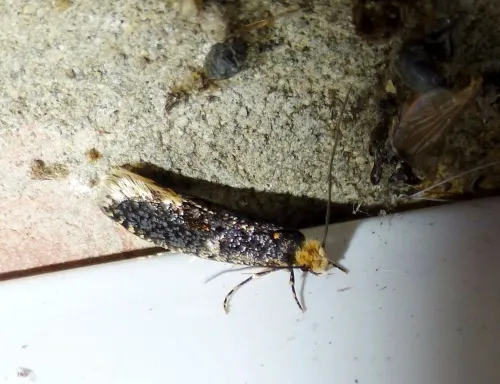
Monopis weaverella
Monopis weaverella
The adults fly from dusk between May and August, though it is most often encountered in June. The life-history of this species is not well-known, but it is believed to be a scavenger on animal carcasses and faeces. Distributed widely over much of mai
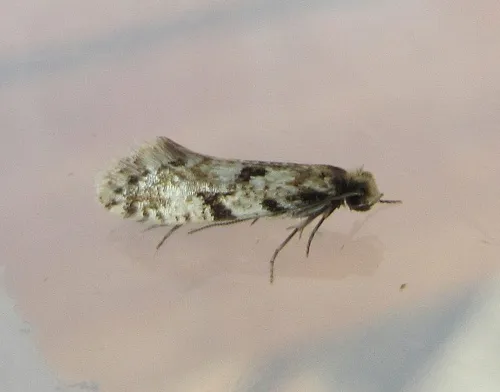
Morophaga choragella
Morophaga choragella
Wingspan 18 to 32 mm. It bears a superficial resemblance to some other members of the family, but is generally larger, having a wingspan of up to 30mm. Unless identified by a recognised expert, a photo is required. If the photo doesn't show the key I
Morophagoides burkerella - Hodges#0314
Morophagoides burkerella
Identification: Morophagoides burkerella is characterized as "the larger and commoner of the two Nearctic Morophagoides species"
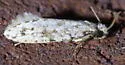
Nemapogon acapnopennella - Hodges#0261
Nemapogon acapnopennella
Identification: Head: Head whitish, long haired (scaled). Face front has brownish spot between antenna bases. Palpi long, folded; white flecked with grayish-brown. Segment 2 dark, scaled on underside. Antenna: Base (scape) white. Segments yellowish-w
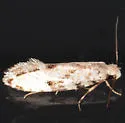
Nemapogon auropulvella - Hodges#0263
Nemapogon auropulvella
Identification: The original description as Tinea auropulvella Chambers, is available in the print references below. Genitalia:
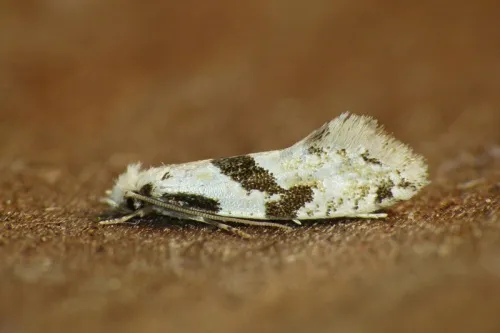
Nemapogon clematella
Nemapogon clematella
Wingspan 12 to 15 mm. One of the more distinctive of the Tineidae with a dark bar across a white wing. The larvae feed on fungus growing on dead branches of various trees, or in rotten wood. Distributed over much of England and Wales but rather local
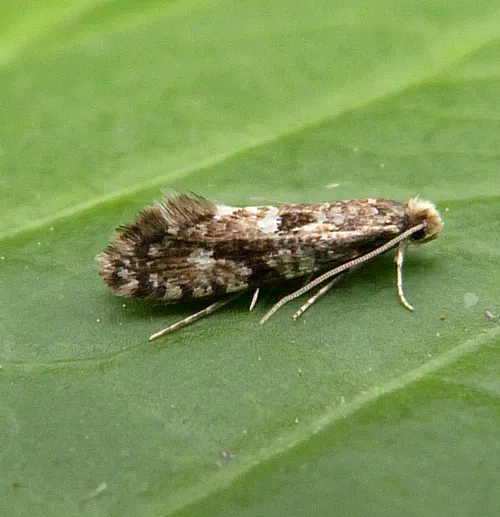
Cork Moth
Nemapogon cloacella
A fairly common species throughout most of Britain, and found chiefly in woodland, especially where there is dead wood. The adult flies during the summer months, mainly at dusk, though it sometimes flies in sunshine. The larvae feed mainly on types o
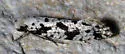
Nemapogon defectella - Hodges#0264
Nemapogon defectella
Identification: Specimens identified by DNA analysis:
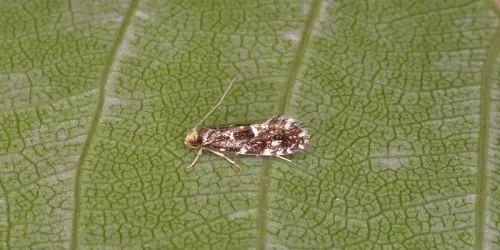
Nemapogon koenigi
Nemapogon koenigi
Wingspan around 12 mm. Although superficially similar to Cork Moth Nemapogon cloacella, the markings and overall appearance are generally much darker. Unless identified by a recognised expert, a photo is required. Whilst it may be possible to identif
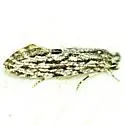
Nemapogon multistriatella - Hodges#0269
Nemapogon multistriatella
Identification: Head: Top of head has long haired (scaled) white with brown mixed in at center. Front of face is whitish, hair flattened. Palpi long, folded; yellowish-white, underside brown. Antenna: Short, about half the wing length; somewhat thick
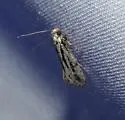
Nemapogon oregonella - Hodges#0271
Nemapogon oregonella
Identification: " Nemapogon oregonella has a silvery white forewing with longitudinal rust streaks" .
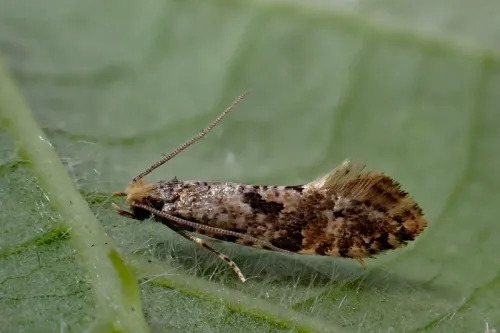
Nemapogon ruricolella
Nemapogon ruricolella
Wingspan about 12 mm. This species has been the subject of some confusion in the past with its close congener, N. cloacella . It tends to have paler brown markings in the forewing than that species. Adult moths can be found from June until early Augu
Nemapogon tylodes - Hodges#0274
Nemapogon tylodes
Identification: Head: White, long haired (scaled). Palpi white, darker on underside of 2nd joint. Antenna: Short, about ½ length of wing; light grey. Thorax: White, side has gray to dark spot. Wings: Long and narrow, shiny white with a few gray speck
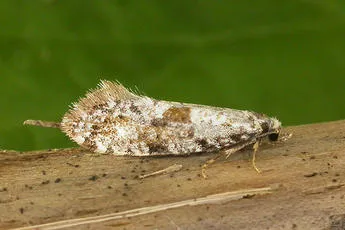
Nemaxera betulinella
Nemaxera betulinella
Wingspan 12 to 19 mm. One of the more well-marked of the Tineidae . Well wooded areas especially areas containing Birch. The moths are on the wing from May to August, and are most often found at rest in the crevices of bark, relying on their cryptic
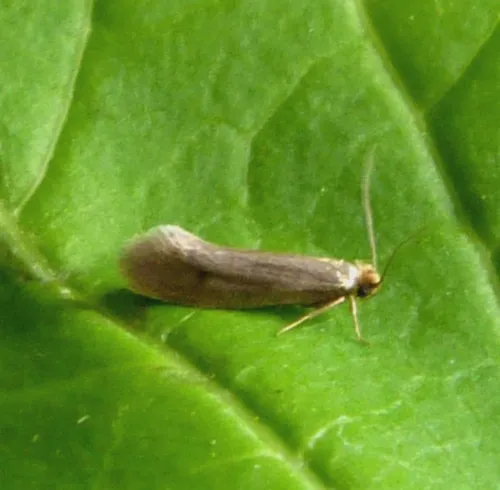
Brown-dotted Clothes Moth
Niditinea fuscella
Wingspan around 14 mm. A small dull brown moth with two or three darker spots. Various habitats where a larval food source is available. Sometimes found in chicken houses. The moths, which are on the wing from May to September, generally fly from lat
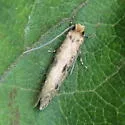
Niditinea orleansella - Hodges#0412
Niditinea orleansella
Identification: Genitalia: ♀ spine at the end of a tube elevated above the surface of the signum. ♂
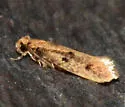
Niditinea sabroskyi - Hodges#0412.1
Niditinea sabroskyi
Identification: Genitalia: ♀ ♂ This species appears to correspond to BOLD:AAC0184 .
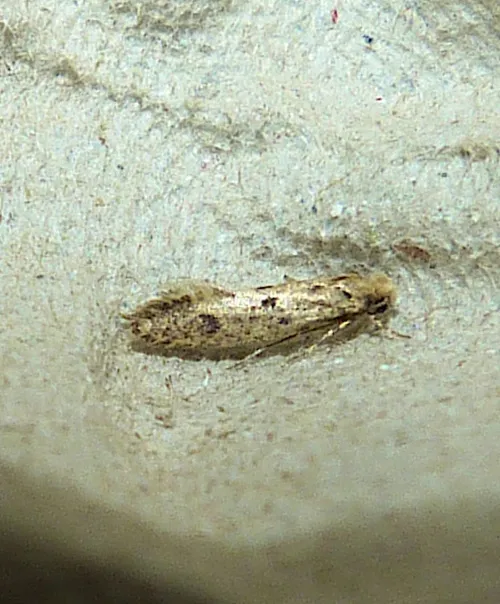
Niditinea striolella
Niditinea striolella
Wingspan about 12mm. Adult moths have a buff ground colour, irrorated with darker scales. Determination by genitalia examination (gen. det.) required. Not much is written about the larval stages, but adults have been reared from birds' nests, especia
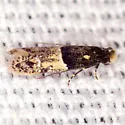
Oenoe hybromella - Hodges#0283
Oenoe hybromella
Identification: Head: Yellowish-white, long haired (scaled). Top of head with some brown. Palpi long, folded; brown and silver gray mixed. Antenna: 2/3 as long as wings. Grayish-brown, lighter at tips. Thorax: Purplish-brown. Wings: Base half of wing
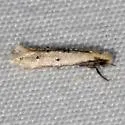
Oenoe species-three
Oenoe species-three
Labeled " Oenoe sp. 3" in the Florida State Collection of Arthropods, McGuire Center for Lepidoptera and Biodiversity, Gainesville (FSCA/MGCL). A male and female were identified by dissection (J. Hayden, pers. comm. to A.S. Hunt, 24 xi 2024).
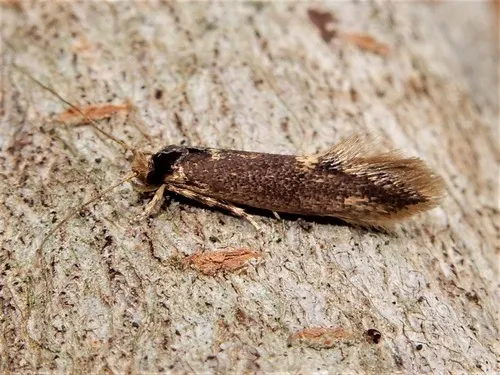
Opogona omoscopa
Opogona omoscopa
Wingspan 15 to 17 mm. The depth of dark purplish brown forewing colouration and distinctness of the pale tornal and dorsal spots all seem to fade with wear. Records for this species must be confirmed by genitalia examination. Various habitats, but nu
Pelecystola nearctica - Hodges#0434.1
Pelecystola nearctica
Identification: Genitalia: Widespread moth, described only in 2009.
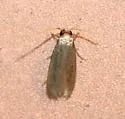
Phaeoses sabinella - Hodges#0430
Phaeoses sabinella
Identification: Adult: Antennae are 0.7 length of forewing and have 58 segments. Forewings are pale grayish brown with a distinct luster. Specimen identified by DNA analysis (BOLD). The species is seldom collected despite being common at some locatio
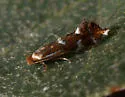
Philonome wielgusi - Hodges#0462.1
Philonome wielgusi
Identification: "Similar to Philonome clemensella in external appearance but can be distinguished from the latter in having shorter longitudinal fascia and straight costal fascia on the forewing" . All 157 specimens examined in the original descripti
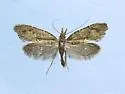
Phryganeopsis brunnea - Hodges#0318
Phryganeopsis brunnea
Powell & Opler (2009) reported Phryganeopsis brunnea is usually collected in the daylight but is attracted to lights. ( 3 )
African Scavenger - Hodges#0423
Praeacedes atomosella
Appears to be represented by BOLD:AAL0559 (locations: Egypt, Madagascar, Bermuda, and Costa Rica), and not BOLD:ACT2459 (AR and FL).
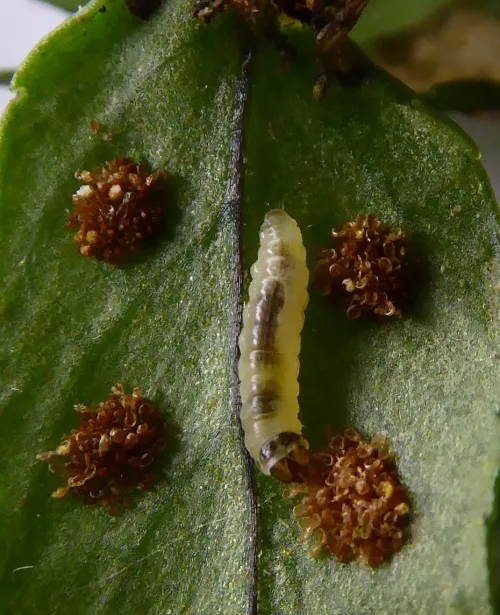
Psychoides filicivora
Psychoides filicivora
Wingspan 10 to 12 mm. The light patches on the dark wings of his moth form an approximate diamond shape when the wings are together. The larva mine the leaves of various ferns including Hart's-tongue Fern, Dryopteris spp. and Polypody, feeding on the
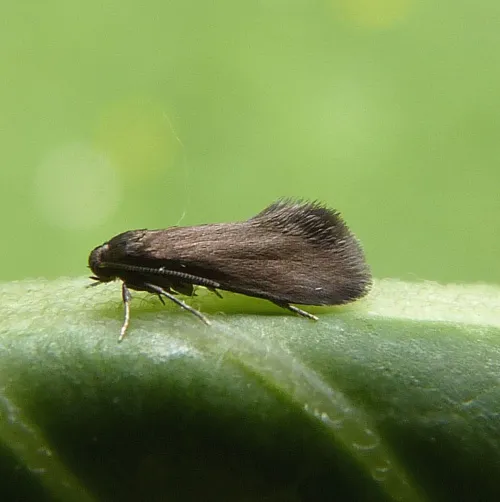
Psychoides verhuella
Psychoides verhuella
Wingspan 9 to 12 mm. The adult moth is dark blackish in colour and often has a violet reflection. It lacks the white tornal spot of P. filicivora . The larva mine the leaves of various ferns including Hart's-tongue Fern and Polypody, feeding on the u
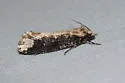
Scardia amurensis - Hodges#0311.1
Scardia amurensis
Identification: "The forewing cream marking are extended along the entire length of the dorsal margin and over the terminal area; the terminal margin has a few rusty-brown spots" . "This species was initially discovered mixed among specimens of the N
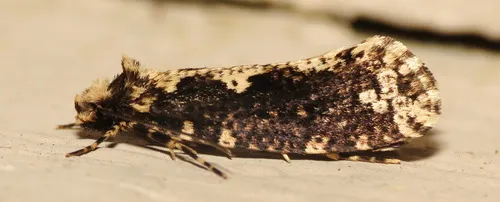
Scardia anatomella - Hodges#0311
Scardia anatomella
Identification: Head: Brownish-yellow, darker at sides. Long haired (scaled). Palpi long, folded; dark brown, underside yellowish. Antenna: Dark brown, over half as long as wing. Thorax: Tufted. Brownish-yellow; darker on sides. Wings: Wings wide and
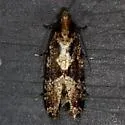
Scardiella approximatella - Hodges#0308
Scardiella approximatella
Identification: Head: Dark yellowish, long haired (scaled). Palpi long, folded; pale yellow, brown and tufted on underside. Antenna: About half as long as wing, slender. Ringed brown and yellow. Thorax: Pale yellow, sides brownish. Wings: Slightly ro
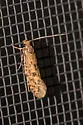
Tropical Tobacco Moth - Hodges#0428
Setomorpha rutella
Four Nearctic BINs in the genus BOLD:ABA5199 [eastern US (IL, MD)] BOLD:AAD2722 [desert SW (CA, AZ, NM)] BOLD:ACE6014 [AZ (Tucson, Huachucas)] BOLD:ABZ7737 [AZ (Huachucas)]
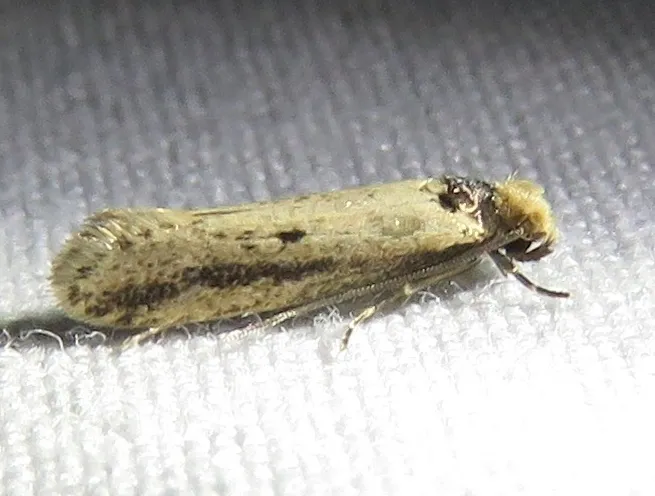
Dark-collared Tinea Moth
Tinea apicimaculella
Tinea apicimaculella is a species of moth of the family Tineidae. It is found in North America (including Alabama, Illinois, Maryland, Massachusetts, Minnesota, North Carolina, Oklahoma, Ontario, Tennessee and Virginia).
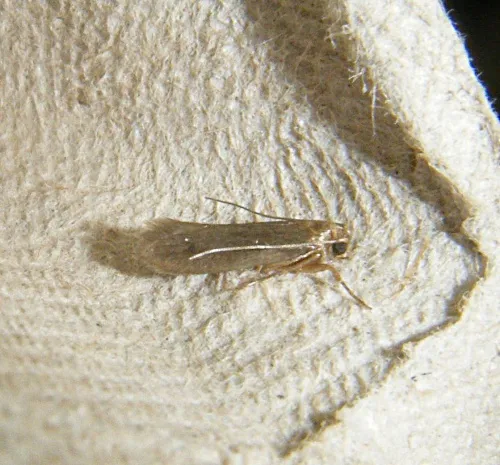
Tinea columbariella
Tinea columbariella
Any site suitable for providing a larval food source – may be near to habitation. Mainly recorded in June and July but possibly continually brooded. Larva feeds on feathers in bird nests and detritus, living within a silken case. Uncommon or rarely r
Tinea dubiella - Hodges#0397
Tinea dubiella
Identification: Specimen determined by DNA analysis (BOLD).
Tinea irrepta - Hodges#0399
Tinea irrepta
Identification: Head: Orange-yellow, long haired (scaled); some dark at sides. Palpi long, folded; yellowish on tip, dark on underside, scaled. Antenna: About 2/3 as long as wing. Base half dark, rest lighter, thinly ringed with brown. Thorax: Tan, s
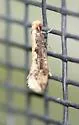
Tinea mandarinella - Hodges#0400
Tinea mandarinella
Identification: Similar to two species, both likely undescribed, which don't overlap with it in known range. T. mandarinella has not been recorded west of Houston. The species known from the southern Plains and Southwest is not close in DNA barcode t
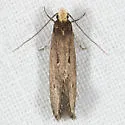
Tinea niveocapitella - Hodges#0402
Tinea niveocapitella
Identification: The original description is available online in the print references. BOLD:AAZ0461 [CA, BC] BOLD:ABX2540 [CA, WA] BOLD:AAH5633 [AZ (Huachucas)]
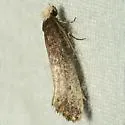
Western Clothes Moth - Hodges#0403
Tinea occidentella
BOLD:AAF7603 [CA (San Diego)] BOLD:ABX2540 [CA (Monterey Bay]
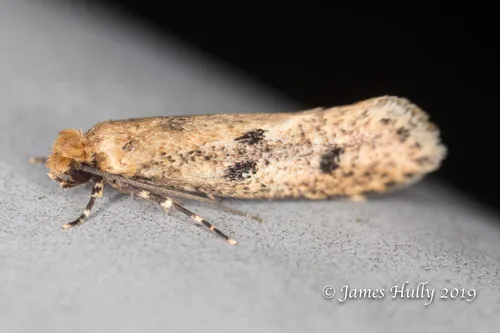
Case-bearing Clothes Moth
Tinea pellionella
Wingspan 9 to16 mm. The head is orange-brown and the forewings are plain brown but with 1 to 3 spots. Often found indoors in woollen carpets and clothes. The adults are generally on the wing between June and October, but may appear outside this perio
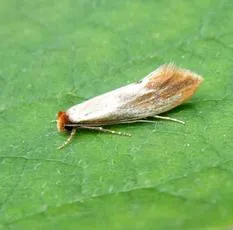
Tinea semifulvella
Tinea semifulvella
Wingspan 14 to 22 mm. Perhaps the most colourful of the British Tineidae , and one of the largest. With a striking orange head and a large orangey area on the wings, which are otherwise greyish white with a slight sheen. The adults fly nocturnally be
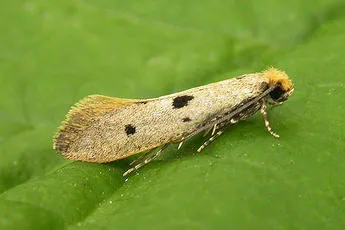
Tinea trinotella
Tinea trinotella
Wingspan 12-18 mm. This small greyish-buff moth has three dark spots on the forewing, which give rise to its scientific name. It also sports a yellowish or orange head-tuft, resulting in its diagnostic appearance. Flying at night and often visiting l
Tinea unidentified-two
Tinea unidentified-two
All online records from the Edwards Plateau. Provisional generic placement based on similarity to Tinea mandarinella , which ranges from easternmost Texas to Florida and Massachusetts, and another likely-undescribed species ranging from the Edwards P
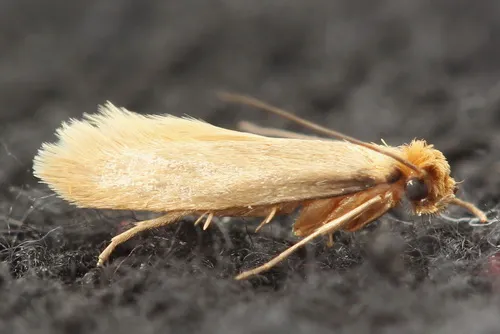
Common Clothes Moth
Tineola bisselliella
Wingspan 9 to 16 mm. Head pale ochreous to reddish ochreous, sometimes brownish at sides. Forewing pale ochreous buff, somewhat glossy, sometimes darker at base; base of costa dark brown. This moth inhabits houses, and was at one time a pest species.
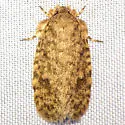
Tiquadra inscitella - Hodges#0427
Tiquadra inscitella
Identification: Wings with an brassy tinge beneath. Forewings with very minute black speckles, and with brown dots, which are most distinct along the borders. Hindwings paler than the forewings.
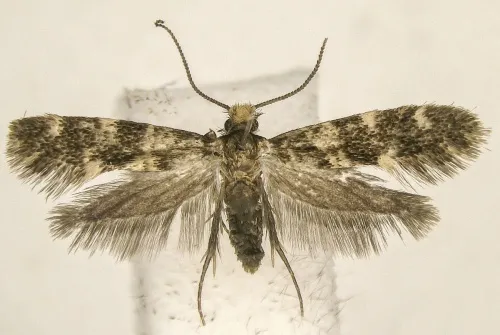
Triaxomasia caprimulgella
Triaxomasia caprimulgella
Determination by genitalia examination (gen. det.) required. Little is known about its lifecycle, though it is most often found around hollow trees. In recent years, it has been attracted to Hornet Moth pheromone lures. Adults appear to be on the win
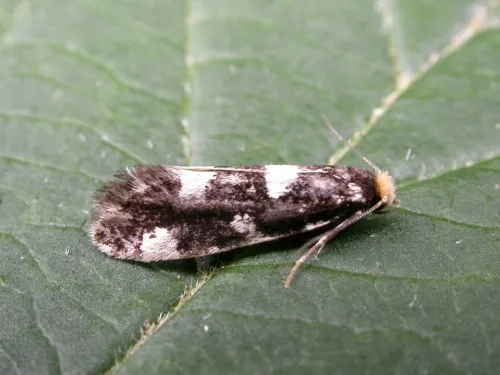
Triaxomera fulvimitrella
Triaxomera fulvimitrella
Wingspan 15 to 22 mm. Quite a well marked and distinctive species. Flies from May to July when it may be found at rest on tree trunks. The larvae feed from September through the winter months in dead wood, or on bracket fungus, especially those growi
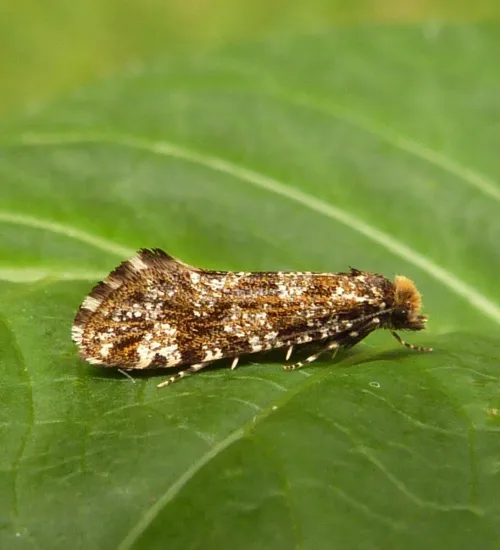
Triaxomera parasitella
Triaxomera parasitella
Wingspan 16 to 21 mm. A rather attractive species with a mottled patterning of browns, white and gold. The head is orange. Flying between May and July, the moths are generally nocturnal and can be attracted to light. The larva feeds on bracket fungi,
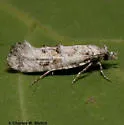
Xylesthia albicans - Hodges#0316
Xylesthia albicans
Identification: Specimen identified by DNA analysis (BOLD).
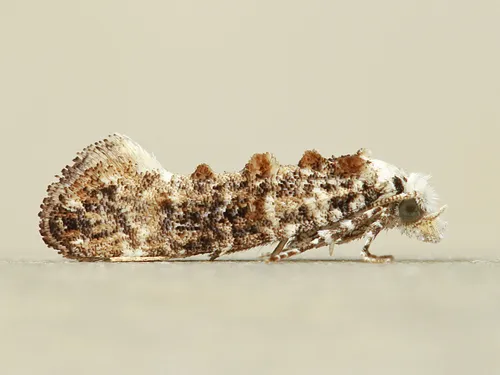
Clemens' Bark Moth
Xylesthia pruniramiella
Xylesthia pruniramiella, Clemens' bark moth, is a moth of the Tineidae family. It is found in North America, where it has been recorded from New Hampshire to Florida and from Illinois to Texas.
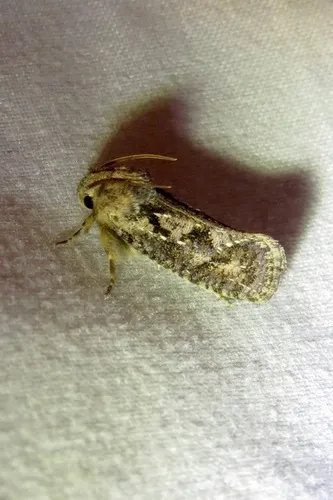
Acrolophus arizonellus - Hodges#0341
Acrolophus arizonellus