
Family Brush-footed Butterflies (Nymphalidae)
Nymphalidae is a family in the order Lepidoptera. Browse 232 named species recorded in this family, or open an individual profile for its available identification and natural-history information.
Guides
Species in Nymphalidae (232)
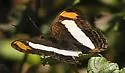
Spot-celled Sister - Hodges#4527.3
Adelpha basiloides
Identification: The white wing band on this species fades out just short of the leading edge of the forewing. There is usually one faded white "cell" just beyond the end of the continuous band; the second-to-last cell of the band tends to bulge outwa
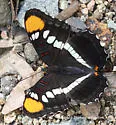
Arizona Sister - Hodges#4527.1
Adelpha eulalia
Identification: The Weidemeyer's Admiral - Limenitis weidemeyerii is most likely to be confused with the Arizona Sister within the United States, where the two are often found together. Weidemeyer's Admirals average smaller, have no orange near the
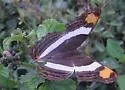
Band-celled Sister - Hodges#4526
Adelpha fessonia
Identification: Unlike the other US species of Adelpha, and two similar species of Doxocopa that occur in the US, the white wing band on this species extends, unbroken and unfaded, all the way to the leading edge of the forewing.
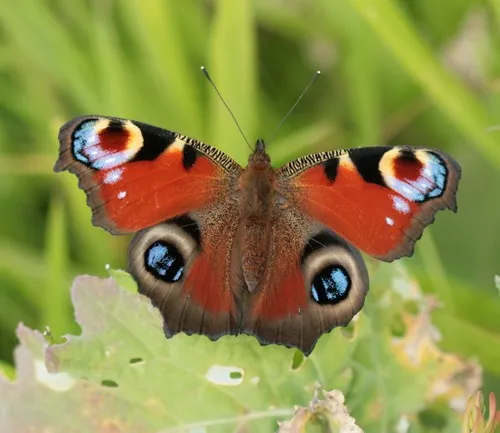
Peacock
Aglais io
The Peacock is a familiar sight in gardens across the British Isles and is unmistakable, with spectacular eyes on the upper side of the hind wings that give this butterfly its name. These eyes must appear very threatening to predators. This butterfly
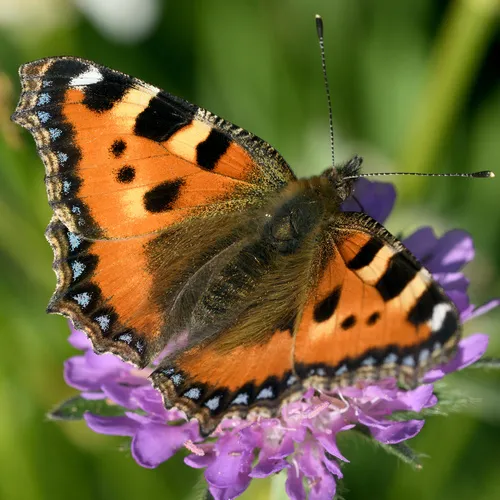
Small Tortoiseshell
Aglais urticae
A familiar butterfly with orange-brown wings that are marked with blues and darker browns. The orange upper sides of the wings provide a contrast with the drab undersides. This butterfly can turn up almost anywhere, from city centres to mountaintops.
Gulf Fritillary - Hodges#4413
Agraulis incarnata
Identification: Below, the elongated silvery spots on the butterfly's hind wings and the edge of its forewings are characteristic (though quite similar to the pattering of Dione moneta ). Above, bright orange with black markings around the border an
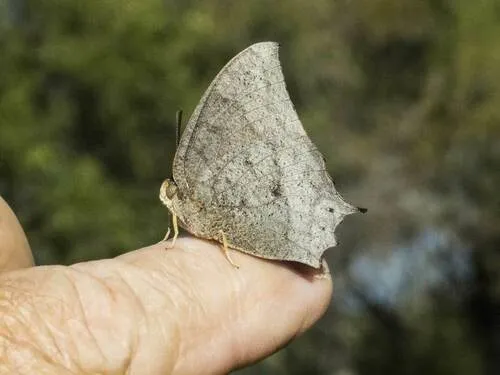
Tropical Leafwing - Hodges#4552
Anaea aidea
Identification: Similar to A. andria , except with distinct tooth on hind wing margin between tail and annal (lower/inner) angle. Males are usually more strongly patterned with dark on upper side than are males of A. andria .
Florida Leafwing - Hodges#4553
Anaea troglodyta
Identification: Adult: forewing margin straight, and tip slightly hooked; hindwing has pointed tail; upperside red with dark outer margins but few other dark markings; forewing has dark bar in cell; underside of hindwing mottled gray and brown, resem
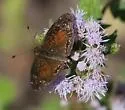
Chestnut Crescent - Hodges#4478.2
Anthanassa argentea
Identification: Males are a very dark black and chestnut above, females are similar to several other crescents. First U.S. Record: Relampago, Hidalgo Co., Texas - 1970 (Bordelon & Knudson 2000)
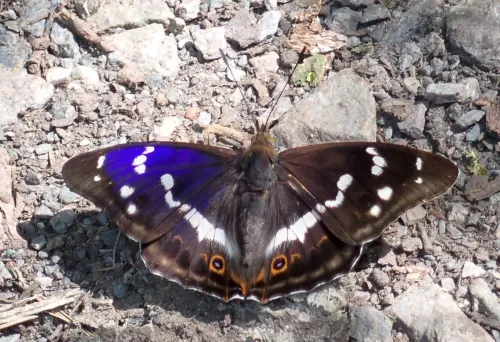
Purple Emperor
Apatura iris
Wingspan about 75 to 85 mm. The male butterfly is one of the most beautiful of all of the butterflies found in the British Isles. From certain angles it appears to have black wings intersected with white bands. However, when the wings are at a certai
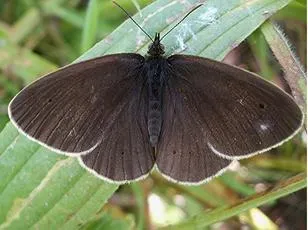
Ringlet
Aphantopus hyperantus
The Ringlet is unmistakable when seen at rest - the rings on the hind wings giving this butterfly its common name. The upper sides are a uniform chocolate brown distinguishing this butterfly from the closely related Meadow Brown. Despite its uniformi
One-spotted Prepona - Hodges#4551.5
Archaeoprepona demophon
Identification: · · Print References · Internet References · Works Cited Representative Images Show images of: caterpillars · adults · both Classification Kingdom Animalia (Animals) Phylum Arthropoda (Arthropods) Subphylum H
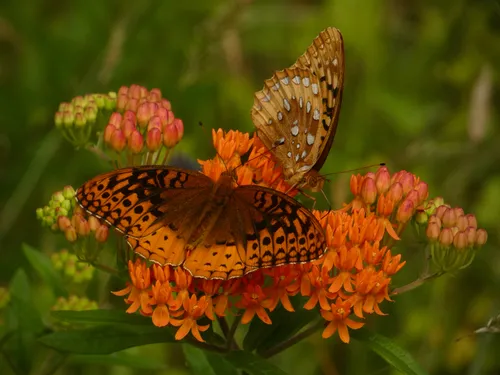
Great Spangled Fritillary
Argynnis cybele
The great spangled fritillary (Speyeria cybele) is a North American butterfly of the family Nymphalidae.
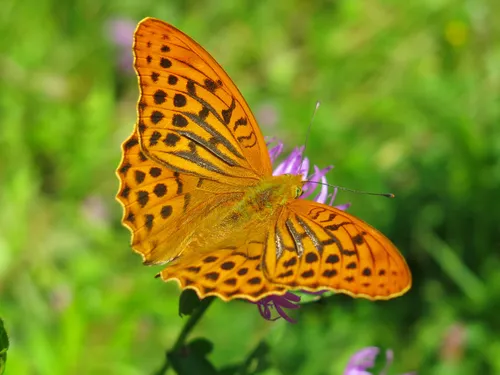
Silver-washed Fritillary
Argynnis paphia
The female is slightly less colourful than the male which has more curved wings, is brighter orange and has dark bands across its forewings, actually scent marks. Woodland clearings, especially where violets are present in numbers. Like many other si
Empress Leilia - Hodges#4561
Asterocampa leilia
Identification: Distinguished from Hackberry Emperor by the present of two solid cell bars and two submarginal eyespots on the forewings. Perches on the ground more often than conspecifics which overlap its range. Tawny Emperor also shows two solid
Red Rim - Hodges#4539
Biblis hyperia
Identification: Adults are unmistakeable. Larvae are grayish brown with green warts and spines.
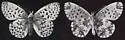
Boloria andersonii
Boloria andersoni
Identification: Similar to B. selene , except probably slightly larger, more underside hind wing median spots yellowish instead of white/silvered (but the one in discal cell white and perhaps silvered); with black spot in middle of discal cell tiny (
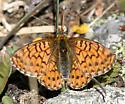
Purplish Fritillary - Hodges#4475
Boloria chariclea
Identification: Adult: upperside of wings orange with black spots, bars, and chevron-shaped markings, similar to many other Lesser Fritillaries. The hindwing underside of the two boreal forest subspecies ( grandis and rainieri ) is purplish or reddis
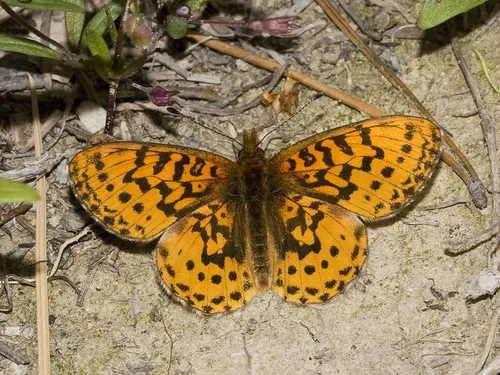
Western Meadow Fritillary - Hodges#4469
Boloria epithore
Identification: Most similar to Boloria kriemhild, frigga, bellona , and improba. B. improba is generally more northern and found higher in mountains, usually in moist tundra, is smaller, darker above, and duller below. B. frigga usually has bolder
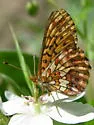
Relict Fritillary - Hodges#4468
Boloria kriemhild
Identification: Extremely similar to, and perhaps best treated as a subspecies of Boloria epithore . Best distinguished by where found ( B. epithore occurs further to the north and west), but differing in less dark scaling than usual on the upper su
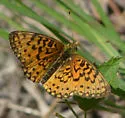
Silver-bordered Fritillary - Hodges#4464
Boloria selene
Identification: Dorsal, orange with black markings, consistant with other lesser fritillaries. Ventral, silver border along both outer wing margins, and HW basal spot is white with a black center spot. Populations have been declining in most areas, b
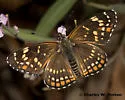
Black Checkerspot - Hodges#4507
Chlosyne cyneas
Identification: Adult: upperside dark brown with brownish-red marginal spots and two neat rows of white spots; underside white, cream, or yellow with black veins and margin; postmedian black band contains a row of light spots; marghinal fringe checke
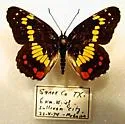
Medial Patch - Hodges#4501.2
Chlosyne eumeda
Discussion of First Confirmed U.S. Record : Sullivan City, Starr Co., Texas - 1974 (Bordelon & Knudson 2007)
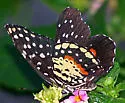
Crimson Patch - Hodges#4503
Chlosyne janais
Identification: Above forewing black with white spots, hindwing black with large red-orange basal patch. Below black with white spots, yellow basal patch on hindwing has black spots throughout. larvae white: northern-most regularly occurring populati
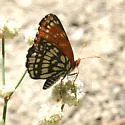
Leanira Checkerspot - Hodges#4505
Chlosyne leanira
Identification: White stripes on the back of the abdomen distinguish this from Chalcedon Checkerspot (which has white spots on the back of the abdomen). Also, the underside coloration is quite different. From very similar C. fulvia & cyneus (which d
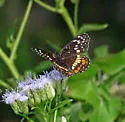
Banded Checkerspot - Hodges#4501
Chlosyne pardelina
Type Locality: Texas, Duval Co., SH16 ca. 15 mi south of Freer at Parrilla Creek. TAMUIC. Higgins' Type : La Gloria, S. of Montclova, Coahuila, Mexico, 3300 ft. HT in AMNH. (BOA) First Texas record, a much worn female collected by Howard George Lacey
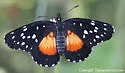
Rosita Patch - Hodges#4504
Chlosyne rosita
Identification: See under subspecies Type locality: “Western Guatemala, Moran, 3700 ft....Palin, 3500 ft....Escuintla, 2000 ft.”
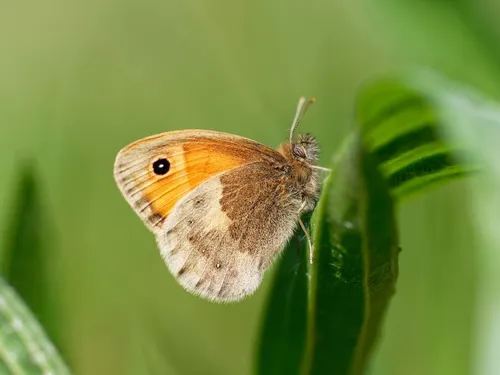
Small Heath
Coenonympha pamphilus
This is the smallest of our 'browns' and is closer in size to a skipper, or Common Blue than its relatives, such as the Meadow Brown. However, its fluttering flight is quite different from that of the skippers and blues and is relatively easy to iden
Annulata Mosaic
Colobura annulata
Identification: See discussion under Colobura . Very similar to Colobura dirce , differing in ventral wing pattern. With the lighter brown stripes on the apical half of the ventral front wings narrower than in C. dirce , and not narrowing distinctly
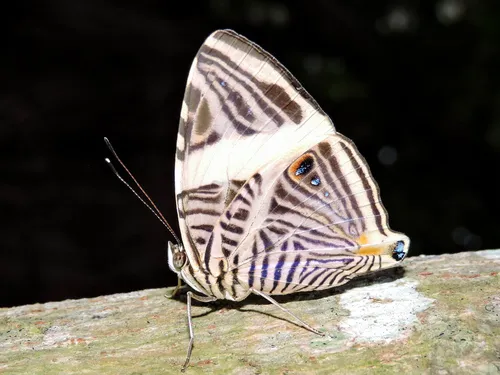
Zebra Mosaic
Colobura dirce
Identification: See discussion under Colobura . Very similar to Colobura annulata , differing in ventral wing pattern. With the lighter brown stripes on the apical half of the ventral front wings wider than in C. annulata , and narrowing distinctly
Gemmed Satyr - Hodges#4573
Cyllopsis gemma
Identification: Mottled brown wings above and below. Underside of hindwing, near the margin, there is a grayish patch surrounding a few irregular black and white spots.
Soldier - Hodges#4616
Danaus eresimus
Identification: Dorsal, very similar to the Queen , with slightly darker veins. Male has a black dot on each HW. Ventral, black veins on both FW and HW, Queen only has black veins on HW. Soldiers are the only one in the genus that has pale squarish s
Juno Heliconian - Hodges#4414.1
Dione juno
This is the first U.S. record for this species. Initial identification by Javier DeLeon and Dan Jones.
Mexican Silverspot - Hodges#4414
Dione moneta
Identification: Underwing pattern extremely similar to Gulf Fritillary, but with a more distinct red patch along the leading edge of the forewing. On the upperwings there is a very strong contrast between the darker inner sections and brighter outer
Gulf Fritillary
Dione vanillae
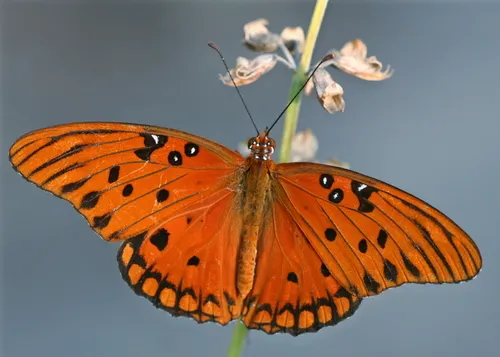
The Gulf fritillary or passion butterfly (Agraulis vanillae) is a bright orange butterfly of the family Nymphalidae and subfamily Heliconiinae. That subfamily was formerly set apart as a separate family, the Heliconiidae. The Heliconiinae are "longwi
Silver Emperor - Hodges#4567
Doxocopa laure
Identification: Sexually dimorphic upperwing patterns. Females have a diagonal white slash across both wings, and a yellow spot near the forewing apex; extremely similar to female Pavon Emperor but this species has a broader white stripe with a round
Pavon Emperor - Hodges#4566
Doxocopa pavon
Identification: Females are brown with a diagonal white slash across the upperside of both wings, and a yellow spot near the forewing apex. Males have a similar pattern but with a metallic purplish-blue overlay that ranges from brilliant to subtle. S
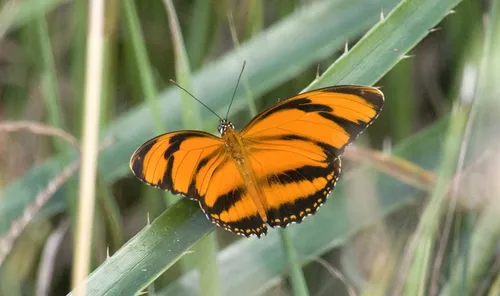
Banded Orange Heliconian - Hodges#4415
Dryadula phaetusa
Identification: Adults: Upperside of male bright orange with black stripes. Female has smeared stripes and is duller. Caterpillar is dull purple, four rows of long spines, and has two spiny horns on head. First U.S. Record: Sarita, Kenedy Co., Texas
Four-spotted Sailor - Hodges#4534.1
Dynamine postverta
Identification: Extremely similar to the Blue-eyed Sailor ( D. dyonis ), though larger. Female has three distinct white stripes across the upperside of the hindwings, vs. just one in the Blue-eyed. Male upperwing is bluer and has four black spots nea
Common Banner - Hodges#4544.7
Epiphile adrasta
Identification: Upperside brilliant orange with broad black bands. Rusty brown under the hindwings with faded eyespots along the hindwing margins and near the forewing apices. Forewing underside has similar pattern to upperside, but usually mostly co
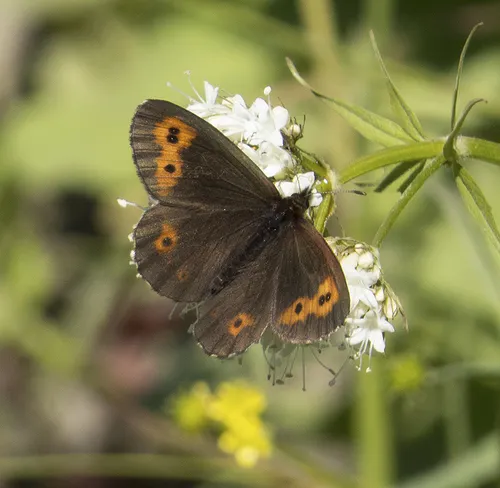
Vidler's Alpine - Hodges#4591
Erebia vidleri
Identification: Adult: chocolate-brown base; DFW with broad, light orange band with ragged outlines, band tapering down toward trailing edge; two eye-spots near the tip, plus one farther down. VFW same as above but with yellow band. DHW with narrower
Dingy Purplewing - Hodges#4532
Eunica monima
Identification: Purplish above with white spots on front wing, but not all pale spots white (some cloudy). Tip of front wings slightly truncated but not notched. Underside dull brownish and grayish (fresh specimens often tinged bluish) and leaf-like
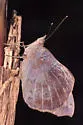
Florida Purplewing - Hodges#4533
Eunica tatila
Identification: Purplish above with white spots on front wing and the tip of the front wing notched. The underside is dull brownish, usually with some grayish to slightly bluish areas, and with row of eye-spots only slightly offset (almost in an eve
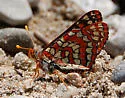
Anicia Checkerspot - Hodges#4519
Euphydryas anicia
Identification: Distinction from E. chalcedona is based mainly on differences in genitalia; however, in most regions they may be told apart by the darker, more prevalently black coloring of E. chalcedona . Distinction from E. editha is sometimes diff
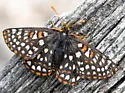
chalcedona-like
Euphydryas anicia--c
This grouping is for populations which look different from the bulk of E. anicia , and which sometimes seem to intergrade with populations of E. chalcedona to the west and south. They have male genitalia that are of the E. anicia type. These popula
anicia-like
Euphydryas chalcedona--a
This [perhaps artificial] category is created for those populations that have the genitalia of E. chalcedona , but with an over-all orange appearance more comparable to that of E. anicia . These populations occur primarily in the higher mountains to
Edith's Checkerspot - Hodges#4520
Euphydryas editha
Taylor’s checkerspot ( Euphydryas editha taylori ) is in imminent danger of going extinct.
Angled Leafwing - Hodges#4555
Fountainea glycerium
Identification: Somewhat similar in color to Tropical and Goatweed Leafwings, but distinctively shaped.
Thick-tipped Greta - Hodges#4617.3
Greta morgane
First U.S. Record: World Birding Center Headquarters gardens, Bentsen-RGV State Park, Mission, Hidalgo Co., TX - December 8, 2004 (Randy Emmitt)
Gray Cracker - Hodges#4542
Hamadryas februa
Identification: Like other crackers, this species has a row of eyespots along the edge of the hindwing. This species, within those spots, has black crescents rather than complete black circles. It lands on tree trunks, wings spread, head downward.
Guatemalan Cracker - Hodges#4541.1
Hamadryas guatemalena
Identification: Simplest character is probably the spots along the hindwing margin, which are gray or brown, surrounded by a thin blue-white circle, surrounded by a thick black circle, surrounded by another thin bluish-white circle. First U.S. Record
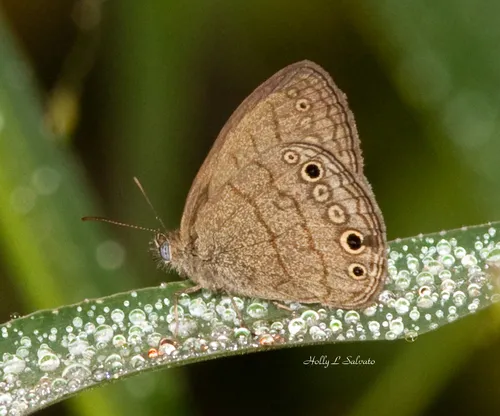
South Texas Satyr - Hodges#4574
Hermeuptychia hermybius
Identification: Distinction from H. sosybius is difficult, and as recognized here is based primarily upon geography. However, H. sosybius usually has the dark eye spots of the lower side larger, and the dark lines to either side of them less irregul
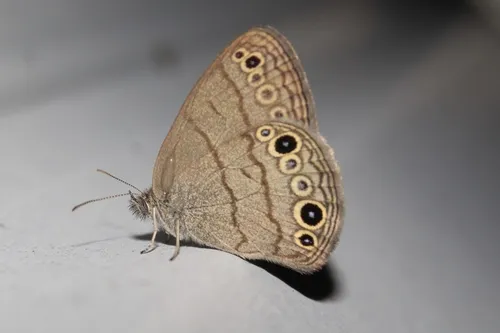
Carolina Satyr - Hodges#4575
Hermeuptychia sosybius
Identification: Adult: While still alive, eyes gray with vertical stripes. Wings dull brown with no eyespots on upperside. Underside of wings have a dark dash in the middle of each wing (may be faint), and a series of yellow-rimmed eyespots along t
Tailed Cecropian - Hodges#4546
Historis acheronta
Kimball and Neck report vague historical records from south FL and south TX respectively. Most other US field guides either omit this sp., or list it as questionable. Veryl Board and John Hafernik collected a specimen on August 13, 1969 at Shafter, P
Mangrove Buckeye - Hodges#4442.1
Junonia neildi
Identification: Dorsal, brown with eyespots on both FW and HW. Compare with Common Buckeye and Tropical Buckeye . Ventral, brownish with indistinct markings. Compare with Common Buckeye , and Tropical Buckeye. Classification of taxa in the genus Juno
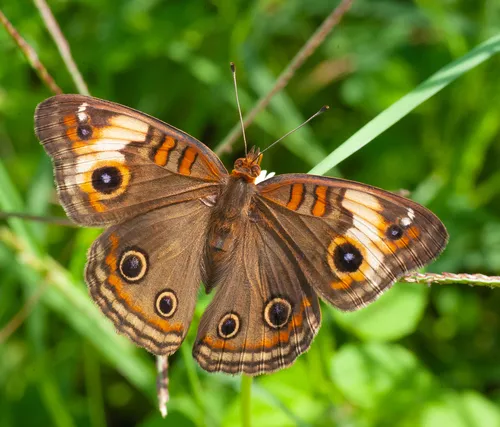
Junonia zonalis - Hodges#4441.2
Junonia zonalis
Identification: "The dark coloring to the lower inside of the eye spot on the front wing, and a missing to narrow orange border on the hind wing above are characteristic of this species. A bold pale stripe on the lower hind wing and small eye spots a
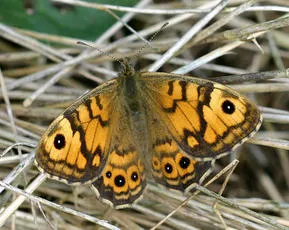
Wall
Lasiommata megera
This golden brown butterfly is criss-crossed with dark lines. The male has obvious sex brands on the forewings. The Wall gets its name from the characteristic behaviour of resting with wings two-thirds open on any bare surface, including bare ground
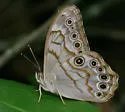
Creole Pearly-eye - Hodges#4568.2
Lethe creola
Identification: Similar to Northern and Southern Pearly-eyes. See references.
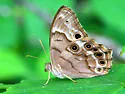
Southern Pearly-eye - Hodges#4568
Lethe portlandia
Identification: Note orange antennal clubs. Eye-spots surronded by white band.

White Admiral
Limenitis camilla
Rare. Restricted to a few woodland sites in East of county, but possibly expanding its range
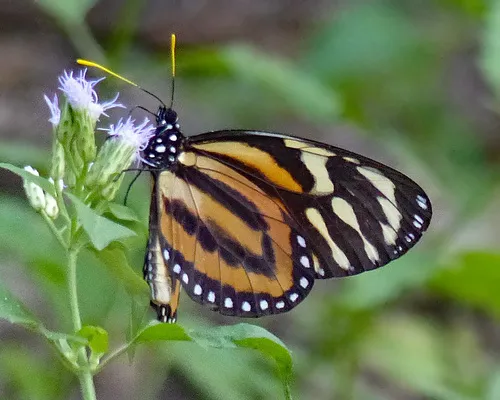
Tiger Mimic-Queen - Hodges#4617
Lycorea halia
The subspecies atergatis occasionally strays from Mexico into southern Texas.
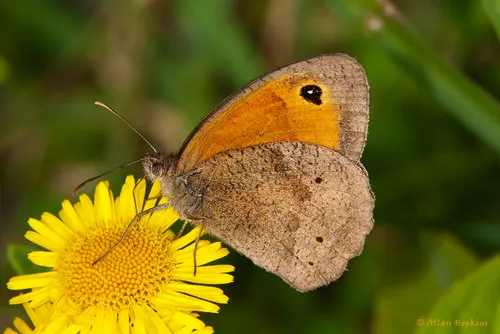
Meadow Brown
Maniola jurtina
The Meadow Brown is one of our commonest and most widespread butterflies and a familiar sight across the British Isles during the summer months. This is a brown butterfly with an orange patch on each wing surrounding a black eye spot with a single wh
Many-banded Daggerwing - Hodges#4549
Marpesia chiron
multiple reports of large numbers of individuals, all travelling in one direction, reported from multiple countries from Mexico to S. Amer.
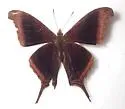
Waiter Daggerwing - Hodges#4548
Marpesia zerynthia
Brock & Kaufman, "rare stray to south Texas" Bordelon & Knudson, "very rare stray to TX, not reported from the valley, so far." Neck, "rare stray to Rio Grande Valley, Far West [Texas]" Scott, "rare stray to w and s Tex. (July, Oct.) Howe, "El Paso,
Red Satyr - Hodges#4579
Megisto rubricata
Identification: Below, the adult has a red patch on the forewing (not always visible depending how wings are held). Above, red patches and one eyespot on each wing.
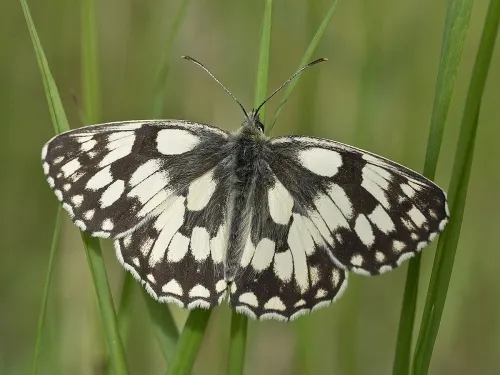
Marbled White
Melanargia galathea
This butterfly is unmistakable, its black and white markings distinguishing it from all other species found in the British Isles. The butterfly is found in unimproved grassland where the grass may grow up to 0.5m tall. The largest colonies are found
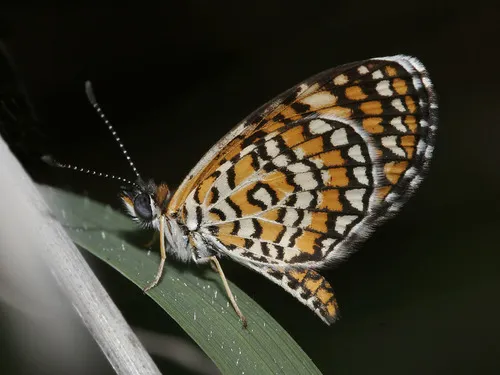
Tiny Checkerspot - Hodges#4511
Microtia dymas
Identification: Most like Microtia elada , differing in having no orange margin along the edge of the lower hind wing (or rarely a trace of orange in the black margin), and often with a pale to whitish spot near the middle of the front edge of the up
Elada Checkerspot - Hodges#4513
Microtia elada
Identification: Most like Microtia dymas , differing in having an orange margin along the edge of the lower hind wing, and without a whitish spot near the middle of the front edge of the front wing. [or, sometimes with most of the median spot band p
White Morpho - Hodges#4569.5
Morpho polyphemus
Several subspecies and/or forms "Morpho luna Group" Morpho polyphemus ssp. luna (syn. M. luna) Morpho polyphemus ssp. luna (var. niveina) Morpho polyphemus ssp. luna (var. albina) East coast: Yucatan of Mexico, south into Guatemala, Belize and Hondur
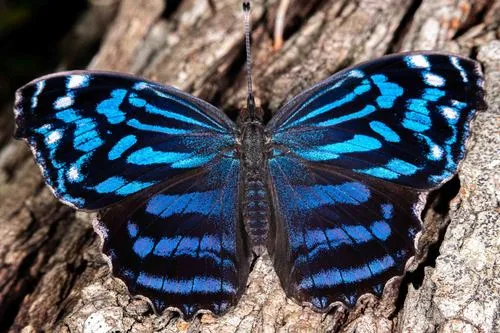
Mexican Bluewing - Hodges#4528
Myscelia ethusa
Identification: Upperwing pattern is unmistakeable, with parallel bands alternating black and brilliant iridescent blue, often fading to purple toward the posterior. Underwing pattern is cryptic, mottled in various shades of brown, blending in excell
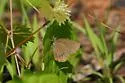
Georgia Satyr - Hodges#4576
Neonympha areolatus
considered by LA and VA to be a Species of Greatest Conservation Need (SGCN)
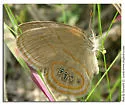
Helicta Satyr - Hodges#4576.1
Neonympha helicta
Identification: Similar to Georgia Satyr except larger, and the shape of the eye-spots on the hindwing is oval to round in Helicta, elongate in Georgia.
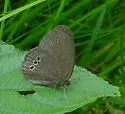
Mitchell's Satyr - Hodges#4577
Neonympha mitchellii
Identification: See references. Endangered. Guide TBA--PC
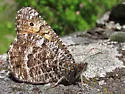
Chryxus Arctic - Hodges#4606
Oeneis chryxus
Identification: Variable--see guide photos and print references for details.
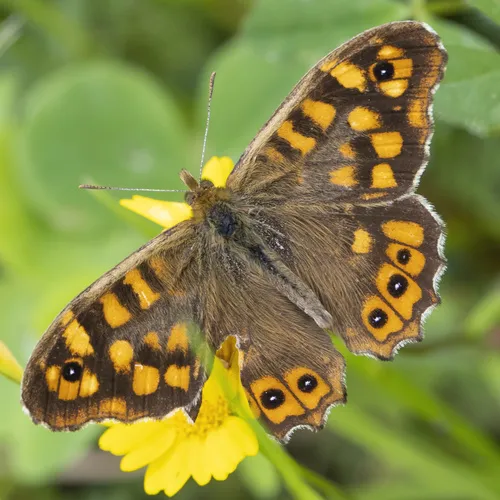
Speckled Wood
Pararge aegeria
The appearance of this butterfly changes from the north to the south, forming a "cline", where individuals in the north are dark brown with white spots, whilst those in more southerly locations are dark brown with orange spots. As its names suggests,
Tawny Crescent - Hodges#4482
Phyciodes batesii
Identification: Can be confused with other Phyciodes species , but distinguished by nearly mostly black antennal clubs lacking orange color [often with small white tip and/or grayish on part of underside, rarely with brownish tinge near tip]; under s
Northern Crescent - Hodges#4481.1
Phyciodes cocyta
Can often be separated from Pearl Crescent by flight season: in areas of overlap, Northern Crescent flies only in June-July and perhaps early September, whereas the Pearl Crescent produces two or more broods per year, flying all year in the southern
Vesta Crescent - Hodges#4479.1
Phyciodes graphica
Identification: Bright orange with dark lines dividing the wings up into numerous bars and cells. Lacks contrasting bands above or below wings. Some hindwings cells contain dark spots, but there are no such spots on the forewing.
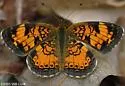
Mimic Crescent - Hodges#4481.2
Phyciodes incognitus
Identification: Mimic Crescent is a recently described species that is similar to the common and widespread Pearl Crescent (P. tharos) and the Northern Crescent (P. cocyta) of the northern US/Canada. It is dubbed "Mimic" because its appearance mimics
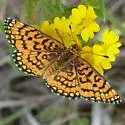
Dotted Checkerspot - Hodges#4515
Poladryas minuta
Identification: Different distribution, more eastern, than P. arachne ; dark markings above less developed and less prominent, giving a lighter more orange appearance; below with wider orange bands, and with broken median black markings giving more o
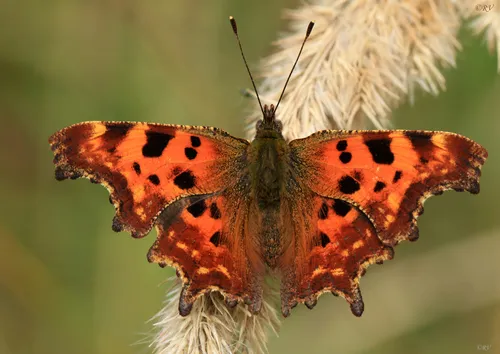
Comma
Polygonia c-album
Looking like a tatty Small Tortoiseshell, the Comma is now a familiar sight throughout most of England and Wales and is one of the few species that is bucking the trend by expanding its range. The butterfly gets its name from the white mark on its un
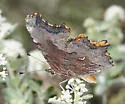
Hoary Comma - Hodges#4427
Polygonia gracilis
Identification: Adult: eastern subspecies best distinguished by dark inner part of underside of wings, contrasting strongly with gray, "hoary" outer part; hindwing upperside with bright yellow spots in dark wing margin; silver comma on underside of h
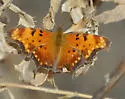
Gray Comma - Hodges#4429
Polygonia progne
Identification: Upperside is bright orange-brown; summer form has hindwing with a wide dark border, winter form has the border covering only about 1/4 of the wing; both enclosing a few small yellow spots. Underside is charcoal gray with fine dark str
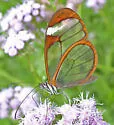
Broad-tipped Clearwing - Hodges#4617.2
Pteronymia cotytto
First U.S. Record: National Butterfly Center, Mission, Hidalgo Co., Texas - 2004 (Bordelon & Knudson 2006)
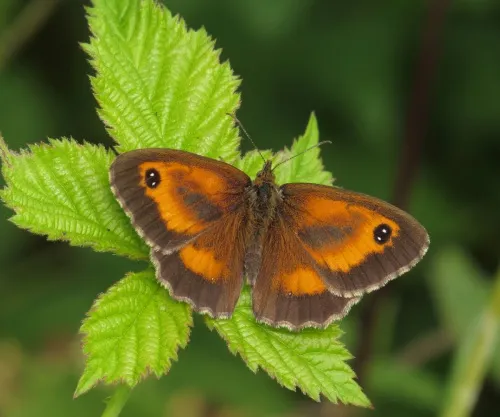
Gatekeeper
Pyronia tithonus
The Gatekeeper has gold wings on a brown background. The black eye spot on the upper wings has two characteristic white 'pupils'. This butterfly spends much of its time basking with wings open, when the sexes are easy to tell apart - only the male ha
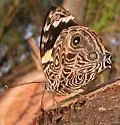
Blomfild's Beauty - Hodges#4547.1
Smyrna blomfildia
Identification: The underside of the hindwing has a series of eyespots near the outer edge and a psychedelic-looking arrangement of lines and shapes in white and brown. Two small triangular "tails" project off the rear outside corner. The wings are t
Karwinski's Beauty - Hodges#4547
Smyrna karwinskii
Identification: Nearly identical to Blomfild's Beauty (S. blomfildia) but has one or no little black triangular tails on the underside of the trailing corner of the hindwing, where Blomfild's has two. Never confirmed in the US but occurs very close t
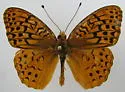
Adiaste Fritillary - Hodges#4458.1
Speyeria adiaste
Identification: Easily identified by where found, broad squarish wings, pale coloring with relatively delicate black patterning above and barely contrasting pattern on a tan ventral. Closely related to S. hydaspe and displacing it to the south. Quit
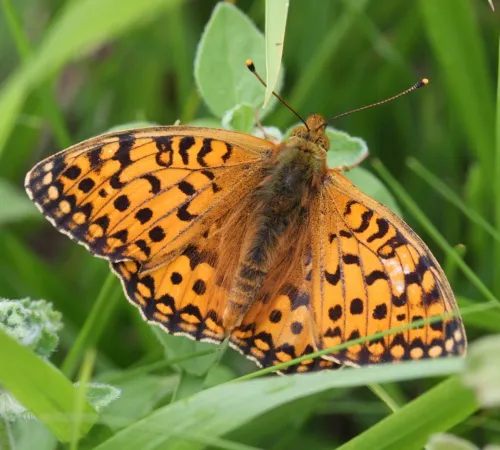
Dark Green Fritillary
Speyeria aglaja
It gets its name from the green hue found on the underside of the hindwings, which are peppered with large silver spots. Calcareous grassland habitats, frequently stopping to nectar on Thistles and Knapweed.
Edwards' Fritillary - Hodges#4454
Speyeria edwardsii
Identification: Upperside of both wings tawny orange with black border and markings. Underside green or gray-green with narrow buff submarginal band and metallic silver markings.
Great Basin Fritillary - Hodges#4458
Speyeria egleis
Subspecies are sometimes not separable except by knowing locality found. The value and extent of application of some names (as true in many Speyeria species) can be debated, as geographically adjacent subspecies often tend to be extremely similar, a
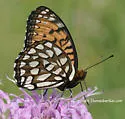
Regal Fritillary - Hodges#4452
Speyeria idalia
Identification: "Large. Upperside of forewing bright red-orange with black markings. Upperside of hindwing black with postmedian row of white spots; submarginal row of spots is orange in male and white in female." "Rapidly vanishing or declining in m
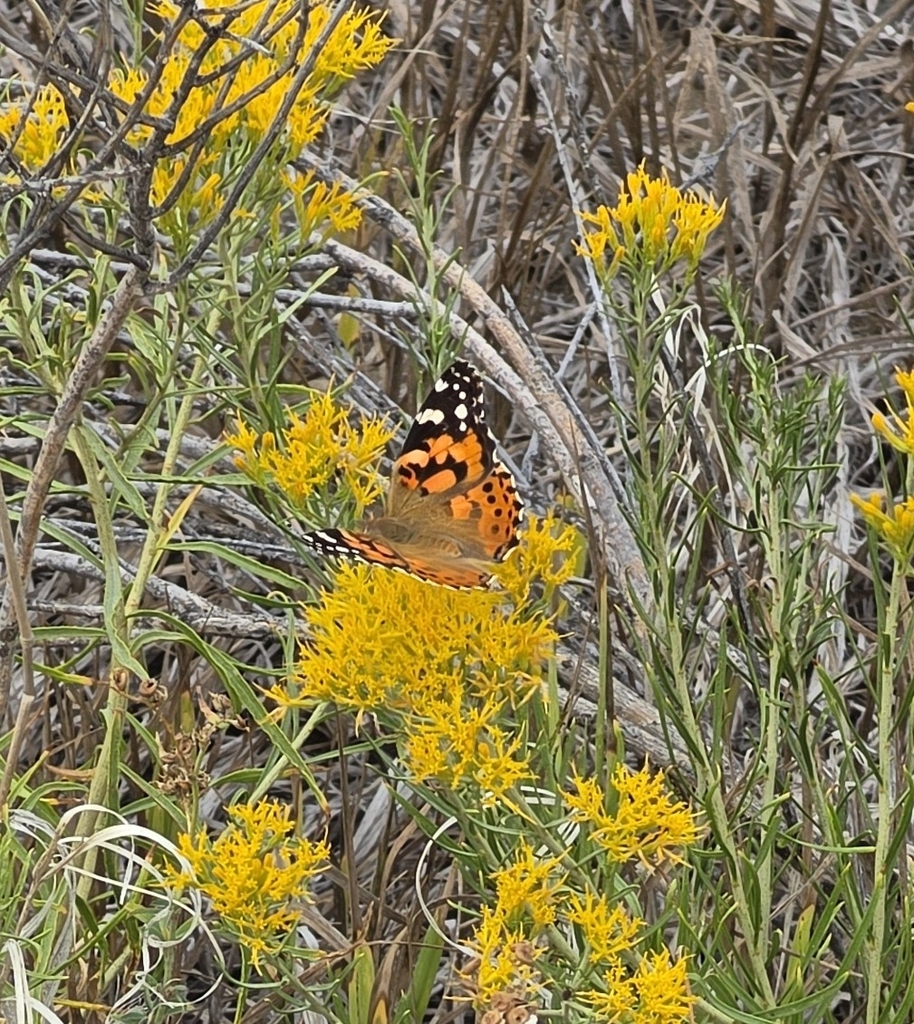
Painted Lady
Vanessa cardui
no rights reservedA newly emerged adult is flushed with a beautiful salmon-pink and is a most-beautiful insect. This colouring, however, fades rapidly with the passage of time. The species has slightly pointed wing tips and the white marks on the black tips of the for
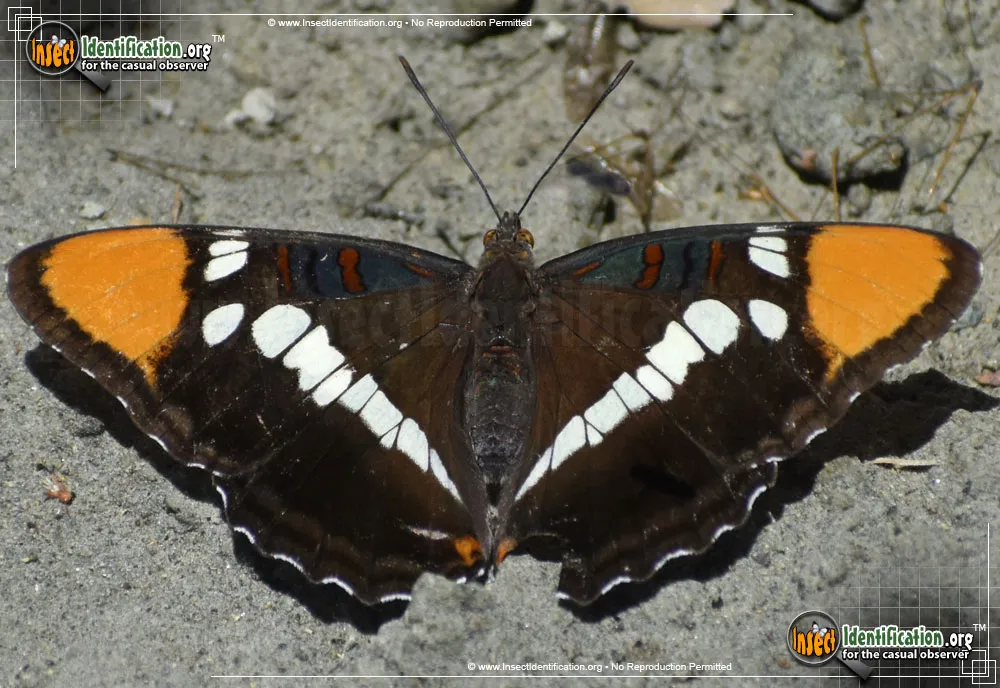
California Sister Butterfly
Adelpha californica
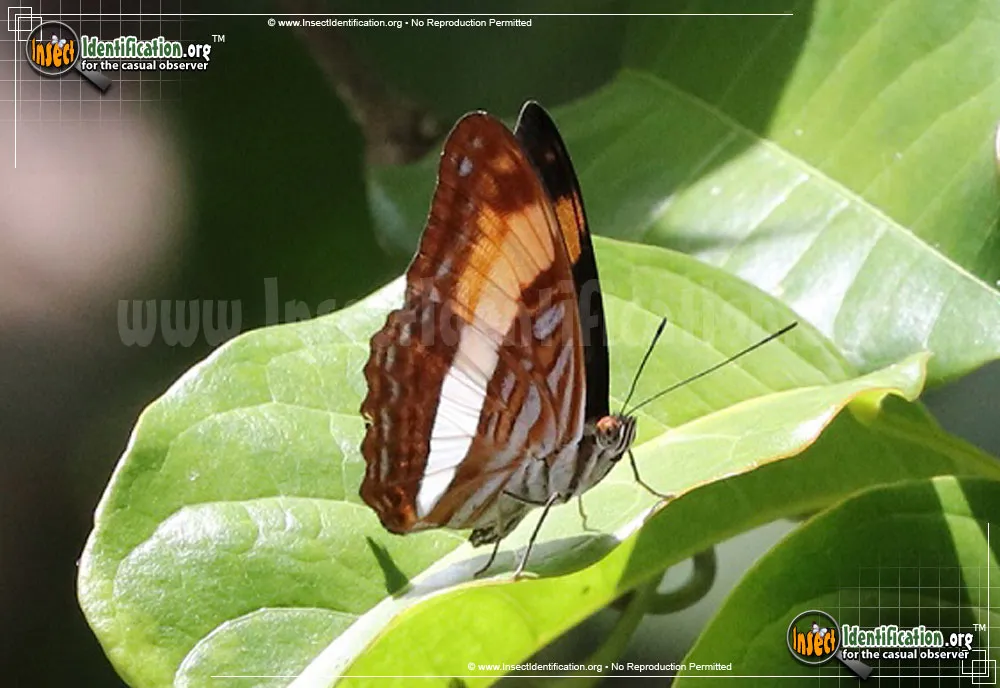
Smooth-banded Sister Butterfly
Adelpha cytherea
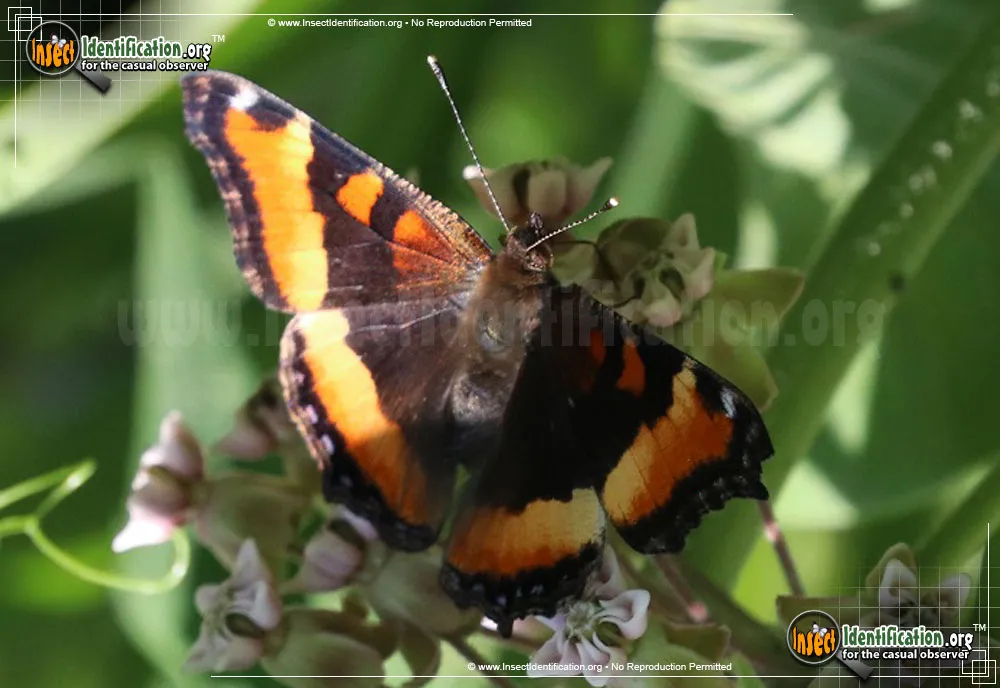
Milbert's Tortoiseshell Butterfly
Aglais milberti
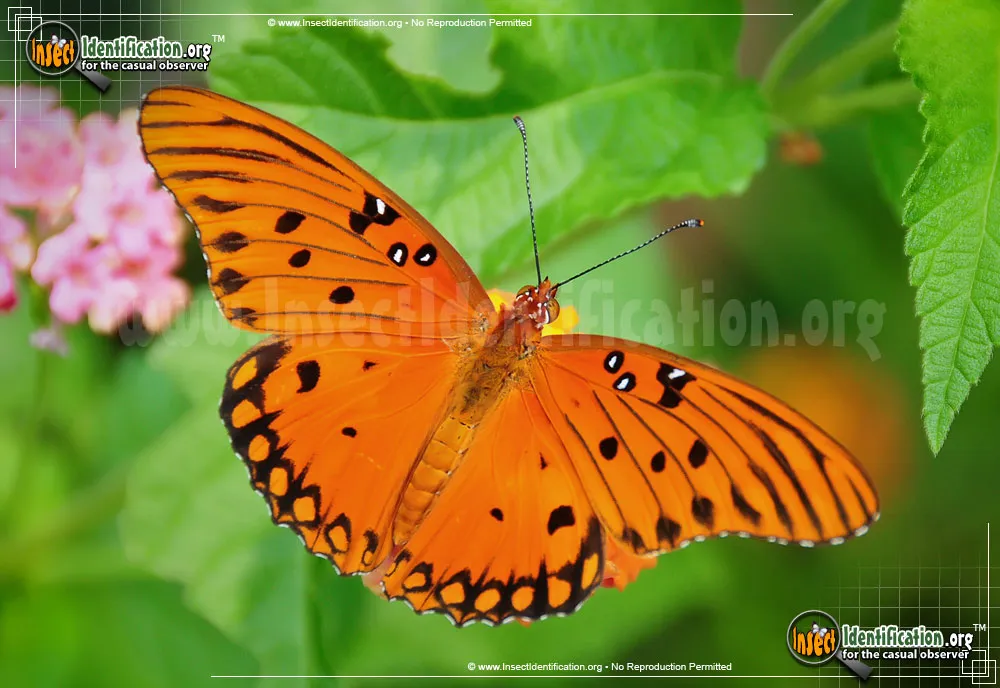
Gulf Fritillary Butterfly
Agraulis vanilliae
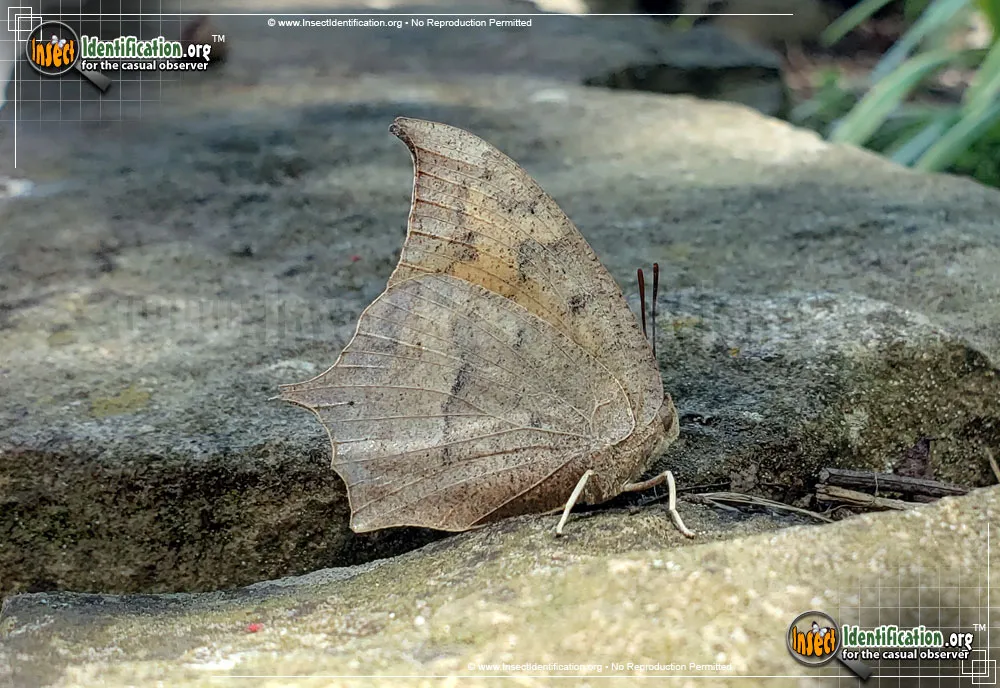
Goatweed Leafwing Butterfly
Anaea andria
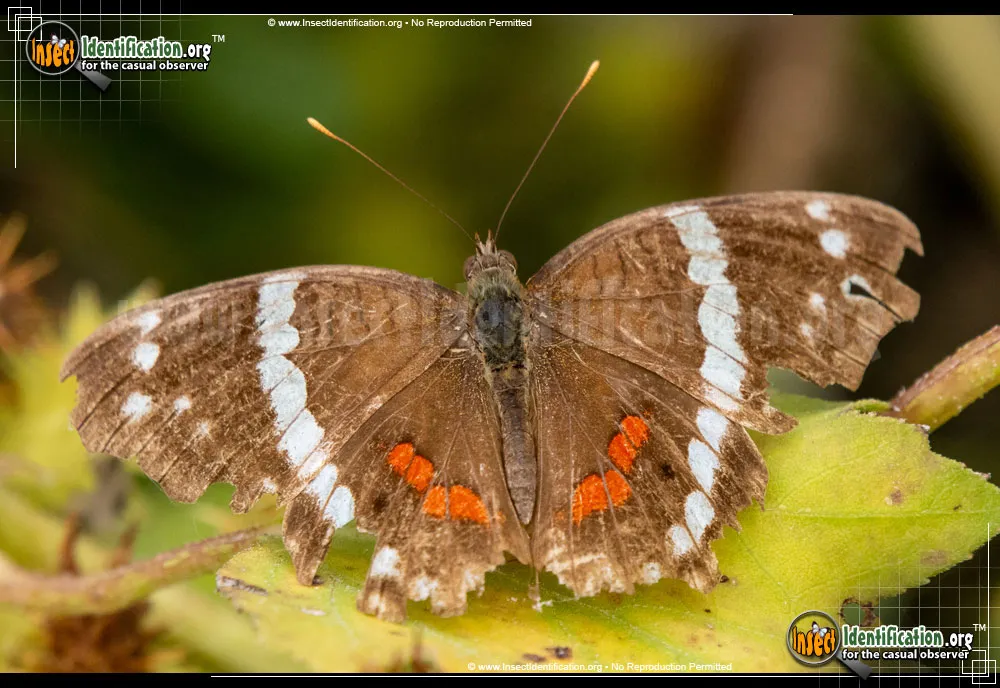
Banded Peacock / Princesa Roja
Anartia fatima
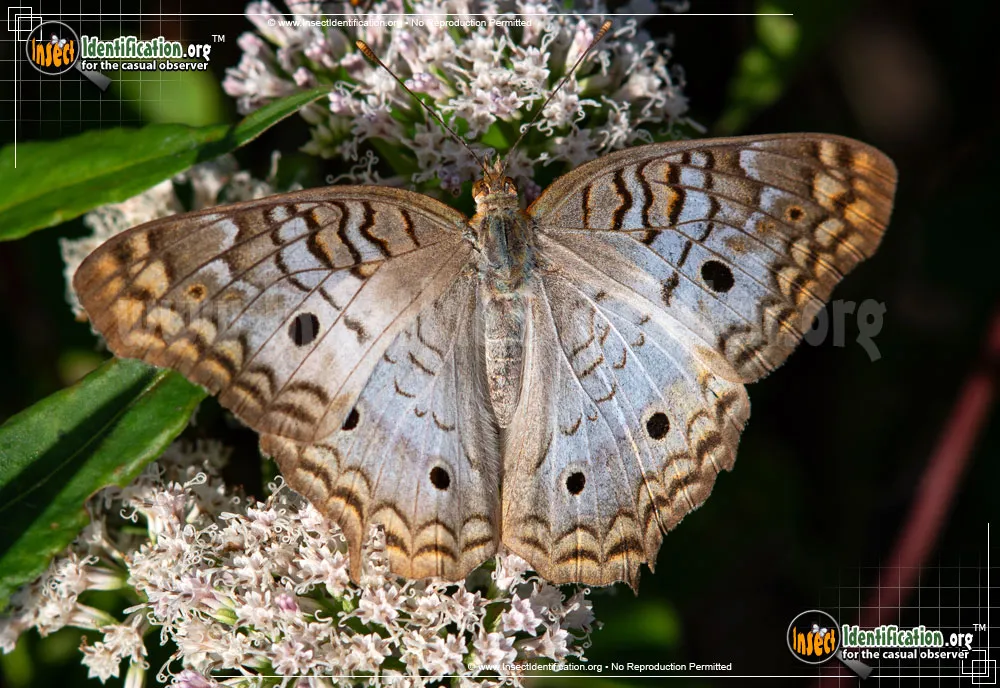
White Peacock Butterfly
Anartia jatrophae