
Family Underwing, Tiger, Tussock, and Allied Moths (Noctuidae)
Noctuidae is a family in the order Lepidoptera. Browse 2,425 named species recorded in this family, or open an individual profile for its available identification and natural-history information.
Species in Noctuidae (2,425)
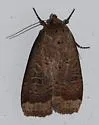
Blueberry Budworm Moth - Hodges#11045
Abagrotis anchocelioides
Identification: Adult: forewing brown with contrasting tan terminal area; orbicular and reniform spots same color as forewing but outlined with pale scales; orbicular spot round, not oval; small patch of black scales where subterminal line meets cost
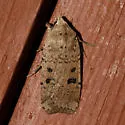
Abagrotis baueri - Hodges#11028
Abagrotis baueri
Identification: The original description of Abagrotis baueri McDunnough, is available online in PDF. Determined by Lars Crabo. Genitalia:
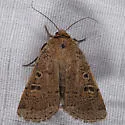
Abagrotis denticulata - Hodges#11026
Abagrotis denticulata
Identification: Specimens identified by DNA analysis: Genitalia:
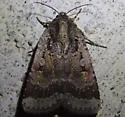
Abagrotis discoidalis - Hodges#11035
Abagrotis discoidalis
Identification: Can be easily separated from other species of Abagrotis by the dark streak passing through the orbicular and reniform spots, and in particular by the black filling in the space between the two spots ( 3 ) . "Larva light gray above the
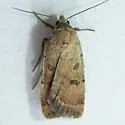
Abagrotis dodi - Hodges#11042
Abagrotis dodi
Identification: Forewing terminal area is lighter gray than the rest of the wing, compared to that of A. dodi which is darker than the ground color. Description
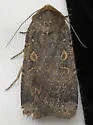
Abagrotis duanca - Hodges#11039
Abagrotis duanca
Identification: Smith original description as Rhyncagrotis duanca is available online in the print references. Crumb describes the larvae. Uncommon.
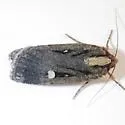
Abagrotis glenni - Hodges#11022
Abagrotis glenni
Identification: The original description of Abagrotis glenni Buckett, is available online in PDF.
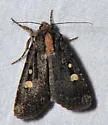
Abagrotis mirabilis - Hodges#11019
Abagrotis mirabilis
Identification: The original description as Agrotis mirabilis Grote is available online in the print references below. The forewing is blackish gray with both the oval shaped reniform and the orbicular spot usually filled with pale yellow.
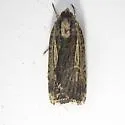
Abagrotis nanalis - Hodges#11038
Abagrotis nanalis
Identification: Adults have very distinctive forewing pattern: streaked dark brown and buff; thorax with a prominent pale buff center, flanked by dark gray. Larva are black with bold white middorsal and subdorsal lines, with black spiracles. The head
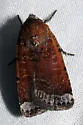
Abagrotis nefascia - Hodges#11024
Abagrotis nefascia
Lafontaine (1998) reported Abagrotis nefascia to be widely distributed in western North America, but there are relatively few records. ( 4 )
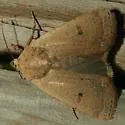
Abagrotis orbis - Hodges#11027
Abagrotis orbis
Identification: Specimen identified by DNA analysis (BOLD).
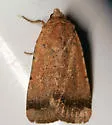
Abagrotis petalama - Hodges#11025.1
Abagrotis petalama
Identification: Original description can be found in MONA Fascicle 27-3 at link in citations below.
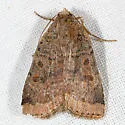
Abagrotis placida - Hodges#11041
Abagrotis placida
Identification: Forewing is variable light or dark reddish-brown to gray-brown with a olive tint. ( 3 ) , ( 4 ) Pacific Northwest Moths - description. ( 4 )
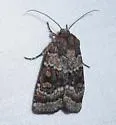
Abagrotis pulchrata - Hodges#11036
Abagrotis pulchrata
Identification: Original description: ( 3 ) Photo identified by Bob Patterson
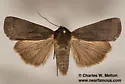
Abagrotis reedi - Hodges#11040
Abagrotis reedi
Identification: Buckett (1969) described the adult - commonly dark brown but sometimes light brown to almost black, males tending to be darker and females redder. Lines usually distinct but not always so. Dark reniform spot always present. Orbicular
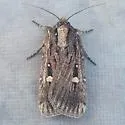
Abagrotis striata - Hodges#11021
Abagrotis striata
Identification: Description can be found in MONA Fascicle 27-3 at link in citations below.
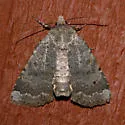
Abagrotis variata - Hodges#11032
Abagrotis variata
Identification: Adult: forewing dark brown or reddish-brown with pale grayish terminal band; reniform and orbicular spots faint or obscure; AM and PM lines pale gray, irregular, usually diffuse or patchy; hindwing dark gray with blackish veins and pa
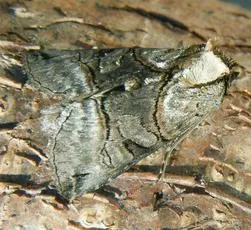
The Spectacle
Abrostola tripartita
Wingspan 27-30 mm. This moth derives its English name from the raised tufts of scales on the thorax, which resembles a pair of spectacles when viewed from the front. Gardens, heathland, rough grassland, fens, woodland edges and waste ground. It has o
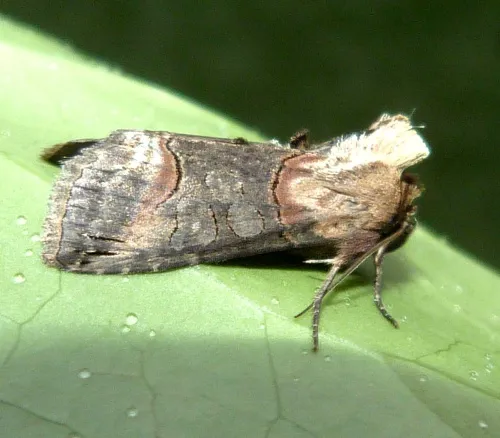
Dark Spectacle
Abrostola triplasia
Wingspan 28 to 32 mm. Similar in pattern to The Spectacle, but differs in several respects. Ground colour is brownish-black, base of forewing and thorax are dull straw or reddish brown and cross lines are edged with reddish brown. Occurring in suburb
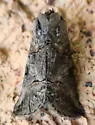
Spectacled Nettle Moth - Hodges#8881
Abrostola urentis
Identification: Adult - forewing dark gray in median area, light gray in basal and subterminal areas (some individuals are brown rather than gray); thin black AM and PM lines preceded and followed respectively by reddish-brown scales; large reniform
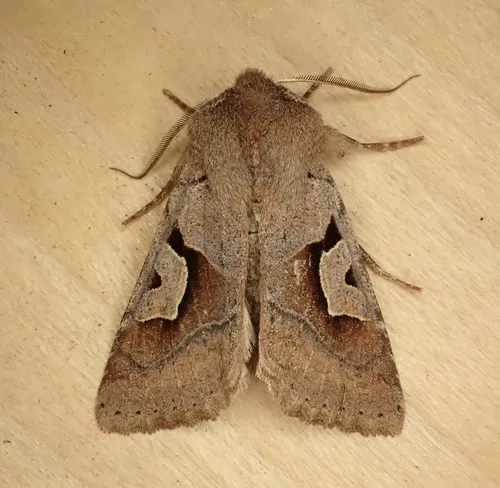
Acerra normalis - Hodges#10470
Acerra normalis
Identification: Adult: forewing grayish-brown with large dark brown V-shaped patch in median area surrounding pale yellowish area along costa; dark triangular spot in pale yellowish area does not touch costa; PM line blackish, almost straight in lowe
Chocolate Moth - Hodges#9636
Acherdoa ferraria
Identification: Adult: forewing chocolate to reddish-brown with purplish-gray in terminal area; lower AM and PM lines white; most of reniform spot edged with white; hindwing brownish-black; antennae broadly pectinate in male, simple in female [descri
Chalky Bird Dropping Moth - Hodges#9161
Acontia cretata
Identification: Adult: forewing mostly white basally, and dark green to blackish beyond PM line; amount of pearl-gray shading in basal half varies from almost none to almost complete; reniform spot either white or dark, bordered by pale yellowish-gre
Acopa carina - Hodges#9825
Acopa carina
Identification: Pale creamy-white ground color with jagged dark brown basal, AM, and PM lines, and a dark reniform blotch between the latter two lines. Terminal line of brown dashes. Overscaling of dark brown scales is highly variable; some individ
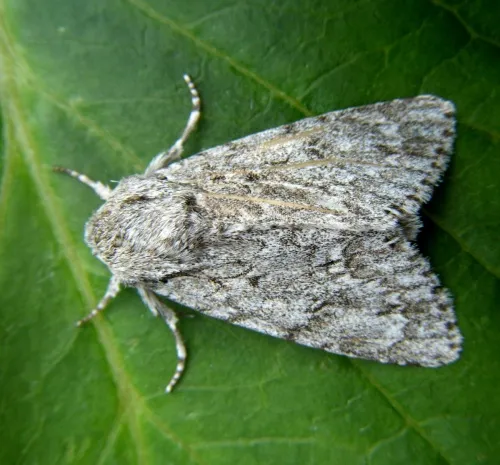
The Sycamore
Acronicta aceris
Wingspan 35-45 mm. Like several other Acronicta species, the ground colour varies from pale grey to dark sooty-grey. The brightly-coloured caterpillar is covered with yellow and orange hairs and has a row of black-edged white blotches along the back.
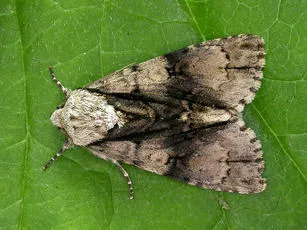
Alder Moth
Acronicta alni
Wingspan 33 to 38 mm. This subtly-marked species varies less than some of its congeners, but melanic forms do occur in places. Damper areas around Alder and wooded areas containing Birch. The adults appear in May and June and are attracted to mercury
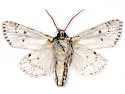
Acronicta atristrigatus - Hodges#9232
Acronicta atristrigatus
Identification: Smith original description as Anytus atristrigatus is available in PDF or view online in the print references. Thanks to Gary Anweiler for correcting the ID of photos formerly placed on the A. beameri page here .
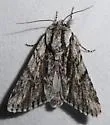
Acronicta barnesii - Hodges#9267
Acronicta barnesii
Identification: Description can be found in MONA Fascicle 25-04.
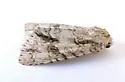
Acronicta beameri - Hodges#9234
Acronicta beameri
Identification: Adult: forewing light gray with heavy black anal dash which almost connects to heavy black basal dash; AM and PM lines thick, scalloped, white, edged with black on both sides; reniform and orbicular spots black in center, surrounded b
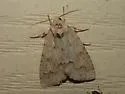
Birch Dagger Moth - Hodges#9208
Acronicta betulae
Identification: Adult: our only dagger moth with a pale tan forewing and a sharp right angle in lower part of postmedian line; much of forewing tinged with gray; hindwing tan Larva: Last instar smoky green-brown to rusty brown with long whitish hairs
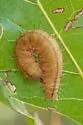
Charred Dagger - Hodges#9255
Acronicta brumosa
Identification: Adult: forewing a patchy mixture of black, gray, and white, with no sharply-defined markings; basal, anal, orbicular-reniform, and subterminal dashes present but diffuse and indistinct, showing little contrast against dark ground colo
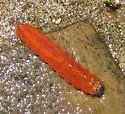
Clear Dagger Moth - Hodges#9246
Acronicta clarescens
Identification: The adult of Acronicta spinigera looks very similar. One way to tell the difference is that A. clarescens has a tuft of tan brown on the midthorax. (from Chris Schmidt)
Connected Dagger - Hodges#9219
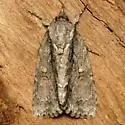
Acronicta connecta
Identification: Adult: forewing yellowish-gray with broad blackish basal and anal dashes that are diffuse, blurred, and more-or-less connected in lower median area; dull orangish shading usually noticeable in upper median area (inside and distal to r
Acronicta edolata - Hodges#9269
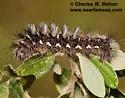
Acronicta edolata
Identification: Grote (1881) original description as Apatela edolata is available online and linked in the print references. Larva photo at Cornell University Insect Collection: Franclemont
Exiled Dagger Moth - Hodges#9242
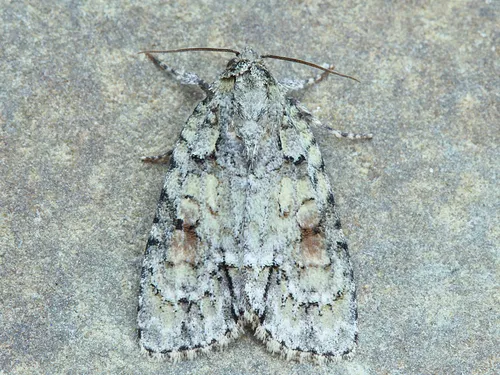
Acronicta exilis
Exiled Dagger Moth - Hodges#9242 (Acronicta exilis) is a species in the family Noctuidae, commonly known as owlet moths, belonging to the order Lepidoptera (Butterflies and Moths). It is classified within the subfamily Acronictinae, superfamily Noctu
Fragile Dagger Moth - Hodges#9241
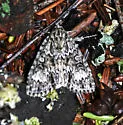
Acronicta fragilis
Identification: Double sharply zigzag lines as a part of grey white and black pattern on front wings are distinctive. "Orbicular spot grey to white with darker center. Hindwing yellowish white with faint grey median line and outer shading."
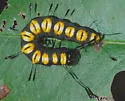
Funerary Dagger - Hodges#9221
Acronicta funeralis
Identification: Adult: forewing longitudinally bicolored (light gray on costal two-thirds, black along inner third, with sharp dividing line); broad basal dash has large tooth pointing toward costa; in melanic indidivuals, the light gray is replaced
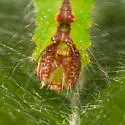
Gray Dagger - Hodges#9212
Acronicta grisea
Identification: forewing dark gray with black basal and anal margin dashes; postmedial line with sharply-dentate margin hindwing white
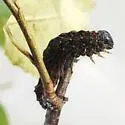
Speared Dagger Moth - Hodges#9229
Acronicta hasta
Identification: Adult: forewing dark gray with 4 heavy black streaks - basal, anal, between orbicular and reniform spot, and at outer wing edge below reniform spot (basal steak is especially long and broad, sometimes extending more than half length o
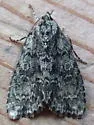
Heitzman's Dagger Moth - Hodges#9241.1
Acronicta heitzmani
Heitzman's Dagger Moth - Hodges#9241.1 (Acronicta heitzmani) is a species in the family Noctuidae, commonly known as owlet moths, belonging to the order Lepidoptera (Butterflies and Moths). It is classified within the subfamily Acronictinae, superfam
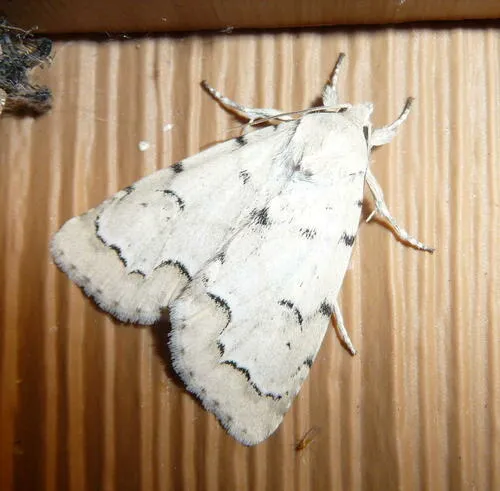
Unmarked Dagger - Hodges#9207
Acronicta innotata
Identification: Adult: forewing creamy white to pale gray; bulge of postmedial (PM) line indented to form two small bulges; PM line bordered distally by slightly darker grayish shading, and proximally by a white band (sometimes indistinct); no basal
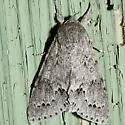
Large Gray Dagger - Hodges#9202
Acronicta insita
Identification: Adult : Powdery gray FW with darker markings and whitish HW. FW with the normal markings somewhat broken and blurred, the outer part of the PM and a partial reniform spot most prominent. The orbicular spot is a small, hollow ring. The
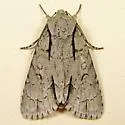
Pleasant Dagger - Hodges#9227
Acronicta laetifica
Identification: Similar to interrupta , hasta , and lobeliae
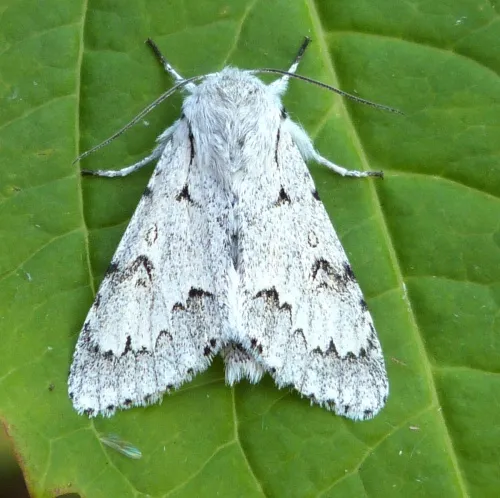
The Miller (Moth)
Acronicta leporina
Wingspan 35-45 mm. Another variable species, the whitest forms occurring in parts of Scotland and the darker ones in northern England and the Midlands, in industrial areas. Typically, the species is pale greyish, a form known as f. grisea . Woodlands
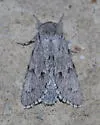
Cottonwood Dagger Moth - Hodges#9205
Acronicta lepusculina
Identification: forewing whitish; lines faint except for 3 black blotches representing tips of lines at costa; black basal dash present; usually no orbicular spot hindwing white "Although vulpina is usually paler, lepusculina is very variable and Mid
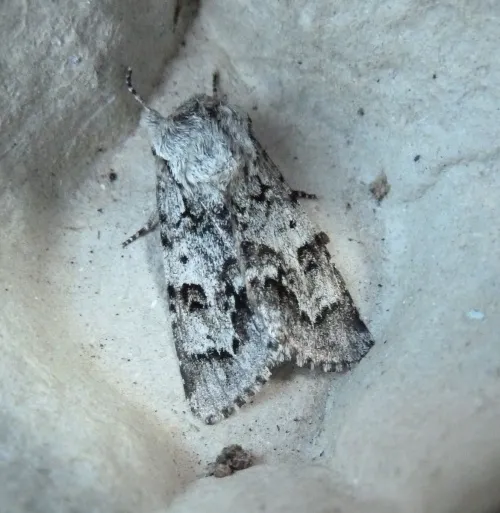
Light Knot Grass
Acronicta menyanthidis
Unless identified by a recognised expert, a photo is required. If the photo doesn't show the key ID features then in the comments box describe the size and identifying characters you have observed. A species of acid moorland and damp heathland. The m
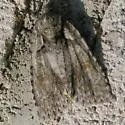
Hesitant Dagger - Hodges#9244
Acronicta modica
Identification: Adult: forewing medium gray with AM and PM line usually conspicuously double; basal dash thick but usually not touching small blackish blotch at middle of AM line; hindwing grayish-brown [description by Charles Covell] Genitalia: Larv
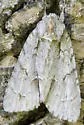
Ochre Dagger Moth - Hodges#9236
Acronicta morula
Identification: Adult: orangish-yellow patch in center of thorax is diagnostic; forewing pale to dark gray with orangish-yellow strip bordering inner edge of basal dash, and the same coloration beyond PM line and covering obscure reniform spot; anal
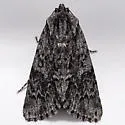
Acronicta nr. othello - Hodges#9270.89
Acronicta nr-othello
Acronicta nr. othello is a parking spot for Gary McDonald's BugGuide photo # 533778 (BOLD Sample ID 2011GM-0627 in BIN group BOLD:AAD5473 ). The barcode tree for BOLD:AAD5473 is constructed with two branches, one with true othello and one with 533778
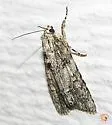
Ovate Dagger - Hodges#9243
Acronicta ovata
Identification: Adult: forewing mottled gray and yellowish-brown; black basal dash and AM line merge to form a Y or T toward base; sharp anal dash present hindwing grayish-brown
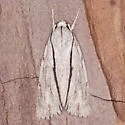
Acronicta perblanda - Hodges#9238.1
Acronicta perblanda
Identification: Ferguson adult description, including genitalia, is available in PDF.
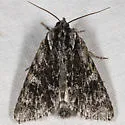
Pacific Dagger - Hodges#9268
Acronicta perdita
Identification: Adults: Forewings gray heavily suffused with black. Hind wings of males are white and are gray in females. Specimen identified by DNA analysis: Larvae: Larva has orange scoli or tubercles covered with short hair tufts or spines. The c
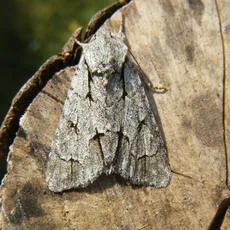
Grey Dagger
Acronicta psi
The grey background is well-marked by black lines, one of which is 'dagger' shaped. Grey and Dark Dagger can only be separated by genital determination. The caterpillars can however be told apart more easily. Adults of Grey and Dark Dagger can only b
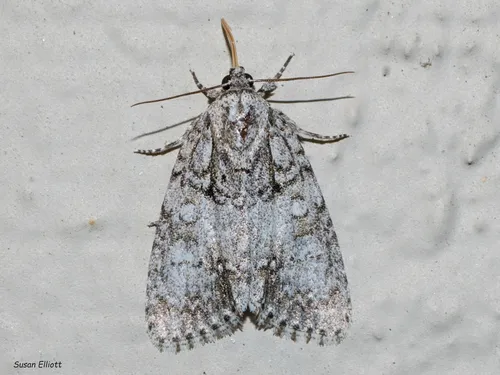
Retarded Dagger Moth - Hodges#9251
Acronicta retardata
Identification: Adult: forewing pale gray; AM line distinctly double, often with a black spot midway on its outer side; median area usually whitish hindwing whitish with heavy gray shading and dark discal spot [adapted from description by Charles Cov
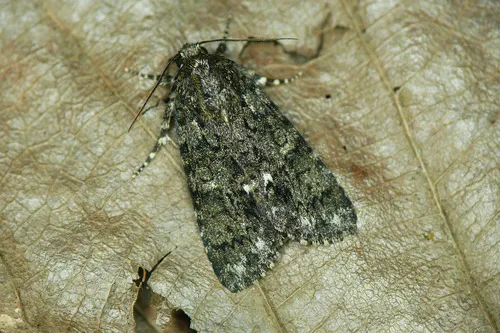
Knot Grass
Acronicta rumicis
Wingspan 30-35 mm. A variable species, some examples of which can resemble other Acronicta species, but this moth usually shows a curved white mark near the rear edge of the forewing, even in melanic specimens. On the wing in May to July, there is a
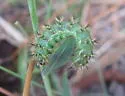
Acronicta sinescripta - Hodges#9272.1
Acronicta sinescripta
Identification: Sam Jaffe reports that the caterpillars have black rings around the tubercles on iNaturalist here
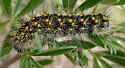
Acronicta spinea - Hodges#9276
Acronicta spinea
The most recent records of this species are from the 1960s, according to a comment by Chris Schmidt.
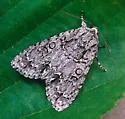
Nondescript Dagger - Hodges#9235
Acronicta spinigera
Identification: The adult of Acronicta clarescens looks very similar. One way to tell the difference is that A. clarescens has a tuft of tan brown on the midthorax. (from Chris Schmidt)
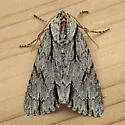
Acronicta strigulata - Hodges#9231
Acronicta strigulata
Identification: See Pacific Northwest Moths here Nocturnal
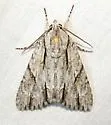
Acronicta thoracica - Hodges#9230
Acronicta thoracica
Identification: One of two western Acronicta with goldish brown middorsal thoracic tuft. Forewing light gray with dark transverse markings; AM line indistinct and usually absent below basal dash; medial line is black diffuse bar from slanting from c
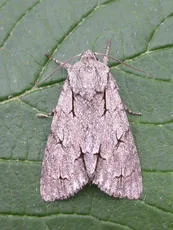
Dark Dagger
Acronicta tridens
Wingspan 35 to 45 mm. The adult moth cannot be readily distinguished from Grey Dagger except by examination of the genitalia, although in the caterpillar stage this is not a problem as the species look quite different. Various habitats, especially wh
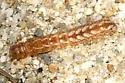
Acronicta tristis - Hodges#9247
Acronicta tristis
Identification: Adult: Larva: Genitalia ♂: " A. tristis is very similar to A. increta, but the ground color is a cold gray or bluish gray, lacking the greenish or brown tints of increta. Dark A. tristis are a flat gray black, with no sheen, whereas d
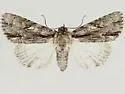
Acronicta valliscola - Hodges#9239
Acronicta valliscola
Acronicta valliscola - Hodges#9239 (Acronicta valliscola) is a species in the family Noctuidae, commonly known as owlet moths, belonging to the order Lepidoptera (Butterflies and Moths). It is classified within the subfamily Acronictinae, superfamily
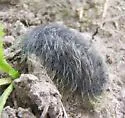
Miller Dagger - Hodges#9206
Acronicta vulpina
Identification: Adult: forewing chalky white, lightly dusted with gray scales; normal lines are reduced to a few black spots where they would meet the costa, and a series of small dots marking the terminal line; other markings include a short basal s
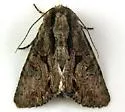
Acroria pulchra - Hodges#9562.1
Acroria pulchra
Separatabdruck aus den Abhandlungen der Senckenbergischen naturforschenden Gesellschaft
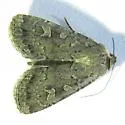
Actebia balanitis - Hodges#10923
Actebia balanitis
Identification: "Basal, antemedian and postmedian lines complete, marked in black and scalloped outward at each vein. Orbicular and reniform spots finely outlined with dark scales and filled with slightly paler ones; the reniform usually has the lowe
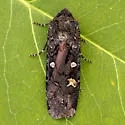
Black Army Cutworm - Hodges#10924
Actebia fennica
Identification: A medium-size (3.9-4.2 cm wingspan) dark brown moth with relatively narrow forewings with doubled black basal, antemedian and postmedian lines. The subterminal line is a marked by a row of lighter scales. The orbicular and reniform sp
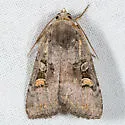
Adelphagrotis stellaris - Hodges#10989
Adelphagrotis stellaris
Identification: Fresh adults have a cream to orange reniform spot, a prothoracic collar that is lighter in color than the darker gray or brown of the thorax and the forewings. From British Columbia to Northern California the forewings are usually mor
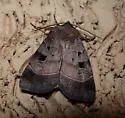
Pale-banded Dart - Hodges#10955
Agnorisma badinodis
Identification: Specimen identified by DNA analysis: Genitalia: ♂
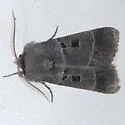
Agnorisma bollii - Hodges#10956
Agnorisma bollii
Identification: Adult: forewing, head, and top of thorax brown with scattered white scales, giving an overall grayish cast; collar dark gray to blackish; rectangular dark gray to blackish shading between reniform and orbicular spots, and between orbi
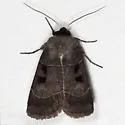
Collared Dart - Hodges#10954
Agnorisma bugrai
Identification: The top of the head and collar are black. The antennae of both sexes are filiform.
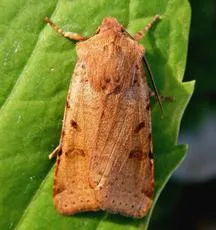
Beaded Chestnut
Agrochola lychnidis
The species is quite variable and there are a number of named forms. Lunar Underwing is often similar, but Beaded Chestnut has narrower shaped orbicular stigma and usually 3 dark spots on the front of the thorax. Common in broad-leaved woodland, scru
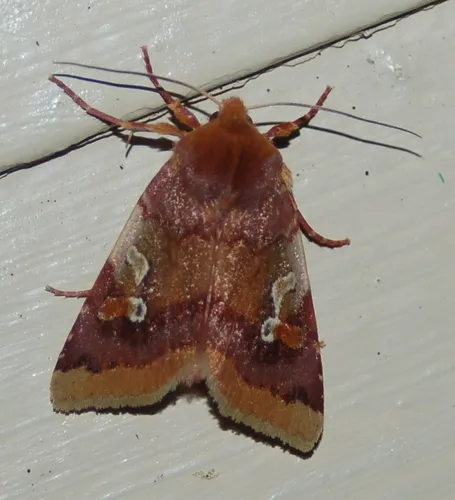
Agrochola pulchella - Hodges#9955
Agrochola pulchella
Identification: Adult: forewing with broad dark orange terminal band; remainder of wing medium to dark brown (median band usually slightly lighter brown); lower half of reniform spot whitish; orbicular spot either not noticeable or rimmed in white; h
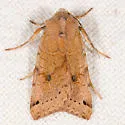
Agrochola purpurea - Hodges#9954
Agrochola purpurea
Identification: Adult: forewing variably light purplish-brown to reddish-orange; lines and markings faint except for dark subapical dash along costa and black lower half of reniform spot; subterminal line a series of black dots; terminal line either
Agrotis antica - Hodges#10660.1
Agrotis antica
Agrotis antica - Hodges#10660.1 (Agrotis antica) is a species in the family Noctuidae, commonly known as owlet moths, belonging to the order Lepidoptera (Butterflies and Moths). It is classified within the subfamily Noctuinae, tribe Noctuini, superfa
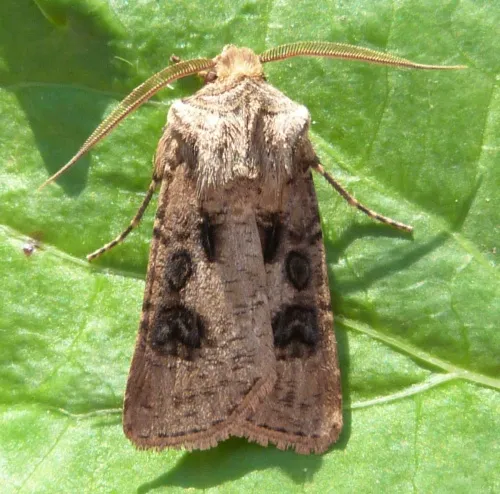
Heart & Club
Agrotis clavis
Wingspan 35 to 40 mm. Similar to the more common Heart & Dart, but the central dart-mark is shorter, blunter and more club like. Collar may have thin dark lines, but rarely has a dark broad band. Frequents sand dunes and waste ground, it is a frequen
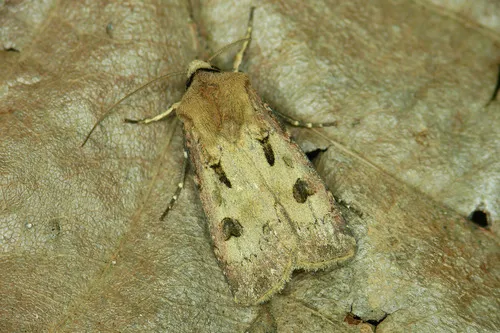
Heart & Dart
Agrotis exclamationis
Wingspan 30-40 mm. One distinctive feature of this species is that it always has a black band across the front of the thorax, when viewed head-on. Main flight period is from May to July, with numbers decreasing later in the season although individual
Swordsman Dart - Hodges#10648
Agrotis gladiaria
Identification: Specimen identified by DNA analysis: Genitalia:
Rascal Dart - Hodges#10661
Agrotis malefida
Identification: Adult - forewing brownish in male, gray to blackish in female; reniform spot large, dark; claviform spot short, wide, solid black; orbicular spot outlined in black, and keyhole-shaped (broadly oval basally, with elongate "tail" distal
Pale Western Cutworm - Hodges#10645
Agrotis orthogonia
Identification: Adult : FW pale putty to light gray-brown ground color • AM irregular with a long lateral loop at the inner margin • Claviform spot is small to medium sized, black and often filled with darker gray • Orbicular and reniform spots are b
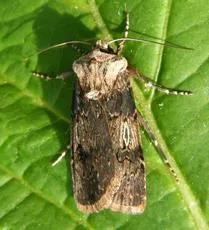
Shuttle-shaped Dart
Agrotis puta
Wingspan 30-32 mm. A sexually dimorphic species, the males having brownish variegated forewings and white hindwings, the females have fairly plain dark brown forewings and buffish hindwings. Gardens, farmland, grassland, heathland and open woodland.
Agrotis ruta - Hodges#10647
Agrotis ruta
Identification: Specimen determined by DNA analysis (BOLD).
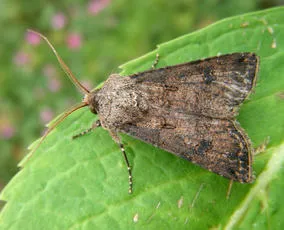
Turnip Moth
Agrotis segetum
Although showing many colour forms, this moth usually shows a neat, pale fringe with a narrow inner dark line on the forewing, and has very white hindwings. Gardens, farmland, parkland, oak woodland and sand-dunes. The species is double-brooded, flyi
Agrotis vancouverensis - Hodges#10652
Agrotis vancouverensis
Identification: Larvae - gray with diffuse dark oval or diamond-shaped patch on the dorsum of each segment. There is a dark gray subdorsal line with dark gray shading speckled with white along the sides. The spiracles and cervivcal shield are black.
Old Man Dart - Hodges#10641
Agrotis vetusta
Identification: Adult : FW light powder- grey or grey-brown, with a dark reniform spot. PM is a series of black dots. Terminal line is a series of black dots. HW and abdomen white. Antennae simple and sexes similar. Larva : Gray with longitudinal dar
Voluble Dart - Hodges#10659
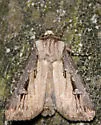
Agrotis volubilis
Identification: Adult: forewing medium brown to gray with well-defined markings; upper half of wing often darker than lower half; black dash extending from base of wing through claviform spot is distinguishing feature; orbicular spot oval, not elonga
Alastria chico - Hodges#9522.1
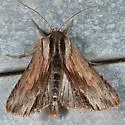
Alastria chico
Identification: Detailed description at Pacific Northwest Moths Lafontaine & Troubridge original description.
Aleptina aleptivoides - Hodges#9072
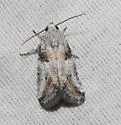
Aleptina aleptivoides
Identification: The antennae of both sexes are filiform. ( 4 )
Aleptina clinopetes - Hodges#9072.1
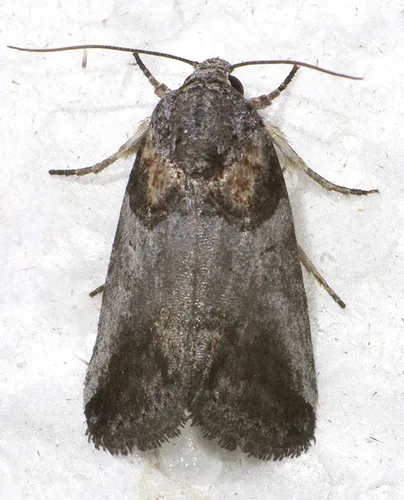
Aleptina clinopetes
Identification: Dyar description in PDF or view online.
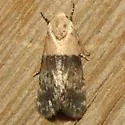
Aleptina semiatra - Hodges#9165
Aleptina semiatra
Identification: Smith original description as Acontia semiatra is online in PDF. Todd et al stated "This species is unmistakable and superficially is totally unlike the rest of the genus. The forewing is dirty white with a dull grey median area. The
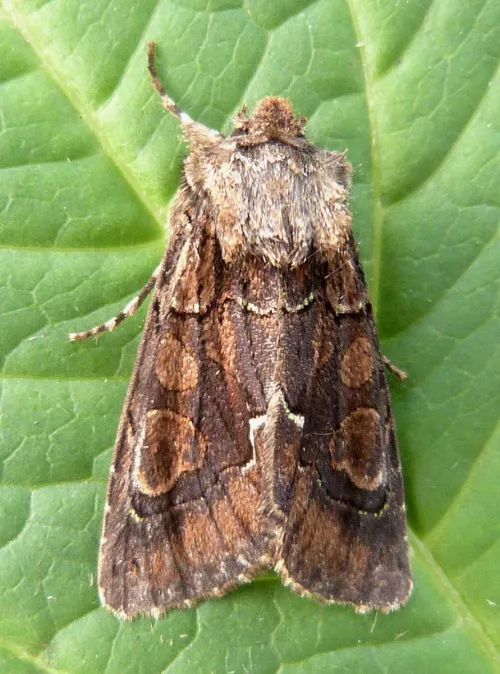
Green-brindled Crescent
Allophyes oxyacanthae
Wingspan 35-45 mm. Although superficially a dull brown species, the typical form of this moth has patches of metallic green scales giving it an attractive sheen in the correct light. A melanic form, ab. capucina is quite common in suburban areas, and
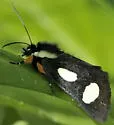
Langton's Forester Moth - Hodges#9318
Alypia langtoni
The most widespread Forester in Canada, ranging from Newfoundland & Labrador all the way to the Yukon. Adults with just one spot on each hindwing coupled with two on each forewing gives the species its common name. Larvae feed on Fireweed (Epilobium)
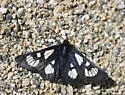
Ridings' Forester - Hodges#9319
Alypia ridingsii
Identification: Adult: forewing black with large curving white patch in PM area (broken by black veins), a white triangular basal patch, and a white spot between these two areas; hindwing black with two white patches; no colored "shoulder pads" on th
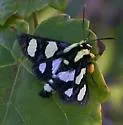
Wittfeld's Forester Moth - Hodges#9316
Alypia wittfeldii
Identification: Similar to A. octomaculata, Eight-spotted Forester, but spots are narrower and more elliptical.
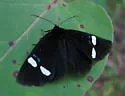
Alypiodes geronimo - Hodges#9313
Alypiodes geronimo
Identification: Charles Melton (News of the Lepidopterists' Society Vol 60 #2) has raised caterpillars of both species and discovered that most online resources have the larvae confused. A. bimaculata feeds on mirabilis and A. geronimo feeds on Boerh
Amiana niama - Hodges#9034
Amiana niama
Dyar, H.G. 1094. Additions to the list of North American Lepidoptera. No. 2. Proceedings of the Entomological Society of Washington 6: 105 .
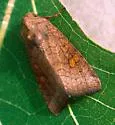
American Ear Moth - Hodges#9457
Amphipoea americana
Identification: forewing bright rusty-orange shaded with orangish-brown; veins, lines, and spots darker brown; the white scales or lack of white scales in the reniform spot is not useful in determining the species. hindwing grayish-brown with orange
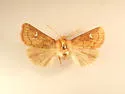
Amphipoea erepta - Hodges#9461
Amphipoea erepta
Identification: Adult: forewing yellowish-orange with brown AM, PM, and terminal lines; reniform spot pale cream with brown outline on basal side only; orbicular spot not noticeable; darker shading along veins in subterminal area; hindwing light yell
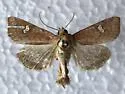
Interoceanic Ear Moth - Hodges#9456
Amphipoea interoceanica
Identification: virtually identical to American Ear Moth ( A. americana ) but slightly smaller with a stouter body.The white scales or lack of white scales in the reniform spot is not useful in determining the species. Genitalia: In A. interoceanica,
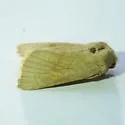
Amphipoea keiferi - Hodges#9460
Amphipoea keiferi
Identification: Straw colored or pinkish-buff forewing with faint transverse lines (sometimes absent) and darkened veins on forewing. Light orange scaling around reniform spot can be diagnostic .