
Butterflies and Moths
Order Lepidoptera
The Butterflies and Moths (Order Lepidoptera) includes 11,813 species across 112 families and 2,787 genera in our directory.
About Butterflies and Moths
Lepidoptera includes approximately 180,000 described species of butterflies and moths. Moths outnumber butterflies roughly 10:1. The monarch butterfly's eastern population has declined by more than 80% since the mid-1990s, and the western population by over 95% since the 1980s. The IUCN lists the migratory monarch as Vulnerable.
Economic Impact
Lepidoptera are critical pollinators. In Europe, grassland butterfly species have declined by almost 50% since the early 1990s. In the UK, three-quarters of butterflies are in decline. In the U.S., five butterfly species have gone extinct since 1950, with 29 listed as endangered.
Ecological Role
Butterflies and moths are essential indicators of ecosystem health. As caterpillars, they are a primary food source for birds - a single nest of blue tit chicks requires ~10,000 caterpillars. Adult moths pollinate many night-blooming plants.
Families in Lepidoptera (112)
Species in Lepidoptera (11,813)
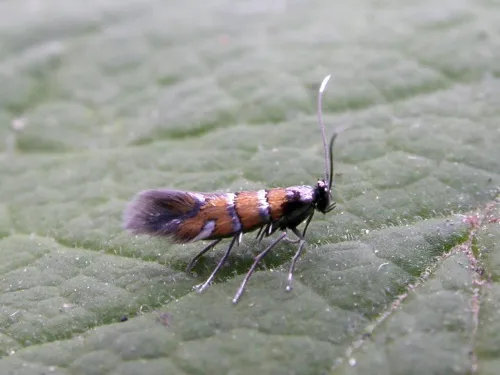
Phyllonorycter schreberella
Phyllonorycter schreberella
Wingspan 6 to 8 mm. A very small moth with a metallic lustre and dark, leaden colours around the head and fringes, with silvery strigulae. The larva mines the leaves of Elm. The adults fly in two generations during May and August. Along with P. trist
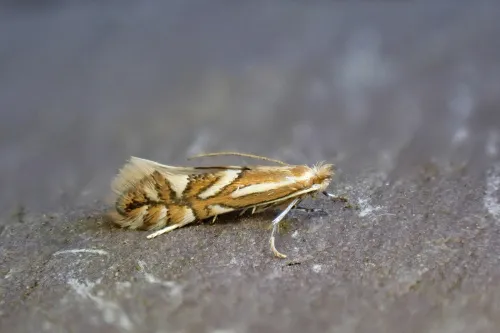
Phyllonorycter sorbi
Phyllonorycter sorbi
Wingspan 7 to 9 mm. The forewing colour is golden brown but is often suffused with blackish on the outer half. The white markings are well defined and partially bordered blackish. The larva commonly mines the leaves of Rowan or Bird Cherry, and occas
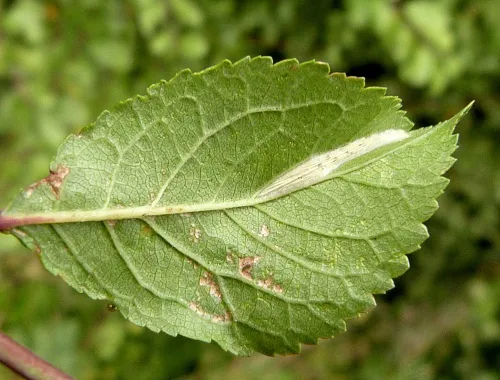
Phyllonorycter spinicolella
Phyllonorycter spinicolella
Wingspan 6 to 8 mm. The adult moths are very similar in appearance to P. cerasicolella and the two species are best separated by genitalia dissection or by recording as a leafmine with a note of the host foodplant. The larva mines the leaves of Prunu
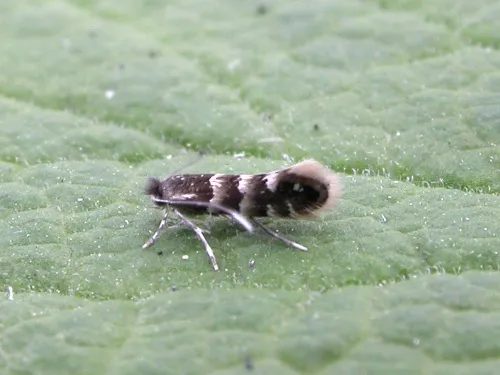
Phyllonorycter stettinensis
Phyllonorycter stettinensis
Wingspan 6.5-7.5 mm. The adult is quite a dark species compared to other Phyllonorycter , with contrasting whitish bands. The larva mines the leaves of Alder, causing a small oval mine on the upper leaf surface (unike other Phyllonorycter on Alder, w
Phyllonorycter strigulatella
Phyllonorycter strigulatella
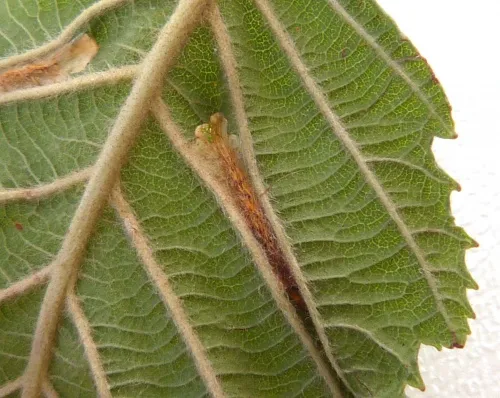
Wingspan 7 to 9 mm. The markings of this species are white, chestnut brown and black. The larva only mines the leaves of Grey Alder ( Alnus incana ), causing a narrow strongly contracted tube-like mine between two veins. Adult is similar to several o
Phyllonorycter trifasciella
Phyllonorycter trifasciella
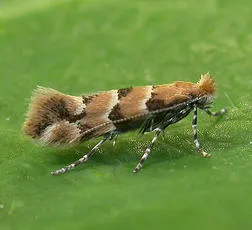
Wingspan 7-8 mm. This species has a banded patterning of chestnut, off white and dark browns. The larva mines the leaves of Honeysuckle, and occasionally Snowberry or Himalayan Honeysuckle, in a small tentiform mine that contracts diagonally causing
Phyllonorycter tristrigella
Phyllonorycter tristrigella
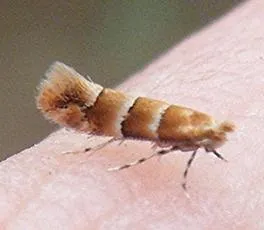
Wingspan 7-9 mm. One of the more distinctive of the Phyllonorycters, this species has two complete bands across the forewing and then a chevron-like mark nearer the wingtip. It also lacks the dark fringe line often present in other species. The larva
Phyllonorycter ulicicolella
Phyllonorycter ulicicolella
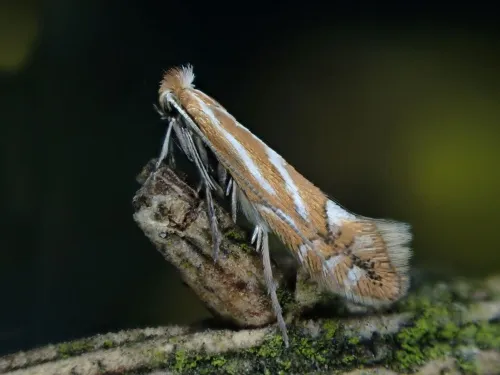
In VC55, the larvae seem to prefer Western Gorse ( Ulex gallii ) , which is smaller and softer than the common Gorse ( Ulex europaeus). The mines are hard to find - look for a yellowing, slighting distorted and swollen section of stem and side-shoot
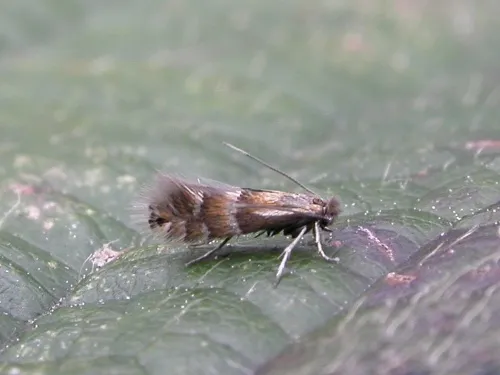
Phyllonorycter ulmifoliella
Phyllonorycter ulmifoliella
Wingspan 7 to 9 mm. Similar to other members of the family. The wings are brown with white markings edged in black. The larva mines the leaves of Birch, causing a small (<15mm) tentiform mine. The larva is pale yellow or whitish with a pale brown hea
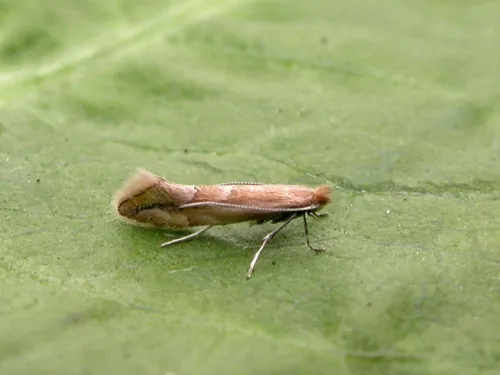
Phyllonorycter viminiella
Phyllonorycter viminiella
Wingspan 7 to 9 mm. Phyllonorycter viminiella has much less distinct markings than most other Phyllonorycter species. The larva mines the leaves of various Willow species, causing the leaf edge to fold over a tentiform mine with many creases on the u
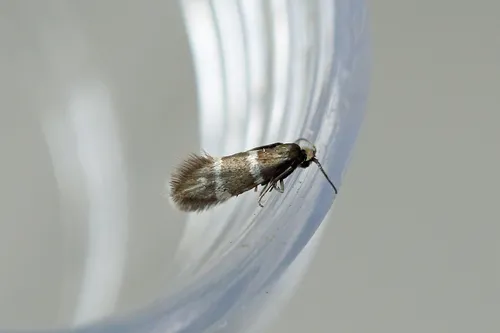
Phylloporia bistrigella
Phylloporia bistrigella
A very small (Wingspan c.8 mm) dark, but distinctively patterned moth. It is easily overlooked due to its very small size, and is most likely to be recorded from its larval leafmine on Birch (see ‘Life History’ below) Good photographs are required wh
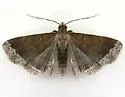
Physula albipunctilla - Hodges#8390.2
Physula albipunctilla
Rolfe, A.K. (2011) included Physula albipunctilla in the diet of Mormoops blainvillei , a bat species in Puerto Rico. PDF
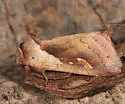
Pickerelweed Borer Moth - Hodges#9526
Bellura densa
Identification: Brown/tan forewings. Reniform spot partly filled with orange.
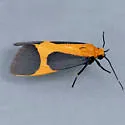
Pictured Lichen Moth - Hodges#8075
Cisthene picta
Identification: Pictured Lichen Moth is one of the two species in the genus which has a completely orange thorax, a character shared with Angel Lichen Moth. The basal streak is wide, straight edged, and broadly connected to a wide PM band. The PM b
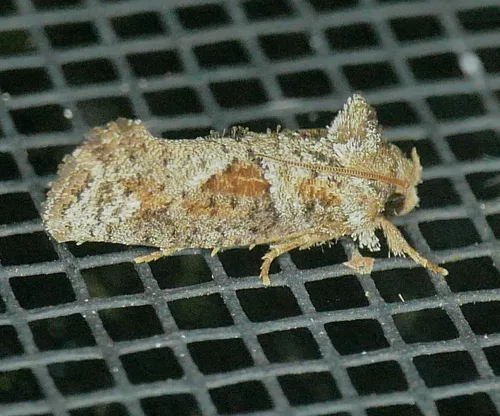
Piger Grass Tubeworm Moth
Acrolophus piger
Acrolophus piger, the piger grass tubeworm moth, is a moth of the Acrolophidae family. It was described by Harrison Gray Dyar Jr. in 1900. It is found in North America, including Alabama, Florida, Mississippi, North Carolina, South Carolina and Texas
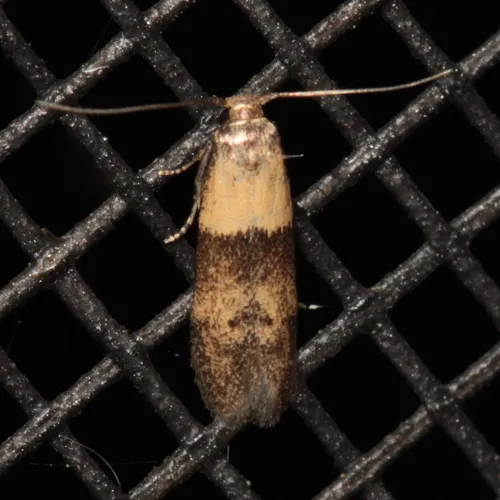
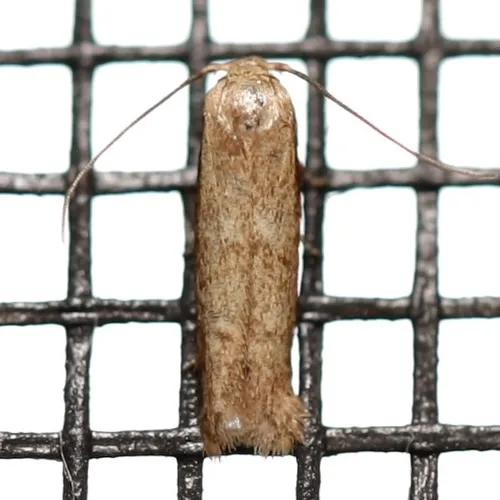
Pigritia laticapitella - Hodges#1232
Pigritia laticapitella
Pigritia laticapitella is a moth in the Blastobasidae family. It is found in the United States, including Texas, Kansas, California, New Jersey, Pennsylvania, Maine, Ohio and South Carolina.
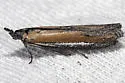
Pigritia murtfeldtella - Hodges#1246
Pigritia murtfeldtella
Pigritia murtfeldtella is a moth in the Blastobasidae family. It is found in the United States, including Maine, Ohio, Kentucky, Pennsylvania, Georgia, Missouri, Texas and California.
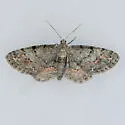
Pima occidentalis - Hodges#5747.1
Pima occidentalis
Identification: Specimen identified by DNA analysis (BOLD). ( 3 )
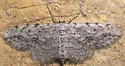
Pimaphera percata - Hodges#6441
Pimaphera percata
Identification: First abdominal segment of the adult is light and second segment is darker than the rest. All wings are uniform pale gray with dark brown to nearly black maculation. Discal dot on male is small and indistinct, females more defined. Pi
Pimaphera sparsaria - Hodges#6442
Pimaphera sparsaria
Identification: Larvae are twig mimics with numerous annulations per segment, more reminiscent of Sterrhinae species. The prothorax features a pair of dorsal thorn-like projections that bring to mind Geometrinae species. Noticeable dorsal warts on A1
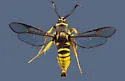
Pin Oak Clearwing - Hodges#2527.1
Paranthrene pellucida
Identification: Adult - the lack of scaling on the forewing is a key feature. Larva - grayish body, brown head and light brown thoracic shield. Large numbers of moths have been taken with ZZA pheromone lures in July in Michigan. Males very active bet
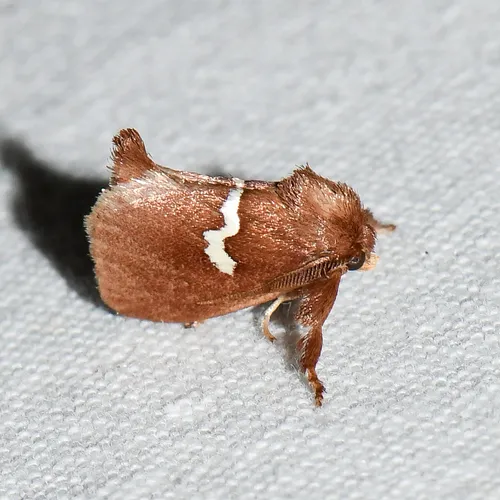
Pin-striped Slug Moth - Hodges#4691
Monoleuca semifascia
Identification: Adult: forewing brown to reddish-brown with a wavy whitish band extending from inner margin part-way across wing. Hindwing similar ground color but unmarked . Larva: body pinkish-orange, marked with black and white or yellow striping
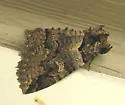
Pine Barrens Zale - Hodges#8713
Zale lunifera
Identification: Adult : Markings and coloration similar to Z. intenta , except smaller and AM line has a more pronounced medial angle . The fine black striae are less developed and thinner. Small, black orbicular spot is distinct, sharply contrasting
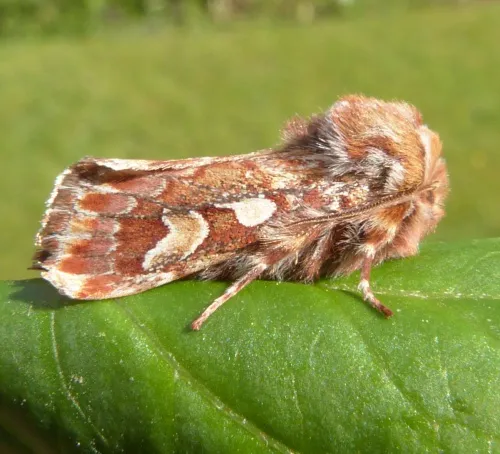
Pine Beauty
Panolis flammea
Wingspan 30-33 mm. Unmistakable with a large white kidney mark drawn out close to leading edge towards wing tip. Forewing rather narrow and pointed orange brown, reddish brown or brick red often yellowish along the outer edge and sometimes dusted whi
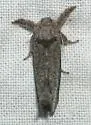
Pine Carpenterworm Moth - Hodges#2670
Givira lotta
Identification: The original description of Givira lotta Barnes & McDunnough in PDF - Specimen identified by DNA analysis (BOLD)
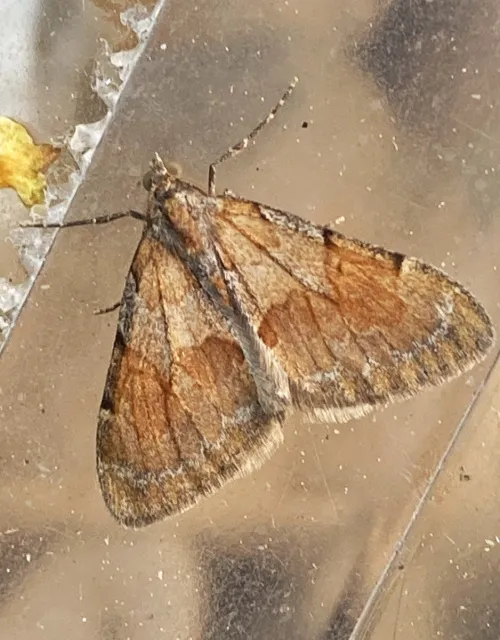
Pine Carpet
Pennithera firmata
Wingspan 30 to 34 mm. Although variable in appearance, it is often reddish brown in colour. It may bear a resemblance to the closely related Grey Pine Carpet (Thera obeliscata), but has a more indented dark band on the forewing. Determination by gen
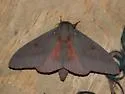
Pine Devil Moth - Hodges#7708
Citheronia sepulcralis
Identification: Adult: body chocolate brown with long thick abdomen; forewing dull brownish-violet with small rose basal spot and obscure blackish PM line and reniform spot; hindwing rose at base; median line and discal spot blackish; faint rose outl
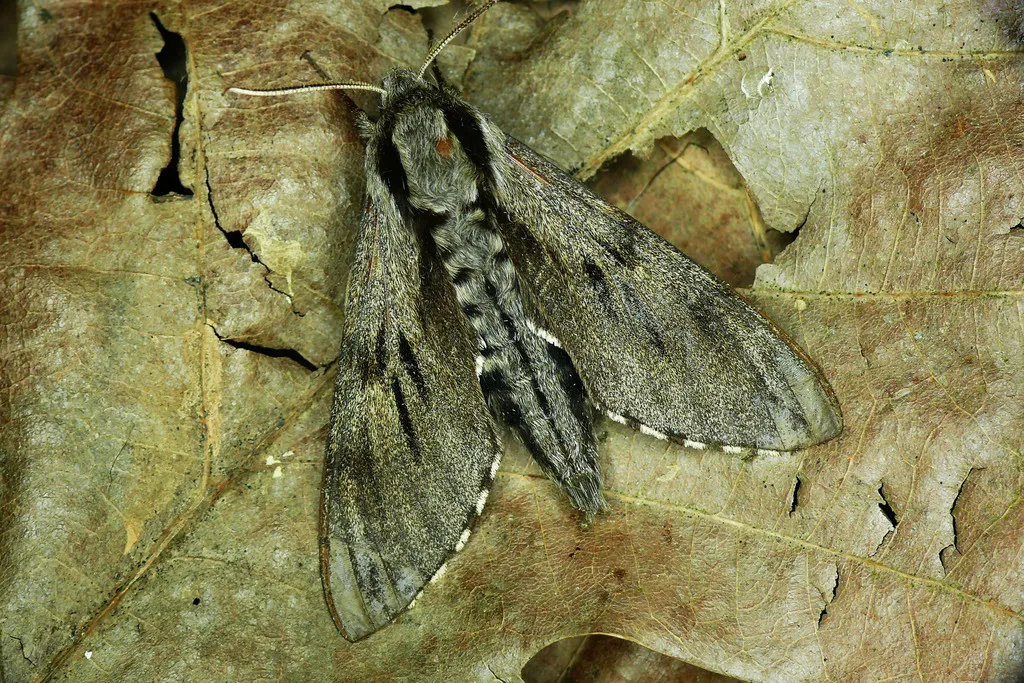
Pine Hawk-moth
Sphinx pinastri
Wingspan 65-80 mm. A fairly nondescript member of the hawk-moths, the greyish brown wings usually have three or four dark streaks in the centre. It inhabits coniferous woodland and areas where Scots Pine is present. It flies in a single generation fr
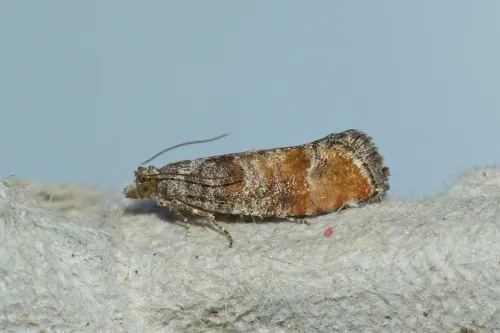
Pine Leaf-mining Moth
Clavigesta purdeyi
Wingspan 10-12 mm. Quite a small but brightly coloured Tortrix. Various habitats but preferring areas with Pine. Flying from July to September, the adults are attracted to light. The larvae feed internally on the needles of Pine, overwintering in thi
Pine Measuringworm - Hodges#6656
Hypagyrtis piniata
Identification: Adult: wings grayish-brown, evenly peppered with black; no orangish-brown shading; subterminal spot on forewing white, irregular, inconspicuous; lines blackish; PM line sinuous, toothed; black discal spots on all wings; hindwing margi
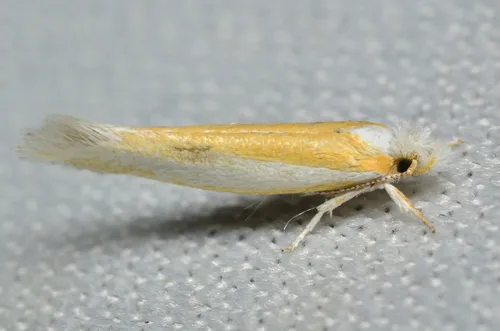
Pine Needle Sheathminer
Zelleria haimbachi
The pine needle sheathminer (Zelleria haimbachi) is a moth of the Yponomeutidae family. In North America it is found from British Columbia south of 52° north latitude, east to Quebec and south to California.
Pine Powder Moth - Hodges#6637
Eufidonia convergaria
Identification: Larva - slender, green with pale gray-green dorsal and addorsal lines, mimicking pine needles. , Adult - see description at E.H. Strickland Entomological Museum in Internet References.
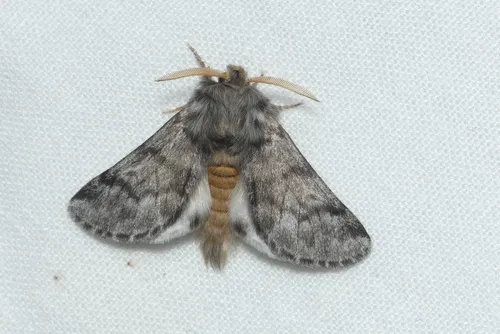
Pine Processionary-moth
Thaumetopoea pityocampa
The pine processionary (Thaumetopoea pityocampa) is a moth of the family Thaumetopoeidae. Sometimes placed in the genus Traumatocampa, it is one of the most destructive species to pines and cedars in Central Asia, North Africa and the countries of so
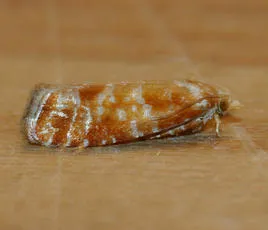
Pine Shoot Moth
Rhyacionia buoliana
Wingspan 16-24 mm. Attractive moth which is a light brick-red streaked with paler colours. Pine woodland, coniferous woodland, plantations and nurseries. The adults fly between June and August, when they can be attracted to light, though they are slu
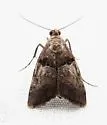
Pine Webworm - Hodges#5595
Pococera robustella
Natural enemies keep them from being a serious pest under normal circumstances, with the damage being mostly cosmetic- though they can completely strip the needles from smaller seedlings.
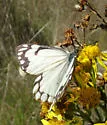
Pine White - Hodges#4187
Neophasia menapia
Identification: White butterfly with black venation on the underside of the hindwing. The forewing has a black tip with white cells. The forewing has a black margin on the leading edge that curves in to form a black ball-tip. Pine Whites have perhaps
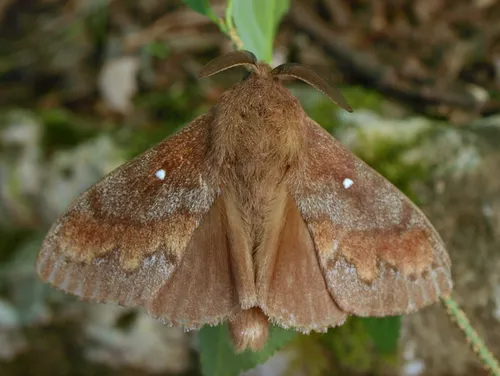
Pine-tree Lappet
Dendrolimus pini
Dendrolimus pini, the pine-tree lappet, is a moth of the family Lasiocampidae. It is found in most of Europe ranging to Eastern Asia.
Pineywoods Geranium Plume Moth - Hodges#6096
Capperia raptor
Identification: See the identification key for Oxyptilini . See the identification section for Capperia . See the species accounts in Barnes & Lindsey as Pterophorus raptor and Meyrick as Oxyptilus raptor .
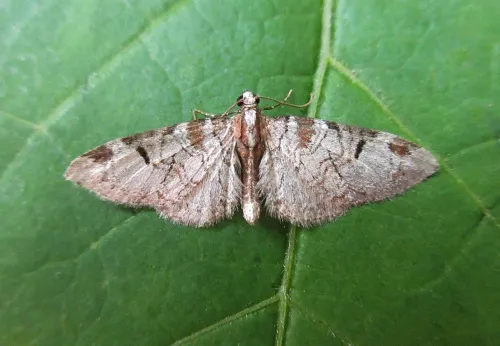
Pinion-spotted Pug
Eupithecia insigniata
Wingspan 18 to 22 mm. One of the more distinctively marked 'Pug' moths. Although this is a distinctively marked species a photograph is requested to support records in view of the rarity of this species in our area. Various habitats such as hedgerows
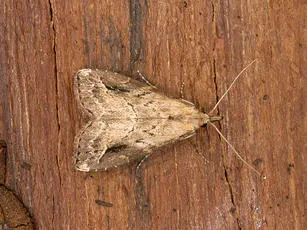
Pinion-streaked Snout
Schrankia costaestrigalis
Marshy places, damp meadows and fens are the preferred habitat. The adults can be noted on the wing from July to October, possibly as two generations. Not much is known about the earlier stages of this species in the wild, as the larva has only ever
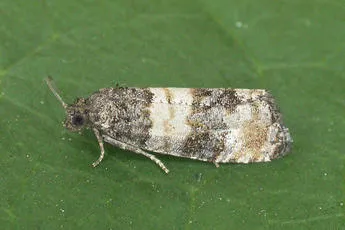
Piniphila bifasciana
Piniphila bifasciana
The normal flight time for the adults is from dusk onwards, when it is attracted to light. They are on the wing in June and July. The larvae feed in a silken gallery among the young shoots and male flowers of Scots Pine. Maritime pine is also a foodp
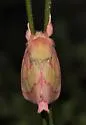
Pink Prominent - Hodges#8022
Hyparpax aurora
Identification: Distinctive: pink and yellow. Coloration resembles (unrelated) Rosy Maple Moth, but pattern on wings is different. Covell lists as uncommon to rare.
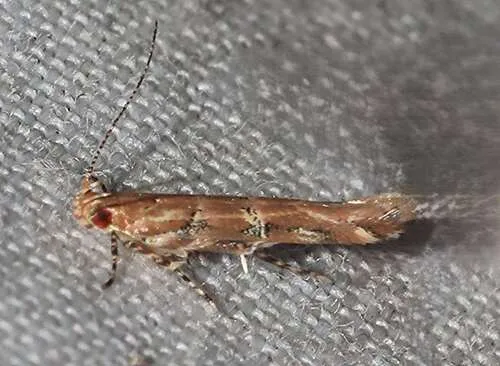
Pink Scavenger Caterpillar Moth
Anatrachyntis rileyi
Anatrachyntis rileyi, the pink cornworm, pink bud moth or pink scavenger, is a species of moth of the family Cosmopterigidae, the cosmet moths. It was first described by Lord Walsingham in 1882 from the southern United States, but it is probably an i
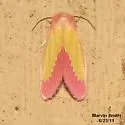
Pink Star Moth - Hodges#11055
Derrima stellata
Species complex ; true stellata is restricted to the East Coast
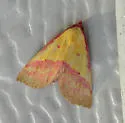
Pink-Bordered Yellow - Hodges#8481
Phytometra rhodarialis
Identification: The forewing is yellow and has a pink band along the basal half of the leading edge. About the rear 2/5ths of the forewing is pink too (viewed at rest).
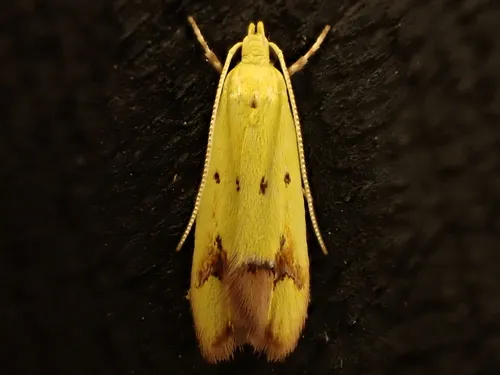
Pink-Tipped Yellow Moth
Gymnobathra flavidella
Gymnobathra flavidella is a moth of the Oecophoridae family. It was described by Walker in 1864. It is found in New Zealand.
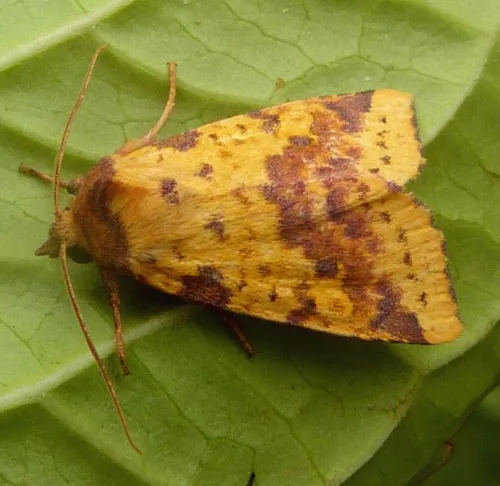
Pink-barred Sallow
Xanthia togata
Wingspan 27-30 mm. A rather variable mix of yellow undertones and pink to maroon markings, it is best identified by its reddish head and upper shoulders. Frequenting mainly damp woodland and marshy areas. It is single-brooded, flying in September and
Pink-barred Sallow - Hodges#9965
Xanthia tatago
Identification: Adult: thorax and forewing bright yellow; collar, line fragments, and postmedial shading purple , mixed with reddish-brown; ST line dotted, black; hindwing white, tinted with pale yellow [description by Charles Covell]
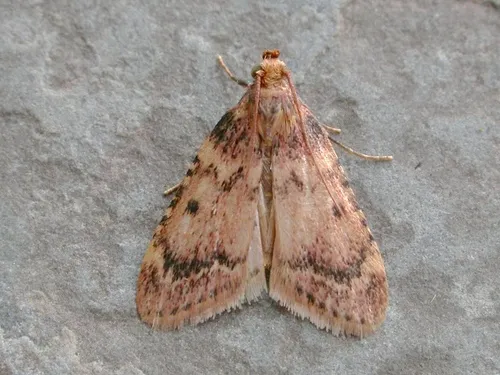
Pink-masked Pyralid Moth - Hodges#5512
Aglossa disciferalis
Identification: Original description (Dyar, 1908, p. 98): Fore wing reddish ocherous, irrorate with blackish; costal edge blackish except where cut by the lines; discal spot large, blackish, sub-quadrate; lines ocherous, slightly intensified on the
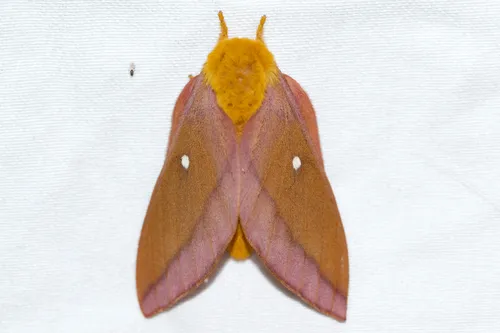
Pink-striped Oakworm Moth
Anisota virginiensis
Anisota virginiensis, the pink-striped oakworm moth, is a species of silk moth of the family Saturniidae.
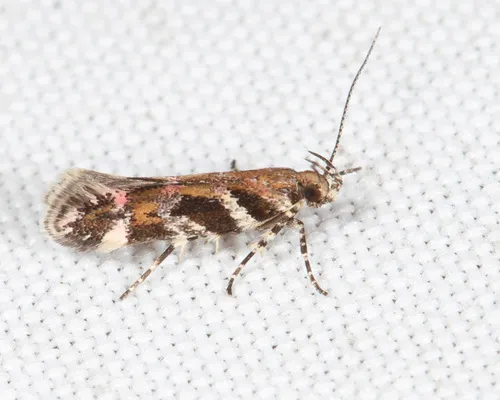
Pink-washed Aristotelia Moth
Aristotelia roseosuffusella
The pink-washed aristotelia, clover aristotelia moth or garden webworm (Aristotelia roseosuffusella) is a moth in the Gelechiidae family. It is found in North America, including Alabama, Georgia, Illinois, Kentucky, Maryland, Massachusetts, Michigan,
Pink-washed Leafroller - Hodges#2860
Hedya separatana
Identification: Head and palpi black, antenna fuscous, legs grayish-white, banded. Forewing: outer two-fifths pale lilaceous-white, with four pale fuscous costal streaks and a shade of the same color before termen. A small black dot in middle of wing
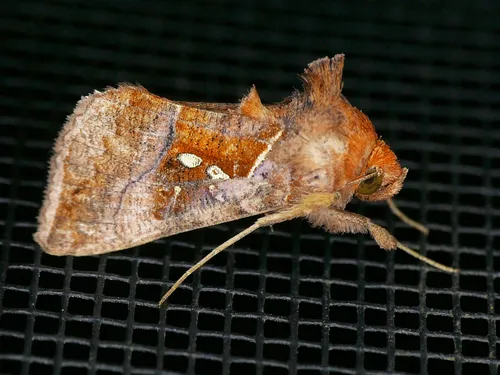
Pink-washed Looper Moth - Hodges#8886
Enigmogramma basigera
Identification: Adults - forewing pink/brown. Silver spots on forewing, one hollow and with stem attaching to line on wing, one filled. Larva description.
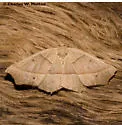
Pionenta ochreata - Hodges#6992
Pionenta ochreata
Identification: Both males and females have simple antennae.
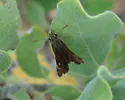
Piruna haferniki - Hodges#3986
Piruna haferniki
Identification: Upperside is blackish brown. Forewing has 3 same-sized spots at the apex and distinct oval postmedian spots; hindwing has no markings. Underside of forewing is the same as upperside; underside of hindwing is purplish gray with no mark
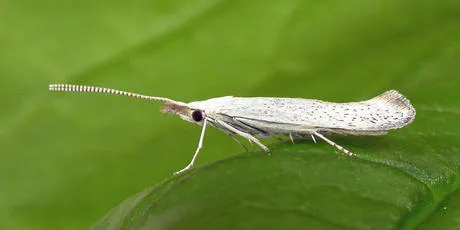
Pistol Case-bearer
Coleophora anatipennella
Wingspan 12 to 16 mm. This 'Pistol Case-bearers' are so named from the resemblance of their larval cases to an old flintlock pistol in shape. The adult moth is whitish with a few brownish speckles. Larval stage: photograph the case and feeding patter
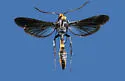
Pitch Mass Borer - Hodges#2585
Synanthedon pini
Identification: Larva - body white with a light brown head. (Kellicott, 1881). It is found rarely in insect collections and museums. Trees with active larvae have pitch mass swellings on the tree trunk with a white, powdery appearance. ,
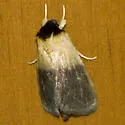
Pitcher Plant Mining Moth - Hodges#9024
Exyra semicrocea
Identification: Adult - typical form has basal half of forewing bright yellow, distal half dark gray, divided by straight median line at right-angles to costa; some individuals have completely pale yellow forewing except for faint subterminal line; h
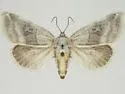
Plagiomimicus caesium - Hodges#9748.1
Plagiomimicus caesium
Blanchard & Knudson stated it was uncertain if this species is a stray from northern Mexico or a resident of the sand dunes of Padre Island.
Plagiomimicus dimidiata - Hodges#9745
Plagiomimicus dimidiata
The adults are often seen on flower blooms during the day and are attracted to lights at night.
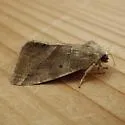
Plagiomimicus expallidus - Hodges#9752
Plagiomimicus expallidus
Identification: The original description of Plagiomimicus expallidus Grote, and the revised Hampson (1910) description are both available in the print references.
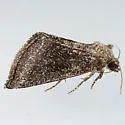
Plagiomimicus heitzmani - Hodges#9741.1
Plagiomimicus heitzmani
Identification: Specimen identified by DNA analysis:
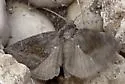
Plagiomimicus manti - Hodges#9744
Plagiomimicus manti
Identification: Forewing is dark brown with fine flecks of white. Weak transverse lines with the postmedian line most prominent. AM line is inwardly oblique and slighly wavy. PM line takes a sharp turn basally before reaching the costa. PM line has l
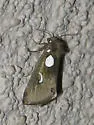
Plagiomimicus olvello - Hodges#9742
Plagiomimicus olvello
Identification: Barnes (1907) original description as Stibadium olvello is available in the print references.
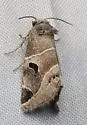
Plagiomimicus triplagiatus - Hodges#9753
Plagiomimicus triplagiatus
Identification: Description is available in the print references. Forewing has L shaped orbicular mark. Forewing white terminal line has contrasting dark brown along lower half. Contrasting dark brown subterminal line inner half of forewing. Update:
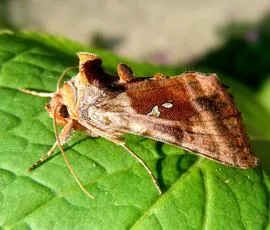
Plain Golden Y
Autographa jota
Wingspan 35-40 mm. Similar in appearance to the Beautiful Golden Y this moth has a plainer, more brick-red appearance, with fewer less-distinct metallic markings. The species inhabits gardens, waste ground, and woodland areas. This species is on the
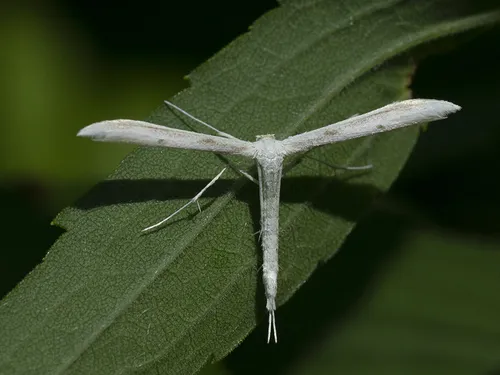
Plain Plume Moth
Hellinsia homodactylus
Hellinsia homodactylus is a moth of the family Pterophoridae. It is found in North America (including New Hampshire, New York, Maryland, California, Oregon, Quebec, British Columbia and Alberta) and Guerrero in Mexico.
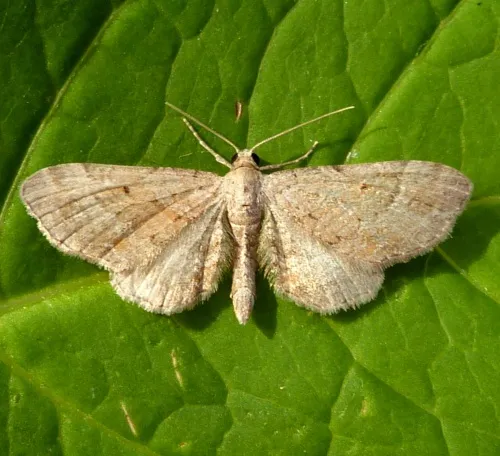
Plain Pug
Eupithecia simpliciata
Wingspan 21 to 23 mm. Despite its English (and Latin) name, this is one of the more distinctively-marked Pug moths, and is relatively easy to identify. Frequents waste ground and similar areas where the larval foodplants are found. The caterpillars f
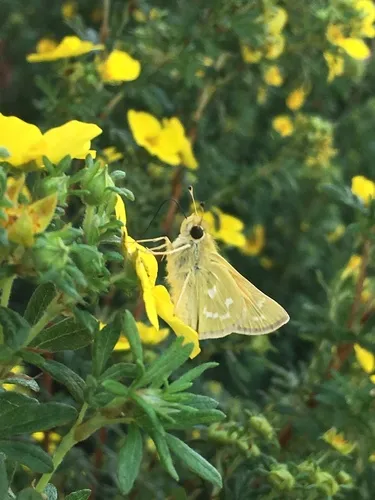
Plains Branded Skipper - Hodges#4020.1
Hesperia assiniboia
Identification: Distinguished from H. comma by paler colouration beneath and usually reduced spot band. This band can be quite distinct or nearly absent, and is usually white or pale yellow. The ranges of these species overlap in Central Saskatchewan
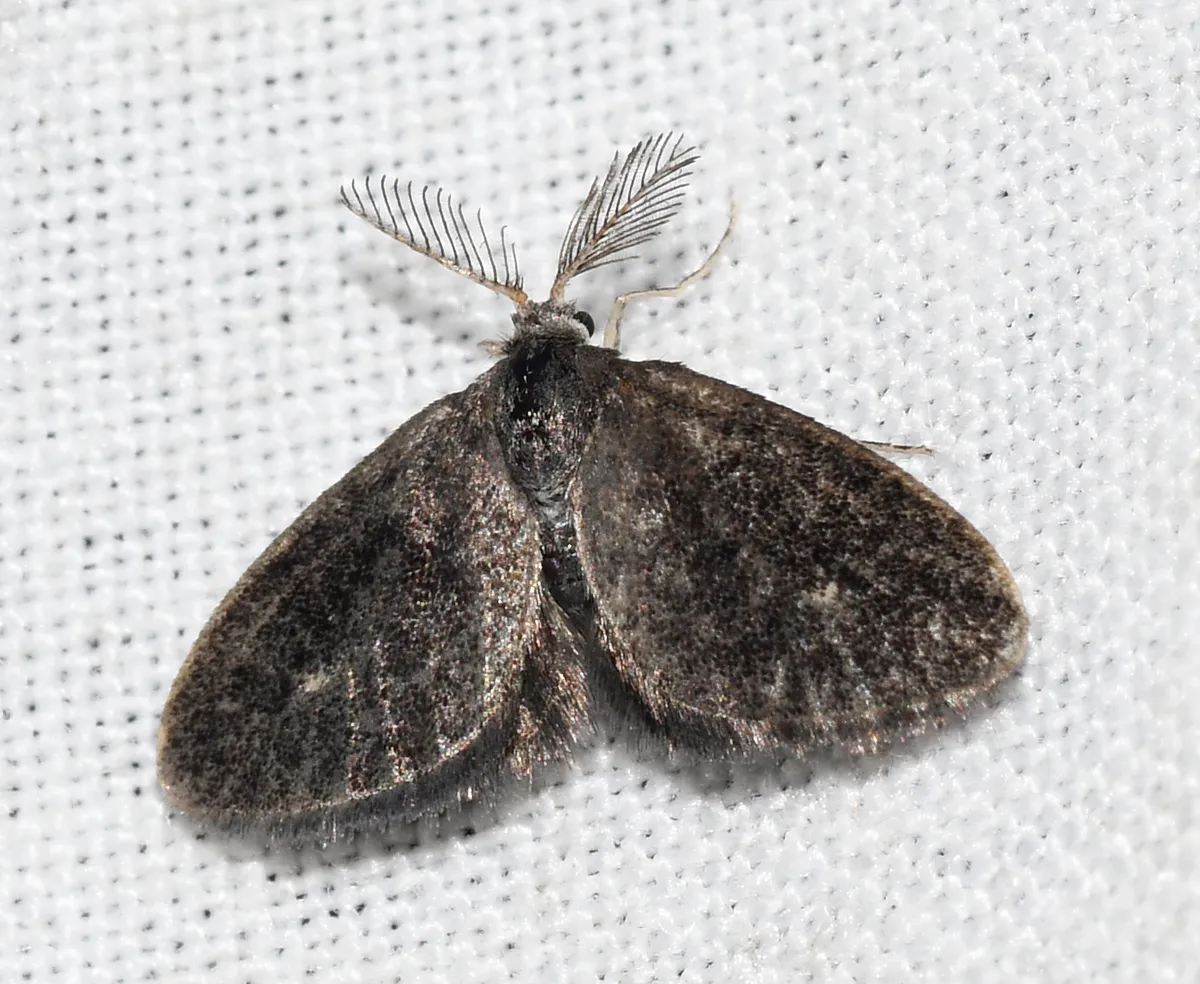
Planthopper Parasite Moth - Hodges#4701
Fulgoraecia exigua
Planthopper Parasite Moth - Hodges#4701 (Fulgoraecia exigua) is a species in the family Epipyropidae, commonly known as planthopper parasites, belonging to the order Lepidoptera (Butterflies and Moths). It is classified within the superfamily Zygaeno
Plataea calcaria - Hodges#6921
Plataea calcaria
Identification: The sexes are dimorphic in color and pattern. Rindge revised description in PDF.
Plataea californiaria - Hodges#6924
Plataea californiaria
Identification: Description in PDF: Specimen determined by DNA analysis (BOLD).
Plataea diva - Hodges#6925
Plataea diva
Identification: Specimen determined by DNA analysis (BOLD). Similar to P. californiaria but occurring inland, and often lacking a subterminal line.
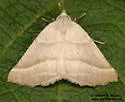
Plataea polychroma - Hodges#6921.2
Plataea polychroma
Identification: Ferris & McFarland original description in PDF.
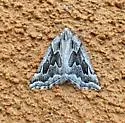
Plataea ursaria - Hodges#6923
Plataea ursaria
Identification: Rindge description in PDF. Most similar to P. personaria, but occurring more inland, often "montane", with "thorax above with longitudinal median crest; length of forewings 18 to 24 mm." Distinguished from the often much paler P. cali
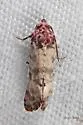
Platphalonidia lavana - Hodges#3833
Platphalonidia lavana
Identification: The original description as Phalonia lavana Busck, is available online in the print references below. Platphalonidia , has been synonymized with Phalonidia by Razowski, 2011: "Remarks: Platphalonidia was described for Phalonia felix W
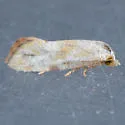
Platphalonidia plicana - Hodges#3835
Platphalonidia plicana
Walsingham, L.T.d.G., 1884. X. North American Tortricidae. Transactions of the Entomological Society of London, 1884: 131 .
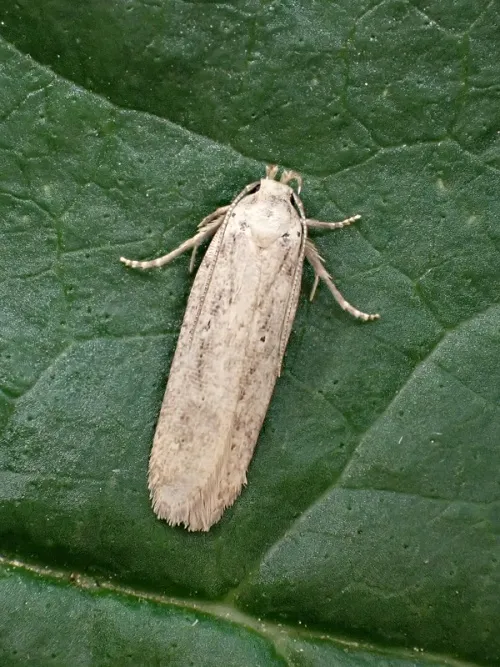
Platyedra subcinerea
Platyedra subcinerea
Wingspan 16 to18 mm. Although a rather plain looking pale brown species, this moth can be recognised by the blackish spot at the very base of the forewing, and the small black dot close to the centre of the wing, ringed paler. Please provide good pho
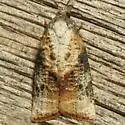
Platynota blanchardi - Hodges#3738.1
Platynota blanchardi
Described from 19 males; female unknown. Six specimens from the central plateau of Mexico are likely this species.
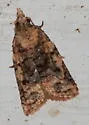
Platynota cf-exasperatana-oklahoma-species
Platynota cf-exasperatana-oklahoma-species
BOLD:ABY7899 All but one of the OK specimens have >1% sequence divergence from all the TN and NC specimens, forming two branches to the phylogenetic tree. The Appalachian specimens diverge from each other by up to ~0.75%.
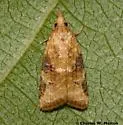
Platynota labiosana - Hodges#3738
Platynota labiosana
Platynota labiosana - Hodges#3738 (Platynota labiosana) is a species in the family Tortricidae, commonly known as tortricid moths, belonging to the order Lepidoptera (Butterflies and Moths). It is classified within the subfamily Tortricinae, tribe Sp
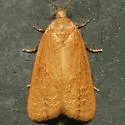
Platynota larreana - Hodges#3735
Platynota larreana
Identification: Adult - rust brown. Larva - bright green. BOLD:AAL4765
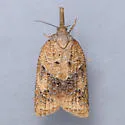
Platynota nigrocervina - Hodges#3737
Platynota nigrocervina
Identification: ♂ ♀ BOLD:AAH5566 (OK, CO)
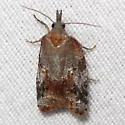
Platynota semiustana - Hodges#3741
Platynota semiustana
Identification: ♂ ♀ BOLD:ABY7900
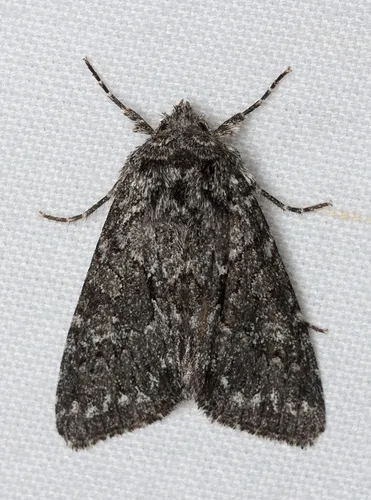
Platypolia contadina - Hodges#9977
Platypolia contadina
Identification: Adult: two forms - light and dark (perhaps corresponding to the two subspecies?) - forewing of light form mostly whitish with contrasting black markings; forewing of dark form mostly brownish-gray with slightly darker median area; in
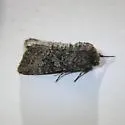
Platypolia loda - Hodges#9978
Platypolia loda
Identification: Hindwing is white. Specimens identified by DNA analysis:
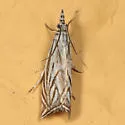
Platytes Moth - Hodges#5394
Platytes vobisne
Identification: Adult: forewing silvery-white with several dark brown lines, including zigzag PM and ST lines; hindwing dark gray; fringes of both wings long, silvery
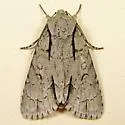
Pleasant Dagger - Hodges#9227
Acronicta laetifica
Identification: Similar to interrupta , hasta , and lobeliae
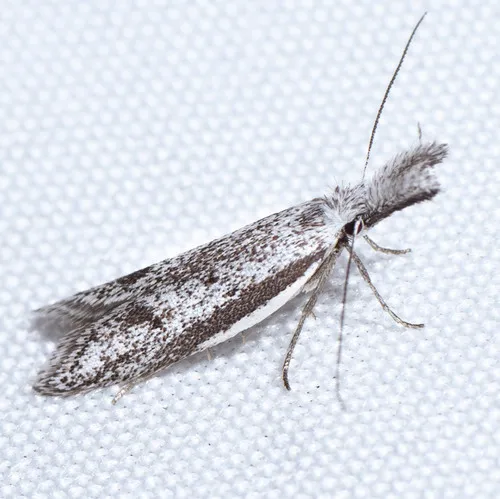
Pleurota albastrigulella - Hodges#1074
Pleurota albastrigulella
Identification: Kearfott original description as Dorata albastrigulella is available online in the print references.
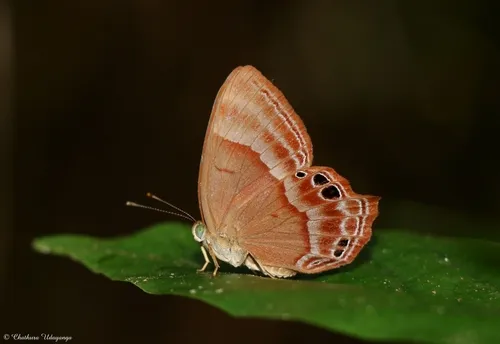
Plum Judy
Abisara echerius
Abisara echerius, the plum Judy, is a small but striking butterfly found in Asia belonging to the Punches and Judies family (Riodinidae). It is difficult to distinguish it from Abisara bifasciata.
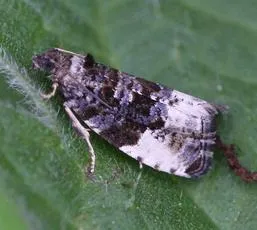
Plum Tortrix
Hedya pruniana
Wingspan 15-18 mm. This species closely resembles H. nubiferana but can be distinguished by the difference in position of the two blackish dots on the white of the forewing. The larvae feed on various forms of Prunus including Blackthorn and Plum. Fa
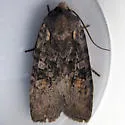
Plush-naped Pinion - Hodges#9922
Lithophane pexata
Identification: Adult: forewing dark brownish-gray with prominent white strip bordering basal dash, slightly curved as viewed from above; reniform spot large, filled with dull orange; orbicular spot oval, oblique, with rounded top (nearest costa); re
Plusiodonta amado - Hodges#8535
Plusiodonta amado
Identification: On each AM line of the fore-wing, there should be only 2 'teeth' total, projecting forward (towards the head) and they are relatively widely spaced from each other. (Bob Biagi)
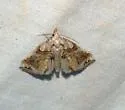
Plusiodonta nr-compressipalpis from Arizona - Hodges#8534.89
Plusiodonta nr-compressipalpis
Specimens from Arizona identified as compressipalpis in BIN BOLD:AAB7158 appear to represent a cryptic species well separated by DNA barcode.
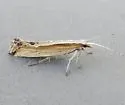
Plutella armoraciae - Hodges#2358
Plutella armoraciae
Identification: Busck original description is available online.
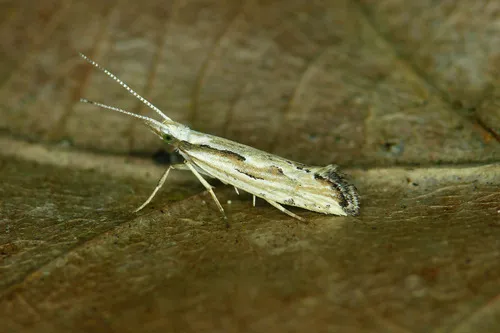
Plutella porrectella
Plutella porrectella
Wingspan 14 to 17 mm. This close relative of the familiar Diamond-back Moth (Plutella xylostella) is slightly larger and more striated in appearance. The antennae have three darkish rings toward the tip. It flies during May and again in July to Augus
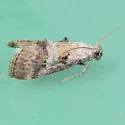
Pococera baptisiella - Hodges#5619
Pococera baptisiella
Identification: The Fernald (1887) and Hulst (1889) descriptions are available in the print references below.

Pococera callipeplella - Hodges# 5599
Pococera callipeplella
Identification: Quoted from Hulst, 1888: " Tetralopha callipeplella , n. sp. Expands 16 mm. Palp, head, antennae, and thorax uneven fuscus gray; forewings gray, rather strongly overlaid with blackish, more especially on the basal field; extreme base
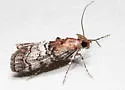
Pococera maritimalis - Hodges#5603
Pococera maritimalis
Identification: Specimen determined by DNA (BOLD) ( 4 )
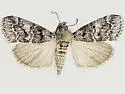
Pococera tiltella - Hodges#5616
Pococera tiltella
Identification: W[anda] tiltella , n. sp. Expands 20 mm, Head, thorax and fore wings gray, peppered over with black scales, giving a general blackish gray color; basal space somewhat darker than the rest of the fore wings; at the middle of basal fiel