
Pine Devil Moth - Hodges#7708
Citheronia sepulcralis
This record describes Citheronia sepulcralis (species). Recorded family: Saturniidae. Recorded order: Lepidoptera.
Identification and Appearance
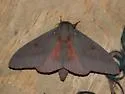
Adult: body chocolate brown with long thick abdomen; forewing dull brownish-violet with small rose basal spot and obscure blackish PM line and reniform spot; hindwing rose at base; median line and discal spot blackish; faint rose outlines of veins on forewing and hindwing [adapted from description by Charles Covell] Larva: brown or grayish with small black markings; long dorsal horns on thoracic segments, and shorter dorsal spines on abdominal segments A little-known silk moth, but subtly beautiful.
Classification
- Kingdom
- Animalia
- Phylum
- Arthropoda
- Class
- Insecta
- Order
- Lepidoptera (Butterflies and Moths)
- Superfamily
- Bombycoidea
- Family
- Saturniidae (Giant Silkworm and Royal Moths)
- Subfamily
- Ceratocampinae
- Genus
- Citheronia
Imported taxonomy record. Source availability varies; see the source references and editorial policy below.
Habitat and Range
Habitat
Coniferous and mixed coniferous/deciduous forests.
Geographic Range
Eastern United States: Previously north to Maine but now likely extirpated north of Pennsylvania and New Jersey, common southward to Florida along Gulf Coast west to Louisiana. Found inland from eastern Louisiana northeast through central Tennessee, eastern Kentucky, to Southern Ohio. Single report from Illinois erroneous.
Seasonal Activity
Adult: June-August (one brood) in north; April-June and August-September (two broods) farther south; possibly several broods in Florida from March-October.
Diet and Behavior
Diet: Larvae feed on several species of pine ( Pinus ), including Pitch Pine ( Pinus rigida ), Eastern White Pine ( P. strobus ), and Caribbean Pine ( P. caribaea ). Adults do not feed.
Life History
Adults emerge in late morning and mate that night; females lay eggs the following night singly or in groups of 2-3 at base of pine needles; eggs hatch in 7-10 days; caterpillars are solitary feeders; fully-grown caterpillars pupate in burrows in loose soil; overwinters as a pupa in soil. [adapted from text by Jane Struttmann, USGS]
About Butterflies and Moths: the wider group
Order-level background for Lepidoptera, the group containing Citheronia sepulcralis. Species-specific details appear above.
Group overview
Lepidoptera includes approximately 180,000 described species of butterflies and moths. Moths outnumber butterflies roughly 10:1. The monarch butterfly's eastern population has declined by more than 80% since the mid-1990s, and the western population by over 95% since the 1980s. The IUCN lists the migratory monarch as Vulnerable.
Ecological role of the group
Butterflies and moths are essential indicators of ecosystem health. As caterpillars, they are a primary food source for birds - a single nest of blue tit chicks requires ~10,000 caterpillars. Adult moths pollinate many night-blooming plants.
Economic and practical significance of the group
Lepidoptera are critical pollinators. In Europe, grassland butterfly species have declined by almost 50% since the early 1990s. In the UK, three-quarters of butterflies are in decline. In the U.S., five butterfly species have gone extinct since 1950, with 29 listed as endangered.
Recorded sources for this group: IUCN Red List, Xerces Society, USFWS, PNAS, WWF. Imported estimates may describe particular regions or reporting periods.
Photos of Pine Devil Moth - Hodges#7708 (5)
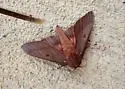
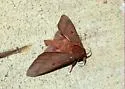
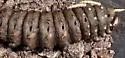
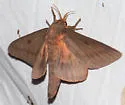
Photo credits: Contributed by Cotinis; Additional contributions by Robin McLeod , anitagould , Ryan St Laurent , marcie oconnor , Randy Hardy
Frequently Asked Questions About Pine Devil Moth - Hodges#7708
What is Pine Devil Moth - Hodges#7708?
Pine Devil Moth - Hodges#7708 (Citheronia sepulcralis) is a species in the family Saturniidae, within the order Lepidoptera.
How big is Pine Devil Moth - Hodges#7708?
Wingspan 70-100 mm [Charles Covell]; 80-135 mm [Bill Oehlke]. Larvae to 110 mm long.
How do you identify Pine Devil Moth - Hodges#7708?
Adult: body chocolate brown with long thick abdomen; forewing dull brownish-violet with small rose basal spot and obscure blackish PM line and reniform spot; hindwing rose at base; median line and discal spot blackish; faint rose outlines of veins on forewing and hindwing [adapted from description by Charles Covell] Larva: brown or grayish with small black markings; long dorsal horns on thoracic segments, and shorter dorsal spines on abdominal segments
Where is Pine Devil Moth - Hodges#7708 found?
| Feature | Details |
|---|---|
| Habitat | Coniferous and mixed coniferous/deciduous forests. |
| Range | Eastern United States: Previously north to Maine but now likely extirpated north of Pennsylvania and New Jersey, common southward to Florida along Gulf Coast west to Louisiana. Found inland from eastern Louisiana northeast through central Tennessee, eastern Kentucky, to Southern Ohio. Single report from Illinois erroneous. |
What does Pine Devil Moth - Hodges#7708 eat?
The diet of the Pine Devil Moth - Hodges#7708 includes Larvae feed on several species of pine ( Pinus ), including Pitch Pine ( Pinus rigida ), Eastern White Pine ( P. strobus ), and Caribbean Pine ( P. caribaea ). Adults do not feed..
When is Pine Devil Moth - Hodges#7708 active?
Pine Devil Moth - Hodges#7708: seasonal activity - Adult: June-August (one brood) in north; April-June and August-September (two broods) farther south; possibly several broods in Florida from March-October..
What is the life cycle of a Pine Devil Moth - Hodges#7708?
Adults emerge in late morning and mate that night; females lay eggs the following night singly or in groups of 2-3 at base of pine needles; eggs hatch in 7-10 days; caterpillars are solitary feeders; fully-grown caterpillars pupate in burrows in loose soil; overwinters as a pupa in soil. [adapted from text by Jane Struttmann, USGS]