
Pin-striped Slug Moth - Hodges#4691
Monoleuca semifascia
This record describes Monoleuca semifascia (species). Recorded family: Limacodidae. Recorded order: Lepidoptera.
Identification and Appearance
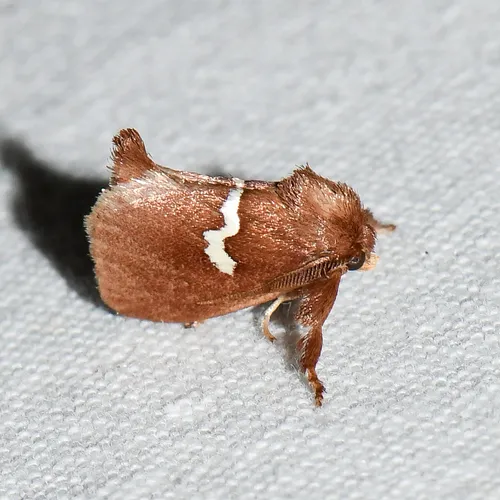
Adult: forewing brown to reddish-brown with a wavy whitish band extending from inner margin part-way across wing. Hindwing similar ground color but unmarked . Larva: body pinkish-orange, marked with black and white or yellow striping and numerous stinging hairs; dorsal and lateral areas each with set of 3 thin dark stripes; four lobes about anterior end and 2 from posterior end; first 8 abdominal segments with subdorsal and subspiracular warts each bearing more than 20 stinging spines [adapted from description by David Wagner and Valerie Giles] Uncommon northward and in several states: Arkansas (S2S3), Indiana (S1), New Jersey (S2S3), New York (S1)
Classification
- Kingdom
- Animalia
- Phylum
- Arthropoda
- Class
- Insecta
- Order
- Lepidoptera (Butterflies and Moths)
- Superfamily
- Zygaenoidea
- Family
- Limacodidae (Slug Caterpillar Moths)
- Genus
- Monoleuca
Imported taxonomy record. Source availability varies; see the source references and editorial policy below.
Habitat and Range
Habitat
Barrens in northern part of range, in south, dry woodlands
Geographic Range
New York and New Jersey to Florida, west to Texas, north to Kansas and Missouri
Seasonal Activity
Adults fly from June to August. Larvae: July to September
Diet and Behavior
Diet: Larvae feed on leaves of oak and other trees and shrubs such as cherry, pecan, persimmon.
Life History
One generation per year in the north, present much of year in Florida. Eggs are laid in clusters of 20 or more and are unusual for the slug moths--they are raised and covered with scales from the abdomen of the female .
Additional species information
Species notes from the sources
Etymology: SEMIFASCIA: from Latin "semi"... akin to the Greek "hemi" (half, partly, not fully) + the Latin "fascia" (a band, flat strip); refers to the whitish band that extends part-way across the forewing
About Butterflies and Moths: the wider group
Order-level background for Lepidoptera, the group containing Monoleuca semifascia. Species-specific details appear above.
Group overview
Lepidoptera includes approximately 180,000 described species of butterflies and moths. Moths outnumber butterflies roughly 10:1. The monarch butterfly's eastern population has declined by more than 80% since the mid-1990s, and the western population by over 95% since the 1980s. The IUCN lists the migratory monarch as Vulnerable.
Ecological role of the group
Butterflies and moths are essential indicators of ecosystem health. As caterpillars, they are a primary food source for birds - a single nest of blue tit chicks requires ~10,000 caterpillars. Adult moths pollinate many night-blooming plants.
Economic and practical significance of the group
Lepidoptera are critical pollinators. In Europe, grassland butterfly species have declined by almost 50% since the early 1990s. In the UK, three-quarters of butterflies are in decline. In the U.S., five butterfly species have gone extinct since 1950, with 29 listed as endangered.
Recorded sources for this group: IUCN Red List, Xerces Society, USFWS, PNAS, WWF. Imported estimates may describe particular regions or reporting periods.
Photos of Pin-striped Slug Moth - Hodges#4691 (2)
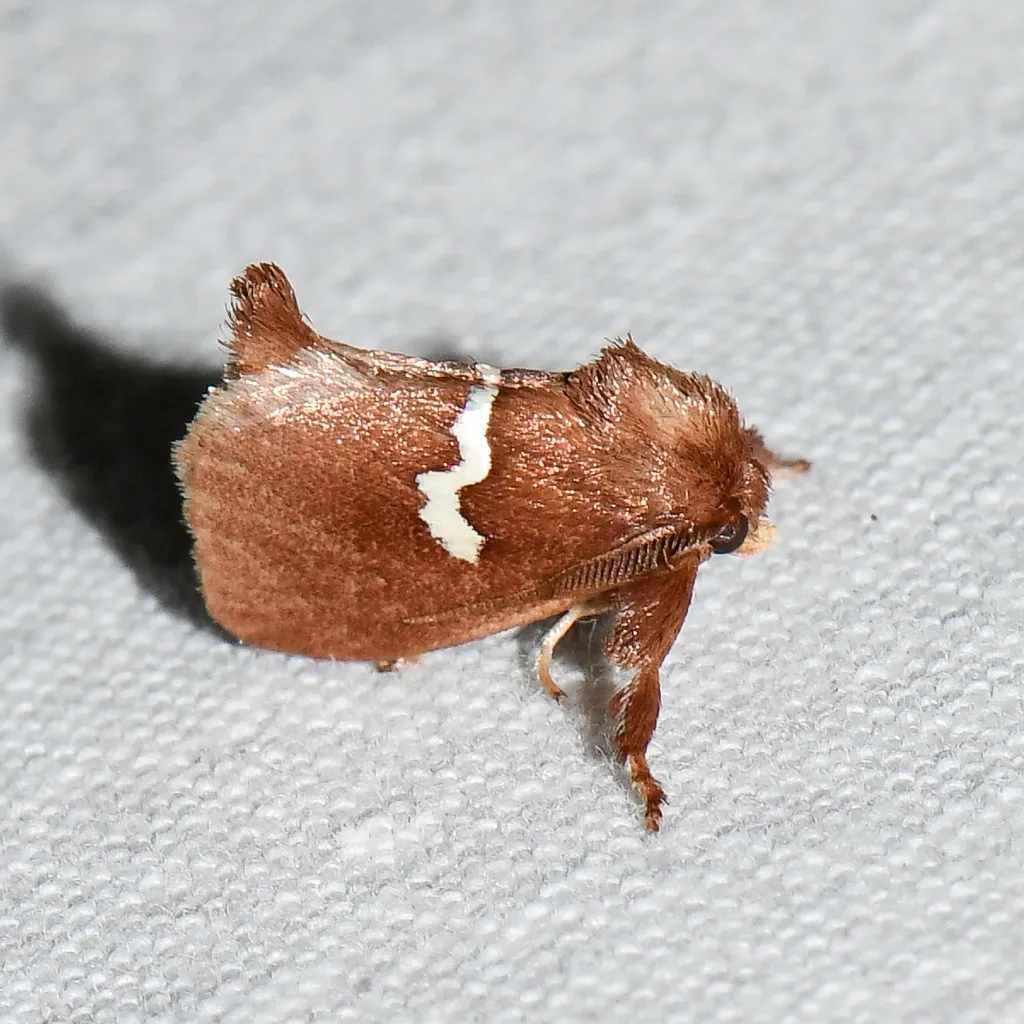
Photo credits: Contributed by Robin McLeod; Additional contributions by cotinis , Robert Lord Zimlich
Frequently Asked Questions About Pin-striped Slug Moth - Hodges#4691
What is Pin-striped Slug Moth - Hodges#4691?
Pin-striped Slug Moth - Hodges#4691 (Monoleuca semifascia) is a species in the family Limacodidae, within the order Lepidoptera.
How big is Pin-striped Slug Moth - Hodges#4691?
wingspan 19-27 mm
How do you identify Pin-striped Slug Moth - Hodges#4691?
Adult: forewing brown to reddish-brown with a wavy whitish band extending from inner margin part-way across wing. Hindwing similar ground color but unmarked . Larva: body pinkish-orange, marked with black and white or yellow striping and numerous stinging hairs; dorsal and lateral areas each with set of 3 thin dark stripes; four lobes about anterior end and 2 from posterior end; first 8 abdominal segments with subdorsal and subspiracular warts each bearing more than 20 stinging spines [adapted from description by David Wagner and Valerie Giles]
Where is Pin-striped Slug Moth - Hodges#4691 found?
| Feature | Details |
|---|---|
| Habitat | Barrens in northern part of range, in south, dry woodlands |
| Range | New York and New Jersey to Florida, west to Texas, north to Kansas and Missouri |
What does Pin-striped Slug Moth - Hodges#4691 eat?
The diet of the Pin-striped Slug Moth - Hodges#4691 includes Larvae feed on leaves of oak and other trees and shrubs such as cherry, pecan, persimmon..
When is Pin-striped Slug Moth - Hodges#4691 active?
Pin-striped Slug Moth - Hodges#4691: seasonal activity - Adults fly from June to August. Larvae: July to September.
What is the life cycle of a Pin-striped Slug Moth - Hodges#4691?
One generation per year in the north, present much of year in Florida. Eggs are laid in clusters of 20 or more and are unusual for the slug moths--they are raised and covered with scales from the abdomen of the female .