
Butterflies and Moths
Order Lepidoptera
The Butterflies and Moths (Order Lepidoptera) includes 11,813 species across 112 families and 2,787 genera in our directory.
About Butterflies and Moths
Lepidoptera includes approximately 180,000 described species of butterflies and moths. Moths outnumber butterflies roughly 10:1. The monarch butterfly's eastern population has declined by more than 80% since the mid-1990s, and the western population by over 95% since the 1980s. The IUCN lists the migratory monarch as Vulnerable.
Economic Impact
Lepidoptera are critical pollinators. In Europe, grassland butterfly species have declined by almost 50% since the early 1990s. In the UK, three-quarters of butterflies are in decline. In the U.S., five butterfly species have gone extinct since 1950, with 29 listed as endangered.
Ecological Role
Butterflies and moths are essential indicators of ecosystem health. As caterpillars, they are a primary food source for birds - a single nest of blue tit chicks requires ~10,000 caterpillars. Adult moths pollinate many night-blooming plants.
Families in Lepidoptera (112)
Species in Lepidoptera (11,813)
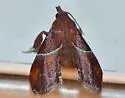
Penthesilea sacculalis - Hodges#5555
Penthesilea sacculalis
Identification: Ragonot (1890) original description of Penthesilea sacculalis is available online and linked in the print references.
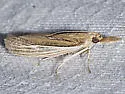
Peoria floridella - Hodges#6046
Peoria floridella
Peoria floridella - Hodges#6046 (Peoria floridella) is a species in the family Pyralidae, commonly known as pyralid moths, belonging to the order Lepidoptera (Butterflies and Moths). It is classified within the subfamily Phycitinae, tribe Peoriini, s
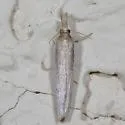
Peoria opacella - Hodges#6045
Peoria opacella
Identification: The original description as Anerastia opacella Hulst is available online in the print references below. Adult: Head and thorax fuscous brown Forewing inner margin half is blackish-gray Forewing costal half is lighter near white and d
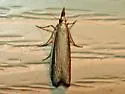
Peoria tetradella - Hodges#6044
Peoria tetradella
Identification: Adult: forewing light brownish-gray with speckled whitish strip along length of costa; strip has 3 or 4 dark diagonal streaks in distal half; cubital vein (in center of wing) covered with white scales; other veins in distal half of wi
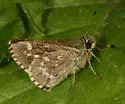
Pepper and Salt Skipper - Hodges#4096
Amblyscirtes hegon
Identification: Adult: dark brown with curved line of small white spots extending from the costa of the forewing, and brown and white checkered fringes on both wings; beneath, hindwing and tip of forewing are gray, with slightly greenish tinge, most
Peppered Haimbachia - Hodges#5489
Haimbachia placidellus
Identification: Adult: forewing pale tan or whitish with dark speckling; PM and subterminal lines variably distinct to faint; PM line thick, diffuse, V-shaped, slightly irregular; subterminal line double, relatively thick, somewhat blurred, runs para
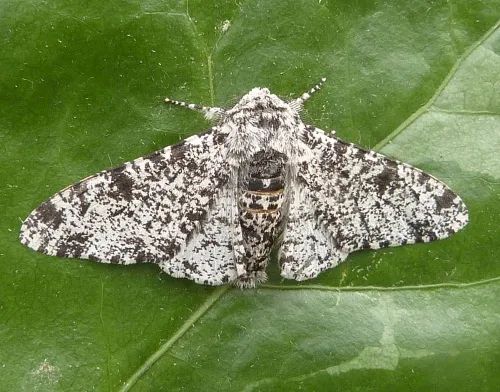
Peppered Moth
Biston betularia
Wingspan 35-60 mm. A favourite of genetic studies, this species shows well the phenomenon of industrial melanism, where all-dark individuals became the dominant form in certain parts of northern England. Nowadays, the melanic form carbonaria is decli
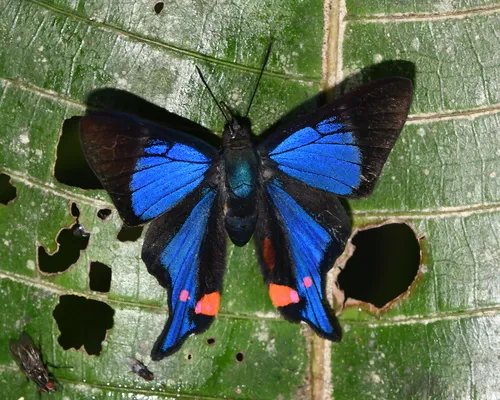
Periander Metalmark
Rhetus periander
Rhetus periander, the Periander metalmark or variable beautymark, is a butterfly of the Riodinidae family. It is found in most of Central America and South America, ranging from Mexico to Brazil and Argentina.
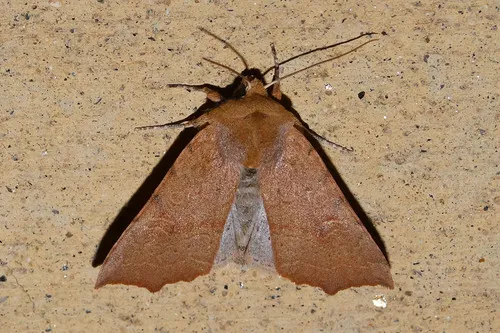
Perigonica tertia - Hodges#10464
Perigonica tertia
Identification: Adult: forewing light brownish-yellow to dull orangish with irregular basal, AM, PM, and subterminal lines; reniform and orbicular spots outlined with pale scales; dark dots along veins in subterminal area; outer margin falcate, with
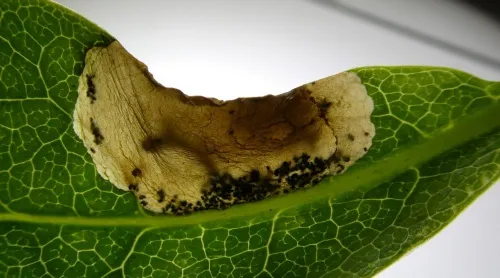
Perittia obscurepunctella
Perittia obscurepunctella
Wingspan about 9 mm. A small, indistinctly marked moth. The larvae mine Honeysuckle, creating a large blotch mine Leafmine: Please provide photographs including a back-lit photograph showing the frass pattern. Please also state the host plant. Inhabi
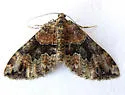
Perizoma actuata - Hodges#7319
Perizoma actuata
Identification: Adult : Distinguished by basal area washed with pale roseate brown, a very irregular outline of the median area with white border line, a brownish square patch in the subterminal area, near the costa, and inwardly, two short jet-black
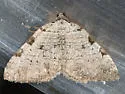
Perizoma costiguttata - Hodges#7325
Perizoma costiguttata
Identification: Adult: forewing pale gray, speckled, and with darker shading beyond subterminal line; basal, AM, median, and PM lines double, dark, fine; 3 large black patches along costa represent upper end of basal, median, and PM lines; subtermina
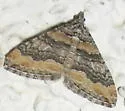
Perizoma custodiata - Hodges#7328
Perizoma custodiata
Identification: Adult: forewing with alternating light and dark brown vertical bands (number and color/intensity of bands varies considerably among individuals); PM line bulges slightly near middle and again near costa; subterminal line, white, disti
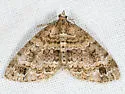
Perizoma grandis - Hodges#7317
Perizoma grandis
Identification: Specimens identified by DNA analysis:
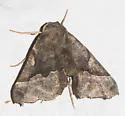
Pero astapa - Hodges#6747.1
Pero astapa
Identification: distinguished by the inward-angled black slash where the median line joins the costa, and the whitish slash outboard from black slash. - comment per M. Rickard, 2009
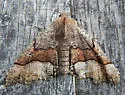
Pero behrensaria - Hodges#6760
Pero behrensaria
Identification: "The males of this species have dentate antennae, which set them apart from all the other species that are known to occur in this country.", Rindge. 1955 Bruce Walsh lists Pero behrensaria sperryi in the White Mountains, Arizona
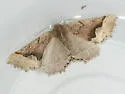
Pero modesta - Hodges#6759
Pero modestus
Identification: Forewing: No shading along the well defined antemedial line. There are 1-6 small white dots along the terminal line in the costal half. Small white discal spot varies from round to angular shaped and is often lined with a narrow broke
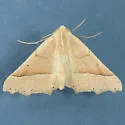
Pero radiosaria - Hodges#6749
Pero radiosaria
Identification: Several color forms from light yellow brown, brown, gray-brown, and orange-brown. Poole description.
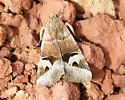
Perplexed Arches - Hodges#8635
Drasteria perplexa
Identification: Adult: basal half of forewing uniformly grayish-brown with indistinct AM line; terminal area light brownish-gray; PM patch pale, surrounded by black shading; hindwing orange or orangish-yellow with black margin and PM band; black disc
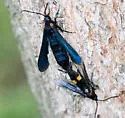
Persimmon Borer - Hodges#2590
Sannina uroceriformis
Identification: The original description is available online in the print references below. Engelhardt revised description is available in PDF. Adult : bluish black and wasp-like, with a distinctive orange band across the abdomen, though may be lacki
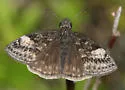
Persius Duskywing - Hodges#3961
Erynnis persius
Identification: Adult : Upperside is brown-black. FW has few clear dots and very dim markings; patch at end of FW cell is grayish. Male FW has many raised white hairs. HW fringes are dark. Male has a costal fold containing yellow scent scales; female
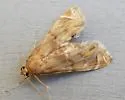
Petrophila cronialis - Hodges#4782
Petrophila cronialis
Identification: The original description of Cataclysta cronialis Druce, is available online in the print references below. This is a mysterious species which Munroe (1972, p. 129) indicated ranges from Nogales and the Huachuca Mts of Arizona south in
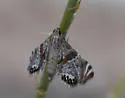
Petrophila jaliscalis - Hodges#4775
Petrophila jaliscalis
Identification: The red-orange or dark pink hue of the color patches on the FW and HW is the single most important character separating (fresh) jaliscalis from all other members of the genus. Faded/worn examples can shift to an orange hue. Typical ex
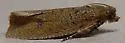
Phaecasiophora inspersa - Hodges#2773
Phaecasiophora inspersa
Identification: See Heinrich (1931) in print references below.
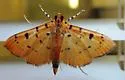
Phaedropsis stictigramma - Hodges#5247
Phaedropsis stictigramma
Identification: Distinctive moth with no other similar North American species. Allyson (1984) described the larva. ( 3 ) Type locality: Bahamas, Nassau
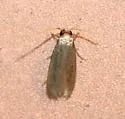
Phaeoses sabinella - Hodges#0430
Phaeoses sabinella
Identification: Adult: Antennae are 0.7 length of forewing and have 58 segments. Forewings are pale grayish brown with a distinct luster. Specimen identified by DNA analysis (BOLD). The species is seldom collected despite being common at some locatio
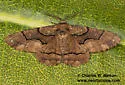
Phaeoura kirkwoodi - Hodges#6765
Phaeoura kirkwoodi
Identification: Cross lines of forewing are thicker and closer together than other Phaeoura species. Sexually dimorphic with females showing considerably more contrast. Prominent subterminal band on hindwings.
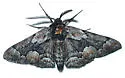
Phaeoura mexicanaria - Hodges#6766
Phaeoura mexicanaria
Identification: Very large species with large, orange-brown patch above the forewing tornus and with a very deep bend into the cell by the AM line.
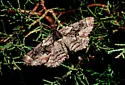
Phaeoura perfidaria - Hodges#6768
Phaeoura perfidaria
Identification: Detailed description can be found in Rindge at link in citations below.
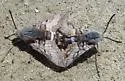
Phaeton Primrose Sphinx - Hodges#7880
Euproserpinus phaeton
Identification: The revised 1868 "redescription" of this species by Grote & Robinson is here (and their original 1865 description is here ). Caterpillar ref image: Mating pair ref image: Adults are diurnal .
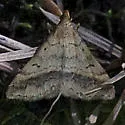
Phalaenophana extremalis - Hodges#8339
Phalaenophana extremalis
Identification: Adult - Original description by Barnes & McDunnough here Larvae - Description and info by George L. Godfrey here .
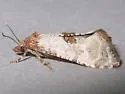
Phalonidia campicolana - Hodges#3829
Platphalonidia campicolana
Identification: Hindwing is dark gray. ( 5 ) Platphalonidia , has been synonymized with Phalonidia by Razowski, 2011: "Remarks: Platphalonidia was described for Phalonia felix Walsingham, 1895 and over 10 other species from the New World. Unfortunat
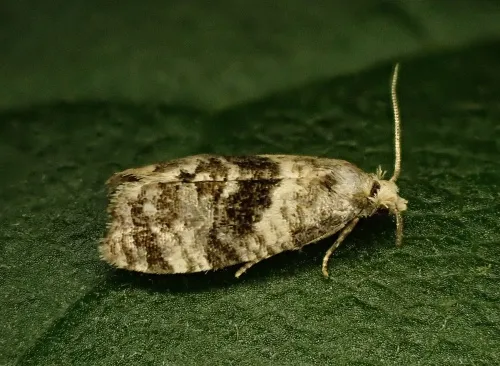
Phalonidia manniana
Phalonidia manniana
It inhabits river banks, ditches and the margins of streams. Adult moths fly from evening into the night, and are on the wing typically in June and July. The larvae feed on Water Mint (Mentha aquatica) and Gypsywort (Lycopus), living inside the stem,
Phalonidia memoranda - Hodges#3808
Phalonidia memoranda
Identification: Adult - see original description in Print References.
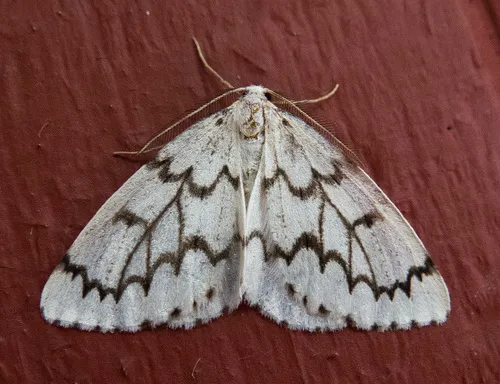
Phantom Hemlock Looper - Hodges#6907
Nepytia phantasmaria
Identification: Adult: forewing white with thick black or dark gray lines and one or more dark-scaled veins; AM and PM lines scalloped; discal spot dark, usually surrounded by dark lines; terminal line a series of dark spots; hindwing similar but dis
Pherne sperryi - Hodges#6951
Pherne sperryi
Identification: Per McDunnough (1935) - " Male . Head, thorax and primaries pale creamy, the latter lightly suffused with olive-ochreous; median area broader than in allied species and shaded, next to the t.a. and t.p. lines, with deeper olive-ochreo
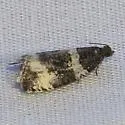
Phiaris glaciana - Hodges#2847
Phiaris glaciana
Identification: Specimen identified by DNA analysis (BOLD) Transferred from genus Olethreutes by Gilligan et al..
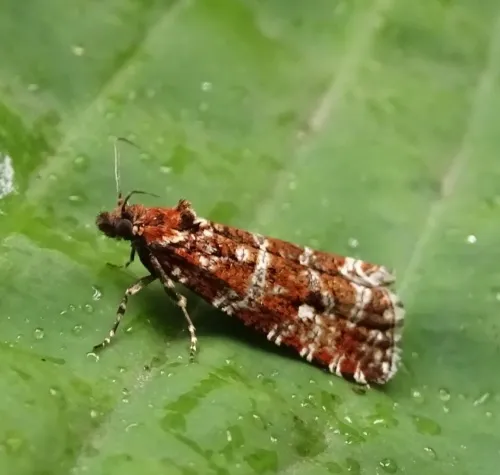
Phiaris schulziana
Phiaris schulziana
Good photograph required. Please retain the moth until identification is confirmed. A moorland species associated with Heather and Crowberry. Flying from June to August, it is easily disturbed during the day from the heather, and flies in the late af
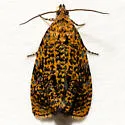
Phiaris siderana - Hodges#2833
Phiaris siderana
One of several Nearctic Olethreutes s. l. species with iridescent spots on the forewings: [missing] [missing] [missing] astrologana coruscana ferrolineana metallica nordeggana sordidana galaxana [missing] sider
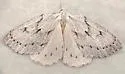
Philedia punctomacularia - Hodges#6802
Philedia punctomacularia
Identification: Upper wings light gray to grayish brown with a series of dashes along the postmedian line and the basal line. Hindwings lighter in color with faint small dashes along the postmedian line.
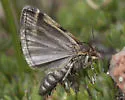
Philodema rhoiella - Hodges#5885
Philodema rhoiella
Identification: See original description in print references below.
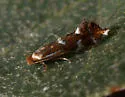
Philonome wielgusi - Hodges#0462.1
Philonome wielgusi
Identification: "Similar to Philonome clemensella in external appearance but can be distinguished from the latter in having shorter longitudinal fascia and straight costal fascia on the forewing" . All 157 specimens examined in the original descripti
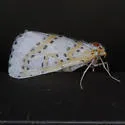
Philtraea monillata - Hodges#6851
Philtraea monillata
Identification: Adult: forewing white with broad yellow AM and PM lines, bordered by dark spots on both sides; O-shaped marking along costa similar color to AM and PM lines, and equidistant between them; terminal line composed of dark dots; fringe wh
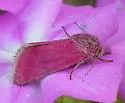
Phlox moth - Hodges#11095
Schinia indiana
Identification: Kwiat original description as Heliolonche indiana is available online. Adults have crimson forewing with a pale tan to gray fringe (seen only in fresh individuals). Hindwings are black with white fringe. Listed as rare in Minnesota an
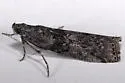
Phobus funerella - Hodges#5815
Phobus funerella
Identification: The Heinrich revised description is available in PDF and online in the print references below. Hindwing is brownish gray. Specimens identified by DNA analysis (BOLD). Genitalia:
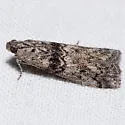
Phobus incertus - Hodges#5817
Phobus incertus
Phobus incertus - Hodges#5817 (Phobus incertus) is a species in the family Pyralidae, commonly known as pyralid moths, belonging to the order Lepidoptera (Butterflies and Moths). It is classified within the subfamily Phycitinae, tribe Phycitini, supe
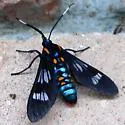
Phoenicoprocta lydia - Hodges#8285.1
Phoenicoprocta lydia
1st US record. Local newspapers will run an article today; and the state parks dept. will run an article throughout Texas on Friday. Maybe it will go national and you can read the article. Fran Bartle, 8 October, 2008
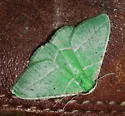
Phoenix Emerald - Hodges#7057
Dichordophora phoenix
Identification: Original description online as Dichorda phoenix Prout. Adult: forewing green with straight whitish AM and PM lines that curve slightly at costa; distance along costa between AM and PM lines less than 2x distance between PM line and ap
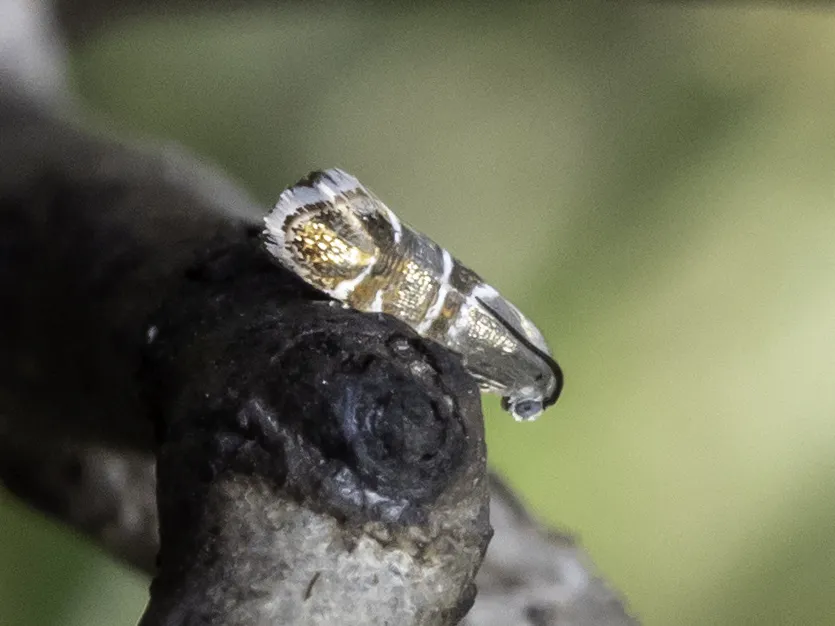
Phormoestes palmettovora - Hodges#2626.1
Phormoestes palmettovora
Identification: Very distinctive. See Heppner for full description. Recent genetic work suggests that this species belongs to its own family and is not closely related to Choreutidae at all .
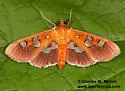
Phostria oajacalis - Hodges#5266
Phostria oajacalis
Identification: Male: Ochraceous, stout. Body beneath and legs white. Palpi fawn-colour, erect, not rising so high as the vertex; second joint fringed; third conical, about one-fourth of the length of the second. Antennae pubescent. Abdomen lanceolat
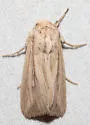
Phragmites Wainscot - Hodges#10444
Leucania phragmitidicola
Identification: Adult: forewing light tan but not uniformly-colored: an indistinct and diffuse pale band runs obliquely from apex to inner margin, surrounded on both sides by slightly darker shading; PM line composed of several dark but inconspicuous
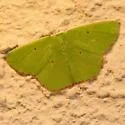
Phrudocentra centrifugaria - Hodges#7051
Phrudocentra centrifugaria
Identification: Sexually dimorphic species. Forewing and hindwing of females usually have large brown circles from 3 mm or more in diameter that are filled with white or a white and brown mixture. Often there are multiple circles that are joined toge
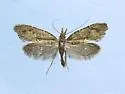
Phryganeopsis brunnea - Hodges#0318
Phryganeopsis brunnea
Powell & Opler (2009) reported Phryganeopsis brunnea is usually collected in the daylight but is attracted to lights. ( 3 )
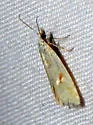
Phtheochroa aureoalbida - Hodges#3811
Phtheochroa aureoalbida
Identification: Adult - see original description in Print References.
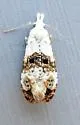
Phtheochroa huachucana - Hodges#3817
Phtheochroa huachucana
Identification: Adult - see Kearfott's original description in Print References.
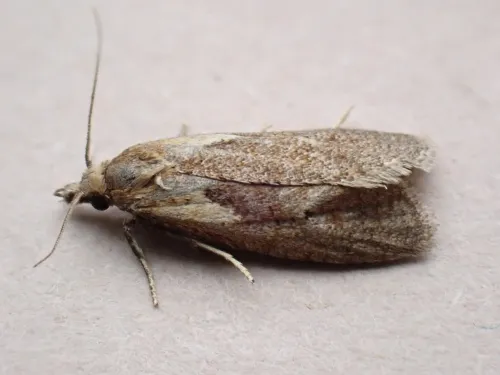
Phtheochroa inopiana
Phtheochroa inopiana
Wingspan 17 to 22 mm. A sexually dimorphic species, the females being generally plainer than the males. Unless identified by a recognised expert, photographs are required and it is advisable to retain the specimen until the County Recorder has accept
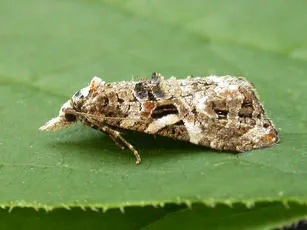
Phtheochroa rugosana
Phtheochroa rugosana
Wingspan 16-20 mm. It is noticeable for a number of 'tufts'. It is on the wing during May and June and flies around dusk. During the day it relies on camouflage, taking on the appearance of a bird-dropping. The larvae feed on White Bryony. Distribute
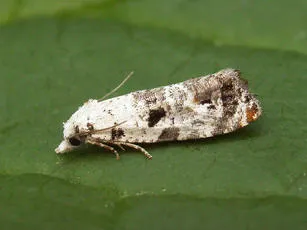
Phtheochroa sodaliana
Phtheochroa sodaliana
Wingspan about 15 mm. A fairly distinctive Tortrix species with its white ground colour and red-brown apical spot combined with blackish and metallic grey markings. This species occurs mainly on calcareous soils. The adult moths can be found on the w
Phtheochroa villana - Hodges#3824
Phtheochroa villana
Identification: The Busck original description as Hysterosia villana is available online in the print references below.
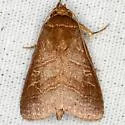
Phuphena tura - Hodges#9634
Phuphena tura
Identification: The original description as Dianthoecia tura Druce, is available online in the print references below.
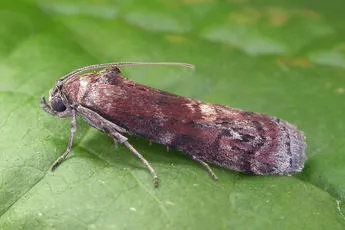
Phycita roborella
Phycita roborella
Wingspan 24 to 29 mm. The adults of this quite attractive species have a subtle pattern of red, black and grey on the upper wings. Various especially in well wooded areas containing Oak. The single generation is on the wing in July and August, when i
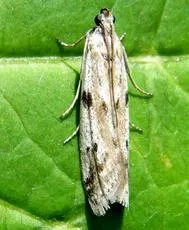
Phycitodes binaevella
Phycitodes binaevella
Wingspan 22-27 mm. The easiest of the three British species of Phycitodes to identify; it is the largest and has large blackish dots on a paler ground colour. The resting posture where the wings are rolled tightly around the body is common to the gro
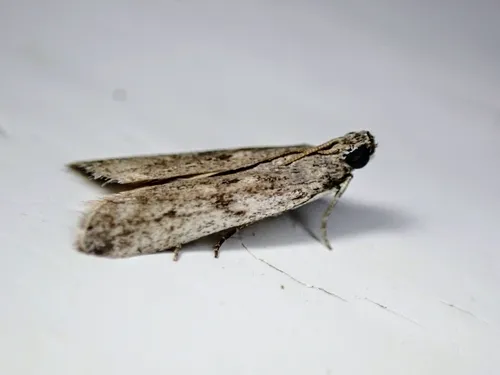
Phycitodes mucidella - Hodges#5946
Phycitodes mucidella
Identification: "Smooth, obscure cinereous, thickly dusted with white on costal half. Lines obsolete, the inner represented by three black dots, the upper and lower of which are very small, the middle one more outwardly placed; outer line indicated b
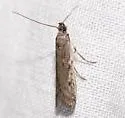
Phycitodes reliquellum - Hodges#5946.2
Phycitodes reliquellum
Identification: "Smooth, obscure cinereous, thickly dusted with white on costal half. Lines obsolete, the inner represented by three black dots, the upper and lower of which are very small, the middle one more outwardly placed; outer line indicated b
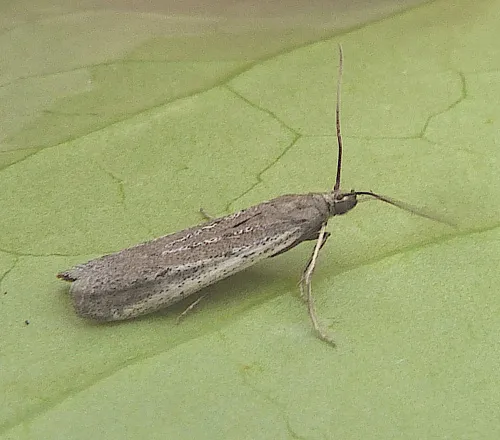
Phycitodes saxicola
Phycitodes saxicola
Wingspan about 17mm. Part of a complex of three very similar species occurring in Britain, this is generally the smallest. To be certain of the identification of adults, reference to the genitalic structure is advised. P. saxicola feeds on various ot
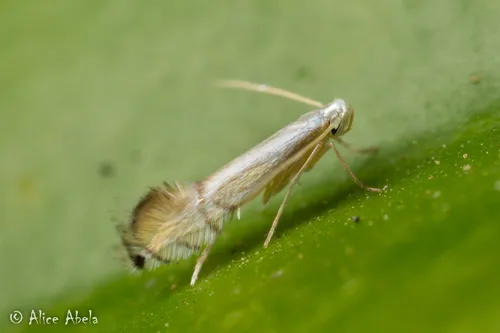
Phyllocnistis citrella
Phyllocnistis citrella
Wingspan about 4 or 5 mm. The larva mines the leaves (and occasionally the fruit) of Citrus species. Leafmine: Please provide a photograph of the mine and state the host plant species. This adventive species is occasionally found on imported citrus p

Phyllocnistis insignis - Hodges#0846
Phyllocnistis insignis
Phyllocnistis insignis is a moth of the Gracillariidae family, found throughout the United States (including Maine, Illinois, Ohio, Maryland, Michigan, Kentucky, Missouri, Texas, Georgia, Florida and California).
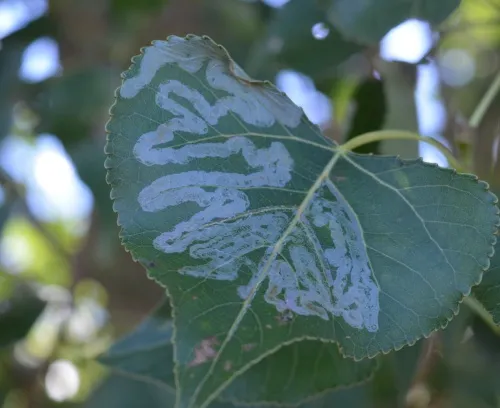
Phyllocnistis unipunctella
Phyllocnistis unipunctella
Wingspan 7 to 8 mm. A tiny whitish moth with some yellowish suffusion and a distinct black spot near the wing apex. The larva mines the leaves of Lombardy Poplar, hybrid Black Poplar and other poplars, producing a winding, thin, silvery, translucent
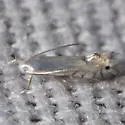
Phyllocnistis vitegenella - Hodges#0853
Phyllocnistis vitegenella
Identification: See comment by C. Eiseman here . It has become a pest of cultivated grapes, Vitis vinifera . It has been accidentally introduced from this country to other countries that grow grapes.
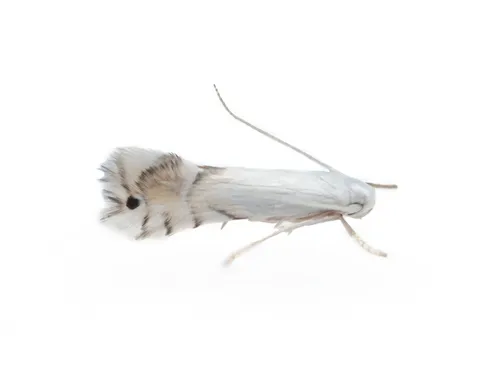
Phyllocnistis vitifoliella - Hodges#0854
Phyllocnistis vitifoliella
Phyllocnistis vitifoliella is a moth of the Gracillariidae family, known from Québec and the United States (where it has been recorded from Wisconsin, California, Florida, Georgia, Maryland, Michigan, New York, Texas, Vermont, Kentucky and Illinois).
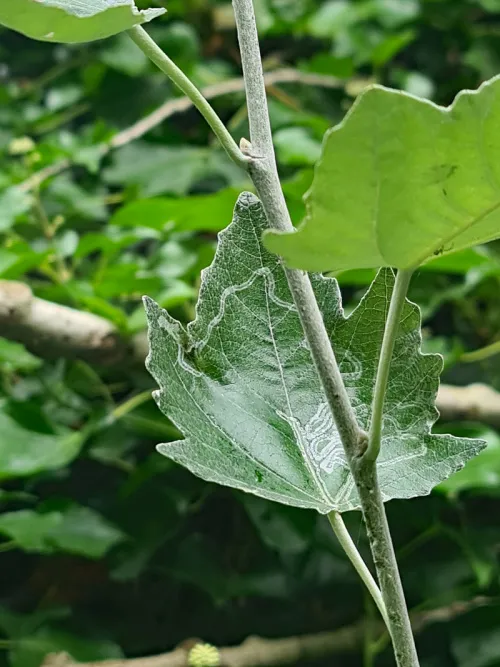
Phyllocnistis xenia
Phyllocnistis xenia
The larva mines the leaves of certain Poplar species - (usually White Poplar ( Populus alba ) or Grey Poplar ( Populus canescens ). The larva forms a winding, thin silvery translucent gallery resembling a 'snail trail' on the upper surface of the lea
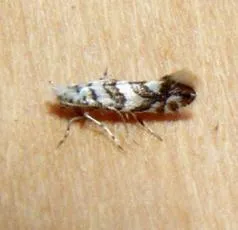
Phyllonorycter acerifoliella
Phyllonorycter acerifoliella
Wingspan about 8 mm. One of three similar Acer-feeding species Phyllonorycter acerifoliella larva mines the leaves of Field Maple. The mine is tentiform and nearly always at the leaf edge or leaf tip, folding the leaf over. Occasionally it can be fou
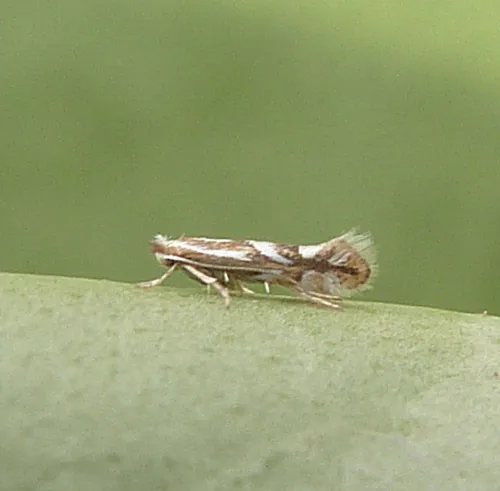
Phyllonorycter blancardella
Phyllonorycter blancardella
Wingspan 6 to 9 mm. A fairly variable species, with the white streaks sometimes joining together to form more complete markings, and often with a dusky sprinkling of blackish scales on the orange ground colour. Adult gen det required Leafmine larva f
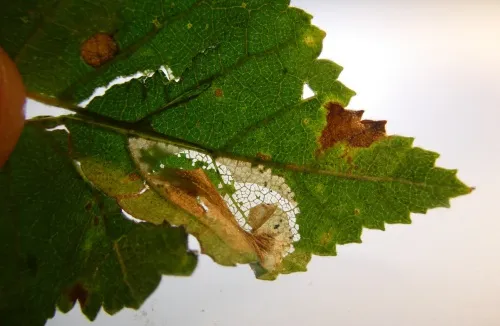
Phyllonorycter cavella
Phyllonorycter cavella
Wingspan about 8 mm. The moth is very similar to a number of other Phyllonorycter species and gen det may be required to identify adults to species level. The larva produces a large blister-mine on Birch (see Life History below). The larva is bright
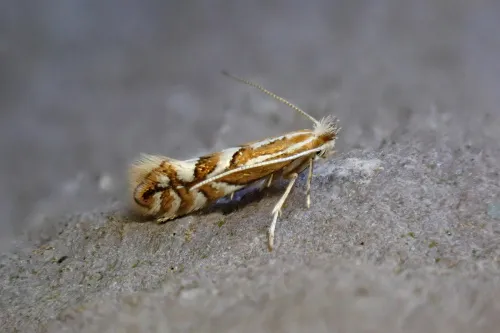
Phyllonorycter cerasicolella
Phyllonorycter cerasicolella
Wingspan 7 to 8 mm. Best recorded from the leafmine. The larva mines the leaves of Wild Cherry and Dwarf Cherry In areas where the larval foodplants occur. In common with a number of other Phyllonorycter species, the species is bivoltine, with adults
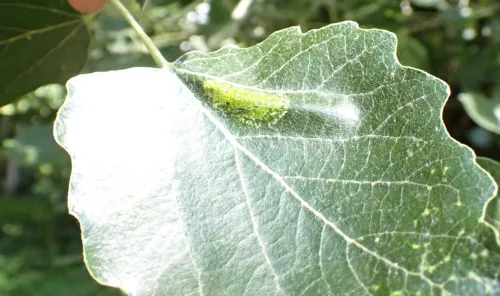
Phyllonorycter comparella
Phyllonorycter comparella
Wingspan about 8 mm. The adults have quite extensive whitish ground colour, marked with greyish-brown. The larva makes a mine on the underside of leaves of Grey Poplar ( Populus canescens ), White Poplar ( P. alba ) and occasionally hybrid Black Popl
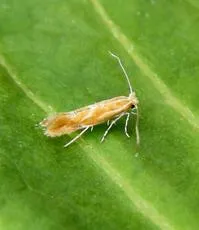
Phyllonorycter corylifoliella
Phyllonorycter corylifoliella
Wingspan 8 to 9 mm. The orangey coloured adult is weakly marked in comparison to some of its congeners. The larva mines the leaves of Hawthorn (and also on Apple, Cherry and others), creating an upper-surface mine, usually over the midrib or vein; th
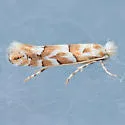
Phyllonorycter deserticola - Hodges#0748.1
Phyllonorycter deserticola
Identification: Davis & Deschka description of the adults, including the genitalia, and the immature stages is available in PDF. Genitalia dissection is usually needed to confirm species in this family. Davis & Deschka listed the following wasps that
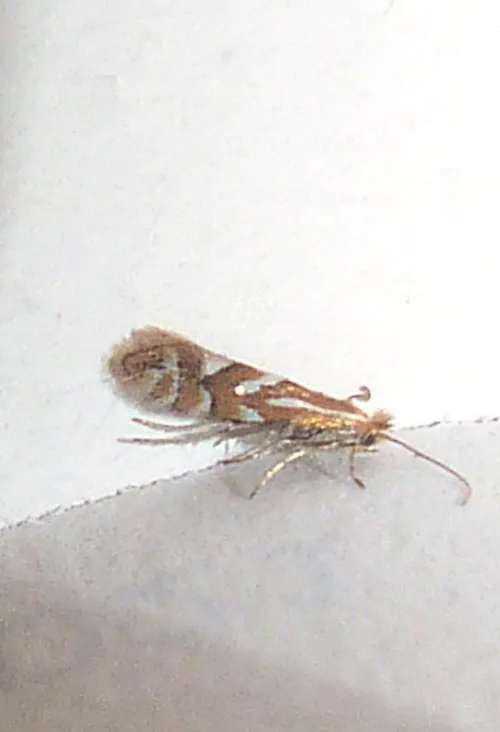
Phyllonorycter dubitella
Phyllonorycter dubitella
Wingspan about 8 mm. It mines sallow leaves, creating tentiform mines. Phyllonorycter hilarella and P salicicolella . The mines and larva cannot be distinguished. Adult: Dissection is required to confirm records to full species. Leafmine: Please rear
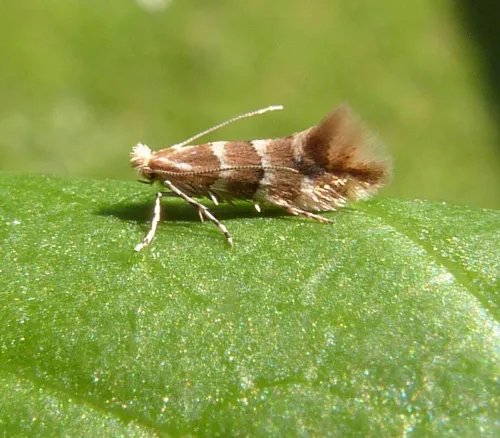
Phyllonorycter emberizaepenella
Phyllonorycter emberizaepenella
Wingspan 9 to 10 mm. This is one of several similar looking species but can be identified with care. The larva mines the leaves of Honeysuckle, Snowberry and Himalayan Honeysuckle ( Leycesteria formosa ) causing a large tentiform mine. The pupa is in
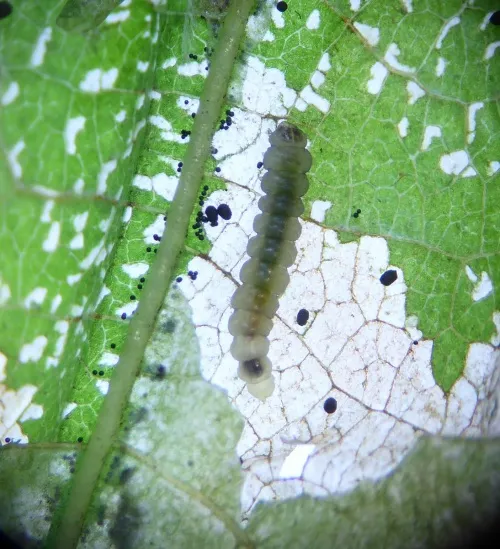
Phyllonorycter froelichiella
Phyllonorycter froelichiella
Wingspan 9 to 10 mm. One of the larger species of Phyllonorycter, with a rather attractive 'striped' appearance, each stripe gradually fading from whitish through chestnut to black. The larva mines the leaves of Alder, creating a large under-surface
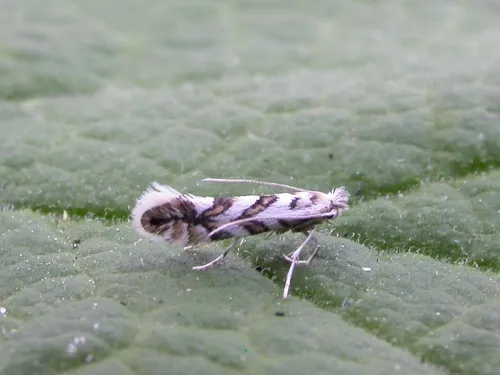
Phyllonorycter geniculella
Phyllonorycter geniculella
Phyllonorycter geniculella is a small moth with a wingspan of 8 mm. It is a beautiful but tiny species, having a white base colour with rufous, darker-edged chevrons, the first of which often 'extrudes' into the next. The larva mines the leaves of Sy
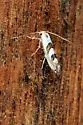
Phyllonorycter hagenii - Hodges#0755
Phyllonorycter hagenii
Identification: Braun revised description is available online from link in the print references. Determined by Terry Harrison.
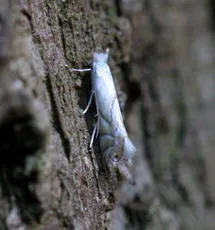
Phyllonorycter harrisella
Phyllonorycter harrisella
Wingspan 7-9 mm. A leaf-mining species which tends to show narrower and less distinct chevrons on the forewing than many of its close relatives. Some forms have a very greyish appearance with indistinct markings. The leaf mines on oak can be searched
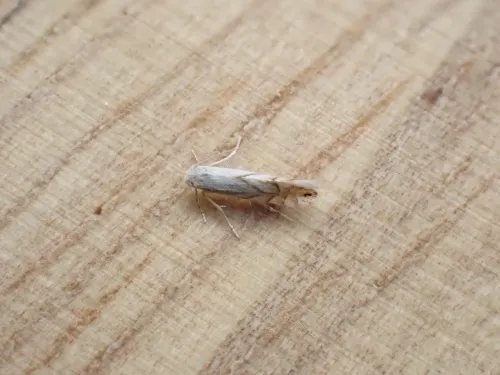
Phyllonorycter heegeriella
Phyllonorycter heegeriella
Wingspan approximately 7mm. One of several oak-feeding Phyllonorycter species showing a white forewing base colour, the narrow greyish basal streak is a useful identification aid. The leaf mines on oak can be searched for from late autumn through win
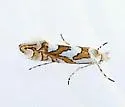
Phyllonorycter insignis - Hodges#0758
Phyllonorycter insignis
Identification: See type specimen at the Global Taxonomic Database of Gracillariidae (Lepidoptera) website.
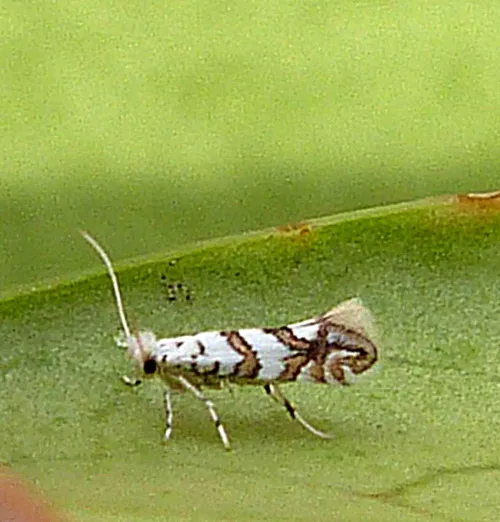
Phyllonorycter joannisi
Phyllonorycter joannisi
Wingspan 7 to 8 mm. In common with other Acer-feeding Phyllonorycters, this species is mostly white with yellowish or brownish markings edged black. The larva mines the leaves of Norway Maple, creating a large tentiform mine. In areas where the larva
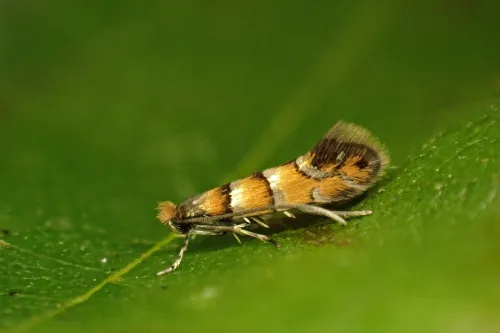
Phyllonorycter klemannella
Phyllonorycter klemannella
Wingspan 7 to 9 mm. The larva mines the leaves of Alder, creating a tentiform mine between two veins on the underside, with a winkled surface withut sharp folds. The larva is white or yellow, and the pupa is in a cocoon with frass heaped to one side.
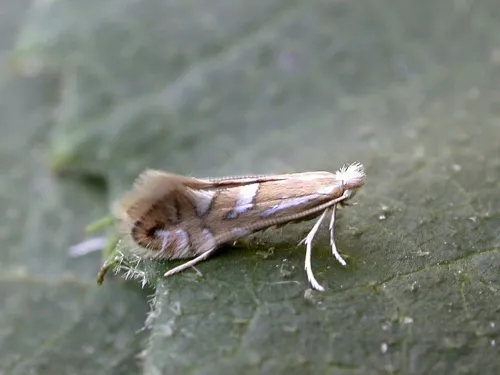
Phyllonorycter lantanella
Phyllonorycter lantanella
Wingspan about 9 mm. A well marked brown and white species similar to several other members of this family. The larva mines the leaves of Wayfaring-tree and occasionally on Guelder-rose or Viburnum tinus , causing tentiform mines. In areas where the
Phyllonorycter lautella
Phyllonorycter lautella
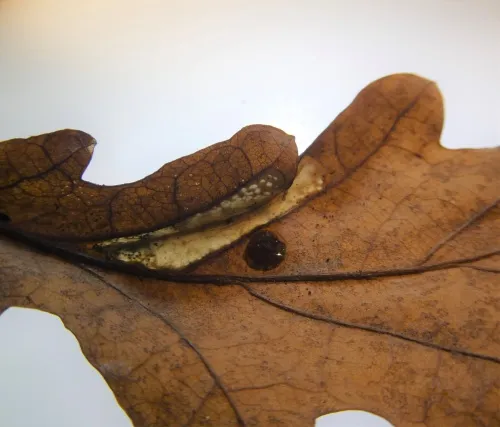
Wingspan 6 to 7 mm. Adults are similar to a number of and great care is needed with identification. The larvae mine the leaves of Oak. The mine is greater than 20 mm long, lower epidermis with one strong crease often dividing in Y-shape at end near l
Phyllonorycter maestingella
Phyllonorycter maestingella
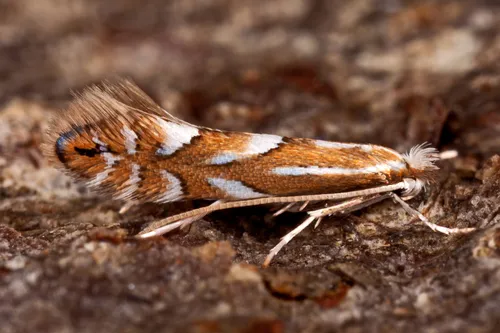
Wingspan 7 to 9 mm. A clear indication that some of the smaller moths are the most beautiful; this tiny moth has an intricate pattern of orange-brown, white and black. The larva mines the leaves of Beech. It has two broods, flying late April to June,
Phyllonorycter messaniella
Phyllonorycter messaniella
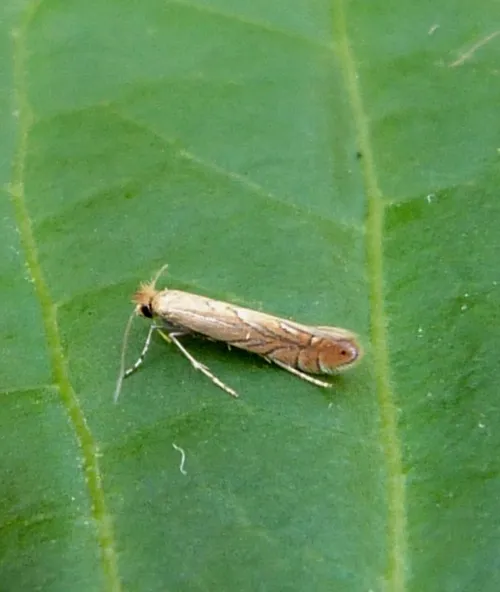
Wingspan 7 to 9 mm. The leaf mines caused by the larvae are usually found on the underside and have a typical 'tented' appearance with a crease line across the surface. The frass is characteristically arranged in a U-shape around the cocoon. The larv
Phyllonorycter nicellii
Phyllonorycter nicellii
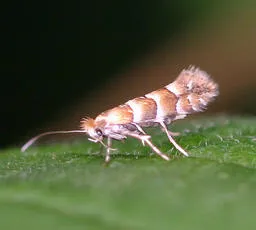
Wingspan 7- 8 mm. This can be a difficult group to distinguish. The larva feeds on Hazel, causing a lower surface tentifrom mine; the upper surface is usually netted brown, with a green patch on top. The larva is pale yellow/greyish (due to a speckli
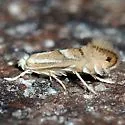
Phyllonorycter olivaeformis - Hodges#0778
Phyllonorycter olivaeformis
The larva forms an underside tentiform mine in a hickory ( Carya ) leaf. When mature, it pupates within the mine in an excrement-covered cocoon.
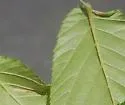
Phyllonorycter ostryaefoliella - Hodges#0781
Phyllonorycter ostryaefoliella
Larvae form underside tentiform mines in leaves of hophornbeam ( Ostrya virginiana ). See microleps.org for photos of the mines.
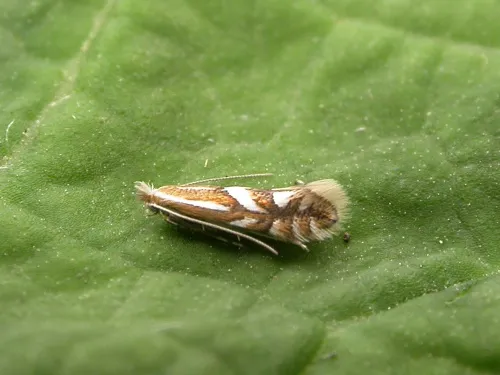
Phyllonorycter oxyacanthae
Phyllonorycter oxyacanthae
Wingspan 6 to 8 mm. Some more northern examples have rather more blackish suffusion in the wing. Best identified from the similar P. sorbi and P. mespilella by recording as a leafmine and noting the larval foodplant - usually Hawthorn (and occasional
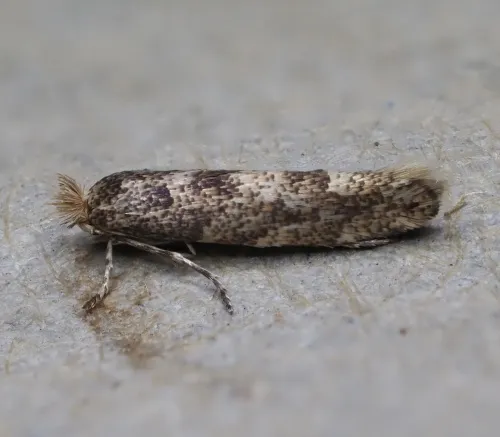
Phyllonorycter pastorella
Phyllonorycter pastorella
Wingspan is 8 to 9.5 mm. The larva mines the leaves of long-leaved (smooth-leaved) willows such as Crack-willow, White Willow and Weeping Willow. The mines are large and have a single sharp crease on the undeside. The pupal cremaster has two very sma
Phyllonorycter platani
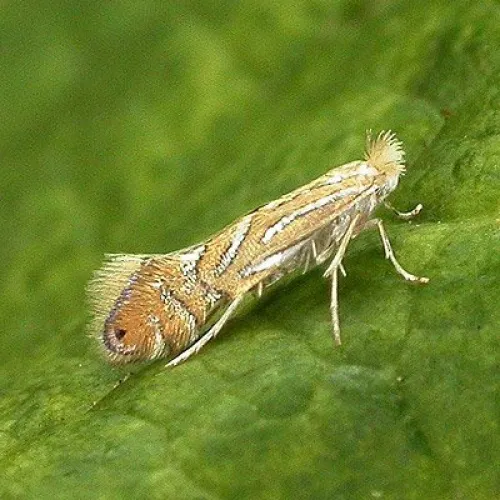
Phyllonorycter platani
Wingspan 8 to 10 mm. Similar to some other members of its family and care is needed with identification. The larvae mine Plane tree leaves, causing a large tentiform mine on the leaf undersurface. Leafmine occurs on London Plane (and sometimes on Ori
Phyllonorycter quercifoliella
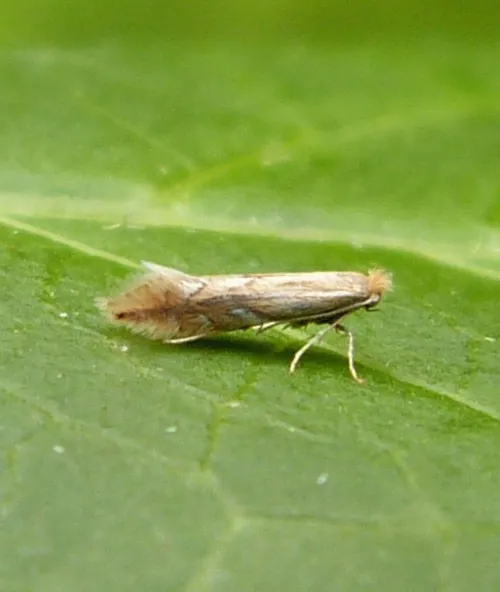
Phyllonorycter quercifoliella
Wingspan 7 to 9 mm. At first glance the adult can appear devoid of markings, but on closer scrutiny, the pale greyish strigulae can be seen, as can the diagnostic basal streak, which usually extends more than half the forewing length. The leaf mines
Phyllonorycter rajella
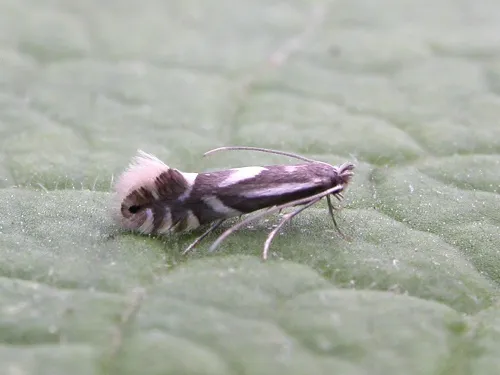
Phyllonorycter rajella
Wingspan 7 to 9 mm. A variable species, some specimens appearing very dark and some much paler. There is a broad whitish basal streak which is usually quite obvious. The larva mines the leaves of several species of Alder, creating an oval tentiform m