
Butterflies and Moths
Order Lepidoptera
The Butterflies and Moths (Order Lepidoptera) includes 11,813 species across 112 families and 2,787 genera in our directory.
About Butterflies and Moths
Lepidoptera includes approximately 180,000 described species of butterflies and moths. Moths outnumber butterflies roughly 10:1. The monarch butterfly's eastern population has declined by more than 80% since the mid-1990s, and the western population by over 95% since the 1980s. The IUCN lists the migratory monarch as Vulnerable.
Economic Impact
Lepidoptera are critical pollinators. In Europe, grassland butterfly species have declined by almost 50% since the early 1990s. In the UK, three-quarters of butterflies are in decline. In the U.S., five butterfly species have gone extinct since 1950, with 29 listed as endangered.
Ecological Role
Butterflies and moths are essential indicators of ecosystem health. As caterpillars, they are a primary food source for birds - a single nest of blue tit chicks requires ~10,000 caterpillars. Adult moths pollinate many night-blooming plants.
Families in Lepidoptera (112)
Species in Lepidoptera (11,813)
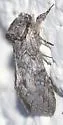
Macrurocampa dorothea - Hodges#7976
Macrurocampa dorothea
Identification: Larva - blue-green with red-brown and yellow mid-dorsal stripe. Abundant in the mountains of southeastern Arizona during July and August but appearing as early as May.
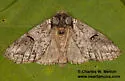
Macrurocampa gigantea - Hodges#7972
Macrurocampa gigantea
Identification: Barnes & Benjamin (1924) original description is available online and linked in the print references. Specimen determined by DNA analysis (BOLD). ( 3 )
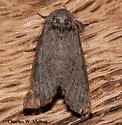
Macrurocampa ruficornis - Hodges#7996
Macrurocampa ruficornis
Identification: Specimen identified by DNA analysis (BOLD). ( 3 )
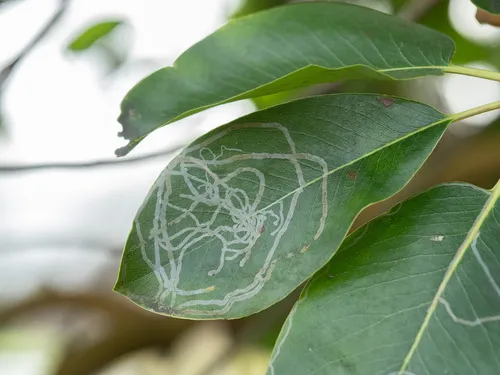
Madrone Skin Miner
Marmara arbutiella
Marmara arbutiella is a moth of the Gracillariidae family. It is known from Canada and the United States (Oregon, Washington and California).
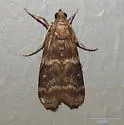
Magnolia Borer Moth - Hodges#5996
Euzophera magnolialis
Attacks occur at the base, the larvae tunnel in the lower inches of the trunk, sometimes in the larger roots.
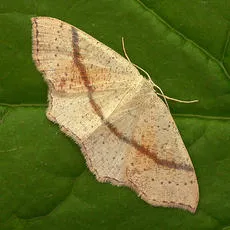
Maiden's Blush
Cyclophora punctaria
Wingspan 18 to 25 mm. Forewings are tip pointed, outer edge with central bulge. Light pinkish brown or buff, speckled with dark grey scales and often flushed with pink. Central cross line largely red. Oak woodland and other areas containing Oak. Like
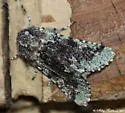
Major Sallow - Hodges#10007
Feralia major
Identification: Adult : FW pale to mint green, variable ● Basal and terminal areas of FW lighter green ● Median area peppered with black ● Orbicular and reniform spots partly outlined white ● AM & PM black jagged lines are often inconspicuous and amo
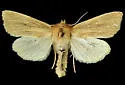
Mammifrontia rileyi - Hodges#9447
Mammifrontia rileyi
Identification: Specimen determined by DNA analysis (BOLD).
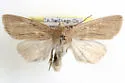
Mammifrontia sarae - Hodges#9447.1
Mammifrontia sarae
Identification: Specimen determined by DNA analysis (BOLD). ( 3 )
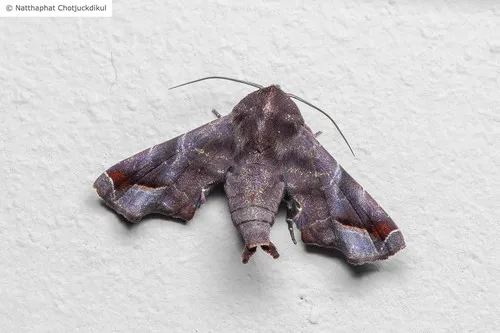
Mango Shoot Borer
Penicillaria jocosatrix
The Mango Shoot Borer (Penicillaria jocosatrix) is a moth of the Noctuidae family. It is found from southeast Asia to the Pacific. Records include Borneo, Guam, Hawaii, India, Sri Lanka, Thailand and Western Australia, the Northern Territory and Quee
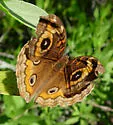
Mangrove Buckeye - Hodges#4442.1
Junonia neildi
Identification: Dorsal, brown with eyespots on both FW and HW. Compare with Common Buckeye and Tropical Buckeye . Ventral, brownish with indistinct markings. Compare with Common Buckeye , and Tropical Buckeye. Classification of taxa in the genus Juno
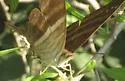
Many-banded Daggerwing - Hodges#4549
Marpesia chiron
multiple reports of large numbers of individuals, all travelling in one direction, reported from multiple countries from Mexico to S. Amer.
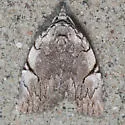
Many-dotted Appleworm - Hodges#9662
Balsa malana
Identification: Adult - forewing gray, darker in median, but paler in basal and subterminal areas and along costal edge; antemedial line broad zig-zag across wing; double postmedial line distinct only at costal edge, with inner part of double line lo
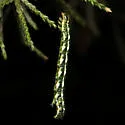
Many-lined Angle - Hodges#6353
Macaria multilineata
Identification: Adult: forewing light gray with brownish tint beyond PM line; AM, median, and PM lines straight, dark, usually conspicuous and with sharp bend near costa; subterminal line a shallow whitish arc extending from apex to anal angle; termi
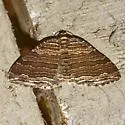
Many-lined Carpet - Hodges#7330
Anticlea multiferata
Identification: Forewing brownish marooon with many fine parallel yellowish lines One of the few moths whose range covers the entire continent.
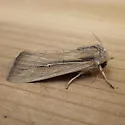
Many-lined Wainscot - Hodges#10446
Leucania multilinea
Identification: forewing light brown streaked with fine brown and blackish lines; black dot above white streak where Cu1 and M3 veins separate; PM line consists of two or three black dots; three sharp even gray lines across collar behind head (if vis
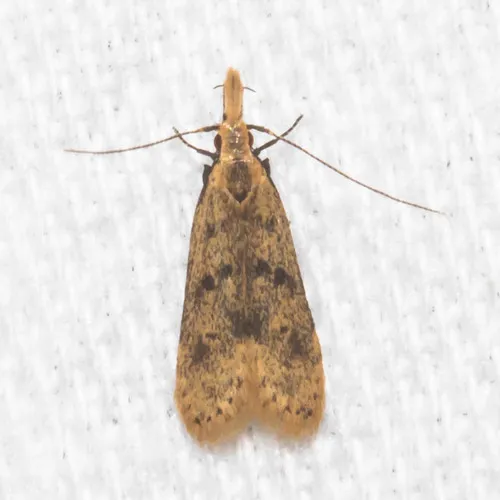
Many-spotted Dichomeris Moth
Dichomeris punctipennella
The many-spotted dichomeris moth (Dichomeris punctipennella) is a moth of the family Gelechiidae. It is found in the United States, including Alabama, Maine, Maryland, Massachusetts, New Hampshire, Tennessee, Texas and Virginia.
Many-spotted Tiger Moth - Hodges#8144
Hypsocompe permaculata
Identification: Adult: forewing white with many black solid rectangular spots arranged loosely in rows; hindwing white; thorax white with black spots (including a row down the middle); legs black with large white patches
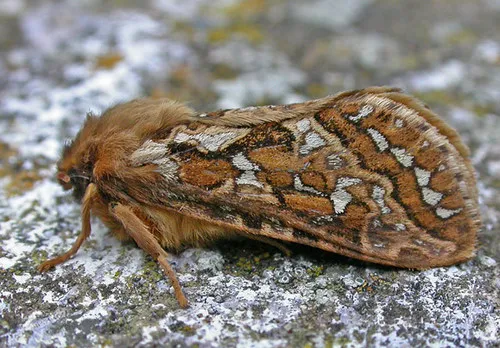
Map-winged swift
Korscheltellus fusconebulosa
A good photograph is generally required to support your record. Often associated with moorland and areas where Bracken is plentiful. The larvae live underground and feed on the roots of Bracken. This species is generally distributed across Britain, b
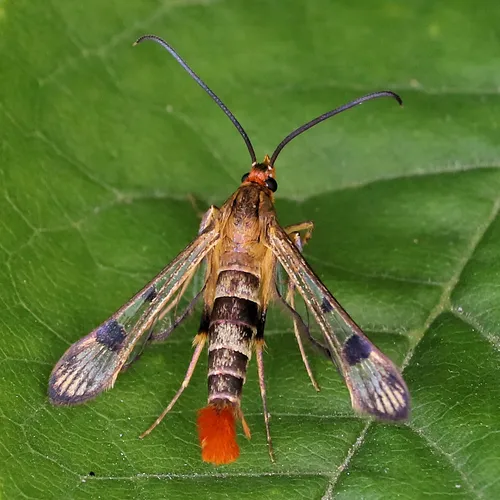
Maple Callus Borer Moth
Synanthedon acerni
Synanthedon acerni, the maple callus borer, is a moth of the Sesiidae family. It is found in Western Canada.

Maple Caloptilia Moth
Caloptilia bimaculatella
Caloptilia bimaculatella is a moth of the Gracillariidae family. It is known from Canada (Ontario and Québec) the United States (including Florida, Kentucky, Maine, Michigan, Missouri, New York, Vermont, Connecticut and West Virginia).
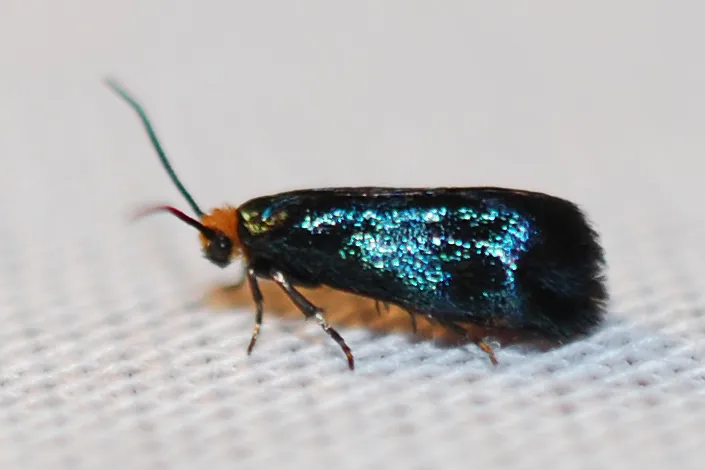
Maple Leafcutter Moth - Hodges#0181
Paraclemensia acerifoliella
Identification: Adult: forewing metallic blue with black area at wingtip; head orange or yellowish Genitalia: Larva: thorax brownish; head black; abdomen mostly clear or translucent whitish, allowing blackish innards to be seen through the surface Fi
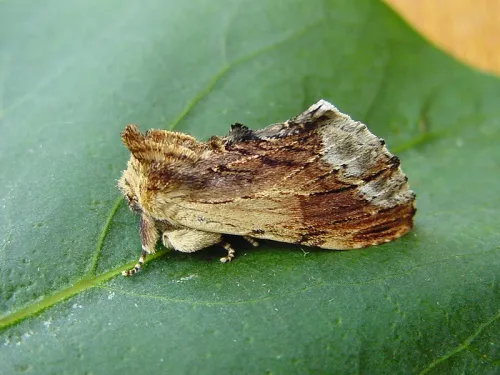
Maple Prominent
Ptilodon cucullina
Wingspan 35 to 40 mm. Although similar in shape to the Coxcomb Prominent (P. capucina), this species has a more variegated appearance. The larvae live on Field Maple and sometimes Sycamore. Its distribution covers the south and south-east of England,
Maple Twig Borer Moth - Hodges#3230
Proteoteras aesculana
Identification: Adult - forewing mottled brown or gray and yellowish (often with greenish tint in fresh specimens); irregular blackish crescent-shaped marking begins mid-way along costa and either breaks in subterminal area or terminates in a dark bl
Maple Zale Moth - Hodges#8692
Zale galbanata
Identification: Adult: wing color and boldness/faintness of markings varies considerably among individuals; forewing gray to grayish-brown, often with orangish-yellow tint in median area, and with or without white strip in subterminal area; lines fin
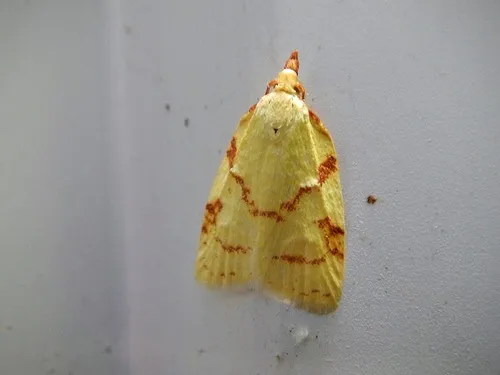
Maple-Basswood Leafroller Moth
Cenopis pettitana
The maple-basswood leafroller (Sparganothis pettitana) is a moth of the Tortricidae family. It is found in eastern North America, from Nova Scotia to Florida, west to Texas.
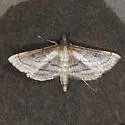
Marasmia cochrusalis - Hodges#5289
Marasmia cochrusalis
Identification: FW middle portion of st. line or shade is narrowly separated from the pm. line. The HW pm. and st. lines tend to be more narrowly separated than in trapezalis with pm. line bending more toward the apex. The HW pm. line tends to align
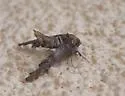
Marathyssa minus - Hodges#8956.1
Marathyssa minus
Lafontaine & Schmidt (2010, p. 129) elevated minus to full species status stating, "DNA barcode data supports the recognition of the phenotypically distinct taxon Marathyssa minus as a species separate from M. inficita of which minus was previously t
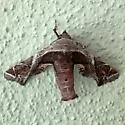
Marathyssa pyrastis - Hodges#8968.2
Marathyssa pyrastis
Marathyssa pyrastis - Hodges#8968.2 (Marathyssa pyrastis) is a species in the family Euteliidae, belonging to the order Lepidoptera (Butterflies and Moths). It is classified within the subfamily Euteliinae, superfamily Noctuoidea. This species belong
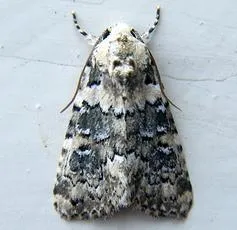
Marbled Beauty
Bryophila domestica
Wingspan 20-25 mm. Showing a good example of protective camouflage. Occurs in a range of habitats, including suburbia. This species rests by day on stone walls and rocks. The flight time is during July and August, and the adults, which vary somewhat
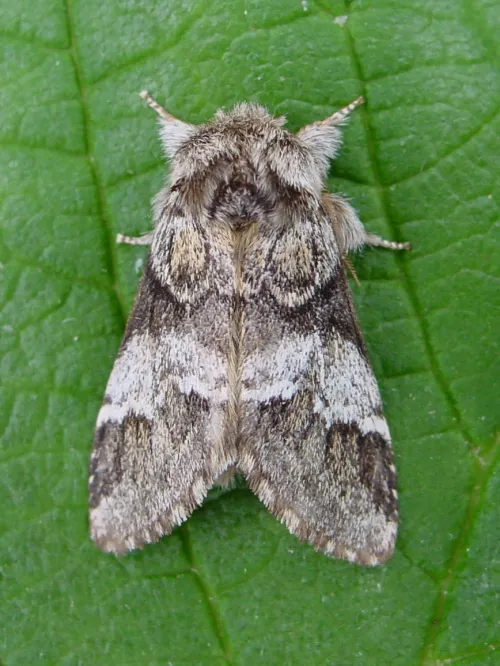
Marbled Brown
Drymonia dodonaea
Flies in May and June, when it is attracted to light. The caterpillar feeds on the leaves of oak. Occurring widely in much of Britain, it is most frequently encountered in the southern half. In a recent survey to determine the status of all macro mot
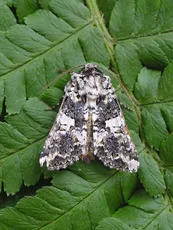
Marbled Coronet
Hadena confusa
Wingspan 33 to 39 mm. The species varies from a very black-and-white form to an almost all brown variety, occurring in Shetland. Preferring chalky soils and shingle beaches. The adults fly in May and June, sometimes with a partial second generation i
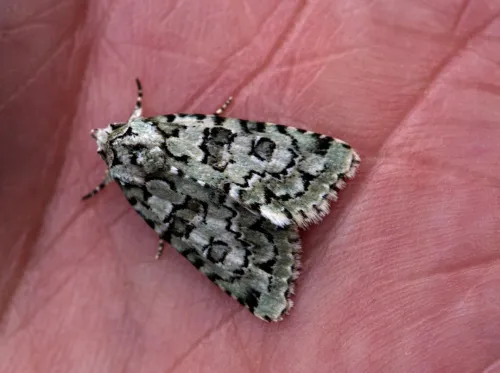
Marbled Green
Bryopsis muralis
Wingspan 27 to 34 mm. As the Common Name suggests, the species has a mottled green appearance which provides camouflage when at rest on lichen, however the patterning can be quite variable. This is a rare species in our area, and a photograph is requ
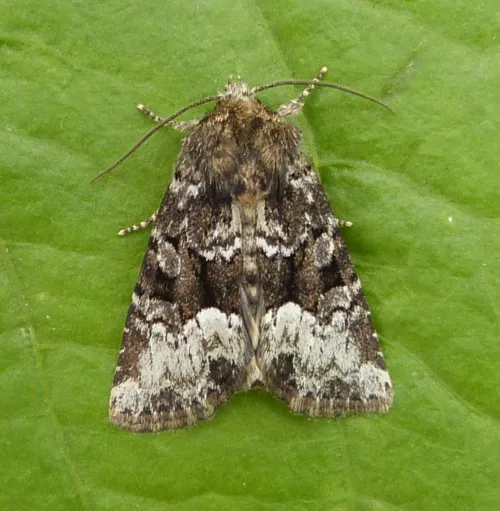
Marbled Minor
Oligia strigilis
Wingspan 22-25 mm. One of a complex of three species, which can only be reliably separated by dissection of the genitalia. The other two species are Tawny Marbled Minor ( O. latruncula ) and Rufous Minor ( O. versicolor ). The identification of this
Marbled Minor agg.
Oligia strigilis agg.
Wingspan 22-25 mm. One of a complex of three species, which can only be reliably separated by dissection of the genitalia. The other two species are Tawny Marbled Minor ( O. latruncula ) and Rufous Minor ( O. versicolor ). The identification of this
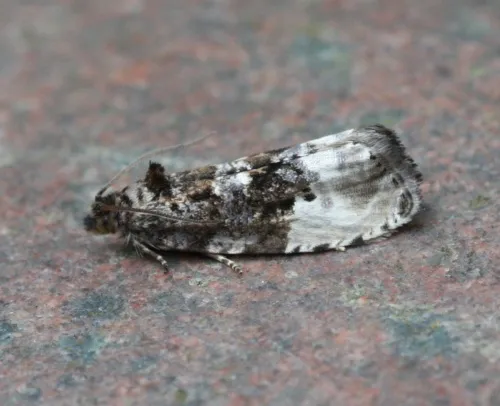
Marbled Orchard Tortrix
Hedya nubiferana
Wingspan 15-21 mm. One of many similar species which mimics a bird-dropping when at rest. Flying from dusk into the night, between June and August, the adult is easily attracted to light. The larvae feed on a variety of trees including Hawthorn and B
Marbled Underwing - Hodges#8804
Catocala marmorata
Identification: The original Edwards (1864) description is available online in the print references below. Forewing has a dark arc extending from the costa through the reniform spot to the outer margin ending just below the apex. Rare to uncommon thr
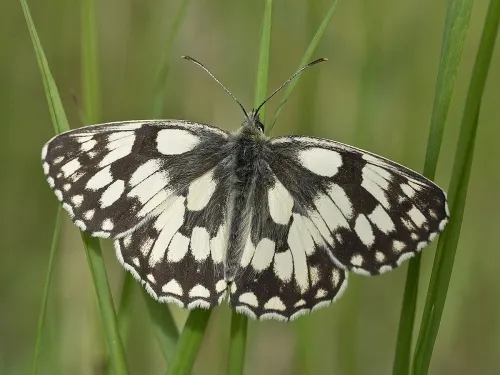
Marbled White
Melanargia galathea
This butterfly is unmistakable, its black and white markings distinguishing it from all other species found in the British Isles. The butterfly is found in unimproved grassland where the grass may grow up to 0.5m tall. The largest colonies are found
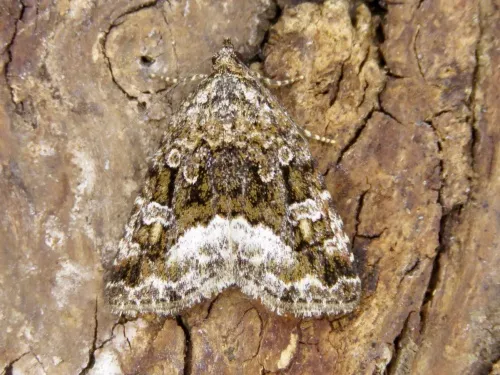
Marbled White Spot
Protodeltote pygarga
The adults are on the wing in a single generation from May to July. The caterpillars feed during the autumn on a number of grasses, including Purple Moor-grass Distributed mainly in the southern half of England and parts of North Wales. In a recent s
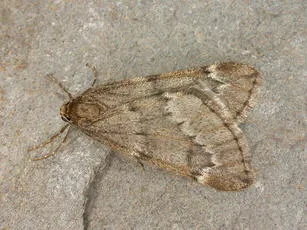
March Moth
Alsophila aescularia
Wingspan 25-35 mm. This is one of a few species of moth where the female is apterous, or wingless. The male has a distinctive way of resting, with the wings overlapping. The females may be found crawling on tree-trunks at night and the males can be a
Marimatha quadrata - Hodges#9044.2
Marimatha quadrata
Identification: Forelegs and middle legs are brown, flecked with a few paler scales. the only western species with brown forelegs.
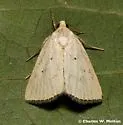
Marimatha squala - Hodges#9044.1
Marimatha squala
Identification: The description of the adults including genitalia is available in the PDF. The legs are yellow and flecked with brown scaling, more heavily on the middle legs, forelegs, and in females.
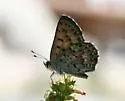
Mariposa Copper - Hodges#4264
Lycaena mariposa
Identification: Similar above to Bog, Lilac-bordered, Purplish, and Dorcas Coppers, but the margins (finges) are checkered. On the hind wing below the dark spot pattern is much stronger on a pale whitish, grayish, or brownish background; many of the
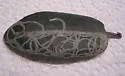
Marmara on-arctostaphylos
Marmara on-arctostaphylos
Although mines on manzanita have been attributed to Marmara arbutiella , according to David Wagner the manzanita feeder is a different species, consistently smaller than M. arbutiella .
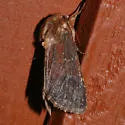
Maroonwing - Hodges#10268
Sideridis maryx
Identification: Adult: forewing uniformly dull brownish-red sometimes overlaid with dark gray shading which partly obscures AM and PM lines composed of series of pale yellowish dots; reniform spot inconspicuous, filled with gray; hindwing dirty white
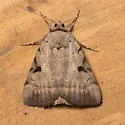
Married Underwing - Hodges#8842
Catocala nuptialis
Identification: Adult - forewing brownish-gray with conspicuous black reniform spot shaped like a drop or comma; AM line does not widen toward middle of wing; PM line saw-toothed, indistinct; hindwing yellow to orange with thick black bands and pale
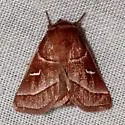
Marsh Fern Moth - Hodges#9629
Fagitana littera
Identification: Adult: forewing dark reddish-brown or purplish-brown with white AM and PM lines edged in black; reniform spot a white horizontal streak; AM line oblique, PM line almost straight, terminal line white, following contour of slightly angl
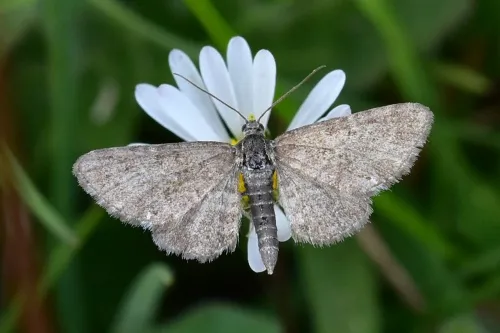
Marsh Pug
Eupithecia pygmaeata
Wingspan 14 to 18 mm. This is quite a small brown, or bluish brown species. Occupying both damp habitats such as marshes and fens, and drier locations like sand dunes and waste ground. The larvae feed on the flowers and seeds of field Mouse-ear ( Cer
Martia arizonella - Hodges#5903
Martia arizonella
Identification: Shaffer (1968) revised description is in PDF. ( 3 )
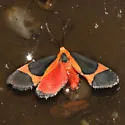
Martin's Lichen Moth - Hodges#8078
Cisthene martini
Identification: Martin's Lichen Moth is similar to Thin-banded except that all the colors are darkened and over-saturated. Most noticeably, the basal streak and PM band are usually dark red-orange. In many online images, the PM band shows a thin hint
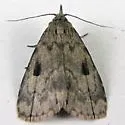
Masked Parahypenodes - Hodges#8430
Parahypenodes quadralis
Identification: Barnes & McDunnough (1918) original description is displayed and online in the print references. "Primaries dull ochreous gray, shaded with deep smoky; t.a. line single, dark, irregular, arising from small dark costal blotch, bent inw
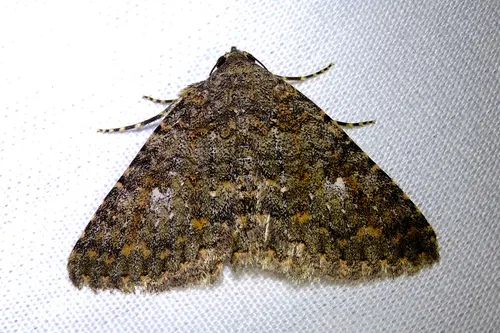
Matigramma emmilta - Hodges#8680.2
Matigramma emmilta
Identification: Genitalia: ♀ ♂ Franclemont mentions the larvae are similar to some species of Zale .
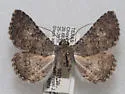
Matigramma necopina - Hodges#8681.2
Matigramma necopina
Identification: Distinguisable only by dissection. Very similar to [i]Matigramma obscurior[/] which is common in the same area. Discovered by Jan Metlevski. Specimens housed in the Kansas State University Entomology Collection.
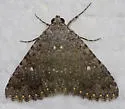
Matigramma obscurior - Hodges#8681
Matigramma obscurior
Identification: The darkest and most evenly colored of the Matigramma species. Genitalia: ♀ ♂
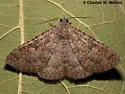
Matigramma rubrosuffusa - Hodges#8680
Matigramma rubrosuffusa
Identification: Adult - Grayish fuscous with pinkish shading, indistinct and irregular dark lines; subterminal line with evident pinkish shading tending to break into spots; fringe scalloped; reniform with dark annulus and pale spot near lower outer
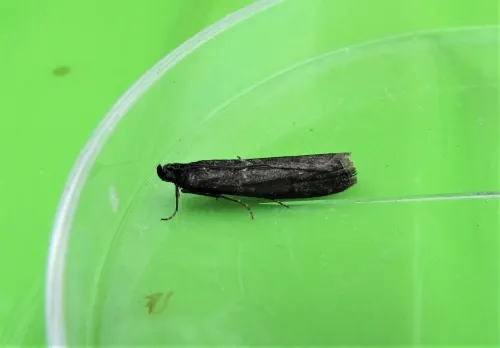
Matilella fusca
Matilella fusca
Wingspan around 26 mm with a dull brownish colouration. Unless identified by a recognised expert, a photo is required. If the photo doesn't show the key ID features then in the comments box describe the size and identifying characters you have observ
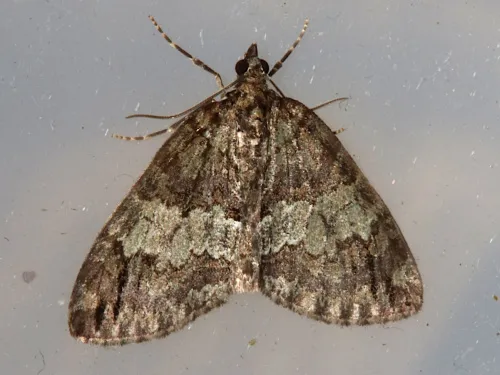
May Highflyer
Hydriomena impluviata
Wingspan 30 to 34 mm. Quite variable across its range, the northern populations often include a number of dark grey, melanic specimens. Alder ( Alnus glutinosa ) is the larval foodplant, the caterpillars spinning together the leaves during the autumn
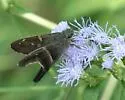
McGuire's Aguna - Hodges#3877.1
Aguna mcguirei
Identification: Butterflies of America - BOA Type locality: Texas, Cameron Co., Brownsville First U.S. Record: Bentsen-RGV State Park, Mission, Hidalgo Co., Texas - 1969
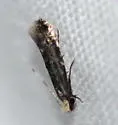
Mea undescribed-two
Mea undescribed-two
Previously unplaced to subfamily on BugGuide as a species of “ Enigmatic Tineidae ”. Since identified to genus by James Hayden, who says: “The wing venation and male and female genitalia pretty clearly place it in Mea Busck.”
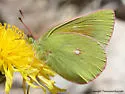
Mead's Sulphur - Hodges#4213
Colias meadii
Identification: Underside greenish-yellow, white spot on hindwing circled in red.
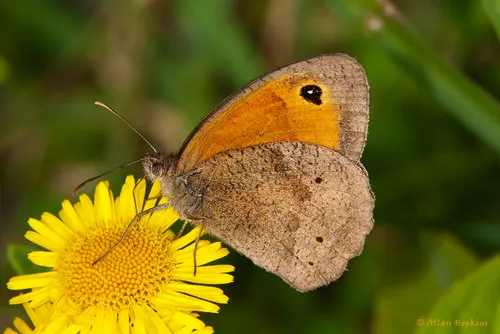
Meadow Brown
Maniola jurtina
The Meadow Brown is one of our commonest and most widespread butterflies and a familiar sight across the British Isles during the summer months. This is a brown butterfly with an orange patch on each wing surrounding a black eye spot with a single wh
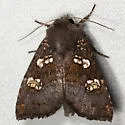
Meadow-Rue Borer - Hodges#9509
Papaipema unimoda
Identification: genitalia Beadle & Leckie (2012) reported the species is uncommon. ( 6 )
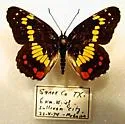
Medial Patch - Hodges#4501.2
Chlosyne eumeda
Discussion of First Confirmed U.S. Record : Sullivan City, Starr Co., Texas - 1974 (Bordelon & Knudson 2007)
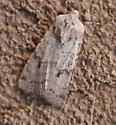
Median-banded Dart - Hodges#10813
Euxoa medialis
Identification: Forewing variable and can be pale gray, yellowish or a dull pinkish color. Genitalia:
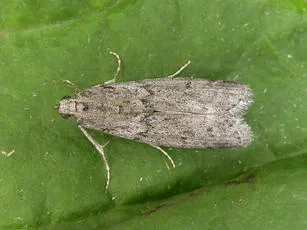
Mediterranean Flour Moth
Ephestia kuehniella
It can be a pest in flour mills and bakeries, where the moths are to be found resting on walls and windows by day. The species is rarely found outdoors due to its reliance on warmth, and moths can be found any time except in mid-winter; there are bel
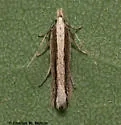
Megacraspedus plutella - Hodges#1687
Megacraspedus plutella
Identification: "Third joint of palpi and upper surface of the second one creamy white, the second otherwise dark gray brown; head, thorax and the dorsal margin of the primaries to a point beyond the beginning of the ciliae, creamy white, the primari
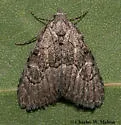
Meganola fuscula - Hodges#8985
Meganola fuscula
Identification: Grote (1881) original description as Nola fuscula is available online in the print references. Specimen identified by DNA analysis (BOLD). ( 4 )
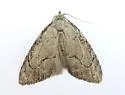
Meganola minor - Hodges#8984
Meganola minor
Identification: See original description in references below.
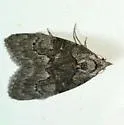
Meganola varia - Hodges#8987
Meganola varia
Identification: The original description is available in PDF or view online in the print references listed below.
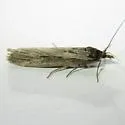
Megasis edwardsialis - Hodges#5865
Megasis edwardsialis
Identification: The original description as Megaphysis edwardsialis Hulst, and the Heinrich revised description of Sarata edwardsialis (Hulst) are both available online in the print references below. Determined by Brian Scholtens , “I dissected and c
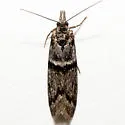
Megasis iota - Hodges#5879
Megasis iota
Identification: Genitalia: Sarata iota Heinrich, 1956, excluded from Neunzig (2003), is treated as "valid unassociated female" in the 1983 Hodges checklist and in Scholtens & Solis (2015), ZooKeys. 535: 1-136.
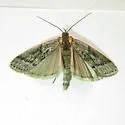
Megasis nigrifasciella - Hodges#5872
Megasis nigrifasciella
Identification: The Heinrich 1956 revised description of Sarata nigrifasciella Ragonot, is available online in the print references below. ID confirmed by Brian Scholtens
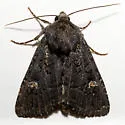
Melanapamea mixta - Hodges#9361
Melanapamea mixta
Identification: Specimen identified by Lars Crabo. photo soon! more information soon!
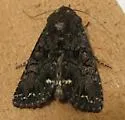
Melanchra pulverulenta - Hodges#10294
Melanchra pulverulenta
Identification: This species can usually be identified by the combination of a dark olive-gray FW with a uneven but distinct white subterminal line forming a spot near the anal angle. a
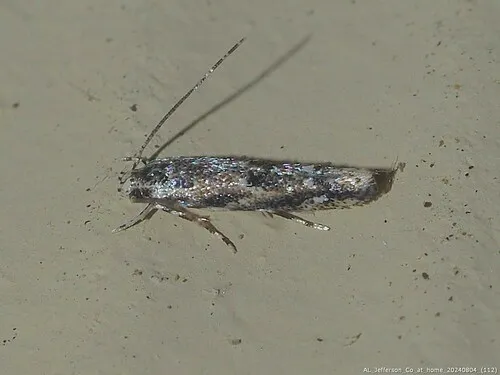
Melanocinclis gnoma - Hodges#1506
Melanocinclis gnoma
Identification: See Hodges . Pattern of antennae separate this species from other in the genus.
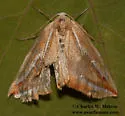
Melemaea virgata - Hodges#6856
Melemaea virgata
Identification: Larva - see Powell and Opler plate 62.
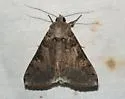
Melipotis novanda - Hodges#8609
Melipotis novanda
Identification: Adult: Sexually dimorphic. See Richards, 1939 in Print References below. ♂ ♀ Larva: See Crumb 1956
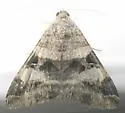
Melipotis perpendicularis - Hodges#8598
Melipotis perpendicularis
Identification: Melipotis perpendicularis in Louisiana - PDF by Vernon Antoine Brou Jr. with figures of four male and four female phenotypes
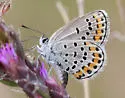
Melissa Blue - Hodges#4375
Plebejus melissa
Identification: Adult: above, female brown with blue tinge; male blue with narrow dark border. Red-orange submarginal row is continuous. In the eastern subspecies samuelis (Karner Blue) this row is divided into separate spots. Below, continuous black
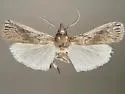
Melitara apicigrammella - Hodges#5971.3
Melitara apicigrammella
Identification: The only Melitara with short black longitudinal lines in the terminal area of the forewing. The other species have black dots in the terminal area.
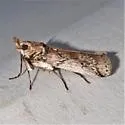
Melitara doddalis - Hodges# 5971.1
Melitara doddalis
Identification: "Melitara doddalis adults have extensive dark-brown or black suffusions in the posterior half of the fore wing (plate 3, figure 16), and the black line associ ated with the antemedial line is missing, or weakly formed." Genitalia: ♀ ♂
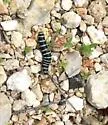
Melitara junctolineella - Hodges#5972
Melitara junctolineella
Identification: Among the largest of the Phycitini, may be mistaken for a noctuid. Genitalia:
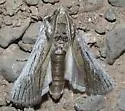
Melitara subumbrella - Hodges#5973
Melitara subumbrella
Identification: Larvae are white with pale purple cross-bands.
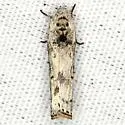
Menestomorpha kimballi - Hodges#1029
Menestomorpha kimballi
Identification: Forewing: Ground color white with three large shaded areas along the costa. Rows of transverse dark dots along terminal and subterminal area. Dark patch of raised scales at inner margin of wing base.
Mengel's Plume Moth - Hodges#6146
Stenoptilia mengeli
Identification: See the identification key for Platyptiliini . See the species accounts in Landry as Stenoptilia islandica and Barnes & Lindsey .
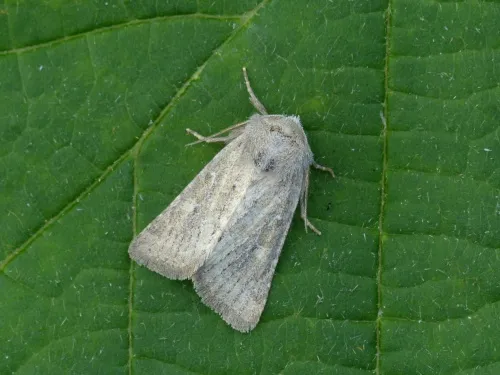
Mere Wainscot
Photedes fluxa
Wingspan 26 to 30 mm. A small 'Wainscot', with a variable ground colour, but usually displaying distinctively darker veins on the forewing. The larvae feed in the stems of Wood Small-reed (Calamagrostis epigejos). Found in scattered localities throug
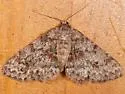
Mericisca scobina - Hodges#6607
Mericisca scobina
Identification: Rindge (1972) described the adults including genitalia. ( 4 )
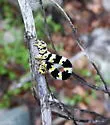
Meris paradoxa - Hodges#6877
Meris paradoxa
Identification: Adult - thinly scaled, slightly transparent, pale buff with scattered brown and grayish scaling; maculation weakly represented, cross lines grayish brown, tending to be broad, incomplete. Larva - brightly colored and boldy patterned,
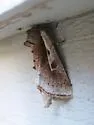
Meropleon cosmion - Hodges#9425
Meropleon cosmion
Identification: Distinguished from the other Meropleon by the strong contrasting white areas of thee forewing.
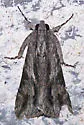
Merry Melipotis - Hodges#8607
Melipotis jucunda
Identification: see images at Moth Photographers Group
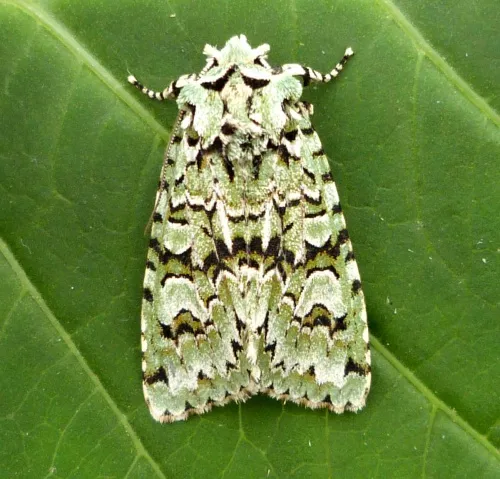
Merveille du Jour
Griposia aprilina
Wingspan 35-40 mm. One of our most beautiful moths, especially when freshly emerged. Pinned specimens in identification guides have often lost the attractive green colour, fading to a brownish yellow. This species frequents woodland and parks. It fli
Mesapamea arbora - Hodges#9407
Mesapamea arbora
Identification: Barnes & McDunnough (1912) stated "The white dots on outer margin of reniform and the dark patch opposite the claviform are characteristic." Determined by Noel McFarland.
Meske's Skipper - Hodges#4030
Hesperia meskei
Type Locality: "Bastrop Co., Texas" Hesperia meskei pinocayo Gatrelle & Minno, 2003
Meske's Underwing - Hodges#8822
Catocala meskei
Identification: Adult - forewing gray and evenly patterned (has a dirty or dust-covered appearance), with few contrasts or strong markings compared to similar species; PM line often single (at least in leading half of wing) with no white border on di
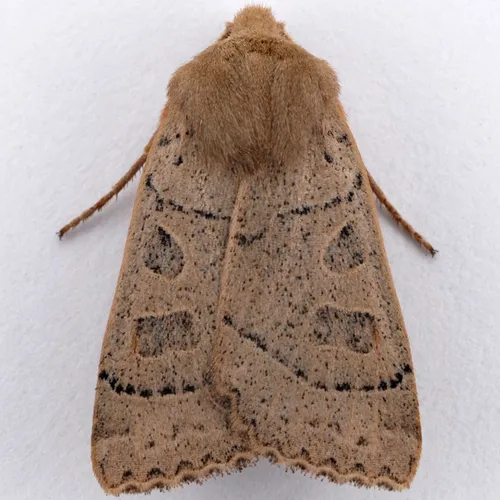
Mesogona olivata - Hodges#9953
Mesogona olivata
Identification: Detailed description available in link to the Mesogona revision linked below under citations. From the key to adult species - hindwing gray or with gray suffusion.
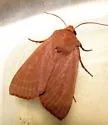
Mesogona rubra - Hodges#9953.1
Mesogona rubra
Identification: Detailed description is available at the link to the Mesogoan revision in citations below. From the key to adults in the revision, rubra has thorax and forewings that are brownish red to pink with faint or absent forewing spots; hindw
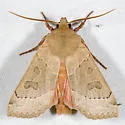
Mesogona subcuprea - Hodges#9953.2
Mesogona subcuprea
Identification: Detailed description is available in the Mesogona revision that is linked in citations below. From the key to adults in the revision, the thorax and forewings of subcuprea are yellow-brown with orbicular and reniform spots strongly ou
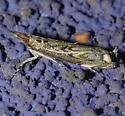
Mesolia huachucaella - Hodges#5330
Mesolia huachucaella
Identification: "This species is unlike any of our Mesolia-Prionapteryx group in the decided grayer hue of the fore wings; all the other species have a superficially ochreous or ochreous-brown tinge, and it can be easily separated by this character..
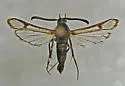
Mesquite Clearwing Moth - Hodges#2607
Carmenta prosopis
Identification: Adult - see Engelhardt in Print References.
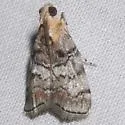
Mesquite Leaf Tier - Hodges#5620
Pococera euphemella
Identification: Species page created based on this image determined by Ed Knudson, Texas Lepidoptera Survey, Houston: