
Butterflies and Moths
Order Lepidoptera
The Butterflies and Moths (Order Lepidoptera) includes 11,813 species across 112 families and 2,787 genera in our directory.
About Butterflies and Moths
Lepidoptera includes approximately 180,000 described species of butterflies and moths. Moths outnumber butterflies roughly 10:1. The monarch butterfly's eastern population has declined by more than 80% since the mid-1990s, and the western population by over 95% since the 1980s. The IUCN lists the migratory monarch as Vulnerable.
Economic Impact
Lepidoptera are critical pollinators. In Europe, grassland butterfly species have declined by almost 50% since the early 1990s. In the UK, three-quarters of butterflies are in decline. In the U.S., five butterfly species have gone extinct since 1950, with 29 listed as endangered.
Ecological Role
Butterflies and moths are essential indicators of ecosystem health. As caterpillars, they are a primary food source for birds - a single nest of blue tit chicks requires ~10,000 caterpillars. Adult moths pollinate many night-blooming plants.
Families in Lepidoptera (112)
Species in Lepidoptera (11,813)
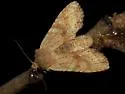
Lithophane franclemonti - Hodges#9888.1
Lithophane franclemonti
Adults are best found by using sugary baits (e.g. rotten banana + brown sugar) painted on tree trunks, shrubs, and other vegetation. Also comes to light moderately well for a Lithophane, esp. later in the spring flight period.
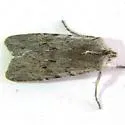
Lithophane itata - Hodges#9920
Lithophane itata
Lithophane itata - Hodges#9920 (Lithophane itata) is a species in the family Noctuidae, commonly known as owlet moths, belonging to the order Lepidoptera (Butterflies and Moths). It is classified within the subfamily Noctuinae, tribe Xylenini, superf
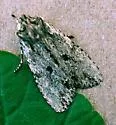
Lithophane lanei - Hodges#9893.1
Lithophane lanei
Identification: Forewing has distinct blackish subreniform spot and blackish brown basal dash. Antennae are filiform.
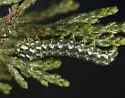
Lithophane longior - Hodges#9898
Lithophane longior
Identification: Adult forewing pale gray with vague markings and a dark gray median band. Occasionally with a black streak running somewhat parallel to inner margin. Hindwing gray. Larva is green with large wavy white spots forming a partial to compl
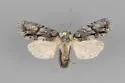
Lithophane nasar - Hodges#9926
Lithophane nasar
Identification: See original description in print references below .
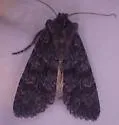
Lithophane ponderosa - Hodges#9924.1
Lithophane ponderosa
Identification: Specimen determined by DNA analysis (BOLD). ( 4 )
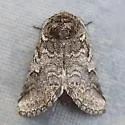
Litodonta contrasta - Hodges#7969
Litodonta contrasta
Identification: From the key to species in MONA Fascicle 22.1B - forewing uniformly gray without areas of yellow; occasionally with light brown blotches beyond ST line
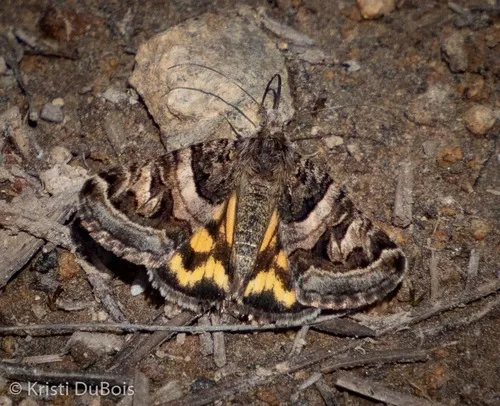
Little Arches - Hodges#8631
Drasteria petricola
Identification: The smallest of the Arches (Drasteria) moths. In Alberta, it is the only species in the genus with black lines along the veins of the ventral forewing margin. The mountain populations (ssp. athabasca) tend to be slightly larger and ha
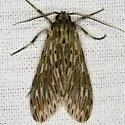
Little Carol's Wasp Moth - Hodges#8271
Nelphe carolina
Identification: Edwards (1886) original description is available online in the print references.
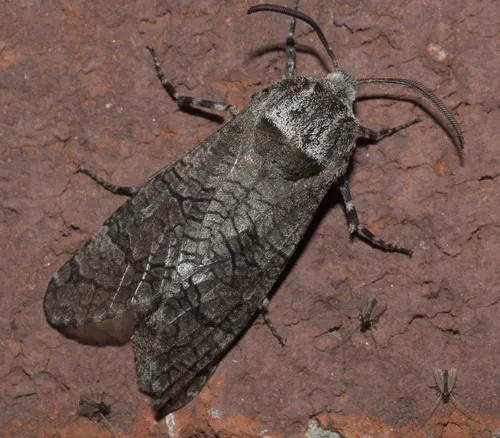
Little Carpenterworm Moth
Prionoxystus macmurtrei
Prionoxystus macmurtrei, the little carpenterworm moth, is a moth of the Cossidae family. It is found from Ontario and Quebec to Florida, west to Texas, north to Minnesota.
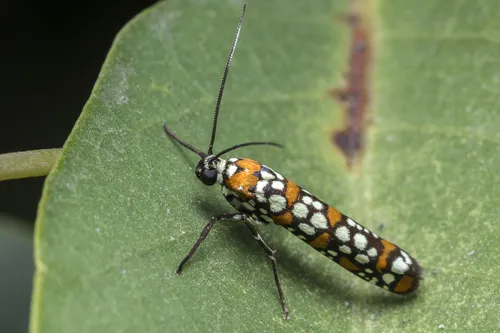
Little Cigarette Harlequin Moth
Atteva pustulella
Atteva pustulella is a moth of the family Attevidae. It is found from Costa Rica, where it meets Atteva aurea, southwards to Uruguay and Argentina. It is also present in the Antilles. There are also several reports from Dominica, Jamaica, Haiti and M
Little Dark Gem - Hodges#11083
Schinia villosa
Identification: Mature larvae are light green with a darker green bands and lines along the length. ( 6 )
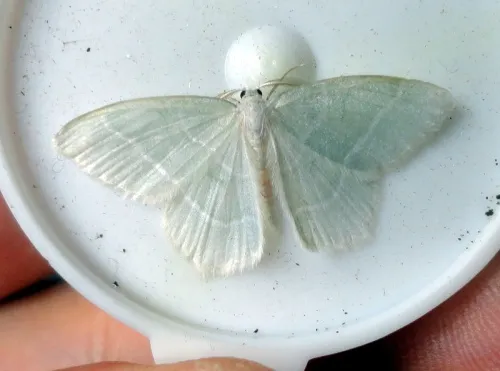
Little Emerald
Jodis lactearia
Wingspan 23 to 26 mm. A paler green than most other 'emeralds', the colour fades very quickly after the moth's emergence from the pupa. Feeding on a range of trees and bushes, including Birch, Hawthorn and Oak, the larva pupates before overwintering.
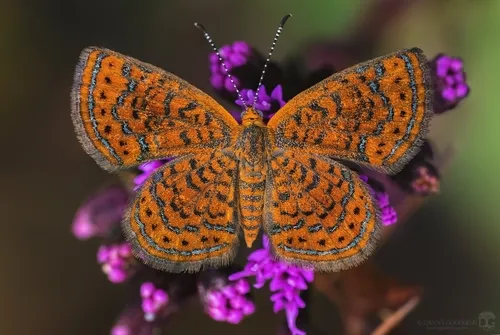
Little Metalmark
Calephelis virginiensis
Calephelis virginiensis, the little metalmark, is a species of metalmark in the family of butterflies known as Riodinidae. It is found in North America.
Little Nymph Underwing - Hodges#8876
Catocala micronympha
Identification: Adult - variable forewing with distinctive PM line.
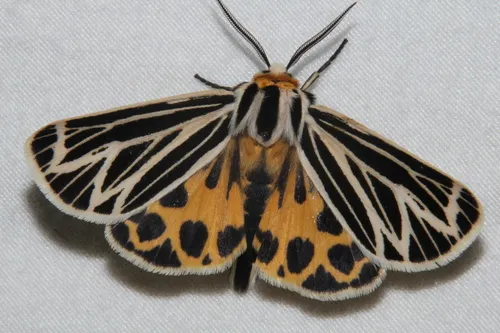
Little Virgin Tiger Moth - Hodges#8175
Apantesis virguncula
Identification: forewing black with thick and thin yellowish to cream-colored lines; only 1 transverse line on forewing, which extends as a zigzag from costa near apex hindwing yellow with extensive black shading in both sexes look for yellow line on
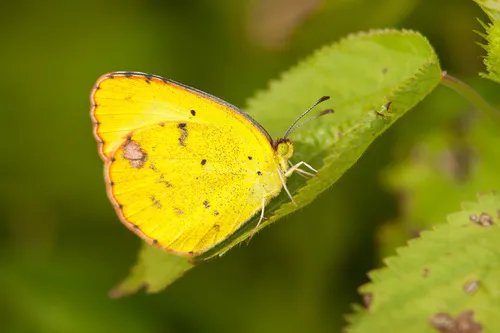
Little Yellow
Eurema lisa
Eurema lisa, commonly known as the little yellow, little sulphur or little sulfur, is a species of Coliadinae that occurs in Central America and the southern part of North America.
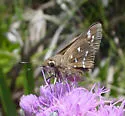
Loammi Skipper - Hodges#4084
Atrytonopsis loammi
Identification: Similar to Dusted Skipper, but with bold white chevron on ventral hindwing.
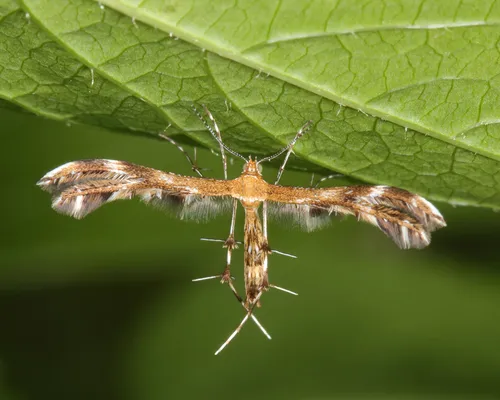
Lobed Plume Moth
Dejongia lobidactylus
Dejongia lobidactylus is a moth of the family Pterophoridae. It is found in the north-eastern United States, Quebec and Ontario.
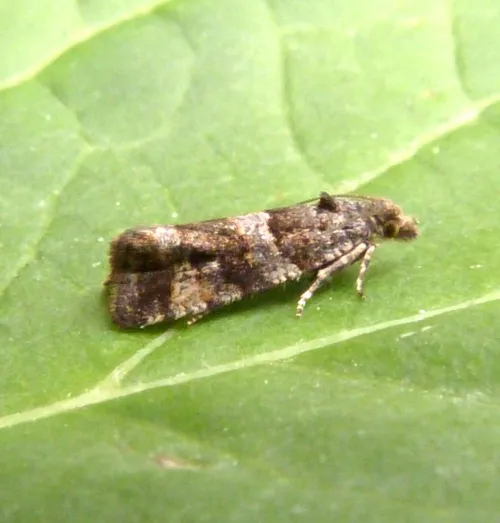
Lobesia abscisana
Lobesia abscisana
Wingspan 10-13 mm. A smallish moth with brown and white markings and darker than related species. Rough grassland where Creeping Thistle is present. The adults fly in May and again in July and August. Flying from dusk onwards, they are attracted to l
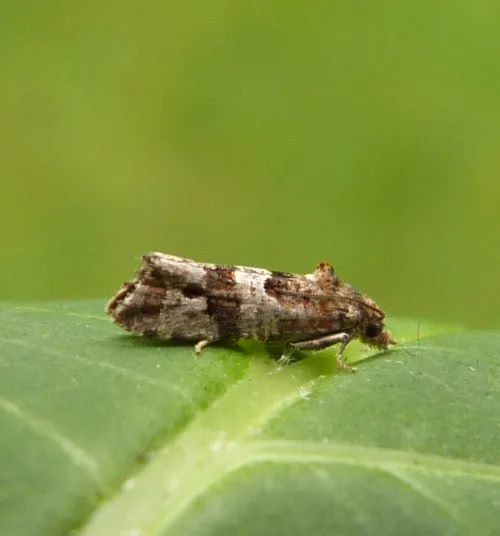
Lobesia littoralis
Lobesia littoralis
Generally a coastal species, this moth can also be found inland in gardens, due to its foodplant preference for Thrift. The species has two generations, with moths emerging in June and July, and again in September. The adults can be seen in late afte
Lobesia spiraeae - Hodges#2729
Lobesia spiraeae
Lobesia spiraeae (McDunnough, 1938), described as a subspecies of Lobesia bicinctana (Duponchel, 1843), extralimital (Palearctic), is raised to full species in Gilligan et al..
Lobocleta granitaria - Hodges#7095
Lobocleta granitaria
Identification: The original description as Acidalia granitaria Packard, is available online in the print references below.
Lobocleta peralbata - Hodges#7100
Lobocleta peralbata
Identification: Adult: forewing white with extensive brown speckling; AM, median, and PM lines dark yellow, wavy; dark discal dot between AM and median lines; hindwing similar but lacks AM line; dark dashed terminal line and white fringe on both wing
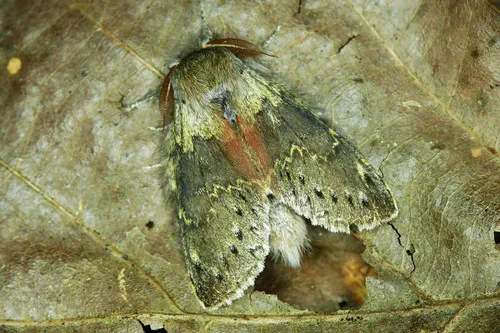
Lobster Moth
Stauropus fagi
Wingspan 45-60 mm. A large and easily recognisable moth with a distinctive resting posture. Please provide a photograph to support your record as this species is rare in our area Favours mature woodland and other well wooded areas. Flight period is f
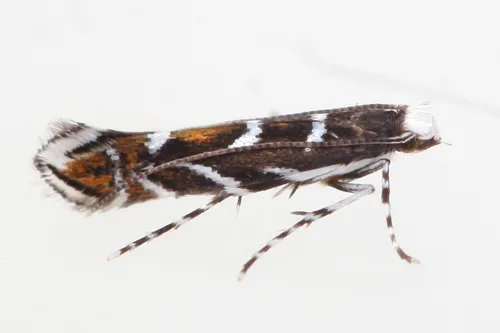
Locust Digitate Leafminer Moth
Parectopa robiniella
The locust digitate leafminer (Parectopa robiniella) is a moth of the Gracillariidae family. It is native to North America, but was accidentally introduced to Italy, where it was first found in 1970. It has now been recorded from Italy, France, Germa
Locust Underwing - Hodges#8719
Euparthenos nubilis
Identification: The hindwing is deep yellow/orange with 4 wavy black bands. Adults are often attracted to light.
Lodgepole Needleminer - Hodges#1821
Coleotechnites milleri
Identification: The original description as Recurvaria milleri Busck is available online in the print references below. Forewing is pale gray with fine short black streaks. Considered a very destructive pest of lodgepole pine and has been a major pro
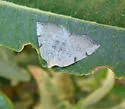
Lomographa elsinora - Hodges#6669
Lomographa elsinora
Identification: See Rindge, 1979 Hulst original description as Orthofidonia elsinora is available in PDF or read online in the print references below. The Rindge revised description is available in PDF. Forewing is pale gray with scattered black scal
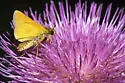
Long Dash - Hodges#4043
Polites mystic
Identification: Adult: male upperside bright orangish-brown with wide dark brown border covering outer third of each wing; dark patch along outer edge of black stigma, and another wide rectangular patch near wingtip makes stigma appear much longer an
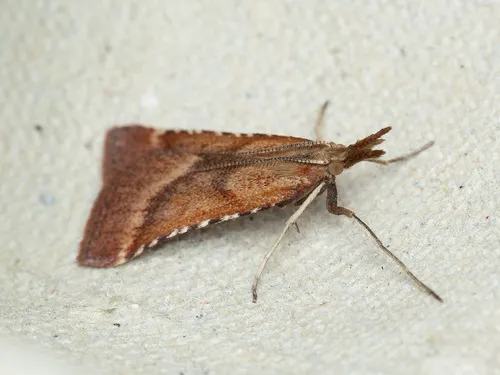
Long-legged Tabby
Synaphe punctalis
Synaphe punctalis is a moth of the family Pyralidae described by Johan Christian Fabricius in 1775. It is found in Europe.
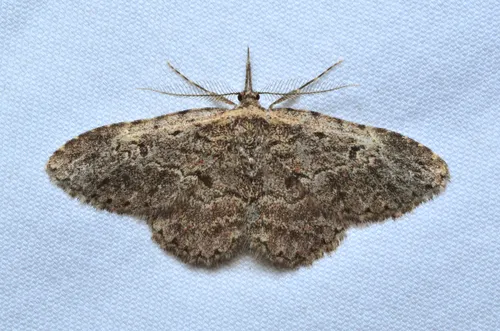
Long-palped Mycterophora - Hodges#8415
Mycterophora longipalpata
Identification: Adult: broad-winged grayish-brown moth resembling a geometrid (and originally placed in family Geometridae); forewing heavily speckled, somewhat blotchy, crossed by three slightly wavy indistinct lines; PM line with very small teeth,
Long-palps Peoria - Hodges#6042
Peoria longipalpella
Identification: Adult: forewing brownish-gray with dark diffuse diagonal markings in AM and PM areas; AM marking angles slightly toward base from inner margin to costa, whereas PM marking angles slightly toward apex from inner margin to costa; upper
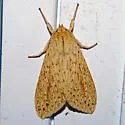
Long-streaked Tussock Moth - Hodges#8217
Leucanopsis longa
Identification: Adult: forewing light orangish-yellow speckled with brown; dark brown streak from base to outer margin near apex; hindwing whitish, translucent, unmarked [adapted from description by Charles Covell]
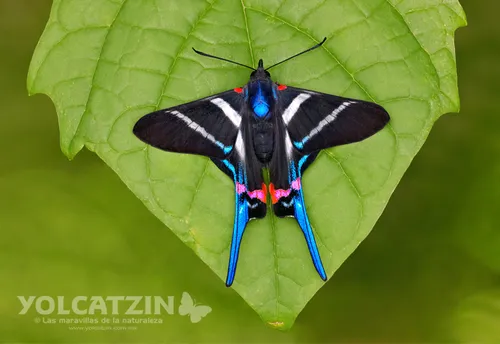
Long-tailed Metalmark
Rhetus arcius
Rhetus arcius is a species of Neotropical butterfly, first described in Carl Linnaeus' 1763 Centuria Insectorum.
Longleaf Pine Seedworm Moth - Hodges#3487
Cydia ingens
Identification: To separate from the similar Cydia toreuta: In Cydia ingens the PM band is usually broken. There is one short bar on the costa between the PM band and ST band. There is no gap present between the black terminal line and ST band.
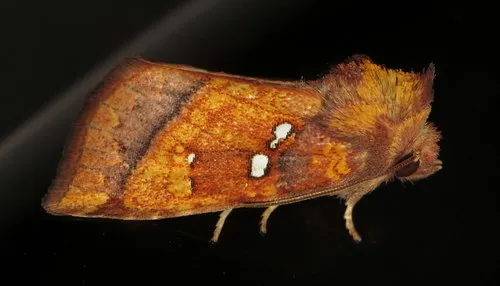
Loosestrife Borer - Hodges#9479
Papaipema lysimachiae
Identification: Adult: forewing yellowish-orange in median area with dark orangish-brown patches basally and between reniform and orbicular spots; orbicular and claviform spots large white rounded rectangles, sometimes joined (claviform spot may be d
Lophoceramica artega - Hodges#10634
Lophoceramica artega
Identification: See original description in print references below .
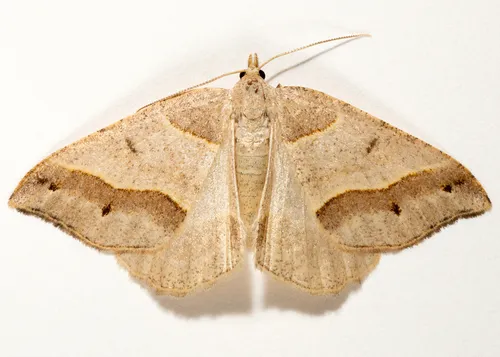
Lorquin's Angle - Hodges#6324
Macaria lorquinaria
Identification: Adult: forewing variably light gray to light brownish-yellow with 3 dark spots in subterminal area -- two together near costa and one about mid-way across wing; PM line gently wavy, and AM line straight, both lines dark with pale edge
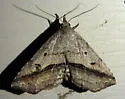
Lost Owlet - Hodges#8491
Ledaea perditalis
Identification: FW pale grayish brown to tan. PM line blackish, thick in lower half in male, but all the way to apex in female. Variable lines and shading on outer margin of HW.
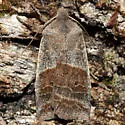
Lost Sallow - Hodges#9939
Eupsilia devia
Identification: Lilac gray FW is strongly dusted with white scales. ML and band beyond ST are darker brown. Whitish AM & PM curve gently outward. Faint reniform spot is partly edged white. ( 3 )
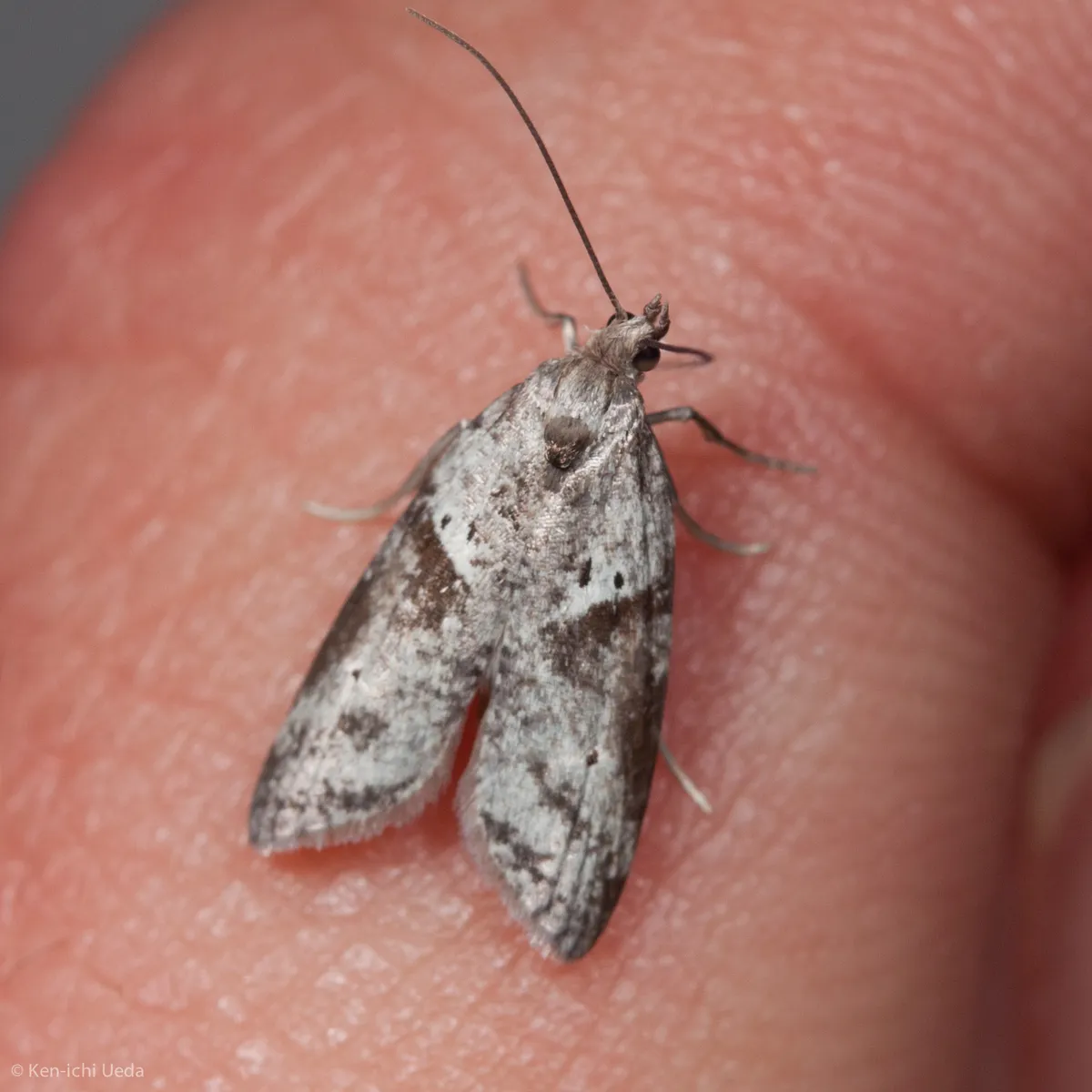
Lotisma trigonana - Hodges#2312
Lotisma trigonana
Identification: Adult - forewing brown with pale diagonal stripe that may enlarge to include base as pale triangle, and with apical half usually pale brown; hindwing pale brown [description by Ross Arnett].
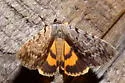
Louise's Underwing - Hodges#8848
Catocala louiseae
Identification: "There is a distinct white "smile" (in spread specimens) between the reniform and subreniform spots. There is also a narrow but distinct white line immediately following the black postmedial line. The hindwing is a deep yellow orange
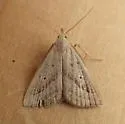
Louisiana Macrochilo - Hodges#8361
Macrochilo louisiana
Identification: Forbes (1922) original description as Xylormisa louisiana is online and linked in the print references. Forewing variably off-white, cream-colored, pale brown or grayish-yellow, with scattered dark scales; two widely-separated discal
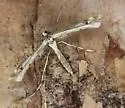
Lousewort Plume Moth - Hodges#6128
Paraplatyptilia edwardsii
Identification: See the identification key for Platyptiliini . See the species accounts in Landry & Gielis , Gielis , Landry as Stenoptilodes edwardsii , Barnes & Lindsey as Platyptilia edwardsii .
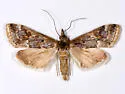
Loxostege allectalis - Hodges#5000
Loxostege allectalis
Identification: Adult: forewing a mixture of speckled gray and brown patches and dark brownish irregular spots in median area; PM line irregular, meandering; terminal line a series of dark dashes; hindwing brownish-gray with pale fringe.
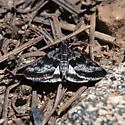
Loxostege anartalis - Hodges#5010
Loxostege anartalis
Subspecies: Loxostege anartalis anartalis (California) Loxostege anartalis albertalis Barnes & McDunnough, 1918 (Manitoba west to the southern interior of British Columbia, north to the Northwest Territories and Alaska) Loxostege anartalis lulualis (
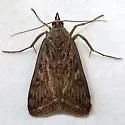
Loxostege commixtalis - Hodges#5016
Loxostege commixtalis
Loxostege commixtalis - Hodges#5016 (Loxostege commixtalis) is a species in the family Crambidae, commonly known as crambid snout moths, belonging to the order Lepidoptera (Butterflies and Moths). It is classified within the subfamily Pyraustinae, tr
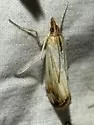
Loxostege egregialis - Hodges#5003
Loxostege egregialis
Identification: Description can be found in MONA Fascicle 13-2A at link in citations below.
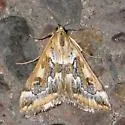
Loxostege lepidalis - Hodges#4995
Loxostege lepidalis
Identification: Adult - forewing a patchy mixture of white, black, and light yellowish-brown forming a distinctive pattern; terminal line a series of dark dashes; hindwing gray with partial whitish median band and yellowish-brown terminal band; fring
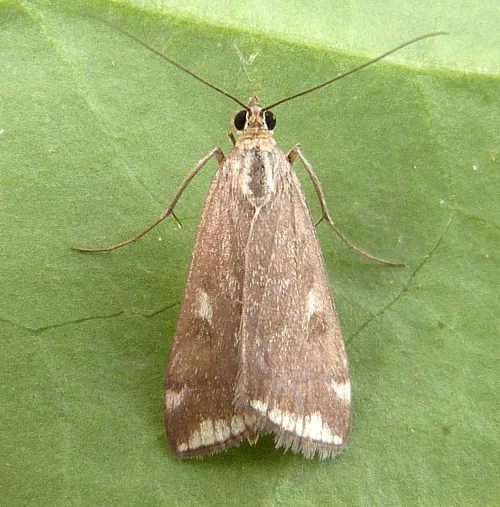
Loxostege sticticalis
Loxostege sticticalis
Photograph required please to support records. Typically arriving in late summer or early autumn. The larval foodplants are Mugwort ( Artemisia vulgaris ) and Field Wormwood ( A. campestris ). Although suspected as a resident in the Breckland distric
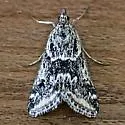
Loxostege terpnalis - Hodges#4998
Loxostege terpnalis
Identification: plain gray forewing without basal brownish area, small orbicular and reniform spots, hindwing brownish
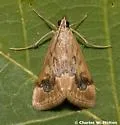
Loxostege typhonalis - Hodges#5001
Loxostege typhonalis
Identification: The original description is available online in the print references below.
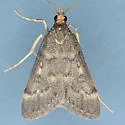
Loxostegopsis xanthocrypta - Hodges#5116
Loxostegopsis xanthocrypta
Identification: The original description as Pyrausta xanthocrypta Dyar, is available in PDF or view online in the print references below. Genitalia: Throughout the range Loxostegopsis xanthocrypta may possibly refer to two species.
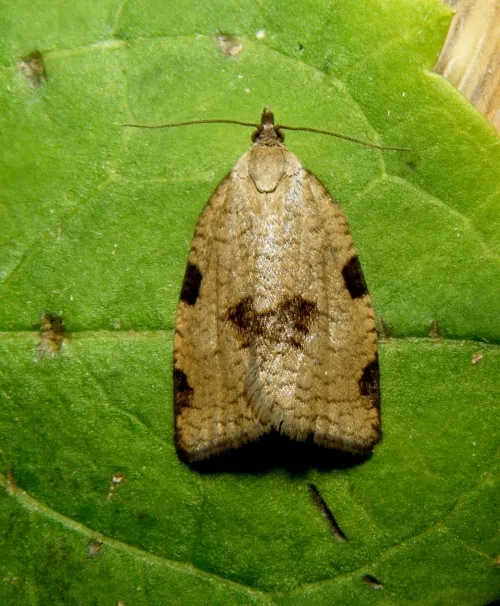
Lozotaenia forsterana
Lozotaenia forsterana
Wingspan 20-29 mm. This is one of the largest of the Tortricidae and has boldly spotted grey-brown wings. Mainly suburban habitats such as parks and gardens The adults fly at night during June and July The larvae feed on a variety of trees and shrubs
Lozotaenia hesperia - Hodges#3673
Lozotaenia hesperia
Identification: Adult - grey with fine dark grey lines throughout. Median band is distinctive, but is obliterated near the middle of the wing. Dark grey marking on the costa in the post median area. The hindwing is light grey with slightly darker gre
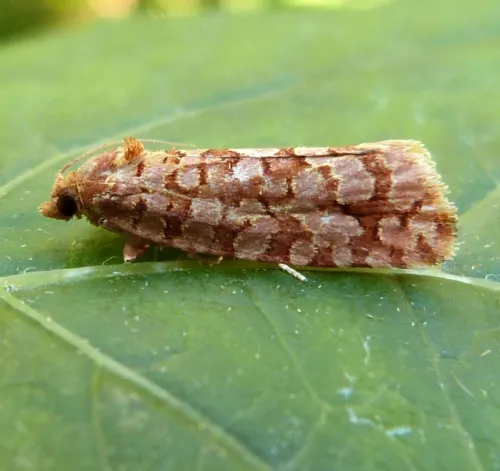
Lozotaeniodes formosana
Lozotaeniodes formosana
Wingspan 20-26 mm. A distinctive and very attractive species. Shows a preference for Scots Pine woodland. It flies from dusk onwards between June and August, and is attracted to light. Mainly recorded in the southern half of Britain. In the Butterfly
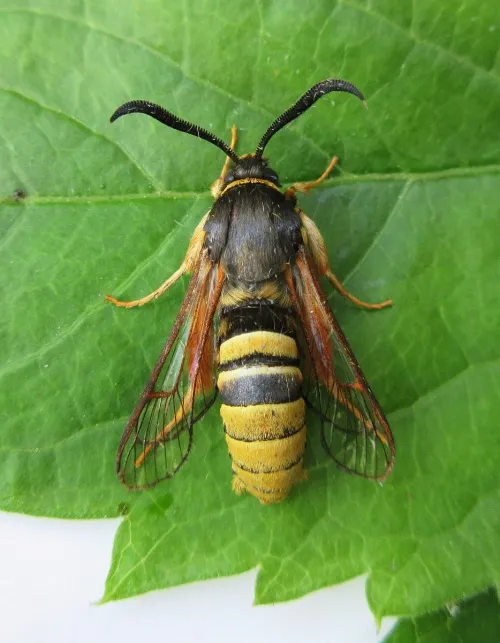
Lunar Hornet Moth
Sesia bembeciformis
Wingspan 32 to 42 mm. One of several similar 'mimic' species, known as Clearwings, this is one of the largest. When adding a record please state whether a pheromone lure was used. Best looked for in July, as the adults emerge and rest low down on the
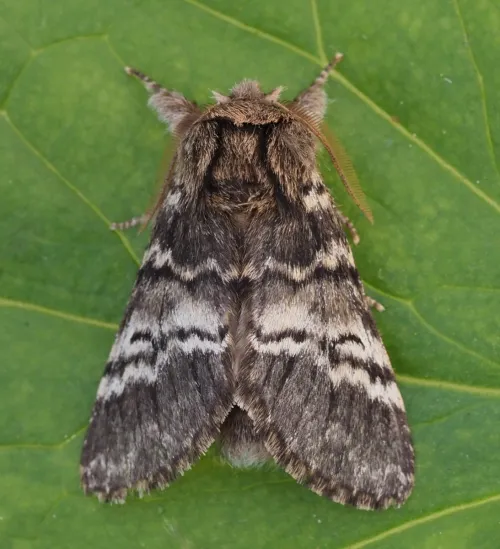
Lunar Marbled Brown
Drymonia ruficornis
Wingspan 35 to 40 mm. Similar to the Marbled Brown (D. dodonea), this species has a black crescent in the white area of the forewing. Inhabiting deciduous woodland where oak is present. Oak is the foodplant of the caterpillars. Relatively common in t
Lunar Underwing - Hodges#9956.1
Omphaloscelis lunosa
Apparently this well-known European species has recently been recorded in the eastern USA. See the Maryland Biodiverity Project website here . Now recognized within the North American fauna, ZooKeys, 788: 249.
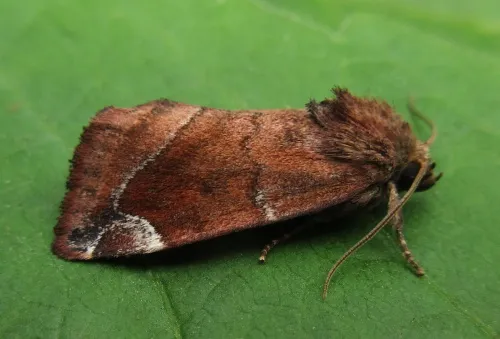
Lunar-spotted Pinion
Cosmia pyralina
Wingspan 29-34 mm. This moth resembles the Lesser-spotted Pinion but has generally broader forewings and paler hindwings. Hedgerows, woodlands, parks and sometimes gardens. It flies in July and August and is attracted to light, as well as sugar. The
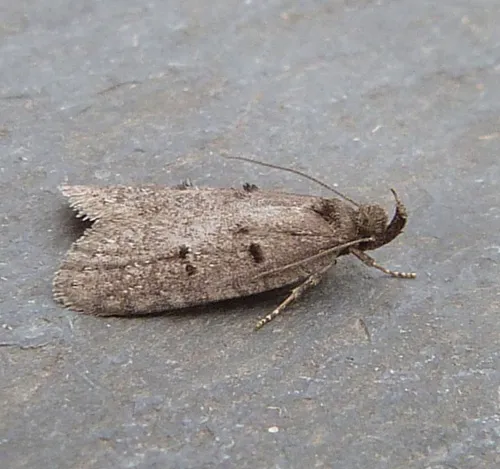
Luquetia lobella
Luquetia lobella
This species occupies a range of woodland and scrubland habitats. The nocturnal adults are on the wing during June. The larvae feed on Blackthorn during autumn and pupate in a silken cocoon amongst leaf-litter. The winter is spent as a pupa. Distribu
Lusk's Pine Moth - Hodges#7726
Coloradia luski
Identification: Adult: forewing speckled gray with black zigzag PM and ST lines that sometimes touch; reniform spot represented by a black discal dot; AM line black, jagged, with elongate projection that touches the reniform spot (a diagnostic featur
Lychnosea helveolaria - Hodges#6857
Lychnosea helveolaria
Identification: Forewing median area is a bright yellowish orange in the females; males are a dull light yellow brown color. The species page at Moth Photographers Group has a side by side comparison of pinned a male and female.
Lychnosea intermicata - Hodges#6858
Lychnosea intermicata
Identification: Variable amount of speckling on the forewing.
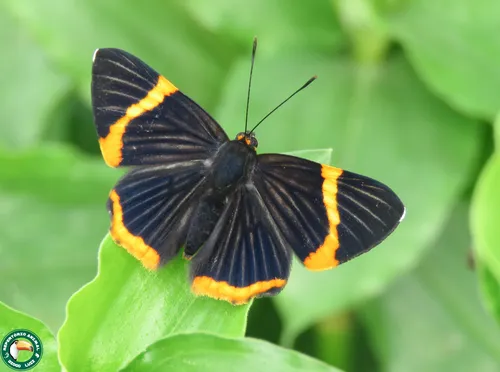
Lycisca Metalmark
Riodina lycisca
Riodina lycisca is a species of Neotropical metalmark butterfly. It is found in south Brazil, Argentina and Paraguay.
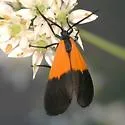
Lycomorpha desertus - Hodges#8088
Lycomorpha desertus
Identification: Resembles Lycomorpha pholus , but with the black area of the forewing less extensive. Thorax orange. ♀ abdomen is orange both above and below. ♂ abdomen, antennae, and tarsi are black
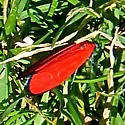
Lycomorpha fulgens - Hodges#8085
Lycomorpha fulgens
Identification: The original description as Anatolmis fulgens H. Edwards, is available online in the print references below. Hind wing almost entirely black. Forewing mostly red with a black margin.
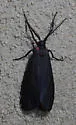
Lycomorpha splendens - Hodges#8086
Lycomorpha splendens
Lycomorpha splendens - Hodges#8086 (Lycomorpha splendens) is a species in the family Erebidae, belonging to the order Lepidoptera (Butterflies and Moths). It is classified within the subfamily Arctiinae, tribe Lithosiini, superfamily Noctuoidea. This
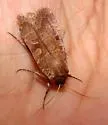
Lycophotia Moth - Hodges#11010
Lycophotia phyllophora
Identification: Adult: forewing light brownish-gray with darker brown shading in subterminal area and between reniform and orbicular spots; AM and PM lines dark, scalloped, sometimes indistinct; hindwing light gray with darker veins and pale fringe
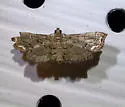
Lygodium Defoliator Moth - Hodges#4896.5
Neomusotima conspurcatalis
Introduced to FL in 2008 as biological control agent for the Old World, or Asian, Climbing Fern, Lygodium microphyllum .
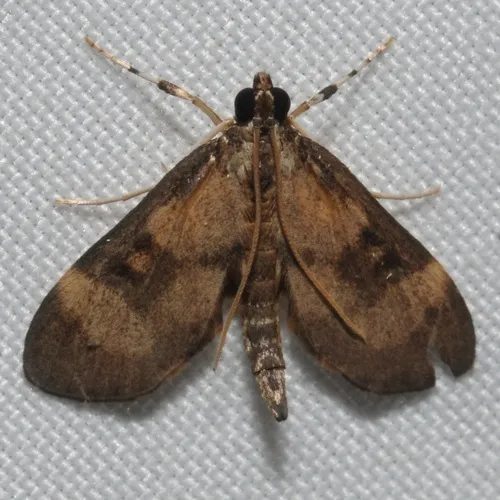
Lygropia fusalis - Hodges#5192
Lygropia fusalis
This species was mistakely placed in Lypotigris on BugGuide and MPG previously. This species is listed as Lygropia fusalis in Scholtens and Solis. They list the only Lypotigris species in our area to be Lypotigris reginalis . Dr. Scholtens says that
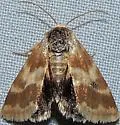
Lynx Flower Moth - Hodges#11117
Schinia lynx
Identification: Colors and markings of this moth are extremely variable.
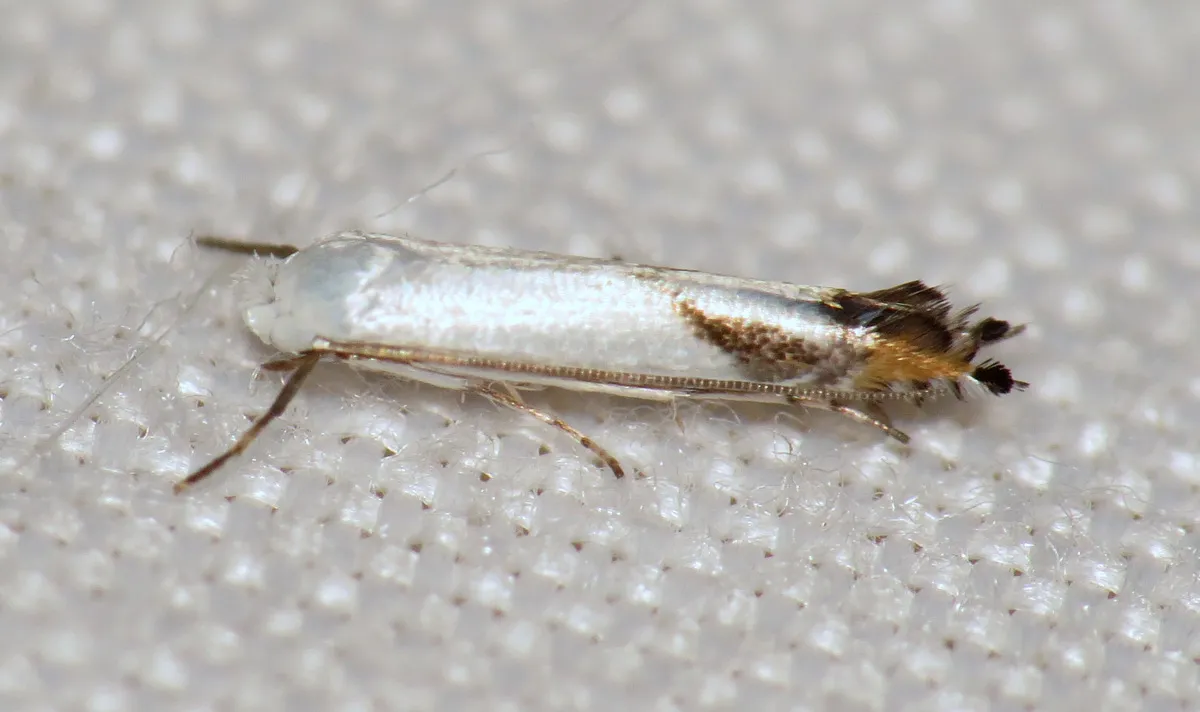
Lyonetia latistrigella - Hodges#0470
Lyonetia latistrigella
Identification: Forbes stated "fore wing with a fascia running from middle of inner margin to three-fourths way out on costa, followed by a ferruginous patch; without the costal streak of L. speculella [ Lyonetia prunifoliella ]; apical black dot pre
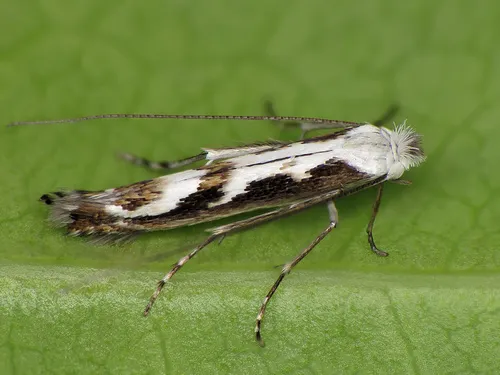
Lyonetia prunifoliella
Lyonetia prunifoliella
Wingspan 9 to10 mm. The most likely way to record this species is probably to search for the larval leafmines on Blackthorn. The larval mine is a narrow gallery leading to a clear blotch. Strings of black frass hang beneath the blotches. The pupal co
Lythrodes tripuncta - Hodges#9734
Lythrodes tripuncta
Identification: The original description of Lythrodes tripuncta Barnes & McDunnough, is available online at the link in the print references below. - Forewing is off-white with faint, dull yellow transverse bands, and three dark dots; one as oribicul
Lytrosis heitzmanorum - Hodges#6722
Lytrosis heitzmanorum
Identification: Similar to sinuosa but the basal and outer areas of the forewings are much darker in color, often dark grayish brown or blackish brown, and the median area being a pale ochraceous gray instead of yellow. Female: Similar to male, but h
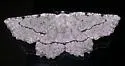
Lytrosis permagnaria - Hodges#6723
Lytrosis permagnaria
males come to lights from 11:30 pm to 1 am, females also come to lights but less so
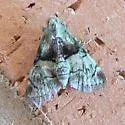
Macalla glastianalis - Hodges#5576.1
Macalla glastianalis
Macalla glastianalis was listed as Incertae sedis in Solis. It requires a new genus, inclusion of several Neotropical species, and description of new species. It was first collected by A. Blanchard in Texas in the early 1970’s (MAS unpub.) .
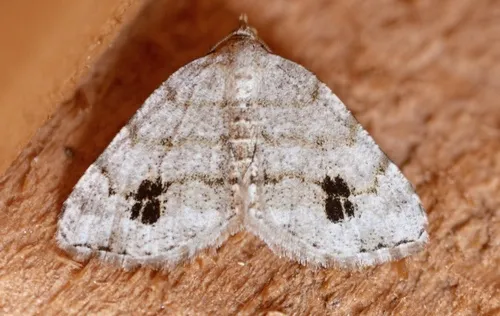
Macaria abruptata - Hodges#6294
Macaria abruptata
Identification: Adult: forewing light yellowish-brown with blurry coalesced speckling; basal, AM, and PM lines diffuse brown; fragmented black patch midway along PM line is the only dark marking, and contrasts sharply against ground color; sharp-angl
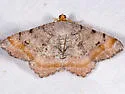
Macaria adonis - Hodges#6338
Macaria adonis
Identification: Specimens identified by DNA analysis:
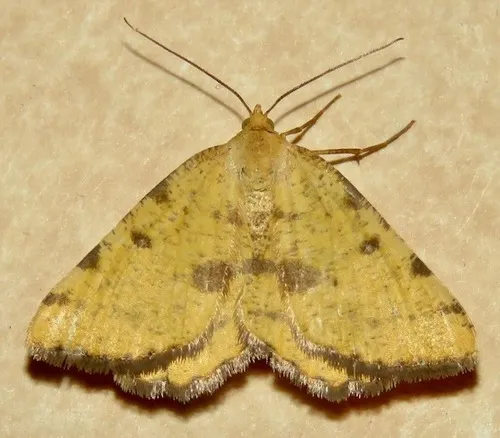
Macaria amboflava - Hodges#6284
Macaria amboflava
Regarding sulphurea and amboflava , Ferguson states: " Speranza sulphurea is a sexually dimorphic, eastern, bog-dwelling species, of which the male is nearly the color of Speranza argillacearia ["more nearly immaculate mouse gray"] . (MONA Fascicle 1
Macaria anataria - Hodges#6287
Macaria anataria
Identification: Detailed description available in MONA Fascicle 17-2 at link in citations below.
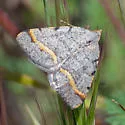
Macaria austrinata - Hodges#6301.1
Macaria austrinata
Identification: Yellow postmedial band is slightly irregular, often interrupted and not of uniform width. There is usually some dark gray shading on both sides of yellow band often being a dark wedge shaped spot on the outer side of the band. -
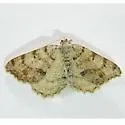
Macaria boreata - Hodges#6287.1
Macaria boreata
Identification: Ferguson reported the specimens from British Columbia have more reddish-brown on the forewing.
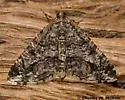
Macaria deceptrix - Hodges#6312
Macaria deceptrix
Identification: Hindwing is gray or grayish brown compared to the yellowish color of Macaria graphidaria . Genitalia:
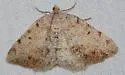
Macaria exauspicata - Hodges#6292
Macaria exauspicata
Identification: Key forewing features: Four evenly spaced brown to rust shaded wedges along the costa. Well defined dark discal spot. Often has brown shaded area below the postmedian line. Brown spot or patch is usually present in the subterminal are
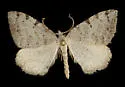
Macaria extemporata - Hodges#6298
Macaria extemporata
Identification: Specimen determined by DNA analysis (BOLD).
Macaria flavicaria - Hodges#6276
Macaria flavicaria
Identification: Males are light yellowish brown with a dark forewing discal spot.
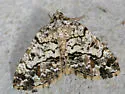
Macaria graphidaria - Hodges#6311
Macaria graphidaria
Identification: Adult: forewing white with black discal dot, complete AM and PM lines, and partial median line; PM line turns abruptly basad before reaching costa; blackish patch near middle of subterminal area; amount of reddish-brown shading in sub
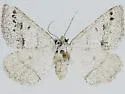
Macaria grossbecki - Hodges#6315
Macaria grossbecki
Identification: See this observation on iNaturalist for a living example. Ground color very pale gray to whitish. PM line slightly wavy and widely shaded on the inner 2/3, often emphasized in two thicker blotches. Row of 2 to 4 subapical black spot
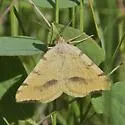
Macaria occiduaria - Hodges#6279
Macaria occiduaria
Identification: Forewing has brown PM band extending from the anal margin about midway to the costa and the fringe is brown from the apex to the midway point. Females have reduced forewings and seldom fly. Detailed description of occiduaria and the r
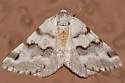
Macaria pallipennata - Hodges#6317
Macaria pallipennata
Macaria pallipennata is the most common of this species group in the Texas to Arizona area.
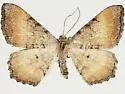
Macaria ponderosae - Hodges#6338.1
Macaria ponderosae
Identification: There is no variations in the forewing maculation.
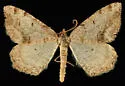
Macaria semivolata - Hodges#6291
Macaria semivolata
Identification: Specimen determined by DNA analysis (BOLD).
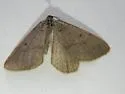
Macaria simplex - Hodges#6281
Macaria simplex
Identification: The original description as Pygmaena simplex Dyar, is available online at the link in the print references below. - Forewing is plain gray-brown with evenly rounded outer margin. There is usually a thin dark postmedial line but it can
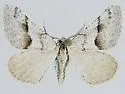
Macaria simpliciata - Hodges#6316
Macaria simpliciata
Identification: Macaria simpliciata resembles Macaria pallipennata , but has no discal spot, is much less boldly marked, and has no checkered fringe. Macaria simpliciata is rare in collections.
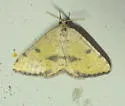
Macaria sulphurea - Hodges#6283
Macaria sulphurea
Identification: Rich cream-yellow with maroon brown markings, consisting of two to three wedge shaped spots along the forewing costa, prominent discal spots, and variable PM and submarginal lines. The forewing PM band is usually light and spotty, but
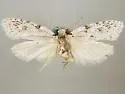
Machimia trigama - Hodges#0952
Machimia trigama
Identification: The original description as Cryptolechia trigama Meyrick, is available online in the print references below.
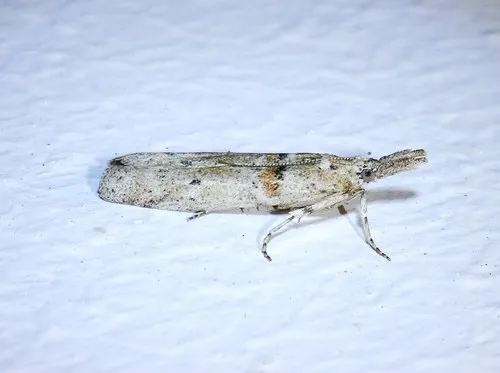
Macrorrhinia aureofasciella - Hodges#5912
Macrorrhinia aureofasciella
Identification: The Heinrich 1956 revised description and the Hulst 1890 description as Dolichorrhina aureofasciella (Ragonot) are both available online in the print references below. , Orange band is sometimes absent. Photo determined by Brian Schol