
Masked Parahypenodes - Hodges#8430
Parahypenodes quadralis
This record describes Parahypenodes quadralis (species). Recorded family: Erebidae. Recorded order: Lepidoptera.
Identification and Appearance
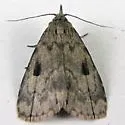
Barnes & McDunnough (1918) original description is displayed and online in the print references. Primaries dull ochreous gray, shaded with deep smoky; t.a. line single, dark, irregular, arising from small dark costal blotch, bent inward below costa with prominent outward bulge in the submedian fold; t.p. line single, dentate, squarely exserted around cell, then strongly inwardly oblique to a point on the middle of inner margin; at the end of cell a square blackish patch, the most prominent feature of the maculation; subterminal area dark smoky, the terminal area pale grayish, the difference between the two shades defining the s.t. line which is in general parallel to outer margin with a slight bulge opposite cell; outer margin slightly crenulate with dark terminal line; fringes dull ochreous, cut with smoky. Secondaries deep smoky with traces of a darker oblique line crossing from costa near apex to inner margin above anal angle. Beneath smoky, secondaries paler in basal area with traces of a curved post-median line. Parahypenodes quadralis is seldom seen or collected; status is unknown in several parts of its range due to lack of information on its occurrence
Classification
- Kingdom
- Animalia
- Phylum
- Arthropoda
- Class
- Insecta
- Order
- Lepidoptera (Butterflies and Moths)
- Superfamily
- Noctuoidea
- Family
- Erebidae
- Subfamily
- Hypenodinae
- Genus
- Parahypenodes
Imported taxonomy record. Source availability varies; see the source references and editorial policy below.
Habitat and Range
Habitat
Moist and sandy places; adults are nocturnal and come to light and bait. [Handfield]
Geographic Range
Nova Scotia ( 3 ) to Florida, east to Tennessee, north to Wisconsin and Ontario. Primary syntype male from Quebec, St. John's Co., St Therese Island.
Seasonal Activity
The adults fly from June to September in the south; late June and July in the north (Quebec).
Diet and Behavior
Diet: The host is unknown.
Life History
One generation per year.
About Butterflies and Moths: the wider group
Order-level background for Lepidoptera, the group containing Parahypenodes quadralis. Species-specific details appear above.
Group overview
Lepidoptera includes approximately 180,000 described species of butterflies and moths. Moths outnumber butterflies roughly 10:1. The monarch butterfly's eastern population has declined by more than 80% since the mid-1990s, and the western population by over 95% since the 1980s. The IUCN lists the migratory monarch as Vulnerable.
Ecological role of the group
Butterflies and moths are essential indicators of ecosystem health. As caterpillars, they are a primary food source for birds - a single nest of blue tit chicks requires ~10,000 caterpillars. Adult moths pollinate many night-blooming plants.
Economic and practical significance of the group
Lepidoptera are critical pollinators. In Europe, grassland butterfly species have declined by almost 50% since the early 1990s. In the UK, three-quarters of butterflies are in decline. In the U.S., five butterfly species have gone extinct since 1950, with 29 listed as endangered.
Recorded sources for this group: IUCN Red List, Xerces Society, USFWS, PNAS, WWF. Imported estimates may describe particular regions or reporting periods.
Photos of Masked Parahypenodes - Hodges#8430 (5)
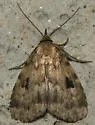
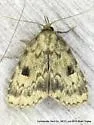
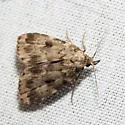
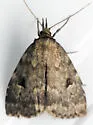
Photo credits: Contributed by Robin McLeod; Additional contributions by Maury Heiman
Frequently Asked Questions About Masked Parahypenodes - Hodges#8430
What is Masked Parahypenodes - Hodges#8430?
Masked Parahypenodes - Hodges#8430 (Parahypenodes quadralis) is a species in the family Erebidae, within the order Lepidoptera.
How big is Masked Parahypenodes - Hodges#8430?
Barnes & McDunnough (1918) listed the wingspan 18 mm.
How do you identify Masked Parahypenodes - Hodges#8430?
Barnes & McDunnough (1918) original description is displayed and online in the print references. Primaries dull ochreous gray, shaded with deep smoky; t.a. line single, dark, irregular, arising from small dark costal blotch, bent inward below costa with prominent outward bulge in the submedian fold; t.p. line single, dentate, squarely exserted around cell, then strongly inwardly oblique to a point on the middle of inner margin; at the end of cell a square blackish patch, the most prominent feature of the maculation; subterminal area dark smoky, the terminal area pale grayish, the difference between the two shades defining the s.t. line which is in general parallel to outer margin with a slight bulge opposite cell; outer margin slightly crenulate with dark terminal line; fringes dull ochreous, cut with smoky. Secondaries deep smoky with traces of a darker oblique line crossing from costa near apex to inner margin above anal angle. Beneath smoky, secondaries paler in basal area with traces of a curved post-median line.
Where is Masked Parahypenodes - Hodges#8430 found?
| Feature | Details |
|---|---|
| Habitat | Moist and sandy places; adults are nocturnal and come to light and bait. [Handfield] |
| Range | Nova Scotia ( 3 ) to Florida, east to Tennessee, north to Wisconsin and Ontario. Primary syntype male from Quebec, St. John's Co., St Therese Island. |
What does Masked Parahypenodes - Hodges#8430 eat?
The diet of the Masked Parahypenodes - Hodges#8430 includes The host is unknown..
When is Masked Parahypenodes - Hodges#8430 active?
Masked Parahypenodes - Hodges#8430: seasonal activity - The adults fly from June to September in the south; late June and July in the north (Quebec)..
What is the life cycle of a Masked Parahypenodes - Hodges#8430?
One generation per year.