
Butterflies and Moths
Order Lepidoptera
The Butterflies and Moths (Order Lepidoptera) includes 11,813 species across 112 families and 2,787 genera in our directory.
About Butterflies and Moths
Lepidoptera includes approximately 180,000 described species of butterflies and moths. Moths outnumber butterflies roughly 10:1. The monarch butterfly's eastern population has declined by more than 80% since the mid-1990s, and the western population by over 95% since the 1980s. The IUCN lists the migratory monarch as Vulnerable.
Economic Impact
Lepidoptera are critical pollinators. In Europe, grassland butterfly species have declined by almost 50% since the early 1990s. In the UK, three-quarters of butterflies are in decline. In the U.S., five butterfly species have gone extinct since 1950, with 29 listed as endangered.
Ecological Role
Butterflies and moths are essential indicators of ecosystem health. As caterpillars, they are a primary food source for birds - a single nest of blue tit chicks requires ~10,000 caterpillars. Adult moths pollinate many night-blooming plants.
Families in Lepidoptera (112)
Species in Lepidoptera (11,813)
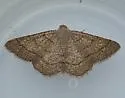
Digrammia eremiata - Hodges#6357
Digrammia eremiata
Identification: Three similar, subparallel, equally spaced transverse lines on gray-brown forewing; two lines on hindwing; lines likely to be complete and continuous, but occasionally indistinct; discal spots not usually apparent; subterminal band ma

Digrammia excurvata - Hodges#6363
Digrammia excurvata
Identification: Adult - similar to Curve-lined Angle ( Digrammia continuata ) but occurs farther west and usually has a straighter PM line on forewing. This species forms a complex with D. continuata and D. setonana and adults are best identified by
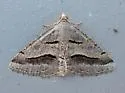
Digrammia fieldi - Hodges#6402
Digrammia fieldi
Identification: Forewing gray to reddish gray; with or without dark banding below the PM line; PM line generally more straight than D. subminiata or D. decorata .
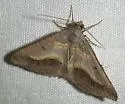
Digrammia gilletteata - Hodges#6400
Digrammia gilletteata
Identification: MONA Fascicle 17-2 considers this a 'doubtful species', but characterizes it as a hybrid between Digrammia subminiata and Digrammia mellistrigata .
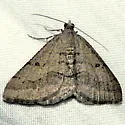
Digrammia hebetata - Hodges#6394.1
Digrammia hebetata
Identification: The species has two forms, banded and unbanded. Both forms usually have a dark spot on the costa where the postmedial line begins.
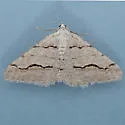
Digrammia imparilata - Hodges#6366.1
Digrammia imparilata
Identification: Transverse lines appear double and are boldly marked.
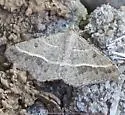
Digrammia irrorata - Hodges#6395
Digrammia irrorata
Identification: Adult: forewing color varies from light tan to yellowish to medium brown with straight, pale yellowish AM and PM lines; AM line stops just short of costa, and both lines may be indistinct in paler individuals; discal spot dark brown,
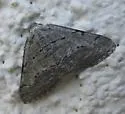
Digrammia napensis - Hodges#6366
Digrammia napensis
Identification: Description can be found in MONA Fascicle 17-2 at link in citations below.
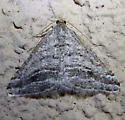
Digrammia nubiculata - Hodges#6371
Digrammia nubiculata
Identification: Forewings gray, heavily dusted with darker scales and have three or four subparallel transverse lines. The transverse lines are not as boldly defined as those in D. curvata . The original description as Phasiane nubiculata Packard, is
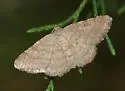
Digrammia ordinata - Hodges#6358
Digrammia ordinata
Identification: Forewing light speckled brown, crossed by 3 darker yellowish-brown lines; hindwing similar but with only 2 dark lines; no other markings present
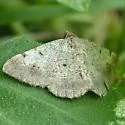
Digrammia pallidata - Hodges#6410
Digrammia pallidata
Identification: (Ann Hendrickson) At least in Edwards County, Texas, I have found them to be dimorphic. The males generally have darker PM areas with smudges: and the females often have V mark at vein 3 along the PM line, like this example: However,
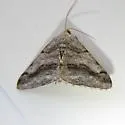
Digrammia pertinata - Hodges#6365
Digrammia pertinata
Identification: Ferguson (2008) stated "neither the male nor female genitalia differ from those of D. continuata or most other members of the juniper-feeding group." Determined by Chuck Harp.
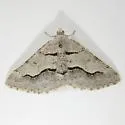
Digrammia rippertaria - Hodges#6394
Digrammia rippertaria
Identification: two forms: banded and unbanded occur. banded : antimedial line is bold black bar for the first 2/3 from the inner margin, then ends before reaching costa. Postmedial line similar but s-shaped curve then fading or ending before reachin
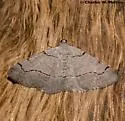
Digrammia setonana - Hodges#6364
Digrammia setonana
Identification: The postmedial band is concave for most the length and the antemedial band is always convex.
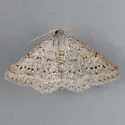
Digrammia sublacteolata - Hodges#6355
Digrammia sublacteolata
Identification: Detailed description is available in MONA Fascicle 17-2 at link in citations below. ( 3 ) Specimens identified by DNA analysis (BOLD). ( 4 )
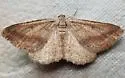
Digrammia subminiata - Hodges#6399
Digrammia subminiata
Identification: forewing with postmedial (PM) line in the shape of a 1-cycle sine wave, thickest near inner margin, and bordered distally by dark shading; antemedial (AM) line straight or arc-shaped, also thickest near inner margin; dark discal spot
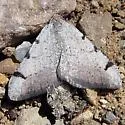
Digrammia triviata - Hodges#6385
Digrammia triviata
Identification: "It is geographically and seasonally variable." Douglas C. Ferguson. Pg. 258, Moths of North America Fascile 17.2. In the Moths of North America, Fascicle 17.2 Douglas C. Ferguson discusses the pallidata -group on pages 256-259. Para
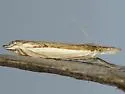
Diminutive Grass-veneer - Hodges#5393
Raphiptera argillaceellus
Identification: Adult: forewing outer margin falcate near apex, resulting in sharply-pointed tip; forewing light brown to brownish-gray with slender white stripe, tapered at both ends, extending from base to postmedial area but not reaching ST line;
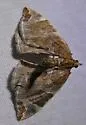
Dimorphic Eulithis - Hodges#7203
Eulithis molliculata
Identification: forewing ground color brownish in males, yellowish in females; a triangular dark brown patch near the apex has a single rounded notch and is bordered proximally by a white line; the middle of the forewing contains numerous rounded, el
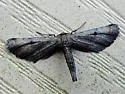
Dimorphic Gray - Hodges#6486
Tornos scolopacinaria
Identification: Genitalia: ♀ ♂ 8/7/2023 Ann Hendrickson: It is my opinion that PHOTOGRAPH identification for this species is only accurate for FEMALES. JR(females that are fresh and have very bright white ground colors can be accurately IDed as scolo
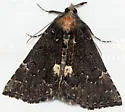
Dimorphic Hypena - Hodges#8443
Hypena bijugalis
Identification: Adult sexually dimorphic. Forewing of male blackish-brown with small white patch on inner margin near PM line. Forewing of female similar to Baltimore Bomolocha , but PM line straighter, farther from outer margin, and with one tooth.
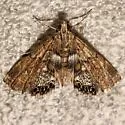
Dimorphic Leafcutter Moth - Hodges#4769
Neargyractis slossonalis
Identification: The single species is distinguished from other members of the Acentropinae tribe by the dark brown forewing which has a distinctly paler AM band.
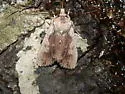
Dimorphic Pinion - Hodges#9886
Lithophane patefacta
Identification: Adult has two color forms: light form - forewing pale brownish-gray to silvery-gray with short dark diagonal marks along costa; subreniform spot black, oblong or oval, with a smooth (not irregular) outline, and a sharply-defined (not
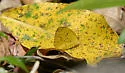
Dina Yellow - Hodges#4240
Pyrisitia dina
Identification: Dorsal, yellow/orange with black border, broader on females. Ventral, male yellow with small black dots. Female yellow with dark smudges, and a brown apical patch on each wing. Compare with Little Yellow and Mimosa Yellow . The Dina's
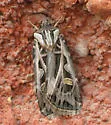
Dingy Cutworm Moth - Hodges#10670
Feltia jaculifera
Identification: Adult: forewing dark gray to blackish, patterned with white, gray, and tan streaks and lines; two white-lined veins (M3 and CU1) extend from bottom corner of reniform spot nearly to outer margin, forming a distinct W shape where they
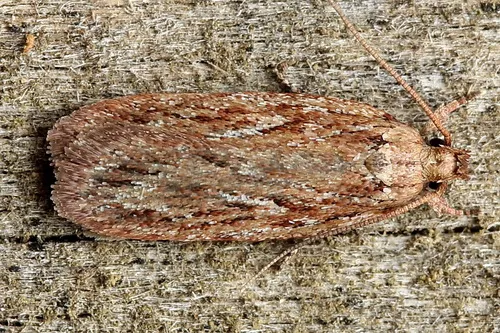
Dingy Flat-body
Depressaria daucella
Depressaria daucella is a moth of the Depressariidae family. It is found in most of Europe, except most of the Balkan Peninsula. It is also found in North America.
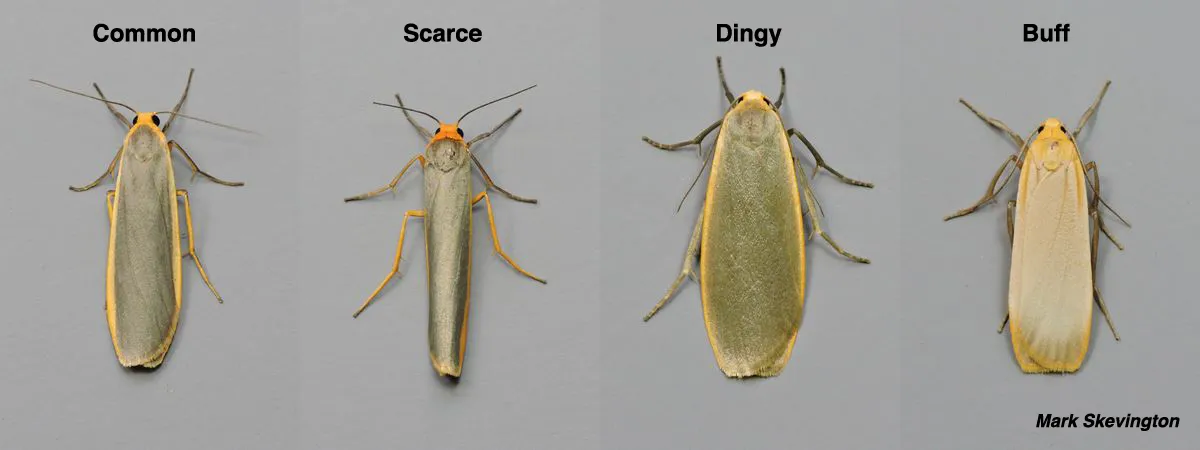
Dingy Footman
Eilema griseola
Wingspan 32-40 mm. Several of the Eilema species can be difficult to tell apart, but this moth has broader, more rounded forewings than many of the others. It can be quite greyish, but a yellowish form, straminola , does occur in places. Common Footm
Dingy Purplewing - Hodges#4532
Eunica monima
Identification: Purplish above with white spots on front wing, but not all pale spots white (some cloudy). Tip of front wings slightly truncated but not notched. Underside dull brownish and grayish (fresh specimens often tinged bluish) and leaf-like
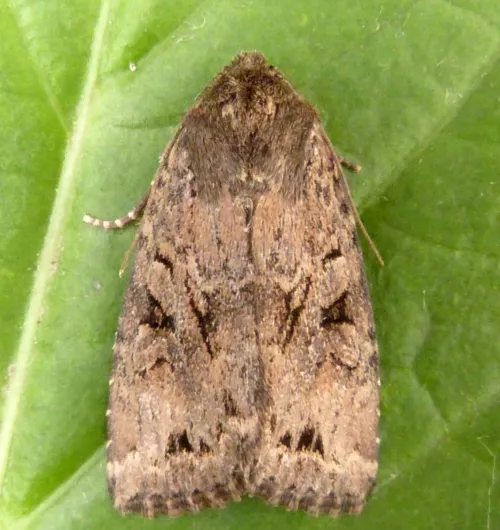
Dingy Shears
Apterogenum ypsillon
Wingspan 32 to 42 mm. A rather dull and nondescript species, as suggested by the English name. Various habitats, especially around Willow. The adult flight time is during June and July, and can be attracted by sugar as well as light. The caterpillars
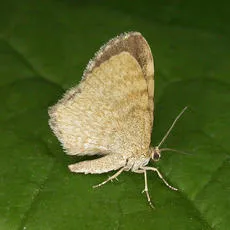
Dingy Shell
Euchoeca nebulata
Wingspan 23 to 25 mm. This is an ochreous-yellow moth. Occupying damp woodland, fens and other marshy areas. The adult moths are on the wing in June and July, in a single brood. This moth is fairly commonly distributed in England and Wales, but is ra
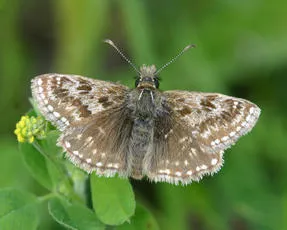
Dingy Skipper
Erynnis tages
Despite its name, a freshly emerged Dingy Skipper reveals a subtle pattern of browns and greys that is quite beautiful. However, this butterfly does live up to its name, as scales are lost over time, resulting in a lacklustre and drab appearance. The
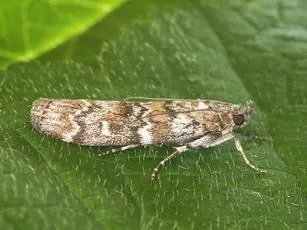
Dioryctria abietella
Dioryctria abietella
Wingspan 26 to 32 mm. There is considerable uncertainty to the status of the four Dioryctria species in Britain, as they are very difficult to tell apart. In particular, D. abietella and D. simplicella. Both D. abietella and D. simplicella are associ
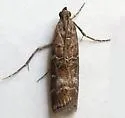
Dioryctria banksiella - Hodges#5858
Dioryctria banksiella
Identification: Specimen identified by DNA analysis (BOLD). ( 3 )
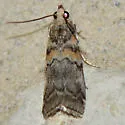
Dioryctria caesirufella - Hodges#5849.1
Dioryctria caesirufella
Blanchard & Knudson, 1983; Proc. Ent. Soc. Wash. 85: (116-120) ,
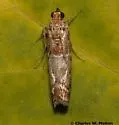
Dioryctria erythropasa - Hodges#5848
Dioryctria erythropasa
Identification: The Heinrich revised description is available in PDF or view online in the print references below. The original description as Pinipestis erythropasa Dyar, is also available online. - Dioryctria erythropasa larvae are considered a pes
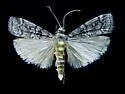
Dioryctria gulosella - Hodges#5862
Dioryctria gulosella
Identification: Similar to D. subtracta, but with the AM and PM lines much less bold
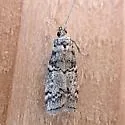
Dioryctria inyoensis - Hodges#5863.2
Dioryctria inyoensis
Identification: Neunzig description in MONA Fascicle 15.
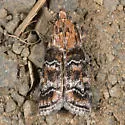
Dioryctria okanaganella - Hodges#5851
Dioryctria okanaganella
Identification: ... the pale reddish color in the basal area supposedly separates it from 5850 - D. ponderosae. When Neunzig published MONA Fascicle 15.5 in 2003 he had seen specimens of D. okanaganella only from British Columbia. Your moth(s) seem c
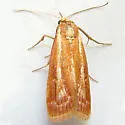
Dioryctria rossi - Hodges#5845
Dioryctria rossi
Identification: Adult : FW orange brown, without an inner transverse line and with whitish markings, primarily consisting of a longitudinal streak. HW pale. Larva : brown with dark-gray subdorsal bands and a reddish brown head
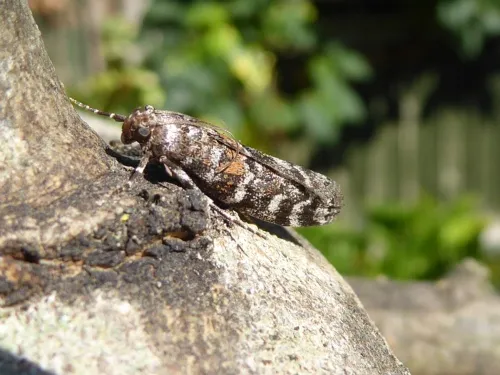
Dioryctria sylvestrella
Dioryctria sylvestrella
Wingspan 28 to 35 mm. Generally the largest of the four Dioryctria species occurring in Britain, it is best distinguished by the shape of the subterminal line, which is more smoothly curved than the obvious dentate lines of the other species. Unless
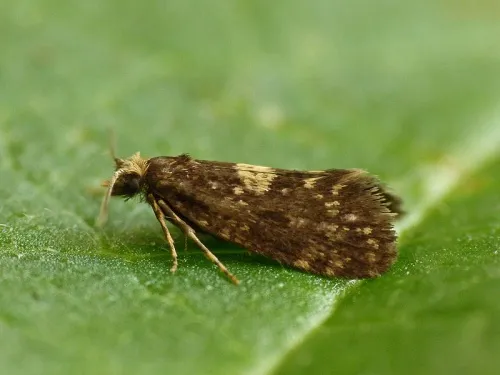
Diplodoma laichartingella
Diplodoma laichartingella
The adult moths fly in one generation, during May and June. The larva builds a case, covered with small fragments of plant matter and other particles, and feeds on lichens, decaying plant matter and detritus. The larval period usually lasts for two y
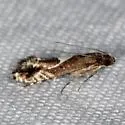
Diploschizia habecki - Hodges#2345.4
Diploschizia habecki
Identification: According to Heppner's 1985 revision , "The very broad base of the forewing dorsal margin crescent, with the slender distal point, is characteristic of the species."
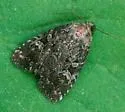
Disparaged Arches - Hodges#10288
Orthodes detracta
Identification: Adult : FW mottled gray-brown, with rust-colored patches • Basal dash, weak black • AM doubled, irregular in shape • Orbicular & reniform, light outlined black • Claviform is thick black, apically pointed, nearly reaching PM • PM doub
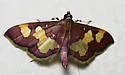
Distinguished Colomychus - Hodges#5200
Colomychus talis
Identification: Adult: forewing dark purplish-red with two large irregular yellow patches - one ascending from midway along inner margin, the other descending from costa about two-thirds distance from base (patches almost meet near middle of wing); s
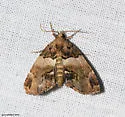
Distinguished Cypress Owlet - Hodges#8729
Cutina distincta
Identification: Pogue & Ferguson revised description is available online in PDF. The original description as Eustrotia distincta Grote, is available online in the print references below. Adult: forewing gray with blackish shading inside AM line, and
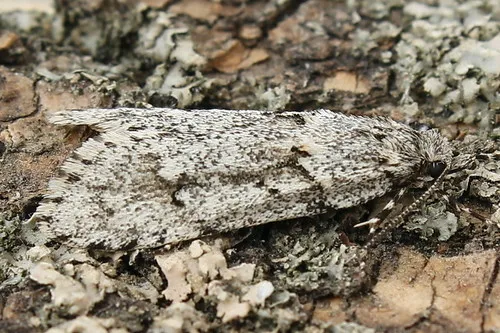
Diurnea fagella
Diurnea fagella
Wingspan 19-29 mm. The females have much shorter, stunted wings than the males and are rarely seen as they do not fly. This is an early spring species, occurring from March to May. The caterpillars feed on various deciduous trees. Fairly frequent thr
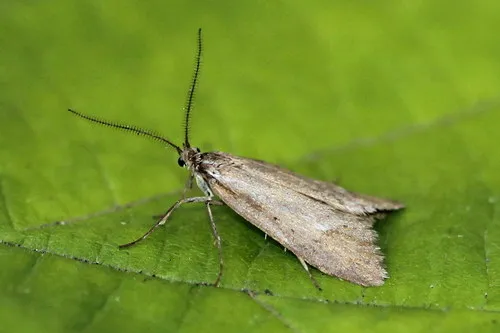
Diurnea lipsiella
Diurnea lipsiella
Wingspan about 23 mm (male) and 17 mm (female). In common with D. fagella, the females have under-developed wings (brachypterous). Areas where the larval foodplants are present. The adult moths are at large in October and November, when the males can
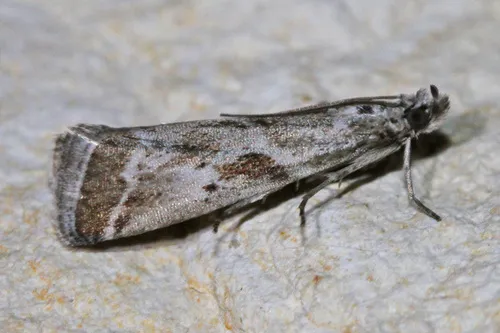
Diviana eudoreella - Hodges#5929
Diviana eudoreella
Identification: Heinrich revised description from PDF. "Forewing blackish brown, the median area heavily dusted with white, giving it an ashy gray appearance; antemedial white line nearly straight, slanting outwardly from costa to inner margin, sligh
Divided Flower Moth - Hodges#11099
Schinia scissoides
Identification: Benjamin original description as Eupanychis scissoides is available in PDF or view online in the print references.
Dixie Zale - Hodges#8691
Zale declarans
Identification: See original description by Walker under Print References below. Larvae: Owlet Caterpillars of Eastern North America p.171
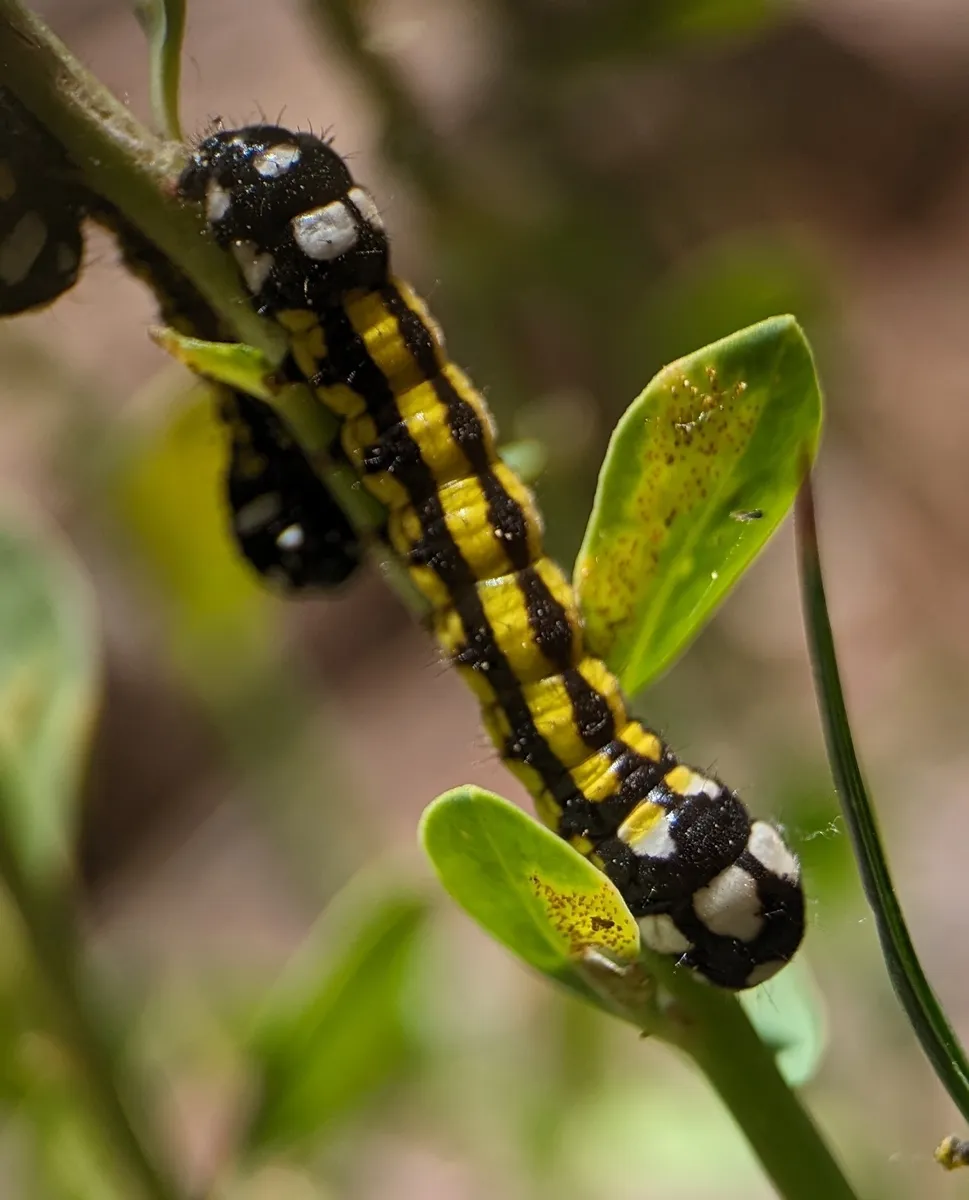
Doa ampla - Hodges#8041
Doa ampla
Identification: Adult: forewing silvery white with several black dots in upper half and thin black border along costa; terminal line composed of black dashes; fringe white; hindwing light brownish-gray with black terminal line and white fringe; legs
Dock Rustic - Hodges#9391
Resapamea passer
Identification: Adult: forewing pale to dark brown, sometimes reddish-brown; spots black; top of claviform spot thick and conspicuous; orbicular spot outline thin; reniform spot heavier but broken; lines inconspicuous, though PM and terminal lines pa
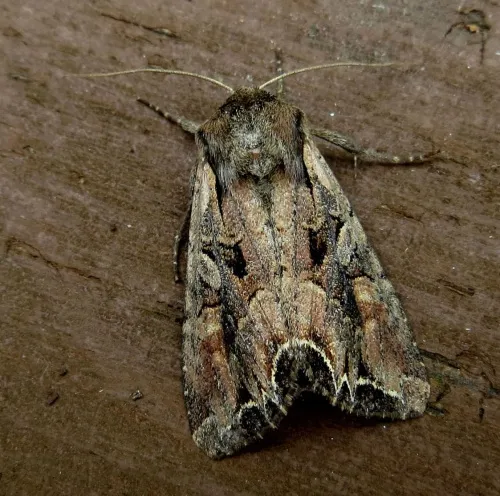
Dog's Tooth
Lacanobia suasa
It prefers lowland habitats, including estuaries, river valleys and salt marshes. It is double-brooded in the south, flying in May and June, then August and September. In the north, the single generation appears on the wing in June and July. The larv
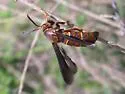
Doll's Clearwing Moth - Hodges#2523
Paranthrene dollii
Identification: Adult - an excellent mimic of the red paper wasp. Larva - body white to light pink, head and thoracic shield brown. Uncommon, but widespread in Texas
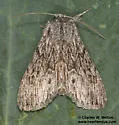
Dolocucullia dentilinea - Hodges#10188
Dolocucullia dentilinea
page creation based on Lars Crabo's identification of this image (which has since been determined to be a new species of Dolocucullia , that is very similar in appearance to dentilinea )
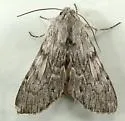
Dolocucullia poolei - Hodges#10188.1
Dolocucullia poolei
Identification: Lines more strongly zigzagged than in D. dentilinea with black spot near tornus more conspicuous. In the latter, the am. and pm. lines usually do not touch and the black spot is often absent. The BIN group for this species is BOLD:AAF
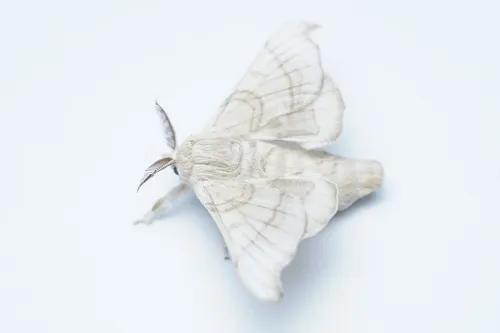
Domesticated Silkmoth
Bombyx mori
Bombyx mori, the domestic silkmoth, is an insect from the moth family Bombycidae. It is the closest relative of Bombyx mandarina, the wild silkmoth. The silkworm is the larva or caterpillar of a silkmoth. It is an economically important insect, being
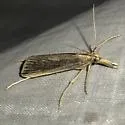
Donacaula aquilellus - Hodges#5317
Donacaula aquilellus
BOLD:AAA4101 appears to correspond to this species as treated by Martínez.
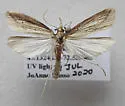
Donacaula dispersellus - Hodges#5316.1
Donacaula dispersellus
Identification: Genitalia: Treated as a full species in the unpublished revision
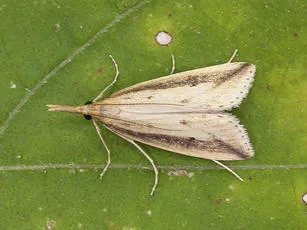
Donacaula forficella
Donacaula forficella
Inhabiting marshy areas, ditches and similar habitats. The moths fly in June and July and are usually encountered at light. The larva of this species has a peculiar habit of cutting part of a leaf to act as a raft, using this to float on the water to
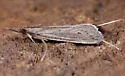
Donacaula nitidellus - Hodges#5322
Donacaula nitidellus
BOLD:AAA4102 appears to correspond to this species as treated by Martínez and may represent a species complex.
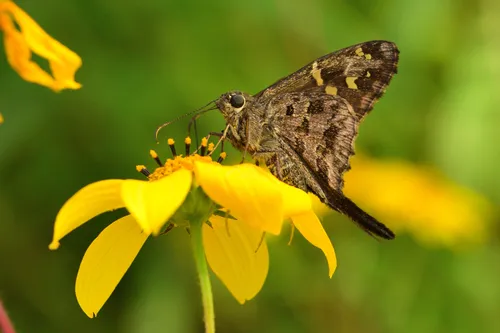
Dorantes Longtail
Cecropterus dorantes
Cecropterus dorantes, the lilac-banded longtail or Dorantes longtail, is a species of butterfly in the family Hesperiidae. It is found from Argentina, north through Central America, Mexico, and the West Indies to southern Texas and peninsular Florida
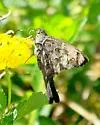
Dorantes Longtail - Hodges#3889
Urbanus dorantes
Identification: Adult is similar to Long-tailed Skipper ( Urbanus proteus ) but lacks the greenish-blue iridescence of that species. Mostly brown with long narrow tails on hindwings. On the underside of the forewing, the dark postmedian band is inter
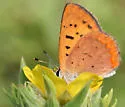
Dorcas Copper - Hodges#4261
Lycaena dorcas
Identification: Distinguished from the similar Purplish Copper ( L. helloides ) by the reduced orange band on the edge of the hindwing upperside (vs. extensive orange band in Purplish Copper), the brownish-orange underside of the wings (vs. grayish-y
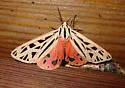
Doris Tiger Moth - Hodges#8198
Apantesis doris
Identification: Transverse bands greatly reduced or absent (no transverse white markings in the forewing discal cell). Broad, white costal band. The specimen illustrated is a rare variant where the white markings of the forewing and thorax have a pin
Doryodes desoto - Hodges#8765.1
Doryodes desoto
Identification: Description by Lafontaine & Sullivan can be found at the link in citations below. Although superficially indistinguishable from D. spadaria , D. fuselli and D. broui , the range for D. desoto is north and west of the range for spadari
Doryodes fulva - Hodges#8765.11
Doryodes fulva
Identification: Description by Troubridge can be found at the link in citations below.
Doryodes okaloosa - Hodges#8765.2
Doryodes okaloosa
Identification: Description by Lafontaine & Sullivan can be found at the link in citations below.
Doryodes unica - Hodges#8767.5
Doryodes unica
Identification: Description by Troubridge can be found at the link in citations below.
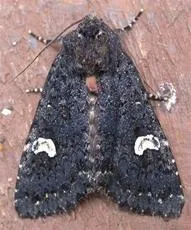
Dot Moth
Melanchra persicariae
Wingspan 37-40 mm. A dark coloured moth with distinctive pale dot on each wing. Frequenting a range of suburban habitats, including gardens, waste ground and roadside verges. The adults are on the wing in July and August, and frequently visit the gar
Dot-lined Angle - Hodges#6332
Psamatodes abydata
Identification: Adult - forewing speckled light yellowish- or grayish-brown with darker shading in subterminal area; PM line slightly scalloped, with dark dots at tips of scallops; AM and median lines brown, slightly irregular/wavy; discal spot a sho
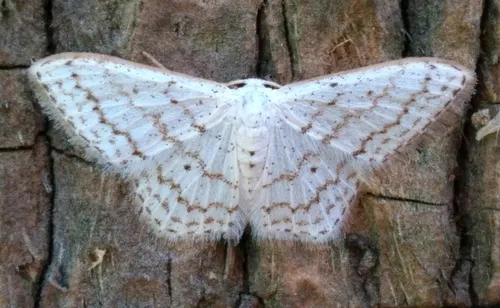
Dot-lined Wave - Hodges#7122
Idaea tacturata
Identification: wings pearly white, almost translucent, with sparse or no speckling; forewing has four variably conspicuous thin brownish, dotted or zigzag lines that continue onto hindwing; PM line usually thickest; ST line usually overlaid with fin
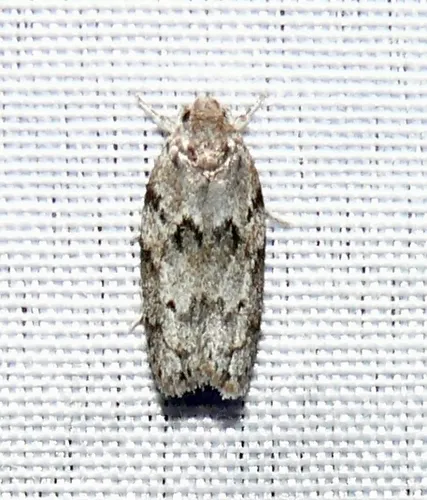
Dotted Antaeotricha Moth
Antaeotricha humilis
Antaeotricha humilis, the dotted anteotricha moth, is a moth in the Depressariidae family. It was described by Philipp Christoph Zeller in 1855. It is found in North America, where it has been recorded from Alabama, Arkansas, Florida, Georgia, Illino
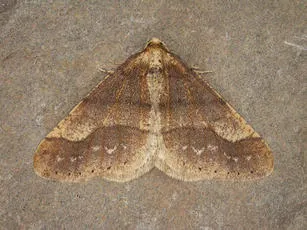
Dotted Border
Agriopis marginaria
Wingspan 27-32 mm. There are quite a number of variations of this species of moth, including a virtually all-dark form. The females are flightless and have only vestigial wings. The species frequents woodland, gardens and bushy places. The moths are
Dotted Checkerspot - Hodges#4515
Poladryas minuta
Identification: Different distribution, more eastern, than P. arachne ; dark markings above less developed and less prominent, giving a lighter more orange appearance; below with wider orange bands, and with broken median black markings giving more o
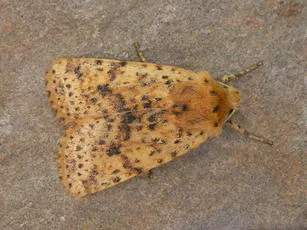
Dotted Chestnut
Conistra rubiginea
True to its name this moth has numerous dark dots on creamy chestnut wings. Flying in October and November, after which it hibernates and appears again in early spring. The foodplants are not well known in the wild, but it is thought to feed on a num
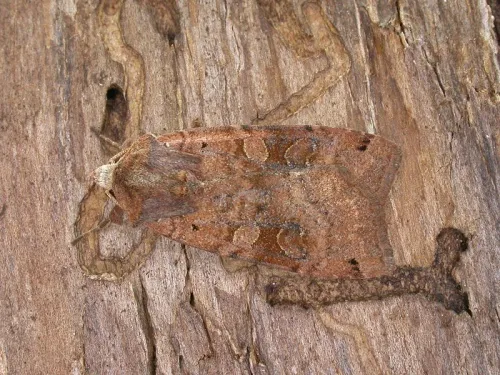
Dotted Clay
Xestia baja
This is a moth of woodland and heathland. The adults fly in July and August in a single generation, and are frequently attracted to light. The caterpillars hibernate when quite young, and in the spring feed nocturnally on Bog Myrtle, Bramble and othe
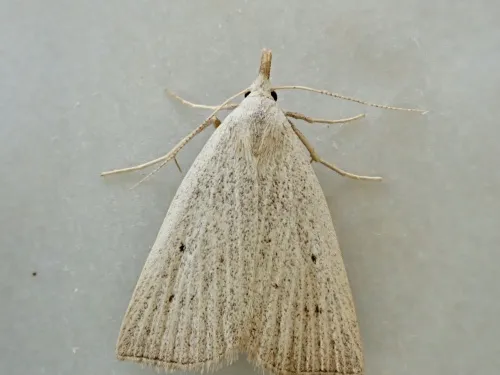
Dotted Fan-foot
Macrochilo cribrumalis
Please provide a photograph to support your record. Inhabits mostly fens, reed beds and other watery habitats. The flight period is from late June to August, when the adults can be found from dusk onwards, flying amongst the reeds. Larva feeds on Hai
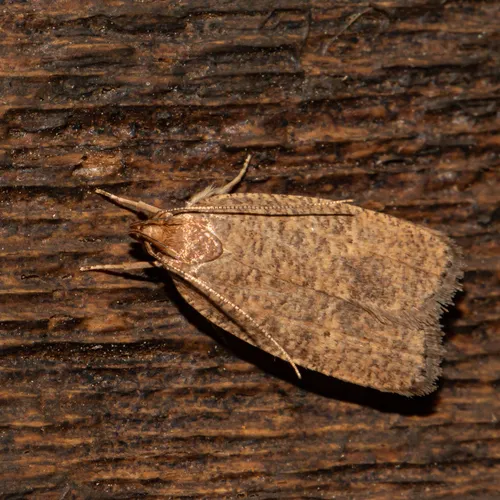
Dotted Leaftier Moth
Psilocorsis reflexella
The dotted leaftier moth (Psilocorsis reflexella) is a species of moth of the Depressariidae family. It is found in North America, including Georgia, Illinois, New Jersey, New York, Oklahoma and Tennessee.
Dotted Sallow Moth - Hodges#9961
Anathix ralla
Identification: Adult : Orange FW has slightly scalloped, double AM and PM lines. Angled brown median band is often conspicuous. ST and terminal lines are rows of black dots. Orbicular and re-niform spots have diffuse blackish dots in inner halves.
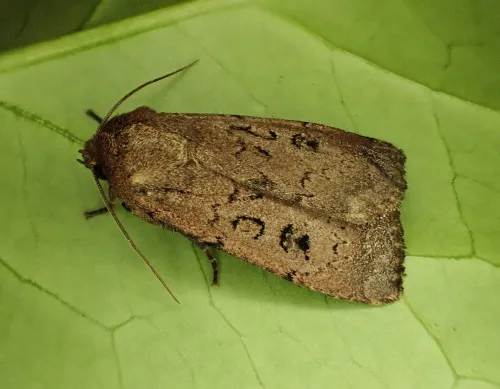
Double Dart
Graphiphora augur
Wingspan 35 to 42 mm. The markings may vary slightly but are usually sufficient to enable the species to be identified. It inhabits woodland, bushy places and grassy areas. Flies in a single generation during June and July. The larvae feed nocturnall
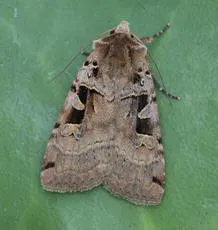
Double Square-spot
Xestia triangulum
Wingspan 36-46 mm. Distinctively marked species with unusually square markings on the wings. The single generation flies in June and July and visits light and sugar, as well as certain flowers. The polyphagous caterpillars hibernate when quite small
Double-banded Carpet - Hodges#7312
Spargania magnoliata
Identification: forewing gray with white AM and PM bands, and up to 10 scalloped dark gray lines variably shaded with black; discal spot large, black hindwing dirty white shaded with gray, usually with slight pink tint; terminal line black; finge whi
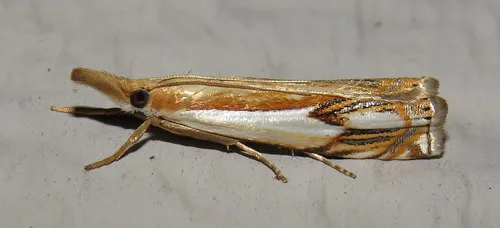
Double-banded Grass-veneer
Crambus agitatellus
Crambus agitatellus, the double-banded grass-veneer moth, is a moth of the Crambidae family. It is found in the eastern two-thirds of the United States and south-eastern Canada.
Double-banded Zale - Hodges#8714
Zale calycanthata
Identification: See Smith description linked under print references. Genitalia: ♀ ♂
Double-lined Gray Moth - Hodges#6594
Cleora sublunaria
Identification: Larva: Elongate, smooth, green to brown with faint dorsal and lateral stripes. Head with faint spotting forming short concentric bands. Dorsum with darker middorsal (heart) line edged with indistinct addorsal, subdorsal, and supraspir
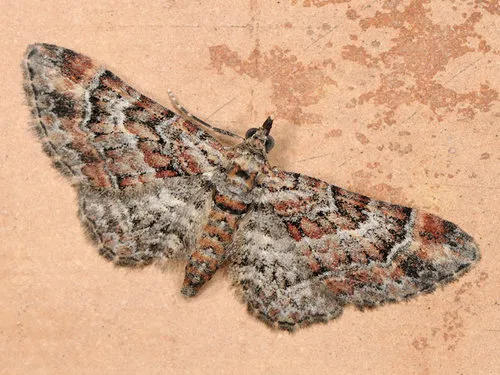
Double-striped Pug
Gymnoscelis rufifasciata
Wingspan 15-19 mm. It is often a brightly-coloured species. It occupies a wide range of habitats, including suburban areas, parks, gardens, hedgerows, roadside verges, heathland, moorland and woodland. This species generally has two broods, flying in
Doubtful Apamea - Hodges#9367
Apamea dubitans
Identification: Detailed description can be found in MONA Fascicle 26-9 at link in citations below. Base of rose-thorns higher than wide; barrel shaped. In A. cogitata, base of rose-thorn nearly flat; much wider than high. Forbes, 1954. digitus slend
Douglas-Fir Cone Moth - Hodges#2903
Barbara colfaxiana
Identification: The original description as Evetria colfaxiana Kearfott, is available online in the print references below. The Heinrich revised description of Barbara colfaxiana (Kearfott) is available in PDF or read online in the print references b
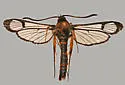
Douglas-Fir Pitch Moth - Hodges#2584
Synanthedon novaroensis
Identification: See Duckworth & Eichlin in Print References.
Dow's Plume Moth - Hodges#6099.4
Exelastis dowi
Identification: See Exelastis for identification information.
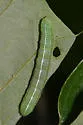
Dowdy Pinion - Hodges#9916
Lithophane unimoda
Identification: Adult: forewing bluish gray with a pale orbicular spot, a small elliptical claviform spot touching inner margin of orbicular spot, and a faint reniform spot outlined with light gray. Dark gray patch between reniform and orbicular spot
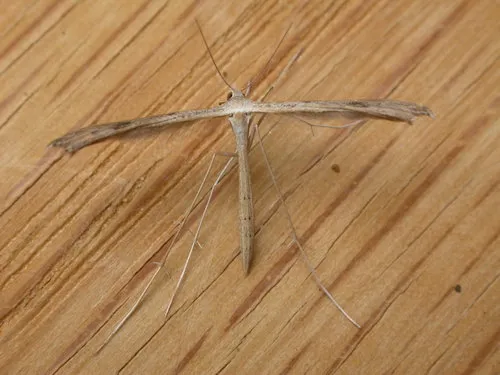
Dowdy Plume Moth
Stenoptilia zophodactylus
Stenoptilia zophodactylus is a species of moth of the family Pterophoridae. It is found in Europe, North America, South America (Ecuador, Mexico and Paraguay), Australia, South Africa, India and Iran.
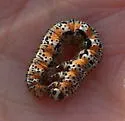
Drab Angle Moth - Hodges#6278
Macaria evagaria
Identification: Hulst (1900) original description: 106
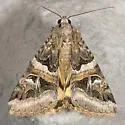
Drasteria divergens - Hodges#8630
Drasteria divergens
Identification: Adult: forewing dark brown to blackish in basal and median areas, light brownish-gray in AM and terminal areas; reniform spot with pointed projections and white highlights; AM line has peculiar but distinctive lobed shaped; hindwing y
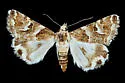
Drasteria eubapta - Hodges#8617
Drasteria eubapta
Identification: Specimen determined by DNA analysis (BOLD).
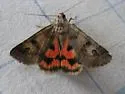
Drasteria ingeniculata - Hodges#8620
Drasteria ingeniculata
Identification: Adult: basal area and distal half of forewing dark blackish-gray; median area and PM patch pale gray with dark speckling; AM line a smooth convex arc; hindwing orangish-yellow with black terminal and PM bands; large black discal spot
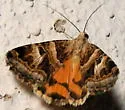
Drasteria mirifica - Hodges#8616
Drasteria mirifica
Identification: Crumb described the larvae as generally white, including the head.
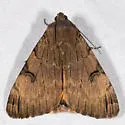
Drasteria ochracea - Hodges#8626
Drasteria ochracea
Identification: Powell & Opler describe the larvae as having longitudinal bands of yellow and tan bordered by darker shades. Head with six distinct bands.
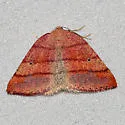
Drepanulatrix carnearia - Hodges#6688
Drepanulatrix carnearia
Identification: Rindge described two forms of this species, D. c. carnearia and D. c. columbriaria . The form columbriaria is a bit larger and occurs from central California to British Columbia. Form carnearia is smaller and occurs from central Calif