
Dimorphic Pinion - Hodges#9886
Lithophane patefacta
This record describes Lithophane patefacta (species). Recorded family: Noctuidae. Recorded order: Lepidoptera.
Identification and Appearance
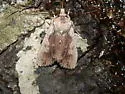
Adult has two color forms: light form - forewing pale brownish-gray to silvery-gray with short dark diagonal marks along costa; subreniform spot black, oblong or oval, with a smooth (not irregular) outline, and a sharply-defined (not diffuse) edge; small white spot usually present at distal end of subreniform spot; AM and PM lines represented by indistinct dark dots; diffuse dark patches along outer margin near apex and anal angle, and midway along costa; faint reddish-brown shading may be present in area around reniform spot; except for the prominent subreniform spot, most of the forewing surface is uniformly pale, giving a washed out appearance dark form - lower two-thirds of forewing dark brown to blackish, as in dark forms of several other Lithophane species; upper third (along costa) pale brown or tan; hindwing dark gray with pale fringe in both forms Larva: body variegated in steel blue, gray, and white, with thin yellow to orange middorsal and subdorsal stripes; some individuals very pale; others quite dark (especially southward); dorsal pinacula white, prominent; pale spiracular stripe, when present, may be edged with black above; head variable, pale and unmarked to extensively mottled with black; penultimate instar shiny pale green, with prominent white striping and spotting [description by David Wagner et al ] light forms of the adult are more common in the north, and dark forms more common in the south the photo labeled L. patefacta here by Jeremy Tatum of Vancouver Island, BC has very prominent markings, more typical of L. innominata ; however, the subreniform spot has a fairly smooth and sharp outline, characteristic of L. patefacta
Classification
- Kingdom
- Animalia
- Phylum
- Arthropoda
- Class
- Insecta
- Order
- Lepidoptera (Butterflies and Moths)
- Superfamily
- Noctuoidea
- Family
- Noctuidae (Owlet Moths)
- Subfamily
- Noctuinae
- Tribe
- Xylenini
- Genus
- Lithophane (Pinions)
Imported taxonomy record. Source availability varies; see the source references and editorial policy below.
Habitat and Range
Habitat
deciduous forests and woodlots; adults are nocturnal and come to light and bait
Geographic Range
Ontario and Quebec, south to South Carolina and Georgia, west to Wisconsin; also recorded from British Columbia Wagner et al give northern Florida as part of the range, but L. patefacta is not included on John Heppner's list of Florida lepidoptera
Seasonal Activity
adults fly from April to June and from September to November larvae from May to July
Diet and Behavior
Diet: most larvae feed on leaves of blueberry, cherry, hickory, maple, oak, and other woody plants some larvae eat other caterpillars (including their own siblings)
Life History
overwinters as an adult; one generation per year
About Butterflies and Moths: the wider group
Order-level background for Lepidoptera, the group containing Lithophane patefacta. Species-specific details appear above.
Group overview
Lepidoptera includes approximately 180,000 described species of butterflies and moths. Moths outnumber butterflies roughly 10:1. The monarch butterfly's eastern population has declined by more than 80% since the mid-1990s, and the western population by over 95% since the 1980s. The IUCN lists the migratory monarch as Vulnerable.
Ecological role of the group
Butterflies and moths are essential indicators of ecosystem health. As caterpillars, they are a primary food source for birds - a single nest of blue tit chicks requires ~10,000 caterpillars. Adult moths pollinate many night-blooming plants.
Economic and practical significance of the group
Lepidoptera are critical pollinators. In Europe, grassland butterfly species have declined by almost 50% since the early 1990s. In the UK, three-quarters of butterflies are in decline. In the U.S., five butterfly species have gone extinct since 1950, with 29 listed as endangered.
Recorded sources for this group: IUCN Red List, Xerces Society, USFWS, PNAS, WWF. Imported estimates may describe particular regions or reporting periods.
Photos of Dimorphic Pinion - Hodges#9886 (5)
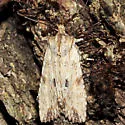
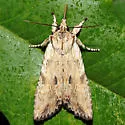
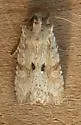
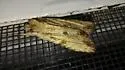
Photo credits: Contributed by tom murray; Additional contributions by Robin McLeod , Maury Heiman , marcie oconnor , JoAnneRusso
Frequently Asked Questions About Dimorphic Pinion - Hodges#9886
What is Dimorphic Pinion - Hodges#9886?
Dimorphic Pinion - Hodges#9886 (Lithophane patefacta) is a species in the family Noctuidae, within the order Lepidoptera.
How big is Dimorphic Pinion - Hodges#9886?
wingspan about 36 mm, based on photo by Jim Vargo at MPG larva to 35 mm
How do you identify Dimorphic Pinion - Hodges#9886?
Adult has two color forms: light form - forewing pale brownish-gray to silvery-gray with short dark diagonal marks along costa; subreniform spot black, oblong or oval, with a smooth (not irregular) outline, and a sharply-defined (not diffuse) edge; small white spot usually present at distal end of subreniform spot; AM and PM lines represented by indistinct dark dots; diffuse dark patches along outer margin near apex and anal angle, and midway along costa; faint reddish-brown shading may be present in area around reniform spot; except for the prominent subreniform spot, most of the forewing surface is uniformly pale, giving a washed out appearance dark form - lower two-thirds of forewing dark brown to blackish, as in dark forms of several other Lithophane species; upper third (along costa) pale brown or tan; hindwing dark gray with pale fringe in both forms Larva: body variegated in steel blue, gray, and white, with thin yellow to orange middorsal and subdorsal stripes; some individuals very pale; others quite dark (especially southward); dorsal pinacula white, prominent; pale spiracular stripe, when present, may be edged with black above; head variable, pale and unmarked to extensively mottled with black; penultimate instar shiny pale green, with prominent white striping and spotting [description by David Wagner et al ]
Where is Dimorphic Pinion - Hodges#9886 found?
| Feature | Details |
|---|---|
| Habitat | deciduous forests and woodlots; adults are nocturnal and come to light and bait |
| Range | Ontario and Quebec, south to South Carolina and Georgia, west to Wisconsin; also recorded from British Columbia Wagner et al give northern Florida as part of the range, but L. patefacta is not included on John Heppner's list of Florida lepidoptera |
What does Dimorphic Pinion - Hodges#9886 eat?
The diet of the Dimorphic Pinion - Hodges#9886 includes most larvae feed on leaves of blueberry, cherry, hickory, maple, oak, and other woody plants some larvae eat other caterpillars (including their own siblings).
When is Dimorphic Pinion - Hodges#9886 active?
Dimorphic Pinion - Hodges#9886: seasonal activity - adults fly from April to June and from September to November larvae from May to July.
What is the life cycle of a Dimorphic Pinion - Hodges#9886?
overwinters as an adult; one generation per year