
Digrammia triviata - Hodges#6385
Digrammia triviata
This record describes Digrammia triviata (species). Recorded family: Geometridae. Recorded order: Lepidoptera.
Identification and Appearance
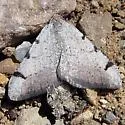
It is geographically and seasonally variable. Douglas C. Ferguson. Pg. 258, Moths of North America Fascile 17.2. In the Moths of North America, Fascicle 17.2 Douglas C. Ferguson discusses the pallidata -group on pages 256-259. Paraphrasing, he states that D. pallidata and D. triviata are closely related and often confused where their ranges overlap. D. pallidata occures in Central East Texas as far as the latitude of San Antonio and west to a longitude from Uvalde to Brown counties. I have now reared many broods throughout the year and all have tested at BOLD as D. triviata (but see note below). On the D. pallidata page are posted variations that have been documented from Edwards County, Texas, in hopes they will be helpful to others. (Ann Hendrickson) Added caution: Barcoding is not cleanly separating D. triviata and D. pallidata , the latter occurring in mixed BINs with the former. Further, moths from the Great Basin that are out of range of any Texas pallidata look consistently different from the triviata in the Texas Hill Country. The Great Basin moths fit Ferguson's description ( 3 ) of triviata (e.g. with the bent comma-shaped PM spots on the costa and lacking any black smudge opposite the cell on the FW) while the Texas Hill Country examples are within the variation in pallidata described by Ferguson ( 3 ) . Finally, IF there is some fidelity to the juniper species which each of these species uses as a host plant, then, excepting long-distance strays, triviata ( Rocky Mountain and Alligator junipers ) will be primarily confined in Texas to the Trans-Pecos and northern Panhandle. A good Texas example of the Great Basin triviata pattern is Don Riley's example from the Davis Mountains . By contrast, pallidata ( Ashe juniper and Eastern redcedar ) will be found primarily in East, North, and Central Texas, primarily east of the Pecos River. (Chuck Sexton)
Classification
- Kingdom
- Animalia
- Phylum
- Arthropoda
- Class
- Insecta
- Order
- Lepidoptera (Butterflies and Moths)
- Superfamily
- Geometroidea
- Family
- Geometridae (Geometrid Moths)
- Subfamily
- Ennominae
- Tribe
- Macariini
- Genus
- Digrammia
Imported taxonomy record. Source availability varies; see the source references and editorial policy below.
Habitat and Range
Geographic Range
There are records from the western half of the United States and southwestern Canada. Described from specimens collected in the Chiricahua and Huachuca Mountains of southern Arizona. Texas, usually a more western species (Ann Hendrickson)
Diet and Behavior
Diet: Larval hosts include alligator juniper ( Juniperus deppeana ) and Rocky Mountain juniper ( J. scopulorum ) and possibly Ashe Juniper ( J. ashei ) (but see notes below in Remarks).
About Butterflies and Moths: the wider group
Order-level background for Lepidoptera, the group containing Digrammia triviata. Species-specific details appear above.
Group overview
Lepidoptera includes approximately 180,000 described species of butterflies and moths. Moths outnumber butterflies roughly 10:1. The monarch butterfly's eastern population has declined by more than 80% since the mid-1990s, and the western population by over 95% since the 1980s. The IUCN lists the migratory monarch as Vulnerable.
Ecological role of the group
Butterflies and moths are essential indicators of ecosystem health. As caterpillars, they are a primary food source for birds - a single nest of blue tit chicks requires ~10,000 caterpillars. Adult moths pollinate many night-blooming plants.
Economic and practical significance of the group
Lepidoptera are critical pollinators. In Europe, grassland butterfly species have declined by almost 50% since the early 1990s. In the UK, three-quarters of butterflies are in decline. In the U.S., five butterfly species have gone extinct since 1950, with 29 listed as endangered.
Recorded sources for this group: IUCN Red List, Xerces Society, USFWS, PNAS, WWF. Imported estimates may describe particular regions or reporting periods.
Photos of Digrammia triviata - Hodges#6385 (5)
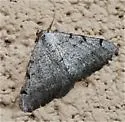
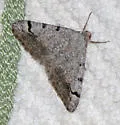
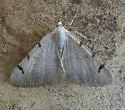
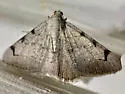
Photo credits: Contributed by Charley Eiseman; Additional contributions by Chuck Sexton , Randy Hardy , A. Hendrickson
Frequently Asked Questions About Digrammia triviata - Hodges#6385
What is Digrammia triviata - Hodges#6385?
Digrammia triviata - Hodges#6385 (Digrammia triviata) is a species in the family Geometridae, within the order Lepidoptera.
How big is Digrammia triviata - Hodges#6385?
Wingspan 22-25 mm.
How do you identify Digrammia triviata - Hodges#6385?
It is geographically and seasonally variable. Douglas C. Ferguson. Pg. 258, Moths of North America Fascile 17.2.
Where is Digrammia triviata - Hodges#6385 found?
Range: There are records from the western half of the United States and southwestern Canada. Described from specimens collected in the Chiricahua and Huachuca Mountains of southern Arizona. Texas, usually a more western species (Ann Hendrickson)
What does Digrammia triviata - Hodges#6385 eat?
The diet of the Digrammia triviata - Hodges#6385 includes Larval hosts include alligator juniper ( Juniperus deppeana ) and Rocky Mountain juniper ( J. scopulorum ) and possibly Ashe Juniper ( J. ashei ) (but see notes below in Remarks)..