
Dingy Cutworm Moth - Hodges#10670
Feltia jaculifera
This record describes Feltia jaculifera (species). Recorded family: Noctuidae. Recorded order: Lepidoptera.
Identification and Appearance
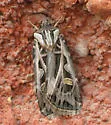
Adult: forewing dark gray to blackish, patterned with white, gray, and tan streaks and lines; two white-lined veins (M3 and CU1) extend from bottom corner of reniform spot nearly to outer margin, forming a distinct W shape where they meet subterminal line; orbicular spot broadly triangular, adjoining whitish strip running parallel to costa from base to top edge of reniform spot; claviform spot dark gray, elongate, extending to level of reniform spot; reniform spot yellowish to light brown, with paler outline; dark gray patch along costa near apex, and another dark patch along outer margin near apex; hindwing dirty white with dark gray discal lunule, veins, and terminal band in male, or uniformly brownish-gray in female; fringe pale yellowish Larva: body light grayish dorsally with smooth skin; four black equal-sized dots on dorsal surface of each abdominal segment; ventral surface pale yellowish The larva (cutworm) may be dingy, but the adult is the brightest and boldest-patterned eastern species of Feltia . A more appropriate name for the adult might be Bright-striped Dart.
Classification
- Kingdom
- Animalia
- Phylum
- Arthropoda
- Class
- Insecta
- Order
- Lepidoptera (Butterflies and Moths)
- Superfamily
- Noctuoidea
- Family
- Noctuidae (Owlet Moths)
- Subfamily
- Noctuinae
- Tribe
- Noctuini
- Genus
- Feltia
Imported taxonomy record. Source availability varies; see the source references and editorial policy below.
Habitat and Range
Habitat
fields, gardens, open spaces, waste places; adults are nocturnal and come to light
Geographic Range
coast to coast in North America (except Arizona, southern California, and Newfoundland), north to Northwest Territories, Yukon, and Alaska
Seasonal Activity
Adults fly in the fall; on Block Island , RI, adults fly mainly in September but have been recorded throughout August and October as well. larvae present in fall and spring (they overwinter)
Diet and Behavior
Diet: larvae are generalist feeders on more than 40 species of plants, including alfalfa, aster, blueberry, chickweed, clover, corn, dock, flax, goldenrod, garden vegetables, grasses, mullein, oats, plantain, raspberry, rye, tobacco, wheat
Life History
one generation per year; eggs laid in fall; overwinters as a partly-grown larva
Additional species information
Species notes from the sources
Etymology: The common name "Bent-line Dart" is erroneously applied to this species by some sources. It is actually the common name for Choephora fungorum .
About Butterflies and Moths: the wider group
Order-level background for Lepidoptera, the group containing Feltia jaculifera. Species-specific details appear above.
Group overview
Lepidoptera includes approximately 180,000 described species of butterflies and moths. Moths outnumber butterflies roughly 10:1. The monarch butterfly's eastern population has declined by more than 80% since the mid-1990s, and the western population by over 95% since the 1980s. The IUCN lists the migratory monarch as Vulnerable.
Ecological role of the group
Butterflies and moths are essential indicators of ecosystem health. As caterpillars, they are a primary food source for birds - a single nest of blue tit chicks requires ~10,000 caterpillars. Adult moths pollinate many night-blooming plants.
Economic and practical significance of the group
Lepidoptera are critical pollinators. In Europe, grassland butterfly species have declined by almost 50% since the early 1990s. In the UK, three-quarters of butterflies are in decline. In the U.S., five butterfly species have gone extinct since 1950, with 29 listed as endangered.
Recorded sources for this group: IUCN Red List, Xerces Society, USFWS, PNAS, WWF. Imported estimates may describe particular regions or reporting periods.
Photos of Dingy Cutworm Moth - Hodges#10670 (5)
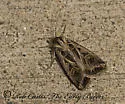
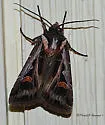
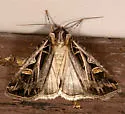
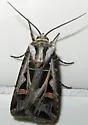
Photo credits: Contributed by Robin McLeod; Additional contributions by Steve Nanz , Tony-2 , Ron M. , Blocky , Steve Morris
Frequently Asked Questions About Dingy Cutworm Moth - Hodges#10670
What is Dingy Cutworm Moth - Hodges#10670?
Dingy Cutworm Moth - Hodges#10670 (Feltia jaculifera) is a species in the family Noctuidae, within the order Lepidoptera.
How big is Dingy Cutworm Moth - Hodges#10670?
wingspan 30-40 mm
How do you identify Dingy Cutworm Moth - Hodges#10670?
Adult: forewing dark gray to blackish, patterned with white, gray, and tan streaks and lines; two white-lined veins (M3 and CU1) extend from bottom corner of reniform spot nearly to outer margin, forming a distinct W shape where they meet subterminal line; orbicular spot broadly triangular, adjoining whitish strip running parallel to costa from base to top edge of reniform spot; claviform spot dark gray, elongate, extending to level of reniform spot; reniform spot yellowish to light brown, with paler outline; dark gray patch along costa near apex, and another dark patch along outer margin near apex; hindwing dirty white with dark gray discal lunule, veins, and terminal band in male, or uniformly brownish-gray in female; fringe pale yellowish Larva: body light grayish dorsally with smooth skin; four black equal-sized dots on dorsal surface of each abdominal segment; ventral surface pale yellowish
Where is Dingy Cutworm Moth - Hodges#10670 found?
| Feature | Details |
|---|---|
| Habitat | fields, gardens, open spaces, waste places; adults are nocturnal and come to light |
| Range | coast to coast in North America (except Arizona, southern California, and Newfoundland), north to Northwest Territories, Yukon, and Alaska |
What does Dingy Cutworm Moth - Hodges#10670 eat?
The diet of the Dingy Cutworm Moth - Hodges#10670 includes larvae are generalist feeders on more than 40 species of plants, including alfalfa, aster, blueberry, chickweed, clover, corn, dock, flax, goldenrod, garden vegetables, grasses, mullein, oats, plantain, raspberry, rye, tobacco, wheat.
When is Dingy Cutworm Moth - Hodges#10670 active?
Dingy Cutworm Moth - Hodges#10670: seasonal activity - Adults fly in the fall; on Block Island , RI, adults fly mainly in September but have been recorded throughout August and October as well. larvae present in fall and spring (they overwinter).
What is the life cycle of a Dingy Cutworm Moth - Hodges#10670?
one generation per year; eggs laid in fall; overwinters as a partly-grown larva