
Butterflies and Moths
Order Lepidoptera
The Butterflies and Moths (Order Lepidoptera) includes 11,813 species across 112 families and 2,787 genera in our directory.
About Butterflies and Moths
Lepidoptera includes approximately 180,000 described species of butterflies and moths. Moths outnumber butterflies roughly 10:1. The monarch butterfly's eastern population has declined by more than 80% since the mid-1990s, and the western population by over 95% since the 1980s. The IUCN lists the migratory monarch as Vulnerable.
Economic Impact
Lepidoptera are critical pollinators. In Europe, grassland butterfly species have declined by almost 50% since the early 1990s. In the UK, three-quarters of butterflies are in decline. In the U.S., five butterfly species have gone extinct since 1950, with 29 listed as endangered.
Ecological Role
Butterflies and moths are essential indicators of ecosystem health. As caterpillars, they are a primary food source for birds - a single nest of blue tit chicks requires ~10,000 caterpillars. Adult moths pollinate many night-blooming plants.
Families in Lepidoptera (112)
Species in Lepidoptera (11,813)
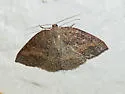
Drepanulatrix foeminaria - Hodges#6686
Drepanulatrix foeminaria
Identification: Adult: male antennae pectinate (feathery); forewing brown or brownish-gray speckled with black; discal spot tiny, black, sometimes white-margined; subterminal area usually with line of black dots or dark shading; numerous short dark p
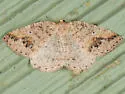
Drepanulatrix secundaria - Hodges#6690
Drepanulatrix secundaria
Identification: Adult: forewing pale yellowish-brown or orangish with fine dark speckling and sometimes a pink tint; terminal line composed of several dark dots; PM line an irregular series of dark spots or wedges, sometimes faint; small dark discal
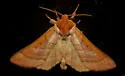
Drexel's and Major Datanas
Datana drexelii-major
Identification: Adults of Datana drexelii and Datana major are generally inseparable in photos and should be placed under this name unless they were dissected or reared from larvae.
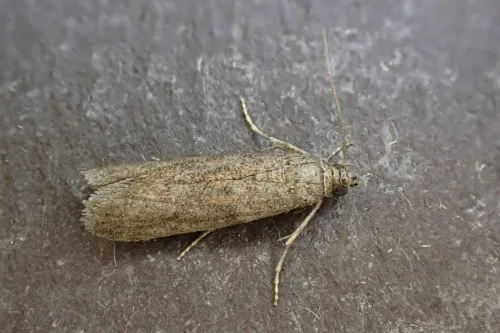
Dried Currant Moth
Cadra cautella
Wingspan 15-22mm. One of several Ephestia / Cadra species that are generally separable only by dissection. Synanthropic, most likely to be found as a pest in warehouses and production facilities with stored nuts, seeds, fruit, cocoa etc. Rarely found
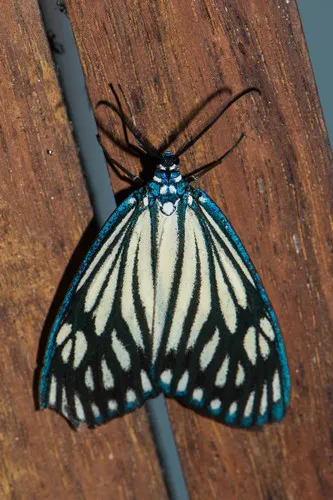
Drury's Jewel
Cyclosia papilionaris
Cyclosia papilionaris, Drury's jewel, is a moth in the family Zygaenidae. It was described by Dru Drury in 1773. It is found from Thailand to southern China. The habitat consists of rainforests and humid deciduous forests at altitudes up to 1,000 met
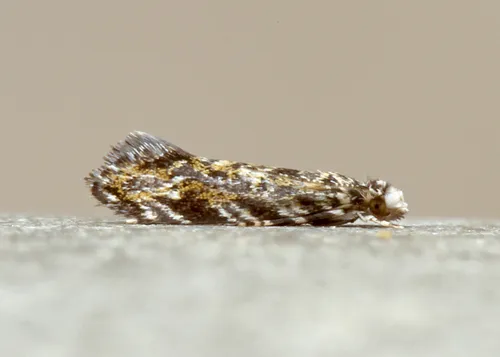
Dryadaula visaliella - Hodges#0307
Dryadaula visaliella
Identification: See original description by Chambers 1873 in Print References below.
Dryotype opina - Hodges#9981
Dryotype opina
Identification: The original description as Dryobota opina Grote is available at the link in the print references below. Specimens identified by DNA analysis:
Dubious Tiger Moth - Hodges#8136
Spilosoma dubia
Identification: Wings white, with heavy black spotting on forewing and variable black subterminal patches on hindwing. Abdomen with yellow areas & black spots.
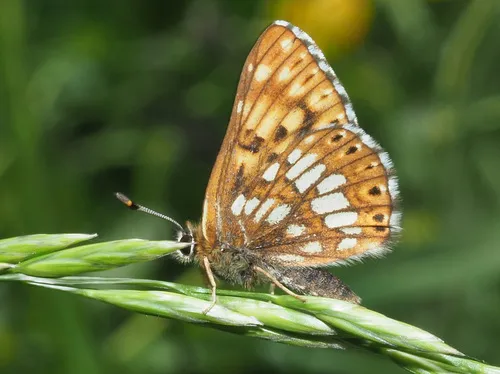
Duke of Burgundy
Hamearis lucina
Hamearis lucina, the Duke of Burgundy, the only member of the genus Hamearis, is a European butterfly in the family Riodinidae. For many years, it was known as the "Duke of Burgundy fritillary", because the adult's chequered pattern is strongly remin
Dull Firetip - Hodges#3864
Apyrrothrix araxes
Identification: Similar to several other skippers, but with distinct yellow coloring on base of wings below, and with some yellow usually on the antenna clubs.
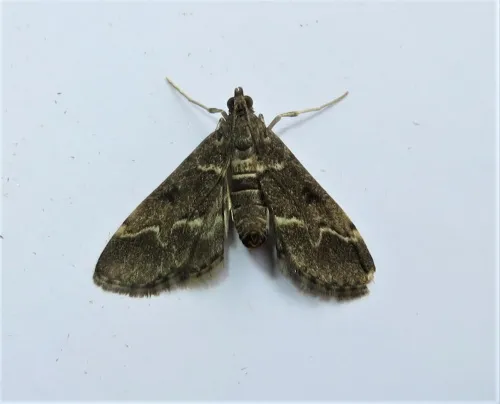
Duponchelia fovealis
Duponchelia fovealis
The species has the potential to be a pest in horticultural establishments, and there have been reported outbreaks in nurseries. On the continent it already has become such a pest in certain areas, and feeds on a wide range of host plants. The adults
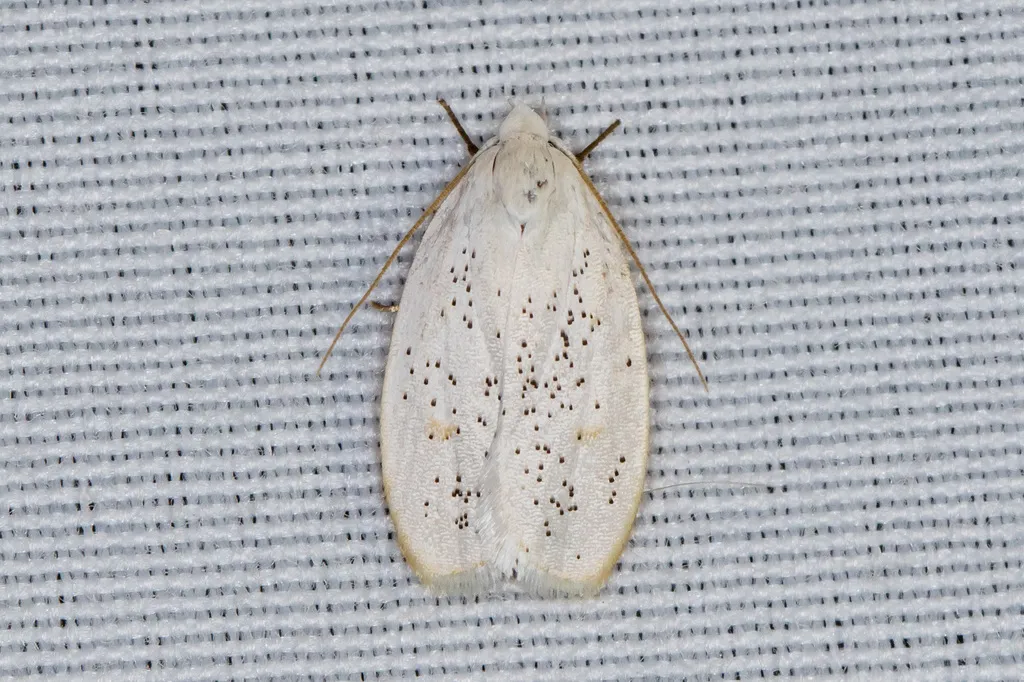
Durrantia piperatella - Hodges#1010
Durrantia piperatella
Identification: D. piperatella may be immaculate or have dark macules on the dorsal forewing. (Ed Knudson, pers. comm. 2012)
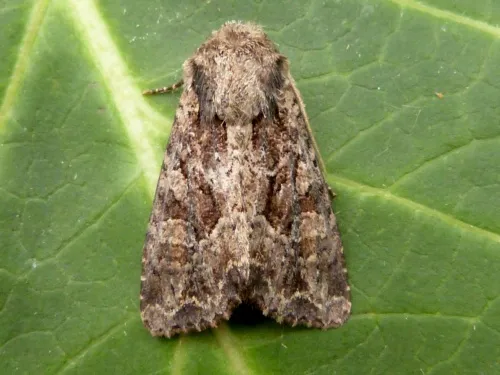
Dusky Brocade
Apamea remissa
Wingspan 36-42 mm. Two main forms of this species occur regularly, though others have been described. The dull, poorly-marked form obscura is the commonest and resembles a number of other species, most notably 'The Confused'. The typical form is bett
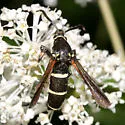
Dusky Clearwing - Hodges#2524
Paranthrene tabaniformis
Identification: Larva - ivory with pale yellow-brown head. Dorsal surface yellowish with two brown furrows that converge at the head. Spriracles elliptical and prominent. ( 4 )
Dusky Groundling Moth - Hodges#9696
Condica vecors
Identification: Adult: forewing mottled dark brown and black; no strong pattern; PM and terminal lines represented by whitish dots; claviform spot black; lower half of reniform spot white; pale brown spot in middle of dark brown subterminal area; hin
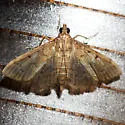
Dusky Herpetogramma - Hodges#5274
Herpetogramma phaeopteralis
Identification: Adult: forewing medium to dark grayish-brown with blackish AM and PM lines; PM line toothed, sinuous; two dark spots in median area, the outer one larger; hindwing with similar pattern but slightly paler; fringe dark on all wings Larv
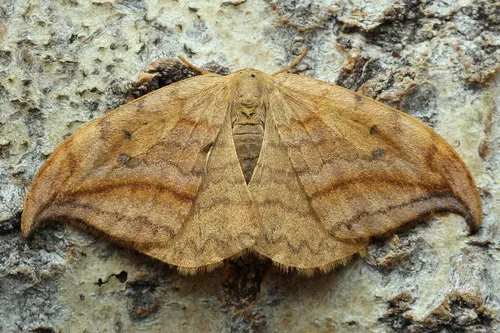
Dusky Hook-tip
Drepana curvatula
The Dusky Hook-tip (Drepana curvatula) is a moth of the family Drepanidae. It is found from Europe to Japan.
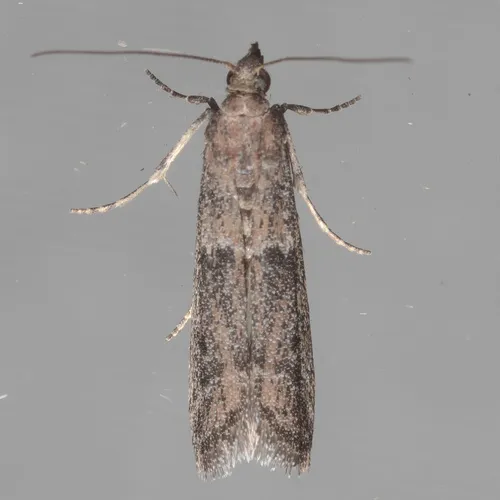
Dusky Raisin Moth
Ephestiodes gilvescentella
Ephestiodes gilvescentella, the dusky raisin moth, is a moth of the family Pyralidae. It is native to North America, where it has been recorded from California, Arizona, Oklahoma, Utah, Montana, Alberta and British Columbia. It was introduced to Hawa
Dusky Roadside-Skipper - Hodges#4108
Amblyscirtes alternata
Identification: "Fringes are white with small black checks; forewing is pointed. Upperside is black-brown; forewing has a faint row of pale spots. Underside of hindwing has a dusting of dull gray." -- butterfliesandmoths.org
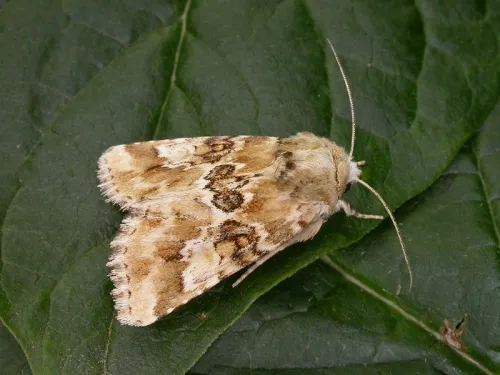
Dusky Sallow
Eremobia ochroleuca
Wingspan 34 to 37 mm. This is a quite distinctively-marked moth. It prefers dry, chalky or stony habitats as well as sand-dunes and shingle beaches. Flies in July and August, when it can be found feeding at various flowers, as well as being attracted
Dusky Saucrobotys - Hodges#4935
Saucrobotys fumoferalis
Identification: Original description online: (154) Adult: forewing dark gray or sometimes brown; AM, PM, and ST lines, black, deeply and sharply toothed but usually indistinct, especially ST line; teeth of ST line end in pale points at terminal line,
Dusky Silver Y - Hodges#8926
Syngrapha octoscripta
Identification: see Remarks under Syngrapha for separating octoscripta from similar species, based on genitalia.
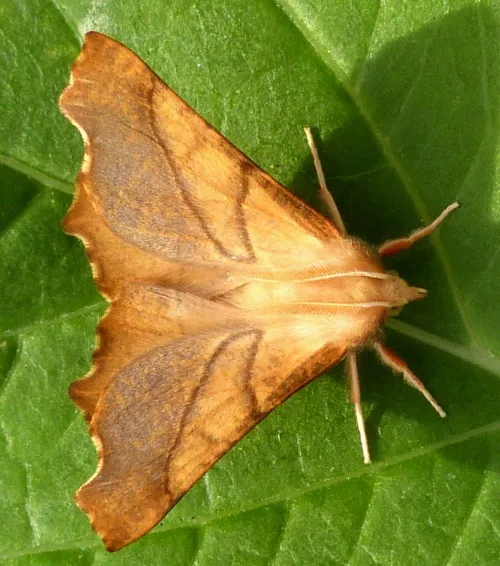
Dusky Thorn
Ennomos fuscantaria
Wingspan 35-40 mm. Generally distinguished by its resting position and by the mauvish grey or grey brown shading between the outer cross line and outer edge of wing. Shape of cross line on forewing slightly variable. The species is found in deciduous
Dusky-back leaf roller - Hodges#3649
Archips mortuana
Identification: Similar to Archips argyrospila , but darker. " Archips mortuana is part of the Archips argyrospila species complex, and it was once hypothesized to simply be a dark form of A. argyrospila (Powell, 1964). Chapman and Lienk demonstrated
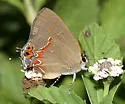
Dusky-blue Groundstreak - Hodges#4300
Calycopis isobeon
Identification: Very similar to Red-banded Hairstreak, but red lines on underwings are thinner.
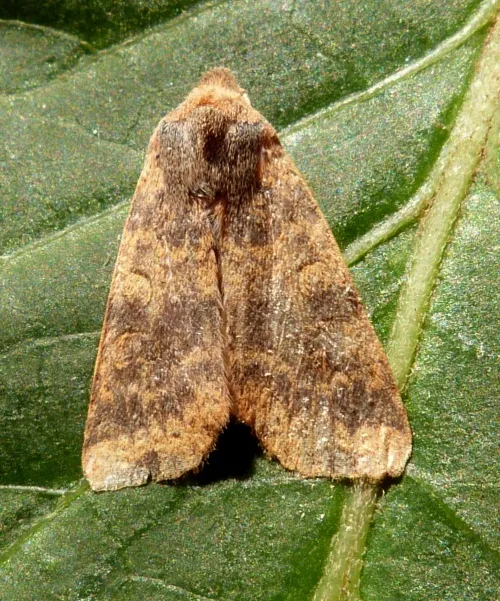
Dusky-lemon Sallow
Cirrhia gilvago
Wingspan 32-38 mm. The forewing in a very pale orangey yellow with various markings of pale brown and pinks. Broadleaved woodland, hedges, parks and gardens. It flies from late August to October, and is attracted to sugar as well as light. The larvae
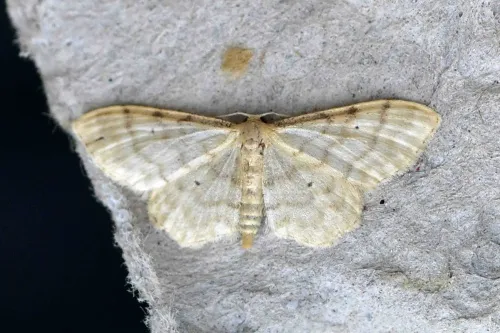
Dwarf Cream Wave
Idaea fuscovenosa
Wingspan 19 to 22 mm. A very delicate looking pale cream moth it is fairly distinctive with a narrow, dark costal streak. The dark spots on the wings are also usually fairly prominent in this species. It inhabits open areas of woodland, parks and gar
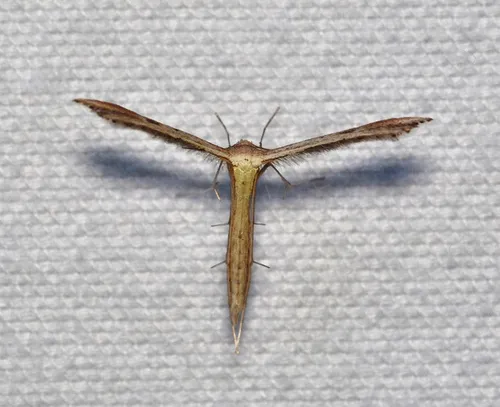
Dwarf Plume Moth
Exelastis pumilio
Hepalastis pumilio is a moth of the family Pterophoridae. It has worldwide tropical distribution, including Argentina, Brazil, Colombia, Costa Rica, Cuba, Ecuador, Guadeloupe, Jamaica, Mexico, Puerto Rico, Surinam, Japan, Micronesia, South Africa the
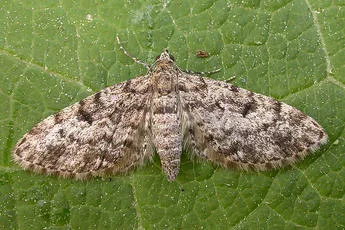
Dwarf Pug
Eupithecia tantillaria
Wingspan 16-19 mm. Despite its English name, this is by no means the smallest of the Pug moths in Britain. Occurs in coniferous woodlands and parkland. The adults appear on the wing in June and July. The nondescript brownish caterpillars feed on the
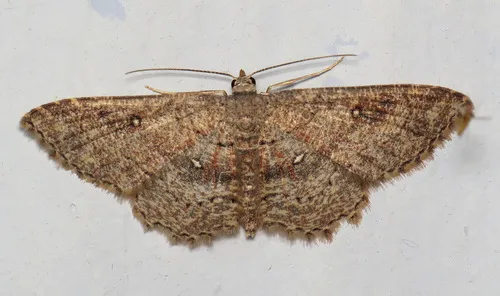
Dwarf Tawny Wave - Hodges#7140
Cyclophora nanaria
Identification: More reddish, with semi-solid black AM & PM lines. White spot on each wing, surrounded with black. Genitalia: Often attracted to lights. Types: Holotype as Ephyra nanaria female by Walker 1861. Type Locality: Dominican Republic. In th
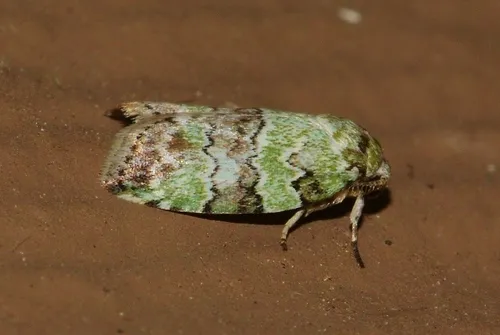
Dyar's Lichen Moth
Afrida ydatodes
Afrida ydatodes, or Dyar's lichen moth, is a species of moth in the family Nolidae (nolid moths). It was described by Harrison Gray Dyar Jr. in 1913 and is found in North America, where it has been recorded from Alabama, Florida, Mississippi, North C
Dyar's Looper - Hodges#6781
Gabriola dyari
Identification: Adult: body slender; antennae pectinate (at least in males); forewing brownish-gray with black speckling and lines; AM and PM lines thick, AM line slightly curved, PM line zigzagged or sinuate; two or three black wedges at costa near
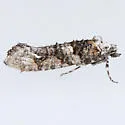
Dyotopasta yumaella - Hodges#0322
Dyotopasta yumaella
Commonly found in association with Melitara (pricklypear borer) larvae. ( 4 )
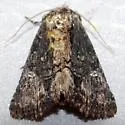
Dypterygia patina - Hodges#9561
Dypterygia patina
Identification: There are apparently two divergent color forms of this species, one mostly brown with various black streaks and crosslines, the other almost entirely blackish with just a narrow buff inner margin on the FWs.
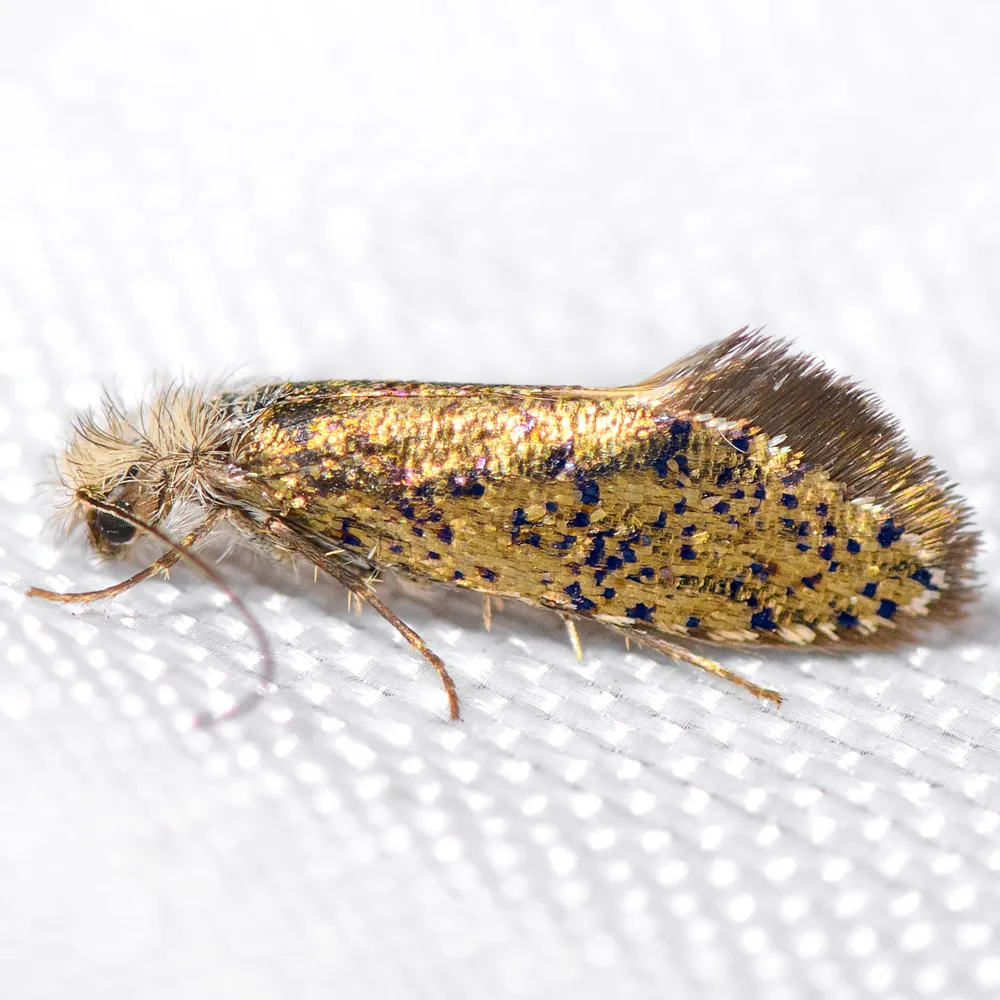
Dyseriocrania auricyanea - Hodges#0004
Dyseriocrania auricyanea
Identification: Adult - mottled golden, distinctly marked by shining purplish, most conspicuously by three regular, transverse bands slanted outward from the dorsal margin. Larva - head dark brown, abdomen appearing whitish except for a minute pair o
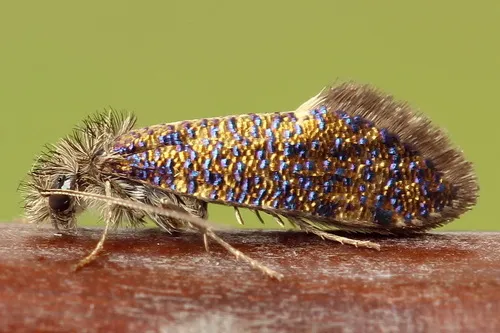
Dyseriocrania subpurpurella
Dyseriocrania subpurpurella
Wingspan 9-14 mm. The moths have metallic golden wings, lightly speckled with purplish or blue tiny spots. The relatively uncommon form fastuosella is much more richly marked with purple spots or striations. The larva mines the leaves of Oak. The lea
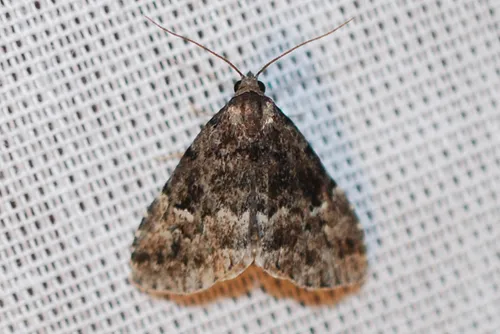
Dyspyralis nigellus - Hodges#8428
Dyspyralis nigellus
Identification: Head: Head and thorax dark purplish brown. Antenna: Simple, reaches to about mid-wing. Thorax: Head and thorax dark purplish brown. Wings: Forewings: Dark brown, purplish sheen. Jagged black line near base (a.m. line). No orbicular sp
Dyspyralis noloides - Hodges#8429
Dyspyralis noloides
Identification: Barnes & McDunnough (1916) original description is online in print references. "Palpi blackish outwardly, the joints tipped with yellow; front and thorax pale ochreous mixed with a few black scales, the latter crossed by a dark band o
Dysstroma colvillei - Hodges#7192
Dysstroma colvillei
Identification: Blackmore original description in PDF. Specimens identified by DNA analysis (BOLD).
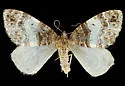
Dysstroma mancipata - Hodges#7195
Dysstroma mancipata
Identification: Specimen determined by DNA analysis (BOLD).
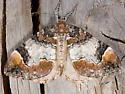
Dysstroma ochrofuscaria - Hodges#7186
Dysstroma ochrofuscaria
Identification: Adult: forewing color and pattern variable but the image shown at CBIF (presumably representing a typical specimen) is virtually identical to the photo by John Davis in typical specimens, forewing basal area, AM band, and PM band dark
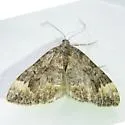
Dysstroma suspectata - Hodges#7185
Dysstroma suspectata
Identification: Dysstroma suspectata has a dark brown-grey hindwing and forewing especially the underside which is much darker than other species. ID confirmed by Chuck Harp.
Eana argentana of authors - Hodges#3568
Eana argentana-of-authors
Identification: Adult - shining cream white. Rare in collections.
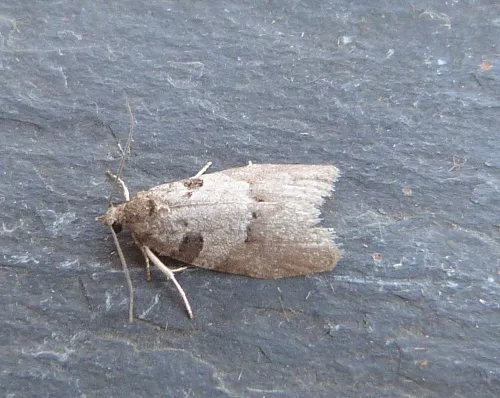
Eana incanana
Eana incanana
Wingspan 17 to 23 mm. The curved dark bands at the base of the forewings are quite distinctive, but their intensity varies, and the female is generally paler than the male. It inhabits woodland and is quite secretive, but can be attracted to light at
Eana osseana of authors - Hodges#3570
Eana osseana-of-authors
Eana osseana of authors - Hodges#3570 (Eana osseana-of-authors) is a species in the family Tortricidae, commonly known as tortricid moths, belonging to the order Lepidoptera (Butterflies and Moths). It is classified within the subfamily Tortricinae,
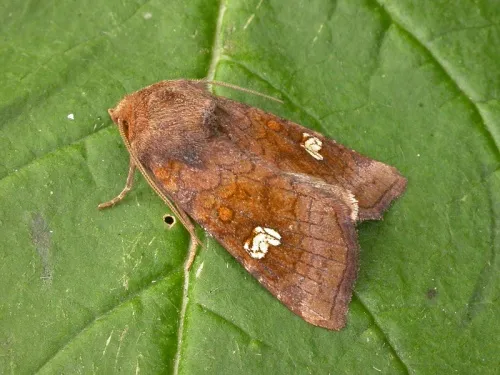
Ear Moth
Amphipoea oculea
There are possible (although unlikely in VC55) confusion species so gen det confirmation is required for this species. Gen det is required to identify this species, otherwise please record as Amphipoea oculea agg. Has one generation per year. The lar
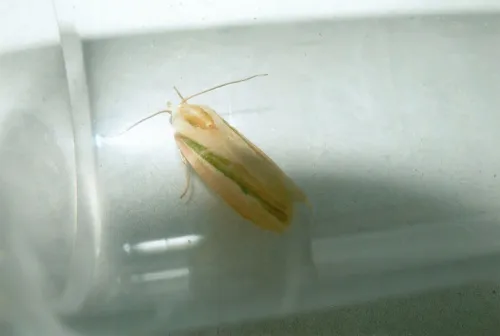
Earias vittella
Earias vittella
Wingspan 17 to 23 mm. A very distinctive green and white species. Occurring in Britain only as an accidental import or vagrant. The first British specimens were recorded in June and early July. The larva of this species has been found several times i
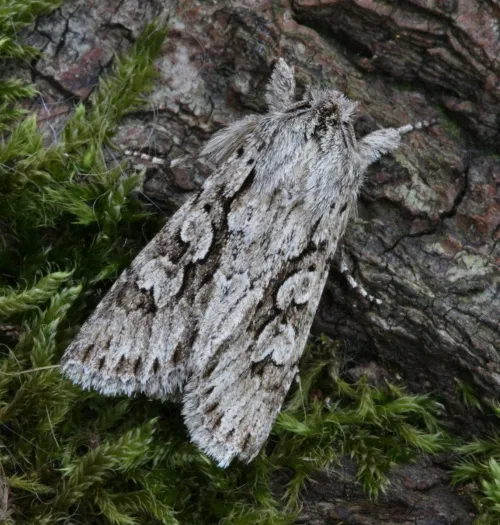
Early Grey
Xylocampa areola
Wingspan 32-40 mm. Forewing ash grey, rough in texture and marbled with blackish grey. Oval and kidney mark are pale and there is an additional oval joined to the first, and also to the kidney mark in most cases. Ground colour varies with some exampl
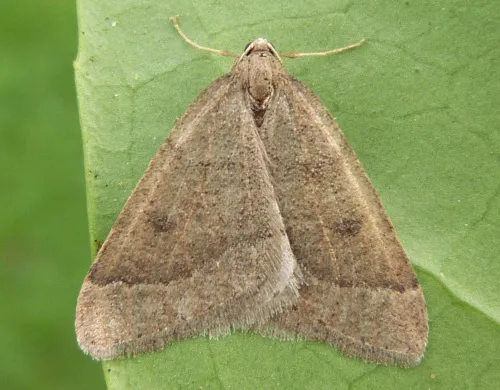
Early Moth
Theria primaria
Wingspan 32-37 mm. Like many other winter species, the females are almost wingless. The male is a brown moth usually with a darker spot on each wing. This aptly-named species is to be found on the wing in January and February. It feeds on Hawthorn an
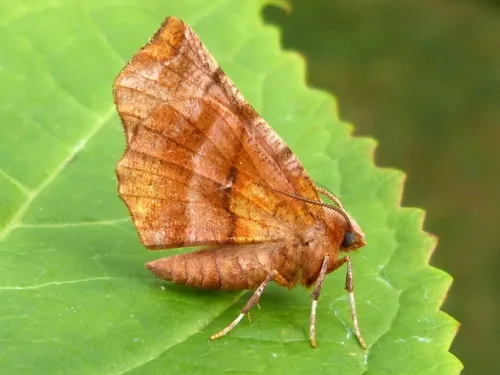
Early Thorn
Selenia dentaria
Wingspan 28-40 mm. The moths in the summer brood are normally paler. Melanic forms occur fairly regularly in parts of northern England. Resting position also distinguishes Early Thorn from all other British Thorns. It holds its wings up over its back
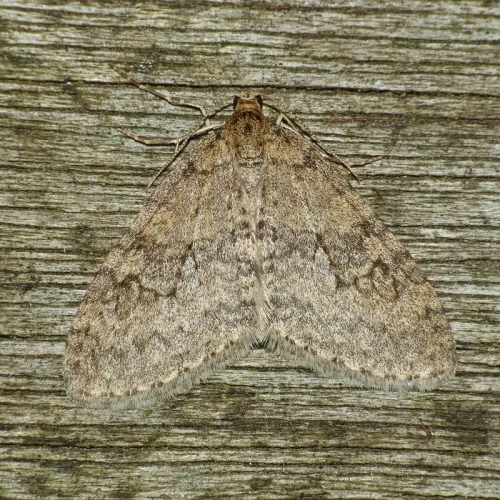
Early Tooth-striped
Trichopteryx carpinata
Wingspan 30 to 34 mm. Typically the moth has ill-defined markings, but the northern fasciata form has more contrasting cross-bands. Woodland habitats and well wooded areas. Flies in April and May in a single generation. The larvae feed on various tre
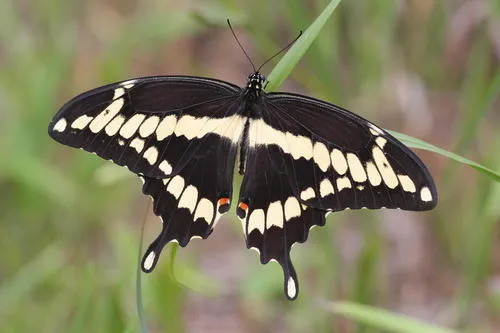
Eastern Giant Swallowtail
Heraclides cresphontes
Papilio cresphontes, the giant swallowtail or in its larval phase the orange dog or orange puppy, is a swallowtail butterfly common in parts of North America and marginally into South America. In the United States and Canada it is mainly found in the
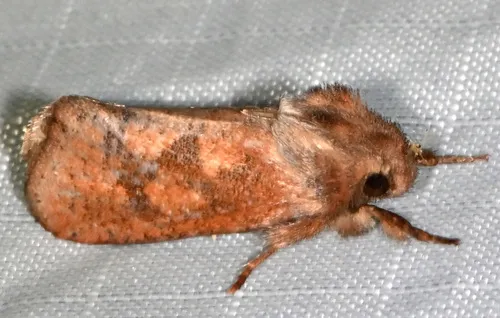
Eastern Grass Tubeworm Moth
Acrolophus plumifrontella
The Eastern Grass-tubeworm Moth (Acrolophus plumifrontella) is a moth of the Acrolophidae family. It is found in North America, including Alabama, Arizona, Arkansas, Florida, Georgia, Illinois, Indiana, Iowa, Kansas, Kentucky, Louisiana, Maryland, Mi
Eastern Grass-veneer - Hodges#5378
Crambus laqueatellus
Identification: Adult: forewing light brownish-yellow with white streak along costa completely bisected by thin brown longitudinal strip; dark streaks extend inward from lower half of outer margin [lacks a separately-dotted terminal line]; upper half
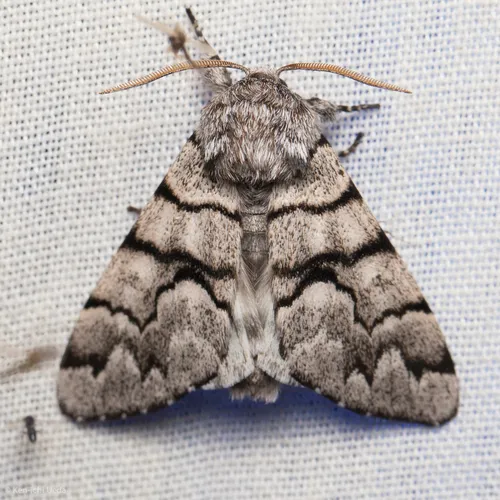
Eastern Panthea - Hodges#9182
Panthea furcilla
Identification: Adult : forewing variably whitish to medium gray with heavy black AM, median, and PM lines; AM and median lines almost straight; PM line curves inward to touch median line near inner margin, then separates again before reaching inner
Eastern Pine Elfin - Hodges#4328
Callophrys niphon
Identification: Distinctive bold pattern on underside of wings
Eastern Pine Seedworm Moth - Hodges#3486
Cydia toreuta
Identification: To separate from the similar Cydia ingens: In Cydia toreuta the PM band is usually unbroken. There are two short bars on the costa between the PM band and ST band, with the one nearest the PM band the shortest. The forewing shows a
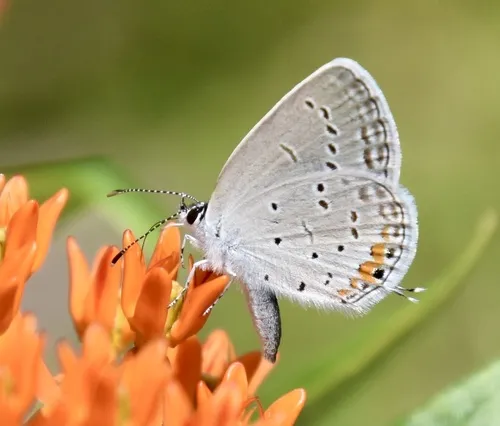
Eastern Tailed-Blue
Everes comyntas
The eastern tailed-blue or eastern tailed blue (Cupido comyntas), also known as Everes comyntas, is a common butterfly of eastern North America. It is a medium-sized butterfly that is distinguished from other blues in its range by the small thin tail
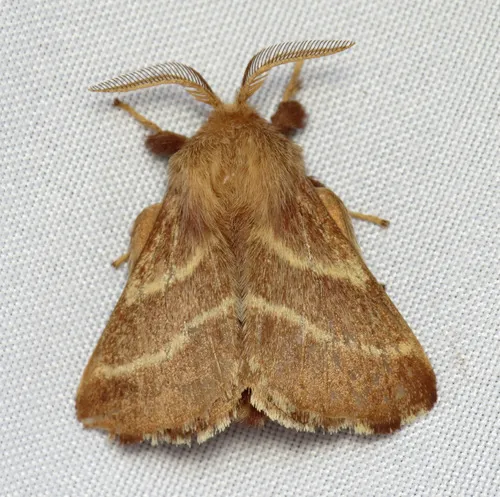
Eastern Tent Caterpillar Moth
Malacosoma americana
The eastern tent caterpillar (Malacosoma americanum) is a species of moth in the family Lasiocampidae, the tent caterpillars or lappet moths. It is univoltine, producing one generation per year. It is a tent caterpillar, a social species that forms c
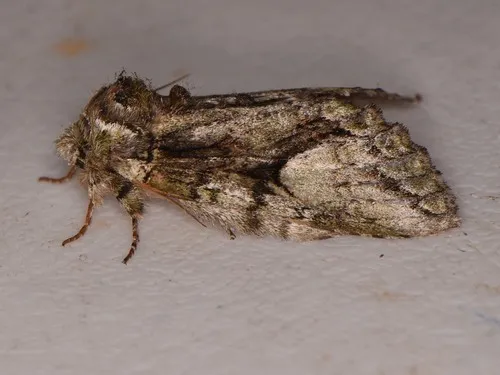
Eastern White-blotched Prominent
Heterocampa pulverea
Heterocampa pulverea is a species of moth in the family Notodontidae (the prominents). It is a widespread species found in oak forests of the eastern United States and Canada. It was formerly treated as a subspecies of Heterocampa umbrata.
Eastern pine catkin borer moth - Hodges#1169
Calosima dianella
Identification: Adamski (2003) stated "The Blastobasinae are probably one of the most commonly collected groups of Gelechioidea in the Americas. Yet this group is one of the least known to science. Generally, species are gray or brown with low inters
Ebony Metria - Hodges#8667
Metria bilineata
Identification: variable, see series of images at Moth Photographers Group Type coll'ed by Townsend, 10 June 1895, Brownsville, Cameron Co., Texas
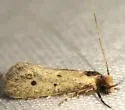
Eccritothrix guenterella - Hodges#0422
Eccritothrix guenterella
Identification: Summary of Chambers description. Forewings straw color and dusted with brownish gray scales. The head is a shade deeper yellow. There are two small brownish gray spots in the middle of the forewing, the one nearest the costal margin i
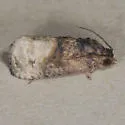
Ecdytolopha mana - Hodges#3498
Ecdytolopha mana
Identification: Adult - see original description in Print References.
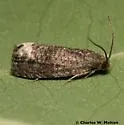
Ecdytolopha nigrita - Hodges#3495.3
Ecdytolopha nigrita
Identification: " Ecdytolopha nigrita is distinguished superficially from all other congeners by a combination of its small size and nearly uniform dark brown forewing, with the exception of a contrasting whitish blotch in the tornus" .
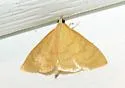
Ecpyrrhorrhoe puralis - Hodges#4973.1
Ecpyrrhorrhoe puralis
Naturalized species from Asia. Ecpyrrhorrhoe puralis was first reported in the United States from Alabama, Georgia, Kentucky, Maryland, Mississippi, Pennsylvania, South Carolina, Tennessee, and West Virginia by Solis et al. .
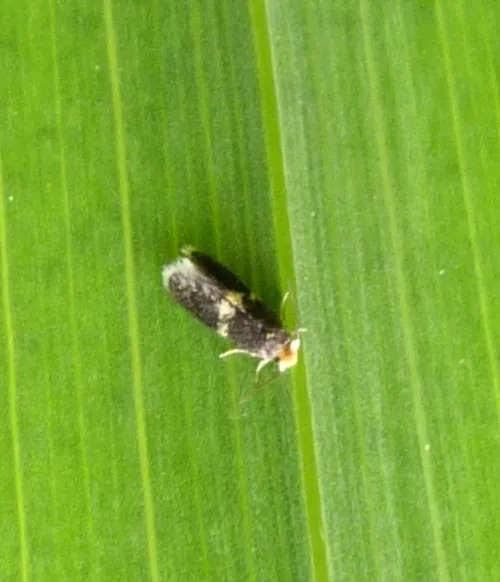
Ectoedemia albifasciella
Ectoedemia albifasciella
Wingspan 5 to 6 mm. The adults have coarsely scaled dark brownish wings with a broken creamy fascia, usually as two blotches. The larval foodplant is oak, and the mine begins with a narrow gallery following the midrib or a vein, and then becoming a r
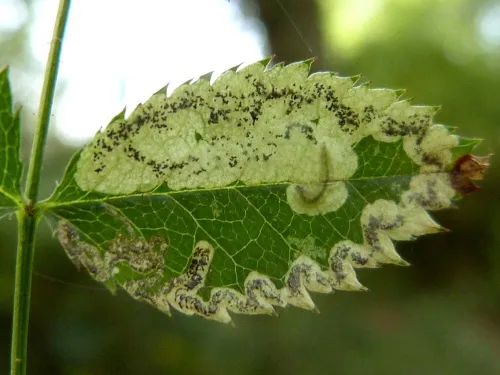
Ectoedemia angulifasciella
Ectoedemia angulifasciella
Wingspan 5 to 6 mm. The larva mines the leaves of Rose (and sometimes on Salad Burnet). Gardens, parks and other areas where the larval foodplants occur. The adults fly during July and the mines can be found from September to November. The larva crea
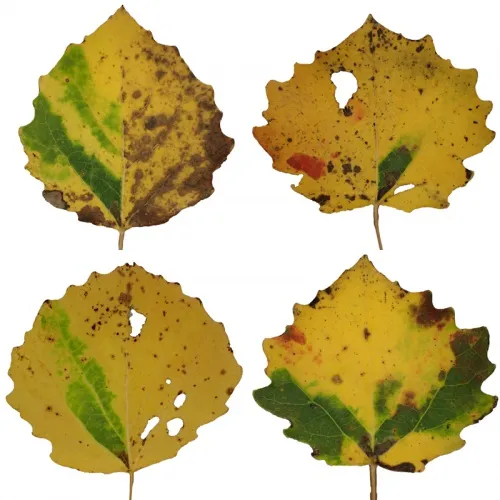
Ectoedemia argyropeza
Ectoedemia argyropeza
A small moth with a wingspan of about 7 mm. It lacks discrete white spots but does show a suggestion of mid-costal and dorsal white spots; frontal tuft pale ferruginous, collar concolorous; eyecaps white. The larva mines the leaves of Aspen, first ga
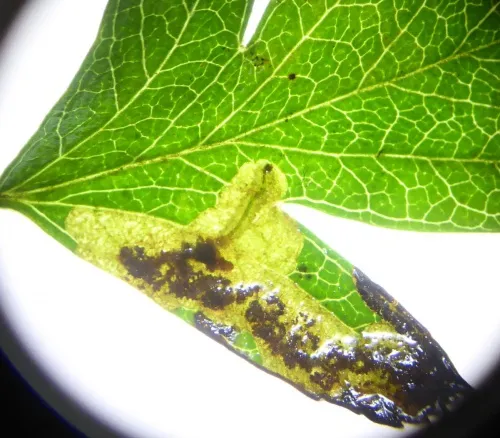
Ectoedemia atricollis
Ectoedemia atricollis
The larvae mine the leaves of Hawthorn, Apple and other Rosaceae species. It has a distinctive black head, usually visible in the mine without being dissected out. Initially, the larvae form galleries along the edge of the leaf, leading to a large bl
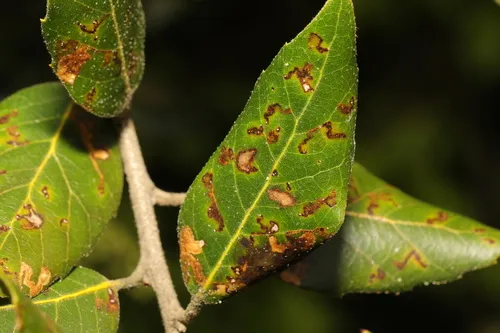
Ectoedemia heringella
Ectoedemia heringella
The larvae feed on Holm Oak ( Quercus ilex ) and related species, creating a contorted gallery mine filled with dark frass. The first part is very narrow, but it widens abruptly in the later part. Usually there are several larvae mining a single leaf
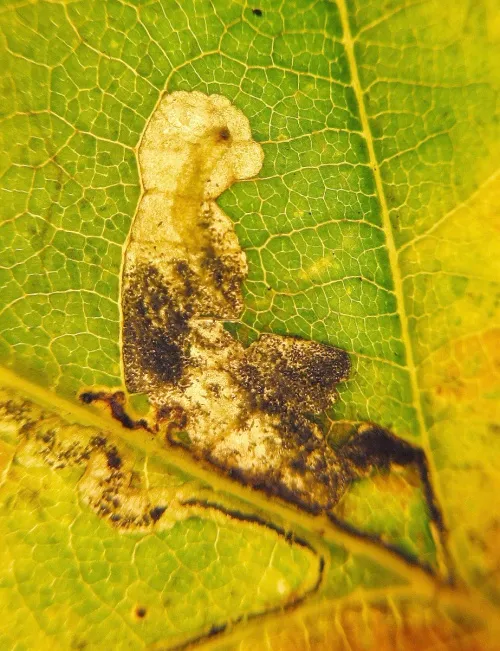
Ectoedemia heringi
Ectoedemia heringi
Wingspan about 6 mm. Similar in habits and appearance to Ectoedemia subbimaculella , but the adults have a tendency to have more pale around the base of the wing, and whiter spots The larva creates a mine in a leaf of Oak, usually close to the midrib
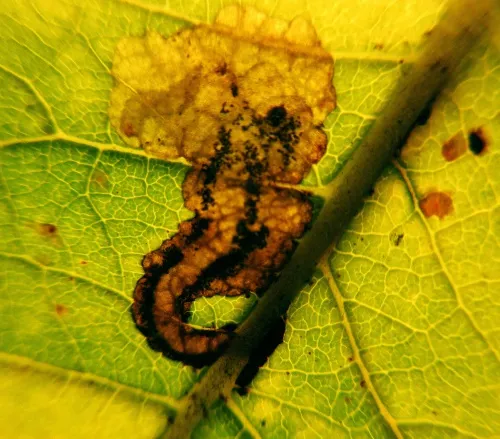
Ectoedemia intimella
Ectoedemia intimella
Wingspan about 6 mm. The adult is mostly blackish with a slight purple sheen and an obvious white or creamy blotch. The head is orange or yellowish. The larvae mine the leaves of sallow ( Salix ), especially S. caprea and S cinerea , initially gallin
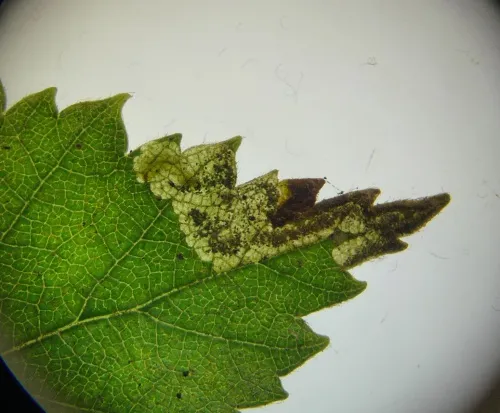
Ectoedemia minimella
Ectoedemia minimella
Wingspan 5 to 6 mm. The adult moths are very similar to Ectoedemia occultella, being blackish with whitish fascia and eyecaps. Adults may require identification by gen det. Leafmine records need to be supported by images including one of the mine bac
Ectoedemia nyssaefoliella - Hodges#0050
Ectoedemia nyssaefoliella
Ectoedemia nyssaefoliella is a moth of the Nepticulidae family. It is found in Kentucky, Ohio and North Carolina in the United States.
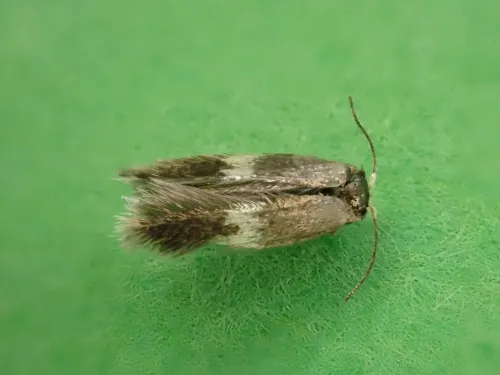
Ectoedemia occultella
Ectoedemia occultella
Wingspan 5 to 7 mm. The adults are quite large for a Nepticulid, and have blackish forewings with a hint of violet, and contrasting whitish fascia and eye-caps. The males have black heads, those of the female orange or yellow. The larva mines the lea
Ectoedemia similella - Hodges#0045
Ectoedemia similella
Identification: Determined by Erik J. van Nieukerken (DNA analysis).
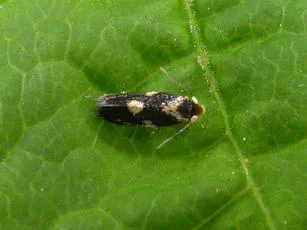
Ectoedemia subbimaculella
Ectoedemia subbimaculella
Wingspan 5 to 6 mm. The adults are similar to E. heringi but otherwise quite distinctive, with two creamy spots and a creamy basal patch on a violet-tinged blackish forewing. The larvae mine Oak leaves, initially in a gallery following a vein, then c
Ectoedemia turbidella
Ectoedemia turbidella
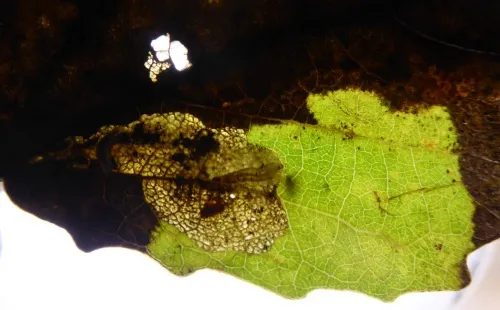
Wingspan about 6 or 7 mm. The adult moths are greyish in ground colour with creamy white forewing patches with an orange or yellowish head tuft and whitish eyecaps, but the species cannot be reliably identified as adults by external characteristics a
Ectypia mexicana - Hodges#8248
Ectypia mexicana
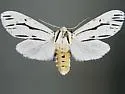
Identification: Appears to be distinguished from Ectypia clio by having thinner black streaks on the FWs and only two black stripes on the thorax. Both species are distinguished from Ectypia bivittata by have black streaks on the FWs rather than a se
Edible Monkey
Striphnopteryx edulis
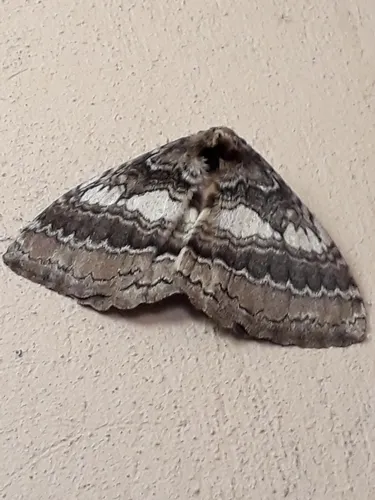
Striphnopteryx is a monotypic moth genus in the family Eupterotidae described by Hans Daniel Johan Wallengren in 1858. Its only species, Striphnopteryx edulis, was described by Jean Baptiste Boisduval in 1847. It is found in South Africa, where it ha
Edith's Checkerspot - Hodges#4520
Euphydryas editha
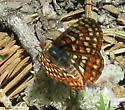
Taylor’s checkerspot ( Euphydryas editha taylori ) is in imminent danger of going extinct.
Edith's Copper - Hodges#4254
Lycaena editha
Sometimes considered to be a subspecies of Lycaena xanthoides , which it replaces to the east. It is a smaller, but similar and more strongly patterned insect. Lycaena dione is again larger, with smaller spots below, and replaces this species to the
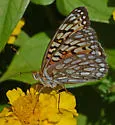
Edwards' Fritillary - Hodges#4454
Speyeria edwardsii
Identification: Upperside of both wings tawny orange with black border and markings. Underside green or gray-green with narrow buff submarginal band and metallic silver markings.
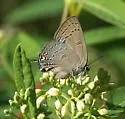
Edwards' Hairstreak - Hodges#4281
Satyrium edwardsii
Identification: Adult: dark brown above, sometimes with an orange spot above the tail. The underside is pale brown. It is best distinguished from most similar hairstreaks by the row of white-rimmed rounded spots on the undersides (in some specimens,
Edwards' Wasp Moth - Hodges#8270
Lymire edwardsii
Identification: Adult - wings and thorax are bluish gray. The abdomen is blue dorsally and white ventrally. The prothorax and head are orange-yellow ventrally. Dorsally and laterally the posterior portion of the head and anterior margin of the protho
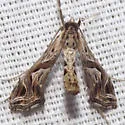
Eggplant Leafroller - Hodges#5107
Lineodes integra
Identification: Adult - forewing light brown, long and slender with pointed apex; dark brown arc begins at inner margin about one-third distance from base, and ends in subterminal area; white-outlined dark brown semicircular patch along costa near ap
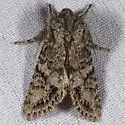
Egira cognata - Hodges#10509
Egira cognata
Identification: Adult: forewing ground color whitish with black markings and gray shading; dark blotches in median area at costa and at inner margin; AM line zigzag, with hollow triangular claviform spot; basal dash lacking; reniform spot contains sh
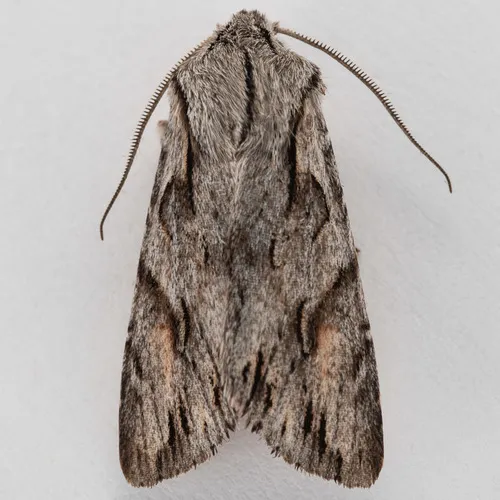
Egira crucialis - Hodges#10508
Egira crucialis
Identification: Adult: forewing light to medium gray with black basal dash and black markings on either side of orbicular spot and below reniform spot; subterminal line broken into two sets of black dashes set at slight angle to outer margin; hindwin
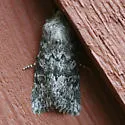
Egira curialis - Hodges#10511
Egira curialis
Identification: Larva - mottled red, gray, and black, with a red and white lateral band. ( 3 )
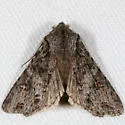
Egira hiemalis - Hodges#10505
Egira hiemalis
Identification: Adult : forewing mottled light gray, darker gray, and reddish-brown; black basal dash curves toward costa, enclosing pale basal patch; reniform spot with reddish filling; orbicular spot pale, oblique, oblong; subterminal area lighter
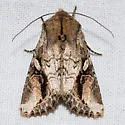
Egira rubrica - Hodges#10514
Egira rubrica
Identification: Adult: forewing a mix of pale yellow, light brown, dark brown, and black; dark brown or black area around reniform spot and descending to ST line; pale apical patch, black basal dash, and black shading in terminal area; lower end of r
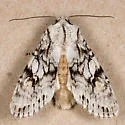
Egira simplex - Hodges#10506
Egira simplex
Identification: Specimens identified by DNA analysis:
Egira variabilis - Hodges#10504
Egira variabilis
Identification: Smith (1891) original description as Stretchia variabilis is available online in the print references.
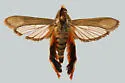
Eichlinia grandis - Hodges#2539
Eichlinia grandis
Identification: Melittia grandis (Strecker) - female Det. R. E. Fleischer, 2010 The host of this large moth is Curcurbita foetidissima . I have captured this moth in both southwest Kansas and southern Arizona but it is also found in California, Texas
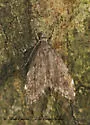
Eido trimaculella - Hodges#1068
Eido trimaculella
Identification: Head: Grayish-brown, a few rough scales, but face smooth. Palpi thick, curved up over head; gray with a wide black stripe. Some white on 2nd segment, with a large tuft on last segment. Antenna: Slender, about 2/3 as long as wing: Gra
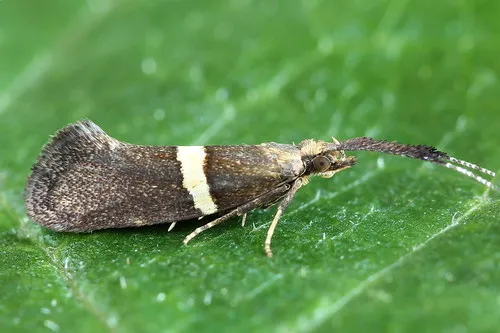
Eidophasia messingiella
Eidophasia messingiella
Wingspan 14 to 16 mm. Its blackish colouration and pale central band make this a very distinctive species. Please provide a photograph to support your record for this uncommon species. Found on wasteland, being closely associated with its foodplant -
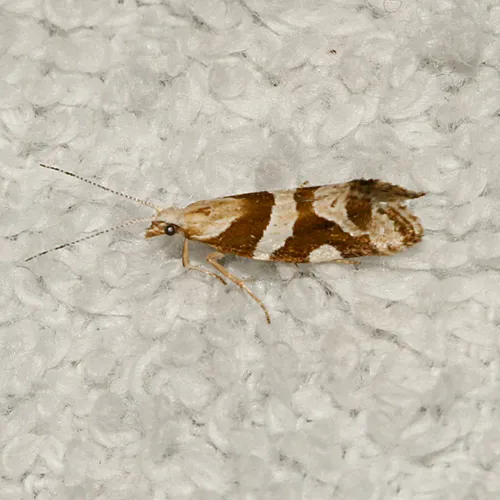
Eidophasia vanella - Hodges#2365
Eidophasia vanella
Eidophasia vanella is a moth of the family Plutellidae. It is found in North America from Alberta to California.
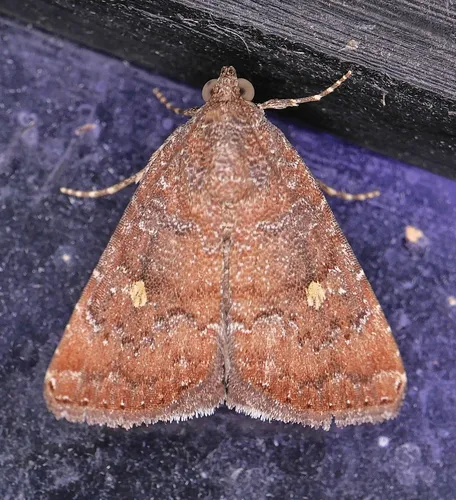
Eight-Spot - Hodges#9070
Amyna stricta
Identification: Adult: forewing variably reddish-brown to dark brown with indistinct black mottling and lines in basal half; reniform spot shaped like an "8", the lower half either solid white to orangish or filled with ground color, and the upper ha
Elachista albidella - Hodges#1127
Elachista albidella
Identification: Specimen identified by DNA analysis (BOLD).