
Butterflies and Moths
Order Lepidoptera
The Butterflies and Moths (Order Lepidoptera) includes 11,813 species across 112 families and 2,787 genera in our directory.
About Butterflies and Moths
Lepidoptera includes approximately 180,000 described species of butterflies and moths. Moths outnumber butterflies roughly 10:1. The monarch butterfly's eastern population has declined by more than 80% since the mid-1990s, and the western population by over 95% since the 1980s. The IUCN lists the migratory monarch as Vulnerable.
Economic Impact
Lepidoptera are critical pollinators. In Europe, grassland butterfly species have declined by almost 50% since the early 1990s. In the UK, three-quarters of butterflies are in decline. In the U.S., five butterfly species have gone extinct since 1950, with 29 listed as endangered.
Ecological Role
Butterflies and moths are essential indicators of ecosystem health. As caterpillars, they are a primary food source for birds - a single nest of blue tit chicks requires ~10,000 caterpillars. Adult moths pollinate many night-blooming plants.
Families in Lepidoptera (112)
Species in Lepidoptera (11,813)
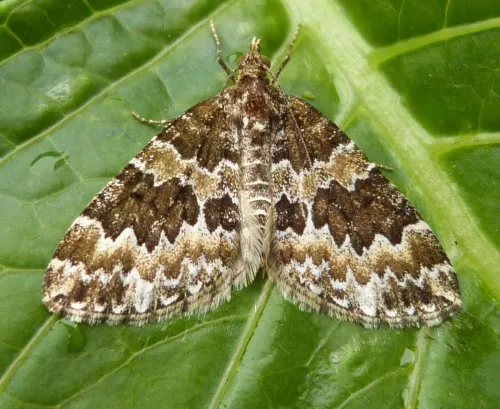
Broken-barred Carpet
Electrophaes corylata
Wingspan 22-30 mm. Easily recognised by the characteristic central band which is pinched at the mid-point. Woodland, scrubland and other bushy places. The single generation is on the wing in May and June when it is attracted to light. The larvae feed
Broken-line Hypenodes - Hodges#8421
Hypenodes fractilinea
Identification: Adult: tiny (for a noctuid) long-winged light gray or dirty white moth with variable darker gray markings; forewing lines usually incomplete and marked by a series of dots; darker median shade often present; terminal area usually dark
Broken-lined Brocade - Hodges#9406
Mesapamea fractilinea
Identification: Adult: forewing usually dark brown to blackish along costa, upper median area, and outer margin, and pale brown to yellowish in remaining areas; reniform spot white with black mottling; terminal line with several pale dots; hindwing b
Bronze Copper - Hodges#4256
Lycaena hyllus
Identification: One of the easiest Coppers to recognize. Size is large for a Copper. Underside of all wings is scattered with prominent small rounded black spots. Front wings below are light orange, paler toward the margins; hind wings below are p
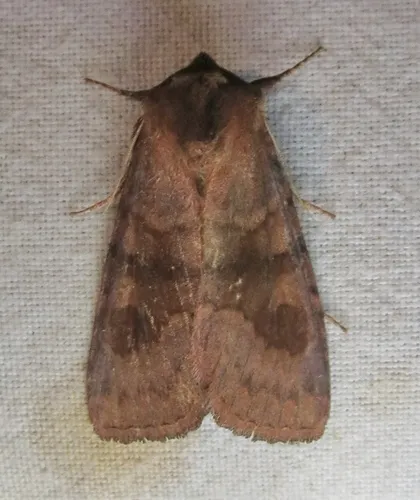
Bronzed Cutworm Moth
Nephelodes minians
The Bronzed Cutworm or Shaded Umber Moth (Nephelodes minians) is a moth of the Noctuidae family. It is found in most of North America, except Florida and adjacent states.
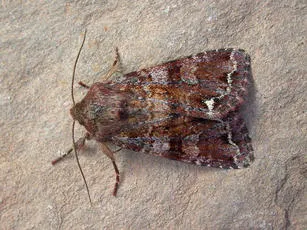
Broom Moth
Ceramica pisi
Wingspan 32-37 mm. A very variable species, with the ground colour varying between greyish brown to a dark chestnut colour, and the intensity of the markings varying too. Late May to Early August when it can be attracted to light. The distinctive bro
Brown Arches Moth - Hodges#10398
Lacinipolia stricta
Identification: Adult: forewing dark brown in median area, paler yellowish-brown in basal and subterminal areas; terminal area dark brown mixed with black; reniform spot pale brown, angular, with conspicuous thick white outline; hindwing dirty browni
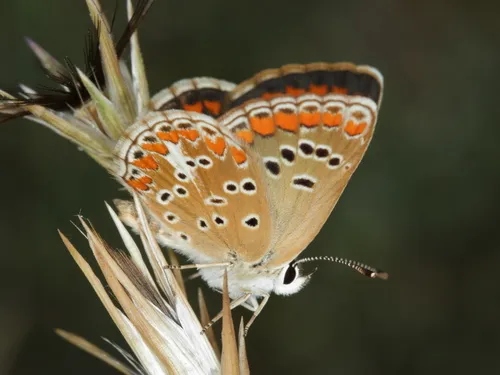
Brown Argus
Aricia agestis
Unlike most other 'blues', the Brown Argus has no blue scales on its upper side, both sexes being primarily brown in colour as its common name suggests, although the butterfly does exhibit a blue sheen when at certain angles to the light. On the unde
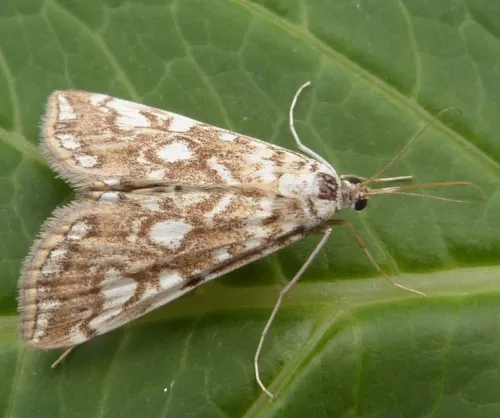
Brown China-mark
Elophila nymphaeata
Wingspan 22-30 mm. This species is quite variable and some examples are quite dark and dull-looking, whereas others can have delicately-patterned white patches and streaks. The group of moths known as China-marks are unusual in that their larvae are
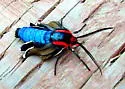
Brown Ctenucha - Hodges#8265
Ctenucha brunnea
Identification: Stretch original description and the Hampson description are both available online in the print references. Forewings pale brown with black veins and blue spot at wing base, costa and fringe of outer margin is white. The population is
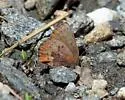
Brown Elfin - Hodges#4322
Callophrys augustinus
Identification: Adult: Has no tails. Upperside of male grayish-brown; female more reddish-brown. Underside of forewing chestnut brown with dark irregular postmedian line. Underside of hindwing sharply divided between dark brown basal half and light c
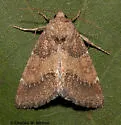
Brown Flower Moth - Hodges#11140
Schinia saturata
Identification: Grote (1874) original description as Lygranthoecia saturata is in the print references.
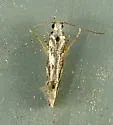
Brown Hemlock Needleminer Moth - Hodges#1819
Coleotechnites macleodi
Identification: Specimen identified by DNA analysis (BOLD) ( 4 )
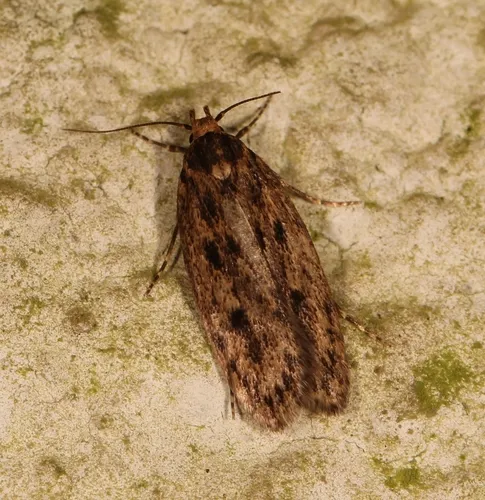
Brown House-moth
Hofmannophila pseudospretella
Wingspan 15-26 mm. The general appearance is fairly constant but the species does show a large size variation. A common inhabitant inside houses and is often found on indoor walls as it begins to go dark. It can be found on the wing at any time of th
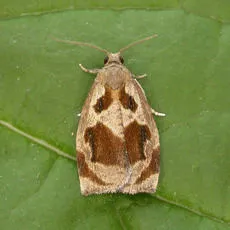
Brown Oak Tortrix
Archips crataegana
Wingspan male: about 20mm, female: about 25mm. This is a sexually dimorphic species the females being larger than the males, which have a 'costal fold' in common with a number of related species. The larvae feed on a number of deciduous trees, includ
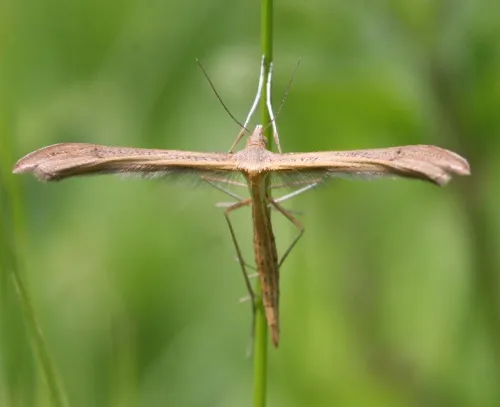
Brown Plume
Stenoptilia pterodactyla
Wingspan 20 to 26 mm. Fresh specimens can be distinguished by their white costal cilia and ochreous, almost rust wing colour from the similar Stenoptilia bipunctidactyla, which has dark costal cilia and grey-brown wings. These differences may be less
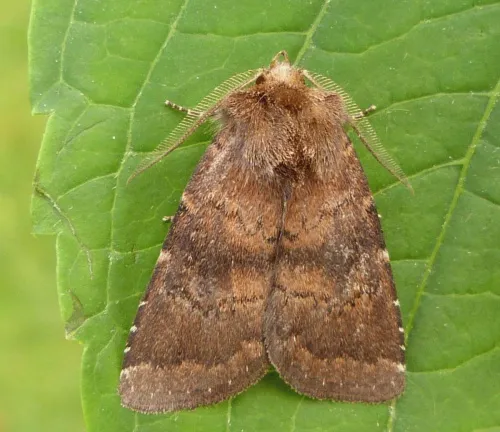
Brown Rustic
Rusina ferruginea
Wingspan 32-40 mm. This moth is sexually dimorphic, the males having broader and squarer forewings than the female, and more feathery antennae. It frequents woodland and a range of more open habitats. The larvae feed on a number of herbaceous plants,
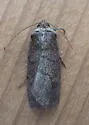
Brown Sallow - Hodges#10062
Sympistis stabilis
Identification: A medium-small (2.7-3.0 cm. ws) somewhat shiny dark reddish brown moth with no significant wing markings. The curved PM line and the veins on the outer third of the FW are very faintly marked in darker scales in most specimens. Normal
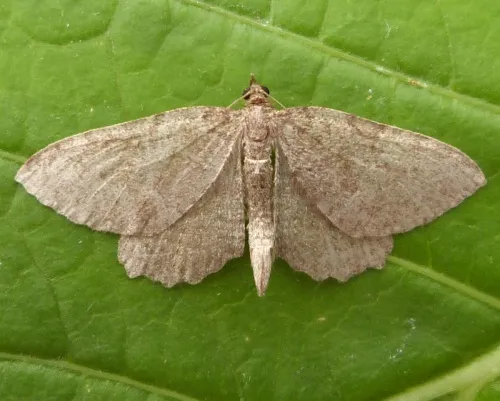
Brown Scallop
Philereme vetulata
Wingspan 24 to 30 mm. A relatively indistinctly-marked species, which has scalloped edges to both fore and hindwings, but more noticeably on the hindwings. The moths fly during July, and occasionally come to light. The caterpillar is dark grey with p
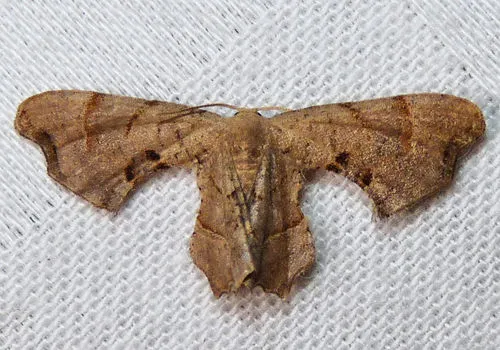
Brown Scoopwing
Calledapteryx dryopterata
Calledapteryx is a monotypic scoopwing moth genus in the family Uraniidae. Its only species, Calledapteryx dryopterata, the brown scoopwing moth, is found in the eastern United States. Both the genus and species were first described by Augustus Radcl
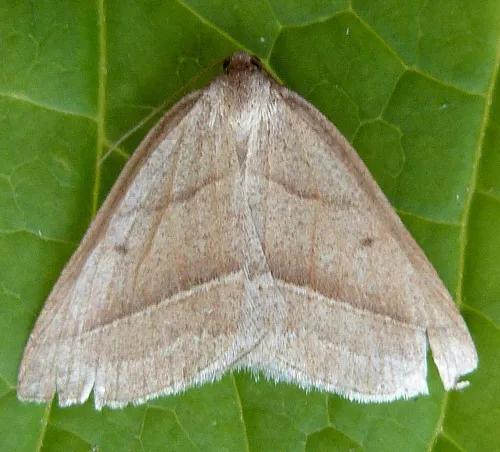
Brown Silver-line
Petrophora chlorosata
Woodland and upland areas where its foodplant Bracken ( Pterideum aquilinum) grows in profusion. It flies in a single generation during May and June. The species flies at dusk and into the night. It is strongly attracted to light and can often be dis
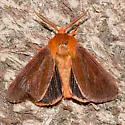
Brown Tiger Moth - Hodges#8139
Spilosoma pteridis
Identification: head and thorax rusty orange; forewing dark reddish-brown with blackish shading and faint lines; discal spot black, indistinct hindwing dark charcoal gray with black discal spot and brown fringe
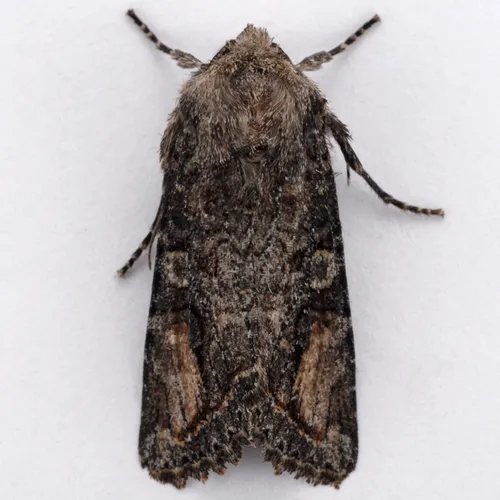
Brown Woodling - Hodges#10515
Egira perlubens
Identification: Adult: forewing mottled yellowish, brown, gray, and black with dark reddish subapical patch along costa, and whitish or pale gray orbicular spot; reniform spot with dirty yellowish or orangish filling in upper half, and black filling
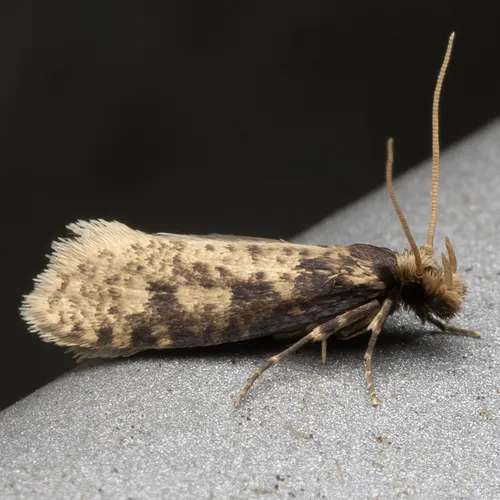
Brown-blotched Amydria Moth
Amydria effrenatella
Amydria effrentella is a moth of the family Acrolophidae. It is found in North America, including Alabama, Arizona, Arkansas, California, Georgia, Illinois, Indiana, Kentucky, Maryland, Massachusetts, Minnesota, Mississippi, Nevada, New Brunswick, Ne
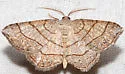
Brown-bordered Geometer - Hodges#6272
Eumacaria madopata
Identification: Adult: wings light tan to gray with darker brown shading beyond slightly wavy PM line; veins light; forewing AM line sharply angled; median line straight [description by Charles Covell] locally common but rare in parts of its range (e
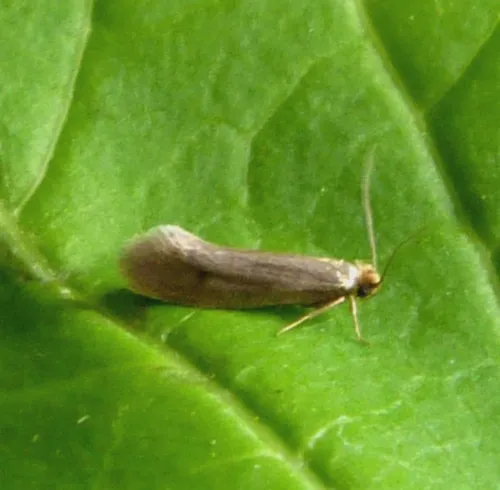
Brown-dotted Clothes Moth
Niditinea fuscella
Wingspan around 14 mm. A small dull brown moth with two or three darker spots. Various habitats where a larval food source is available. Sometimes found in chicken houses. The moths, which are on the wing from May to September, generally fly from lat
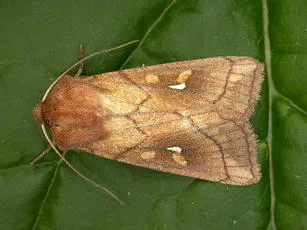
Brown-line Bright-eye
Mythimna conigera
Wingspan 30 to 35 mm. The wings have a conspicuous tear shaped white mark and brown cross-lines and veins near the outer edge. The adults fly in June and July from dusk. The larvae are nocturnal and feed on grasses, particularly Cock's-foot and Commo
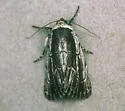
Brown-lined Sallow - Hodges#10059
Sympistis badistriga
Identification: forewing brown with variable white scaling and small black streaks in subterminal area; AM and PM lines very thin, curved; black basal dash extends to PM line; another black dash extends through reniform spot and upper PM line hindwin
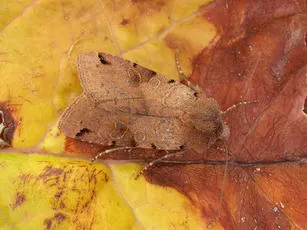
Brown-spot Pinion
Anchoscelis litura
Wingspan 28-35 mm. A fairly distinctive species, with a normally chestnut ground colour and several blackish marks on the leading edge of the forewing. It frequents woodland, heathland and bushy suburban habitats. Flying in September and October, it
Brown-spotted Zale - Hodges#8704
Zale helata
Identification: Warm brown coloration, zig-zag lines. This "species" listed in Covell ( 6 ) apparently represents a complex of pine-feeding Zales that can only be identified based on genitalia. ( See notes under photograph .) Since that sort of detai
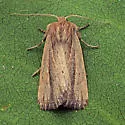
Brown-streaked Rustic - Hodges#9440
Hypocoena rufostrigata
Identification: A medium-size (approx. 2.6-3.0 cm wingspan) orange-brown or tan moth with dark streaking. The forewings are rusty and orange-buff, with a short thick black basal streak and broad dark grey-black median stripe that widens toward the ma
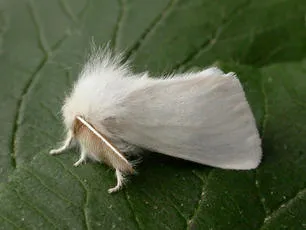
Brown-tail
Euproctis chrysorrhoea
Wingspan 36 to 42 mm. A plain white species when at rest, although the abdomen, as the name suggests, has a brown tuft of hairs which the female uses to cover the eggs with when they are laid. The brown colouration extends along most of the back of t
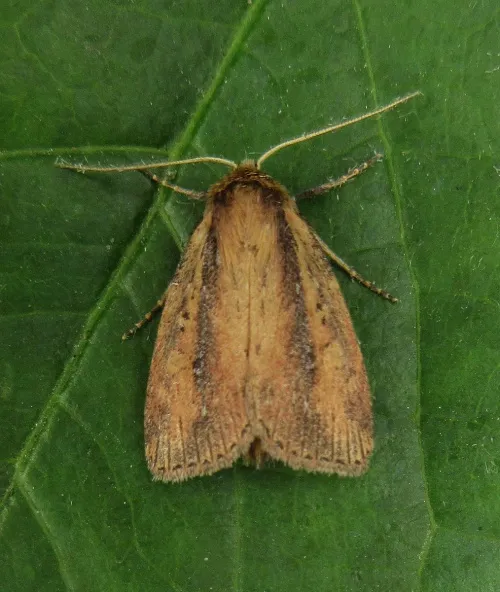
Brown-veined Wainscot
Archanara dissoluta
Wingspan 27 to 33 mm. The dull or reddish straw coloured forewing is dusted with grey and black and has a thick brown streak emanating centrally from the base. In the female this streak is restricted to the base but in the male it extends to the oute
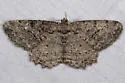
Brownlined Looper - Hodges#6435
Neoalcis californiaria
Identification: Specimens identified by DNA analysis:
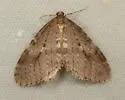
Bruce Spanworm - Hodges#7437
Operophtera bruceata
Identification: Adult: female has underdeveloped wings and does not fly; male forewing ground color grayish-brownish, generally darker than the similar (but larger and whiter) Autumnal Moth; terminal line a series of dark SINGLE dots -- a distinctive
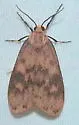
Bruceia pulverina - Hodges#8094
Bruceia pulverina
Identification: The original description of Bruceia pulverina Neumoegen, and a revised description by Hampson (1900), are both available online at the links in the print references below.
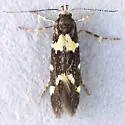
Brymblia quadrimaculella - Hodges#1055
Brymblia quadrimaculella
Identification: Head: Yellowish-white, long haired (scaled). Palpi long, folded; dark brown, tip white. Antenna: About ½ length of wing. Brown with white rings. Segment 1 white. Thorax: Dark brown. Wings: Dark brown with 4 whitish to yellowish spots
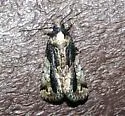
Bryolymnia anthracitaria - Hodges#9686.1
Bryolymnia anthracitaria
Identification: Bryolymnia anthracitaria is easily distinguished from the other members of the genus by the wide black basal patch, and the oblong black patch covering the middle of the outer half of the forewing.
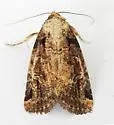
Bryolymnia ensina - Hodges#9683
Bryolymnia ensina
Identification: Follow revision in Lafontaineet al. (2010) in references below. The original description as Oligia ensina Barnes is available online in the print references below. Dark basal patch does not extend to inner margin. Subterminal area wit
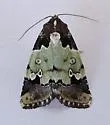
Bryolymnia marti - Hodges#9685.1
Bryolymnia marti
Identification: Holland original description is available online.
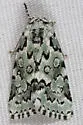
Bryolymnia viridata - Hodges#9296
Bryolymnia viridata
Identification: Lafontaine, Walsh, & Holland revised description is in PDF. Specimens identified by DNA analysis:
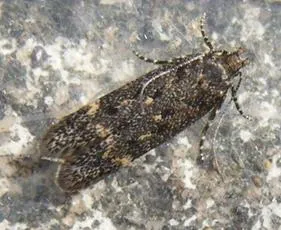
Bryotropha affinis
Bryotropha affinis
Wingspan 11-12 mm. This moth has a variable paler band, sometimes broken, across the forewing about three quarters of the way toward the tip. The moths are on the wing in June and July. The larvae feed on mosses, often on walls during the early part
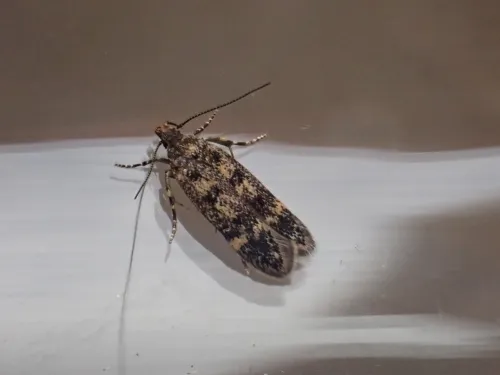
Bryotropha basaltinella
Bryotropha basaltinella
Adult moths are on the wing between late May and August. The larvae feed on mosses during the spring. Having a somewhat disjunct distribution in Britain, this moth occurs in many of the southern English counties, and then is rather scattered northwar
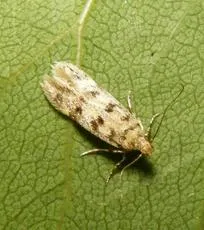
Bryotropha domestica
Bryotropha domestica
Wingspan 12 to 13 mm. The pale buff wings are marked with dark brown blotches. The adult moths fly in a single generation from mid-May to late August, and are readily attracted to light. The larvae feed on mosses growing on walls, in a silken gallery
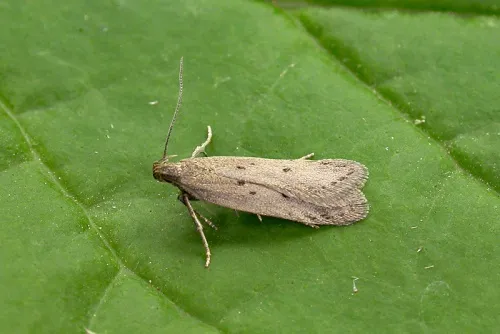
Bryotropha politella
Bryotropha politella
Wingspan 12 to 16 mm. The adult males are brownish-grey with several darker spots, and females are similar, though paler. Both sexes often show a sheen to the forewings. There are similar species, and care must be taken with identification; dissectio
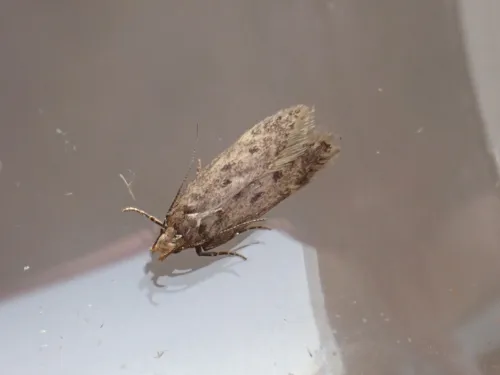
Bryotropha senectella
Bryotropha senectella
The wingspan is 9 to 13 mm. One of several rather similar Bryotropha species. Unless identified by a recognised expert, a photo is required. The specimen should be retained as determination by genitalia examination (gen. det.) may be required to conf
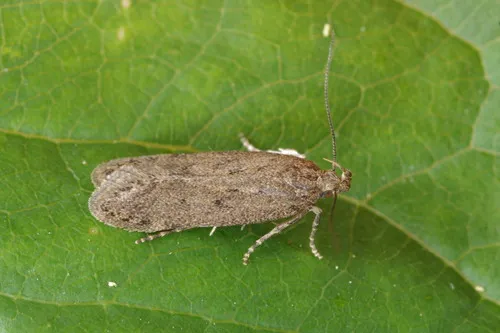
Bryotropha terrella
Bryotropha terrella
Wingspan 14-16 mm. The relatively nondescript adults have two indistinct darker dots on the forewing. Often encountered wherever long grass grows and easily flushed in the daytime. The larvae feed at the base of grasses, on the stems. Common and wide
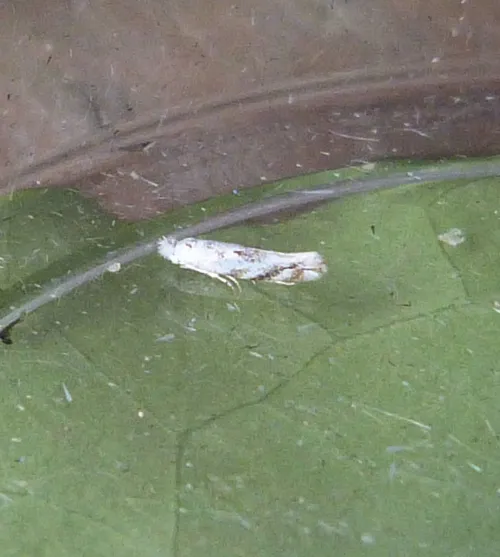
Bucculatrix albedinella
Bucculatrix albedinella
Wingspan about 9mm. A tiny, white and buff species with slight tufts. The larva mines the leaves of Elm. The moths fly in June and can be found resting on the trunks of the foodplant, Elm but it is most often encountered as a larval mine on the leave
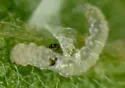
Bucculatrix anaticula - Hodges#0574
Bucculatrix anaticula
Identification: Genitalia: The type series was reared from white cocoons with six distinct ridges (sometimes two additional, indistinct ridges). In the mines found in Kentucky, the egg was deposited on the upper side of the leaf; all parenchyma was
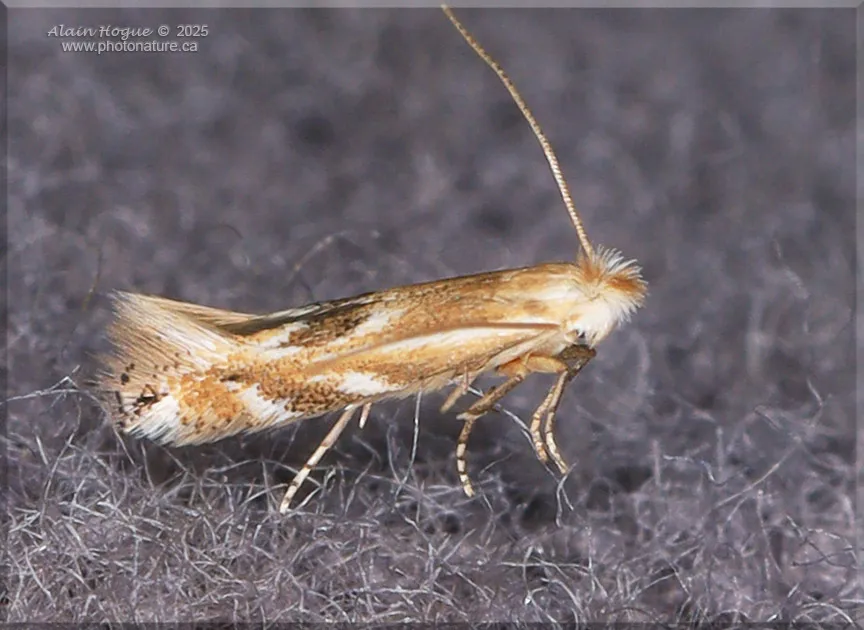
Bucculatrix angustata - Hodges#0522
Bucculatrix angustata
Identification: Species-level identification of any Bucculatrix is very difficult and usually requires DNA and/or dissection to confirm. All species-level identifications on BugGuide, without expert analysis including DNA and dissection, should be co
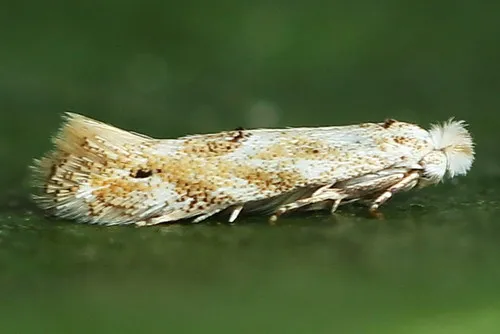
Bucculatrix bechsteinella
Bucculatrix bechsteinella
Bucculatrix bechsteinella is a small moth with a wingspan of 7 to 9 mm. It is pale buff with brown markings. The leafmine produced by the larva is usually on Hawthorn, and is small and in a vein axil, with blackish frass. The exit gallery is clear, a
Bucculatrix ceanothiella - Hodges#0576
Bucculatrix ceanothiella
Identification: Powell & Opler reports a complex of species is possible with some variations in the central and southern California populations.
Bucculatrix cerina - Hodges#0569
Bucculatrix cerina
Identification: Detailed description by Braun is available at link in citations below.
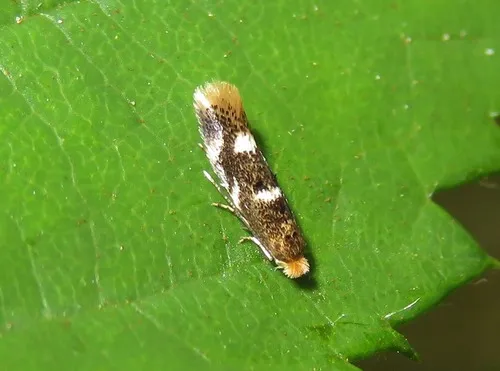
Bucculatrix cidarella
Bucculatrix cidarella
Wingspan about 9 mm. The larva of this species creates a gallery mine in the leaves of Alder, and in some localities Bog Myrtle. The mine is narrow and almost filled with black frass, starting from a rough black egg-case. This is a rarely recorded sp
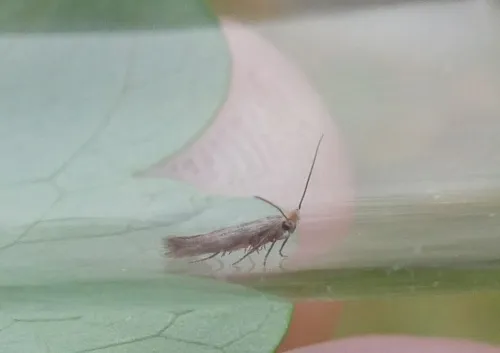
Bucculatrix cristatella
Bucculatrix cristatella
Wingspan about 7 mm. A tiny nondescript, grey-brown species not often seen as an adult. Usually recorded from the whitish ribbed pupal cocoon on Yarrow leaves. Adult: Unless identified by a recognised expert, a photo is required and the specimen shou
Bucculatrix cuneigera - Hodges#0499
Bucculatrix cuneigera
Identification: Meyrick (1919) original description is available online in the print references. Identification: White thorax and brown wings. Head: White, shiny. Tuft of hair on top of head has brown center. Antenna: White eye-cap at antenna base. S
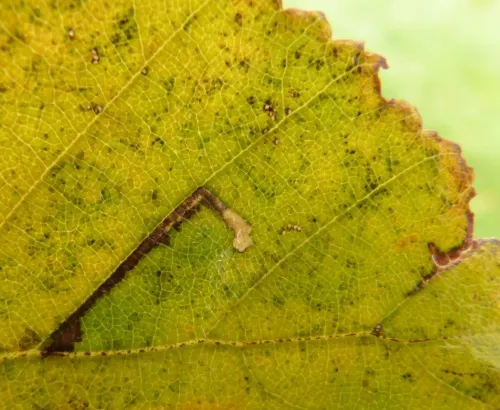
Bucculatrix demaryella
Bucculatrix demaryella
Wingspan about 9 mm. The adult is a rather plain looking grey-brown and white moth. It is most often recorded from the leafmines of its larva which usually mines the leaves of Birch, but occasionally uses Hazel or Sweet Chestnut. The initial gallery
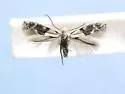
Bucculatrix insolita - Hodges#0532
Bucculatrix insolita
Identification: The original description is available in PDF or view online in the print references below.
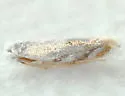
Bucculatrix inusitata - Hodges#0496
Bucculatrix inusitata
Identification: Braun original description is available online.
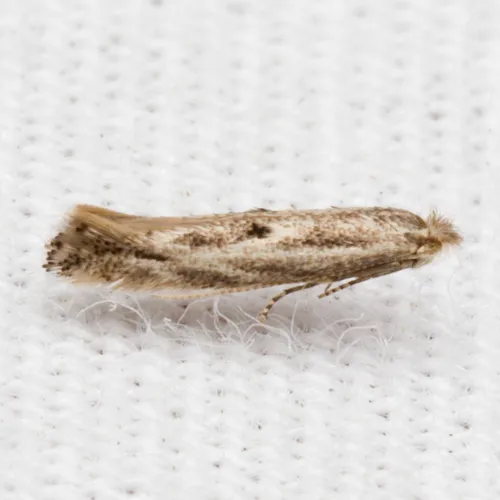
Bucculatrix ivella - Hodges#0517
Bucculatrix ivella
One of two species, the other being Aristotelia ivae , described by Busck (1900) from material reared by Harrison Dyar and named for the supposed host plant, Iva frutescens . Both in fact feed on Baccharis halimifolia , which is superfically similar
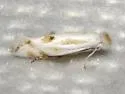
Bucculatrix longula - Hodges#0489
Bucculatrix longula
Identification: The original description is available in PDF or view online in the print references below.
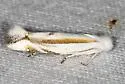
Bucculatrix magnella - Hodges#487
Bucculatrix magnella
Identification: Description can be found in Braun at link in citations below.
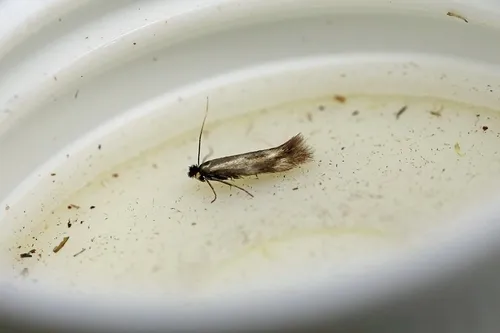
Bucculatrix nigricomella
Bucculatrix nigricomella
Wingspan 7 to 8 mm. A small, but fairly distinctive member of the Bucculatrix genus, with its general dark colouration with diffuse paler markings, and noticeable whitish eye-caps. The larva mines the leaves of Oxeye Daisy, making a long thin meander
Bucculatrix ochristrigella - Hodges#0501
Bucculatrix ochristrigella
Identification: Original description is online in PDF. - Creamy white forewing has a narrow brown streak along the basal third of the costa. A basal streak extends nearly one-third of forewing length. A broader diagonal patch extends from costa to to
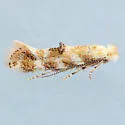
Bucculatrix quadrigemina - Hodges#0579
Bucculatrix quadrigemina
Bucculatrix quadrigemina - Hodges#0579 (Bucculatrix quadrigemina) is a species in the family Bucculatricidae, commonly known as ribbed cocoon-maker moths, belonging to the order Lepidoptera (Butterflies and Moths). It is classified within the superfa
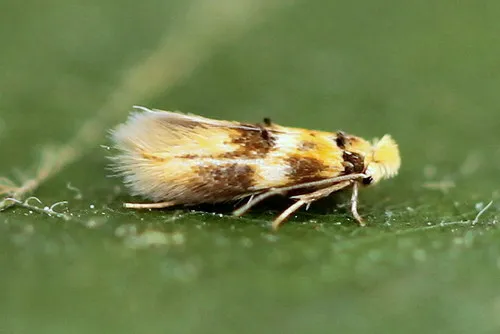
Bucculatrix thoracella
Bucculatrix thoracella
Wingspan 6 to 8 mm. A tiny but easily distinguished species, showing large brown patches on a yellow ground colour and a narrow brown streak extending into the cilia. The larva mines the leaves of Lime, creating a small hook-shaped mine; later instar
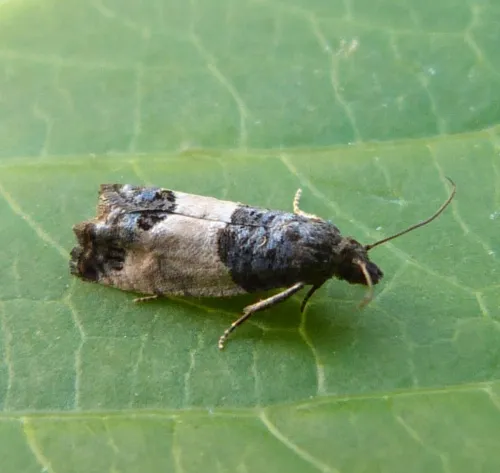
Bud Moth
Spilonota ocellana
Wingspan 12-17 mm. Although quite variable in the density and colour of the markings, this moth can usually be identified by the darker area towards the head and the small blackish triangular blotch on each forewing, forming a diamond shape when at r
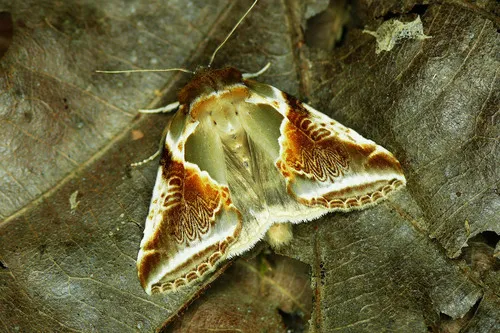
Buff Arches
Habrosyne pyritoides
Wingspan 35 to 40 mm. The combination of smooth grey, white and russet-brown makes this delicately-marked moth one of the prettiest, especially when observed at close range. Open woodland, young plantations, hedgerows and gardens. Flying in July and
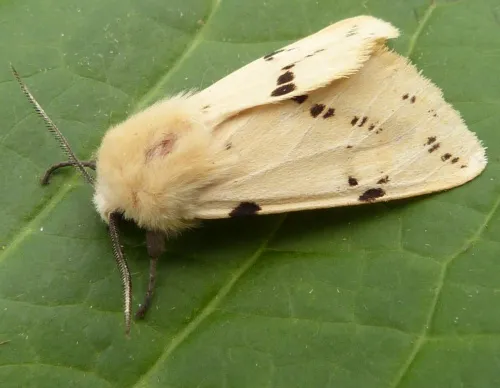
Buff Ermine
Spilosoma lutea
Wingspan 28-40 mm. The variation in the extent of black in the wings has been exaggerated by captive interbreeding, but does not occur as much in the wild. Wide range of habitats, including gardens, hedgerows, parkland and woodland. On the wing from
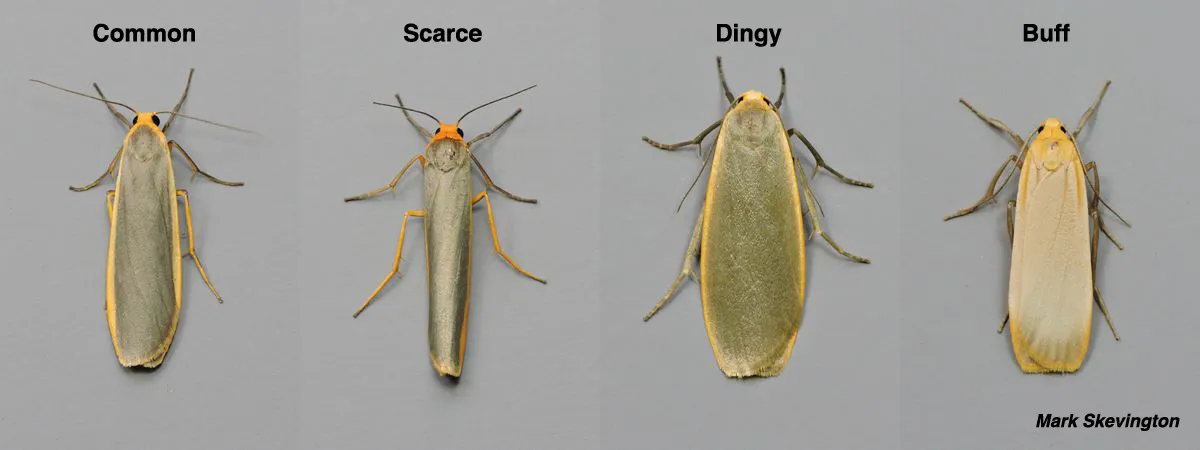
Buff Footman
Eilema depressa
Wingspan 28 to 36 mm. The male forewing is greyish white with a faint yellow stripe along the basal third of the leading edge. There is an orange yellow fringe on both wings. In the slightly larger female the forewing is usually brownish grey with a
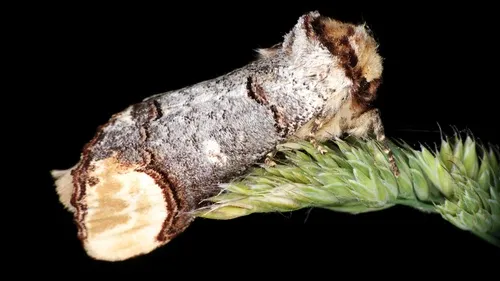
Buff-tip
Phalera bucephala
When at rest, the adults of this species bear a remarkable resemblance to a broken twig of Silver Birch. The yellow-and-black caterpillars live gregariously and feed on a number of different deciduous trees, sometimes defoliating entire branches. The
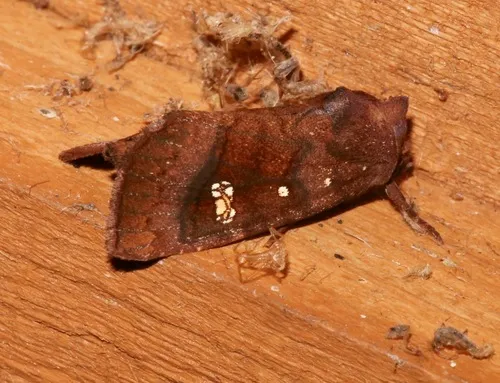
Buffalo Moth - Hodges#9463
Parapamea buffaloensis
Identification: Adult: forewing dark reddish-brown; basal and subterminal areas shaded with violet; AM and PM lines double, purple; basal, median, and ST lines single, brownish; orbicular and reniform spots filled with either ground color or white; h
Buffy Dichomeris Moth - Hodges#2291.1
Dichomeris aleatrix
Identification: D. aleatrix has the posterior margin of the yellow area pointing to the anal angle and a gray edging along the middle of the costa unlike inserrata - Steve Nanz 6/25/20
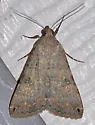
Bulia deducta - Hodges#8614
Bulia deducta
Identification: Pogue & Laughlin state that Bulia deducta and similaris are indistinguishable and can only be separated by genitalia and by geographic distribution in areas where their ranges do not overlap. Powell & Opler described the larva having
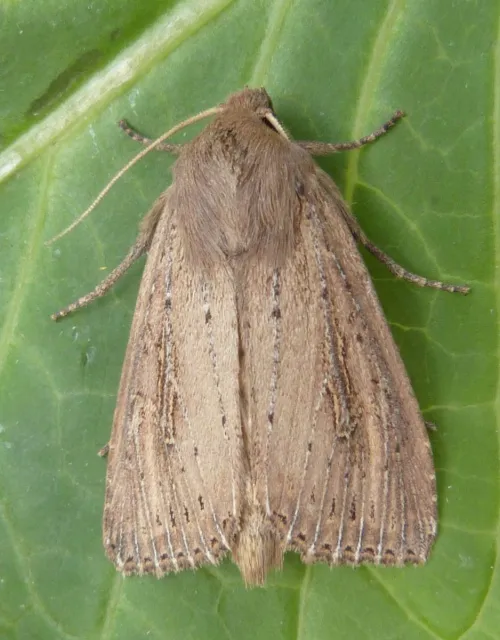
Bulrush Wainscot
Nonagria typhae
Wingspan 45 to 50 mm. This is a large distinctive species, the rather blunt forewings have small blackish dashes or crescents along the outer edge, and (usually) fine arrowheads near them. It occupies a range of damp or marshy habitats, but is someti
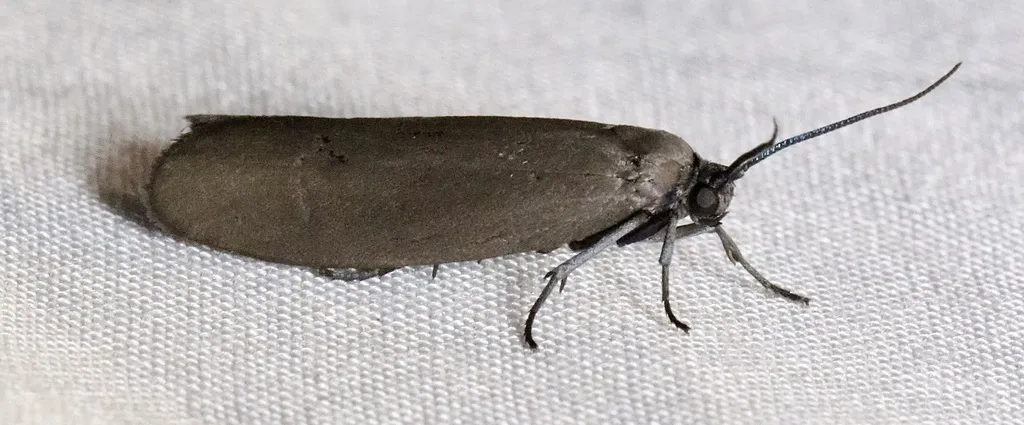
Bumelia Webworm Moth - Hodges#2415
Urodus parvula
Identification: Adult - medium-sized moth with tightly rolled wings, and a dark chocolate or gray, smoky coloration. The sheen of the wings is almost greasy. No marks on wings. Hindwings translucent. Compare Scythris fuscicomella , a moth of similar
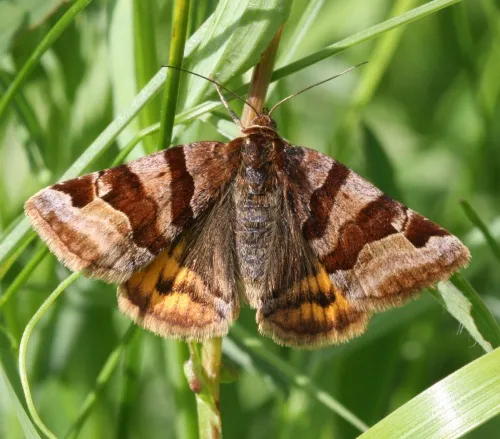
Burnet Companion
Euclidia glyphica
Wingspan 25-30 mm. Gets its English name from the fact that it is often found in company with Burnet Moths ( Zygaena spp). It inhabits open woodland, pastures, roadside verges and flower meadows. It is relatively common in the southern half of Britai
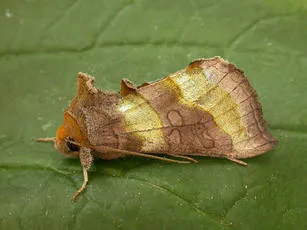
Burnished Brass
Diachrysia chrysitis
Wingspan 28-35 mm. This spectacular moth has large areas of metallic colouring on the forewings. Inhabits gardens, waste ground and marshy areas. The species is double-brooded, with moths on the wing between June and September. The larvae feed on pla
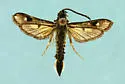
Burrowbush Borer Moth - Hodges#2626
Hymenoclea palmii
Identification: Eichlin description is is available in PDF. The original description as Sesia palmii Beutenmüller, and the Engelhardt revised description as Hymenoclea palmii are both available online in the print references below. Sexually dimorphic
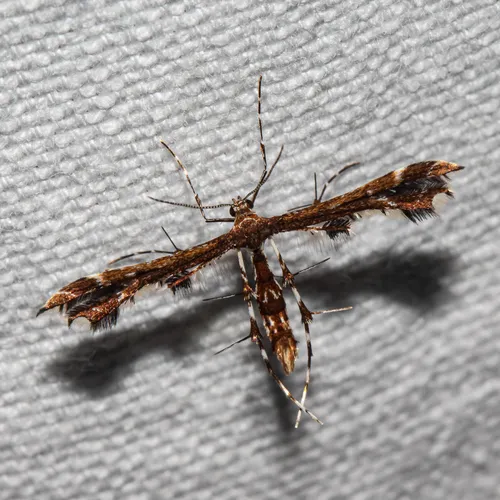
Busck's Plume Moth - Hodges#6093
Geina buscki
Identification: See the identification key for Oxyptilini . See the species accounts in Landry , Hunt & Matthews , McDunnough as Pterophorus buscki , and Barnes & Lindsey as Pterophorus tenuidactylus (misidentification). See the identification sectio
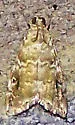
Cabbage Budworm Moth - Hodges#4847
Hellula phidilealis
Identification: Adult: forewing brownish-yellow mottled with white patches, especially in basal half; basal, AM, and PM lines wavy, bordered by white; reniform spot an irregular-shaped blackish patch; terminal line consists of three main black dots -
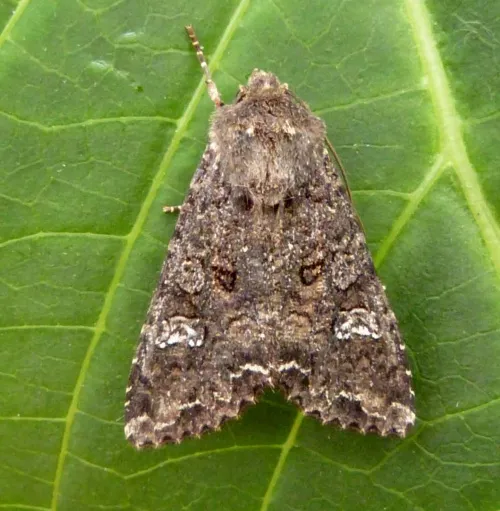
Cabbage Moth
Mamestra brassicae
Wingspan 37-45 mm. There can be considerable variation in the size of the adults. The markings vary, and it can resemble a number of other species, but can always be identified by the presence of a curved 'spur' on the tibia of the foreleg. The speci
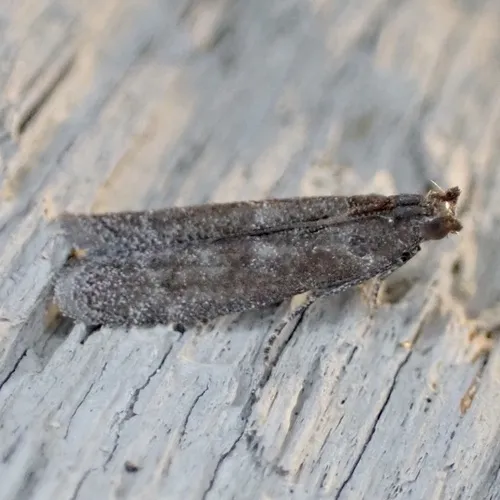
Cabnia myronella - Hodges#6037
Cabnia myronella
Identification: FW dark ash-gray, uniformly colored, slightly frosted with pale scales. Traverse lines fine, obscure, whitish, distinct on upper half of wing, sinuous and narrow. Labial palps upturned, the second joint with a tuft below. Antennae wit
Cacozelia interruptella - Hodges#5586
Cacozelia interruptella
Identification: Wingspan: 33 mm (Ragonot 1888); 24-25 mm (Hulst 1900); strongly marked with black along veins distal to the outer transverse line. Det: M. Alma Solis 2026
Cactus Moth - Hodges#5970.1
Cactoblastis cactorum
Identification: C.c. larvae are the most distinctive stage The moth has become a pest in se US. This South American moth was introduced into Australia to control cacti, which are not native to that continent and which were becoming a very serious pes
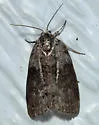
Cadbury's Lichen Moth - Hodges#8104
Polygrammate cadburyi
Identification: Franclemont (1939) original description is available online in the print references. This species was long mistaken for a lichen moth (Arctiinae: Lithosiini), but discovery of the larva revealed its acronictine affinity. Schmidt and A
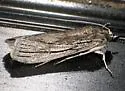
Cahela Moth - Hodges#5977
Cahela ponderosella
Identification: Adult: forewing slender, brownish-gray with black longitudinal lines along veins; thickest line runs along cubital (main) vein from AM area to outer margin; another line below that runs from base to anal angle (partly obscured by diff
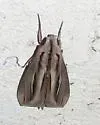
Caicus Sphinx - Hodges#7840
Phryxus caicus
Identification: Brown forewing with a tan band along the inner margin and a thin tan streak in the middle of the wing. The hindwing is red-orange with short black bands along the veins at the outer margin. The abdomen has distinct black and tan bands
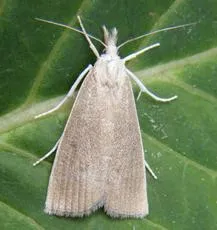
Calamotropha paludella
Calamotropha paludella
Wingspan 22-33 mm. Sexually dimorphic, the males are slightly smaller and darker than the females. Both sexes have bright white hind wings. In marshes, fens and other wet habitats. The adults fly in July and August and are attracted to light. The sle
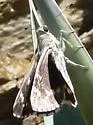
California Giant Skipper - Hodges#4142
Agathymus stephensi
Type Locality: “La Puerta, eastern edge of San Diego County, California”
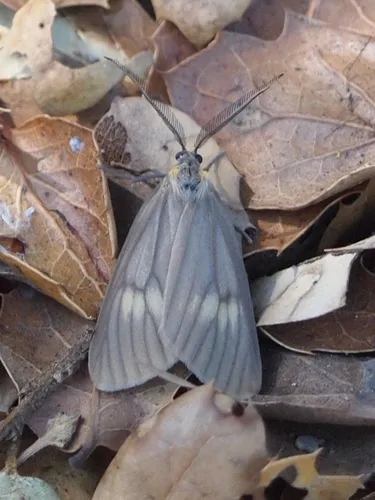
California Oak Moth - Hodges#8031
Phryganidia californica
Identification: Adult: forewing translucent grayish-brown with prominent dark veins bordered by dull yellowish scales; hindwing light gray with dark veins; male antennae pectinate (feathery); female antennae simple Larva: body with two middorsal whit
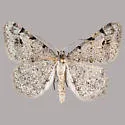
Californian Granite - Hodges#6380
Digrammia californiaria
Identification: Adult: forewing whitish to pale brown with sparse dark speckling; small black patches along costa represent upper ends of AM, median, and PM lines, which are otherwise missing or faint; broken dark patch about one-third distance from
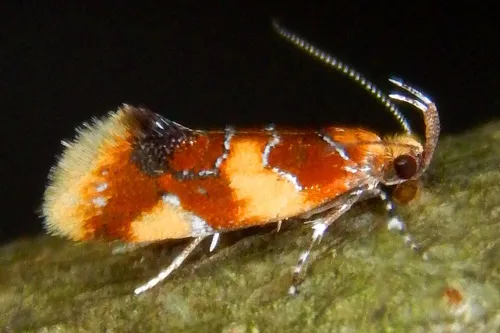
Callima nathrax - Hodges#1047
Callima nathrax
Identification: "second segment of labial palpus mainly yellow orange to red orange" There is only one DNA barcoded specimen of Callima from Florida. It's in BIN BOLD:AAI5335 with no other specimens and was collected at the Archbold Biological Statio
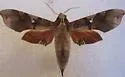
Callionima falcifera - Hodges#7845
Callionima falcifera
Identification: It seems that a reliable characteristic is examining the apical area of the forewing. In Callionima falcifera, it seems that the area directly between the apical line and outer margin is the same color as the ground color of the wing,
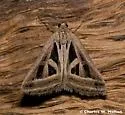
Callistege diagonalis - Hodges#8741
Callistege diagonalis
Identification: Side-by-side key to distinguishing the three species @ Moths of Southeastern Arizona . Specimen identified by DNA analysis (BOLD)
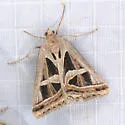
Callistege intercalaris - Hodges#8740
Callistege intercalaris
Identification: Adult: forewing with distinctive pattern of light brown lines and dark brown to blackish patches; medial line broad, continuous, lower portion curving down toward anal angle; hindwing light brown with gray shading, pale PM and subterm
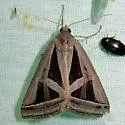
Callistege triangula - Hodges#8742
Callistege triangula
Identification: Side-by-side key to distinguishing the three species @ Moths of Southeastern Arizona .
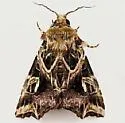
Callopistria jamaicensis - Hodges#9630.1
Callopistria jamaicensis
Identification: Specimen identified by DNA analysis (BOLD).
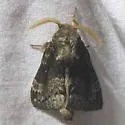
Caloecia juvenalis - Hodges#7689
Caloecia juvenalis
Identification: The original description as Dendrolimus juvenalis Barnes & McDunnough, is available online in the print references below. ( 3 ) Moths of Southeastern Arizona has a linked photo of last instar larvae. Often attracted to lights.
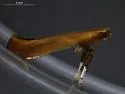
Caloptilia acerifoliella - Hodges#0584
Caloptilia acerifoliella
Identification: Original description is online as Gracilaria acerifoliella Chambers. Several populations in Oregon and California may prove to be a new species.