
Butterflies and Moths
Order Lepidoptera
The Butterflies and Moths (Order Lepidoptera) includes 11,813 species across 112 families and 2,787 genera in our directory.
About Butterflies and Moths
Lepidoptera includes approximately 180,000 described species of butterflies and moths. Moths outnumber butterflies roughly 10:1. The monarch butterfly's eastern population has declined by more than 80% since the mid-1990s, and the western population by over 95% since the 1980s. The IUCN lists the migratory monarch as Vulnerable.
Economic Impact
Lepidoptera are critical pollinators. In Europe, grassland butterfly species have declined by almost 50% since the early 1990s. In the UK, three-quarters of butterflies are in decline. In the U.S., five butterfly species have gone extinct since 1950, with 29 listed as endangered.
Ecological Role
Butterflies and moths are essential indicators of ecosystem health. As caterpillars, they are a primary food source for birds - a single nest of blue tit chicks requires ~10,000 caterpillars. Adult moths pollinate many night-blooming plants.
Families in Lepidoptera (112)
Species in Lepidoptera (11,813)
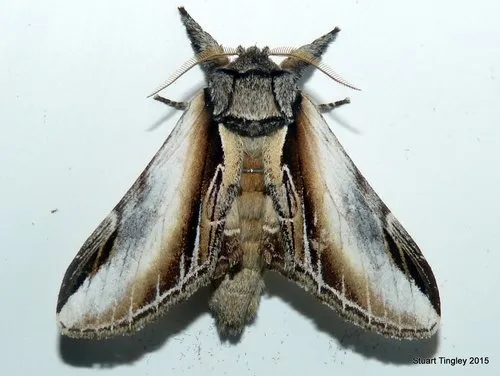
Black-rimmed Prominent
Pheosia rimosa
The Black-rimmed Prominent Moth, Fissured Prominent or False-sphinx (Pheosia rimosa) is a species of moth of the Notodontidae family. It is found from coast to coast in North America, although it is less common in the south-eastern United States.
Black-shaded Platynota Moth - Hodges#3732
Platynota flavedana
Identification: ♂ ♀ Larva - Early instars are yellowish with a black head. Older larvae are green with a light brown or amber head (Hull et al., 1995). BOLD:AAC4322
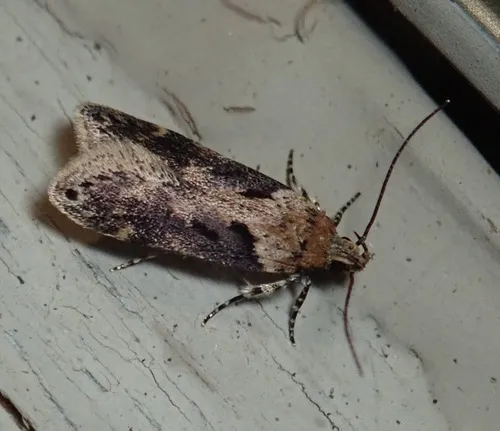
Black-smudged Chionodes Moth
Chionodes mediofuscella
Chionodes mediofuscella, the black-smudged chionodes moth, is a moth of the Gelechiidae family. It is found in North America, where it has been recorded from Nova Scotia to Florida and from British Columbia to Colorado, Arizona and northern Californi
Black-spotted Leafroller - Hodges#5797
Sciota virgatella
page creation based on Brian Scholtens' identification of this image , as reported by Bob Patterson
Black-spotted Schrankia - Hodges#8431
Hypenopsis macula
Identification: Adult: forewing dark brown or gray except yellowish beyond straight oblique PM line; AM line black, broken; reniform dot and dotted terminal line black; subterminal line wavy, inconspicuous; small pale patch at apex; hindwing light gr
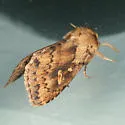
Black-tailed Diver - Hodges#9523.1
Bellura vulnifica
Identification: Forewing has dark strongly scalloped postmedial line. ( 3 ) Identified by Don Lafontaine
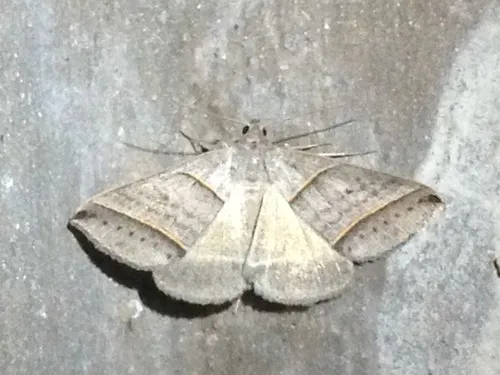
Black-tipped Ptichodis Moth - Hodges#8749
Ptichodis vinculum
Black-tipped Ptichodis Moth - Hodges#8749 (Ptichodis vinculum) is a species in the family Erebidae, belonging to the order Lepidoptera (Butterflies and Moths). It is classified within the subfamily Erebinae, tribe Euclidiini, superfamily Noctuoidea.
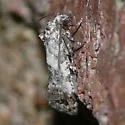
Black-tipped Rudenia Moth - Hodges#3839
Rudenia leguminana
Rudenia leguminana is a complex, see Brown et al. (2011) in Print References below. As of 11/28/2018, BOLD shows 9 BINs forming a single branch in the taxon tree as follows: BOLD:ACF0688 - 26 specimens from AZ, NM, CA BOLD:AAA9782 - 22 specimens from
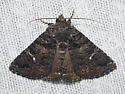
Black-waved Owlet - Hodges#8662
Coxina cinctipalpis
Identification: Smith original description as Campometra cinctipalpis is available in PDF. Determined by Bob Patterson.
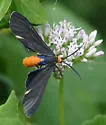
Black-winged Dahana - Hodges#8266
Dahana atripennis
Identification: Orange abdomen, blue at base. Brown-black forewings with yellow anal dash. Black hindwings with blue tint
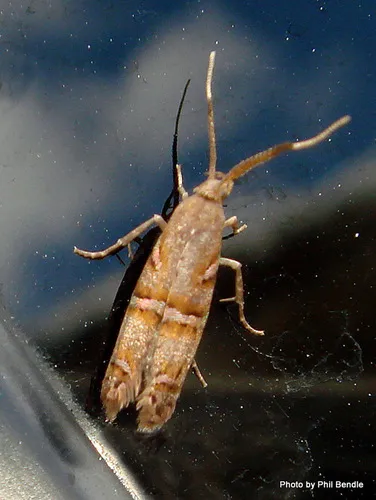
Blackhorn Moth
Protosynaema quaestuosa
Protosynaema quaestuosa is a species of moth in the family Plutellidae first described by Edward Meyrick in 1924. It is endemic to New Zealand.
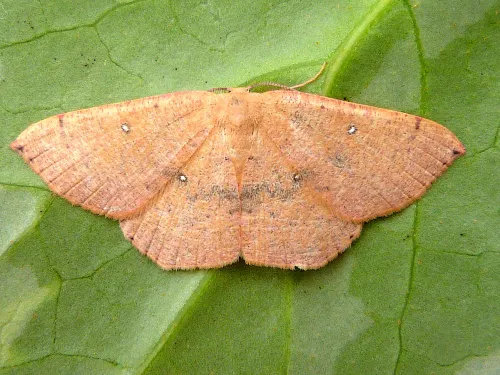
Blair's Mocha
Cyclophora puppillaria
Good photographs and/or the specimen required. This moth is usually considered to be a migrant from the continent though in recent years it seems to have become established on the south coast. On the continent, the larval foodplants include evergreen
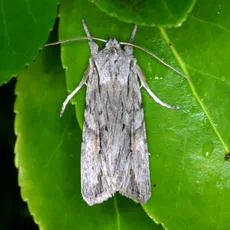
Blair's Shoulder-knot
Lithophane leautieri
Occupies habitats (especially suburban) where ornamental varieties of certain conifers abound. It flies from mid September to November. The larvae feed on Cypress, especially Lawson's Cypress and Leyland Cypress, consuming mainly the flowers. A recen
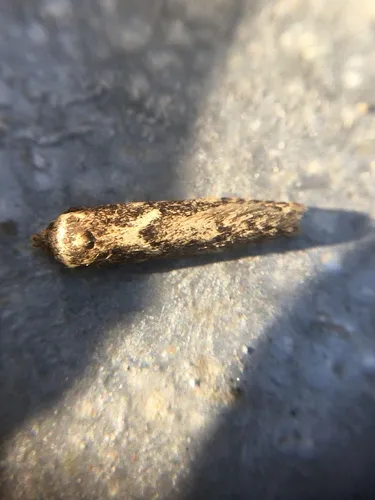
Blastobasis adustella
Blastobasis adustella
Variable species with some very dark specimens. Variety of habitats including woodland, heath and gardens, predominantly in coastal areas. A nocturnal species, occurring mainly in August and into September. The larvae feed on a variety of foodstuffs,
Blastobasis floridella - Hodges#1160
Blastobasis floridella
Identification: Original description is available online in the print references below. See Dietze (1910). Identifications at BOLD ( 5 ) are based on CNCLEP00025516 in BIN group BOLD:AAB1097 , which was dissected and tentatively identified by David A
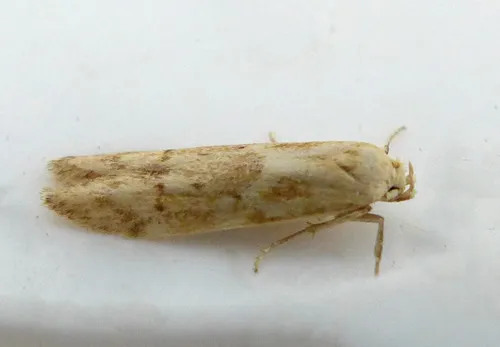
Blastobasis lacticolella
Blastobasis lacticolella
Wingspan 18-21 mm. Light buff with browner markings but very variable in the degree of markings, with unmarked examples common. The adult is nocturnal and comes readily to light in May and June and again in the autumn. Larva feeds on various mosses,
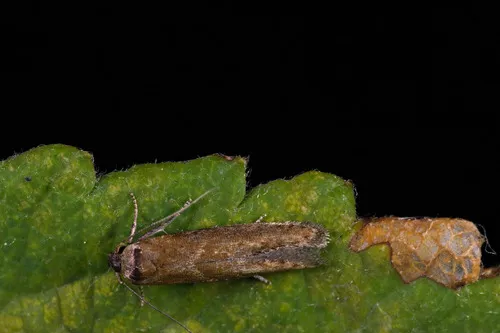
Blastobasis maroccanella - Hodges#1162.1
Blastobasis maroccanella
Blastobasis maroccanella is a moth in the family Blastobasidae. It is found on the Azores, Madeira and in Portugal, Spain and Morocco. It was recently reported from California in the United States.
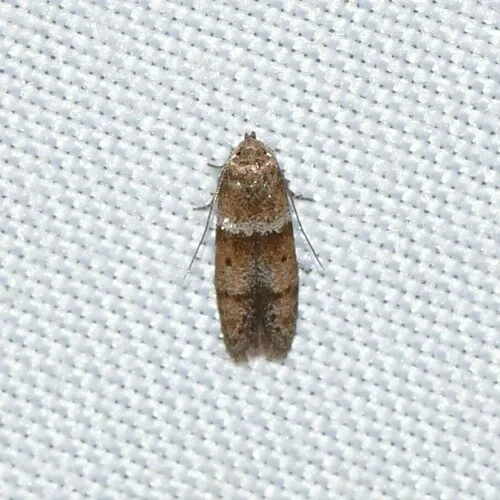
Blastobasis pulchella - Hodges#1167
Blastobasis pulchella
Blastobasis pulchella is a moth in the family Blastobasidae. It is found in North America, including Nova Scotia, Washington DC and Maine.
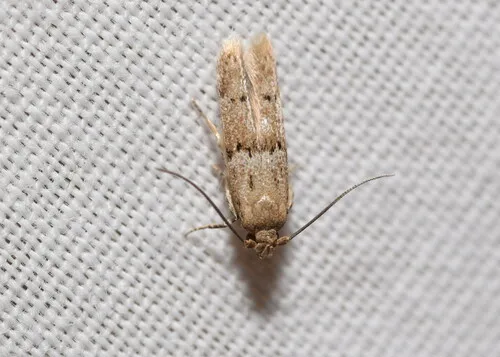
Blastobasis tarda - Hodges#1162.2
Blastobasis tarda
Blastobasis tarda is a moth of the family Blastobasidae. It is found in Australia in Queensland and New South Wales, as well as New Zealand. It is an introduced species in North America, where it has been found in southern California. It has also bee
Blastobasis taurusella - Hodges#1162.3
Blastobasis taurusella
Identification: Specimen identified by DNA analysis (BOLD).
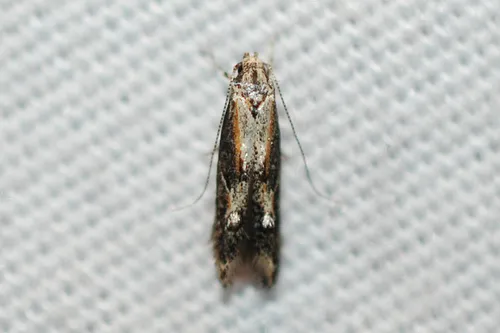
Blastodacna atra
Blastodacna atra
Wingspan 11 to 13 mm. Ground colour of this species seems to vary from pale brown to much darker almost black specimens. The adult moths occur between May and September, and are sometimes attracted to garden light-traps. The larvae feed inside small
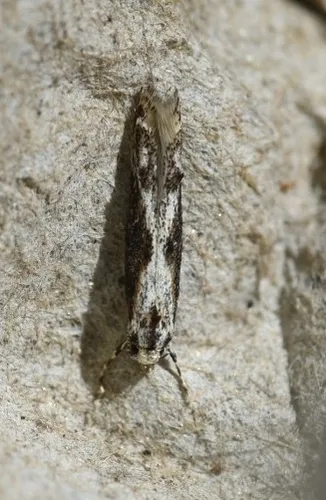
Blastodacna hellerella
Blastodacna hellerella
Wingspan 11 mm. This is a fairly distinctive moth. The moth is to be found in woodland margins, parks and gardens where Hawthorn species are to be found. The adult is nocturnal and flies during June and July, when it can be attracted by light. Larvae
Blazing Star borer moth - Hodges#9508
Papaipema beeriana
Listed by United States Fish & Wildlife Region 9 listed the status as Sensitive , and stated, "The Nature Conservancy’s Heritage Program ranks this species as G3. This ranking means Papaipema beeriana is rare and uncommon globally (Illinois Natural H
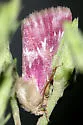
Bleeding Flower Moth - Hodges#11173
Schinia sanguinea
Identification: forewing pink to purple with yellowish to greenish median area and diffuse dark reniform spot; AM line V-shaped, PM line sinuous hindwing yellowish basally, shading to brownish-gray distally, with diffuse discal spot; head, thorax, ab
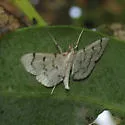
Blepharomastix achroalis - Hodges#5185
Blepharomastix achroalis
Identification: Determined by James Hayden: The population on S. Padre Is., Texas (also IDed by J. Hayden and barcoded) is much more heavily marked than most Florida examples.
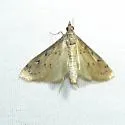
Blepharomastix haedulalis - Hodges#5186
Blepharomastix haedulalis
Identification: Hulst (1886) original description as Botis haedulalis is online in the print references. "Fore wings fuscous, very thinly scaled; basal line broken into dots; outer line fine, sharply and strongly dentate, and after the Botis pattern;
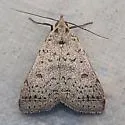
Bleptina biformata - Hodges#8370.2
Bleptina biformata
Identification: Description can be found in Troubridge at link in citations below.
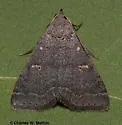
Bleptina flaviguttalis - Hodges#8373
Bleptina flaviguttalis
Identification: Specimen identified by DNA analysis (BOLD). ( 3 )
Bleptina inferior - Hodges#8371
Bleptina inferior
Identification: The original description of Bleptina inferior Grote, is available in PDF or view online. Photo determined by Jim Vargo.
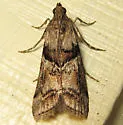
Blister Coneworm - Hodges#5863.1
Dioryctria clarioralis
A characteristic of this species is the presence of resin-coated silk over the entrance hole in which ejected frass is accumulated. Cone damage is nearly identical to that caused by D. zimmermani
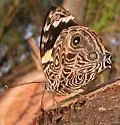
Blomfild's Beauty - Hodges#4547.1
Smyrna blomfildia
Identification: The underside of the hindwing has a series of eyespots near the outer edge and a psychedelic-looking arrangement of lines and shapes in white and brown. Two small triangular "tails" project off the rear outside corner. The wings are t
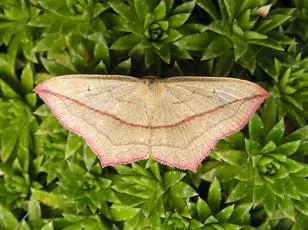
Blood-vein
Timandra comae
The adult rests with the wings held in such a position that the reddish cross-lines of the fore and hind wings form a continuous band. The fringes are also suffused with pink. There is a rare melanic form f.nigra . Marshes, river-banks, damp meadows
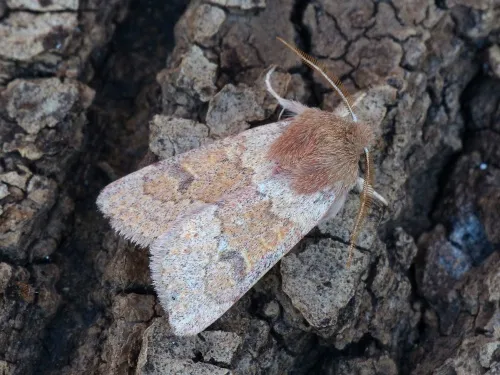
Blossom Underwing
Orthosia miniosa
Wingspan 31 to 36 mm. A rather variable species, usually with warm sandy or pinkish browns. The underwing is the distinctive feature, being pinkish white and showing up well in the light of a moth trap. This distinguishes it from the rest of the grou
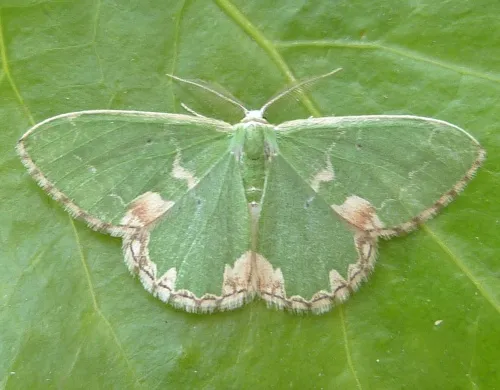
Blotched Emerald
Comibaena bajularia
Wingspan 23 to 27 mm. Cream and fawn blotches in the trailing corner of the otherwise green forewing and hindwing are diagnostic. Fringes are chequered. The favoured habitat is deciduous woodland. The main flight period is June to July when the adult
Blue Cactus Borer - Hodges#5989
Cactobrosis fernaldialis
Larvae carry and transmit the bacteria ( Erwinia carnegieana ) that causes black necrosis disease and may play a major role in the decline of the saguaro cactus (Betton, 1972; Horst, 2008). The Arizona-Sonora Desert Museum website states that larvae
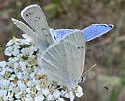
Blue Copper - Hodges#4259
Lycaena heteronea
Identification: Nearly identical to the Ruddy Copper Lycaena rubida , and pretty similar on the underside; however, males of the Blue Copper are blue instead of orange above, and females are grayish instead of brown and orange. So, confusion with ot
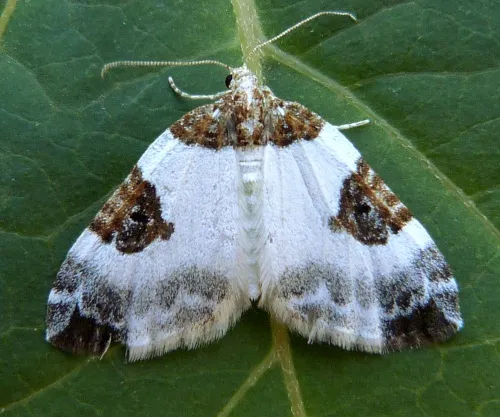
Blue-bordered Carpet
Plemyria rubiginata
Wingspan 22-28 mm. Markings are fairly consistent in southern specimens, with the 'blue border' along the trailing edge of the wings giving rise to the name. There is a northern UK sub-species, plumbata , that does not have the distinctive white mark
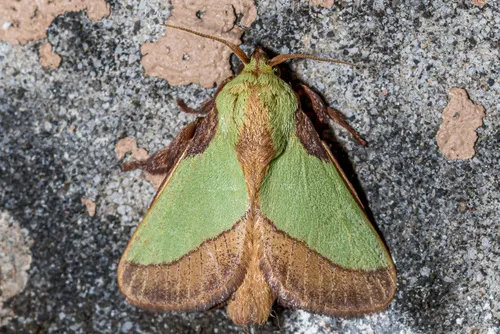
Blue-striped Nettle Grub
Parasa lepida
Parasa lepida, the nettle caterpillar or blue-striped nettle grub, is a moth of the family Limacodidae that was described by Pieter Cramer in 1799. It is a native minor pest found in the Indo-Malayan region, including India, Sri Lanka, Vietnam, Malay
Blueberry Budworm Moth - Hodges#11045
Abagrotis anchocelioides
Identification: Adult: forewing brown with contrasting tan terminal area; orbicular and reniform spots same color as forewing but outlined with pale scales; orbicular spot round, not oval; small patch of black scales where subterminal line meets cost
Blueberry Dart - Hodges#10988
Coenophila opacifrons
Identification: Adult: forewing brownish-gray with dark toothed PM line and dark scalloped AM line; reniform and orbicular spots filled with ground color, and joined by dark line or patch (sometimes faint and/or partial); dark patch on basal side of
Blueberry Gray Moth - Hodges#6450
Glena cognataria
Identification: The original description as Tephrosia cognataria Packard, is available in PDF and online at the link in the print references below. This grayish brown species is the smallest in the group. Fresh specimens will have a pink or violet ti
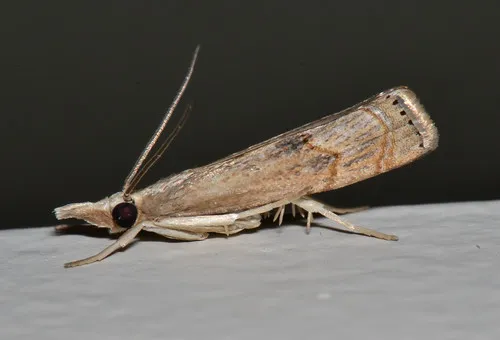
Bluegrass Webworm Moth
Parapediasia teterrellus
Parapediasia teterrellus, the bluegrass webworm moth, bluegrass webworm, bluegrass sod webworm moth or bluegrass sod webworm, is a moth of the Crambidae family. It is found in North America from Ontario and New England to Florida, west to California
Blurry-patched Nola Moth - Hodges#8990
Nola cilicoides
Identification: forewing white with a large dark patch halfway along the costa, the patch often containing reflective dark blue scales; a lighter grayish or brownish band continues from the patch to the inner margin, the postmedial line forming the d
Blush Conchylodes Moth - Hodges#5291
Conchylodes salamisalis
Type locality: Mexico, Vera Cruz, Paso de San Juan; Guatemala, in the city; San Isodro; Panama, Chiriqui; Ecuador
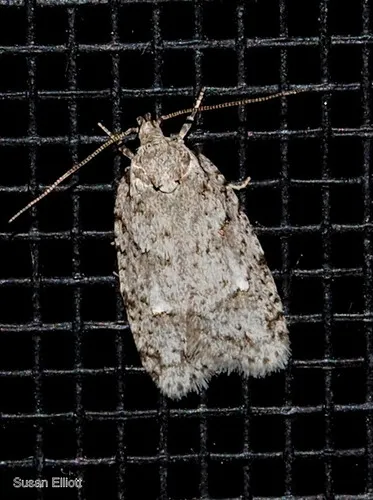
Bog Bibarrambla Moth
Bibarrambla allenella
Bibarrambla allenella, the bog bibarrambla moth, is a moth in the Depressariidae family, and the only species in the genus Bibarrambla. It was described by Walsingham in 1882. It is found in North America, where it has been recorded from Nova Scotia
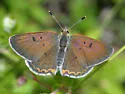
Bog Copper - Hodges#4260
Lycaena epixanthe
Identification: Resembles Dorcas and Purplish Coppers, but smaller and has paler yellowish to whitish (not orange) under side. The upper side appears "plainer", especially in males, which show fewer and mostly much smaller dark spots, while females
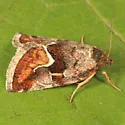
Bog Deltote - Hodges#9046
Deltote bellicula
Identification: Adult: small broad-winged gray moth with darker brown, white, and dull rusty-orange markings; forewing median and terminal areas brown, the former separated from rusty-orange subterminal area by prominent inwardly-angled white line; r
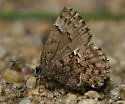
Bog Elfin - Hodges#4327
Callophrys lanoraieensis
Identification: Adult: the smallest elfin, looks like Pine Elfin, but underside pattern is less clear, and trailing edge of hindwing can be frosted Larva: tiny, body green with wide white stripe along side extremely rare and/or local, and hard to fin
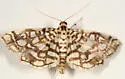
Bog Lygropia - Hodges#5250
Lygropia rivulalis
Identification: forewing ground color pale yellowish or cream; several irregular white patches are surrounded and connected by thick brown lines; the white patch nearest the anal angle is oval or circular; a broad white subterminal line becomes wider
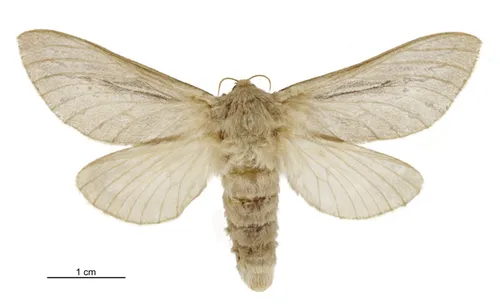
Bog Porina
Wiseana umbraculata
Wiseana umbraculatus, also known as the bog porina, is a species of moth belonging to the family Hepialidae. It was described by Achille Guenée in 1868 from specimens collected by Richard William Fereday. This species is endemic to New Zealand. It wa
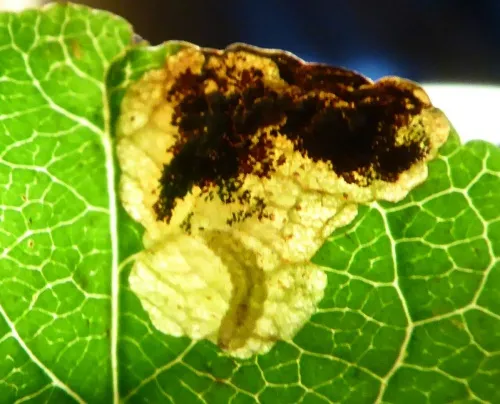
Bohemannia pulverosella
Bohemannia pulverosella
Wingspan 6 to 7 mm. Adults are dull brownish with a speckled appearance, especially noticeable near the wingtips. They have a yellowish head and whitish eyecaps. The larvae create a distinctive blotch mine in the leaves of Apple. The larva cuts an ex
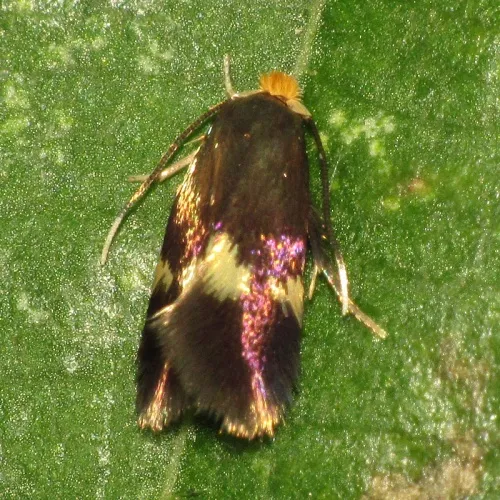
Bohemannia quadrimaculella
Bohemannia quadrimaculella
Wingspan c. 8mm. It has four yellowish spots on the forewings, giving it a fairly distinctive appearance. The adult moth is usually encountered by beating alder (Alnus) trees, and although little is known about its lifecycle, it is presumed to feed o
Boisduval's Yellow - Hodges#4245
Eurema boisduvaliana
Identification: Hindwing has a slight point (tail seems too strong a word, though Butterflies through Binoculars calls it that).
Bold-Based Zale - Hodges#8713.1
Zale intenta
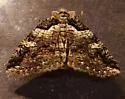
Identification: Adult : Basal area dark brown, contrasting with remainder of wing, with paler patch at base of costa • FW grayish-brown to dark brown, covered in fine, black striae (particularly developed in southern populations) • AM dark brown to
Boldly-marked Archips - Hodges#3666
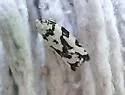
Archips dissitana
Identification: Adult - easily identified by white forewings sharply contrasted with jagged jet black bands.
Boloria andersonii
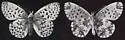
Boloria andersoni
Identification: Similar to B. selene , except probably slightly larger, more underside hind wing median spots yellowish instead of white/silvered (but the one in discal cell white and perhaps silvered); with black spot in middle of discal cell tiny (
Bondia comonana - Hodges#2318
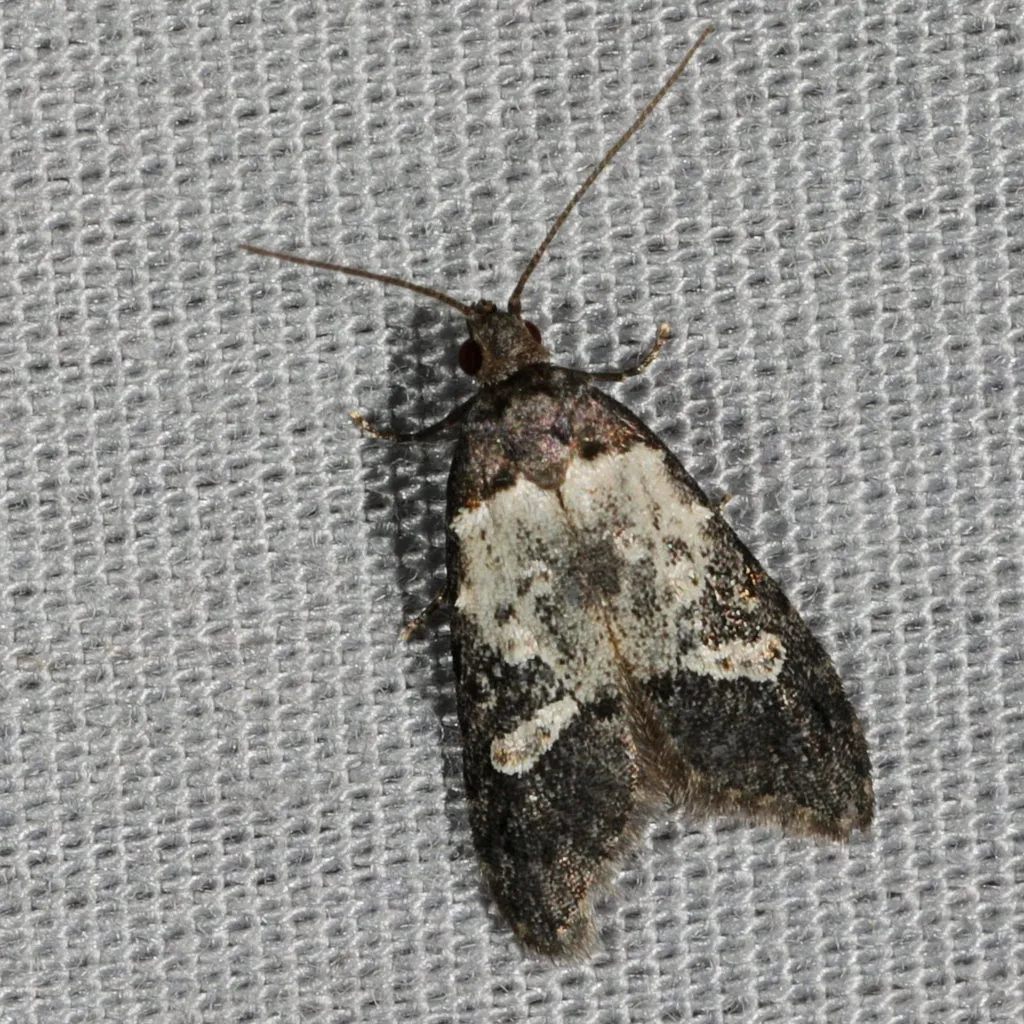
Bondia comonana
There are many online resources with information on the pest status.
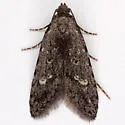
Bondia shastana - Hodges#2320
Bondia shastana
Bondia shastana - Hodges#2320 (Bondia shastana) is a species in the family Carposinidae, commonly known as fruitworm moths, belonging to the order Lepidoptera (Butterflies and Moths). It is classified within the superfamily Carposinoidea. This specie
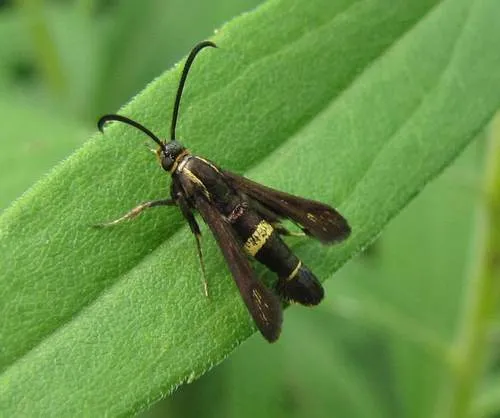
Boneset Borer Moth
Carmenta pyralidiformis
Carmenta pyralidiformis, the boneset borer, is a moth of the Sesiidae family. It was described by Walker in 1856. It is known from the United States, including Arkansas, Illinois, Maryland, Massachusetts, Michigan, Missouri, New Jersey, Ohio and Virg
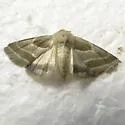
Boneset Flower Moth - Hodges#11148.1
Schinia grandimedia
Identification: Hardwick description. Specimen identified by DNA analysis:
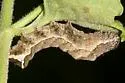
Boneset Groundling - Hodges#9702
Condica albigera
Can be extremely common in southern Texas. Larvae are often parasitized by braconid wasps.
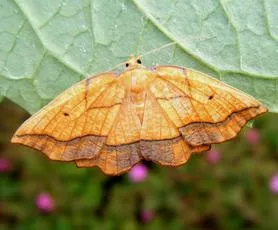
Bordered Beauty
Epione repandaria
Wingspan 25-30 mm. This orange and purplish species gets its name from the broad, dark border that runs around the bottom of the wings. Inhabits moist woodland, fens and other marshy places. The single generation flies from July to September and is a
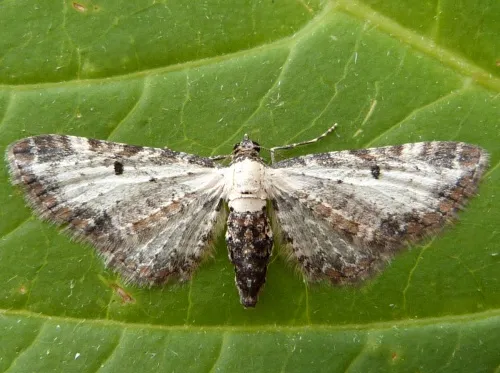
Bordered Pug
Eupithecia succenturiata
Wingspan 20-23 mm. A fairly easy species to identify, being one of only a few Pugs which are mainly black-and-white. Dry pastures, suburban habitats and waste ground. It is widely distributed throughout England and Wales, but local in Ireland and Sco
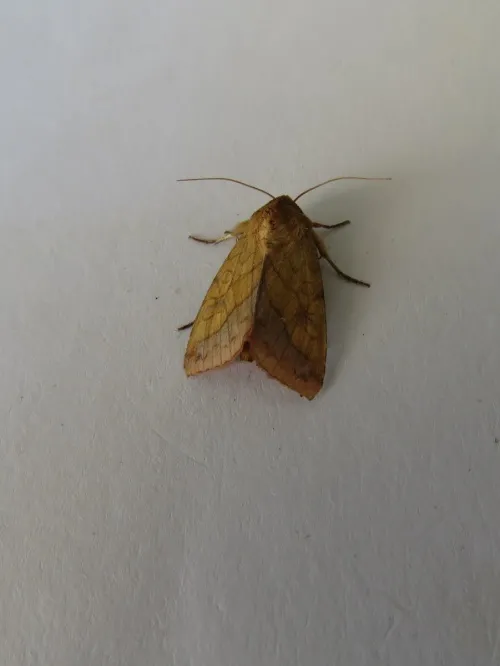
Bordered Sallow
Pyrrhia umbra
Wingspan 27 to 35 mm. A well-marked and fairly distinctive species. Generally coastal, occurring on calcareous soils where found inland. The single generation flies in June and July and visits sugar as well as light. The larvae feed mainly on the flo
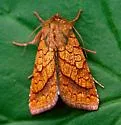
Bordered Sallow - Hodges#11063
Pyrrhia cilisca
Identification: Orange forewing with red/brown lines, veins, and spot outlines. Variable shading on subterminal line and reniform spot. Yellow hindwing with purple/red shading.
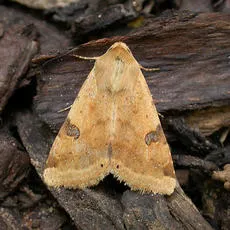
Bordered Straw
Heliothis peltigera
It is quite variable, and it is suggested that the paler individuals derive from desert origin, these often arriving with Saharan 'dust storms'. Various, but often near the south coast. June to August is the main arrival period. In a good migration y
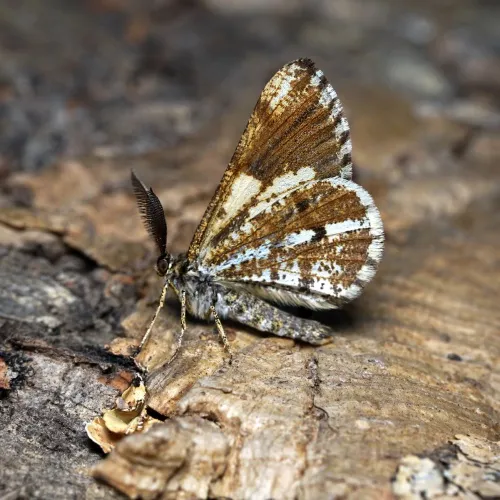
Bordered White
Bupalus piniaria
Wingspan 28-35 mm. A sexually dimorphic species, the males having a white or yellow ground colour, bordered with black and the females a more subdued variation of the pattern, in yellowish and brown. The yellow form tends to occur in the south and th
Boreal Pine Looper - Hodges#6909
Nepytia pellucidaria
Identification: Genitalia: Perhaps not as rare in at least Atlantic Canada as previously thought:
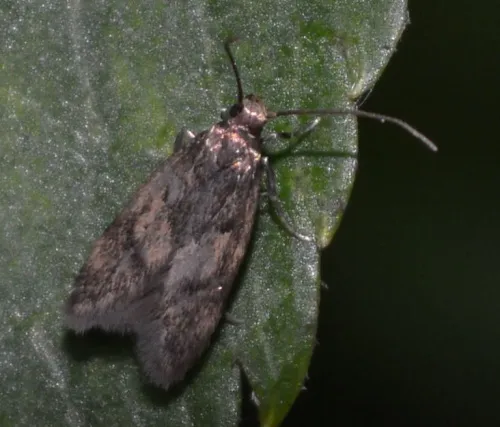
Borkhausenia fuscescens
Borkhausenia fuscescens
Wingspan 7 to 12 mm. A small, stubby-looking moth with a pale transverse band against a slightly darker brownish ground colour. A darker spot is visible beyond the band and a dark suffusion before it. The larvae feed on a wide range of dried plant ma
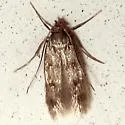
Borkhausenia nefrax - Hodges#1061
Borkhausenia nefrax
Identification: Adult - long hairs on the antennal flagellum. Genitalia: Possibly an introduced species with a long, complicated history. First identified in California in 1952 as Borkhausenia near minutella (Linnaeus) and later identified as B. fusc
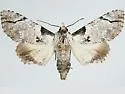
Boryzops purissima - Hodges#8643
Boryzops purissima
Boryzops purissima - Hodges#8643 (Boryzops purissima) is a species in the family Erebidae, belonging to the order Lepidoptera (Butterflies and Moths). It is classified within the subfamily Erebinae, tribe Melipotini, superfamily Noctuoidea. This spec
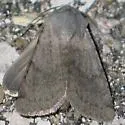
Boston Dart - Hodges#10812
Euxoa bostoniensis
Identification: forewing pale mouse-gray; lines faint, double, incomplete except for a broad single median line which passes through faint reniform spot, then angles toward costa; no orbicular spot hindwing white with grayish-brown border in male; so
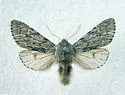
Brachionycha borealis - Hodges#10011
Brachionycha borealis
Identification: The original description as Asteroscopus borealis Smith, is available online in the print references below. The typical form has medium gray forewings, and the dark form is heavily shaded with black. Rarely collected possibly due to t
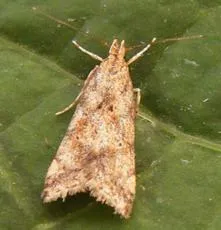
Brachmia blandella
Brachmia blandella
Wingspan 11 mm. A very tiny drab brown moth, with a slightly 'tent like' posture. This species occupies habitats where its food plant, Gorse, occurs. Adults are on the wing in July and early August when they can be disturbed from large old Gorse bush
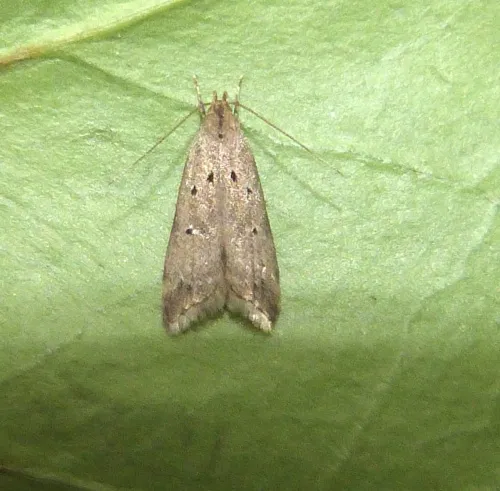
Brachmia inornatella
Brachmia inornatella
Please provide a photograph and retain specimen determination by genitalia examination (gen. det.) may be required. Fens, marshes and on river-banks, especially in areas where Common Reed is present. There is a single generation, flying in June and J
Brachylomia cascadia - Hodges#9995.2
Brachylomia cascadia
Identification: Photo determined by Don Lafontaine .
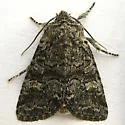
Brachylomia curvifascia - Hodges#9996
Brachylomia curvifascia
Identification: The original description as Dryobota curvifascia Smith, is available online in the print references below. Specimen identified by DNA analysis (BOLD)
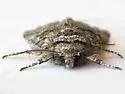
Brachylomia sierra - Hodges#9997.1
Brachylomia sierra
Identification: Specimen identified by DNA analysis (BOLD) ( 4 )
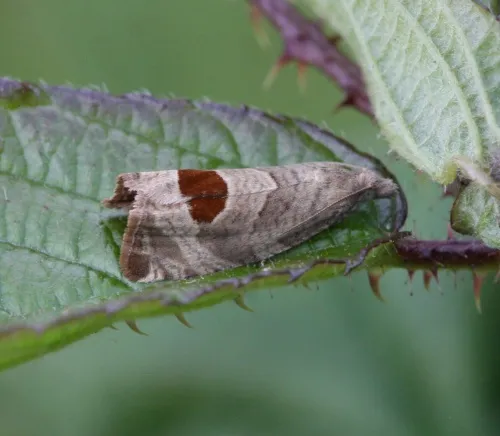
Bramble Shoot Moth
Notocelia uddmanniana
Easily distinguished by the chocolate-brown blotch on the forewing, contrasting with a greyish brown ground colour. Woodland and hedgerows where Bramble occurs. Adults are on the wing in June and July. The food plants are Bramble, and other Rubus spe
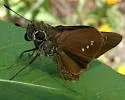
Brazilian Skipper - Hodges#4115
Calpodes ethlius
The larva wraps itself inside a leaf and eats the leaf. It expels feces forcefully a considerable distance which may be a protection against detection by predators.
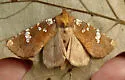
Brick-Red Borer Moth - Hodges#9492
Papaipema marginidens
Not known to migrate, so habitat fragmentation has left them scattered in local pockets of suitable habitat throughout their range, becoming more isolated all the time. As these pockets are lost or rendered uninhabitable to the moths, the species is
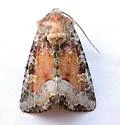
Bridgham's Brocade - Hodges#9415
Oligia bridghamii
Secure globally (G4) but rare (S1) in some regions such as Indiana ( PDF doc ); listed "S1?" in Ontario .
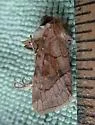
Bridled Arches - Hodges#10405
Lacinipolia lorea
Identification: Genitalia: Very similar to Polia nimbosa 10275. Polia nimbosa has a faint spiracular line but Lachinipolia doesn't. There seems to be a ridge across the back of A8 on Polia but not on Lachinipolia. The spiracles on Polia are supposed
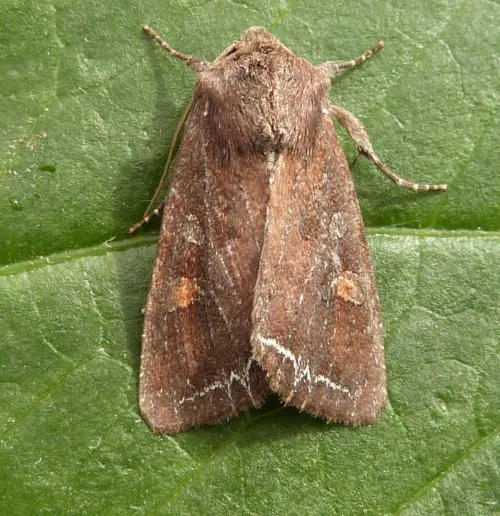
Bright-line Brown-eye
Lacanobia oleracea
Wingspan 32-37 mm. This moth doesn't tend to vary in appearance, except perhaps in the shade of brown of the forewings. It generally flies from May to July, with an occasional second brood in the south. The larva can be found in abundance on Orache,
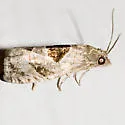
Brighton's Epiblema - Hodges#3203
Epiblema brightonana
Identification: Kearfott stated "Forewing: gray-brown; a large dark brown spot on dorsum, between inner fourth and middle, extending to middle of wing, pointed on top, rounded on sides; a smaller spot of same shape and color on dorsum before angle; f
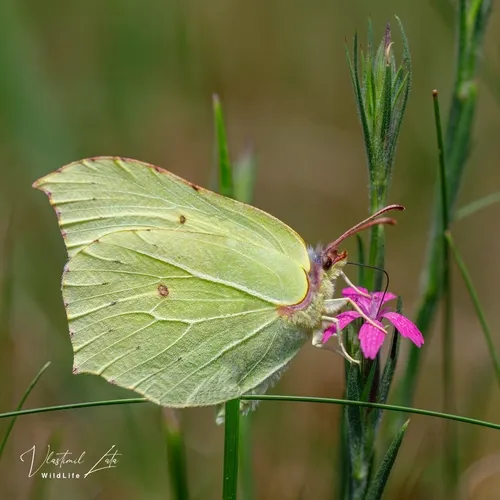
Brimstone
Gonepteryx rhamni
It is commonly believed that the word 'butterfly' is a derived from 'butter-coloured fly' which is attributed to the yellow of the male Brimstone butterfly, the female being a much paler whitish-green. The Brimstone has a most exquisite wing shape, p
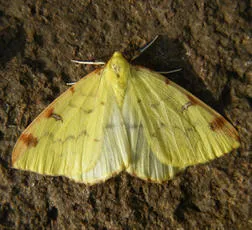
Brimstone Moth
Opisthograptis luteolata
Wingspan 32-37 mm. A handsome yellow moth with red markings on the wing margins. Occurring in three overlapping generations in the south, graduating to just one brood in the far north. Adults can be expected on the wing at any time from April to Octo
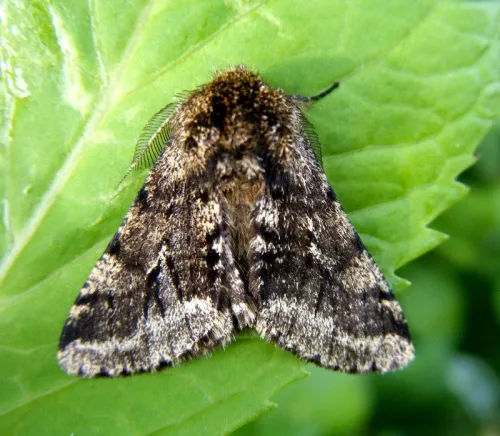
Brindled Beauty
Lycia hirtaria
Wingspan 35 to 45 mm. Distinguished by prominent black cross lines on the wings. It prefers woodland and suburban habitats, and feeds on a range of deciduous trees. Larva feeds on various broad-leaved trees and shrubs, including Birch, Hawthorn, Alde
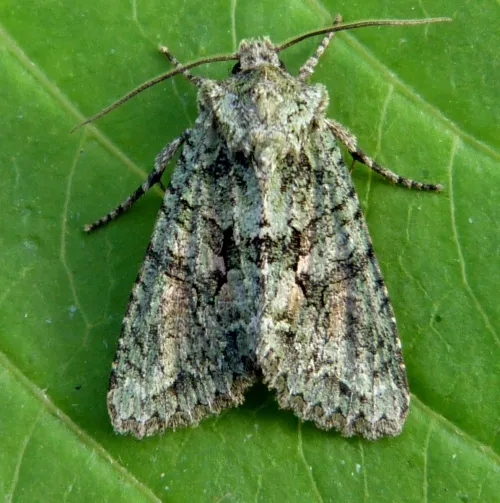
Brindled Green
Dryobotodes eremita
Wingspan 32-39 mm. Quite variable. Forewing is usually greenish or greyish and has a small pale blotch in the centre. The single generation flies in August and September, when it is readily attracted to light. The larvae feed on Oak, initially on the
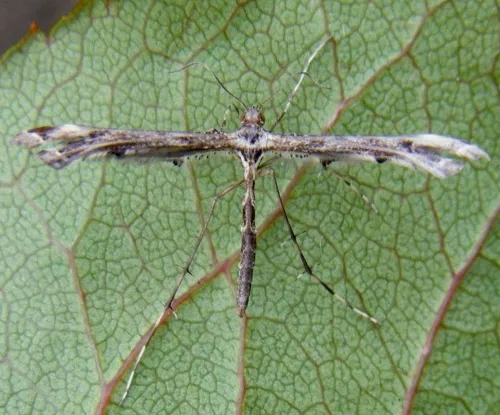
Brindled Plume
Amblyptilia punctidactyla
Wingspan 18 to 23 mm. Superficially similar to A. acanthadactyla , this species is generally greyer and less warm in colouration, and has a more speckled appearance. There are two generations with moths flying in July and then from September, hiberna
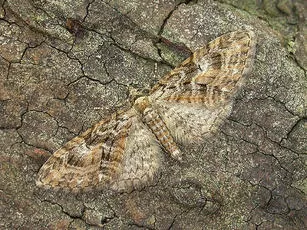
Brindled Pug
Eupithecia abbreviata
Wingspan 19 to 22 mm. Like several other species, in addition to the typical form there is a fairly common melanic form, hirschkei , which is devoid of many markings. An early spring species, and one of the first pugs of the season to be regularly en
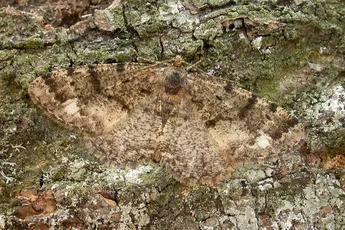
Brindled White-spot
Parectropis similaria
Wingspan 33 to 39 mm. There is some variation in the intensity of the markings of the adults. Woodland habitats and around Oak and Birch. Adults are to be found on the wing in May and June. The caterpillars live during the autumn, eating the foliage
Brittania Moth - Hodges#3537
Acleris britannia
Identification: Adult - there are light and dark forms of this moth. See original description in Print References. ,
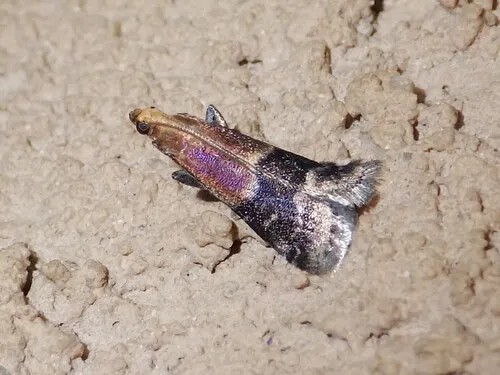
Broad-banded Eulogia Moth
Eulogia ochrifrontella
Eulogia is a monotypic snout moth genus described by Carl Heinrich in 1956. Its only species is Eulogia ochrifrontella, the broad-banded eulogia moth, described by Philipp Christoph Zeller in 1875. It is found in most of North America, including Brit
Broad-banded Swallowtail - Hodges#4173
Heraclides pallas
Identification: Strongly sexually dimorphic. On the upper side the male has a very broad yellow median band, wider than any other species in its range, and long all-black tails. Females are dark brown with short, stubby tails. Both sexes have a row o
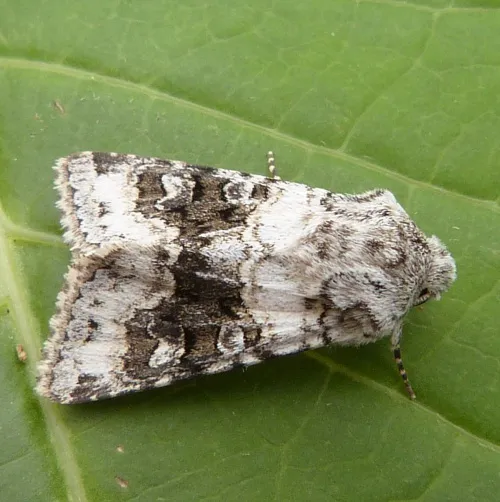
Broad-barred White
Hecatera bicolorata
Wingspan 28-35 mm. Broad dark grey or blackish central band on a whitish forewing which has a straight leading edge. Its preferred habitats are down land, wasteland and suburban areas. The larvae feed on the flowers and buds of such plants as Hawk's-
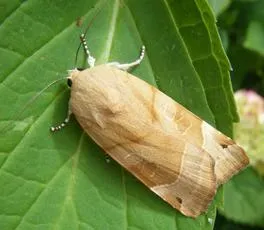
Broad-bordered Yellow Underwing
Noctua fimbriata
Wingspan 45-55 mm. Showing marked sexual dimorphism, the males of this moth are generally shades of darker brown, the females are orangey-buff. Broad-leaved woodland, parkland, heathland and gardens. The adults fly in one generation from July to Sept
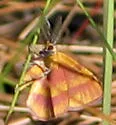
Broad-lined Erastria Moth - Hodges#6704
Erastria coloraria
diurnal. Adults attracted to baits and lights. rare and threatened (Natureserve rank G3/G4) by growing deer populations that overbrowse the host plant and other factors
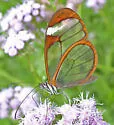
Broad-tipped Clearwing - Hodges#4617.2
Pteronymia cotytto
First U.S. Record: National Butterfly Center, Mission, Hidalgo Co., Texas - 2004 (Bordelon & Knudson 2006)
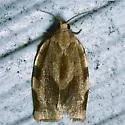
Broken-banded Leafroller - Hodges#3632
Choristoneura fractivittana
Identification: Adult - orangish-yellow with oblique brown median band, broken by ground color near upper end (the break more conspicuous in males than females). Narrow brown subapical patch at costa linked to median band in males, separated in femal