
Bruce Spanworm - Hodges#7437
Operophtera bruceata
This record describes Operophtera bruceata (species). Recorded family: Geometridae. Recorded order: Lepidoptera.
Identification and Appearance
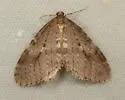
Adult: female has underdeveloped wings and does not fly; male forewing ground color grayish-brownish, generally darker than the similar (but larger and whiter) Autumnal Moth; terminal line a series of dark SINGLE dots -- a distinctive feature; dull yellowish scaling often present along costa; hindwing pale brownish-gray with small dark discal spot and indistinct lines [see See Also section below for distinguishing features of Autumnal Moth] Comparison of Operophtera brumata and O. bruceata, uncus is shown, the scales have been brushed off the tail of the abdomen. Larva: body bright green with 3 narrow yellowish-white stripes on each side; only 2 pairs of prolegs
Classification
- Kingdom
- Animalia
- Phylum
- Arthropoda
- Class
- Insecta
- Order
- Lepidoptera (Butterflies and Moths)
- Superfamily
- Geometroidea
- Family
- Geometridae (Geometrid Moths)
- Subfamily
- Larentiinae
- Tribe
- Operophterini
- Genus
- Operophtera
Imported taxonomy record. Source availability varies; see the source references and editorial policy below.
Habitat and Range
Habitat
deciduous woods; females are found crawling on tree trunks and large branches; males fly low among trees, and are attracted to light
Geographic Range
coast to coast in southern Canada and northern United States
Seasonal Activity
adults are active after leaves fall, from October to December larvae in May and June
Diet and Behavior
Diet: larvae feed preferentially on leaves of Sugar Maple, American Beech, and Trembling Aspen, but will also feed on willow and various other deciduous trees
Life History
one generation per year; overwinters as an egg which hatches in the spring; larvae eat leaves right down to the ribs in May & June, then pupate until October or November, when adults emerge; flightless females climb tree trunks and lay pale green eggs singly in bark cracks or on large branches; egg color changes to orange during winter
Additional species information
Species notes from the sources
Etymology: Operophtera bruceata occidentalis (Hulst, 1896) was listed in the 1983 MONA checklist as a full species, synonymized as a subspecies of Operophtera bruceata (Hulst, 1886) in Troubridge & Fitzpatrick (1993), and considered worthy of full species status in Gwiazdowski et al. (2013).
About Butterflies and Moths: the wider group
Order-level background for Lepidoptera, the group containing Operophtera bruceata. Species-specific details appear above.
Group overview
Lepidoptera includes approximately 180,000 described species of butterflies and moths. Moths outnumber butterflies roughly 10:1. The monarch butterfly's eastern population has declined by more than 80% since the mid-1990s, and the western population by over 95% since the 1980s. The IUCN lists the migratory monarch as Vulnerable.
Ecological role of the group
Butterflies and moths are essential indicators of ecosystem health. As caterpillars, they are a primary food source for birds - a single nest of blue tit chicks requires ~10,000 caterpillars. Adult moths pollinate many night-blooming plants.
Economic and practical significance of the group
Lepidoptera are critical pollinators. In Europe, grassland butterfly species have declined by almost 50% since the early 1990s. In the UK, three-quarters of butterflies are in decline. In the U.S., five butterfly species have gone extinct since 1950, with 29 listed as endangered.
Recorded sources for this group: IUCN Red List, Xerces Society, USFWS, PNAS, WWF. Imported estimates may describe particular regions or reporting periods.
Photos of Bruce Spanworm - Hodges#7437 (5)
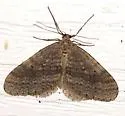
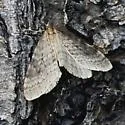
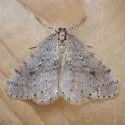
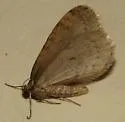
Photo credits: Contributed by Robin McLeod; Additional contributions by Steve Nanz , Tony-2 , Joshua Stuart Rose , anitagould , marcie oconnor , metrioptera , JoAnneRusso , Steve Morris
Frequently Asked Questions About Bruce Spanworm - Hodges#7437
What is Bruce Spanworm - Hodges#7437?
Bruce Spanworm - Hodges#7437 (Operophtera bruceata) is a species in the family Geometridae, within the order Lepidoptera.
How big is Bruce Spanworm - Hodges#7437?
wingspan 25-30 mm larvae to about 20 mm
How do you identify Bruce Spanworm - Hodges#7437?
Adult: female has underdeveloped wings and does not fly; male forewing ground color grayish-brownish, generally darker than the similar (but larger and whiter) Autumnal Moth; terminal line a series of dark SINGLE dots -- a distinctive feature; dull yellowish scaling often present along costa; hindwing pale brownish-gray with small dark discal spot and indistinct lines [see See Also section below for distinguishing features of Autumnal Moth] Comparison of Operophtera brumata and O. bruceata, uncus is shown, the scales have been brushed off the tail of the abdomen. Larva: body bright green with 3 narrow yellowish-white stripes on each side; only 2 pairs of prolegs
Where is Bruce Spanworm - Hodges#7437 found?
| Feature | Details |
|---|---|
| Habitat | deciduous woods; females are found crawling on tree trunks and large branches; males fly low among trees, and are attracted to light |
| Range | coast to coast in southern Canada and northern United States |
What does Bruce Spanworm - Hodges#7437 eat?
The diet of the Bruce Spanworm - Hodges#7437 includes larvae feed preferentially on leaves of Sugar Maple, American Beech, and Trembling Aspen, but will also feed on willow and various other deciduous trees.
When is Bruce Spanworm - Hodges#7437 active?
Bruce Spanworm - Hodges#7437: seasonal activity - adults are active after leaves fall, from October to December larvae in May and June.
What is the life cycle of a Bruce Spanworm - Hodges#7437?
one generation per year; overwinters as an egg which hatches in the spring; larvae eat leaves right down to the ribs in May & June, then pupate until October or November, when adults emerge; flightless females climb tree trunks and lay pale green eggs singly in bark cracks or on large branches; egg color changes to orange during winter