
Grasshoppers, Crickets, Katydids
Order Orthoptera
The Grasshoppers, Crickets, Katydids (Order Orthoptera) includes 1,030 species across 22 families and 248 genera in our directory.
About Grasshoppers, Crickets, Katydids
Orthoptera includes ~28,000 described species of grasshoppers, crickets, and katydids. Desert locusts can form swarms covering 460 square miles containing up to 80 million individuals per square kilometer.
Economic Impact
A single large locust swarm can consume the same amount of food in one day as 35,000 people. The 2019-2021 East Africa locust crisis affected food security for 42 million people across multiple countries. Global crop losses from locusts can reach billions annually.
Ecological Role
Grasshoppers and crickets are a primary food source for birds, reptiles, and small mammals. Cricket farming is a growing industry - crickets require 12× less feed than cattle to produce the same amount of protein, using 2,000× less water.
Families in Orthoptera (22)
Species in Orthoptera (1,030)
Long-spurred Meadow Katydid
Orchelimum silvaticum
Identification: This species has the longest "tooth" on the inner surface of the male cerci, this feature prompting the common name
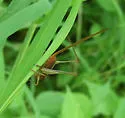
Long-tailed Meadow Katydid
Conocephalus attenuatus
Identification: Typically either all red or red with green limbs.
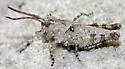
Longhorn Band-wing Grasshopper
Psinidia fenestralis
Identification: Smallish, slender body; lateral lobes (sides) of pronotum with lower hind angle (not rounded); antennae long, broad, and flattened; wings usually bright orange to near red; in the northeastern states, sometimes yellow. Typical orange
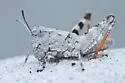
Marbled Grasshopper
Spharagemon marmoratum
Identification: Gray and brown, with strongly banded femora. Tibia are orange or red, pale yellowish ring at base. In flight, hindwings show a distinctive wide, curved, dark band. The Longhorn Bandwinged Grasshopper, Psinidia fenestralis is similar,
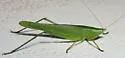
Marsh Conehead
Neoconocephalus palustris
Identification: Quoting account at Singing Insects of North America : As in other members of this genus, there are green and brown forms. See iNaturalist for an example of a brown form.
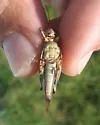
Masked Grasshopper
Trimerotropis cincta
Identification: Relatively small, distinct sharply defined dark cross bands on tegmina usually don't cross top as seen when folded. Wings relatively narrow, transparent yellow, usually with a greenish tinge, and with dark band narrow and curving. O
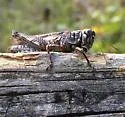
McClung's Juniper Grasshopper
Melanoplus macclungi
Similar to Melanoplus punctulatus and M. splendidus . Larger, with male cerci distinctly more slender.
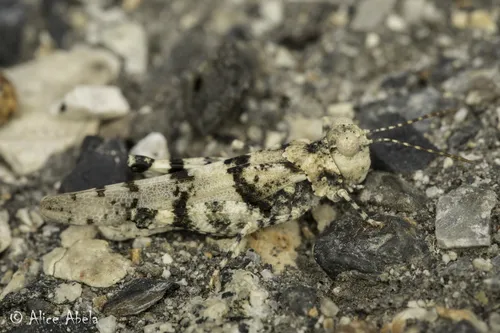
McNeill's White Grasshopper
Trimerotropis albescens
Identification: Varied color, usually pale whitish, but sometimes pinkish, reddish, brown, or even bluish. Small, with distinct narrow cross bands on the tegmina that cross over the top. The band closest to the wing base and the one in middle are f
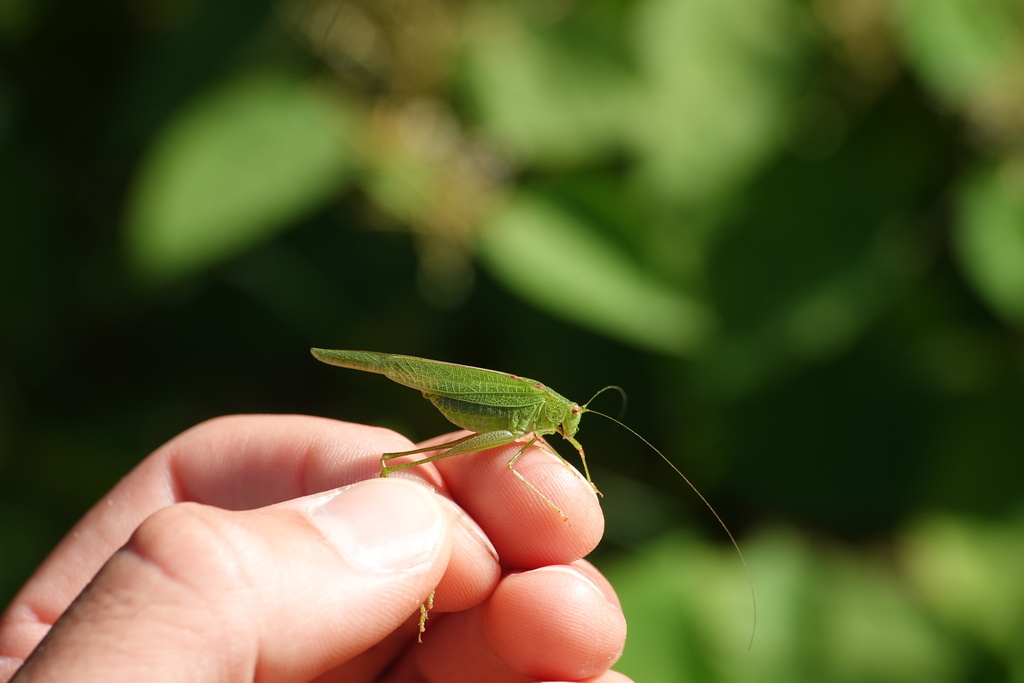
Mediterranean Katydid
Phaneroptera nana
(c) Aurélien Coste, some rights reserved (CC BY)Identification: Nymphs of this species are very similar to nymphs of Scudderia spp. , but have more and narrower black rings around the antennae than any Scudderia nymphs in the same area. Introduced from Europe perhaps since the 1930s.
Melanoplus bonita
Melanoplus bonita
Identification: A member of the 'puer group' and best distinguished by male genitalia and range.
Melanoplus peninsularis
Melanoplus peninsularis
Identification: A member of the 'puer group' and best distinguished by male genitalia and range. Strikingly purple hind tibiae in adults.
Mendocino Green-striped Grasshopper
Chortophaga mendocino
Much like other Chortophaga , especially like C. australior in build, and like C. viridifasciata in coloring. Wings of females often shorter than abdomen and sometimes not reaching tips of hind femora. Very similar to Chimarocephala pacifica , which
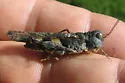
Mestobregma impexum
Mestobregma impexum
Identification: Differs from M. plattei in larger somewhat rounder head; frontal costa strongly narrowed just above antennae; fastigium more strongly closed off and separate from frontal costa at front; tegmina with dark bands often tending to cross
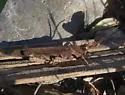
Mexican Blue-wing Grasshopper
Machaerocera mexicana
Identification: The projecting forehead, and the blue wings make adults of this slender species unmistakable. Males are active, agile, and difficult to approach, creating blue flashes as they fly between clumps of grass or out onto the sand and grave
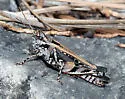
Mexican Dichroplus
Dichroplus notatus
Identification: Wings fully developed and reach to near or past hind femora when folded. Similar to Melanoplus and Aidemona , but with distinctive color pattern. Usually with tops of folded tegmina and pronotum paler than dark sides and with dark m
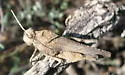
Mexican Oak-leaf Grasshopper
Tomonotus mexicanus
Identification: Very similar to T. ferruginosus except with fastigium proportionately wider and shorter, body proportionately slightly more slender, wings of a darker more reddish orange to red or pink. The pronotum is more roughened, with the top l
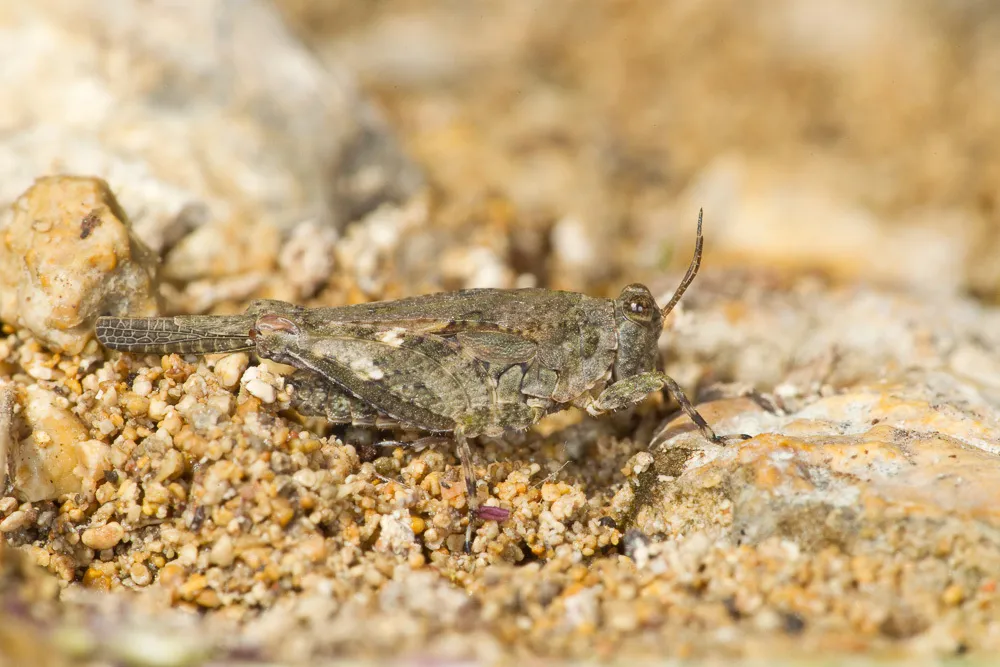
Mexican Pygmy Grasshopper
Clypeotettix mexicanus
Identification: Variable. Pronotum extended, may reach tip of abdomen Type locality: San Bernardino, San Bernardino County, California
Microtes pogonata
Microtes pogonata
Identification: Very similar to M. occidentalis . Differing in tegmina usually equaling or only slightly surpasing end of hind femora; head a bit more rounded in profile; body is apparently more hairy, even on top; pronotal crest perhaps averaging l
Migratory Grasshopper
Melanoplus sanguinipes
Identification: Very similar to several other species, and females in particular can be very difficult to distinguish. This species is best determinded by looking at males, in which the abdomen is only moderately swollen toward the tip. The subgeni
Modest Grasshopper
Agroecotettix modestus
Identification: Brownish or grayish, mottled darker, with parallel dark lines on top of the pronotum; red on hind tibiae and inner face of hind femora; short oval widely separated tegmina. Regarding the two subspecies in Texas, the following is taken
Modest Grasshopper
Trimerotropis modesta
Identification: Habitat and distribution make confusion with most other species unlikely. The most similar is Spharagemon campestris , which occurs mostly further north, and which has a pattern usually more broken and irregular looking (see comments
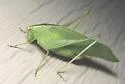
Modest Katydid
Montezumina modesta
Identification: Very similar to the genus Amblycorypha . Head is smaller. Eye (in live specimens) has a bold dark diagonal stripe through it. Thorax and front of tegmina usually edged strongly with yellow on top.
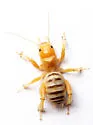
Monahans Jerusalem Cricket
Ammopelmatus monahansensis
Texas considers this to be a "Species of Greatest Conservation Need" (SGCN)
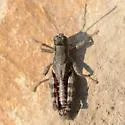
Montana Short-wing Grasshopper
Melanoplus montanus-species-group
Nearly identical Melanoplus oreophilus occurs in the Cascades of Washington and Oregon, and M. washingtonius is in ne. Washington and adjacent British Columbia and Idaho.
Morse's Wingless Grasshopper
Gymnoscirtetes morsei
Identification: Similar to M. pusillus , but found more northwestard in northern Florida and adjacent Alabama. Differs in slightly larger average size. Male subgenital plant with the upper margin more elevated at the front, and with higher narrow l
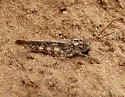
Mottled Sand Grasshopper
Spharagemon collare
Identification: Shaped like Carolina Grasshoppers (pronotum with a fairly high crest, cut deeply once at an angle), but smaller, with red hind tibiae, proportionately shorter wings. Hind wings yellow with a curved black cross band. This one often m
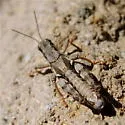
Mount Hood Short-wing Grasshopper
Melanoplus oreophilus
A member of the Montanus Species Group , containing 30 additional species. These are reliably separable only by examining male genitalia, or sometimes by knowing collection location. M. oreophilus & M. oregonis are separated from the rest by geograp
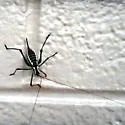
Mountain-dwelling short-winged katydid
Obolopteryx oreoeca
Identification: Male cercus has a spoon-shaped thumb, nearly identical to D. catinata . More or less restricted to two populations in Texas (see below). The population in the Chisos Mountains has thick conspicuous white lateral stripes, but this char
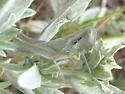
Mugwort Grasshopper
Hypochlora alba
Identification: The white-striped pale gray-green color (occasionally tan or pale brown) of this grasshopper, along with the short wings and small size, make it unmistakable. While very common, it is rarely noticed.
Nantahala Short-wing Grasshopper
Melanoplus serrulatus
A member of the Mancus Group . Perhaps intermediate between M. celatus & M. divergens . Also very similar and closely related to M. islandicus & M. mancus . All of these differing by where found, and by details of male genitalia.
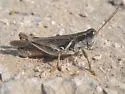
Narrow-winged Spur-throat Grasshopper
Melanoplus angustipennis
Identification: Very similar to M. foedus & packardii , but much smaller (averaging well under 30 mm long), usually without prominent median dark stripe on top of pronotum and head, and without white stripes along top margins of pronotum; male furcul
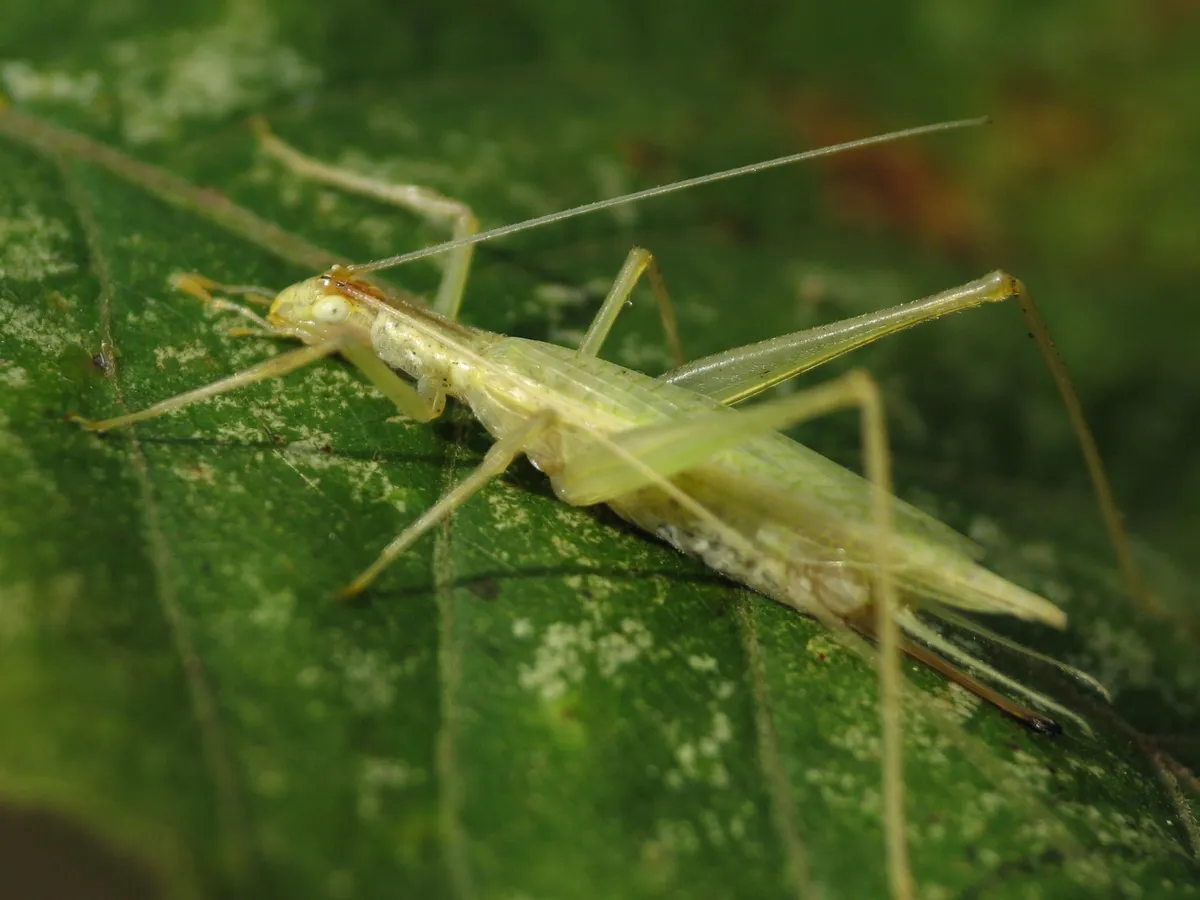
Narrow-winged Tree Cricket
Oecanthus niveus
Identification: O. niveus can be ID'd by the markings on the first two segments of the antennae. The first segment (the scape) has a thick black ' J ' atop a white field. The second segment (the pedicel) has a small black mark against a white field.
Netrosoma fusiformis
Netrosoma fusiformis
Type Locality: Monclova [Montelovez in error], Coahuila [Chihuahua in error], Mexico, September 20; E. Palmer; Scudder Collection. (Hebard, 1917)
Nevada Point-Head Grasshopper
Acrolophitus nevadensis
Identification: Similar to A. hirtipes , except with no crest on pronotum, smaller in size, and occuring further west (not known to overlap in distribution). A. pulchellus is very similar, except with more extensive pale markings, and found further n
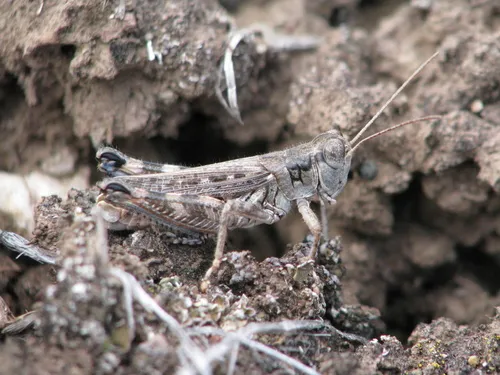
Nevada Sage Grasshopper
Melanoplus rugglesi
Identification: Females are difficult to separate from similar species. Males have greatly expanded cerci and short furculae, and within the species' distribution can only be confused with the very closely related M. occidentalis . M. rugglesi usual
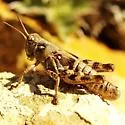
Nordic Mountain Grasshopper
Melanoplus frigidus
Identification: Few other species of Melanoplus occur in the same region. M. frigidus is fairly stocky in build, greenish, grayish, or light brownish with the usual dark bar reaching back from the eyes, but not to the rear of the pronotum; tegmina sh
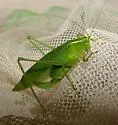
Northern Bush Katydid
Scudderia septentrionalis
Identification: Male supra-anal plate truncated: Often referred to as rare in much of the early literature, but can be locally common. considered by VA to be a Species of Greatest Conservation Need (SGCN)
Northern Coast Bush Grasshopper
Aeoloplides fratercula
Identification: Has short ovate tegmina. Lower side of hind femur not grooved and without basal wedge/flange. Male cerci straight at tip. Distinction from A. fuscipes seems weak. Both seem out of place among other Aeoloplides .
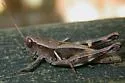
Oak Spur-throat Grasshopper
Melanoplus querneus
Identification: Hind tibiae red; hind femur distinctly cross-banded dark on outer side. Tegmina short, but longer than pronotum, overlapping above, usually (when folded) light on top and contrastingly darker on sides. Very similar to M. nigrescens ,
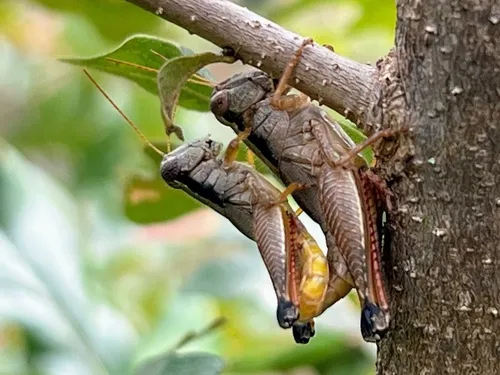
Oak-loving Short-wing Grasshopper
Melanoplus quercicola
Identification: Closely related to Melanoplus davisi , and perhaps just a subspecies. Distinguished by more easterly distribution ( M. davisi occurs west from Walton County), narrower apex of male cerci, and tegmina more even in coloring. Relatively
Obovate-winged Grasshopper
Melanoplus rusticus-decoratus-species-group
Identification: Hind tibiae greenish to bluish, pale near base. Wings oval, usually separated above. Pronotum above with portion in front of principal sulcus much longer than part behind, widening gently toward the rear in males, noticeably in fema
Obscure Grasshopper
Eritettix obscurus
Identification: Wings shorter than abdomen. Found in Florida.
Obscure Grasshopper
Opeia obscura
Identification: Very similar to Eritettix simplex . O. obscura is usually found as nymphs in spring and adults in summer and fall, while E. simplex is found as nymphs in fall and adults in spring. O. obscura has the margins of the top of the pronotum
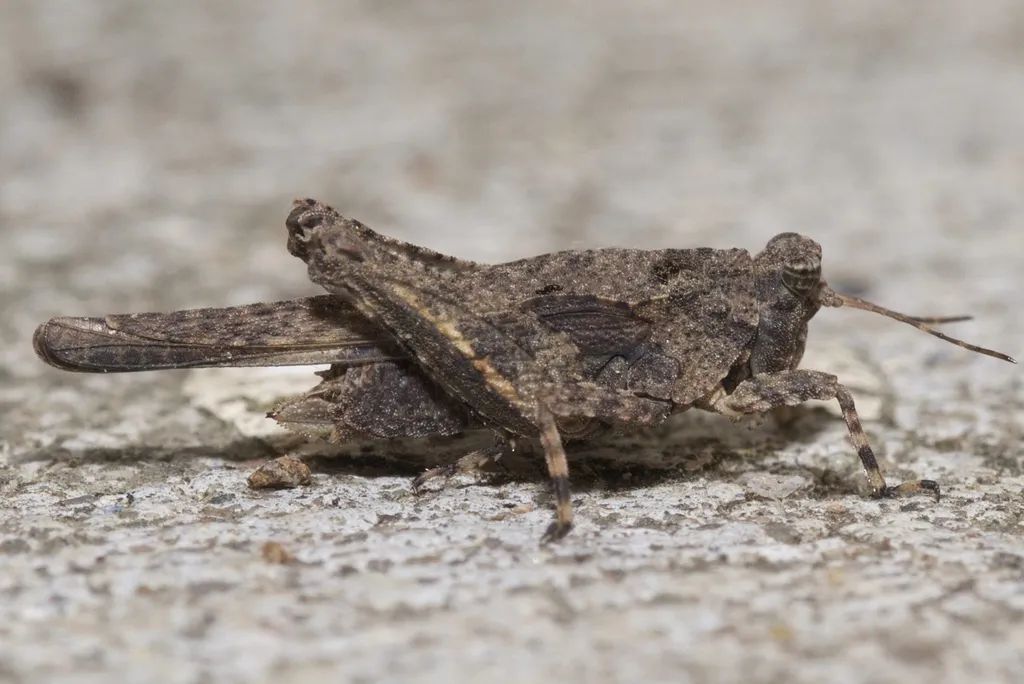
Obscure Pygmy Grasshopper
Tetrix arenosa
Identification: Grayish, brownish, or dark; may have a wide pale band across pronotum. Pronotum almost flat, with median ridge feeble
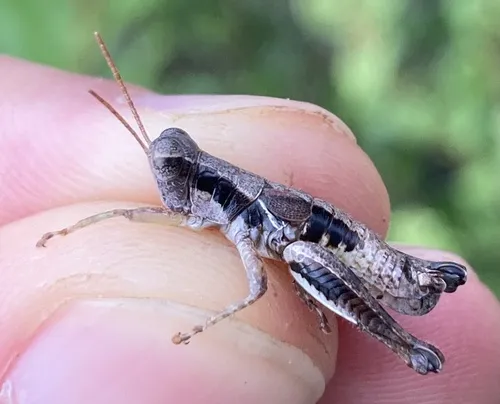
Ocala Clawcercus Grasshopper
Melanoplus nanciae
Identification: Male cercus highly distinctive, hence the common name
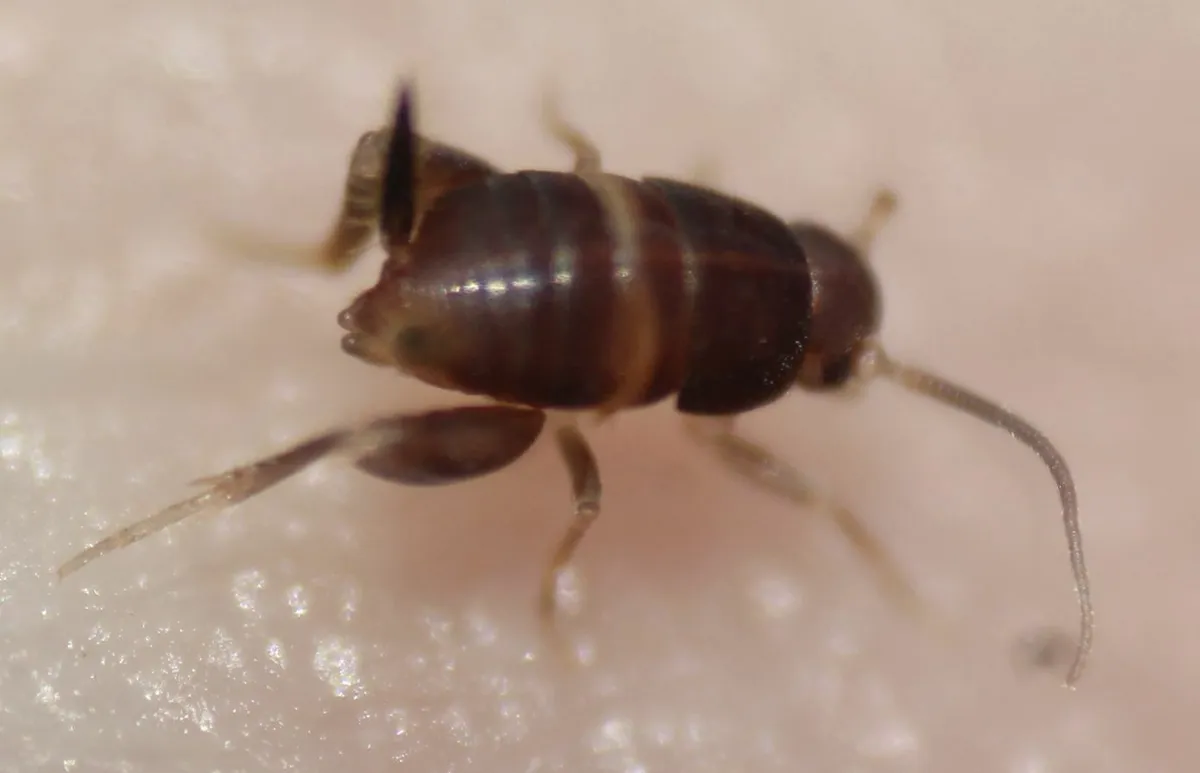
Old World Ant Cricket
Myrmecophilus americanus
Identification: Dark brown with a lighter stripe on the posterior half of mesonotum; no other North American ant cricket has this color pattern (Wetterer & Hugel 2014) Originally described from 'Colombia', but apparently native instead to tropical As
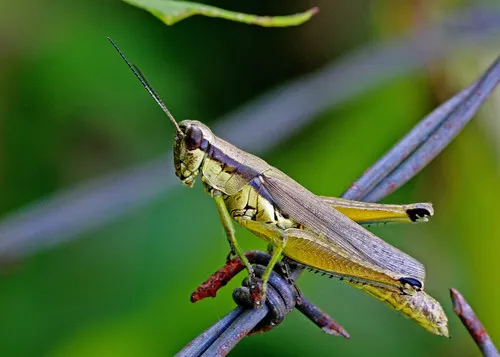
Olive-green Swamp Grasshopper
Paroxya clavuliger
Identification: Greenish to greenish-black with dark stripe through eye. Long antennae, especially in males. Hind tibiae are bluish green. Larger than P. atlanticus . In male P. clavuliger antennae are longer than hind femora, while shorter in P. atl
One-tooth Longwing
Capnobotes unodontus
Identification: As other California species, can come in different colors (green, brownish, gray). Very similar to and perhaps not distinct from C. spatulatus . Tip of male cercus bilobed, but only subapical lobe is toothed (both lobes toothed in C.
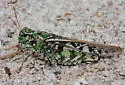
Orange-winged grasshopper
Pardalophora phoenicoptera
Identification: Large gray/brown or green, dark spots on forewings. Hind femur mostly blue with darker near black cross bands and one subapical yellow to orange band. Hind tibia yellow to orange. Bright red-orange to red hindwing. Adults in spring.
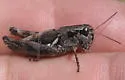
Oregon Short-wing Grasshopper
Melanoplus oregonensis
Identification: Dark, often blackish, with pattern usually little contrasting, wings about as long as or shorter than pronotum, widely separated over the back, and roughly oval in shape. Hind tibiae brownish blue to blue. Males with cerci rounded ob
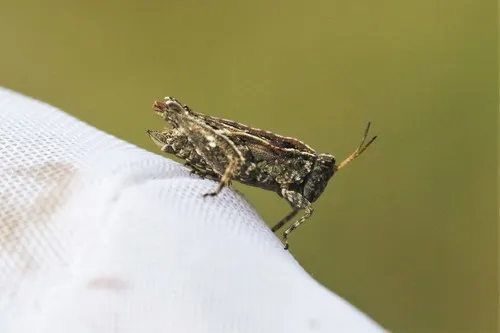
Ornate Pygmy Grasshopper
Tetrix ornata
Identification: See comments under T. brunneri. Differs from T. subulata in being generally stockier, and in having the median ridge on top of the head prodtruding slightly but prominently beyond front of head (ending at front in T. subulata). The f
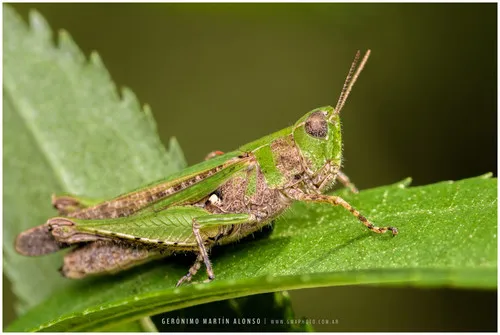
Orphulella punctata
Orphulella punctata
Identification: Lateral pronotal carinae cut by 2 (sometimes 3) sulci (as in O. pelidna); forewings extending beyond end of abdomen; hind femora usually with spots along the lower outer carinula and with one or two larger spots along the top marginal
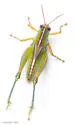
Osceola grasshopper
Hesperotettix osceola
Identification: Green with white stripes and black & reddish markings. Hind tibiae blue. Wings shorter than pronotum. Very similar to H. viridis subspecies pratensis & brevipennis which occur further north and have longer wings.
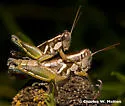
P. mimica ?
Paraidemona species-c
Late season. Hairy. Male head rounded, small, strongly sloping, with compound eyes very large. Abdomen with much yellow color; rear margin of segments pale.
Pale Clouded Grasshopper
Nebulatettix pallidus
Identification: Similar to E. subgracilis but with head larger and somewhat more smoothly rounded, with ground coloring paler (often slightly yellowish in life), and usually with two distinct pale stripes at sides of top of pronotum. In most regions
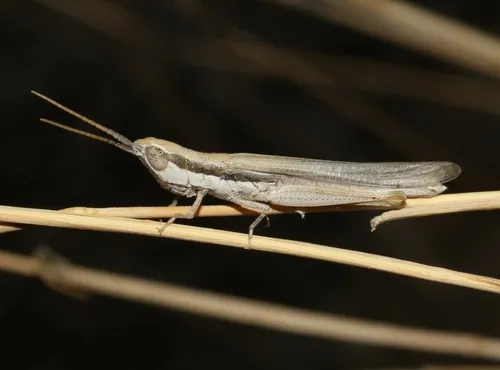
Pale Toothpick Grasshopper
Paropomala pallida
Identification: Much as in P. virgata except hind femora shorter and not reaching tips of abdomen and often not wings. Wings varied in length, but usually at least reaching past tips of hind femora, or nearly so. As in P. virgata , dark stripe is n
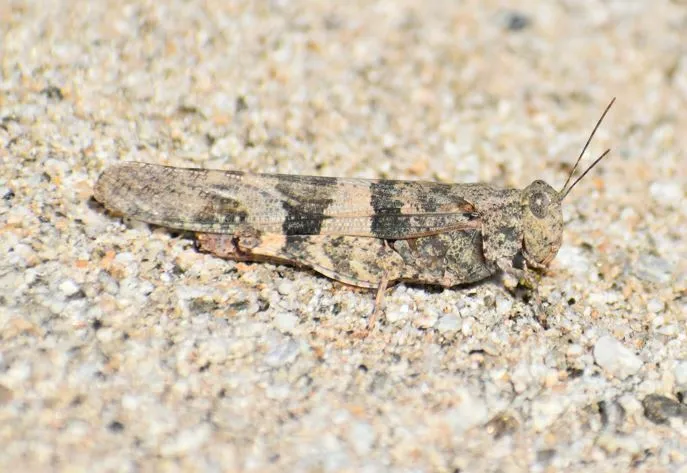
Pallid-winged Grasshopper
Trimerotropis pallidipennis
Identification: Variable, mostly gray or gray-brown. Note dark bands usually present on forewing, yellowish hind tibiae. Hind wings are long and narrow (roughly twice as long as wide), pale yellow, sometimes greenish or bluish at base, with dark ban
Paraidemona olsoni
Paraidemona olsoni
Identification: Distinction from P. mimica is weak, with the only obvious difference apparently being a more "wavy" margin to the supra-anal plate of the male.
Paraidemona species - b
Paraidemona species-b
Identification: Perhaps the same as "species B". So far only mating pairs posted, so can't see end of abdomens. Early season, appears to be less hairy. Male face seems more "flat" in profile (less convex).
Paraidemona species-a
Paraidemona species-a
Identification: Early season. Appears to be more stocky with more contrasting markings in males.
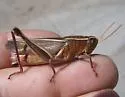
Paratylotropidia brunneri
Paratylotropidia brunneri
Behavior and appearance is rather similar to Melanoplus bivittatus until closely examined, and perhaps this species is not often noticed because of the resemblance to that very common species. Unlike that species the head is squared (almost pointed)
Paratylotropidia morsei
Paratylotropidia morsei
Identification: Very similar to P. brunneri , except tegmina (always?) short and with tip rounded instead of pointed. Considering the variation in wings seen in populations of P. brunneri (particularly in eastern Oklahoma), the distinction seems min
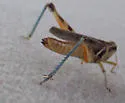
Pasture Grasshopper
Melanoplus confusus
Identification: Adult: body gray and brown with black patches; underside cream-colored; shiny black patch behind eye on side of head and on pronotal lobe; white diagonal stripe on side of thorax behind pronotum; wings long; outer surface of hind femu
Paxilla obesa 0
Paxilla obesa
Identification: Small, more humped than other tetrigids. Pronotum covers large part of head. Figures
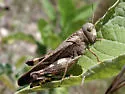
Pecos Arphia
Arphia pecos
Identification: Similar to Arphia simplex , but the "forhead" is less projected in front of the eyes and more rounded, with side ridges at the front of the fastigium not prominent. Wings more often darker in color (orange to red). It is usually fou
Phaedrotettix concinnus
Phaedrotettix concinnus
Identification: The shapes of the parts of the male "terminalia" at the end of the abdomen are distinctive in this species, and should separate it from P. accola , which has much narrower wings and slender, nearly pointed cerci. P. dumicola has the "
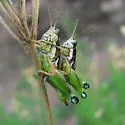
Phaedrotettix palmeri
Phaedrotettix palmeri
Identification: Similar to P. dumicola (and P. concinnus ) but supposed to be smaller in size. Has the cerci narrowed toward the tip (but still wide, not pointed); the pallium is prominent but less developed; and the subgenital plate has a small tub
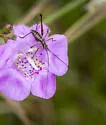
Phaneroptera nr-nana
Phaneroptera nr-nana
Identification: Individuals of this FL population of Phaneroptera are more slender than P. nana, with proportionately longer legs; males also differ in appearance of the external genitalia. P.nana P. 'nr-nana' The earliest known U.S. record of this s
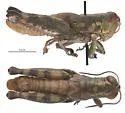
Phaulotettix ablusus
Phaulotettix ablusus
Identification: Similar to P. compressus , but the male cerci and phallic complex are different. Only 3 specimens known. More surveying is needed to determine the full range of this species.
Pine Bluffs Grasshopper
Trimerotropis fratercula
Identification: Identical to Trimerotropis cyaneipennis , except wings are yellow (sometimes a bit greenish) and hind tibiae may be brownish, yellow, green, or to the south in Colorado and northern New Mexico blue (normally blue in T. cyaneipennis )
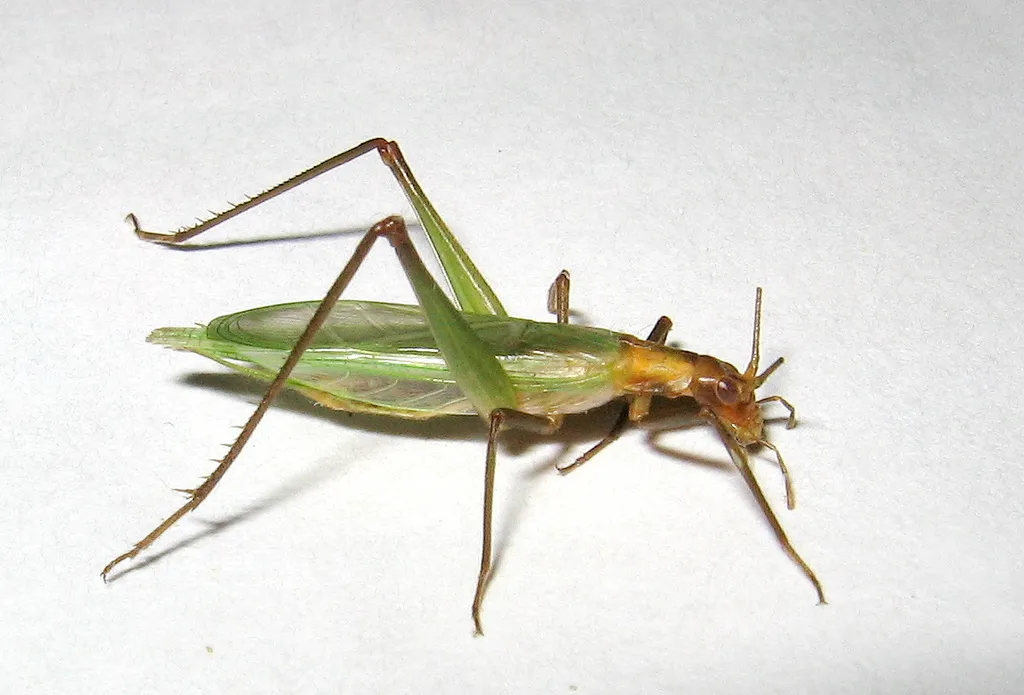
Pine Tree Cricket
Oecanthus pini
Identification: Reddish brown head, pronotum, antennae and distal limbs. Eyes are pink. Antennal markings similar to O. nigricornis. A great source for 'everything you ever wanted to know about tree crickets' is an article written in May 1915 by Be
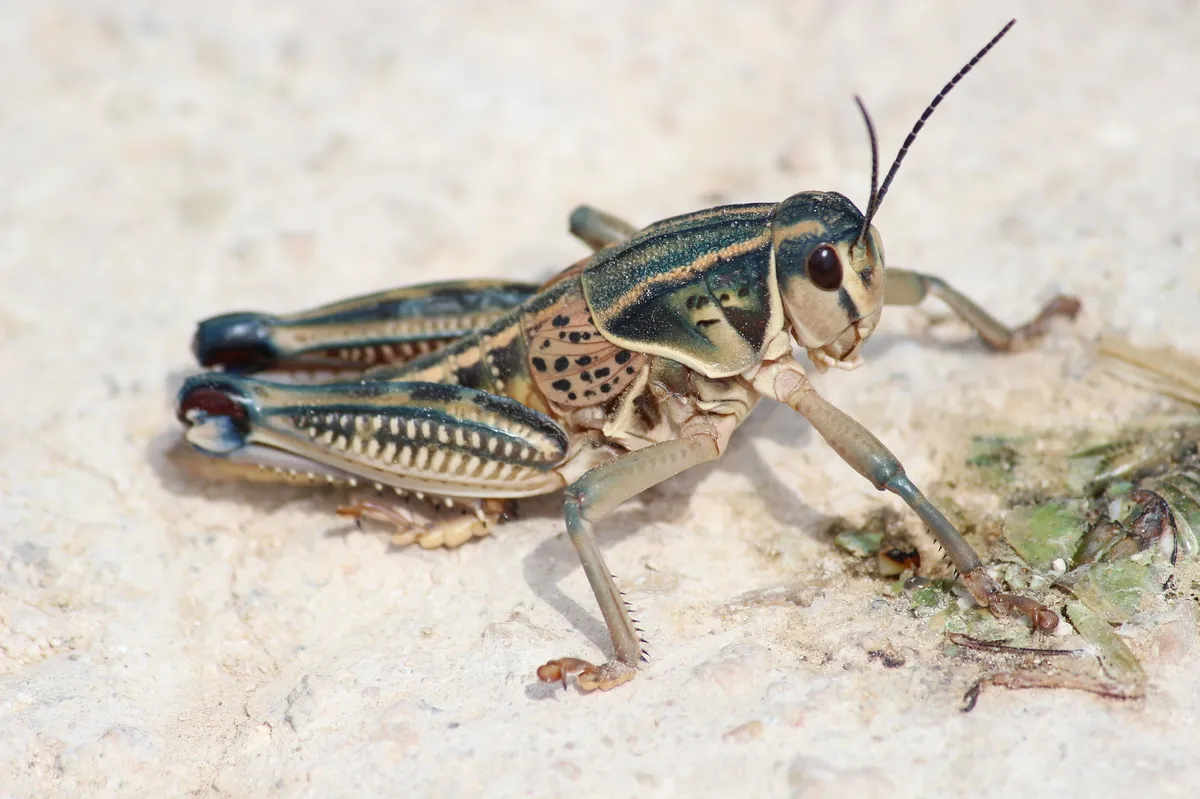
Plains Lubber Grasshopper
Brachystola magna
Identification: Large, colorful grasshopper. Flightless. On the central and southern Great Plains, individuals reach their largest size, and are more often (especially females) predominantly green. In the Southwest they tend to be smaller, more varie
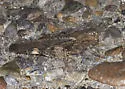
Plains Yellow-winged Grasshopper
Arphia simplex
Identification: One of our largest species of Arphia ; adults mostly in spring; hind wings most often yellow to orange with narrow band that has a long spur well-separated from the costal margin. One or two main veins on sides of folded tegmina are
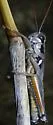
Plebeian Short-wing Grasshopper
Melanoplus plebejus
Identification: The overlapping, relatively pointed tegmina (not pointed in long-winged individuals), the relatively plain coloration (usually), bluish hind tibiae, plus the shape of the male cerci, with the male furculae being divergent, tiny and pe
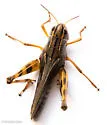
Prairie Boopie
Boopedon gracile
Identification: The males of this species have bluish hind wings and readily fly short distances when disturbed
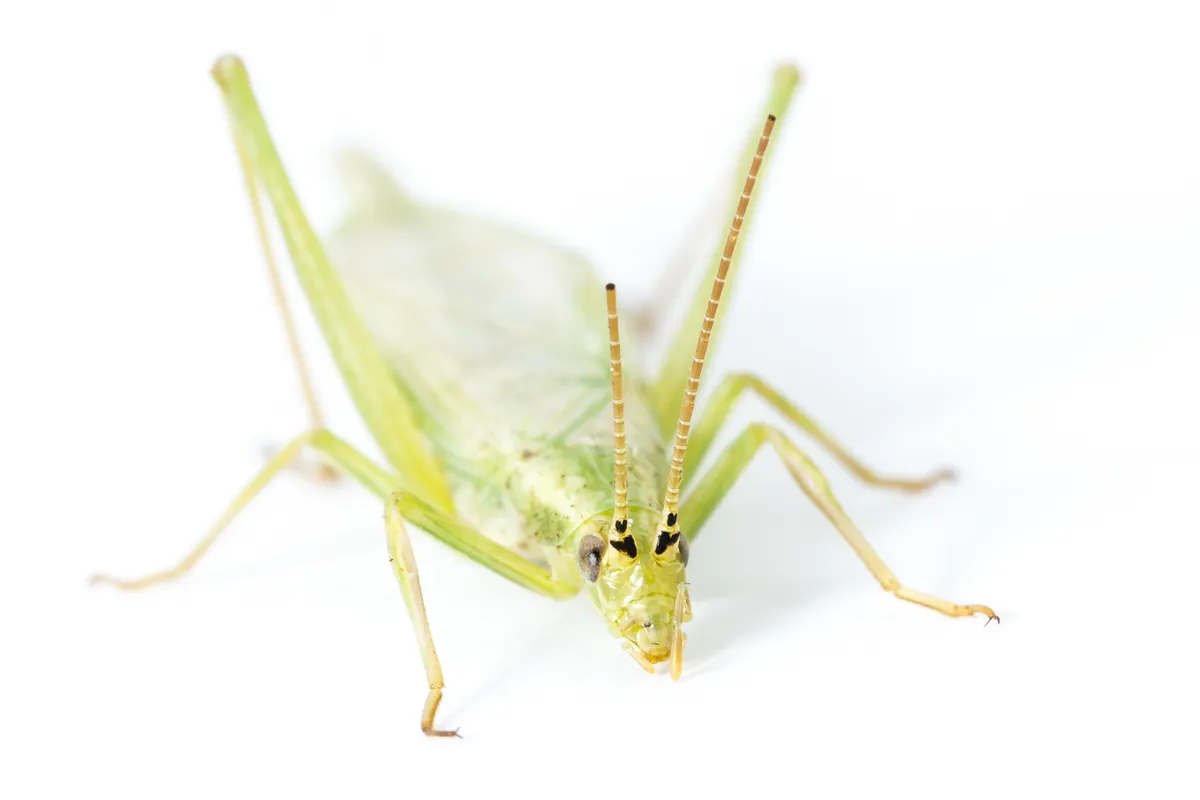
Prairie Tree Cricket
Oecanthus argentinus
Identification: The horizontal black mark on the scape has a slightly upward stroke. The two black marks on the pedicle are touching (either they touch or are extremely close for this species). The pronotum has no black. This photo below of a 4th sta
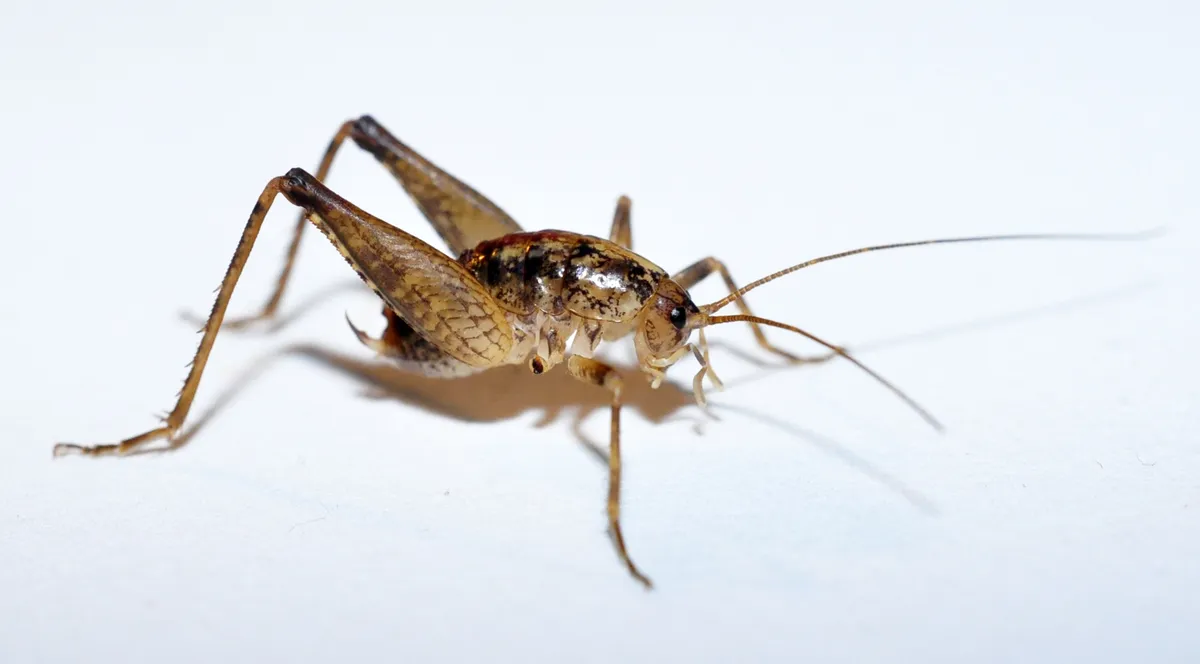
Pristoceuthophilus celatus
Pristoceuthophilus celatus
Identification: From BG contributor James Miskelly : "Males have five raised smooth areas going down the dorsum of the abdomen. Females must be identified by association with males".
Pristoceuthophilus cercalis
Pristoceuthophilus cercalis
Identification: From BG contributor James Miskelly : "Male abdominal segments are half tuberculate, half smooth. Male cerci end in multi-segmented 'tassels'. Females must be identified by association with males".
Protean Shieldback
Atlanticus testaceus
Identification: Forewings (tegmina) of male are about half (or greater) than length of the pronotum.
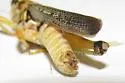
Quanah Grasshopper
Melanoplus tuberculatus
Described from Quanah, Hardeman County and Wichita Falls, Wichita County, Texas
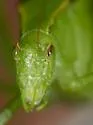
Rattler Round-winged Katydid
Amblycorypha rotundifolia
Identification: Song is a "high-pitched swishy rattle" ( Songs of Insects )
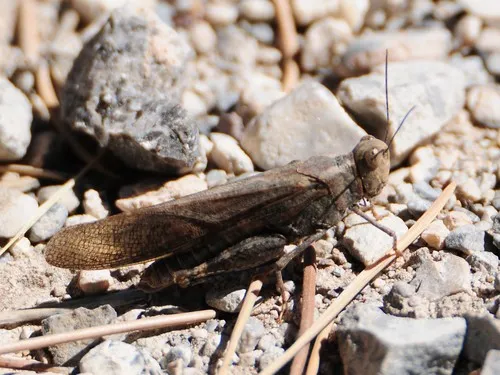
Rattling Grasshopper
Circotettix crotalum
Identification: Mostly this is a rather plain looking deep brown to blackish insect, but on light colored rocks it may be lighter in color with more prominent mottling. Confusion with other Circotettix species is not an issue though, as this is the o
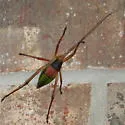
Red Katydid
Paracyrtophyllus robustus
Identification: True katydids have leaf-like wings that form cups enclosing the abdomen. Wings only allow for feeble flight. (The cupped wings probably serve to amplify their songs.) Antennae longer and stiffer than in other katydids Green form (nymp
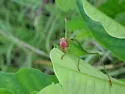
Red-headed Meadow Katydid
Orchelimum erythrocephalum
Identification: Coloration typically green with reddish highlights, including a (usually) bright red head in both sexes. Eyes light blue. Red head is (apparently?) distinctive in this genus, however some specimens do not show a bright red head. In th
Red-winged Grasshopper
Arphia pseudonietana
Identification: Have characters of Arphia , plus: Adults most abundant late in season. Hind wings are usually rich orange-red to blood red (rarely lighter orange or yellow) and always with wide black borders. Body coloration is dark, usually grayish
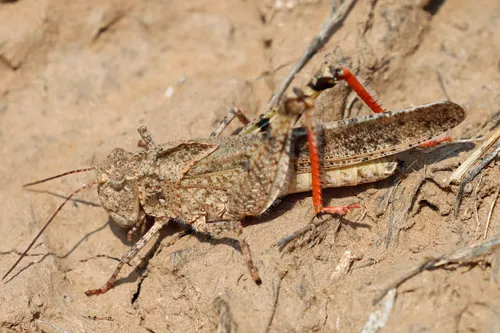
Ridgeback grasshopper
Spharagemon cristatum
Identification: Brownish or grayish grasshopper usually somewhat speckled with darker color, sometimes with indications of broken dark bands across the tegmina. Wings yellow with a bold curving dark cross band that has a spur pointing toward the bas
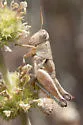
Riley's Short-wing Grasshopper
Melanoplus rileyanus
Identification: Usually contrastingly colored light brown or grayish with dark nearly black bar extending back from eyes and down sides of abdomen. With tegmina short oval, sometimes bluntly pointed apically, usually touching or nearly so over the b
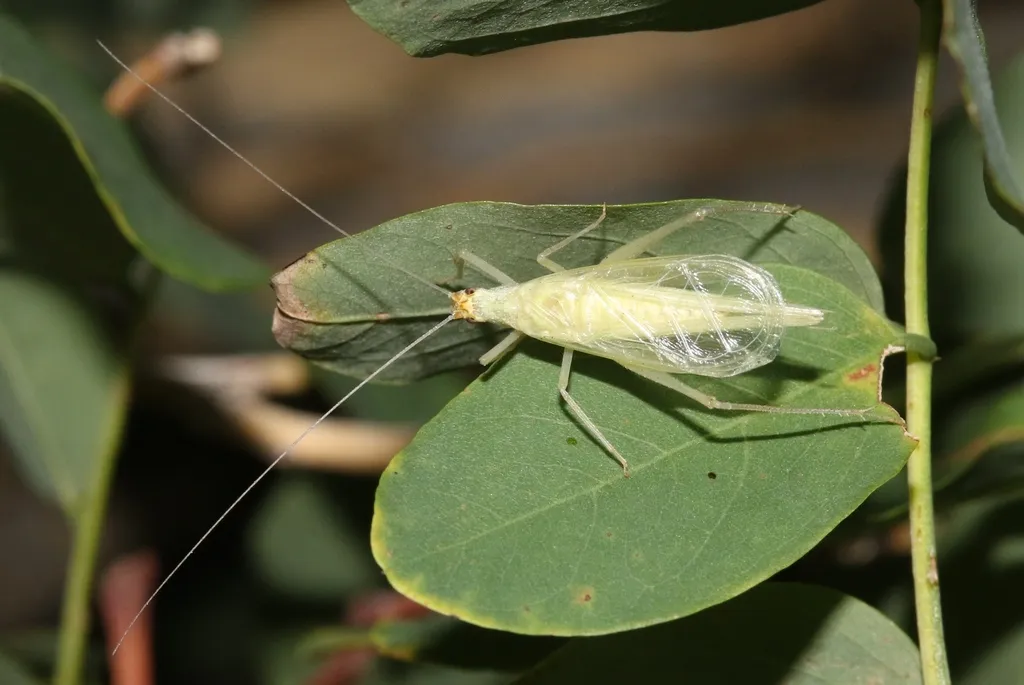
Riley's Tree Cricket
Oecanthus rileyi
Identification: Riley's tree cricket is pale green with pale antennae and limbs. It has a black spot on both the first and second antennal segments (scape and pedicel). The black spot on the 2d segment is less than half the length of the segment.
Rio Grande Saltbush Grasshopper
Aeoloplides rotundipennis
Identification: Green to brown; two dark stripes along middle of pronotum; tegmina short and oval, little or not longer than pronotum; found on shubby Chenopods in desert in Rio Grande Valley in New Mexico.
Robust Conehead
Neoconocephalus robustus
The song is a continuous whirring buzz that is extremely loud. Up close it is ear splitting, and it can sometimes be heard on a still night from as much as a mile away.
Robust Shieldback
Atlanticus gibbosus
Identification: Largest of our Atlanticus spp. Shape of the male cerci is distinctive
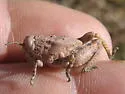
Robust Toad Lubber
Phrynotettix robustus
Identification: Stocky broad-bodied grasshoppers, very "pebble-like", with very short wings (much shorter in females) behind the large shield-like pronotum. Color is usually pale whitish, tan, or grayish, often with scattered darker spots or mottlin
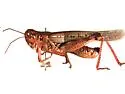
Rocky Mountain Locust
Melanoplus spretus
Identification: A long-winged and rather dull-patterned Melanoplus , notable for its fantastic swarms and damage to agriculture. It was one of the most abundant large insects in North America (and the world), but is now believed to be extinct. Histor
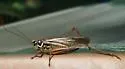
Roesel’s Katydid
Metrioptera roeselii
Identification: Song is a "high-pitched quavering buzz" ( species account with sound recordings .) An introduced species from Europe first found in Montreal in 1953 . Both long and short-winged forms exist. The long-winged forms can fly some distance
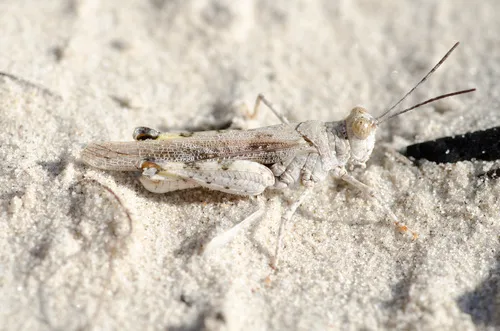
Rose-wing Beach Grasshopper
Heliastus subroseus
Identification: Distinctive and easy to recognize. Very similar to Trimerotropis maritima when wings are folded, but somewhat smaller in size. However, pink wings with little indication of a dark cross band vs. yellow with a bold dark cross band ma
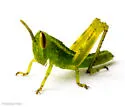
Rosemary Grasshopper
Schistocerca ceratiola
Identification: The smallest Schistocerca species. Eyes bulging, long antennae, narrow forewings. Distinctive color pattern that matches its hostplant. Nocturnal, emerging at night to feed on its hostplant. Very reluctant to leave Ceratiola bushes an
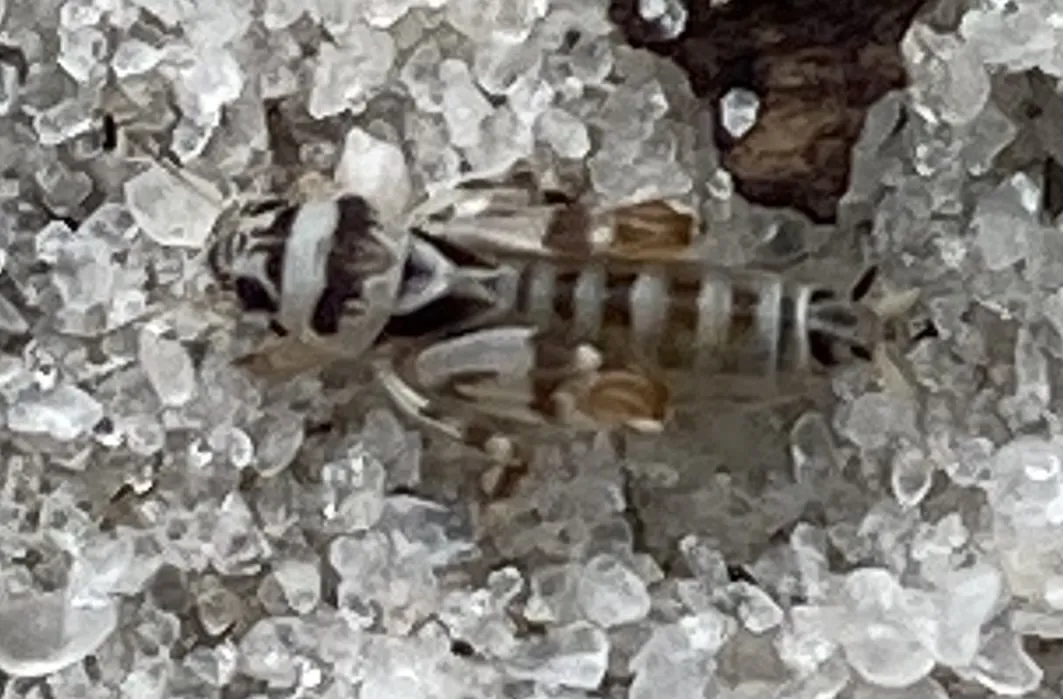
Rosemary Pygmy Mole Cricket
Ellipes ceratiola
Identification: Similar to E. eisneri , but differing in head pattern.
Rough-back Pygmy Grasshopper
Paratettix rugosus
Identification: Always long-winged (and macropronotal). Similar to Aztec Pygmy Grasshopper, but fastigium wider than width of one eye as seen from above, pronotum rough, more stocky in form. See also P. brevipennis , and P. toltecus , both very simi
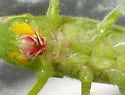
Round-tipped Conehead
Neoconocephalus retusus
Identification: Song: A rather weak, beady, continuous buzz heard from within tangles of vegetation, during afternoons as well as at night. Paraphrasing SINA :
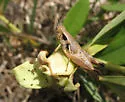
Round-winged Grasshopper
Melanoplus rotundipennis
Identification: The long fairly wide cerci and the erect conical "pallium" at the tip of the abdomen are characteristics of this species Tip of male abdomen