
Pale Clouded Grasshopper
Nebulatettix pallidus
This record describes Nebulatettix pallidus (species). Recorded family: Acrididae. Recorded order: Orthoptera.
Identification and Appearance
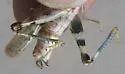
Similar to E. subgracilis but with head larger and somewhat more smoothly rounded, with ground coloring paler (often slightly yellowish in life), and usually with two distinct pale stripes at sides of top of pronotum. In most regions E. subgracilis is a late season species, but in Sonoran and Colorado Desert regions, adults are often found in spring as well, and some may be found year-round. Generally E. subgracilis is more southern and eastern in distribution, but the two species may meet near the Colorado River in southern Arizona and California. Similar to Chimarocephala californica , which has a proportionately somewhat smaller head with a much narrower and more deeply grooved fastigium, has more prominent and continuous lateral carinae on the pronotum, and averages darker in color. C. californica apparently has a similar life cycle, but occurs west from the Sierra Nevada and Tehachapi Mountains. C. californica has also been placed in Encoptolophus and is similar in some ways to that genus. E. robustus occurs near the coast and is stockier in over-all build, and has proportionately shorter wings. It is also usually darker in coloration. Easily confused for a Melanoplus at first glance, but on closer examination the lack of a prosternal spur (between base of front legs) and the color pattern will quickly distinguish it.
Classification
- Kingdom
- Animalia
- Phylum
- Arthropoda
- Class
- Insecta
- Order
- Orthoptera (Grasshoppers, Crickets, Katydids)
- Suborder
- Caelifera
- Family
- Acrididae (Short-horned Grasshoppers)
- Subfamily
- Oedipodinae
- Tribe
- Chortophagini
- Genus
- Nebulatettix
Imported taxonomy record. Source availability varies; see the source references and editorial policy below.
Habitat and Range
Habitat
Favors Salt Grass flats in low lying areas and margins of desert lakes and playas.
Geographic Range
mostly in Mojave Desert in California and adjacent Nevada. Reported southward to near Needles, California.
Diet and Behavior
Life History
Overwinters as nymphs, with adults most common in spring (April & May). Some apparently live through summer to as late as September, or perhaps there is a partial second generation.
About Grasshoppers, Crickets, Katydids: the wider group
Order-level background for Orthoptera, the group containing Nebulatettix pallidus. Species-specific details appear above.
Group overview
Orthoptera includes ~28,000 described species of grasshoppers, crickets, and katydids. Desert locusts can form swarms covering 460 square miles containing up to 80 million individuals per square kilometer.
Ecological role of the group
Grasshoppers and crickets are a primary food source for birds, reptiles, and small mammals. Cricket farming is a growing industry - crickets require 12× less feed than cattle to produce the same amount of protein, using 2,000× less water.
Economic and practical significance of the group
A single large locust swarm can consume the same amount of food in one day as 35,000 people. The 2019-2021 East Africa locust crisis affected food security for 42 million people across multiple countries. Global crop losses from locusts can reach billions annually.
Recorded sources for this group: FAO, UN World Food Programme, research publications. Imported estimates may describe particular regions or reporting periods.
Photos of Pale Clouded Grasshopper (5)
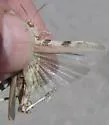
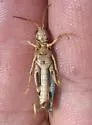
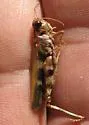
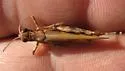
Photo credits: Contributed by David J. Ferguson
Frequently Asked Questions About Pale Clouded Grasshopper
What is Pale Clouded Grasshopper?
Pale Clouded Grasshopper (Nebulatettix pallidus) is a species in the family Acrididae, within the order Orthoptera.
How do you identify Pale Clouded Grasshopper?
Similar to E. subgracilis but with head larger and somewhat more smoothly rounded, with ground coloring paler (often slightly yellowish in life), and usually with two distinct pale stripes at sides of top of pronotum. In most regions E. subgracilis is a late season species, but in Sonoran and Colorado Desert regions, adults are often found in spring as well, and some may be found year-round. Generally E. subgracilis is more southern and eastern in distribution, but the two species may meet near the Colorado River in southern Arizona and California. Similar to Chimarocephala californica , which has a proportionately somewhat smaller head with a much narrower and more deeply grooved fastigium, has more prominent and continuous lateral carinae on the pronotum, and averages darker in color. C. californica apparently has a similar life cycle, but occurs west from the Sierra Nevada and Tehachapi Mountains. C. californica has also been placed in Encoptolophus and is similar in some ways to that genus. E. robustus occurs near the coast and is stockier in over-all build, and has proportionately shorter wings. It is also usually darker in coloration. Easily confused for a Melanoplus at first glance, but on closer examination the lack of a prosternal spur (between base of front legs) and the color pattern will quickly distinguish it.
Where is Pale Clouded Grasshopper found?
| Feature | Details |
|---|---|
| Habitat | Favors Salt Grass flats in low lying areas and margins of desert lakes and playas. |
| Range | mostly in Mojave Desert in California and adjacent Nevada. Reported southward to near Needles, California. |
What is the life cycle of a Pale Clouded Grasshopper?
Overwinters as nymphs, with adults most common in spring (April & May). Some apparently live through summer to as late as September, or perhaps there is a partial second generation.